LAMAN: Load Adaptable MAC for Ad Hoc Networks
Marc Realp
Telecommunications Technological Centre of Catalonia, Catalonia, 08034 Barcelona, Spain Email:[email protected]
Ana I. P ´erez-Neira
Telecommunications Technological Centre of Catalonia, Catalonia, 08034 Barcelona, Spain Email:[email protected]
Received 31 July 2003; Revised 26 May 2004
In mobile ad hoc radio networks, mechanisms on how to access the radio channel are extremely important in order to improve network efficiency. In this paper, the load adaptable medium access control for ad hoc networks (LAMAN) protocol is described. LAMAN is a novel decentralized multipacket MAC protocol designed following a cross-layer approach. Basically, this protocol is a hybrid CDMA-TDMA-based protocol that aims at throughput maximization in multipacket communication environments by efficiently combining contention and conflict-free protocol components. Such a combination of components is used to adapt the nodes’ access priority to changes on the traffic load while, at the same time, accounting for the multipacket reception (MPR) capability of the receivers. A theoretical analysis of the system is developed presenting closed expressions of network throughput and packet delay. By simulations, the validity of our analysis is shown and the performances of a LAMAN-based system and an Aloha-CDMA-based one are compared.
Keywords and phrases:cross-layer, MAC, ad hoc, CDMA, TDMA, multiuser detection.
1. INTRODUCTION
Traditionally, medium access control (MAC) mechanisms are used to face offthe classical collision resolution problem in multiple-access channels with single-packet communica-tions. That is, if two or more nodes send packets through the radio channel simultaneously, these packets collide and consequently, information is lost. To recover the informa-tion, the collided packets have to be retransmitted. Although the common aim in such channels is a MAC able to come close to efficiency equal to one, by avoiding collisions as much as possible, the approach considered in MAC design is different whether the system is centralized or decentralized. While centralized systems mainly present a node schedul-ing problem of variable complexity, decentralized systems present many different new challenges, like the availability of each node to communicate directly with any other node or the half-duplex transceiver characteristics, that must be over-come. In this paper, we will focus on decentralized systems.
Regarding decentralized MAC algorithms, multiple ac-cess with collision avoidance (MACA) [1] presented a request-to-send (RTS) and clear-to-send (CTS) handshake for channel reservation during transmission. Afterwards, many works have been done in order to minimize the ef-fect of this RTS/CTS information exchange (see [2] and
references therein). In other mechanisms such as carrier-sense multiple access (CSMA) [3,4], the channel is sensed to know whether it is idle or busy; if the channel is sensed idle for a period longer than a guard time, transmission is done. In the case of collision, the node executes a back-offprocedure before retransmission. Finally, in basic time-division multiple access (TDMA) systems like Bluetooth (not totally decentralized but still considered ad hoc; see
https://www.bluetooth.org/spec/), collision is avoided by
as-signing a slot time to each node. Clearly, the collision resolu-tion efficiency of each of these techniques will mainly depend on the traffic load of the network and none of them is de-signed to adapt to traffic load changes. Therefore, the optimal MAC procedure for decentralized systems would be similar to the one presented in advanced GPS electronic navigation tool (AGENT) [5], able to combine, according to the traffic
Traffic load
MPR Information
agents
MAC Pr
Nc
PHY
Degrees of freedom
Figure1: Cross-layer information between PHY and MAC.
access the channel with a designed probability. By such pro-cedure, the system behaves similar to a TDMA system at high traffic loads and similar to a slotted ALOHA at low traffic loads.
However, none of these MAC techniques considers mul-tipacket communications and hence, show low channel-use efficiency. Furthermore, while new signal processing tech-niques have been developed in order to allow multiple con-current transmissions by introducing the capability of de-tecting multiple packets simultaneously, little has been re-ported on how MAC techniques should take into account these new techniques developed at the PHY layer. In other words, the introduction of diversity, such as code diversity or space diversity, provides multipacket reception (MPR) at the PHY layer and shows improvement in the system per-formance [7,8]. Consequently, it comes to one’s mind that the knowledge of this new PHY capability at the MAC layer should provide valuable information in the design of new MAC techniques. This idea of using interaction between lay-ers in order to improve and reach an optimal system perfor-mance is known as cross-layer [9,10]. Note that in multiple-access channels with multipacket communications, the colli-sion resolution problem results in a more complex problem, where the MAC must control the access of multiple users, not only to the channel, but also to other resources (spread-ing codes, antennas, etc.) when these resources are scarce.
Recently, some papers in the literature refer to the PHY layer MPR capability by using the so-called MPR matrixC, and use this MPR matrix in the development of centralized MAC procedures [11,12,13]. Each element of this matrix,
cm,k, is the probability of successfully receivedkpackets when mpackets have been sent. Basically, assuming some statistical independency between both packets and nodes, these prob-abilities can be obtained from the bit error rate (BER) and binomial distributions. The work in [11] is perhaps the first to introduce the concept of MPR matrix. Besides, in [12], a cross-layer centralized approach is described. Assuming that each node has a packet with probabilityqi and considering
the MPR receiver matrix, an optimal node access set is ob-tained in order to schedule node’s access to the channel aim-ing at packet delay minimization and network throughput
maximization. However, with the use of the information on the MPR matrix only, PHY-MAC interaction reduces to a BER information exchange. In [13], the idea of [12] is used to show how the use of additional parameters or information agents, such as the knowledge of the active nodes, can further improve system performance.
Furthermore, little has been reported regarding decen-tralized MAC protocols for ad hoc multipacket systems, where nodes can transmit directly to each other and any node is a potential receiver or transmitter. A very interesting work is presented in [14], where a comparison of a CDMA-Aloha-based decentralized system with MPR receivers is compared with its equivalent centralized system. As in [14], other works [15,16] consider CDMA ad hoc networks in which the num-ber of codes or channels depend on the numnum-ber of nodes in the network. Only [17] refers to the problem of a CDMA net-work with a fixed number of spreading codes and variable number of nodes. However, in [17], a peer-to-peer commu-nication link is established by means of an RTS/CTS-based channel reservation mechanism and unfortunately, simulta-neous reception of packets is not considered.
The CDMA-TDMA-based MAC protocol for ad hoc net-works presented here is an extension of the work in [18,19] that aims at throughput maximization in decentralized mul-tipacket environments. Particularly, the idea behind the load adaptable MAC for ad hoc networks (LAMAN) protocol is to go one step further on the concept presented in [5] and it is intended to design a decentralized multipacket MAC pro-tocol able to efficiently combine contention and conflict-free components. The key point is to manage time and code re-sources by means of two degrees of freedom: the retransmis-sion probabilityPrand the number of spreading codes to be
allocated to a particular node Nc, and what is more, by
In summary, under the context of ad hoc networks, the LAMAN protocol has been specially designed to
(i) deal with both the direct communication between nodes and the half-duplex transceiver characteristics; (ii) present an optimal collision resolution mechanism
de-pending on the traffic load;
(iii) be a multipacket protocol that fully exploits the PHY layer MPR capabilities;
(iv) efficiently manage use of a scarce number of spreading codes.
The rest of this paper is structured as follows. In
Sec-tion 2, a system description is presented including a general
network description and the LAMAN protocol portrayal. In
Section 3, the concepts of receiver and network MPR
capa-bilities are defined.Section 4is devoted to the protocol anal-ysis and system optimization. This analanal-ysis is based on a two-dimensional Markov chain and ends up with closed expres-sions for the optimization of the throughput and the delay of the network. InSection 5, the validity and the accuracy of our analysis are studied. Finally, we present simulation exam-ples and comparisons with existing systems inSection 6and conclusions and further work inSection 7.
2. SYSTEM DESCRIPTION
2.1. General description of the network
We consider a single-hop (fully connected) packet-oriented CDMA-TDMA ad hoc network in which all nodes are iden-tical and share the same common channel. Each node has the knowledge of the spreading codes used in the network and the number of nodes present in that network. Each node can be either a transmitter or a receiver, but not both at the same time, that is, half-duplex communication is assumed. It is also assumed that all nodes in the network are perfectly synchronized (synchronization and association procedures could be similar to the ones in [4] and are not tackled here). The network is characterized by both the number of users
M in the network and the number of spreading codesNto be used in this network. Note that M ≥ N. Opposite to common CDMA systems, nodes do not have a unique pre-assigned code, but on the contrary, a number of codes Nc
are assigned to a particular node and the remaining nodes randomly choose codes among the Nr residual ones. Time
is slotted and the duration of a slot is the time needed for the transmission of a data packet. In the case of unsuccessful transmission of a data packet, packets are retransmitted until these packets are properly received by their intended nodes.
2.2. LAMAN protocol description
The LAMAN protocol is a transmitter-oriented protocol, where each time slot is allocated to a particular node. Such a particular node is called themultiple node,whereas the other nodes in the network are called simple nodes. The multiple node is changed once everysslots such that if the multiple node is changed in a slot-by-slot basis (s = 1), each node in the network becomes a multiple node once everyMslots.
Frame Time slot
1 2 3 4 5 6 7 8
1 2
4 5
6
7 3
8
Codes
Figure2: Network example with eight nodes and four codes.
During one time slot, a number of codesNc(Nc ≤N) are
allocated to the multiple node for sending its packets and the
M−1 simple nodes contend for using the residual codesNr
(Nr =N−Nc). Particularly, at the beginning of a slot, the
multiple node transmits and retransmits its packets with a probability equal to one, having the possibility to send up to
Nc packets simultaneously by using one different code per
packet (notice that, although Nc codes are reserved to the
multiple node, it might happen that the multiple node does not use all the Nc codes). At the same time, simple nodes
send packets by using codes randomly chosen from the set of Nr codes. It is possible that two or more simple nodes
simultaneously choose the same code for sending a packet. If this is the case, such packets collide and are lost. Codes used by more than one node simultaneously are named col-lided codesand consequently, packets sent by means of these collided codes are named collided packets. On the contrary, packets sent simultaneously using different codes are called noncollided packets. A simple node is limited to send up to one packet per slot and hence, to use up to one code per slot only. If at the beginning of a slot, a simple node has a packet to be transmitted for the first time, it is calledunbacklogged simple nodeand the packet is transmitted with a probability equal to one. If on the contrary, a simple node has a packet waiting for retransmission, it is calledbacklogged simple node and retransmits its packet with a probability equal toPr.
Another parameter that characterizes the performance of the LAMAN protocol is the number of free nodesMfthat are
in the reception mode at a given time, that is, the number of nodes that do not send a packet in a given slot. The number of free nodesMf in one slot is computed inSection 4.
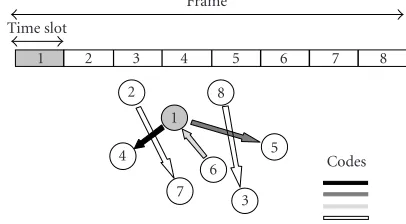
Figure 2presents an example of a system with eight nodes
(M=8) and four codes (N=4) with two of them allocated to the multiple node (Nc = 2). Assuming that the multiple
node is changed once every slot, the length of the frame in that example is eight time slots. In slot 1, the multiple node is the node 1 and uses two codes to send packets to nodes 4 and 5 (codes are indicated by means of arrows of different grey shade). Nodes 2 and 8 also transmit a packet to nodes 7 and 3, respectively. However, nodes 2 and 8 randomly choose the same code and hence, packets collide and are lost. Notice that in that example,Mf = 4 (nodes 3, 4, 5, and 7 are not
Matched filter code 1 Matched
filter code 2
Matched filter codeN
· 2
· 2
· 2
. . .
. . . .
. .
Decision
Nc
. . .
Figure3: Receiver architecture.
lost because node 1 is in transmission mode. In that situation and considering a fully connected network, nodes 5 and 4 re-ceive five packets to demodulate, but only one packet among these five packets is intended for each of them. Success in the transmission of such intended packets depends on the MPR capabilities of the receivers. In the following slot, the general behavior of the network would be similar to the one stated here. However, in slot 2, the multiple node would be node 2, and node 1 would become a simple node. Notice that, at a given slot, packets unsuccessfully transmitted in the previous slot are retransmitted with probabilityPr by simple nodes,
and with probability equal to one by the multiple node. With the protocol description presented in this section, surely the reader has realized that the priority the multiple node has over the network resources (time and codes) is con-trolled by means of parametersPrandNc. More precisely, the
contention and conflict-free components of the protocol are controlled by means of Pr andNc, respectively. In the
fol-lowing sections, we will see that by taking into account the traffic load and the receiver MPR capability, the aim of the LAMAN protocol is to properly design parametersNcandPr
to achieve throughput maximization and/or delay minimiza-tion.
3. RECEIVER AND NETWORK MPR CAPABILITIES
As previously stated in Section 1, one of the main motiva-tions for the novel cross-layer protocol presented in this pa-per is to fully account for the PHY layer MPR capability at the MAC layer. InFigure 3, a proposed receiver architecture is shown. The MPR capability is obtained by means of a multiuser detection (MUD) [20], in this case, a bank ofN
matched filters. We focus on wireless LANs in indoor en-vironments that cover a small area with a relatively small number of nodes and then, we will ignore the near-far ef-fect. Furthermore, we also propose an additional stage in or-der to avoid excessive signal processing in posterior stages of
the receiver. To this end, the output of the bank of matched filters is concatenated toN power detectors and thresholds for the decision of collided codes. The output of the deci-sion block consists of N binary signals indicating whether the corresponding code is detected as a collided code (0) or not (1). Hence, this signal is used to decide if further pro-cessing of the corresponding matched filter output signal is needed. Besides, the knowledge at the PHY layer of theNc
codes allocated to the multiple node will be used, not only to know the range of available codes when the node is in the transmission mode, but also to reduce the range of possible collided codes toNrwhen the node is in the reception mode.
This work considers perfect detection of collided codes and hence, false-alarm or miss-detection probabilities are negli-gible.
With such defined receiver architecture, the receiver MPR capability mainly depends on both the SNR and the multiple access interference (MAI). We assume that the data is BPSK modulated and the total number of received packets (collided and noncollided) ism. Under the Gaussian assumption on the MAI and ignoring any possible near-far effect, the BER at the output of a matched filter can be computed by
BER(m)=Q
1
1/SNR +(m−1)ρ2 1/2
. (1)
Expression (1) only applies at the output of the matched filters corresponding to noncollided packets because BER for collided packets is equal to one. However, notice that collided packets interfere with noncollided packets and must be con-sidered as MAI in the computation of (1). In (1),ρrefers to the cross-correlation coefficient between two different codes and is assumed to be equal for any pair of codes. Assuming that errors occur independently in a packet, the number of errorsiin a packet with lengthPlis a binomial random
vari-able with probability mass function
Bi,Pl, BER(m)
=
Pl
i
BERi(m)1−BER(m)Pl−i
. (2)
And hence, considering that up toterrors can be cor-rected in a packet, the packet error probability (PER) as a function ofmcan be computed as
PER(m)=1−
t
i=0
Bi,Pl, BER(m)
. (3)
We recall that in our system, simple nodes choose codes randomly and hence, in the event of two or more simple nodes using the same code, packets are lost due to collision. Therefore, given statistical independency between packets and if there are Lnoncollided packets (i.e., Lpackets sent usingLdifferent codes), the number of successfully received
packetslamong a total ofmpackets is also a binomial ran-dom variable with probability mass function:
cm,l(L)=B
It is worth remarking that collided packets are, for sure, lost packets and consequently, the binomial expression in (4) only considers theLnoncollided packets. However, as men-tioned before, collided packets are still interfering noncol-lided packets and hence, the PER depends on the total num-ber of received packetsm.
cm,l(L) models the MPR capability of the receiver, that is,
the capability of successfully receivedlpackets when there are
msimultaneous transmissions, andLamong them use
differ-ent codes. Unfortunately, the problem arises in ad hoc net-works when the values ofcm,l(L) that characterize the MPR
capability of the receiver do not completely characterize the MPR capability of the network. First, since the transceivers are half-duplex, a node in the transmission mode cannot suc-cessfully receive packets and second, a node can sucsuc-cessfully demodulate a packet not intended for it. In these two situa-tions, packets are lost. Furthermore, in our system, packets are lost due to collision of codes. Bao and Tong [14] have done work on modifying the receiver MPR capability to char-acterize the MPR capability of the network accounting for the properties of ad hoc networks. However, this character-ization is not enough in the problem stated here. The fact that there might exist a node using more than one code si-multaneously also affects the MPR capability of the network. Consequently, we define thenetworkMPR matrixR(Mf,L)
as a function of the number of free nodesMf (nodes that
are in the reception mode) and the number of noncollided packetsLas follows:
R(Mf,L)
ofmpackets are successfully received by their intended re-ceivers in the network given thatMf nodes are in the
recep-tion mode and thatLout ofmpackets do not collide. Notice that whenMf =0, that is, no node is in the reception mode,
thenrm,l(0,L)=0. The relationship between thecm,l(L) and rm,l(Mf,L) is provided by the following theorem.
Theorem 1. Given that a total ofmpackets are transmitted simultaneously, that Lout of thesempackets are noncollided packets, and that Mf (≥ M−L) nodes are in the reception
mode, the probability that there arel≤Lsuccessfully received packets by their intended receivers in the network is given by
rm,l
amongLnoncollided packets reach their intended nodes and
dL,ai,biis used to determine the probability of successfully
re-ceivedbipackets whenaipackets are intended for that node.
A proof of (6) is shown in [14]. However, in [14], there are not any collided packets and each node sends one packet at the most. Consequently, in [14],mandMf are alwaysLand M−L, respectively.
4. PROTOCOL ANALYSIS AND OPTIMIZATION
Before we proceed to the analysis of the protocol, it is impor-tant to state some assumptions.
4.1. Assumptions
(1) Nodes generate packets according to independent Poisson processes with an equal arrival rate ofλ pack-ets/slot.
(2) Perfect feedback information about the status of trans-mission is received instantaneously by each node. (3) All nodes are assumed to have the same receiver
archi-tecture as described inSection 3.
(4) Packets in a node have equal probability to be trans-mitted to any other node.
(5) The number of packets that a node can hold at a time is restricted to the following conditions:
(a) from the time a simple node generates a packet until that packet is successfully received, the sim-ple node is blocked in the sense that it cannot generate (or accept from its input source) a new packet for transmission, that is, a simple node can hold at most a packet at a time;
(b) the multiple node can hold at mostNcpackets at
a time.
(6) The multiple node does not change from slot to slot and is always the same node.
Notice that whereas assumptions from (1) to (5a) are considered standard assumptions [14,21] for the analysis of Aloha systems, assumptions (5b) and (6) have been specially introduced for the analysis of the LAMAN protocol. At first sight, the reader might think that assumptions (5) and (6) are useful to simplify the analysis but, at the same time, do not seem to really model the system described inSection 2. Ac-curacy and validity of our analytical results are fully studied
4.2. Protocol analysis
Our analysis is based on the Markov Chain approach pro-posed by Kleinrock and Lam [22] and followed afterwards by Bao and Tong [14]. Kleinrock and Lam model a finite-population slotted Aloha system with the number of back-logged nodesn, that is, nodes that have a packet for retrans-mission, as the network states. Bao and Tong used the same model to compare the performance of a CDMA centralized system versus a CDMA ad hoc system. Here, for anM-node network, the Markov chain is extended to a two-dimensional (Nc+ 1)×Mstate chain which models both the number of
backlogged packets in the multiple-node buffer which is in the range of [0,Nc] and the number of simple nodes in the
backlogged state which is in the range of [0,M−1].
This Markov chain is characterized by an ((Nc+1)×M)×
((Nc+ 1)×M) transition matrixPin which each entry is p(i,n),(j,k) and denotes the probability of network state to go from state (i,n) to state (j,k) in one time slot. The transi-tion from one state to another of the Markov chain is deter-mined by two events: (i) the difference between unsuccess-ful transmissions of unbacklogged packets and the successunsuccess-ful retransmissions of backlogged packets of the multiple node and (ii) the difference between unsuccessful transmissions from unbacklogged simple nodes and successful retransmis-sions from backlogged simple nodes. That can be seen as, for a givenp(i,n),(j,k), transition fromitojmodels the evolution of the number of backlogged packets of the multiple node, and transition fromntokmodels the evolution of the num-ber of backlogged simple nodes. Hence,p(i,n),(j,k)in terms of the design parametersPr andNccan be obtained by means
of
zare the newly generated packets by the multiple node,iare the backlogged packets in the multiple node,xare the newly generated packets by the M−n−1 unbacklogged simple nodes, and yare the packets retransmitted by the n back-logged simple nodes. Following the notation used in [14], we defineQrs(y,n) as the probability thatybacklogged simple
nodes retransmit a packet when there arenbacklogged sim-ple nodes,Qas(x,n) as the probability thatxunbacklogged
simple nodes transmit a packet, andQam(z,i) as the
probabil-ity that the multiple node transmitszunbacklogged packets
when it hasibacklogged packets (unbacklogged and back-logged packets in a multiple node are transmitted with a probability equal to one). Besides, following assumptions (1) and (5),Pasis defined as the probability of an unbacklogged
simple node to have a new packet to transmit at the begin-ning of the slot, that is, probability of a packet arrival of a Poisson process, and Pam is the probability of the multiple
node to havezunbacklogged packets to transmit at the be-ginning of the slot, that is, the probability of exactly z ar-rivals of a Poisson process when the maximum multiple-user buffer size is not reached, or the probability ofzor more ar-rivals of a Poisson process when the maximum buffer size is reached. Therefore,
0 otherwise. (16)
Equation (10) is perhaps the most important equation in order to understand the behavior of the system. We analyze it step by step. First, as it was mentioned inSection 2, one of the characteristics of this network is the fact that simple nodes choose codes randomly and hence, two or more packets sent by simple nodes might collide. This is what is evaluated in the first term of expression (10). Particularly,sx+y,t(see (11))
is the probability of havingtnoncollided packets among the
is shown in the appendix. Hence, givent, the total number of noncollided packetsLis equal totadded to thez+ipackets that are sent by the multiple node (see (14)). For the system to evolve from state (i,n) to state (j,k),lpackets (distributed between the simple nodes and the multiple node as in (13)) must be successfully received. The second term in (10) com-putes the number of combinations oflsuccessfully received packets when there are a total ofmsent packets andLamong them are noncollided ones. Finally, in (10), the network MPR capability defined inSection 3(rm,l(Mf,L)) is used to
com-pute the probability of successfully receivedlpackets when a total ofmpackets have been sent.
Since the Markov chain defined by (8) is aperiodic and irreducible, the stationary distribution of the network state
π = [π0,0,π0,1,π0,2,. . .,π(Nc×(M−1)),(Nc×(M−1))] can be
ob-tained solving the balance equation
π=πP (17)
and considering thatπi,n=1.
4.3. Throughput and delay optimization
The network throughput is defined as the average number of packets successfully received by their intended nodes in one time slot when the system is in its steady state. Given the system is in state (i,n), the expected number of packets successfully received by their intended nodes is
β(i,n)=
Nc−i
z=0
M−n
x=0
n
y=0
Qz,x,y
x+y
t=0
sx+y,t
z+i+t
l=0
lrm,l
Mf,L
.
(18) Therefore, averaging for all the possible states, the net-work throughput, depending onNcandPr, becomes
βNc,Pr= Nc
i=0
M−1
n=0
β(i,n)πi,n. (19)
Besides, the packet delay defined as the time on the av-erage since the packet is generated until it is successfully re-ceived can be computed following [22]:
DNc,Pr = Nc
i=0 M−1
n=0(i+n)πi,n βNc,Pr
+R. (20)
In (20),Ris referred to as the deterministic delay which is the transmission delay (one slot) added to the average delay since the packet is generated until it is transmitted for the first time (half slot). Hence,
R=1 + 0.5. (21)
It is well known that Aloha systems may present some instability [21]. However, according to [22], it is possible to properly adjustPr in order to stabilize the system and
con-sequently maximize the throughput and minimize the de-lay in the steady state. In our system, we use two parameters (PrandNc) to stabilize the system. For system optimization,
(19) and (20) must be maximized and minimized numeri-cally as follows:
βmax= arg
Nc,Pr
maxβNc,Pr
,
Dmin= arg
Nc,Pr
minDNc,Pr
. (22)
5. ANALYSIS VERIFICATION
To model a system as described in Sections 2 and 3, one should consider anM-dimensional Markov chain in which each state would be described by the number of backlogged packets in the buffer of each node. Then, in each time slot, the evolution of the network from one state to another would depend on the packet arrivals at each buffer, on the number of successfully received packets of each node, and on the par-ticular multiple node for that slot. The interaction amongst buffers of different nodes in an Aloha system is very complex and has been largely studied for the classical collision channel (i.e., single-packet communications in multiple-access chan-nels) [23]. No closed-form solution for the stability region has been found until now for systems with more than two nodes. Furthermore, very few have been reported regarding multipacket communications [24]. Clearly, some simplifica-tions are necessary in order to make our problem tractable.
InSection 4, we have modeled the behavior of our system
by means of a Markov chain such that it is a two-dimensional chain in which each state describes the number of backlogged packets in the buffer of the multiple node and the number of backlogged simple nodes. By means of assumptions (5a), (5b), and (6) inSection 4, we have simplified the interaction among buffers and consequently simplified the analysis of the system. Notice that assumptions (5a) and (5b) are very similar to the standard assumptions considered in the analy-sis of Aloha systems [14,21]. However, assumption (6) might induce some doubts on the validity and accuracy of our re-sults.
We have decided to compare our theoretical results with the results obtained by simulating the so-called “real” system. In a real system, every node can become a multiple node and no packets should be lost due to the transition from a multi-ple node to a simmulti-ple node. Hence, we define a real system as a system like the one described in Sections2and3and con-sidering assumptions from (1) to (6) inSection 4. However, assumptions (5a) and (6) are rewritten as follows.
(5a) If a simple node holds at least one packet, a simple node is blocked in the sense that it cannot generate (or accept form its input source) a new packet for trans-mission. However, a simple node can hold at mostNc
packets at a time.
(6) The multiple node changes once everysslots.
Assumption (5a) comes from the fact that it must be con-sidered that a simple node might have more than one packet in its buffer. Note that, since in the transition of a multi-ple node to a simmulti-ple node, the multimulti-ple node might hold
Table1: Simulation parameters.
Data modulation BPSK
Correlation coefficient (ρ) 0.3
Packet length (Pl) (bits) 1000
SNR (1/σ2) 10
Number of correctable errors (t) 10
node its buffer size can be up toNc packets long. On the
other hand, assumption (6) is modified since, as described
inSection 2, all nodes must have the capability to become a
multiple node.
We have simulated a five-node ad hoc network (M=5) with five codes (N = 5) and with the values presented in
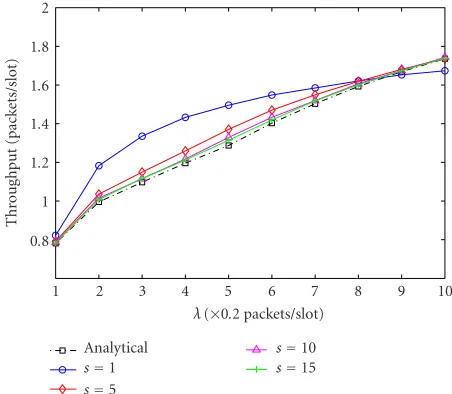
Table 1. Results plotted in Figures4and5show the
through-put and delay corresponding to a theoretical analysis and to a real system in which the multiple node changes once every 1, 5, 10, and 15 slots. We observe that our analytical results do not really match with a real system, where the multiple node changes once every slot (s = 1 slot). However, we observe that if we give time for the system to be stabilized (e.g.,s=5 slots), our analytical results are very accurate. Obviously, the proper value ofsdepends onNcin the sense that, the smaller
theNc, the smaller thes.
We observe that the main consequence of changing the multiple node once everysslots (s = 1) is that we empha-size the TDMA component of the protocol, hence, increas-ing the packet delay and reducincreas-ing the network throughput at low traffic loads. For the same reason, at high traffic loads, the delay is reduced and the throughput is increased.
6. SIMULATIONS
In this section, we present the results obtained from simula-tions of a five-node ad hoc network, that is,M=5, for var-ious designs. First, we have considered anN-code LAMAN-based ad hoc network as the one described throughout this paper. Under assumptions presented in Section 4, the per-formance of the network in terms of throughput and delay has been evaluated forN=2, 3, 4, and 5. Finally, a five-node Aloha-based CDMA ad hoc network has been also simulated and results have been compared. Values used in simulations are shown inTable 1.
6.1. Aloha-based CDMA ad hoc network description
The Aloha-based CDMA ad hoc network considered is the decentralized system presented in [14]. This system consid-ers a time-slotted ad hoc network withMnodes, where each node can communicate with any other node and where no hidden or exposed terminals are considered. Besides, it is a CDMA network where each node has a unique assigned code for transmission (then the number of codesNis equal to the number of nodesM) and the access to the channel is controlled by means of an Aloha procedure with retransmis-sion probabilityPr. Although this is not the aim of the work
2 1.8 1.6 1.4 1.2 1 0.8
1 2 3 4 5 6 7 8 9 10
λ(×0.2 packets/slot)
Thr
o
ug
hput
(pack
ets/slot)
Analytical
s=1
s=5
s=10
s=15
Figure 4: Throughput versusλwhen the multiple node changes once everysslots.
4.5
4
3.5
3
2.5
2
1 2 3 4 5 6 7 8 9 10
λ(×0.2 packets/slot)
Dela
y
(slots/pack
et)
Analytical
s=1
s=5
s=10
s=15
Figure5: Delay versusλwhen the multiple node changes once ev-erysslots.
presented in [14], that system can be optimized, in terms of throughput and delay, by adjustingPrin accordance with the
traffic loadλ. This is what we have done in simulations in order to make comparisons with the LAMAN-based system.
6.2. Throughput and delay
Figures 6and7show throughput and delay for the Aloha-based CDMA system. Results obtained are as expected ac-cording to [22] and show that by adjustingPr, it is possible to
1.3 1.2 1.1 1 0.9 0.8 0.7 0.6 0.5
1 2 3 4 5 6 7 8 9
Pr(×0.1)
Thr
o
ug
hput
(pack
ets/slot)
Figure6: Throughput versusPrfor an Aloha-based CDMA system withλ=0.6 packet/slot.
8.5 8 7.5 7 6.5 6 5.5 5 4.5 4 3.5
1 2 3 4 5 6 7 8 9
Pr(×0.1)
Dela
y
(slots/pack
ets)
Figure7: Delay versusPr for an Aloha-based CDMA system with
λ=0.6 packet/slot.
and the number of codes Nc whenλ = 0.6 packet/slot and
N =5.Figure 8shows a maximum throughput forNc =2
and Pr = 0.3, while Figure 9shows a minimum delay for Nc = 1 and Pr = 0.3. We have seen that values that lead
to a maximum throughput do not necessarily correspond to those that minimize delay. The reason for this behavior is that packets might experience different treatment, that is, while packets belonging to the multiple node are retransmit-ted with probability one, packets from simple nodes are re-transmitted with probabilityPr. Consequently, an increase of Ncmight increase the number of packets transmitted by the
multiple node resulting in a throughput improvement. How-ever, it might also incur unexpected high delay of some pack-ets from simple nodes which, in turn, increases the packet delay in the average. From a design point of view, values of
Pr andNc for system optimization will depend on whether
the data is throughput or delay sensitive.
1.2 1 0.8 0.6 0.4 0.2 0 1
2 3
4
Nc
0 2 4
6 8 10
Pr(×0.1)
Thr
o
ug
hput
(pack
ets/slot)
Figure8: Throughput versusPrandNcfor a LAMAN-based system withλ=0.6 packet/slot.
30 25 20 15 10 5 0 1
2 3
4
Nc 0 2 4 6 8
10 Pr(×0.1)
Dela
y
(slots/pack
et)
Figure9: Delay versusPrandNcfor a LAMAN-based system with
λ=0.6 packet/slot.
We have also evaluated throughput and delay when the traffic load per user changes from 0.2 packet/slot to 2 pack-ets/slot. Figures 10 and11 depict the maximum through-put and minimum delay, respectively, for both the Aloha-based CDMA system and the LAMAN-Aloha-based system with
N = 2, 3, 4, 5 codes. For each value of λ, the LAMAN-based system presents a pair of values (Pr,Nc) that
maxi-mize the network throughput and minimaxi-mize packet delay. In the same way, for the Aloha-based CDMA system, a value (Pr) that optimizes performance is shown. We see that for
(0.6) (0.4)
Figure10: Throughput comparison between different designs.
(0.3, 1)
Figure11: Delay comparison between different designs.
in favor of the system using five codes, a LAMAN system with only three or four codes (N = 3 or 4) can also out-perform the CDMA system in both throughput and delay at high traffic loads. Additionally, at very high traffic loads, the LAMAN-based system with four codes outperforms, in terms of throughput, its equivalent with five codes. This is mainly because the system with five codes allows more pack-ets to be transmitted simultaneously but due to the network MPR matrix, the number of packets to be transmitted simul-taneously should be limited in order to not having excessive MAI.
Two main conclusions are obtained from these results. First, it can be seen that whereas the CDMA system becomes saturated at about 0.4 packet/slot, the LAMAN protocol can improve performance by reallocating resources (codes and time) more efficiently. We observe that at high traffic loads, the LAMAN system is acting as a TDMA system, where at each time slot, not only time but also code resources are given to a particular node (low values of Pr and high
val-ues ofNc). At low traffic, we see that because the multiple
100
10−1
4 6 8 10 12 14
SNR (dB)
λ=0.4
λ=1
λ=1.6
Thr
o
ug
hput
(pack
ets/slot)
Figure12: Throughput versus SNR for a LAMAN system withN=
5 andλ=0.4, 1, and 1.6.
that even in absolute terms (i.e., nothroughput normaliza-tion), the LAMAN protocol withN=3 or 4 can outperform a CDMA system withN = 5. Hence, it can be concluded that the LAMAN protocol efficiently manages the allocation of codes in a system where the number of codes is less than the number of nodes. The decentralized way on how codes are assigned is a totally new approach.
6.3. Throughput versus SNR
Another interesting point is to analyze the effect of the net-work MPR capability on the system performance. To that purpose, we evaluated the effect that the SNR has on the throughput of the system. InFigure 12, it is shown that for a LAMAN system withN =5 and the values inTable 1, the throughput of the system saturates at values of SNR higher than 10 dB. The reason for that behavior is based on the fact that when SNR > 10 dB, the BER mainly depends on the number of interferers rather than on the noise power, that is, the success in a transmission of a packet is interference limited. Hence, in that situation, throughput cannot be max-imized by increasing transmission power but by optimally managing the number of interferers.
7. CONCLUSIONS
In this paper, a novel cross-layer load adaptable MAC for Ad hoc networks (LAMAN) has been presented. Basically, the system described is a hybrid CDMA-TDMA ad hoc network whose network resources are efficiently managed by means of giving priority to different nodes at different time slots, allocating many codes to the node with priority, and ad-justing the packet retransmission probability. The analysis of the system is based on a system snapshot approach and closed expressions for throughput and delay are developed.
Optimization of the system performance is based on numeri-cal maximization and minimization of such expressions. Nu-merical results illustrate that, at high traffic loads, LAMAN outperforms an Aloha-based CDMA ad hoc system. Further-more, we present the LAMAN protocol as a decentralized ef-ficient way to manage the allocation of spreading codes in a system provided with less codes than nodes.
7.1. Reconfigurable MAC
The results obtained through simulations show that the op-timal performance is achieved, depending on the traffic load, by different MAC procedures. Hence, these conclusions sug-gest that further work should be focused on the design of a reconfigurable MAC able to dynamically switch from an Aloha-based CDMA system to a LAMAN-based system. Fur-thermore, since the decision region does not appear to be clearly defined and might depend on many different param-eters, the use of fuzzy logic techniques is proposed in order to take decisions on reconfigurability.
APPENDIX
PROOF OF EQUATION (11)
We must consider the factorsx+y,t as the probability of
hav-ingtpackets with one unique code whenx+ypackets from simple nodes contend for transmission andN−Nccodes are
available for contention.
We state the following equivalent problem in order to solvesx+y,t. We haveBballs (equivalentlyx+ypackets) andC
boxes (equivalentlyN−Nccodes) and we want to know the
probabilityP(B,C,t) to have (after arranging all the balls)t
and onlytboxes with one and only one ball, considering that empty boxes are allowed.
To solve that problem,
(1) we first choose thetboxes which will have exactly one ball. There areCtways to do this;
(2) then, choose tballs to go into thosetboxes. There are
B t
ways to do that;
(3) choose the arrangement of those balls into these boxes. There aret! ways to do that;
(4) now, for each of thoseCtBtt! choices, we have to compute how many ways there are to put the remain-ingB−tballs into the remainingC−tboxes, where no box contains exactly one ball. LetV(C−t,B−t) be the number of ways to arrangeB−tballs inC−tboxes with no box containing exactly one ball. Given anyM
between 1 andC−t, divide the boxes intoC−t−M
boxes withB−t−kballs andMboxes withkballs. For eachk, there areB−ktways to do this, so we get the recursion
V(C−t,B−t)
=
k
B−t
k
V(C−t−M,B−t−k)V(m,k), (A.1)
If we consider that there are a total ofCBpossible
combi-nations, then the answer to our problem is
P(B,C,t)=
C t
B t
t!V(C−t,B−t)
CB . (A.2)
If we then, letBballs=x+ycodes andCboxes=N−Nc
codes, we finally get (11).
ACKNOWLEDGMENTS
Part of this work was presented in PIMRC ’03 and WPMC ’03. This work was supported by the Spanish Government (CICYT) under Project TIC2002-04594-C02, GIRAFA.
REFERENCES
[1] P. Karn, “MACA: a new channel access method for packet ra-dio,” inProc. 9th ARRL/CRRL Amateur Radio Computer Net-working Conference, pp. 134–140, London, Ontario, Canada, September 1990.
[2] D. Kim, C.-K. Toh, and Y. Choi, “ROADMAP: a robust ACK-driven media access protocol for mobile ad hoc networks,” inProc. IEEE Military Communications Conference (MILCOM ’01), vol. 2, pp. 983–987, McLean, Va, USA, October 2001. [3] L. Kleinrock and F. Tobagi, “Packet switching in radio
chan-nels: Part I—Carrier sense multiple-access modes and their throughput-delay characteristics,” IEEE Trans. Communica-tions, vol. 23, no. 12, pp. 1400–1416, 1975.
[4] ANSI/IEEE, “Wireless lan medium access control (mac) and physical layer (phy) specifications,”IEEE 802.11, 1999. [5] A. D. Myers, G. V. Z´aruba, and V. R. Syrotiuk, “An
adap-tive generalized transmission protocol for ad hoc networks,” Mobile Networks and Applications, vol. 7, no. 6, pp. 493–502, 2002.
[6] R. Rom and M. Sidi, Multiple Access Protocols: Performance and Analysis, Springer-Verlag, New York, NY, USA, 1990. [7] J. Ward and R. T. Compton Jr., “Improving the performance
of a slotted ALOHA packet radio network with an adaptive array,” IEEE Trans. Communications, vol. 40, no. 2, pp. 292– 300, 1992.
[8] S. Roy and H.-Y. Wang, “Performance of CDMA slotted ALOHA multiple access with multiuser detection,” inProc. IEEE Wireless Communications and Networking Conference (WCNC ’99), vol. 2, pp. 839–843, New Orleans, La, USA, September 1999.
[9] C. Anton-Haro and M. A. Lagunas, “Array processing tech-niques for wireless: a cross-layer perspective,” inProc. In-ternational Forum on Future Mobile Telecommunications and China-EU Post Conference on Beyond 3G, pp. 182–194, Bei-jing, China, November 2002.
[10] L. Tong, Q. Zhao, and G. Mergen, “Multipacket reception in random access wireless networks: from signal processing to optimal medium access control,” IEEE Communications Magazine, vol. 39, no. 11, pp. 108–112, 2001.
[11] S. Ghez, S. Verd ´u, and S. C. Schwartz, “Optimal decentral-ized control in the random access multipacket channel,”IEEE Trans. Automatic Control, vol. 34, no. 11, pp. 1153–1163, 1989. [12] Q. Zhao and L. Tong, “The dynamic queue protocol for spread spectrum random access networks,” inProc. IEEE Mil-itary Communications Conference (MILCOM ’01), vol. 2, pp. 1024–1028, McLean, Va, USA, October 2001.
[13] M. Realp and A. I. P´erez-Neira, “PHY-MAC dialogue with multi-packet reception,” inETSI Workshop on Broadband
Wireless Ad-Hoc Networks and Services, Sophia Antipolis, France, September 2002,http://www.cttc.es/docs/mr 04.pdf. [14] J. Q. Bao and L. Tong, “A performance comparison between
ad hoc and centrally controlled CDMA wireless LANs,”IEEE Transactions on Wireless Communications, vol. 1, no. 4, pp. 829–841, 2002.
[15] E. S. Sousa and J. A. Silvester, “Spreading code protocols for distributed spread-spectrum packet radio networks,” IEEE Trans. Communications, vol. 36, no. 3, pp. 272–281, 1988. [16] M. Joa-Ng and I.-T. Lu, “Spread spectrum medium access
protocol with collision avoidance in mobile ad-hoc wireless network,” inProc. 18th Annual Joint Conference of the IEEE Computer and Communications Societies (INFOCOM ’99), vol. 2, pp. 776–783, New York, NY, USA, March 1999. [17] A. Butala and L. Tong, “Dynamic channel allocation and
op-timal detection for MAC in CDMA ad hoc networks,” inProc. 36th Asilomar Conference on Signals, Systems & Computers, vol. 2, pp. 1160–1164, Pacific Grove, Calif, USA, November 2002.
[18] M. Realp and A. I. P´erez-Neira, “Decentralized multiaccess MAC protocol for ad-hoc networks,” inProc. 14th IEEE In-ternational Symposium on Personal, Indoor and Mobile Radio Communications (PIMRC ’03), vol. 2, pp. 1634–1638, Beijing, China, September 2003.
[19] M. Realp and A. I. P´erez-Neira, “Analysis and evaluation of a decentralized multiaccess MAC for ad-hoc networks,” inProc. 6th IEEE International Symposium on Wireless Personal Mul-timedia Communications (WPMC ’03), vol. 2, pp. 111–115, Yokosuka, Japan, October 2003.
[20] S. Verd ´u, Multiuser Detection, Cambridge University Press, New York, NY, USA, 1998.
[21] D. Bertsekas and R. Gallager, Data Networks, Prentice Hall, Englewood Cliffs, NJ, USA, 1992.
[22] L. Kleinrock and S. S. Lam, “Packet switching in a mul-tiaccess broadcast channel: performance evaluation,” IEEE Trans. Communications, vol. 23, no. 4, pp. 410–423, 1975. [23] W. Luo and A. Ephremides, “Stability of N interacting queues
in random-access systems,”IEEE Transactions on Information Theory, vol. 45, no. 5, pp. 1579–1587, 1999.
[24] V. Naware, G. Mergen, and L. Tong, “Stability and delay of finite user slotted ALOHA with multipacket reception,” sub-mitted toIEEE Transactions on Information Theory.
Marc Realpwas born in Barcelona, Spain, in 1977. He graduated in telecommuni-cation engineering from the Polytechnic University of Catalonia (UPC), Barcelona, Spain, in 2001, and received an M.S. degree in optoelectronics and communication sys-tems (with honors) from the University of Northumbria, Newcastle, United Kingdom, in 2001. In January 2002, he joined the ra-dio communications area, the
Ana I. P´erez-Neirawas born in Zaragoza, Spain, in 1967. She graduated in telecom-munication engineering in 1991 and re-ceived the Ph.D. degree in 1995 from the Polytechnic University of Catalonia (UPC), Barcelona, Spain. In 1991, she joined the Department of Signal Theory and Commu-nications, UPC, where she carried on her re-search activities in the field of higher-order