Western University Western University
Scholarship@Western
Scholarship@Western
Electronic Thesis and Dissertation Repository
1-16-2015 12:00 AM
Variable Glide Formation in Hexagonal French
Variable Glide Formation in Hexagonal French
Stephanie A. Kelly
The University of Western Ontario
Supervisor
Dr. François Poiré
The University of Western Ontario Graduate Program in French
A thesis submitted in partial fulfillment of the requirements for the degree in Doctor of Philosophy
© Stephanie A. Kelly 2015
Follow this and additional works at: https://ir.lib.uwo.ca/etd
Part of the French Linguistics Commons
Recommended Citation Recommended Citation
Kelly, Stephanie A., "Variable Glide Formation in Hexagonal French" (2015). Electronic Thesis and Dissertation Repository. 2702.
https://ir.lib.uwo.ca/etd/2702
This Dissertation/Thesis is brought to you for free and open access by Scholarship@Western. It has been accepted for inclusion in Electronic Thesis and Dissertation Repository by an authorized administrator of
VARIABLE GLIDE FORMATION IN HEXAGONAL FRENCH
Monograph
by
Stephanie Kelly
Graduate Program in Linguistics
A thesis submitted in partial fulfilment of the requirements for the degree of
Doctor of Philosophy
The School of Graduate and Postdoctoral Studies The University of Western Ontario
London, Ontario, Canada
i
Abstract
This thesis examines phonetic and phonological aspects of gliding in Hexagonal French. In particular, we ask: Are glide phenomena as predictable as portrayed in modern descriptions? Do all three glides /j, w, ɥ/ or corresponding high vowels /i, u, y/ behave alike in all potential glide contexts? Given the duality of French glides (vowel and consonant), we use the term vocoid and the archiphoneme convention /I, U, Y/ in our discussion of glide contexts and glide phenomena. Our historical survey shows the glides of French (/j, ɥ, w/) evolve separately and during this period the high front vocoid /I/ occurs early and is involved in greater variety of contexts showing considerable variability. The other two glides emerge later, primarily through diphthongisation, and show less variability.
In a study of glide contexts in the spontaneous speech of native speakers from three regions of France (data from the Phonologie du Français Contemporain project), we examine the distribution of all three high vocoids and their surface realisations. For 3415 tokens identified, we determine if HVV (high vocoid plus vowel) tokens are realised with dieresis, with syneresis, or with the high vocoid deleted. Our findings show glide contexts are consistently distributed at a rate of about 85% lexicalised and 15% derived. The limited variability in lexicalised contexts involves mainly the non-round vocoid /I/ realised with dieresis. Distribution across the three-glide inventory of French shows that lexicalised glide contexts follow a general markedness hierarchy: I ⨠ U ⨠ Y. Tokens involving the front non-round vocoid /I/ are most prevalent followed by the back rounded vocoid /U/ and finally the front rounded /Y/. Derived contexts include word medial tautomorphemic high vowel + vowel /HV+V/ sequences resulting from suffixation or inflection, and also cross-word-boundary /HV+V/ sequences which have very rarely been studied before; we show that cross-word-boundary data largely follow the same
ii
Keywords
Hexagonal French, high vowel, vocoid, glide, semi-vowel, semi-consonant, diphthong, sandhi effects, liaison, elision, epenthesis, syneresis, dieresis, variation, derived, derivation, inflection, lexicalised, lexical exceptions, syllabification, syllable theory, distinctive features, spontaneous speech, phonetics, French phonology, PRAAT, acoustic analysis, autosegmental analysis, lexically preassociated segments, Markedness
iii
Acknowledgments
My sincere thanks to my supervisor François Poiré for his time and patience in guiding my doctoral research to a successful conclusion, and for his intellectual leadership during his years as Canadian director of the Phonologie du français contemporain project. Our Windsor PFC survey left me hungry for more fieldwork and linguistics. I would also like to express my profound gratitude to my second thesis reader Ileana Paul, as well as to my other committee members and examiners, Jeff Tennant, Yasaman Rafat and Svetlana Kaminskaïa, for their detailed comments and insightful, constructive feedback on this thesis.
This research would not have been possible without Jacques Durand (Université de Toulouse II - Le Mirail) and all the collaborators of the Phonologie du français contemporain project who gave access to their data.
For professional support and academic advice, I am also endebted to Ioana Chitoran, Wlad Cichocki, Gabor Turcsan, Sheryl Sawyer, Sylvain Navarro, Géraldine Mallet, and to Paul Boersma for all his help with PRAAT while creating the judgement task.
For their administrative, professional and personal support, I am grateful to Chrisanthi Skalkos, Deb Smith, Mirela Parau and Tony Purdy of the French Studies department, and to Paula Menzies-Cameron of the School of Graduate and Postgraduate Studies, as well as to my TAs in the Linguistics Graduate Program at the University of Western Ontario.
This research was supported by a doctoral scholarship (767-2005-1834) from the Social
Science and Humanities Research Council of Canada, and by a mobility scholarship from
the French government. Other support received from the Department of French Studies (UWO) and from the ERSS-CNRS (Université de Toulouse II - Le Mirail) was also instrumental in allowing me to conduct my doctoral research.
A certain number of faithful friends have accompanied me throughout this process, and made the experience more bearable: Darcie Blainie, Anne-Josée Villeneuve, Rose Ricci, Anna Moro, Valérie Prat and Olga Kharytonava. Grazie, merci d'avoir été là.
I am grateful to my parents Jean and Jim Kelly for their constant and unquestioning support, to my sisters Lynn and Lois for understanding, and for the strong female role models provided by my grandmothers, Mary Claude Brown and Marie Aurore Laporte.
Words and space are insufficient to express what David, il cuore mio, brings to all my successes. Wherever we are, you are my home.
iv
Table of Contents
Abstract ... i
Acknowledgments ... iii
Table of Contents ... iv
List of Tables ... ix
List of Figures ... xx
List of Abbreviations ... xxiv
List of Appendices ... xxv
Chapter 1 ... 1
1 Introduction ... 1
1.1 French Glide Data: derived and lexicalised contexts ... 6
1.1.1 Phonemicity and categorisation of glides in French ... 6
1.2 Derived Glides ... 8
1.2.1 Glide Formation in Hexagonal French ... 10
1.2.2 Glide Epenthesis ... 15
1.2.3 Variability of glide formation (syneresis versus dieresis) ... 19
1.2.4 Variability of glide epenthesis (dieresis) ... 27
1.2.5 Derived glide contexts ... 31
1.3 Lexicalised glides in French ... 32
1.3.1 Historical influences in the prevalence of lexcalised glides ... 34
1.3.2 Historical origins of Modern French yod [j] ... 35
1.3.3 Historical origins of Modern French oué [w] ... 38
1.3.4 Historical origins of Modern French ué [ɥ] ... 40
v
1.3.6 Summary of lexcalised glide contexts ... 43
1.4 Variability of lexicalised glides ... 45
1.4.1 Variability in Metrical Analysis ... 46
1.4.2 Variation in grammatical tradition: Ménage (1675; 1972) ... 48
1.4.3 Modern French variability ... 49
1.4.4 Variability of modern lexicalised glides ... 56
Chapter 2 ... 60
2 Phonetic and Phonological Traditions ... 60
2.1 Passy (1913) ... 62
2.1.1 Spontaneous Speech phenomena ... 63
2.1.2 Sandhi effects: liaison and elision ... 66
2.1.3 Classifications of glides ... 68
2.2 Jones (1932) ... 71
2.3 A survey of the classifications of glides in modern phonetic treatments ... 73
2.3.1 Modern Phonetic Treatments of Glides ... 74
2.4 Summary of the naming of glides in the phonetic tradition ... 77
2.5 Early Phonological Tradition ... 78
2.5.1 Pike (1943) ... 78
2.6 Phonological Tradition ... 83
2.6.1 Saussure and Structuralism ... 84
2.7 Prague School ... 85
2.7.1 Nikolai Trubetzkoy and Roman Jakobson ... 86
2.7.2 André Martinet ... 87
Chapter 3 ... 91
vi
3.1 The Sound Pattern of English (SPE): the framework ... 91
3.2 Schane (1968) ... 98
3.2.1 Vowel/glide alternations and Glide Formation (GF) ... 99
3.2.2 Glide Formation in French Verb Inflection ... 100
3.3 Dell (1973) ... 102
3.3.1 Summary of Observations ... 107
3.4 Later linear treatments of Glides ... 108
3.4.1 Morin (1976) ... 108
3.4.2 Lyche (1979) ... 111
Chapter 4 ... 118
4 Autosegmental, Typological, and OT treatments of Glides ... 118
4.1 Kaye and Lowenstamm (1984) ... 119
4.2 Guerssel (1986) ... 124
4.3 Encrevé (1988) ... 126
4.4 Prosodic Phonology ... 129
4.5 Linguistic Universals: Markedness, Typology, and Glides ... 136
4.5.1 Markedness ... 137
4.5.2 Cross-linguistic Typology of Glides ... 140
4.5.3 Lexical frequency and distribution of French glides ... 146
4.5.4 Markedness and child language acquisition ... 149
4.6 Optimality Theoretical treatments ... 151
4.6.1 Rosenthall (1997) ... 152
4.7 Durand and Lyche (1999) ... 159
4.7.1 OT analysis: Standard French ... 165
vii
4.7.3 OT analysis: Innovative Midi French ... 171
4.8 Bullock (2002) ... 172
4.9 Hall (2006) ... 179
Chapter 5 ... 185
5 Judgement Task as a methodological tool ... 185
5.1 The PFC: Methodology and Protocol ... 186
5.1.1 The PFC Word-list ... 187
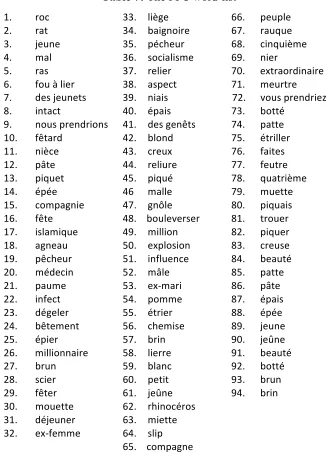
5.1.2 The PFC Text ... 190
5.1.3 PFC guided discussion and informal conversation ... 191
5.2 Methodology ... 192
5.3 Judgement Task: Results ... 197
5.4 Judgement Task: categorical responses ... 202
5.5 Acoustic cues: categorical syneresis and dieresis ... 206
5.5.1 Duration ... 207
5.5.2 Constriction: consonant-like quality of glides ... 208
5.6 Analysis of tokens: categorical judgements for syneresis and dieresis ... 209
Chapter 6 ... 234
6 Empirical Study: Glide phenomena in Spontaneous Speech ... 234
6.1.1 HVV environments in Spontaneous Speech Data ... 238
6.1.2 Distribution of tokens across speakers ... 238
6.1.3 Acoustic Analysis: token identification (methodology) ... 242
6.1.4 PRAAT: coding system ... 243
6.2 Spontaneous speech analysis results for lexicalised and derived data by region 246 6.3 Variability in lexicalised and derived contexts ... 250
viii
6.3.2 Variable realisations of derived glide contexts ... 253
6.3.3 Derived glide contexts: variability of /HV+V/ realisations and phonological environments preceding ... 260
6.3.4 Observations: variability of lexicalised and derived contexts ... 291
6.4 Data analysis by region: Île de France; Rhône Alpes; Normandie ... 292
6.5 Île de France ... 295
6.5.1 Île de France: variable realisations across lexicalised and derived data 300 6.5.2 Île de France: observations for two surveys ... 315
6.6 Normandie ... 317
6.6.1 Normandie: variable realisations across lexicalised and derived data .... 321
6.6.2 Normandie: observations across two surveys ... 329
6.7 Rhône Alpes ... 330
6.7.1 Rhône Alpes: variation across lexicalised and derived data ... 333
6.7.2 Rhône Alpes: observations across two surveys ... 340
6.8 Realisations of /HVV/ sequences in Spontaneous Speech: Observations ... 340
Chapter 7 ... 343
7 Analysis and Conclusions ... 343
7.1 Lexicalised glide contexts: analysis ... 343
7.2 Derived context data: analysis ... 354
7.2.1 Derived word medial environment ... 355
7.2.2 Variability of derived word medial data in OT ... 357
7.2.3 Cross-word-boundary context ... 360
7.3 Conclusions ... 362
References ... 367
Appendices ... 372
ix
Curriculum Vitae ... 377
List of Tables
Table 1: Pan dialectal variation in glide formation ... 24Table 2 Lexicalised OLG forms from ALF-Seine et Oise region ... 53
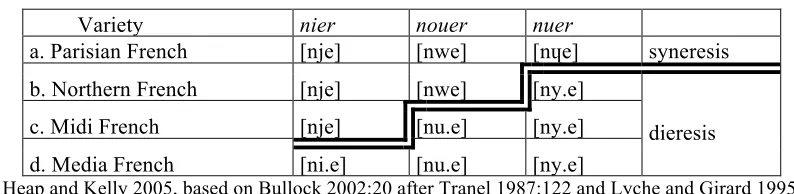
Table 3: Lexicalised LG forms from ALF-Seine et Oise region ... 54
Table 4: Cross-linguistic survey of strategies employed in the resolution of /HV+V/ ... 157
Table 5: Intragrammatical variation ... 162
Table 6: Pan dialectal variation ... 175
Table 7: The PFC word-list ... 187
Table 8: All instances of lexicalised /GV/ and derived /HV+V/ contexts ... 188
Table 9: Lexicalised GV contexts ... 188
Table 10: Derived /HV+V/ contexts ... 189
Table 11: /HV+V/ and GV contexts in the PFC Text ... 191
Table 12: PFC word-list, stimuli retained for judgement task ... 193
Table 13: Judgement task distribution of stimuli by word; 8 stimuli: N = number of iterations, % of total tokens calculated. ... 198
x
Table 15: Judgement task, results for four lexicalised stimuli by judge (1, 2, 3 and this author, K): N= number of tokens, percentages (%) calculated by response for each
stimulus ... 201
Table 16: Judgment Task, categorical results across 3 judges (1, 2, 3), by stimulus, N= number of categorical results from a panel of three judges, % calculated for realisations with syneresis and realisations with dieresis. ... 203
Table 17: Judgement task, categorical results across 4 judges (1, 2, 3, K) by stimulus, N= number of categorical results from a panel of three judges, % calculated for realisations with syneresis and realisations with dieresis. ... 205
Table 18: Pan dialectal variation (Heap and Kelly 2005 based on Tranel 1987 and Lyche and Girard 1995) ... 235
Table 19: Number of speakers by region (percentage calculated over total speakers in sample) compared to population by region (percentage calculated over total population for regions) ... 239
Table 20: tokens by speaker for each PFC survey (Île de France), each speaker
(identified by PFC speaker code), age, sex, N= number of tokens (for each speaker) ... 240
Table 21: tokens by speaker for each PFC survey (Normandie), each speaker (identified by PFC speaker code), age, sex, N= number of tokens ... 241
Table 22: tokens by speaker for each PFC survey (Rhône Alpes), each speaker (identified by PFC speaker code), age, sex, N= number of tokens ... 241
Table 23: coding system broken down for the token suite s21132i: each character is given in the left hand column with a summary of the significance for each character given to the right ... 244
xi
Table 25: Derived versus lexicalised glide contexts across three regions. N= number, percentage (%) calculated by region for derived and lexicalised contexts ... 247
Table 26: Distribution for lexicalised glide contexts across high vocoid /I U Y/:
percentages calculated by region for each high vocoid ... 247
Table 27: Distribution of derived contexts for each high vocoid /I U Y/ calculated by region ... 248
Table 28: Percentage word medial derived /HV+V/ glide contexts for each high vocoid /I U Y/, calculated by region ... 249
Table 29: Realisations of all lexicalised contexts across three variants: DEL = deleted high vocoid, dieresis, syneresis. N= number, (%) calculated for variant by vocoid ... 251
Table 30: Variable realisations of all derived and lexicalised contexts for three variants across all 3213 tokens: DEL = deleted high vocoid, dieresis, syneresis. N= number, (%) calculated by variant for each context ... 253
Table 31: All derived /HV+V/ contexts across high vocoids for three variants: DEL = deleted high vocoid, dieresis, syneresis. N= number, (%) calculated by variant for each high vocoid ... 254
Table 32: All derived /HV+V/ tokens for two environments (excluding 28 /tu +V/): N= number, % calculated for each environment across high vocoids ... 256
Table 33: All derived word medial tokens across three high vocoids for two variants: dieresis, syneresis. N= number, (%) calculated for each variant by vocoid ... 256
xii
Table 35: Cross-word-boundary tokens for monosyllabics bearing a high vocoid followed by a vowel initial word for three variants: DEL = deleted high vocoid, dieresis, syneresis. N= number, (%) calculated for each variant by vocoid ... 257
Table 36: Cross-word-boundary tokens for polysyllabics bearing a high vocoid followed by a vowel initial word for three variants: DEL = deleted high vocoid, dieresis, syneresis. N= number, (%) calculated for each variant by vocoid ... 259
Table 37: Judgement task results, N= number, % calculated by total N for each stimulus ... 260
Table 38: Preceding environments for derived /HV+V/: all simple (#, G, L, N, O) and complex (OH, OL, sO) environments across three high vocoids ... 262
Table 39: Simple phonological environments: derived contexts /HV+V/ preceded by word boundary (#) for two variants: dieresis, syneresis. N= number, (%) calculated for each variant by vocoid ... 263
Table 40: Derived contexts /HV+V/ preceded by a simple phonological environment – Liquid /l, R/ for two variants: dieresis, syneresis. N= number, (%) calculated for each variant by vocoid ... 267
Table 41: Derived contexts /HV+V/ preceded by simple phonological environment – Liquid /l/ for two variants: dieresis, syneresis. N= number, (%) calculated for each variant by vocoid ... 269
Table 42: Derived contexts /HV+V/ preceded by simple phonological environment – Liquid /R/ for two variants: dieresis, syneresis. N= number, (%) calculated for each variant by vocoid ... 269
xiii
Table 44: All derived /HV+V/ contexts preceded by simple phonological environments – Nasal /m/ for two variants: dieresis, syneresis. N= number, (%) calculated for each
variant by vocoid ... 271
Table 45: All derived /HV+V/ contexts (word medial and cross-word-boundary) preceded by simple phonological environments – Nasal /n/ for two variants: dieresis, syneresis. N= number, (%) calculated for each variant by vocoid ... 272
Table 46: All derived /HV+V/ contexts (word medial and cross-word-boundary) preceded by a simple phonological environment – Fricatives /f, v, s, z, ʃ, ʒ/ for two variants:
dieresis, syneresis. N= number, (%) calculated for each variant by vocoid. ... 274
Table 47: Derived /HV+V/ contexts preceded by simple phonological environments – Occlusives /p, b, t, d, k, g/ for two variants: dieresis, syneresis. N= number, (%)
calculated for each variant by vocoid for variant ... 275
Table 48: Cross-word-boundary derived /HV+V/ contexts preceded by simple phonological environments – /p, b, t, d, k/ for two variants: dieresis, syneresis. N= number, (%) calculated for each variant by vocoid for variant ... 277
Table 49: Derived /HV+V/ contexts, preceded by complex phonological environments – /Cɥ/, /sk/, /Ol/, and /OR/ for three variants: DEL= deletion, dieresis, syneresis. N=
number, (%) calculated for each variant by vocoid ... 278
Table 50: Derived contexts /HV+V/, preceded by complex phonological environment – CG /Cɥ/ for three variants: DEL= deletion, dieresis, syneresis. N= number, (%)
calculated for each variant by vocoid ... 279
Table 51: Derived contexts /HV+V/ preceded by complex phonological environment – /sk/ for a single variant: syneresis. N= number, (%) calculated for variant by high vocoid ... 282
xiv
Table 53: Derived versus lexicalised contexts, N= number, percentages (%) calculated by region ... 292
Table 54: All lexicalised and Derived tokens by survey for each region, PFC alpha-numeric correspondences: 75c Paris, Centre ville, 91a Brunoy, 50a Brécey, 61a
Domfrontais, 38a Grenoble and 69a Lyon, percentages at bottom calculated on the total number of tokens for each survey ... 293
Table 55: Demographics for each speaker by region/survey grouped by age and gender. ... 294
Table 57: Île de France all tokens observed across two PFC surveys. N= number,
percentages (%), data for each of two surveys in the region ... 295
Table 58: Île de France, 75c Paris, Centre ville, age (approximate), sex and N= number of tokens, % (calculated by speaker) for each speaker ... 296
Table 59: Île de France, Brunoy (91a) survey, age, sex and N= number of tokens, % calculated by speaker ... 297
Table 60: Île de France, 75c Paris, Centre ville, all tokens N= number of tokens, % calculated by speaker for derived and lexicalised contexts ... 297
Table 61: Île de France, Paris (75c), distribution of all tokens across three high vocoids /I U Y/, N= number of tokens, % calculated by vocoid ... 298
Table 62: Île de France, 91a Brunoy, derived and lexicalised contexts, for ... 299
Table 63: Île de France, 91a Brunoy, derived and lexicalised contexts for male speakers, N= number of tokens, % (calculated by speaker) ... 299
xv
Table 65: Île de France, Paris (75c), distribution of all tokens across three high vocoids for all potential variants, N= number of tokens, % calculated by vocoid for each variant: deleted high vocoid (DEL), dieresis, and syneresis ... 301
Table 66: Île de France, Paris (75c), Lexicalised contexts, N= number of tokens, % (calculated by vocoid) for two variants ((DEL) = deleted high vocoid, syneresis) ... 301
Table 67: Île de France, Paris (75c), Lexicalised contexts, N= number of tokens, % (calculated by speaker) for lexicalised variants (deleted high vocoid-DEL and syneresis-Syn.) ... 302
Table 68: Île de France, Paris (75c), all derived /HV+V/ context realisations, N= number of tokens, calculated for each variant: deleted high vocoids (DEL), dieresis, and
syneresis) across three high vocoids ... 304
Table 69: Île de France, Paris all tokens for cross-word-boundary derived /HV+V/ contexts, N= number, calculated for each variant: deleted high vocoid (DEL), dieresis, and syneresis, across speakers ... 305
Table 70: Île de France, Paris all derived cross-word-boundary contexts for three variants: DEL, dieresis, syneresis. N= number, % calculated for each variant: deleted high vocoid (DEL), dieresis, and syneresis, across speakers ... 306
Table 71: 75c Paris, Derived /tu+V/ cross-word-boundary contexts, N= number of tokens, % calculated by speaker for each variant: deleted high vocoids DEL, dieresis, and syneresis ... 307
Table 72: 75c Paris, Derived cross-word-boundary contexts: N= number of tokens, % calculated by speaker for each variant: deleted high vocoids DEL, dieresis, and syneresis ... 310
xvi
Table 74: Île de France, Brunoy (91a), distrbution of lexicalised tokens for all potential variants across four female speakers. N= number of tokens, % calculated by vocoid for each variant: deleted high vocoids (DEL), dieresis, and syneresis ... 311
Table 75: Île de France, Brunoy (91a), distribution of lexicalised tokens for all potential variants across four male speakers, N= number of tokens, % calculated by vocoid for each variant: deleted high vocoids (DEL), dieresis, and syneresis ... 312
Table 76: Île de France, Brunoy (91a), distribution of all lexicalised tokens across three high vocoids for all variants, N= number of tokens, % calculated by vocoid for each variant ... 312
Table 77: Île de France, 91a Brunoy, all derived /HV+V/ data: N= number of tokens, % calculated by vocoid for each variant, deleted high vocoids (DEL), dieresis with
epenthesis, dieresis with hiatus and syneresis ... 313
Table 78: Île de France, Brunoy (91a), variants for cross-word-boundary derived /HV+V/ contexts across four female speakers, N= number of tokens, % calculated by vocoid for each variant, deleted high vocoids (DEL), dieresis, and syneresis ... 314
Table 79: Île de France, Brunoy (91a), variants for cross-word-boundary derived /HV+V/ contexts across four male speakers, N= number of tokens, % calculated by vocoid for each variant: deleted high vocoids (DEL), dieresis, and syneresis ... 315
Table 80: Normandie, all tokens, N= number, % calculated by context for each survey318
Table 81: Normandie, Brécey (50a), age, sex, N= number of tokens, % calculated by speaker ... 318
Table 82: Normandie, 50a Brécey, all tokens, N = number, % calculated by context across three high vocoids ... 319
xvii
Table 84: Normandie, 61a Domfrontais, age, sex and N= number of tokens, % calculated by speaker ... 320
Table 85: Normandie, 61a Domfrontais all tokens for derived and lexicalised contexts across four speakers, N= number of tokens, % calculated by speaker ... 320
Table 86: Normandie, 61a Domfrontais all tokens across high vocoids for lexicalised and derived contexts, N = number, calculated for each context (derived and lexicalised) across three high vocoids ... 321
Table 87: Normandie, Brécey (50 a), all lexicalised GV contexts across three high
vocoids for each variant (DEL= deleted high vocoid, Dieresis and Syneresis) N= number of tokens, % calculated by variant across high vocoid ... 322
Table 88: Normandie, Brécey (50a), realisations for all lexicalised contexts across four speakers for each variant (DEL= deleted high vocoid, Dieresis and Syneresis), N=
number of tokens, % calculated by variant across speaker ... 322
Table 89: Normandie, Brécey (50a), realisations for all derived cross-word boundary contexts across four speakers, N= number of tokens, % calculated by variant (DEL= deleted high vocoid, Dieresis and Syneresis), across speakers ... 324
Table 90: Normandie, 50a Brécey, realisations for all derived /HV+V/ contexts, N= number of tokens, % calculated by high vocoid for each variant (DEL= deleted high vocoid, Dieresis and Syneresis), across high vocoids ... 325
Table 91: Normandie, Domfrontais (61a), all lexicalised contexts across four speakers: N= number of tokens, % calculated by variant (DEL= deleted high vocoid, Dieresis and Syneresis) across speaker ... 325
xviii
Table 93: Normandie, Domfrontais (50a), all derived /HV+V/ contexts across three high vocoids: N= number of tokens, % calculated for each variant, (DEL= deleted high
vocoid, Dieresis and Syneresis) ... 327
Table 94: Normandie, Domfrontais (61a), all cross-word-boundary derived contexts across four speakers: N= number of tokens, % calculated by speaker for each variant, (DEL= deleted high vocoid, Dieresis and Syneresis) ... 327
Table 95: Normandie, Domfrontais (50a), variants for derived cross-word-boundary contexts, N= number of tokens, % calculated for each variant, (DEL) deleted high
vocoids, dieresis, and syneresis ... 328
Table 96: Rhône Alpes, all tokens for across two surveys (38a Grenoble, 69a Lyon), N= number of tokens, % calculated by context for each survey ... 330
Table 97: Rhône Alpes, 69a Lyon, age, sex and N= number of tokens, % calculated by speaker ... 331
Table 98: Rhône Alpes, 69a Lyon, all tokens by context across three high vocoids, N= number of tokens, % calculated by vocoid for lexicalised and derived contexts ... 331
Table 99: Rhône Alpes, 38a Grenoble, age, sex and N= number of tokens, % calculated by speaker ... 332
Table 100: Rhône Alpes, 38a Grenoble all tokens for lexicalised and derived contexts across three high vocoids, N= number of tokens, % calculated for derived and lexicalised contexts across three high vocoids ... 333
Table 101: Rhône Alpes, 69a Lyon, realisations for all lexicalised contexts across high vocoids for three variant: N= number of tokens, % calculated for each variant, (DEL= deleted high vocoid, Dieresis and Syneresis), across three high vocoids ... 334
xix
Table 103: Rhône Alpes, Lyon (69a), tokens for all derived cross-word-boundary contexts across four speakers for each variant, N= number of tokens, % calculated by variant (DEL= deleted high vocoid, Dieresis and Syneresis) across speaker ... 335
Table 104: Rhône Alpes, Lyon, realisations for all derived /HV+V/ contexts across high vocoids for three variants, N= number of tokens, % calculated by high vocoid for each variant (DEL= deleted high vocoid, dieresis and syneresis) across high vocoid... 336
Table 105: Rhône Alpes, 38a Grenoble, realisations for all lexicalised contexts across high vocoids for three variants, N= number of tokens, % calculated for each variant (DEL= deleted high vocoid, dieresis and syneresis), across three high vocoids ... 338
Table 106: Rhône Alpes, 38a Grenoble, realisations for all derived contexts across high vocoids for three variants N= number of tokens, % calculated for each variant (DEL= deleted high vocoid, Dieresis and Syneresis), across three high vocoids ... 339
Table 107: Rhône Alpes, 38a Grenoble, all cross-word-boundary tokens across high vocoids for three variants N= number of tokens, % calculated for each variant (DEL= deleted high vocoid, Dieresis and Syneresis), across three high vocoids ... 339
Table 108: Lexical items preceded by simple onsets /C/ realised with dieresis ... 345
xx
List of Figures
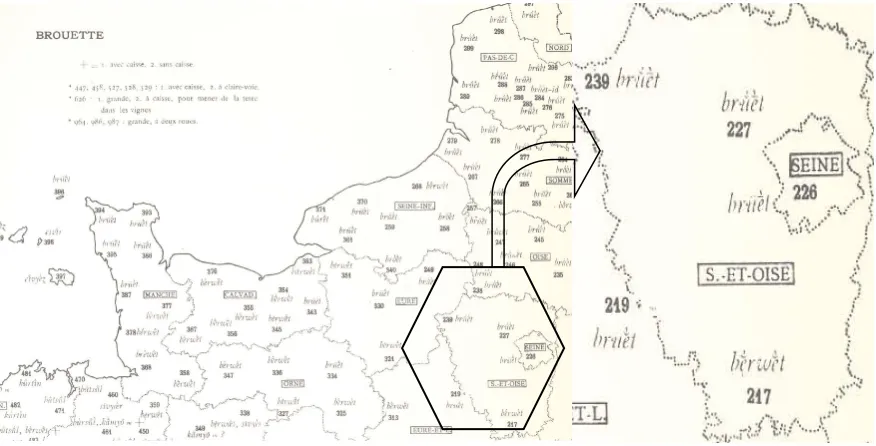
Figure 1: ALF map No 177 Seine et Oise - Brouette ... 52
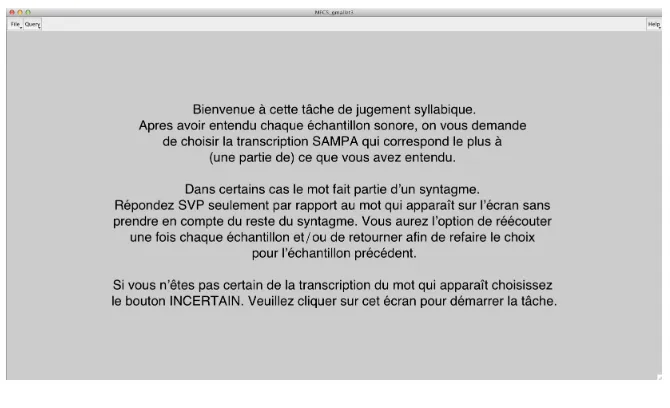
Figure 2: Judgement task, initial screen ... 194
Figure 3: Judgement task, SAMPA transcription options for the stimulus muette ... 195
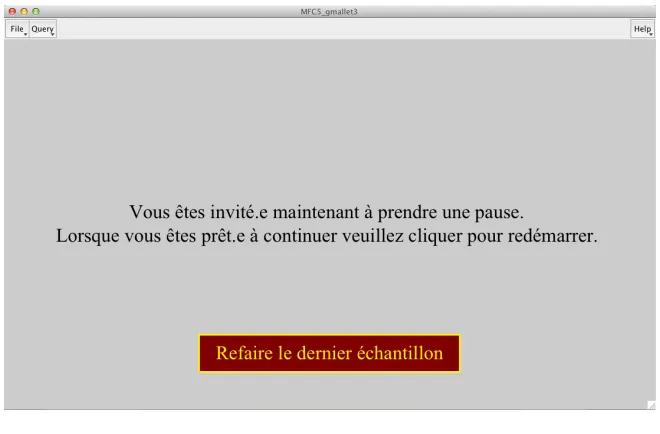
Figure 4: Judgement task, Invitation to take a break ... 196
Figure 5: Judgement task, stimuli counter ... 196
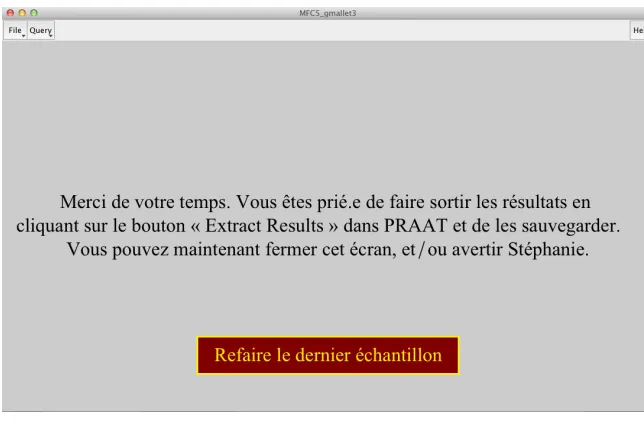
Figure 6: Judgement task, Final instructions to judges upon completion ... 197
Figure 7: Praat spectrogram with intensity contour and oscillogram for the token 38agp1 28 scier (dieresis with epenthesis) ... 211
Figure 8: Praat spectrogram with intensity contour and oscillogram for the token 31ajg1 28 scier (syneresis) ... 212
Figure 9: Praat spectrogram with intensity contour and oscillogram for 38aep1 81 trouer (dieresis with hiatus) ... 214
Figure 10: Acoustic cues, Praat spectrogram with intensity contour and oscillogram, for the token 75cab1 81 trouer (dieresis) ... 215
Figure 11: Praat spectrogram with intensity contour and oscillogram for the token 69asg1 81 trouer exhibiting syneresis [we]. ... 217
Figure 12: Acoustic cues, Praat spectrogram and intensity contour with oscillogram for the token 69acg1 51 influence (syneresis) ... 219
Figure 13: Acoustic cues, Praat spectrogram with intensity contour and oscillogram (above) for the token 38asb1 51 influence (hiatus) ... 220
xxi
Figure 15: Acoustic cues, Praat spectrogram with intensity contour and oscillogram (above) for the token 38aca1 6 (fou à) lier (syneresis) ... 222
Figure 16: Acoustic cues, Praat spectrogram with intensity contour and oscillogram for the token 38acm1 6 (fou à) lier (dieresis) ... 223
Figure 17: Acoustic cues, Praat spectrogram with intensity contour and oscillogram (above) for the token 31ajg1 28 scier (syneresis) ... 224
Figure 18: Acoustic cues, Praat spectrogram with intensity contour and oscillogram for the token 38aas1 28 scier (dieresis) ... 225
Figure 19: Acoustic cues, Praat spectrogram with intensity contour and oscillogram for the token 69asg1 63 miette (syneresis) ... 226
Figure 20: Acoustic cues, Praat spectrogram with intensity contour and oscillogram for the token btamp2 63 miette (dieresis) ... 227
Figure 21: Acoustic cues, Praat spectrogram with intensity contour and oscillogram for the token 31agc1 79 muette (syneresis) ... 228
Figure 22: Acoustic cues, Praat spectrogram with intensity contour and oscillogram (above) for the token 75ccr1 79 muette (dieresis) ... 229
Figure 23: Acoustic cues, Praat spectrogram and oscillogram with intensity contour for the token 38aca1 30 mouette (syneresis) ... 230
Figure 24: Acoustic cues, Praat spectrogram and oscillogram with intensity contour for the token 69aag1 30 mouette (dieresis) ... 231
Figure 25: Praat coding tiers ... 242
xxii
Figure 27: 91aed1 ‘ou aux’ realised with dieresis [uo]: derived across-word-boundary preceded by only a word boundary (#) ... 265
Figure 28: 75csb1 'oui on' realised with dieresis [ijɔ̃]: derived across-word-boundary preceded by only a word boundary (G) ... 266
Figure 29: 38aas1 loué realised with dieresis [luwe]: derived word medially preceded by (L) ... 268
Figure 30: 75ccm1 (re)mis au realised with syneresis: derived across-word-boundary preceded by [m] ... 271
Figure 31: 91aed1 (ve)nue à realised with syneresis: derived across-word-boundary preceded by [n] ... 273
Figure 32: 75ccm1 parti à realised with syneresis. Spectrogram with intensity contour, oscillogram and tiers: transcription, token, SAMPA, segments, coding, observations .. 276
Figure 33: Spectrogram with intensity contour, oscillogram and tiers for 50ajp1 (suis) un realised with dieresis: derived across-word-boundary preceded by [s(ɥi)] ... 280
Figure 34: Spectrogram with intensity contour, oscillogram and tiers for 91aal1 (suis) à realised with syneresis: derived across-word-boundary preceded by [s(ɥi)] ... 281
Figure 35: Spectrogram with intensity contour, oscillogram and tiers for 61ah1 qui é(tait) realised with syneresis [kje]: derived across-word-boundary preceded by [sk’] ... 283
Figure 36: Spectrogram with intensity contour and oscillogram for 75cvl1 influer realised with syneresis with simplification of the preceding OL sequence ... 285
Figure 37: Spectrogram with intensity contour and oscillogram for 91ael1 tablier realised with dieresis with simplification of the preceding OL sequence ... 287
xxiii
Figure 39: Spectrogram with intensity contour and oscillogram for 75ccr1 voudriez
realised with schwa epenthesis and syneresis. ... 289
Figure 40: Spectrogram with intensity contour, oscillogram and tiers for 61agr1 pris une realised withdieresis: derived across-word-boundary preceded by [pR] ... 290
Figure 41: 91acs2 je suis [ʒəәʃ(ɥ)i] reduced ... 303
Figure 42: 75cvl1 tu as realised with dieresis (epenthesis), assibilation, and high vocoid devoicing ... 308
Figure 43: 75ccm1 tu es realised with syneresis, assibilation, and high vocoid devoicing ... 309
Figure 44: 50alb1 sixième realised with dieresis with four tiers: transcription, token, SAMPA, segmentation. ... 323
Figure 45: Lyon 69all1 suis retraité [ʃ(ɥi)jəәʀ]realised with metathesis. Spectrogram with intensity contour, oscillogram and coding tiers: orthographic transcription, (*) token, SAMPA transcription (of token), coding, and observations ... 337
xxiv
List of Abbreviations
Abbreviations used in this thesis:
V Vowel
HV High Vowel
G Glide
GV Glide +Vowel
OL Obstruant + Liquid
C Consonant
( ) Segment contained between parentheses is optional;
for example HV(G)V indicates the optionality of epenthetic glides1
CW Cross-word-boundary
# Word boundary
$ Syllable boundary
‘.’ Syllable boundary in phonetic transcriptions
1
xxv
List of Appendices
Appendix A: PFC Reading Task with glide glide contexts studied in (Kelly 2005). ... 372
Appendix B: Instructions to judges for Judgement task. ... 373
1
Chapter 1
Introduction
1
The goal of this thesis is the study of glides in French with a view to advancing a better description as well as an improved understanding of glide phenomena in various contexts of Modern French. By glide, we are referring to such sounds as [j] (bière, yeti), [w] (boire, ouïe), and [ɥ] (puis, huile). While these are often referred to as semi-vowels or semi-consonants, we prefer to use glide, –a term which to us seems much more theoretically neutral than those other names that are traditionally used.
French provides a particularly fertile terrain for the study of glides and gliding phenomena. Standard French (SF) has a three-glide inventory /j w ɥ/ each of which corresponds to a high vowel /i, y, u/. A three-glide inventory is typologically unusual since the vast majority of glide languages include only two ([j] and [w] as in English yet and wet, for example). We discuss implications for the three-glide inventory of Modern French in Markedness Theory in Chapter 4.
French glides figure prominently in the descriptive literature and in theoretical accounts of Modern French (Schane 1968, Dell 1973, Kaye and Lowenstamm 1984, Durand and Lyche 1999, Bullock 2002, Hall 2006, cf. Chapters 3 and 4). Descriptions and theoretical discussions often focus on a set of glide data that when examined in isolation sometimes lead to generalisations based on their apparent predictability in a given environment. Sandhi effects, for example, can provide diagnostic insights as to a speaker’s treatment of a particular glide. These data show that the very same glide may pattern with vowels or it may pattern with consonants (les yeux [lezjø] ‘eyes’ but les yetis [lejɛti] ‘yetis’). In some cases, the duality of glides may be attested for a single word (la ouate [lawat] but l’ouate [lwat] ‘cotton batting’).
2
cf. List of Abbreviations xxvii). A tautomorphemic HVV occurs as a result of a
morpheme final high vocoid meeting a vowel-initial morpheme which can occur either in a case of inflection or (morphological) derivation or in contexts where word-final HV is followed by a vowel initial word (cross-word-boundary). Derived glide contexts can be distinguished from lexicalised glide contexts where we observe that the lexicalised glide occurs in a monomorpheme. In derived contexts, a rule of glide formation may operate as a strategy to avoid hiatus. Thus, a HVV sequence results in syneresis (GV, glide plus vowel). In the case that GF does not apply the HVV sequence remains (realised with dieresis with or without epenthesis). In an empirical study of glides in the spontaneous speech of continental French speakers, we examine glide phenomena in three contexts: lexicalised (pied, loi, lui), word medial derived (lier, jouer, suer), and also potential glide formation across word boundaries (qui est, ou on, vu aussi). For each of the contexts outlined here, we examine outcomes for glide contexts with a goal of describing any variabilty observed for each context and for each high vowel or glide in evidence. Our data come from semidirected interviews of the international collaborative project la Phonologie du Français Contemporain (PFC, cf. Durand, Jacques, Bernard Laks & Chantal Lyche 2002, 2009, also Chapter 5).
Our research questions are as follows. Are all glides alike: equally distributed, equally stable (or variable) in all contexts? Are all glide processes as predictable as is described? And is this the case for all contexts (and by extension the specific environments in each context)? And where variability is observed, is it observed equally for all three glides? If we do observe variable realisations (syneresis versus dieresis), how can the variability of glide contexts inform a theoretical model of glide data in French?
In lexicalised contexts, for example, glides are described as invariably realised with syneresis (Tranel 1987). Derived glide contexts are also typically described realised with syneresis as a result of a rule of glide formation which operates equally on all three high vocoids.
3
as such, very little is known about glide phenomena in this environment. As a context where glide formation may occur, our literature review (Chapter 1-4) shows that although cross-word-boundary glide formation is noted on occasion in descriptions of spontaneous speech (cf. Nyrop 1899, Passy 1913, Lyche 1979) discussion for implications of glide formation in cross-word-boundary environment is often relegated to footnotes. There are no known studies that treat cross-word-boundary glide formation extensively.
Our thesis is structured as follows. In the rest of Chapter 1, we illustrate the depth of the complexity of French glide data as we discuss the details of glide descriptions of Modern French. We examine derived and lexicalised contexts, and any variability that may be observed in these contexts. By their nature derived glides result from phonological operations while lexicalised glides can be linked to historical processes in operation during the evolution of the French language. In a survey that spans almost 300 years of research on glides including the early grammatical and early phonetic traditions, we examine the emergence and evolution of glides in French and show that glides have shown considerable variability throughout the history of the language. Their relative uniformity in Modern French contrasts with their variable history.
In Chapter 2, we discuss the emergence of the classical tradition of phonetics and its implications for glide descriptions. At the inception of the International Phonetic
Association (IPA), the work of Passy (1913) and Jones (1932) are at the forefront of their field of phonetic description. We show that the duality of glides, at times vowel-like while at other times consonant-like, presents persistent difficulty for a phonetic
description focussed on assigning all sounds in language to one or the other of consonant or vowel classes. The phonetic descriptions based solely on describing the phonetic qualities perceived proves ill equipped to adequately describe glides. By the mid 20th century glide treatments are improved with the emergence of the phonological tradition exemplified in Pike (1943) and become more consistent as the goals of phonetic
4
In Chapter 3, we examine research on glides in the linear generative framework (Chomsky and Halle 1968, Schane 1968, Dell 1973, Morin 1976, Lyche 1979). The various discussions surrounding glide treatments in the linear framework bring to light the difficulty that glides and their duality present for a model that relies on distinctive features to distinguish between consonants and vowels.
In Chapter 4 we examine the early non linear generative models that follow the linear generative model, beginning with glide analyses in Kaye and Lowenstamm (1984). This is the first model to represent the role of the syllable in distinguishing between high vowels and their corresponding glides. Further discussions of glide treatments for French and for other languages including, Guerssel (1986), Nespor and Vogel (1986), Encrevé (1988), Carreira (1989), Hannahs (1995), Lyche and Girard (1995) shed further light on the discussion of glide phenomena. Finally we turn our discussion to markedness (typology, cross-linguistic distribution, child language acquisition) before turning the discussion to glide treatments in Optimality Theoretical analyses (Rosenthall 1997, Durand and Lyche 1999, Bullock 2002, Hall 2006).
In Chapter 5, we describe the goals, methodology, and results for a judgement task devised as a methodological tool to aid in our primary study of glide formation in a spontaneous speech sample of Continental French. This judgement task, based on a PRAAT script, wherein three linguistically informed judges who are native speakers of Continental French, are asked to determine whether audio samples of HVV tokens are realised with syneresis or dieresis. Our judgement task includes 782 /HVV/ tokens (both lexicalised and derived). The goals of the judgement task are: to establish the extent of variability observed for /HVV/ and /HV+V/ surface realisations in Continental French; and to establish, from those tokens that result in categorical judgements from our panel of judges, which acoustic cues serve to reliably distinguish a realisation with syneresis from a realisation with dieresis on a spectrogram.
5
Lyche 2002, 2009), a collaborative research project that aims to expand and renew the empirical foundation of the description of French.
In Chapter 6, we discuss the methodology and present the results of our primary spontaneous speech study. With past analyses in mind, the scope of our study is not limited to that artificial construct known as Standard French (Morin 2000) but rather we analyse glide phenomena in the speech of three geographically separate regions (Île de France, Normandy and the Rhône Alpes regions) to determine to what extent glide phenomena are homogeonous and regularised in Continental French at the turn of this new millennium. We identify 3415 tokens for /HV(+)V/ contexts in interviews from 31 speakers in six PFC surveys. Using the acoustic cues identified in our first study, we code tokens for realisations with syneresis and with dieresis in PRAAT. We examine the prevalence of glide formation (syneresis), realisations with dieresis and deleted high vocoids in /HV(+)V/ contexts for all three of the high vowels of French /i y u/.
Chapter 7 provides some analyses of our results for realisations of glide contexts and conclusions. Distribution of tokens across three high vocoids follows a general
6
French Glide Data
: derived and lexicalised contexts
1.1
Following from the descriptive literature (Tranel 1987, Walker 2001) and theoretical accounts (Schane 1968, Kaye and Lowenstamm 1984), we distinguish two categories for glides in French: derived and lexicalised. Lexicalised glides are present in the lexicon from their acquisition and as such they are most often considered invariable, whereas derived glides occur when, as a result of derivation or inflection involving a vowel initial morpheme, a high vowel is in a hiatus /HV+V/. In the following sections, we discuss in detail these categorisations and their implications for our study of variable glide
formation (GF) in Hexagonal French.
In section 1.1.1 we discuss the issue of phonemicity for French glides and our
categorisation of the glides studied: lexicalised and derived glide contexts. In sections 1.2 and 1.3, we discuss derived and lexicalised glides while providing examples for each context described. These are not intended to be exhaustive inventories of derived and lexicalised glide data, but rather an illustration of their presence, prevalence, and distribution in the inventory of Modern French glide contexts.
Phonemicity and categorisation of glides in French
1.1.1
Given the complementary distribution between high vowels and corresponding glides, French glides are not usually listed among phonemes. According to Levi, while
consensus on the status of glides is not always clear, we often observe glides listed in the phonemic inventories for languages (2004: 1).
Phonemes typically exhibit an unconstrained distribution while their allophones are found in predictable environments. The predictability of derived glides combined with
alterability with a corresponding high vowel in French leads to the position that glides and their corresponding high vowels are best considered two allophones of a single phoneme (Martinet 1945, Schane 1968, Kaye and Lowenstam 1984, Durand 1987).
7
distinguish a phoneme /j/ from a phoneme /i/, this is because paye and abeille are not identical to pays and abbaye” (1960:72). French glides are not all alike and can be distinguished by their distribution and their underlying source; yod [j] alone occurs in word-final and syllable final position, for example. Given these facts, yod is sometimes described as a phoneme in French (Martinet 1960, Léon 1978). Levi (2004) discusses at length the difficulties of including glides in phoneme inventories:
When faced with a near-minimal pair such as [taj] and [ta.i], it is necessary to look further into the language to determine the true representation of this contrast. Processes that target features and either group [j] and [i] together or differentiate between them help determine which analysis—'glide' or 'vocalic'—is better suited to the language. Similarly, finding the basic pattern of the language—hiatus or gliding—can also clarify which solution is better.
(Levi 2004: 5)
In final position, yod [j] can be seen to pattern with consonants having the effect of closing a syllable and triggering a vowel adjustment (payer [peje] ‘to pay’ ~ paye [pɛj] ‘pays’). For this reason we might include word-final yod among consonant phonemes in French. However, the status of word-final yod is not at issue here, and is therefore
counted in the category of lexicalised glides (rien [ʀjɛ̃], loi [lwa], nuit [nɥi], for example). Unlike the glides we categorise as derived, these glides are not the result of a rule of glide formation that takes place after processes of suffixation. Thus we describe as lexicalised all glides present in the lexicon, while derived glides are the result of tautomorphemic high vocoid + vocoid sequence (i.e, a stem final high vowel meets another vowel initial morpheme). Often this environment is the result of suffixation (derivational or
inflectional), or, as mentioned in Nyrop (1899), Passy (1913, section 2.1), Lyche (1979, section 3.4.2) glide formation can result across a word boundary when the /HV+V/ environment occurs.
8
semi-consonant). It is only after Kaye and Lowenstamm (1984) that the high vowel phonemes of French are more precisely described as the high vocoid series /I Y U/. Each high vocoid /I Y U/ represents both possible allophones: high vowel and corresponding glide: /I/→[i] or [j]; /Y/→[y] or [ɥ] finally /U/→[u] or [w] (cf. Kaye and Lowenstamn 1984, Chapter 4). In this perspective, the high vowel occurs in syllable peaks while the glide occurs in non-peak positions only. In this model, a high vocoid may occur in all positions within the syllable (onset, nucleus, coda); its phonetic realisation to be
determined at the surface level after syllabification or resyllabification. It is a particularly elegant account since some glides behave like vowels while others behave like
consonants. In this model, derived glides are the non-nuclear realisations of /I, U, and Y/.
In the following section, we discuss further our categorisation of derived glide contexts with an examination of the glide data described for each of the various contexts observed. In 1.2.1, we illustrate how the process of glide formation occurs and its relationship to the high vowels. In 1.2.2, we examine the process of glide epenthesis and compare it to glide formation since both are strategies for hiatus avoidance. Since both of these processes are optional we will discuss the variability attested in section 1.2.3. We will show that glide formation and epenthesis, triggered by the surrounding phonological environment and permissible syllable structure, transform a high vowel in hiatus to a more desireable surface form ([GV] syneresis or [VGV] dieresis).
Derived Glides
1.2
French high vowels and glides are inherently linked in derived contexts. According to Gougenheim, for example, “[l]es semi-consonnes, que l’on appelle aussi semi-voyelles, ne sont autres que les trois voyelles extrêmes, i, u, ou, prononcées comme des consonnes [...] ” (1969: 29). According to Durand “ [...] in so many languages, the simplest analysis should treat these semi-vowels simply as the high vowels in a non-syllabic disguise (1989: 95)”. Like Gougenheim and Durand, others advocate for a position that glides /j ɥ
w/ are merely consonantal versions of the corresponding high vowels /i y u/ (Martinet
9
(1968), we use [ʀ] to represent the rhotic phoneme in our own phonetic transcriptions
however many authors also use [r] which we leave unchanged in their examples.
This position that all glides are simply non-syllabic realisations of high vowels is supported by the fact that glides are never syllabic (*[bwd], *[ljs], *[fɥt], for example). High vowel~glide alternations of derived contexts are therefore considered consonantal associated to an available onset position (1):
(1) Derived forms
a) i~j: étudie [etydi] ‘studies’, étudiant [etydjɑ̃] ‘student’ étudier [etydje] ‘to study’, b) u~w: joue [ʒu] ‘plays’, jouable [ʒwabl] ‘playable’, joueur [ʒwœ:ʀ] ‘player’, c) y~ɥ: attribut [atʀiby] ‘attribute’, attribuable [atʀibɥabl] ‘attributable’, attribuer
[atʀibɥe] ‘to attribute’),
Syllabicity is widely seen as the primary motivating factor in glide formation in derived contexts (cf. Kaye and Lowenstamm 1984). However, it cannot not account for
lexicalised glides such as trois [tʀwa] *[tʀua], truite [tʀɥit] *[tʀyit].
In the following sections, we will discuss the details surrounding the processes of glide formation (section 1.2.1) and glide epenthesis (section 1.2.2) and the tendency to under report variability in descriptions of these data. In section 1.3.3, we discuss the extent to which variability is observed in the realisation of derived glides. Lexicalised glides are by contrast much more regular, with some exceptions attributable to stylistic variation, particularly for j~i (Martinet 1945 cf. section 2.2.2, Bullock 2002 cf. section 4.7). We examine these cases in section 1.3. where, for each of the various categories outlined in (1), we will discuss their origins in the diachronic evolution from Latin to French. We will examine evidence of normative prescriptive pressures influencing treatments of these forms by way of the 17th century grammatical tradition as well as some empirical
10
Glide Formation in Hexagonal French
1.2.1
Glide formation as shown in (3), is one possible outcome when phonological derivation results in a potential hiatus. According to Tranel, “[a]s a rule when a vowel-initial suffix is added to a word ending in a closed vowel, the closed vowel changes into the
corresponding glide by a process called gliding (‘semi-vocalisation’)” (1987: 118). Following Morin (1976) and Rosenthall (1997), we prefer the term glide formation (GF) to refer to the process that Tranel and others call ‘gliding’ or ‘semivocalisation’. Glide formation is most commonly demonstrated with first group (–er) conjugations as shown in (2).
(2) Glide formation (syneresis): /HV+V/→[GV]
a. [i→ j]: lier /li+e/→ [lje] ‘to tie’
b. [u→w]: jouer /ʒu+e/→ [ʒwe] ‘to play’ c. [y→ɥ]: suer /sy+e/→ [sɥe] ‘to sweat’
In (2) above, we show that all three French high vowels [i y u] undergo glide formation. Glide formation must be considered optional, however, since hiatus sequences do occur in derived contexts but also in lexicalised forms (maïs [mais] ‘corn’, poème [pɔɛm] ‘poem’, for example, cf. Tranel 1987, Noske 1993, Rialland 1994). We note also that many of these lexicalised forms might still undergo modification that resembles glide formation. Since hiatus is not banned by the grammar the application of glide formation cannot be a strict grammatical imperative. But does the outcome (syneresis versus dieresis) have phonological implications?
11
(3) Derived glide contexts /HV+V/→ [GV]
a. –able: /j/- aimiable ‘kind’ [amjabl], fiable ‘reliable’ [fjabl],
/w/- louable ‘laudable’ [lwabl], jouable ‘playable’[ʒwabl], avouable /ɥ/- évaluable ‘assessable’[evalɥabl], attribuable ‘attributable’ [atribɥabl], –ant:
/j/- confiant ‘confident’ [kɔ̃fjɑ̃], conciliant, ‘conciliatory’ [kɔ̃siljɑ̃], /w/- n/a
/ɥ/- puant ‘smelly’ [pɥɑ̃], remuant ‘restless’ [rǝmɥɑ̃], suant ‘sweaty’[sɥɑ̃],
b. –euse: /j/- envieuse’envious’ [ẽvjøz], prodigieuse ‘prodigious’ [prɔdiʒjøz], /w/- joueuse [ʒwøz] ‘player’
/ɥ/- tortueuse ‘tortuous’ [tɔrtɥøz]
(Juilland 1967)
12
(4) Glide formation resulting in monosyllabic forms
Preceding phonological environment: $C
a. /i/→[j]: fie [fi] ‘relies on’, fier [fje] ‘to rely on’ lie [li] ‘ties’, lier [lje] ‘to tie’
nie [ni] ‘denies’, nier [nje] ‘to deny’ scie [si] ‘saws’, scier [sje] ‘to saw’
(Juilland 1965)
b. /u/→[w]: doue ‘equips’, douer [dwe] ‘to equipe’ loue [lu] ‘praises’ , louer [lwe] ‘to praise’ noue [nu] ‘knots’, nouer [nwe] ‘to knot’
roue [ʀu] ‘beats’, rouer [ʀwe] ‘to beat’ voue [vu] ‘vows’, vouer [vwe] ‘to vow’
(Rey 1967) c. /y/→ [ɥ]: hue [hy] ‘shouts/cries/hollers’, huer [ˈhɥe] ‘to shout/cry/holler’
mue [my] ‘molts’, muer [mɥe] ‘to molt’
pue [py] ‘stinks/repugnates’, puer [pɥe] ‘to stink/repugnate’ rue [ry] ‘kicks’, ruer[rɥe] ‘to kick’
sue [sy] ‘sweats’ , suer [sɥe] ‘to sweat’ tue [ty] ‘kills’, tuer [tɥe] ‘to kill’
(Juilland 1965)
The data in (4) show that the preceding environment is unrestricted for consonant class; Glide formation occurs for all three high vowels when they are preceded by any single consonant: stop, nasal, fricative, liquid.
13
(5) Word medial glide formation
Preceding phonological environment: $C
a. /i/→[j]: défie [de.fi] ‘challenges’, défier [de.fje] ‘to challenge’
concilie [kɔ̃.si.li] ‘reconciles’, concilier [kɔ̃.si.lje] ‘to reconcile’
circonstancie [sir.kɔ̃.stã.si] ‘details’, circonstancier [sir.kɔ̃.stã.sje] ‘to detail’
b. /u/→[w]: secoue [sǝ.ku] ‘shakes’, secouer [sǝ.kwe] ‘to shake’ échoue [e.ʃu] ‘fails’ échouer [e.ʃwe] ‘to fail’
désavoue [de.za.vu] ‘disavows’, désavouer [de.za.vwe] ‘to disavow’
c. /y/→[ɥ]: dénue [de.ny] ‘deprives’, dénuer [de.nɥe] ‘to deprive’,
continue [kɔ̃.ti.ny] ‘continues’, continuer [kɔ̃.ti.nɥe] ‘to continue’ discontinue [dis.kɔ̃.ti.ny] ‘discontinue’, discontinuer [dis.kɔ̃.ti.nɥe] ‘to continue’
(Juilland 1965)
In (5), the examples show verb inflection resulting in glide formation for all three high vowels. In section 1.2.3, we will examine other derived /HV+V/ contexts in a discussion of the variability of realisations in these contexts which is very often omitted in
descriptions and theoretical accounts.
We have seen from the data in (4) and (5) that glide formation may occur when preceded by any single consonant: liquid, nasal or obstruent. According to observations from Gougenheim (1935) and Fouché (1959) glide formation is blocked when preceded by an Obstruent + Liquid (OL) sequence, resulting in dieresis with or without epenthesis as shown in (6).
(6) Blocked glide formation (dieresis): /OLHV+V/→[OLHV(G)V]
a. /j/: #OL – plier ‘to fold’, [pli] → [pli.(j)e], $OL – déplier [de.pli.je] ‘to unfold’
b. /w/:#OL – trouer ‘to pierce’, [tʀu] → [tʀu.(w)e]
$OL – écrouer ‘to imprison’, [ekʀu] → [ekʀu.(w)e] c. /ɥ/: #OL – fluer ‘to flow’, [fly] → [fly.(ɥ)e]
$OL – inflouer [ɛ̃.fly.(ɥ)e] ‘to influence’
(Juilland 1965, Rey 1967, Martinet and Walter 1973)
14
(7) Glide formation after a preceding s+C sequence
Preceding phonological environment
a. #(s)CG
/i/→[j]: skie [ski] ‘skies’, skier [skje] ‘to ski’
b. $(s)CG
/i/→[j]: amnistie [am.ni.sti] ‘pardons’, amnistie [am.ni.stje] ‘to pardon’ /y/→[ɥ]: conspue [kɔ̃.spy] ‘shouts down’, conspuer [kɔ̃.spɥe]‘to shout down’
(Juilland 1965)
In view of the data in (5, 6 and 7), one might want to propose that OLG sequences are banned. Such a generalisation must be ruled out since OLG sequences do occur in French (trois [tʀwa] ‘three’, truite [tʀɥit] ‘trout’, for example, (cf. Chapter 3 and 4).
Finally, we discuss another environment for glide formation that is rarely reported: glide formation across word boundaries. Contrary to Tranel 1987 and Hannahs 1995, we observe that when a word-final high vowel meets an immediately following vowel initial word, glide formation may occur across a word boundary such that the word-final high vowel becomes a glide and forms a single syllable with the vowel following. An
excellent example of across-word-boundary glide formation is attested in PFC word-list data. Number six in the PFC word-list, 6. fou à lier, is very often pronounced in two syllables [fwa.lje] versus a more careful pronunciation for each word resulting in three
syllables: [fu.a.lje] (cf. Chapters 5 and 6)2. This less conventional form attests to the possibility of glide formation across word boundaries for some speakers.
Passy (1913) also reports this articulatory phenomenon resulting in diphthongs with off-glides [VG] in the spontaneous speech of a Northern variety.
2
15
À la vérité, dans un parler rapide, il y a des cas où, deux voyelles étant juxtaposées, la moins sonore ou la moins accentuée perd son rôle syllabique, devient consonante, et forme avec l’autre une diphtongue ou réunion de deux voyelles en une syllabe ; ainsi dans certaines rencontres de mots comme à
outrance(aŭtrɑ̃ːs), il a écrit (ilaĕkri), […] il est si oublieux (ilɛsiŭbliø). (Passy 1913:59)
While Passy’s examples describe falling diphthongs in rapid speech, Nyrop describes spontaneous speech outcomes with on-glides [GV]: “[l]a voyelle finale d’un mot peut se changer en consonne devant la voyelle initiale du mot suivant ; dans la prononciation familière, qui est devient [kjæ]” (1899: 216-217, cf. § 288). Warnant observes that the context of the subject pronoun tu when followed by a vowel inital verb such as est is realised as [ɥ]; “[d]ans le parler de la conversation courante, la voyelle du pronom sujet tu, suivi d’une autre voyelle, se prononce [ɥ] : tu es [tɥɛ] tu étais [tɥɛ-tɛ]” (1968: XXII, note 1). We find similar phenomena attested in our findings for the spontaneous speech data of the PFC project. We will discuss cross-word-boundary data further in Chapter 6 where we examine theoretical implications as illustrated in modern treatments for glides.
In the following section, we turn the discussion to the realisation of glide epenthesis in derived contexts.
Glide Epenthesis
1.2.2
Descriptions of SF indicate that glide formation (syneresis) is more prevalent than
16
(8) Glide Epenthesis (dieresis): /HV+V/→ [HV(G)V]
a. j: plier [pli] → [pli.je] ‘to fold’
b. w: trouer [tʀu] → [tʀu.(w)e] ‘to pierce’ c. ɥ: fluer[fly] → [fly.(ɥ)e] ‘to flow’
(Rey 1963, Gaatone 1976)
Theoretical accounts (Kaye and Lowenstamm 1984, Encrevé 1988) describe glide epenthesis quite uncontroversially as the spreading of the high vowel features to a following empty onset resulting in a surface HV.GV sequence (dieresis). Glide epenthesis is most commonly described for those contexts where glide formation is blocked by a preceding OL sequence. As illustrated in (8) above, however, hiatus is not banned in French. Gaatone (1976) working in the linear rule ordered framework of early generative phonology describes epenthesis of [j] as glide insertion.
Il est clair que l’on a affaire à un phénomène d’ordre purement phonétique, explicable en termes de conditionnement phonètique. Les distributions des deux formes sont faciles à établir: [ij] apparaît uniquement devant voyelle, [i] dans tous les autres contextes. Le yod ne faisant partie ni de la base, ni de la désinence ou du suffixe, est en somme un son de transition empêchant l’hiatus entre le i et la voyelle suivant et sera inséré par une règle prenant la forme en i comme point de départ. On peut formuler cette règle comme suit: i dégage yod devant voyelle.
(Gaatone 1977:322-323)
17
(9) Cross-inventory glide epenthesis (dieresis) after OL sequence a. trier’to sort’: trie [tri], trions [trijõ]
b. obstruer ‘to block’: obstrue[ɔbstʀy], obstruons [ɔbstʀyɥõ] c. trouer ‘to pierce’ : troue [tʀu], trouons [tʀuwõ]
(Gaatone 1976: 323 adjusted IPA transcriptions)
Epenthesis is not limited to contexts where glide formation is blocked by a preceding OL sequence. Gaatone states, “[o]n peut en effet avoir deux prononciations, selon la rapidité du débit et le contexte, pour lier [lije], [lje], nier [nije],[nje], etc....(1976: 327). Tranel observes that the nature of the consonant preceding an /HV+V/ context may also be a contributing factor in the application or non application of glide epenthesis. Comparing a series of derivations preceded by r and then l he states, “the second series is probably more generally accepted than the first” (Tranel 1987: 121).
(10) Glide epenthesis following simple onset (#C) Preceding phonological environment
#CHV+V→ #CGV
a. #rj : riant [rijɑ̃] ‘cheerful’, rieur [rijœr] ‘merry’, and rions[rijõ] ‘(we) laugh’ b. #lj : liant [ljɑ̃] ‘sociable’, lieur [ljœr] ‘binder’, and lions[ljõ] ‘(we) link’
(Tranel 1987: 121)
“In sum, it seems that the consonant [l] more readily accepts gliding next to it than does the consonant [r]” (Tranel 1987: 121). According to Tranel then, when stem final [i] is preceded by [ʀ] dieresis is preferred (10a.), whereas when stem final [i] is preceded by [l] syneresis is preferred (10b.).
Klein (1991) following Gaatone (1976) states that for all hiatus in French (iV, uV and yV) the VV sequence is automatically broken by a homorganic glide ([ijV, uwV, yɥV]). Surveying various descriptions and dictionaries (Léon 1978, Juilland 1965, Rey 1967, Martinet and Walter 1973), we have no difficulty finding evidence of varying positions with respect to the prevalence of glide epenthesis in French.
18
vowel and a following vowel in hiatus (cf. also Gaatone 1976). However, taking ‘son de transition’ to refer to epenthetic glides only, we have difficulty explaining why he reports epenthesis exclusively for [j] (11).
(11) Glide Epenthesis (dieresis) after OL sequence: /OLHV+V/→ [HV(G)V]
a. j: crier [kri.je] ‘to cry’, plier [pli.je] ‘to fold’ b. w: troué [tru.e] ‘pierced’, ébloui [eblu.i] ‘dazzled’
c. ɥ: cruel [kru.ɛl] ‘cruel’,fluet [fly.ɛ] ‘thin’, truand [try.ɑ̃] ‘crook’
(Léon 1978: 27-32)
According to Tranel, epenthetic glide occurs for yod only and exclusively in contexts of [OLiV], “[t]here are special restrictions on the occurrence of glides after sequences composed of a stop or a fricative followed by a liquid. [...] CLiV are thus typically pronounced [CLijV], in two syllables ([CLi.jV]) (1987: 116). However, in identical contexts he reports no epenthetic glide for [CLu.V] nor for [CLy.V] (cf. Tranel 1987:116, Tables 7.11 and 7.12). Though preceding OL sequences may point to a potential yod epenthesis, it is not an indicator of glide epenthesis for the other two high vowels nor is it a necessary condition for glide epenthesis. Glide epenthesis may occur for any of the three high vowels when preceded by a simple [l] or [ʀ] though the likelihood for each of the three high vowels will vary.
According to Tranel, glide epenthesis depends on the quality of the high vowel in hiatus; “[i]t all depends on the nature of the vowel prevented from gliding. If the vowel is [i], then instead of [i] changing to [j], [j] is inserted between the [i] and the following vowel; if the vowel is [y] or [u], no change is made at all” (Tranel 1987: 119).