RECONFIGURABLE ADDRESS GENERATION UNIT FOR 2D CORRELATION IN FPGA
HENG AI HOON
RECONFIGURABLE ADDRESS GENERATION UNIT FOR 2D CORRELATION IN FPGA
HENG AI HOON
A project report submitted in partial fulfilment of the requirements for the award of the degree of
Master of Engineering (Electrical – Computer and Microelectronics System)
Faculty of Electrical Engineering Universiti Teknologi Malaysia
iii
iv
ACKNOWLEDGEMENT
First of all, I would like to put on record my indebtedness to my supervisor Prof. Dr. Mohamed Khalil Hani for his guidance and teachings throughout the progress of this project proposal. He has provided me with many opportunities to learn more and gain experiences in this field of study. This report would not have been successful without his advice.
I would also like to express my gratitude to all authors and experts whose research results and findings that I have been referring to that provides crucial knowledge and clarifications in completing this project.
v
ABSTRACT
vi
ABSTRAK
vii
TABLE OF CONTENTS
CHAPTER TITLE PAGE
DECLARATION ii
DEDICATION iii
ACKNOWLEDGEMENT iv
ABSTRACT v
ABSTRAK vi
TABLE OF CONTENTS vii
LIST OF TABLES ix
LIST OF FIGURES xi
LIST OF ABBREVIATIONS xviii
LIST OF APPENDICES xix
1 INTRODUCTION 1
1.1 Problem Background 1
1.2 Problem Statement 2
1.3 Objectives 3
1.4 Scope of Study 4
2 LITERATURE REVIEW 5
3 THEORY AND METHODOLOGY 11
3.1 2D Correlation 11
3.2 Project Approach 14
3.2.1 Project Flow 14
3.2.2 Project Planning 16
viii
4 MODELLING AND DESIGN 18
4.1 Arch1 19
4.2 AGU1 25
4.3 Arch2 28
4.4 AGU2 35
4.5 Reconfigurable AGU 38
5 RESULT AND DISCUSSION 45
5.1 AGU1 for Arch1 46
5.2 AGU2 for Arch2 51
5.3 Reconfigurable AGU for Arch1 and Arch2 58
5.4 Performace of Design 70
6 CONCLUSION AND FUTURE WORK 71
6.1 Conclusion 71
6.2 Future Work 72
REFERENCES 74
ix
LIST OF TABLES
TABLE NO. TITLE PAGE
3.1 Project Gantt chart 16
4.1 RTL-CS table of Arch1 24
4.2 RTL-CS table of Arch2 33
5.1 Comparing the output of Arch1 using AGU1 with Matlab
output for 192x128 image and 5x5 kernel 49 5.2 Comparing the output of Arch1 using AGU1 with Matlab
output for 128x200 image and 3x3 kernel 50 5.3 Comparing the output of Arch2 using AGU2 with Matlab
output for 192x128 image and 5x5 kernel 55 5.4 Comparing the output of Arch2 using AGU2 with Matlab
output for 128x200 image and 3x3 kernel 57 5.5 Comparing the output of Arch1 using reconfigurable AGU
with Matlab output for 192x128 image and 5x5 kernel 63 5.6 Comparing the output of Arch1 using reconfigurable AGU
with Matlab output for 128x200 image and 3x3 kernel 65 5.7 Comparing the output of Arch2 using reconfigurable AGU
with Matlab output for 192x128 image and 5x5 kernel 67 5.8 Comparing the ouput of Arch2 using reconfigurable AGU
x
xi
LIST OF FIGURES
FIGURE NO. TITLE PAGE
1.1 Image read and store for 2D correlation. 2
2.1 Address calculation from coordinate x and y 6
2.2 The detailed circuit diagram of address generation circuit for
matrix addressing sequence 7
2.3 The detailed circuit diagram of clipping function in Figure 2.2 8 2.4 Overall function diagram of the memory reconfiguring unit 9 2.5 Functional diagram of primitive generation unit 9 2.6 Hardware schematic of AGU for data fetch of convolution
kernel 10
3.1 Operation of spatial filtering 12
3.2 Illustration of kernel movement in convolution using a 3x3
kernel 12
3.3 Simplest averaging filter or box filter 12
3.4 Another implementation of simplest averaging filter 12
3.5 A sample image 13
3.6 Image padded with edge pixels. 13
xii
3.8 Flow Chart of Project 15
4.1 Arch1 vs. Arch2 19
4.2 DFG and schedule of Arch1 for a 3x3 kernel 20
4.3 ASM chart of Arch1 for a 3x3 kernel 21
4.4 High level block diagram of Arch1 and AGU1 22
4.5 Functional block diagram of datapath unit of Arch1 for 8x4
image and 3x3 kernel 23
4.6 Functional block diagram of control unit of Arch1 24 4.7 Address sequence and the corresponding sequence of
coordinate X and Y for Arch1 26
4.8 ASM chart of AGU1 27
4.9 Functional block diagram of AGU1 28
4.10 SFG and schedule of Arch2 for a 3x3 kernel 29
4.11 ASM chart of Arch2 30
4.12 High level block diagram of Arch2 and AGU2. 31 4.13 Functional block diagram of datapath unit for Arch2 for a 3x3
kernel. 32
4.14 Functional block diagram of CU for Arch2 33
4.15 Address sequence and the corresponding sequence of
coordinate X and Y for Arch2 36
4.16 ASM chart of AGU2 37
xiii 4.18 Functional block diagram of AGU1 with similar components
highlighted 40
4.19 Functional block diagram of AGU2 with common components
highlighted 41
4.20 Functional block diagram of reconfigurable AGU 42 4.21 High level block diagram of module unit which shows the
interconnection between reconfigurable AGU and Arch1 43 4.22 High level block diagram of module unit which shows the
interconnection between reconfigurable AGU and Arch2 44
5.1 Original bean image of dimension 192x128 46
5.2 Original bone image of dimension 128x200 46
5.3 Snapshot of ModelSim waveform showing AGU1 generates correct input and output addresses for 8x4 image and 5x5
kernel 47
5.4 Modelsim timing fragment showing AGU1 generates correct input and output addresses for 8x4 image and 5x5 kernel. 47 5.5 Snapshot of ModelSim waveform showing AGU1 generates
correct input and output addresses for 10x5 image and 3x3
kernel 47
5.6 Modelsim timing fragment showing AGU1 generates correct input and output addresses for 10x5 image and 3x3 kernel 47 5.7 Snapshot of ModelSim waveform showing AGU1 generates
correct input and output addresses for 192x128 image and 5x5
kernel for Arch1 48
5.8 Snapshot of Modelsim waveform showing the output
generated by Arch1 using the address generated by AGU1 for
xiv 5.9 Comparing the output image of Arch1 using AGU1 with
Matlab output for 192x128 image and 5x5 kernel 49 5.10 Snapshot of ModelSim waveform showing AGU1 generates
correct input and output addresses for 128x200 image and 3x3
kernel for Arch1 49
5.11 Snapshot of ModelSim waveform showing the output
generated by Arch1 using the address generated by AGU1 for
128x200 image and 3x3 kernel 49
5.12 Comparing the output image of Arch1 using AGU1 with
Matlab output for 128x200 image and 3x3 kernel 50 5.13 Snapshot of ModelSim waveform showing AGU2 generates
correct input and output addresses for 8x4 image and 5x5
kernel 52
5.14 Modelsim timing fragment showing AGU2 generates correct input and output addresses for 8x4 image and 5x5 kernel 52 5.15 Snapshot of ModelSim waveform showing AGU2 generates
correct input and output addresses for 10x5 image and 3x3
kernel 53
5.16 Modelsim timing fragment showing AGU2 generates correct input and output addresses for 10x5 image and 3x3 kernel 53 5.17 Snapshot of ModelSim waveform showing AGU2 generates
correct input and output addresses for 192x128 image and 5x5
kernel for Arch2 54
5.18 Snapshot of ModelSim waveform showing the output
generated by Arch2 using the address generated by AGU2 for
192x128 image and 5x5 kernel 54
5.19 Comparing the output image of Arch2 using AGU2 with
xv 5.20 Snapshot of ModelSim waveform showing AGU2 generates
correct input and output addresses for 128x200 image and 3x3
kernel for Arch2 56
5.21 Snapshot of ModelSim waveform showing the output
generated by Arch2 using the address generated by AGU2 for
128x200 image and 3x3 kernel 56
5.22 Comparing the output image of Arch2 using AGU2 with
Matlab output for 128x200 image and 3x3 kernel 57 5.23 Snapshot of ModelSim waveform showing reconfigurable
AGU generates correct input and output addresses for Arch1
for 8x4 image and 5x5 kernel 59
5.24 ModelSim timing fragment showing reconfigurable AGU generates correct input and output addresses for Arch1 for 8x4
image and 5x5 kernel 59
5.25 Snapshot of ModelSim waveform showing reconfigurable AGU generates correct input and output addresses for Arch1
for 10x5 image and 3x3 kernel 59
5.26 Modelsim timing fragment showing reconfigurable AGU generates correct input and output addresses for Arch1 for
10x5 image and 3x3 kernel 60
5.27 Snapshot of ModelSim waveform showing reconfigurable AGU generates correct input and output addresses for Arch2
for 8x4 image and 5x5 kernel 60
5.28 ModelSim timing fragment showing reconfigurable AGU generates correct input and output addresses for Arch2 for 8x4
xvi 5.29 Snapshot of ModelSim waveform showing reconfigurable
AGU generates correct input and output addresses for Arch2
for 10x5 image and 3x3 kernel 61
5.30 ModelSim timing fragment showing reconfigurable AGU generates correct input and output addresses for Arch2 for
10x5 image and 3x3 kernel 61
5.31 Snapshot of ModelSim waveform showing reconfigurable AGU generates correct input and output addresses for Arch1
for 192x128 image and 5x5 kernel 62
5.32 Snapshot of ModelSim waveform showing the output generated by Arch1 using the address generated by
reconfigurable AGU for 192x128 image and 5x5 kernel 62 5.33 Comparing the output image of Arch1 using reconfigurable
AGU with Matlab output for 192x128 image and 5x5 kernel 63 5.34 Snapshot of ModelSim waveform showing reconfigurable
AGU generates correct input and output addresses for Arch1
for 128x200 image and 3x3 kernel 64
5.35 Snapshot of ModelSim waveform showing the output generated by Arch1 using the address generated by
reconfigurable AGU for 128x200 image and 3x3 kernel 64 5.36 Comparing the output image of Arch1 using reconfigurable
AGU with Matlab output for 128x200 image and 3x3 kernel 65 5.37 Snapshot of ModelSim waveform showing reconfigurable
AGU generates correct input and output addresses for Arch2
for 192x128 image and 5x5 kernel 66
5.38 Snapshot of ModelSim waveform showing the output generated by Arch2 using the address generated by
xvii 5.39 Comparing the output image of Arch2 using reconfigurable
AGU with Matlab output for 192x128 image and 5x5 kernel 67 5.40 Snapshot of ModelSim waveform showing reconfigurable
AGU generates correct input and output addresses for Arch2
for 128x200 image and 3x3 kernel 68
5.41 Snapshot of ModelSim waveform showing the output generated by Arch2 using the address generated by
reconfigurable AGU for 128x200 image and 3x3 kernel 68 5.42 Comparing the ouput image of Arch2 using reconfigurable
xviii
LIST OF ABBREVIATIONS
AGU - Address Generation Unit ASM - Algorithmic State Machine DSP - Digital Signal Processing
FPGA - Field-Programmable Gate Array
RTL-CS - Register Transfer Level – Control Signal
xix
LIST OF APPENDICES
APPENDIX TITLE PAGE
CHAPTER 1
INTRODUCTION
1.1 Problem Background
Nowadays, image processing has been used in a wide range of applications such as photography, medical imaging, forensics, transportation, military applications and etc. There are a number of digital signal processing (DSP) algorithms or functions available to be used in image processing, they are 2D convolution, 2D correlation, fast Fourier transform (FFT), filtering and etc. 2D correlation is one of the commonly used DSP functions in image processing. Depending on the types of kernel, 2D correlation can be used to serve different purposes in image processing such as smoothing, noise elimination and edge detection.
2
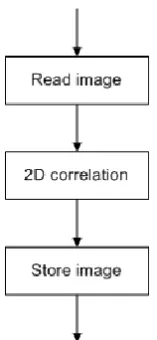
Figure 1.1: Image read and store for 2D correlation.
1.2 Problem Statement
For real time and faster application, 2D correlation is often implemented in hardware to accelerate the computation. Performance of the 2D correlation processing is not only depends on the speed of 2D correlation circuit itself, but also memory speed as well as address calculation speed. As the processing and memory speed increase, the address calculation speed becomes bottleneck for overall performance.
It is thus necessary to speed up the address calculation or generation by implementing it in hardware like FPGA rather than depending on software to calculate the addresses; such hardware is known as address generation unit (AGU). To ensure that the AGU can accelerate, the AGU should have its own datapath instead of sharing with 2D correlation for address calculation.
3 for different addressing sequence resulting in inefficient design and larger circuit area. Furthermore, prior arts of AGU have never been implemented in FPGA.
Therefore, it is necessary to design and implement a reconfigurable AGU for different designs of 2D correlation in FPGA with minimal circuit area, which takes care of image edge condition while considering data reuse.
Some challenges were encountered along the design and implementation phase of the project. One of the challenges is that there is not much implementation details can be obtained from the prior arts of AGU. Address calculation for Arch2 (refer to section 4.4), which is column by column basis, is quite challenging when image border is taken into account of consideration as none of the prior arts has done it before. Another challenge is the timing consideration of internal signals in AGU. In addition, interface and timing issue between AGU and 2D correlation circuits are the most time consuming part during the design phase. The circular buffer is designed in Arch2 (refer to section 4.3) for data reuse; in order to make Arch2 reconfigurable for different kernel sizes, parameterized coding is involved. The parameterized coding is quite tedious and time consuming.
1.3 Objectives
The objective of this project is to design a reconfigurable AGU for 2D correlation in FPGA. The 4 main objectives accomplished in this project are shown below.
1. The reconfigurable AGU can generate address sequence for reading out image data needed for 2D correlation processing from a memory; and can also generate address sequence for storing the result or output image into memory.
4 3. The AGU can also be configured to generate address sequence for different
image dimensions and kernel sizes.
4. The reconfigurable AGU can take care of image border while considering data reuse in 2D correlation circuit.
The configuration data, consists of the type of design of 2D correlation circuit, image dimension and kernel size, is specified by the user.
1.4 Scope of Study
The project is targeted for implementation in FPGA. The project is implemented in Verilog code using Quartus II targeting FPGA. The device involved is Cyclone III targeting FPGA. Due to time constraint, the Verilog code is not loaded into FPGA board. Thus, it is limited to simulation based model. In other words, the project is targeted to deliver the simulation model or work of reconfigurable AGU and 2D correlation. The design is simulated on Altera Modelsim. Matlab simulated result is used as a reference to verify the outcome from Modelsim.
A reconfigurable AGU which is targeted to work for two different architectures of 2D correlation is designed. The AGU is also targeted to work for different image dimensions and kernel sizes. The two different architectures of 2D correlation circuit will be designed and implemented as well. Each design of 2D correlation is reconfigurable for different image dimensions and kernel sizes.
74
REFERENCES
1. Tetsuo Kawano. Reconfigurable address generation circuit for image processing, and reconfigurable LSI comprising the same. U.S. Patent 7, 515, 159. 2009.
2. P. Hulina, L. Coraor, L. Kurian, and E. John. Design and VLSI implementation of an address generation coprocessor. Proc. IEE Computers and Digital Techniques, 1995. 142(2): 145-151.
3. Ramesh M. Kini, and S. David. Comprehensive address generator for digital signal processing. International Conference on Industrial and Information Systems (ICIIS). December 28-31, 2009. Sri Lanka: IEEE. 2009. 325-330. 4. Ramesh M. Kini, and S. David. ASIC implementation of address generation