ABSTRACT
BARKER, JOSEPH TRAVIS. Development of a CSS-Based Protocol to Include Disenfranchised Stakeholders in Building Code Revisions. (Under the direction of Dr. Michael L. Leming).
The Context Sensitive Solution (CSS) design process, commonly used in transportation projects, requires the identification of and communication with all stakeholders affected by the project so that their input is explicitly considered in the final design. The CSS design process, or protocol, is thoroughly documented and involves outreach to the community to inform and to solicit input from stakeholders, largely through public, face-to-face meetings.
Inclusion of stakeholder input in the decision-making process of residential building code revisions is desirable, but difficult to achieve in practice. Many of those most affected by changes in the residential building code are home buyers. North Carolina has three different climate zones spanning roughly 600 miles southeast to northwest. Although preferable, it is not practical to use public meetings to involve such a spatially diverse set of stakeholders in the decision-making process.
This thesis describes the development of a protocol to identify disenfranchised stakeholders and synthesize disenfranchised stakeholder input for consideration in revisions of the residential building code by the building code council. Synthesis of disenfranchised stakeholder input and perspectives includes estimates of benefits and costs, largely based on financial effects, including direct costs (mortgage) and indirect effects (price elasticity demand (PED)) effects on local and state revenues due to increases in home prices. Disenfranchised stakeholder input regarding the choice between methods of achieving desired societal goals, that is, whether specific goals should be attained through government fiat or by selection of alternates based on market considerations, is also discussed.
Development of a CSS-Based Protocol to Include Disenfranchised Stakeholders in Building Code Revisions
by
Joseph Travis Barker
A thesis submitted to the Graduate Faculty of North Carolina State University
in partial fulfillment of the requirements for the Degree of
Master of Science
Civil Engineering
Raleigh, North Carolina 2011
APPROVED BY:
_______________________________ ______________________________
Dr. Edward J. Jaselskis Dr. Min Liu
________________________________ Dr. Michael L. Leming
ii DEDICATION
iii BIOGRAPHY
Joseph T. Barker was born in Thomasville, North Carolina in July, 1988. He grew up in Silver Valley, and graduated from South Davidson High School in 2006. In August of 2006, he enrolled in engineering at North Carolina State University, where he received a Bachelor of Science degree in Construction Engineering and Management.
While earning his Bachelor degree, he participated in the student chapter of the National Association of Home Builders where he served a Presidential term. During the fall of 2009, he completed and passed the Fundamentals of Engineering exam. During the summer of 2010, he interned with the NC Department of Transportation in the Lexington construction office. In the summer of 2011, he obtained a Project Engineer position working for FDH Engineering, Inc.
iv ACKNOWLEDGMENTS
I would like to acknowledge my family for encouraging me in never settling for anything less than my best. Without you, none of what I have accomplished would have been possible, and I owe it all back to you.
Equally in respect, I genuinely give my utmost sincerity and thanks to my committee chair of advisory, Dr. Michael L. Leming. You helped me achieve in my undergraduate level requirements, and continued to do so throughout my graduate level requirements also. I have learned from your constructive criticism, your real-life situations, and I plan to apply your teachings in future endeavors and issues. I thank you for your patience, support, creative ideas, and suggestions that you provided me with throughout the past year in the development of this thesis. Without your assistance, this thesis would not have had the same potential.
To the rest of my committee, Dr. Min Liu and Dr. Edward J. Jaselskis, I thank you for participating in my research work. If ever I ran into an issue, I knew I could rely on either of you to assist me with resolving a solution to it.
I also want to thank Mr. Robert Privott for all of your input and feedback that was provided in this study.
v TABLE OF CONTENTS
LIST OF TABLES ... ix
LIST OF FIGURES ... x
1. INTRODUCTION... 1
1.1 Background and Problem Statement ... 1
1.2 Research Objectives ... 4
2. REVIEW OF LITERATURE RELATED TO BUILDING CODE DEVELOPMENT ... 6
2.1 International Building Code Development ... 6
2.2 North Carolina State Building Code Adoption Development Process ... 10
2.3 Context Sensitive Solutions Procedures and Applications ... 14
2.3.1 Context Sensitive Approach with Department of Transportation ... 15
2.3.2 North Carolina Department of Transportation Utilization of CSS Processes in Wilmington Highway Project ... 16
2.3.3 Context Sensitive Solutions Guidance ... 18
2.4 Development of 2012 NC Energy Conservation Code Amendments ... 23
3. REVIEW OF LITERATURE ASSOCIATED TO ANALYSIS PROCEDURES .. 29
3.1 Stakeholder Involvement and Accountability ... 29
3.2 Stakeholder Engagement Procedures ... 30
3.3 Price Elasticity of Demand and Implications... 31
3.4 Benefit-Cost Analysis of Energy Efficiency ... 36
3.5 Mortgages ... 38
3.5.1 Current Mortgage Rates ... 38
3.5.2 Mortgage Calculations ... 39
4. RESEARCH APPROACH FOR DEVELOPING A DECISION-MAKING PROTOCOL FOR BUILDING CODE PROPOSALS ... 40
4.1 Introduction ... 40
4.2 CSS as a Tool to Assist with Decision-Making Among Various Stakeholders ... 43
4.2.1 Utilization and Limitations of Decision-Making Techniques from CSS... 43
4.3 Initial Protocol Procedures ... 46
vi
4.3.2 Identification of Stakeholders ... 47
4.3.3 Identification of Effects on Stakeholders ... 48
4.3.4 Classification of Stakeholders... 50
4.3.5 Decisions by Regulation or by Market Forces ... 52
4.3.6 Examples Regulation and Market Based Code Provisions ... 54
4.3.6.1 Regulation Based ... 54
4.3.6.2 Market Based ... 55
4.4 Analytical Tools Used to Establish Model Based Input ... 57
4.4.1 Developing and Using the Best Available Data in Models ... 58
4.4.2 Generate a Cost Estimate ... 60
4.4.3 Benefit-Cost and Sensitivity Analysis Procedure ... 61
4.4.4 Indirect Costs and Price Elasticity of Demand Associated with Building Code Adoptions ... 62
4.5 Review and Feedback ... 64
4.6 Code Proposal Review with Stakeholder Input ... 65
4.7 Proposed Protocol Synopsis ... 68
5. APPLICATION OF THE PROPOSED PROTOCOL ... 70
5.1 Introduction ... 70
5.2 Review of the Code Proposal and the Assignment of the PCF ... 71
5.2.1 Review of the Proposed Code Revisions ... 72
5.3 Identification of Stakeholders’ Involvement ... 72
5.3.1 Home Owners and Home Buyers ... 73
5.3.2 Home Builders ... 73
5.3.3 Energy Conservationists ... 73
5.3.4 State and Local Economies ... 74
5.3.4.1 State Economy ... 74
5.3.4.2 Local Businesses ... 74
5.4 Identification of the Potential Effects of Various Stakeholders... 75
5.4.1 Home Owners and Home Buyers ... 75
5.4.2 Home Builders ... 77
5.4.3 Energy Conservationists ... 78
vii
5.5 Estimates of Effects of Proposed Code Revisions on Monthly Payments ... 80
5.5.1 Purchase Cost of Average Home Prior to Additional Requirements ... 80
5.5.2 Determining the Best Available Data for Expense Information ... 81
5.5.2.1 Cost Estimates After Additional Requirements ... 82
5.5.2.2 PCF Prepared Additional Cost Estimate ... 82
5.5.2.3 ASU-Mathis Additional Cost Estimate ... 83
5.5.2.4 NCHBA Additional Cost Estimate ... 84
5.6 Energy Expenditure Data ... 87
5.7 Fixed Rate Mortgage Payment Differences ... 88
5.8 Price Elasticity of Demand ... 95
5.8.1 Determining the Price Elasticity of Demand ... 95
5.8.2.1 State Economy Effects Related to Property Tax Revenue ... 98
5.8.2.2 Local Economy Effects ... 99
5.9 Review of Analysis Findings to Small Council Group ... 100
5.9.1 Discussion of Analysis Findings to Small Council Group ... 101
5.9.2 Closure of the Review of Analysis Findings to Small Council Group ... 102
5.10 Synopsis of Analysis Findings to the Full Council and the Generating of a Decision ... 102
5.10.1 Market or Fiat Based Decision ... 103
5.10.2.1 Continued Evaluation in the Protocol ... 105
5.10.2.2 Decision Generated by Regulation in Additional Steps ... 107
5.11 Conclusion of Protocol Application... 107
6. CONCLUSIONS AND RECOMMENDATIONS ... 109
6.1 Conclusions ... 109
6.2 Recommendations ... 111
7. REFERENCES ... 113
APPENDIX ... 118
Appendix A – The Liberty House Plan (Standard Home) ... 119
Appendix B – Internally Generated Cost Estimate ... 122
Appendix C – North Carolina Home Builder’s Association Cost Estimate ... 126
Appendix D – Annual Expenses and Savings with Different Estimates ... 128
viii
Appendix E.1 –15% Improvement in Energy Efficiency – 20 Year Mortgage ... 130
Appendix E.2 –15% Improvement in Energy Efficiency – 30 Year Mortgage ... 135
Appendix F – Benefit-Cost and Sensitivity Analyses for ASU and Mathis Consulting Company Estimate ... 140
Appendix F.1 – 15% Improvement in Energy Efficiency – 20 Year Mortgage ... 140
Appendix F.2 – 30% Improvement in Energy Efficiency – 20 Year Mortgage ... 145
Appendix F.3 – 15% Improvement in Energy Efficiency – 30 Year Mortgage ... 150
Appendix F.4 – 30% Improvement in Energy Efficiency – 30 Year Mortgage ... 155
Appendix G – Benefit-Cost and Sensitivity Analyses for NCHBA Estimate ... 160
Appendix G.1 – 15% Improvement in Energy Efficiency – 20 Year Mortgage ... 160
Appendix G.2 – 30% Improvement in Energy Efficiency – 20 Year Mortgage ... 165
Appendix G.3 – 15% Improvement in Energy Efficiency – 30 Year Mortgage ... 170
Appendix G.4 – 30% Improvement in Energy Efficiency – 30 Year Mortgage ... 175
ix LIST OF TABLES
x LIST OF FIGURES
Figure 4.1(a) – Protocol ... 41
Figure 4.1(b) – Protocol ... 42
Figure 4.2 – Initial Development Steps of Protocol ... 47
Figure 4.3 – Stakeholder Based Steps of Protocol Development ... 51
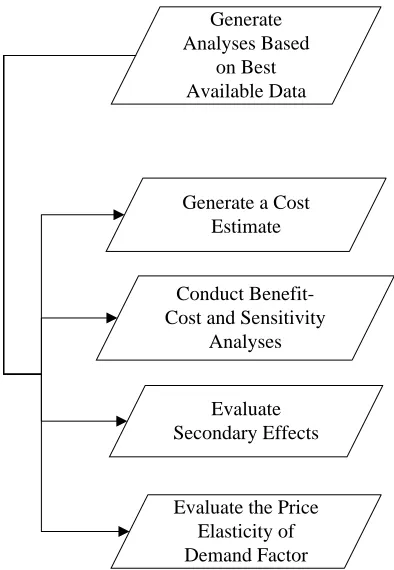
Figure 4.4 – Analyses Segment of Protocol... 64
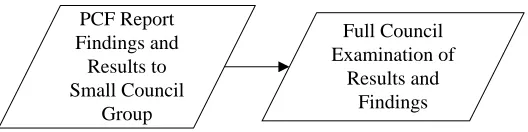
Figure 4.5 – Council Examinations ... 65
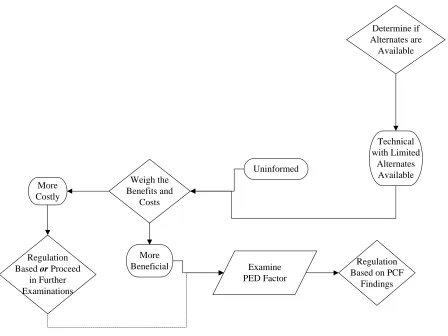
Figure 4.6 – Determination of the Authoritative Force and Actions (1) ... 66
1
1. INTRODUCTION
1.1 Background and Problem Statement
An important part of modern public policy analysis and development is the consideration of input from all stakeholders. Acknowledging and addressing the concerns, needs, and perspectives of those most affected by the decision provides transparency for governmental agencies and provides critical input that may not be readily apparent from purely technical analysis. Helping the designer understand the context in which a structure will exist and operate, by considering the requirements and desires of all stakeholders, typically improves functionality (FHWA, 2009).
The Federal Highway Administration (FHWA, 2009) defines stakeholders as “... affected people and organizations, including agency staff and elected officials, organized groups, area residents, and business owners.” A stakeholder is similarly defined as (Wikipedia, 2011) “... any person or organization, who can be positively or negatively impacted by, or cause an impact on the actions of a company, government, or organization.” Disenfranchised stakeholders can be defined as stakeholders with little influence and authority in the decision-making process. The type and extent of stakeholder involvement varies with the nature of the issue under consideration.
2 operation of a specific public facility, where primary design responsibility rests with a governmental agency such as a Department of Transportation (DOT) (FHWA, 2009).
Organizations such as the Building Code Council, charged with developing and implementing changes in the Residential Building Code, among other codes, should fully consider all critical stakeholder needs and perspectives. Including a large, spatially dispersed, and non-homogenous group of stakeholders may be extremely difficult in practice, however. Changes to the Residential Building Code of a state should ideally involve homeowners and home buyers from a spectrum of educational, ethnic, and economic backgrounds, as well as from a variety of locations, including urban, rural, or suburban areas, and areas with different climatic exposures.
The International Energy Conservation Code (USDOE, 2009) shows three different climate zones (3, 4, and 5) for North Carolina for example. These areas occupy roughly the northwestern mountain areas, the southern coast and sounds, and the rest of the state; the distance between Wilmington and the northwestern counties is about 350 miles. North Carolina encompasses over 48,710 square miles of land. The US Census (2010) reports an average of over 3.5 million households in NC between 2005 and 2009, with over 4.2 million housing units in 2009 (US Census, 2010). The number and spatial disposition of home owner and home buyer stakeholders are clearly significant.
3 public hearing. The ability of one of the most important stakeholders to provide effective input into the NCBCC decision-making process for residential construction is extremely limited at best. It is not reasonable to expect this group of stakeholders, who are themselves economically and educationally, as well as spatially diverse, to be able to routinely attend public hearings or, in many cases, to fully explain their concerns with technically demanding issues. A method is needed to provide stakeholder input of groups that cannot be easily represented and portrayed by the current processes.
A system to solicit stakeholder input through open meetings would require numerous meeting sites and times, involve significant planning effort and related costs, and would still not be likely to provide full representation considering the economic and cultural diversity of home owners or home buyers. Even if an economically justifiable method were developed, perhaps as virtual meetings, to provide meeting-based, home owner or home buyer stakeholder involvement, a significant problem would be ensuring attendees were sufficiently informed of the implications of a proposed change in the building code. This limitation would require even more meetings, effort and cost.
4 1.2 Research Objectives
This study has two primary objectives:
1. Develop a protocol to help provide surrogate input for disenfranchised stakeholders in the decision making process involving changes to the Residential Building Code. The protocol should provide a systematic, rationally-based assessment of the effects on various groups of stakeholders, including the effects of risk aversion, incremental benefit-cost analysis, and the assignment of decision-making authority.
2. Demonstrate how that protocol might be used by evaluating a recent change in the North Carolina Residential Building Code.
Overview of Procedure
1. Develop procedures to identify and classify diverse stakeholders affected by NC Building Code amendments and proposals.
a. Identify stakeholders, their needs, and their relative power.
b. Incorporate CSS-type provisions to obtain input and perspectives of disenfranchised stakeholders.
c. Establish the role and requirements of a facilitator charged with developing surrogate input from disenfranchised stakeholders.
d. Identify direct and indirect effects of disenfranchised stakeholders that would likely arise in face-to-face meetings...
5 a. Develop estimates, and reasonable ranges of costs and benefits to various
stakeholders resulting from proposed code amendments.
b. Conduct a benefit-cost, including sensitivity, analysis of the given building code proposals.
c. Assess the direct and indirect effects associated with the building code adoptions (Including effects such as differences in local and state tax revenue, and the ability to own or purchase a new home, including price elasticity of demand factors).
3. Consider whether the purpose behind the proposed code change is best handled by direct regulation (fiat) or by market forces, considering the effects of availability of technical alternatives, ability of the stakeholder to make an informed decision among those alternatives, and the benefit-cost analysis of the effects of the proposed code change on all stakeholders.
6
2. REVIEW OF LITERATURE RELATED TO BUILDING CODE
DEVELOPMENT
A review is useful in addressing current stakeholder involvement in the process of how building code development processes work and function. A background on the ICC and the NCBCC is provided, as well as the techniques used in generating decisions, and methods for the public to utilize when petitioning code proposals. Context sensitive aspects are also reviewed.
2.1 International Building Code Development
A state or local organization typically utilizes a model code that has been prepared by regional or national association when the time arises for revising or amending their present building code. The cost of conducting the research and the time involved in developing an effective code can be significant. Codes can be classified as being in one of the following main categories: building, plumbing, mechanical, electrical, energy, or specialty regulations. The codes within these categories are examined, and evaluated for effects on the safety and welfare of the occupants and the costs. Enforcement of the codes occurs when a builder applies for a building or construction permit, and during plan review and inspections (Listoken and Hattis, 2004).
7 started out by initially being involved with the fire safety in buildings. As time progressed, the 1905 National Building Code was created. Housing and structural requirements were also incorporated in the code on behalf of the insurance industry. The Institute for Business and Home Safety (IBHS) is an organization that helps encourage the development of regulations in areas where natural disasters are unavoidable, or where they are more likely to occur. Tenement laws too were implemented in the 1905 National Building Code, which mainly was concerned with the health and sanitation of the public.
The structural integrity and structural capacity of regulations for buildings involves the engineering profession. The majority of the technical aspects of current regulations were established from input by the civil and structural engineering, mechanical, and even on electrical engineering professions. Recently, organizations such as American Society of Civil Engineers (ASCE), American Society of Mechanical Engineers (ASME), and American Society of Plumbing Engineers (ASPE) have all been involved in developing the regulations and code development system in place today. The construction industry had a substantial effect on code development (Listoken and Hattis, 2004).
8 To compliment the four foundations, Listoken and Hattis (2004) also note the effects of three buttresses, the federal government, model codes groups, and voluntary standard organizations. The federal government has two roles: “the provider of technical expertise, and the formulator of national policies (Listoken and Hattis 2004).” The National Institute of Standards and Technology (NIST) is one major institute that considers such issues as structural and fire provisions. Standards involving the testing of materials and systems are required in building codes. NIST also interacts formally and informally with other national organizations such as the American Society for Testing and Materials (ASTM) and the American Society of Civil Engineers (ASCE). National and state agencies are closely involved with development of regulatory codes. Some of these agencies are the US Department of Energy (DOE), and the U.S. Department of Housing and Urban Development (HUD). The DOE can have a strong effect on development on energy conservation codes.
The other two buttresses provide a voice to other stakeholders with an interest in the building codes. Balance is sought in decisions involving the interests of producers, consumers, and the general public (Listoken and Hattis, 2004).
9 International Energy Conservation Code (IECC), and others are publications of the ICC. All 50 states, as well as the District of Columbia, have adopted codes from those suggested by the ICC (ICC, 2011).
The vision of the ICC is to assist in “protect(ing) the health, safety, and welfare of people by creating safe buildings and communities.” The mission statement is to provide “…the highest quality codes, standards, products and services for all concerned with the safety and performance of the built environment” (ICC, 2011). The ICC strives to assure that the process is in large open to the public, in order to avoid too strong of an influence from proprietary interests. The code committees represent viewpoints and interests from the general public and consumers. Committee composition is strictly controlled so that no less than 33% of each committee includes producers such as builders, contractors, and no less than 33% include designers and academics (ICC, 2011).
10 assembly action to be successful. If the vote to approve is successful, a public comment is automatically required (ICC, 2011).
After the hearing, a report is published including the results of: committee action, committee modifications if any, assembly action, if it was necessary, the deadline for public comments and the posting of the public hearing discussions. Anyone is eligible to present a public comment regarding the hearing report, but it must meet the deadline which typically is 60 days after the report of the public hearing is published (ICC, 2011).
To place a public comment, a standard form, found online, must be completed including the disagreement(s) with the committee or assembly action, and the reason(s) for the disagreement(s). A final public hearing is scheduled to review and consider all public comments regarding proposed code changes. The codes that are passed are then published in the next edition of the International Codes (ICC, 2011). This process helps ensure stakeholder input in code development, but may not include all affected stakeholders. The problems with disenfranchised stakeholders are very similar to those found in state building code adoptions and are addressed in Chapter 4.
2.2 North Carolina State Building Code Adoption Development Process
11 engineering, one registered engineer practicing electrical engineering, one licensed plumbing and heating contractor, one municipal or county building inspector, one licensed liquid petroleum gas dealer/contractor involved in the design of liquid petroleum gas systems who has expertise and experience in natural and liquid petroleum gas piping, venting and appliances, representative of the public who is not a member of the building construction industry, a licensed electrical contractor, a registered engineer on the engineering staff of a State agency charged with approval of plans of State-owned buildings, a municipal elected official or city manager, a county commissioner or county manger, and an active member of the North Carolina fire service with expertise in fire safety” (NCGA, 2011).
The NCBCC process used in establishing building codes is defined in section General Statutes (GS) 143-138. “All regulations contained in the North Carolina State Building Code shall have a reasonable and substantial connection with the public health, safety, morals, or general welfare, and their provisions shall be construed reasonably to those ends (NCGA).” The council may use organizations and resources such as the IBC from the ICC or others for guidance when adopting requirements to the state code (NCGA, 2011).
Procedures for the adoption of a permanent rule or code must conform to Article 2A of Chapter 150B of the General Statutes (NCGA, 2011). Sections of Article 2A of Chapter 150B of the General Statutes require that the NCBCC shall:
1. Publish a notice of text in the North Carolina Register.
12 Subsection 150B-21.4(b1) consists of the substantial economic impact. A fiscal note is to be provided if the costs of a residential housing unit increases are $80 or more. The fiscal note thus must contain the following:
1. A description of the persons who would be affected by the proposed rule change.
2. A description of the types of expenditures that persons affected by the proposed rule change would have to make to comply with the rule and an estimate of these expenditures.
3. A description of the purpose and benefits of the proposed rule change. 4. An explanation of how the estimate of expenditures was computed.
3. When required by subsection (e), a public hearing is to be held after publication of the proposed text of the code.
4. Accept oral or written comments on the proposed rule as required by subsection (f). Subsection (f) states that an agency must accept comments on the text of a proposed rule that is published in the NC Register for at least 60 days after the text is published or until the date of the public hearing, whichever is longer. An agency must consider fully all written and oral comments received (NCGA).
In NC, the notice of the proposed text of a rule must include all of the following criteria (NCGA, 2011):
1. The text of the proposed rule.
2. A short explanation of the reason for the proposed rule.
13 4. The proposed effective date of the rule.
5. The date, time, and place of any public hearing scheduled on the rule.
6. Instructions on how a person may demand a public hearing on a proposed rule if the notice does not schedule a public hearing on the proposed rule and subsection (e) of this section requires the agency to hold a public hearing on the proposed rule when requested to do so. The section requires the 15 day advance notification of the public hearing.
7. The period of time during which and the person to whom written comments may be submitted on the proposed rule.
8. If a fiscal note has been prepared for the rule, a statement that a copy of the fiscal note can be obtained from the agency.
9. The procedure by which a person can object to a proposed rule as well as the requirements for subjecting a proposed rule to the legislative review process.
If a proposed code revision is accepted, a written statement with an explanation of why the ruling was adopted must be issued to the public within 15 days after any individual asks for an explanation. In addition, subsection GS 143-138(d) states that any citizen, State agency, or political subdivision of the State may propose amendments to the code (NCGA, 2011).
14 copies of the code change, along with documents supporting or explaining the reasons for the change, delivered to the council’s secretary by 5:00 PM, thirty days prior to the next scheduled meeting date. The petition must be typed, legibly written, or copied in an orderly fashion, the affected section(s) of the proposed code change must be explicit and accurate, with reasoning and supporting documentation as to why this code change should be instated, and the proposed code must comply with the standards set forth in subsection G.S. 143-138(c). The preparation and adoption of the proposed code must conform to subsection G.S. 143-138(a), and the person submitting the proposed code change must be informed of the time and location of the public hearings. The duration for a code to be accepted or denied is six month after initial approval by the council (NCDOI, 2011).
The opportunities currently available for providing input into residential building code provisions are cumbersome at best and not likely to encourage input by a significant set of stakeholders, the home buyer. There is a significant need to establish a way to consider and address the needs and perspectives of sets of stakeholders who now have little direct voice in the decision-making process. One method that public agencies are using to improve access to key decision-makers and input by a larger cross section of stakeholders is the use of context sensitive solutions.
2.3 Context Sensitive Solutions Procedures and Applications
15 interests and expertise. The CSS approach and typical applications as they might be extended to residential building code modifications are described below. The Federal Highway Administration (FHWA) acknowledges the importance of CSS and its perspective towards the process. FHWA stated that “CSS is an approach that considers the total context within which a transportation improvement project will exist” (GDOT and Parsons, 2006).
2.3.1 Context Sensitive Approach with Department of Transportation
Context sensitive solutions (CSS) utilize a decision-making approach that includes the perspectives of various types and classifications of stakeholders to help ensure a balanced the basis for decisions affecting the public. Nineteen state Departments of Transportation (DOT), including North Carolina, now use CSS in project deliveries. Many include core teams of multi-disciplinary stakeholders that comprise various DOT staff.
16 Obtaining ample public involvement is important in a successful CSS process. Input may be provided by open forum meetings, newsletters, and internet posts. This only reaches those who have internet capabilities, have mobility, and those who are literate, however most such products are confined to reasonably small geographic areas, promoting more personalized approaches and face-to-face requests for input. Although DOTs are using the CSS process primarily with medium to larger scale projects, the geographic region is restricted (NCHRP, 2007).
Stakeholder opinion is still desired after project completion to improve future projects, and to determine the level of satisfaction of the project. DOTs that are striving to have an effective process should establish a methodology for measuring the satisfaction of the stakeholders that participate with the CSS process as “lessons learned” (NCHRP, 2007). A key benefit to using the multi-disciplinary teams throughout the decision-making process is believed to help develop greater public acceptance with DOT projects (NCHRP, 2007).
The CSS process affects a way to provide additional input into the adoption of residential building codes by the home buyer. There are significant problems to be addressed in providing input from a spatially and economically diverse set of home buyers, however. Those issues are discussed in detail in Chapter 4.
2.3.2 North Carolina Department of Transportation Utilization of CSS Processes in Wilmington Highway Project
17 project was to relieve traffic in a heavily congested section of Wilmington on Market St. (US 17), where wrecks were very common. The stakeholders involved in this project were the NCDOT, resource agencies, local government officials, local specialist groups and area businesses and citizens, the US Army Corps of Engineers, US Coast Guard, NC Division of Coastal Management, NC Department of Health and Natural Resources, NCDOT Rail Division, and the Federal Aviation Administration (GDOT and Parsons, 2006). Noise from the construction of the Smith Creek Parkway was a serious concern for local businesses. The noise would impact their daily routines, and the way they function as a company (GDOT and Parsons, 2006).
18 2.3.3 Context Sensitive Solutions Guidance
The 2006 Georgia Department of Transportation (GDOT) Context Sensitive Design (CSD) Manual claims to benefit the state of Georgia in three ways:
1. To inform GDOT management, staff, consultants, and other practitioners of the latest research and information on the CSD/CSS designs in Georgia, as well as across the US. 2. To establish policy guidelines and procedures for effective communication strategies, stakeholder involvement, and other aspects that the GDOT can use to obtain successful projects.
3. To provide examples of successful CSS techniques and methods in GDOT practices. The GDOT manual on CSS is similar to others, as was selected as a basis for this study since it is well written, easy to follow and has been widely used as a model for manuals in other states. Principles of the CSS process are briefly discussed in the GDOT manual, may be summarized as given below (GDOT and Parsons, 2006):
Principle 1: Interdisciplinary Teams
It is vital for interdisciplinary teams to be formed for project development and decision-making in order for all alternatives and options to be considered in the roadway design process. The project teams should include various disciplines to reach diverse perspectives on issues that may arise in the project.
Principle 2: Community and Stakeholder Involvement
19 neighborhood values. Solutions can be assembled to balance both the needs of the stakeholders and the needs of the project with the utilization of public involvement.
Principle 3: Environmental Sensitivity in Design
The natural and built environment must be understood and analyzed completely prior to any engineering design processes. The CSS approach requires sensitivity to environmental and social concerns.
Principle 4: Design Flexibility in Reaching Solutions
“Informed design decision-making should not preclude new ideas, new ways of thinking, to ensure flexibility in roadway design standards where it is feasible.” Designers and CSS practitioners should be encouraged to research new ways of solving transportation project needs and to keep an open mind to flexibility in community settings due to the unique natural and social contexts in these areas.”
Principle 5: Context-Sensitive Solutions is a Process
CSD and CSS is a process that is conducted on projects from the beginning of the planning stages to the completion of the project and as well as beyond the completion. Public involvement is to be incorporated effectively where collaborative solutions are integrated and alternatives are provided, while maintaining honest communication among the group. Listening to the needs of the public is critical.
20 solutions” (GDOT and Parson, 2006). Participants in the decision-making should collaborate but realize that it is difficult to reach full satisfaction for all stakeholders. Anytime diverse stakeholders are involved, effects will always arise, positively and adversely.
Interdisciplinary teams include engineers, architects, planners, environmental staff, and other specialists and may include public representatives. Teams will vary in number according to the complexity of the project, however acquiring perspectives and ensuring public involvement remains a fundamentally part of the CSS process. Once teams are created, the first few meetings are dedicated to team building and learning the way other members function and comprehend ideas. Successful CSS results are stated to be contingent on suggestive communication. Honesty and commitment to open communication throughout the project duration is important in gaining the trust of the stakeholders and project team participants. The project manager should acknowledge constructive ways of gaining the trust of stakeholders and utilize the communication to benefit the project’s success (GDOT and Parsons, 2006).
21 community can be described as being members of a particular area or region, but it can also be described as members with the same perspectives and values.
Identification of affected stakeholders, regardless of their awareness of being impacted, is critical in defining the community and identifying important issues (AASHTO and FHWA, 2007). Stakeholders that shall be considered for input on projects should include: public officials, agency representatives, transportation professionals, community representatives, non-profit/non-governmental organizations, and facility users.
A citizen’s advisory committee (CAC) is a common element in the CSS process. This committee represents a broad range of stakeholder’s and their perspectives. The CAC typically meets on a monthly basis, throughout the duration of the project, and is given access to decision-makers through recommendations for project success.
The CAC facilitator is elected to that position by CAC members. The CAC facilitator is involved in managing the CAC meetings agenda. The CAC facilitator is expected to remain neutral in meetings. A senior project manager of the project under consideration is included in the CAC meetings and serves as a direct link to the project team. Technical aspects and information regarding the project are delivered to the CAC by the project manager.
22 Consensus can be built by creating a series of consensus agreements into the decision-making process, which will allows stakeholder evaluation of each decision to be simpler. Consideration of data, community values, the nature of the problem, and goals of the process or project, can be evaluated one at a time.
Stakeholder involvement can be in several ways. Project contact networks can be used in order to identify an inform stakeholders, and to solicit input. Surveys or door-to-door interviews are examples of how this technique may be applied. Media materials and technology such as radio, television, news releases, pamphlets, and flyers are relatively inexpensive and can be used to provide information regarding the project. Project websites can also be developed including online surveys. This technique may identify new stakeholders. Public hearings are an alternative allowing immediate feedback but stakeholder input from diverse groups is intended to help ensure issues related to those perspectives are identified, assessed and relative value is established.
The next step in the CSS process is to identify and assess project alternatives. Input should be considered and evaluated at all levels and additional alternatives are considered or developed when necessary (AASHTO and FHWA, 2007).
23 2.4 Development of 2012 NC Energy Conservation Code Amendments
The 2012 NC Energy Conservation Code (NC ECC) Amendments were developed in response to a report generated from stimulus funds provided to NC. The US Department of Energy urged NC to improve the state’s energy efficiency codes. The authors of the report were asked to identify a way to reduce energy use in residential structures, primarily single family homes.
The draft report, Development and Implementation of an Improved Residential Energy Code for North Carolina (ASU and Mathis, 2010), compiled by Mathis Consulting Company and ASU’s Department of Technology and Energy was prepared in May of 2010. It was prepared for the North Carolina Building Codes Council, North Carolina Department of Insurance, North Carolina State Energy Office, and the U.S. Department of Energy. The state awarded this research team a grant to identify a means to make buildings conforming to the NC Energy Efficiency Code 30% more efficient than the 2006 International Energy Efficiency Code (IECC). The 2012 NC ECC proposed only a 15%, rather than 30%, goal however. The values in the report accurately reflect the code requirements.
Since the ASU and Mathis report was fundamental to establishing the code, and the values reported were used to economically justify the code adoption, a thorough review is needed. The research project was broken down into two phases.
24 Task 3: Develop informational materials and economic analysis regarding proposed
code
Task 4: Present findings to key target audiences
Task 5: Work with Energy Code Subcommittee to gain approval of the proposed code
Task 6: Work with the Building Codes Council to approve the improved energy code Task 7: Submit Periodic and Annual Reports
Phase Two: Assist in Implementation of the Improved Energy Code. Task 9: Monitoring Final Code Development
Task 10: Development of Continual Success Program Task 11: Code Training and Enforcement
Task 12: Energy Code Outreach
Task 13: Quarterly and Annual Reports
Task 2, includes recognition of the NC climate zones. Climate zones 3 and 4 cover almost all of the state, with a very small portion of a few counties in the northeastern part of the state around Boone in climate zone 5. Evaluation of diverse home models in all three climate zones should be considered.
25 Mathis and ASU. There may have been concern that the changes were too rapid for the very extensive changes required, but this is speculative and does not affect the analysis provided in this study.
The energy usage for the model homes analyzed in the ASU and Mathis report was estimated using a REM Rate software (ASU and Mathis, 2010). This software complies with the National Home Energy Rating Standards (HERS), and is utilized, among other things, to determine if a home meets Energy Star, ASHRAE 90.2, tax credit, and IECC standards. “REM Rate has climate data programmed into the modeling software, determines heating, cooling, hot water, lighting, and appliance energy loads for new and existing single family and multi-family homes (ASU and Mathis, 2010).” Software such as REM Rate is widely accepted, but the NCBCC and PCF should ensure studies or surveys have been conducted using industry standards. The actual energy expenditure per household was not provided in the ASU and Mathis report, so comparisons to current conditions were not possible.
Mathis evaluated three different sizes of homes at 1,800 square feet (sf), a 2,500 sf, and 3,500 sf home. All of the homes were analyzed in each NC climate zone. The authors of the report averaged the results from climate zones 4 and 5 since 98% of the NC population lives in one of these two climate zones. Houses on crawl spaces or slabs were analyzed since homes are commonly built with both of these types of foundations in these areas (ASU and Mathis, 2010).
26 sealing, including air and duct sealing, was submitted to the Energy Code Ad Hoc Subcommittee. Two options were described for compliance to the requirements: use of a simple check list by the code inspector, or to require a blower door test (ASU and Mathis, 2010).
The members of the Energy Code Subcommittee included several representatives of important stakeholders. These stakeholders included the NCHBA, the American Institute of Architects, engineers, insulation contractors, heating and air contractors, and glass and window manufacturers.
Residential mechanical equipment was considered in the ASU Mathis study, but the Energy Code Ad Hoc Subcommittee eliminated these requirements. One suggestion was to require “all air source heat pumps [to] have heat strip control.” A second that insulation with water heating pipes was to increased, and the third that at least one programmable thermostat was installed in every newly built home (ASU and Mathis, 2010). Additional provisions required to meet the 30% improvement were that 75% of all lamps in new homes had to be energy efficient. ASU and Mathis also proposed consistent with the 2009 IECC recommendation that a fireplace had to have the fire place doors sealed with gaskets and that outside air is used for combustion (ASU and Mathis, 2010). These additional provisions, essentially extensive of a focus on increasing insulation requirements were not adopted, in part since the goal of 30% was reduced to 15%, consistent with the current IECC (OSBM, 2011).
27 Hickory. Cost estimates were compared to estimates from RSMeans software, to establish high and low boundaries. Interaction with the Energy Subcommittee generalized additional estimates. The final estimate was that the 30% improvement to the residential energy efficiency code could be attained at an average cost of $1,500 per new home.
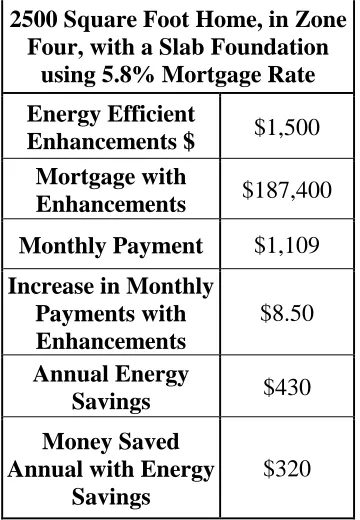
The study evaluated 36 homes with numerous EEUs. A mortgage rate of 5.8% was used for a 30 year mortgage. Table 3.1 was obtained from the ASU-Mathis report where results for a 2,500 sf home in zone 4 are shown. A median price of $77 per square foot for this size house was provided by NAHB.
Table 2.1 – ASU and Mathis Mortgage Analysis
2500 Square Foot Home, in Zone Four, with a Slab Foundation
using 5.8% Mortgage Rate Energy Efficient
Enhancements $ $1,500 Mortgage with
Enhancements $187,400 Monthly Payment $1,109 Increase in Monthly
Payments with Enhancements
$8.50 Annual Energy
Savings $430
Money Saved Annual with Energy
Savings
$320
28 Approximately 120,000 to 160,000 new homes were estimated to be built in NC from 2012 to 2015. The ASU-Mathis report reports that the state would to save between $50 to 75 million dollars per year in energy savings, and that between 5,000 to 10,000 direct job-years will result every year during that same three year period primarily in insulation companies, and HVAC contractors (ASU and Mathis, 2010).
29
3. REVIEW OF LITERATURE ASSOCIATED TO ANALYSIS PROCEDURES
Disenfranchised stakeholders are those who cannot provide their input, that is, their needs, perspectives, or performances in person regarding a decision or design that will affect them in some way. That input must be synthesized by individuals or groups within the decision-maker or design team attempting to use a CSS approach to issues with significant effects on individuals and groups outside the decision-making team. The synthesis of disenfranchised stakeholder input can be developed by numbers of the decision-making team using conventional financial models to determine financial effects of a particular decision, and simple assumptions regarding market preferences of stakeholders. Reliable analytical techniques are needed for a successful development of a decision-making protocol for use in building code modifications. This chapter reviews the financial models and preferences suggested for the protocol.
3.1 Stakeholder Involvement and Accountability
30 might be able to stop the project if they desired, and persons or organizations who could help fund additional, complimentary improvements outside the project right of way."
The CSS process is not limited to transportation projects. Olander and Landin (2005) conducted two studies in Sweden; one being an apartment housing project and the other a railroad project. Regardless of the type of project, both positive and negative viewpoints must be considered and analyzed by the decision-makers (Olander and Landin, 2005).
Olander and Landin (2005) also demonstrated a more categorized approach to stakeholder assessment. The stakeholders were ranked on a scale of 0-10 in regard to their power to affect and interest in the projects. The stakeholder types were then placed in a power/interest matrix for analyses according to their roles and expectations of the project. As the project plans progressed, stakeholders provided input; power and interest shifted within the matrix during the project.
3.2 Stakeholder Engagement Procedures
31 ensured decision-makers, in the apartment project, viewpoints are provided by all sides with adequate opportunity to provide rebuttal (Olander and Landin, 2005).
Olander and Landin (2005) recommend that project managers:
1. Take a thorough look at the qualitative aspects of potential influence from directly affected stakeholders; do not simply analyze the quantitative aspects regarding the economy and technology.
2. Establish trust from all stakeholders; evaluate both the positive and negative perspectives of all alternatives by all stakeholders.
3. The interests and power of stakeholders will vary over time; the matrix will need to be adjusted throughout the duration of the project.
4. Analyze who and how they will be affected by the decision must be conducted prior to any major decision or change in plans.
3.3 Price Elasticity of Demand and Implications
Elasticity is defined as the responsiveness of a variable such as quantity demanded to a change in an independent variable such as price (Allsopp, 1995). The price elasticity of demand (PED) is the ratio of a percentage change in quantity demanded divided by the percentage change in price as shown in Equation 3.1.
PED
32 This ratio is used in analyzing supply and demand curves. For example an increase of 1% in price with a 3% reduction in quantity demanded will result with a PED of 3. The value of the PED indicates relative elasticity. An elastic relationship exists between the price and demand of a product when the PED is greater than 1. The higher the PED factor, the more drastic is the drop in demand with some difference in price. A PED less than 1 indicates that demand is inelastic, that is, relatively insensitive to price changes within the limits being considered. The value of the PED is affected by many factors and is valid only within certain limits but is useful in quantifying the sensitivity of the market to price limitations.
The PED of the housing market should be considered by the code council since an increasing in price will cause some potential home buyers to drop out of the market. A loss in purchasing power will have significant affects on all home buyers, especially first-time home buyers. This perspective should be considered by the code council in assessing the effects of their decision on stakeholders.
33 Firms use demand curves when analyzing revenue (Barkley, 1977). That aspect has a greater effect on, perhaps the home builder than the home buyer. Since both are closely related in practice, and this thesis is concerned primarily with the disenfranchised stakeholder, only the PED effects on home buyers will be considered in any detail.
However, revenue does not necessarily decrease due to the lower sales price of the good, but instead more sales occur, raising the total revenue level. Barkley provides an example of the price-demand curve effects on revenue. Assume that with a base price of a good at $6 per unit, 25 units are sold, and when the price is reduced to $4 per unit, 50 units are sold. As the prices increase per unit, the demand for the units will decrease. Another consideration is that if a good is luxury or normal, personal income will have an effect on the demand of the good, with no change in price (Case, 1986). This can cause misleading conclusions if income is not reasonably constant.
Home buyers examining an investment in energy efficiency may consider whether they will live in their house long enough to recover the up-front costs of installation (Nevin and Watson, 1998). Nevin and Watson concluded that investing in energy efficiency will pay-off in the long run, regardless of how long the home owners live in their home, as long as the reduced monthly energy bills are greater than the debt costs to implement the energy-efficient additions (Nevin and Watson, 1998).
34 higher efficiency is therefore a concern for home builders (Corum and O’Neal, 1982). Another element to consider is uncertainty in the payback (Grubb, 1990).
Tonn and Peretz (2006) examined some barriers and costs to applying energy efficiency at the state levels in the US. Barriers of concern were initially high or incremental cost of the energy, and the uncertainty about savings. Households with low income typically cannot afford to invest in EEUs for their home.
Most states have implemented some sort of a minimum building energy code standard for both the residential and commercial industries (Tonn and Peretz, 2006). Research has examined the risk-tradeoff that occurs with EEU relating code changes. These studies consider a conceptual risk-tradeoff relationship to quantify the effects on stakeholders, resulting from code changes.
There are two types of effects that result from increasing the price of a house from code changes, one being the “income effect” and the other being the “stock effect.” The income effect is based on the potential for human health and safety to be at risk due to higher mortgage payments. Health risks are suggested as only one of the effects of spending more income on the monthly mortgage payment, but it may not be the primary effect. First-time home buyers are typically more susceptible to the stock effect, that is, a delay in purchasing a home leaving them in an older “dwelling” (Hammitt, Belsky, Levy, and Graham, 1999).
35 Levy, and Graham, 1999). The results showed that the stock effect does not affect the health of those who continue to live in older dwellings; however it is justification of their inability to afford the higher costs of a purchasing a new home.
Hassett and Metcalf (1994) suggested that tax credits are important in promoting energy conservation. When the residential energy conservation credit has been analyzed in the past, it has been shown to be ineffective, resulting with minimal investments in energy efficiency (Hassett and Metcalf, 1994).
The concern of why tax incentives essentially do not persuade consumers to investment in energy efficiency is questioned. Deduction programs, such as tax incentives, are common in many states. The more consumer support a state has in energy efficiency, the higher the likelihood is for tax incentives to be eliminated completely. This can result in consumer interest being reduced due to the lost incentives in applying energy efficiency requirements (Hassett and Metcalf, 1994).
Data regarding “…individual’s state of residence, income, number of dependents, and home mortgage and property taxes” was obtained during 1979-1981. Information concerning whether individuals filed an energy tax form, how large of a credit was received, and the amount of their expenditures was acquired for the study. Measurements of the tax price for investing in energy efficient were evaluated by using TAXSIM software (Hassett and Metcalf, 1994).
36 Of the residential sample, statistics show 6% took an energy efficiency credit. Observing the same sample, 32% were home owners (Hassett and Metcalf, 1994). Tax credit prices, as seen, will vary significantly. This variation should be considered as well as the results from those benefiting from tax incentives.
Tables were created consisting of tax prices and tax credits. From these two variables, it is shown that tax credits influence the investments for energy conservation. The estimated probability that one would invest in energy efficiency upgrades increases by 1.4% where incentives can be obtained. Homeowners are shown to benefit greater from EEUs according to their residency climate and higher income home owners are more financially capable to invest in energy efficiency. As unemployment rates increase, energy efficiency investments decrease as a result of tighter financial constraints (Hassett and Metcalf, 1994).
3.4 Benefit-Cost Analysis of Energy Efficiency
Researchers conducted a benefit-cost approach to examining and selecting EEUs for the residential industry was in Phoenix, Arizona. REM/Rate, a software that analyses the characteristics of a home’s “…mechanical equipment, thermal loading, and air and duct-leakage values,” was used in this study (Walsh, Bashford, and Anand, 2003). The Department of Energy (DOE) considers this software as an effective test to use in this application.
37 significant aspect to have sealed. Trade contractors that dealt with that type of work were invited to participate in these meetings. Other trade contractors who specialized in insulation, HVAC, and framing were also invited. By gathering numerous contractors and home builders in these meetings, an investigation took place of which EEUs to consider for installation. 30 single-family homes were selected for the energy evaluation with these EEUs (EEEU) and prior to the EEUs (Ebase cost). These homes were good representations of the Phoenix area. They were built from wood frames and popular exterior coverings for the Phoenix area (Walsh, Bashford, and Anand, 2003).
Many REM/Rate analyses were performed prior and post EEU application. Cardinal orientation of each home was also considered in the analyses. Solar-heat gains are much higher when windows are exposed to the sun, so to be as precise as possible, the home was oriented in all four cardinal orientations. Averages of the results were assessed for the modeling. Equation 3.2 was used to determine the benefits of each EEU (B) (Walsh, Bashford, and Anand, 2003).
B = EEEU – Ebase cost Eq. 3.2
38 and other factors could had potential in varying the costs of each EEU. To compensate for this variation, the writers used national and local costs to evaluate incremental unit costs. By obtaining the quantity and incremental unit cost per house, the incremental cost of upgrade (C) could be determined by using Equation 3.3 (Walsh, Bashford, and Anand, 2003).
C = U x Q Eq. 3.3
3.5 Mortgages
3.5.1 Current Mortgage Rates
The current national average mortgage rate is 4.21% with for a 30 year mortgage period on a $165,000 loan. In response to the current economic conditions, national mortgage rates have been on the decline in the recent years. Some home buyers in pursuit of purchasing new homes understand the logic behind the decline in mortgage rates and desire even lower mortgage rates, therefore some are not purchasing new homes at the current time. However, this is not the case with all home buyers (Costa, 2011).
39 mortgage planner at First Place Bank in Holland, MI, similarly stated it is unlikely that rates will drop any further than the current rates (Costa, 2011).
3.5.2 Mortgage Calculations
The loan amount obtained is considered as the present worth of a loan. Mortgage monthly payments will be based off the loan amount and the mortgage rate compound recovery factor (CRF). The CRF increases the payments due to interest that is applied to the loan amount. Equation 3.4 can be used to determine the CRF (Blank and Tarquin, 2008).
CRF
Eq. 3.4
40
4. RESEARCH APPROACH FOR DEVELOPING A DECISION-MAKING
PROTOCOL FOR BUILDING CODE PROPOSALS
4.1 Introduction
A protocol to help assess the effects of proposed building codes on disenfranchised stakeholders, conducted as part of the code adoption process, would be useful to the NCBCC. The protocol should be established so that monetary effects on various stakeholders, such as purchasing ability and total monthly expenses, are identified and accurately estimated. It should also consider other actions affecting stakeholders, but financial factors are most easily quantified and likely to be of critical importance to many stakeholders. The protocol may be considered a tool to help establish analyses to be conducted rather than a set of equations to be checked. The protocol is a process with embedded analytical tools. The protocol described in this study was developed to be similar to the process-oriented CSS approach used extensively in transportation projects.
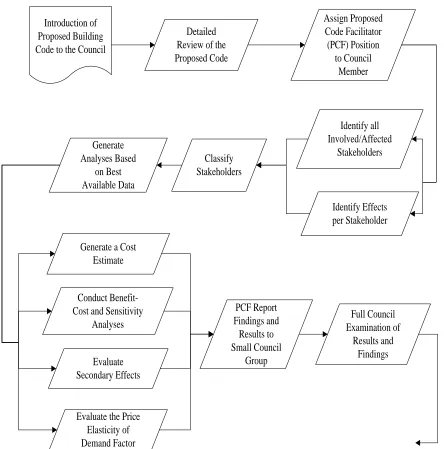
41 PCF Report
Findings and Results to Small Council
Group Introduction of
Proposed Building Code to the Council
Detailed Review of the Proposed Code
Conduct Benefit-Cost and Sensitivity
Analyses
Evaluate the Price Elasticity of Demand Factor
Evaluate Secondary Effects
Identify all Involved/Affected
Stakeholders
Identify Effects per Stakeholder Classify
Stakeholders Generate
Analyses Based on Best Available Data
Assign Proposed Code Facilitator (PCF) Position
to Council Member
Full Council Examination of
Results and Findings Generate a Cost
Estimate
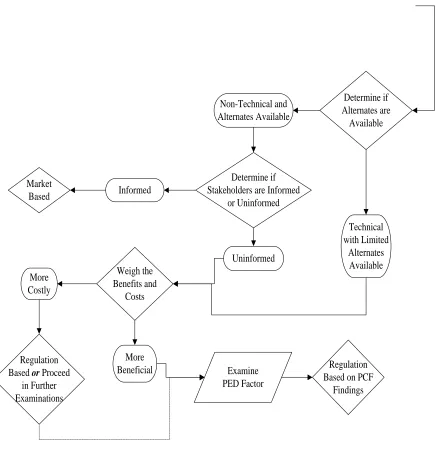
42 Technical
with Limited Alternates
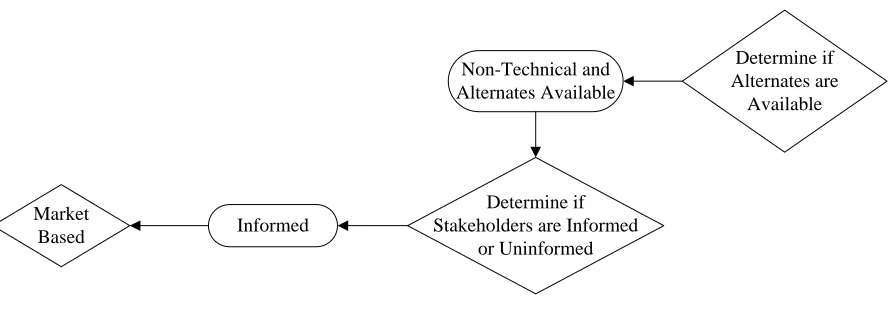
Available Non-Technical and
Alternates Available
Informed
Uninformed
More Costly
More
Beneficial Examine
PED Factor
Determine if Alternates are
Available
Weigh the Benefits and
Costs Market
Based
Regulation Based or Proceed
in Further Examinations
Regulation Based on PCF
Findings Determine if
Stakeholders are Informed or Uninformed
43 4.2 CSS as a Tool to Assist with Decision-Making Among Various Stakeholders
CSS decision-making tools are used with transportation projects to provide greater stakeholder involvement, but the problems of including disenfranchised stakeholder representation, when extensive, personal, face-to-face meetings are not practical, must be addressed. The FHWA has acknowledged the importance of the CSS process. The process can be used to help address disenfranchised stakeholder representation in the current building code adoption process. The process is applicable to any issue or project that should consider stakeholder involvement with diverse sets of stakeholders. Therefore, CSS processes may be applied to the problem of including disenfranchised stakeholder input into the decision-making process.
The principles of CSS can be used to develop decision-making protocols in other areas as well by identifying representative models to provide responsive stakeholder input in the absence of face-to-face meetings. These models can be used as part of a potential solution for the lack of disenfranchised stakeholder representation in the present building code adoption process.
4.2.1 Utilization and Limitations of Decision-Making Techniques from CSS
44 feedback. CAC meetings are held to provide stakeholder input directly to the decision-making process however that is not feasible in the evaluation of proposed building codes with disenfranchised stakeholders. The lack of feasibility with building code proposal decisions is that the CSS method presumes direct contact with the impacted stakeholders. In a building code situation it is essentially impossible to engage disenfranchised stakeholders in multiple meetings due to spatial dispersion.
The most significant problem with applying the CSS process to building code development is that holding a single, geographically centered meeting in, say, Raleigh only, is not feasible with a spatially diverse population. Stakeholders from eastern and western NC are at a disadvantage in providing input at a distance. The CAC meetings may be conducted using an analytical method or model instead, capable of providing similar, appropriate stakeholder involvement.
Consideration of disenfranchised stakeholder input should also include the effects of relative stakeholder power numbers. The geographically distinct stakeholders can live in climate zones 3, 4 or 5 across NC. Certain regulations may be more appropriate for some stakeholders. Stakeholder input from the much smaller group of stakeholders in climate zone 3 may easily be outweighed by the input from the larger group of stakeholders in climate zone 4 or 5.
45 existing home owners, especially those within the same economic class, such as lower middle income home buyers.
Stakeholder input is expected to vary across the state not only due to different economic conditions, but to educational and, perhaps, even cultural differences. Stakeholders with less formal education may perceive stakeholder involvement in developing building codes to be much less important than stakeholders with college degrees. Members of some communities may depend more on local practices to establish expected or accepted norms for houses. Cultural differences, such as differences between a fishing community along the sounds, an agricultural community in the piedmont or residents of an urban center, may also affect stakeholder perspective.
It is important to recognize that there are limitations to utilizing the CSS process directly due to the difficulty in developing meaningful input from a spatially diverse population with various groups of stakeholders in any particular region. The stakeholders will be financially and economically diverse, with wealthier stakeholders less concerned about affordability. Stakeholder input must also consider the extent and type of stakeholder’s education and knowledge of each code proposal.
46 4.3 Initial Protocol Procedures
The NCBCC would be in charge of following the steps proposed in the protocol described in this study. This chapter describes the process to be followed to include disenfranchised stakeholder input into proposed building code revisions.
After a full, comprehensive statement of the proposed code revision has been developed, a member, or members, of the NCBCC are designated as the PCF. The stakeholders involved, as well as the effects associated with them, must then be identified.
4.3.1 Assignment of Proposed Code Facilitator
The NCBCC will assign the position of PCF to one or more of the NCBCC members, similar to that of a CAC facilitator (GDOT and Parsons, 2006). More than one facilitator may be needed for complex code proposals. Having more than one PCF may be useful to obtain more than one thought process regarding the code proposal, the identification of the stakeholders involved, the effects associated to each stakeholder, and to be used as a checks and balance. The NCBCC would benefit from having a second PCF to ensure a balanced analysis of disenfranchised stakeholder input in complex or sensitive issues.