Melainie Cameron
B.App.Sc. (Osteopathy) (RMIT) 1994
Thesis submitted for the degree of
Master of Health Science (Research)
School of Health Science.
30001005875366
Caneron, Melainie
ACKNOWLEDGEMENTS
This project would not have been possible without the assistance of many people. As I complete this document, I offer my heartfelt thanks to all who provided support and encouragement over the past three years.
Firstly to my family, thank you for believing in me and encouraging me to achieve my
best. Particularly to Carrolle Cowdery, my beautiful mother; thank you for the hours you have spent proof-reading my work. To Blair Cameron, my husband; thank you for allowing,
supporting, even encouraging, this huge disruption of our lives. To my son, Robin Cameron, who arrived amidst this work, and somewhat delayed its progression; what an education you have been - a far steeper learning curve than this research.
To my supervisors, Dr Mark Andersen, and Associate Professor Peter Gibbons; thank
you for your guidance, direction, and clarity of thought. Mark, thank you for the mammoth
task of supervising research outside your area of interest, and Peter, for your untiring support of my project.
I owe a debt of gratitude to the osteopathic colleagues who opened their homes,
schools and clinics to me, and sent me information about courses. Without your help, this project would have been made significantly more difficult. I hope that this work is of assistance to you.
Damien Mouellic, Gudren Markovsky, and Theirry Bois provided support in language
translation. Financial support for this project was provided by the Australian and New Zealand Fund for Osteopathic Research (ANZFOR). Technical, and library support was provided by
TABLE OF CONTENTS
ACKNOWLEDGEMENTS ii LIST OF TABLES v LIST OF FIGURES v ABSTRACT 1
CHAPTER 1
Introduction 1.1 Introduction
C H A P T E R 2 Review of Literature
2.1 United States of America 6 2.1.1 History of osteopathic education and practice.
2.1.2 Current osteopathic education. 2.1.3 Current osteopathic practice.
2.1.4 Osteopaths as primary care physicians.
2.2 Australasia 19 2.2.1 History of osteopathic education and practice.
2.2.1.1 Australia. 2.2.1.2 N e w Zealand.
2.2.2 Current osteopathic education. 2.2.3 Current osteopathic practice.
2.3 Canada 35 2.3.1 History of osteopathic education and practice.
2.3.2 Current osteopathic education. 2.3.3 Current osteopathic practice.
2.4 Europe 40 2.4.1 History of osteopathic education and practice.
2.4.2 Current osteopathic education. 2.4.3 Current osteopathic practice.
2.5 United K i n g d o m 50 2.5.1 History of osteopathic education and practice.
2.5.2 Current osteopathic education. 2.5.3 Current osteopathic practice.
2.6 Overview 56 2.7 A i m s of the Study 58
3.1 3.2 3.3 3.4 3.5
4.1 4.2 4.3
Definitions Participants Measures Procedures
Data analysis and description
Report form R l Questionnaire Q l Questionnaire Q 2
CHAPTER 3 Methodology
CHAPTER 4 Results
59 59 60 62 63
65 66 68 C H A P T E R 5
Discussion
5.1 Introduction 77 5.1.1 Return rates.
5.2 Report form R l 80 5.3 Questionnaire Q l : A diverse profession 83
5.4 Questionnaire Q 2 : Closeness of fit between education and practice 84 5.4.1 Closeness of fit between education and practice in Australasia.
5.4.2 Closeness of fit between education and practice in Canada. 5.4.3 Closeness of fit between education and practice in Europe.
5.4.4 Closeness of fit between education and practice in the United Kingdom. 5.4.5 Closeness of fit between education and practice in the United States of
America.
5.5 Overall analysis 95 5.5.1 What's missing in osteopathic education?
5.5.2 Over-provision in osteopathic education. 5.5.3 Scientist-practitioner model.
5.6 Global trends in osteopathic education and practice 101 5.6.1 Highest awardable qualification.
5.6.2 Continued use of the abbreviation "D.O."
5.7 Future challenges 106 5.7.1 Education.
5.7.2 Identity.
5.7.3 Links with statutory bodies.
5.8 Conclusions and Recommendations for Further Research 111
A P P E N D I C E S Appendix A : Report form R l
Appendix B: Questionnaire Q l
Appendix C: Questionnaire Q 2 and corresponding cover-note. Appendix D: Site visit itinerary.
Appendix E: Composite data from questionnaire Q 2 . Appendix F: Worldwide Sourcebook of Osteopathy.
125 126 129 134 136 Separate volume LIST O F T A B L E S
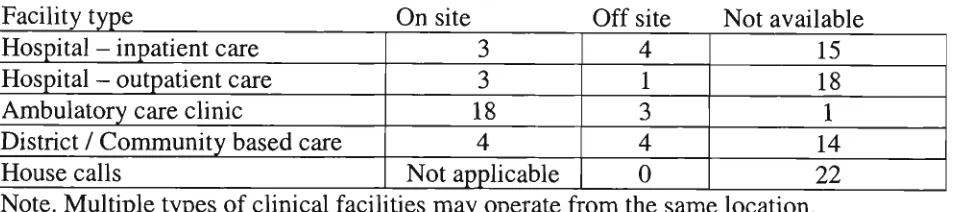
Table 4.1: Sectionl - Infrastructure at 18 C O M s (22 clinical sites). 65 Table 4.2: Section 2 - Clinic Organisation and Management at 16 C O M s 65
(20 clinical sites).
Table 4.3: Return Rate for Questionnaire Q 1 . 66 Table 4.4: K e y Features of Osteopathic Education and Practice by Region. 67
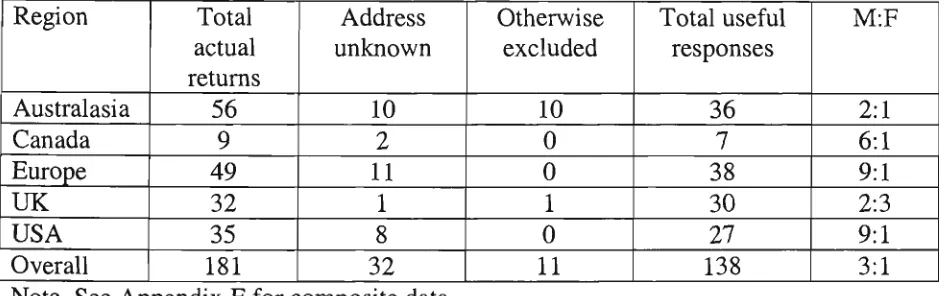
Table 4.5: Return Data for Questionnaire Q 2 in All Regions. 68 Table 4.6: Return Rates of Questionnaire Q 2 in All Regions. 69 Table 4.7: Closeness of Fit Between Osteopathic Education and Practice in 70
Australasia.
Table 4.8: Closeness of Fit Between Osteopathic Education and Practice in 71 Canada.
Table 4.9: Closeness of Fit Between Osteopathic Education and Practice in 72 Europe.
Table 4.10: Closeness of Fit Between Osteopathic Education and Practice in the 73 United Kingdom.
Table 4.11: Closeness of Fit Between Osteopathic Education and Practice in the 74 United States of America.
Table 4.12: Closeness of Fit Between Osteopathic Education and Practice Overall. 75
Table 4.13: Post-education Data. 76 LIST O F F I G U R E S
ABSTRACT
There is marked variation in educational background and practice among osteopaths around the world. The profession lacks unity, and frequently osteopaths of one
geographical region, educational background, or practice style, do not acknowledge as
colleagues, osteopaths of another location, training, or field of practice. I completed an international study of osteopathic practice, surveyed practitioners in five geographical regions, and compared their pre-professional training with their actual practice. Information was also collected from colleges of osteopathic medicine regarding pre-professional
training offered for osteopathic students. This information has been assembled into a Worldwide Sourcebook of Osteopathy (Cameron, 1999) that is expected to be of
significant interest to prospective, and current, osteopathic students and practitioners alike. Current and recent global trends in osteopathic education include moves towards
the highest awardable degree or diploma for any programme, and continued favour of the abbreviation "D.O." Regional educational trends were also noted, particularly the increased emphasis on osteopathic manipulative medicine in osteopathic colleges in the USA. The recent moves towards collegiality in the United Kingdom contrast sharply with the
intercollegial disputes of Europe. Rapid expansion of osteopathic education in Australasia, and the push towards greater government recognition in both Europe and Canada were also noteworthy.
In most aspects of osteopathic education investigated, osteopaths reported a close
Education is a powerful tool for shaping subsequent professional practice.
Educational institutions also have a responsibility to provide vocational training that meets the demands of the profession at large. Results are discussed in terms of the future
CHAPTER 1 Introduction 1.1 Introduction
There are approximately 40,000 health care professionals around the world using
the title "osteopath," but this group is hardly unified. To quote Sir Norman Lindop (as cited in Fielding & Sharp, 1995), osteopathy is "a profession of individuals, and none of them
agree with each other" (p. 3).
The practice of osteopathy, or osteopathic medicine (the preferred usage throughout the USA), varies dramatically around the globe. Governments, the general public, and
health care practitioners hold a wide variety of views as to what constitutes osteopathy, its breadth, depth and scope, and what makes a practitioner an osteopath (General Council and Register of Osteopaths [GCRO], 1994; Gevitz, 1982, 1994; Szmelskyj, 1990; Turner,
1996).
Osteopathic practice is driven by many factors including social history, government
legislation, professional education, interaction with other professions, and the individual practitioner's patient population (GCRO, 1996; Meyer, 1995; Ross-Lee & Weiser, 1994a,
The extent and kind of osteopathic practices around the world is yet to be fully
documented. The osteopathic training available in each region gives some insight as to what is expected practice. Osteopathy has taken many forms through the century of its history (Caprossi, 1996; Gevitz, 1982; Hawkins & O'Neill, 1990), and both osteopathic practice and education continue to develop and change.
This study involved reviewing the historical development of osteopathy in each
region, followed by identifying and cataloguing the educational training of osteopaths around the globe. This information formed the basis of a worldwide sourcebook of
<
•8
o
T3 V-c
o o o <
1/3 •*—>
a
0\
o
<u
-*—>
CO
o
o o c3 O
to
co
G
X> o
CHAPTER 2
Review of Literature
2.1 United States of America
2.1.1 History of osteopathic education and practice.
Modern osteopathic practice has its origins in the writings, practice, and teachings of Dr. Andrew Taylor Still, an American medical practitioner trained in the Midwest during the 1850s, according to the apprenticeship system of the day (Gevitz, 1995). Still learned most of his medical skills as an observer at the side of older, more experienced physicians.
Despite his medical training, Still was unable to prevent the death of three of his children in the meningitis epidemic of 1864 (Northup, 1987). He became disenchanted with the medical practice of the time, claiming that many of the substances prescribed (e.g., mercury, alcohol), and surgical procedures regularly used (e.g., bloodletting, leeching), were either harmful or simply ineffective (Gevitz, 1995; Webb, 1977). He began searching for safe and effective medical care for use on the Midwestern frontier (Northup,
1987).
In his search for a "better" medicine, Still experimented with numerous alternative therapies, including: (a) homeopathy, developed by German physician Samuel Hahnemann (1755-1843), in which patients are treated with extremely dilute solutions of medication; (b) eclecticism, founded by New York physician Wooster Beach (1794-1868), which
Still's main interest, however, was in the role of the musculoskeletal system in disease. He studied the human skeleton in detail, dissecting bodies he exhumed from Indian graves (Northup, 1987). By 1874, Still believed he had learned enough about the
human frame to present his concept of the inter-relationship of structure and function to the medical fraternity. Still argued that a patient could not become sick in one part of his body without having other areas effected (Still, 1908/1981). He asked permission to make a
presentation to this effect at Baker University in Baldwin, Kansas, but was refused. His suggestion that the patient should be treated as a unit was considered ludicrous, greatly offended the allopathic medical profession, and led to Still being viewed as a heretic, and read out of the Methodist church (Gevitz, 1982; Northup, 1987).
Still was not alone in ostracism from the conservative medical profession of the late 1800s (Hawkins & O'Neill, 1989). Louis Pasteur (1822-1895) established the germ
theory of disease, against significant resistance, in 1864, but tuberculosis, arguably the most clinically troublesome disease of the time, was not identified as being caused by
Mycobacterium tuberculosis until 1882. Baron Joseph Lister (1827-1912) was considered a
pedant, and a fool, as he struggled to introduce antiseptic surgery in Britain during the 1860s (Taylor, 1988; Northup, 1987).
Throughout the 1880s, Still advertised himself as the "lightning bonesetter" and
worked around the Kirksville, Missouri region (Gevitz, 1982). Bonesetting is the vigorous
relocation of dislocated joints and the setting of fractured bones to allow proper healing. It appears that Still worked as an itinerant practitioner of manipulation, practicing his own variation of bone setting and manual therapy.
In 1889, Still coined the name "osteopathy" to describe his own style of health care. Osteopathy is compounded of two words, osteon, meaning bone, pathos, pathine, to
to ascertain the cause of pathological conditions, and so I combined the "Osteo" with the "pathy" and had as a result Osteopathy. (Still, 1908/1981, p. 184) Still made outlandish claims of success with osteopathic manipulation, and thus
drew osteopathy into disrepute amongst allopathic physicians. Still recorded that he used manipulation to set dislocated hips, hasten the painless delivery of infants, and cure asthma (Still, 1908/1981). Regardless of the skepticism of the medical profession, patients flocked to Kirksville to be treated by Still, the "old doctor."
In explaining his therapeutic successes, Still synthesized some of the holistic tenets of magnetic healing and bone setting into one unified doctrine (Gevitz, 1982). Osteopathy was a manual therapy that Still claimed restored adequate nutrition, particularly blood supply, to injured tissues (Still, 1908/1981). Rudolf Virchow's (1821-1902) theory of
cellular pathology; that disease resulted when cells were injured, irritated, or inflamed, was published in Europe in 1858 (Northup, 1987; Taylor, 1998). Still was unlikely to have read Virchow's work, yet expounded remarkably similar theories (Northup, 1987).
Still was, to some extent, a man ahead of his time. The allopathic medical profession saw him as a quack. William G. Anderson, president of the American
Osteopathic Association (AOA) 1994-1995, described Still's relationship with the medical profession thus: "People said Dr Still was radical. They said he was revolutionary. They said he was unconventional. But [sic] his idea that the body has an innate ability to cure itself has withstood the test of time." (as cited in Bouley, 1994, p. 43).
Formal osteopathic education also began with Still in 1892, when he established
the initial four-month programme. This short course of study was inadequate time to cover the details of anatomy Still demanded, and the programme was expanded to two years
(Still 1908/1981). Still's emphasis on anatomy is illustrated in the following quotation from his textbook, The philosophy and mechanical principles of osteopathy.
This work is written for the student of osteopathy....He must remember that the American School of Osteopathy does not teach him to cure by drugs, but to adjust deranged systems from a false condition to the truley [sic] normal, that blood may reach the affected parts and relieve by the powers that belong to pure blood. The osteopath must remember that his first lesson is anatomy, his last lesson is anatomy, and all his lessons are anatomy (Still, 1892, pp. 11-12).
Still was resistant to the inclusion of physiology in the ASO curriculum, but was swayed by considerable pressure from an early graduate. John Martin Littlejohn held a PhD in physiology from the University of Glasgow, and eventually convinced Still that the ASO curriculum was sadly lacking due to the omission of studies in physiology. Following his graduation from the ASO, Littlejohn remained in Kirksville to teach physiology
(Gevitz, 1982).
Graduates from the ASO practiced manual manipulative therapy. They were
awarded the degree D.O. (Doctor of Osteopathy) and encouraged to view themselves as doctors. This use of title met with resistance from the allopathic medical profession. Several ASO graduates, including the founder's son, Charles Still, were charged, by
allopathic doctors, with "practicing without a license" but the charges were either dropped or overturned when it became clear that patients had benefited from treatment (Gevitz,
1982, p. 40).
of all races, specifically African Americans. The first graduating class from the ASO (1892) included five women, several years before women were permitted to enter
allopathic medical education (Hawkins & O'Neill, 1989; Northup, 1987). Still had fallen out of favour with Kansas state authorities because of his anti-racist views. He chose, therefore, to establish the ASO at Kirksville in Missouri, rather than at Shawnee in Kansas, where racism was overt (Northup, 1987).
In the decade following the foundation of the ASO, several graduates moved into
osteopathic education. By 1910, the ASO at Kirksville was the parent institution to seven other osteopathic colleges in Chicago, Kansas City, Philadelphia, Des Moines, Boston, and two in Los Angeles (Gevitz, 1995). The ASO was a somewhat critical parent. Still
maintained that most of his fledgling graduates had neither the experience nor the training to teach osteopathy to the standard he considered adequate. Relationships between Still and other college principals were civil, but strained (Gevitz, 1982).
Independent osteopathic colleges, which did not meet at all with the approval of
Still and the ASO faculty, also sprang up across the USA (Gevitz, 1982). The most notable of these was probably the Benarr McFadden School of Osteopathy, which also attracted students from England and New Zealand (BCNO, 1996b; Skinner, 1989).
In addition, in 1910, the Carnegie Foundation for the Advancement of Teaching
hospitals and clinics were either small or nonexistent (Gevitz, 1982, 1995; McKone, 1996).
Gevitz (1995) presented an overview of the history of osteopathy in the USA
generation by generation, explaining that in the two decades following Flexner's report, the osteopathic profession faced challenges regarding their scope of practice. During this time osteopathy moved slowly, but steadily, towards expanded practice rights. By 1929,
osteopathic colleges had come to include in their curricula and training, materia medica (i.e., pharmaceuticals, both herbal and synthetic), surgery, and obstetrics. Simultaneously, osteopaths across the United States lobbied for the same practice rights as medical doctors. Between 1930 and 1960, the osteopaths focused attention on improving the
standard of osteopathic education so that osteopaths would be seen to be "as good" as allopathic medical doctors. "Once lagging far behind M.D. candidates in passing both basic science board and medical licensure tests, D.O.s dramatically reduced the gap by 1960" (Gevitz, 1995, p. 32). By 1973, all states in the USA granted unlimited medical licensure to college of osteopathic medicine (COM) graduates, thus acknowledging that osteopathic education is as valuable and professional as allopathic medical training. Concurrent with broadened practice rights, and the acceptance of osteopathic
education as mainstream, was a massive reduction in the percentage of American D.O.s practicing manual manipulative therapy. Gradually, pharmaceutical prescription and surgery became the two most common practices in American osteopathy, in keeping with the division of allopathic medical practice into "medicine" and "surgery".
In 1969, five private COMs existed in the USA (Gevitz, 1995). Rapid expansion
Singer, 1995). Three additional colleges have opened since 1995, making nineteen accredited COMs in the USA (American Osteopathic Association [AOA], 1998).
2.1.2 Current osteopathic education.
Modern osteopathic education in the USA mirrors, in nearly every respect,
American medical education. There are two types of medical degrees (Doctor of Medicine and Doctor of Osteopathy), two hospital systems (allopathic and osteopathic), two systems of postgraduate training (allopathic and osteopathic), two National Boards for specialty certification (the National Medical Board and the National Osteopathic Board), and two professional associations for doctors (the American Medical Association and the American Osteopathic Association).
Doctoral osteopathic training, four years full time postbaccalaureate, leading to the degree D.O. (Doctor of Osteopathy) is the form of osteopathic education currently undertaken in the USA (Singer, 1995). A Bachelor degree is the minimum requirement for entrance to COMs, but a background in either science or humanities is acceptable. Students are required to sit a Medical College Admission Test (MCAT), which assesses verbal and mathematical skills as well as knowledge of the physical and biological sciences (Singer,
1995).
All D.O. graduates are required to complete an intern year in hospital training
Board certification is not required for D.O.s in family medicine, or other
non-specialist areas. Despite this, many family practitioners obtain NOB certification. George Nyhart (as cited in Bade, 1994), of the American College of Osteopathic Family
Physicians, stated that "It does not matter whether you are a D.O. or an M.D.... Board
certification is a way of life now" (p. 50). This trend, therefore, has raised the average age of practitioners entering family practice, and led to osteopathic family physicians being more highly qualified than ever before, but spending fewer years in family practice. 2.1.3 Current osteopathic practice.
D.O.s practice in all specialty and subspecialty areas of medicine (Allen, 1995). The breadth of practice for American D.O.s has led to much debate as to what
distinguishes an osteopath from an allopath. Osteopathic manipulative medicine (OMM) is a specialty field, and board certification in OMM is available for generalist practitioners (Habernicht, 1997). In 1995, less than 1% (n = 327) of American D.O.s practiced primarily OMM (Allen, 1995), yet Gevitz (1994), a longstanding observer of the American
osteopathic profession, believed that treatment of the spine and musculoskeletal system distinguished osteopathic physicians from other medical practitioners.
The American Academy of Osteopathy (AAO) is a professional association for
osteopaths with a particular interest in OMM. AAO literature described AAO members as the "keepers of the flame," and encouraged osteopaths to use OMM in a wide variety of practice settings (AAO, 1993). The American Osteopathic Association also indicated a future goal to promote the use of OMM (Ward, 1996) to distinguish D.O.s from allopaths. The inclusion of OMM in the osteopaths' armamentarium is an oft cited, but hardly
Northup (1987) on the other hand, argued that OMM was one of many valid methods for the treatment of the patient as a whole.
Fortunately, and sometimes unfortunately, manipulative therapy has been the
hallmark of osteopathic medicine. It has been fortunate in the fact that manipulative therapy is a powerful and valuable method of treatment.... It has been unfortunate because large segments of the public have not understood that the therapy was but one means of expressing the unifying principles as formulated by Andrew Taylor Still (p. 22).
Gevitz (1995) claimed that American osteopaths face challenges of identity and
distinction because "the distinctive philosophical and practical aspects of osteopathic medicine are no longer at the core of undergraduate or graduate curricula" (p. 37). Gevitz cited the closure of osteopathic hospitals and graduate training programmes as responsible for a loss of identity amongst D.O.s, and questioned whether American osteopaths have a clear understanding of their role in medical service provision.
Another approach to closures may also be considered—that the reverse of Gevitz's
contention may be true. American osteopaths have struggled to articulate clearly their place in the medical system as distinct from M.D.s (Meyer, 1995). Unable to identify significant distinction between allopathic and osteopathic health care systems, the USA Government has reduced funding to osteopathic hospitals and graduate training programmes, resulting in closures. In striving to be equal to M.D.s, American osteopaths may have "thrown out the baby with the bathwater," forfeiting uniqueness for expanded practice rights (McKone,
1996).
positions. This figure has fallen progressively since, such that in the 1994/95 academic year, 74% of D.O.s took osteopathic internships, filling 78% of available places. The
increasing number of D.O.s entering graduate training programmes at allopathic hospitals has further blurred the distinction between an osteopath and a medical doctor (Hruby, 1995).
2.1.4 Osteopaths as primary care physicians.
Ross-Lee and Weiser (1994a, 1994b) suggested that osteopathy's most significant
contribution to medicine was that a large proportion of osteopaths worked in primary care settings. As Bray (1996) questioned, "What is primary care and who provides it? This has become a very controversial... topic because of the recent moves towards emphasizing
primary care as the entry point and major provider of health care services" (p. 90). O'Neil (1995) defined the primary care practitioner as one "who offers life long continuity of care that is comprehensive in its nature and humanistic in its orientation" (p. 15). The American Academy of Family Physicians (as cited in Bray, 1996) defined primary care as "a form of medical care delivery that emphasises first-contact and assumes ongoing responsibility for the patient" (p. 90). These two definitions are not always in agreement. Bray (1996) further defined the primary care practitioner as the one who monitored or treated routine health problems such as high blood pressure, diabetes, or infections.
Undoubtedly, primary care includes the fields of family practice, general internal medicine, and emergency care (Bray, 1996; Meyer, 1995; Ward, 1996). The osteopaths have debated whether osteopathic manipulative medicine (OMM), obstetrics and
often work on a referral only basis. Paediatricians may see patients without referral, but do not provide "lifelong continuity of care" (O'Neil, 1995, p. 15).
Most recent data from the AOA (Allen, 1995) indicates that 50% (n = 16,095) of
D.O.s, excluding interns and residents, work in primary care. Most of these (n = 14,230)
work in family practice and very few (n = 25) in general practice. These statistics may be the result of the recent American trend to use the descriptors "family practice" or "family medicine" instead of "general practice" (the preferred title in Australia.) In some
osteopathic literature the two terms appear to be used interchangeably.
The Metro Health Center Physicians Directory (1992) of Philadelphia records that most students enter osteopathic education because they want to become "general family
practice" physicians, and that 75% enter "general practice" (primary care) after graduation and internship. Metro Health Center is accredited by the AOA, but is affiliated with the Philadelphia COM. These statistics may be representative of students at the Philadelphia college—there is some discrepancy between these data and those provided by the AOA. The introduction of "managed care" to the United States' healthcare system has
brought increasing interaction between D.O.s and third party payers, and has complicated the way osteopaths provide primary care. "Managed care refers to a variety of systems and programs administered by organisations or corporations designed to facilitate healthcare delivery to large patient populations, while optimizing cost efficiency" (Natkow & Fry, 1994, p. 583). This huge modification of the United States healthcare system led
increasingly to D.O.s finding that they needed to join with Health Management
Ross-Lee and Weiser (1994b) cite Laurence Bouchard, 1993/1994 president of the
AOA, that "Osteopathic physicians have historically accepted a major role in caring for our [USA] vulnerable populations, and are responsible for 25% of the Medicaid population
though they make up fewer than 5% of physicians" (p. 233). The contention that osteopaths are distinct from medical doctors in the USA because they have a greater percentage of their profession working in primary care is hardly a reasonable argument when the total number of osteopaths (n = 38,000) is overshadowed by 600,000 M.D.s.
D.O.s in primary care are outnumbered by M.D.s in the same field by approximately 6 to 1. American osteopaths also suggested that their service to the poor, rural, and underserved populations set them apart, but again, absolute numbers of M.D.s in these roles markedly outnumber D.O.s.
An alternative explanation of the massive overrepresentation of osteopaths in the
care of the poor, which is predominantly primary care, is a bias of employment restricting D.O.s from lucrative specialty positions. Gevitz (1982) explained that an employment bias existed for most of the century of osteopathy's history. Prior to 1941 many hospitals refused admitting privileges to D.O.s. During World War II osteopaths were not permitted to enter the USA military medical corps. Several D.O.s turned this situation to their advantage. Sending M.D.s away to war left a shortage of physicians on USA soil. This allowed osteopaths contact with a larger patient base, and necessitated that D.O.s be granted admitting privileges at all USA hospitals.
Texts on the history of osteopathic medicine in the USA imply that discriminatory employment ceased in 1973 when full medical licensure was granted to D.O.s in
opportunity two and a half decades after full licensure was granted in all states. D.O.s may continue to be viewed as second rate physicians, and have difficulty obtaining highly paid positions. Even if current employment opportunities are equitable, there has not been any affirmative action plan to redress the bias of the past, leaving D.O.s overrepresented in care of the poor.
Ross-Lee and Weiser's (1994a, 1994b) view of the significance of osteopaths in
primary care, particularly in rural, and underserved regions, was not shared by all D.O.s. Meyer (1995) reported that several COMs are in rural, underserved regions and up to 20% of D.O.s reside in these areas, but he clearly supported Gevitz's view when he stated that "without philosophic underpinnings and practice differences, there is no convincing reason that there should remain two sets of schools, two sets of boards, two sets of standards, and two types of degrees" (p. 329).
Osteopathic clinics and hospitals public relations staff have developed ways of
explaining what makes D.O.s unique. It is important that osteopathic facilities justify to the American public their continued existence alongside bigger, better funded allopathic
facilities. The validity of these claims, however, is yet to be tested. Metro Health Centre Physicians Directory (1992) described the "D.O difference" thus:
One of the things that sets the D.O. apart is the real effort he or she will make to get to know each member of your family. D.O.s believe in getting to know each family
The statements made by Metro Health Centre may impress D.O.s and patients
alike, but evidence for the "D.O. difference" is somewhat lacking. To date, no study has been conducted comparing the quality of practitioner-patient relationships formed by D.O.s with those formed by M.D.s. I echo Gevitz's suggestion that osteopaths in the USA are facing an identity crisis.
2.2 Australasia
2.2.1 History of osteopathic education and practice.
Osteopathy arrived in the Asia-Pacific region in the early 1900s. The first
osteopaths here were graduates of the ASO, and they practiced manual therapy (Hawkins & O'Neill, 1989; Skinner, 1989). In this region of the world, osteopathy became closely aligned with chiropractic. This link with a larger, and somewhat similar profession, helped the osteopaths to obtain statutory registration and recognition.
2.2.1.1 Australia.
Hawkins and O'Neill's work (1990), Osteopathy in Australia, traced eighty years of
osteopathic practice (1909-1989). Osteopathy was introduced to Australia by a small band of ASO graduates. Edgar Culley and Emeline Tappan, a married couple, and Florence
MacGeorge, completed Still's two-year course in 1900, but there is no record of their working in Australia until 1909 and 1913, respectively. James and Isabella Brake, siblings, were enrolled in the ASO course at Kirksville in 1905 by their father, a Victorian
parliamentarian who had been successfully treated by Still. Upon graduation, the Brakes returned to Melbourne to practice. For two decades, the Brakes' Collins Street practice was the hub of Australian osteopathy, with up to six practitioners, including Culley, working
from this address (Hawkins & O'Neill, 1989).
early osteopaths, and several were charged with misuse of the title "doctor." Unlike similar cases in the USA, these charges were upheld, and the practitioners fined. "The law and its interpreters opposed the use of any title that might suggest an unregistered practitioner was a real doctor" (Hawkins & O'Neill, 1989, p. 23). Thus, as early as 1926, Australian
osteopaths faced the challenge of obtaining government level registration, and statutory protection of practice rights.
James Doyle, a Canadian trained osteopath, established the first Australian
osteopathic college, the Pax College of Osteopathy, in Ballarat. Doyle was also a printer, and with the assistance of enrolled osteopathic students, operated a printing business during the day. He taught classes in osteopathy in the evenings. Several sources indicated that the Pax College opened in 1933 (Webb, 1977; Portelli, 1986), but there is some doubt as to whether teaching of osteopathy began in earnest until 1947 (Hawkins & O'Neill, 1989). Graduates of the Pax College were awarded the degree Doctor of Osteopathy, but were apparently safe from prosecution because the small print along the bottom of their certificates stated that "This is purely an institutional distinction and not a public appellation or title" (Hawkins & O'Neill, 1989, p. 29).
From the 1940s onwards, private colleges training osteopaths opened in Melbourne and Sydney. For the most part, these colleges trained students in several disciplines: osteopathy, chiropractic, naturopathy, homoeopathy, and were not strictly colleges of osteopathy. Neither did these colleges exist for extended periods, but opened, closed,
merged with other colleges, and altered their curricula to suit trends and fads in alternative medicine, and to avoid persecution from the allopathic medical profession (Webb, 1977).
In 1959, A. F. Kaufmann founded the Sydney College of Osteopathy (SCO).
Osteopathy degree from Pax College in 1957, although this was probably an honourary title (Hawkins & O'Neill, 1989). Kaufmann and Doyle maintained close ties, and when Doyle died in 1965, Kaufmann purchased the Pax College of Osteopathy, and moved it to Sydney but maintained it as separate from the SCO (Webb, 1977).
In 1970 Kaufmann retired, and the Pax College merged with the SCO. In 1972, the new, combined SCO was renamed the Sydney College of Osteopathy and Chiropractic (SCOC). From 1972 to 1985 students at SCOC obtained the awards Doctor of Osteopathy and Doctor of Chiropractic concurrently (Hawkins & O'Neill, 1989). Some osteopaths took offence at the SCOC awarding degrees in both disciplines. They argued that
osteopathy and chiropractic were not the same, and refused to consider SCOC graduates as colleagues (Hawkins & O'Neill, 1989). The SCOC closed in 1985.
In 1974 Bryyon Lambert and Evan Lallemand, osteopaths in New South Wales,
established the Windsor College of Applied Osteopathy in Sydney. In August of the same year, the Australian Federal Government Health Minister directed that there be a Royal Commission inquiry into alternative medicine in Australia. The committee of inquiry into chiropractic, osteopathy, homoeopathy and naturopathy, chaired by Edwin C. Webb,
released a final report in 1977: the so-called, "Webb Report." This report set the tone for alternative medicine in Australia for the next two decades, particularly in that the
committee refused to acknowledge osteopathy (or chiropractic) as a complete system of medicine, but freely recognised osteopaths as "skilled spinal manipulators" whose therapy was "beneficial for conditions of the musculoskeletal system" (Webb, 1977, pp. 125-126). Following the recommendations of the Webb Report, registration of osteopaths in
Australia was limited to the practice of musculoskeletal medicine and manipulative
of osteopaths in Australia occurred at State Government level. New South Wales and
Victoria were the first states to register osteopaths in 1978 (Parliament of Victoria, 1978).
The International Colleges of Osteopathy (ICO) formed in 1981, and incorporated
the financially strapped Windsor College, and several other small colleges. The Pacific College of Osteopathy (PCO) formed in 1983, as an exclusively osteopathic breakaway of third and fourth year students and staff from the New South Wales College of Natural Therapies. The ICO, Windsor College, and the PCO, all offered four-year, part-time
courses, leading to a Diploma of Osteopathy (Dip. O). The courses were similar in content and standard, and many graduates from these programmes registered as osteopaths. There was, however, no certainty that graduates would be permitted to register. The
Chiropractors and Osteopaths Registration Board of New South Wales set examinations for new registrants, and students feared that the strong chiropractic presence on most boards might bias the exam results (Hawkins & O'Neill, 1989). The PCO ceased
osteopathic education in 1985 once all students had graduated. The ICO did the same in 1986.
Lobbying by practitioners in the other states led to the progressive introduction of
registration in all Australian states and territories. Everywhere except Western Australia, registration was initially introduced as a combined "Chiropractors and Osteopaths Act" as had been recommended by the Webb Report (1977).
In February 1986, government funded, undergraduate osteopathic education
Then in 1994, RMTT was granted university status. New management introduced a new
degree title, without marked change to the existing course content. Osteopathic students entering RMTT from 1991 onwards, thus graduating from 1995 onwards, were part of the "double degree" era, with pre-registration osteopathic training awarded as two degrees completed over five consecutive years.
This change brought osteopathic education (and chiropractic education, which
underwent the same change at the same time) into line with Australian medical education. In 1991, Australian medical training ranged between five years full time to obtain the single degree Bachelor of Medicine at the University of Newcastle, and seven years full time to obtain three degrees, Bachelor of Medical Science, Bachelor of Medicine, and Bachelor of Surgery at the University of Tasmania. The most common form of medical education was six years full time to obtain the double degree, Bachelor of Medicine and Bachelor of Surgery.
Since the Webb Report in 1977, there has been little investigation into osteopathy in Australia. The notable exception was Jamison's two part study of Osteopathy in Australia: a Delphi study followed by a survey of all members of the Australian Osteopathic Association (AuOA); (Jamison, 1991a, 1991b). The AuOA was not a unified national body until 1992, and so Jamison drew on members of several state based professional associations affiliated with the AuOA in Melbourne for her sample. Jamison's investigation contained some bias. The Delphi study, aimed at
canvassing the opinions of osteopaths in leadership of the profession, drew only on past and present members of the PIT (now RMTT University) osteopathic course advisory
with the AuOA. These were professional organisations, but not government registering bodies and, therefore, did not represent the whole of the osteopathic profession. At the time of Jamison's study, the AuOA claimed to have approximately 80% of Australian
osteopaths as affiliates.
These concerns aside, Jamison's study highlighted disagreement within the
osteopathic profession. Jamison (1991a) maintained that there was "a paucity of research documenting the practice of osteopathy in Australasia" and that the scope of osteopathic practice in Australia was "poorly defined." Jamison (1991a) requested that the Delphi
panel identify priorities for osteopathy under the headings of research, education, politics, and professional interaction. The Delphi panel regarded the "enunciation of a definitive scope of practice...as least important" (Jamison, 1991a) whereas 80% of AuOA survey respondents favoured the development of "a uniquely Australian osteopathic model with expanded practice rights" (Jamison, 1991b). Clearly, the osteopathic course advisors of PIT and membership of the AuOA disagreed over the importance of clarifying osteopathic
practice in Australia.
1996 was a year of change for Australian osteopaths. The Victorian State
Government reviewed all of that state's medical practice acts, including the Chiropractors and Osteopaths Act of 1978. Victorian osteopaths campaigned strongly for the State
Government to separate osteopathic registration from chiropractic, and draft a completely new Osteopaths Act (Parliament of Victoria, 1996). This campaign was successful, and the Osteopaths Registration Board of Victoria commenced activities in July 1997 (Gibbons,
1997).
commenced lobbying to separate the registration of osteopaths from chiropractors (Fendall, 1997; Munoz, 1998).
2.2.1.2 New Zealand.
Osteopathy arrived in New Zealand from the USA in approximately 1930, but
specific details of the early practitioners are unavailable. Florence MacGeorge graduated from the ASO in 1900 and practiced in Nelson in the South Island in the 1930s (Hawkins & O'Neill, 1998). In the North Island at this time were: (a) Montegue Lascelles, an ASO graduate, who practiced in Palmerston North; (b) Henry Turner, a Kirksville Osteopathic College graduate, who practiced in Wellington; and two osteopaths in Auckland; (c) Noyce Granger, whose qualifications were unknown; and (d) Earl Hope-Pearson, also a graduate of the Kirksville Osteopathic College (Skinner, 1989). The ASO name was changed to the Kirksville Osteopathic College in 1925 (Allen, 1995).
Osteopaths in New Zealand at this time worked under common law, and practiced
predominantly manual therapy. There are no records of law suits against these early osteopaths. There were, however, several failed attempts by the osteopaths to legislate osteopathy in New Zealand in order to grant legal protection to their work. In the 1940s, Turner, who believed he was the only properly qualified osteopath in New Zealand,
attempted to pass a private members bill to register only himself. Unsuccessful, Turner returned to the USA to work as a medical practitioner (Skinner, 1989).
Murdoch Ross, a naturopath, and self-taught osteopath, practiced in Auckland in
Skinner (1989) reported that osteopathic education commenced in New Zealand in
the 1960s, under the direction of Roy Powell, in association with the NZANO. Initially
Powell acted as overseer for a handful of students who trained as apprentices under the supervision and guidance of immigrant British or Australian practitioners. Training became more formalised over time, and was named the South Pacific College of
Naturopaths and Osteopaths (SPCNO). NZANO underwent a name change to become the South Pacific Association of Naturopaths and Osteopaths. SPCNO remained in operation until 1979 (Parr, 1992).
Skinner (1989) criticised the quality of osteopathic training provided at the
SPCNO, and indicated that "diplomas were in the habit of being dished out to all and sundry.. .and thus the necessity arose to form a professional register" (p. 7). The New Zealand Register of Osteopaths (NZRO) formed in 1973. Skinner's (1989) account of
these events probably contained some bias because he was the first osteopath listed on that register, and held the position of registrar for 8 years (1973-1981). The NZRO was not a statutory register, but a professional listing. Membership of the NZRO was limited to those graduated from full-time, tertiary level qualifications in osteopathy (Penney, 1996;
Skinner, 1989).
In 1977, the NZRO tabled legislation for the New Zealand parliament to limit the use of the letters "N.Z.R.O." following the name of NZRO members only. This bill was
passed as the New Zealand Register of Osteopaths (Inc) Act 1978, and did not limit the use of the title "osteopath," nor restrict practice in any way (Working Group on Occupational Regulation [WGOR], 1989). There were complaints from non-NZRO members, who
suggested that this legislation would restrict their trade, but no challenges resulted
In 1979, Robert Bowden, an Australian trained osteopath and member of the
NZRO, established the Still Memorial College of New Zealand. This college closed before any students had graduated (Parr, 1992). Honorary degrees, however, were issued to a few foreign trained osteopaths to: (a) acknowledge their contribution to the osteopathic profession in New Zealand, and (b) allow those with part-time qualifications to become members of the NZRO. In 1989, Bowden was honoured with the NZRO "Osteopath of the Year" award in recognition of his contributions to the osteopathic profession in New Zealand (Verbowski, 1990).
The Osteopathic College of New Zealand (OCNZ) was established in 1984 by
Melva Martin. Martin had been a member of the NZRO, but was required to resign in the late 1970s when it became apparent that she was planning a part-time programme to train osteopaths (Parr, 1990). During the 1980s, the OCNZ programme was heavily criticised by members of the NZRO, who argued that osteopaths could not be effectively trained by distance methods and supervised clinical contact alone. The NZRO insisted that osteopathic education necessitated workshop classes to teach osteopathic manual techniques. OCNZ graduates applied to join the NZRO, but were refused on the grounds that their training had been part-time and partly by correspondence. These graduates
formed their own professional association, and voluntary register, called the International Society of Osteopathic Practice (ISOP; Parr, 1990).
During the mid 1980s the South Pacific Association of Naturopaths and Osteopaths reached an agreement with the NZRO to allow naturopaths practicing primarily
required members to have completed full-time osteopathic education, usually in Britain or Australia, with a few notable exceptions; (b) ISOP, who accepted members from part-time osteopathic programmes, particularly the OCNZ; and (c) the South Pacific Association of Naturopaths and Osteopaths.
During 1989, the Working Group on Occupational Regulation (WGOR) reviewed
the legislation governing several occupations in New Zealand. The WGOR acknowledged
the lack of unity within the New Zealand osteopathic profession, and described osteopathy as "possibly the least well defined of all occupations involved in this review" (WGOR, 1989, p. 4). During the review, the NZRO lobbied to have the 1978 legislation expanded to form a statutory register for osteopaths, which would have excluded non-NZRO members. This request was refused on the grounds that there was no evidence to indicate that registration made the practice of osteopathy any safer for the public. The NZRO were unable to justify their suggestion that non-members were inadequately qualified for safe practice, and should not be permitted to use the title "osteopath." The WGOR
recommended, therefore, that the New Zealand Register of Osteopaths (Inc) Act 1978 be repealed without replacement, because the details of this act were duplicated in more recent acts, namely the Summary of Offences Act 1981, section 20, and the Fair Trading
Act 1986. Under these more recent acts it was illegal for anyone to give the impression that they had qualifications, or membership of a professional association, without actually
having the same (WGOR, 1989). ,
Neither ISOP nor the NZRO was likely to achieve statutory registration at the
exclusion of the other. In 1996, the NZRO and ISOP worked together to table another osteopathic bill, known as the Phoenix Bill, in the New Zealand parliament. Markedly less conservative than previous legislative attempts, this bill allowed non-NZRO (i.e.,
licensing examination set by the New Zealand General Council of Osteopaths (Grace, 1997; Penney, 1996).
The Phoenix Bill moved through several parliamentary amendments, but was not
enacted into law. The 1989 conservative government under James Bolger shared the view of the WGOR, that there was no significant consumer risk from osteopathic practice, and that statutory registration of osteopaths would lead to considerable government expense without measurable returns. The NZ Labour Party demonstrated interest in the bill, but were unable to move it into law while in opposition. NZRO and ISOP members await a change of government to table the Phoenix Bill again (Grace, 1997; Grace & Penney, 1997).
Several ISOP members have commenced postgraduate diploma training, based in
New Zealand but overseen by RMTT University in Australia. This programme is intended to prepare ISOP members to sit examinations that, if passed, will allow them to join the NZRO (C. MacFarlane, personal communication, January 9,1999). Although the New
Zealand government is hesitant to establish statutory registration for osteopaths, the osteopaths have made significant moves towards professional unity, minimum educational standards, and self-regulation. The most recent collaborative project was the development of a list of Minimum compentency levels required for osteopathic practice that were
acceptable to both groups (NZRO & ISOP, 1999). 2.2.2 Current osteopathic education.
Currently, osteopathic graduates from RMIT University are awarded a double
degree; B.App.Sc. and B.O.Sc. (Bachelor of Applied Science, Bachelor of Osteopathic Science) (Sturges, 1996). In December 1998, Victoria University of Technology awarded
osteopathic education commenced at the University of Western Sydney (UWS) at the start of the 1998 academic year. In line with the RMTT and Victoria University programmes,
this training is of five years duration, but will be awarded as Bachelor of Science (Human Bioscience), Master of Osteopathy (Harrison, 1997).
A similar programme commenced in New Zealand in February 1999 (TJNTTEC,
1998). This programme was initially scheduled to commence in the 1997 academic year, but was delayed by the protracted deliberations surrounding the Phoenix Bill of 1996 (Grace, 1997). Commencement in the 1998 academic year was delayed to allow a review of the proposed course structure by the New Zealand Qualifications Authority.
Development of the osteopathic programme at UNl'l'EC was a collaborative effort on the part of NZRO and ISOP members, in conjunction with the Faculty of Health Services at UNTTEC. It is anticipated to provide a catalyst for legislation governing osteopathy, and statutory registration of osteopaths in New Zealand (Grace, 1997).
The OCNZ ceased osteopathic education in December 1998 to avoid competition
between two osteopathic colleges. As of January 1, 1999, both the NZRO and ISOP altered membership requirements to read "a five year double degree as offered by UNTTEC,
Auckland or its equivalent" (I. Parr, personal communication, March 4, 1999).
Equivalence, however, is determined by the respective professional association, not by UNTTEC (Parr, 1992).
2.2.3 Current osteopathic practice.
Osteopaths reside and practice in Australia, New Zealand, Singapore, Malaysia, the Philippines, Hong Kong and Japan (Allen, 1995; Penney, 1996; Sturges, 1996; Takagi,
1996). Cultural variation notwithstanding, osteopathic practice throughout Australasia is similar from country to country. Osteopathic practice in Australia, New Zealand,
practice is seen in Japan, and little is known of osteopathic practice in the Philippines (Allen, 1995; Takagi, 1996).
In Australia, osteopaths must be registered with the government of the state or
territory in which they practice. Use of the title "osteopath," therefore, is protected by
statute, and its use by unregistered practitioners is a civil offence. In Victoria and Western Australia, osteopaths are registered as a discrete discipline. In all other states and
territories, osteopaths and chiropractors are registered under the same act, but use different titles, according to their field of practice. In several Australian states, osteopaths are permitted, under the relevant registration acts, to use the title "doctor", provided they specify their field of practice, (e.g., Dr Melainie Cameron, B.App.Sc [Osteopathy]; or Dr Melainie Cameron, Osteopath.)
The population distribution of osteopaths is approximately representative of that of the general Australian population. The largest numbers of osteopaths are found in the capital cities of the east coast; Sydney, Melbourne, and Brisbane, in that order. The western, and northern areas of Australia are sparsely populated, and only a handful of osteopaths are found there (National Register of Chiropractors and Osteopaths, 1995). The osteopathic profession in New Zealand is highly diverse for such a sparsely populated country. At present there are three major professional associations for
osteopaths; (a) the NZRO, (b) the New Zealand Natural Health Practitioners Accreditation Board Inc (formerly the South Pacific Association of Naturopaths and Osteopaths), and (c) ISOP, but no statutory register. New Zealand has no government legislation to limit use of the title "osteopath." The professional associations act as unions, protecting the interests of practitioners, and lobbying the government to speed the process of registration (Grace,
There are very few osteopaths practicing in Asia, although manual therapy has been
a part of traditional Asian medicine for centuries. It seemed most appropriate to list, and briefly explain, the nature of osteopathic practice in each Asian country where osteopaths work. Osteopaths in Asia are predominantly immigrants, and their scope of practice has been determined as much by their educational background as by the laws of the country in which they now work. Asian osteopathic education occurs only in Japan. Similarly, only in Japan are there professional associations for Asian osteopaths (Takagi, 1996). By virtue of being the closest neighbours, the Australian Osteopathic Association allows Asian
osteopaths as associate members (Tio, 1998).
The USA D.O. degree is not recognised for licensure for medical practice in Japan, but American osteopaths have substantial influence in osteopathic education and promoting OMM amongst Japanese doctors (Allen, 1995; Takagi, 1996). Three groups of
osteopaths practice in Japan. Members of each group practice manual therapy, but come to osteopathy from different educational backgrounds.
There are the medical osteopaths: those trained and registered as medical doctors, who have learned osteopathic manipulation as a postgraduate "specialty." These
practitioners have been taught primarily by American trained osteopaths, and hold a strong view that OMM should be practiced only by fully licensed physicians (Takagi, 1996). They have formed the All Japan Osteopathic Society (AJOS).
The dental osteopaths are those trained, and registered as dentists, who have found cranial osteopathy of particular use in managing patients with difficult jaw, and bite complaints. They have also been educated primarily by American trained D.O.s, and practice predominantly dentistry, supplemented by osteopathy in the cranial field. The third group are manual therapists (Handhra & Gilmore, 1999). The educational
dentists. They have also formed a professional association and school, called the Japan Osteopathic Academy (Handhra & Gilmore, 1999).
There is a debate amongst Japanese practitioners, as to whether "osteopath" is a
title that should be reserved for physicians, or used by all those practicing manual therapy in an osteopathic model (Takagi, 1996). The issue remains unresolved in Japan. Both the
AJOS and the JOA have looked for local and international support for their style of education and practice (S. Sandler, personal communication, April 1, 1999). The AJOS has formed strong links with the Japanese Clinical Orthopaedic Association (Takagi, 1996), and the JOA has gained support from Kibi University and the British School of Osteopathy (Handhra & Gilmore, 1999).
Takagi (1996), a medical doctor and 1996 president of the All Japan Osteopathic
Society, criticised the qualifications of the manual therapists in the JOA, and appealed to the AOA for support of his view that osteopathy be practiced by fully licensed physicians. British osteopaths, Handhra and Gilmore (1999), however, supported non-physicians
training in, and practicing, osteopathy in Japan.
Most osteopaths currently practicing in Hong Kong are British trained (General Council and Register of Osteopaths [GCRO], 1996). The 1997/1998 change of governance of Hong Kong is expected to have some impact on the osteopathic profession in the long term. American trained D.O.s are eligible take part in the Licentiate Scheme in Hong Kong. Under this scheme, foreign trained doctors sit an examination and complete an externship in order to be granted a full medical practice license for Hong Kong (Allen, 1995). American D.O.s are readily granted full practice licenses for "short term medical practice" in China (Allen, 1995).
The USA osteopathic doctorate is not officially recognised in the Philippines, yet
working in family practice and sports medicine (Allen, 1995). I therefore assume that no restriction of trade is placed upon osteopaths in the Philippines, because there is no registration or licensing requirement. Osteopathy is probably relatively unknown in this region.
Osteopathy in Singapore is completely within the private business sector. There is neither official recognition nor regulation of osteopathy, nor any self-registering professional associations (Tio, 1997). The American osteopathic doctorate is not
recognised in either Singapore or Malaysia, and the Singapore Medical Council will only grant full licensure to medical doctors trained at one of 11 medical schools, none of which are colleges of osteopathic medicine (Allen, 1995). Osteopaths, including American
trained D.O.s, may work in Singapore under common law, practicing manipulation, and manual therapy. No formal education of osteopaths exists in Singapore, however, the number of osteopaths on the island has increased over the past five years because Australian trained osteopaths have immigrated (Tio, 1997).
Current records indicate that osteopaths practicing in Singapore and Malaysia have
either Australian or British training, and have maintained membership of the appropriate professional association in their country of education (GCRO, 1996). It may be reasonably assumed that osteopathic practice in South East Asia is relatively similar to that in Australia and the United Kingdom because of the educational background of the
practitioners concerned (Tio, 1997).
Regardless of their tendency to practice manual therapy, osteopaths throughout
Australasia disagree as to the nature of osteopathy, and appear unable to describe their practice succinctly (Cameron, 1997; Carter, 1997; Lucas, 1997; Thompson, 1998). In
1994, the Queensland State Government removed any definition of osteopathy from
"the manipulation of the spine" was perceived as inadequate, and unnecessarily restrictive (Chiropractors and Osteopaths Board of Queensland, 1995). Similarly, during the 1996
review of the Chiropractors and Osteopaths Act of 1978, the Victorian State Government was unable to define osteopathy adequately, and so chose to omit any form of definition from the new Osteopaths Act (Parliament of Victoria, 1978, 1996).
Individual practitioners remain divided as to what makes one an osteopath. Vardy
(1996) expressed a view that certain manual techniques, particularly palpation of spinal joint motion, should be considered unique to osteopathy. Turner (1996) argued that
osteopathy is a philosophy, a thought process, and not the application of technique. Several AuOA members engaged in debate as to whether osteopathic manual
techniques should be taught to medical doctors, and if so, what form this education should take (Good, 1996; Thompson, 1998; Turner, 1996; Vardy, 1996). This issue is unresolved, and the AuOA has made no official statement on the matter.
Maslak (1989) described the future for osteopathy in the Oceania region thus: Australasian osteopathy should not be compared with American or European models, for our circumstances are different and our future must be
self-determined. ... Our role as health care providers in the community must constantly be evaluated and upgraded as required, and education and professional foresight must become the hallmarks of the evolution of osteopathy in Australia and New
Zealand (p. 46). 2.3 Canada
2.3.1 History of osteopathic practice and education.
The geographical proximity of Canada to the USA, and the cultural ties of
The first osteopath recorded to have practiced in Canada was Florence MacGeorge. MacGeorge was born in Launceston, Tasmania, Australia, in 1867, and completed her
osteopathic education at the ASO in 1900. She seemed to have made it her life's mission to transport osteopathy around the globe; practicing in the USA, Canada, England, France, Italy, Scotland, Switzerland, Australia, and eventually settling in Nelson in the South
Island of New Zealand (Hawkins & O'Neill, 1989). There is no record of MacGeorge's
work, but because she was a graduate of the ASO during the time of Still, it is reasonable to assume that she practiced manual therapy, and possibly surgery and obstetrics. It is unlikely that she prescribed medication (Gevitz, 1982; Hawkins & O'Neill, 1989).
Many USA trained D.O.s since MacGeorge, have made their way north. Regardless of progressive broadening of practice rights for D.O.s in the USA, most American
osteopaths who relocated to Canada did so either to practice manual therapy or to retire (Allen, 1995).
Hawkins and O'Neill (1989) reported that James Doyle, who founded the Pax
College of Osteopathy in Ballarat, Australia, completed his osteopathic education in Canada prior to 1933. The details of Doyle's qualifications are unknown. There was no formal osteopathic education in Canada until 1981, and it is, therefore, most likely that Doyle was trained as an apprentice alongside a USA trained D.O.. This type of osteopathic
education probably represented the Canadian situation well in the early days. In 1981, Philippe Druelle, a French osteopath, founded the College d'Etudes
Osteopathiques (Cd'EO) a Montreal. Cd'EO was a private institution, not connected with any university. Modeled on the system of osteopathic education used in France, the programme at Cd'EO differed markedly from osteopathic training in the USA. Class sizes were much smaller than in the USA—15 to 20 students, as opposed to 100 or more.
trainers, and continued to work in this capacity throughout their osteopathic education. Classes were taught in six, four-day modules per year. Graduates practiced manual therapy
under common law, and moved throughout Canada.
T. Quentin Skinner of New Zealand was instrumental in establishing the NZRO as
a voluntary professional register for osteopaths, and was chair of the same for eight years. Skinner traveled to Europe, and the United Kingdom, and later to Canada, visited
osteopathic colleges, and advised Cd'EO staff of the process followed to form the NZRO (Skinner, 1989). The Register of Osteopaths of Quebec (ROQ) formed in 1984 as a
voluntary professional register for osteopaths practicing in Quebec.
Cd'EO has had little of the financial difficulty that frequently troubled small,
private osteopathic colleges. In 1992, the demand for osteopathic education was such that Cd'EO expanded significantly, opening two sister schools: Cd'EO a Quebec in
Charlesbourg, and the English medium Canadian College of Osteopathy (CCO) in
Toronto. In 1996, in Montreal, Cd'EO hosted the first bilingual, international conference on OMM for osteopaths worldwide. Also in 1996, with support from the Registre des
Osteopathes de France (French Register of Osteopaths), Cd'EO graduates successfully lobbied the Quebec provincial government to have ROQ members included in the
provincial healthcare system as service providers (Druelle, 1996).
2.3.2 Current osteopathic education.
All of the Canadian COMs require applicants to have completed at least a
three-year Bachelor degree in the health sciences, most commonly physiotherapy (Druelle, 1996). Students of Cd'EO and CCO are required to complete 1600 hours of formal
while studying, and relieve the colleges of many of the difficulties associated with managing teaching clinics.
After formal classes have been completed, students are allowed another two years
to complete a thesis, which must be defended before an international jury prior to being passed. Doctor of Osteopathy: Manual Practice (D.O.M.P.) is awarded to osteopathic
graduates in Canada upon completion of the five-year, part-time programme (Druelle, 1996). Professional courtesy, however, deems that the title "D.O." is reserved for those whose theses have been passed (J-G. Sicotte, personal communication, November 22,
1996). COMs in Canada are private institutions without links to universities. Thesis requirements and assessment in these COMs is markedly different to that in other
countries, where osteopathic education is within the university system. The international jury assessing theses for the Cd'EO consists only of osteopaths, many of whom are well known internationally, but few are researchers or academics.
2.3.3 Current osteopathic practice.
The osteopathic profession in Canada is dichotomous. USA-trained D.O.s, fully
licensed as physicians, practice alongside Canadian trained D.O.M.P. graduates. All medical, and allied health practitioner, registration in Canada occurs on a province by province basis, and licensure in one province does not immediately guarantee licensure in another. ROQ members are included in the health care system in Quebec (Druelle, 1996).
This is not statutory registration, but an intermediate arrangement in which the government accepts the standards set by the ROQ for membership. In all other Canadian provinces,
USA trained D.O.s are eligible for full medical licensure in four provinces only: Alberta, Ontario, Quebec, and British Columbia. Non-Canadians must provide a statement of intention to become a citizen, and a command of the French language is a statutory requirement for practice in Quebec. Regardless of full licensure, approximately 38% of United States trained D.O.s practicing in Canada are either USA National Board certified in Osteopathic Manual Medicine (OMT) or practice predominantly OMT. A further 48%
are retired and in 5% of cases, the area of an osteopath's practice is not known by the American Osteopathic Association. Only 9% of USA trained D.O.s practicing in Canada actually take advantage of being fully licensed physicians (Allen, 1995).
The bipolar nature of the Canadian osteopathic profession presents an opportunity
for animosity and prejudice, but this has been little problem. That so few American trained osteopaths in Canada actually practice across the breadth of medicine has eased this
tension somewhat. The Canadian osteopathic profession is small in total, and has seen that it cannot afford to be divided by arguments over education background. Druelle (1996) clearly stated his intention to work alongside USA trained osteopaths to advance the osteopathic profession in Canada:
... we find two different kinds of osteopaths.... One has complete medical training with a limited focus on manual therapy and the other has a solid background in the health sciences and a complete education in the manual practice of osteopathy. Our professional orientation has followed different paths and we are now faced with a choice: to slowly merge together our educational standards or to foster a climate of mutual respect for each other's professional activities. We are ready to work
2.4 Europe
2.4.1 History of osteopathic education and practice.
Osteopathy in Europe is as complex and varied as the continent itself. For the past century osteopathy has been a small and factious profession with variable standards for both practice and education. Literature detailing osteopathy in continental Europe is frequently coloured by personal bias and animosity as was displayed at the 1996 American Academy of Osteopathy Annual Convocation: Osteopathic International Forum in Atlanta, GA. Two European osteopaths, representing different parts of the osteopathic profession on the continent, vehemently disagreed with each other's view, and almost came to blows on the podium (P. Cheval, personal communication, December 10, 1996).
Osteopathy came to Europe, initially to France, from England in the 1950s. The
first French osteopathic college, L'Ecole Francais d'Osteopathic (EFO) opened in Paris in 1951 (European School of Osteopathy [ESO], 1997; McKone, 1997). Paul Geny was
principal, and several French and Belgian osteopaths taught the part-time course, which was conducted in four-day seminars, several times per year (Lusty, 1993).
The legal systems of continental Europe, except in Switzerland, have their roots in
Napoleonic law, in which legal practices are clearly specified, and all other practices are assumed illegal. When osteopathy first arrived in Europe, it was not a specified legal practice, and was therefore illegal. In January 1962, the French government passed legislation that permitted only medical doctors to practice osteopathy (Lusty, 1993). Osteopathy as taught at the EFO was illegal in France, and Geny suffered considerable
personal expense in fines for training non-doctors to be osteopaths (M. Bloomfield, personal communication, November 28, 1996).
Geny convinced Thomas Dummer to relocate the EFO to London in 1965, as the