_____________________________________________________________________________________________________
*Corresponding author: E-mail: ;
NLM ID: 101570965)
Efficacy of Oil-pulling Versus Chlorhexidine
Mouthwash in Reducing Oral Streptococcus Mutans
Count: A Systemic Review and Meta-analysis
Zaeem Arif Abbasi
1*, Fizza Saher
2, Jabbar Ahmed Qureshi
3, Ayesha Tariq Niaz
4,
Saima Akram Butt
1and Shafaq Saeed Roghay
21
Department of Oral Pathology, Ziauddin College of Dentistry, Ziauddin University, Karachi, Pakistan.
2
Department of Oral Biology, Ziauddin College of Dentistry, Ziauddin University, Karachi, Pakistan.
3
Department of Pharmacology, Ziauddin Medical College, Ziauddin University, Karachi, Pakistan.
4
Department of Oral Biology, Dow International Dental College, Dow University of Health Sciences, Karachi, Pakistan.
Authors’ contributions
This work was carried out in collaboration among all authors. Authors ZAA, ATN, SAB and SSR designed the study, performed the statistical analysis, wrote the protocol and wrote the first draft of the manuscript. Authors ZAA and JAQ managed the analyses of the study. Author FS managed the literature searches. All authors read and approved the final manuscript.
Article Information
DOI: 10.9734/JAMMR/2019/v31i1230341 Editor(s): (1) Dr. James Anthony Giglio, Adjunct Clinical Professor of Oral and Maxillofacial Surgery, School of Dentistry, Virginia Commonwealth University, Virginia, USA. Reviewers: (1) Ms. Khushbu Yadav, Nepal Dental Hospital and Technical Research Institute, Nepal. (2) Vinay Marla, Penang International Dental College, Malaysia. (3) Antonione Santos Bezerra Pinto, IESVAP - Institute of Higher Education of Vale Do Parnaíba Ltda, Brazil. Complete Peer review History:http://www.sdiarticle4.com/review-history/53736
Received 15 November 2019 Accepted 17 January 2020 Published 27 January 2020
ABSTRACT
Purpose: To determine whether oil-pulling with sesame or coconut oil yields a better result in reducing Streptococcus mutans count compared to conventional chlorhexidine mouthwashes.
Methods: Multiple databases were used to search for articles up to and including August 2019. Studies which reported use of oil-pulling and chlorhexidine mouthwashes to reduce Streptococcus mutans bacterial count were analyzed procedurally. Studies that fulfilled the inclusion criteria were then undertaken for qualitative and quantitative analysis.
Results: Five studies were included in this analysis, which used oil-pulling (test group) and chlorhexidine mouthwash (control group). The follow-up period ranged from 14 to 30 days. The oil
used in oil-pulling group were either sesame or coconut oil. Quantitative analysis showed a significant reduction in oral Streptococcus mutans count with oil-pulling as compared to chlorhexidine mouthwash at follow-up (Q value = 6.61, DF = 4, I2 = 39.50%).
Conclusion: Use of oil-pulling showed better result in reducing cariogenic bacterial count as compared to the gold standard chlorhexidine mouthwashes. More clinical trials, evaluating additional oral hygiene parameters, would further validate the effects of oil-pulling on the oral cavity. Clinicians may advise their patients to use oil-pulling instead of chlorhexidine mouthwashes, as it is safe, cost-effective, and easily available.
Keywords: Chlorhexidine; mouthwash; oil-pulling; Streptococcus mutans
1. INTRODUCTION
Dental caries commonly termed as tooth decay, is one of the most prevalent, chronic disease present worldwide; with a number of individuals susceptible to it throughout their lifetime [1]. The human oral microbiome contains about 700 different kind of bacterial species and the most important cariogenic bacteria which plays a key role in the pathogenesis of dental caries is known as oral streptococci, especially from group
mutans and also lactic acid bacteria (Lactobacillus spp). It is an accepted fact that microorganisms of the species, Streptococcus mutans (S. mutans) are the principle factor that promotes caries and significant factor of enamel decay [2].
Mouth rinses are solutions or liquids used to rinse the mouth for a number of purposes: (a) prevent the biofilm formation (b) inhibition of early microbial colonization on tooth surfaces (c)
the alteration of pathogenic plaque into
nonpathogenic plaque, and (d) to have a therapeutic effect by relieving periodontal infections or preventing dental caries [3]. Studies have shown that chlorhexidine (CHX) is very effective against S. mutans in dental plaque [4, 5]. Evidence in dental literature support and recognize, CHX, as the gold standard against which other anti-plaque and anti-gingivitis agents are measured [6]. Some in vitro studies have demonstrated that CHX when used in low potency, makes low molecular weight molecules escape from the micro-organisms, causing damage to the cell membrane. While at higher potency, CHX causes protein precipitation and coagulation of microbes. Due to this mechanism CHX can hinder with biofilm formation and prevent the growth processes [7].
The long-term efficacy and safety of CHX mouthwashes have been proven in several studies. Regardless of potent antimicrobial and anti-plaque properties of CHX, it’s widespread and comprehensive uses are restricted by local
side effects which mostly are dose dependent [3]. Commonly encountered side effects by the use of CHX mouthwash are oral mucosal ulceration, staining of teeth and tongue, altered taste sensation and paresthesia [8]. Platinga, et al. in 2016 reported that when 2% CHX was used as therapy, out of 295 patients 29 demonstrated oral mucosal lesions, including erosive lesions, ulcerations, white/yellow plaque formation, and bleeding mucosa [9]. However, according to recent literature, it is assumed that CHX exposure may speed up calculus formation and may serve as an ideal substrate for the attachment of micro-organisms. Also, the long-term use of CHX as an anti-septic agent can
cause excess formation of supra-gingival
calculus formation and allergic reactions [10]. Despite of the fact that CHX causes calculus formation [11,12], the mechanism for the uptake of calcium and phosphate is unclear [13]. In a clinical study, Gürgan et al. in 2006 evaluated the 0.2% CHX mouth rinse and reported that the most commonly encountered side effect was the change in color of the labial and buccal mucosa,
particularly of the gingiva [14,15]. The
mechanism behind the tooth discoloration especially in the interproximal areas and tongue are often caused by a precipitation reaction between chromogens from food or beverages and tooth-bound CHX [16].
normal tap water followed by routine tooth brushing [18]. According to literature oil-pulling is known to be a well-known CAM remedy for different systemic and oral diseases [19] that includes reduced chances of tooth decay, swollen and bleeding gums, dry mouth and chapped lips [20]. It also helps to eliminate bad odor from the mouth and stimulates the taste buds. Oil pulling can be used as an alternative oral hygiene method in those patients where brushing is not easy as in oral ulcers, or in those who have a tendency to gag as in asthmatics and severe cough [21].Coconut oil, sesame oil, palm oil and sunflower oil are the most commonly used oils for oil-pulling technique [20]. Coconut oil has an exceptional role in the diet with added health and nutritional benefits as it acts as an anti-inflammatory, immune modulator, moisturizer and healing wounds. Coconut oil is also found to be a potent microbial, anti-fungal and anti-viral agent [22,23]. Lauric acid is among the highest antimicrobial medium chain fatty acids. When lauric acid is esterified to glycerol making monolaurin, its antimicrobial effect is increased [24]. Similarly, capric acid possesses bactericidal activity as well as its monoglycerol derivative monocaprin. It is also known that monocaprin is active against gram-positive bacteria and enveloped viruses [25,26]. Several studies showed that monolaurin is mainly active in vitro against many gram-positive, gram-negative pathogenic bacteria and fungi such as Staphylococcus aureus, S. mutans, Escherichia vulneris, Enterococcus spp,
Helicobacter pylori and Candida albicans [23,27-29].
Sesame oil is additionally found to be effectual in reducing microorganism growth and adhesion [30]. Sesamin and sesamolin, the foremost lignans found in oil, are identified for their antioxidative properties. Roasted sesame oil incorporates a higher concentration of sesamol, the thermally degraded product of sesamolin, which is taken into account as a strong antioxidant compared to its parent molecule. Due to this factor, free radical scavenging and antibacterial properties were also found in the isolated lignans and sesamol [31] According to literature, S. mutans and L. acidophilus were moderately sensitive to oil, that are identified to be essential caries pathogens [32].
The objective of this systemic review and meta-analysis was to determine whether oil-pulling with sesame or coconut oil yields a better result
in reducing Streptococcus mutans count
compared to conventional chlorhexidine
mouthwashes.
2. METHODOLOGY
2.1 Review Registration and Protocol
This review was registered at “National Institute for Health Research PROSPERO, International Prospective Register of Systematic Reviews”
(Registration number: CRD42019135435).
Guidelines from “Preferred Reporting Items for
Systematic Review and Meta-Analysis
(PRISMA)” were taken to design this review [33]. The “PICO principle (i.e., ‘Patients’ – individuals with DMF of < 2; ‘Interventions’ – oil pulling (using sesame or coconut oil); ‘Comparison’ – CHX mouthwash; ‘Outcomes’ – oral S. Mutans
bacterial count)” was employed for the
development and addressing the research question: “Is oil pulling using either sesame or
coconut oil, more effective then CHX
mouthwashes in reducing oral S. mutans
bacterial count”?
2.2 Source of Literature
Literature search was performed through several databases up till August 2019 for articles focusing on the research question. Combinations of MeSH (Medical Subject Headings) words and free text words were used: “oil-pulling”,
“chlorhexidine”, “mouthwash”, “sesame oil”, “coconut oil”, “oral”, “hygiene”, “rinsing”, “bacteria” and “S. mutans”.
2.3 Eligibility Criteria
Studies taken for the current review were case-control, cross-sectional, and clinical trials that included at least 10 individuals per group using either CHX mouthwash (control) or oil-pulling (test). Studies compared the oral S. mutans
bacterial count after the use of CHX mouthwash or oil-pulling in addition to regular brushing.
In-vitro & animal studies, those using any other technique for maintaining oral hygiene, a combination of different therapeutic rinses, and review articles were excluded.
2.4 Screening and Selection
Fig. 1. Flow diagram according to PRISMA guidelines
based upon the selection criteria, then those articles were selected for a full reading of the text. Any disagreement between the reviewers were resolved through discussion with a third independent reviewer.
Studies that were in accordance with the inclusion and exclusion criteria were then processed for data extraction. (Fig. 1) describes the screening process according to PRISMA guidelines [33].
2.5 Data Extraction
Data related to the participant’s age, gender, study design, sample size, follow-up period, type of oil used, concentration of CHX mouthwashes, time duration of using oral rinses, medium for bacterial count and study outcome was charted
from included studies. The reviewers
crosschecked all of the data obtained.
2.6 Qualitative Analysis
Meta-analysis was done for oral S. mutans
bacterial count. To evaluate the heterogeneity among the included studies, I2 and Q-statistics tests were used in this analysis [34]. Forest plot was used to report the weighted mean difference (WMD) of outcome and 95% confidence intervals (CI). P-value of < 0.05 was considered statistically significant for both heterogeneity and pooled effect. The I2 statistic was applied to
quantify inter-study variability having a range of 0% to 100%, 0% indicating no heterogeneity whereas the increased values indicate a higher level of heterogeneity. Statistical software (MedCalc) was used for qualitative analysis in this study.
3. RESULTS
3.1 Study Selection
A total of 37 study titles and abstracts were initially identified in multiple electronic databases such as PubMed, EMBASE, Scopus, etc. After the removal of the duplicates, 30 articles were identified. 23 studies were excluded as they were irrelevant according to our research question. Out of the total 7 papers that were selected for full-text reading, 2 research papers were further excluded. 5 studies [5,29,35-37] were finally selected and processed for data extraction. (Fig. I) shows the flow chart of study selection according to PRISMA [33].
3.2 Characteristics of Included Studies
pulling technique either using sesame or coconut oil in test group and chlorhexidine mouthwash in the control group [5,29,35-37]. Three studies had a follow-up period of 30 days [35-37], whereas the other two studies had a follow-up period of 14 days [5,29].
3.3 Quality of Clinical Studies
All the five studies included in this analysis were of moderate quality. The risk of bias was estimated for each selected RCT based on the “Cochrane Handbook for Systematic Reviews of Interventions [38]: 1) low risk of bias (when all
criteria were met); 2) high risk of bias (when ≥1 criterion was not met); and 3) unclear (when ≥1 criterion was partially met)”(Table 3).
3.4 Synthesized Findings
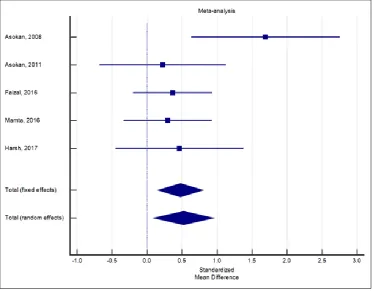
The overall findings of this analysis were found to be in favor of the experimental group, in which the oral S. mutans count reduced more as compared to the control group. The pool effects in term of standardized mean difference as obtained in a fixed effect models showed an impact of 0.48 in favor of oil-pulling therapy, that according to the Cohen rule of thumb depicts a
Fig. 2. Forrest plot of the studies included in the meta-analysis
Table 1. Pooled effects of oil pulling on bacterial count in terms of SMD
Study N1 N2 Total SMD SE 95% CI t P Weight (%)
Fixed Random
Asokan, 2008 10 10 20 1.690 0.505 0.630 to 2.751 10.43 13.59
Asokan, 2011 10 10 20 0.225 0.430 -0.677 to 1.128 14.40 17.04
Faizal, 2016 25 25 50 0.368 0.281 -0.197 to 0.933 33.72 27.63
Mamta, 2016 20 20 40 0.295 0.312 -0.336 to 0.926 27.37 24.95
Harsh, 2017 10 10 20 0.465 0.435 -0.448 to 1.378 14.08 16.79
Total (fixed effects)
75 75 150 0.479 0.163 0.157 to 0.801 2.938 0.004 100.00 100.00
Total (random effects)
75 75 150 0.521 0.217 0.0929 to 0.950 2.404 0.017 100.00 100.00
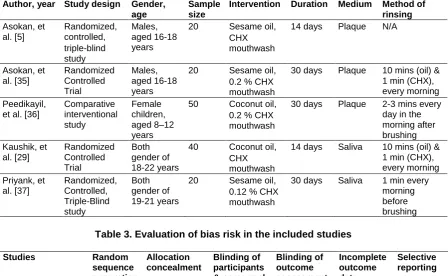
Table 2. Parameters of the included studies
Author, year Study design Gender, age
Sample size
Intervention Duration Medium Method of rinsing Asokan, et al. [5] Randomized, controlled, triple-blind study Males, aged 16-18 years
20 Sesame oil,
CHX mouthwash
14 days Plaque N/A
Asokan, et al.[35] Randomized Controlled Trial Males, aged 16-18 years
20 Sesame oil,
0.2 % CHX mouthwash
30 days Plaque 10 mins (oil) & 1 min (CHX), every morning Peedikayil,
et al. [36]
Comparative interventional study Female children, aged 8–12 years
50 Coconut oil,
0.2 % CHX mouthwash
30 days Plaque 2-3 mins every day in the morning after brushing Kaushik, et al. [29] Randomized Controlled Trial Both gender of 18-22 years
40 Coconut oil,
CHX mouthwash
14 days Saliva 10 mins (oil) & 1 min (CHX), every morning Priyank, et al. [37] Randomized, Controlled, Triple-Blind study Both gender of 19-21 years
20 Sesame oil,
0.12 % CHX mouthwash
30 days Saliva 1 min every morning before brushing
Table 3. Evaluation of bias risk in the included studies
Studies Random
sequence generation Allocation concealment Blinding of participants & personnel Blinding of outcome assessment Incomplete outcome data Selective reporting
Asokan, et al. [5] 1 2 1 1 1 1
Asokan, et al. [35] 1 1 1 1 1 1
Peedikayil, et al. [36] 1 2 1 1 1 1
Kaushik, et al. [29] 1 2 2 1 1 1
Priyank, et al. [37] 1 2 1 1 1 1
near to moderate effects of oil-pulling on the oral S. mutans count as shown in (Fig. 2). I2 value was 39.50% which shows moderate level of heterogeneity among the studies (Table 1).
4. DISCUSSION
In the current era of dentistry, there is more focus towards the preventive measures to counter factors causing oral diseases. Control of cariogenic bacteria is, therefore, vital to prevent dental caries which may have dire consequences
if not treated. Hence, oil-pulling would
complement and aid mechanical plaque removal (brushing). All the studies [5,29,35-37] in this review showed that the group undergoing oil-pulling showed reduced S. mutans oral bacterial count, as compared to CHX mouthwashes. The studies included in this review had several discrepancies such as different mediums for bacterial count, time duration of oil-pulling and CHX mouthwash use and disparity in the follow-up time (Table 2). Three studies [5,35,36] took plaque for bacterial count and rest of the two
studies [29,37] took saliva samples for the analysis. Thirty-days of follow-up duration was followed by three studies [35-37] whereas two studies [5,29] had a follow-up of fourteen days. A briefer follow-up time of fourteen-days would suggest that there will be less improvement in oral bacterial count, as compared to those levels analyzed after thirty days of follow-up. There was inconsistency in regards to the time taken for oil-pulling and CHX mouthwash rinses; two studies [29,35] asked their patients to rinse for 10
minutes, other two studies [36,37] had
The main limitations of this review were that only five studies were included and only S. mutans
count was taken into account to evaluate the effects of oil-pulling and mouthwash. In regards to the duration of time required for oil-pulling as previously suggested was 15-20 minutes, but the studies taken in this meta-analysis suggests a shorter time period of 2-5 minutes which would have patient’s compliance as well. More studies are required to validate the time taken to achieve optimum anti-bacterial effect of oil-pulling.
5. CONCLUSION
It is still questionable that whether oil-pulling therapy is more beneficial to the patient as compared to CHX mouthwashes commonly being used, since there is insufficient literature evidence. To better understand the comparison between the two rinses and obtain a conclusive result, further assessment of clinical parameters and investigations are required through the help of clinical trials with multiple follow-up periods.
CONSENT
It is not applicable.
ETHICAL APPROVAL
It is not applicable.
COMPETING INTERESTS
Authors have declared that no competing interests exist.
REFERENCES
1. Selwitz RH, Ismail AI, Pitts NB. Dental caries. Lancet. 2007;369(9555):51-9.
2. Tomasz M. Karpinski , Szkaradkiewicz AK.
Microbiology of dental caries. J Biol Earth Sci. 2013;3(1):21-4.
3. Ronanki S, Kulkarni S, Hemalatha R,
Kumar M, Reddy P. Efficacy of
commercially available chlorhexidine
mouthrinses against specific oral
microflora. Indian J Dent Res. 2016; 27(1):48-53.
4. Salehi P, Momeni Danaie S. Comparison of the antibacterial effects of persica
mouthwash with chlorhexidine on
streptococcus mutans in orthodontic
patients. DARU Journal of Pharmaceutical Sciences. 2006;14(4):178-82.
5. Asokan S, Rathan J, Muthu M, Rathna PV,
Emmadi P. Effect of oil pulling on Streptococcus mutans count in plaque and saliva using Dentocult SM Strip mutans test: A randomized, controlled, triple-blind study. J Indian Soc Pedo Prev Dent. 2008; 26(1):12.
6. Chye RML, Perrotti V, Piattelli A, Iaculli F, Quaranta A. Effectiveness of different commercial chlorhexidine based mouth-washes after periodontal and implant surgery: A systematic review. Implant Dent. 2019;28(1):74-85.
7. Coelho AS, Laranjo M, Gonçalves AC,
Paula A, Paulo S, Abrantes AM, et al. Cytotoxic effects of a chlorhexidine
mouthwash and of an enzymatic
mouthwash on human gingival fibroblasts. Odontology. 2019;1-11.
8. Kandaswamy SK, Sharath A, Geetha Priya
PR. Comparison of the Effectiveness of
probiotic, chlorhexidine based
mouthwashes, and oil pulling therapy on
plaque accumulation and gingival
inflammation in 10- to 12-year-old
schoolchildren: A randomized controlled trial. Int J Clin Pediatr Dent. 2018;11:66-70.
9. Plantinga NL, Wittekamp BHJ, Leleu K, Depuydt P, Van den Abeele A-M, Brun-Buisson C, et al. Oral mucosal adverse events with chlorhexidine 2% mouthwash in ICU. Intensive Care Med. 2016; 42(4):620-1.
10. Quirynen M, Avontroodt P, Peeters W, Pauwels M, Coucke W, van Steenberghe D. Effect of different chlorhexidine formulations in mouthrinses on de novo plaque formation. Journal of clinical periodontology. 2001;28(12):1127-36.
11. Charles CH, Mostler KM, Bartels LL,
Mankodi SM. Comparative antiplaque and
antigingivitis effectiveness of a
chlorhexidine and an essential oil
mouthrinse: 6-month clinical trial. Journal of Clinical Periodontology. 2004;31(10): 878-84.
12. Van Strydonck DA, Slot DE, Van der
Velden U, Van der Weijden F. Effect of a
chlorhexidine mouthrinse on plaque,
gingival inflammation and staining in gingivitis patients: A systematic review. Journal of Clinical Periodontology. 2012; 39(11):1042-55.
13. Sakaue Y, Takenaka S, Ohsumi T, Domon
An In vitro study. BMC Oral Health. 2018;18(1):52.
14. Najafi MH, Taheri M, Mokhtari MR,
Forouzanfar A, Farazi F, Mirzaee M, et al. Comparative study of 0.2% and 0.12% digluconate chlorhexidine mouth rinses on the level of dental staining and gingival indices. Dent Res J. 2012;9(3):305-8.
15. Gurgan CA, Zaim E, Bakirsoy I, Soykan E.
Short-term side effects of 0.2% alcohol-free chlorhexidine mouthrinse used as an
adjunct to non-surgical periodontal
treatment: A double-blind clinical study. Journal of Periodontology. 2006;77(3):370-84.
16. Addy M, Wade W, Goodfield S. Staining and antimicrobial properties In vitro of some chlorhexidine formulations. Clinical Preventive Dentistry. 1991;13(1):13-7. 17. Mythri H. Oil pulling: A traditional method
on the edge of evidence. Dent
Hypotheses. 2017;8(3):57-60.
18. Shanbhag VK. Oil pulling for maintaining oral hygiene - A review. J Tradit Complement Med. 2017;7(1):106-9. 19. Singh A, Purohit B. Tooth brushing, oil
pulling and tissue regeneration: A review of holistic approaches to oral health. J Ayurveda Integr Med. 2011;2(2):64-8. 20. Poonam Tomar SH, Manish Jain, Kuldeep
Rana, Vrinda Saxena. Oil Pulling and Oral Health: A Review. IJSS Case Reports & Reviews 2014;1(3):33-7.
21. Gunjan Garg, Gopesh Manga, Chundawat
NS. Ayurvedic approach in oral health & hygiene: A review. Int J Ayurveda Pharma Res. 2016;4(5).
22. Mohd. Shamim Khan QHLaMAK.
Physico-chemical and pharmacological prospective of roghan-e-narjeel (coconut oil). Int J Pharm Sci Res. 2016;7(3):1286-91.
23. Beena Shino FCP, Shyamala R.
Jaiprakash, Gufran Ahmed Bijapur, Soni Kottayi, Deepak Jose. Comparison of
antimicrobial activity of
chlorhexidine,coconut oil, probiotics and ketoconazole on candida albicans isolated in children with early childhood caries: An
In vitro study. Scientifica. 2016;2016:5. 24. Batovska DI, Todorova IT, Tsvetkova IV,
Najdenski HM. Antibacterial study of the medium chain fatty acids and their 1-monoglycerides: Individual effects and synergistic relationships. Polish Journal of Microbiology. 2009;58(1):43-7.
25. Thorgeirsdottir TO, Kristmundsdottir T, Thormar H, Axelsdottir I, Holbrook WP.
Antimicrobial activity of monocaprin: A monoglyceride with potential use as a denture disinfectant. Acta Odontologica Scandinavica. 2006;64(1):21-6.
26. Thaweboon SNJ, Thaweboon B. Effect of oil-pulling on oral microorganisms in biofilm models. Asia J Public Health. 2011;2:62- 6.
27. Verallo-Rowell VM, Dillague KM,
Syah-Tjundawan BS. Novel antibacterial and emollient effects of coconut and virgin olive oils in adult atopic dermatitis. Dermatitis: Contact, atopic, occupational, drug. 2008; 19(6):308-15.
28. Sado Kamdem S, Guerzoni ME, Baranyi J,
Pin C. Effect of capric, lauric and alpha-linolenic acids on the division time
distributions of single cells of
Staphylococcus aureus. International
Journal of Food Microbiology. 2008;128 (1):122-8.
29. Kaushik M, Reddy P, Sharma R,
Udameshi P, Mehra N, Marwaha A. The
effect of coconut oil pulling on
Streptococcus mutans count in saliva in comparison with chlorhexidine mouthwash. J Contemp Dent Pract. 2016;17(1):38-41.
30. S Thaweboon, J Nakaparksin, Thaweboon
B. Effect of oil-pulling on oral
microorganisms in biofilm models. Asia J Public Health. 2011;2:62-6.
31. Kumar CM, Singh SA. Bioactive lignans
from sesame (Sesamum indicum L.):
evaluation of their antioxidant and
antibacterial effects for food applications. J Food Sci Technol. 2015;52(5):2934- 41. 32. T. Durai Anand, C. Pothiraj, Gopinath RM,
Kayalvizhi B. Effect of oil-pulling on dental caries causing bacteria. African Journal of Microbiology Research. 2008;2(3):63-6. 33. Moher D, Liberati A, Tetzlaff J, Altman DG.
Preferred reporting items for systematic reviews and meta-analyses: The PRISMA statement. Annals of Internal Medicine. 2009;151(4):264-9.
34. Higgins JP, Thompson SG, Deeks JJ,
Altman DG. Measuring inconsistency in meta-analyses. BMJ (Clinical Research ed). 2003;327(7414):557-60.
35. Asokan S, Jeevarathan J, Shakeer A,
Emmadi P, Raghuraman R. Oil pulling therapy on streptococcus mutans count in plaque and saliva-a randomized controlled trial. The Journal of the Indian A. 2011;18 SUPPL III):948.
of antibacterial efficacy of coconut oil and chlorhexidine on Streptococcus mutans: An In vivo study. J Int Soc Prevent Communit Dent. 2016;6(5):447.
37. Priyank H, Rishi R, Mahalakshmi V,
Purbay S, Kumar C, Verma A. Effect of oil
pulling on streptococcus mutans in saliva-a randomised, controlled, triple-blind in vivo
study. Int J Contemp Med Res. 2017;4(9). 38. Higgins JP, Green S. Cochrane handbook
for systematic reviews of interventions; 2006.
_________________________________________________________________________________
© 2019 Abbasi et al.; This is an Open Access article distributed under the terms of the Creative Commons Attribution License (http://creativecommons.org/licenses/by/4.0), which permits unrestricted use, distribution, and reproduction in any medium, provided the original work is properly cited.
Peer-review history: