____X___Academic Unit ______ Administrative/Support Unit
I. Unit Title: Social Sciences
School/College or University Division: Arts & Sciences
Unit Administrator: Albert Nylander
II. Educational Program Learning Outcome Assessment Plan(Academics)
Learner Outcomes identified for the major.
A. Learning Outcome What should a graduate in the
BS in Social Science Education
major know, value, or be able to do at graduation and beyond?
B. Data Collection & Analysis 1. What assessment tools and/or methods will you use to determine
achievement of the learning outcome? 2. Describe how the
data from these tools and/or methods will be/have been
collected. 3.Explain the procedure to
analyze the data.
C. Results of Evaluation What were the findings of the
analysis?
D. Use of Evaluation Results 1.List any specific recommendations. 2. Describe changes in curriculum, courses, or procedures that are proposed or were made/ are being made as a result of the program learning
outcome assessment process.
Students in social science education should possess the knowledge, capabilities, and dispositions to organize and provide instruction at the appropriate school level for the study of culture and cultural diversity.
GE #’s 1, 2, 6, 7, 8, 9, 10
This information is collected from the Praxis II test scores, and evaluation instruments from student teaching. Each student teacher is evaluated by the cooperating teacher, subject area university supervisor, and college of education supervisor. The data are tabulated and filed in an assessment report. All information
See Appendix for the Social Science Education Assessment Findings.
Additional field experiences are being added to methods in order to further improve teaching and student learning before
Committee.
Students in social science education, who are licensed to teach history at the 7-12 school levels, should possess the knowledge, capabilities, and dispositions to organize and provide instruction at the appropriate school level for the study of history.
GE #’s 1, 2, 4, 6, 7,
This information is collected from the Praxis II test scores, and evaluation instruments from student teaching. Each student teacher is evaluated by the cooperating teacher, subject area university supervisor, and college of education supervisor. The data are tabulated and filed in an assessment report. All information is analyzed by the subject are supervisor and discussed by the Social Science Education Committee.
See Appendix for the Social Science Education Assessment Findings.
Additional field experiences are being added to methods in order to further improve teaching and student learning before
practicum, beginning Fall 2008. The additional field experience should further improve the instructional skills of Candidates.
A. Learning Outcome What should a graduate in the
BA in Political Science
major know, value, or be able to do at graduation and beyond?
B. Data Collection & Analysis 1. What assessment tools and/or methods will you use to determine
achievement of the learning outcome? 2. Describe how the
data from these tools and/or methods will be/have been
collected. 3.Explain the procedure to
analyze the data.
C. Results of Evaluation What were the findings of the
analysis?
D. Use of Evaluation Results 1.List any specific recommendations. 2. Describe changes in curriculum, courses, or procedures that are proposed or were made/ are being made as a result of the program learning
outcome assessment process.
Students in political science will be able to think critically, and write clearly about politics and government in contemporary societies.
1) Senior Portfolios are collected by the department and evaluated by the Political Science
Committee
2) Oral internship defenses
The Division of Social Sciences Assessment Committee has evaluated the graduating seniors’ portfolios in Political Science and found the students are sufficiently
write and think critically about politics and government in contemporary societies.
Students in political science will understand the role of politics at the local, national, and
international levels.
1) The Political Science Committee evaluated the BA curriculum in the fall to determine whether or not it was meeting the needed requirements to prepare students for understanding the international and comparative politics in a global world. 2) Internal course assessments
The Political Science Committee evaluated the Political Science curriculum and found that students need more exposure to the Politics of Globalization, Comparative Politics, and International Politics.
The following courses were added to the Political Science program to address these needs: PSC 302: Politics of
Globalization
PSC 360: Comparative Politics PSC 370: International Politics
A. Learning Outcome What should a graduate in the
BS in Criminal Justice
major know, value, or be able to do at graduation and beyond?
B. Data Collection & Analysis 1. What assessment tools and/or methods will you use to determine
achievement of the learning outcome? 2. Describe how the
data from these tools and/or methods will be/have been
collected. 3.Explain the procedure to
analyze the data.
C. Results of Evaluation What were the findings of the
analysis?
D. Use of Evaluation Results 1.List any specific recommendations. 2. Describe changes in curriculum, courses, or procedures that are proposed or were made/ are being made as a result of the program learning
outcome assessment process.
Students will understand the role of criminal law and the judicial process in the study of criminal justice.
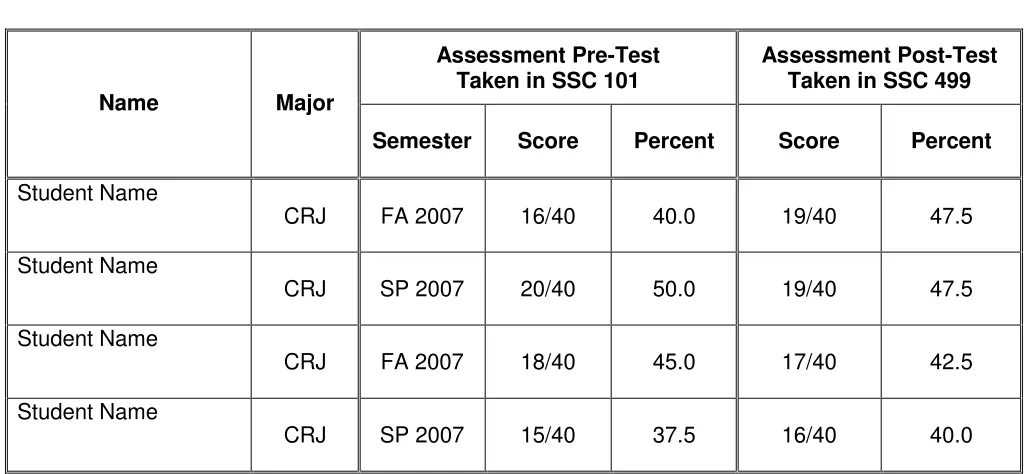
Students are given a pre and post test on basic and advanced concepts in criminal justice. This information is collected in SSC 101, Engaging the Social Sciences and SSC 499, Integrative Seminar in the Social Sciences. The instructor of this course tabulates all data and then writes an
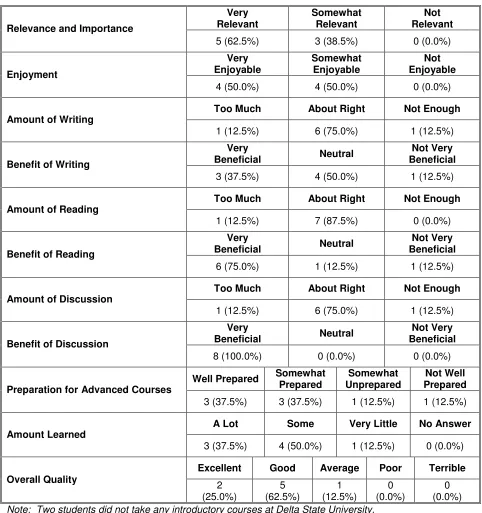
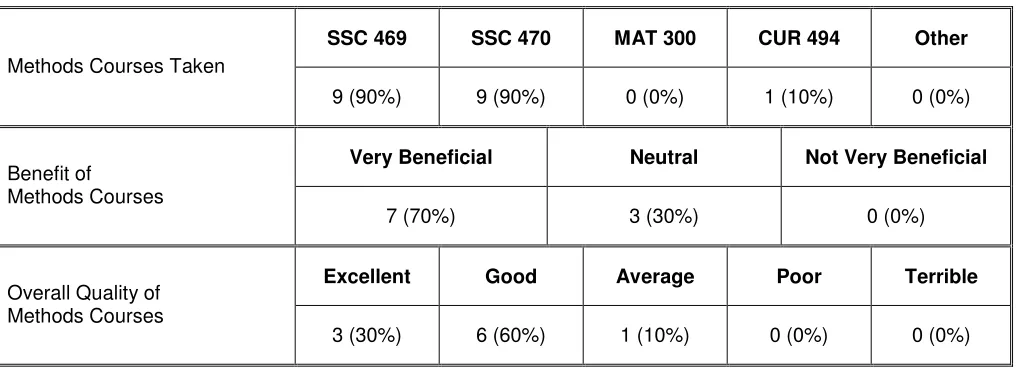
90% of the students learned a lot from their advanced courses. 100% of the students considered the courses to be relevant and very important.
(see page 12 in the SSC 499 report in the appendix)
For the Pre and Post Tests, 57% of
division sends the report out to all, and seeks feedback.
above 60% on the assessment post-test.
(see page 29 in the SSC 499 report in the appendix)
Students will be able to develop skills in critical thinking, synthesis and analysis of informational sources about social justice, and criminology.
In SSC 101 and 499, students are assessed on their abilities to understand the theoretical
importance of academic programs such as social justice and
criminology. The instructor for these courses provided pre and post tests, and focus groups (see the appendix for results). The procedures for collecting and analyzing these results are located in these documents in the
appendix.
Most criminal justice students fail to see the importance of critically thinking and analyzing information based on theoretical driven courses related to social justice and
criminology (see the whole SSC 499 report).
The undergraduate criminal justice committee recommended to the chair that the criminal justice program be changed in name to Social Justice and Criminology. This change was approved at the division level, dean’s office, academic council, and Institutions of Higher Learning. This name change and new focus takes place fall 2008.
A. Learning Outcome What should a graduate in the
BS in Social Sciences
major know, value, or be able to do at graduation and beyond?
B. Data Collection & Analysis 1. What assessment tools and/or methods will you use to determine
achievement of the learning outcome? 2. Describe how the
data from these tools and/or methods will be/have been
collected. 3.Explain the procedure to
analyze the data.
C. Results of Evaluation What were the findings of the
analysis?
D. Use of Evaluation Results 1.List any specific recommendations. 2. Describe changes in curriculum, courses, or procedures that are proposed or were made/ are being made as a result of the program learning
outcome assessment process.
Students will demonstrate knowledge of the disciplines of geography, political science, and sociology in terms of its history, content, purpose and
1) Senior Portfolios 2) SSC 101 & 499 courses (see appendix for reports)
Overall, students answered 45 percent of the questions correctly. Students’ scores in Geography, Political Science, and Sociology
at that time.
Students will understand the impacts of social
structures/institutions on their lives.
1) Senior Portfolios 2) SSC 101 & 499 courses (see appendix for reports)
Students’ portfolios were reviewed, and there are some weaknesses translating conceptual approaches to practical experiences. More work will need to be done in the core courses to improve this SLO.
SSC 101 & 499 will be reviewed for additional changes this coming year.
A. Learning Outcome What should a graduate in the
MS in Community Development
major know, value, or be able to do at graduation and beyond?
B. Data Collection & Analysis 1. What assessment tools and/or methods will you use to determine
achievement of the learning outcome? 2. Describe how the
data from these tools and/or methods will be/have been
collected. 3.Explain the procedure to
analyze the data.
C. Results of Evaluation What were the findings of the
analysis?
D. Use of Evaluation Results 1.List any specific recommendations. 2. Describe changes in curriculum, courses, or procedures that are proposed or were made/ are being made as a result of the program learning
outcome assessment process.
Students will be prepared for work in community and economic development positions upon graduating.
1) Positions held by former students in various community and economic development fields.
A sample of our recent graduates find them in some of the following positions:
--Pursuing a Masters degree in Counseling at Delta State University
--Pursuing the Ph.D. in Human Capital Development at the University of Southern Mississippi --Working for a Bank in Greenville --Working for the Indianola Pecan House
--Working for the Clarksdale Public School System
--Working for the Walton Arts
This success provides the faculty with even more focus on
exposing students to the core social science theories,
especially those from community development and community and development sociology.
Mississippi State University Social Science Research Center
--Founder of the Mississippi Community Development Group based in Clarksdale
--Executive Director of Synergy for Home and International
Development based in Kenya
students, and the latest research will allow us to make
improvements in course content and rigor of methods for community development graduate students.
Students will communicate in an appropriate and effective manner, orally and in writing, to multiple types of audiences.
1) Theses
2) Practicum reports
3) Professional presentations
Eight students completed practicum reports this academic year. One thesis, “Exploring Health Status and Barriers to Health Care Access Among Mexican Immigrants in the Yazoo-Mississippi Delta,” was written by Monica Rosas.
We had several co-authored presentations on behalf of our students at professional
conferences. Please see Faculty Merit Activities in the Appendix for more information.
Faculty members will continue to focus on Social Theories, Research Methods, and Oral Presentations throughout the MSCD curriculum.
A. Learning Outcome What should a graduate in the
MS in Criminal Justice
major know, value, or be able to do at graduation and beyond?
B. Data Collection & Analysis 1. What assessment tools and/or methods will you use to determine
achievement of the learning outcome? 2. Describe how the
data from these tools and/or methods will be/have been
collected.
C. Results of Evaluation What were the findings of the
analysis?
Students will be able to conduct, analyze, interpret and apply various works of scholarly research in order to develop responses to contemporary issues facing the field of criminal justice.
1) Comprehensive examinations Comprehensive examination scores for 2008 graduates were analyzed. All students passed their written comprehensive exams.
None
Students will have an advanced knowledge of theories relating to crime causation in criminal justice.
1) Comprehensive examinations 2) Capstone Course Assessment 3) Internal course assessment of CRJ 630—Criminal Justice Theory
The Graduate Coordinator evaluated all papers, presentations, and
comprehensive examinations to determine overall success of students. All students passed their written comprehensive exams, and 6 of 8 students passed the Theory course
The Master’s in Criminal Justice has been renamed to Social Justice and Criminology. New courses will be developed to reflect this new emphasis on understanding theories of crime causation in criminal justice and the prevention of crime.
A. Learning Outcome What should a graduate in the
MS in Secondary Education
major know, value, or be able to do at graduation and beyond?
B. Data Collection & Analysis 1. What assessment tools and/or methods will you use to determine
achievement of the learning outcome? 2. Describe how the
data from these tools and/or methods will be/have been
collected. 3.Explain the procedure to
analyze the data.
C. Results of Evaluation What were the findings of the
analysis?
D. Use of Evaluation Results 1.List any specific recommendations. 2. Describe changes in curriculum, courses, or procedures that are proposed or were made/ are being made as a result of the program learning
outcome assessment process.
Students will demonstrate an ability to critically analyze social phenomena by applying key social science concepts.
1) Comprehensive Exams All students successfully passed the written comprehensive exam. All students performed exceptionally well on the first question, which asked students to write, at length, about the three main theoretical perspectives in the social sciences.
III. Goals
-- 2007-2008
Goal # 1: Hire new faculty members in Geography, and Criminal Justice
We were able to fill an open position in Criminal Justice with Dr. Tiffiny Guidry, Ph.D., University of Arizona. However, we did not
hire a new Geographer, so we still have a void in that area. Also, we were unable to fill Dr. Jerry Robinson’s line. This will negatively
impact the division’s ability to maintain our high number of majors and graduates.
Goal #2. . . Improve the quality of feedback and increase the frequency of response to individual students in the program
See SSC 499 report in the appendix.
-- 2008-2009
Goal # 1: Hire faculty in Geography, Social Justice & Criminology, and Social Science Education
We have an ad out to fill the Social Science Education position. Hopefully, we will be able to hire a Geography/GIT scholar this
coming year. Additionally, we need to replace the position line vacated this past year with another Social Justice & Criminology
person. We are in a catch 22 position at this time with the positions we have lost over the last several years. As indicated in the annual
reports since 2004, it is difficult to sustain our number of majors and graduates when positions are not filled. We had a high of 83
graduates in 2005, but we have dropped since then.
SP’s 1, 2, 5 (probably all); QEP’s 2, 4
Goal #2: Continue to increase Indirect Funds through Grants and Contracts
There is a great need to have access to a student computer lab in our division. All students in the division must take a required
methods and statistics course. Also, we have three graduate programs, and it is essential that graduate students have access to
computers. Thus, we are developing a plan at this time to create a small computer lab of four to five stations. We expect the lab to be
of great benefit to our SSC 469 & 470 courses, and all graduate students.
QEP’s 1, 2, 4
Goal #4: Increase the number of graduates in the Division by 10%
We graduated 63 students this past year, which is down from a high of 83 students in 2005. The decrease was expected due to the loss
of positions in the Division of Social Sciences. However, we are working to sustain and grow our numbers based on the current
faculty lines. We are streamlining our graduate courses in methods and statistics, and we anticipate adding a few more courses online.
It is the division’s expectation that these changes will increase our numbers; however, we cannot sustain anymore losses to faculty
lines.
SP’s all; QEP’s all
Goal #5: Continue to develop study abroad courses
We expect to continue to internationalize our programs, and we are seeking ways to internationalize our students within the division.
SP 5; QEP’s all
Goal #6: Expand marketing efforts for undergraduate and graduate degrees offered through the Division
We are implementing a planning and marketing committee to better share our work in the division.
SP’s 3, 4, 5;
Goal #7: Develop clear, step-by-step tenure/promotion guidelines
The Tenure and Promotions committee will be developing specific guidelines for the division.
Goal #8: Systematically plan and organize outreach/recruitment efforts in the local area High Schools and Community
Colleges
Goal #10: Increase Social Sciences visibility through our webpage
We plan to double our efforts in showcasing faculty activities, and becoming more user friendly.
-- 2008-2013
Goal #1: Develop an online program for the BS in Social Sciences
Goal #2: Develop concentrations in Gender Studies & GIS for the BS program
Goal #3: Restructure the Social Justice & Criminology curriculum to include tracks in Criminology, Social Justice Law, etc.
Goal #4: Increase the number of international students in the Division.
Goal #5: Enrich student learning by engaging more students in service learning projects as appropriate.
IV. Data and information for department:
The Division of Social Sciences aims at a broad development of the individual. Its goal is to present the main approaches to
understanding our world and maintain a student-centered environment. In the process, faculty in the Division seek to develop certain
skills and enduring habits of mind--intellectual curiosity, critical thinking, tolerance of and openness to different views and values, and
the ability to communicate one's thoughts orally and in writing. In short, this philosophy of learning should enable students to embark
on a lifetime of learning and to adapt to a rapidly changing world. It is also the mission of the Division to serve the Delta by
developing programs of study that match the cultural needs of the region and state. To determine the extent to which the Division is
meeting some of these needs, a brief presentation of trends is presented next.
Number of Graduates, Majors, and Credit Hour Production
BSE 13 12 6 14 7 6
BA 6 4 2 5 1 10
BSCJ 17 27 22 29 15 19
BS 21 16 16 18 11 8
MED 8 5 14 11 2 2
MSCJ 6 6 9 5 11 9
MSCD 5 13 9 5 3 9
Total 77 76 83 78 50 63
Number of Majors
Table 2:
Number of majors (Fall)
Program 2003
2004
2005
2006
2007 2008
BSE
43
54
51
53
52
40
BA
21
19
18
20
33
36
BSCJ 96
91
107
96
95
103
BS
39
43
45
30
30
34
MED 32
22
22
13
25
19
MSCJ 12
21
35*
40*
41*
17
MSCD
24 22 29 20 22
21
Total
267 272 307 272 298
270
*Adjusted numbers: These numbers were for the whole year.
We increased our number of graduates this past year, and expect to increase it once again this coming year.
Credit Hour Production Analysis Summer 2007, Fall 2007, Spring 2008 Using Course File Summer 2007 Fall 2007 Spring 2008
SUBJECT DATA TOTAL TOTAL TOTAL
ANT SUM UG 0 96 45
SUM GR 0 0 0
COD SUM UG 0 0 0
SUM GR 48 102 81
CRJ SUM UG 0 654 561
SUM GR 24 96 108
GEO SUM UG 111 786 606
SUM GR 0 3 12
PSC SUM UG 75 603 522
SUM GR 0 6 3
SOC SUM UG 141 1,179 747
SUM GR 39 45 66
SSC SUM UG 18 155 210
SUM GR 15 57 33
TOTAL OVERALL 471 3782 2994
Source: Institutional Research
The division’s credit hour production has remained consistently around the 3500 mark for the fall semesters. This coming fall we will
not have an Anthropology instructor so we will lose those general education numbers. Additionally, there will be a drop in the
2. Merit Pay committee members are Garry Jennings, John Green, and Mark Bonta. All files are in main office.
3. Tenure and Promotion committee members are Garry Jennings, John Green, and Mark Bonta. All files are in main office.
4. Political Science undergraduate committee members are Garry Jennings, Leslie Fadiga-Stewart, and Arlene Sanders. Files are
located in Garry Jennings’ office.
5. Social Science undergraduate assessment committee members are Albert Nylander, Mark Bonta, Amy Owen, Alan Barton, and
Garry Jennings. Files are in the main office.
6. Social Science Education committee members are Albert Nylander and Amy Owen. Files are in the main office.
7. Honesty and Ethics committee members are Alan Barton, Paulette Meikle-Yaw, and Mark Bonta. Files are in the main office.
8. Community Development committee members are John Green, Alan Barton, Debarashmi Mitra, Paulette Meikle-Yaw, Albert
Nylander, and Jerry Robinson. Files are located in John Green’s office.
V. Personnel:
ENGAGING THE
SOCIAL SCIENCES
Assessment and
Professionalization
in the Social Sciences
Spring Semester 2008
Division of Social Sciences
Delta State University
Prepared by:
Alan W. Barton
SSC 101: ENGAGING THE SOCIAL SCIENCES Spring Semester 2008
INTRODUCTION
Enhancing student engagement is the central mission of Delta State University (DSU) under the current Quality Enhancement Plan. The Division of Social Sciences (DSS) has incorporated this mission into the curriculum through two courses, which were offered for the first time during Spring semester, 2007. Students receive one credit for each of these courses. They take SSC 101: Engaging the Social Sciences during their first semester as a major in the Division of Social Sciences, and SSC 499: Integrative Seminar in the Social Sciences during their final semester before graduation. Each course meets once a week for two hours, for eight weeks.
SSC 101, Spring 2008
SSC 101: Engaging the Social Sciences was offered for the third time during the second half of Spring semester, 2008. The course was included in the 2007–08 catalogue, so new students in the DSS are required to take this course. During the semester, students were introduced to the degree programs and professors in the DSS, completed various assessment activities, visited their advisors to develop plans to complete their degrees, and learned about resources on campus to help them with studying, writing and technology.
Enrollment
Forty-two students signed up for SSC 101 at the beginning of Spring semester, 2008. Of these, 37 completed the course. Three students were No Shows, one showed up for only one class session, and one dropped the course after the third session when we discovered his major field was not in the Division of Social Sciences.
Eleven of the students were freshmen, seven were sophomores, thirteen were juniors and six were seniors.
Activities
During the semester, students engaged in several activities aimed at assessing the Division of Social Sciences. They also carried out activities designed to develop a professional approach to their studies.
Assessment
Students initiated a portfolio of their work which they will maintain over the course of their studies at DSU. They will complete the portfolio in SSC 499 and submit it just prior to
semester, we discussed the purpose and value of a professional portfolio, as well as strategies for compiling a portfolio including the types of materials to include. The students visited their advisors and discussed their portfolios, then on the last day of class they brought their portfolios in and two other faculty members, Dr. Paulette Meikle-Yaw, Dr. Leslie Fadiga-Stewart came to the class and along with the course instructor reviewed each student’s portfolio. The faculty made suggestions and encouraged the students to keep their portfolios up to date during their studies at DSU.
Students also wrote several essays to include in their portfolios during the semester (See Appendix B). First, students wrote brief in-class essays on assigned topics, and we discussed their essays with the entire class. Students then took their informal essays and expanded them, typed them up and submitted them. The instructor read and evaluated the essays, and returned them so the students could put them in their portfolios. The first in-class essay was on the topic: “What are your goals in college?” followed by a Statement of Purpose, which students
completed out of class and submitted on March 26, 2008. The Statement of Purpose will also be included in the students’ portfolios. In the next in-class essay, students addressed the question: “Who are you?” then completed a Biographical Essay, which they turned in on April 2. The third in-class essay asked students to write about how they learn, and they then prepared an essay outside of class on their own preferred learning style, which was due on April 16. Next, students wrote an in-class essay on what college means to them, and prepared a
Statement of Values to turn in on April 23, and to include in their portfolios. Students then wrote an in-class essay on what they wanted to learn in college, and in conjunction with their advisors they prepared a plan of the courses they intended to take and a plan for compiling their
portfolios, which they submitted on April 30. During the class session on April 23, we discussed academic honesty and ethics and students wrote an in-class essay addressing the question: “Under what conditions would you cheat in a DSU course?” We followed this up with a
discussion. On the last day of class, students wrote an in-class essay on how they would define an engaged student. They submitted their blue books with all of their essays during the last class session.
The other assessment activity was a pre-test of knowledge in the social sciences, completed on April 16, 2008. The instructor has compiled a database of questions on Sociology, Geography, Political Science, Research Methods, Social Science Education
and Criminal Justice, which were submitted by faculty in the DSS. The questions are
ranked on a five-point scale based on difficulty. More information and results from this exam are presented below.
with tools to help and encourage them to take a professional approach to their studies. We used the concept of student engagement throughout the semester, introducing the concept as the current mission of DSU, and then discussing what student engagement means in various contexts. As mentioned, students wrote an in-class essay on the characteristics of an engaged student on the last day of class. The overall mission of these discussions is to orient the students towards viewing the university as a set of resources on which they can draw to learn.
On April 9, 2008, speakers from various campus centers came to class to introduce some of the resources available to students. Dr. Susan Allen Ford discussed the Writing Center and the importance of writing in one’s education. Ms. Susan Hines introduced the Technology Learning Center and its programs. Ms. Paula King spoke about the Counseling and Testing Center, and encouraged students to take advantage of counseling services and testing options. Ms. Diane Blansett told students about the Academic Support Lab and the types of assistance they could seek there. Mr. Michael Mounce from the Roberts-LaForge Library introduced students to the services that the reference librarians offer and the resources the library has available. These discussions provided students with knowledge that can help them through their academic programs and personal lives during college, and also encouraged students to view the university as a set of resources that they can use to improve themselves.
Introduction to the DSS Degree Programs
Over the course of the semester, students were introduced to many of the faculty members in the Division of Social Sciences, and to the degree programs the Division offers. Although most students enter this course with a declared major, discussing the degree programs gives all students a similar base of knowledge about the structure of the DSS. In addition, students in the same cohort have an opportunity to get to know their colleagues and better understand what other students who are enrolled in different degree programs are doing. This has the potential to integrate the students in the DSS.
Individual faculty members came to class to speak about their disciplines, discussing the degree program, courses that are offered, and what both students and graduates in the discipline are doing.
On March 26, Ms. Page Logan came to SSC 101 to talk about the Criminal Justice degree program. Ms. Logan used a creative exercise that tested students’ observational skills, and connected this to the field of Criminal Justice. The exercise was based on Ms. Logan’s own research and provided a good introduction not only to Criminal Justice, but also to the work of academics.
Dr. Amy Owen visited the class on April 2 to discuss the Social Science Education degree program. After briefly reviewing the requirements, Dr. Owen had the students get into small groups and prepare a lesson to teach the class. The lesson could be on anything the students thought they knew enough about to teach. The students had fun teaching these sessions, and learned a little about public speaking in the process.
On April 9, Dr. Leslie Fadiga-Stewart and Dr. Garry Jennings spoke to the class on the Political Science degree program. They reviewed the unique aspects of the Political Science program, and talked about some of the things students can do with a degree in Political Science. They also talked about several of the graduates from the DSU Political Science program, what they did while they were students, and what they are doing today. This was a well-conceived class session that helped the students think about setting goals, and provided role models for students interested in Political Science, and similar degrees
During the sixth week, on April 16, Dr. John Green spoke to the class about the Applied
Development Studies degree program. This is a relatively new degree program, which provides students with an opportunity to study community development at the undergraduate level. It is important that our students are aware of this option, since it is new, and hopefully some of the students in SSC 101 will opt to complete the ADS program, or will recruit their friends into the program.
On April 23, Dr. Mark Bonta introduced the discipline of Geography and discussed opportunities to study Geography at DSU. Dr. Bonta also spoke about his experiences as a geographer, including his extensive travels and time living overseas. His talk conveyed a sense of the exotic things one can do with a degree in geography. Also on April 23, Dr. Debarashmi Mitra spoke about the Sociology degree program. Dr. Mitra used data from a study conducted by the
American Sociological Association to illustrate her talk. The data showed who studies sociology and what they do with their degrees.
Working With an Advisor
Students visited their advisors twice during the semester, as part of their professionalization training. On March 26, students were given an assignment to interview their advisor. The purpose was for the student to get to know their advisor, and to feel comfortable making an appointment and speaking with faculty. They were told to make an appointment with their advisor, and they were given a list of questions that served as a guideline for their interview (See Appendix B). The questions included some choices, and also required the student to come up with original questions for their advisor. Students carried out this assignment over a two-week period beginning March 26, and on April 9 they submitted essays describing what they learned.
The following week, on April 16, students were given another assignment that involved their advisor. They were required to develop a plan of the courses they needed to graduate, along with a calendar that showed when they intended to take these courses. To complete this assignment, the students had to access the DSU Undergraduate Bulletin and use the
information presented in class on their degree program. They also had to print out a copy of their transcript. Once they had developed their course plan, students made an appointment with their advisor and met to review the plan. They also took their portfolios to this meeting, along with a brief statement they prepared on what they intended to include in their portfolios. The advisor had to sign a form confirming the meeting and students turned in their Plan for Graduation, their Advisor Form and a plan for their Portfolio on the last day of classes, April 30.
The purposes of these visits are, first, to create a situation in which students feel comfortable talking to their advisors, and second, to convey to students the importance of planning and preparation. Students had to prepare a plan for graduation before visiting the advisors, and hopefully took the message from this exercise that it is their responsibility to plan their
schedules, and when they visit their advisors at the beginning of each semester, they should do so having already made their plans for the courses they intend to take.
Academic Honesty and Ethics
tolerate cheating in the Division of Social Sciences, and that violations would be sanctioned. I also told them that the Office of the Vice President for Academic Affairs keeps a record of cases of cheating, and that repeated offenses could result in expulsion.
Pre-Test of Knowledge of the Social Sciences
On April 16, 2008, the students in SSC 101 took an exam to measure their baseline knowledge in the social sciences. The results from this test will be compared to a similar test taken by students in SSC 499 as a means of assessing the growth in each student’s knowledge over their time in the Division of Social Sciences. A total of 31 students took the exam.
The exam consisted of forty multiple choice questions, each with five possible responses. There were five levels of difficulty, assessed by the faculty member who submitted each question. The most basic questions (Level 1) should be answered correctly by anyone with a high school education. Level 2 questions should be answered by someone who completed an introductory course in the field, and Level 3 questions should be answered correctly by
someone who got an ”A” in an introductory course. Level 4 questions should be answered correctly by someone who passed an advanced course in the field, and Level 5 questions would only be answered correctly by those getting an “A” in an advanced course.
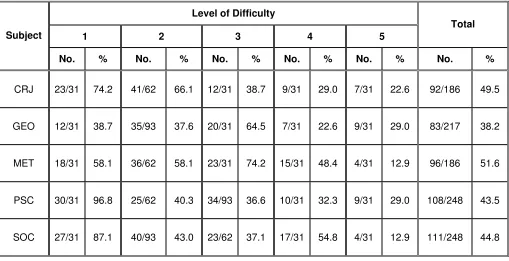
TABLE 1: RESULTS OF THE ASSESSMENT PRE-TEST Number and Percent of Students Answering Question Correctly
Level of Difficulty
1 2 3 4 5 Total
Subject
No. % No. % No. % No. % No. % No. %
CRJ 23/31 74.2 41/62 66.1 12/31 38.7 9/31 29.0 7/31 22.6 92/186 49.5
GEO 12/31 38.7 35/93 37.6 20/31 64.5 7/31 22.6 9/31 29.0 83/217 38.2
MET 18/31 58.1 36/62 58.1 23/31 74.2 15/31 48.4 4/31 12.9 96/186 51.6
PSC 30/31 96.8 25/62 40.3 34/93 36.6 10/31 32.3 9/31 29.0 108/248 43.5
SSE 21/31 67.7 17/31 54.8 2/31 6.5 11/31 35.5 16/31 51.6 67/155 43.2
Total 131/ 186 70.4 194/ 403 48.1 114/ 279 40.9 186 69/ 37.1 186 49/ 26.3 557/1240 44.9
Note: No. is the number of students that got the question correct divided by the total number of students; the test included more than one question at some levels for some subjects (e.g. if the denominator is 62, there were two questions at that level).
Prior to the test, to minimize pressure, the instructor told students the exam was for assessment purposes only and would not count towards their grade in the course nor their position in the DSS. The instructor encouraged students to do as well as they could, but made it clear that the results would not affect the students directly. The sole purpose is to assess their knowledge as they enter the Social Sciences program.
Table 1 shows the percentage of students who answered each type of question correctly. There was at least one question for each discipline at each level of difficulty, although more than one question was asked for the subjects that have introductory courses that are part of the Core or Special Degree requirements in the Social Sciences. Overall the results show the test to be a reasonably good measure. While there was some variation in the questions on each subject, over 70 percent of all Level 1 questions were answered correctly, an appropriate percentage given that these questions should be answered by anyone with a high school diploma. The percentage of correct responses dropped at each level after that, from 48 percent of the Level 2 question to 26 percent of the Level 5 questions.
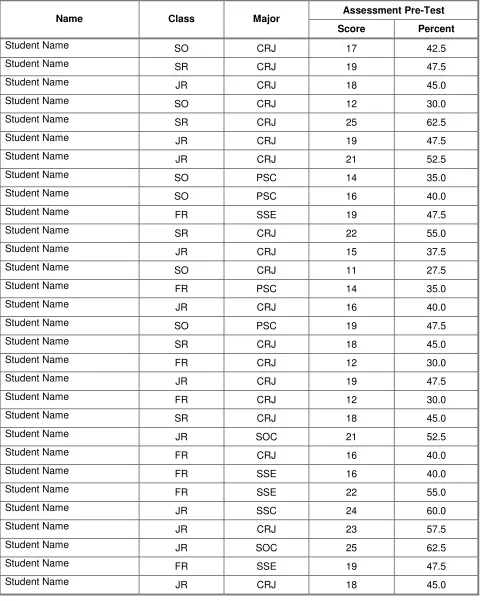
Table 2 shows the scores for each student on the test. The scores ranged from eleven correct responses (27.5 percent) to twenty-five correct responses (62.5 percent). The average score was 17.9 correct responses (57.7 percent).
Results provide a baseline of information to measure improvement after students have
completed the program. Although each individual exam is not a good indicator of deficiencies in the program, over time we can use results from several exams to assess where the
weaknesses are in student learning, and this can help the DSS to create teaching interventions that address those weaknesses.
Conclusion
TABLE 2: SCORES ON THE ASSESSMENT PRE-TEST
Assessment Pre-Test
Name Class Major
Score Percent
Student Name SO CRJ 17 42.5
Student Name SR CRJ 19 47.5
Student Name JR CRJ 18 45.0
Student Name SO CRJ 12 30.0
Student Name SR CRJ 25 62.5
Student Name JR CRJ 19 47.5
Student Name JR CRJ 21 52.5
Student Name SO PSC 14 35.0
Student Name SO PSC 16 40.0
Student Name FR SSE 19 47.5
Student Name SR CRJ 22 55.0
Student Name JR CRJ 15 37.5
Student Name SO CRJ 11 27.5
Student Name FR PSC 14 35.0
Student Name JR CRJ 16 40.0
Student Name SO PSC 19 47.5
Student Name SR CRJ 18 45.0
Student Name FR CRJ 12 30.0
Student Name JR CRJ 19 47.5
Student Name FR CRJ 12 30.0
Student Name SR CRJ 18 45.0
Student Name JR SOC 21 52.5
Student Name FR CRJ 16 40.0
Student Name FR SSE 16 40.0
Student Name FR SSE 22 55.0
Student Name JR SSC 24 60.0
Student Name JR CRJ 23 57.5
Student Name JR SOC 25 62.5
Student Name FR SSE 19 47.5
APPENDIX A: COURSE SYLLABUS
ENGAGING THE
SOCIAL SCIENCES
SSC 101
COURSE SYLLABUS
SPRING 2008
Course Information:
Meeting Place: 229 Kethley Hall
CRN: 16265
Meeting Times: Wednesdays, 2:00–4:00 pm (Mar. 5–Apr. 30)
Instructor Information:
Instructor: Dr. Alan Barton
Telephone: (662) 846-4097
Office: 214 Kethley Hall
E-mail:
Webpage:
http://ntweb.deltastate.edu/vp_academic/abarton/
Office Hours:
The instructor holds regular office hours at the following times:
Monday 2:00–6:00 pm; Tuesday 2:00–6:00 pm; Wednesday 10:00–11:00 am; 1:00–2:00
pm
If you cannot make one of these times, contact the professor to set up an appointment.
Course Webpage:
Additional materials and updated course information can be found on the course
webpage:
http://ntweb.deltastate.edu/vp_academic/abarton/SSC101SP08/SSC101Syllabus.ht
m
Course Overview:
The purpose of the course is to introduce the various degree programs in the Social
Sciences, to complete assessment activities in the Division of Social Sciences, and to
better prepare you for academic life at DSU.
Course Materials:
You will need two items for this course. First is a
large blue book, 8.5 x 11", which we
will use for in-class writing assignments. The second item is a 2" or 3" binder that you
can use for your portfolio. You can purchase these items at the university bookstore, at a
retail stationery store, or at various on-line sources.
Course Objectives:
(1) Understand the various degree programs in the Division of Social Sciences.
(2) Complete all assessment requirements for the Division of Social Sciences.
(3) Begin a portfolio to collect and highlight the work you complete at DSU.
(4) Learn about campus resources available to assist you during your time at DSU.
(5) Develop a plan for completing your degree and strategies for successfully achieving
your goals.
(6) Build a more engaged student body in the Division of Social Sciences and at DSU.
(7) Meet other students in the Division of Social Sciences.
Responsibilities and Grading:
Your primary responsibility in this course is to come to class each week, participate and
complete all of the assigned work. We will do some in-class informal writing, and you
will work outside of class on a portfolio of your work. You will also visit your advisor at
least twice during the semester to complete assignments.
Each assignment is worth a specified number of points. There are a total of 100 points
available over the course of the semester. If you finish the semester with at least 90
points, you will get an A in the course. If you finish with between 80 and 89 points, you
will get a B. For 70 to 79 points, you will get a C, and for 60 to 69 points, you will get a
D. If you finish with less than 60 points, you will get an F in the course and will have to
repeat it the following semester.
YOU are responsible for your progress in this course, and in all of your courses at DSU.
If you miss a class session, you should check with another student to see what you
You are expected to comply with all academic standards and ethics as defined in the
DSU Bulletin and Handbook. You are expected to do your own work in all of your
courses. Plagiarism, fraud and other forms of cheating is
NOT tolerated at DSU, and the
minimum sanction for cheating in this course is a zero on the assignment.. DSU's Vice
President for Academic Affairs monitors all cases of cheating on campus, and repeat
violations will result in severe sanctions, including expulsion.
For more information on academic honesty, see the DSU Library's "
Plagiarism
Prevention: A Guide for Students
," available on the library website.
~~~~~~~~~~~~~~~~~~~~~~~~~~~~~~~~~~~~~~~~~~~~~~
16.9% of Mississippians have a college degree; For the U.S., the figure is 24.4% (Source: U.S. Census, 2000). When you finish your degree, you will join an elite group. What is your strategy for finishing your degree?
“From everyone who has been given much, much will be demanded; and from the one who has been entrusted with much, much more will be asked” (Luke 12:48). Will you be ready to live up to the responsibilities of a college graduate?
Learning Opportunities:
You must complete all of the following activities:
(1) Attendance (25 points)
• You must attend all class sessions
• Please sign the attendance sheet at each class meeting; this is the official record of
attendance, and you may not receive credit for attending if you do not sign the sheet
• For each class session that you miss, 4 points will be deducted from your attendance
score
• You will not pass this course if you do not come to class
• You can be excused from one class period for illness or an official university activity
that conflicts with the class, if you bring a note from a doctor or administrator verifying
the reason for your absence
• If you cannot be in class for any other reason, please notify the instructor in advance,
and you will receive half credit; For excused absences, you will receive half credit for
additional absences after the first; The best way to notify the instructor is through
(2) In Class Discussion (15 points)
• You should participate actively in class discussions
• Disruptive and disrespectful behavior is not tolerated
• Make sure all cell phones and pagers are turned off during class
(3) Informal Writing and Portfolio Essays (15 points)
• You will prepare essays on the in-class writing during the semester; these essays will
go in your portfolio
• The assignment for each essay is available on the Course Outline section of the
on-line syllabus
(4) Working with Your Advisor I (10 points)
• Print out a copy of the advisor worksheet, found on the on-line syllabus
• On March 26, you will be given a sheet with various questions
• You then must schedule a meeting with your advisor, and discuss the questions on the
sheet with him or her
• Type up your findings, along with your reflections on the meeting
• Turn this in on April 9
(5) Working with Your Advisor II (10 points)
• Prepare a Course and Graduation Plan and a Portfolio Plan, as specified in the
assignment found on the on-line syllabus
• Between April 16 and April 30, schedule a meeting with your advisor, and discuss
your plans with her or him
• Submit your Portfolio Plan and your Course and Graduation Plan, with your advisor’s
approval form, on April 30
(6) Course and Graduation Plan (15 points)
• Prior to your second visit with your advisor, prepare a draft Course and Graduation
Plan, specifying the courses you intend to take each semester and your plan for
graduating from DSU
• Review your Course and Graduation Plan with your advisor at the second meeting
• Have your advisor sign the Advisor Approval Form attesting he/she has reviewed and
approves of your Course and Graduation Plan
• See the assignment sheet for more information
• Submit your Course and Graduation Plan on April 30
(7) Portfolio Plan (10 points)
• During your time as a student in the Division of Social Sciences, you will be
responsible for completing a portfolio of your work
• The portfolio is required for graduation, and you will not graduate unless you turn in a
complete portfolio
• Prior to your second visit with your advisor, begin your portfolio, and complete a plan
for your portfolio
• Be sure to include the essays you prepare for this course in your portfolio
• Review your portfolio and portfolio plan with your advisor at the second meeting
• You will submit your Portfolio and Portfolio Plan on April 30
• You can earn or lose up to 10 points on your final grade, based on factors such as the
motivation, interest, and improvement you demonstrate in the course
Note: ALL work that you submit, except in-class work, should be presented in a
professional manner; that is, it should be typed, submitted on time, and if there are
multiple pages, they should be attached with a staple or paper clip.
~~~~~~~~~~~~~~~~~~~~~~~~~~~~~~~~~~~~~~~~~~~~~~
An international study of 13-year-olds ... found that Koreans ranked first in mathematics and Americans last. When asked if they thought they were "good at mathematics," only 23 percent of the Korean youngsters said "yes" -- compared to 68 percent of American 13-year-olds. The American educational dogma that students should "feel good about themselves" was a success in its own terms -- though not in any other terms.
--Thomas Sowell (quoted in J.M. Henslin, 2004)
Course Outline:
Day/Date
Topic
Speaker/Activity/Assignment
Week 1: Course Introduction
Welcome to the Division of Social
Sciences
Dr. Albert Nylander
Chair of the Division of Social Sciences
Engaging the Social Sciences
Course Goals and Activities
Keys to Learning in College
Discussion
Wed.
Mar. 5
Assessment-Based Education
Reading on Assessment in Education:
What is a Generally Educated Person (
Peer
Review
, Fall 2004)
Wed.
Mar. 12
SPRING BREAK
Week 2: Goals in College; The Professional Portfolio
Creating a Professional Portfolio
Discussion
Handout: Portfolio Components
Wed.
Mar. 19
Setting and Achieving
(Due Mar. 26)
Engaging the Social Sciences
Social Sciences Degree Program
Dr. Garry Jennings
Week 3: Your Advisor
Engaging the Social Sciences
Criminal Justice Degree Program
Ms. Page Logan
Setting College Goals
Submit: Statement of Purpose
Working with Your Advisor I
Assignment: Interview Your Advisor (Due
Apr. 9)
Handout: Advisor Worksheet
Wed.
Mar. 26
Background
In-Class Essay: Who are you?
Discussion
Assignment: Prepare a Biographical Essay
(Due Apr. 2)
Day/Date
Topic
Speaker/Activity/Assignment
Week 4: Strategies for Studying in College
Engaging the Social Sciences
Social Science Education Degree
Program
Dr. Amy Owen
Background
Submit: Biographical Essay
Learning Style
In-Class Essay: How do you learn?
Discussion
Assignment: Prepare an Essay on Your
Learning Style (Due Apr. 16)
Submit: Blue Book
Wed.
Apr. 2
What Do I Want to Know?
How to Study in College;
Active Learning Strategies
Discussion
Week 5: Campus Resources
Wed.
Working with Your Advisor I
Submit: Responses and Reflections and
Advisor Worksheet
Discussion
The Value of a College Education
In Class Essay: What does college mean to
you?
Assignment: Statement of Values (Due Apr.
23)
Learning Opportunities on Campus
Ms. Susan Hines, Technology Learning Center
Ms. Paula King, Counseling and Testing
Center
Dr. Susan Allen Ford, Writing Center
Mrs. Diane Blansett, Academic Support Lab
Mr. Michael Mounce, Roberts-LaForge
Library Reference Dept.
Day/Date
Topic
Speaker/Activity/Assignment
Week 6: Assessing Social Science Knowledge
Engaging the Social Sciences
Sociology Degree Program
Applied Development Studies
Degree Program
Dr. Debarashmi Mitra
Dr. John Green
Learning Style
Submit: Learning Style Essay
Evaluating Learning
Pre-Test on the Social Sciences
Wed.
Apr. 16
Working with Your Advisor II
In-Class Essay: What do you want to learn in
college?
Discussion
Week 7: Ethics in College
Engaging the Social Sciences
Geography Degree Program
Dr. Mark Bonta
The Value of a College Education
Submit: Statement of Values
Wed.
Apr. 23
Academic Honesty and Ethics
In-Class Essay: Under what conditions would
you cheat in a DSU course?
Discussion
Week 8: Student Engagement
Becoming an Engaged Student
In-Class Essay: What is an engaged student?
Submit: Blue Book
Working with Your Advisor II
Maintaining Your Student Portfolio
Review Professional Portfolio with Division of
Social Sciences Faculty
Submit: Portfolio Plan; Plan for Courses &
Graduation
Wed.
Apr. 30
Course Evaluation
~~~~~~~~~~~~~~~~~~~~~~~~~~~~~~~~~~~~~~~~~~~~~~
Learning is least useful when it is private and hidden; it most powerful when it becomes public and communal. Learning flourishes when we take what we think we know and offer it as community property among fellow learners so that it can be tested, examined, challenged, and improved before we internalize it.
~Lee Shulman ~~~~~~~~~~~~~~~~~~~~~~~~~~~~~~~~~~~~~~~~~~~~~~
Additional Resources:
Roberts-LaForge Library
Reference Desk: (662) 846-4431
Writing Center
Office of Career Services
Bailey Hall 211
H.L. Nowell Union 300
(662) 846-4088
(662) 846-4646
Academic Support Lab
Counseling & Testing Center
Office of Information Technology
Technology Learning Center
Bailey Hall 114
Ewing Hall 130
OIT Help Desk: (662) 846-4444
(662) 846-4444
~~~~~~~~~~~~~~~~~~~~~~~~~~~~~~~~~~~~~~~~~~~~~
PREPARATION and PERSEVERANCE are the KEYS to SUCCESS
Be prepared; don’t give up
APPENDIX B: ASSIGNMENTS
STATEMENT OF PURPOSE
In a brief (1-2 page) narrative, explain what you hope to accomplish in your studies at DSU. Address the following questions:
Why have you chosen to pursue a college education? What are your goals in college?
Why are you studying social sciences?
What do you plan to do with your college education?
Type up your essay, and submit it in class on March 26.
This essay will go in your portfolio. Keep this version of your essay to turn in with your final portfolio.
INTERVIEW WITH YOUR ADVISOR
For this assignment, you will speak with your advisor, learn about him/her, and summarize what you learn in an essay.
To begin this assignment, contact your advisor and set up a meeting at some point between March 26 and April 9. It is best if you arrange a meeting before April 4, and it also would be best to meet during your advisor’s regular office hours.
If you do not yet have an advisor, see Linda Douglas in Kethley 205.
Note that under the section on “Interests,” you only need to ask your advisor two of the five questions listed. You also should come up with two questions on your own, prior to the interview. You should pose these questions to your advisor and record the responses.
Once you have completed the interview, sit down and type up the responses in a narrative. Your essay should introduce the reader to your advisor and convey who he or she is.
Turn in both your narrative and your interview worksheet/notes at the beginning of class on April 9.
ADVISOR WORKSHEET
Student’s Name_______________________________________
Advisor’s Name_______________________________________
Interview Date and Time__________________________________
Academic Credentials
Where did your advisor go to school?
What degrees does your advisor hold?
What subjects did your advisor study?
What are your advisor’s current areas of scholarship?
What significant scholarly contributions has your advisor made?
Background
What is your advisor’s home town?
How long has your advisor worked at Delta State?
Where has your advisor worked prior to Delta State?
What types of jobs has your advisor had besides being a professor?
Interests
Who has had a significant influence on your advisor? How?
What sorts of community work and activities is your advisor involved in?
What kind of entertainment does your advisor enjoy (e.g. sports, television, reading, movies, music)? What is your advisor’s favorite _______ (e.g. team, TV show, book, movie, song)?
What qualities does your advisor like to see in students?
What are the characteristics of a good teacher?
Come up with 2 additional questions on your own, pertaining to your advisor’s interests, and ask them during the interview. Make sure your questions are professional in nature.
BIOGRAPHICAL STATEMENT
Question: What have you done in your life?
Assignment: In a brief (1-2 page) narrative, tell the story of your life. Focus on your professional experiences and accomplishments.
These questions may help you think about your essay:
What characteristics define who you are? How did you develop these characteristics?
What experiences have meant the most to you in your life? How have these experiences shaped you?
What are the most important accomplishments in your life? What did you learn from these accomplishments?
Where do you see yourself in five years? How do you plan to get there?
Type up your essay, and submit it in class on April 2.
This essay will go in your portfolio. Keep this version of your essay to turn in with your final portfolio.
LEARNING PREFERENCES
Question: What is your preferred learning style?
Assignment: In a brief (1-2 page) narrative, explain how you prefer to learn.
How do you like to receive information (e.g. hearing, reading)? How do you process information so that you will remember it?
What conditions are most conducive to you learning and remembering information? What types of information are you most likely to remember?
Type up your essay, and submit it in class on April 16.
This essay will go in your portfolio. Keep this version of your essay to turn in with your final portfolio.
STATEMENT OF VALUES
In a brief (1-2 page) narrative, state what you value and what effect your values will have on your education. Address the following questions:
What are your most cherished values? Where did you learn these values?
What does going to college mean to you?
How will your values shape your educational experiences?
Type up your essay, and submit it in class on April 23.
This essay will go in your portfolio. Keep this version of your essay to turn in with your final portfolio.
COURSES, GRADUATION AND PORTFOLIO PLAN
In this assignment, you will create two documents. First is a plan for graduation, which includes the courses that you plan to take while at DSU. Second is a plan for your portfolio. You will review these documents and your portfolio with your advisor, have your advisor approve these documents, and submit them on the last day of class.
Course and Graduation Plan
(1) If you do not have a current copy of your transcripts, acquire a copy from the registrar’s office or from your on-line account.
(2) Using the DSU Undergraduate Bulletin 2007-08, find your degree program and make a copy of the page that lists the courses required for your degree. Develop a schedule that identifies which semester you have taken or intend to take each course. You should group the courses according to the conventions in your area of specialization, (e.g. General Education
Keep your transcript and a current copy of your Course and Graduation Plan in your portfolio.
You can view the DSU Undergraduate Bulletin 2007-08 at:
http://www.deltastate.edu/docs/acad_affairs/UG 2007-2008 catalog with bkmrks FINAL 2.pdf
Portfolio Plan
(3) Using information presented in class, prepare a plan for your portfolio. Note the types of documents you intend to include in your portfolio at the end of your studies. Keep the plan with your portfolio.
Meeting with Advisor
(4) Print out a copy of the Advisor Approval Form from the course website
(5) Arrange a meeting with your advisor. You should schedule a meeting at a time that is convenient both for you and your advisor. It is best to visit your advisor during her/his regular office hours.
(6) Take your portfolio, including the Portfolio Plan, your Course and Graduation Plan, and the Advisor Approval Form to the meeting with your advisor.
(7) Review your portfolio and Portfolio Plan with your advisor, then review your Course and Graduation Plan. Have your advisor complete the Advisor Approval Form.
Submit a copy of your Course and Graduation Plan, your Portfolio Plan and your completed Advisor Approval Form by the beginning of class on April 30.
ADVISOR APPROVAL
Student Name_________________________________________
Degree Program__________________Semester_________________
Advisor_____________________________________________
I have reviewed and approve of the Portfolio Plan and the Course and Graduation Plan for my advisee.
Comments:___________________________________________
_________________________________________________
_________________________________________________
_________________________________________________
_________________________________Date_____________ Advisor’s Signature
APPENDIX C:
ELEMENTS OF A STUDENT PORTFOLIO
Elements of a Professional Portfolio
During your time at Delta State, you will maintain a professional portfolio that documents your work. You will begin this portfolio during SSC 101, and should keep it updated as you progress through your degree program. During your last semester before graduation, in SSC 499, you will learn how to create useful portfolios for specific purposes, and you will submit an assessment portfolio which is required for graduation.
Purpose of the Professional Portfolio
The professional portfolio is a workbook that documents your activities and accomplishments. The portfolio that you will compile at DSU serves two purposes:
(1) It provides evidence of your abilities, skills, knowledge, and accomplishments, and is useful to you in your job search and on-going professional development;
(2) It shows your growth over your time at DSU, and is useful to the Division of Social Sciences in evaluating and assessing our programs.
Compiling a Portfolio:
In compiling your portfolio, you should keep most or all of the work that you do at DSU, such as course papers, writing assignments, projects, exams, practical projects, and the like. You should also keep any evaluations you get from instructors, your advisor, or others, and evidence of awards and honors you receive. You may also want to keep evidence of work experience, athletics, student activities, and other things you do. When you prepare the assessment portfolio at the end of your studies, you will select representative examples of your work. You do not have to include only the best work, rather, you should select a variety of types of work to include.
The following should be included in a complete Professional Portfolio:
Title Page
Table of Contents
Résumé
If you do not have a résumé, you will learn how to prepare one in SSC 499.
Biographical Essay
You will prepare a biographical essay in SSC 101. In a brief (1–2 page) essay, tell about your background.
Statement of Purpose
You will complete the Statement of Purpose in SSC 101. In a brief (1-2 page) narrative, explain what you hope to accomplish in your studies at DSU.
Statement of Values
You will also complete a Statement of Values in SSC 101. In a brief (1-2 page) essay, state what you believe you value, what you think is important, what going to college means to you and the role that your values will play in your education.
Preferred Learning Style
You will prepare an essay on your preferred learning style in SSC 101. In a brief (1-2 page) narrative, explain how you prefer to learn, what conditions are most conducive to you learning, and what types of information you are most likely to remember.
Coursework
Your portfolio should include representative examples of the work you complete in your courses at DSU. You should keep copies of all of your work, and definitely have copies of the work you do in Social Sciences courses. Examples of work you should keep include argumentative papers, reflective papers, analytical research papers, informal/in-class writing, quizzes and exams, book reviews, research proposals and practical projects.
Awards and Honors
Keep evidence of any awards and honors you receive during your time at DSU, including academic recognition, dean’s list, honor societies, community recognition, and awards for extra-curricular activities such as sports or music.
Scholarships/Fellowships
Keep information on any scholarships or fellowships you receive, particularly those that are given for academic achievement.
Professional Experience
Keep evidence of professional experiences you have during your time at Delta State, including internships, teaching experience, and other work experience carried out in
conjunction with your studies, including promotions and other benefits stemming from your education.
Maintain evidence of participation in outside activities that pertain to your professional development, such as participation in academic conferences, participation and leadership in student organizations, athletics, musical groups, student government and the like.
Evaluations
INTEGRATIVE SEMINAR
IN THE SOCIAL SCIENCES
Assessment
Evaluation
Activities
Spring Semester 2008
Division of Social Sciences
Delta State University
Prepared by:
Alan W. Barton, Ph.D.
SSC 499: INTEGRATIVE SEMINAR IN THE SOCIAL SCIENCES Spring Semester 2008
INTRODUCTION
In a continuing effort to improve education in the Social Sciences at Delta State University (DSU), in the Spring semester 2007 the Division of Social Sciences (DSS) initiated two new courses, SSC 101: Engaging the Social Sciences and SSC 499: Integrative Seminar in the Social Sciences. The general goal of these courses is to increase student engagement, which implies that students in the