Volume 2006, Article ID 93043, Pages1–10 DOI 10.1155/ASP/2006/93043
Autonomous Positioning Techniques Based on
Cram ´er-Rao Lower Bound Analysis
Mats Rydstr ¨om,1Andreu Urruela,2Erik G. Str ¨om,1and Arne Svensson1
1Department of Signals and Systems, Chalmers University of Technology, SE-412 96 G¨oteborg, Sweden
2Department of Signal Theory and Communications, Universitat Polit`ecnica de Catalunya, 08034 Barcelona, Spain
Received 31 May 2005; Revised 6 October 2005; Accepted 11 October 2005
We consider the problem of autonomously locating a number of asynchronous sensor nodes in a wireless network. A strong focus lies on reducing the processing resources needed to solve the relative positioning problem, an issue of great interest in resource-constrained wireless sensor networks. In the first part of the paper, based on a well-known derivation of the Cram´er-Rao lower bound for the asynchronous sensor positioning problem, we are able to construct optimal preprocessing methods for sensor clock-offset cancellation. A cancellation of unknown clock-offsets from the asynchronous positioning problem reduces process-ing requirements, and, under certain reasonable assumptions, allows for statistically efficient distributed positioning algorithms. Cram´er-Rao lower bound theory may also be used for estimating the performance of a positioning algorithm. In the second part of this paper, we exploit this property in developing a distributed algorithm, where the global positioning problem is solved sub-optimally, using a divide-and-conquer approach of low complexity. The performance of this suboptimal algorithm is evaluated through computer simulation, and compared to previously published algorithms.
Copyright © 2006 Hindawi Publishing Corporation. All rights reserved.
1. INTRODUCTION
Large-scale wireless sensor networks (WSNs) have been pro-posed for a multitude of applications ranging from pas-sive information gathered in remote and/or hostile environ-ments to active automotive safety applications. Many inter-esting problems arise from implementation aspects, for in-stance, hard constraints on resources such as battery capacity, bandwidth, or production cost. A “must-have” property of many WSNs is the ability to autonomously position individ-ual nodes, that is, without relying on surrounding fixed in-frastructure, such as beacons, base-stations, or satellites. Au-tonomous positioning algorithms have been proposed based on a number of different techniques, where, recently, time-of-flight (ToF) based techniques have seen the most atten-tion, see, for example, [1,2], and the references cited therein. Positioning technique based on ToF measurements between nodes is made more complicated if the nodes cannot be as-sumed synchronized in time, a property not feasible in large-scale sensor networks. Further, the complexity of the au-tonomous positioning problem grows rapidly as sensor net-works scale in number of nodes and/or connectivity.
The Cram´er-Rao lower bound (CRB) is a lower bound on the variance of all unbiased estimators which can be derived for most estimation problems. In this paper, we employ CRB
theory for two reasons. First, it offers a measure of how accu-rately we can estimate a set of unknown parameters, given a vector of measurements. This measure is useful in position-ing algorithm design, since it allows us to investigate the ef-fects on the best possible performance, in a mean-squared-error (MSE) sense, of an estimator, if we first transform the measurement vector in some way. Also, it offers a practical performance estimator, intuitive and easy to implement, that can be used in positioning algorithms.
Drawing on CRB theory, we present two methods of op-timally canceling a set of unknown clock-offsets from the au-tonomous relative coordinate estimation problem. Optimal-ity is measured with respect to the Fisher information [3] of the relative coordinate estimation problem. The main reason for wanting to cancel unknown clocks from the problem is, of course, a reduction in the unknown parameter space. The first method, called the QR-method, building on previous work in [4], is suited for a centralized approach to the rel-ative coordinate estimation problem, while the second clock-cancellation method, based on the assumption that measure-ment noise variance is similar on forward and reverse chan-nels between two nodes, is well suited for distributed posi-tioning algorithms.
to fulfill the requirements of the served application. Posi-tioning algorithms operating in resource-constrained WSNs should therefore only spend as much processing resources as needed in order to fulfill the current requirements of the served application. Based on a performance estimator, given by the CRB computed in estimated node coordinates, we, based on work in [5], implement a suboptimal algorithm of low complexity, employing a divide-and-conquer approach, that is capable of increasing its positioning accuracy step-wise, conserving energy in scenarios where demands on ac-curacy are varying and the full power of statistically efficient estimators is not needed.
2. PROBLEM FORMULATION
Given a set of asynchronous internode delay measurements between sensor nodes, we wish to infer the relative two-dimensional layout of the wireless sensor network.
2.1. Signal model
We assume global node identification, similar to the unique addressing of Ethernet network interface cards, is available for each node in the WSN. If one arbitrary node transmits a message containing its node ID, all other nodes in range of the transmitting node can measure the arrival time of this message, relative to their local clocks. Since no synchroniza-tion is assumed between nodes, each delay measurement will be affected by unknown clock-offsets at both transmitting and receiving nodes. In this framework, an asynchronous delay, or pseudo-time-of-arrival (pTOA), measurement be-tween nodesiandj, measured at nodej, can be written
τi,j=Δi−Δj+d
xi,xj
/c+vi,j, (1)
whereΔnis the unknown clock-offset of noden,d(xi,xj) is the distance between nodesiandj, in meters, as a function of their relative node coordinatesxn =[xn yn]T,cis the elec-tromagnetic propagation speed, andvi,jis zero-mean Gaus-sian noise with varianceσ2
i,j, where we assumeσi2,jis known. The assumption of Gaussian measurement noise with known variance greatly simplifies further developments. Most con-cepts described in this work are, however, applicable also in the case of non-Gaussian noise with unknown variance.
The clock-offsetsΔnare considered as deterministic, al-beit unknown, and measured relative to one node in the net-work, anN node network therefore has at mostN−1 un-known clock-offsets. Without loss of generality, we take the clock-offset of node 1 to be the reference clock in the network and set it equal to zero. Further, the clock-drift is assumed to be negligible in the relatively short period between node ID transmissions. We also assume, that if a pTOA measurement between nodesiandjis successfully made, the nodes are in transmission range of each other, and therefore the reverse pTOA measurement between nodesjandiis also available.
We denote the two pTOA measurements made between two nodes a pTOA measurement pair. It should be noted that the number of internode distances in a network ofNnodes isN(N−1)/2, so that the maximum number of pTOA pairs
in a network ofNnodes isMmax =N(N−1)/2. From (1),
assuming M pTOA measurement pairs have been made in a network ofN nodes, we can write the pair-wise ordered pTOA measurement vector as
τ=HtΔ+Hdd(x) +v∈R2M, (2)
where
τ=τi(1),j(1) τj(1),i(1) · · · τi(M),j(M) τj(M),i(M)
T
. (3)
The indexing functionsi(k) and j(k) denote the transmit-ting and receiving nodes of thekth pTOA measurement pair. Further,
Δ=Δ2 · · · ΔN
T
∈RN−1, (4)
Ht=H0⊗
1
−1
∈R2M×(N−1), (5)
H0=
ht1 ht2 · · · htM
T
∈RM×(N−1), (6)
Hd= 1
cIM⊗
1 1T∈R2M×M, (7)
d(x)=dxi(1),xj(1)
· · · dxi(M),xj(M)
T
∈RM,
x=xT1 xT2 · · · xTN
T
∈R2N,
xl=
xl yl T
∈R2.
(8)
The matrix IM denotes the M×M identity matrix and ⊗ denotes the Kronecker product. Each column vectorhtn ∈
RN−1, in (6), selects one or two clock-offsets fromΔfor each
element in τ according to (1), that is, for τ1,j(l) andτi(k),1,
[htl]j(l)−1 = −1 and [htk]i(k)−1 = 1, respectively, with
ze-ros elsewhere, because node 1 is the clock-reference node. If node 1 is not involved in pair n, htn would select two clock-offsets, with opposite signs, fromΔ, that is, forτi(n),j(n)
[htn]i(n)−1 = 1, [htn]j(n)−1 = −1, with zeros elsewhere.
Be-causeτis pair-wise ordered, the (2n)th row ofHtwill be the negative of the (2n−1)th row. If some measurement pairm
cannot for some reason be obtained and is missing fromτ, that is,M < Mmax, the corresponding internode distance
el-ement indis removed, and the dimension ofHd andHt is reduced accordingly. Also, if synchronized nodes are present in the network, the dimensions ofΔandHtare reduced, that is, vectorΔwill always contain only unknown parameters. The measurement noisev is assumed zero-mean Gaussian with covariance matrixV. We assumeVis known. IfVis not known, it will have to be estimated with a possible degrada-tion in estimadegrada-tion performance as a consequence. We further assumeVto be symmetric and positive definite, which will always be true for nondeterministic pTOA measurements.
2.2. Cram´er-Rao lower bound
Due to the Gaussian properties ofτ, and our assumptions on V, the Fisher information matrixJof (2) is given as [3],
J(z)
i,j=
∂μτ(Δ,x)
∂zi T
V−1
∂μτ(Δ,x)
∂zj
wherez = ΔT xT
u T, vectorxucontain the unknown ele-ments inx, andμτ =E[τ]=HtΔ+Hdd(x). Partial deriva-tives are evaluated at the true value ofΔT xT T. The CRB on the variance of any unbiased estimator of unknown rela-tive node coordinates and unknown clock-offsets, based on a set of measured pTOAs as modeled by (2), given as the in-verse of the Fisher information matrixJ, is therefore
Var
Δ xu
≥
HTt [Hd∇d]T
V−1H
t Hd∇d −1
, (10)
where Var (x) = E(x−E[x])(x−E[x])T , a matrix in-equality on the form M1 ≥ M2 should be interpreted as
M1−M2being nonnegative definite, and the matrix∇d ∈
RM×2N−3, assuming 2N−3 unknown coordinates, andM
pTOA measurement pairs, is given by the Jacobian [3] of d(x),
∇d=∂d(x)
∂xu . (11)
The Fisher information matrixJ quantifies the amount of information a measurement data-set contains about the unknown parameters that index the joint PDF of the data-set [6]. The original data-data-set obviously offers maximum in-formation. If the data is preprocessed in some way, we can measure the “information-loss” due to the preprocessing op-eration in terms of the Fisher information. If the Fisher in-formation about a subset of parameters is unchanged after preprocessing, we, following [6], denote this preprocessor an
invariant preprocessor.
3. CLOCK-OFFSET CANCELLATION METHODS
In this section, we develop two invariant preprocessors that remove unknown clock-offsets from (2).
In canceling clock-offsetsHtΔfrom (2), we wish to find a matrixH⊥t that is orthogonal toHt, that is,H⊥tHt=0. Many such matrices exist, but, in order to ensure invariant prepro-cessing, we need to findH⊥t such that the Fisher information aboutxis the same inτ(Δ,x) as inτx(x)=H⊥tτ.
3.1. QR-cancellation
We can obtainH⊥t from a QR-factorization of the sparse ma-trix Ht,Ht = QR, such thatQTQ = I. For the case of an
Nnode network, where one clock-offset is defined to be the global clock reference and the other N−1 clocks are un-known, the rank ofHt isN−1, assuming 2M pTOA mea-surements are available and that 2M > N −1. MatricesQ andR can therefore be divided into submatrices such that Ht = [Q1 Q2][RT1 0]T = Q1R1, whereQ1 ∈ R2M×(N−1),
Q2 ∈R2M×(2M−N+1),R1 ∈R(N−1)×(N−1). From this we
con-clude that
QT2Ht=QT2
Q1R1+Q20
=QT2Q1R1=0, (12)
sinceQT2Q1=0, that is, a possible choice ofH⊥t isH⊥t =QT2.
Multiplying (2) from the left byQT2, we obtain
τQR=QT2τ=QT2Hdd(x) +QT2v.
This preprocessed measurement vectorτQR ∈ R2M−(N−1)is
Gaussian with mean μQR(x) = QT2Hdd(x) and covariance matrixVQR=QT2VQ2.
For anN node network, the autonomous relative coor-dinate estimation problem is now a problem of estimating a maximum of 2N −3 unknown parameters given a data-set with a maximum size of (N−1)2, that is compared to
the original problem stated in Section 2, we have reduced the number of parameters by one third and decreased the original data-set with a maximum ofN(N−1) elements for
M=MmaxbyN−1 elements.
Again, using (9), and the Gaussian properties ofτQR, we
can derive the CRB of the preprocessed problem as
VarxQR
≥
[Hd∇d]TQ2
QT2VQ2
−1
QT2Hd∇d −1
, (13)
where we find that the bound in (13) is equal to the lower right block of the bound in (10) for all parameter vectors x andΔand all positive definite noise covariance matrices V, proof is given inAppendix A. The full Fisher information aboutxinτis therefore preserved inτQRand so this
cancel-lation method represents an invariant preprocessing method. It should be noted that, in general, the elements of the preprocessed measurement vector will be correlated, making a distributed positioning algorithm more difficult to imple-ment. As such, the QR-method is more suited for centralized solutions to the autonomous positioning problem.
3.2. Σ-cancellation
To make a distributed positioning scheme feasible after pre-processing, we wish to find an invariant preprocessor H⊥t such that the effect of clock-offsets is eliminated from τ, while the transformed problem can be distributed evenly among the nodes in the network, reducing the need for long distance, multiple-hop communication.
If we assume that the pTOA measurement noise vari-ance only depends on the range between nodes and on sys-tem parameters such as bandwidth (see, e.g., [7] for justifica-tion of this assumpjustifica-tion), we can assume that the pTOA mea-surement noise variance on the forward and reverse chan-nels between two nodes are equal. With this key assump-tion, assuming a pair-wise ordered data-setτ ∈ R2M,V = diag(σ2
1,σ12,σ22,σ22,. . .,σM2,σM2), whereσk2=σi2(k),j(k).
Then, upon inspection of the joint PDF ofτ,
p(τ;x,Δ)= 1 (2π)2M|V|
×exp
−1
2
we find that, under the assumption of pair-wise equal vari-ances, we can, as derived inAppendix B, factor the PDF as
p(τ;x,Δ)= 1
(2π)2M|V|exp
−1
2(A−B)
×exp
−1
2(C−D+E)
,
(15)
where
A=Hdd(x) T
V−1Hdd(x),
B=2dT(x)V−21HTdτ,
C=τTV−1τ,
D=2THtΔ TV−21Dτ,
E=HtΔ TV−1HtΔ,
(16)
V2=diag
σ2
1,σ22,. . .,σM2
∈RM×M, (17)
D=IM⊗
1 −1∈RM×2M, (18) T=IM⊗
1 0∈RM×2M. (19)
Also, from (5) and (7) and the properties of the Kronecker product, [A⊗B]T=AT⊗BT, [A⊗B][C⊗D]=AC⊗BD, where it is assumed that all matrix products exist, we have
HTdHt=
1
cIM⊗
1 1T
T H0⊗
1 −1T
=1
cIMH0⊗ 1 1
1
−1 =0,
(20)
that is,HTd is orthogonal to matrixHt. The PDF is now on the formp(τ;x,Δ)= f(S(τ);x)h(τ;Δ), whereS(τ)=HT
dτ, that is,τΣ(x)=cHTdτ(x,Δ), the sum of forward and reverse pTOAs is, under the above mentioned assumption of pair-wise equal noise variances, a partially sufficient statistic [3,8] for the estimation of relative node coordinatesx. That it is also complete meaning there is only one function ofτΣ(x) that is an unbiased estimator ofd(x), follows from the fact that the PDF in (14) is a member of the exponential fam-ily of PDFs [3]. It follows from the partial sufficiency ofτΣ,
that the full Fisher information aboutxinτis preserved in
τΣ[3,8], and the preprocessorHTd is therefore invariant. Fur-ther, sinceHT
dHd =2I/c2, the mean of the Gaussian vectorτΣ isE[τΣ]=2d(x)/c, that is, one half of a measured round-trip time, multiplied byc, corresponds to the internode distance. We can now formulate the ML estimator of relative node co-ordinates, operating onτΣas
xΣ=arg min x
cτΣ−2d(x)THdVHTd −1
cτΣ−2d(x).
(21) This problem is equivalent to minimizing the energy in a system of point-masses and springs, where the springs obey Hooke’s law. It is shown in [4] that a distributed algorithm based on this analogy can indeed be considered statistically efficient under a range of reasonable assumptions.
4. A DISTRIBUTED POSITIONING ALGORITHM
In this section, a distributed algorithm is presented, that di-vides the global asynchronous relative positioning problem into a set of separate subproblems distributed across the net-work. CRB theory is then relied upon to fuse the solutions to the subproblems, increasing accuracy step-wise up to the de-sired performance, while keeping computational complexity low.
4.1. The kernel algorithm
The kernel algorithm is an extension of the classic TDOA positioning technique, widely employed and well known throughout the positioning community. In a classic TDOA positioning algorithm, pTOA measurements are made by three fixed and synchronized reference stations, with respect to the mobile node. The estimated position of the mobile node is then obtained as the intersection of two hyperbolic curves, resulting from a difference operation on the three measured pTOAs [9,10]. The kernel algorithm extends this concept to the case where there are no fixed synchronized reference stations, and more than three pTOA measurements are available.
Basically, the kernel algorithm operates in three phases; (i) Partition the network into groups of at least three
nodes (kernels). For each kernel, define a local coor-dinate system.
(ii) Using standard time-difference-of-arrival (TDOA) techniques, estimate the coordinates of all other nodes in transmission range of the kernel.
(iii) For each positioned node outside the kernel, estimate the accuracy in relative coordinates. If the accuracy is found to be inadequate for the application at hand, use the accuracy estimate in a fusion process with other kernels in order to improve on position estimates.
Forming a kernel
To form a kernel, we first need to partition the network into groups of three nodes. Due to the varying geometric proper-ties of different network partitions [2], the choice of partition will influence the accuracy of the position estimates. We are, however, not assuming any prior knowledge of node loca-tions and therefore partition the network randomly, that is, without any attempts at optimization. It should be noted that an initial random partition of the network does not have to be complete in the sense that every node will be a member of exactly one kernel, for the kernel algorithm to produce valid coordinate estimates. Some nodes may be members of zero, two or more kernels in an initial run of the algorithm, the extension of our algorithm to this case being trivial. We as-sume hard-wired global node identification is available, and denote the coordinates of theith node in the local coordi-nate system of kernelkasxk,i =[xk,i yk,i]T. The indices of the three nodes in thekth kernel are denotedk1,k2, andk3.
and a zero clock-offset to nodek1, that is, xk,k1 = [0 0]T, andΔk,k1=0. The estimated internode distancesdk1,k2,dk1,k3, and dk2,k3 are obtained from the sum of two correspond-ing pTOA distance measurements,dki,kj =c(τki,kj +τkj,ki)/2, whereτi,j is given by (1), eliminating the unknown clock-offsets. It should be noted that as long as the measurement er-ror characteristics are similar on the forward and reverse link between two nodes, this fusion of pTOA measurements rep-resents a sufficient statistic and therefore does not represent any information loss, as derived in the previous section. We assign the coordinatesxk,k2=[0 dk1,k2]Tto the second node within our kernel, fixing it on they-axis of the local coordi-nate system. Finally, we, using standard trigonometric iden-tities, estimate the remaining unknown kernel coordinates
xk,k3=[xk,k3 yk,k3]Tas
yk,k3=
d2
k1,k3+d
2
k1,k2−d
2
k2,k3 2dk1,k2
,
xk,k3= ⎧ ⎨ ⎩±
d2
k1,k3−y
2
k,k3, ifd
2
k1,k3−y
2
k,k3>0
0, otherwise.
(22)
Ifd2k1,k3−y
2
k,k3<0, it is assumed that the third node is located very close to they-axis. When this happens, the nodes in ker-nelkare almost colinear, resulting in poor locationing per-formance, due to the high geometric dilution-of-precision (GDOP) [2]. However, this poor performance is easily de-tectable. We note a mirror ambiguity when forming a kernel. This ambiguity may be resolved if at least two fixed nodes, or other prior information, are available within the system, but, since we are only interested in the relative location of nodes, the algorithm is able to resolve this ambiguity in the fusion process described inSection 4.3.
We also estimate the error covariance matrix Ck,ki =
E(xk,ki−xk,ki)(xk,ki−xk,ki)T of theith node in thekth ker-nel in units ofm2. Since nodek
1is taken as reference for
ker-nelk, the covariance matrixCk,k1=0. The covariance matrix Ck,k2of nodek2 will, assuming pair-wise equal pTOA noise variances, have a variance in the y-direction corresponding to half of the pTOA measurement varianceσ2
k1,k2, translated into distance, that is,Ck,k2 = c
2diag(0,σ2
k1,k2/2). We finally estimate the covariance matrixCk,k3, of kernel member k3, as the CRB on node coordinate estimates [xk,3 yk,3]T,
com-puted in estimated coordinates. The estimate is given as the projection of internode distance variances on the reference system formed by nodek1andk2of kernelk[11],
Ck,k3=c
2
uk,k1,k3u
T k,k1,k3
σ2
k1,k3/2
+uk,k2,k3u T k,k2,k3
σ2
k2,k3 −1
, (23)
where
uk,i,j=
xk,j−xk,i xk,j−xk,i
(24)
is the estimate of a unit vector in the direction of nodejfrom nodeiin the coordinate system of kernelk. The contribution
from nodek2in (23) has a greater distance variance due to
the uncertainty in location of this node. An extension of co-variance estimators to nonequal pTOA co-variances is trivial.
Finally, kernel nodesk2andk3tune their local clocks to
the clock of node k1, using computed internode distances
and measured pTOAs.
4.2. Obtaining relative locations using information available within a kernel
Now that we have, in a relative sense, fixed our kernel, achieved approximate synchronization within the kernel and estimated the accuracy in kernel positions, we move on to position the remaining nodes of the network. To locate some nodel, not a member of kernelk, we use pTOA measure-mentsτl,k1,τl,k2, andτl,k3available within the kernel. As noted above, the pTOA measurements are affected by Gaussian noise with varianceσ2
l,ki. Taking worst-case uncertainties in kernel locations and clock-offsets into account, we estimate the covariance matrix of the stacked pTOA measurements pl,k=[τl,k1 τl,k2 τl,k3]T as [11],
Ql,k=diag
σ2
l,k1,σ
2
l,k2+ 2 trCk,k2
c2 ,σ
2
l,k3+ 2 trCk,k3
c2
.
(25)
The three-element vector of pTOA measurements can be combined into two TDOA measurements,
tl,k=
1 −1 0 1 0 −1
pl,k=Hpl,k=
τl,k1−τl,k2
τl,k1−τl,k3
, (26)
canceling the unknown clock-offsetΔlof nodel, with respect to the clock of kernel nodek1. The estimated covariance
ma-trix of transformed measurements isRl,k=HQl,kHT. Now, the kernelkestimator of the two-dimensional co-ordinatesxk,lof nodelin the network is given by
xk,l=arg minx k,l
tl,k−
fxk,l
c
T R−l,k1
tl,k−
fxk,l
c
, (27)
where
fxk,l
=xk,l−xk,k1−xk,l−xk,k2
xk,l−xk,k1−xk,l−xk,k3
. (28)
not having access to a complete set of three pTOA measure-ments with respect to some node, due to, for instance, signal strength issues, the node is also considered unfixed.
Under the assumption that tl,k is Gaussian with mean
EHpl,k, and covariance matrixRl,k, the CRB for an unbi-ased estimator ofxk,lis given by the inverse of the Fisher in-formation matrix in (9). We estimate the covariance matrix
Ck,lofxk,las the CRB evaluated at the estimated coordinates
xk,l, using the estimated measurement covariance matrixRl,k, that is,
Ck,l=
∇T
pl,kH TR−1
l,kH∇pl,k −1
, (29)
where∇pl,k =[uk,k1,l uk,k2,l uk,k3,l]T/c, anduk,i,lis given by (24). This approach to variance estimation, that is, using the CRB calculated in estimated coordinates to estimate the ac-curacy in a position estimate based on TDOA measurements, as a rule of thumb, yields accurate estimates as long as the true variance is reasonably small [3,10]. If the true variance is large, the error of the estimated variance will be large, but so will the estimated variance, making this approach suitable for fusion purposes.
4.3. Fusion of kernel estimates
In order for one kernelr to share its positioning informa-tion with another kernel k, the estimate has to be trans-formed so as to fit into the local coordinate system of ker-nel k. Since both kernels will have different nodes located
in the origin and also different nodes fixed on they-axis, a bias as well as a rotation will separate the two estimates. As noted above, a mirror ambiguity may also separate the two estimates. To find this bias, rotation angle and possible am-biguity, nodes that have a low location variance should be given more weight than nodes that are poorly located or not fixed at all. We wish to find the rotation matrix
Gαr→k
=
cosαr→k sinαr→k
−sinαr→k cosαr→k
(30)
and the biasbr→k that, based on an ML estimator of rota-tion angle and bias, derived under the assumprota-tion of zero-mean Gaussian single kernel positioning errors, minimizes the weighted sum of squared Euclidean distances,
αr→k br→k
=arg min α,b
N
i=1
w2
k,i+wr2,i −1
xr,i−xk,i
2
, (31)
wherexr,i=G(α)xr,i+bis the rotated and translated kernelr estimate of nodei, andw2
k,i=tr(Ck,i). If mirror ambiguities have not been resolved beforehand, they can be resolved by trying both possible orientations of kernelrin (31), and se-lecting the orientation with maximum likelihood, that is, the orientation with the best weighted MS fit. It can be shown
[11] that the angleαr→kthat minimizes (31) is given by
α=arctan N
i=1
w2k,i+wr2,i −1
¯
xk,i¯yr,i−y¯k,ix¯r,i
,
N
l=1
w2
k,l+wr2,l −1
¯
xk,lx¯r,l+ ¯yk,l¯yr,l
, (32)
where the function arctan(a,b) is the four-quadrant in-verse tangent function, ¯xk,i, and ¯yk,i are the x-coordinate and y-coordinate of node i in kernel estimate k, centered with respect to the weighted center of gravity at kernel k, [¯xk,i ¯yk,i]T=[xk,i yk,i]T−x¯k, and
¯ xk=
N
i=1
w2k,i+wr2,i
−1−1N
l=1
w2k,l+w2r,l −1
xk,l. (33)
Likewise, the estimated weighted biasbr→k, separating kernel
kandrestimates, and minimizing (31), is given by [11],
br→k= −
⎡ ⎣N
i=1
(w2
k,i+w2r,i)−1 ⎤ ⎦
−1 N
l=1
(w2
k,l+w2r,l)−1el, (34)
whereel =G(αr→k)xr,l−xk,lis the error of each node after rotation.
Once the rotation angle and bias minimizing (31) has been found, we also have to apply the rotation matrix G(αr→k) to the covariance matrix of the kernel estimate sub-ject to rotation,
Cr,i=G(αr→k)Cr,iGT(αr→k), ∀i∈[1,N]. (35) When kernel estimates have been rotated into a common frame, the merged estimate is obtained as a straightforward fusion of Gaussian variables [3],
x=C−r 1+C−k1−1C−r 1xr+C−k1xk
, (36)
where covariance estimators Cr = diag(Cr,1,. . .,Cr,N) and
Ck = diag(Ck,1,. . .,Ck,N), and coordinate estimators xk =
[xTk,1 · · · xkT,N]T andx
r =[xrT,1 · · · x
T
r,N]T. The fused es-timate will, from the covariance matrix of a weighted mean of two Gaussian vectors, weighted by the inverse of their respec-tive covariance matrices, have covariance matrix estimate
Cr+k=
C−r 1+C−k1−1. (37) If the estimates of more than two kernels are to be fused, the process is repeated for each additional kernel using the pre-vious merging as base of rotation. The reason for merging kernels in a successive manner is an increase in rotation ac-curacy.
4.4. Simulation results
0 0.1 0.2 0.3 0.4 0.5 0.6 0.7 0.8 0.9
P
rob
(c
oor
dinat
e
er
ro
r
<
abscissa)
100 101
Coordinate error (m) 1 Kernel
2 Kernels 3 Kernels 5 Kernels
20 Kernels pTOA CDF RMS=2.7 m CDF
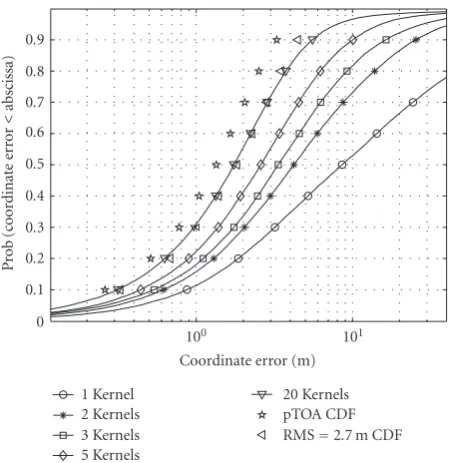
Figure1: 60 nodes random network layout,cσ=2 m.
square with side 500 m. For each node, a clock-offset was generated from a zero-mean Gaussian distribution with a variance of 1 s2. Based on the node coordinates and the
clock-offsets, true pTOA distance measurements were calculated and zero-mean Gaussian noise with a standard deviation of
cσ =2 m was added, that is, the noise variance was assumed equal for all pTOAs. The nodes in the network were ran-domly grouped into kernels, each containing three nodes, and the algorithm was run to produce estimates, fusing a varying number of kernel estimates. The node location er-rors were saved and the process was repeated 100 times. In Figure 1, the cumulative distribution function (CDF) of the location error is plotted for different numbers of merged ker-nels. The cumulative effect in accuracy is clear fromFigure 1, adding information from more kernels produces estimates of higher accuracy. If none of the merged kernels have a so-lution for some node, this node remains unfixed with infinite variance. Obviously, the number of unfixed nodes decreases drastically with the number of merged kernels. For compar-ison purposes, the CDF of the pTOA measurement noise, used in the simulations, has been included. The CDF of a Gaussian positioning error with a root-mean-square (RMS) value of 2.7 m is also included. In [2], RMS locationing ac-curacies between 0.9 and 2.7 m are reported for a TOA mea-surement standard deviation of around 1.83 m. The compar-ison to [2] being somewhat unfair since a smaller network, including fixed reference nodes and oriented in a square grid pattern, was implemented in [2].
If the simulation results are investigated in more detail, we find that nodes located on the outskirts of the network are often located with less accuracy than nodes situated near the center. The same phenomenon is noted and explained in [2].
If the measurement noise varianceσ2is reduced, we
ex-perience a substantial performance gain. The main reason,
0 0.1 0.2 0.3 0.4 0.5 0.6 0.7 0.8 0.9
P
rob
(c
oor
dinat
e
er
ro
r
<
abscissa)
10−1 100
Coordinate error (m) 1 Kernel
2 Kernels 3 Kernels
9 Kernels ML approximation
Figure2: 27 nodes square network layout,cσ=1 m.
of course, is more accurate kernel estimates, but also a more accurate covariance matrix estimate Ck, yielding a more efficient fusion process. In Figure 2, the effect of using a square node deployment pattern is exemplified, 27 nodes were placed on a grid pattern, kernel assignments were ran-dom, and the measurement accuracy was set tocσ = 1 m. Compared toFigure 1, we note an improvement, especially for a smaller number of fused kernels. This is mainly due to the lower average GDOP, experienced by single kernel esti-mators. For comparison purposes, we also plot the perfor-mance of an approximation to the ML estimator of relative node coordinates, given by (21), discussed in [1] and also in [4].
The robustness of the algorithm was verified in each simulation run. We investigate the relationship γ between instantaneous squared error and estimated MSE,
γ= 1
2N−3e TC−1K
k=1ke, (38) whereeis a column vector of the stacked node location er-rors andCK
0.1 0.2 0.3 0.4 0.5 0.6 0.7 0.8 0.9
Pro
b
(
γ<
abscissa)
10−1 100 101
γ
σ=1 m (grid layout)
σ=0.1 m
σ=1 m
σ=2 m
Figure3: Indication of algorithm robustness.
the kernel algorithm produces somewhat pessimistic accu-racy predictions. This is most likely due to the worst-case assumption in (25). Extreme values of γ, especially com-mon for higher noise variances, are caused by poorly located or unfixed nodes, where both estimated and true errors are large. From a data fusion point of view, erroneous error es-timates have little effect, as long as both true and estimated error is large, in which case the estimates are heavily down-weighted in the fusion process.
5. CONCLUSION
This paper, based on analysis of the Cram´er-Rao lower bound (CRB) of the asynchronous and autonomous relative coordinate estimation problem, has derived two methods for canceling unknown clock-offsets at individual nodes from the coordinate estimation problem. Both methods were shown to represent invariant preprocessors, that is, neither method altered the CRB of the original estimation prob-lem, and the methods fit well together with centralized or distributed ML-type coordinate estimators, described in [1,2,4]. It was also argued that CRB-type expressions may be used in estimating the performance of a positioning algo-rithm. This concept was exploited in a distributed, subopti-mal algorithm, that had the ability to increase performance step-wise, according to requirements from the served appli-cation.
APPENDICES
A. INFORMATION PRESERVATION OF
THE QR METHOD
The proposition that the right-hand side of (13) is equal to the lower right block of the right-hand side of (10), for all parameter vectorsx andΔ, and all symmetric and positive
definite noise covariance matricesV, may be stated as
TCjTT =Cs, (A.1)
whereT=[0N−1 IC],
Cj= ⎡
⎣ HTtV−1Ht HTtV−1Hd∇d [Hd∇d]TV−1Ht [Hd∇d]TV−1Hd∇d
⎤ ⎦
−1
,
Cs=
[Hd∇d]TQ2
QT2VQ2
−1
QT2Hd∇d −1
,
(A.2)
Ht is given by (5), Hd is given in (7), ∇d is given by (11), andQ2 is defined inSection 3.1. Now, the matrix inversion
lemma states that
A B C D
−1
=
⎡
⎣A−1+A−1BSA−1CA−1 −A−1BS−A1
−S−A1CA−1 S−A1
⎤
⎦, (A.3)
whereSA=(D−CA−1B) is the Schur complement ofA. The matrixTCjTT can therefore be written as
TCjTT =Hd∇d]TV−1Hd∇d
−Hd∇d TV−1Ht
×HtTV−1H
t −1
HtTV−1H
d∇d −1
.
(A.4)
The equality in (A.1) holds, that is,TCjTT =Csif
V−1−V−1Ht
HtTV−1Ht −1
HtTV−1=Q2
QT2VQ2
−1
QT2, (A.5)
where Vis positive definite and symmetric, which implies that positive definite and symmetric matricesV1/2andV−1/2
exist such thatV1/2V1/2=VandV−1/2V−1/2=V−1. The left-hand side of (A.5) can be written as
V−1−V−1Ht
HtTV−1Ht −1
HtTV−1
=V−1/2I−AATA−1ATV−1/2
=V−1/2π⊥AV−1/2,
(A.6)
where A = V−1/2Ht, and AT = [V−1/2Ht]T = HTtV−1/2, following from the symmetry of V−1/2. The matrix π⊥A = I−A(ATA)−1AT is a projection matrix onto the orthogonal complement subspace of range (A) [3, page 232]. The right-hand side of (A.5) is
Q2
QT2VQ2
−1
QT2
=V−1/2V(1/2)Q2
QT2V1/2V1/2Q2
−1
QT2V1/2V−1/2
=V−1/2π
BV−1/2,
(A.7)
Now, since the projection matrix onto a subspace is unique, it suffices to show that (range (A))⊥ = range (B). It is well known that the left null space of a matrix is the or-thogonal complement of the column space (or the range), that is,
rangeA ⊥=nullAT=x:HT
tV−1/2x=0
. (A.8)
Also, sinceA∈R2M×(N−1)has full column rank,
dimrangeA ⊥=2M−rank (A)=2M−N+ 1. (A.9)
Further, we have range (B) = range (V1/2Q
2) = {y : y =
V1/2Q2z, z∈R2M−N+1}, and
dim rangeB=rank (Q2)=2M−N+ 1. (A.10)
For ally∈range (B), sinceHT
tQ2=0, we have
ATy=HTtV−1/2V1/2Q2z=HTtQ2z
=0 =⇒ rangeB⊂nullAT.
(A.11)
Comparing the dimension of subspaces, we have, from (A.8), (A.9), and (A.10); dim null(AT) = dim range (B) = 2M−
N+ 1. We therefore conclude that range (B)=null (AT)=
(range (A))⊥, that is, V−1/2ß⊥AV−1/2 = V−1/2πBV−1/2, and (A.5) holds for all parameter vectorsΔandx, and all posi-tive definite and symmetric covariance matricesV.
B. FACTORIZATION OF THE JOINT PDF OFτ
Consider the sum of squares in the exponent of (14),
τ−μτT
V−1τ−μ
τ
=τ−Hdd(x)
T
V−1τ−Hdd(x)
−2τ−Hdd(x)
T
V−1HtΔ+HtΔ TV−1HtΔ.
(B.1)
We may factor and rewrite the first term in (B.1) as
τ−Hdd(x) T
V−1τ−H
dd(x)
=τTV−1τ−2[H
dd(x)]TV−1τ + [Hdd(x)]TV−1H
dd(x).
(B.2)
Due to the special shape ofV, we may rewrite the second term of (B.2) as
2[Hdd(x)]TV−1τ=2d(x)TV−21HTdτ, (B.3)
where V2 is given by (17), and HTdτ contain the sums of
corresponding pTOAs. Again, from the shape ofV, we may rewrite the second term in (B.1) as
2τ−Hdd(x) T
V−1HtΔ=2THtΔ TV−1
2 Dτ, (B.4)
whereT, given by (19), selects every second element ofHtΔ, andD, given by (18), takes the difference of corresponding pTOAs. The exponent in (B.1) can therefore be written
τ−μτT
V−1τ−μ
τ
=Hdd(x)
T
V−1Hdd(x)−2dT(x)V−21HTdτ
+τTV−1τ−2THtΔ TV2−1Dτ+HtΔ TV−1HtΔ.
ACKNOWLEDGMENT
This work has been partially funded by Vinnova, project no. 2003-02803.
REFERENCES
[1] R. L. Moses, D. Krishnamurthy, and R. M. Patterson, “A self-localization method for wireless sensor networks,”EURASIP Journal on Applied Signal Processing, vol. 2003, no. 4, pp. 348– 358, 2003.
[2] N. Patwari, A. O. Hero III, M. Perkins, N. S. Correal, and R. J. O’Dea, “Relative location estimation in wireless sensor net-works,”IEEE Transactions on Signal Processing, vol. 51, no. 8, pp. 2137–2148, 2003.
[3] S. M. Kay,Fundamentals of Statistical Signal Processing: Estima-tion Theory, Prentice-Hall PTR, Upper Saddle River, NJ, USA, 1993.
[4] M. Rydstr¨om, E. G. Str¨om, and A. Svensson, “Clock-offset cancellation methods for positioning in asynchronous sen-sor networks,” inProceedings of IEEE International Conference on Wireless Networks, Communications, and Mobile Comput-ing (WirelessCom ’05), vol. 2, pp. 981–986, Maui, Hawaii, USA, June 2005.
[5] M. Rydstr¨om, A. Urruela, E. G. Str¨om, and A. Svensson, “A low complexity algorithm for distributed sensor localization,” in
Proceedings of the 11th European Wireless Conference (EW ’05), vol. 2, pp. 714–718, Nicosia, Cyprus, April 2005.
[6] L. L. Scharf and L. T. McWhorter, “Geometry of the Cramer-Rao bound,” inProceedings of IEEE 6th SP Workshop on Sta-tistical Signal and Array Processing, pp. 5–8, Victoria, BC, Canada, October 1992.
[7] Y. Qi,Wireless geolocation in a non-line-of-sight environment, Ph.D. thesis, Princeton University, Princeton, NJ, USA, 2003. [8] V. P. Bhapkar, “Estimating functions, partial sufficiency and
q-sufficiency in the presence of nuissance parameters,” in Se-lected Proceedings of the Symposium on Estimating Functions, Athens, Ga, USA, March 1996.
[9] B. T. Fang, “Simple solutions for hyperbolic and related posi-tion fixes,”IEEE Transactions on Aerospace and Electronic Sys-tems, vol. 26, no. 5, pp. 748–753, 1990.
[11] M. Rydstr¨om, “Positioning and tracking in asynchronous wireless sensor networks,” Tech. Rep. R027/2005, Department of Signals and Systems, Chalmers University of Technology, G¨oteborg, Sweden, October 2005.
Mats Rydstr¨om was born in Stockholm, Sweden, in 1978. He received his M.S. de-gree in computer engineering from Chalm-ers UnivChalm-ersity of Technology, G¨oteborg, Sweden, in 2003. Mats was also enrolled at the Electrical Engineering Department at the University of Illinois at Chicago, dur-ing 2002, under a full scholarship. He is currently working toward his Ph.D. degree at the Communication Systems Group at
Chalmers University of Technology, where his research interests in-clude autonomous positioning algorithms for wireless sensor net-works, and wireless networks for traffic safety applications.
Andreu Urruelawas born in Castellbisbal, Barcelona, Spain, in 1978. He received the M.S. degree in telecommunications engi-neering in 2001 from the Technical Univer-sity of Catalonia (UPC), Barcelona. Since September 2001, he has been a Graduate Research Assistant in the Signal Processing for Communications Group at UPC under the Spanish Government predoctoral schol-arship FPU. He has been involved in the
IST EMILY (European Mobile Integrated Location sYstem) project for the development of advanced algorithms for wireless location as a Member of the Signal Processing Group at UPC. He is cur-rently working toward the Ph.D. degree. His research interests in-clude high-accuracy time-delay estimators, closed-form algorithms for wireless location, sensor-network locationing, and the develop-ment of wireless location schemes for cellular-networks robust to multipath and nonlight of sight.
Erik G. Str¨om received the M.S. degree from the Royal Institute of Technology (KTH), Stockholm, Sweden, in 1990, and the Ph.D. degree from the University of Florida, Gainesville, in 1994, both in electri-cal engineering. He accepted a Postdoctoral position at the Department of Signals, Sen-sors, and Systems at KTH in 1995. In Febru-ary 1996, he was appointed Assistant Pro-fessor at KTH, and in June 1996, he joined
the Department of Signals and Systems at Chalmers University of Technology, G¨oteborg, Sweden, where he is now a Professor in communication systems since June 2003 and Head of the Commu-nication Systems Group since 2005. He received the Chalmers’ Ped-agogical Prize in 1998. Since 1990, he has acted as a Consultant for the Educational Group for Individual Development, Stockholm, Sweden. He is a contributing Author and Associate Editor for Roy Admiralty Publishers’ FesGas-series, and was a Coguest Editor for the special issue of the IEEE Journal on Selected Areas in Commu-nications on Signal Synchronization in Digital Transmission Sys-tems, 2001. His research interests include code-division multiple access, synchronization, and wireless communications, and he has published more than 60 conference and journal papers.
Arne Svenssonwas born in Ved˚akra, Swe-den, on October 22, 1955. He received the M.S. (Civilingenj¨or) degree in electrical en-gineering from the University of Lund, Swe-den in 1979, and the Dr.Ing. (Teknisk Licen-tiat) and Dr.Techn. (Teknisk Doktor) de-grees at the Department of Telecommuni-cation Theory, University of Lund, in 1982 and 1984, respectively. Currently, he is with the Department of Signal and Systems at
Chalmers University of Technology, Gothenburg, Sweden, where he was appointed Professor and Chair in Communication Systems in April 1993 and Head of department from January 2005. Before 1987, he was with Department of Telecommunication Theory, Uni-versity of Lund, Lund, Sweden, and between 1987 and 1994, he was with Ericsson Radio Systems AB and Ericsson Radar Electron-ics AB, both in M¨olndal, Sweden. His current interest is wireless communication systems with special emphasis on physical layer de-sign and analysis. He is the Coauthor ofCoded Modulation Systems