Available Online at www.ijcsmc.com
International Journal of Computer Science and Mobile Computing
A Monthly Journal of Computer Science and Information Technology
ISSN 2320–088X
IJCSMC, Vol. 3, Issue. 10, October 2014, pg.889 – 894
RESEARCH ARTICLE
A Multi View Face Recognizer for
Authentication
Dr. C.Immaculate Mary
1, S.V.Rashyaa Verma
2, A.Jensila Smile
3¹Associate Professor, Department of Computer Science,
Sri Sarada College for Women (Autonomous) Salem, India
23
Lecturer, Department of Computer Science,
Sri Sarada College for Women (Autonomous) Salem, India
[email protected]
1, [email protected]
2Abstract— One emerging technology that is becoming more spread in a variety of organizations is
biometrics. The term `biometrics’ comes from the Greek words bios (Life) and metrikos
(Measure).To make a personal recognition, biometrics relies on who you are or what you do--as
opposed to what you know (such as password) or what you have (such as ID card).Biometric
systems, which use people’s physiological characteristics for identification or authentication, have
become increasingly popular for countering fraud.
Biometrics offers greater security and convenience than traditional methods of personal
recognition. Biometrics is used for many applications inside and outside the scope of computer
security. In some applications, biometrics can replace or supplement the existing technology. In
this paper, we describe a face recognition system that uses a new distance measure
(Significance-based Multi View Hausdorff Distance) for authentication. It performs matching on a fusion of
multiple views of each person’s face. We have also analysed the performance of the system and
listed out the areas where it can be applied.
Keywords— Biometric, Hausdorff Distance, Matlab
I. INTRODUCTION
To improve system robustness, others have developed multimodal approaches that fuse together different biometrics. However, we believe optimizing a single-modal system minimize deployment costs and could benefit an multimodal system. We can improve a face recognition system’s robustness by taking multiple views of a person’s face at different angles using essentially the same equipment as frontal only analysis. Here, we have developed a multi view face recognizer for authentication that meets the following design objectives.
Robust against variations. Operates under different conditions and applies to a high percentage of population.
Cost effective. Incurs minimal deployment costs.
Accurate and reliable. Has excellent performance distinguishing people and excellent EER performance.
User-friendly. Is nonintrusive and fast.
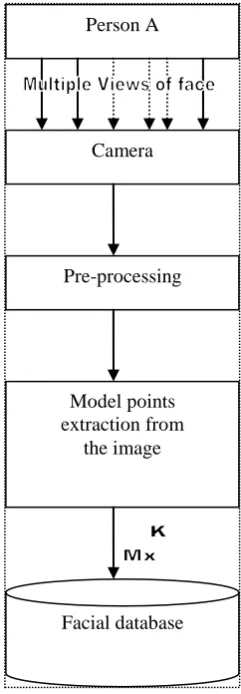
Fig 1. OVERVIEW OF OUR SYSTEM (a) Enrolment
As shown in the figure, we capture multi views of person X’s face during enrolment. Pre-processing is done to reduce the effect of hair and clothing. We store the extracted model points in a database. We target our solution towards the authentication of the users who are willing to have an enrolment process capture images of their
Person A
Camera
Pre-processing
Model points extraction from
the image
faces. These captured images form a knowledge base used for subsequent authentication by comparing person X’s stored image with the image of a person claiming to be X.
In the normal face recognition procedures, all Hausdorff Distance (HD) variants do not address each point’s unequal contribution. In practice, each point’s prominence in representing a facial image will likely be different. In this paper, we apply a new HD variant — Significance-based Multi View Hausdorff Distance (SMVHD). This considerably improves the authentication process’s robustness even with the introduction of non- rigid distortions to the facial image, such as when a person speaks.
(b) Authentication (Fused Multi view Analysis)
II. SIGNIFICANCE-BASED MULTI VIEW HAUSDROFF DISTANCE (SMVHD)
Suppose a set of feature vectors(nodes)NA, or model points, represents an image A and another set NB, or test points, represents image B. Traditional methods that assign the same weight to all points in NA and NB clearly lead to suboptimal results because different feature points contribute differently toward an overall face description. Here, we apply a new variant of Hausdorff distance.
SMVHD differs from other HD variants in two ways.
First, we apply the notion of significance associated with each point.
Second, we fuse together multiple views of same non-rigid object (the face) taken from different viewpoints.
Using Multiview images for facial analysis is not entirely new. However, those methods which rely on neural network technology might account for a relatively long computational time.
Let us consider
1 1 1 1
M = {m1,m2,……..,mp1}, Person A?
Camera
Pre-processing
Test points Extraction from
The image
Facial feature Point’s database
2 2 2 2
M = {m1,m2,……..,mp2}, ……….,
n n n n
M = {m1,m2,……..,mpn}
are n point sets representing the features in object M’s n model views and
1 1 1 1
T = {t1,t2,……..,tq1},
2 2 2 2
T = {t1,t2,……..,tq2},……….,
n n n n
T = {t1,t2,……..,tqn}
Are the corresponding n point sets representing the features in test object T’s n views from the same viewpoints as in the model M. In this formulation, p1,p2,……,pn and q1,q2,……,qnare the point numbers, which are used for indexing, in the model and test views. So, we must let only the ith point in the kth view point tikε Tk match with the points in M , the kth view of M.
Let us define SMVHD between M and T as
HSMVHD (M,T) =max(hSMVHD(M,T),hSMVHD(T,M)). In turn, we define the directed SMVHD from M to T and from T to M as
where, Sigmki tkj = (1/2)*(Sigmki + Sigtkj ) is the average significance(within the range 0…….. ∞) of point
miK and its corresponding point tj k.
It selects them in three steps.
First, it eliminates points with small merit, as compared to their neighbours.
Next, it reinstates a number of points to avoid over elimination. It chooses the points from any points not covered by a strip selected in the first step.
Finally, it deletes points that align approximately on a straight line, except for the curve’s two endpoints.
The remaining points are the feature points extracted.
n
n
h
SMVHD(
M,T
)=
(1/
∑ ∑
Sig
m
kit
kj)*(
∑ ∑
Sig
m
kit
kj.
min
||
m
ki-
t
kj||
)
k=1 mki
εM
kk=1 mki
εM
kt
kjεT
k
n
n
h
SMVHD(
T,M
)=
(1/
∑ ∑
Sig
t
kim
kj)*(
∑ ∑
Sig
t
kim
kj.
min
||
t
ki-
m
kj||
)
k=1 tki
εT
kk=1 tki
εT
km
kjεM
kIII.PERFORMANCE ANALYSIS
Here, we analyze our system’s performance by comparing MHD and SMVHD . Table below summarizes the results.
MHD SMVHD Expression Frontal
view (%)
Three-quarter view (%)
Profile view (%)
All views(fused) (%)
Neutral 96.5 96.0 90.0 100.0
Smiling 71.1 80.5 64.5 93.6
Speaking 87.1 80.6 58.1 93.5
Our results show that SMVHD performs significantly better than MHD in terms of accuracy. The average computational time per person was also found to be very low.
A. Experimental Protocol
In addition to the above analysis, we aimed to measure the authentication performance using a ―leave-one-out and rotation‖ scheme. Our experimental protocol follows.
We perform enrolment process by capturing the multiple views of many persons (say 100 persons).
Then we must conduct authentication process. For this, we must label a person as an imposter with others acting as clients . The number of times that each imposter gained access under someone else’s identity contributed to the FAR. The clients also tried to gain access under their own identity, contributing to the FRR. The figure shown above gives the ROC plot for the system. Even with non-rigid distortions caused by speaking during authentication, the EER was still reasonably good.
B. Applications
Commercial applications, such as computer network logins, electronic data security, e-commerce, Internet access, ATMs, credit cards, physical access control, cellular phones, PDAs, medical records management, and distance learning;
Government applications such as national ID cards, correctional facilities, driver’s licenses, social security, border control, passport control, and welfare-disbursement; and
IV.CONCLUSIONS
Thus the process of designing a multiview face recognition system for authentication was done successfully and effectively. Furthermore, we have decided to fine tune our algorithm to increase the system’s stability. Really speaking, biometrics has built a formidable security barrier for the world. It has indeed integrated itself into humanity and it will continue to do so hopefully.
REFERENCES
[1] L.Wiskott et al . , “Face recognition By elastic bunch graphmatching‖, IEEE Trans .PAMI,july 1997. [2] M.K.H.Leung and Y.H.Yang. ,―Dynamic two-strip algorithm in curve fitting‖, Pattern recognition, feb
1990.
[3] S.Pankanti, R.M.Bolle, and A.Jain, ―Biometrics: Personal identification in networked security,” Kluwer Academic Publishers, 1999.
[4] E.Newham, ―The Biometric Report, tech report‖, SBJ Services, 1995.