
Pairing-Based Onion Routing with Improved Forward Secrecy
∗Aniket Kate Greg M. Zaverucha Ian Goldberg
David R. Cheriton School of Computer Science University of Waterloo
Waterloo, ON, Canada N2L 3G1 {akate,gzaveruc,iang}@cs.uwaterloo.ca
Abstract
This paper presents new protocols for onion routing anonymity networks. We define a provably secure privacy-preserving key agreement scheme in an identity-based infrastructure setting, and use it to forge new onion routing circuit constructions. These constructions, based on a user’s selection, offer immediate or eventual forward secrecy at each node in a circuit and require significantly less computation and communication than the telescoping mechanism used by Tor. Further, the use of the identity-based infrastructure also leads to a reduction in the required amount of authenticated directory information. Therefore, our constructions provide practical ways to allow onion routing anonymity networks to scale gracefully.
Keywords: onion routing, Tor, pairing-based cryptography, anonymous key agreement, forward secrecy
1
Introduction
Over the years, a large number of anonymity networks have been proposed and some have been implemented. Common to many of them isonion routing[RSG98], a technique whereby a message is wrapped in multiple layers of encryption, forming an onion. As the message is delivered via a number of intermediate onion routers (ORs), or nodes, each node decrypts one of the layers, and forwards the message to the next node. This idea goes back to Chaum [Cha81] and has been used to build both low- and high-latency communication networks.
A common realization of an onion routing system is to arrange a collection of nodes that will relay traffic for users of the system. Users then randomly choose a path through the network of onion routers and construct acircuit—a sequence of nodes which will route traffic. After the circuit is constructed, each of the nodes in the circuit shares a symmetric key with the user, which will be used to encrypt the layers of future onions.
Pairing-based cryptography (see [KM05] for a detailed discussion) has drawn an overwhelming amount of research attention in the last few years. In one of the pioneering works in the field, Sakai, Ohgishi, and Kasahara [SOK00] presented a non-interactive key agreement scheme in the identity-based setting. In this article, we enhance their protocol to develop provably secure one-or two-way (also referred to as unilateral one-or bilateral) privacy-preserving authentication and key agreement schemes. After one-way authentication between Anonymous and Bob, Anonymous has
∗This is an extended version of our paper “Pairing-Based Onion Routing”, which appeared in the proceedings of
confirmed Bob’s identity and Bob learns nothing about Anonymous, except perhaps that he or she is a valid user of a particular system. In a two-way scheme, each user can confirm the other is a valid user without learning who the other is.
We then use our one-way anonymous key agreement protocol to build onion routing circuits for anonymity networks like Tor [DMS04] and prove security-related properties of the new construction. Our protocol, which first appeared in [KZG07], constructs a circuit in a single pass and also provides a practical way to achieve eventual forward secrecy. Observing the performance trade-off between immediate and eventual forward secrecy in onion routing circuit construction, we also develop aλ -pass circuit construction, which obtains immediate forward secrecy atλnodes. The performance of our circuit construction protocols surpass that of Tor, requiring significantly less computation and fewer network communications. Further, they do not require the public keys of onion routers to be authenticated and consequently, reduce the load on directory servers and improves the scalability of anonymity networks.
Previous work related to pairing-based key exchange, as well as to anonymity networks, is cov-ered in Section 2. We describe the cryptographic protocols in Section 3, and an onion routing system built with a Boneh-Franklin identity-based infrastructure in Section 4. In Section 5, we present our λ-pass circuit construction and discuss the security of our onion routing circuit con-structions in Section 6. Some of the more practical issues in such a system are discussed in Section 7 and we compare our computational and communication costs to those of Tor in Section 8.
2
Related Work
The concept of onion routing plays a key role in many efforts to provide anonymous communication [Dai98, DMS04, FM02, RSG98, RP02] while a number of other papers discuss formalizations and the security of onion routing [CL05, MVdV04, M¨ol03, STRL00]. To date, the largest onion routing system is Tor, which has approximately 1000 onion routers and hundreds of thousands of users [The08]. These numbers (and their growth) underscore the demand for anonymity online.
In the original Onion Routing project [GRS96, RSG98, STRL00] (which was superseded by Tor) circuit construction was done as follows. The user created an onion where each layer contained the symmetric key for one node and the location of the next node, all encrypted with the original node’s public key. Each node decrypts a layer, keeps the symmetric key and forwards the rest of the onion along to the next node. The main drawback of this approach is that it does not provide forward secrecy (as defined in [DMS04]). Suppose a circuit is constructed from the user to the sequence of nodesA ⇔B ⇔ C, and thatA is malicious. If A records the traffic, and at an arbitrary time in the future compromisesB (at which point he learns the next hop isC), and then compromises C, the complete route is known, and A learns who the user has communicated with. A possible fix for this problem is to frequently change the public keys of each node. This limits the amount of time A has to compromiseB and C, but requires that the users of the system frequently contact the directory server to retrieve authentic keys.
Later systems constructed circuits incrementally and interactively (this process is sometimes calledtelescoping). The idea is to use the node’s public key only to initiate a communication during which a temporary session key is established via the Diffie-Hellman key exchange. Tor constructs circuits in this way, using the Tor authentication protocol (TAP). TAP is described and proven secure in previous work of the last author [Gol06].
the user only needs to choose an alternate third. Information about the status and availability of nodes is therefore less important. The drawback of telescoping is the cost; establishing a circuit of length ℓrequires O(ℓ2) network communications, andO(ℓ2) symmetric encryptions/decryptions.
Øverlier and Syverson [ØS07] improve the efficiency of telescoping-based circuit construction using a half-certified Diffie-Hellman key exchange [MOV97, Sec. 12.6]. They further define an efficient single-pass circuit construction and a few variants. The proposed variants offer different levels of forward secrecy, which is traded off against computation and communication. For example, their eventual forward secret variants use frequent rotation of nodes’ public keys, presenting the same issues as in first-generation onion routing; their immediate forward secrecy variant uses the same amount of communication as the current Tor (O(ℓ2)), but less computation.
In related efforts, Camenisch and Lysyanskaya [CL05] formally define the requirements of a secure onion routing construction in the universal composability (UC) framework [Can01] and present a generic construction of onion routing circuits. Although formally secure, their construction is less efficientthan other constructions due to the additional mechanisms required to prove security in the UC framework. While no attacks are known when these mechanisms are removed, the proof no longer holds.
The work of Okamoto and Okamoto [OO05] presents schemes for anonymous authentication and key agreement. In Rahman et. al. [RIO+06], an anonymous authentication protocol is presented as part of an anonymous communication system for mobile ad-hoc networks. The protocols in both papers are complex, and limited motivation is given for design choices. Further, both papers neglect to discuss the security of their proposed protocols. The protocols we present in Section 3.2 are a great deal simpler than previous protocols. This allows them to be more easily understood, and simplifies the discussion of their security, which appears in Section 3.3. A recent article [Hua07] presents a pseudonym-based encryption scheme similar to our anonymous key protocol in Section 3.2, but differs in its method of private-key extraction as well as in the motivation behind its use.
All these protocols owe a lot to the non-interactive key exchange protocol of Sakai, Ohgishi and Kasahara [SOK00]. In the next section, we will review their scheme after covering relevant background material.
3
Pairing-Based Key Agreement with User Anonymity
In one of the pioneering works of pairing-based cryptography, Sakai et al. suggested an identity-based non-interactive key agreement scheme using bilinear pairings [SOK00]. In this section, we extend this key agreement scheme. We replace the identities of the participants by pseudonyms and our new scheme provides unconditional anonymity to participating users.
3.1 Preliminaries
We briefly review bilinear pairings and the original non-interactive key agreement scheme of Sakai et al. For a detailed presentation of pairings and cryptographic applications thereof see Blake et al. [Bla05] and references therein.
3.1.1 Bilinear Pairings
Consider two additive cyclic groupsGand ˆGand a multiplicative cyclic groupGT, all of the same
prime ordern. A bilinear map eis a map e:G×Gˆ →GT with following properties.
2. Non-degeneracy: The map does not send all pairs inG×Gˆ to unity in GT.
3. Computability: There is an efficient algorithm to compute e(P, Q) for any P ∈ G and Q∈Gˆ.
Our protocols, like many pairing-based cryptographic protocols, use a special form of bilinear map called a symmetric pairing which has G = ˆG. For such pairings e(P, Q) = e(Q, P) for
any P, Q ∈ G. The modified Weil pairing over elliptic curve groups [Ver01] is an example of a
symmetric bilinear pairing. In the rest of the paper, unless otherwise specified, all bilinear pairings are symmetric.
3.1.2 The Bilinear Diffie-Hellman Assumption
With a groups G and GT and a pairing e of the above type, the Bilinear Diffie-Hellman (BDH)
problem is to compute e(P, P)abc ∈ G
T given a generator P of G and elements aP, bP, cP for
a, b, c ∈ Z∗n. An equivalent formulation of the problem, due to the bilinearity of the map, is to
computee(A, B)c given a generator P ofG, and elements A,B andcP inG.
If there is no efficient algorithm to solve the BDH problem forhG,GT, ei, they are said to satisfy
theBDH assumption.
3.1.3 Boneh-Franklin Setup and Non-Interactive Key Agreement
In a Boneh-Franklin Identity-Based Encryption (BF-IBE) setup [BF01], a trusted authority, called a private key generator (PKG), generates private keys (di) for clients using the clients’ well-known
identities (IDi) and a master secret s. A client with identity IDi receives the private key di =
sH(IDi)∈G, whereH:{0,1}∗ →G∗ is a full-domain cryptographic hash function andG∗ denotes
the set of all elements inGexcept the identity.
Sakai et al. observed that, with such a setup, any two clients of the same PKG can compute a shared key using only the identity of the other participant and their own private keys. Only the two clients and the PKG can compute this key. For two clients with identities IDA and IDB, the
shared key is given by KAB = e(QA, QB)s = e(QA, dB) = e(dA, QB) where QA = H(IDA) and
QB=H(IDB).
Dupont and Enge proved this protocol is secure in the random oracle model assuming the BDH problem in hG,GT, eiis hard [DE06].
3.2 Anonymous Key Agreement
We observe that by replacing the identity hashes with pseudonyms generated by users, a key agreement protocol with unconditional anonymity is possible. In our protocol, each participant can confirm that the other participant is a client of the same PKG, but cannot determine his identity. Each client can, on her own, randomly generate many possible pseudonyms and the corresponding private keys.
Suppose Alice, with (identity, private key) pair (IDA, dA), is seeking anonymity. She generates a
random numberrA∈Z∗nand creates the pseudonym and corresponding private key (PA=rAQA=
rAH(IDA), rAdA = sPA). In a key agreement protocol, she sends the pseudonym PA instead of
her actual identity to another participating client, who may or may not be anonymous. For two participants (say Alice and Bob) with pseudonymsPA andPB, the shared session key is given as
where rA and rB are random numbers generated respectively by Alice and Bob. If Bob does not
wish to be anonymous, he can just userB= 1 instead of a random value, resulting inPB=QB. If
persistent pseudonymity is desired instead of anonymity, the random values can easily be reused. Two participants can perform a session key agreement by exchanging pseudonyms. Further, two participants can also perform an authenticated key agreement by modifying any secure symmetric-key based mutual authentication protocol and simply replacing their identities by their pseudonyms.
3.2.1 One-Way Anonymous Key Agreement
Anonymous communication often requires anonymity for just one of the participants; the other participant works as a service provider and the anonymous participant needs to confirm her iden-tity. In the key agreement protocol, the service provider uses her actual identity rather than a pseudonym. Further, in this one-way anonymity setting two participants can agree on a session key in a non-interactive manner. A non-interactive scheme to achieve this is defined next.
Suppose Alice and Bob are clients of a PKG. As before, Alice has identity IDAand private key
dA = sQA =sH(IDA). Alice wishes to remain anonymous to Bob, but she knows Bob’s identity
IDB.
1. Alice computes QB =H(IDB). She chooses a random integer rA ∈Z∗n, generates the
corre-sponding pseudonymPA=rAQAand private key rAdA=sPA, and computes the session key
KAB =e(sPA, QB) =e(QA, QB)srA. She sends her pseudonymPAto Bob.
2. Bob, using PA and his private key dB, computes the session key KAB = e(PA, dB) =
e(QA, QB)srA.
Note that in step 1, Alice can also include a message for Bob symmetrically encrypted with the session key; we will use this in Section 4. Note also that in practice, the session key is often derived from KAB, and is not just KAB itself.
3.2.2 Key Authentication and Confirmation
In most one-way anonymous communication situations, it is also required to authenticate the non-anonymous service provider. With the non-interactive protocols of this section, the key is implicitly authenticated; Alice is assured that only Bob can compute the key. If Alice must be sure Bob has in fact computed the key, explicit key confirmation can be achieved by incorporating any symmetric-key based challenge-response protocol.
3.3 Security and Anonymity
In this section, we discuss the security and anonymity of our key agreement schemes in the random oracle model. We make the following claims:
Unconditional Anonymity It is impossible for the other participant in a protocol run, the PKG, or any third party to learn the identity of an anonymous participant in a protocol run.
Session Key Secrecy It is infeasible for anyone other than the two participants or the PKG to determine a session key generated during a protocol run.
No Impersonation It is infeasible for a malicious client of the PKG to impersonate another (non-anonymous) client in a protocol run. In the case of persistent pseudonymity, it is not feasible for a malicious entity to communicate using a different entity’s pseudonym.
3.3.1 Unconditional Anonymity
Here, we prove that it is impossible for an adversary A to learn the identity of an anonymous participant in a protocol run. Informally, for an anonymous client with identityIDA, the pseudonym
PA = rAQA ∈ G is the only parameter exchanged during the protocol that is derived from her
identity. Because G is a cyclic group of prime order, QA is a generator, so multiplying by the
randomrA perfectly blinds the underlying identity from the adversaryA, which can be the other
participant in the protocol run, the PKG for the system or any third party. To formalize our proof, we consider the following game between an adversary and a challenger.
Setup The adversaryApublishes the system parameters: a cyclic additive groupGof prime order nand a hash function H :{0,1}∗ →G∗.
Challenge A chooses two identity strings IDA and IDB and sends them to the challenger. The
challenger computesQA=H(IDA) andQB=H(IDB). He then uniformly at random chooses
r∈Z∗n andb∈ {0,1}, then
1. if b= 0, computes a pseudonym P =rQA or
2. if b= 1, computes a pseudonym P =rQB
and sendsP to A.
Guess Awins the game if she can guess the correct value ofbwith probability significantly greater than 1/2.
As G is a cyclic prime order group, both QA and QB are generators of G. For the uniform
random elementr∈Z∗
n, the pseudonymP equal torQAorrQB is also a uniform random element
of G∗. Therefore, an attacker cannot determine which of the two ways the challenger generatedP
and consequently cannot guess the value of b with probability greater than 1/2 to win this game. The inability of the attacker to win this game for system parameters of their choosing, even with unbounded computation power, proves our unconditional anonymity claim.
3.3.2 Session Key Secrecy
Dupont and Enge [DE06] prove the security of the key agreement scheme of Sakai et al. in the random oracle model. According to their proof, an attacker cannot compute the shared key if the BDH assumption holds on hG,GT, ei, and H is modelled by a random oracle. Here, we modify
their proof to prove that it is infeasible for anyone other than the two participants or the PKG to determine a session key generated during a protocol run of the one-way or two-way anonymous key agreement.
Consider the following game to prove key secrecy in the one-way anonymous case.
Setup The challenger generates groupsGandGT of prime ordern, a cryptographic hash function H:{0,1}∗ →G∗, a symmetric bilinear pairinge:G×G7→G
T and a master secret s∈Z∗n.
Extraction Queries The adversary A1 issues q extraction queries for identities ID1,ID2, . . . ,IDq
to the challenger. The challenger queries H to compute the corresponding private keys
sH(ID1), sH(ID2), . . . , sH(IDq) and sends them back toA1.
Challenge OnceA1informs the challenger that it has collected enough information, the challenger
Guess A1 outputs a binary string (an identity) IDB andKAB ∈GT.
The attacker’s advantage can be defined as
Adv(A1) = Prob(e(PA, H(IDB))s =KAB)
We say A1 (t1, ǫ1)-wins the game, if it runs in time at mostt1 and has advantageǫ1.
Next, consider the following game to prove key secrecy in the two-way anonymous case.
Setup The challenger generates groups Gand GT of order n, a cryptographic hash functionH :
{0,1}∗ →G∗, a symmetric bilinear pairinge:G×G7→G
T and a master secret s∈Z∗n.
Extraction Queries The adversaryA2issuesqextraction queries for identitiesID1,ID2, . . . ,IDq∈
G to the challenger. The challenger queries H to compute the corresponding private keys sH(ID1), sH(ID2), . . . , sH(IDq) and sends them back toA2.
Challenge OnceA2informs the challenger that it has collected enough information, the challenger
picks two elements PA and PB inG∗ and sends them toA2.
Guess A2 outputs KAB ∈GT.
The attacker’s advantage can be defined as
Adv(A2) = Prob(e(PA, PB)s =KAB)
We say A2 (t2, ǫ2)-wins a game, if it runs in time at most t2 and has advantage ǫ2.
Suppose that there is an adversary A1 who (t1, ǫ1)-wins the one-way anonymous game and an
adversary A2 who (t2, ǫ2)-wins the two-way anonymous game. We now show that an algorithm B
can make use of A1 orA2 to solve a random instance of the BDH problem.
Theorem 3.1. Let the hash function H be modelled by a random oracle. Suppose there exist adversaries A1 and A2 such that the adversary A1 (t1, ǫ1)-wins the one-way anonymous protocol
security game and the adversary A2 (t2, ǫ2)-wins the two-way anonymous protocol security game.
Then there exists an algorithm B which solves the BDH problem
• using the adversary A1 with probability e(1+ǫ1q) in time t1+wq+tT +tinv or
• using the adversary A2 with probability ǫ2 in time t2+wq.
Here eis the base of natural logarithms, w is a small constant,q is an upper bound on the number of extraction queries performed by an adversary, tT is the time required for exponentiation in GT and tinv is the time required to invert an element of Z∗n.
Proof. Let (P, aP, bP, cP)∈Gbe a random and uniformly distributed instance of the BDH problem,
which algorithm B receives as input. To find the solution e(P, P)abc, B simulates the challenger
forA1 orA2. This means that B must simulate the random oracleH and answer the private key
extraction queries by A1 orA2. As the steps for H-queries and extraction queries are the same in
both A1 orA2, we denote both of them by A.
H-queries At any time, A can query the random oracle H. To respond to these queries, B
maintains an initially empty list Lof tuples (X, Q, h, β)∈ {0,1}∗×G∗×Z∗
n× {0,1}. When
1. IfL contains a tuple (Xi, Qi, hi, βi),B responds by sendingQi.
2. Otherwise,Bgenerates at randomβi∈ {0,1}, so that Prob(βi = 0) =δ, whereδdepends
on B’s choice for the attacker (A1 orA2) and will be determined below.
3. AlgorithmBpicks a randomhi ∈Z∗n. Ifβi= 0, setQi =hiP, else setQi=hi(bP). Note
that either way,Qi is uniformly random inG∗ and independent ofA’s current view.
4. Finally, algorithmB adds the tuple (Xi, Qi, hi, βi) to the listL and responds withQi.
Extraction queries Acan ask for extraction queries for identity strings. For an input stringIDi
for private key extraction, Bresponds as follows:
1. AlgorithmBruns the aboveH-query algorithm for inputXi=IDito obtain (IDi, Qi, hi, βi).
2. Ifβi = 1 thenB reports failure.
3. Otherwise, Bcomputes the private key hi(cP) =cQi and sends it to algorithmA.
Challenge After completing the extraction queries, B challenges A1 with PA = aP or A2 with PA=aP and PB=bP.
Guess A1 outputs (IDB, KAB)∈ {0,1}∗×GT orA2 outputsKAB ∈GT. In the case of adversary
A2,Boutputsσ=KAB as its guess for the solution to the BDH problem. For the adversary
A1, algorithm Bperforms following steps:
1. Bobtains the tuple (IDB, QB, hB, βB) from the listL. Absence of the tuple (IDB, QB, hB, βB)
in the listLindicates thatA1 did not ask the random oracle forH(IDB). As the
proba-bility of the adversary’s success in this case is negligible1, we safely assume the presence
of the tuple (IDB, QB, hB, cB).
2. IfβB = 1,B outputsσ =K h−1B
AB as its guess for the BDH instance.
3. IfβB = 0,B reports failure.
Suppose that B does not report failure and outputs σ while using A1. As βB = 1, H(IDB) =
hB(bP) and with probability ǫ1, σ = e(aP, hB(bP))ch
−1
B = e(P, P)abc. Therefore B will guess
correctly with probabilityǫ1, when it does not abort. The probability thatBdoes not abort while
extracting a single private key query isδ; forqqueries, the probability isδq. The probability thatB
does not abort while guessing the BDH solution is 1−δ. Therefore, the overall probability of non-abortion isδq(1−δ). Maximizing this probability, the optimal value can be obtained atδ= q
1+q and
by choosing the value ofδ optimally, the overall probability of non-abortion is (1+qqq)q+1. Therefore,
B outputs the correct solution to the BDH instance with probability at least ǫ1qq
(1+q)q+1 ≥ e(1+1q) as (1− q+11 )q ≥1/e. The solution is computed in time t1+wq+tT +tinv, where t1 is the time
required by A,w is the time required to answer an extraction query (generate a random element
r and compute ther-th multiple of cP), q is an upper bound on the number of such queries, and
tT +tinv is the time to invert an element ofZ∗nand to compute an exponentiation ofKAB ∈GT in
the guessing phase.
For adversaryA2, we simply set the value ofδ to 1. Suppose thatBdoes not report failure and
outputs σ while usingA2. With probability ǫ2,σ =e(aP, bP)c =e(P, P)abc, which is the correct
solution to the BDH problem. The solution is computed in time t2+wq.
1IfA
1 does not query the random oracle forH(IDB), the probability it can guess this value is negligible. As there
is a bijection between xand e(PA, x) for a givenPA, the probability that A1 can outputKAB =e(PA, H(IDB)) is
Note that it is possible to prove the security of the two-way anonymous key agreement protocol without random oracles, if we do not consider the query extraction phase. Assume that only one identity hash and private key pair (U, sU) is publicly available and each user uses the same pair to generate a pseudonym and corresponding private key. Given an adversary A to (t, ǫ)-compute
KAB =e(PA, PB)s when challenged byPAand PB, a random instance (P, aP, bP, cP) of the BDH
problem can be solved in time twith probability ǫby publishing (P, cP) as the publicly available identity hash and private key and challenging Awith PA=aP and PB=bP.
3.3.3 No Impersonation
We claim that it is infeasible for a malicious client of the PKG to impersonate another (non-anonymous) client in a protocol run. To successfully impersonate a non-anonymous participant
IDN in our one-way anonymous key agreement protocol, given a pseudonym and IDN, an
ad-versary needs to determine the corresponding session key. We observe that the adad-versary game for non-anonymous participant impersonation is the same as the key secrecy game of the one-way anonymous key agreement in Section 3.3.2 and consequently the corresponding theorem and proof carry over.
In the case of persistent pseudonymity, we claim that it is not feasible for a malicious entity to communicate using a different entity’s pseudonym. Here, the malicious entity needs to find the shared secret key for a persistent pseudonym generated and used by some other anonymous entity and an arbitrary identity or pseudonym for which it does not know the private key. In the one-way anonymous communication protocol, the corresponding adversary game remains the same as that for impersonation of the non-anonymous entity, and in the two-way anonymous case, the game is the same as the one used to prove key secrecy. Consequently, the theorem and proof for the corresponding game are same as those used to prove key secrecy in Section 3.3.2.
3.4 Distributed PKG
The PKG in the BF-IBE framework, with the master key, has the power to decrypt all messages encrypted for clients. As our schemes use the same setup as BF-IBE, the PKG can compute a session key from the publicly available pseudonyms and the master keys. Due to this, compromise of the PKG is a single point of failure for security.
Boneh and Franklin suggest the use of a distributed PKG instead a single PKG to mitigate this problem. Their distributed PKG usestout ofmShamir secret sharing [Sha79], which involves distributing the master key information amongm PKGs, such that anyt+ 1 of them, but no fewer, can compute the master key or generate a private key for a client. Instead of this basic arrangement, we suggest use of a verifiable and proactively secure distributed PKG over the Internet [KG07], where a master key is generated in a completely distributed way with each ofmPKGs contributing a random share. The distributed design is additionally more robust; at any given time onlyt+ 1 of the m PKGs must be online in order for a client to retrieve his private key.
3.5 Applications of Our Anonymity Schemes
networks [KZH07]. In the present article, we focus on a new pairing-based onion routing proto-col which achieves forward secrecy and constructs circuits without telescoping. We describe this protocol in the next section.
4
Pairing-Based Onion Routing
Low-latency onion routing requires one-way anonymous key agreement and forward secrecy. In this section, we describe a new pairing-based onion routing protocol using the non-interactive key agreement scheme defined in Section 3.2.
Our onion routing protocol has a significant advantage over the original onion routing protocol [GRS96] as well as the protocol used in Tor [DMS04]; it provides a practical way to achieve forward secrecy without building circuits by telescoping. Though this is possible with the original onion routing protocol, that method involves regularly communicating authenticated copies of ORs’ public keys to the system users; forward secrecy is achieved by periodically rotating these keys. This does not scale well; every time the public keys are changed all users must contact a directory server to retrieve the new authenticated keys. However, our onion routing protocol uses ORs’ identities, which users can obtain or derive without repeatedly contacting a central server, thus providing practical forward secrecy without telescoping.
4.1 Design Goals and Threat Model
As our protocol only differs from existing onion routing protocols in the circuit construction phase, our threat model is that of Tor. For example, adversaries have complete control over some part (but not all) of the network, as well as control over some of the nodes themselves.
We aim at frustrating attackers from linking multiple communications to or from a single user. Like Tor, we do not try to develop a system secure against a global observer, which can in theory follow end-to-end traffic. Further, it should not be feasible for any node to determine the identity of any node in a circuit other than its two adjacent nodes. Finally, we require forward secrecy: after some amount of time, the session keys used to protect node identities and the contents of messages are irrecoverable, even if all participants in the network are subsequently compromised.
4.2 Pairing-Based Onion Routing Protocol
An onion routing protocol involves a service provider, a set of onion routers, and users. In our protocol, a user does not build the circuit incrementally via telescoping, but rather in a single pass. The user chooses ℓ ORs from the available pool and generates separate pseudonyms for communicating with each of them. The user computes the corresponding session keys and uses them to construct a message with ℓ nested layers of encryption. This process uses the protocol given in Section 3.2ℓ times.
The service provider works as the PKG for the ORs and provides private keys for their identities.
4.2.1 Forward Secrecy
current private keys and obtain new keys from the PKGs. This period can be short, perhaps on the order of an hour.
The MKVP specifies the circuit’s exposure time against compromises of the (distributed) PKG which reveal the master secret s. Because changing s involves the participation of all of the ORs as well as the PKGs, we suggest the MKVP be somewhat longer than the PKVP, perhaps on the order of a day. Remember that in thetofm distributed PKG, if at leastm−tPKG members are honest and not compromised, no one will ever learn the value of a master secret.
4.2.2 Protocol Description
As discussed above, we propose the use of a distributed PKG, but for simplicity, our discussion will consider the PKG to be a single entity. Using a distributed PKG affects only the setup and key generation steps.
Setup Given the security requirements, the PKG generates a digital signature key pair (for any secure digital signature scheme). It also generates a primen, two groupsG(written additively)
and GT (written multiplicatively) of order n and a bilinear map e :G×G → GT. Finally,
the PKG chooses a full-domain cryptographic hash function H : {0,1}∗ → G∗. The PKG publishes all of these values except its private signature key.
Key Generation For each MKVP, the PKG generates a random master keys∈Z∗nand a random U ∈ G, and calculates sU. The PKG publishes a signed copy of (vm, U, sU), where vm is a
timestamp for the MKVP in question. This U is a common value to be shared by all users of the system.
For every valid OR with identityORi, and for every PKVPvthat overlaps with the MKVP,
the PKG generates the private keydvi=sH(v||ORi). The PKG distributes these private keys,
as well as a copy of the signed (vm, U, sU), to the appropriate ORs over a secure authenticated
forward-secret channel. If an OR becomes compromised, the PKG can revoke it by simply no longer calculating its values of dvi.
Note that this key distribution can be batched; that is, the PKG can precompute the master keys and private keys in advance (say a week at a time), and deliver them to the ORs in batches of any size from one PKVP at a time on up. This batching reduces the amount of time the PKG has to be online, and does not sacrifice forward secrecy. On the other hand, large batches will delay the time until a revocation becomes effective.
User Setup Once every MKVP vm, each user must obtain a new signed tuple (vm, U, sU) from
any OR or from a public website. Once every PKVP v, the user computes the following pairing for each ORi and stores the results locally:
γvi=e(sU, Qvi) =e(U, Qvi)s whereQvi =H(v||ORi)
Circuit Construction During a PKVP v, a user U chooses ℓ ORs (say OR1,OR2, . . . , ORℓ) and
constructs a circuitU ⇔OR1⇔OR2 ⇔ · · · ⇔ORℓ with the following steps.
1. For each ORi in the circuit, the user generates a random integer ri ∈Z∗n and computes
User
hU, sUi
ORA
hA, sQvAi
ORB
hB, sQvBi
ORC
hC, sQvCi
rAU,{B, rBU,{C, rCU,{∅}KU C}KU B}KU A
rBU,{C, rCU,{∅}KU C}KU B
rCU,{∅}KU C
{Conf irm}KCU
{{Conf irm}KCU}KBU
{{{Conf irm}KCU}KBU}KAU
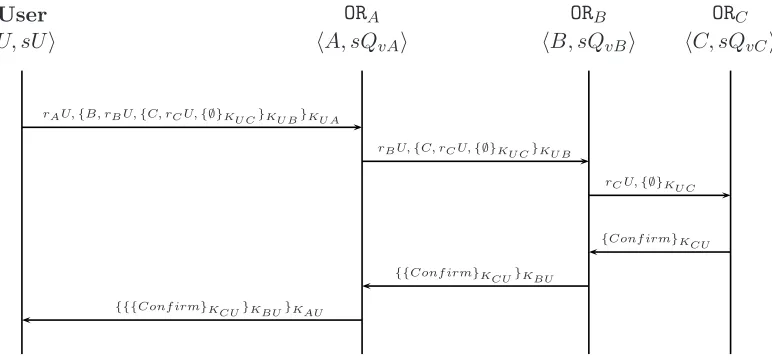
Figure 1: A user builds a circuit with three ORs.
keys are derived: a forward session key KU i and a backward session key KiU. Finally,
the following onion is built and sent toOR1, the first OR in the circuit:
r1U,{OR2, r2U,{· · · {ORℓ, rℓU,{∅}KU ℓ} · · · }KU2}KU1
Here {· · · }KU i is symmetric-key encryption and ∅ is an empty message which informs
ORℓ that it is the exit node.
2. After receiving the onion, the OR with identityORiuses the receivedriU and its currently
valid private keydvi to compute e(riU, dvi) =e(U, Qi)ris =γviri. It derives the forward
session keyKU iand the backward session keyKiU. It decrypts the outermost onion layer
{· · · }KU i to obtain the user’s next pseudonym, the nested ciphertext, and the identity
of the next node in the circuit. The OR then forwards the pseudonym and ciphertext to the next node. To avoid replay attacks, it also stores pseudonyms (see Section 7). The process ends when an OR (ORℓ in this case) gets ∅.
3. The exit nodeORℓ sends a confirmation message encrypted with the backward session key
{Conf irm}KℓU to the previous OR in the circuit. Each OR encrypts the confirmation
with its backward session key and sends it to the previous node, until the ciphertext reaches the user. The user decrypts the ciphertext layers to verify the confirmation. 4. If the user does not receive the confirmation in a specified time, she selects a different
set of ORs and repeats the protocol.
The circuit construction is further illustrated in Figure 1, where a user builds a three-node circuit.
Anonymous Communication After the circuit is constructed, communication proceeds in the same manner as Tor. The user sends onions through the circuit with each layer encrypted with the forward keys KU i, and each hop decrypts one layer. Replies are encrypted at each
hop with the backward key KiU, and the user decrypts the received onion.
Note that as an optimization, one or more messages can be bundled inside the original circuit construction onion, in place of∅.
4.3 Advantages Over First-Generation Onion Routing
As discussed earlier, it is possible to achieve forward secrecy in first-generation onion routing by periodically replacing the public-private key pairs of the ORs. Following the change, the service provider publishes signed copies of the new OR public keys after getting authentic copies from the ORs. However, this requires all users to regularly obtain fresh authenticated public key information for all ORs.
In contrast, with our system, each user only needs to obtain the single authenticated value (vm, U, sU), and only once every MKVP. The user can then calculate the required γvi values on
her own until the end of that period, thus reducing the load on the service provider. This load is further reduced by having the service provider never communicate directly with users at all, but only with the ORs.
As a consequence, our pairing-based onion routing is a more practical solution for low-latency anonymous communication.
4.4 Advantages Over Telescoping in Tor
The Tor network, in practice, uses the telescoping approach based on the Diffie-Hellman key ex-change to form an anonymity circuit. We find the following advantages for our protocol over the telescoping approach.
• Although our above-defined protocol requires occasional private key generation for ORs to achieve forward secrecy, it saves communication cost at every circuit construction by avoiding telescoping. We discuss our communication and computational advantages in Section 8.5.
• The absence of telescoping in our protocol provides flexibility to the user to modify a circuit on the fly. For example, suppose a userU has constructed a circuit (U ⇔OR1⇔OR2 ⇔ · · · ⇔
ORi ⇔ · · · ⇔ ORℓ). In our protocol, she can bundle instructions to immediately replace ORi
with OR′i in the next message, while keeping the remaining circuit intact. Her circuit would then be (U ⇔OR1 ⇔OR2 ⇔ · · · ⇔OR′i ⇔ · · · ⇔ORℓ).
4.5 Issues with the Proposed Scheme
The certifying authorities in the Tor system need to be less trusted than the PKG in our scheme. It is also possible fort+ 1 malicious PKGs to passively listen to all of the traffic as they can compute private keys for all ORs. A geographically and politically distributed implementation of m PKGs certainly reduces this possibility.
To passively decrypt an OR’s messages, an adversary of the Tor system must know the OR’s private key, as well as the current Diffie-Hellman key (established for each circuit). In our scheme, as it is non-interactive, an adversary who knows only the OR’s private key can decrypt all of the messages for that OR. This may be an acceptable trade-off, considering the advantages gained from the non-interactive protocol.
Further, this onion routing circuit construction provides forward secrecy, only after ORs’ private keys are rotated. In other words (as defined by Øverlier and Syverson [ØS07]), it only provides
5
λ
-pass Onion Routing
Tor achieves immediate forward secrecy using telescoping. Telescoping can also be considered as anℓ-pass circuit construction, whereℓis the circuit length, with immediate forward secrecy at each of the OR nodes. In practice however, it is sufficient to have immediate forward secrecy at fewer than ℓnodes, as an adversary will be stymied when it encounters any such node. In this section, we define λ-pass onion routing circuit construction, which achieves immediate forward secrecy at
λnodes (for 2< λ≤ℓ) with reduced circuit construction cost over telescoping.
5.1 Impossibility of Immediate Forward Secrecy in Single-pass Circuit Con-struction
To motivate multiple pass circuit construction, we will describe why it is impossible to obtain immediate forward secrecy in any single-pass circuit construction, regardless of the cryptographic setting.
In an immediately forward secret circuit construction, compromise of OR private keys after a circuit is built should not allow any information about the circuit path to be recovered. Further, after the circuit is destroyed and the keys are dropped, it should not be possible for any honest user and an OR to re-compute their shared keys for that session. To achieve these properties,both
parties must contribute some randomness to the creation of the the session key and they must drop these random values once the session keys are generated. Consequently, before the user can generate the forward session key, the random values (in some modified form) have to be exchanged between the user and the OR. The modified forms should enable the only the authentic receiver to compute the session key. In an immediate forward secret circuit construction like Tor, these session-dependent random values are realized using the Diffie-Hellman exponents (x, y), while the Diffie-Hellman parameters (gx, gy) provide the publicly exchanged forms of the randomness.
In any single-pass circuit construction, an OR does not reply immediately after receiving an onion (except for exit nodes). Therefore, addition of any randomness from the OR in the forward session key is not possible, before that session key can be used to convey the OR its successor. Consequently, any time later in the same PKVP, an adversary can compromise the OR, use the OR’s private key to generate the session keys and exploit those to find the next node in the circuit path. Further, although it is possible for nodes to send their part of randomness for session keys along with the (backward) confirmation onion, this does not provide any advantage as the adversary can always find the circuit path by decrypting the forward onion. Thus we see that it is not possible to obtain immediate forward secrecy in a single-pass circuit construction.
5.2 λ-pass Circuit Construction
5.2.1 Protocol Description
Although our λ-pass circuit construction can be applied in any public-key setting, for simplicity, here we present it for pairing-based onion routing, as defined in Section 4.
Setup, Key Generation, User Setup These are as described in Section 4.2.2.
Circuit Construction During a PKVP v, a user U chooses a set of ORs (say OR1,OR2, . . . ,ORℓ)
and constructs a circuit U ⇔OR1 ⇔OR2 ⇔ · · · ⇔ORℓ with the following steps.
1. The user selectsλindices 1 = Λ1 <Λ2<· · ·<Λλ−1 <Λλ =ℓ.
2. As in Section 4.2.2, for eachORiin the circuit, the user generates a random integerri∈Z∗n
and computes the pseudonym PU i =riU and the value γviri =e(U, Qvi)sri. From γviri
two session keys are derived: a forward session keyKU iand a backward session keyKiU.
At this stage, the user forgets the random valuesri for all but rΛ1, rΛ2, . . . , rΛλ.
3. The user forms a TLS connection with ORΛ1 = OR1, which generates the session keys
KU1 and K1U. This TLS connection must use one of the ephemeral Diffie-Hellman
ciphersuites guaranteeing forward secrecy for this first connection [DR06]. 4. The user then creates the following onion and sends it toOR1.
{OR2, r2U,{· · · {ORΛ2, rΛ2U,{∅}KUΛ2} · · · }KU2}KU1
Here {· · · }KU i is symmetric-key encryption and ∅ is an empty message which informs
ORΛ1 that it is the exit node.
5. OR1 uses KU1 and decrypts the onion to determine the next node OR2. The later nodes
ORiwithi≥2, useriU and their currently valid private keysdvito computee(riU, dvi) =
e(U, Qi)ris =γviri. They derive the forward session keys KU i and the backward session
keys KiU. They decrypt the outermost onion layer {· · · }KU i to obtain the user’s next
pseudonym, the nested ciphertext, and the identity of the next node in the circuit. The ORs then forward the pseudonym and ciphertext to the next node. To avoid replay attacks, they also store pseudonyms (see Section 7). The process ends when ORΛ2 gets
∅.
6. The last node in the partial circuitORΛ2 generates a random integerrU2 ∈Z∗n, and
com-putes a pseudonymrU2QvΛ2. It then generatesγ
rΛ2 vΛ2
rU2
and derives modified forward and backward session keys (KU∗Λ2 and KΛ∗2U) and sends a confirmation message encrypted with the backward session key {Conf irm}KΛ2U along with the pseudonymrU2QvΛ2 to the previous OR in the circuit. To obtain immediate forward secrecy, it also forgets the random integer rU2 and the value γ
rΛ2 vΛ2
rU2
right away, and will forget KU∗Λ2 and KΛ∗2U
immediately after the circuit is no longer in use.
7. Each OR encrypts the confirmation with its backward session key and sends it to the previous node, until the ciphertext reaches the user. The user decrypts the ciphertext layers to verify the confirmation and in the process, generates the modified session keys forORΛ2 using the received pseudonymrU2QvΛ2 and the stored random value rΛ2. After this, the user drops the random valuerΛ2.
8. Now, the partial circuit U ⇔ A· · · ⇔ ORΛ2 is used to extend the circuit to ORΛ3 by sending the following onion toOR1.
User
hU, sUi
ORA = ORλ1
hA, sQvAi
ORB = ORλ2
hB, sQvBi
ORC
hC, sQvCi
ORD =ORλ3
hD, sQvDi
TLS Connection
{B, rBU,{∅}KU B}KU A
rBU,{∅}KU B
rU2B,{Conf2}K∗
BU {rU2B,{Conf2}KBU∗ }KAU
{{C, rCU,{D, rDU, {∅}KU D}KU C}K∗
U B}KU A
{C, rCU,{D, rDU, {∅}KU D}KU C}K∗
U B r
CU,{D, rDU, {∅}KU D}KU C
rDU,{∅}KU D
rU3D,
{Conf3}K∗
DU {rU3D,
{Conf3}K∗
DU}KCU {{rU3D,
{Conf3}K∗
DU}KCU}K∗BU {{{rU3D,
{Conf3}K∗
DU}KCU}KBU∗ }KAU
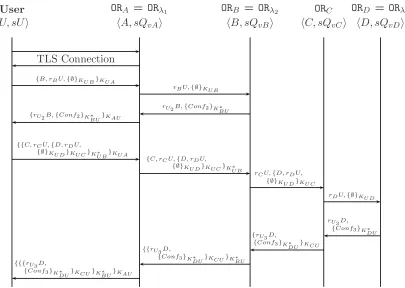
Figure 2: A user builds a circuit with four ORs andλ= 3.
9. The user completesλpasses to construct the complete circuit U ⇔OR1⇔OR2 ⇔ · · · ⇔
ORℓ.
10. If the user does not receive any of theλ confirmations in specified times, she selects a different set of ORs and repeats the protocol.
Anonymous Communication is as described in Section 4.2.2.
This circuit construction is further illustrated in Figure 2, where a user builds a four-node circuit withλ= 3.
We observe that the security and anonymity properties of this protocol are straight-forward extensions to those of our single-pass construction in Section 4; we elaborate on security in Section 6.
5.2.2 Value of λ and node-placement
an immediate forward secrecy node. In practice, choosing the value of λ requires an estimate of how many nodes the adversary can compromise, as well as how much traffic he can observe.
An immediate question is the placement of the immediate forward secrecy nodes in the circuit path. It is easy to observe that a circuit with two adjacent immediate forward secrecy nodes is more difficult to attack using traffic analysis than one where those two nodes are separated. Further, as the ultimate goal of onion routing is anonymity for the sender and receiver, it is good to have immediate forward secrecy nodes at the start and at the end of the circuit. Therefore, we suggest
⌈λ/2⌉ immediate forward secrecy nodes at the start of the circuit and remaining ⌊λ/2⌋immediate forward secrecy nodes at the end of the circuit. In cases when the recipient does not require anonymity (e.g. it is a webserver), the efficiency of the construction can be improved by placing the firstλ−1 nodes closest to the sender; that is, by selecting Λi =ifor 1≤i≤λ−1 and Λλ=ℓ.
An attacker who observes the onion past the last forward secrecy node may be able to decrypt the remaining layers, but the first λ−1 forward secrecy nodes have already provided anonymity for the sender.
Once the random parametersrUi and rΛi are dropped by theORΛi and the userU respectively,
deriving their session keys becomes the BDH problem, even if ORΛi gets compromised during the
PKVP. Therefore, we achieve immediate forward secrecy atλORs and the PKVP could be longer, or made equal to the MKVP. The latter would also eliminate the need to attach validity periods to OR identities.
6
Security Analysis
Camenisch and Lysyanskaya [CL05] give a protocol for onion routing with provable security in the universal composability (UC) model [Can01]. The UC model imposes additional overhead on their protocol. We aim for a simpler and more efficient protocol at the expense of provability in the UC model. Nevertheless, we prove some security properties of our protocol. Here is a list of the properties we consider; detailed definitions will follow.
Cryptographic unlinkability This property ensures that a circuit, which has at least one honest node, provides unlinkability between a sender and a receiver. This property allows us to use a strong attack model; anonymity is still possible when the adversary controls all but one of the routers in the path. By the term cryptographic unlinkability we exclude network-level linking attacks.
Integrity and correctness These properties are defined by Camenisch and Lysyanskaya [CL05]. An onion routing scheme has the correctness property if a message reaches the intended recipient whenever the an onion is i) formed correctly, ii) processed by the right routers in the right order, and iii) these routers follow the protocol. Integrity is achieved if onions longer than some upper limit on the length can be recognized by routers. We observe that our circuit construction trivially achieves these correctness and integrity properties.
Key secrecy An attacker controlling all but one honest node in a circuit should not be able to recover the secret key shared between the user and the honest node. Since this is effectively a run of the protocol in Section 3.2 between the user and the honest node, the security proof in Section 3.3.2 applies here as well.
be possible for it to learn which position it has in a circuit (unless it is the entry or exit node). We discuss some ways to provide circuit position secrecy.
Note that when proving security using the above properties, our λ-pass circuit construction in Section 5.2, can be considered equivalent toλpasses of our single-pass circuit construction protocol. Therefore, we do not consider it seperately in our security discussion.
6.1 Cryptographic Unlinkability
Suppose an adversary controls all routers in a circuit of length ℓ except for one honest router, H. By collapsing the adversarial routers into a single entity, we can distill this scenario into:
UserU →A1 →H→A2 →Recipient R
where nodes A1 and A2 are controlled by the adversary. When U sends an onion to A1, it is
processed and forwarded to H who processes it and forwards it to A2. If A2 can determine that
the onion received from H was also processed byA1, thenU and R can be linked. Traffic analysis
and timing/correlation attacks may be able to linkU andR, but in this section we show that there is nocryptographic linking possible.
When there are multiple users in the system (a basic assumption for all anonymity systems), the problem can be illustrated as follows.
U → A1 A2→ R
ց
ր H
ր ց
U′→ A′1 A′2→ R′
We will show that this problem is equivalent to distinguishing ciphertexts.
The situation depicted above is captured by the following security game, which we call the
cryptographic unlinkability game.
Setup The challengerCperforms the setup described by the onion routing protocol. The adversary
Achoosesm,IDA1,IDA′1,IDA2,IDA′2,IDH. Csends the private keys forIDA1,IDA1′,IDA2,IDA′2, to A. It is assumed that router identities are of a fixed length to avoid attacks based on the ciphertext sizes.
Create onions The challenger chooses b∈ {0,1} at random. Ifb= 0,C sends to A:
O1 for circuit U →A1 →H →A2
=IDA1, rA1U,{IDH, rHU,{IDA2, rA2U,{m}KU A2}KU H}KU A1
O′1 for circuit U →A′1 →H →A′2
=IDA′
1, rA′1U,{IDH, r ′
HU,{IDA′2, rA′2U,{m}KU A′
2}KU H′}KU A′1 and if b= 1, C sends to A:
O1 for circuit U →A1 →H→A′2
=IDA1, rA1U,{IDH, rHU,{IDA′2, rA′2U,{m}KU A′
2}KU H}KU A1
O1′ for circuit U →A′1 →H→A2
=IDA′
1, rA′1U,{IDH, r ′
HU,{IDA2, rA2U,{m}KU A2}KU H′}KU A′
1
A1 processing The nodeA1 processes the onionsO1 andO1′ before passing them along toH (A1
may or may not follow the protocol). The resulting onionsOH andO′H respectively are then
returned toC.
H processing C removes the layer encrypted for H. If the decryptions are invalid the game is aborted (C will know since it created the onions). If the decryptions are valid, C returns the resulting O2, O2′ to A. Here, O2 and O2′ are the output onions destined for A2 and A′2
respectively.
Guess A must determine which input onion corresponds to which output onion by outputting a guess bitb′. We say that the adversaryA (t, ǫ)-wins the game ifA outputsb′ in timet such that
Prob(b=b′) = 1/2 +ǫ .
Winning this cryptographic unlinkability game can be reduced to distinguishing ciphertexts. To achieve that, we first present the IND-CPAgame for (indistinguishability in a chosen plaintext attack).
Setup Let EK be a symmetric encryption function which uses key K. C chooses K at random
from the keyspace associated with E.
Extraction Queries An adversaryACPA is given oracle access toEK. She can obtain ciphertexts
for polynomially bounded number of plaintext messages of her choice any time during the game.
Challenge TheACPAchooses two equal length plaintextsm0,m1, and sends them toC. Cchooses b∈ {0,1} at random, and sends EK(mb) to ACPA.
Guess ACPA outputs a guess b′ ∈ {0,1}. We say that ACPA (t, ǫ)-wins the IND-CPA game if
ACPA returns b′ in timetsuch that
Prob(b=b′) = 1/2 +ǫ .
A similar game, which we call the simultaneous-IND-CPA game, arises from the crypto-graphic unlinkability problem described above.
Setup Let EK be an encryption function which uses key K. C chooses K1, K2 at random from
the keyspace associated withE.
Extraction Queries An adversaryASimul-CPAis given oracle access toEK1 andEK2. She obtains ciphertexts for polynomially bounded number of plaintext messages of her choice any time during the game.
Challenge ASimul-CPA chooses equal length plaintexts m0, m1, and sends them to C. C chooses b∈ {0,1} at random, and sends EK1(mb) and EK2(mb) toASimul-CPA.
Guess ASimul-CPAoutputs a guessb′∈ {0,1}. We say thatASimul-CPA(t, ǫ)-wins the simultaneous-IND-CPAgame if ASimul-CPA returnsb′ in time tsuch that
Prob(b=b′) = 1/2 +ǫ .
Lemma 6.1. If E is a family of pseudorandom permutations, then E isIND-CPAif and only if it is simultaneous-IND-CPA.
Proof. First assume an adversaryACPA, which can (t, ǫ)-win anIND-CPAgame (m0, m1, EK(mb)).
Given an access to such an adversary, an simultaneous-IND-CPA game (m0, m1, EK1(mb),
EK2(mb)) can be (t, ǫ)-won simply by sending the query (m0, m1, EK1(mb)) to the adversaryACPA. Therefore, E is simultaneous-IND-CPA⇒ E isIND-CPA.
Now assumeE is a family of pseudorandom permutations and isIND-CPA, and suppose there is an adversaryASimul-CPA, which (t, γ)-wins thesimultaneous-IND-CPAgame (m0, m1, EK1(mb),
EK2(mb)) for non-negligibleγ. For an IND-CPAinput (m0, m1, EK(mi)), we presentASimul-CPA
with the simultaneous-IND-CPA instance (m0, m1, EK(mi),$) where $ is a random string of
length|EK(mi)|, and with oracle access toEK2 for a randomly chosen keyK2. SupposeASimul-CPA returnsiwith probability 1/2 +κ. It follows thatASimul-CPAcan be used to distinguish encryptions
ofE with keyK2 from randomly chosen strings with probability 1/2 +µ, whereµ=|γ−κ|. Since E is assumed to be a psuedorandom permutation, µmust be negligible, andκ≥γ−µ. Therefore,
E isIND-CPA⇒ E is simultaneous-IND-CPA.
Theorem 6.2. If E is a family of pseudorandom permutations which is IND-CPA, then for any adversary which (t, ǫ)-wins the cryptographic unlinkability game, if t is polynomial, then ǫ is negligible.
Proof. Suppose A is playing the unlinkability game; we focus on the Guess step. A has OH and
O′
H (the onions processed byC), which are not encryptions ofm(which he chose), but encryptions
M1 ={m}KU A1 andM2={m}KU A2 known toA. This gives us an instance of
simultaneous-IND-CPAexceptAdid not get to choose the messages. IfA(t, ǫ)-solves this instance for non-negligible
ǫ, A can certainly (t, ǫ)-solve instances where A chooses M1, M2. By Lemma 6.1 A solves an
instance ofIND-CPA as well.
Therefore, if our encryption function is indistinguishable in a chosen plaintext attack, then our onion routing protocol has cryptographic unlinkability (in our model of multiple users and one honest router per circuit). Since key secrecy is proven for our construction, any symmetric key encryption which provides indistinguishability given key secrecy will give our protocol cryptographic unlinkability.
6.2 Circuit Position Secrecy
We now treat the issue of preventing routers from learning which position they have in a circuit, when an adversary controls all but one router. Note that an adversary who controls all but one router in a circuit, and who knows the circuit length is always able to deduce which position his routers have in some circuit. Adversarial nodes “sandwiched” between two honest nodes learn nothing about their position.
7
Systems Issues
In this section, we describe how components of an onion routing system such as Tor would behave in a pairing-based setting. To implement pairings, we must choose groups where pairings are known, and are efficiently computable. Once these groups are fixed we can estimate the computational cost required to construct a circuit. The next section will compare the costs of our schemes to the cost of setting up a circuit in Tor.
PKG
As discussed in Section 3.4, the PKG should be distributed across servers run by independent parties. To provide robustness, a “t of m” secret sharing scheme may be employed; this would mean that an OR need only contact t+ 1 ofm “pieces” of the PKG to learn its complete private key. Naturally, private key information must always be communicated over a secure channel. We note that end users of the system will have no reason to contact the PKG; the PKG only communicates with ORs, and sends one private key (an element ofG) per PKVP to each. The load
on the PKG should therefore be quite manageable. For added protection from attack, the PKG could even situate itself as a “hidden service” [DMS04, Sec. 5], so that only known ORs could even connect to it, and no one would know where many of the pieces were located.
Channel Security
The security and forward secrecy depends on the channel between the PKG and the OR used to compute the private key. With a non-distributed PKG, an attacker can compromise an OR’s private key by compromising this channel. The distributed PKG provides robustness here as well, since the attacker must subvertt+ 1 secure channels to reconstruct the private key from the shares.
Onion Router Identities
Users calculate γvi based on each router’s identity IDi. This identity can be as simple as a port
number and a hostname or IP address. In that case, the BF-IBE setup ensures that if a user knows how to contact an OR, she automatically knows its public key.
The value γvi is also based on the current PKVP v. To avoid requiring tight synchronization
between the clocks of ORs and users, ORs should keep their private keys dvi around for a short
time after the official end of the PKVP, but must securely discard them after that.
Replay Prevention
To avoid attacks where adversaries replay old circuit construction onions, ORs should store the pseudonyms they receive for the duration of a PKVP and drop onions which re-use a pseudonym. After circuit construction, replay attacks can be prevented with existing methods [DM08].
Directory Servers
8
Performance
In this section, we consider the cost of single pass and λ-pass circuit constructions from a user through ℓ onion routers. We estimate the computational cost, and count the number of AES-encrypted network communications. We compare the performance of our systems to that of Tor.
8.1 Security Levels and Parameter Sizes
Before comparing the costs of the cryptography in the schemes we determine the parameter sizes required to provide the same level of security currently provided by Tor.
Tor uses public key parameters to provide security at the 80-bit level [Gol06]. The discrete log problem is in a 1024-bit field, and the RSA problem uses a 1024-bit modulus. The symmetric parameters provide significantly more security, by using AES with a 128-bit key.
We must choose appropriate groupsGandGT over which our pairing will be defined in order to
offer similar strength. The current favourite choice is the group of torsion points of an elliptic curve group over a finite field, with either the Weil or Tate pairing. To achieve an 80-bit security level, the elliptic curve discrete log problem an attacker faces must be in a group of at least 160 bits. Due to the reduction of Menezes, Okamoto and Vanstone [MOV91], we must also ensure that discrete logs are intractable in the target group, GT. In our case, GT =Fpk, where k is the embedding degree
of our curve taken over Fp. We must then choose our curveE, a primep, and embedding degree k
such that E(Fp) has a cyclic subgroup of prime order n≈2160, and pk is around 21024. This can
be achieved in a variety of ways, but two common choices are k= 2, p ≈2512 and k= 6, p ≈2171.
Pairing implementations with both sets of parameters are available in the PBC library [Lyn08]. Efficiency studies suggest that k = 2 and the Tate pairing can offer better performance at this security level [KM05], so we make that choice.
8.2 Cost of Building a Circuit with Tor
Tor builds circuits by telescoping. A user Uriel chooses a Tor node (say Alice), and establishes a secure channel using an encrypted Diffie-Hellman exchange. She then picks a second node, Bob, and over this secure channel, establishes a new secure channel to Bob with another (end-to-end) encrypted Diffie-Hellman exchange. She proceeds in this manner until the circuit is of some desired length ℓ. For details, see the Tor specification [DM08]. Note that Uriel cannot use the same Diffie-Hellman parameters with different nodes, lest those nodes be able to determine that the same user was communicating with each of them.
Each Diffie-Hellman exchange requires Uriel to perform two modular exponentiations with 1024-bit moduli and 320-1024-bit exponents. Likewise, each server also performs two of these exponentiations. Uriel RSA-encrypts the Diffie-Hellman parameter she sends to the server, and the server decrypts it. The AES and hashing operations involved have negligible costs compared to these.
Uriel’s circuit construction to Alice takes two messages: one from Uriel to Alice, and one from Alice to Uriel. When Uriel extends this circuit to Bob (via Alice), there are four additional messages: Uriel to Alice, Alice to Bob, Bob to Alice, and Alice to Uriel. Continuing in this way, we see that the total number of messages required for Tor to construct a circuit of length ℓ is ℓ(ℓ+ 1). Note that each of these messages needs to be encrypted and decrypted at each hop.
8.3 Cost of Building a Circuit with Paring-Based Onion Routing
Table 1: Comparison of costs of setting up a circuit of length ℓ. The values in the Tor column are based on the Tor specification [DM08]. PB-OR represents our pairing-based onion routing schemes. efs-OR indicates eventual forward secret ORs, while ifs-OR indicates immediate forward secret ones. Λavg represents the average of the indices of theλimmediate forward secret nodes.
Operation Time Tor PB-OR λ-Pass PB-OR
(ms) user OR user OR user efs-OR ifs-OR
Pairing 2.9 0 0 0 1 λ 1 1
RSA decryption 2.7 0 1 0 0 0 0 0
Exponentiation (Tor) 1.5 2ℓ 2 0 0 0 0 0
Multiplication in G 1.0 0 0 ℓ 0 ℓ 0 1
Exponentiation in GT 0.2 0 0 ℓ 0 ℓ 0 1
RSA encryption 0.1 ℓ 0 0 0 0 0 0
Total time (ms) 3.1ℓ 5.7 1.2ℓ 2.9 1.2ℓ+ 2.9λ 2.9 4.1 Total AES-encrypted messages ℓ(ℓ+ 1) 2ℓ 2λΛavg
computes rSU and γSrS, and derives the forward and backward keysKU S and KSU from γSrS, for
each server S in the circuit. Note that the γS values were precomputed, and cost nothing during
each circuit creation. Each server computes e(rSU, dS) = γSrS for its current private key dS and
derives KU S and KSU.
Uriel creates one message, as in Figure 1, and sends it to the first server in the chain. This server decrypts a layer and sends the result to the second server in the chain, and so on, for a total of ℓ hop-by-hop encrypted messages. At the end of the chain, the last server replies with a confirmation message that travels back through the chain, producingℓ more messages, for a total of 2ℓ.
8.4 Cost of Building a λ-Pass Paring-Based Onion Routing Circuit
Our λ-pass paring-based onion routing circuit construction is similar to that of our single-pass construction. Additional tasks that the immediate forward secret nodes must do are generation of a random integer rUi, computation of the pseudonymrUiQvΛi, and computation of γ
rΛi
vΛi rUi
. Uriel correspondingly has to performλpairing computations to generate modified session keys using the received pseudonyms rUiQvΛi from λ immediate forward secret nodes. The number of messages
and corresponding AES encryptions depends on the positions of the λ immediate forward secret nodes in the circuit. It is equal to 2Pλi=1Λi = 2λΛavg, where Λavg is the average of the indicies of
the immediate forward secret nodes in the circuit.
8.5 Comparison and Discussion
We can see that the total computation time to construct a circuit of length ℓusing our single-pass method is 61% less on the user side and 49% less on the OR side as compared to using Tor. In addition, this circuit construction uses only a linear number of AES-encrypted messages, while Tor uses a quadratic number. As compared to single-pass circuit construction, our λ-pass circuit construction requires an additionalλpairing computations by the user, requiring a total of 1.2ℓ+ 2.9λms, and on average 2.9 + 1.2λ/ℓms for each of the ORs. For proposed values ofλ= 3,4,
or 5, these are certainly reasonable times, considering the advantage of immediate forward secrecy, and having PKVP = MKVP.
9
Conclusion
We have presented new pairing-based approaches for circuit construction in onion routing anonymity networks. We first extended the protocol of Sakai et al. [SOK00] to allow for one-way or two-way anonymous or pseudonymous key agreement. We then used this extension to produce new circuit construction protocols.
Our single pass circuit construction uses significantly less computation and communication than the corresponding protocol in Tor, and reduces the load on the network support infrastructure. To achieve immediate forward secrecy instead of eventual forward secrecy, we have also definedλ-pass circuit construction. These improvements can be used to improve the efficiency and to enhance the scalability of low-latency anonymity networks.
Acknowledgements.
We would like to thank the Natural Sciences and Engineering Research Council of Canada for supporting this research with a Discovery Grant (Kate, Goldberg) and a PGS-D postgraduate scholarship (Zaverucha). We are also grateful for funding provided in the form of David R. Cheriton Graduate Scholarships (Kate, Zaverucha). We thank the anonymous reviewers of PETS 2007 for their constructive feedback, which improved an earlier version of this paper. Finally, we would also like to thank Sk. Md. Mizanur Rahman for providing us with an advance copy of the proceedings version of [RIO+06].
References
[BF01] D. Boneh and M. Franklin, Identity-Based Encryption from the Weil Pairing, Advances in Cryptology—CRYPTO 2001, 2001, pp. 213–229.
[Bla05] I. Blake (ed.), Advances in elliptic curve cryptography, London Mathematical Society Lecture Note Series, no. 317, Cambridge University Press, 2005.
[Can01] R. Canetti, Universally Composable Security: A New Paradigm for Cryptographic Protocols, 42nd Annual Symposium on Foundations of Computer Science (FOCS 2001), 2001, pp. 136–145.
[Cha81] D. Chaum, Untraceable Electronic Mail, Return Addresses, and Digital Pseudonyms, Communications of the ACM 4 (1981), no. 2, 84–88.
![Table 1: Comparison of costs of setting up a circuit of length ℓare based on the Tor specification [DM08].schemes](https://thumb-us.123doks.com/thumbv2/123dok_us/1862370.1242029/23.612.92.523.145.290/table-comparison-setting-circuit-length-are-specication-schemes.webp)