Electronic Thesis and Dissertation Repository
8-29-2019 1:15 PM
The Relations between Newcomer Integration Processes and
The Relations between Newcomer Integration Processes and
Youth Athletes’ Perceptions of the Group Environment in
Youth Athletes’ Perceptions of the Group Environment in
Competitive Ice Hockey
Competitive Ice Hockey
Jeffrey J. Chamberlain
The University of Western Ontario
Supervisor Hall, Craig R.
The University of Western Ontario Co-Supervisor Benson, Alex J.
The University of Western Ontario Graduate Program in Kinesiology
A thesis submitted in partial fulfillment of the requirements for the degree in Master of Arts © Jeffrey J. Chamberlain 2019
Follow this and additional works at: https://ir.lib.uwo.ca/etd
Part of the Industrial and Organizational Psychology Commons, Other Kinesiology Commons, and the
Sports Studies Commons
Recommended Citation Recommended Citation
Chamberlain, Jeffrey J., "The Relations between Newcomer Integration Processes and Youth Athletes’ Perceptions of the Group Environment in Competitive Ice Hockey" (2019). Electronic Thesis and Dissertation Repository. 6536.
https://ir.lib.uwo.ca/etd/6536
This Dissertation/Thesis is brought to you for free and open access by Scholarship@Western. It has been accepted for inclusion in Electronic Thesis and Dissertation Repository by an authorized administrator of
Abstract
The ways in which new members are integrated into a particular group environment—
also known as organizational socialization processes—have been shown to be a powerful
predictor of newcomer adjustment in the workplace. Yet, there is a scarcity of research on
how sport teams manage the integration of new team members, and the consequences of
different tactics. The current research uses the recently developed Sport Team
Socialization Tactics Questionnaire (STSTQ) to evaluate how socialization processes are
systematically related to youth athletes’ perceptions of their group environment. Across
two time points, 202 competitive adolescent ice hockey players (Mage = 14.47, SD = 1.23,
26.24% female) completed the STSTQ processes near the beginning of the season, and
then measures of group conflict, social identity, and cohesion later in the season. As
hypothesized, coach-initiated role communication tactics positively predicted task
cohesion (p <.001). Also as predicted, social inclusionary tactics positively predicted
social identity (p <.001). Counter to expectations, however, serial tactics was not
significantly related to relationship conflict. Overall, the results point to how the
processes surrounding the integration of new members may be a key leverage point for
managing the social environment for athletes in youth sport.
Keywords: newcomer integration; socialization; cohesion; social identity; relationship
Summary for Lay Audience
Peer relationships are important for the social development of adolescents. As
peer groups can help facilitate these peer relationships, the environment associated with
adolescent peer groups should be optimized. Sport teams are an example of these peer
groups, as sport teams are a context with rich peer interactions. The current study
assesses the potential of newcomer integration tactics to improve perceptions of the youth
sport team environment. Newcomer integration tactics are strategies to aid the transition
process for athletes joining a new team, and include veterans sharing information about
tasks, role discussions with the coach, and scheduled team events outside of regular
games and practises. Using a recently developed questionnaire (the Sport Team
Socialization Tactics Questionnaire) measures these tactics, I assessed how team member
integration processes were associated with athletes’ perceptions of team cohesion, social
identity, and relationship conflict.
To conduct this investigation, I recruited 16 competitive hockey teams, male and
female, from Southwestern Ontario. Participants were between 13 and 18 years of age,
competing at one of the highest skill levels for their respective age group. Following
formal consent, players completed the questionnaire package once near the beginning of
the season, and once towards the end of the season. Results indicate that the STSTQ is
generally a reliable measure for youth sport populations. Furthermore, open dialogue
between players and their coaches regarding a player’s role on the team appears to be of
particular salience for competitive youth ice hockey players. Shared group entry
experiences (i.e., team activities outside of games and practises) appear to be closely
task-based information with newcomers was less robust, although it is still encouraged. This
research contributes to the novel area of study regarding the integration of newcomers
into an existing sport group, demonstrating that specific socialization processes can
Acknowledgements
The completion of this project was a collaborative effort, to which certain people
and groups must be recognized.
Thanks to my supervisor, Dr. Craig Hall. It is a little known fact that I enrolled in
Kinesiology at Western with the primary intention of getting a Master’s degree in sports
psych. It was Craig who crafted this vision into a reality. I was having meetings with
Craig about my future as early as second year, so it’s certainly cool to see everything
unfold as it did. Thank you, Craig, for kindling my passion for sports psychology, and
providing me with the opportunity to be your graduate student.
Thanks to my co-supervisor, Dr. Alex Benson. Alex was largely responsible for
the design of this study, and it was largely Alex’s past research that paved a way for the
current project. In terms of Alex’s supervision, I couldn’t have asked for anything more.
My emails were always answered quickly and thoughtfully, even when I probably could
have consulted Google or YouTube instead. It was Alex who truly made this study
possible, in more ways than one. Thanks for taking a chance on me.
Thanks to Dr. Natascha Wesch, who was also critical to my development as a
budding sports psychology student.
Thanks to Dr. Mark Eys, who put me in touch with Dr. Benson when I reached
out and told Mark that I was interested in group dynamics in sport.
Thanks to the London Junior Knights, the London Junior Mustangs, the London
Devilettes, the Oakville Hornets, the Oakville Rangers, and the Burlington Eagles
Special thanks to the Elgin-Middlesex Chiefs organization, who not only
volunteered all of their eligible teams, but also provided me with some exciting playoff
hockey to watch. Go Chiefs Go.
Thanks to my labmates in the EHPL and the Group Experiences Laboratory. An
aspect of this study is promoting feelings of inclusion. For me, both of these groups did
just that.
Thanks to my parents, Mike and Lisa. You always go above and beyond to make
sure I’m taken care of. Thanks to my girlfriend, Sabrina, who always seems to make my
life easier and more enjoyable. Thanks to my brother Greg, and to all of my cousins,
aunts, uncles and extended family for their support (except for Dallas). Finally, thanks to
Table Of Contents
Abstract ... i
Summary for Lay Audience ... ii
Acknowledgements ... iv
List of Tables ... vii
List of Appendices ... viii
Chapter 1: Introduction ... 1
Background of Socialization Tactics in Organizational Psychology ... 2
Sport Team Socialization Tactics ... 5
Group Cohesion ... 14
Social Identity ... 18
Relationship Conflict ... 24
Summary ... 27
Chapter 2: Methods ... 27
Participants ... 27
Procedure ... 29
Measures ... 30
Data Analysis ... 33
Chapter 3:Results ... 34
Descriptive Statistics and Bivariate Correlations ... 34
Team Cohesion ... 35
Social Identity ... 35
Relationship Conflict ... 36
Chapter 4:Discussion ... 37
Cohesion ... 40
Social identity ... 43
Relationship conflict ... 47
Further Theoretical Implications ... 49
Limitations ... 51
Future Directions ... 53
Practical Implications... 57
Conclusion ... 58
List of Tables
Table 1: Demographic Information………....……….36
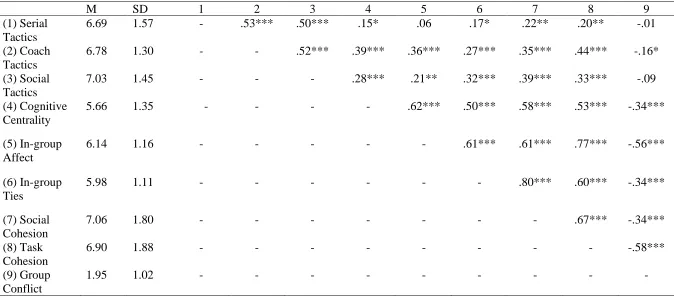
Table 2: Descriptive Statistics and Bivariate Correlations……….……….37
List of Appendices
Appendix A: Demographic Questionnaire………...…….66
Appendix B: Sport Team Socialization Tactics Questionnaire……….67
Appendix C: Relationship Conflict Questionnaire………..70
Appendix D: Social Identity Questionnaire for Sport………71
Appendix E: Youth Sport Environment Questionnaire………73
Appendix F: Letter of Information……….76
Appendix G: Consent Document………..79
Appendix H: Coach Invitation Email………..80
The Relations between Newcomer Integration Processes and Youth Athletes’ Perceptions of the Group Environment in Competitive Ice Hockey
Belongingness theory, as introduced by Baumeister and Leary (1995), proposes
that the drive to establish meaningful relationships and feel accepted is an innate aspect
of human behaviour. This need to belong may be of particular importance to “teenagers”,
or adolescents. Adolescence is a critical developmental period for the expansion of social
relationships. The peer relationships of adolescents can influence their social
development through the provision of social support, as well as contributing to the
development of their self-concept (Keeler, 1992). Moreover, adolescents begin to make
independent choices, as they transition from the closed environment of the parental home
to a social world surrounded by peers (Sussman, Pokhral, Ashmore, & Brown, 2007).
Thus, in addition to development of relationships, adolescence is also a crucial period in
the development of one’s personal identity (MacPherson, Kerr, & Sterling, 2015).
Successfully navigating the identity challenges faced in adolescence can result in higher
levels of self-esteem and moral reasoning, whereas negative resolution of identity
challenges can potentially result in academic struggles and substance abuse (MacPherson
et al., 2015). Belonging to a group, such as a sports team, can aid in the cultivation of
both social relationships and personal identity. Group membership fulfills a desire for
connectedness, and provides an environment conducive to prosocial interactions
(MacPherson et al., 2015). Peer group membership appears to facilitate the transition of
adolescents into the global social environment (Sussman et al., 2007). Therefore, it is
important to optimize the social atmosphere and environment within these adolescent
into a peer group (i.e., sport team) are associated with adolescents’ perceptions of their
social environment. More specifically, the current thesis advances recent work that has
begun to explore newcomer integration processes in sport by examining the relations
between specific sport team socialization tactics and perceptions of cohesion, social
identity, and relationship conflict.
Background of Socialization Tactics in Organizational Psychology
Research regarding newcomer socialization is well established, however, most
literature to date is housed in the field of organizational psychology. Organizational
socialization can be defined as “...the process by which an individual acquires the social
knowledge and skills necessary to assume an organizational role” (Van Maanen &
Schein, 1979, p3). Organizational socialization can also be referred to as newcomer
integration. Although organization socialization processes were originally described as a
way to help individuals navigate the socially constructed boundaries associated with
group-entry experiences (Van Maanen & Schein, 1979), Benson, Evans, and Eys (2016)
noted that athletes joining a new team must navigate similar boundaries. Functional
boundaries determine how task responsibilities are to be divided among team members.
Translated to the context of a hockey team, an example of this would be assigning players
to a specific position (e.g., forward, defense, goaltender) and further specializing them
based on skill proficiency (e.g., a forward who plays on the power play vs. a forward who
plays on the penalty kill). Next, there are hierarchical boundaries, which refer to status
and power distinctions among group members. This includes formal distinction of
authority (e.g., coach/captain/non-captain) as well as implied social position within the
boundaries, which refer to the challenges faced by a newcomer as they move from the
periphery of a group to its inner circles (e.g., a first year player sitting alone in the
dressing room versus a player who is comfortable to socialize with the core group).
Van Maanen and Schein extended their work to suggest there are six general
dimensions that can describe the way a newcomer is integrated by their organization. For
readers familiar with ice hockey, these original dimensions can be remembered as “the
original six”. The first dimension is whether new team members undergo uniform
training exercises (collective tactics, e.g., practicing drills as a group), or receive
individually tailored training and instruction (individual tactics, e.g., a coach working
one-on-one with a new centre to improve their faceoff ability). The second dimension is
the degree of formality associated with the socialization processes. Newcomer
socialization can happen formally (e.g., new players having a planned meeting with
coaching staff to learn team norms/tendencies) or informally (e.g., newcomers practising
with the group as a whole, gradually learning team norms/tendencies as the season
progresses through observation and first-hand experience). A third dimension of
socialization is whether the advancement of responsibilities is sequential in nature, or if
they are random. A sequential approach would involve a defined series of steps for the
advancement of one’s responsibilities, whereas there is no outline or time-based
expectation for these responsibilities in a random approach. A fourth dimension of
socialization, similar to the third, is whether or not there is a strict timetable associated
with the progression of responsibilities. For example, a coach could have the goal of
integrating a new forward onto the top power play unit by the end of the first month of
coaching staff feels they are ready (i.e., variable tactics). A fifth aspect of socialization is
the degree to which veteran group members assist with the integration of new group
members. Serial tactics refer to when veteran members are encouraged to share group
information with new members (e.g., veteran players “buddying up” with new players at
early season team events) whereas disjunctive tactics involve new players receiving no
guidance from more experienced team members. The use of disjunctive tactics may be
intentional if a team is trying to overhaul a previous toxic culture. The final dimension
proposed by Van Maanen and Schein (1979) is whether the organization uses investiture
or divestiture tactics. Investiture tactics involve the team encouraging the individual
characteristics and values of new members (e.g., “we like who you are as an individual,
don’t change”), whereas divestiture tactics encourage a stripping of individuality from
new members (e.g., “you’re a member of a collective team now, leave your personal
opinions/beliefs at the door”).
Using this framework, Jones (1986) suggested that these six dimensions of
newcomer socialization exist on a continuum, ranging from an institutionalized approach
to an individualized approach. Collective, formal, sequential, fixed, serial, and investiture
tactics all reflect an institutionalized approach, whereas individualized, informal, random,
variable, disjunctive and divestiture tactics reflect an individualized approach. The major
difference is an institutionalized approach reflects a highly structured sequence of events
designed to reduce uncertainty for newcomers, whereas an individualized approach
requires newcomers to figure things out for themselves (Benson & Eys, 2017). Two
recent meta-analyses in the industrial-organizational field suggest that an institutionalized
samples of newcomers, indicating that an institutionalized approach was directly and
positively related to role clarity, self-efficacy, job satisfaction, social acceptance, and
intentions to remain (Bauer, Bodner, Erdogan, Truxillo, & Tucker, 2007). A second
meta-analysis used 31 samples of newcomers with slightly different criterion measures,
indicating that institutionalized socialization tactics were negatively related to role
ambiguity, role conflict, and intentions to quit, and positively related to a host of benefits
including, job satisfaction, organizational commitment, and job performance (Saks,
Uggerslev, & Fassina, 2007). Overall, these results highlight the benefits of an
institutionalized approach—at least in organizational settings. As joining a new group can
be challenging, sport teams might benefit from considering ways to imbue athletes’ entry
experiences with greater structure and social support.
Sport Team Socialization Tactics
While organizational psychology has a respectable body of literature associated
with newcomer socialization, the study of sport team integration processes has only
begun to gain traction from scholars. Sport socialization can also be described as
childhood participation in sport as a result of environmental factors, such as peer or
parental influence, and this topic has received considerable attention (Haycock & Smith,
2014). It is crucial to indicate that the current project is not related to this notion of
socialization. Rather, my thesis focuses on how athletes are integrated into a specific
team. One of the initial studies in this specific area was a qualitative investigation to
explore socialization processes in sport teams (Benson, Evans, & Eys, 2016). Interviews
were performed with 12 coaches and 12 players from Canadian interuniversity sport
Maanen & Schein, 1979), but designed to explore socialization processes within sport.
Similarities between organizational and sport group integration processes included shared
group entry experiences (i.e. collective tactics), formal scheduling of practises and
training camp activities (i.e. formal tactics), expectations to conform to the group (i.e.
investiture tactics), mentoring of new players via veteran players (i.e. serial tactics), and
unpredictable role progression (i.e. random tactics and variable tactics; Benson, Evans, &
Eys, 2016).
Although these interviews identified several similarities between sport
socialization tactics and the “original six” dimensions conveyed by Van Maanen and
Schein (1979), there are sizable conceptual differences between work groups and sport
groups. This includes the distinction between practices and formal competitive events,
and, perhaps more importantly, the lack of formally scheduled team events during the
offseason (Benson & Eys, 2017). So, while the work of Van Maanen and Schein (1979)
is an excellent starting point for the operationalization of socialization tactics in sport
teams, Benson, Evans, & Eys (2016) deemed that a sport-specific measure was in order.
The Sport Team Socialization Tactics Questionnaire (STSTQ) is a measure
designed to assess the socialization tactics implemented by a sport team. The initial
development of the STSTQ was achieved through four separate studies (Benson & Eys,
2017). The first study generated items that covered a variety of socialization tactics that
occur in sport groups, and evaluated their content validity. A large pool of 78 items was
initially generated to represent both the institutionalized approach and the corresponding
dimension of the individualized approach (collective vs. individualized, formal vs.
panel review. The second study evaluated the psychometric properties of this refined list
of items. Results demonstrated substantial cross-loading for many of the items. As a
result, the list of items had to be further refined. A revised exploratory structural equation
model with a three-factor structure underlying 13 items was evaluated. These three
factors, or dimensions, include serial tactics, coach-initiated role communication tactics,
and social inclusionary tactics. The third study replicated this factor structure with an
independent sample, providing further evidence for these three dimensions. Finally, the
fourth study aimed to replicate results for the three-factor structure using a Bayesian
structural equation model. In addition to justifying the structure of the measure, the
relationship between socialization tactics and several criterion variables were assessed.
Two hundred fifty-seven Canadian university athletes completed the STSTQ at the
beginning of the competitive season, using STSTQ dimensions as predictor variables.
Later, athletes completed criterion measures of cohesion, role clarity, and commitment
near the midpoint of the competitive season. Overall, there is preliminary evidence for
psychometric properties of the STSTQ, as well as correlational evidence for the benefits
of serial tactics, coach-initiated role communication tactics, and social inclusionary
tactics in sport groups. Furthermore, results indicated latent mean invariance for new
players and returning players, which suggests the STSTQ is effective in evaluating the
perceptions of newcomer integration processes for both of these groups. This is quite
important, as socialization processes are relevant to both newcomers and returning
members’ perceptions of the group environment. The three dimensions of the STSTQ are
Serial tactics. Serial tactics represent the degree to which veteran players share
task-related information with newcomers. Recall that Van Maanen and Schein (1979)
suggest that new players can either receive information from veterans (serial tactics) or
learn on their own (disjunctive tactics). During initial development of the STSTQ, there
were intended to be two factors representing serial tactics: task-oriented serial tactics and
social-oriented serial tactics. Items intended to load onto the latter were non-significant,
therefore this factor was eliminated. The items used in the current measure represent
task-oriented serial tactics. Essentially, these items refer to how much returning players help
out new players with on-field matters. This could mean explaining drills, explaining
team-specific, task-based terminology/vocabulary, explaining in-game positioning, etc. It
is important to note that “serial” in the current measure does not refer to veterans
assisting newcomers with social-oriented matters, such as making friends within the team
or helping learn off-field norms.
The potential importance of serial tactics in sport teams is highlighted in the
qualitative analysis from Benson, Evans, & Eys (2016). Athletes and coaches both spoke
to the importance of veteran players in the entry experience of newcomers. Veterans
acted as an extension of the coach, as they filled in gaps in knowledge regarding team
activities that coaches were either unaware of or did not have time to address. This
involved both task and social matters, although as just mentioned, the current items are
only designed to capture task-related matters. One strategy employed by a coach was a
partnering, or “buddying”, system between first-year and upper-year players. Another
coach, who coached ice hockey, stated “What better way to pick up habits about the way
you do things, because sport is all about action” (Benson, Evans, & Eys, 2016). In a
study by Benson and Eys (2017), serial tactics predicted a range of positive outcomes,
including higher levels of commitment to teammates, clarity of consequences, and group
cohesion. The positive correlation with group cohesion is of particular importance, as it
was demonstrated across four dimensions of cohesion. Group cohesion is a criterion
variable in the current project, and these past data with university athletes encourages
similar positive results.
Coach-initiated role communication tactics. Coach-initiated role
communication tactics represent the degree to which coaches provide new players with
individualized role information upon group entry (Benson & Eys, 2017). In other words,
this dimension reflects the level of communication between the coach and the player(s)
about players’ specific roles on the team. A role can be defined as “the pattern of
behavior expected of an individual in a social situation” (Carron & Eys, 2012, p. 185).
The social situation in this context is the sport team, and this behavior could account for
both on-field and off-field behaviors. The factor of coach-initiated role communication
tactics does not relate to Van Maanen and Schein’s (1979) dimensions as explicitly as
serial tactics. An institutionalized approach to coach-initiated role communication tactics
would theoretically incorporate aspects of formal, sequential, and fixed dimensions. In
the final phase testing for the STSTQ, coach-initiated role communication tactics
positively predicted two dimensions of role clarity. This included understanding role
responsibilities (and the behaviors associated with executing them successfully) and
tactics predicted higher levels of task cohesion, as well as commitment to both teammates
and coaching staff (Benson & Eys, 2017).
Existing lines of inquiry highlight the potential value in having coaches
communicate role-specific information as part of a team’s socialization process. Benson,
Surya, and Eys (2014) found that a team’s coach was the main source of role information
for university athletes, suggesting that the nature of role communication between coaches
and athletes is likely to be closely linked to the overall level of clarity associated with
one’s role. Indeed, the benefits of role clarity are well documented in sport literature,
including increased perceptions of athlete satisfaction (Beauchamp, Bray, Eys, & Carron,
2005), decreased perceptions of competitive state anxiety (Beauchamp, Bray, Eys, &
Carron, 2003), and greater athlete intentions to return to their team the following season
(Eys, Carron, Bray, & Beauchamp, 2005). Moreover, the opposite of role clarity can be
represented by the term role ambiguity. Role ambiguity has been found to display a
negative relationship with group cohesion amongst university basketball teams, as well as
national level rugby players (Eys & Carron, 2001; Bosselut, Heuzè, Eys, & Bouthier,
2010). Of particular interest to the current work, Bosselut, McLaren, Eys, and Heuzé
(2012) suggest a reciprocal relationship between role ambiguity and task cohesion, as
higher perceptions of task cohesion at midseason positively predicted variations in role
perceptions at end of season amongst youth sport athletes. These results provide
empirical support for not only a relationship between role communication and team
cohesion, but the importance of role communication during the adjustment process of
(2001), who note a negative relationship between communication frequency and role
ambiguity among boundary spanning employees and their supervisors.
In addition to promoting role clarity, providing individually tailored role
information may also relate to the expectations an athlete has for an upcoming season.
Initial role communication framework as outlined by Eys, Carron, Beauchamp, and Bray
(2005), suggested negative reactions from athletes if role expectations were unclear. This
area of research was recently extended by Benson, Eys, and Irving (2016), who
demonstrated increases in task cohesion as role contributions approached and exceeded
expectations. Furthermore, aforementioned qualitative work highlights the importance of
a congruency between coaches and players regarding the expectations for their role
(Benson, Evans, & Eys, 2016). Interviews with coaches suggested that this congruency is
not always present. One of the ways this congruency was achieved was through formally
scheduled meetings. The need for communication in regards to role expectations was
endorsed by all participants (both players and coaches). This provides further support for
the importance of clear role expectations, and these previous results encourage similar
positive relationships between coach-initiated role communication tactics and task
cohesion in the current study. Overall, it is evident that coach-initiated role
communication tactics may be an important component of youth athletes’ team
integration experiences.
Social Inclusionary Tactics. Social inclusionary tactics represent the degree to
which group-wide social activities are coordinated for newcomers. Group-wide social
activities refer to team events that occur outside of the typical team interactions (e.g.,
extracurricular activities, such as team trips to professional sporting events, laser tag,
escape rooms, etc. Prior work has shown that social inclusionary tactics are positively
associated with social cohesion (Benson & Eys, 2017). Furthermore, correlation findings
have demonstrated that social cohesion increases as social involvement experiences
approach and exceed initial expectations (Benson, Eys, & Irving, 2016). Benson, Evans,
and Eys (2016) note the social difficulties new athletes may face when joining a group, as
they may be attempting to forge social bonds with veteran teammates while competing
against them for playing time. Positive teammate interactions during shared group entry
experiences may ease this transition. Early season bonding experiences are popular
amongst team sports. While a strong sense of affiliation can be developed during on-field
training camp activities, coaches spoke about the importance of facilitating positive
teammate interactions beyond the rigors of training camp (Benson, Evans, & Eys, 2016).
Shared group experiences, as represented by social inclusionary tactics, are intended to
facilitate positive teammate interactions.
Team-building exercises, in some situations, are an example of the shared group
entry experiences represented by social inclusionary tactics. While not necessarily
classified as social inclusionary tactics, the concept of team building is well established in
team sports, as reflected in a meta-analysis by Martin, Burke, and Carron (2009).
Seventeen studies assessing team-building interventions in sport groups were analyzed.
These interventions were divided into four categories, with one of these categories being
an adventure/outdoor experience. Four studies in the analysis fell under this intervention
classification. The adventure/outdoor experience intervention aligns the closest with the
experiences that are formally structured. Adventure programme interventions
demonstrated statistically significant effects across a number of criterion variables,
including task cohesion, social cohesion, role clarity, and performance (Martin, Burke, &
Carron, 2009). However, these team-building interventions did not directly incorporate
social inclusionary tactics, so comparisons to the current work should be made with
caution. Social relationships are crucial for adolescents (Sussman et al., 2007), so
methods to promote feelings of inclusion are of paramount importance. Results suggest
that increased shared group experiences could be a potential method to foster perceptions
of inclusion among youth sport athletes.
In sum, the STSTQ represents a sport-specific measure of the socialization tactics
of a team, which captures a range of socialization processes that are relevant to athletes’
experiences and team functioning. However, the STSTQ has only been used with adult
athletes. There is no research that has applied the STSTQ to a youth sample. In some
cases, there is the need to create separate tests for younger populations. An example of
this is with group cohesion, where the Youth Sport Environment Questionnaire (YSEQ;
Eys, Lougheed, Bray, & Carron, 2009) was created to replace the original Group
Environment Questionnaire (Carron, Widmeyer, & Brawley, 1985) as an age-appropriate
measure. Additionally, only a limited number of constructs have been evaluated in
relation to the STSTQ. An overarching objective is to evaluate how team socialization
processes are associated with youth athletes’ experiences. More specifically, this project
will be analyzing if early season STSTQ scores can successfully predict relations with
following sections will introduce the rationale underscoring each of the hypothesized
relations.
Group Cohesion
Group cohesion is one of the most heavily researched constructs in the realm of
group dynamics. There is copious literature on cohesion and its associated benefits,
which can range from reduced feelings of depression to decreased levels of anxiety
(Carron & Eys, 2012). Evaluating the variables associated with cohesion has been an
important research objective for social scientists in sport, industrial, social, and military
branches of psychology, as well as sociology (Carron & Eys, 2012, p. 274). Cohesion can
be defined as “a dynamic process that is reflected in the tendency for a group to stick
together and remain united in the pursuit of its instrumental objectives and/or the
satisfaction of member affective needs” (Carron, Brawley, & Widmeyer, 1998, p. 213).
The conceptual model advanced by Carron et al. (1985) entails four dimensions. While
cohesion within youth populations is typically assessed using only two dimensions (task
and social, as is the case in the current project), it is beneficial for the reader to be
informed of these dimensions in their entirety. Carron and colleagues posit that the
feelings athletes have about their team can be differentiated by how an individual feels
about the degree of unity within their group as a whole (i.e., group integration), and a
player’s motivation and desire to belong to their team (i.e., attraction to the group).
Secondly, they posit that group activities can be socially-oriented, which is represented
by the activities associated with the development and maintenance of social relationships,
and task-oriented, which is represented by activities associated with task
ultimately leaves a dimension for both the task and social aspects of group integration, as
well as a dimension for both the task and social aspects of individual attractions to the
group. However, Eys et al. (2009) found that youth do not distinguish between the
components of group integration and individual attractions to the group. Thus,
researchers have focused on the on-field (task) vs. off-field (social) dimensions of
cohesion when working with youth populations.
Group cohesion is linked to several important construct in the sport domain,
including higher levels of team performance (Carron, Colman, Wheeler, & Stevens,
2002), higher levels of group adherence (Prapavessis & Carron, 1997a), and a willingness
to sacrifice for the group (Prapavessis & Carron, 1997b). Though limited exceptions
occur (e.g., Rovio, Eskola, Kozub, Duda, & Lintunen, 2009), a more cohesive group
environment is generally viewed to be desirable and adaptive for both athletes and the
team. Several studies have specifically used ice hockey teams as their sample population,
which assist in outlining the potential importance of team cohesion for the groups studied
in the current project. Spink, Nickel, Wilson, and Odnokon (2005) examined the relation
between task cohesion and team task satisfaction in elite junior ice hockey players.
Although these players were older than those in the current work, the competitive group
atmosphere is similar. In this particular context, team satisfaction was conceptualized as
satisfaction with members’ contributions and coordination of their efforts towards the
team’s task. Both task-related dimensions of cohesion (group integration-task and
attraction to the group-task) predicted higher levels of team task satisfaction, at both the
individual level as well as the team level. The individual level relationship represents
more positive feelings about their team’s task-based efforts. To simplify, a player who
thinks their team is all on the same page regarding their tasks also tends to view their
team as exerting more effort on said tasks. The team level relationship represents an
aggregate team score of cohesion that can be compared to aggregate scores of other teams
(Spink et al., 2005). Bakker (2010) examined the mediating effect of cohesion on
leadership behaviours and collective efficacy among elite ice hockey players. Similar to
the work of Spink et al. (2005), participants were elite junior ice hockey players. In this
instance, collective efficacy was defined as “…a sense of collective competence shared
among individuals when allocating, coordinating, and integrating their resources in a
successful concerted response to specific situational demands” (Zaccaro, Blair, Peterson,
& Zazanis, 1995, p. 309). Results indicated that attraction to the group-task, group
integration-task, and group integration-social dimensions of cohesion served as mediators
between positive feedback and collective efficacy. This is to say that positive feedback is
positively related to team cohesion, which in turn, positively predicts collective efficacy
beliefs.
As previously mentioned, final phase testing for the STSTQ noted positive
relationships between STSTQ dimensions and team cohesion dimensions when tested
with CIS athletes (Benson & Eys, 2017). This provides a preliminary basis for
hypothesizing a relationship between cohesion and all STSTQ subscales, albeit in a
different sporting context. However, evidence for a relationship between team cohesion
and coach-initiated role communication tactics appears to be the most substantive.
Literature that supports this notion has existed for some time. In a classical study using
cohesion dimensions and a host of variables, including role clarity, role performance, and
role acceptance in junior and university ice hockey players. Results indicated that role
clarity, role performance, and role acceptance were all significantly and positively related
to both dimensions of cohesion.
While the work of Grand (1982) provides a solid, hockey-centered base, the most
critical evidence lies with the aforementioned positive correlation between cohesion and
role clarity. The opposite of role clarity can be referred to as role ambiguity. Eys and
Carron (2001) examined the relationship between role ambiguity, task cohesion, and task
self-efficacy amongst university basketball teams. Results demonstrated that, specifically,
a greater understanding of the scope of one’s role responsibilities was a significant
predictor of task cohesion. Bosselut, Heuzé, Eys, and Bouthier (2010) examined the
mediational relationship between perceptions of task cohesion, role ambiguity, and
cognitive anxiety during a European rugby union championship. Results displayed a
mediating effect of task cohesion (group integration-task) on the relationship between
role ambiguity and cognitive anxiety. Finally, Bosselut, McLaren, Eys, and Heuzé (2012)
examined the reciprocal relationship between role ambiguity and group cohesion in youth
interdependent sport athletes. Results demonstrated that athletes’ perceptions of social
cohesion predicted scope of responsibilities for defense, as well as role behaviours for
defense (significant results were not observed for offense). Although there no significant
effects for task cohesion, it is important to note that this study aimed at establishing a
reciprocal relationship.
As institutionalized tactics are related to role clarity in the organizational domain
socialization tactics that promote structure and reduce uncertainty are likely to be
positively associated levels of task cohesion in ice hockey teams. This conceptual
relationship with cohesion is strongest for the dimension of coach-initiated role
communication tactics. Past research suggests a relationship with social cohesion may
also be present, although this evidence is less concrete (i.e., Bosselut et al., 2012; Grand,
1982). The first formal research hypothesis of the current project was that coach-initiated
role communication tactics at time point one will be positively associated with task
cohesion at time point two. However, as Benson et al. (2017) demonstrated significant
correlations between all three STSTQ dimensions and all four measured dimensions of
cohesion, further significant correlations within the current sample would not come as a
surprise.
Social Identity
Mounting evidence has begun to point to the important role of social identity in
youth sport contexts (Bruner, Boardley, & Cote, 2014; Martin, Balderson, Hawkins,
Wilson, & Bruner, 2017, Bruner et al., 2017). Social identity can be defined as “the part
of an individual's self-concept which derives from his/her knowledge of his/her
membership of a social group (or groups) together with the value and emotional
significance attached to that membership” (Tajfel, 1981, p. 255). In simpler terms, it is
the feelings a player gets from being a member of their team. Similar to cohesion, social
identity is not solely based in the field of sport, and can be applied to various group
settings. Social identity research can be traced back to the end of World War Two, when
social psychologists sought to understand atrocities like the Holocaust. ‘Minimal group
discriminating against another group in favour of itself (Rees, Haslam, Coffee, &
Lavallee, 2015); for example, Holocaust soldiers/guards justifying the actions of their
group and discriminating against the opposing group (prisoners). It was ultimately
proposed that, after being categorized into a group, individuals seek to achieve or
maintain their self-esteem by positively differentiating their group from a comparable
group on some dimension of value (Tajfel & Turner, 1979). Essentially, people are
motivated to assess their groups more positively than opposing groups, and psychological
benefits can result from developing this sense of group identity (Bruner & Benson, 2017).
Social identity theorizing asserts that one’s self can be classified in group terms, such as
“we” or “us”, rather than the purely individual classification of one’s self, such as “me”
or “I”, which serves as the basis for one’s sense of belonging to a group (Rees et al.,
2015).
The current thesis uses the multidimensional model advanced by Cameron (2004),
which differentiates social identity perceptions along three distinct dimensions. Cognitive
centrality (CC), whichrefers to both the frequency one thinks about their group, and the
individual importance one associates with being a member of this group. For example, a
player on the highest-level team (e.g., triple-A) may be very proud of the fact they are on
the top team. They may think about it often, and being a member of this team may play a
big part in how they view themselves. In-group affect (IGA)refers to the specific
emotions, positive or negative, that occur as a result of being a member of a group. For
example, a player could be extremely happy and having fun as a result of playing on their
team, or they could be upset due to not fitting in with their teammates. Finally, in-group
be thought of as how much a player feels like they belong to/bond with their team.
Cameron’s work was first adapted for a sports setting by Bruner, Boardley, and Cotè
(2014), and the initial three-factor structure proved effective across domains. Although
optimized for use with athletes, the Social Identity in Sport (SIQS) measure used in the
current project uses these original three dimensions (Bruner & Benson, 2017).
In general, enhanced social identity is thought to be associated with positive
outcomes. Among youth sport athletes, social identity has been linked to positive youth
development (Bruner, Balish et al., 2017), as well as commitment, effort, and self-worth
(Martin, Balderson, Hawkins, Wilson, & Bruner, 2017). Social identity may be of
particular interest to ice hockey. Ice hockey is a sport with a high degree of teammate
interdependence, meaning hockey players must rely on one another to a great degree in
order to achieve team success. Stronger perceptions of how much players rely on their
teammates may relate to the extent to which they integrate the team within their own
social identity (Bruner, Eys, Evans, & Wilson, 2015).
Existing lines of inquiry suggest that sport team socialization tactics may predict a
stronger social identity in youth sport. Part of this rationale stems from similarities shared
between social identity and group cohesion. For example, both in-group ties and group
integration-social represent feelings of similarity and belongingness with teammates.
There is quantitative evidence of correlations between these constructs, as Bruner,
Boardley, and Coté (2014) demonstrated the mediating effect of cohesion in the
relationship between social identity and interactions youth sport athletes had with their
teammates and opponents. Thus, although cohesion and social identity are separate
with STSTQ factors are anticipated. As cohesion was significantly correlated to all
dimensions of the STSTQ (as demonstrated by Benson et al., 2017), it would be
reasonable to expect similar effects with social identity. However, there is more explicit
evidence suggesting a relationship between social inclusionary tactics and levels of social
identity.
As mentioned, shared group experiences, as represented by social inclusionary
tactics, are intended to facilitate positive interactions between teammates. These social
events provide a context for teammate interaction that is outside the normal environment
of practices and games, and increase the proximity of teammates. There are certain group
social activities, such as escape rooms and scavenger hunts, that not only encourage
positive group interactions, but require them for task success. Another way to classify
these positive interactions is with the term prosocial behaviour. Prosocial behaviours are
those that help or assist another individual or group, and antisocial behaviours are those
that impede or harm another individual or group (Bruner et al., 2014). Examples of said
behaviours would be praising and crediting other teammates after a win, or blaming and
criticizing teammates after a loss. Alternatively, there are prosocial/antisocial interactions
that occur with opponents, such as helping out an injured opponent or consoling them
after a loss, or deliberately injuring an opponent or using verbal insults. Recently, a
collection of studies proposed a positive relationship between social identity and
prosocial teammate interaction amongst competitive youth ice hockey players. Due to
extensive similarities with the current project in terms of sample population and study
Bruner, Boardley et al. (2018) analyzed the relation between social identity and
prosocial/antisocial behaviour in competitive youth ice hockey players. Similar to the
sample of the current project, participants were composed of competitive teams from the
peewee, bantam, and midget age groups, and included both male and female teams.
Results demonstrated that cognitive centrality and in-group ties positively predicted
prosocial behaviour towards teammates. Additionally, an interview-based study with
hockey players indicated three separate team narratives, or “climates”, that explained the
relations between social identity and prosocial interactions (Bruner et al., 2017a). This
included a family-oriented climate, a performance-oriented climate, and a
dominance-oriented climate. Teams demonstrating a family-based climate had stronger social
identity scores, and exhibited higher prosocial and lower antisocial behaviour towards
their teammates. Performance-based climates exhibited modest scores of social identity
and prosocial/antisocial behaviours, which were contingent on team performance.
Finally, teams with a dominance-oriented climate exhibited low scores of social identity,
with low scores of prosocial and high scores of antisocial behaviour. During these
interviews, one player spoke directly about inclusive feelings fostered through social
inclusionary tactics, stating: “…Team functions and including everyone in it and it’s not
a select few, it’s the entire team. Everyone does it together so it makes everyone feel
welcome and part of the team” (Bruner et al., 2017a).
Furthermore, Bruner et al. (2017b) examined social identity and intrateam moral
behaviours in competitive youth ice hockey using stimulated recall. Athletes were
pre-screened to determine their level of antisocial behaviour (low, medium or high). Players
respond to questions regarding the clips. These qualitative findings indicate that,
regardless of individual level of antisocial behaviour, prosocial behaviours were
perceived to lead to an increase in levels of social identity (Bruner et al., 2017b). This
relationship between prosocial/antisocial interactions and social identity in youth hockey
players was tested more formally by Benson and Bruner (2018). Male and female youth
ice hockey players completed a daily diary with items assessing the frequency and nature
of teammate interactions over a 10-day period. Results indicated that reported social
identity levels were stronger on days where athletes reported a higher amount of
prosocial interactions with teammates, and weaker on days where athletes reported a
higher number of antisocial behaviours (Benson & Bruner, 2018). Social identity appears
to be an important construct in competitive youth sport teams, and positive interactions
with teammates seem to be closely related to social identity perceptions.
Results from past studies show the positive correlates of youth athletes’ social
identity levels (Bruner et al., 2014; Martin et al., 2017, Bruner, Balish et al., 2017).
Preliminary speculation for a relationship between STSTQ variables and social identity
can be provided through the similar nature of social identity and group cohesion, and,
therefore, the apparent correlations between STSTQ dimensions and cohesion levels
(Benson et al., 2017). A more direct line of reasoning can be proposed for a relationship
between social identity and social inclusionary tactics. It is plausible that increasing the
number of shared social experiences within a group would be positively related to the
amount of prosocial interactions between teammates. As prosocial interactions feed into
one’s sense of social identity (Benson & Bruner, 2018), increased levels of social
relationship, while also examining for relations between social identity and the
dimensions of serial tactics and coach-initiated role communication tactics. The second
formal research hypothesis was that higher scores of social inclusionary tactics at time
point one will predict higher social identity scores at time point two.
Relationship Conflict
Conflict can be defined as “a dynamic process that occurs between interdependent
parties as they experience negative emotional reactions to perceived disagreements and
interference with the attainment of their goals” (Barki & Hartwick, 2004, p. 234).
Conflict in small groups has received attention in organizational psychology, but until
recently, there has been a lack of research involving conflict in the sport psychology
domain (Paradis, Carron, & Martin, 2014).
In organizational literature, team conflict has been differentiated according to
categories: task, relationship, and process conflict (Behfar, Mannix, Peterson, & Trochim,
2011). The current thesis focuses on relationship conflict, which is the most
consequential for affective and performance outcomes (De Wit, Greer, & Jehn, 2012).
Behfar et al. (2011) define relationship conflict as interpersonal tension, animosity, or
annoyance among group members. Relationship conflict often produces tension and
antagonism among team members that can lead to distraction from completing tasks
(Holt, Knight, & Zukiwski, 2012). Holt et al. (2012) conducted a qualitative study to
explore teammate conflict among 19 female Canadian university athletes. In this work,
relationship conflict referred to conflicting personalities as well as interpersonal disputes
and disagreements that did not directly relate to performance on the field/ice. Athletes
Something quite interesting noted by Holt et al. (2012) is the qualitative importance of
team socialization processes. For example, 14 of 19 athletes identified team building
exercises early in the season could assist in dealing with conflict issues when they arise.
This provides reason to believe that social inclusionary tactics could reduce levels of
relationship conflict. Additionally, when asked about what she would do to address
conflict on her team, a player stated “Keeping communication open ‘cause I feel like
sometimes if there’s not good communication, then that can really make it hard to solve
conflicts”. This does not speak directly to coach-initiated role communication tactics,
although it does note the importance of communication, providing a minor theoretical
linkage. Perhaps the most salient takeaway from the work of Holt et al. (2012) is the
perspective that athletes first seek out the assistance of senior players and captains to
mediate conflict. This was noted by 13 of 19 players. One fifth year player, when
speaking about her relationship with new players, stated “…I try to like help them out,
and kinda just, kinda befriend them and try to like make them see a different side of
things”. This provides good reason to believe that the use of serial tactics will lead to
lower levels of relationship conflict.
In addition to university athletes, conflict research has been conducted with
adolescent athletes. Gilbert (2000) noted frustration with teammates was a team dynamics
issue among competitive female soccer players, although these frustrations appeared to
be performance-based as opposed to relationship-based. Holt, Black, Tamminen, Fox,
and Mandigo (2008) noted that when adolescent female soccer players faced relationship
conflicts, players showed examples of resolving their conflicts for the good of the team,
To build on the notion of veteran players as conflict mediators, some support can
be drawn from the organizational psychology domain. Nifadkar and Bauer (2016)
analyzed how relationship conflict linked to social anxiety with coworkers and
information seeking from coworkers. Relationship conflict was positively associated with
coworker social anxiety but negatively associated with information seeking from
coworkers. This seeking of information from coworkers is closely related to the construct
of serial tactics. While serial tactics do not outline the seeking of information by new
players from veteran players, this sharing of information is quite similar. Although
Nifadkar et al. treated relationship conflict as a predictor of information seeking, these
results nonetheless speak to the potential association between serial tactics and
relationship conflict.
Previous work demonstrates the prevalence of relationship conflict among sport
teams, although noticeable gaps in the literature exist. Studies using sport groups have
primarily been qualitative in nature. Additionally, these studies used an exclusively
female sample. Nonetheless, research from the organizational domain suggests that sport
team socialization tactics may be systematically connected to relationship conflict. For
example, increased prosocial interactions as a result of social inclusionary tactics would
hopefully improve teammate relationships. Also, greater understanding of one’s role
expectations (as a result of coach-initiated role communication tactics) could lead to less
competition between teammates. However, the current state of the literature suggests
serial tactics will influence relationship conflict the most directly. The third formal
research hypothesis was that there will be a negative relationship between serial tactics
Summary
To conclude, the STSTQ was created to address the absence of a measure that
assesses socialization tactics in sport teams. It has been proven effective with an adult
population, but has never been tested with youth athletes. Youth sport teams display
several key differences from university sport teams, so research with this population is
warranted. For example, youth sport teams in this study were all very similar in age,
whereas university teams can have a broad age gap between new players and veteran
players. Youth teams have fewer formally scheduled events than university teams.
Furthermore, youth sport coaches are not paid to coach, so they cannot allocate the same
amount of time to improving group processes than a university coach can. This literature
review has outlined the current knowledge of newcomer integration tactics, cohesion,
social identity, and relationship conflict in the sport psychology domain. Rationale for the
correlates of these variables has also been outlined. The purpose of the following study
was to assess both the psychometric properties of the STSTQ within an adolescent
sample, and relations between STSTQ scores and a host of relevant outcome variables.
Results from this study will hopefully support a new strategy to improve perceptions of
the youth sport environment, particularly for competitive youth ice hockey teams in
Canada.
Methods
Participants
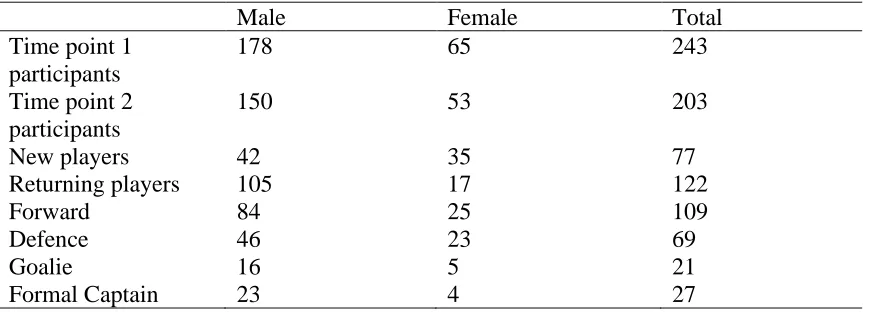
The participants were 244 ice hockey players (five female teams, 65 females; 11
male teams, 179 males) from Southwestern Ontario, ranging in age from 13 to 18 years
time point two. These participants were excluded from the final sample. Additionally,
participants who attended time point two but did not attend time point one were told that
completion of the questionnaire was optional. Only one participant of this description
completed a questionnaire, which was ultimately excluded from the sample. Therefore,
the final sample included 202 participants (53 females, Mage = 14.47, SD=1.23).
Participating teams were involved with the 2018-2019 competitive season at the time of
the study. Male teams were recruited from Minor Bantam (i.e., players born in 2005),
Bantam (i.e., players born in 2004), Minor Midget (i.e., players born in 2003), and
Midget (i.e., players born in 2002 or 2001). Female teams were recruited from Bantam
(i.e., players born in 2005 or 2004) and Midget (i.e., players born in 2003, 2002, or
2001). The three leagues that participating teams belonged to were all administered by
the Ontario Hockey Federation (OHF).
Of the 11 male teams that participated, seven came from the highest level of
minor hockey available for their age group (AAA), and four came from the second
highest level available (AA). One of the AA male teams was unable to schedule an
appointment for time point two data collection, so this team was ultimately excluded
from the final sample. Of the five female teams that participated, two came from the
highest level of minor hockey available for their age group (AA), and two came from the
second highest level available (A). One female team was included from the third highest
level (BB). It should be noted that players born in 2001 and 2002 are eligible to play
junior hockey, which is technically a higher skill level than Midget. However, junior
teams can roster players up to the age of 21, so these teams were excluded from this
Procedure
Prior to contacting any teams, the study was granted ethical approval from the
Western University Research and Ethics Board. Following approval, a potential list of
teams was developed. To be considered for the study, a team needed fall within the 13-17
year age window and be playing within the top two skill levels for their respective gender
(AAA and AA for boys, AA and A for girls). This generated a list of 138 potential teams
within the targeted geographic location. The first teams contacted were within the closest
geographical proximity, and recruitment then continued with more distal teams until the
desired number of participants was achieved. All teams had contact information for the
head coach available on their team website. Coaches were initially contacted via email.
After a team agreed to be included, the researcher and the team’s coach agreed on
a date and time for the researcher to initially meet with the players. In all cases, this was
either before or after a team’s scheduled practice. The researcher introduced himself to
the players and provided a brief explanation about the study, which included the two time
point design. It was also explained that participation was not mandatory, and that any
player could decline participation if they wished. The researcher then distributed paper
questionnaire packages, consent forms, and writing utensils to the players. Players
completed the questionnaire package together in the team dressing room, but were
instructed to remain quiet, to complete the questionnaires individually, and not share their
responses with their teammates. Any questions about the questionnaire items were
directed to the researcher. When the team was finished, they returned all study materials
to the researcher. The coach was then reminded that they would be contacted later in the
appointment, consent forms were separated from questionnaire packages, and digital
entry of the questionnaire data commenced.
A minimum of eight weeks occurred between data collection appointments. The
process was essentially identical to the first appointment, as coaches were contacted via
email to schedule a meeting. Again, data collection took place at the arena either before
or after a team practice. At the second appointment, players who were absent from the
first appointment were told the questionnaire was optional. Absentees from time point
one who chose to complete the questionnaire did not have their data included in the final
sample. Coaches were instructed to have any player unable to attend the second
appointment inform them in advance (if said players were present at time point one).
Measures
The following measures were assessed: demographics, newcomer integration,
relationship conflict, social identity, and team cohesion. All α’s reported pertain to the
measurements taken in the current study. The questionnaire package was completed in
full at both time points.
Demographics. Participants reported demographic characteristics including age,
gender, years of experience playing ice hockey, whether or not they were a member of
their current team last season, how many years they had been a member of their current
team, and whether or not they served as a captain of their current team. Questionnaire
responses were matched across time using a de-identified code based on each player’s
date of birth, number of sisters, and middle initial (e.g., 24-1-C).
Newcomer integration. Newcomer integration processes were assessed using the
work with the STSTQ supported a three-factor structure with university-aged samples,
along with measurement invariance according to tenure (i.e., new members versus
returning team members), starting status, and gender (Benson & Eys, 2017). The measure
consists of 13 items designed to assess the process of integrating new players into an
existing team. Items are scored on a 9-point Likert scale, from 1 (strongly disagree) to 9
(strongly agree). Each item is preceded by the stem “When new athletes join this
team…” A higher score indicates strong integration processes. The STSTQ consists of
three subscales. The serial tactics subscale (α = .82) assesses the degree to which veteran
players share task-related information with newcomers, and is represented by items such
as “more experienced teammates are there to assist in helping them improve their
skill-set”. The social inclusionary tactics subscale (α = .67) measures the degree to which
group-wide social activities are coordinated for newcomers, and is represented by items
such as “group social events are scheduled for all new members to participate in”.
Finally, the coach-initiated role communication tactics subscale (α = .86) assesses the
degree to which coaches provide new players with individualized role information upon
group entry, and is represented by items such as “The coaching staff ensures there are
learning opportunities designed to give newcomers an understanding of task
responsibilities”.
Relationship conflict. Relationship conflict was assessed using a shortened
version of the Group Conflict Questionnaire (Behfar, Mannix, Peterson, & Trochim,
2011). The complete measure includes subscales for task conflict and process conflict,
although only the relationship conflict subscale (α =.93) was included in our
nonetheless highly relevant for use with sport teams. Items are scored on a 5-point Likert
scale, from 1 (a very small amount) to 5 (a lot). Example items include “how much
friction is there among members of your team?” and “how much emotional conflict is
there among members of your team?”. Higher scores indicate greater levels of in-group
relationship conflict.
Social identity. Social identity was assessed using the Social Identity
Questionnaire for Sport (SIQS; Bruner & Benson, 2018). It is a 9-item measure that is
scored on a 7-point Likert scale, from 1 (strongly disagree) to 7 (strongly agree). A
higher score indicates a stronger impact of team membership on the social identity of the
individual. Strong internal consistency was demonstrated with the current sample. The
SIQS contains three subscales. The in-group ties subscale (α =.91) measures perceptions
of similarity, bonding, and belongingness with other group members, and is represented
by items such as “I feel strong ties to other members of this team”. The cognitive
centrality subscale (α = .86) assesses the importance of being a group member and is
represented by items such as “In general, being a member of this team is an important
part of my self-image”. The in-group affect subscale (α =.94) measures the positive
feelings associated with group membership, and is represented by items such as “I feel
good about being a member of this team”.
Team cohesion. Team cohesion was assessed using the Youth Sport Environment
Questionnaire (YSEQ; Eys, Loughead, Bray, & Carron, 2009). It is an 18-item measure
that is scored on a 9-point Likert scale, from 1 (strongly disagree) to 9 (strongly agree).
There are two negatively worded items included to detect response acquiescence, but