Electronic Thesis and Dissertation Repository
8-19-2011 12:00 AM
The Use of Capacity as an Indicator of Automatic Processing: Is
The Use of Capacity as an Indicator of Automatic Processing: Is
Smoking Automatic?
Smoking Automatic?
Agnes A. Massak
University of Western Ontario
Supervisor Dr. Riley Hinson
The University of Western Ontario Graduate Program in Psychology
A thesis submitted in partial fulfillment of the requirements for the degree in Doctor of Philosophy
© Agnes A. Massak 2011
Follow this and additional works at: https://ir.lib.uwo.ca/etd Part of the Clinical Psychology Commons
Recommended Citation Recommended Citation
Massak, Agnes A., "The Use of Capacity as an Indicator of Automatic Processing: Is Smoking Automatic?" (2011). Electronic Thesis and Dissertation Repository. 239.
https://ir.lib.uwo.ca/etd/239
This Dissertation/Thesis is brought to you for free and open access by Scholarship@Western. It has been accepted for inclusion in Electronic Thesis and Dissertation Repository by an authorized administrator of
IS SMOKING AUTOMATIC?
(Spine title: Smoking Behaviour and Capacity)
(Thesis format: Monograph)
by
Agnes Massak-Wainman
Graduate Program in
Psychology
A thesis submitted in partial fulfilment of the requirements for the degree of
Doctor of Philosophy
School of Graduate and Postdoctoral Studies The University of Western Ontario
London, Ontario, Canada
ii
CERTIFICATE OF EXAMINATION
Supervisor
______________________________ Dr. Riley Hinson
Supervisory Committee
______________________________ Dr. Richard W. J. Neufeld
______________________________ Dr. Peter Hoaken
Examiners
______________________________ Dr. Mike Atkinson
______________________________ Dr. Peter Finn
______________________________ Dr. Peter Hoaken
______________________________ Dr. Evelyn Vingilis
The thesis by
Agnes Anna Massak-Wainman
entitled:
The Use Of Capacity As An Indicator Of Automatic Processing: Is Smoking Automatic?
is accepted in partial fulfillment of the requirements for the degree of
Doctor of Philosophy
iii
It has been suggested that substance use transitions from a controlled to an automatic
process (Tiffany, 1990). In particular, smoking has been found to appear automatic
(Baxter & Hinson, 2001). Experienced smokers were able to attend to a reaction time
task with minimal interference while smoking. Novice smokers‟ performances were
impaired when smoking. These results were based on differences in mean reaction times
using analysis of variance. Another analytic approach to test the hypothesis that smoking
is an automatic process is through the use of capacity coefficients and ratios. These
mathematical tools allow for the direct testing of mental processing. The goal of the
current study was to use these capacity measures to investigate whether smoking taxed
capacity, and whether results from this type of analysis differed from a traditional
ANOVA. Also, capacity ratios were compared between smokers with different patterns
of alcohol and cigarette co-use. There is a well established relationship between alcohol
and cigarette use, and alcohol use itself may have an impact on smoking behaviour.
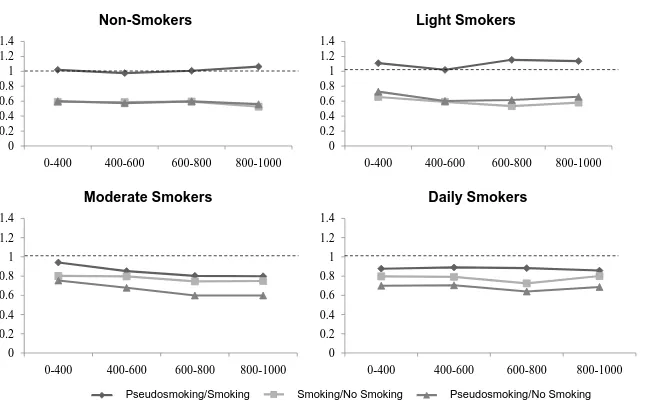
Capacity ratios indicated that smoking does tax capacity, even in daily smokers. It was
also found through the use of a pseudosmoking condition, in which the smoking
behaviour had to be ceased partway, that the inhalation of smoke seems to require its own
cognitive processing. When these results were compared to a traditional ANOVA, it was
found that measures of capacity provided additional information. When smokers were
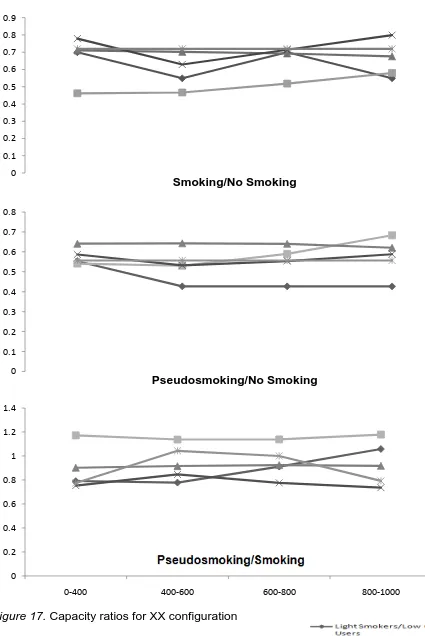
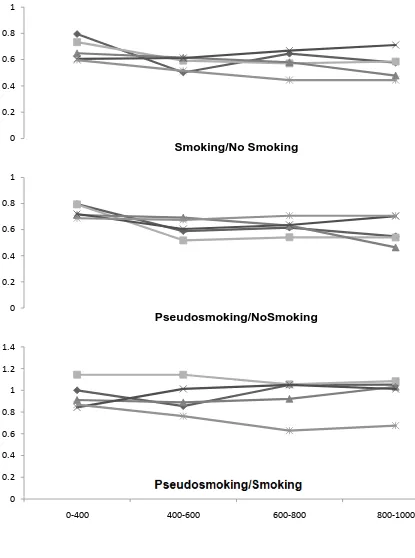
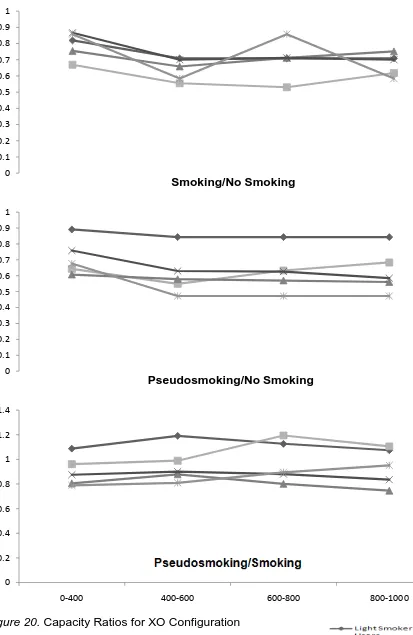
grouped based on cigarette and alcohol co-use, results supported the hypothesis that
smokers who frequently coupled cigarettes and alcohol were impaired in processing in
comparison to less frequent couplers.
iv
Abstract...iii
Table of Contents...iv
List of Tables...vi
List of Figures...vii
Introduction...1
Automatic and Controlled Processing...5
Empirical Evidence for the Controlled vs. Automatic Distinction..7
Testing Whether Substance Use is an Automatic Process……...11
Dual Task Paradigms………...…...14
Information Processing Models…………..…...….17
Response Times in the Study of Information Processing...….20
Smoking as an Automatic Process and Capacity………... 26
Calculating Capacity Ratios and Coefficients...…….…29
Analysis 1…………...………...……….…33
Method Participants………..34
Measures……….….34
Task……….…36
Results Smoking Groups………..…38
Reaction Time Data………...40
Capacity Ratios………....41
General Capacity Coefficients………....……….52
Discussion………....58
Analysis 2………...………….63
Method………...64
Results………..….65
v
Results………...78
Discussion……….89
General Discussion………...……...94
Awareness of Automatic Behaviour...96
Capacity and Smoking Groups...97
Treatment Implications...100
Mathematical Modeling in Clinical Science...102
Future Research...102
References...106
Appendix A...114
Appendix B...115
vi
Table 3: Mean and Standard Deviations of Reaction Times for All Smoking Groups...66
Table 4: F Values for Smoking Group X Smoking Condition Interactions...68
Table 5: Significant Q-values for Simple Main Effects...71
Table 6: Mean Number and Standard Deviation of Co-Use Days for
All Smoking Groups...79
Table 7: Number and Proportion of Low and High Cigarette and Alcohol Co-Users
vii
Figure 2: Example of a Cumulative Probability Distribution Function...23
Figure 3: Stimulus Configurations...30
Figure 4: Capacity Ratios for XX Configuration...43
Figure 5: Capacity Ratios for X_ Configuration...44
Figure 6: Capacity Ratios for _X Configuration...45
Figure 7: Capacity Ratios for XO Configuration...46
Figure 8: Capacity Ratios for OX Configuration...47
Figure 9: Capacity Ratios for OO Configuration...48
Figure 10: Capacity Ratios for O_ Configuration...49
Figure 11: Capacity Ratios for _O Configuration...50
Figure 12: AND and OR Coefficients for Complete Sample...53
Figure 13: OR Coefficient (standard formula)...55
Figure 14: OR Coefficient (alternate formula)...56
Figure 15: AND Coefficient...57
Figure 16: Smoking Group by Condition Interaction...69
Figure 17: Capacity Ratios for XX Configuration...82
Figure 18: Capacity Ratios for X_ Configuration...83
Figure 19: Capacity Ratios for _X Configuration...84
Figure 20: Capacity Ratios for XO Configuration...85
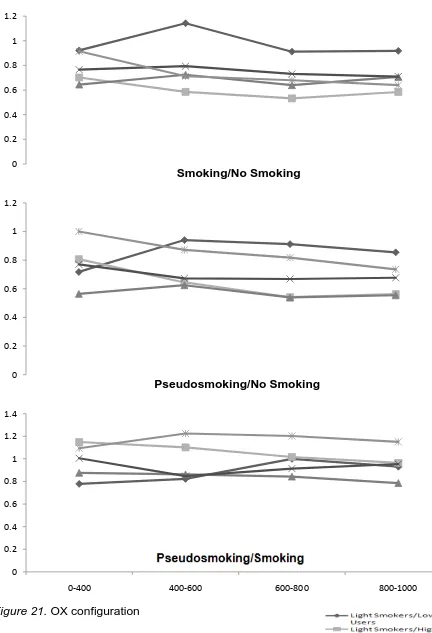
Figure 21: Capacity Ratios for OX Configuration...86
Figure 22: Capacity Ratios for O_ Configuration...87
a few of the psychoactive substances that people use in order to alter their experiences
and consciousness (Jung, 2001). Reasons for the use of such substances are varied.
People may use these substances to enhance positive feelings or to avoid negative
feelings, because their peers use them or due to boredom. In addition to the reasons
promoting the use of such substances, there are reasons that should dissuade people from
using them. All substances have possible negative effects. These effects may be
physiological, emotional, social, financial, or any combination of these. Yet, people
continue to use substances despite the possible consequences. Some people continue to
smoke tobacco after suffering heart attacks and strokes. Despite the risk of contracting
HIV or hepatitis C, people share needles to inject themselves with drugs. Others go into
debt to purchase substances. The fact that dire consequences do not dissuade people
from using substances is puzzling.
One of the primary goals of substance use research is to understand the reasons why
people use and abuse substances, despite the numerous negative effects that can occur
because of substance use. A better understanding of these causes may lead to better
treatment of substance use problems. Some of the factors involved in substance use that
have been studied are the physiological effects that maintain substance use, the emotional
factors involved in substance use, and how substance use interacts with other aspects in a
person‟s life. However, despite all of the knowledge in the area of substance, there
remain numerous unexplained aspects involved in substance use.
It is unlikely that one area of research will be able to comprehensively explain why
people use psychoactive drugs. Substance use is multi-faceted, with many factors
interacting with one another. While it is important to understand the immediate
physiological effects of these drugs, these effects do not explain why someone is
compelled to try the substance in the first place. Identifying risk factors, such as parental
and peer drug use, does not explain why substance abuse may remain a problem when
these influences are no longer present in an individual‟s life. While it is important to
initiation and continuance of substance use needs to be expanded. The role of cognitive
factors in substance use has been a recent focus of study (McCusker, 2001).
Cognition is defined as the acquisition, storage, transformation and use of knowledge
(Matlin, 1998). One way of conceptualizing cognition is the distinction between explicit
and implicit. Explicit cognition involves the processes that we have awareness of, such
as decision- making, purposively paying attention to a task, and manipulating information
(e.g. adding or subtracting numbers). Arguably, most individuals have at least some
explicit knowledge about various substances and their effects. People likely know that
drinking alcohol may lead to intoxication. They may know that certain substances are
illegal. They may use this knowledge in deciding whether to use a substance. Explicit
cognition likely plays a role in the initial decision to try a substance, in that people weigh
the reasons for and against its use.
The other type of cognition is implicit. Implicit cognitive processes have been defined as
“introspectively unidentified (or inaccurately identified) traces of past experience that mediate feeling, thought, or action” (Greenwald & Banaji, 1995). Individuals acquire
knowledge without realizing it, and this knowledge impacts their behaviours. It is
possible that implicit cognitive processes are involved in substance use. Most people
have explicit knowledge about why they should not use substances. If they were to
weigh the reasons for using substances versus not using substances, it would seem that
the scale should tip in favour against using these substances. However, something drives
people to use substances despite what seems to be a clear inequality of positive and
negative reasons. Implicit cognitive processes may be tipping the scale in favour of using
these substances. While the person cannot state why they continue to use substances that
harm them, something continues to drive the substance use. The recognition and
identification of implicit cognitive processes may be important in the treatment of
substance use problems. Making people aware of these implicit processes may allow
them to counteract them, and tip the scales in favour of ceasing substance use.
smoke cigarettes (Health Canada, 2009). Quitting smoking is challenging, and even
when quit attempts are successful, relapses are common (Balfour, 2004; Wetter et al.,
1999). Cessation aids that target the physiological addiction to cigarettes, such as the
nicotine patch, nicotine gum, and Champix, as well as behavioural treatments, have had
only limited success (Hatsukami & Mooney, 1999). A combination of counselling and
nicotine replacement therapy is more effective than counseling alone (Mojica et al.,
2004), however quit rates remain relatively low. While there is a plethora of information
available about the harmful health consequences attributable to smoking and the benefits
of quitting, people continue to smoke. This indicates a disconnect between “knowing” and “doing” within smokers. While the explicit knowledge of the benefits of ceasing the
behaviour are known, other factors continue to drive the smoking behaviour.
Cognitive processes that are outside of smokers‟ awareness may be involved in smoking,
given that many experienced smokers report that they do not even think about smoking.
Smokers report that they find themselves smoking without even remembering lighting up,
and that they light up cigarettes without realizing that they already have a lit one in the
ashtray (Hudmon et al., 2003). On a self-report measure of dependence, smokers
positively endorse the item “My smoking is automatic- I don‟t even think about it”
(Johnson et al., 2005). This lack of awareness is especially striking when considering
the number of behavioural components that are involved in smoking.
A smoker must first obtain a cigarette from a package, ensuring that the cigarette is not
broken in the process. The next step would be to place the cigarette in their mouth,
which involves raising the cigarette to the mouth, slightly opening the mouth, placing the
cigarette in the mouth, and then closing the mouth. Then the smoker must light the
cigarette, which involves bringing an igniting source to the cigarette, draw in on the
cigarette, and take the igniting source away from the mouth, making sure that they do not
burn themselves in the process. The source of ignition may be a lighter or match. Each of
these have their own behavioral components such as disengaging a child lock on a
Once the cigarette is lit, only then can the administration of nicotine begin, which entails
inhaling smoke from the cigarette, drawing the smoke into the lungs, exhaling the smoke,
and bringing the cigarette to and from the mouth, while shaking the burned tobacco off
the cigarette at times that the smoker judges appropriate. On each inhale, the smoker
must judge the optimal amount of smoke to inhale, hold it within the lungs for a certain
period of time, and then exhale the smoke. The smoker must monitor the amount of the
cigarette remaining to be smoked, so that the filter is not burned. The cigarette then
must be discarded, which may involve extinguishing it and tossing it away.
Given the complexities of the behaviours needed to smoke a cigarette, it seems
reasonable to assume that there must be some cognitive mechanisms underlying all of
these behavioural components. Initially, either an explicit or implicit cognitive process
needs to occur for the smoking behaviour to be initiated. Then, some degree of attention,
another cognitive process, likely needs to be allotted to the pacing of moving the
cigarette up to and away from the mouth, and also to ensure that one does not burn
themselves. So while smoking is an overt observable behaviour, there are numerous
cognitive processes underlying these behaviours.
In spite of the seeming complexity of smoking, experienced smokers perform a variety of
other activities while smoking cigarettes. An experienced smoker may drive a car, read,
or have a conversation, all while smoking. It appears that smoking is effortless.
However, this level of ease is not present when a novice smoker first attempts these
behaviours. The level of coordination needed to smoke is apparent when watching a
novice smoker experiment with their first cigarette. This initial experimentation with
smoking is usually accompanied by problems in lighting the cigarette, difficulties in
pacing the inhalation and exhalation of smoke, or choking on the smoke.
Given that smoking arguably appears to be a cognitively consuming task, with intricate
behavioural components, what enables an experienced smoker to smoke without any
self-reported realization? How can an experienced smoker do other complicated tasks, such
the decision to have a cigarette and to deliberately attend to the components of the
process. Over time, this may shift to an implicit process. The smoker no longer needs to
actively decide to smoke or to pay attention to their smoking actions, and this frees the
smoker to do other things while smoking. The smoking appears to occur
“automatically”.
Automatic and Controlled Processing
It has been argued that repeated substance use may transition from an initially controlled
process to an automatic one (Tiffany, 1990). Broadly defined, controlled processes are
those that require effort, attention, and awareness. Automatic processes are those that
occur without awareness, attention or effort on the part of the actor. The initiation of
substance use, such as smoking, is qualitatively different from use after many repetitions.
This can be observed in the differences in smoking behaviour between a novice smoker
and an experienced smoker. The speed, apparent ease, and need for attention of the
smoker vary between the novice and the experienced smoker. This transition occurs after
repeated practice. Tiffany argues that this difference in behaviour is explained by the
shift from controlled to automatic processing.
Repetition of a cognitive or motor task under similar conditions results in the
development of a skilled behaviour that is qualitatively different from when the
behaviour was initially performed (Tiffany, 1990). Tiffany argues that this transition
from controlled to automatic behaviour occurs in substance use. Behaviours, such as
cigarette smoking, involve numerous components, such as taking the cigarette out of its
package, placing it in the mouth, lighting the cigarette, and inhaling. All of these steps
within the behaviour are repeatedly practiced. The processes are eventually stored in
memory as action schemata (Schmidt, 1975; Shallice, 1972) or action plans (Allport,
1980; Newell, 1978). Automatic action schemas involve stimulus configurations,
procedures, action sequences, alternative action sequences, and physiology (Tiffany,
The stimulus configurations may be external or internal events needed for the automatic
process to be initiated (Tiffany, 1990). These may include environmental locations, time
of day, or physical and mood states. Procedures include all of the actions that comprise
the schemata. Action sequences coordinate all of the separate behaviours into one
behaviour sequence. As mentioned above, smoking behaviour is comprised of various
steps. The action sequence encompasses all of these behaviours. Alternative action
sequences include contingency plans in the event that there are unexpected environmental
conditions. Tiffany (1990) also outlines two physiological components of action
schemata, support physiology for action components and physiological adjustment in
anticipation of drug intake.
In order for these substance use action plans to develop, several conditions must be
present. The first component is the availability of the drug. If obtaining the drug requires
extensive planning, then this will most likely remain a controlled process. However, this
does not prevent the administration of the drug from becoming automatic. Another
component that affects the automatization of drug use behavior is environmental factors
that may affect use. In the example of smoking, non-smoking legislation severely
restricts the rights of smokers. Most public places prohibit smoking. This needs to be
incorporated into the action plan, i.e., need to go outside to have a cigarette.
Lastly, Tiffany (1990) argues that characteristics of the drugs themselves may affect the
development of action plans. Many drugs have inherent reinforcing properties. The
administration of nicotine leads to the release of dopamine, norepinephrine and
beta-endorphins. Tiffany argues that these positively reinforcing properties of certain drugs
may promote more rapid development of coherent and integrated drug-use action
schemata. He does acknowledge that this is purely speculative and that limited research
has been conducted on the effect of reinforcing properties in the development of any
automatic behaviour.
Tiffany (1990) illustrates the concept of the transition of controlled processing to
automatic with the analogy of learning to drive a car. An inexperienced driver initially
need to turn the steering wheel, and a number of other behaviours. With practice, the
driver becomes accustomed to all of the steps required to drive the car. Eventually, the
process becomes so automatic that the driver is able to direct his or her attention to other
tasks such as changing radio stations or having a conversation, with little or no detriment
to the driving itself. Of course, driving a car still entails some elements of attention.
There is relative agreement that automatic vs. controlled processing is not an all-or-none
phenomena (Moors & DeHouwer, 2006). Most processes involve a combination of both
automatic and controlled processing, but distinctions may be made between the two.
It has been suggested that automatic processes are autonomous, unintentional,
uncontrollable, purely stimulus driven and unconscious. Moors and DeHouwer (2006)
have suggested that each feature of automaticity should be investigated individually.
This approach would allow identification of those features that are present across all
types of automatic processes. For example, autonomy has been suggested as the minimal
criterion for all automatic processes (Bargh, 1992). Once an automatic process has been
started, there is no need for conscious guidance or monitoring for it to be completed.
However, there may be other features that are only present in certain types of automatic
processes. Substance use may have unique components of automaticity, which are not
present in other types of automatic processes. There may be differences in automatic
features across different type of substances. Taking a features approach in the study of
automatic processing allows us to be more precise in our definition, and empirical testing,
of these concepts.
Empirical Evidence for the Controlled vs. Automatic Distinction
The historical roots of the empirical distinction between automatic and controlled
processing come from cognitive psychology. Researchers initially focused on the
apparent automaticity of cognitive processing. For example, Schneider and Shiffrin
(1977; Shiffrin & Schneider, 1977) used an adapted Sternberg (1966) task to test whether
participants must decide whether a current visual target was included in an original
memory set of items. For example, a participant may initially see the memory set “F T R K”. They would then be shown a number of visual targets, and asked to indicate whether
each target had been in the original memory set. Stimulus items that were included in the
original sets were considered targets (e.g., the letter “F”), while items that were not in the original set were considered distracters (e.g. the letter “A”). After a number of trials with
one memory set, participants would learn a new memory set of items and repeat the task.
For example, the new set could be “L O Q A”. Shiffrin and Schneider (1977; Schneider
& Shiffrin, 1977) tested whether processing the stimulus item differed under two
conditions; consistent and varied mapping.
Consistent mapping occurs when the target and distracter stimuli are consistent across the
memory sets, e.g. the letter “F” would only be a target, and never a distracter. It was
hypothesized that this type of mapping would eventually lead to “automatic” processing
of the set. Initially, participants would need to compare the target stimulus to each item
in the original memory set and decide whether it was a target or a distracter. If the initial
set was “N R W F”, and the stimulus was “F”, the participant would need to recall all four items in the set to determine whether an “F” had been present. The next memory set may be “Q F H J” where F is again a target. Over conditions, determining that “F” is a
target would arguably become quicker, easier, and require less attention. When one saw
the letter “F”, they would automatically know that this was a target. The recall of all original items is no longer required since it is now automatic that “F” is a target.
Varied mapping occurs when stimuli can both be targets and distracters across
conditions. For example, in the first condition the memory set may be “K L U F”. In that case, “F” is a target. In the next condition, the set could be “P Q W X”, so that “F” is
now a distracter. The participant must continually compare the target to the original set.
Under these conditions, the processing of the target is deemed to be slow, effortful and
requires attention. Practice should not have much effect on processing speed, as the
Shiffrin & Schneider, 1977) showed there were distinct differences in performance
between the consistent and varied mapping conditions. Processing was much quicker in
the consistent mapping condition than in the varied mapping condition. Participants were
faster to respond in the consistent mapping condition whether the stimulus item was a
distracter or a target. Shiffrin and Schneider argued that the cognitive process had
become more automatic in the consistent mapping condition. Processing remained
controlled in the varied mapping condition. This provided evidence that one of the
features of automatic processing is enhanced speed.
In further experiments using the Sternberg task, Schneider and Schiffrin (1977; Shiffrin
& Schneider, 1977) manipulated the number of items, up to a maximum of six, in the
original set. They found that the number of items in the original item set had no effect on
performance in the consistent mapping conditions. Performance was the same, regardless
if the original memory set had 4 items or 6 items. The number of items in the memory
set in the varied mapping condition impacted performance dramatically. In the varied
mapping condition there were increases in reaction time as the number of items in the
memory set increased. The lack of variation in performance despite increases in the
number of items in the memory set in the consistent mapping conditions was argued to be
evidence of the efficiency of automatic processing. An automatic process is not impeded
by changes in the load of items to process.
The transition from controlled to automatic processing is argued to occur as a function of
practice. Schneider (1985) outlined four phases that occur when a process shifts from
controlled to automatic processing. Controlled processing is the first phase. Performance
is slow, serial and effortful. It is also greatly impacted by increases in memory or
processing loading. The second phase occurs after consistent practice. The amount of
practice required for this shift may vary across tasks. A mix of both controlled and
automatic processes characterizes this stage. Phase three is classified as automatic
processing with controlled-processing assist. Although individuals may occasionally
phase in the transition is full automatic processing.
Schneider (1985) illustrated this model using a category-search experiment. The
participant was presented with a short list of categories, such as Animal and Tree. They
were then shown words that may or may not be members of the previously shown
categories. The task involved the participant responding with a motor response,
indicating whether the target words are members of one of the categories. In the first
phase, controlled processing, the participant has many tasks to complete. They first have
to remember the categories initially presented to them (e.g., Tree and Animal). This is
considered the semantic vector within the model. They are shown target words (e.g. Cat
and Car), which is the visual vector. They must then make a response, which is the motor
vector.
The semantic vector is preloaded with the names of the categories. The number of
categories presented to the participant will affect the speed of the process. This is
considered the effect of memory loading. When the target words are displayed, this
activates the visual vector. The number of words that are presented will affect the speed
of the process. A greater number of words presented will slow the processing speed.
Once the words are presented, this will activate the memory unit for the categories shown
previously. The information presented visually is then processed through the semantic
criteria (i.e. is one of these words part of a previously seen category?). Once a decision
has been made, a motor response must be made. This activates the motor vector. There
are numerous steps within the model. When this task is first presented, processing will
be very effortful, slow, and controlled.
The second phase in Schneider‟s model is defined as the co-occurrence of controlled and
automatic processing. Once the target word is shown, a motor response will be
associatively evoked. There is still the need for controlled processing of the early stages
of the task (seeing the categories, remembering them, seeing the target word, making a
decision), but the response to the task becomes more automatic (learning that the index
general, rather than each step separately. The participant may generally do the task
automatically for the majority of words, but switch to controlled processing for a subset
of less common words. For example, the response may be automatically “yes” if the
category is Animals and the target word is Cat. However, there may be a delay in
response if the word is something novel, such as Marsupial. The final phase is automatic
processing. Schneider notes that there is no clear transition between phase 3 and 4.
Automaticity occurs in a series of phases. It is only through repetition and practice that a
task becomes automatic. A complex series of decisions and behaviours occur with
greater ease and effortlessness over time. Does this transition occur with substance use?
Is the development of substance use even comparable to these traditional cognitive tasks?
Testing Whether Substance Use is an Automatic Process
It has been suggested that substance use may be conceptualized as an automatic process.
Characteristics of automatic processing, such as speed, autonomy, a lack of control,
effortlessness and a lack of conscious awareness have been described as characteristics of
substance use (Tiffany, 1990). There does appear to be a qualitative difference in the
smoking of novice and experienced smokers. Experienced smokers themselves identify
their smoking as automatic (Johnson et al., 2005). However, many issues need to be
considered before deciding whether smoking, or any other substance use, is an automatic
process.
The first issue is defining automaticity. As previously discussed, there is no consistent
definition for automaticity (Moors & DeHouwer, 2006). There is a need for both
conceptual and empirical precision in the definition of automaticity. Developing a
definition of automaticity may involve identifying features that are characteristic of
automatic processes. Much of what we do throughout the day appears to occur
automatically, without our conscious awareness (Bargh & Chartran, 1999). However, it
way in which automaticity is defined will have an impact on the experimental design
when testing for automaticity.
In addition to the definition of automaticity, testing substance use experimentally has its
own set of challenges. Many substance use behaviours are difficult to bring into a
laboratory setting. Situational factors that impact substance use, such as peer groups or
the environment, are difficult to replicate in a laboratory. There are ethical constraints
when conducting laboratory research. Researchers must ensure participants‟ safety, and
it is complicated to do so if administrating a substance that produces intoxicating or
deleterious effects. Many substances are illegal, which may be a challenge in both
acquiring ethical approval to study and provide challenges in obtaining the substance
itself. Potential participants may also be hesitant in participating in such research.
Smoking is likely the easiest substance use behaviour to study in a laboratory setting
given that smoking is legal, cigarettes are easily accessible, and arguably have minimal, if
any, acute debilitating effects.
There are some potential problematic issues in observing smoking in a laboratory setting.
Most of the external factors that may influence smoking, such as seeing others smoke,
eating, and environmental factors (Shiffman et al., 2002), are removed. One of the more
salient co-activities that may have an effect on smoking is the use of alcohol. The
relationship between cigarette and alcohol use among regular smokers is robust.
Approximately 80-90% of smokers drink regularly, and smokers are heavier drinkers
than non-smokers (Strine et al., 2005). There is evidence that there is a pharmacological
interaction between alcohol and cigarette consumption. In laboratory studies, drinking
increases the rate and amount of smoking (Mintz, Boyd, Rose, Charuvastra & Jarvik,
1985), and transdermal nicotine administration increased alcohol consumption in men
who smoked 1 to 10 cigarettes per day (Acheson, Mahler, Chi, & de Wit, 2006).
There is also a relationship between light smoking and alcohol use. Smokers who smoke
2-8 cigarettes a day smoked a greater proportion of cigarettes in the presence of alcohol
days a week (referred to as “chippers”), reported smoking while drinking alcohol
(Shiffman, Kassel, Paty, Gnys, & Zettler-Segal, 1994a; Shiffman, Paty, Kassel, Gnys, &
Zettler-Segal, 1994b). Situations in which alcohol is consumed may be particularly prone
to induce smoking in individuals who do not smoke on a regular basis. Smokers who
only or primarily smoke when using alcohol (high co-users) may be different from
smokers who use cigarettes in a broad range of situations (low co-users), in terms of
dependence levels, frequency and quantity of smoking.
In addition to these differences between low and high co-users of alcohol and cigarettes,
alcohol may have an impact on whether smoking becomes automatic. There is a long
history of research examining the effects of alcohol‟s influence on learning. Alcohol
intoxication has been found to impact learning, particularly when information is shifted
from short- to long-term storage (Weingartner & Faillace, 1971a, 1971b). This may
impact the storage of all of the components of smoking behaviour. As described earlier,
smoking does involve numerous behavioural components. While alcohol may not impact
the initial learning of smoking behaviour, it may impact its transition to an automatic
behaviour.
Using multinomial processing tree models, Chechile (2010) investigated the impact of
alcohol use on the storage and retrieval of information following acute alcohol ingestion.
He found that alcohol use impairs the storage of new information, and suggested that
alcohol impairs the initial quality of memory encoding. However, there were minimal
differences in retrieval between alcohol and placebo use. Chechile, however, cautioned
that these results should not be interpreted as evidence that alcohol never impacts
retrieval, as the retrieval task was done shortly after learning the new information. These
results may have differed if the time between learning and retrieval was increased, as is
the case with smoking and alcohol. It is likely that there are relatively long lags between
Another consideration of the relationship between alcohol and cigarette use is
state-dependent learning. It has been found that information that is learned when intoxicated is
more easily retrieved under intoxication in comparison to sober conditions (Goodwin,
Powell, Bremer, Hoine, & Stern, 1969.; Weingartner, Adefris, Eich, & Murphy, 1976). If
smoking behaviour is learned when using alcohol, then it may be more difficult to smoke
in non-drinking circumstances.
Dual Task Paradigms
One of the primary methods of studying whether a behaviour or process has become
automatic is the dual task paradigm. This technique involves determining if there are
limitations in performing two tasks at once. Cognitive psychologists argue that humans
are limited in their ability to do multiple tasks at once well (Band, Jolicoeur, Akyürek, &
Memelink, 2006). This difficulty may be a result of an inability to divide attention, a
lack of capacity, or a deficiency of cognitive resources. Typically, performance on two
concurrent tasks is decreased in comparison to attending to only one task at a time.
However, the dual task paradigm has been used to investigate whether there are
conditions under which this decrease in performance does not occur. Typically,
performance on a novel primary task is measured on its own and then with a concurrent
secondary task. Performance is usually impaired on the primary task, with the
introduction of the secondary task. The primary task is then extensively practiced, and the
secondary task is reintroduced. Following practice, performance on the primary task is
no longer affected by the secondary task. It is hypothesized that the primary task has
become automatic and attention can be diverted to the secondary task.
While dual task paradigms are widely used, there are no standard formats for their use.
The natures of the tasks vary substantially from study to study. Some examples of dual
task paradigms include pressing a button when a target symbol is presented while
repeating digits that have been presented verbally (Karatekin, Couperus, & Marcus,
2004), tracking a light with a stylus while pressing a button every 5 seconds (Brown &
dependent variable is most often reaction time, but accuracy of responses may also be
measured. Performance is usually measured on both tasks, which is usually poorer than
when doing each task on its own. However, it has been found that after practice on one
of the tasks, dual task interference is reduced (Eysneck & Keane, 2010). The decreased
dual task interference is posited to occur because the well-practiced task becomes
automatic and thus taxes fewer cognitive resources.
The amount of practice required for a process to be deemed automatic in an experiment
varies from study to study. The amount of practice can range from a number of hours
(Wu, Kansaku & Hallett, 2004), to days (Kubler, Dixon & Garavan, 2006), to weeks
(Bebko et al., 2003). The criteria for deeming a behaviour as automatic again varies from
study to study, and is largely dependent on the type of task. The criteria may be engaging
in the behaviour with total accuracy or increasing speed by a certain percentage. Other
studies merely consider the lack of dual task interference as evidence of automaticity.
These inconsistencies across studies again stress the need for a more refined definition of
automaticity, which may be accomplished through the use of a feature based approach.
Another difference between traditional dual task studies and any study of whether
smoking is an automatic process is controlling the amount of experience people have
with the smoking behaviour. In most dual task research, the studied behaviours are
initially novel, such as juggling (Bebko et al., 2003), and the researcher can control the
participants‟ amount of practice and level of performance. Smoking, however, is not a
behaviour that can be practiced in the lab. Each person has his or her own unique history
with smoking. Some individuals may have had their first cigarette years ago, while
others may have only started smoking within the last few months. Some smokers are
daily smokers, while others may only smoke on weekends. There are many possible
differences in smoking history and current smoking behavior. Given this variability in
smoking, it will be impossible to directly study the development of smoking behaviour.
We can only rely on self-reports of smoking to ascertain experience. However, by using
smoking interferes with some other cognitive task.
Baxter and Hinson (2001) used the dual task paradigm in an investigation of smoking as
an automatic process. Participants were trained to recognize a target tone. They then
listened for the target tone under four separate conditions; no smoking, smoking,
pseudosmoking, and holding a cigarette. The participants were classified as experienced
smokers (having smoked more than 800 cigarettes in their lifetime) or novice smokers
(having smoked less than 100 cigarettes in their lifetime). The pseudosmoking condition
involved performing all smoking behaviours except for inhaling the smoke of the
cigarette. The premise behind this condition was that it would be difficult for
experienced smokers to break the automatic action schema without diverting their
attention to the smoking behaviour. Similar reasoning was held for the holding
condition. As expected, experienced smokers‟ performance on the tone recognition task
was similar in the smoking and no smoking condition. Performance was significantly
impaired during the pseudosmoking condition. Smokers had to divert their attention
from the tone recognition task to halt the smoking action sequence. In contrast, novice
smokers‟ performance was equally impaired in both the smoking and pseudosmoking
conditions.
As with almost all dual task research, Baxter and Hinson (2001) analyzed mean reaction
times on the tone recognition task. Similar reaction times in the no smoking and smoking
conditions for experienced smokers were interpreted as evidence for automaticity.
Reaction times were greater in the pseudosmoking condition. Although significant
differences were found in response times, it is not clear why these differences occurred.
Tone recognition is not the result of a single cognitive process. There are numerous
possible explanations for the differences in performance between conditions. Traditional
statistical methods, such as Analysis of Variance (ANOVA), are useful for detecting
differences between experimental conditions, but they are not designed to assess and
compare the various contributions of underlying cognitive processes (Batchelder,
the behaviour itself. Luce (1995, 1999) argues that the main difference between various
models of behaviour is whether the “black box” remains closed or is opened.
Behavioural observation is looking at the box closed – merely observing the inputs and
outputs. There is no internal structure specified within the model. Luce argues that most
psychological theories are of this nature; “they attempt to characterize aspects and
patterns of behaviour without asking about the underlying, internal mechanisms that give
rise to the behaviour” (Luce 1995, p. 3).
Information Processing Models
Information-processing models strive to open the black box of behaviour. These models
attempt to describe a structure or architecture that information must pass through when
received. This information then results in a response set, resulting then in some sort of
feedback. Luce (1999) states that information processing models may be thought of as
trying to describe analytically a flow diagram of mental activity based on certain
elementary processing stages. The advantage of information-processing models over
behavioural models is they provide natural accounts of temporal aspects in
decision-making. It is possible to identify where errors occurred in the formation of an inaccurate
response. Using input-output models, when an inaccurate response is made, one has no
way to identify why the error has been made. There are numerous possibilities, such as
problems with memory, retrieval, or making a response. However, it is impossible to
know when only the response is examined. Using an information processing model
approach, it is possible to identify the source of the error.
Townsend & Wenger (2004a) argue that much of the evidence for psychological theory is
circumstantial and can only be said to be consistent with an assumption, but most of the
time does not come from a direct test of that assumption. In their study of smoking as an
automatic process, Baxter and Hinson‟s (2001) results appear consistent with the
assumption that smoking in experienced smokers is an automatic process. Since
performance was equal in both the smoking and non-smoking conditions in experienced
there is no direct evidence that smoking is, in fact, an automatic process. All that is
certain is that the output (reaction time) is the same for both conditions.
Information processing models, according to Townsend and Wenger (2004a), have four
components; architecture, stopping rules, independence and capacity. Architecture may
be serial or parallel. Serial processing occurs when each element is processed one at a
time, each element being completed before the next is begun. Parallel processing occurs
when processing begins on all elements simultaneously and continues until each element
is completed (Townsend & Ashby, 1983). In addition to the distinction between serial
and parallel models, there is also the consideration of a special kind of parallel processing
called coactive processing models (Townsend & Nozawa, 1995). In separate parallel
processing models, each process goes through its own channel. In coactivation models,
processes are consolidated into a single channel.
Stopping rules refer to whether cognitive processing is self-terminating or exhaustive. A
self-terminating process occurs when the mechanism responsible for the processing is
able to stop when the desired element is found among all stimulus elements (Townsend &
Ashby, 1983). Exhaustive processing occurs when all the elements are processed prior to
cessation. Self-terminating processing is best illustrated by a target element being one of
the first items in a set of elements. If the target element was F, and the set of elements
was T F R Q J, processing would stop at F and there would be no processing of R Q J.
Evidence for self-terminating processing is reaction times. Reaction times for the set T F
R Q J would be shorter than for the set T R F Q J. Exhaustive processing can occur
regardless if the target is present or absent. It could occur if the target set were J U R A
H (target absent) or if the target set were T F R Q J (target present). Even though the
target is found early in the target set, all remaining letters are processed. Again, evidence
for exhaustive processing is the reaction times. Both sets would be processed in the same
amount of time despite the fact that one set contains the target and the other does not. If
processing were self-terminating, reaction times for the target present set would be
inputs (Townsend & Wenger, 2004a). If the information processing is independent, the
processing of element A does not affect the processing of element B. No matter what
occurs in the processing of element A, processing of element B will remain unchanged.
A violation of independence occurs when the processing of a preceding target somehow
affects the processing of the following target.
Capacity refers to the speed and accuracy of a processing system when its load is varied
(Townsend & Ashby, 1983). There are three different possibilities for capacity. The
first is unlimited capacity. If the processing system has unlimited capacity, increases in
task load do not result in a decrease in performance. For example, if an increase in the
number of targets in a memory set did not produce a change in reaction time, then
capacity would be considered unlimited. In contrast, limited capacity is when processing
load affects performance. Increases in workload push at processing limits. Finally, there
is super capacity. This refers to an increase in performance ability when there is an
increase in load.
The unlimited capacity, independent, parallel (UCIP) model (Townsend & Wenger,
2004) may be used in order to conceptualize how “automatic” processing may look from
an information processing modeling perspective. If a process is automatic, it is
reasonable to assume that capacity is unlimited. The processing requirement of one task
does not impact the processing of another task. Similarly, automatic processing should
be independent, in that the processing of one task does not affect the processing of
another element. That automatic processing may require a parallel system is a reasonable
assumption. If a process is automatic, its components would not need to be processed
one at a time. However, it has also been suggested that automatic processing may be
coactive (Townsend, Fific, & Neufeld, 2007) depending on the type of processing. The
use of information processing models could be used in order to move towards a more
Response Times in the Study of Information Processing Models
Response time (RT) research has a long history in psychology. RT research has served as
a tool to study various cognitive processes and to more fully understand information
processing models. By studying the length of time a particular task takes, and comparing
it to the time other tasks take, one can make inferences about the processes involved. The
first publication using response times was by Donders (1868/1969). He proposed the
“method of subtraction”. He argued that by subtracting the response time of a simple
task from the response time of a more complex task, one could estimate that amount of
time it took for the more difficult task. For example, a participant is shown a target
element (e.g., the letter A). In the first recognition task the participant is shown two
elements (F A). In a second task the participant is shown five elements (G J X F A). The
difference in response times would represent the time that it took to process the three
additional elements. This argument rests on the assumption that cognitive processes
occur in a serial manner. In relation to the method of subtraction is the concept of pure
insertion (Donders, 1868/1969). The underlying assumption of pure insertion is that
adding a component to a task, does not change the operation of other tasks. The
investigation of pure insertion has largely been unpopular, as it is practically impossible
to test at the RT mean level (Townsend & Ashby, 1983).
Response times continue to be a useful tool in the measurement of cognitive processes.
The evolution of mathematical modeling has allowed researchers to use RTs without the
constraints of the assumption of seriality, as is the case with the method of subtraction.
Some of the mathematical tools that may be used in the study of information processing
models are the probability density function, the cumulative probability distribution
function, the survivor function and the hazard function. There are an infinite number of
probability laws and functions, including the normal and exponential (Townsend, et al.,
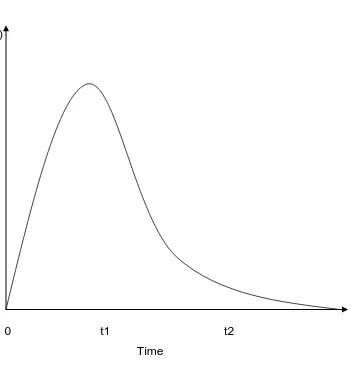
2007). The probability density function [f (t)] indicates how completion probabilities
change over time. Probability density functions are illustrated as a line curve, with
reaction time on the X-axis and the function on the Y-axis, as illustrated in Figure 1. The
f(t)
0 t1 t2 Time
Figure 1. Example of a Probability Density Function (from Townsend & Ashby,
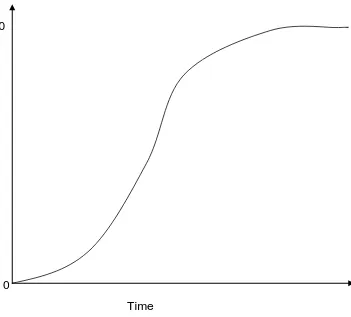
occurrence at or before reaction time t. The cumulative probability distribution function
will always be either increasing or flat, its smallest value 0 and its largest value will be 1
(Wenger & Townsend, 2000). An example can be seen in Figure 2.
Another function of interest is the survivor function [S(t)]. This function indicates the
probability that completion has not yet occurred. The survivor function is
complementary to the cumulative probability distribution, and as such is calculated as 1 –
F(t). Another function that is widely used in information processing modeling is the
hazard function [h(t)]. The hazard function is a ratio of the density function over the
survivor function,
.
It indicates the probability of item completion immediately, given that it has not yet been
completed. The hazard function comes from the concept of power in physics, and is
conceptualized as the amount of power a system must use to transition a process from
incompletion to completion (Wenger & Townsend, 2000). Neufeld, Townsend and Jette
(2007) describe the hazard function as “a transitory function of time and therefore
difficult to estimate empirically” (pg. 212). Therefore, when using the hazard function in
order to calculate capacity measures, it is best to use the integrated hazard function H(t),
which is a more reliable estimate of the amount of “energy expenditure” that takes place
in cognitive processing. The formula to calculate the integrated hazard function is
-ln[S(t)] where ln(x) stands for the natural logarithm of x. Other methods of calculating
the integrated hazard function do exist, such as the Nelson-Aalen estimator (Aaalen,
Borgan, & Gjessing, 2008), however -ln[S(t)] is most commonly used.
The integrated hazard function can be used to calculate both capacity coefficients and
capacity ratios (CR). CR is used to compare performances between two conditions to
investigate whether one condition is more capacity taxing than the other. The ratio
1.0
0
Time
would allow for comparison of processing between the two conditions. If the ratio equals
1 then that would indicate that cognitive processing in each of the conditions was equal,
and the manipulation in condition 1 did not tax capacity in relation to the processing
capacity of condition 2. If the ratio is less than 1 that would indicate that the
manipulation in condition 1 taxed capacity more in relation to condition 2. Finally, if the
ratio was greater than 1 that would indicate that condition 1 taxed capacity less than
condition 2.
The use of CR can be demonstrated using a paradigm employed by Jette (1997).
Participants were presented with six lamps, two placed centrally, two on the right
periphery and two on the left periphery. They were instructed to indicate which lamp lit
up on a six button panel. The response task was completed amidst one second bursts of
white noise. The noise levels were of three intensities. The hypothesis was that
performances would be improved in the more intense noise condition, as processing
capacity was expected to increase with noise levels. (Neufeld et al., 2007). When
comparing performance across noise intensity conditions, CR was calculated by
The capacity ratios were less than 1, indicating that processing capacity was more greatly
taxed in the lower noise condition than in the higher noise condition. Performance was
impaired in the low noise condition in comparison to the high noise level condition,
which was consistent with a proposed mechanism of selectively improved performance
under higher noise conditions.
Another method to use the integrated hazard function is the OR capacity coefficient,
Co(t). While CR can measure capacity demands across conditions generally, Co(t) also
takes into consideration specific increments in task load. The capacity coefficient is the
ratio of the integrated hazard function when two features are present as the numerator,
and the sum of the two integrated hazard functions for the conditions in which each
feature is presented individually. If the capacity ratios equals 1, capacity is unlimited. If
C
o(t)
=
A use for this type of capacity coefficient is seen in a study of the processing of faces
(Wenger & Townsend, 2001). Faces are made up of a number of features, including eyes,
nose and mouth. It has been argued that faces are processed as a whole, rather than as
sets of multiple features. Wenger and Townsend used the capacity coefficient to
empirically test whether this was indeed the case. Participants were presented with faces
with mouth and eyes simultaneously present, only the eyes present, only the mouth
present, or no features present. Respondents were asked to respond affirmatively if either
the eyes or mouth were present in all of the presentations. The capacity coefficients were
less than 1 which indicated capacity was limited when both features were present in
comparison to when only one feature was presented at a time. This was a surprising
result and contradicted the expectation that faces were processed as a whole. Having
multiple features taxed capacity in comparison to only having to attend to one feature at a
time.
In the experimental design used by Wenger and Townsend (2000), participants were
instructed to make a response if at least one of the features was present. This is an
example of an OR design. The participant makes a positive response whether the target is
in either of the channels. Theoretically this process is self-terminating as the participant
may make a response if the target is in the first channel, obviating the need to process the
second channel. Another experimental design is the AND design. In this type of design,
respondents are instructed to respond only if a target is in both channels. In this design,
exhaustive processing must be used since participants need to process both targets. The
capacity coefficient for the AND design is
C
a(t)=
The capacity coefficient for the AND condition incorporates K(t), which Townsend and
Wenger (2004b) argue is analogous to the integrated hazard function, H (t). While H(t) is
the conditional likelihood that an event will happen momentarily given that is has not yet
happened, K (t) is the conditional likelihood that an event occurred just before t, given
that it has happened by time t. The calculation is
K(t) = ln[F(t)] ≤ 0
The calculation of H(t) relies on the survivor function, whereas the calculation of K(t)
relies on the density function integral. According to Townsend & Wenger (2004b) the
“inversion” in the AND capacity coefficient makes the interpretation of the coefficient
identical to the interpretation of the Co(t) coefficient. A Ca(t) value of greater than 1
indicates super capacity (an increase in load actually increases performance), a value of 1
indicates unlimited capacity (an increase in load does not affect performance), and a
value less than 1 indicates limited capacity (an increase in load decreases performance.
Townsend and Wenger also state that it is unclear whether K(t) will gain widespread
popularity in mathematical modeling. The use of the AND coefficient is currently novel
and its use in the current study is largely exploratory.
Smoking as an Automatic Process and Capacity
It is hypothesized that smoking does become an automatic process. While smoking
contains a number of behavioral components that require attention, experienced smokers
eventually are able to smoke while doing a secondary task. This suggests that with
practice, the attentional need required for smoking decreases as the smoker gains more
experience with smoking. Smokers‟ own reports of smoking being automatic (Johnson et
al., 2005) also suggests that the need for attention decreases with smoking experience.
Baxter and Hinson‟s (2001) results support the notion that smoking does become an
automatic process.
As previously discussed, it has been suggested that the study of automaticity should be a
feature-based approach (Moors & DeHower, 2006). Capacity can be conceptualized as a
condition. The number of items included did not appear to tax capacity, although this is
inferred based on mean reaction times and not an analysis of capacity coefficients.
While smoking may not resemble traditional cognitive tasks used in dual task research,
the act of smoking and the cognitive processes that underlie it, should not tax the
processing of a secondary task if smoking is automatic. Returning to the concept of pure
insertion (Donders 1868/1969), the addition of smoking should not impact performance
on a secondary task. The task should be completed identically, whether smoking is
occurring or not. While mean reaction times cannot address pure insertion, the use of
capacity ratios can provide as with evidence whether smoking is affecting the processing
of the secondary task. In contrast, if the smoking act is guided by controlled processing it
would be expected to tax capacity. The act of smoking for a novice smoker should be a
relatively controlled task and should tax the ability to process a secondary task.
The purpose of the present analysis is to utilize capacity ratios (CR) to determine whether
smoking does tax capacity. Capacity coefficients will also be calculated in order to
determine the capacity demands of different types of stimulus presentations. Capacity
ratios will be calculated to test whether smoking or pseudosmoking taxes capacity in
comparison to no smoking. It is expected that for experienced smokers, the CR will be
close to 1 when comparing performance during smoking and non-smoking conditions.
This will show that the addition of smoking does not tax capacity. However, during the
pseudosmoking condition, the CR should be less than 1, indicating that pseudosmoking
does tax capacity in experienced smokers. For novice smokers, the CR for both the
smoking and pseudosmoking conditions should be less than one when compared to the
non-smoking condition since both of these behavior should be under controlled
processing and thus should tax capacity.
The data will then be re-analyzed using an analysis of variance (ANOVA). The inclusion
of this analysis is meant to serve as a comparison between the traditional ANOVA
model approach. It is the goal of this comparison to evaluate whether the overall results
are comparable, and whether the capacity ratios and coefficients do serve as a more
fine-grain approach to evaluating reaction time data. Lastly, capacity ratios will be compared
between smokers who primarily use cigarettes when using alcohol (high co-users) and
those who do not (low co-users). As discussed in the introduction, the pairing of
cigarettes and alcohol on a consistent basis may have an impact on the development of
The following section is a detailed description of the procedures used to calculate
capacity ratios and capacity coefficients. While it has been argued that capacity
coefficients and ratios can be extremely useful in psychological research, their
mathematical sophistication may be intimidating to the novice user.
Capacity coefficients and ratios may be used in various experimental designs, however,
they will be illustrated in the context of the procedures used in the current series of
studies. The task used in the current study is a modified version of one used by Egeth and
Dagenbach (1991). There were two stimulus positions, one located on the left side of the
computer screen (X_) and one on the right (_X). Participants were instructed to respond
affirmatively if they saw the target X, and to make an alternate response if the target was
not present. The non-target was O. Each of the two target positions may have included an
X, O, or was left blank. The various combinations of stimuli can be seen in Figure 3.
Once reactions times were collected and incorrect responses were discarded, a number of
issues needed to be addressed prior to proceeding with analysis. One of the criticisms of
traditional statistical analysis is the treatment of outliers. Often the issue is ignored, or
certain percentages on both tails of the distribution are discarded. However, it is often
the outliers that are of most interest in regards to reaction times. In addition, reaction
times often lack a normal distribution, but are positively skewed. Capacity coefficients
are distribution general, so the analysis is not impacted by the shape of the distribution.
However, there will be responses that are likely anticipatory or a result of dissattention
(Neufeld, et al., 2007). For the current study, reaction times less than 100 ms and greater
than 3000ms were discarded (personal communication, Neufeld). Wenger and Townsend
suggest that no greater than 10% of data points should be discarded from the analysis
X X
X
X
X O
O X
O O
O
O
for base processes. The base processes are those processes that are involved in making a
response, but not part of the cognitive processes. These are mainly the rudimentary
process involved in responding, such as the physical movements of pressing a response
key (Carter, Neufeld & Benn, 1998). For the current study 160 ms were subtracted to
account for base processes (Townsend, 1984; Woodworth, Schlossberg, Kling, & Riggs,
1971).
Once the data were prepared, reaction times for each variable were placed in bins. These
bins are collections of reaction times. The bin values were adapted from Neufeld, et al.
(2007) which used a boundary of 600 ms for the initial bin, and then increased by 200 ms
for each subsequent bin. This binning procedure was based on the precedent of Hockey
(1970). The initial bin in the current study was set at 0-400 ms. This decrease in bin size
was used as the current study involved only two possible responses (target present – yes
or no), whereas there were six possible responses in the previous study. It was
hypothesized that given the decreased number of responses, processing time may be
decreased and be more accurately captured in a smaller initial bin. The remaining bins
were consistent with Neufeld et al.‟s methodology and increased by 200 ms increments;
0-400 milliseconds, 400-600 milliseconds, 600-800 milliseconds, 800-1000 milliseconds.
When amalgamating data across participants, it is important to ensure that data within
each group are homogenous. There are numerous sources of variance within data. These
can be due to the process model, individual differences, base processes, and
within-subject residual (Carter, Neufeld & Benn, 1998). For the current analysis, the process
model variance would be the variance in capacity due to the experimental manipulations.
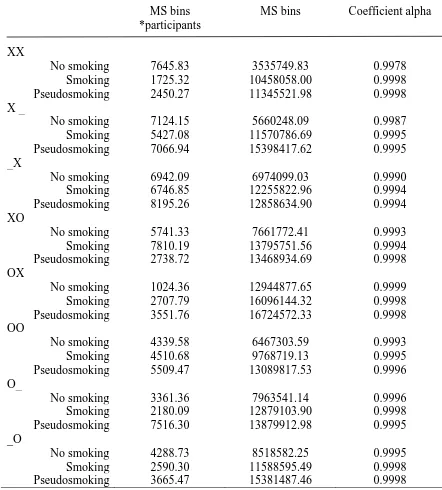
In order to assess homogeneity, first a two factor analysis of variance is conducted. The
two factors are the bins and smoking groups. The dependent variable is the reaction
times. By conducting this ANOVA, it is possible to obtain the Mean Squares which are
required to utilize the formula
1 –