UNIVERSITI TEKNOLOGI MALAYSIA
IMPROVED PARTICLE SWARM OPTIMIZATION AND GRAVITATIONAL SEARCH ALGORITHM FOR PARAMETER ESTIMATION IN ASPARTATE
PATHWAYS
.
IMPROVED PARTICLE SWARM OPTIMIZATION AND GRAVITATIONAL SEARCH ALGORITHM FOR PARAMETER ESTIMATION IN ASPARTATE
PATHWAYS
JUNE 2017 Faculty of Computing Universiti Teknologi Malaysia A thesis submitted in fulfilment of the requirements for the award of the degree of
Master of Philosophy
iv
ACKNOWLEDGEMENT
ABSTRACT
vi
ABSTRAK
TABLE OF CONTENTS
CHAPTER TITLE PAGE
DECLARATION ii
DEDICATION iii
ACKNOWLEDGEMENT iv
ABSTRACT v
ABSTRAK vi
TABLE OF CONTENT vii
LIST OF TABLES xi
LIST OF FIGURES xii
LIST OF SYMBOLS xiv
LIST OF ABBREVIATIONS xvi
LIST OF APPENDICES xvii
1 INTRODUCTION 1
1.1 Overview 1
1.2 Introduction 2
1.3 Problem Background 4
1.4 Problem Statements 5
1.5 Aim of the Research 6
1.6 Objectives of the Research 6
1.7 Scopes of the Research 7
1.8 Significant of the Study 7
viii
2 LITERATURE REVIEW 10
2.1 Overview 10
2.2 Metabolic Engineering of Microorganisms 11
2.3 Processes of Biological Systems 12
2.4 Mathematical Modelling of Biological Systems 13
2.2.1 Stoichiometric Modeling 15
2.2.2 Kinetic Modeling 16
2.5 Parameter Estimation in Mathematical Modelling of Biological Systems
19
2.5.1 Noise in Experimental data 22 2.5.2 Model Fitting in Biological Systems 23 2.5.3 Parameter Estimation Strategies
in Biological Systems
24
2.5.3.1 Particle Swarm Optimization 26 2.5.3.2 Gravitational Search Algorithm 28 2.5.3.3 Hybrid of Particle Swarm
Optimization and Gravitational Search Algorithm
30
2.5.4 Comparison on Parameter Estimation Algorithms
31
2.5.5 Hybrid and Improved version of Parameter Estimation Algorithms
35
2.6 Trend of Parameter Estimation in Biological System 37
2.6 Summary 39
3 RESEARCH METHODOLOGY 40
3.1 Overview 40
3.2 Research Framework 41
3.2.1 Phase 1 42
3.2.1.1 Understand and investigate the target domains
42
pathway simulation models
3.2.1.3 Modeling parameter estimation as optimization problem and tuning control parameter for the experiment setups
46
3.2.1.4 Develop the proposed design of IPSOGSA and other comparison algorithms for parameter estimation
48
3.2.2 Phase 2 50
3.2.2.1 Implement the proposed algorithm and other comparison algorithms as the parameter estimation algorithms for the target pathway models
50
3.2.2.2 Evaluate the performance of proposed algorithm and comparison algorithms
53
3.2.2.3 Compare the performances and results of all algorithms in estimating near optimal kinetic parameter values
54
3.3 Software and Hardware Requirement 55
3.4 Summary 56
4 IMPLEMENTATION OF IMPROVED PARTICLE
SWARM OPTIMZATION AND GRAVITATIONAL
SEARCH ALGORITHM FOR PARAMETER
ESTIMATION
57
4.1 Overview 57
4.2 Improved Particle Swarm Optimization and Gravitational Search Algorithm
58
x
4.4.2 Evaluation 61
4.4.3 Probability 62
4.4.4 Acceleration 65
4.4.5 Update Position 65
4.3 Result and Discussion 66
4.3.1 Parameter Estimation of Ile metabolite in A. thaliana pathway model
66
4.3.1.1 Comparison of the estimation results for Ile
68
4.3.2 Parameter Estimation of HSP metabolite in E. coli pathway model
73
4.3.2.1 Comparison of the estimation results for HSP
75
4.3.3 Discussion 82
4.4 Summary 83
5 CONCLUSION 84
5.1 Overview 84
5.2 Research Conclusion 85
5.3 Research Contribution 86
5.4 Research Limitation 86
5.5 Future Works 87
REFERENCES 88
APPENDIX A 97
APPENDIX B 100
LIST OF TABLES
TABLE NO. TITLE PAGE
2.1 Summary of parameter estimation in biological modeling
21
2.2 Comparison on some of the stochastic optimization algorithms based on issues in the parameter estimation
32
2.3 List of some hybrid/improved version of estimation algorithms
35
3.1 Detail of pathway models 43
3.2 List of control parameters 47
4.1 Standard deviation and Z-score of kinetic parameter values estimated for Ile
67
4.2 Model fitting based on the best set of kinetic parameter values estimated for Ile
68
4.3 T-test for model estimated with experimental result of Ile
73
4.4 Standard deviation and Z-score of the individual kinetic parameter values estimated for HSP
74
4.5 Model fitting based on the best set of kinetic parameter values estimated for HSP
76
4.6 T-test for model estimated with experimental result of HSP
xii
LIST OF FIGURES
FIGURE NO. TITLE PAGE
1.1 Metabolic pathway model processing 3
1.2 Model fitting from noisy experimental data 6
2.1 Aspartate metabolism pathway 13
2.2 Cycle of mathematical modeling 14
2.3 Summary of stoichiometric modeling 16
2.4 Summary of kinetic modeling 18
2.5 Overview on parameter estimation algorithms 24
2.6 The flowchart of basic PSO algorithm 27
2.7 The flowchart of GSA 29
2.8 The flowchart of PSOGSA 30
3.1 Research framework 41
3.2 Involvement of Ile in threonine deaminase reaction 45 3.3 Involvement of HSP in threonine synthase and
homoserine kinase reaction
46
3.4 Flowchart of IPSOGSA and PSOGSA 49
4.1 The pseudo-code of IPSOGSA 59
4.2 Initialization of random population 60
4.3 Evaluation process calculation 61
4.4 The activities involve in probability phase 63
4.5 Example of local search in probability phase 64 4.6 Illustration on the searching space in probability
phase
64
4.7 Comparison on the model fitting with experimental data for each comparison algorithms
4.8 Convergence graph for Isoleucine 71
4.9 Model estimated for Isoleucine 72
4.10 Comparison on the model fitting with experimental data for each comparison algorithms
78
4.11 Convergence graph for HSP 79
xiv
LIST OF SYMBOLS
∅𝑖𝑗 - The random number between -1 and 1
α - Descending coefficient in gravitational formula ac - The acceleration of an individual in population
A - Average error rate c1 - The weighting factors c2 - The weighting factors
D - The dimension of problems 𝑑𝑠
𝑑𝑡
- Ordinary Differential Equation
gbest - Memory to store best solution
𝑒 - The generated measurement noise F - The force of the individuals fit - The fitness of individuals
G0 - Descending coefficient in gravitational formula M - Mass of the individual
𝑚𝑖𝑛() - The minimum value N() - The random numbers
n - Number of rows in time series data
newF - The fitness of new generated neighbor individuals
np - The number of population
𝑝𝑖 - The probability of an individual in the population
Rand - Random number between 0 and 1
RMSE - Root mean squared error
STD - Sample standard deviation
𝑠(𝑥) - The biochemical compounds with set of parameter x
𝑣𝑖𝑗 - The velocity of an individual in the population 𝑥𝑖𝑗 - The position of an individual in the population 𝑦𝑒𝑥𝑝 - Experimental time series data
xvi
LIST OF ABBRABATIONS
𝐴BC - Artificial Bee Colony Algorithm
A. thaliana - Arabidopsis thaliana
BA - Bee algorithm
E. coli - Escherichia coli
GSA - Gravitational Search Algorithm HSP - Homoserine phosphate
IDE Improved Differential Evolution Ile - Isoleucine
IPSOGSA - Improved Particle Swarm Optimization and Gravitational Search Algorithm
ODE - Ordinary differential equations PSO - Particle Swarm Optimization
PSOGSA - Particle Swarm Optimization and Gravitational Search Algorithm RMSE - Root mean squared error
SA - Simulated Annealing
SBML - System Biology Markup Language
SD - Simplex Downhill
LIST OF APPENDICES
APPENDICES TITLE PAGE
A Model Preparation 97
B Datasets 100
CHAPTER 1
INTRODUCTION
1.1 Overview
1.2 Introduction
Pharmaceutical and dairy food products are produced by a fermentation process which used fed-batch culture. This fed-batch culture converts substrate into desired products (metabolites), and this procedure being carried out using apparatus namely bioreactor. Aspartate metabolism can synthesize the essential amino acids which are essential to be consumed by the human. The essential amino acids which produced are Lysine, Threonine, Methionine and Isoleucine. These amino acids are the amino acid which human body unable to synthesize and required to consume from other sources. Unfortunately, the direct production of essential amino acids in the human body is unavailable to be studied and understood. The alternative ways are by understanding the living things model. The small organisms are used as a model because of the nature of these organisms able to produce both of the essential amino acid and unessential amino acid. The productions of these products are part of metabolic engineering which is the part of discipline in the biotechnology field. Microorganism such as E. coli and Saccharomyces cerevisiae are widely used as cell factory as they have a very good growth rate in production of dairy food product industries. Besides, small flowing plants especially A. thaliana are widely used in the production of pharmaceutical and pastries products, especially related to the amino acid derived aspartate.
3
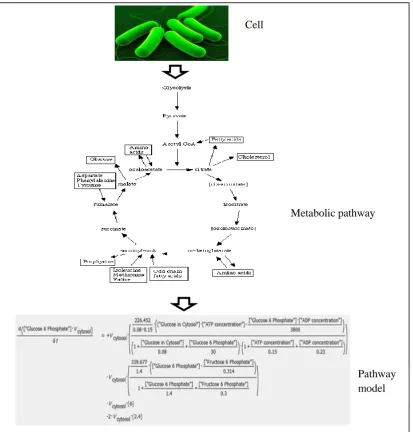
gives the illustration on the pathway models. Moreover, the mathematical modeling also gives a prediction and also understanding on both biological simulation and experimental process. In mathematical modeling, there are nine operations which comprise of collect information on network structure, selection on data, simplification and assumption, framework selection, parameter estimation, model diagnostic, model validation, refine model and model application (Chou and Voit, 2009).
Figure 1.1. Metabolic pathway model processing
Cell
Metabolic pathway
Accurate and complete set of parameters which describes the characteristic of the systems are critical and important as the system model need to be accurate. Nonetheless, the measurement of these parameters is costly and time consuming through in vitro experimental process. Hence, there is a requirement for fast and accurate estimation algorithms which can be used to estimate the near optimal kinetic parameter values. Parameter estimation in system biology is an optimization process. The aim is to obtain the optimum parameter values that give the best model fitting with corresponding experimental analyses. In nonlinear biological systems, meta-heuristic optimization methods are used as their capable of finding the local and global optimal efficiently.
1.3 Problem Background
5
It is crucial that the best parameter values for the biochemical models be estimated and obtained by refining the model parameter values (Schilling et al., 2016). These parameter values are usually identified and measured through costly and time-consuming wet-lab experiments (Tashkova et al., 2011). Alternatively, these parameters can also be estimated using computational approaches. Thus, the parameters estimation turned into multimodal optimization problems, and global optimization algorithms are required to avoid local solutions (Banga, 2008; Sun, Garibaldi, and Hodgman, 2012). Currently, there are a lot of global optimization algorithms that available for estimating the model parameters in various biological systems. Nevertheless, most of the global optimization algorithms mainly Genetic Algorithm, Particle Swarm Optimization, Gravitational Search Algorithm and others often converge to the local solutions instead of the global optimum (Civicioglu and Besdok, 2013; Kang and Zhang, 2016; Sheikhalishahi et al., 2013). These local solutions can lead to poorly fitting data that the model itself can potentially match accurately with a set of experimental data.
1.4 Problem Statement
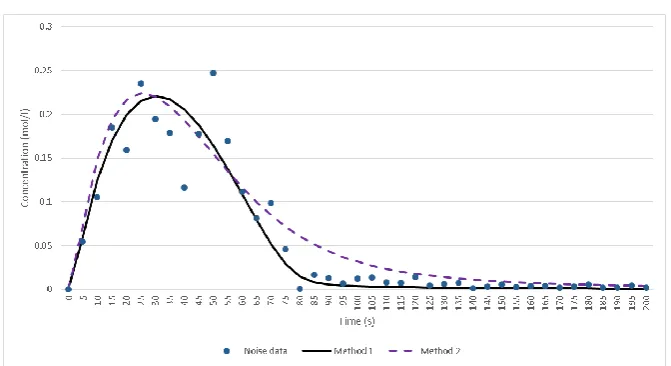
Figure 1.2: Model fitting from noisy experimental data (Note: The line graph shows good model fitting, and the dashed line shows poor model fitting)
1.5 Aim
The aim of this research is to propose a parameter estimation algorithm that can reduce the fitting error between the models estimated and experimental data.
1.6 Objectives
The specified objectives to achieve the aim of the research are as shown below i. To design and develop Improved Particle Swarm Optimization and Gravitational Search Algorithm (IPSOGSA) in obtaining the near-optimal kinetic parameter values by minimize the fitting error of the model and experimental data.
7
1.7 Scopes of the Study
The scopes of this research are described as followed:
i. Case studies: Aspartate pathways of BIOMD0000000066 and BIOMD0000000212 in SBML format
ii. Data Source: BioModel database
iii. Target metabolite: Parameter estimation on the kinetic parameter values of Isoleucine and Homoserine phosphate synthesize in Aspartate pathways for A.thaliana and E.coli.
iv. Parameters estimation: Minimize the fitting error between pathway model and the experimental data.
1.8 Significant of the Study
1.9 Report Structure
In the first chapter, the introduction is explained briefly about the computational modeling of parameter estimation. Besides, there are also the explanation on the background of the problems, problem statement, aim, objectives and scopes covered in this research.
Chapter two gives a review on the area such as mathematical modeling on microorganisms, parameter estimation, and some optimization algorithms that available for computational parameter estimation of the biochemical pathways. Besides, the published previous works on the parameter estimation in the biological model also have been reviewed in this chapter. Besides, there are also the comparisons on different estimation algorithms which discussed in the comparison tables.
Chapter three gives an overall description of the research methodology, which included the phases and activities for each phase. Furthermore, the research framework also listed in this chapter. The description and explanation of the datasets which used in this research also mentioned. Besides, there are also performance evaluations which have being used to validate and comparison all parameter estimation algorithms. Then the last part of this chapter is about software and hardware requirements for this research.
9
REFERENCE
Abdullah, A., Deris, S., Anwar, S., & Arjunan, S. N. V. (2013). An Evolutionary Firefly Algorithm for the Estimation of Nonlinear Biological Model Parameters. PLoS ONE, 8(3), 1–16. http://doi.org/10.1371/journal.pone.0056310
Abdullah, A., Deris, S., Mohamad, M. S., & Anwar, S. (2013). An Improved Swarm Optimization for Parameter Estimation and Biological Model Selection. PLoS ONE, 8(4). http://doi.org/10.1371/journal.pone.0061258
Abramson, M. A., Audet, C., & Dennis, J. E. (2004). Generalized pattern searches with derivative information. Mathematical Programming, 100(1), 3–25. http://doi.org/10.1007/s10107-003-0484-5
Allen, D. M. (1974). The Relationship between Variable Selection and Data Agumentation and a Method for Prediction. Technometrics, 16(1), 125. http://doi.org/10.2307/1267500
Almquist, J., Cvijovic, M., Hatzimanikatis, V., Nielsen, J., & Jirstrand, M. (2014). Kinetic models in industrial biotechnology - Improving cell factory performance. Metabolic Engineering, 24, 38–60. http://doi.org/10.1016/j.ymben.2014.03.007 Bailey, J. E. (1998). Mathematical modeling and analysis in biochemical engineering:
past accomplishments and future opportunities. Biotechnology Progress, 14(1), 8–20. http://doi.org/10.1021/bp9701269
Baker, S. M., Schallau, K., & Junker, B. H. (2010). Comparison of different algorithms for simultaneous estimation of multiple parameters in kinetic metabolic models. Journal of Integrative Bioinformatics, 7(3), 1–9. http://doi.org/10.2390/biecoll-jib-2010-133
Banga, J. R. (2008). Optimization in computational systems biology. BMC Systems Biology, 2(FEBRUARY 2008), 47. http://doi.org/10.1186/1752-0509-2-47 Banga, J. R., & Balsa-Canto, E. (2008). Parameter estimation and optimal
89
http://doi.org/10.1042/BSE0450195
Chassagnole, C., Fell, D. a, Raïs, B., Kudla, B., & Mazat, J. P. (2001). Control of the threonine-synthesis pathway in Escherichia coli: a theoretical and experimental approach. The Biochemical Journal, 356(Pt 2), 433–444. http://doi.org/10.1042/0264-6021:3560433
Chassagnole, C., Raïs, B., Quentin, E., Fell, D. a, & Mazat, J. P. (2001). An integrated study of threonine-pathway enzyme kinetics in Escherichia coli. The Biochemical Journal, 356(Pt 2), 415–423. http://doi.org/10.1042/0264-6021:3560415
Chong, C. K., Mohamad, M. S., Deris, S., Shamsir, M. S., & Abdullah, A. (2014). An improved differential evolution algorithm for enhancing biochemical pathways simulation and production. International Journal of Data Mining and Bioinformatics, 10(4), 424. http://doi.org/10.1504/IJDMB.2014.064893
Chong, C. K., Mohamad, M. S., Deris, S., Shamsir, M. S., Chai, L. E., & Choon, Y. W. (2014). Using an Improved Bee Memory Differential Evolution Algorithm for Parameter Estimation To Simulate Biochemical Pathways. Journal of
Biological Systems, 03(22(01)), 101–121.
http://doi.org/10.1142/S0218339014500065
Chou, I. C., & Voit, E. O. (2009). Recent developments in parameter estimation and structure identification of biochemical and genomic systems. Mathematical Biosciences, 219(2), 57–83. http://doi.org/10.1016/j.mbs.2009.03.002
Civicioglu, P., & Besdok, E. (2013). A conceptual comparison of the Cuckoo-search, particle swarm optimization, differential evolution and artificial bee colony
algorithms. Artificial Intelligence Review (Vol. 39).
http://doi.org/10.1007/s10462-011-9276-0
Curien, G., & Bastien, O. (2009a). Understanding the regulation of aspartate metabolism using a model based on measured kinetic parameters. Molecular Systems …, 5(271), 271. http://doi.org/10.1038/msb.2009.29
Curien, G., & Bastien, O. (2009b). Understanding the regulation of aspartate metabolism using a model based on measured kinetic parameters. Molecular Systems Biology, 5(271), 271. http://doi.org/10.1038/msb.2009.29
Fernández Slezak, D., Suárez, C., Cecchi, G. A., Marshall, G., & Stolovitzky, G. (2010). When the optimal is not the best: Parameter estimation in complex
biological models. PLoS ONE, 5(10).
http://doi.org/10.1371/journal.pone.0013283
Fong, S. S. (2014). Computational approaches to metabolic engineering utilizing systems biology and synthetic biology. Computational and Structural Biotechnology Journal, 11(18), 28–34. http://doi.org/10.1016/j.csbj.2014.08.005 Mini Review
Gábor, A., & Banga, J. R. (2015). Robust and efficient parameter estimation in dynamic models of biological systems. BMC Systems Biology, 9(1), 74. http://doi.org/10.1186/s12918-015-0219-2
Galazzo, J. L., & Bailey, J. E. (1990). Fermentation pathway kinetics and metabolic flux control in suspended and immobilized Saccharomyces cerevisiae. Enzyme and Microbial Technology, 12(3), 162–172. http://doi.org/10.1016/0141-0229(90)90033-M
Gombert, A. K., & Nielsen, J. (2000). Mathematical modelling of metabolism. Current Opinion in Biotechnology, 11(2), 180–186. http://doi.org/10.1016/S0958-1669(00)00079-3
Gutenkunst, R. N., Waterfall, J. J., Casey, F. P., Brown, K. S., Myers, C. R., & Sethna, J. P. (2007). Universally sloppy parameter sensitivities in systems biology models. PLoS Computational Biology, 3(10), 1871–1878. http://doi.org/10.1371/journal.pcbi.0030189
Hassanzadeh, H. R., & Rouhani, M. (2010). A multi-objective gravitational search algorithm. Proceedings - 2nd International Conference on Computational Intelligence, Communication Systems and Networks, CICSyN 2010, 1, 7–12. http://doi.org/10.1109/CICSyN.2010.32
He, Q., & Wang, L. (2007). An effective co-evolutionary particle swarm optimization for constrained engineering design problems. Engineering Applications of
Artificial Intelligence, 20(1), 89–99.
http://doi.org/10.1016/j.engappai.2006.03.003
91
Ingber, L. (1993). Simulated annealing: Practice versus theory. Mathematical and
Computer Modelling, 18(11), 29–57.
http://doi.org/10.1016/0895-7177(93)90204-C
Jianyong Sun, Garibaldi, J. M., & Hodgman, C. (2012). Parameter Estimation Using Metaheuristics in Systems Biology: A Comprehensive Review. IEEE/ACM Transactions on Computational Biology and Bioinformatics, 9(1), 185–202. http://doi.org/10.1109/TCBB.2011.63
Kang, F., Li, J., & Xu, Q. (2009). Structural inverse analysis by hybrid simplex artificial bee colony algorithms. Computers and Structures, 87(13-14), 861–870. http://doi.org/10.1016/j.compstruc.2009.03.001
Kang, L., & Zhang, S. (2016). Application of the Elitist-Mutated PSO and an Improved GSA to Estimate Parameters of Linear and Nonlinear Muskingum Flood Routing
Models. Plos One, 11(1), e0147338.
http://doi.org/10.1371/journal.pone.0147338
Kanungo, T., & Zhen, Q. (2001). A downhill simplex algorithm for estimating morphological degradation model parameters, 0(D). Retrieved from http://oai.dtic.mil/oai/oai?verb=getRecord&metadataPrefix=html&identifier=A DA458745
Karaboga, D., & Akay, B. (2009). A comparative study of Artificial Bee Colony algorithm. Applied Mathematics and Computation, 214(1), 108–132. http://doi.org/10.1016/j.amc.2009.03.090
Karaboga, D., & Akay, B. (2009). Artificial bee colony (ABC), harmony search and bees algorithms on numerical optimization. Proceedings of Innovative Production Machines and Systems Virtual Conference, IPROMS, 1–6. Retrieved from
http://natcomp.liacs.nl/SWI/papers/artificial.bee.colony.algorithm/abc.harmony. search.and.bees.algorithms.on.numerical.optimization.pdf
Karaboga, D., & Basturk, B. (2007). Artificial Bee Colony (ABC) Optimization Algorithm for Solving Constrained Optimization. Lnai 4529, 789–798. http://doi.org/10.1007/978-3-540-72950-1_77
Koh, C. H., Nagasaki, M., Saito, A., Wong, L., & Miyano, S. (2010). DA 1.0: parameter estimation of biological pathways using data assimilation approach.
Bioinformatics (Oxford, England), 26(14), 1794–6.
Koshel, R. J. (2002). Enhancement of the downhill simplex method of optimization. Proceedings of SPIE, 4832(520), 270–282. http://doi.org/10.1117/12.486465 kumar, Y., & Sahoo, G. (2014). A Review on Gravitational Search Algorithm and its
Applications to Data Clustering & Classification. International Journal of
Intelligent Systems and Applications, 6(6), 79–93.
http://doi.org/10.5815/ijisa.2014.06.09
Lee, C.-M., & Ko, C.-N. (2009). Time series prediction using {RBF} neural networks with a nonlinear time-varying evolution {PSO} algorithm. Neurocomputing, 73(1–3), 449–460. http://doi.org/10.1016/j.neucom.2009.07.005
Leong, Y. Y., Chong, C. K., Choon, Y. W., En, L., Deris, S., Illias, R. M., … Saberi, M. (2013). Simulation of Fermentation Pathway Using Bees Algorithm. Advances In Distributed Computing And Artificial Intelligence Journal, 1(2), 13– 19. http://doi.org/10.14201/ADCAIJ2012121319
Levenberg, K. (1944). A Method for the solution of certain non-linear probles in least squares. Q. Appl. Math, 11(2), 164–168.
Lillacci, G., & Khammash, M. (2010). Parameter estimation and model selection in computational biology. PLoS Computational Biology, 6(3). http://doi.org/10.1371/journal.pcbi.1000696
Liu, M., Shin, D., & Kang, H. Il. (2009). Parameter estimation in dynamic biochemical systems based on adaptive Particle Swarm Optimization. 2009 7th International Conference on Information, Communications and Signal Processing (ICICS), 1– 5. http://doi.org/10.1109/ICICS.2009.5397662
Llaneras, F., & Picó, J. (2008). Stoichiometric modelling of cell metabolism. Journal of Bioscience and Bioengineering, 105(1), 1–11. http://doi.org/10.1263/jbb.105.1 Lumb, J. R. (1987). Camputer similation of biological Systems. Molecular and
Cellular Biochemistry, 73, 91–98.
Mallick, S., Ghoshal, S. P., Acharjee, P., & Thakur, S. S. (2013). Optimal static state estimation using improved particle swarm optimization and gravitational search algorithm. International Journal of Electrical Power and Energy Systems, 52(1), 254–265. http://doi.org/10.1016/j.ijepes.2013.03.035
Meng, Y., Kazeem, O., & Muller, J. C. (2007). A Hybrid ACO/PSO Control Algorithm for Distributed Swarm Robots. In 2007 IEEE Swarm Intelligence Symposium (pp. 273–280). IEEE. http://doi.org/10.1109/SIS.2007.367948
93
function optimization. Proceedings of ICCIA 2010 - 2010 International Conference on Computer and Information Application, (1), 374–377. http://doi.org/10.1109/ICCIA.2010.6141614
Mirjalili, S., Wang, G.-G., & Coelho, L. D. S. (2014). Binary optimization using hybrid particle swarm optimization and gravitational search algorithm. Neural Computing and Applications, 25(6), 1423–1435. http://doi.org/10.1007/s00521-014-1629-6
Miro, A., Pozo, C., Guillen-Gosalbez, G., Egea, J. a, & Jiménez, L. (2012). Deterministic global optimization algorithm based on outer approximation for the parameter estimation of nonlinear dynamic biological systems. BMC Bioinformatics, 13(1), 90. http://doi.org/10.1186/1471-2105-13-90
Moradi, S., Razi, P., & Fatahi, L. (2011). On the application of bees algorithm to the problem of crack detection of beam-type structures. Computers and Structures, 89(23-24), 2169–2175. http://doi.org/10.1016/j.compstruc.2011.08.020
Naik, M. K., & Panda, R. (2015). A New Hybrid CS-GSA Algorithm for Function Optimization. International Conference on Electrical, Electronics, Signals, Communication and Optimization, (1), 1–6.
Ng, S. T., Chong, C. K., Choon, Y. W., Chai, L. E., Deris, S., Illias, R. M., … Mohamad, M. S. (2013). Estimating Kinetic Parameters for Essential Amino Acid Production in Arabidopsis Thaliana by Using Particle Swarm Optimization. Jurnal Teknologi, 64(1), 73–80. http://doi.org/10.11113/jt.v64.1737
Pham, D. T., & Castellani, M. (2009). The Bees Algorithm: modelling foraging behaviour to solve continuous optimization problems. Proceedings of the Institution of Mechanical Engineers, Part C: Journal of Mechanical Engineering
Science, 223(12), 2919–2938. http://doi.org/10.1243/09544062JMES1494 Pham, D. T., Ghanbarzadeh, A., Koç, E., Otri, S., Rahim, S., & Zaidi, M. (2006). The
bees algorithm–a novel tool for complex optimisation problems. Proceedings of the 2nd International Virtual Conference on Intelligent Production Machines and
Systems (IPROMS 2006), 454–459.
http://doi.org/http://dx.doi.org/10.1016/B978-008045157-2/50081-X
Powell, M. J. D. (2006). The {NEWUOA} software for unconstrained minimization without derivatives. Large-Scale Nonlinear Optimization, 83, 255–297. http://doi.org/doi: 10.1007/0-387-30065-1_16
coli for the production of putrescine: A four carbon diamine. Biotechnology and Bioengineering, 104(4), 651–662. http://doi.org/10.1002/bit.22502
Rashedi, E., Nezamabadi-pour, H., & Saryazdi, S. (2009). GSA: A Gravitational Search Algorithm. Information Sciences, 179(13), 2232–2248. http://doi.org/10.1016/j.ins.2009.03.004
Raue, A., Steiert, B., Schelker, M., Kreutz, C., Maiwald, T., Hass, H., … Timmer, J. (2015). Data2Dynamics: A modeling environment tailored to parameter estimation in dynamical systems. Bioinformatics, 31(21), 3558–3560. http://doi.org/10.1093/bioinformatics/btv405
Rezaei Adaryani, M., & Karami, a. (2013). Artificial bee colony algorithm for solving multi-objective optimal power flow problem. International Journal of Electrical
Power & Energy Systems, 53, 219–230.
http://doi.org/10.1016/j.ijepes.2013.04.021
Rodriguez-Fernandez, M., Egea, J. a, & Banga, J. R. (2006). Novel metaheuristic for parameter estimation in nonlinear dynamic biological systems. BMC Bioinformatics, 7, 483. http://doi.org/10.1186/1471-2105-7-483
Rodriguez-Fernandez, M., Mendes, P., & Banga, J. R. (2006). A hybrid approach for efficient and robust parameter estimation in biochemical pathways. BioSystems, 83(2-3 SPEC. ISS.), 248–265. http://doi.org/10.1016/j.biosystems.2005.06.016 Schaber, J. (2012). Easy parameter identifiability analysis with COPASI. BioSystems,
110(3), 183–185. http://doi.org/10.1016/j.biosystems.2012.09.003
Schallau, K., & Junker, B. H. (2010). Simulating Plant Metabolic Pathways with Enzyme-Kinetic Models. Plant Physiology, 152(4), 1763–1771. http://doi.org/10.1104/pp.109.149237
Schilling, C., Bogomolov, S., Henzinger, T. A., Podelski, A., & Ruess, J. (2016). Adaptive moment closure for parameter inference of biochemical reaction networks. Biosystems. http://doi.org/10.1016/j.biosystems.2016.07.005
Schmidt, H. (2007). SBaddon: High performance simulation for the Systems Biology Toolbox for MATLAB. Bioinformatics, 23(5), 646–647. http://doi.org/10.1093/bioinformatics/btl668
Schmidt, H., & Jirstrand, M. (2006). Systems Biology Toolbox for MATLAB: A computational platform for research in systems biology. Bioinformatics, 22(4), 514–515. http://doi.org/10.1093/bioinformatics/bti799
95
stagnation cycle. In Proceedings of the 33rd Chinese Control Conference (pp. 8601–8606). IEEE. http://doi.org/10.1109/ChiCC.2014.6896444
Sheikhalishahi, M., Ebrahimipour, V., Shiri, H., Zaman, H., & Jeihoonian, M. (2013). A hybrid GA-PSO approach for reliability optimization in redundancy allocation problem. International Journal of Advanced Manufacturing Technology, 68(1-4), 317–338. http://doi.org/10.1007/s00170-013-4730-6
Shi, Y., & Eberhart, R. C. (1999). Empirical study of particle swarm optimization. Proceedings of the 1999 Congress on Evolutionary Computation-CEC99, 1945– 1950. http://doi.org/10.1109/CEC.1999.785511
Sun, S., & Peng, Q. (2014). A hybrid PSO-GSA strategy for high-dimensional optimization and microarray data clustering. 2014 IEEE International Conference on Information and Automation, ICIA 2014, (July), 41–46. http://doi.org/10.1109/ICInfA.2014.6932623
Tashkova, K., Korošec, P., Šilc, J., Todorovski, L., & Džeroski, S. (2011). Parameter estimation with bio-inspired meta-heuristic optimization: modeling the dynamics of endocytosis. BMC Systems Biology, 5(1), 159. http://doi.org/10.1186/1752-0509-5-159
Toya, Y., & Shimizu, H. (2013). Flux analysis and metabolomics for systematic metabolic engineering of microorganisms. Biotechnology Advances, 31(6), 818– 826. http://doi.org/10.1016/j.biotechadv.2013.05.002
Transtrum, M. K., & Qiu, P. (2012). Optimal experiment selection for parameter estimation in biological differential equation models. BMC Bioinformatics, 13(1), 181. http://doi.org/10.1186/1471-2105-13-181
Villaverde, A. F., Egea, J. a., & Banga, J. R. (2012). A Cooperative Strategy for Parameter Estimation in Large Scale Systems Biology Models. BMC Systems Biology, 6, 75. http://doi.org/10.1186/1752-0509-6-75
Villaverde, A. F., Henriques, D., Smallbone, K., Bongard, S., Schmid, J., Cicin-Sain, D., … Banga, J. R. (2015). BioPreDyn-bench: a suite of benchmark problems for dynamic modelling in systems biology. BMC Systems Biology, 9(1), 8. http://doi.org/10.1186/s12918-015-0144-4
Yang, X.-S. (2009). Firefly Algorithms for Multimodal Optimization. Proceedings of the 5th International Conference on Stochastic Algorithms: Foundations and
Applications, 169–178. http://doi.org/10.1007/978-3-642-04944-6_14
Zhan, C., & Yeung, L. F. (2011). Parameter estimation in systems biology models using spline approximation. BMC Systems Biology, 5(1), 14. http://doi.org/10.1186/1752-0509-5-14
Zhang, Y., Meng, Q., Ma, H., Liu, Y., Cao, G., Zhang, X., … Ma, Y. (2015). Determination of key enzymes for threonine synthesis through in vitro metabolic pathway analysis. Microbial Cell Factories, 14(1), 86. http://doi.org/10.1186/s12934-015-0275-8
Zhao, L., & Yang, Y. (2009). PSO-based single multiplicative neuron model for time series prediction. Expert Systems with Applications, 36(2 PART 2), 2805–2812. http://doi.org/10.1016/j.eswa.2008.01.061