Resources for Lexicalized Tree Adjoining Grammars and XML encoding:
TagML
Patrice Bonhomme and Patrice Lopez
LORIA BP 239
F-54506 Vandoeuvre-l`es-Nancy [email protected]
DFKI GmbH Stuhlsatzenhausweg 3 D-66123 Saarbr¨ucken
Abstract
This work addresses both practical and theorical purposes for the encoding and the exploitation of linguistic resources for feature based Lexicalized Tree Adjoining grammars (LTAG). The main goals of these specifications are the following ones:
1. Define a recommendation by the way of an XML (Bray et al., 1998) DTD or schema (Fallside, 2000) for encoding LTAG resources in order to exchange grammars, share tools and compare parsers.
2. Exploit XML, its features and the related recommendations for the representation of complex and redundant linguistic structures based on a general methodology.
3. Study the resource organisation and the level of generalisation which are relevant for a lexicalized tree grammar.
1.
Introduction
A working group gathering people, mainly from TA-LaNa (University of Paris 7, France), ENST (Paris, France), INRIA (Rocquencourt, France), LORIA (Nancy, France) and DFKI (Saarbr¨ucken, Germany) who are currently working on this formalism, made it necessary to de-fine a shared and common representation of grammars with the aim of exchanging both grammars and associ-ated resources, developing normalised parsers and speci-fying generic tools. Our proposal, TagML (Tree Adjoin-ing Grammars Markup Language) is a general recommen-dation for the encoding and exchange of the resources in-volved in LTAG. This paper presents a model and a syntax to represent, encode and maintain LTAG grammars inde-pendently of any development, software and architecture.
A significant number of works are based on the TAG (Tree Adjoining Grammar) formalism (Joshi et al., 1975). Still for the moment, none has led to a common representa-tion format of the grammars which would facilitate the ex-change of TAG grammars and associated data, as well as for developing normalised parsers and specifying generic tools with a full compatibility. Research and work around the formalism of Lexicalized TAG (LTAG) (Abeill´e, 1991) in-creased during last ten years both for the linguistic point of view and for the computational level. Based on solid math-ematical foundations, the linguistic choices associated to the LTAG formalism remain relatively free and contribute to the variety of results and to the important number of de-velopments and applications.
The XTAG system, developed in the early nineties, of-fers the first workbench dedicated to LTAG grammar design and a Earley-like parser. However, the integrated parser
provides only a binary answer (accepted or rejected sen-tence) hardly compatible with the test of a large grammar. Partial results and diagnostics about errors are necessary to test a grammar and to identify the step involved in the fail-ure of a parse during grammar debugging. Thus, designing a new parser is justified but integrating new components to the XTAG system is technically very difficult for someone that has not been involved in the initial development of the system. More generally, this system has not been developed technically to be distributed since it is based on proper and non specified formats. It requires a narrowly-specialised skill for its installation, its usage and its maintenance.
repre-morphological feature
word lemma
lemma representation
inflection
0:1 1:1
1:1
1:1 0:1
1:n 1:n
1:1
1:n
1:n inflexed
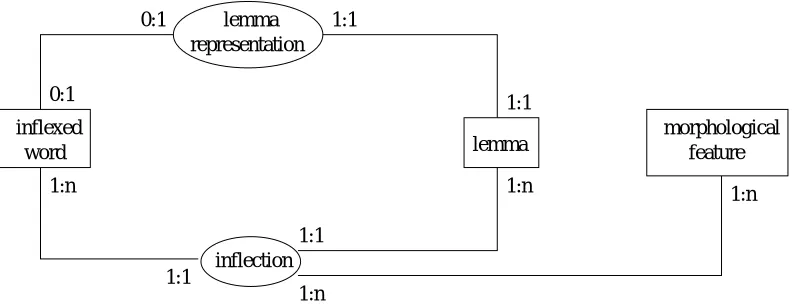
Figure 5: RROM for morphological lexicon.
<?xml version="1.0" encoding="iso−8859−1"?> <!DOCTYPE tag SYSTEM "tagml.dtd">
<tag xmlns:xlink= "http://www.w3.org/XML/XLink/0.9"> <desc> Our tree families</desc>
<tfamily name="transitive verb">
<desc> Tree family for transitive verbs</desc> <t xlink:type= "simple"
xlink:href= "I1_VTA_0.xml" xlink:show= "replace" xlink:actuate= "auto"/> /* ... */
<t xlink:type= "simple" xlink:href= "I2_VTD_1B.xml" xlink:show= "replace" xlink:actuate= "auto"/> </tfamily>
<tfamily name="adjective">
<desc> Tree family for adjectives</desc> <t xlink:type= "simple"
xlink:href= "A1_adjectif1.xml" xlink:show= "replace" xlink:actuate= "auto"/> /* ... */
<t xlink:type= "simple" xlink:href= "I2_adjectif6.xml" xlink:show= "replace" xlink:actuate= "auto"/> </tfamily>
/* ... */ </tag>
Figure 7: Sample of a TagML document and two tree fam-ilies
a set of elementary tree schemas
The encoding of the syntactic grammar is more com-plex that single elementary tree schemas. The role of this lexicon is to link lexical entries to the right set of schemas. Figure 8 proposes an example of a very simple encoding for this lexicon, which only consist in an enumeration of the correct schema for all valid inflected entries. The com-plexity is the consequence of the fact that many pieces of information are in relation and are distributed in these three kind of data.
Our first attempt to define encoding principles for these lexicon was done directly on the basis of the XML formal-ism without any special regards on the abstract organisation of the data. This first result was not satisfactory for two main weaknesses: the limited possibility for extending the encoding principles and the limited sharing of distributed
<lexicon type= "syntax"> /* ... */
<entry flex= "voile"> <lemma form= "voiler">
<f att= "cat">V</f>
<f att= "num">sing</f>
<f att= "mode">ind</f>
<t xlink:type= "simple"
xlink:show= "replace"
xlink:href= "l1_VTA_4#id(n0)"/>
<t xlink:type= "simple"
xlink:show= "replace"
xlink:href= "l1_VTC_B#id(n0)"/> /* ... */
</lemma> /* ... */ </entry> /* ... */ </lexicon>
Figure 8: A basic encoding of a syntactic lexicon with links to elementary tree schemas
resources according to the virtual resource principle. The main reason is that XML does not offer an abstract view on the logical organisation of resources that would allow to define directly general encoding principles. To model these resources and their global organisation we have then used an abstract relational model which allows the representa-tion of each independent resource and its relarepresenta-tion to others. This abstract relational model have a direct realisation in XML.
The relation model for LTAG is presented in the next section and should result in an XML DTD for the syntactic grammar level in future work.
3.1. The RROM
morphological feature
syntactic instanciation
semantique features
flexed
word lemma
lemma representation
inflection
0:1 1:1
1:1
schema feature
syntactical
coanchors
n:n 1:1
0:n 1:1
0:n
1:1
1:n 0:n
concept semantic
instanciation 1:n 0:n
1:n 1:1 0:1
1:n
1:1
1:n
1:n
1:n
1:n 1:n
1:n
0:n 1:n
1:1
Figure 9: Simplified RROM for LTAG resources.
type definition. Aninstantiationof a RE is a realization of this RE according to the corresponding data type specifica-tions. In following figures, an RE is graphically represented with a square box.
The relations between entities used in this model are characterised by two couples of integers on each edge. De-pending on the direction of the relation, this couple gives the arity of the relation with the RE given by the edge, by analogy to the couples on the edges used in relational databases entity/relation models. Two RE can also be in relation. A RROM can be graphically represented with di-agrams describing which REs are related to one another. In these diagrams, a Resource Relation (RR) is represented
with ellipsis. We distinguish two kinds of edges:
edges (single line) which indicate a single link relation and
(double line) which means that a relation can link
instantiations of a RE at the same time.
A morphological lexicon database, as MULTEXT (Ide and V´eronis, 1994), usually associates an inflected word to a set of lemmas and a set of features. Reversible ac-cess is needed for generation for example. A lemma is an abstract entity that is represented with a normal form of a word (the entry of a dictionary) and can be realized with all possible flexions of a word. We can distinguish as re-sources entities inflected words, lemma and morphological features (including a category) that will characterise the
in-flection. An inflection is a relation between one inflected word, one lemma and a set of morphological features. De-pending on the sense that one follows this inflection relation (from the lemma or from the inflected word), we obtain a reversible access. Each lemma is characterised by a link to one inflected word which is the normal form that identify this lemma (see figure 5). Respectively, an inflected word is not always the normal form of a lemma.
3.2. The LTAG syntactic lexicon
The previous RROM model for morphological lexicon is extended to the other resources needed at the syntactic level. An inflection (a lemma and a set of morphological features including verb mode for example) corresponds to a set of schemas. This lexicalization relation can include the instantiation of co-anchors (a lemma and a set of possibly under-specified morphological features) and of some addi-tional syntactic features in the schema. Each syntactical instantiation give a complete elementary tree. If we assume that linguistic principles given in (Abeill´e et al., 1990) and (Candito, 1999) are fulfilled by the grammar, each syntac-tical instantiation corresponds to only one semantic instan-tiation (semantic consistency principle). This model allows an incremental view of the lexicon resources that could be extended easily.
Tree Adjoining Grammars and Related Frameworks (TAG+4).
A. Joshi, L. Levi, and M. Takahashi. 1975. Tree adjunct grammars. Journal of the Computer and System Sci-ences.
Patrice Lopez and Laurent Romary. May, 2000. A Frame-work for Multilevel Linguistic Annotations. In LREC Workshop on Data Architectures and Software Support for Large Corpora: Towards an American National Cor-pus, Athens.
C.M. Sperberg-McQueen and Lou Burnard. 1994.
TEI Guidelines for Electronic Text Encoding
and Interchange (P3). Chicago and Oxford,
http://etext.virginia.edu/TEI.html.