ABSTRACT
Alberts, Caitlin Michelle. The Implementation and Evaluation of a Food-Safety Case Study in a Distance Education Course and Pathogen Reduction Using Multiple Hurdle Technique and Encapsulated Nisin During Extended Storage of Shelf Stable Meals Ready to Eat (MRE)(Under the direction of Arritt, F.M., Stevenson, C.D.)
There may be an opportunity to decrease the frequency of foodborne illnesses by focusing on educating employees of food-manufacturing facilities and ensure that food can withstand pathogens throughout its designated shelf life. Therefore, the objectives of this thesis were to reduce the occurrence of foodborne illness by researching (1) the extent to which a multimedia case study of a dairy-processing plant located on campus improves the intentions of students in an introductory Hazard Analysis and Critical Control Points (HACCP) course to implement HACCP upon entering the workforce, and (2) the effect of implementing the multimedia case-study teaching method on knowledge gains and students’ satisfaction and determine if pathogens of concern could survive or grow in a shelf stable MRE meat sandwich over the course of a year.
Multimedia case studies were used to enhance student understanding of difficult food safety concepts. The target audience consisted of one hundred percent of participants in an upper-level undergraduate Hazard Analysis and Critical Control Points (HACCP) course (n=18). A pre-test and post-test survey research instrument was developed to measure knowledge gains and students’ food-safety intensions using the framework of the Theory of Planned Behavior. Students experienced significant gains in knowledge, attitude and
safety behaviors and could, therefore, reduce the occurrence of foodborne illness and recall incidents in the food industry.
The second phase of this thesis focused on a pathogen reduction study on Meals Ready to Eat (MREs). MREs are shelf stable meals used to provide nourishment to military personnel while in the field. To meet the growing demand to sustain these individuals while engaged, individually packed and shelf stable sandwiches have been developed. Nisin was added to the sandwiches in an encapsulated form to inhibit the growth of pathogenic microorganisms of concern over an extended timeframe by slowly releasing the
The Implementation and Evaluation of a Food-Safety Case Study in a Distance Education Course and Pathogen Reduction Using Multiple Hurdle Technique and Encapsulated Nisin
During Extended Storage of Shelf Stable Meals Ready to Eat (MRE)
by
Caitlin Michelle Alberts
Thesis submitted to the Graduate Faculty of North Carolina State University
in partial fulfillment of the requirements for the Degree of
Master in Science
Food Science
Raleigh, North Carolina 2015
APPROVED BY:
____________________ ____________________ Arritt, F. M., PhD Stevenson, C. D., PhD Committee Chair Committee Chair
ii
iii
BIOGRAPHY
iv
ACKNOWLEDGEMENTS
I would like to thank my co-advisors, Dr. Stevenson and Dr. Arritt. Without the guidance and encouragement from both of these professors, I would not have made the decision to continue my education at North Carolina State University. I would also like to thank the other members of my committee, Dr. Hanson and Dr. Jayarante. These four professors provided me with guidance and help while earning my degree. It is also important that I acknowledge my professors, Mara Massel and students in my lab at North Carolina State University. All of these people have played an important role in helping me to achieve this goal.
v
TABLE OF CONTENTS
LIST OF TABLES ... ix
LIST OF FIGURES ... xi
CHAPTER 1: Review of Literature: The Implementation and Evaluation of a Food Safety Case Study in Distance Education ... 1
1.1 Background Information... 1
1.2 Food Safety Training Program Objectives ... 2
1.3 Case Studies ... 3
1.4 Multime dia Cases ... 4
1.5 Distance Education Learning... 7
1.6 Multime dia Learning ... 7
1.7 ADDIE Model ... 8
1.8 Models for Evaluating the Effective Training Program ... 9
1.9 Theory of Planned Behavior ... 11
1.10 Summary... 13
References ... 14
CHAPTER 2: The Implementation and Evaluation of a Food Safety Case Study in a Distance Education Course ... 19
Abstract... 19
2.1 Introduction ... 21
2.2 Rationale and Significance ... 24
vi
2.4 The ADDIE Model ... 25
2.5 Analyze Phase ... 26
2.6 Design Phase ... 27
2.7 Development Phase ... 29
2.8 Implementation Phase ... 30
2.9 Evaluation Phase ... 31
2.10 Model Integration ... 32
2.11 Survey Development ... 32
2.12 Survey Distribution... 33
2.13 Statistical Analysis ... 33
2.14 Results and Discussion: Objective 1 ... 34
2.15 Results and Discussion: Objective 2 ... 35
2.16 Limitations and Potential Pitfalls ... 38
2.17 Conclusions Statistical Analysis... 39
References ... 40
CHAPTER 3: Introduction Pathogen Reduction Using Multiple Hurdle Technique and Encapsulated Nisin During Extended Storage of Shelf Stable Meals Ready to Eat ... 45
Abstract... 45
3.1 Introduction ... 46
vii
3.3 Microbiological Issues ... 47
3.4 Hurdle Technology: A Multiple Hurdle Approach ... 48
3.5 Listeria monocytogenes... 49
3.6 Salmonella spp. ... 50
3.7 Staphylococcus aureus... 52
3.8 Nisin... 53
References ... 54
CHAPTER 4: Review of Literature Pathogen Reduction Using Multiple Hurdle Technique and Encapsulated Nisin During Extended Storage of Shelf Stable Meals Ready to Eat (MRE) ... 57
4.1 Staphylococcus aureus... 57
4.2 Listeria monocytogenes... 58
4.3 Salmonella enterica... 59
4.4 Nisin... 60
4.5 Encapsulated Nisin... 69
References ... 71
CHAPTER 5: Materials and Methods ... 74
5.1 Bacterial Assay Materials and Methods ... 74
5.2 Pathogen Strains and Growth Conditions ... 74
5.3 Preparation of Samples ... 76
5.4 Storage of Samples ... 77
viii
5.6 Nisin Assay... 78
5.7 Standards Development... 78
5.8 Sample Preparation ... 79
5.9 Agar and Procedure... 80
References ... 81
CHAPTER 6: Results and Discussion... 82
6.1 Pathogen Control ... 82
6.2 Nisin Activity ... 86
6.3 Limitations and Complications... 87
6.4 Conclusions ... 88
References ... 90
TABLES AND FIGURES ... 91
Tables ... 91
ix
LIST OF TABLES
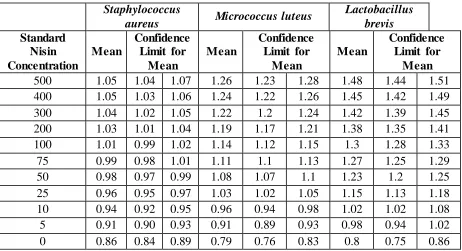
1 Water Activity and pH of the three types of MRE sandwiches ... 91 2 Nisin concentrations (IU/ml) observed in MRE sandwiches at day 0 of
storage predicted by comparing the zone of inhib ition of three different organisms at standard concentrations to the zone of inhibition observed
for each sandwich type... 92 3 Nisin concentration (IU/ml) observed in MRE sandwiches at day 28 of
storage predicted by comparing the zone of inhibition of three different organisms at standard concentrations to the zone of inhibition observed
for each sandwich type... 93 4 Nisin concentration (IU/ml) observed in MRE sandwiches at day 56 of
storage predicted by comparing the zone of inhibition of three
different organisms at standard concentrations to the zone of inhibition
observed for each sandwich type ... 94 5 Nisin concentration (IU/ml) observed in MRE sandwiches at day 84 of
storage predicted by comparing the zone of inhibition of three different organisms at standard concentrations to the zone of inhibition observed
for each sandwich type... 95 6 Nisin concentration (IU/ml) observed in MRE sandwiches at day 156 of
storage predicted by comparing the zone of inhibition of three different organisms at standard concentrations to the zone of inhibition observed
x
storage predicted by comparing the zone of inhibition of three different organisms at standard concentrations to the zone of inhibition observed
for each sandwich type... 97 8 Representation of the Cronbach Alpha for each variable in the theory of
planned behavior survey to illustrate instrument reliability ... 98 9 Results of paired T-Test comparing pre-test and post-test variables of the
theory of planned behavior ... 99 10 Average mean of standard nisin concentrations developed for standard
curve and the confidence limits on day 365 ... 100 11 Average mean nisin concentration and confidence limits for BBQ
sandwich and Italian sandwiches containing different water activities
xi
LIST OF FIGURES
1 Average rating of Spring 2014 and Fall 2015 Introductory to HACCP course participants about their belief on how well the information taught
was explained ... 102 2 Students determination of how much the Howling Cow videos aided
in their understanding of certain learning concepts ... 103 3 Knowledge score of pre-test and post-test of participants ... 104 4 Pathways analysis using the theory of planned behavior to predict
the how these variables affect behavioral intention ... 105 5 Schematic illustration of the theory of planned behavior model ... 106 6 Average pre-test and post-test score of participants’ perceived
behavioral controls ... 107 7 Average pre-test and post-test score of participants’ normative
beliefs ... 108 8 Average pre-test and post-test score of participants’ behavioral ... 109 9 Pathogen decline over course of 365 days in BBQ sandwich held
at 26.7°C ... 110 10 Pathogen decline over course of 365 days in Italian sandwich with a
water activity of 0.92 and held at 26.7°C... 111 11 Pathogen decline over course of 365 days in Italian sandwich with a
water activity of 0.90 and held at 26.7°C... 112 12 Pathogen decline over course of 365 days in BBQ sandwich held
xii
13 Pathogen decline over course of 365 days in Italian sandwich
with a water activity of 0.92 and held at 37.7°C ... 114 14 Pathogen decline over course of 365 days in Italian sandwich with a
water activity of 0.90 and held at 37.7°C... 115 15 Pathogen decline over course of 365 days in BBQ sandwich held
at 48.8°C ... 116 16 Pathogen decline over course of 365 days in Italian sandwich with
a water activity of 0.92 and held at 48.8°C ... 117 17 Pathogen decline over course of 365 days in Italian sandwich with a
1
CHAPTER 1: Review of Literature
The Implementation and Evaluation of a Food-Safety Case Study in a Distance Education Course
1.1 Background Information
Foodborne pathogens are responsible for 48 million illnesses, 120,000 hospitalizations and 3,000 deaths annually in the United States, and the associated economic burden is estimated to be $77.7 billion annually (CDC, 2014; Scharff, 2012). Foodborne illness is an ongoing problem in the United States; in fact, some foodborne pathogens are responsible for increasing rates of illness (CDC, 2014; Clayton, 2002). The World Health Organization identified five factors for producing safer food and four of them directly relate to food handlers: improper cooking temperature, temperature abuse, lack of hygiene and sanitation of employees, and cross contamination (Chapman et al. 2010). Enhancing the effectiveness of food-safety training programs should therefore result in a reduction of the amount of foodborne disease.
2
To improve food safety competencies in the workplace, University- level students studying food safety should be targeted because many of them enter the workforce as food handlers or supervisors upon graduation. Food-safety managers and supervisors comprised approximately 49,010 personnel in the 2014 workforce (Industries at a Glance, 2015). As the number of jobs continues to increase, the number of educated people available to fill these positions needs to expand because there is a shortage of qualified food safety professionals (Stevenson, 2015). Since these employees have direct contact with employees handling the food, properly training these employees will benefit the entire processing facility as these employees have direct impact on food production employees they supervise.
1.2 Food Safety Training Programs Objectives
An effective food-safety education program must focus on changing the behaviors of the employee or student. Many educational programs solely focus on improving students’ competencies such as knowledge and skills; however, improving competencies alone may not always provide the motivation for employees or future employees to practice the subject matter at hand (Egan et. al, 2007). The effectiveness of the training can be more accurately determined by also measuring changes in students’ intended behaviors because planned behaviors predict students’ performance in applying knowledge upon employment (Egan et al., 2007; Seaman and Eves, 2010).
3
considered separate events for centuries. Chinese philosopher Wang Yang-Ming described knowledge and practice as separated events in the 15th century; stating, knowledge must first be attained before the practice can be put in place (Gallego et al., 2013). While many food-safety education and training programs disseminate knowledge, a key challenge that
educators and trainers face is the ability to facilitate practice opportunities for their audience to apply their new knowledge. This is especially a problem for distance education and computer-based training programs. Providing students with training programs that give students the opportunity to apply the knowledge they have learned to a hypothetical and/or real life situation gives students the opportunity to practice. More experience in applying knowledge will improve their ability to preform the behavior (Gallego et al., 2013; Guo, 2012).
1.3 Case Studies
Case studies integrated into education and training programs have been recognized as an effective method for providing students an opportunity to practice and apply their
4
School has built a well-respected repository of business cases instructors in higher education to adopt into their teaching activities. The Harvard Business Publishing was established as a nonprofit subsidiary of Harvard in 1994. Harvard Business Publishing has over 350
employees located in the US and abroad to facilitate in bridging the gap between academia and enterprises by providing companies with many different platforms to provide content to those in need. The success of this program provides reason for exploring case method teaching as a means to improve competency gains and behavior changes in food-safety education and training programs (Harvard Business Publishing, 2012).
The underlying principle associated with case studies is that teaching with stories
improves learning. Stories help students relate to the content being taught, thus leading students to better understand the information (Abrahamson, 1999). Memorable components of case studies increase students understanding of the subject mater, because they encourage students to remember key details about the story. This enables students to recall more
information conveyed through the study (Abrahamson, 1999; Klassen, 2010). The process of teaching with stories enables students to relate to the real world aspects of subject matter, which encourages better understanding of the material.
1.4 Multimedia Cases
Whereas teaching with stories can be done in a variety of ways, multimedia case studies in particular have had positive results. A few of the ways case studies have been taught
5
the story. Recent advances with multimedia case studies have opened possibilities for
making learning more convenient and innovative (Herreid, 2007). For example, Gallego et al. (2013) used a detailed description of a foodborne illness outbreak including photos, a video interview of the people affected to provide students with a case that they must find a solution for. This teaching method is a hybrid approach because the students were provided with face-to-face and online methods. Students positively rated the video case studies, and enjoyed applying the knowledge they learned to real life situations (Gallego et al., 2013).
One key finding of the Gallego et al. (2013) study was that the instructor was an integral part of teaching a case study. It was determined that having an instructor teach the course, although integral, could have some negative implications towards the case study. Some of the instructors participating in the study did not feel comfortable applying the case study to their classroom. Consistency in the way the case study is presented to the students is key. The professor had to be involved in the case study and answer questions appropriately and in a timely manner. Having different instructors teach the same case study could lead to differing results. If a more technologically interactive approach in presenting the case studies was used instead of relying heavily on instructors to facilitate the learning, the rate of
computerized feedback is uniform.
6
much time is needed from the instructors to find the right story to use for the case study and create the multimedia case study, many benefits are gained by using multimedia case studies. The use of multimedia case studies benefit the learning process because they are short and to the point, can be emotionally gripping and can summarize events in a concise manner (Pai, 2014). Undergraduate students find traditional lecturing methods in science hard to follow for extended amounts of time, but well-designed multimedia cases can incite interest and curiosity (Wolter, 2013a).
Multimedia case studies have been shown to improve learning outcomes in
undergraduate science courses. In a study conducted by Wolter (2013b), 105 undergraduate students in five biology courses were presented in a multimedia case. Students were required to view the case, interpreting the material through tests and sharing the results with fellow classmates through role-playing. They were asked to participate in focus groups and given a pre-test and post-test survey that measured students’ confidence in their knowledge of biology. After completion of the learning intervention, students’ confidence in their
7
1.5 Distance Education Learning
Distance education learning is defined as an instructional setting in which the instructor is separated from the students by time and space (Zapantis, 2008). This type of learning is popular as it provides students with the ability to complete work on their own time, and learn from a remote location (Bender et al., 2010). There are a variety of advantages to distance learning including the fact that students are put in an environment they are able to communicate their thoughts and opinions and generate conversations
regardless of time, number of students in the course and pressure from instructors (Darubi et al., 2013; Hew, Cheung, and Ng 2010). Some challenges to distance education learning include instructor resistance to teaching distance education courses, feeling a loss of
interpersonal contact, and difficulty providing a hands on experience to the students (Webb et. al, 2005). Many suggest a mixed-methods approach to learning, combining online learning with face-to-face learning (Gallego et al., 2013). When that is not possible, appropriate measures must be taken to ensure students have the best learning interventions when subjected to distance education learning.
1.6 Multimedia Learning
8
put their hands on an object, which can be a challenge in a distance education setting (Nakayama and Gin, 2012). Simulating a learning environment is a path toward achieving the hands-on learning approach in this environment. Applying three-dimensional simulations to safety-training scenarios have been shown to be effective at improving learning (Nakayama and Gin, 2012). For example, Guo used game-based technology to provide hands on safety training to construction workers (Guo, 2012). The employees were required to go through the game and a safety messages would emerge if a safety concern occurred. The ability to use game technology allowed employees to train using their own facility, allowing them to become more comfortable with their work environment and learn safety information in real time (Guo, 2012).
Multimedia learning has been used to educating consumers about food safety.
Interactive multimedia learning techniques including audio, video, and animation were used to teach infants and mothers food-safety information (Trepka, 2008a). These videos were positively received and participants who had access to the multimedia learning techniques had behavioral changes as compared to the participants that had access only to pamphlets (Trepka, 2008a). This type of learning technique has proven effective in food-safety education and shows promise for possible effectiveness in other studies. (Trepka, 2008b). 1.7 ADDIE Model
9
early to ensure that future course participants gain something from the course and are done to determine the needs of the course and its audience. Next, the way the instructional
information will be designed and provided to the students is determined. The design should be completed before the development process begins. The development phase of the ADDIE model is when the instructional materials are developed. This phase requires time producing and editing materials if videos are to be developed. The imple mentation phase is when the instructional material is given to the students and put in the course. This phase is when students have access to the learning materials. The final phase of the ADDIE model is when the instructors evaluate the course for improve ments and to ensure the course is effective. Using the ADDIE model for course development ensures a continuous model for course development, focusing on improvements to ensure the success of a course.
1.8 Models for Evaluating the Effective Training Program
Evaluating the learning intervention is necessary to ensure that learning intervention used is effective. The way that food-safety competencies are evaluated has been the subject of multiple studies. In a review conducted by Soon et al. (2012), nine studies that focused on different training interventions and measuring employees’ knowledge and attitudes. It was concluded that studies that used cognitive-behavioral theory-based models in in conjunction with standard training to evaluate their programs had a greater final hand-washing rate as compared to studies that did not use the theory.
10
that beliefs, attitudes and norms determine a persons’ behavior and use of a specific model is determined based on the social and environmental settings the model will be applied under. Different models have been used to examine food handlers’ be haviors as well as better understand consumer behaviors including the theory of planned behavior, health belief model and the SPARTA model (Clayton, 2002; (Egan et al., 2007; Mullan and Wong, 2009; Vainio, 2013).
The subjective norm, perceived behavioral control, attitude, risk, trust and alia (other variables) model, commonly referred to as the SPARTA model, is a model used to measure planned behaviors. It assesses risk and trust and how these variables affect behavior (Lobb et al., 2007). The SPARTA model has been applied in a study that analyzed if consumer’s trust of the food industry chose to eat chicken as well as a study that determined if climate change played a role in food choice (Lobb et al., 2007; Vainio, 2013).
Although the SPARTA model has been used within the food industry, it should be used when trust or risk is a factor in performing a behavior. Trust refers to the trust of food safety information given from the media, scientists, family, etc. When using a model for food safety education, trust is not appropriate because the employees are learning what they should practice in their chosen profession.
The health-belief model is a commonly used model in the health industry and is used to predict behaviors regarding health (Hayden, 2009). This model uses susceptibility,
11
provided to diabetics (Sharifirad, 2009). Although it is commonly used in the health industry and has been used to measure food-hygiene behaviors, it was found that the Health Belief Model was a poor predictor in undergraduate students and it does not target normative behaviors, social pressures that influence choices impacting behavior (Mullan and Wong, 2009).
1.9 Theory of Planned Behavior
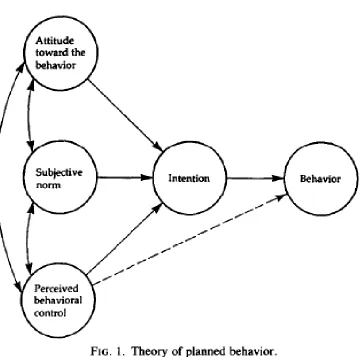
The Theory of Planned Behavior (TPB) model is used to predict behavioral intentions (Figure 5). The TPB was built to improve the theory of reasoned action, which was a theory also developed by Ajzen utilizing behavioral beliefs and subjective norms to predict
behavioral intention (Ajzen, 2006). The TPB utilizes the theory of reasoned action, but also incorporates the variable of perceived control beliefs (Madden, Ellen and Ajzen, 1992). The addition of the perceived control beliefs enhances in the prediction of behavioral intent and behavior (Madden, Ellen and Ajzen, 1992).
12
to be, the more likely they are to perform that behavior. The perceived behavioral control can be measured by using four different questions, two for controllability and two for
self-efficacy (Mullan and Wong, 2009). The third variable is subjective norms. This variable determines how one feels based on social pressures from others (Ajzen, 2002). This includes the influences from friends, teachers, bosses, etc. The greater the social pressure to perform a behavior, the more likely it is for someone to perform the behavior.
The three variables (behavioral beliefs, subjective norms and perceived behavioral control) all influence the behavioral intent (Orbeil et al., 1997). The greater the person’s subjective norms, behavioral beliefs and perceived behavioral control, the more likely one intends to practice a behavior. If one has a great amount of perceived behavioral control, it directly affects the person has a greater intent to perform the behavior (Orbeil et al., 1997). Intention is described as the motivational orientation of toward a behavior (Ajzen 1991).
The theory of planned behavior has been shown to be effective with health-related behaviors and risky behaviors. The TPB has been used in a variety of food safety related studies to predict behavior including studies targeting safe-food handling practices in the home, and workplace (Egan et al., 2007, Shapiro et al., 2011). In a study conducted by Shapiro et al. (2011), the theory of planned behavior was used to learn about consumers’ adoption of food-safety behaviors in the home. Roberts et al. (2008) used the theory of
planned behavior in 31 restaurants to determine whether employees would make a behavioral change after completion of a training program. In both studies, the theory of planned
13
In an educational-based study with the objective of determining if participants would practice a food-safety behavior, this model would be a well-designed one to use.
1.10 Summary
14
References
Abrahamson C. 1998. Storytelling as a pedagogical tool in higher education. Education,
118:440–52.
Ajzen, I. (1991). The theory of planned behavior. Organizational behavior and Human
Decision Processes, 50(2), 179-211.
Ajzen, I. (2002). Perceived behavioral control, self-efficacy, locus of control, and the theory of planned behavior. Journal of Applied Social Psychology, 32(4), 665-683.
Bergeron, B. (2006). Developing serious games (game development series).
Bernard, R. M., Borokhovski, E., & Tamim, R. M. (2014). Detecting bias in meta-analyses of distance education research: Big pictures we can rely on. Distance Education, 35(3), 271-293.
Boyle, P. G. (1981). Planning better programs. New York: McGraw-Hill.
Chapman, B., MacLaurin, T., & Powell, D. (2011). Food safety infosheets. British Food
Journal, 113(2), 160-186.
Clayton, D. A., Griffith, C. J., Price, P., & Peters, A. C. (2002). Food handlers' beliefs and self-reported practices. International Journal of Environmental Health Research, 12(1), 25-39.
D'Aoust, J. (1991). Pathogenicity of foodborne salmonella. International Journal of Food
Microbiology, 12(1), 17-40.
Darabi, A., Liang, X., Suryavanshi, R., & Yurekli, H. (2013). Effectiveness of online
discussion strategies: A meta-analysis. American Journal of Distance Education, 27(4), 228-241.
Egan, M. B., Raats, M. M., Grubb, S. M., Eves, A., Lumbers, M. L., Dean, M. S., et al. (2007). A review of food safety and food hygiene training studies in the commercial sector.
Food Control, 18(10), 1180-1190.
15
Haapala, I., & Probart, C. (2004). Food safety knowledge, perceptions, and behaviors among middle school students. Journal of Nutrition Education and Behavior, 36(2), 71-76.
Hanson, J. A., & Benedict, J. A. (2002). Use of the health belief model to examine older adults' food-handling behaviors. Journal of Nutrition Education and Behavior, 34,
Supplement 1(0), S25-S30.
Harvard Business Publishing. (2012) Our Mission. Harvard Business Publishing. https://cb.hbsp.harvard.edu/cbmp/pages/content/whoweare
Hayden, J. (2009). Introduction to health behavior theory. Sudbury, MA: Jones and Bartlett
Herreid, C. F. (1994). Case Studies in Science--A Novel Method of Science Education.
Journal of College Science Teaching, 23(4), 221-29.
Herreid, C. F. (2007). Start with a story: The case study method of teaching college science. NSTA press.
Herreid, C. F. (2011). Case study teaching. New Directions for Teaching and Learning,
2011(128), 31-40.
Hew, K. F., Cheung, W. S., & Ng, C. S. L. (2010). Student contribution in asynchronous online discussion: A review of the research and empirical exploration. Instructional
Science, 38(6), 571-606.
Industries at a Glance (2015). Bureau of Labor Statistics. http://www.bls.gov/iag/tgs/iag311.htm#iag311emp1.f.P
Johnston, L. M., Wiedmann, M., Orta-Ramirez, A., Oliver, H. F., Nightingale, K. K., Moore, C. M., et al. (2014). Identification of core competencies for an undergraduate food safety curriculum using a modified delphi approach. Journal of Food Science Education, 13(1), 12-21.
Klassen, S. (2010). The relation of story structure to a model of conceptual change in science learning. Science & Education, 19(3), 305-317.
Lobb, A. E., Mazzocchi, M., & Traill, W. B. (2007). Modelling risk perception and trust in food safety information within the theory of planned behaviour. Food Quality and
Preference, 18(2), 384-395.
16
Madden, T. J., Ellen, P. S., & Ajzen, I. (1992). A comparison of the theory of planned behavior and the theory of reasoned action. Personality and Social Psychology Bulletin,
18(1), 3-9.
McGraw, R., Lynch, K., Koc, Y., Budak, A., & Brown, C. A. (2007). The multimedia case as a tool for professional development: an analysis of online and face-to-face interaction among mathematics pre-service teachers, in-service teachers, mathematicians, and mathematics teacher educators. Journal of Mathematics Teacher Education, 10(2), 95-121.
Merriam-Webster Inc. (2004). Merriam-Webster's collegiate dictionary. Merriam-Webster. Mullan, B. A., & Wong, C. L. (2009). Hygienic food handling behaviours. An application of the Theory of Planned Behaviour. Appetite, 52(3), 757-761.
Murphy, Steven. (2013). Evaluation of HACCP Training Under the Grade "A" Dairy HACCP Core Curriculum. Journal of Extension, 51(4).
Nakayama, S., & Jin, G. (2012). Improving Students’ Learning Outcomes in Safety
Education through Interdepartmental Collaboration. In Proceedings of the 2012 Conference
for Industry and Education Collaboration, Orlando, Florida, February (pp. 1-3).
Orbeil, S., Hodgldns, S., & Sheeran, P. (1997). Implementation intentions and the theory of planned behavior. Personality and Social Psychology Bulletin, 23(9), 945-954.
Pai, A. (2014). A Picture Worth a Thousand Words? Making a Case for Video Case Studies. Journal of College Science Teaching, 43(4), 63.
Peterson, C. (2003). Bringing ADDIE to Life: Instructional Design at Its Best. Journal of
Educational Multimedia and Hypermedia, 12(3), 227-241. Norfolk, VA: Association for the
Advancement of Computing in Education (AACE).
Powell, D. A., Jacob, C. J., & Chapman, B. J. (2011). Enhancing food safety culture to reduce rates of foodborne illness. Food Control, 22(6), 817-822.
Pragle, A. S., Harding, A. K., & Mack, J. C. (2007). Food workers' perspectives on
handwashing behaviors and barriers in the restaurant environment. Journal of Environmental
Health, 69(10), 27-32.
Rissel, B. (2010). Motivating employees. Credit Union Management, 33(10), 18.
Roberts, K. R., Barrett, B. B., Howells, A. D., Shanklin, C. W., Pilling, V. K., & Brannon, L. A. (2008). Food safety training and foodservice employees' knowledge and behavior. Food
17
Scharff, R. L. (2012). Economic burden from health losses due to foodborne illness in the United States. Journal of Food Protection, 75(1), 123-31.
Seaman, P. and Eves, A. (2010). Efficacy of the theory of planned behaviour model in predicting safe food handling practices. Food Control, 21(7), 983-987.
ServSafe Cookbook (2014). Retrieved
http://www.foodserviceresource.com/ServSafe/ServsafSamp01.pdf
Sharifirad, G., Entezari, M. H., Kamran, A., & Azadbakht, L. (2009). The effectiveness of nutritional education on the knowledge of diabetic patients using the health belief model.
Journal of Research in Medical Sciences: the Official Journal of Isfahan University of
Medical Sciences, 14(1), 1.
Shapiro, M. A., Porticella, N., Jiang, L. C., & Gravani, R. B. (2011). Predicting intentions to adopt safe home food handling practices. Applying the theory of planned behavior. Appetite,
56(1), 96-103.
Soon, J. M., Baines, R., & Seaman, P. (2012). Meta-analysis of food safety training on hand hygiene knowledge and attitudes among food handlers. Journal of Food Protection, 75(4), 793-804.
Stevenson, C. D. (2015). Occupational Analysis of the Present and Future Food Safety Workforces. Food Protection Trends, 35(2), 101-105.
Tones, B. K., & Tilford, S. (1994). Health Education: eVectiveness eYciency and Equity
(2nd ed.). London: Chapman & Hall.
Trepka, M. J., Newman, F. L., Davila, E. P., Matthew, K. J., Dixon, Z., & Huffman, F. G. (2008a). Randomized controlled trial to determine the effectiveness of an interactive multimedia food safety education program for clients of the special supplemental nutrition program for women, infants, and children. Journal of the American Dietetic
Association, 108(6), 978-984.
Trepka, M. J. (2008b). Interactive multimedia can be used effectively in food safety education. Journal of the American Dietetic Association, 108(6), 985.
Vainio, A., Mäkiniemi, J. P., & Paloniemi, R. (2013). System justification and the perception of food risks. Group Processes & Intergroup Relations, 1368430213503502.
Viator, C., Blitstein, J., Brophy, J. E., & Fraser, A. (2015). Preventing and controlling
18
Wattanasoontorn, V., Hernández, R. J. G., & Sbert, M. (2014). Serious games for e-health care. Simulations, Serious Games and Their Applications (pp. 127-146). Springer Singapore. Webb, H. W., Gill, G., & Poe, G. (2005). Teaching with the case method online: Pure versus hybrid approaches. Decision Sciences Journal of Innovative Education, 3(2), 223-250. Wolter, B. H. K., Lundeberg, M. A., & Bergland, M. (2013a). What makes science relevant?: Student perceptions of multimedia case learning in ecology and health. Journal of STEM
Education : Innovations and Research, 14(1), 26-35.
Wolter, B. H., Lundeberg, M. A., Bergland, M., Klyczek, K., Tosado, R., Toro, A., & White, C. D. (2013b). Student performance in a multimedia case-study environment. Journal of
Science Education and Technology, 22(2), 215-225.
Wu, W., Hsiao, H., Wu, P., Lin, C., & Huang, S. (2012). Investigating the learning theory foundations of game-based learning: A meta-analysis. Journal of Computer Assisted
Learning, 28(3), 265-279.
Zapantis, A., & Maniscalco-Feichtl, M. (2008). Teaching in a distance education program.
19
CHAPTER 2: The Implementation and Evaluation of a Food-Safety Case Study in a Distance Education Course
Abstract
There is opportunity to decrease the frequency of foodborne illnesses by improving food-safety competencies and behaviors of workers throughout the supply chain. Therefore, the objectives of food-safety training programs should include efforts to improve students’ behaviors and increase achieving knowledge gains. The skill that food-safety undergraduate students lack the most after graduating is the ability to apply what they have learned to real-life applications. Multimedia case studies were used to enhance student understanding of difficult food safety concepts. The objectives of this study were to evaluate (1) the extent to which a multimedia case study of a dairy-processing plant located on campus improves the intentions of students in an introductory Hazard Analysis and Critical Control Points (HACCP) course to implement HACCP upon entering the workforce, and (2) the effect of implementing the multimedia case-study teaching method on knowledge gains and students’ abilities to understand complex concepts.
Central to the case study was a documentary video that portrayed a typical work day in a dairy manufacturing facility, a video that gave students a tour of the facility, and an interactive blueprint of the facility containing hotspots that played videos showing examples of Good Manufacturing Practices in various locations. Students interacted with these videos through weekly discussion forums, time-linked questions that appear while watching the videos, and a course project of developing a HACCP plan for a product processed at the
20
facility. The target audience consisted of one hundred percent of participants in an upper-level undergraduate Hazard Analysis and Critical Control Points (HACCP) course (n=18). A pre-test and post-test survey research instrument was developed to measure knowledge gains and also students’ food-safety intensions using the framework of the Theory of Planned Behavior.
21
2.1 Introduction
Foodborne pathogens are responsible for 48 million illnesses, 120,000
hospitalizations and 3,000 deaths annually in the United States, and the associated economic burden is estimated to be $77.7 billion annually (CDC, 2014; Scharff, 2012). Many outbreak and recall events are a result of post-process contamination or poor personal hygiene (Neal and Crandall, 2014), which are preventable through ensuring the workforce possess
appropriate behaviors and competencies (Chapman et al., 2010). While many food-safety training interventions reported in the literature have focused on food-service and retail applications (Viator, 2015), interventions for food manufacturing environments have been less commonly reported (Sperber, 2005).
Better preparing college students to enter the industry should supply the workforce with more qualified employees and improve food safety in manufacturing facilities. All employees of a food manufacturing facility should be trained in food safety, especially food-safety supervisors and managers because of the leadership responsibilities their job entails and because of a shortage of qualified professionals (Freudenheim 2009; Scott-Thomas 2012; Stevenson, 2015). There is a need to continuously improve food safety curricula in higher education because college graduates are often hired into supervisory positions in food-manufacturing facilities (National Research Council, 2009).
22
and critical control points (Wallace, 2014). This system of controlling food safety is globally recognized and meat and poultry processing facilities have been required to implement a HACCP plan since 1993 (Pearson and Dutson, 2012). HACCP is recognized by international organizations including the Codex Alimentarius and is required to be implemented in
facilities that manufacture meat (9 CFR 417, 2015), poultry (9 CFR 417, 2015), juice
(21CFR 120.8, 2015), and fish and fishery products (21 CFR 123.6, 2015). Manufacturers of Grade A dairy products have the option to implement a voluntary HACCP plan to comply with the Pasteurized Milk Ordinance (FDA, 2014).
Despite the resources and efforts invested into implementing beneficial training programs for food manufacturing facilities, there has not been a significant decrease in foodborne illnesses (Neal and Crandall, 2014; Viator, 2015). One explanation is that a majority of education programs do not show evidence of food-safety programs being
effective, and instead focus on knowledge gains (Viator, 2015). Although knowledge gain is important, targeting a specific behavior, attitude and aspiration is the key to ensuring the desired behavioral change will actually be achieved (Egan et. al, 2007; Low et al., 2013; Seaman and Eves, 2010). A HACCP course that successfully focuses on the behavioral changes of the participants is needed to decrease foodborne illnesses in food manufacturing facilities in the United States.
23
or theory for their program evaluation. To ensure participants’ food-safety behavioral intentions are impacted by a training program, an approach for evaluating food-safety education and training programs’ impacts on planned behaviors is needed. The theory of planned behavior is founded on the premise that social pressure, attitude towards a behavior, and perceived control over performing the behavior predicts a person’s intent on preforming the behavior (Figure 5)(Armitage and Conner, 2001). Behavior is influenced by intentions and the perceived control one has over performing the behavior (Azjen, 1991). Intentions are described as how willing and how much work someone would put into performing a behavior (Azjen, 1981). By providing a training program that targets the factors affecting intentions and thus behavior, the training program is more likely to influence participants’ future behaviors. The theory of planned behavior has been used to predict behavioral intention of students learning to drive (Ferguson, 2005), and athletes (Palmer et al., 2005) (Egan et al., 2007; Roberts et al., 2008; Shapiro et al., 2011).
24
toward a case study gives them a valuable experience that will improve their preparedness for their future careers (Wolter, 2013).
The addition of videos to case studies enhances learning and student engagement, which can improve desired behavioral changes (Pai, 2014). Both traditional college students and non-traditional students tend to learn best in environments where they have hands-on experiences (Cantor, 1997; Nakayama and Jin, 2015). When the facilitation of hands-on learning is not feasible, one option is to integrate videos into a case study such that students can virtually experience and conceptualize the case. This has been shown to improve student engagement and understanding (Pai, 2014). Adding an interactive component to the case study also aids comprehension and has been effective in a variety of other safety-related fields (Guo, 2014).
The objectives of this study were to adapt the theory of planned behavior to measure the behavioral changes of the participants in a food-safety distance education course and determine to what extent a multimedia case study can assist students’ abilities to apply theoretical knowledge of HACCP to real-world scenarios.
2.2 Rationale and Significance
25
ensure that what is learned in the classroom will actually be applied to the day-to-day life of the employee’s job.
The authors of this study hope that the information gathered will be used to improve training programs in the food industry. Currently, the majority of food-safety training programs in the food industry focus on improving the knowledge of their employees, but this does not always transfer into the employees’ behaviors. By deve loping a training program that focuses on changing the behaviors of students and developing a rubric for making the tool, this study will have a positive impact on the educational section and eventually the workforce in the food industry.
2.3 Experimental plan
The analyze-design-develop- implement-evaluate (ADDIE) model was used to frame a course redesign project for a senior-level introductory HACCP undergraduate course, (Peterson, 2003). The course was a distance-education course taught through the Moodle Learning Management System (LMS) (Learn N.C., 2009). The ADDIE model followed a linear view of course development, encouraging constant revisions and improvements. It is based on the understanding that learning should be student-centered, innovative, authentic and inspirational and is a common model used for performance-based learning (Branch, 2010).
2.4 The ADDIE Model
26
competencies their employers are looking for, and the constraints and resources available for the course redesign project. This was done to identify gaps the case study is to fulfill.
(Branch, 2010). The design phase identified how to accomplish the objectives (Branch 2010). The development phase of the ADDIE model entailed the creation of the learning interventions. The implementation phase involved teaching the course throughout a 16-week semester, which was assessed during the evaluation phase. By completing each phase, a continuous process for course development and improvement was achieved.
2.5 Analyze Phase
The objectives for the case study were determined by compiling information gathered from past class evaluations, subject matter experts, instructional designers, and a review of the literature. A team of subject-matter experts reviewed students’ feedback from previous semesters and chose commonly reoccurring problems and suggestions provided by the students. For example, previous class evaluations indicated students thought the instructor needed to better explain difficult concepts. The majority of students in the introductory HACCP course had never been inside a food manufacturing facility. Teaching how a food manufacturing facility works through distance education is a challenge because students have a basic understanding of food manufacturing before they can be expected to build a HACCP plan.
27
not know how to apply this in the workplace or other situations ( Egan et al., 2007). By providing students with a case study of a food manufacturing facility, they are able to take the information from the course and apply it directly to a simulated version of a work environment. This gives students the ability to practice skills that they are expected to apply once accepting a position in the food-safety field.
2.6 Design Phase
To achieve the objectives determined in the analyze phase, the course needed to be re-designed with the objectives of preparing students to (1) explain difficult material well, and (2) apply theoretical knowledge after completion of the course. Teaching with a story is expected to increase student understanding and their planned behaviors (Abrahamson, 1999). Case studies enhance engagement, memory and help students apply what they have learned to simulations of the real world. Therefore, the case-study approach was chosen because of its capacity for students to apply what they have learned to real-world situations and break down a complicated situation in a way that makes the student feel part of the situation.
The case study was based on the Howling CowT M dairy plant, which is located on campus at North Carolina State University. Howling CowT M processes Grade A milk and ice cream products that are sold on campus and at the North Carolina State Fair. The Howling CowT M operation is a vertically integrated business.
28
Practices (GMPs) in different locations inside the processing facility (Stevenson, 2014a; Stevenson, 2014b; Stevenson, 2014c; Stevenson 2014d).
The three videos detailing Howling CowT M were produced to build a connection between the student and the processing facility such that many teachable moments could be highlighted throughout the course. Videos have the ability to create an emotional connection between the characters and the person viewing the video (Borup, 2012). Emotional
connections stimulate learning and allow for value and meaning to be involved in the learning process improving and expanding the learning implications (Yadav, 2011). The objective of the “Ice Cream Makers” video was to give students an idea of what a day in the life of a worker in the Howling CowT M dairy processing facility is like. It was designed to help students develop an emotional connection between the viewers and the employees at the plant. “The Processing Tour” video was a walk-through of the dairy plant and taught the students how the ice cream is made, what equipment is used, and how the product flows through the plant. The objective of this video was to teach students how the dairy plant works and provide information in a way that is easy to understand. The “Pasteurized Milk
Ordinance vs. HACCP” video was designed to give an understanding of how food-safety regulations impact the managers of the Howling CowT M dairy processing facility. Providing the information in video form was done to engage the viewer while information being taught, encouraging learning.
29
The plant tour GMP game was designed to give students an interactive approach to learning. The objective of this game was to help the students apply the information that they have learned to a real life situation that would mimic a possible future job and give them virtual experience in Howling CowT M. The twelve GMP videos were inserted into a blueprint of the Howling CowT M facility. Students were required to click through the blueprint, and watch one of the twelve videos. Once the video was completed, an assessment popped up to determine if students could pick out the Good Manufacturing Practices present in the video. The student’s score would then be calculated and displayed on the blueprint.
2.7 Development Phase
A collaborative team consisting of an instructional designer, video production manager, two video production specialists, subject matter expert, and a teaching assistant produced the 12 GMP tutorial videos, the processing tour, day- in-the-life and PMO vs. HACCP video. It took approximately two weeks to record footage for all the videos and another two weeks to edit rough cuts, each of which received multiple revisions.
30
2.8 Implementation Phase
The Howling Cow case study was implemented into the course in multiple ways to ensure that the participants had continuous exposure to the case study. Throughout the 16-week course, the case study was implemented into the course in a variety of ways, including knowledge assessments, discussion forum posts and responses, a Moodle workshop activity and an interactive game.
Students were given a knowledge assessment in the form of a quiz. The quizzes were timed for 20 minutes and ranged between 5 and 10 multiple-choice, true/false or fill- in-the-blank questions. The weekly discussion forums required students to answer a question posed by the instructor and then reply to a fellow student’s response. This discussion method is beneficial in distance-education courses by improving higher cognitive thinking (Sautter, 2007). The instructor provided students with resources to be used, and then posed a question for the class to encourage discussion on the topic. For the majority of the discussion forums, students were instructed to watch a specific Howling Cow documentary video. After watching the video assigned for the week, the students were instructed to submit an initial post answering a specific question relating the documentary video to the week’s lesson content. After their initial submission, students were required to reply to another student’s post. This was done to enhance discussion and facilitate community in the class.
31
have a hands-on approach to developing a HACCP plan for a company with which they were involved. Once the student submitted their updated HACCP plan, they were assigned to review two of their classmates’ work and grade their work following a rubric developed by Wallace et. al (2005). This was done to facilitate community in the course, and give students the opportunity to view other assignments and continuously improve their own.
Students were required to watch the “Ice Cream Makers”, “Pasteurized Milk Ordinance vs. HACCP” and “Processing Tour” and complete time- linked questions facilitated through EduCanon (eduCanon, 2014). Throughout the video, different questions related to the videos popped up. Students had to answer the question correctly before they were able to continue watching the video. In order to earn credit for watching the video, students had to provide the code listed at the end. This encouraged students to watch the full documentary video and allowed the videos to have an interactive component. The interactive plant tour GMP game component used was a required activity during the weekly lessons on prerequisite programs in food manufacturing.
2.9 Evaluation Phase
32
2.10 Model Integration
Survey questions were developed to determine to what extent difficult information was taught. These questions included how the instructor explained information, and what aided in the student’s understanding of the course information. The framework for the theory of planned behavior was used to determine if objective two was achieved. Questions regarding student’s normative beliefs, behavioral beliefs, control beliefs and intention were developed and distributed.
2.11 Survey Development
The pretest survey for the food-safety course contained 66 different questions. This study consisted of demographic questions, four aspiration questions, 10 knowledge questions, four questions on control, six normative belief questions, six risk questions, five attitude
questions, five open-ended questions in regards to belief and 11 attitude questions. The post-test survey for both courses included all of these questions along with formative questions to be used for course improvement.
The reliability of the survey was justified by using questions obtained from surveys. Surveys using the theory of planned behavior in similar fields were compiled using a literature review and the questions were modified to address food-safety questions (Brook, 2006; Gallego et al., 2013; Morgan et al., Pragle et al., 2007). Cronbach’s alpha was
calculated for each likert section of the survey. Each likert question received a rating of 0.70 or higher (Table 8) (Knabe, 2013).
33
Before the distribution of the survey, a delphi style method was used to improve the content validity of the survey in which the survey was provided to three experts in the field (Duke, 2009). Their suggestions were documented and changes were made. The survey was then sent to the experts again to discuss the revisions made. Two focus groups of three students each were used before survey distribution to improve face validity of the survey. The survey was provided to groups of students and discussed at length to ensure that each question was worded in an appropriate way and to ensure the students understood what was being asked in each question.
2.12 Survey Distribution
The survey was developed using Qualtrics (Qualtrics, USA), approved by an institutional review board (IRB) and distributed to the students through the Moodle Learning Management System. The students were required to take the survey as part of a grade. The pre-test and post-test survey contributed to a total of 2% of the course grade. Students were provided with the option to withhold their information from being used in the research and still earn 100% of the allotted course grade. This survey took students approximately 30-40 minutes to complete.
2.13 Statistical Analysis
34
of planned behavior. The pre-test and post-test data were compared using paired t-tests to determine to what extent the learning intervention significantly changed the variables being studied (95% confidence interval). The post-test data were also analyzed to determine the demographics gathered from the study.
2.14 Results and Discussion: Objective 1
Objective 1: Determine the successes and failures of teaching with an interactive case study
Explaining difficult material well.
When asked to what extent students’ thought the instructor explained difficult
35
Application of theoretical knowledge
One hundred percent of students believed that the “Ice Cream Makers” video aided to some extent in their understanding of difficult concepts (Figure 2). One hundred percent of students believed that the “Processing Tour” video aided in their understanding to some extent, as well. The “PMO vs. HACCP” video was analyzed to determine whether the students’ knowledge of PMO and HACCP was improved due to the video. Ninety-four percent of students self-reported that the PMO video aided in their understanding, and only six percent of students neither agreed nor disagreed that the video helped. None of the students disagreed with the statement that the videos helped understanding overall. This suggests that the students believe that the videos helped their understanding of topics.
Knowledge Improvement
This course significantly increased the knowledge of the participants between the pre-test and post-pre-test (Figure 3). This is consistent with numerous studies conducted in the health industry where videos were used to improve the viewer’s knowledge on a health-related subject (Brace et al, 2010; Del Carmen Cabesa, 2014; Trinh et. al, 2014). The entirety of knowledge gains cannot be attributed to the videos, but the videos likely contributed to knowledge gains to some extent.
2.15 Results and Discussion: Objective 2
Adapt the theory of planned behavior to measure the behavioral changes of the participants
in a food-safety distance education course.
36
the data recovered from the post-test survey (Figure 4). The pathways analysis suggested that the behavioral beliefs variable has the greatest affect on intention to perform a behavior, thus making this variable one that should be targeted at a greater rate. In the pathways analysis, behavioral beliefs (p < 0.1) and control beliefs (p< 0.1) had a significant influence on student’s intention to implement HACCP in their careers. This suggests that behavior beliefs and control beliefs are important factors when determining the food safety behavioral intent students; behavioral beliefs having the strongest correlation.
Normative beliefs, or social pressures one feels about a particular behavior, did not have a significant effect on influencing intention (p > 0.1). In a study conducted by Rigby et al. (2013), athletic trainers opinions regarding concussion management practices were examined using the TPB. Subjective norms did not significantly predict the athletic trainer’s behavioral intent. This study suggested that the subjective norms should be used for
managing compliance with practicing behaviors and the intervention should be focused on changing the attitude of the participant instead of social aspects. Ingram et al. (2000) found similar results when analyzing students’ intentions to applying to graduate school. A pathways analysis was conducted and found behavioral beliefs to have the strongest correlation to intent and subjective norms to have the weakest correlation. It was
37
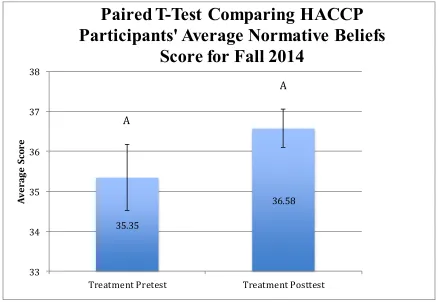
A paired t-test was conducted to determine the changes between pre-test and post-test survey scores (Table 9). There was a significant change in the student’s behavioral beliefs between the pre-test and post-test after completion of the course (Figure 8). There was not a significant change in the control beliefs and normative beliefs (Figure 6-7). Subjective norm had the weakest influence on behavioral intent, which is consistent with findings stating that subjective norm does not have a strong influence on intent, especially as compared to perceived behavioral controls and behavioral beliefs (Rigby et al., 2013). The course could utilize technology to allow more social interaction in the course. There was a significant change when students were asked about the social pressures felt by their teacher. Students significantly believed that the teacher added pressure for them to perform positive food-safety behaviors (p < 0.05; Figure 7). This suggests that the person giving the training program or in charge of the learning has a greater effect on the student’s preforming the learned behaviors well.
38
There was a significant improvement in the behavioral beliefs of students, or attitude toward the behavior and their intention to perform the behavior (p < 0.05) (Figure 8). As stated previously, focusing a learning intervention on improving behavioral beliefs will lead to greater rate of behavioral intention. The learning intervention preformed in this study significantly improved the behavioral beliefs, suggesting that the course provided students with a positive outlook on food-safety and the need for food safety. Azjen (2007) stated that in order to increase an attitude regarding a behavior, the perspective of that behavior should be addressed in the learning intervention. The learning intervention proposed in this study uses a multimedia case study to influence behavioral beliefs. The significant improvements to participants’ behavioral beliefs after completion of the study highlight the positive effects of the multimedia case study and thus encourage students to implement HACCP plans in their future facilities.
2.16 Limitations and Potential Pitfalls
A limitation of the study is that a control group was not compared to the treatment group which could isolate a more exclusive analysis of the effect of the multimedia case study. Another limitation to this study was the sample size. The course consisted of only 17 students due to limited enrollment. Because of the positive results obtained from the small sample size, it can be suggested that this study be replicated on a larger sample size.
39
monitoring them in their place of work is not possible. It is also a challenge because the student cannot be monitored in the classroom. In the future, a specific skill will be targeted, and a way to measure this skill via distance education will be explored.
2.17 Conclusions and Future Work
The multimedia case study had a positive effect on students in an introductory
HACCP course. Students experienced significant improvements in knowledge, and there was a significant change in behavioral intentions (P < 0.05). The multimedia case study aided in the student’s ability to understanding difficult information.