University of Cape Town
University of Cape TownSchool of Management Studies
DISSERTATION
The Effect of Schema-Based Training on Dispositional Reasoning Components: Comparing Frame-of-Reference Training and Schema-Feedback Training
Jonathan Hall (HLLJOH018)
A dissertation in partial fulfilment of the requirements for the award of the Degree of Master of Arts in Organisational Psychology
Supervisor: Mr Francois S. De Kock June 2015
COMPULSORY DECLARATION
This work has not been previously submitted in whole, or in part, for the award of any
degree. It is my own work. Each significant contribution to, and quotation in, this dissertation from the work, or works, of other people has been attributed, and has been cited and
referenced
quotation from it or information derived from it is to be
published without full acknowledgement of the source.
The thesis is to be used for private study or
non-commercial research purposes only.
Published by the University of Cape Town (UCT) in terms
of the non-exclusive license granted to UCT by the author.
Acknowledgements
I would like to thank my supervisor Mr Francois de Kock for his invaluable help and insight throughout the course of this research project. I am also grateful to my co-researchers Melissa Alwar, Natasha Baret, Abigail Gotlieb and Linda Ndlovu, without whom this project would not have been possible. The staff of the Section for Organisational Psychology at the University of Cape Town deserve acknowledgement for their excellent support and
encouragement throughout the year. Lastly, I thank my parents for the wonderful opportunity to further my studies; I am forever grateful.
Abstract
Prior research shows that accurate interviewers have higher ‘dispositional reasoning’, defined as the ability to understand the relationship between personality, behaviour and situations. Drawing on schema theory, the present study attempted to determine if dispositional reasoning could be developed in students who participated in interview training. We used two different experiments to assess the relative effectiveness of two different training approaches to enhance the subcomponents of dispositional reasoning: trait induction, trait extrapolation and trait contextualisation. Our first experiment used traditional frame-of-reference (FOR) training in an attempt to develop dispositional reasoning. In a second experiment, we developed schema-feedback training, a novel approach to training
dispositional reasoning that is based on the use of schema refinement through feedback. We found that neither approach had an effect on the participants’ dispositional reasoning
component scores when compared to a ‘no-training’ comparison group. The low statistical power (due to a relatively small sample size) was a limitation in this study. Further research is necessary to determine the malleability of interviewers’ dispositional reasoning.
Key words: dispositional reasoning; frame-of-reference (FOR) training; schema-feedback training; accuracy.
Table of Contents
Introduction…..………1
Rater Accuracy ... 3
Funder’s Realistic Accuracy Model... 3
Social Cognition Theory ... 4
Dispositional Reasoning ... 5
Trait Induction ... 5
Trait Extrapolation ... 6
Trait Contextualisation... 7
Developing Dispositional Reasoning ... 10
Approaches to Rater Training ... 10
Study 1: Frame-of-Reference Training for Dispositional Reasoning ... 11
Frame-of-Reference Training (FOR) ... 11
Empirical Evidence ... 11
Method: Study 1 ... 13
FOR Training: Overview ... 13
Research Design... 13 Participants ... 14 Materials ... 16 Procedure ... 16 Measures ... 18 Statistical Analysis ... 18 Results: Study 1 ... 19 Preliminary Analyses ... 19 Descriptive Statistics ... 20 Hypothesis Testing... 23 Statistical Power... 23 Discussion: Study 1 ... 24 Main Findings ... 24
Shortcomings of FOR Training ... 25
Study 2: Schema-Feedback Training ... 26
Schema Refinement ... 26
Practice and Feedback... 26
Schema-Feedback Training for Dispositional Reasoning Components ... 27
Method: Study 2 ... 29 Research Design... 29 Participants ... 30 Materials ... 31 Procedure ... 33 Measures ... 35 Statistical Analysis ... 35 Results: Study 2 ... 35
Preliminary Analyses ... 35
Descriptive Statistics ... 36
Hypothesis Testing: Schema-Feedback vs. Contrast ... 39
Statistical Power... 39
Hypothesis Testing: Schema-Feedback vs. FOR Training ... 40
Discussion: Study 2 ... 41
General Discussion ... 42
Main Findings ... 42
Limitations ... 45
Future Directions for Research ... 46
Implications for Practice ... 48
Conclusion ... 48
References ... 50
Appendix A ... 57
Frame-of-Reference Training Lecture Slides ... 57
Trait Induction Training ... 57
Trait Extrapolation Training ... 61
Trait Contextualisation Training ... 64
Appendix B ... 68
Frame-of-Reference Training Tasks ... 68
Trait Induction Training Task ... 68
Trait Extrapolation Training Task ... 72
Trait Contextualisation Training Task ... 75
Appendix C ... 78
Ethics Approval ... 78
Appendix D ... 79
Consent Form ... 79
Appendix E ... 80
Sample Revised Interpersonal Judgment Inventory (RIJI) Items ... 80
Appendix F ... 81
Biographical Measure ... 81
Appendix G ... 82
Schema-Feedback Training Item Appearance Logic ... 82
Appendix H ... 83
Schema-Feedback Training Task Instructions ... 83
Appendix I ... 84
Schema-Feedback Training Task Examples ... 84
Trait Induction ... 84
Trait Extrapolation ... 85
List of Tables
Table 1. Summary Results of Powell and Goffin (2009) ... 12
Table 2. Experimental Design: Study 1 ... 14
Table 3. Descriptive Statistics: Study 1 ... 15
Table 4. Shapiro-Wilk’s Test of Normality of Data: FOR & No-Training Conditions ... 20
Table 5. Descriptive Statistics for Subscales by FOR and No-Training Condition ... 21
Table 6. Summary of Results: Trait Induction ... 24
Table 7. Summary of Results: Trait Extrapolation and Trait Contextualisation ... 24
Table 8. Experimental Design: Study 2 ... 30
Table 9. Descriptive Statistics: Study 2 ... 31
Table 10. Shapiro-Wilk’s Test of Normality of Data: Schema-Feedback and No-Training Conditions ... 36
Table 11. Descriptive Statistics: Schema Feedback and No-Training Conditions ... 37
Table 12. Summary of Results: Trait Induction and Trait Contextualisation ... 40
Table 13. Summary of Results: Trait Extrapolation ... 40
Table 14. Summary of Results: Trait Extrapolation ... 41
Table 15. Summary of Results: Trait Induction and Trait Contextualisation ... 41
List of Figures Figure 1. Dispositional reasoning framework.. ... 9
Figure 2. Graphic representation of mean scores as percentages across FOR training and no-training conditions. ... 22
Figure 3. Graphic representation of median scores as percentages across FOR training and no-training conditions. ... 22
Figure 4. Graphic representation of mean scores across schema-feedback and no-training conditions. ... 38
Figure 5. Graphic representation of median scores across schema-feedback and no-training conditions. ... 38
The Effect of Schema-Based Training on Dispositional Reasoning Components Organisations commonly use interviews in recruitment and selection (Salgado, Viswesvaran & Ones, 2001; Schmidt & Hunter, 1998). Accurate interviewers are therefore integral to the interview process, as organisations will benefit from hiring the best candidate for the job (Grigoryev, 2006). Some
interviewers are better than others at making accurate inferences about interviewees’ profiles (Dipboye, Macan & Shahani-Denning, 2012; Funder, 1999), partly because of higher dispositional reasoning (Christiansen et al., 2005;
De Kock, Lievens & Born, in press). Dispositional reasoning is the ability to understand the relationship between personality, behaviour, and situations. As it predicts important rating outcomes, developing dispositional reasoning may be a way in which to improve overall rating accuracy.
Dispositional reasoning is the knowledge of how traits, behaviours and situations contribute to an individual’s manifest behaviour (De Kock et al., in press). Three subcomponents make up the overall construct: trait induction, trait
extrapolation and trait contextualisation (Christiansen et al., 2005;
De Kock et al., in press). Trait induction occurs when individuals understand how certain behaviours are characteristic of certain personality traits. Trait extrapolation involves the understanding of the co-variance of personality traits. Trait
contextualisation is the process of understanding that certain situations are more likely to encourage the exhibition of personality traits. A person’s dispositional reasoning may be contained in organised, preconceived patterns of thought known as schemas.
Over time, people develop schemas that allow them to rapidly decode complex situations such as judgements of behaviour and personality
(Landau, Meier & Keefer, 2010). Most people will already have pre-existing
dispositional reasoning schemas. However, these schemas may be underdeveloped or incorrect, resulting in poor dispositional reasoning ability. Refinement or addition of schemas is the anticipated outcome of a number of organisational training initiatives that make use of frame-of-reference training (FOR) methodology.
Based on the social cognition theory (Fiske & Taylor, 2013) of human judgement, FOR training aims to develop or change relevant schemas in individuals (Lievens, 2001). By exposing raters to various lifelike scenarios known as vignettes,
the FOR training method trains them to recognise good and poor performance (Roch, Woehr, Mishra & Kleszyzynska, 2011). In so doing, by refining the
individual’s perceptions of familiar and easily noticeable behaviours, FOR training targets the individual’s judgement schema. FOR training is successful in improving rater accuracy in performance appraisals (Roch et al., 2011), and is extensible to interviewer and assessment centre rater training programmes.
Prior studies (eg. Powell, 2007; Powell & Goffin, 2009) used FOR training to develop student interviewers’ dispositional reasoning, but with no success. They asked students to take part in a training programme based on traditional FOR
methods, and then assessed their dispositional reasoning. Results showed no increase in dispositional reasoning. The study had two drawbacks, however. First, the authors only focused on one component of dispositional reasoning, trait induction. It is unclear whether training would affect the other two components of the construct. Second, FOR training may not be the most effective approach at training dispositional reasoning. FOR training, although widely used in other areas, might not be applicable to training interviewers in dispositional reasoning, due to the complex nature of the dispositional reasoning schematic framework. We propose schema-feedback training, a novel training approach that aims to target and refine the schemas associated with dispositional reasoning.
Feedback training involves a training style of repeated trial and error to refine the schema to become more accurate. As frequent feedback guides the participant toward the correct behaviour (Schmidt & Bjork, 1992), the present study will attempt to refine the dispositional reasoning of participants. We will therefore address the perceived shortcomings of the current approach to dispositional reasoning training by attempting to refine the dispositional reasoning schema through practice and
feedback. This intervention will additionally target each subcomponent of the dispositional reasoning construct. The aim of this research is to contribute to the overall understanding of the concept of dispositional reasoning, while increasing knowledge of the precursors of interviewer accuracy. This may have implications for the practices of interviewers in industry, by enhancing their ability to make more accurate hiring decisions.
Rater Accuracy
Accuracy research is concerned with determining the true nature of reality (Funder, 1999). Accuracy research attempts to determine whether the judgements that people make of themselves and others are correct or incorrect and how these
judgements may be improved (Funder, 1987). The definition of accuracy in person judgement is the overlap between benchmark ratings made by experts and those made by raters in practice (Engelhard, 1996). Accuracy in rating is important in a number of organisational functions. For example, performance reviews, assessment centres, and interviews rely on raters to make good decisions when judging others
The rater plays an important role in the accuracy of judgements. The
individual undertaking the judgement may possess certain traits that allow them to be more accurate when making decisions (Lippa & Dietz, 2000). An inaccurate rater will therefore have negative consequences for the organisation. Individual differences in interviewers may therefore affect their accuracy of judgement (Graves, 1993). A popular contemporary theory for understanding individual judgement accuracy is Funder’s Realistic Accuracy Model.
Funder’s Realistic Accuracy Model
Funder’s Realistic Accuracy Model (RAM) describes the individual process of accurate personality judgement, using four conditions or stages (Funder, 2012). Meeting the conditions of these stages will allow the judge to make an accurate
decision. Firstly, in the relevance stage, the target individual should exhibit behaviour that is relevant to a certain identified personality trait. Secondly, in the availability stage, the judge should witness this behaviour. In the third stage, cue detection, the judge should accurately detect the behaviour exhibited by the target. In the fourth and last stage, cue utilisation, the judge should correctly use the information detected to make an accurate judgement of the target. Violation of any of these conditions will result in an inaccurate decision. The quality of the target, the judge and the
information delivered and perceived is therefore also important to ensure accurate judgement.
According to Funder’s RAM, accurate judgement will only take place if a good target is used. A good target will display behaviour that is in accordance with
their core personality (Funder, 2012). Accurate judgement is also contingent on the trait under scrutiny. A good trait will be visibly perceptible and therefore easier to detect, resulting in higher other-other agreement (Funder, 2012). The quality and quantity of relevant information will also affect the accuracy of judgement. Good information comes from being able to observe the target in different contexts, over a longer period (Funder, 2012). Lastly, the person conducting the judgement should themselves possess the characteristics necessary for making a good judgement (Funder, 2012). An expert in person perception, the good judge, would be able to make accurate decisions in a short space of time. Social cognition and schema theories explain how it is possible for people to make quick, accurate judgements. Social Cognition Theory
Social cognition theory posits that human cognition allows for the extraction of information from complex situations to achieve complex judgements in a relatively short space of time (Augoustinos, Walker & Donaghue, 2014; Fiske & Taylor, 2013). People are able to decide, for example, to make a turn while riding a bicycle, at the same time as watching for oncoming traffic and switching gears. Abstract inferential rules, found in schemas, aid this process of rapid judgement, allowing people to make sense of situations easily (Fiske & Taylor, 2013; Huesmann, 1998). Schemas allow people to navigate daily situations with minimal cognitive effort.
Schemas. Schemas are mental structures (Landau et al., 2010) containing abstract conceptualisations of accumulated knowledge of stimuli
(Macrae & Bodenhausen, 2000). Schemas are therefore the substructures that influence a person’s attitudes and social thought. As people are not able to attend to every stimulus in their environment, they rely on schemas, which are readily
available, to assist in processing social information quickly. For example, an expert in person perception would store their implicit theories of personality in schemas (Augoustinos et al., 2014; Landau et al., 2010).
Individuals therefore utilise schemas to reduce complex social situations into manageable events. Mental categories found in schemas are necessary for simplifying a world that is information-saturated, allowing people to interpret current situations based on past experiences (Bargh & Chartrand, 1999; Landau et al., 2010). Schemas
differ from long-term memories, as they require no conscious effort to retrieve (Van Merrienboer & Sweller, 2005). Additionally, experts are more likely to use schemas to interpret situations, while novices will use other problem-solving techniques (Paas, 1992). Experts in person perception may possess the relevant schemas needed for making accurate judgements, known as dispositional reasoning.
Dispositional Reasoning
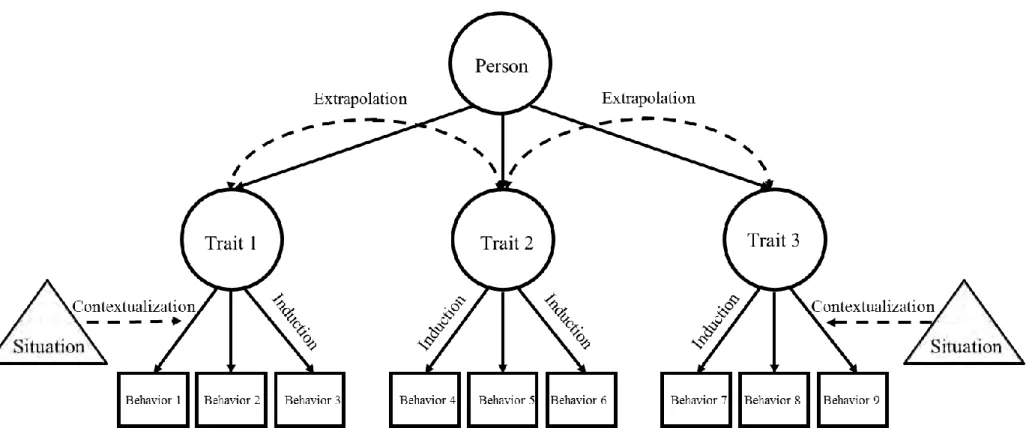
Dispositional reasoning is the general reasoning about traits, behaviours and situations (De Kock et al., in press). Accurate raters use dispositional reasoning to come to decisions about a person’s behaviour (Christiansen et al, 2005). Good judges use their dispositional reasoning ability to detect and utilise cues when making a judgement. Trait induction, trait extrapolation and trait contextualisation are three subcomponents that form part of the dispositional reasoning construct (see Figure 1). Trait Induction
Trait induction allows the judge to understand the link between the target’s behaviour and an underlying personality trait (De Kock et al., in press). The process of trait induction is concerned with the knowledge of how traits are made manifest in behaviour (Christiansen et al., 2005). This has previously been conceptualised as behaviour-trait knowledge (Christiansen et al, 2005). Trait theory, first posited by Cattell (1957) and later improved on by Allport (1961) and Eysenck (1970), defines traits as recurring patterns of behaviour that are relatively stable over time. This theory forms the basis of exploring how people perceive another’s traits when they act in a certain way. Modern conceptions of personality, specifically the Five-Factor Model (FFM) of McCrae and Costa (1997) are based on the findings of factor
analysis, which confirms that certain behaviours, when clustered as dimensions, point to underlying traits.
Good judges who are high in behaviour-trait knowledge are able to interpret the links between traits and behaviour. For example, someone who is high in trait induction would know that someone who demonstrates himself or herself to be
talkative would most likely be an extrovert (Goldberg, 1992). Someone who is low in trait induction would not, for example, be able to understand that conscientiousness is
associated with behaviour such as arriving to work to on time every day. Figure 1 depicts the process of trait induction, seen in the paths that link behaviours to traits.
Previous research has shown that trait induction predicts interviewer judgement accuracy to a slight effect (.14, p = .11, 95% CI: [-.02, .30];
De Kock et al, in press). An interviewer who possesses high levels of trait induction will therefore be able to make decisions that are more accurate. Along with trait induction, people use the process of trait extrapolation when undertaking dispositional reasoning.
Trait Extrapolation
Based on the target’s exhibition of a certain trait, a good judge will use trait extrapolation to identify the likelihood of that target possessing another, similar trait (De Kock et al., in press). Trait extrapolation relates to the ability to comprehend how traits and their behavioural manifestations co-vary naturally
(Christiansen et al., 2005). A person who is able to understand the relationship between traits and behaviours better than others will use existing information to make a rational representation of another person based on only some noticeable aspects of that person’s behaviour (De Kock et al., in press). For example, an interviewer high in trait extrapolation will know that if an interviewee states that they enjoy extreme sports, they will most likely also be daring and adventurous. Trait extrapolation is depicted graphically in Figure 1, as seen in the arrows between traits.
Concerned with the trait extrapolation process is the notion that individuals possess implicit personality theories (IPTs) that influence the way in which they perceive others (Grant & Holmes, 1981). IPTs are stored in schemas that allow for quick response when making a judgement. People learn IPTs over time and some may have more accurate personal theories of personality than others. In making judgements, people rapidly draw upon IPTs when needed.
When a person utilises trait extrapolation they use heuristic processes to do so. Individuals may differ in their ability to understand how traits co-vary, which may affect their overall dispositional reasoning ability. Trait extrapolation has a moderate effect on interviewer judgement accuracy (.33, p < .001, 95% CI: [.18, .47];
extrapolation will therefore be able to make decisions that are more accurate. The final component of dispositional reasoning is trait contextualisation.
Trait Contextualisation
Trait contextualisation refers to the ability to identify situations that are relevant to different traits (De Kock et al., in press; Tett & Guterman, 2000). A good judge, using trait contextualisation, will also understand that the context in which the target finds themselves in will influence the likelihood of them expressing certain traits. Figure 1 depicts the trait contextualisation process. Those with a better understanding of trait contextualisation are more likely to understand in which
situations a person is more likely to express a trait. The natural context that behaviour takes place in should be accounted for when making a judgement, as this context will influence the expression of behaviour.
Trait activation theory (Tett & Guterman, 2000) posits that personality traits are consistent and that different people have different propensities to express a trait through behaviour in different situations. In other words, for a person to manifest a trait, certain situational cues must be present. For example, people high on anxiety do not always exhibit anxious behaviour, but in some situations, they are more likely to. Some situations are more likely to bring out the expression of a personality trait, while other situations will stifle the same trait’s expression (Haaland & Christiansen, 2002; Tett & Burnett, 2003; Robinson, 2009).
As an individual making a judgement on such behaviour, a good judge will likely understand how the situation or context will either amplify or reduce the likelihood of a person expressing a trait. Additionally, when making a judgement, a good judge is more likely to take into account the situational factors and adjust their judgement accordingly. Trait contextualisation has a moderate effect on interviewer judgement accuracy (.26, p < .002, 95% CI: [.10, .41]; De Kock et al, in press).
Developing the dispositional reasoning schematic framework in interviewers may be advantageous in improving their overall judgement accuracy. Developing trait induction, trait extrapolation and trait contextualisation in interviewers who are low in the ability may allow them to make more accurate hiring decisions.
Research Question
The research question for the present study is as follows: Can interviewers improve their overall dispositional reasoning, and if so, how? Because dispositional reasoning is an important precursor to accuracy, it is important to determine if it can be developed among raters such as interviewers in organisations.
Two studies are necessary to answer this research question. Study 1 will determine whether dispositional reasoning is trainable through traditional frame-of-reference (FOR) training. Study 2 will attempt to train participants using the novel schema–feedback method.
Figure 1. Dispositional reasoning framework. Adapted from “An In-depth Look at Dispositional Reasoning and Interviewer Accuracy” by De Kock, F.S., Lievens, F., & Born, M.P., in press, Human Performance, p. 43. Reprinted with permission.
Developing Dispositional Reasoning Approaches to Rater Training
Rater error training. Historically, training to improve accuracy in judgement has focused on minimising rater error (Funder, 1999). Rater error training therefore aims to alert raters to errors they are making, while instructing them to attend to such errors in future inferential decisions (Fiske & Taylor, 2013). Based on the idea that error is common in human judgement, rater error training aims to eliminate rating errors such as leniency and the halo effect in participants (Smith, 1986). The rater error approach has been criticised for being ineffective in improving accuracy by inadvertently lowering participant accuracy in the process of attempting to reduce error (Noonan & Sulsky, 2001). However, in their review of rater training approaches, Woehr and Huffcutt (1994) found that rater error training results in a modest increase in rating accuracy (d = .26), when compared to performance dimension training.
Performance dimension training. Performance dimension training trains raters to recognise behaviour dimensions to be rated on when interacting with targets (Lievens, 1998; Smith, 1986). The performance dimension approach is based on the proposition that people form evaluations of others while in the moment of observing their behaviour, and not at a later time when an evaluation may be required. Performance dimension training thus attempts to train raters to conduct assessments in the moment, rather than at a later stage, in an attempt to improve accuracy (Woehr & Huffcutt, 1994). Performance dimension training improves accuracy only slightly (d = .13; Woehr & Huffcutt, 1994), when compared to other methods.
Evaluation. Both rater error training and performance dimension training neglect the schematic framework that raters draw upon when making judgement decisions. For this reason, accuracy practitioners and researchers favour frame-of-reference (FOR) training, which targets schemas. FOR training aims to impose expert schemas on participants to ensure a consistent frame-of-reference that is readily applicable to any situation in which it is needed. FOR training is therefore the obvious method to use when attempting to develop dispositional reasoning in interviewers, by instilling the schema of behaviour cues, their associated traits, and the role of situations in activating them.
Study 1: Frame-of-Reference Training for Dispositional Reasoning Frame-of-Reference Training (FOR)
FOR training is a method developed for use in performance appraisal that is proven to increase rater accuracy, and is used to affect the way in which raters encode, represent, organise and recall information (Bernardin & Buckley, 1981; Roch et al., 2011;
Woehr & Huffcutt, 1994). This approach attempts to train raters along common evaluative standards, and defines performance dimensions by using examples of behavioural incidents or vignettes (Roch et al., 2011; Woehr & Huffcutt, 1994). In developing a FOR framework for assessing accuracy, expert raters are asked to provide ratings for behaviours. During training, these expert ratings illustrate best practices in rater accuracy to participants (Athey & McIntyre, 1987). FOR training thus provides participants with a theory of best performance for the dimensions to be evaluated (Sulsky & Kline, 2007). FOR training differs from other approaches to increasing rater accuracy due its conceptual reliance on social cognition theory (Lievens, 2001). Empirical evidence points to the success of FOR training in training raters to adopt a common schema.
Empirical Evidence
Effect on rating outcomes. Research has confirmed that schema change does occur when participants undergo FOR training, with participants’ schemas becoming more similar to the normative, trained schema (Gorman & Rentsch, 2009). Additionally, in a meta-analysis of FOR techniques, researchers found an effect size of .50 across all
operationalisations of accuracy (Roch et al., 2011), meaning that the technique is useful for increasing accuracy in various organisational applications. FOR training has traditionally proved successful in increasing accuracy among raters in performance appraisal, and various other applications now make use of the technique (Day & Sulsky, 1995;
Woehr & Huffcutt, 1994). For example, assessment centre assessors also show an increase in accuracy when trained in schema-based FOR training (Lievens, 2001). Assessors who
underwent FOR training showed higher inter-rater reliability when compared to those who took part in other training approaches (Lievens, 2001).
Effect on dispositional reasoning. Previous research found that attempting to improve dispositional reasoning in interviewers through FOR training had no effect (Powell, 2007; Powell & Goffin, 2009). Researchers attempted to develop dispositional reasoning in interviewers through FOR training. In their experimental design, the authors undertook an FOR intervention that aimed to improve participants’ dispositional reasoning
and by extension, their interview accuracy (Powell, 2007; Powell & Goffin, 2009), discussed below.
The researchers recruited 146 students, divided into an experimental group and a placebo group, to rate the personality traits of the videotaped targets in order to assess judgement accuracy. Both groups were first given a practice session in which they rated the personality traits of a target. The experimental group was asked to write down the cues that the target displayed that informed their ratings. The experimental group was then
administered a training intervention to improve dispositional reasoning and judgement accuracy.
The training intervention consisted of (a) a brief lecture about personality traits and the types of behaviours associated with each, (b) a written exercise that allowed for practice in personality cues and (c) a session in which participants shared their ratings for the practice video target and how they came to their scores. The facilitator then gave each person in the group feedback, by sharing the true scores as obtained through expert ratings for the practice target, and explaining how the judges arrived at these scores through an explanation of the cues that they used. The placebo group received training of comparable length with different content. After training, both groups completed Christiansen et al.’s (2005) dispositional reasoning measure. The participants then watched the remaining three videos, making personality ratings for each to measure accuracy against the expert ratings.
Although the results showed that the training had an effect on rating accuracy, there was no effect on dispositional reasoning as seen in Table 1 below. The experimental
(M = 20.93) and control groups (M = 20.60) did not differ significantly in their dispositional reasoning scores, p =.77 (Powell & Goffin, 2009).
Table 1
Summary T-test and Descriptive Statistics Results for Powell and Goffin’s (2009) Study Condition
Trained Group Control Group
M n M n t df p
Dispositional
intelligence 20.93 80 20.60 84 .43 162 .77
The increase in accuracy reported in the study cannot therefore be attributed to an increase in knowledge of personality or dispositional reasoning, and it remains unknown what caused the increase (Powell, 2007). As dispositional reasoning is the knowledge of personality, developing the skill should theoretically be possible (Powell, 2007). The
limitations of Powell and Goffin’s (2009) study may have influenced the results. The authors did not address all three subcomponents of dispositional reasoning. In order to fully
understand the applicability of FOR training to developing dispositional reasoning, it is necessary to determine whether all three subcomponents of the construct are affected by training. We therefore hypothesise that:
Hypothesis 1a (H1a): FOR training will have an effect on trait induction in an experimental group, when compared to a no-training group.
Hypothesis 1b (H1b): FOR training will have an effect on trait extrapolation in an experimental group, when compared to a no-training group.
Hypothesis 1c (H1c): FOR training will have an effect on trait contextualisation in an experimental group, when compared to a no-training group.
Method: Study 1 FOR Training: Overview
A team of five postgraduate organisational psychology students conducted this research project. In Study 1, we assessed the possibility of developing dispositional reasoning in a student sample through FOR training. The experiment consisted of three experimental conditions, each pertaining to a subcomponent of the dispositional reasoning construct.
Research Design
We used a between-groups post-test-only experimental design, allowing for the control of extraneous factors while manipulating the style of training for each group
(Rosenthal & Rosnow, 2008). The design is not fully-crossed, as not all participants received training on each component. Each condition, with the exception of a no-training group, received a different training programme tailored to a different subcomponent of dispositional reasoning. Table 2 below contains the experimental design. Groups R1, R2 and R3 took part
in FOR training targeted at trait induction, trait extrapolation and trait contextualisation respectively. Group R4 did not receive any training. Due to time constraints, we used a
potential learning effects and maturation (Cozby, 2007). The design chosen effectively minimises threats to internal validity (Rosenthal & Rosnow, 2008). External validity may however be affected, due to the restricted nature of the experiments
(Rosenthal & Rosnow, 2008). Table 2
Experimental Design: Study 1
Treatment group Intervention Observation
R1 X1 O1
R2 X2 O2
R3 X3 O3
R4 O7
Note. R1= trait induction training group; R2 = trait extrapolation training group;
R3 = trait contextualisation training group; R4= contrast no-training group.
Participants
We used non-probability convenience sampling to source participants. In an attempt to increase external validity, we recruited all participants from undergraduate courses within the School of Management Studies at the University of Cape Town (UCT), as they would likely enter managerial roles in organisations after graduating. Most of the students recruited would have had some knowledge of the selection process and interviewing through courses taken at university. Participation in the study was incentivised through the chance to win a cash prize of R250.
We recruited 77 students in total to take part in the FOR training. Participants were each randomly assigned to one of four conditions: induction, extrapolation, contextualisation, and a no-training contrast group. The induction group had 16 participants, the extrapolation group 15 and the contextualisation group 14 participants. We recruited this sample from first and third year organisational psychology classes at UCT. The majority of the sample spoke
English as a first language (induction 87.50%, extrapolation 66.70%, contextualisation 71.40%). We recruited 32 participants for the no-training sample from within the School of Management Studies at UCT. Most of the sample (81.30%) spoke English as a first
language. Table 3 below contains full age, gender and race demographics for all conditions. Table 3
Descriptive Statistics: Study 1
Training Condition Characteristic Induction (n = 16) Extrapolation (n = 15) Contextualisation (n = 14) No-Training (n = 32) Age Mean 21.67 20.93 21.93 21.91 SD 2.02 1.22 3.89 1.67 Race f % f % f % f % Asian 0 0 0 0 1 7.14 2 6.25 Black 3 18.75 3 20 4 28.57 5 15.63 Coloured 3 18.75 5 33.33 4 28.57 4 12.5 Indian 0 0 0 0 0 0 1 7.14 White 8 50 6 40 5 35.71 18 56.25 Other 1 12.5 1 6.66 0 0 1 7.14 N.A. 1 6.25 0 0 2 14.29 1 7.14 Sex f % f % f % f % Female 14 87.5 10 66.66 12 85.71 13 40.63 Male 2 12.5 5 33.33 2 14.29 19 59.38
Materials
In accordance with the FOR training method (Roch et al., 2011), we developed new lecture material and exercises for the purposes of the training. We used Microsoft
PowerPoint to create sets of lecture slides that would assist the researchers in giving training on the relevant dispositional reasoning subcomponents. These lecture slides contained basic information on the processes of trait induction, extrapolation and contextualisation for each relevant training group, as seen in Appendix A. We designed the lecture slides to also aid in structuring the training, by including an itinerary and illustrating an example answer for the training task.
The trait induction group was given a replication of Powell’s (2007) worksheet exercise as a training task. The trait induction task consisted of six items including a practice item (see Appendix B). Each item contained a written vignette of a dialogue between an interviewer and an interviewee. This vignette contained information that would then assist the participant in assigning the interviewee to a choice of three personality categories. We developed new training tasks for the trait extrapolation and contextualisation groups based on Powell’s trait induction task (see Appendix B). We used Goldberg’s (1992) factor markers to create the items for the trait extrapolation training task. The trait contextualisation task contained items based on the California Q-Set (Block, 2008) and the Riverside Behavioral Q-Sort (Funder, Furr & Colvin, 2000). All tasks were paper-and-pencil based.
Procedure
We collected data over a two-week period during August 2014. The UCT Commerce Faculty Ethics in Research Committee granted permission to undertake the research
(see Appendix C). The executive director of student affairs at UCT granted access to the student sample. Participants had the right to withdraw from the research at any time, and had to indicate consent to participate in the research (see Appendix D).
No-training contrast group. We conducted four no-training sessions at different times to accommodate students within the School of Management Studies, with comparable methods and control. Participants met the researchers at one of the computer laboratories at UCT upper campus. The researchers informed the participants of their rights, and then asked them to log on to their computers. Participants were directed to a URL that linked to an online version of De Kock et al.’s (in press) Revised Interpersonal Judgement Inventory (RIJI), which measures dispositional reasoning. We used Qualtrics (Version 37,892) to deliver the test. The participants completed the entire dispositional reasoning test, as well as
a biographical measure. The mean completion time was 32 minutes. After finishing the measure, most participants opted to leave early.
FOR training group. We conducted the FOR training sessions on two different days in the UCT Commerce Alumni computer laboratories. Both sessions were comparable in method. Student participants assembled outside the door to the laboratory. A researcher randomly assigned the participants into trait induction, extrapolation and contextualisation conditions using randomisation (Rosenthal & Rosnow, 2008). Training for each condition took place in a portioned-off area of the laboratory, under the control of a researcher. Once in their respective venues, the researchers briefed participants on the session’s agenda and informed participants of their rights. Once consent was gathered, the session began with a short lecture on personality, behaviour and context by the researchers. The lectures aimed to teach participants in the three groups about the principles of trait induction, trait extrapolation and trait contextualisation, respectively. Each lecture lasted for approximately 10 minutes.
Exercise and discussion. After completing the short lecture, researchers presented the participants with the subcomponent-specific paper-and-pencil-based task. The exercise included a number of short questions based on what they had learnt in the preceding lecture. The researchers gave the participants five minutes to complete the exercise. At the end of five minutes, researchers asked participants to discuss their answers with the person sitting next to them. The researchers gave the participants five minutes to discuss their answers. After this, the researchers read out the correct answers to the questions, and asked the participants to check their scores.
Post-test. Finally, participants were required to complete the post-test. The
researchers asked the participants to log on to their computers and browse to a specific URL pertaining to their condition. Participants then completed the relevant section of the RIJI measure, as well as a biographical measure. The average completion time for the post-test for each condition is as follows: trait induction, 6 minutes; trait extrapolation, 15 minutes; trait contextualisation, 14 minutes. Participants who finished early were able to leave the venue before others finished. The researchers then collected all copies of the tasks, before thanking the participants for their time. The duration of the entire procedure was
approximately 45 minutes.
Debriefing. We fully debriefed the participants as to the nature of the study through an email sent to all participants, as well as an in-person debriefing conducted by one of the researchers during the participants’ lecture time. Participants were given the opportunity to ask questions about the study. Additionally, we announced the winner of the lucky draw.
Measures
The Revised Interpersonal Judgment Inventory (RIJI). The RIJI (De Kock et al., in press) measures dispositional reasoning, and consists of 64 items divided into three
subsections. Each subsection of the dispositional reasoning test measures the subcomponents of trait induction, extrapolation and contextualisation.
Trait induction measure. The trait induction subsection consists of 20 items that measure behaviour-trait inferences. The trait induction measure requires participants to identify traits best matched to a list of adjectives based on Goldberg’s (1992) factor markers. Previous research found the induction subscale to be acceptably reliable with a confirmatory factor analysis-derived (CFA-derived) construct reliability of .77 (De Kock et al., in press). As a post-test, the trait induction condition completed this section only. Appendix E contains an example item.
Trait extrapolation measure. The trait extrapolation measure consists of 23 items that assess understanding of trait co-occurrence. Participants select one of four descriptions that are most or least likely to be true of a fictitious ‘paper person’ presented to them. Previous research found the subscale to be reliable, with a CFA-derived construct validity of .81 (De Kock et al., in press). As a post-test, the trait extrapolation condition completed this section only. Appendix E contains a sample item.
Trait contextualisation measure. The trait contextualisation measure consists of 23 items that assess the test-taker’s understanding of trait-situation relevance. There are two subsets of items in this measure. The first subset of items presents participants with a trait description by listing examples of behaviours associated with high and low scores on the measure. Respondents are then asked to choose which of five situations would most likely cause a person to elicit the relevant behaviour. The second subset of items describes a situation, with respondents required to identify a trait that would most likely be observed in that situation. Previous research found the subscale to be reliable with a CFA-derived
construct reliability of .76 (De Kock et al., in press). As a post-test, the trait contextualisation condition completed this section only. Appendix E contains a sample item from this scale.
Biographical measure. Participants completed questions on their age, sex, race and home language for statistical purposes (see Appendix F).
Statistical Analysis
We exported the data from Qualtrics (Version 37,892) to analyse using the IBM Software Package for Social Sciences (SPSS; Version 22). Descriptive statistics were used to
describe the sample. A combination of independent samples t-tests and Mann-Whitney U tests were used to test hypotheses H1a, H1b and H1c at a 5% significance level.
Reliability and validity. Internal consistency reliability analysis was not appropriate for the data, as items in the RIJI were not equal in difficulty (Scheepers, 2004) and due to the small size of the sample groups, exploratory and confirmatory factor analysis could not be undertaken. As discussed above, previous studies have supported the measurement properties of the RIJI, however.
Results: Study 1 Preliminary Analyses
We ran preliminary analyses to assess the assumptions for running t-tests
(Field, 2013). These included testing for any significant outliers, determining if the data was normally distributed, and testing for homogeneity of variances.
Outliers. We screened the data set for any outliers which may have skewed the data (Field, 2013), based on mean scores for each participant in each condition. Using a cut-off of z = 3.29, we found no significant outliers in any of the FOR conditions. No significant outliers were found in the no-training condition.
Normality. To determine whether parametric statistics such as t-tests were viable for use, we checked the distribution of the data using the Shapiro-Wilk test (Field, 2013). In the Shapiro-Wilk test, non-significance (p > .05) indicates a normal distribution (Field, 2013). Table 4 below contains the results of the Shapiro-Wilk tests for the FOR and no-training trait induction, extrapolation and contextualisation groups. All groups indicated normality, except for the no-training trait induction condition, which violated the condition. Therefore, any analyses involving the no-training trait induction condition will use non-parametric statistics (Field, 2013).
Table 4
Shapiro-Wilk’s Test of Normality of Data: FOR and No-Training Conditions Shapiro-Wilk W Degrees of Freedom p FOR Induction 0.94 15 .37 FOR Extrapolation 0.96 15 .63 FOR Contextualisation 0.95 14 .61 NT Induction 0.92* 32 .02 NT Extrapolation 0.96 32 .16 NT Contextualisation 0.93 32 .05
Note. FOR = frame-of-reference; NT = no-training; p <.05*
Homogeneity of variance. Equivalent variance across conditions is a necessary assumption for parametric statistics (Field, 2013). To test for the assumption of homogeneity of variance we used Levene’s test (Field, 2013). We found equal variance between all experimental conditions and the relevant no-training conditions: induction
(F = 2.03, p = .16, n.s.); extrapolation (F = 0.12, p = .73, n.s.); contextualisation (F = 0.41, p = .53, n.s.).
Descriptive Statistics
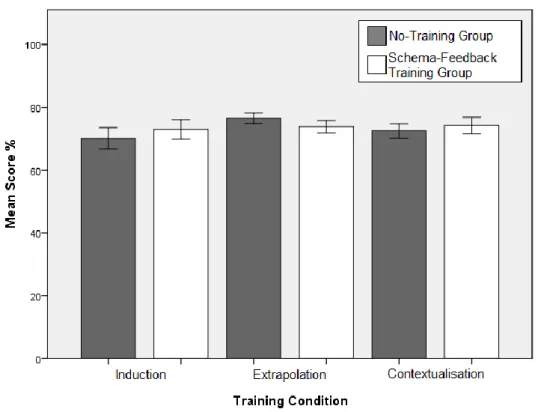
Table 5 below shows the descriptive statistics for each condition. Figures 2 and 3 contain a graphical comparison of mean and median scores attained in each condition.
Table 5
Descriptive Statistics for Subscales by FOR and No-Training Condition
Condition Scale n Mdnd. Md SDd Min. Max. 95% CId
FOR Inductiona 15 80.00 75.00 12.96 10 19 [67.83, 82.17] Extrapolationb 15 79.17 79.00 10.31 13 23 [72.90, 84.32] Contextualisationc 14 72.73 75.00 14.77 10 21 [66.14, 83.21] NT Induction 32 75.00 70.00 18.96 3 19 [63.31, 77.00] Extrapolation 32 77.08 76.00 9.44 14 22 [73.03, 79.84] Contextualisation 32 75.00 73.00 12.88 9 20 [67.94, 77.23] Note. FOR = frame-of-reference; NT = no-training; CI = confidence interval.
a Scores on the induction scale have a possible range of 0 to 19;
b Scores on the contextualisation scale have a possible range of 0 to 23; c Scores on the extrapolation scale have a possible range of 0 to 21; d Given in percentage form.
Figure 2. Graphic representation of mean scores as percentages across FOR training and no-training conditions.
Figure 3. Graphic representation of median scores as percentages across FOR training and no-training conditions.
Hypothesis Testing
Hypothesis 1a. Hypothesis 1a stated that FOR training would increase trait induction scores in an experimental group, when compared to a no-training group. A Mann-Whitney U test attempted to determine the statistical significance of the difference between the medians of the two groups. No significant difference in trait induction was found between the no-training (Mdn = 75.00) and FOR groups (Mdn = 80.00), U = 208.50, z = -0.73, p = .47. Although the difference between the groups was not statistically significant, the results indicated a small effect size, r = -.11 (Cohen, 1988). The small sample size used could be the reason for the non-significant result; however, the effect size indicates that there may be a practically significant effect (Rosenthal & Rosnow, 2008). We retain the null hypothesis. Hypothesis 1b. Hypothesis 1b stated that FOR training would have an effect on trait extrapolation in an experimental group, when compared to a no-training group. An
independent samples t-test attempted to determine the statistical significance of the difference between the two groups. We found no statistically significant difference in trait extrapolation between the FOR training (M = 0.79, SE = 0.03) and no-training groups (M = 0.76,
SE = 0.02), t45, = -.72, p = .48. The results indicated a small effect size, r = .11
(Cohen, 1988). We therefore retain the null hypothesis.
Hypothesis 1c. Hypothesis 1c stated that FOR training would have an effect on trait contextualisation in an experimental group, when compared to a no-training group. An independent samples t-test found no statistically significant difference in trait
contextualisation between the FOR training (M = 0.74, SE = 0.04) and no-training groups (M = 0.72, SE = 0.02), t44, = -.48, p = .63. The results indicated a small effect size, r = .07
(Cohen, 1988). We therefore retain the null hypothesis. Statistical Power
Nonparametric tests have less statistical power when compared to equivalent
parametric tests, particularly when a small sample size is used (Corder & Foreman, 2009). A post-hoc power analysis was therefore conducted to determine whether the null hypotheses have been incorrectly retained, using G*Power (Faul et al., 2009). Statistical power analyses were also carried out on all parametric tests. The relevant effect size, significance level (.05) and sample size were used to determine the statistical power of all Mann-Whitney U tests and t-tests used in the study (Corder & Foreman, 2009). We employed a benchmark statistic of .80 to indicate high statistical power (Cohen, 1988). The analysis reported low statistical power for all tests conducted. Tables 6 and 7 below contain a summary of the results.
Table 6
Summary of Results: Trait Induction
Mann-Whitney U
Hypothesis Tested U z p r Power
Hypothesis 1a 208.50 -.73 .47 -.11 .10 Note. p < .05*
Table 7
Summary of Results: Trait Extrapolation and Trait Contextualisation Independent Samples T-Test
Hypothesis Tested t df p r Power
Hypothesis 1b -.72 45 .48 .11 .36
Hypothesis 1c -.48 44 .63 .07 .08
Note. p < .05*
Discussion: Study 1 Main Findings
In Study 1, we attempted to develop trait induction, trait extrapolation and trait contextualisation in a student sample. The results indicated that FOR training had no effect on all three dispositional reasoning subcomponents. The results of this study mirror the findings of previous research (Powell, 2007; Powell & Goffin, 2009) that attempted to develop dispositional reasoning, specifically trait induction, through FOR training. The results of this study indicate that FOR training is also not effective in developing the remaining dispositional reasoning components of extrapolation and contextualisation. The low sample size for the experimental groups may have been a limitation of the study.
However, there are shortcomings associated with developing dispositional reasoning through the FOR training method that may also explain the lack of effect.
Shortcomings of FOR Training
It is not under dispute that FOR training improves accuracy in a number of
applications (Roch et al., 2011). However, exploration of the concepts underpinning FOR training is necessary. It may be that a rater’s a priori schema affects their accuracy, regardless of training, consequently influencing the results of FOR training. Before undergoing FOR training, raters will have varied conceptions of the meaning of good performance, which may differ from those used by the organisation. A rater’s pre-existing schemas of good performance may not include elements found in the normative schema imposed during training, known as an error of omission (Spranca, Minsk & Baron, 1991; Uggerslev & Sulsky, 2008). Additionally, the rater may initially include elements in their schema of good performance that are not present in the normative schema, known as error of commission (Spranca et al., 1991; Uggerslev & Sulsky, 2008). Although it is relatively easy to adopt new information into a schema, when people are required to change an existing schema by removing a previously held belief there is resistance due to the perseverance effect (Ross, Lepper & Hubbard, 1975; Uggerslev & Sulsky, 2008). The increase in accuracy found in previous FOR training studies may therefore merely be a result of a priori schemas
moderating the results.
FOR training traditionally develops expert schemas in novices, such as accuracy in performance appraisal judgements. However, most people will already have a
well-developed dispositional reasoning schema in place, due to its day-to-day use and refinement in interactions with others. Because dispositional reasoning differs among individuals, it may be that some peoples’ schemas are more correct than others are.
The entrenched nature of the schema may also mean that some people have an incorrect dispositional reasoning schema in place. Because subtraction from an incorrect schema is more difficult, training that attempts to do so in an explicit manner may not be sufficient, due to a resistance to change (Rousseau, 2001). As the FOR approach is largely concerned with enhancing conscious processes, it may not be suited for training dispositional reasoning. A proposed new method of training, schema-feedback, aims to refine already-developed schemas through by targetting the process of dispositional reasoning. The proposed training method will additionally target each subcomponent of the dispositional reasoning construct, as was not done in previous attempts at developing dispositional reasoning (Powell 2007; Powell & Goffin, 2009). We implemented this training style in Study 2.
Study 2: Schema-Feedback Training
To address the potential limitations of FOR training, in Study 2 we propose schema-feedback training as a method to target and refine the dispositional reasoning schematic framework through consistent feedback. Like FOR training, social cognition schema theory informs this method. According to social cognition theory, people are trainable to improve their use of abstract inferential rules that allow them to make sense of situations (Fiske & Taylor, 2013). As people learn better by being presented with new material that is similar to what is already known to them (Tse, 2011), schema-feedback training aims to improve already-existing abstract inferential rules relating to dispositional reasoning.
Schema Refinement
Schema refinement is the proposed process to address the difficulty of controlling and modifying processes that rely on automatic schemas (Holt & Rainey, 2002). Because most people already possess schemas relevant to people perception, training dispositional
reasoning may not be effective if an unsatisfactory method is used (Blanch-Hartigan et al., 2012). The issues of training a new automatic process are compounded by the fact that such processes take a considerable amount of time to learn (Holt & Rainey, 2002). However, incorporating new information into existing schemas is possible if the participant undergoing training already has a schema relevant to the skill to be refined (Tse, 2011).
Schema refinement therefore places an emphasis on both schema construction and automation through training (Van Merrienboer & Sweller, 2005). Any intervention into dispositional reasoning should then be directly related to refining the schemas pertaining to trait induction, trait extrapolation and trait contextualisation, which individuals already possess, in an effort to modify or refine them. As fruitful learning often requires the use of problem-solving and reasoning skills (Van Merrienboer & Sweller, 2005), it would be useful to incorporate this into training dispositional reasoning through practice and feedback
methods.
Practice and Feedback
Practice and feedback training is more successful than other methods at targeting automatic judgement policies (Blanch-Hartigan et al., 2012), such as the dispositional
reasoning schematic framework. FOR training, which only includes limited feedback, would therefore not be appropriate. Schema-feedback training differs from FOR training as it focuses on multiple iterations of feedback in an attempt to refine a schematic framework. Problem solving generally consists of practice and immediate feedback, a process most
people undergo daily. People take part in ongoing practice and receive ongoing implicit feedback in dispositional reasoning through their daily interactions with others. Replicating this natural procedure of schema development may therefore be more successful than
instructional approaches when attempting to train automatic abilities (Blanch-Hartigan et al., 2012).
Only repeated practice can sublimate the need for conscious activity when performing a behaviour (Bargh & Chartrand, 1999; Holt & Rainey, 2002). Therefore, individuals gain expertise when they have repeated exposure to a number of examples of behaviour (Fiske & Taylor, 2013). Additionally, the time needed to perform most tasks decreases with practice (Palmeri, 1999). Therefore, repetitive completion of a task results in automatic behaviour (Bargh & Chartrand, 1999).
As people do not usually receive explicit feedback when making judgement decisions about other people, their automatic reasoning and schemas are rarely challenged in a real-world setting (Blanch-Hartigan, 2012). Conscious feedback will therefore provide the rater with an opportunity to practice evaluation against true scores (Smith, 1986). When
challenged over their dispositional judgements, individuals may re-evaluate their pre-existing schemas and adjust them accordingly (Blanch-Hartigan, 2012). Feedback training with practice has been found to be effective in training raters in performance appraisal (Smith, 1986), and it is of interest to determine whether this approach can be applied to dispositional reasoning training, too.
Schema-Feedback Training for Dispositional Reasoning Components We propose three similar training interventions targeting each of the dispositional reasoning subcomponents, to address the failure of previous studies to target the entirety of the concept. Because training has been found to be most effective when the tool used for training is conceptually similar to the assessment tool used to gauge the effectiveness of training (Blanch-Hartigan et al., 2012), the RIJI dispositional reasoning scale will influence each training programme. Each training programme will therefore be tailored to the theory surrounding trait induction, trait extrapolation and trait contextualisation, discussed in more detail below.
Developing trait induction. The proposed method of developing trait induction training aims to harness the process of spontaneous trait inference, which occurs when a person identifies a behaviour in trait terms, when that behaviour is representative of the trait (Bargh, 1994; Crawford, Skowronski, Stiff, Scherer, 2007). Schema-feedback training will
attempt to refine the process of spontaneous trait inference through feedback targeting the schematic processes influencing trait induction. Continuous feedback will attempt to refine the participant’s schema. As schemas are memory based, feedback training will assist in enhancing encoding, storage and recall.
For example, if an interviewer is unaware that someone who is organised will also be conscientious, they will have an opportunity to examine this claim through schema-feedback training. The feedback they receive in the training may cause them to re-evaluate their idea of conscientiousness, leading to schema refinement. Additionally, if an interviewer holds an incorrect schema about the behaviours linked to personality traits, they have the opportunity to refine these schemas through training. For example, a person who believes that aggression is indicative of extraversion is able to re-evaluate this position. It is therefore hypothesised that:
Hypothesis 2a (H2a): Schema-feedback training will have an effect on trait induction in an experimental group, when compared to a no-training group.
Hypothesis 3a (H3a): Schema-feedback training will be better than FOR training at developing trait induction scores.
Developing trait extrapolation. Over time, implicit personality theories (IPTs) are developed and stored in relevant schemas. The stereotypes that some people hold about individuals from certain groups is an example of how these schemas are used (Grant & Holmes, 1981). These schemas can often be wrong, and do not reflect the person under judgement accurately. For example, someone may wrongly assume that intellectual people are also always shy. Schema-feedback training aims to correct improper assumptions of trait covariance by offering feedback to the ideas held by people who make judgements. Schema-feedback training therefore affords the individual multiple opportunities to refine their judgements schemas and IPTs. Additionally, schema-feedback training provides the opportunity for interviewers to refine their schemas through addition of new information about trait covariance. It is therefore hypothesised that:
Hypothesis 2b (H2b): Schema-feedback training will have an effect on trait extrapolation in an experimental group, when compared to a no-training group.
Hypothesis 3b (H3b): Schema-feedback training will be better than FOR training at developing trait extrapolation scores.
Developing trait contextualisation. Trait contextualisation training would aim to increase the ability of people to correctly identify how a situation may affect another person’s expression of a trait. The aim of a training programme in this regard would be to sensitise raters to the effects of the environment in which judgement is taking place (Bargh, 1994). Schema-feedback training will attempt to refine the participants’ schemas relating to the process of trait contextualisation through ongoing practice and feedback. Participants in schema-feedback training will therefore be given multiple opportunities to either add or subtract from their trait contextualisation schematic framework. Multiple instances of feedback will enhance the participants’ understanding of trait activation (Tett & Guterman, 2000). For example, someone who incorrectly believes that an individual would be able to express empathy while changing a light bulb would be made aware of this assumption. Schema-feedback training would then provide an example of a situation where expression of empathy would be more likely. It is therefore hypothesised that:
Hypothesis 2c (H2c): Schema-feedback training will have an effect on trait contextualisation in an experimental group, when compared to a no-training group.
Hypothesis 3c (H3c): Schema-feedback training will be better than FOR training at developing trait contextualisation scores.
By training raters at a componential level through continuous feedback training, they may be able to increase their dispositional reasoning. Schema-feedback training is
additionally hypothesised to be better at developing dispositional reasoning when compared to FOR training.
Method: Study 2 Research Design
For this second experiment, we again used a between-groups post-test-only
experimental design. The design is not fully-crossed, as not all participants received training on each component. Each condition, with the exception of a no-training group, received a different schema-feedback training programme tailored to a different subcomponent of dispositional reasoning. Table 8 below contains the experimental design. Groups R1, R2 and
R3 took part in schema-feedback training targeted at trait induction, trait extrapolation and
trait contextualisation respectively. Group R4 did not receive any training; we utilised the
Table 8
Experimental Design: Study 2
Treatment group Intervention Observation
R1 X1 O1
R2 X2 O2
R3 X3 O3
R4 O7
Note. R1= induction training group; R2 = extrapolation training group;
R3 = contextualisation training group; R4= contrast no-training group.
Participants
We made use of non-probability convenience sampling. All participants were undergraduates in the School of Management Studies at UCT. Students stood the chance of winning a R250 cash prize for taking part in the study. We recruited 152 participants for the schema-feedback training session, who we randomly assigned to three conditions. The trait induction condition had 41 participants, the extrapolation condition 39 participants, the contextualisation condition 40 participants and the no-training condition 32 participants. In all groups, most participants spoke English as a first language (induction 80.50%,
extrapolation 76.90%, contextualisation 77.50%, and no-training 81.30%). We used the same no-training contrast group from Study 1. Table 9 below contains full age, gender and race descriptive statistics for all conditions.
Table 9
Descriptive Statistics: Study 2
Training Condition Characteristic Induction (n = 41) Extrapolation (n = 39) Contextualisation (n = 40) No-Training (n = 32) Age Mean 20.34 20.62 20.70 21.91 SD 1.28 1.39 1.54 1.67 Race f % f % f % f % Asian 1 2.43 3 7.69 1 2.5 2 6.25 Black 6 14.63 8 20.51 7 17.5 5 15.63 Coloured 9 21.95 12 30.77 10 25 4 12.50 Indian 2 4.87 0 0 1 2.5 1 7.14 White 20 48.78 13 33.33 17 42.5 18 56.25 Other 2 4.87 0 0 0 0 1 7.14 N.A. 1 2.44 3 7.69 4 10 1 7.14 Sex f % f % f % f % Female 29 70.73 32 82.05 34 85 13 40.63 Male 12 29.27 7 17.95 6 15 19 59.38
Note. N.A. = prefer not to answer. Materials
Training task. Participants in each condition took part in a training task. Each task was in the form of a text-based scenario game. The process was designed to be rapid with instant feedback, to mimic the process used in daily life to develop dispositional reasoning. Tasks consisted of 30 questions, each with a choice of three answers: one correct and two incorrect. If the participant chose an incorrect answer, they would receive feedback
indicating that they had chosen the wrong answer. The participants would then have to redo the question until they were correct. We randomised the order of appearance of the questions to reduce the likelihood of cheating (Cozby, 2007). Appendix G contains a flow diagram representing the logic behind the appearance of items. The question and answer process is discussed in further detail for each condition, with examples, below.
We designed all items in the three training tasks to be as distinct as possible from the RIJI post-test, to control for possible priming or maturation. In order to reduce perceived