ScholarWorks
Walden Dissertations and Doctoral Studies Walden Dissertations and Doctoral StudiesCollection
2016
Student Perceptions of Factors Affecting Retention
in a Rural Associate Degree Nursing Program
Jodi Garcia Walden University
Follow this and additional works at:https://scholarworks.waldenu.edu/dissertations
Part of theAdult and Continuing Education Administration Commons,Adult and Continuing Education and Teaching Commons, and theNursing Commons
This Dissertation is brought to you for free and open access by the Walden Dissertations and Doctoral Studies Collection at ScholarWorks. It has been accepted for inclusion in Walden Dissertations and Doctoral Studies by an authorized administrator of ScholarWorks. For more information, please [email protected].
Walden University
COLLEGE OF EDUCATION
This is to certify that the doctoral study by
Jodi Lynn Garcia
has been found to be complete and satisfactory in all respects, and that any and all revisions required by
the review committee have been made.
Review Committee
Dr. Wendy Edson, Committee Chairperson, Education Faculty Dr. Sheilia Goodwin, Committee Member, Education Faculty
Dr. Karen Hunt, University Reviewer, Education Faculty
Chief Academic Officer Eric Riedel, Ph.D.
Walden University 2016
Student Perceptions of Factors Affecting Retention in a Rural Associate Degree Nursing Program
by Jodi Garcia
MSN, Walden University, 2008 BSN, University of New Mexico, 1999 ADN, Trinidad State Junior College 1992 PN, San Luis Valley Vocational School 1990
Doctoral Study Submitted in Partial Fulfillment of the Requirements for the Degree of
Doctor of Education
Walden University October 2016
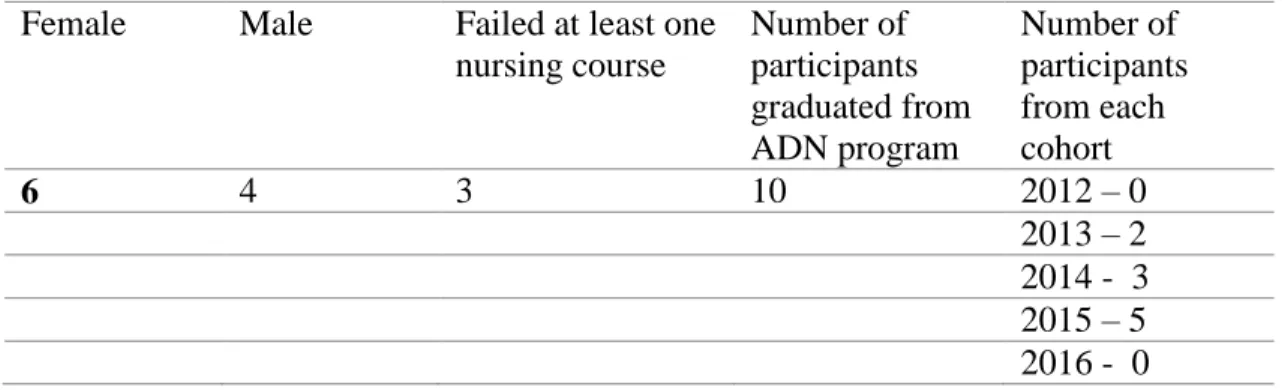
High nursing student attrition rates at a community college in a southwestern state were noted as a significant problem by nursing faculty and college administration because of a nursing shortage and subsequent health care issues in the surrounding community. The purpose of this project study was to explore the perceptions of nursing graduates regarding the influences that led to or impeded their success in completion of the associate degree nursing program. Additionally, perspectives of the usefulness of remediation sessions provided for students failing a course were investigated. This qualitative case study, guided by transformative learning theory, included a sample of 10 nursing program graduates of the community college from 2012-2015, 4 male and 6 female, 3 of which had failed at least one course and participated in remediation during their programs of study. Participants were interviewed and data were coded and analyzed for common themes. Themes included perceptions of being over stressed, awareness of the negativity of peers, the need for self-motivation, making needed changes to increase their own success, and using available resources such as the remediation program even though it was perceived by some as punitive. A professional development workshop for nursing faculty was developed as a project based on these findings to increase faculty knowledge of factors that contribute to nursing student success or failure, assist faculty in identifying and implementing supportive resources that contribute to student success, and introduce them to practices to reduce student stress such as teaching life skills and coping methods. Social change may occur from programmatic changes that enhance nursing students’ success resulting in more nursing graduates to facilitate quality health care in the local community.
Student Perceptions of Factors Affecting Retention in a Rural Associate Degree Nursing Program
by Jodi Garcia
MSN, Walden University, 2008 BSN, University of New Mexico, 1999 ADN, Trinidad State Junior College 1992 PN, San Luis Valley Vocational School 1990
Doctoral Study Submitted in Partial Fulfillment of the Requirements for the Degree of
Doctor of Education
Walden University October 2016
For me, the question was not how did I get here, but rather who helped me get here. The answer to my question would be with my family and friends, without whom none of this would have been possible. I would like to dedicate this study to my family. My husband Eddie, who listened to me when I needed him and offered a shoulder to lean on. My daughters, Jessica and J.J. always believing in me and giving me the confidence that I could do this. My parents, Carlyn and Louise, who stood beside me through it all. My dear friends and co-workers, I am and will be forever grateful to you all.
I would like to acknowledge and thank Dr. Wendy Edson who took the role as my chairperson, thank you for endless hours spent with me the words of wisdom and helping me to persevere even when I didn’t think I could continue. Dr. Edward Garten, though I didn’t have the opportunity to complete my project in its’ entirety prior to your
retirement, I am grateful to you for all of your help and support. You are an amazing person and mentor. Dr. Sheilia Goodwin, thank you for stepping in and guiding my final project. To Dr. Karen Hunt, who was my URR, thank you for the attention to detail and helping me complete my doctoral study. Lastly, I would like to thank my family and friends for believing in me and the unconditional love and support.
i
List of Tables ...v
Section 1: The Problem ...1
Introduction ...1
Definition of the Problem ...1
Rationale ...6
Evidence of the Problem at the Local Level ... 6
Evidence of the Problem from the Professional Literature ... 14
Definitions...17
Nursing Success Seminar (NS3) ... 17
Kaplan Integrated Testing and NCLEX-RN® Review... 18
National Council Licensure Exam for Registered Nurse (NCLEX-RN®) ... 19
Successful Nursing Student ... 19
Significance...19
Guiding/Research Question ...21
Review of the Literature ...23
Conceptual Framework ... 23
Nursing Shortage ... 26
Nursing Student Success and Attrition ... 29
Implications...35
Summary ...37
Section 2: The Methodology ...38
ii
Participants ...41
Criteria, Justification, and Gaining Access to Participants ... 41
Data Collection ...47
Data Collection ... 47
Role of the Researcher and Ethical Considerations ... 49
Data Analysis ...50
Interviews ... 50
Findings...54
Conclusion ...74
Section 3: The Project ...75
Introduction ...75
Description and Goals ...76
Rationale ...77
Review of the Literature ...78
Professional Development ... 79
Need for Nursing Faculty Professional Development ... 81
Seminars and Workshops for Professional Development ... 83
Implementation ...85
Potential Resources and Existing Supports... 86
Potential Barriers ... 86
Proposal for Implementation and Timetable... 87
iii
Implications Including Social Change ...89
Local Community ... 89
Far-Reaching ... 89
Conclusion ...90
Section 4: Reflections and Conclusions ...91
Introduction ...91
Project Strengths ...91
Recommendations for Remediation of Limitations ...93
Scholarship ...94
Project Development and Evaluation ...95
Leadership and Change ...96
Analysis of Self as Scholar ...96
Analysis of Self as Practitioner ...97
Analysis of Self as Project Developer ...97
The Project’s Potential Impact on Social Change...98
Implications, Applications, and Directions for Future Research ...99
Conclusion ...100
References ...101
Appendix A: Professional Development Project ...117
Overview of Program ...118
Program Description ... 118
iv
Proposal for Implementation and Timetable... 119
Program Agenda ...121
PowerPoint Day 1 ...124
PowerPoint Day 2 ...135
PowerPoint Day 3 ...145
Student Success: It Takes a Village ...151
v
Table 1. Program Attrition Rates 2012 – 2014 ... 10
Table 2. NCLEX-RN® Percentage of Pass Rates for Years 2011–2015 ... 11
Table 3. Participant Demographics ... 44
Section 1: The Problem Introduction
Attrition of nursing students is of concern and importance because it leads to fewer qualified nursing graduates taking the national exam for registered nurses and entering the workforce as registered nurses. Harris, Rosenberg, and Grace O’Rourke (2014) reported that a high attrition rate of students enrolled in nursing programs is of concern for society because the demands on health care are anticipated to increase as the population ages and becomes more ethnically diverse. The problem of an insufficient number of nurses is exacerbated as the access to health care expands. Additionally, the decline of nursing graduates is a topic of concern in regard to the financial impact to the college system. As the number of nursing students who fail a program increase, the reputation of the college’s nursing program declines, which can ultimately result in a decline in student enrollment in the nursing program as well as in other areas of the governing institution as well.
Definition of the Problem
High attrition rates of nursing students enrolled in an associate degree nursing (ADN) program is a problem that has been identified by the faculty of a community college nursing program in Colorado (director of nursing, personal communication, August 26, 2013). According to Urwin et al. (2010), the difference between the student count at the beginning of a nursing program cohort and the final number of students completing the program from the same cohort is considered the attrition.
According to Dotson, Dave, and Cazier (2012), the deficiency in the number of graduating nursing students is one of several factors influencing the nursing shortage, and the attrition of prospective nursing candidates is significant, both locally and nationally. The National League for Nursing (NLN; 2011) estimated that 44% of students enrolled in nursing programs will not complete their program. For the nursing program in Colorado, attrition has been identified as a particular cause for concern. In the local nursing
program, attrition rates have ranged between 59% and 88% in recent years. Faculty identified an increase in student attrition from a low of 59% in the 2011-2012 academic year to 70% for 2012-2013, and 88% for 2013-2014 (college nursing faculty meeting minutes, April 3, 2014).
In response to the high nursing student attrition rates, the nursing program has implemented several strategies to reduce attrition. The current tutoring/mentoring
program, Student Nurse Success Seminar (NS3), is offered to students 4 hours each week throughout the semester. This weekly mentoring involves two, 2-hour sessions conducted by nursing faculty members. These sessions are required of students who have not
achieved the required passing score on course unit exams and are open to anyone wanting extra assistance with coursework. Despite attendance at these sessions, students continue to encounter difficulty in learning and retaining the necessary content and skills to remain in the nursing program. Another possible factor bearing on student success in nursing school that was noted by the administration is an increased level of anxiety and frustration for remaining students when their peers fail out of the program (director of nursing, personal communication, August 26, 2013).
According to Fontaine (2014) retention, attrition, and ultimately completion and graduation rates are all measurements that colleges and universities use as an indication of student success. By conducting this project study and understanding the factors that could lead to attrition of nursing students, the local college administration can make the NS3 remediation program more structured and meaningful. A more focused remediation program that gives the student more direction and guidance may improve student
outcomes of gaining more information and clarity about nursing concepts.
A review of possible reasons for an increase in student attrition was conducted by faculty and administration at the Colorado school in an attempt to determine probable causes and develop measures to address them where possible. Several faculty members discussed possible causes for the high attrition rate of the nursing program including current admission practices and other policies such as the rigor of the requirements throughout the nursing program for potential students (nursing faculty RN, MSN, personal communication, September 15, 2014). As a result of the inquiry, faculty
members expressed concern about the need to further review and propose revisions to the admission policy, with the intent to make the admission process stricter. Decreasing nursing student attrition would ultimately result in a greater number of qualified graduating nursing students and qualified applicants to take the National Council Licensure Examination-registered nurse (NCLEX-RN®).
A potential cause of attrition could be the types of students that nursing programs are attracting. Nationally, students are currently enrolling in a nursing program at an average age of 31 (Bureau of Labor Statistics, 2015). A review of the nursing student
population at the Colorado school revealed that most of the enrolled students were nontraditional students, meaning that they were second-career students, with an average age of 28–30 (director of nursing, personal communication, August 26, 2013). The college is also designated as a Hispanic-serving institution (HIS), this designation is based upon the ethnic composition of the service area for the college (U.S. Department of Education, 2016).
Harris, et al. (2014) documented risk factors that have the potential to lead to student failure in a nursing program. These risk factors, also noted by the nursing faculty of the local nursing program (nursing faculty RN, MSN, personal communication, September 15, 2014) include various demographic, personal, and academic variables. Of those discussed, the following are seen as possibly contributing to the lack of success in the nursing program: (a) continued outside employment while enrolled, (b) failure in foundation nursing courses, (c) grade point average of less than 2.5, and (d) scoring less than 76% on nursing course unit exams.
Many research studies have been implemented and reviewed over the past several years in an attempt to understand and predict the probability of nursing students
successfully completing an associate degree nursing program. According to Harris et al. (2014), a nursing students’ grade point average (GPA) in prenursing courses did not predict success or failure in the nursing program. Higher scores in math and reading of the students accepted into an associate degree nursing program have been shown to be related to success. Rouse and Rooda (2010) noted that nursing students who scored higher on standardized exams had a higher probability of successfully completing their
nursing courses as compared to the nursing students who scored lower on the same standardized exam. Included in the study conducted by Rouse and Rooda (2010) was information on factors that impeded a student’s progression in an accelerated nursing program. Rouse and Rooda (2010) identified multifaceted factors including lack of orientation of new students by faculty, students’ limited understanding of expectations of the nursing program, and stressors such as family, academic rigors, insufficient money, and lack of time.
The problems addressed by the faculty members of the community college in Colorado included high attrition rates that continue to exist despite the implementation of remedial resources for students. According to Xu (2016), retention of college students will continue to be an ongoing challenge for colleges and universities for the next several decades, and attrition continues to be a problem that plagues the faculty and
administration of the community college in Colorado. However, the students enrolled in the local nursing program have multiple resources available to them. Use of these resources is sometimes voluntary and sometimes required by faculty to assist with academic success. Successful completion of each nursing course on the first attempt and successful completion of the nursing program is equally important for students, faculty, nursing programs, and health care systems in the face of the current and critical nursing shortage (American Association of Colleges of Nursing [AACN], 2011; Buerhaus, Staiger, & Auerbach, 2009).
Rationale
Institutions of higher education have experienced the challenge of high attrition and the subsequent low graduation rates. Although research has for many years focused on the attrition rates, attrition still continues to be a problem for many institutions. As attrition rates rise at both the national and local level, the problem has been linked to an insufficient number of nurses entering the workforce (Dotson et al., 2012). As the
country’s nursing shortage continues to increase, nursing programs across the nation have been given the mission of educating and training qualified graduates (Harris et al., 2014).
The attrition of prospective nursing candidates is significant, both locally and nationally (Rouse & Rooda, 2010). The growing number of unsuccessful nursing students is also a concern within the field of nursing education. Nursing student attrition is a contributing factor to the current and continuing nursing shortage. In the United States, the generalist nurse, who is a major component of the primary care team, is already in short supply (MacLean et al., 2014).
Evidence of the Problem at the Local Level
Nurses represent the majority of professional health care providers across the world, even with the persistent shortages and misdistributions. According to Bigbee and Mixon (2014), almost two-thirds of rural health care providers in the United States are nurses, and yet historically, the chronic shortages of nurses have particularly plagued rural and remote communities. People living in rural communities have traditionally relied on community resources to meet their needs. This is also true for health care and for health care workers trained to care for the members of the community. According to
the Colorado Rural Health Center (2014), of the 64 counties in Colorado, 17 are classified as urban, 24 as rural, and 23 as a frontier. Frontier counties are defined as “counties with a population density of six or fewer persons per square mile” (Colorado Rural Health Center, 2014). In the rural and frontier communities that the college in Colorado serves, the nursing program is faced with the demands of the local health care system and the need for qualified nursing graduates who will be eligible to take the national nursing exam and eventually enter the field of health care. According to
MacLean et al. (2014), a majority of the world’s primary care workforce is not dispersed equally between urban and rural areas. The World Health Organization (WHO, 2010) found that although 55% of the world’s population lives in urban areas, greater than 60% of nurses live in urban areas. This would imply that there are fewer nurses living in rural areas than in urban areas, leading to the nursing shortage in these areas.
Currently, the school of nursing is faced with low completion rates for those students accepted into the nursing program, which has resulted in limiting the number of graduates and, therefore, the number of future nurses (director of nursing, personal communication, January 15, 2015). According to the director of the nursing program, the attrition rate for the past 3 years has been greater than 59% (director of nursing, personal communication, January 15, 2015). The director and nursing faculty have been
addressing the possible causes and solutions for the high rates of attrition (college nursing faculty meeting minutes, February 10, 2014), a matter that presents many challenges. Even though a student who fails only one nursing course is allowed to continue in the nursing program, the student is required to wait an entire year to do so. This process
delays a prospective graduate nurse from taking the licensing exam and potentially entering the health care workforce. According to the nursing faculty, the best scenario would be to ensure that students successfully complete all nursing coursework on the first attempt along with a demonstration of competent knowledge and understanding of the concepts of the course (personal communication, May 15, 2014).
Student attrition and student retention are closely related. Retention of students in the nursing program has been identified as an important goal. Each school of nursing must report student retention and student first-time pass rates of the NCLEX–RN® to their state boards of nursing and regulatory agencies. Nursing programs are held accountable to the regulatory agencies and the individual state boards of nursing to increase the first-time pass rates of the program graduates, and they must identify factors to decrease attrition rates. Carrick (2011) discussed the regulations that nursing programs must follow, which include the minimum percentage of graduates from a program who will need to pass the NCLEX-RN®. Each state board of nursing in the nation has
individual rules and by-laws that govern the minimum percentages of first-time pass rates of the NCLEX-RN® nursing programs must achieve in order to maintain accreditation. In
order for colleges and universities to ensure that their nursing program remains open, this level must be maintained.
This aspect of regulation by the state boards of nursing is also important in relation to the possibility of nursing shortages in the years to come. According to the AACN (2014), as the baby boomers near the age of retirement and communities witness an increase in health care needs, the nursing shortage continues to have the potential to
worsen. As more nurses are reaching the age of retirement from the nursing field, there are not enough new nurses to replace the positions being vacated. These same nurses who are retiring are themselves also adding to the demands on the health care system over time (Pitt, Powis, Levett-Jones, & Hunter, 2012). Nursing programs across the United States continue their efforts to increase enrollment of qualified nursing students with the intention of ultimately increasing the number of prepared graduates eligible to take the NCLEX-RN® and eventually enter practice in the health care system (Carrick, 2011).
Nursing programs that continue to have a trend of both high attrition rates and low first-time NCLEX-RN® pass rates are at a heightened risk of being denied or losing state or national accreditation. This potential negative impact on schools of nursing could further limit the number of possible nursing graduates and contribute to the further decline in the nursing workforce. From the viewpoint of the college and the community, it is important to increase both student enrollment and retention of those students, with the goal of achievement of earning an associate degree in nursing. This is also vital to both the social health and economic growth of the community (director of nursing, personal communication, August 26, 2013).
Table 1 demonstrates the attrition rates of the nursing students for the years of 2012 -2014. The attrition rate is based on a student’s ability to complete the nursing program within 150%, or five semesters from the time the student entered the program (director of nursing, personal communication, May 2, 2015).
Table 1
Program Attrition Rates 2012 – 2014
Graduates 2012 2013 2014
Admitted/Did Not Complete
Site of study 50/21 43/14 46/22
% 42% 33% 48%
The data presented in Table 1 indicates the attrition rates that have led to the concern about the study site nursing program from the administration, faculty, and other
stakeholders. The number of students who were unable to complete the nursing program remains higher than faculty and administration feel is acceptable (nursing faculty, personal communication, May 2, 2014).
At the study site, the percentage of students successfully completing the NCLEX-RN® has frequently been below the national pass rate. Even with the implementation of an intervention policy or progression policy, the NCLEX-RN® did not improve on a consistent trend. Trends for the past 5 years of NCLEX-RN® first-time pass rates are illustrated in Table 2.
Table 2
NCLEX-RN® Percentage of Pass Rates for Years 2011–2015
2011 2012 2013 2014 2015 National 87.8 90.3 83.0 81.8 84.5 Associate Degree 86.9 89.3 81.4 79.3 82.0 Colorado Associate Degree 82.2 89.9 82.3 74.7 85.0 Site of Study 95.4 72.2 65.6 81.8 93.3
Note. From Colorado State Board of Nursing Education Resources (2015) https://drive.google.com/file/d/0BzKoVwvexVATYS1EUmFjcGQ0U1U/view
No intervention policy or progression policy had been implemented with
consistency until the 2010-2011 academic school year. During the 2010-2011 academic school year, the revision of the remediation procedure stated: “For each course that incorporates standardized testing, all remediation will be required. The required
remediation is to be hand written and submitted to the course instructor within one week of taking the specialty exam” (College nursing handbook, 2010-2011, p. 13). Following the changes to the policy, the NCLEX-RN® first-time pass rates for the study site
increased in 2011 and the percentage of passing students ranked higher than the national scores. However, in 2012 students from the study site again fell below the national average for passing scores. This drop in student success led to the second change in remediation policy that was implemented during the 2012-2013 academic school year, which included the following procedure:
For students not achieving the pre-determined benchmark on the exit standardized exam, which will be administered during the final semester of the program
associated with NUR 230, an incomplete grade will be assigned until such time remediation will be completed (College, nursing manual, 2012-2013, p. 14). Stricter progression policies have been discussed during faculty meetings as a method with which to ensure that competent and safe graduates enter the health care workforce. According to Bland and Gallagher (2009), the intent of a nursing program is to graduate nurses who are competent to administer safe and competent care, and the intent of implementing a stricter progression policy that will retain students not meeting the program’s benchmark is intended to protect the general public. This type of policy allows the student to continue a review of necessary requirements, before progressing to taking a licensing exam.
Discussions with nursing faculty and administration surrounding the high number of nursing students who are admitted into the nursing program along with the high number of students who fail at least one nursing program indicate rising concern
(personal communication, May 2, 2014). Nursing faculty pointed out that in a review of those who fail at least one nursing course, those students have a higher probability of failing a second course. According to the nursing handbook of the site of study, students are only allowed to withdraw and/or fail from two nursing courses. If a student withdraws and/or fails two nursing courses they are no longer allowed to apply for admission to the nursing program for five years (Nursing Student Handbook, 2013-2014, p. 10).
In 2010 – 2011, in an attempt to increase nursing student retention along with the improvement of first-time pass rates of the NCLEX-RN® for graduating students, nursing faculty developed the tutoring/mentoring NS3 program. NS3 is offered to students for 4 hours each week during the semester. The goals for the students and the NS3 program are to successfully pass the required nursing courses and to pass the NCLEX-RN®.
According to the nursing faculty (nursing faculty meeting minutes, May 3, 2013), there is a continued high rate of student attrition from the nursing program in 2014 and a slight improvement of NCLEX first-time pass rates. The NS3 was designed to help the nursing student with study skills, test-taking strategies, and clinical competencies. The seminar is open to both nursing and prenursing students. The schedule of dates and times is posted each semester for students’ scheduling needs. Attendance at the NS3 is mandatory for nursing students who are failing a course; the student will be required to attend the seminars until they are passing the course. NS3 is also mandatory for those nursing students identified by clinical faculty who need remediation with improvements, as stated in the student nurse improvement plan (SNIP). The NS3 can also be a part of a SNIP for nursing students who fail any unit exam in nursing courses; this is at the discretion of the nursing faculty member.
The SNIP is used in all areas of the nursing program: theory, lab, and clinical courses. This plan is a written agreement between the student and faculty member
outlining one or more areas in need of improvement—grades, knowledge, accountability, and behavior—along with action required to correct these areas. The SNIP can also be used to provide the student with a specific plan for remediation of a performance
deficiency that is likely to affect the student’s overall performance and ability to continue in the nursing program. With the plan, the student agrees to correct the identified
deficiencies that have resulted in the unsatisfactory or potentially unsatisfactory performance that may result in failure of a course.
The nursing program administration and faculty have implemented the use of standardized testing throughout the nursing curriculum. The use of Kaplan Integrated Testing and NCLEX-RN® Review® is intended to give both faculty and students an opportunity to identify areas of weakness and strength in learning. This information is also utilized to provide curriculum changes to better prepare the student to successfully complete the required nursing courses on the first attempt and ultimately pass the NCLEX-RN® following their graduation. Students must take course-specific tests at the
designated times throughout the nursing program. If the student does not achieve the benchmark, which is determined by the nursing faculty, the first time the test is taken, remediation as designated must be completed and submitted to the instructor. If necessary, the student will retake the test at a designated time. If the benchmark is not achieved by the student the second time, additional remediation will be required Evidence of the Problem from the Professional Literature
Discussions surrounding the issue of nursing shortages and the impact on
communities have been a topic of roundtables for many years. Bigbee and Mixon (2014) explained the shortage of registered nurses as a global issue but one that manifests to a greater degree in the rural and remote areas. According to Scholz and Spicer (2010) with the Colorado Center for Nursing Excellence found that nursing programs in Colorado
graduate approximately 1,900 new nurses each year, even though 3,000 nurses are needed. This difference in supply and demand will result in increased costs for the Colorado health care system. The dollar amount indicated by the Colorado Center for Nursing Excellence to recruit the necessary 3,000 nurses is estimated at more than $100 million. Harris et al. (2014) addressed the need for more nurses and the challenging task to ensure that colleges and universities are graduating adequate numbers of both
competent and diverse nurses.
In an effort to ease the nursing shortage, it is important to begin at the fundamental level of the nursing program. When students have been identified as demonstrating poor academic performance, they are enrolled in a variety of educational and instructional interventions in an effort to improve their performance(Pennington & Spurlock, 2010). The topic of nursing student attrition along with the potential impact of the nursing shortage was addressed through the literature review. According to the NLN (2010), approximately 80% of the students admitted into RN programs are graduating from the nursing program in which they started. In 2011 the NLN reported an increase in nursing student attrition, with approximately 44% of students not able to complete their program (2011). In an attempt to minimize the number of students who do not complete a nursing program, it is important to understand the influence that losing each student will have on the community as a whole.
An abundance of literature exists related to student attrition and the impact on society as a whole, both at the level of health care and the student. According to Donnell (2015), delayed graduation or inability to complete the nursing program affects more than
just the individual student. The impact is felt in a multitude of ways by the student, the student’s family, and the community in the form of a continued shortfall of nurses entering the health care profession.
There was limited literature and research regarding solutions and interventions for the struggling student, however. According to Bigbee and Mixson (2014), a study
conducted by Parsons among students from rural backgrounds at the University of California, Berkeley, indicated that academic achievement of students comes from a variety of sources: personal drive, self-confidence, assertive attitude, student obligations to scholarship/goals, support of family and friends, relationships with professors, and the use of university-provided support services.
Themes that were identified from the literature review as contributing to nursing student attrition include (a) the prevalence of the nontraditional student in nursing
programs, (b) student feelings of isolation, (c) lack of faculty support for the achievement of the student’s academic goals, (d) student failure in a beginning nursing course, (e) personal factors such as motivation and preferred learning styles, and (f) disillusionment with the profession of nursing and the nursing program policies. The nontraditional student inherently has multiple stressors, such as increased financial strain, employment obligations, and family responsibilities (Harris et al., 2014). Students have expressed feelings of being alone or that “no one understands” as they relate to the stressors and workload of the nursing program. In reference to student attrition, those students who fail an initial or fundamental nursing course also have a potential for failure of higher level nursing courses. According to Carrick (2011), students have reported that faculty were
often overworked and overwhelmed , leaving less time and energy to focus on student needs, resulting in the perception of lack of compassion by the faculty to the students. Any combination of these factors or themes would seem to increase the students’ risk of failure in a nursing course, which could result in failing out of the nursing program.
The purpose of this project study was to explore nursing students’ perceptions of influences that led to or impeded their success in completion of the nursing program at a community college in Colorado. The importance of this study lies in its effort to achieve a better understanding of factors that potentially lead to students’ success in the nursing courses as well as factors that may potentially lead to student failure in the nursing courses. Each student who doesn’t successfully complete the nursing program influences the nursing shortage at the community level as well as at the national level.
Understanding what might lead to or contribute to a student’s success or failure is important to nursing faculty in order for them to implement necessary changes to
promote student success. The ultimate goal of the nursing program is to graduate at least 80% of those admitted into the program with confidence that they are competent and safe.
Definitions Nursing Success Seminar (NS3)
The resources that are available to the students include the NS3, which involves tutoring by nursing faculty and other student success programs. The student success program is driven by the students and guided by the faculty member assigned to the seminar. The areas reviewed are those identified by the students. With a remediation
program, each student is provided an opportunity to address gaps in their level of
understanding of the material covered in each course (Nursing Student Handbook, 2014-2015, p. 12).
Kaplan Integrated Testing and NCLEX-RN® Review
The school of nursing in this study uses the Kaplan Integrated Testing Services and the NCLEX-RN secure predictor exam as a means of determining successful completion of a final course of the nursing program and, ultimately, graduation. A
Kaplan Secure Predictor Exam is designed to assess and evaluate the students’ mastery of nursing content for each nursing level. Through the use of the associated test-taking strategies, case studies, and NCLEX-style questions, the student has the opportunity to enhance understanding of the materials covered during class along with an increased comfort level for answering the NCLEX-style questions (Nursing Student Handbook, 2014-2015, p. 11).
As a means of standardization, the National Council of State Boards of Nursing (NCSBN), provides a more uniform method for all 50 state nursing boards to assess and review common policy, regulations, and procedures that are concerned with public safety and welfare. The NCLEX-RN®, which was developed by NCSBN, is a standardized exam that all qualified graduate nurses take in order to enter the health care field as a registered nurse (RN). Part of what is accomplished by the board members of the council is to establish a common language for the continued guidance and development of role clarification and evaluation, along with the necessary minimum competency standards at the national level (NCSBN, 2014a).
National Council Licensure Exam for Registered Nurse (NCLEX-RN®)
Once the student nurse has successfully completed all of the graduation requirements of the school of nursing program, they are eligible to apply to take the national council licensure exam for registered nurses (NCLEX-RN®). In order to practice as a RN, the graduate must first pass this exam, the NCLEX-RN®. The exam assesses the graduate’s minimum competency in the essential areas for meeting the physical needs and safety of the public; these areas include knowledge, skills, and attitudes of the nursing profession. According to the NCSBN (2014b), the standard has been increased every three years since 1994 because of the high acuity and needs along with the
increased complexity of patient care and the use of technology in nearly every aspect of health care.
Successful Nursing Student
Successful nursing students are defined as those who complete the associate degree nursing program within 5 semesters from the time of entering the nursing program (College, nursing manual, 2012-2013, p. 3). According to Lewallen and Debrew (2012), there are five characteristics of successful students, these include: being prepared, critical thinking skills, ability to build relationships and communicate well, eagerness and
positive attitude toward learning, and showing progress with the ability to accept feedback with adaptations being made.
Significance
Acceptance as a nursing student into a nursing program is only the beginning of a possibly stressful experience for potential nursing students. Issues surrounding attrition
and the ability to retain the nursing student become a major focus for the student and nursing faculty (Donnell, 2015). Attrition is a distressing occurrence for nursing
programs, when so many students who are qualified for admission into programs are not retained (Levin & Calcagno, 2008). The project study purpose was important to both the nursing program and the local community as a whole, as it had the potential to shed new light on the confounding issue of nursing student attrition.
The influence of retention of students on the nursing program was also significant, as it may have led to the possibility of the program’s being closed by the state’s board of nursing. As part of the nursing program approval process, the
administration is required to report not only the number of successful students but also the number of students who fail or drop out of the program. In the frontier and rural communities, the availability of nurses who are willing to live and work in smaller communities is limited. Local health care facilities currently have to utilize travel or agency nurses to ensure that shifts are covered and patients cared for.
The inability to graduate a higher number of qualified nursing candidates from the nursing program will continue to influence the current and future nursing shortage in the community. It is important that nursing program administrators and nursing faculty ensure that those students who are admitted into the nursing program are qualified and have a high probability of success in the program. As a result, the admission process includes the review of several aspects: scores on admission exams, previous college coursework, and previous college degrees. Graduation rates are directly affected by the
retention of students, along with the time and costs that are required to educate nursing students (AACN, 2011).
Understanding why the nursing program in Colorado had a high attrition rate was critical to ensure as many nursing students as possible are able to qualify for admission along with graduating qualified students. Each student who leaves the nursing program before earning their degree results in both the nursing program and the community losing a valuable asset, that of a potential qualified registered nurse and member of the health care team. As prospective students research the vast variety of nursing programs, two criteria are often used: the program’s retention rate and the first time NCLEX-RN® pass rate.
In the rural area where the college is located, information is passed by word of mouth, and retention rates along with student failure from nursing courses is often a common topic of discussion by current and past students. The information related to the NCLEX-RN® pass rate is of public record and located on the state board of nursing website. Both retention rates and NCLEX_RN® pass rates have a direct effect on the number and quality of students who apply to the nursing program. Students searching for nursing programs seek ones with positive outcomes and high rates of nursing student success to help guide their decision to the choice of nursing program.
Guiding/Research Question
The purpose of this qualitative study was to investigate perceived factors
influencing nursing students’ success or requirement to repeat at least one nursing course while enrolled in an ADN program in Colorado. Despite the implementation of a
tutoring/mentoring program by the faculty members of the nursing program at the research site, students continue to fail nursing courses, drop out of school or fail to graduate thus not allowing them to take the required national nursing exam necessary to practice as a RN. The guiding research questions for the study included:
1. What are nursing students’ perspectives of the factors that influence, either positively or negatively, student success or failure in the ADN nursing program?
2. What are nursing students’ perspectives of the usefulness of the NS3 remediation sessions for nursing students in the ADN nursing program? With these questions, I addressed the perceptions of nursing students who have successfully completed all nursing courses on their first attempt and those nursing students who had to repeat at least one nursing course while enrolled in the associate degree program, and exploring factors that contributed to retention. For this study, the perspective was to understand the experiences of the nursing student, at a rural
community college in Colorado. It was anticipated that the participants in the study would verbalize and articulate feelings and circumstances within the context of their experiences in order to gain a greater understanding of what may have contributed to their successful completion of all courses along with the perceived factors that may have led to successful completion of all nursing courses or the potential of failing a nursing course.
Review of the Literature
This review will focus on several topics that are important to nursing education. In an effort to completely understand the importance of nursing student retention, the literature review will include a brief discussion of the characteristics of a nursing student, current attrition causes in nursing programs, review of remediation programs in nursing, and finally, an overview of the attrition of the nursing student. The theoretical framework is also discussed in this review. The background of the issue of attrition of nursing
students is incomplete without a brief discussion of the continuing shortage of nurses in the United States; it is this topic that will begin the literature review.
An intentional research and review was conducted using the internet-based search of peer-reviewed and refereed research, including the following search engines:
Cumulative Index of Nursing and Allied Health Literature (CINAHL), EbscoHost, ERIC, ProQuest, and the ProQuest Digital Dissertation database. The research covered the years 2009-2016 using the keywords nursing program, nursing student, nursing student
attrition, characteristics of the nursing student, nursing student retention, graduation,
admission, attrition, nursing program failure/success, nursing shortage, a predictor of success, academic/non-academic predictors of success, and student success. This search yielded numerous articles, which were divided into appropriate subgroups for further review and relevance and then critically analyzed.
Conceptual Framework
Though many action research studies utilize transformative learning theories this case study research project will utilize the theory as the theoretical base. Jackson, Power,
Sherwood, and Geia (2013) point out that this theory is multi-faceted encompassing a critical discourse along with inspiring candidness to the views and life experience of others, and being willing to understand those ideas that are different than their own. The individual experience of the individual nursing student and how they may have perceived its benefit or lack of benefit is important to understand from an educational standpoint. Transformative learning theory describes how students make meaning or sense from an experience as a way of improving their skills.
Mezirow (1998) described transformative learning as “the process of using a prior interpretation to construe a new or revised interpretation of the meaning of one’s
experience to guide future action.” (p.188). Based upon the learning theory adult learners have expressed the need to find some type of value in what they are doing. In the
educational setting, this remains true as well, in an effort for the educational situation to hold meaning and be worthwhile it is important to provide evidence of value or meaning for the student’s success.
Transformative learning theory explains how students are bringing meaning or are able to make sense of a lived experience as a way of improving their skills. Mezirow (1998) explained transformative learning as “being able to act with confidence on the knowledge gained from the experience and the process of using a prior interpretation to construe a new or revised interpretation of the meaning of one’s experience to guide future action” (p. 188). Utilizing the concepts of this theory could also be a valuable quality gained by using a comprehensive orientation program because it allows students to understand the importance of their experience. According to Dirkx (2012) learners
create and recreate what the meaning of their own life experiences mean to them, and it is with this that the learner becomes conscious of the life experience meanings. Finding value in both why they are doing the task as well as what they are doing during their educational journey is important for adult learners to have to meaning for their personal growth and find the educational situation to be worthwhile.
According to Parker and Myrick (2010), the use of transformative learning theory allows educators to encourage students to confront their thoughts, expectations, and values; thereby allowing them the opportunity to apply these new ideas appropriately in clinical practice. As the students increase their level of knowledge, they gain an increased level of awareness of the expectations and the development of critical thinking skills necessary for the health care profession. The instructor’s role is to teach and support the student to develop a reflective approach in which the student has the ability to realize and interpret their thoughts about their own behaviors. This realization can either support or impede their learning which will, in turn, impact their future performance in nursing and the health care field. It is the role of the faculty to guide the student as they continue their educational journey.
According to Jones (2009), when students attribute their failure to a lack of understanding of the material, they tend to try harder. On the other hand, if they instead attribute the lack of understanding to a limitation of natural ability, they may quit or easily give up, and they may not be able to complete or perform tasks they had been able to previously. As students use transformative learning it is the incorporation of utilizing information gained from previous experiences that will aid them in their success. If a
student is unable to incorporate information and knowledge into new experiences he or she may not be successful. It is this theory that will guide the students’ ability to collect and analyze the data necessary for the study, what information did students learn and how did they incorporate the information into successfully completing nursing coursework. Or, for those students who did not successfully complete a nursing course, how was this information missed or not incorporated during the course.
Enhancing the understanding of what students feel and their motivations surrounding their life experiences are important concepts to review and appreciate in order to make an effort to implement positive changes for future nursing students.
Transformative learning theory guides the research questions as I was attempting to have an improved understanding of what the learner experienced from the context of the nursing student. The goal is to help future nursing students assess their current
circumstances during the nursing program and allow for positive changes to be made. According to Christopher, Dunnagen, Duncan and Paul (2001) educational programs that allow the student to transform their learning from assessment and reassessment and allow for a change to a better or possibly more effective way of doing things, leads to positive life changes for the student.
Nursing Shortage
First, an overview of the nursing shortage in health care will be discussed. From the earliest history of the nursing profession in the United States, health care has
frequently dealt with cyclical nursing shortages; this happens when the supply of nurses in practice is not able to meet the growing demands of the public or there are insufficient
numbers of licensed nurses available (Egenes, 2012). Root causes as identified by Egenes include the following: (a) how the profession of nursing is viewed by the public, (b) employment concerns such as poor salaries and working conditions of nurses, along with (c) a decline in students enrolling in nursing programs.
The current nursing shortage also has a different but similar issue, that of the lack of rural nurses in comparison to urban nurses. According to Dotson et al. (2012), nursing shortages in rural areas are more notable than those in urban areas. Many registered nurses were affected by the recession experienced by the United States in 2008, causing them to return to the workforce in order to supplement or even support their families during the economic downturn (Zinn et al., 2012). As the economy is reviving, many of these nurses are now reviewing the idea of retirement.
Although the nursing shortage has decreased somewhat over the past few years, it is still predicted there will remain a deficit of greater than “260,000 nurses by the year 2025” (AACN, 2011). As more nurses reach the age of retirement, and with the slight upturn of the recession, nursing jobs are expected to increase more than any other occupation. Projected nursing job growth of approximately 16% from 2014 to 2024 is expected (Bureau of Labor Statistics, 2015). With an expected increase in nursing jobs or employment openings, the nursing shortage will be impacted.
As experienced nurses begin to retire and leave the workforce, it is important that adequate supplies of qualified nurse graduates are in training to fill their positions. As recently as 2013, surveys were conducted and published as a collaborative effort between NCSBN and the National Forum of State Nursing Workforce Centers (FSNWCs).
According to Budden, Zhong, Moulton, and Cimiotti (2013), there have been several factors influencing the shortage of nurses which includes the increased proportion of aged individuals within the United States population, the fact that the majority of the current RN workforce is approaching retirement, and the patient Protection and Affordable Care Act. The authors predicted that roughly 30 million more United States residents will become insured and begin seeking more medical attention. Included in the matrix in health care that also causes concern is the potential loss of primary care physicians which will, in turn, lead to an increased workload for nurses and the possibility of further shortages as nurses leave the rural areas for more urban areas and the possibility of a lighter workload.
Another point addressed by Egenes (2012) relates to the fact that the nursing shortage in the United States is cyclical and that the shortage will be noted over time to a certain degree. Each student nurse that is admitted to a nursing program but then fails to successfully complete the program is representative of a considerable loss to the health care industry and ultimately impacts society (Crouch, 2015),In rural Colorado, this issue has been addressed by members of the Colorado Trust, this organization is a health foundation dedicated to achieving health equity, using statistics in its commitment to finding solutions to the current shortage of health care professionals. “This shortage has resulted in longer wait times for fewer services and—in some communities—it has meant a total lack of primary care services” (The Colorado Trust, 2012, p. 4). Staiger, Auerbach, and Buerhaus (2012) called the current state of the nursing workforce “a temporary bubble that is likely to deflate during the next several years.” (p. 1464). Because of this, it
is important that schools of nursing and health care not become complacent but instead prepare for the shortage.
Nursing Student Success and Attrition
In an attempt to meet the nursing workforce demands, an effort has been made to increase the number of qualified nursing graduates. It is this principle that puts nursing programs across the United States in the spotlight of both the public eye and governing agencies. Therefore, it is important to review possible influences that may contribute to both nursing student success and attrition. According to Yeom (2013), nursing program administrators along with nursing faculty are charged with the challenge to facilitate the development of student knowledge, ensure that new graduates are competent, and that they demonstrate organizational and curricular effectiveness. Through these areas of early identification those students that are identified as high risk can be tutored in areas of weakness if necessary. Nursing programs will continue to be challenged to deliver
competent graduate nurses who are qualified to successfully pass the NCLEX-RN® on their first attempt (Roa et al., 2011).
Having a clearer understanding of the factors that impact a student’s success along with measures of student success and retention in the nursing program is another important aspect to address. According to The Accreditation Commission for Education in Nursing (ACEN), retention is defined as the “number of students who complete the program within 150% of the stated program length” (ACEN, 2015). Based upon this definition of retention the director of nursing and the nursing faculty were able to identify retention as an area of concern for the nursing program. It is this definition that was
utilized by the community college in which the study was conducted, to determine the attrition rate of the nursing program.
To have a better understanding of student success and attrition, a brief discussion of the characteristics of a nursing student may shed light on the issue. According to Yesil et al. (2015), nursing students experience a greater level of stress during their nursing program than a traditional university student. Areas of increased stress and conflict are related to a combination of school and hospital experiences. Students entering a nursing program may not have a clear understanding of the vast number of requirements and expectations while enrolled in a nursing program.
Nursing faculty have an acknowledged high level of responsibility in the field of nursing education, and one aspect of this responsibility is being of assistance to nursing students who are having difficulties or struggling academically. According to Poorman et al. (2011), the nurse educator has multiple roles, with one of those roles being an
advocate for the nursing student. This role can be quite challenging and difficult for many nurse educators. As administration and faculty members of nursing programs search for methods to increase student retention, student success programs have been developed. According to Pennington and Spurlock (2010), remediation has gained an increased level of importance recently as nursing schools struggle to increase their NCLEX-RN® pass rates. There are limited data and evidence as to the type and intensity of remediation that is necessary or required to achieve the goal of increasing retention or even increasing the number of students passing the NCLEX-RN®. According to Reinhardt, Keller, Summers,
interventions. These interventions should be mandatory, well-defined, individualized to meet the students’ needs, and used along with test taking strategies to reduce test taking anxiety. In an effort to improve testing scores, a diverse selection of remediation
programs have been used, such as test-taking skills, time management skills, and review of content with the use of practice questions along with stress management techniques (Pennington & Spurlock, 2010).
The expectations of nursing faculty by the nursing student are also an important aspect to understand as well as the opposite, the expectations for the student by the nursing faculty. A point of interest brought out by Pennington and Spurlock (2010) in their review of remediation and themes that were made apparent included the following: students need to take the responsibility of developing their own individualized study strategies. The student has to also accept responsibility to effectively prepare to take the exam by accessing available resources, and finally, standardized exams help students recognize areas of both strengths and weakness when used with other factors such as grades earned in nursing courses (Pennington & Spurlock, 2010). Many factors contribute to nursing student success as well as to academic shortcomings or failures. Urwin et al. (2010) observed that the number of student nurses who fail nursing courses has remained fairly steady over the past five years, but it continues to cause concern, as there is both an ethical and professional incentive to recognize the factors that have led to student nurse attrition and also respond correctly. According to Carrick (2011) one influence that is recognized by nursing students’ efforts to succeed is multifaceted and
includes associations between the perceptions of learning, learning outcomes, and the context being taught.
Topics that have been addressed as having a direct relationship with student success include faculty support, general self-efficacy, goal orientation, first-year grade point average, and commitment to the nursing program (Raman, 2013). Raman pointed out that faculty instructional support and positive student-faculty relationships, along with higher levels of support from faculty, were factors in completing the nursing program. Ensuring that faculty are both supportive and engaged with students is an important aspect of success for both the student as well as the nursing program. Fontaine (2014) pointed out the importance of early identification of the “at-risk” student at the time of admission, would ensure the possibility of providing targeted services focused on their success. The point of faculty support and intervention is that of identification of “at-risk” students early in the nursing program. According to Abele, Penprase, and Ternes (2013), identifying the “at-risk students” would help limit multiple aspects of nursing student attrition. The “at-risk” student may experience additional stressors including an increase in the price of nursing education. Additional time and resources may be needed to prepare students who have difficulty completing the nursing program and achieving their goal of becoming a registered nurse.
It is important to add the definition implemented by nursing programs and state boards of nursing as a means of measuring student success that is used in the literature when discussing student success and nursing program success. Schmidt and
boards of nursing as “NCLEX first-time pass rate as the definitive outcome, because it is used to evaluate and compare nursing programs, attrition, graduation, grades at end of program, exit examination results, and early achievement in nursing program.” (p. 171). In addition to a student’s GPA, other possible predictors of success have been identified. According to Nandeshwar et al. (2011), factors associated with retention are a level of academic preparation and availability of financial resources. Nursing students may not have a full comprehension or clear understanding of the academic demands of a rigorous professional nursing program. There are many important reasons that schools of higher education are becoming interested in the relationship between student expectation and the high risk of attrition (O’Donnell, 2011).
In an effort to address high-risk students, nursing program administrators have incorporated the use of standardized exams (Roa et al., 2011). Nursing faculty and administration began the implementation of standardized exams throughout the nursing program to assist in identification of high-risk students (personal communication, director of nursing, August 26, 2014). One such standardized exam is the Kaplan Integrated Predictor exam, which is administered near the end of the student’s final semester in the nursing program. Students must score at or above a level predetermined by
administration and faculty in order to pass a course. Performance on the exam is reflective of the student’s readiness for the NCLEX-RN® licensing exam. This type of
exam is used to evaluate where students may have weaknesses and allow for
study by McGahee, Thayer, Gramling, and Thomas (2010) confirmed the usefulness of the exam as an indicator of success on the NCLEX-RN® exam.
For both prospective and current nursing students, it may be common knowledge that nursing school has a reputation of being difficult along with a stressful time in life. Many students complain of feeling “overwhelmed” and “stressed out,” and throughout each semester, students express feelings of frustration with the number of requirements and rules that they did not experience during their preparatory coursework (Briggs, 2010). The added workload and level of frustration may lead to dropout. Students who, during preparatory course work, didn’t feel they needed to put much time and effort into earning a passing grade and even experienced high levels of achievement, often begin to struggle with the new level of intensity of nursing school. The vast numbers of strict requirements, rules, and uses of technology that the student must learn (and even master) also contribute to the level of difficulty and stress. This also has the potential to increase the risk of illness and has been shown to increase dropout rates (Briggs, 2010). As nursing programs continue to increase nursing student admissions in an attempt to meet the demand in the workforce, it is equally important to recognize what has the greatest influence on student progression and attrition (Pitt et al., 2012). According to Briggs (2010), this is also true for nursing students as they begin the journey through the nursing program.
Student success is often linked to support systems that include supplemental instruction combined with tutoring. According to Carrick (2011), the expectations of students engaged in student success programs include the following: (a) the program
monitors for gaps in their learning, (b) the tutoring or remediation needs to contain meaning, and (c) it intends positive outcomes. These three expectations are the primary purpose of the remediation programs that are developed and designed for students. The limited availability and lack of a structured tutoring/mentoring program have the potential to increase feelings of isolation of the student who continues to struggle with concepts in the courses or is considered a marginal student, which could ultimately lead to failure of the program and attrition. Students’ feelings of isolation may be
demonstrated in a variety of ways, from feeling alone and even possibly helpless (as they may not know what needs to be reviewed in the nursing courses) to not knowing how to study or organize their time (Harris et al,, 2014).
Implications
This project study was important to the nursing program, as the research findings were able to shed new light on issues related to the causes of student attrition and, equally important, student success. In order to accomplish this goal, the nursing program
administration began by admitting as many qualified nursing students as the program is allowed by the state board of nursing and accreditation agencies. For every nursing student who is not able to successfully complete the nursing program to become eligible to take the NCLEX-RN®, there is the loss of a potentially valuable asset to the health care team. With the findings of this study, I now have a better understanding of possible factors and reasons for student attrition for the nursing program in the local setting. With this information, I created a faculty development program with the intent to enhance faculty understanding of the perceptions of the nursing students. This study also yielded
useful information to a larger population of students, faculty, and administrators by providing an understanding of perceptions or pathways to success and potential
roadblocks. With the information and data collected, I was able to address and bring these factors to the attention of the stakeholders. Discussions related to the possibility of
implementation of positive changes for student success within the nursing program while also decreasing the attrition rate at the local level also evolved from the findings of the study.
Using the data that was retrieved from the participants, which included both successful students and unsuccessful students, I created a faculty development session that will describe to faculty and administration student perspectives of measures and procedures to improve in order to achieve student success. The information will be presented to faculty and administration to help guide them in the development of future programs, to adjust or make changes that would have a possibility of benefit to the student success, in an attempt to decrease students’ feelings of frustration. This
information may also help faculty and administration to identify earlier those students at risk of not completing the nursing program by allowing for early intervention.
Positive social change implications following the completion of this project study may include addressing the nursing shortage by increasing the number of qualified nursing graduates eligible to take the NCLEX-RN®, having a positive effect on the lives of the nursing students, and having a clearer understanding of possible factors in nursing student attrition. In a review of the possibilities for positive social change, the results of the study may have the potential to decrease the nursing student attrition rates at the
community college, as well as improve the number of registered nurses needed to meet the existing and future nursing shortage crisis in the rural community in Colorado.
Summary
Nursing student attrition is an important contributing factor in the nursing shortage and a fact that continues to plague nursing education (Gilmore, 2008; McGregor, 2007; Porter, 2008). It is this level of attrition that is an integral but a somewhat less recognized contribution to the shortage of qualified nurses. As a nurse faculty member at a community college in Colorado, I work closely with students enrolled in the nursing program. I examined the institution in which I am employed, as I would hope to make a positive difference with the research and review of the data
collected. In order for nurse educators to have a positive effect on the rate of attrition, it is important to address the reasons behind both the successful student’s accomplishments and the failing student’s reasons for not attaining success. The following section will describe the research design, setting of the project study and sample, instrumentation with materials, data collection, data analysis, assumptions along with limitations, and the ethical protection of the participants.