Master's Theses and Doctoral Dissertations Master's Theses, and Doctoral Dissertations, and Graduate Capstone Projects
2016
Digital badges for STEM learning in secondary
contexts: A mixed methods study
Angela Elkordy
Follow this and additional works at:http://commons.emich.edu/theses
Part of theEducation Commons
This Open Access Dissertation is brought to you for free and open access by the Master's Theses, and Doctoral Dissertations, and Graduate Capstone Projects at DigitalCommons@EMU. It has been accepted for inclusion in Master's Theses and Doctoral Dissertations by an authorized administrator of DigitalCommons@EMU. For more information, please [email protected].
Recommended Citation
Elkordy, Angela, "Digital badges for STEM learning in secondary contexts: A mixed methods study" (2016).Master's Theses and Doctoral Dissertations. 809.
Digital Badges for STEM Learning in Secondary Contexts: A Mixed Methods Study
Dissertation by Angela Elkordy
Submitted to the Faculty of the College of Education Educational Leadership and Counseling Department
Eastern Michigan University
In partial fulfillment of the requirements for the degree of DOCTOR OF PHILOSOPHY
Educational Leadership
Concentration in Instructional Technology
Dissertation Committee:
Dr. James Berry, Dissertation Chair Dr. David Anderson
Dr. Ella Burton Dr. Jon Margerum-Leys
July 28, 2014 Ypsilanti, Michigan
Dedication Page
To my children, Zachariah (Zack) and Sara, with deepest love and appreciation. I am so proud of you both! You continue to inspire me to be better, always <3
To my parents, Pauline, Gerald and Pat, for nurturing the idea that I could do anything I set my mind to, then cheering me on the way. Much love to you!
To Abdel-Aziz, I’m still learning from you! Love and gratitude xx
To my students, who, through the years, have inspired me to try harder to reach their hearts and minds
To my educator colleagues, who inspire me daily with their persistence, care and dedication.
Acknowledgements
In truth, I always knew that this would be the most difficult, yet joyous, section of this body of work. A dissertation is a journey that no one travels alone, and I am deeply grateful for my travelling companions and guides. Along the way, I learned so much – much of it, not explicitly taught, but visible nonetheless.
The faculty at Eastern Michigan University are outstanding! Thank you to Dr. Jaclynn Tracy, who gave me the opportunity to serve as a doctoral fellow. I learned so much from the experience!
Since a thank you isn’t enough for years of mentoring (!), I honor my mentors through
paying it forward to the next generation of educators, whom I now teach. I am especially appreciative of Dr. James Berry, who is an amazing thought partner, embracing ideas and
sharing excitement without losing sight of the end goal – or how to get there, including landing
the plane. From Dr. Berry I learned the importance of acceptance of my own journey and the
power of support for motivating others. My learning from Dr. Berry, I pay forward by supporting
work, life balance with my students, fun in my classroom and aspiring to an ethic of deep caring. Dr. David Anderson is a great theorist, and statistician, with whom I enjoyed
brainstorming ideas, sometimes for hours. The learning from him I pay forward by teaching
research and data analysis and in the process, transforming educators into the researchers they never believed they would be.
From Dr. Burton, I learned to always consider teachers’ perspectives. I pay forward my learnings from her by aspiring to empower educators’ by making theory accessible and
applicable to their learning contexts. Through Dr. Margerum-Leys, over a decade ago, I began to understand how technology is both tool and pedagogy. He not only encouraged me to pursue
doctoral work, but helped shape its course through his deceptively simple, but profoundly
insightful, questions which compel a learner to think, deeply. I pay forward the learnings from
Dr. Margerum-Leys by sharing my love of appropriately applied instructional technologies, and remembering my place in others’ educational journeys as well as my responsibility to share feedback for meaningful growth.
Along the way, I met some amazing colleagues and shared some special events. Thank you, Dr. Linda Foran, Dr. Mary Osborne, Courtney McCormick, Eva Xingbie and Cheyenne Luzinksi for friendship and support! So fond of you all!
On my journey, I met many inspiring educators. In particular, I’d like to recognize Mrs. Nawal Hamadeh for innovation in leadership and support. Working at the HES Academies, I was fortunate to collaborate with many creative, talented and dedicated teachers. I’m especially grateful to teachers Mr. Malburg, Mrs. Atiyeh and Mrs. Patti Picard for sharing their outstanding ideas.
In general, journeys aren’t memorable unless accompanied by friends and family. I feel blessed to have a supportive family who cheered me along the trip. Much love and gratitude to
my children, Zack and Sara, who hung out in the student lounge while I had classes - who
inspired me, above all, to learn how to engage and empower learners deeply with fun, authentic and designed learning experiences. Dad and S’mum, you are the best examples and we are so blessed to still be learning from you. Love and gratitude to my husband, Abdel-Aziz, from whom I am still learning and look forward to sharing more journeys. My brothers Brian and Bret make
me laugh and keep me humble It meant so much for you both to tell me how proud you are of
me; I am proud of you, loving fathers and husbands that you are. Sister Sarah, I love how you are an educator, too! I am still learning from you and send love to you always.
Many thanks to the vibrant, open and sharing digital badging community for great discussions as well as early feedback on some of my ideas. In particular, I am grateful to Dr. Daniel Hickey.
Dear friends always add joy to the journey and I am blessed with friends whom I love
dearly. My Facebook friends were only a click away, sharing support and encouragement.
Thanks to you, I never feel alone in my endeavors <3 Love to Julie Ann Wilson, who shared my ideas and disappointments. You radiate love and acceptance – and it’s no wonder you are a successful educator!
Much love and gratitude to Susan Gavell, the friend who helps solve the glitches in the travel plan which otherwise would derail the journey. A gifted writer, Ms. Gavell is talented, perceptive and meticulous, qualities which are advantageous in her role as Chief Editor, Sterling International Publications. Thank you for the outstanding editing of this dissertation! (I added copy after editing – mistakes are mine ).
Abstract
The deficit in STEM skills is a matter of concern for national economies and a major focus for educational policy makers. The development of Information and Communications Technologies (ICT) has resulted in a rapidly changing workforce of global scale. In addition, ICT have fostered the growth of digital and mobile technologies which have been the learning context, formal and informal, for a generation of youth. The purpose of this study was to design an intervention based upon a competency-based, digitally-mediated, learning intervention: digital badges for learning STEM habits of mind and practices. Designed purposefully, digital badge learning trajectories and criteria can be flexible tools for scaffolding, measuring, and communicating the acquisition of knowledge, skills, or competencies. One of the most often discussed attributes of digital badges, is the ability of badges to motivate learners. However, the research base to support this claim is in its infancy; there is little empirical evidence. A skills-based digital badge intervention was designed to demonstrate mastery learning in key, age-appropriate, STEM competencies aligned with Next Generation Science Standards (NGSS) and other educational standards. A mixed methods approach was used to study the impact of a digital badge intervention in the sample middle and high school population. Among the findings were statistically significant measures which substantiate that in this student population, the digital badges increased perceived competence and motivated learners to persist at task.
Key words: informal and formal learning contexts, NGSS, motivation, assessment, student
Table of Contents Dedication Page ... 2 Acknowledgements ... 3 Abstract ... 6 Table of Contents ... 7 List of Tables ... 15 List of Figures ... 18
Chapter 1: Introduction and Background ... 20
Introduction ... 20
Science, Technology, Engineering and Math (STEM) Skills Deficits ... 22
Role of Educational Leaders ... 28
Why Digital Badges? ... 31
Overview of the Study ... 35
Problem Statement ... 35
Significance of the Study ... 35
Rationale and Purpose... 36
Conceptual Framework for the Study ... 37
Research Questions ... 38
Definition of Terms... 39
Limitations and Delimitations ... 42
Summary ... 43
Organization of Chapters 2-5 ... 43
Chapter 2: Literature Review ... 45
Information Communications Technologies and the Changing Global Context ... 45
A New Paradigm ... 49
Skills Gaps ... 53
Need for STEM Knowledge, Skills, Practices and Habits of Mind... 58
Growing Up in a Digital World: Disengaged ... 65
Digital Media in Learning Contexts ... 68
Learning and Assessment in a Connected Learning Environment ... 71
Leadership and Technology Integration ... 75
Motivation ... 77
Digital Badges for Learning in Formal and Informal Contexts ... 79
Digital Badges and Informal Learning ... 79
Badges: Pro and Con ... 89
Badges and Motivations ... 90
Summary ... 92
Conceptual Framework ... 95
Research Hypotheses ... 95
Research Questions ... 96
Operational Definitions ... 96
Research Design... 98
Theoretical Basis for Mixed Methods Design ... 100
Validity and Reliability of Quantitative Methods. ... 102
Validity and Reliability of Qualitative Methods. ... 104
Research Methodology ... 105
Sampling and Recruitment ... 105
Procedures ... 109 Study Preparation. ... 109 Study Implementation. ... 115 Data Collection ... 116 Quantitative Data. ... 116 Qualitative Data. ... 119 Data Analysis ... 120 Quantitative Analyses. ... 120 Qualitative Analysis. ... 120
Chapter 4: Quantitative Data Results and Findings ... 122
Quantitative Analysis ... 123
Student Pre- and Post-Survey Data: Descriptive Statistics ... 123
Respondents. ... 123
Pre-Program Data... 124
Problem Solving Strategies ... 124
Texts per Day ... 125
ICT and Digital Media Use ... 126
Sharing Accomplishments Online ... 129
Post-Program Data ... 132
Earn More Digital Badges ... 132
Using Digital Badges for Learning ... 133
Use Digital Badges Again ... 136
Digital Badge Learning and Out-of-School Learning ... 137
Digital Badge Sharing ... 140
Pre and Post-Program Comparative Analysis ... 141
Self-Efficacy Pre- and Post-Measures ... 142
Self-Regulation Pre- and Post-Measures ... 142
ANOVA Analysis ... 142
Factor Analysis ... 144
Regression Analysis ... 163
Post-Independent and Post-Dependent Variable Regressions ... 165
Chapter 5: Qualitative Data Results and Findings ... 169
Educator Pre- Survey Data: Descriptive Statistics... 170
Using Digital Badges: Students ... 176
Using Digital Badges: Students Say ... 177
Focus Group ... 179
Instructional Processes ... 180
Assessment Practices ... 181
Teachers – General Observations and Comments ... 182
Students ... 185
Digital Badges ... 187
Challenges ... 188
Changes ... 188
Using the Digital Badges in the Future ... 189
Artifact Analysis ... 190
Instructional Processes – Teacher B ... 190
Feedback Processes ... 193
Digital Badge Design – Suggested Modifications ... 196
Chapter 6: Conclusions ... 197
Digital Badges for STEM Learning ... 197
Self-Efficacy ... 198
Affect ... 199
Learning Behaviors ... 199
Motivation ... 200
Student-Level Factors ... 201
Learning Environment and Implementation Factors ... 202
Carefully Designed and Applied, Digital Badges Could Lead to Good Learning ... 202
Implications for K-12 School Leaders ... 204
Recruitment challenges. ... 204
District level challenges. ... 205
Digital badges for K-12 districts. ... 206
Implications for K-12 Teachers and Practitioners ... 208
Implications for K-12 Students ... 209
Implications for Theory ... 210
Connections to Connected Learning Model ... 210
Applications of Digital Badges for Motivation ... 211
The Benefits of Badges ... 212
Recommendations for Future Research ... 214
References ... 217
Appendices ... 244
Appendix A: Human Subjects Approval ... 245
Appendix B: Variable Tables – Student Pre-Survey ... 246
Appendix C: Variable Tables – Student Pre-Survey ... 247
Appendix D—Youth Pre-Program Survey ... 248
Appendix E – Youth Post-Program Survey ... 249
Appendix F –Educator Pre-Program Survey ... 250
Appendix G – Educator Pre-Program Survey ... 251
Appendix H – Digital Badge Design Documents (InfoMaker) ... 252
Appendix I – Digital Badge Design Documents (Data Whiz) ... 254
Appendix J – Digital Badge Design Documents (Data Whiz – Student Version, Level 1) . 255 Appendix K – Digital Badge Design Documents (Data Hacker) ... 256
Appendix K (ii) – Digital Badge Design Documents (Data Hacker) ... 257
Appendix L – Program Implementation Manual ... 258
Appendix M – Informed Consent (Parents, English) ... 259
Appendix N – Informed Consent (Parents, Arabic)... 260
Appendix Q – Informed Consent (Teachers) ... 266
Appendix R – Informed Consent (Principal) ... 267
Appendix S: Select Statistical Analyses ... 268
Paired Sample T-Tests ... 268
ANOVA ... 272
ANOVA with all Factors ... 274
Appendix T- Student Open-text Question 20: ... 276
Appendix U - Student Open-text Question 25: ... 278
Appendix V -- Interview Transcript (Questions by PI) ... 282
List of Tables
Table Page
Table 1. Frequency Table of Student Respondents by Grade (Pre- and Post-Program) ... 123
Table 2. Student Texts per day, by Grade (Percentage) ... 125
Table 3. Student Sharing Behaviors of Accomplishments ... 130
Table 4. Comparison of Means for Work Preferences ... 131
Table 5. Frequency Table Showing Student Response by grade: Q. 8 (Post) ... 132
Table 6. Frequency Table Showing Student Response by Grade: Q. 12 (Post) ... 133
Table 7. Frequency Table Showing Student Response by Grade: Q. 15 (Post) ... 134
Table 8. Frequency Table Showing Student Response by Grade: Q. 26 (Post) ... 135
Table 9. Frequency Table Showing Student Response by Grade: Q. 28 (Post) ... 137
Table 10. Frequency Table Showing Student Response by Grade: Q. 30 (Post) ... 137
Table 11. Frequency Table Showing Student Response by Grade Q. 33 (Post) ... 139
Table 12. Frequency Table Showing Student Response by Grade: Q. 32 (Post) ... 140
Table 13. Paired Samples Test: Measures of Self-Efficacy ... 142
Table 14. Paired Samples Test: Measures of Self-Regulation ... 142
Table 15. ANOVA Showing Significant Differences Between Groups ... 143
Table 16. Pre-Survey Only Factors ... 145
Table 17. Learning Environment Performance ... 146
Table 18. Learning Environment Student Voice ... 147
Table 19. Learning Preferences ... 147
Table 20. Share Accomplishments ... 147
Table 22. Perceived Competence ... 149
Table 23. Sharing Behaviors... 150
Table 24. Interest Activity ... 151
Table 25. Student Choice ... 151
Table 26. Badge Instruction ... 152
Table 27. Badge Value ... 152
Table 28. Badge Again ... 153
Table 29. Factors of Pre-Measures with Post- Equivalents ... 153
Table 30. Self-regulation (Pre) ... 155
Table 31. Task Value (Pre) ... 156
Table 32. Self-efficacy (Pre) ... 157
Table 33. Learning Goals (Pre) ... 158
Table 34. Recognition (Pre ) ... 158
Table 35. Factors of Post Measures with Pre Equivalents ... 159
Table 36. Self-RegulationA (Post) ... 160
Table 37. Self-regulationB with Self-efficacy (Post)... 161
Table 38. Self_efficacy2 (Post) ... 162
Table 39. Task Value (Post-) ... 162
Table 40. Collaboration (Post) ... 163
Table 41. Self-Efficacy (Post DV) Variable ... 163
Table 42. Badge Learn Post Final (DV) ... 164
Table 43. Perceived Competence (Post) ... 165
Table 45. Student Perceived Choice (Post DV) ... 167
Table 46. Badge Learn (Post DV) ... 167
Table 47. Paired Samples Test: Measures of Self-Efficacy ... 268
Table 48. Paired Samples Test: Measures of Self-Regulation ... 269
Table 49. Paired Samples Test: Measures of Task Value ... 270
Table 50. ANOVA Comparing Means of Interest Measures by Gender: Q. 7 (Post) Girls ... 272
Table 51. ANOVA Comparing Means of Interest Measures by Gender: Q. 7 (Post) Boys ... 273
List of Figures
Figure Page
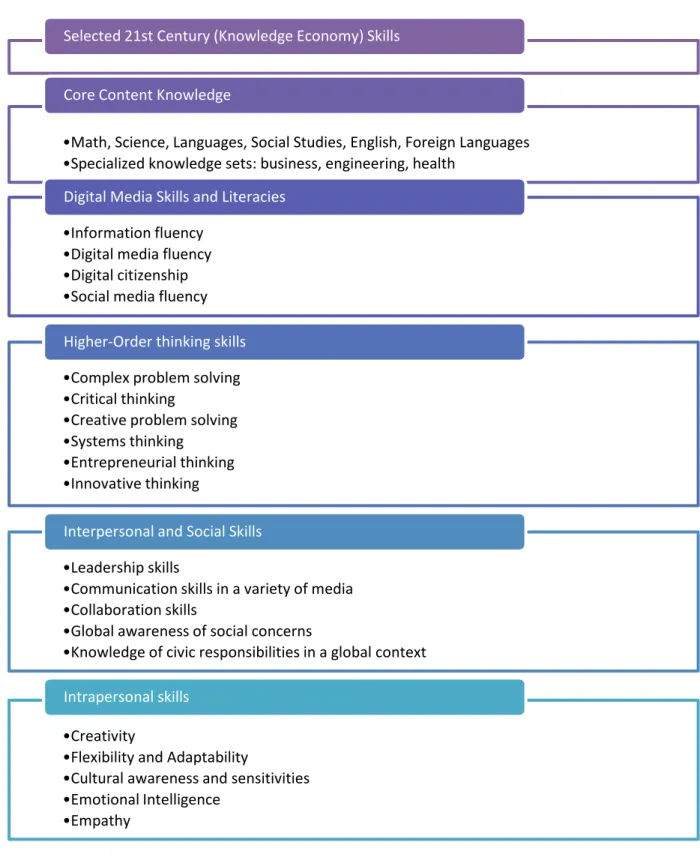
Figure 1. 21st workplace skills based upon the P21 and other frameworks... 57
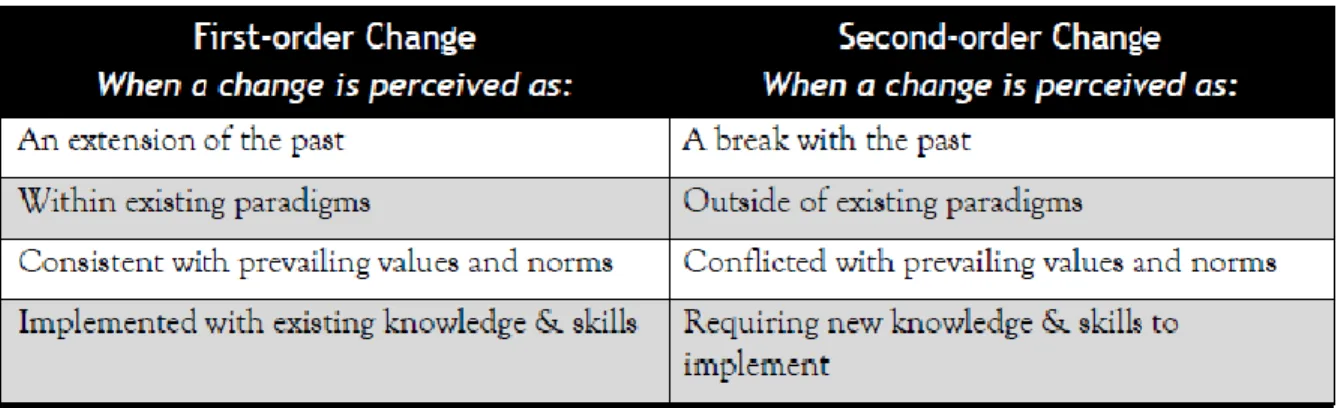
Figure 2. First versus second order change (Waters & Marzano, 2006, p. 18). ... 74
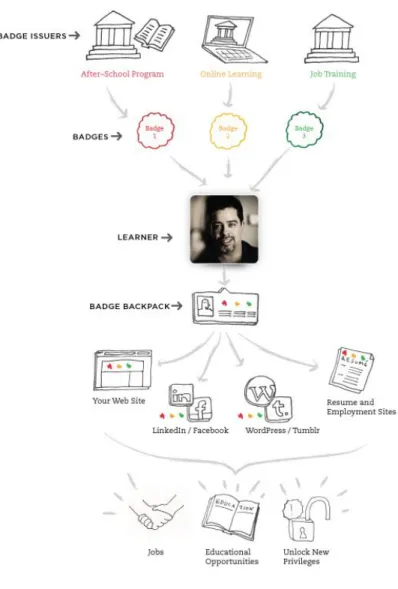
Figure 3. How the OBI works. ... 87
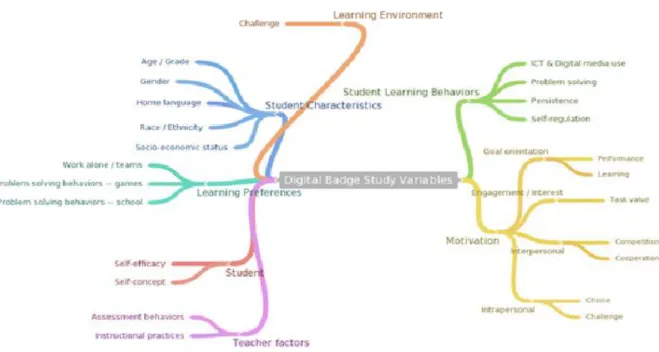
Figure 4.Digital badge study variables. ... 96
Figure 5. Research design diagram. (Plano Clark & Creswell, 2007). ... 99
Figure 6. Badgebox Website ... 109
Figure 7. Framework for construct validity. ... 119
Figure 8. Figure showing problem solving strategies: Q. 10. ... 125
Figure 9. Student ICT use: Q. 12. ... 127
Figure 10. Student ICT use: Q. 13. ... 127
Figure 11. Student online activities: Q. 15. ... 128
Figure 12. Student ICT use: Q. 14. ... 129
Figure 13. Student problem solving behaviors Q. 20. ... 131
Figure 14. Teacher A response to Q. 20 in the post survey ... 175
Figure 15. Teacher B response to Q. 20 in the post survey ... 175
Figure 16. Student Post-Survey Responses: ... 177
Figure 17. Student Post-Survey Responses: ... 179
Figure 18. Buckets or major themes: Focus Group ... 180
Figure 19. Digital badge workflow (7th Grade, Social Studies) ... 192
Figure 20. Teacher Feedback Taxonomy ... 193
Figure 22. Components of learning with digital badges... 203
Figure 23. The possible benefits of badges in K-12 contexts. ... 213
Chapter 1: Introduction and Background Introduction
Transformed by advances in computers and Information Communications Technologies (ICT), our world has become interconnected and networked on many levels. Perhaps now more than ever, countries are forced to respond to global events, particularly trends in economics. As our systems become more dependent upon knowledge in science, technology, engineering, and math (STEM) disciplines, there is an increasing, yet unmet, demand for workers with expertise in these fields (United States Department of Commerce a, 2012; U.S. Department of Commerce b, 2012; Gmür & Schwab, 2014).
Since the enactment of the No Child Left Behind (2002) legislation, there have been
substantially increased demands for accountability by educators in formal K-12 educational
contexts (Darling-Hammond, 2006). In particular, there has been concern and scrutiny in STEM instruction and outcomes because of a widening skills deficit in STEM disciplines and expertise (Committee on Prospering in the Global Economy of the 21st Century (U.S.), 2007).
Paradoxically, as the demand for personalized learning paths has increased (Kentucky
Department of Education, 2013), the trend toward standardization of curricula and assessments
has also increased. An outcome of the focus upon measuring achievement through standardized
testing has been the narrowing of curricula. Furthermore, standardized testing does not
effectively measure the critical thinking or problem skills (Darling-Hammond, 2006) which are critical to STEM learning.
Youth and digital media researchers Ito et al., (2008) noted: “By its immediacy and breadth of information, the digital world lowers barriers to self-directed learning,” (p. 2). Despite the proliferation of lifelong and life-wide learning enabled by ICT and digital media, K-12
schools have not yet fully leveraged technologies in daily learning contexts. As a result students, particularly at the secondary level, experience disconnect between their preferred, self-motivated interest learning and their schools.
The processes of systemic education reform occur within financial, cultural and social
contexts within bounds and constraints. Problems within the K-12 STEM Pipeline are complex
and entangled with equity issues (Congressional Commission on the Advancement of Women and Minorities in Science, Engineering and Technology Development, 2000). The outcomes of national standards initiatives will inform curricula and assessment in K-12 formal contexts, but will not advance a system of personalized learning pathways which articulate individual competencies.
A new system called digital badges, has been proposed as a method to scaffold, facilitate assessment, recognize, and communicate learning (Gibson, Ostashewski, Flintoff, Grant, &
Knight, 2013). Digital badges are virtual symbols of achievement. Open digital badges comply
with an open technical standard, the Open Badge Infrastructure, developed by Mozilla (Mozilla Foundation, n.d.). Open badges have eight metadata fields which describe the criteria completed to earn the badge, the issuer, and information such as standards. The digitized evidence or products of learning may also be attached to individual badges. The accumulated badges may be displayed online in learning management systems, e-portfolios and web sites, for example.
Digital badges have been successfully implemented as symbols of achievement and affiliation in game-based learning contexts to motivate learners. Digital badges have unique affordances to confer agency, motivate learners and function as boundary objects recognizing and leveraging learning in both formal and informal contexts. Through the accumulation of badges, learners can share their unique competencies or skills including self-directed, interest
learning. An interconnected system of digital badge ecosystems may be used to measure and communicate learning in informal as well as classroom contexts.
Robust, standards aligned digital badges have the promise and capacity to become
flexible and powerful instructional tools with associated pedagogies. The premise and promise of digital badges in K-12 contexts, is particularly pertinent to educational leaders who are charged and challenged to continuously improve systems, processes, and outcomes of instruction. As instructional leaders of their districts, educational leaders in K-12 contexts:
must know principles for sustaining a[n] …instructional program conducive to student learning …This includes knowing how to align and focus work to focus on student learning … and human development theories, proven learning and motivational theories, and how diversity influences the learning process…. Infusing technology into leadership practices has become a recognized domain of practical knowledge essential to effective
instructional leadership. (National Policy Board for Educational Administration
(NPBEA), 2011, p. 11)
Science, Technology, Engineering and Math (STEM) Skills Deficits
Developments in ICT have also precipitated significant change in the processes and systems of non-STEM workplaces. The result is an increased demand for STEM skills, particularly those associated with creativity, invention, and complex problem-solving. As a result, there is widespread concern about the deficit of skilled STEM workers, a perplexing problem because knowledge and activities in STEM fields are directly linked to innovation. Hence, nations’ abilities to compete in the global marketplace are directly impacted by the shortage of STEM skills (Bosworth et al., 2013).
Numerous studies over the past decade have underscored the essential nature of STEM skills for U.S. competitiveness and innovation, especially in the context of a global marketplace (Congressional Commission on the Advancement of Women and Minorities in Science,
Engineering and Technology Development, 2000; U.S. Department of Commerce b, 2012). The shortfall of skilled STEM workers is a major concern for the United States:
Despite the clear demand for STEM talent by domestic employers, the U.S. is failing to produce an ample supply of workers to meet the growing needs of both STEM and non-STEM employers. The existing non-STEM pipeline leaves too many students without access to quality STEM education, and without the interest and ability to obtain a degree or
work in STEM.(U.S. Congress Joint Economic Committee, 2012, p. 3)
Not only are there specific skills deficits, there is significant underrepresentation of large demographic groups, specifically women and minorities, in the STEM workforce.
The reasons for the deficits in STEM workers are complex and varied, which impedes a resolution. For example, there are substantial, persistent, achievement gaps in STEM and other critical areas for some underserved youth; Black and Hispanic students, in particular, must be ameliorated for increased minority participation in the STEM workforce. (U.S. Congress Joint Economic Committee, 2012; Gonzalez & Kuenzi, 2012; Ito et al., 2013).
In addition to achievement gaps for minority students, other concerns in the STEM education pipeline, particularly in the K-12 segment include teacher quality, academic
achievement gaps of all students, performance in international assessments Program for
International Assessment (PISA), and Trends in International Mathematics and Science Studies
(TIMSS), as well as the comparative position of the U.S. in the global STEM education (Gonzalez & Kuenzi, 2012; U.S. Department of Commerce, 2012). Further issues, particularly
for women and minorities, include the lack of student engagement in STEM activities, which is associated with greater academic achievement, persistence at task and effective use of
metacognition (Fredericks, Blumenfeld, & Paris, 2004), and the development of STEM identities.
A lack of student engagement in STEM activities results in lower motivation in STEM learning, lower academic achievement, and reduced efficacy in the use of metacognitive strategies. This impacts the developmental processes of STEM identities, which relate to self-concept and self-efficacy, particularly for women and minorities. Ultimately, these factors influence students’ interest in STEM activity and education and the decision whether or not to pursue post -secondary education STEM disciplines.
American students’ performance on international standardized tests suggests problems
earlier in the STEM pipeline. For example, U.S. 15-year-olds rank 25th in math and 17th
in science in PISA scores among Organisation for Economic Co-operation and Development nations (OECD)…that problems in U.S. STEM education may begin as early as elementary school and continue through students’ secondary and post-secondary education. (U.S. Congress Joint Economic Committee, 2012)
In the United States there is substantial concern over the decline in U.S. performance in
international measures of learning in science and math such as the Program for International
Assessment (PISA) and Trends in International Mathematics and Science Studies (TIMSS) (U.S. Congress Joint Economic Committee, 2012; U.S. Department of Commerce b, 2012). Education,
a crucial link in the STEM pipeline, is an important conduit to skilled STEM workers.
skills, but also skills gaps between the workforce and educational outcomes(Bosworth et al., 2013).
Among the 34 OECD countries, the United States performed below average in
mathematics in 2012 and is ranked 27th … Performance in reading and science are both close to the OECD average. The United States ranks 17 in reading, (range of ranks: 14 to 20) and 20 in science (range of ranks: 17 to 25). There has been no significant change in these performances over time (Organisation for Economic Co-operation and
Development, n.d.).
The implications of poor performance on the PISA test are important because “… as the National Science Foundation (NSF) noted, the PISA tests … ‘emphasize students’ abilities to apply skills and information learned in school (or from life experiences) to solve problems or make decisions’” (Lehming et al., 2010; U.S. Congress Joint Economic Committee, 2012). “Disadvantaged students show less engagement, drive, motivation and self-beliefs than advantaged students” (Organisation for Economic Co-operation and Development, n.d.). “There is a need for more effective communication between the education community and business community to
determine what students need to know and be able to do to be successful in the workforce” (Kentucky Department of Education, 2013).
Interest in school reforms. In the past 50 years, federal legislation has been directed at ameliorating educational systems in the U.S., including the Johnson era Elementary and
Secondary Education Act (ESEA) of 1965 and its Bush era reauthorization: “No Child Left
Behind Act of 2001” (No Child Left Behind Act of 2001, 2002). Despite these federal mandates,
achievement gaps persist for U.S. students for whom educational reforms have not yet been effective, particularly ethnic and racial minorities and children living in poverty (National Math
+ Science Initiative, n.d.); (Congressional Commission on the Advancement of Women and
Minorities in Science, Engineering and Technology Development, 2000).
Although there are myriad opinions about the failure of our educational systems, a compelling argument is that at least partial blame for failure may be attributed to Cozolino’s (2013) statement,
… most schools are based on a model of industrial production where uniform materials are converted into a predetermined product. This model has proven itself over the last 150 years and works exceptionally well for making automobiles, washing machines, and chicken nuggets. (p. x-vi)
The skills needed today require more innovation and a deep understanding of math and science.
Industrial models of education based upon Taylorist principles of scientific management, suitable for mass production of goods, constrain development of the human infrastructure
necessary for knowledge-intensive economies (Florida, 1995). Patrick and Sturgis (2013) advise that “it is unlikely that they can grow and sustain fully developed systems that let our children soar to new levels of achievement under the burden of the time-based, agricultural schedules and rigid, age-based structures” (Patrick & Sturgis, 2013). Seat time requirements(Kentucky
Department of Education, 2013) do not promote or inculcate a vision of life-long, self-directed, learning.
U.S. policy makers have responded with numerous well-intended legislations, mandates, and federal programs to ameliorate these challenging concerns, which have resulted in a network with intermittent gains but little widespread progress (Gonzalez & Kuenzi, 2012) Some reforms have actually exacerbated the problems; for example, one of the outcomes of the No Child Left
Behind Act of 2001 (NCLB) legislation has been an increase in standardized testing to assess
adequate yearly progress (No Child Left Behind Act of 2001, 2002). According to Willis (2006), Traditional and especially standardized tests assess only a few parameters such as
rote memory, ability to follow instructions, organization, and time management. Testing that emphasizes those parameters gives students the message that those are the primary qualities of thinking inside the box that are valued most. (p. 59)
Many STEM competencies, particularly higher-order thinking skills, are not measured well by standardized testing methods and in fact, have harmful effects caused by the reliance upon multiple-choice format (Frederiksen, Glaser, Lesgold, & Shafto, 2013). The testing regimens required by NCLB may actually force states to abandon higher standards and forward-thinking assessments “that measure critical forward-thinking and performance, just as the labor market increasingly demands these kinds of skills” (Darling-Hammond, 2006).
States must comply with the law and use the most cost-effective methods. The negative impact of standardized testing, however, is a significant concern for a variety of reasons, which are detrimental in developing the creative thinking habits necessary for STEM disciplines. For example, according to Zhao (2012), there is a strong association between countries that score high on international tests, and a low level of entrepreneurship (p. 11). According to researcher Kyung Hee Kim (2011), as cited by Zhao (2012), there was significant decline in several
indicators of creativity in adults and children 1990-2008, as measured by the Torrance Test of
Creative Thinking (p. 13),which coincided with the introduction of NCLB reforms. Norm-referenced tests, ineffective in measuring or cultivating higher-order thinking skills, may also demotivate students (Hatti.e., 2009).
A pivotal report, Rising Above the Gathering Storm: Energizing and Employing America for a Brighter Economic Future (Committee on Prospering in the Global Economy of the 21st Century (U.S.), 2007) focused attention upon perceived weaknesses in the U.S. STEM education.
In response, federal legislation was enacted, the America Creating Opportunities to Meaningfully
Promote Excellence in Technology, Education, and Science Act of 2007 (America COMPETES Act). Reauthorized in 2010, the Act moved forward toward reauthorization in 2014 with
numerous provisions for strengthening STEM learning: incorporating arts and design (STEAM), strengthening the role of the National Science Foundation (NSF) in informal science learning, and bolstering the use of educational technologies and educational research (Democratic Staff of the House Committee on Science, Space, and Technology, n.d.).
Role of Educational Leaders
Educating students for an uncertain future requires a flexible, adaptive approach with a focus upon competencies consistent with a significant epistemological change necessitated by the paradigm shift resulting from myriad ramifications of ICT. For these transformational processes to be assimilated into formal learning environments, new pedagogies must be
developed and practiced, which will require time to develop. Nonetheless, 21st century skills are being attained independently through interest-driven learning in informal environments.
However, because there are currently no official mechanisms to measure, reward, or recognize these achievements, learners are disadvantaged because their accomplishments are not formally acknowledged or effectively communicated to interested audiences such as educational institutions or potential employers. Innovators in industry and education are excited about the potential of digital badging systems to ameliorate this deficit.
STEM learning and engagement. Viewed from a sociocultural lens, processes of learning are highly contextual and are both individual and socially constructed. Learning is embedded and defined within social and cultural frameworks (Vygotskiĭ, 1967; Brown, Collins, & Duguid, 1989; Lave & Wenger, 1991; Bruner, 1996; Wenger, 2000; Lemke, 2001; Brown & Adler, 2008). Increasingly, our youth, particularly teens, are disengaged from formal educational contexts for a variety of reasons, but because they view them as irrelevant and disconnected to their cultural contexts (Ito et al., 2013). Our youth have grown up in a world with
Internet-facilitated communications, digital media, virtual knowledge networks, and constant connectivity as the norm. They engage daily in learning through participatory cultures, (Delwiche &
Henderson, 2012), through which communications, knowledge creation, and learning are both interconnected and social processes (Jenkins et al., 2009).
The formal learning environments of young people are a stark contrast, bound by time, location, and resources. Considering learning from a socio-cultural context, it is easy to see why many youth struggle with lack of relevancy and stimulation in formal learning contexts when a strange learning dichotomy exists between learning in school and their preferences for learning informally.
Bruner, observed this dichotomy. Writing in (1966) in Toward a Theory of Instruction, he
postulated,
The will to learn is an intrinsic motive, one that finds both its source and its reward in its own exercise. The will to learn becomes a ‘problem’ only under specialized
circumstances like those of a school, where a curriculum is set, students confined, and a path fixed. The problem exists, not so much in the learning itself, but in the fact that what
the school imposes often fails to enlist the natural energies that sustain spontaneous learning – curiosity, a desire for competence, aspiration to emulate a model. (p. 127)
Youth, especially those in underserved communities, face challenges at school and home, which affect the development of traits, skills, and qualities critical to academic success in STEM learning and their level of engagement. “Research has also shown that youths ’goals for STEM learning, their self-efficacy, and the value that they assign to STEM tasks and activities are likely to influence their level of engagement” (Nugent et al., 2010, p. 395). If learners are disengaged from the content and context of learning, particularly in the context of classroom learning, they
may experience stressful boredom and may respond by developing negative associations with the
topics (Willis, 2014).
Challenges in educational contexts include the lack of qualified teachers and other resources, lack of role models, and out-of-school STEM experiences (Congressional Commission on the Advancement of Women and Minorities in Science, Engineering and Technology Development, 2000). As Dörnyei (2001) commented, “…Motivation is highest when students are competent, have sufficient autonomy, set worthwhile goals, get feedback and are affirmed by others … For many, demotivation has more impact than motivation” (as cited in Hatti.e., 2009, p. 48).
A pivotal outcome of the neurological and hormonal havoc of adolescence, is the formation of youth identity, and during this time period, particularly “After age 13 or 14,
students develop more differentiated and individualized vocational interests based on a notion of their internal, unique self” (Duschl et al., 2007, p. 200). The lack of engagement in formal schooling, particularly in STEM subjects, inhibits the development of self-efficacy, and in turn,
themselves as competent learners or participants in STEM subjects, they do not pursue STEM subjects in school (Duschl et al., 2007).
Factors in K-12 education that are crucial factors in the decision to pursue STEM
learning and/or careers, especially for minorities are, according to Gonzalez and Kuenzi (2012), “parental involvement and support, availability of bilingual education, culturally relevant pedagogy, early exposure to STEM fields, interest in STEM careers, self-efficacy in STEM subjects” (p. 24). In regard to the formation of identity and cultural practices, Bruner (1996) asserted: “A child’s identity as a learner is contested and influenced by different practices in everyday interactions, as well as in the cultural institutions he uses” (as cited in Duschl et al., 2007, p. 200).
According to Pew Internet researcher, Lenhart (2014), 95% of teens use the Internet, and 93% of teens have a computer or access to one. Youth use ICT, forming de facto learning
networks, and create and consume digital media and information. In Europe, there has been a
movement to recognize and articulate the learning and skills of online and informal learning
contexts (Werquin & Organisation for Economic Co-operation and Development, 2010). Werquin (2010) suggested the necessity of “…quality assessment of non-formal and informal learning” which “ must above all be valid, transparent and reliable” (p. 79). In short, the merit of informally acquired skills must be recognized.
Why Digital Badges?
Learning is an any-time, anywhere activity, occurring spontaneously in the context of a digitally-mediated and facilitated world (Fontichiaro & Elkordy, 2013a). The recent innovation of digital badges has been proposed as a system to recognize and communicate achievement in a variety of learning contexts, particularly informal frameworks. Digital badges are created,
displayed, and stored online; they can be implemented as micro-credentials to convey skills
acquisition and academic achievement with transparency (Acclaim, 2013).The Mozilla
Foundation has created an open technical standard, the Open Badge Infrastructure (OBI), to foster development and interoperability. Digital badges adhering to the OBI standard are known as Open Badges (“Badges / about,” 2013).
Here in the United States, led by the Humanities, Arts, Science, and Technology Alliance and Collaboratory (HASTAC), in collaboration with the MacArthur and Mozilla Foundations, diverse digital badging initiatives have emerged since 2013; development of the digital badge concept was accelerated when these organizations launched an international competition, the
Digital Media and Learning Competition 4: Digital Badges for Lifelong Learning, 2011-2013 (HASTAC, 2013). Thirty winning projects to create various digital badging systems received funding to develop badge ecosystems. Projects submitted by a diverse range of organizations
including the Badges Work for Vets project by the U.S. Department of Veterans Affairs
(Sparkman, 2012), Disney-Pixar Wilderness Explorers Badges (Clements, 2012), and Preparing
Librarians to Meet the Needs of 21st Century Teens, by the Young Adult Library Services Association (YALSA) (Yoke, 2012). Several initiatives specifically for educational systems and
educators were funded such as the Who Built America? Badges for Teaching Disciplinary
Literacy in History project by the American Social History Project for teachers (Potter, 2012) and Buzzmath, aligned with the Common Core (Chioniere, 2012).
Large-scale collaborations for digital badging projects are occurring among national organizations such as the Clinton Global Initiative’s Call to Action (“Better futures for 2 million
Americans through Open Badges -press release,” 2013) . The Cities of Learning projects, piloted
entire cities collaborate to provide interest-driven learning opportunities, recognized by digital badges (“Cities of Learning 2014: Unique, personalized pathways to success with Reconnect Learning,” 2014). In 2014, five new cities will be Cities of Learning: Columbus, Dallas, Los Angeles, Pittsburgh and Washington D.C. (Badge Alliance & digital youth network, n.d.).
Digital Promise, an organization authorized by Congress to spur the use of technologies and innovation in education, initiated a project aimed at credentialing teachers using digital badges (“Digital Promise: Mission + history,” n.d.).
The development of the concept of digital badges is an outcome of a convergence of forces: a changing global work force; an evolving educational landscape; the rise of online learning resources, particularly open resources and open education, e.g. Massive Open Online Courses (MOOCs); wide-scale skills deficits in the workforce; intrinsic problems in STEM pipeline and the increase in informal learning. One of the most compelling changes is the
proposal to measure competencies and transferable skills.
The concept of digital badges to recognize achievements, to communicate affiliation and to scaffold learning is beginning to have traction in various contexts, particularly where learning has, until now, neither been measured nor communicated. The issue has passionate badge evangelists and vocal detractors as well as early adopters and tentative watchers. The
possibilities of digital badges are touted and considered by diverse factions, including business and industry, formal education (higher education and K-12), and informal learning contexts. It may be possible for digital badges, functioning as micro-credentials, to bridge formal and informal learning contexts.
Digital badges are aligned with the idea of competencies or skills-based learning and the measurement of informal learning. The increase of informal learning experiences for pre-college
students is recommended, particularly for women and minority students who remain
underrepresented in STEM disciplines (Congressional Commission on the Advancement of Women and Minorities in Science, Engineering and Technology Development, 2000). Digital
badges support recent recommendations to support evidence-based approaches in STEM
education (Federal Coordination in STEM Education Task Force, Committee on STEM Education, & National Science and Technology Council, 2012).
Digital badges could be used to ameliorate significant challenges in formal learning contexts and create a link with informal learning. This is particularly relevant to STEM informal or out-of-school learning. Informal science education is endorsed and funded at the national level (National Science Foundation, n.d.; Democratic Staff of the House Committee on Science, Space, and Technology, n.d.). Digital badges could be especially useful to articulate learning in goal-oriented out-of-school experiences such as those in the Project Exploration program (Afterschool Alliance, 2013). Project Exploration and collaborating organizations have developed a sophisticated matrix or taxonomy of science learning objectives which, if used in badging contexts, could help cultivate and acknowledge transferable skills across informal sites (Project Exploration, 2011; K. Meisel, personal communication, November 11, 2013).
Digital badges are especially effective with teens, as they understand the social capital and currency of digital badges. This research study explored the careful application of rigorously designed digital badge learning trajectories for STEM learning in an underserved population.
Gibson et al., (2013) called for a research agenda on digital badges examining “several new affordances for education that need additional research…and the impact of digital badges in education on the psychology of learning” (p. 7). They voiced a concern articulated by badge skeptics, specifically about the possibility of digital badges to replace “intrinsic motivation to
learn.” They pose the question “…would that be a bad thing if they did” (Gibson et al., 2013, p. 7).
Overview of the Study
A mixed methods study was conducted to analyze and assess the impact of a digital badge intervention for STEM learning in a formal secondary learning context. The degree of
Connected Learning Model (CLM) elements and implementation factors in a model of learning for digital learners may also vary.
Research hypothesis. The expected outcome, or hypothesis, is that the use of digital badge intervention will be more effective in contexts that demonstrate a higher correlation with factors of the CLM. This study sought to understand which CLM factors promote deep learning, and how this varies by student factors such as socio-economic status, use of digital media, and gender. Furthermore, this study explored the perceptions and attitudes of participants regarding the use of digital badge schemata for learning. “Exploratory studies are quite valuable in social science research. They’re essential whenever a researcher is breaking new ground, and they almost always yield new insights into a topic for research” (Babbie, 2010, p. 93). Consistently, “A major advantage of MM research is that it enables researchers simultaneously to ask confirmatory and exploratory questions, and therefore verify and generate theory in the same study,” (Teddlie & Tashakkori, 2006, p. 20).
Problem Statement
The objective of this research is to explore how digital badges, used as an educational intervention, may impact the learning of STEM in the secondary school sample of underserved students.
Although it has been widely assumed that the use of digital badges affects learning, both positively and negatively, there is a lack of empirical data to measure effects; essentially research “related to incentives, motivation, and learning on badge-based learning …in its infancy”
(Bowen & Thomas, 2014, p. 25). In particular, the premise that digital badges will affect participant motivation has been asserted, but “there is little research that examines how badges interact with student motivation” (Abramovich, Schunn, & Higashi, 2013, p. 218).
The findings of this study contributed to the emerging knowledge base about the use of digital badges systems for learning in secondary contexts. This research contributed to the practical aspects of designing learning trajectories, which incorporate sound, research-based principles of teaching, learning, and motivation. In addition, the use of digital badges may
provide scaffolding and tools for flexible assessment and may propagate the deep learning of key STEM concepts in connected learning contexts.
The ultimate goal of this work was to inform educational practitioners and policy-makers in addressing authentic problems of practice–to enhance learning of STEM knowledge, concepts, and practices to all youth, particularly learners in underserved communities.
Rationale and Purpose
The objective of this research was to explore how the use of digital badges as an educational intervention may impact the learning of STEM in specific, secondary school contexts. Student characteristics important to effective learning and a positive STEM identity, including motivation, persistence, self-efficacy, and task value, were measured. The digital badges are standard-aligned with robust learning trajectories and suggested assessments for and of learning. They were designed for use with STEM content and habits of mind. Data describing the learning environments, which could affect program implementation were collected, including
teacher and leadership factors, through both quantitative and qualitative measures and then analyzed.
The use of digital badges (essentially a game mechanic), being used as a learning intervention extricated and applied in non-game contexts, is an emergent area of research. The concept of using digital badging systems in K-12 education is also an emerging area of research. Although digital badges have been used successfully in other technology-mediated instructional systems, such as educational games, how digital badges function as an intervention for learning and instruction is currently unexplored. The “nascent nature of STEM badges,” and in light of the fact “to date, few journal articles focus specifically on badges,” the potential efficacy and methods of application of digital badges in K-12 populations are currently unknown
(Riconscente, Kamarainen, & Honey, 2013, p. 2). Funded by the National Science Foundation to explore “Badge-based STEM Assessment,” Risconscente et al. (2013) reported that there are “novel affordances badges bring to the current context of STEM learning,” with “potential …for supporting deeper student engagement, substantive opportunities for learning STEM content, and a greater transparency of underlying assessment criteria,” (Riconscente et al., 2013).
The purpose of this study is to determine the impact of a digital badge intervention upon student learning in the sample populations in secondary formal learning contexts (grades 7-12). In addition to theories of motivation, it was hypothesized that factors of the Connected Learning Model (CLM) proposed by Mimo Ito (2013) and her team would affect the implementation and learning outcomes.
Conceptual Framework for the Study
Based upon social-constructivist theories of motivation and learning in cultural sub-contexts, the Connected Learning Model (CLM) was proposed as the conceptual framework for
this research. The CLM proposes a model of learning for digital learners, accounting for their motivations as well as preferences for communication and interactions. In an era when youth especially are constantly connected through electronic devices, when they multitask even when doing homework, an updated theory of constructivist learning for the digital age can contribute to the discourse regarding the teaching and learning for the digital age. The CLM posited that the new model of learning is connected, networked, academic, equitable, interest-driven and peer-assisted (“Connected Learning Principles,” n.d.).
Research Questions
Q.1. How does the use of a digital badge intervention for STEM learning impact student:
1) Motivation:
a. task value
b. learning goal orientation
c. self-efficacy
d. learning behaviors (including persistence-at-task)
Q.2. Which factors of the learning environment affect digital badge acquisition?
Q. 3 Which student- level factors affect engagement in learning processes, using a digital badge intervention?
Study Outcomes
This study was undertaken with expectations to understand:
the degree of impact of the digital badge intervention upon learner attributes,
opinions, or behaviors;
possible associations between learners and program outcomes;
the extent to which badges elicit the desired learning behaviors, such as sustained or
increased effort in the sample populations; and to
extrapolate a possible agenda for future research.
Definition of Terms
Competency-based learning. This definition of competency learning was developed at
the Competency-Based Summit co-sponsored by the International Association for K-12 Online Learning (iNACOL) and the Council of Chief State School Officers (CCSSO) in 2010:
Competency-based approaches require alignment around five key elements:
Students advance upon mastery;
Competencies include explicit, measurable, transferable learning objectives that
empower students;
Assessment is meaningful and a positive learning experience for students;
Students receive timely, differentiated support based on their individual learning
needs;
Learning outcomes emphasize competencies that include application and creation of
knowledge, along with the development of important skills and dispositions (Patrick & Sturgis, 2013).
Digital badges. “A digital badge is a representation of an accomplishment, interest, or
affiliation that is visual, available online, and contains metadata including links that help explain the context, meaning, process and result of an activity” (Gibson et al., 2013, p. 2). Digital badges may be collected and displayed on eportfolios, web sites, or social media. Open badges are
digital badges that adhere to the OBI interoperable technical standard, developed by Mozilla (Mozilla Foundation, n.d.).
Engagement.Engagement consists of the three interrelated concepts of behavioral,
cognitive, and emotional engagement, often measured together. Hence engagement may be
considered a meta-construct (Fredericks et al., 2004). Behavioral engagement is related to
student participation and conduct. Emotional engagement includes positive and negative
reactions to the school environment including teachers and other students. Cognitive engagement is the level of investment, which includes the amount of effort and persistence students will extend in the course of learning. All three kinds of engagement are necessary for learning (Fredericks et al., 2004).
Formal, informal and non-formal learning. Entrenched within the idea of a learning
society, the boundaries and definitions of formal, non-formal, and informal learning often
overlap. Many definitions are derived from the 1973 work of Combs, Prosser, and Ahmed, New
Paths of Learning for Rural Children and Youth (M. K. Smith, 2001). In this work, formal education is defined as “hierarchically structured, chronologically graded ‘education system’,” informal education is “the truly lifelong process whereby every individual acquires attitudes, values, skills and knowledge from daily experience and the educative influences and resources in his or her environment,” and non-formal education is “any organised educational activity outside the established formal system... intended to serve identifiable learning clienteles and learning objectives” (M. K. Smith, 2001).
Interest learning. The concept of interest is closely associated with intrinsic motivation and may be either situational, fluctuating according to tasks or contexts, or viewed as a more stable, individual trait (Duschl et al., 2007).The interest, i.e. or perceived value, of learning is
associated with higher learning outcomes (“Connected Learning Principles,” n.d.). Individual interest, argued Hidi (1990), affects engagement, “effort and willingness to persist at a task, and acquisition of new knowledge” (as cited in Duschl et al., 2007). According to Duschl et al., (2007) “situational interest is more influenced than personal interest by characteristics of the classroom and the nature of the task (p. 200). According to Malone and Lepper (1987), for example, challenge, choice, novelty, fantasy, and surprise can increase students’ situational interest” (as cited in Duschl et al., 2007, p. 200).
Learning ecology. Learning occurs within interactive, complex systems with multiple
elements. A learning ecology approach considers the impact of various elements which may include tasks or problems such as “the kinds of discourse that are encouraged, the norms of participation that are established, the tools and related material … and the practical means by which classroom teachers can orchestrate relations among these elements” (Cobb et al., 2003, p. 9).
Motivation. Motivation is the degree of effort and the direction of individuals’ behavior
(Reigeluth, 1983) and also, is “the internal circumstance that instigates and focuses goal-oriented behavior” (Schunk, 2004). Dweck (1986, p. 1040), proposed that “students’ adaptive
motivational beliefs ‘promote the establishment, maintenance, and attainment of personally challenging and personally valued achievement goals” (as cited in Velayutham, Aldridge, & Fraser, 2011, p. 2160) Furthermore, Pintrich (2000) argued that “both adaptive motivational beliefs and adaptive self-regulated learning are integral to students’ engagement in classroom tasks” (as cited in Velayutham et al., 2011, p. 2160). In this study, motivation is measured as a construct consisting of measures in self-regulatory behaviors, as well as “three components of motivation that have been consistently associated to students’ adaptive motivational beliefs …
[which are] …learning goal orientation, task value, and self-efficacy, each of which is integral to successful engagement in self-regulated learning” as described by Zimmerman (2002) (as cited in Velayutham et al., 2011).The construct of motivation is indirectly measured through the concepts of self-efficacy, goal orientation, interest, and self-regulatory behaviors through items
modified from the Students’ Adaptive Learning Engagement in Science instrument (Velayutham
et al., 2011).
Participatory cultures. Jenkins et al (2009), describe “A participatory culture is also one
in which members believe their contributions matter, and feel some degree of social connections with one another (at least they care what other people thinking about what they have created)” (p. 7).
STEM identity. A well-developed STEM identity is critical to the sustained interest and
pursuit of STEM academic coursework and ultimately, employment in STEM fields (Duschl et al., 2007) . The concept of identity is complex, incorporating aspects of efficacy and self-concept within the pursuit of STEM subjects (self-efficacy), interests and motivation (Tuan *, Chin, & Shieh, 2005). Ultimately, the formation of a STEM identity is a culturally embedded and culturally shaped set of processes, influenced by society, history and politics (Barton, 1998).
Within this study, STEM identity is considered as aspects of interest as well as math and science
concept (Hughes, Nzekwe, & Molyneaux, 2013).
Limitations and Delimitations
The introduction of a digital badge ecosystem is essentially an intervention to achieve specific learning goals and, as such, the results are highly contextual. The results are influenced, not only by the badge design or content, the learning objectives, or trajectory but also by
behaviors, school administrator behaviors during the learning process, the environment, and instructional delivery or support. Individual motivations and abilities further confound the badge development process, as do socio-cultural contexts. Ultimately, the badge intervention is a
component of an instructional system designed for mastery learning. This study informed the
implementation of digital badge interventions in similar contexts.
Summary
A digital badge intervention was developed for use with secondary-aged students in learning specific STEM skills. Data were collected and analyzed before, during, and after
implementation of a standards-aligned digital badge intervention in a secondary-aged population. The CLM and theories of motivation are used as the conceptual frameworks. The study was also informed by research in learning theories, assessment, interest-directed learning, technology-mediated social interactions, and instructional design, aspects of which were were integrated into the CLM framework.
Organization of Chapters 2-5
This study consists of five chapters, which describe the purpose, design, analysis, and findings of this research. Chapter 2 is a review of literature and concepts related to the STEM skills deficit; its ramifications and factors contributing to the under-representation of women and minorities in STEM fields are explored. STEM achievement is viewed through the lens of equity and social justice. The roles of individual traits, attitudes, beliefs, and behaviors that affect learning are discussed. Literature pertinent to youth participant attributes such as motivation, self-efficacy, learning preferences and behaviors, and attitudes toward STEM content are considered. Learning and motivation are reviewed from a socio-cultural approach as the
theoretical underpinnings and rationale of the CLM. Completing the chapter is a summary of literature pertinent to the concept of digital badges.
Research methods, the development of the digital badge learning trajectories for the intervention program, and the creation of resources to support program implementation are outlined in Chapter 3, which also includes the procedures of program implementation and the data collection methods. Analysis of data and interpretations of findings are presented in Chapter 4. Study findings and a summary of conclusions with an emphasis on practical applications for educational practitioners working in a variety of environments are described in Chapter 5, which concludes with recommendations for future inquiry and research.
Chapter 2: Literature Review
The literature review section focuses upon: 1) the need for teaching and learning 21st
century skills, particularly in STEM, 2) student characteristics (learning preferences, use of digital media and ICT), 3) learning and the Connected Learning Model, 4) motivation in learning and associated concepts, and 5) digital badges in education.
Information Communications Technologies and the Changing Global Context
Reverberating the sentiments of many social commentators and cultural historians, Friedman (2007) described the tipping point of the paradigm shift to Information and communications technologies (ICT) in 1995. When the Mosaic wide web browser was first released, he remarked that the “ world has not been the same since” (Friedman, 2007). ICT and related technologies have resulted in second-order change, i.e., change of the magnitude that requires significant, alterations in systems, processes and behaviors (i.e., paradigm shifts) as opposed to the superficial rearrangements of first-order change (Waters & Marzano, 2006).
We are currently immersed in the processes of restructuring our social and technological systems as well as discovering new possibilities of an ICT-mediated and facilitated world. “The
late 20th century ushered in vast improvements in computer and information technologies, as
well as biomedical technologies. These innovations are changing the way we live, work and play in marvelous and unforeseen ways“ (U.S. Congress Joint Economic Committee, 2012, p. 2). Advances made possible by ICT have led to an irreversible course of transformation in regard to manufacturing or industrial economies, as well as to knowledge or information based economies which are often global in scale and scope.
These changes in the workplace have resulted in a shift of the essential knowledge, skill sets and proficiencies critical for knowledge among workers, particularly those in STEM fields
(U.S. Congress Joint Economic Committee, 2012). The changing economic and social contexts compel a parallel shift in the objectives, processes, systems and outcomes of our educational systems.
We are in the midst of emerging new paradigms of global citizenry, social awareness and the formation of participatory cultures. The meaning of what it means to know, in many respects, has evolved as interconnected webs of disparate facts are woven together. Inspired by our nature to learn from others, socially, in the context of meaningful relationships (Cozolino, 2013), we are collaboratively solving tasks socially through the processes of technological mediation and knowledge acquisition. Collaboration is therefore fostered on a completely new scale.
Participatory cultures and communities of practice. Technology and knowledge have migrated towards the formation of participatory cultures, where collaboration is pervasive and dispersed geographically. Delwiche and Henderson (2012), writing about the proliferation of participatory cultures and our increasing reliance upon them observed:
Our world is being transformed by participatory knowledge cultures in which people work together to collectively classify, organize, and build information … in our daily life, we engage with this form of participatory culture each time we seek guidance from a collaboratively updated website that reviews books, restaurants, physicians and college professors...These knowledge cultures have become an integral part of our lives; they function as prosthetic
extensions of our nervous system and we often feel crippled when our access to these networks is curtailed. (p. 4)
When individuals come together for the purposes of learning, both offline and online,
communities of practice may form; “We are belong to communities of practice. At home, at work, at school … we belong to several communities of practice at any given time” (Wenger,
2000, p. 6). The possibilities of online participatory knowledge cultures expand the learning landscape exponentially. It directly impacts and influences learning in the 21st century. Changes
in our learning networks are mirrored in other aspects of contemporary society, for example, in how we communicate using social media.
A whole new world of work. Change is pervasive in research and development domains; demographically, our societies are also changing. Due to advances in health care, as well as a more informed populace, people are living much longer. According to the Center for Disease Control, the average life expectancy at birth (combined for men and women, all races) was 78.7 years in 2011, (Hoyert & Xu, 2012) up from 62.9 years in 1940.
In the United States, life expectancy has increased every decade since 1900, when combined life expectancy was 49.24 years (1900-1902). This age increased to 68.07 years, 1949-1951; to 70.8 years (1969-1971), to 75.37 years (1989-1991), and to 78.7 years in the present (Arias, 2014, Table 19).
Populations are aging globally, and not only are people living and working longer, they are much healthier. Many workers, especially women, remain at least part-time in the work force for much longer periods (Holder & Clark, 2008; Brown, 2013). In addition, the United States is undergoing shifts in demographics which significantly impact the workforce. Increasingly, the population is including more traditionally minority groups, older workers, and a large proportion of underprivileged youth (Lerman & Schmidt, n.d.). In addition to the globalization of the workplace, the U.S. job market is shifting. According to Gallup Education, the average age of retirement has increased to 61, up from 57 in the early 1990’s. Furthermore, workers are electing to stay in the workforce past 65 years of age.