Report EUR 26313 EN
2013
Ruuta Ruttas-Küttim
European Commission Joint Research Centre
Institute for Prospective Technological Studies Contact information
Address: Edificio Expo. c/ Inca Garcilaso, 3. E-41092 Seville (Spain) E-mail: [email protected] Tel.: +34 954488318 Fax: +34 954488300 http://ipts.jrc.ec.europa.eu http://www.jrc.ec.europa.eu Legal Notice
Neither the European Commission nor any person acting on behalf of the Commission is responsible for the use which might be made of this publication.
Europe Direct is a service to help you find answers to your questions about the European Union Freephone number (*): 00 800 6 7 8 9 10 11
(*) Certain mobile telephone operators do not allow access to 00 800 numbers or these calls may be billed.
A great deal of additional information on the European Union is available on the Internet. It can be accessed through the Europa server http://europa.eu/.
JRC 83974 EUR 26313 EN
ISBN 978-92-79-34549-4 (pdf) ISSN 1831-9424 (online) doi:10.2791/51848
Luxembourg: Publications Office of the European Union, 2013 © European Union, 2013
ACKNOWLEDGEMENTS AND FURTHER INFORMATION
This analytical country report is one of a series of annual ERAWATCH reports produced for EU Member States and Countries Associated to the Seventh Framework Programme for Research of the European Union (FP7). ERAWATCH is a joint initiative of the European Commission's
Directorate General for Research and Innovation and Joint Research Centre.
The Country Report 2012 builds on and updates the 2011 edition. The report identifies the structural challenges of the national research and innovation system and assesses the match between the national priorities and the structural challenges, highlighting the latest developments, their dynamics and impact in the overall national context.
The first draft of this report was produced in December 2012 and was focused on developments taking place in the previous twelve months. In particular, it has benefitted from the comments and suggestions of Nick Harrap from JRC-IPTS. The contributions and comments from Dr Rein Kaarli, Research Policy Department, Ministry of Education and Research are also gratefully acknowledged.
The report is currently only published in electronic format and is available on the ERAWATCH website. Comments on this report are welcome and should be addressed to [email protected].
Copyright of this document belongs to the European Commission. Neither the European Commission, nor any person acting on its behalf, may be held responsible for the use of the information contained in this document, or for any errors which, despite careful preparation and checking, may appear. The report does not represent the official opinion of the European Commission, nor that of the national authorities. It has been prepared by independent external experts, who provide evidence based analysis of the national Research and Innovation system and policy.
Executive Summary
The research and development and innovation (RDI) system in Estonia was mainly set up in the beginning of 1990’s when not only the legislation and institutions related to research and development (R&D) and innovation but the whole public functional system was created. Since 2000s’, the basic principles of developing the R&D and innovation as well as policy and implementation system have remained the same in a broad sense. Resent studies1 show that the
policy mix has been set in the right direction and is successful in short term.
The overall level of R&D investments during the crisis in 2008-2009 showed a growth as a percentage of GDP (from 1.28% to 1.43%), but had a slight decline (from €208m to €197m respectively) in absolute terms. The relatively stable financing was due to the previously committed Structural Funds, as R&D investments (GERD) dropped by only 5%, while GDP growth was -14%. In 2011 one can note a significant growth - 63% rise compared to 2010 (in absolute terms €379m in 2011), mostly due to big R&D investments in shale oil refining industry. Government sector financed €124.1m or 34% of GERD in 2011 and the trend has been steady or slightly growing in absolute terms in last five years.
Since 2000 Estonian R&D and innovation policy is financed from four main sources:
• targeted financing of research topics of evaluated R&D institutions, competitive institutional grant for research groups (19% of total Govt. funding in 2011)
• baseline funding of evaluated R&D institutions, based on R&D quality and outcome (6% of total Govt. funding in 2011)
• individual R&D grants, competitive (10% of Govt. funding in 2011)
• support towards maintenance of the R&D infrastructures (5% of Govt. funding in 2011) Overall challenge for policy makers is to develop research, development and innovation (RDI) system to make difference in economy and society at large. It includes:
• underinvestment of the private sector in R&D and innovation; • weak links between academia and business sector;
• insufficient supply of high skilled employees, especially in science and technology (S&T). The size of Estonia sets on some limitations (the size of enterprises, the amount of financial and human capital available for RDI), hence encouraging cross-sector co-operation (both in business and in government), identifying a smaller number of focus areas that are systemically developed and receive a significant proportion of both public and private R&D investments, helps to tackle these challenges. Recent evaluation on innovation support measures carried out buy the Ministry of Economic Affairs and Communications (2012) recommendations also involve reducing non-reimbursable grants, enhancing funding options; reducing the proportion of individual grants and focusing more on supporting co-operation networks (clusters, the co-operation between companies and universities etc.
R&D and innovation are among the key priorities of Estonian strategy for competitiveness “Estonia 2020” setting the objective of R&D investments in GDP on the level of 3% by 2020 (2.38% in 2011), of which the business sector investments would cover more than half (2% of
1 European Research Area Committee (ERAC) Peer-Review of the Estonian Research andInnovation System
(2012); Ministry of Economic Affairs and Communication (MEAC): Estonia’s enterprise and innovation policy’s evaluation 2012 (Ettevõtlus- ja innovatsioonipoliitika vahehindamine 2012, in Estonian) (2012); Ministry of Education and Research (MER): RDI Strategy, Report on achieving the objectives and implementing the strategy in 2010 and 2011 (2011)
GDP by 2015; 1.49% in 2011) and public sector cover a bit less than a half (1% of GDP by 2015; 0.78% in 2011) (State Budget Strategy 2012-2015, 2011).
Current strategy involves several national programme areas: three programmes have a technological focus (ICT, biotech and material technologies), four are focusing on societal challenges (energy, defence and security, health care and welfare services, environmental protection and technology) and there are also several programmes on Estonian culture, language, history and nature. In the new RDI strategy for 2014-2020 (planned to be launched in 2013), more effort is focused on Smart Specialisation and key R&D areas will be chosen in cooperation with private enterprises.
The prioritised key areas (except those targeting culture, language etc) are selected according to the following principles: likely to have a strong impact on economic sectors, replace or improve existing technologies, stimulate the development of new technologies, and have a profound effect on productivity growth. The public support measures since 2000 have in broad sense remained the same, only some of the measures have been reshaped according to the market needs.
Summarising the conclusions of recent studies, the policy mix has been set on the right direction, being successful in the short term. According to working papers of the new RDI strategy, in 2014-2020 the policy frame should remain the same, just focusing on R&D activities to respond to the needs of Estonian society and the economy, supporting the private R&D, motivating collaboration between government institutions, business and academia and increasing the investments into tertiary education.
Table of Contents
EXECUTIVE SUMMARY ... 2
1 INTRODUCTION ... 5
2 RECENT DEVELOPMENTS OF THE RESEARCH AND INNOVATION POLICY SYSTEM ... 9
2.1 National economic and political context ... 9
2.2 Funding trends ... 9
2.3 New policy measures ... 11
2.4 Recent policy documents ... 12
2.5 Research and innovation system changes ... 12
2.6 Regional and/or National Research and Innovation Strategies on Smart Specialisation (RIS3) 13 2.7 Evaluations, consultations ... 13
2.8 Policy developments related to Council Country Specific Recommendations ... 14
3 STRUCTURAL CHALLENGES FACING THE NATIONAL SYSTEM ... 15
4 ASSESSMENT OF THE NATIONAL INNOVATION STRATEGY ... 19
4.1 National research and innovation priorities ... 19
4.2 Evolution and analysis of the policy mixes ... 21
4.3 Assessment of the policy mix ... 23
5 NATIONAL POLICY AND THE EUROPEAN PERSPECTIVE ... 29
References ... 31
1 Introduction
Estonia is one of the smallest EU Member States accounting for ca 0.26% of the population of the EU-27 and with Gross Domestic Product (GDP) in 2011 €17b (Eurostat, 2012). The national economy growth in 2000-2008 was rapid but went into a decline from 2008 onwards, when the real GDP growth rate was negative by -4.2% in 2008 and -14.1% in 2009 (Eurostat, 2013). The growth in 2010 was already 3.3%, 8.3% in 2011, but dropped back to 3.2% in 2012 (Eurostat, 2013) because of the decline in external demand. The Government budget cuts in 2008 and 2009 allowed Estonian economy to recover quickly making Estonia one of the best-recovered European countries. Still, the average GDP per capita in purchasing power standard (PPS) remains below the EU-27 average – 67% in 2011, which leaves Estonia the recipient of full Cohesion Policy support. At the same time the real average EU-27 Gross Domestic Product (GDP) growth (3.2% in 2007; 1.5% in 2011) has almost always (except 2008-2009) remained less than Estonian real GDP growth (7,5% in 2007; 8.3% in 2011).
Since 2000 Estonia has shown significant economic growth, making it one of the fastest growing economies in the EU. Tight monetary and fiscal policy twinned with a liberal economic policy has resulted in Gross Domestic Product (GDP) per capita growing from 37% of the EU average in 1996 to 64% in 2010 (Eurostat, 2011). Besides tight fiscal and monetary policy Estonia‘s main advantages have also been high quality educational system (PISA2 ranking significantly above
OECD average) and flexibility to adopt to the economic changes3. Estonia has become an
innovation follower having gross expenditure on R&D (GERD) from 1.1% from GDP in 2007 up to 1.62% in 2010 (Eurostat, 2011).
Due to a steady growth since 2004, government budget appropriations or outlays on R&D (GBAORD) amounted to 2.03% of the total Government expenditures budget in 2011 (EU-27 1.52%). Stable financing has supported the capacity of public higher education institutions (HEI) to provide also qualified graduates and future personnel in engineering, and science and technology. Indeed, trends for patenting and for scientific publications are positive. However, in absolute terms the number of patents increased from 152 in 2008 to 272 in 2011 (World Intellectual Property Organisation (WIPO), 2012). The main reason for a relatively low number of patents is can be attributed to the less favourable structure of economy and industry, high costs of patenting and its complexity and legal uncertainty (MER, 2011). Hence, HEIs research and knowledge production skills need to be leveraged more, both by supporting the development of existing businesses and as recommended earlier, by “creating new businesses through spin-outs and spin-ins” (SQW, 2003). The number of publications as well as international co-publications by researchers in Estonia has grown rapidly starting from 779 publications in 2008 up to 1102 in 2011 (MER, 2008, 2009, 2011). The majority of collaboration partners are from Finland, Sweden, Germany, the UK, and the US. The Estonian RDI strategy “Knowledge-based Estonia 2007-2013” includes the objective to increase the number of scientific publications listed in the Web of Science database to 1,500 publications by 2013 (the Government of the Republic of Estonia, 2009).
More than 71% of the Estonian GDP is derived from the service sectors, industrial sectors yield 25% and primary branches (including agriculture) approximately 4% of the overall output. The important sectors of the Estonian economy are the processing industry (approximately 14.5% of
2 PISA – OECD Programme for International Student Assessment 3 OECD, Economic Survey of Estonia 2012
the overall production), transport, warehousing and communications (10%), commerce (13.5%) and estate, rental and letting, as well as business services (21%) (Statistics Estonia, 2011). The most important branch among processing industries in Estonia is timber, paper and the furniture industry followed by food and light industry, and the engineering and chemical industries. Still, in spite of the rapid economic growth and the increased volume of investments into R&D, it is noteworthy that Estonia’s economic structure is not oriented to knowledge-intensive manufacturing and services - with the exception of the information and communications technology (ICT) sector) - and it is far less competitive and productive in comparison to more developed economies. Community Innovation Survey (CIS) surveys (Viia et al, 2007) indicate that innovation in Estonian companies (which is relatively high) is mainly related to processes and acquisition of new equipment, and far less to knowledge-intensive outcomes (as indicated by patenting and high-tech export data).
The innovation governance system has remained basically intact, and for a good reason. The present system is uncomplicated with rather clear division of responsibilities and a firm connection with the political leadership (see Figure 1). There seem to be no obvious reasons for major changes. At the same time the government system has been criticised as having low competence in designing economic policy and having weak administrative capacity in implementing the public measures (National Audit Office, 2010). The overall strategic planning has also been a concern to all interested parties – to what extent the different policies match with each other and serve the overall objectives set in the strategies “Knowledge-based Estonia 2007-2013”4 and “Estonia 2020”5.
Policy design and evaluation is carried out, principally, by the Ministry of Economic Affairs and
Communications (MEAC) and the Ministry of Education and Research (MER). The ministries are
responsible for strategic planning (including policy studies), implementing the policies in cooperation with the intermediate bodies as well as supervising and evaluating the policy implementation. It is the task of the ministries to create a legal environment for R&D and innovation. MEAC supervises support for and funding of industrial R&D, as well as planning, coordination and implementation of innovation policy, MER is responsible for research and education policies, the financing and evaluation of research institutes and coordination of international cooperation in research. Two permanent advisory bodies (the Research Policy Committee and the Research Competence Council) provide advice to the Ministry Education and Research and the Innovation Policy Commission advises the Ministry of Economic Affairs and Communications. The Research and Development Council (R&D Council) is an expert consultative body that advises the Government on R&D and innovation matters – all policy documents on the way for approval by the Government have to pass the R&D Council.
An innovation oriented projects promoter is Development Fund, a public law entity, founded by the Estonian Parliament in April 2007. The aim of the Development Fund is to initiate and support changes in the Estonian economy and society that would accelerate modernisation of Estonian economic structure, lead to growth in exports and contribute to the creation of new jobs requiring high qualifications. For that purpose, the Development Fund (together with the private sector) performs risk capital investments into the starting and growth-oriented technology companies and carries out socio-economic and technology foresight exercises.
At the operational level, both ministries have implementing agencies/bodies and intermediaries. The main implementing body of the Ministry of Economic Affairs and Communication is the
Enterprise Estonia Foundation, which is responsible for managing business support, innovation
4http://www.hm.ee/index.php?03242
and technology programmes. Foundation KredEx’s mission is to facilitate the increase of competitive strength of Estonian companies by improving the availability of financing and managing credit risks, and the improvement of the energy efficiency of housing of Estonian people by expanding financing possibilities and offering financing solutions aimed at promoting energy efficiency.
From the research policy perspective, the Ministry of Education and Research has two main agencies that deliver funding and support: the Archimedes Foundation is responsible for national activities related to the European Research Area (ERA), international research programmes, academic mobility measures, etc. In addition, the Estonian Research Council (since 1 March 2012) aims to reorganise the financing system, primarily to decrease the fragmentation of financing, and improve the efficiency of the research institutions and to provide grant funding to scientific researchers. On 16 March 2011 the Parliament adopted the new Research and Development Organisation Act, which provides changes in the public funding system.
The INNOVE foundation manages a range of programmes and support measures in the fields of lifelong learning and active labour market policies.
The only ministry having sectoral R&D strategy (Strategy for Agricultural Research 2007-2013) and corresponding budget (€10.9m) is theMinistry of Agriculture.
Figure 1: Innovation policy governance framework
2 Recent developments of the research and innovation policy and system
2.1 National economic and political context
The national economy growth in 2000-2008 was rapid but went into a decline from 2008 onwards, when the real GDP growth rate was negative by 4.3% in 2008 and further negative -14.1% in 2009 (Eurostat, 2013). The growth was restored in 2010 ( 3.3%), was 8.3% in 2011 due to increased exports, but slid back to 3.2% in 2012 as foreign demand fell (Eurostat, 2013). The Government budget cuts in 2008 and 2009 allowed Estonian economy to recover quickly making Estonia one of the best-recovered European countries. Still, the average GDP per capita in PPS remains under the EU-27 average – 67% in 2011, which leaves Estonia the recipient of full Cohesion policy support. Except for 2008-2009, Estonian real GDP growth (7.5% in 2007; 8.3% in 2011) has almost always been above the real average EU-27 Gross Domestic Product (GDP) growth ((3.2% in 2007; 1.5% in 2011).
Estonian strategic objectives for R&D, innovation and enterprise policy have been relatively stable over the last decade (at least since 2004). The structural weakness of the national economy remains, with a relatively lower share of high technology and knowledge-intensive companies. The input of shale oil refining industry helped to double GERD (in absolute terms) in 2011 and GERD intensity reached 2.41% in 2011 (Statistics Estonia, 2013). GERD intensity and its structure may have been affected by the recent crisis but the real impact has not been crucial for R&D development.
2.2 Funding trends
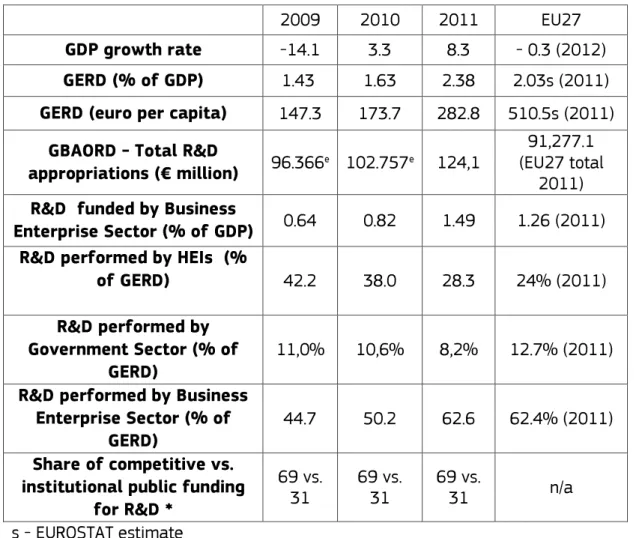
Gross expenditure on R&D (GERD) in absolute terms has tripled in 2004-2010 (44% growth in EU-27) and doubled in 2010-2011 (EU-27 4.1%). As a percentage of GDP (2.38%6 in 2011) it is
now above the EU average (EU-27 2.03% in 2011). During the crisis in 2008-2009, R&D investments showed a growth as a percentage of GDP (from 1.28% to 1.36% respectively), but had slight decline (form €208m to €197m respectively) in absolute terms. The relatively stable financing was due to the previously committed Structural Funds (GERD dropped by only 5%, while GDP growth was -14%). In 2011 one can note a significant growth, mostly due to big R&D investments in shale oil refining industry.
In the business enterprise sector, investments dropped by 1,9% during the crisis, but doubled in 2011 compared to 2010, and in 2011 Business Expenditures for Research and Development (BERD) results in 1.49% from GDP (EU-27 1.26%). Unfortunately, the effect is not sustainable, as building of a new shale oil refinery causes most of the rise in BERD. GBAORD as % of GDP has been growing through the last five years - 0.48% in 2007, 0.64% in 2008 around 0.7% in 2009-2010, and is now with 0.78% above the EU average (EU-27 being 0.73% in 2011). GBAORD as a share of general government expenditure was 1.62% in 2008, but reached 2.03% in 2011 (EU-27 1.52%). Higher education sector performed 28.3% of GERD in 2011 (EU(EU-27 23.9%) and the trend (42% in 2009, 38% in 2010, 28.3% in 2011) shows slight but steady decline.
Table 1. Basic indicators for R&D investments in Estonia
2009 2010 2011 EU27
GDP growth rate -14.1 3.3 8.3 - 0.3 (2012)
GERD (% of GDP) 1.43 1.63 2.38 2.03s (2011)
GERD (euro per capita) 147.3 173.7 282.8 510.5s (2011)
GBAORD - Total R&D
appropriations (€ million) 96.366e 102.757e 124,1 (EU27 total 91,277.1 2011) R&D funded by Business
Enterprise Sector (% of GDP) 0.64 0.82 1.49 1.26 (2011)
R&D performed by HEIs (%
of GERD) 42.2 38.0 28.3 24% (2011)
R&D performed by Government Sector (% of
GERD) 11,0% 10,6% 8,2% 12.7% (2011)
R&D performed by Business Enterprise Sector (% of
GERD) 44.7 50.2 62.6 62.4% (2011)
Share of competitive vs. institutional public funding
for R&D * 69 vs. 31 69 vs. 31 69 vs. 31 n/a
s - EUROSTAT estimate
Data Source: EUROSTAT, March 2013
* Data Source: ERAC Peer-Review of the Estonian Research and Innovation System, 2012
The balance between the funding sources changed in 2011 – while in 2010 44.15% of the expenditure into R&D and innovation came from public sources, 43.6% from business sector and 11.45% from foreign funds, in 2011 business sector took the lead (53.2%), foreign funding remained almost the same (11.97%) and the government’s share was 34.45%. Other sources like private non-profit and higher education sectors finance together account for 1% of national GERD. The possibilities of international financing institutions and public-private partnership projects are not really used in Estonia, except for EEA/Norway grants (in 2004-2009 the support scheme of the research cooperation totalled €0.53m, of which 85% came from foreign aid, and a new programme has been launched for 2009-2014 with budget of €3m).
The main RDI funders are MER and MEAC. MER is responsible for the funding of R&D (including applied and basic research) at R&D institutions and MEAC for funding applied research, technology development and innovation. According to ERAC Peer Review (ERAC, 2012), the main R&D funding instruments in MER budget (70 %) and most of the funding from MEAC budget are competitive. The amount of funding of R&D through other ministries is small, e.g. in 2010 less than 7%. Overall, the four largest RDI funding instruments accounted for ca 40% of total public funding in 2011 (48% in 2008), but more than 80% of MER funding in 2008 went directly for supporting research (excluding EU Structural Funds). In absolute numbers, government funding increased from €104m in 2008 to €124m in 2011.
The main RDI policy instruments in MER are:
• targeted financing of research topics of evaluated R&D institutions, competitive institutional grant for research groups, success rate ca 70% (24% of total Govt. funding in 2008; 19% in 2011);
• baseline funding of evaluated R&D institutions, based on R&D quality and outcome (8% of total Govt. funding in 2008; 6% in 2011);
• individual R&D grants, competitive, success rate varies from 70–50% and is dependent of the funding available for new grants (9% of Govt. funding in 2008; 10% in 2011);
• support towards maintenance of the R&D infrastructures (7% of Govt. funding in 2008; 5% in 2011).
The MEAC funding instruments include very high share from EU Structural funds. According to ERAC Peer-review (2012), during the period of 2007–2013 Estonia can use funds in the amount of €3.41m, thus the support to R&D was respectively 2.0% and will be 12.1% from total support. Most important R&D funding instruments in MEAC budget are:
• R&D Financing Programme (2001–2008 total €29.8m; 2008–2013 total €89.58m) • the SPINNO Programme (2004–2006 total €3.8m; 2008–20013 €7.7m)
• International Co-operation Networks (mediation of the information on the international cooperation projects on innovation)
• Technology Competence Centre Programme (2004–2007 total €16.1m; 2008–2013 total €63.1m with additional co-financing €29.8m)
• Innovation Awareness Programme (2004–2006 total €0.88m) • Support to Science and Technology Parks (2004–2008 total €2.12m) • Innovation vouchers (2009–2010 total €0.96m)
• Support for hiring a development specialist
This share of financing as of categories of policies as well as financing sources has been remained the same since 2007 when the 2007-2013 financing framework was approved within the state budget strategy by the Government. For guaranteeing reaching the target of 3% of R&D expenditures from GDP the funds for supporting the private investments into R&D and innovation should increase, as well as investments into human resources.
Since 2001 the public support given to develop the innovation policy has been mainly given as grants. The size of the grant varies according to the measure conditions and legal status of the applicant. Almost in all cases the grants are a subject of the European state aid rules, mainly de minimis or block exemption.
2.3 New policy measures
Recent studies7 show that the policy mix is heading in the right direction and is successful in the
short term. Launching R&D Infrastructure Roadmap in 2010 (updated in 20128 and another
update planned to launch in 20139) and aspirations in working papers of the new RDI Strategy
7 ERAC Peer-Review of the Estonian Research and Innovation System (2012); MEAC: Evaluation of innovation
policy (Ettevõtlus- ja innovatsioonipoliitika vahehindamine 2012) (2012); MER: RDI Strategy, Report on achieving the objectives and implementing the strategy in 2010 and 2011 (Dec 2011)
8Amendments to the R&D Infrastructure Roadmap in 2012 (in Estonian) 9Action Plans of Ministries for 2013 (in Estonian)
2014-2020 (planned to launch in 2013) show that R&D policies are moving from “providing a little for all” to well-advised, focused and reasoned financing, keeping in mind broader economic and social relevance and paying more attention to coordination and co-operation within and between sectors and institutions.
The R&D Infrastructure roadmap (MER, Estonian Academy of Sciences, 2010) is a long-term (10-20 years perspective) planning instrument, which lists research infrastructure units of national importance which are either new or in need of modernising.
In June 2012, the Ministry of Education and Research together with the Ministry of Economic Affairs and Communication launched the process of preparing new RDI Strategy for 2014-2020 (planned to be launched at the end of 2013). While the current strategy is focused on capacity-building; the next one will be focused on increasing the impact of R&D on economy and society. The current strategy has several national programme areas: three programmes are selected with a technological focus (ICT, biotech and material technologies), four are focused on societal challenges (energy, defence and security, health care and welfare services, environmental protection and technology) and several programmes also on Estonian culture, language, history and nature. In the new RDI strategy, more effort is focused on Smart Specialisation and key R&D areas are being chosen in cooperation with private enterprises.
In March 2012, Estonian Research Council, a new funding agency for Estonian research was established, which also helps to achieve well-planned and distributed funding, as its aim is to concentrate the funding of R&D and guarantee better functioning of the financing systems.
2.4 Recent policy documents
In “Estonia 2020” (adopted in 2011) the specific R&D and innovation objectives were updated and specified in the light of the recent economic developments (the target of reaching 3% of R&D costs in GDP was postponed to 2020 instead of the initial 2013. This is on the one hand in accordance with the strategy “European Union 2020” but on the other hand also reflecting changed economic possibilities.
The main priorities for R&D and innovation policies were set down in the “Knowledge-based Estonia 2007-2013” (adopted in 2007) and these priorities have been followed.
At the end of 2011 the Minister of Education and Research launched a reform of higher education and some amendments to the law have been made and a new Universities Act adopted in 2012 with the aim to rearrange the financing of higher education, strengthen the quality and effectiveness as well as to increase more fair accessibility of higher education. Recent changes in the Research and Development Organisational Act, reorganisation of Estonian Science Foundation into Estonian Research Council and launched reform in higher education system are the tools to achieve the strategic objectives. The recent changes in policy mix have been more adjustments of the existing strategy than substantial changes, but may still create some confusion.
2.5 Research and innovation system changes
In March 2012, Estonian Research Council (ESC), a new funding agency for Estonian research was established, which took over some functions of the Estonian Science Foundation and some
functions of the Archimedes Foundation. The aim of this reorganisation of functions of the ESC is to gather all R&D and research financing instruments ‘under one roof’ in order to create better synergy and avoid double financing. The ESC is performing under the jurisdiction of the Ministry of Education and Research.
2.6 Regional and/or National Research and Innovation Strategies on Smart
Specialisation (RIS3)
To date, there is no national or regional R&I strategies on Smart Specialisation and there is no plan to have one, but the RDI Strategy 2014-2020 will pay much more attention to Smart Specialisation.
2.7 Evaluations, consultations
ERAC peer-review of Estonian R&D system (2012) marks out the outstanding progress, but points to the challenges and suggests to focus more on R&D as means to achieve economic and societal goals, link better with Estonia 2020 strategy, stronger co-ordination and cooperation, focus on fewer key areas and harness RDI measures to drive structural change in the economy. Overall conclusions are as following:
• Steady progress driven by quality, excellence and competition; • Innovation system detached from vast part of the economy;
• Challenge to further develop RDI system to make a difference in the economy & society at large;
• Upgrade the role of Estonian industry in the global value chains; • Lack of trained personnel hinders growth and investments.
In 2012, the Ministry of Economic Affairs and Communications carried out in cooperation with the Enterprise Estonia and KredEx carried out in-house evaluation of the Estonian enterprise and innovation policy. The purpose of Estonia’s enterprise and innovation policy’s evaluation is to assess the measures used and their impact, effectiveness and sensibleness of those measures. The results of evaluation confirm this difference between Enterprise Estonia and KredEx with the following:
The projects Enterprise Estonia funds are focused on innovation and export. The projects are more ambitious and therefore larger and more profitable companies are able to implement them. This is the difference of the target groups when comparing KredEx and Enterprise Estonia. Also, a significant amount of the funding of Enterprise Estonia has gone into research and development, whereas that industry is basically non-existent within the client group of KredEx. KredEx is more active in the retail trade and construction industries, whereas Enterprise Estonia has only a very small number of clients in those industries.
Recommendations given in the evaluation are Enterprise Estonia should look for ways to lessen the bureaucracy, the focus on innovation in the support of KredEx should be increased and the conditions should be made more favourable for some target groups. Other recommendations
involve having fewer non-reimbursable, enhancing funding options; reducing the proportion of individual grants and focusing more on supporting operation networks (clusters, the co-operation between companies and universities etc.).
In 2011, a study “Innovation activities in enterprises 2006-2008” of the Community Innovation Survey 2006-2008 (CIS6) (UT, Praxis, Technopolis Group, was carried out. At large, the study concludes that Estonia has been moving in the right direction. At the same time, while the level of innovative activities and intramural business cooperation is high, the level of significant innovative initiatives or cooperation between academia and business is still very low. Also, the innovation inside the organisations and market innovation are not implemented very much. The study also underlines the need for a stronger focus on a limited number of fields and on key growth companies and high-value added start-ups in new and emerging sectors. Enhancing knowledge transfer to the business sector and expanding the recruitment of innovation managers would foster better networking of companies and create international cooperation. These are findings in 2011 about the period 2006-2008 – by today the situation may have changed, and taking into account the overall economic increase, the increased level of innovation awareness and an interest towards some support measures, the change, one can hope, has taken place in a positive direction.
R&D and higher education (HE) measures of the Ministry of Education and Research in 2011 (Praxis, Technopolis Group, Institute of Baltic Studies, 2011) conclude that the investments into R&D and education have to be increased in order that Estonia would like to achieve its R&D investments level of 3% from GDP by 2020. The strategic objectives taken today will not be reached with the Structural Funds only – the public and private support has to increase in parallel.
In the field study “Feasibility study on material technology” (published in 2011) the current situation of the technology was analysed and future development opportunities with the most promising business fields and future scenarios were presented.
2.8 Policy developments related to Council Country Specific Recommendations
Estonia is taking steps to link training and education more effectively to the needs of the labour market, and enhance cooperation between businesses and academia and foster prioritisation and internationalisation of the research and innovation systems. Estonia also participates actively in EU RDI programmes and European Research Area initiatives and launched programme for internationalisation of science10 already before recommendations.
The new RDI Strategy 2014-2020 which is in progress (planned to be launched in 2013) will tackle these RDI problems thoroughly and private enterprises are involved in the process of setting targets and finding key R&D areas. Also national R&D programmes have been launched in recent years on health promotion research, environmental protection and technology, ICT and material technology, where internationalisation and cooperation with the business sector are priorities.
Also, the recent investment (ca €3m allocated in the end of 2012, which is remarkable amount for Estonia) to the beamline at the MAX IV Laboratory in Lund (Sweden), shows the government’s commitment to internationalisation.
Due to the input from shale oil industry, the target of 3% GERD from GDP is very close in 2011 (2.38% of GDP) and the annual growth of GERD in absolute terms was 63% in 2011. However, this achievement is not yet sustainable as most of GERD was produced by investments into oil refining industry in 2011.
3 Structural challenges facing the national system
Estonian strategic objectives for R&D, innovation and enterprise policy have been relatively stable over the last decade (at least since 2004). The analysis of objectives, indicators and targets underlines that there are a number of well-established headline and secondary objectives with broadly consistent targets against baselines from the 2004–2006 period. Similarly, while there has been an evolution towards a number of new measures and funding patterns have evolved (greater funding for infrastructure, new forms of financial instruments, etc.); the core set of measures has been in place for a period of between 6 to 10 years. Therefore it should be possible to conclude that the policy makers are following the right direction towards making Estonia an innovation leader. Still, there is long way to go and there are plenty of challenges Estonia needs to force in order to reach and sustain the level of 3% from GDP for R&D investments by 2020.
Underinvestment of the private sector in R&D and innovation
The two key strategic documents are the Estonian Research and Development and Innovation Strategy 2007-2013 "Knowledge-Based Estonia” (adopted in 2007) and Estonian competitiveness strategy “Estonia 2020” (adopted in 2011). The first is focused mainly on R&D and innovation policies objectives and the latter involves the objectives for sustainable socio-economic development of the whole country. The “Estonia 2020” sets the strategic objective of reaching the R&D and innovation investments level of 3% of GDP by 2020.
GERD as a share of GDP has shown a significant growth during the last five years and exceeded the EU average in 2011. One has to note that it was partly achieved at the due to a rapid fall in GDP in 2008-2009. However, absolute numbers reflect a relative stability both in the government allocations to R&D as well as in the private sector R&D investments in 2007-2010. In 2011, significant increase is visible in business sector investments and according to the Statistics Estonia, one third of total GERD was financed by shale oil refining industry.
The main strategic document “Knowledge-based Estonia 2007-2013” defines several national programme areas: three programmes are selected with a technological focus (ICT, biotech and material technologies) four focus on societal challenges (energy, defence and security, health care and welfare services, environmental protection and technology) and several programmes also on Estonian culture, language, history and nature. In the new RDI strategy, more effort is focused on Smart Specialisation and key R&D areas will be chosen in cooperation with private enterprises.
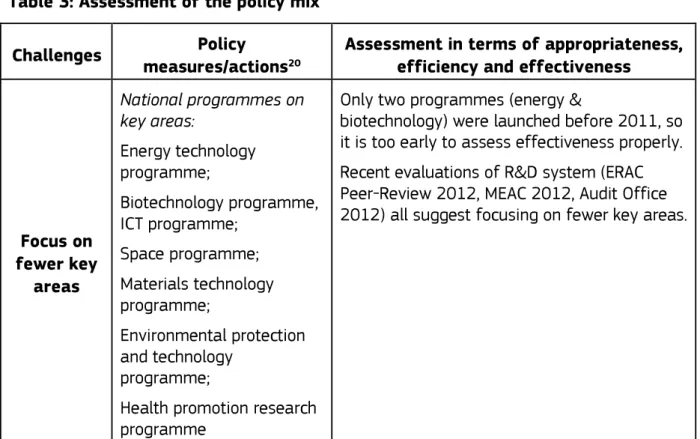
ERAC Peer-Review (ERAC, 2012) suggests identifying a smaller number of focus areas that are systemically developed and receive a significant proportion of both public and private R&D investments. Identification of key sectors is crucial for the Estonian small economy with limited resources, small market and dependence on external trade, and needs to be efficiently adapted to the European and global R&D and innovation system. The risk is that Estonian businesses will simply follow trends instead of identifying the best matches for a country with Estonia’s
particular strengths and weaknesses. In addition, the strong dependency on foreign financing (mainly Structural Funds) makes Estonian R&D and innovation system very fragile – about 64% of the R&D and innovation financing is funded by the foreign funds (ERAC Peer-Review report 2012, 2012). Estonia should intensify its efforts to define smart specialisation strategy to identify sectors in which the Estonian small-scale economy can truly be competitive internationally.
Weak links between academia and business sector
The links between public and private sector R&D and innovation remain relatively weak. In addition there is an insufficient supply of highly educated employees, especially in science and technology, as well as a shortage of the number of researchers in the public sector R&D. Both sectors seem to be busy with their own problems and the solutions for problems are rather sought from internal resources than through knowledge transfer. In addition, the lack of human resources also makes it difficult for businesses to implement R&D and innovation.
In 2010, just 95 enterprises accounted for 90% of the enterprise sector’s intramural R&D expenditure in 2010 (Statistical Yearbook of Estonia 2012). This illustrates structural weakness of Estonian BERD. Except one large oil refining enterprise, business sector is dominated by a limited number of high tech small and medium sized enterprises (SME) - ICT, biotech, cleantech - and the service sector (financial and telecom services providers) and their R&D activity is largely intramural. The telecom and financial sector have been the main R&D and innovation implementers during the last 10 years making Estonia known as IT-country.
Compared to other EU countries, Estonia’s general R&D intensity performance is now above the EU-27 average. Currently the share of Estonian public sector expenditure exceeds the EU average quite remarkably and the share of private sector (BERD) is also above the EU-27 level. The share of private sector expenditure (BERD) in Estonian GDP was 1.49% in 2011, but the corresponding EU-27 indicator was 1.26 (Eurostat, 2012).
The Government has made efforts to link better the tertiary education, research and business – there are a number of public support measures, but the real links have remained weak. The impact of R&D and innovation on the economy as a whole is not significant yet, thus the real outcomes of R&D and innovation are not really convincing (low level of cooperation between industry and academia, relatively low level of patents or scarcity of skilled human resources)11.
Indeed, the Government has not clearly defined that Estonia would like to become an innovation leader, but in order to overcome structural weaknesses, the investments into R&D and innovation have to be kept at least on the same level. The Structural Funds have provided substantial support to R&D and innovation activities and this support should be extended to the next financing period (2014-2020). Also, the overall awareness of business sector about the impact of R&D and innovation and possibilities for using R&D and innovation is low – only 12.6% of Estonian companies have used the possibilities of public support (Statistics Estonia, 2011).
The low activity of enterprises implementing R&D&I is also evident in the low level of patents - 152 registered patents in 2008 up to 272 patents in 2011 (WIPO, 2012). It can be argued, that the level of patents has always been low in Estonia, but this cannot be an argument for the future. Even more, 80-90% of patents in Estonia are registered on the name of foreign business
units or R&D institutions. The culture of patenting needs to be better adopted in Estonia, otherwise the level of R&D will never show sustainable growth.
Insufficient supply of high skilled employees, especially in Science and Technology (S&T)
The strategy “Estonia 2020” defines the demographic trends as one of the main preconditions to achieve the set objectives (Estonia 2020). Estonia, as a small country with a population of 1.29m people (Statistics Estonia, 2013), does not have a sufficient number of researchers and engineers (RDI Strategy, Report on achieving the objectives and implementing the strategy in 2010 and 2011, 2011; ERAC Peer-Review Report 2012, 2012). In 2011, the level of researchers per thousand of total employment (7.4) is higher than EU-27 average (7.03), but two times less than in neighbouring Finland (16.7) and is lower than EU-27 average per thousand of labour force (5.9 and 6.6 respectively)., The share of researchers in labour force rose in 2009 and remained almost the same in 2010 (7.45 and 7.4 per 1000 respectively), which is very close to the target of 8 researchers per thousand. Unfortunately this is not a result of carefully planned action, but happened mostly due to the big fall in total employment (RDI Strategy, Report on achieving the objectives and implementing the strategy in 2010 and 2011; OECD Database, 2013).
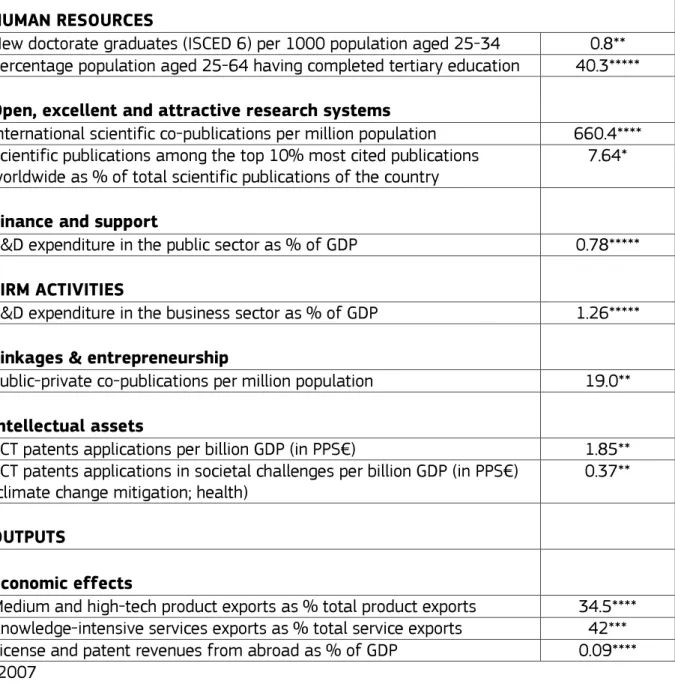
The number of PhD students at Estonian HEIs has increased, but the growth is still lagging behind the “3% countries” – while in Finland there are 2.9 researchers per 1000 of the population aged 25-64, then Estonia has only 0.8 researchers (Eurostat, 2011)..Progress has been made in expanding the number of PhD graduates in the academic year 2011/2012, which was quite close to the target, set in R&D strategy (300 per year by 2013). While in 2007/2008 161 and in 2009/2010 175 new doctors graduated, the 2011/2012 preliminary data show 250 new PhD graduates (RDI Strategy, Report on achieving the objectives and implementing the strategy in 2010 and 2011). The rapid growth in the number of graduates may be triggered mostly by the end of validity of study curricula from before 2002. The slow growing trend is complemented with the low scholarships of researchers being close to €400 monthly, which is about half of the national average salary (€839 in 2011, Statistics Estonia, 2012). Also, the social guarantees of the researchers are still unsolved, which makes the mobility of foreign researchers especially difficult. Hence, the Research and Development Organisation Act (adopted in February 2011) enables the young researchers to be recruited on the same basis as with employment agreements. This fundamental change tends to increase the motivation of young researchers, fixes the obligations of the research institutions on supervising the doctoral studies and should provide the material and social guarantees. Still, it is too early to say whether and how much the Act has influenced the real situation.
The level of internationalisation is also low in Estonia. There are public measures to support the mobility of students and researchers, but still the researchers and students coming to Estonia prefer to stay for short periods rather than for a longer time. One of the main reasons is the underdeveloped system of social guarantees, but also the limited range of well-developed scientific fields, which could motivate the researchers to proceed with their research in Estonian universities (RDI Strategy, Report on achieving the objectives and implementing the strategy in 2009). Typically, the foreign researchers in Estonia are focused on some narrow and very specific field. At the same time the outflow of students to foreign universities remains on a relatively high level – the ratio is about 1:5 in favour of outgoing students. The rising trend of outgoing students does not show any signs of going downwards – there are more possibilities opening for Estonian students to get the tertiary education abroad (Statistics Estonia 2011).
Table 2. Innovation Union Indicators HUMAN RESOURCES
New doctorate graduates (ISCED 6) per 1000 population aged 25-34 0.8** Percentage population aged 25-64 having completed tertiary education 40.3*****
Open, excellent and attractive research systems
International scientific co-publications per million population 660.4**** Scientific publications among the top 10% most cited publications
worldwide as % of total scientific publications of the country 7.64*
Finance and support
R&D expenditure in the public sector as % of GDP 0.78*****
FIRM ACTIVITIES
R&D expenditure in the business sector as % of GDP 1.26*****
Linkages & entrepreneurship
Public-private co-publications per million population 19.0**
Intellectual assets
PCT patents applications per billion GDP (in PPS€) 1.85** PCT patents applications in societal challenges per billion GDP (in PPS€)
(climate change mitigation; health) 0.37**
OUTPUTS
Economic effects
Medium and high-tech product exports as % total product exports 34.5**** Knowledge-intensive services exports as % total service exports 42*** License and patent revenues from abroad as % of GDP 0.09**** *2007
** 2008 *** 2009 **** 2010 *****2011
4 Assessment of the national innovation strategy 4.1 National research and innovation priorities
Since joining the EU on 1 January 2004, Estonia has been following the seven years EU programming cycle. The State Budget Strategy is compiled for four years (being updated annually) and the sectoral strategies for seven years perspective. This planning period would enable to implement strategies and plan the finances in a sustainable way without any rapid and immediate changes in main policy areas. Since 2007 the recent R&D and innovation strategy “Knowledge-based Estonia 2007-2013” has been under implementation without any substantial changes.
The most important new strategy adopted by the Government on April 28 2011 is the strategy “Estonia 2020” prepared by the Strategy Unit of the Government Office in co-operation with ministries. The aim of this document is to lay down Estonia’s strategic objectives for competitive growth until 2020. With this document the targets for 2020 and measures for addressing these challenges have been agreed and taken into the Governments’ work-plan. The objectives of “Estonia 2020” complement to the existing RDI strategy objectives.
According to “Estonia 2020” Estonia, there are two main and central goals for the reform plan in the context of further growth prospects:
• to achieve strong growth of productivity through products and services with greater capital intensity and higher value added;
• to restore the high employment rate observed before the economic crisis. In addition, Estonia 2020 comprises 17 challenges divided into four fields:
• educated population and cohesive society: the quality and availability of education and labour force supply;
• competitive business environment: policy that supports the improvement of the long-term competitiveness of businesses, creative industry, international competitiveness of research and development and business-supporting infrastructure;
• environmentally friendly economy and energy: energy savings and resource efficiency; • sustainable and adaptive state: sustainability of public finances, ability to react to
changing circumstances and imbalances, tax policy supporting the development of the economy and modernisation of the government sector.
In “Estonia 2020” the demographic trends are seen as a precondition for the economic development are seen – the decreasing number of population (1.3m in 2011; prognosis 1.25m in 2050), early stage of school leaving or high unemployment rate should be solved first. RDI is one of the key priorities of Estonian strategy forcompetitiveness “Estonia 2020”, setting the objective of R&D investments in GDP on the level of 3% by 2020 (2.38% in 2011), of which the business sector investments would cover more than half (2% of GDP by 2020; 1.49% in 2011) and public sector would cover a bit less than a half (1% of GDP by 2020; 0.78% in 2011) (State Budget Strategy 2012-2015, 2011).
Estonian research and innovation policy objectives were comprehensively outlined for the first time in the Knowledge-Based Estonia: Research and Development Strategy 2002-2006. The strategies “Estonia 2020” and Knowledge-Based Estonia 2007-2013 (including the national
research programmes covering different fields) are implemented under the leadership of the Ministry of Education and Research and the Ministry of Economic Affairs and Communications in cooperation with other ministries, which are responsible for initiating and implementing national R&D programmes in their areas of administration. The Government, advised by the Research and Development Council, approves the RDI strategy and implementation plans and receives progress reports.
Thematic R&D priorities
The RDI strategy states that the national research and development programmes are initiated in the fields of research, which already have high quality and are important to the Estonian economy to the extent that the private sector would also actively participate. The distribution and implementation of key technologies has to be ensured in other sectors of economy (particularly in traditional industry, energy sector, transport, etc.) and socio-economic fields (health care, living environment, welfare).
Five technology programmes in the fields of ICT, biotechnology, material technologies, energy, national defence and security, environmental protection and technology are presented to launch by the Government during 2008-2013, and by the end of 2011 energy technology programme, biotechnology programme, ICT programme, space programme, materials technology programme, environmental protection and technology programme have already been launched. Also health promotion research programme on socio-economic field has been already launched. National programmes have been launched primarily for developing RDI enhancing cooperation among R&D institutions and companies; and conducting high-level research in the fields that are a priority for the state. The programmes aim to gather necessary critical resources. Programme measures have to support the achievement of thirteen specific indicators (e.g. increasing share of R&D employment, growing number of PhD students and PhDs, growing number of foreign researchers and students, improving science-industry cooperation, increasing business R&D and innovation investments, growing productivity, etc.).
The RDI strategy does not state any industrial priorities concerning the RDI activities in Estonia. For supporting the greater R&D investments in R&D performing firms the Competence Centre programme is under implementation, involving eight Competence Centres. The mid-term evaluation of Competence Centres, provided in 2008 (Mid-Term Evaluation of the Competence Centre programme, 2008), concluded that the Centres are building knowledge-based communities whose networking is increasing the level of interest and activity in innovation, extending planning horizons and making innovation more knowledge based. The evaluation also stressed that the Centres are having the right kind of impacts that leads to economic benefits (Mid-Term Evaluation of the Competence Centre programme, 2008). The studies on Biotechnology Programme (2009)12 and Material Technology Programme (2011)13 analysed the
most promising fields of interest for the Estonian biotechnology and material technology sectors given the current strengths and potential both in academic and industrial sectors. The set of recommendations was made concluding that the fields of technologies have great potential in raising the level of R&D in business sector in Estonia, but also gave the policy makers the basis to keep the development of these technologies as key technologies in RDI strategy in the future (Feasibility Study for an Estonian Material Technology Programme, 2011). In 2009 the Estonian
12http://www.mkm.ee/public/inno_13.pdf
Development Fund provided a foresight study on Estonian ICT sector14, concluding that the focus
should be put on the development of those ICT competences, where Estonia has potential in the perspective of 5-10 years as well as on the development of these areas, where the global problems are the most significant (population ageing) and the ICT export could have the biggest potential (EST_IT@2018, 2009). The study (Technopolis Group, 2011) on the innovative enterprises in Estonia during 2006-2008 found that Estonian enterprises appreciate innovation highly, but the overall increase in the number of innovative companies is not the result of sustainable public policy but rather a natural development due to economic need. Also, so far the innovation has basically involved the modernisation of technology rather than generating value added of new innovative solutions (Technopolis Group, 2011).
To sum up, so-called hot spots in the RDI area in Estonia have grown out of spontaneous needs rather than developed as a result of particular sector or area-specific prioritisation. A variety of policy measures encourage the development of different types of companies (performing R&D, capable for R&D but not yet performing, innovating but not performing R&D, etc.). Although the RDI strategy defines the key technologies; there has been no explicit focus on developing the priority areas in the first hand. The recent study on innovative enterprises also stresses the need for more focusing more on certain priority areas instead of supporting the RDI widely in all business areas. In terms of the RDI budget, a significant part has has to be allocated to private-public R&D cooperation and knowledge and technology transfer. The increased amount of investments into the R&D infrastructure development (started in 2009) is also expected to create additional values for companies to establish more efficient R&D cooperation with R&D institutions. Public-private venture capital investments through the Estonian Development Fund have given significant impulses for high-growth internationally oriented companies to develop in Estonia. Still, the knowledge base for R&D remains significantly weak and the knowledge transfer between academia and business needs to be fostered. Further investments into RDI are highly needed in order to shift the economic structure towards knowledge-based economy and encourage young scientists to look for new technological solutions. Hence, these suggestions still exist only on the paper and would hopefully turn into reality during the next strategy implementation period, for which planning is already under way.
4.2 Evolution and analysis of the policy mixes
As a member of the EU Estonia designs its strategic objectives for seven years and specifies the strategic framework for four years annually within the state budget strategy update process. The main priorities for R&D and innovation policies were set down in the “Knowledge-based Estonia 2007-2013” (adopted in 2007) and these priorities have been followed. In “Estonia 2020” (adopted in 2011) the specific R&D and innovation objectives were updated and specified in the light of the recent economic developments (the target of reaching 3% of R&D costs in GDP was postponed to 2020 instead of 2013). Every year the state budget strategy is updated in the light of the next four years keeping the long-term objectives in mind. Recent changes in the Research and Development Organisational Act, reorganisation of Estonian Science Foundation into Estonian Research Council and launched reform in higher education system are tools in order to achieve the strategic objectives. The recent changes in policy mix have been rather adjustments of the existing strategy than substantial changes.
The public intervention aims to boost the intensity of business R&D and innovation in order to shift the economy towards higher productivity and enable Estonian companies to increase export. A 2010 study by the National Audit Office on the “Impact of the state’s enterprise supports on the competitiveness of Estonian economy” concludes that the reason for a limited impact of enterprise support is rigid, untargeted and dispersed system which tries to deal simultaneously with many problems of entrepreneurship and very often does not consider the actual needs of enterprises (National Audit Office, 2010). As the overall platform for innovation is wide, the target groups have mainly used the opportunity to modernise their technological equipment base. Estonian companies have also been eager to implement innovation in organisational development or optimising the processes as well as improving business models, less attention has been paid on services innovation. The public support measures are rather oriented on supply side innovation, than on the demand side – there are only a few examples on demand side innovation – the Electric Mobility Programme, government e-services and the programme on energy efficiency in residential buildings.
In the current ongoing financing measures the emphasis is mainly put on the development of the knowledge and technology transfer, modernisation of technology, internationalisation of research (incl. researchers’ mobility) and business, supporting start-up companies and developing cooperation between business and academia. The focus areas have remained more or less remained the same since 2000. At the same time when planning for the programming period of 2007-2013, the set of studies and analyses were made in order to optimise the focus of public support – as a result some of the public support measures were replaced, but there are also examples of sustainable measures such as direct support on R&D investments or Competence Centres. No tax incentives have been given to the R&D and innovation investments except that the companies’ income is free of tax to the extent that they reinvest their profit. There are no instructions whether the reinvestment has to be made in R&D and innovation or anywhere else, the only criteria are for the investments to be made into the development of the company. The tax policy of the Government of Estonia follows the rule of taxing everything similarly and allowing as less exemptions as possible – so far the idea of specific tax incentives for R&D and innovation expenditures has not been supported by the Government. The public-private partnership projects are not common in Estonia as well as loans from international financing institutions, as large projects are mainly financed under the Structural Funds.
Estonian R&D and innovation policy is in force since 2000 and is built up on the equal development of the R&D and innovation policies as a whole – while three key technologies have been identified, in reality no significant advantage has been given to them. The current strategic approach for innovation was designed for 2007–2013 in coherence with the EU programming period as the majority of the innovation funding is coming from the EU Structural Funds. There are a number of measures developed specifically for supporting the R&D and innovation, developing human resources and supporting business (including start-up companies) activities both in HEIs/R&D institutions and the business sector. There is no centrally managed monitoring system other than Structural Funds management system, consequently these results do not give us any major information on strategic objectives – we can only get quantitative information on the performance in terms of Structural Funds objectives. In addition, the ministries are reviewing or providing studies on the situation and development of potential sectoral strategies or programmes, but there is no common tradition and these actions are mainly provided sporadically. Despite the significant success in developing R&D and innovation, still, the measures taken have not been enough for reaching the strategic objectives – the performance results have been perfect in the short-term, but not sufficient for long-term development.
The higher education system in Estonia has been developed since 1995, when the Act of Universities was adopted. The Act relied on the credit system based on the actual workload of the students (today known as ECTS system - European Credit Transfer and Accumulation System), the accreditation of the study programmes involving external experts, the wide autonomy of the universities and involving the students’ representative in the decision making process of the universities. Today, the universities are autonomous institutions with their own management system and budget. The rapid economic growth during 1995-2008 demanded skilled and experienced people in social sciences – economics, law, public administration. As the total import was higher than export, the new technology was mainly imported and installed by the manufacturers; there was no need for highly skilled personnel in science and technology. Today, the knowledge-based economy sets us new challenges – we need more skilled engineers with knowledge of business performance as well as people generating new ideas and having research experience in order to increase the level of R&D and innovation. As the basis for natural growth of the level of engineers and researchers is low (the population is only 1.3m people), the investments need to be focused more carefully on the development of human resources – in first and foremost the number of science and technology PhD graduates need to be increased.
At the end of 2011 the Minister of Education and Research launched a reform of higher education, with the aim to rearrange the financing of higher education, strengthen the quality and effectiveness as well as to increase fair accessibility to higher education. Hence the ambitious idea of the new Government elected in March 2011 was the fully state financed higher education. The higher education reform 2012+ has already gained many opposing arguments primarily from students’ organisations. Hand-in-hand with the fully state financed higher education the students also are required to complete their studies within nominal study period and reach the required academic credits during their whole studies. This means that the students have to commit on studies fully, while the majority of students divide their time between studies and work in order to survive economically. The reform also aims to increase the level of internationalisation of Estonian universities through increasing the quality and efficiency, as well as motivate students for further studies in doctoral programmes. Some amendments to the law have been made and a new Universities Act has been adopted at the end of 2012, but the discussions are still on-going, the new financing system of higher education will be applied from the autumn of 2013.
4.3 Assessment of the policy mix
Since about 64% of the public funds going into R&D and innovation are coming from Structural Funds, the evaluation traditions have been established (ERAC Peer-Review Report, 2012). Normally, the evaluation is one part of the policy planning cycle, hence, depending on the ministry the evaluations may not have been provided very systematically or often. Here the Ministry of Finance and the Ministry of Economic Affairs and Communications can be mentioned as good examples.
To achieve a better position on planning of the 2014-2020 programming period the Ministry of Education and Research and the Ministry of Economic Affairs and Communications have asked for an external peer review from the European Research Area Committee. The aim of the peer review was to get the external feedback and an international view on the innovation policy objectives and implementation success in Estonia. ERAC Peer-Review of Estonian R&D system (2012) marks the outstanding progress, but points to the challenges and suggests to focus more on R&D as a means to achieve economic and societal goals, link better with Estonia 2020
strategy, strengthen co-ordination and cooperation, focus on fewer key areas, and harness RDI measures to drive structural change in the economy. Overall conclusions are as follows:
• Steady progress driven by quality, excellence and competition • Innovation system detached from vast part of the economy
• Challenge to further develop RDI system to make a difference in the economy & society at large
• Upgrade the role of Estonian industry in the global value chains • Lack of trained personnel hinders growth and investments
In 2012, the Ministry of Economic Affairs and Communications in cooperation with the foundations Enterprise Estonia and KredEx carried out in-house evaluation of the Estonian enterprise and innovation policy. The purpose of Estonia’s enterprise and innovation policy’s evaluation was to assess the measures used and the impact, effectiveness and soundness of those measures.
The evaluation confirms the difference between the Enterprise Estonia and KredEx activity and measures as follows:
The projects of Enterprise Estonia funds are focused on innovation and export. The projects are more ambitious and therefore larger and more profitable companies are able to implement them. This is the difference between the target groups of KredEx and Enterprise Estonia. Also, a significant amount of the funding of Enterprise Estonia has gone into research and development, whereas that industry is basically non-existent within the client group of KredEx. KredEx is more active in the retail trade and construction industries, whereas Enterprise Estonia has only a very small number of clients in those industries. Recommendations given:
Enterprise Estonia should look for ways to reduce the bureaucracy; KredEx should focus on the support on innovation and make the conditions more favourable for certain target groups. Other recommendations involve reducing non-reimbursable grants, enhancing funding options, reducing the proportion of individual grants and focusing more on supporting co-operation networks (clusters, co-operation between companies and universities etc).
The evaluations of the R&D and HE measures of the Ministry of Education and Research in 2011 (Praxis, Technopolis Group, Institute of Baltic Studies, 2011) conclude that the investments into R&D and education have to be increased so that Estonia could achieve its R&D investments level of 3% from GDP by 2020. The strategic objectives taken today will not be reached with the Structural Funds only – the public support has to increase in accordance.
The National Audit Office also supports this opinion - the visible impact of public support measures (including Structural Funds) on business innovation remains limited. On its audit provided in 2010 focusing on the impact of state’s support to entrepreneurship on the competitiveness of Estonian economy, the National Audit Office concludes that while in the short term the programme objectives may be fulfilled, in the long term, the strategic objectives (higher productivity, increased export, more innovation and larger international cooperation) of enterprises are still a challenge - the unclearly focused public support, narrow basic science platform, R&D concentration on a narrow range of companies and weak international cooperation makes the economy fragile – the export and productivity growth depends to a large extent on the domestic demand. Even more, the audit report of the National Audit Office suggested reshaping the entrepreneurial policy – so far, the measures of entrepreneurial policy have been to a great extent only financed by the Structural Funds and have not considered different developmental problems of enterprises (National Audit Office, 2010). Indeed, this broad policy has also been criticised and suggested to focus on at least some
specific field (UT, Praxis, Technopolis Group, 2011). The broad base of financing without any specification fields has brought Estonia to the situation where new policy approach in terms of focusing is needed.
In 2011, the study “Innovation activities in enterprises 2006-2008” of the Community Innovation Survey 2006-2008 (CIS6) (UT, Praxis, Technopolis Group, was carried out. In general, the study concludes that Estonia has been moving in the right direction. At the same time, while the level of innovative activities and intramural business cooperation is high, the level of significant innovative initiatives or cooperation between academia and business is still very low. Also, innovation within organisations and market innovation are not implemented much. The study also underlines the need for a stronger focus on a limited number of fields and on key growth companies and high-value added start-ups in new and emerging sectors. Enhancing knowledge transfer to the business sector and expanding the recruitment of innovation managers would foster better networking of companies and create international cooperation. The study stresses that innovation policy needs to remain flexible to adapt to the evolving needs of the key existing and emerging competitive strengths of Estonian businesses so as to help to cushion ‘external shocks’ and allow Estonian firms to rapidly grab opportunities arising from shifts in global demand in their markets. These are findings in 2011 about the period 2006-2008 – by today the situation may have changed, and taking into account the overall economic increase, the increased level of innovation awareness and an interest towards some support measures, the change, one can hope, has taken place in the positive direction.
In the field studies “Feasib