Graduate Theses and Dissertations Graduate School
3-24-2016
Developing Early Numeracy and Early Literacy
Skills in Preschool Children Through a Shared
Parent/Child Book Reading Intervention: A
Multiple-Baseline Single Case Design Study
Christina Lauren Lindahl
University of South Florida, [email protected]
Follow this and additional works at:http://scholarcommons.usf.edu/etd
Part of theCurriculum and Instruction Commons,Pre-Elementary, Early Childhood,
Kindergarten Teacher Education Commons, and theScience and Mathematics Education Commons
This Thesis is brought to you for free and open access by the Graduate School at Scholar Commons. It has been accepted for inclusion in Graduate Theses and Dissertations by an authorized administrator of Scholar Commons. For more information, please [email protected].
Scholar Commons Citation
Lindahl, Christina Lauren, "Developing Early Numeracy and Early Literacy Skills in Preschool Children Through a Shared Parent/ Child Book Reading Intervention: A Multiple-Baseline Single Case Design Study" (2016).Graduate Theses and Dissertations. http://scholarcommons.usf.edu/etd/6304
Developing Early Numeracy and Early Literacy Skills in Preschool Children Through a Shared Parent/Child Book Reading Intervention: A Multiple-Baseline Single Case Design Study
by
Christina Lindahl
A thesis submitted in partial fulfillment of the requirements for the degree of Education Specialist in School Psychology Department of Educational and Psychological Studies
College of Education University of South Florida
Co-Major Professor: Julia Ogg, Ph.D. Co-Major Professor: Kathy Bradley-Klug, Ph.D.
John Ferron, Ph.D. Date of Approval:
March 23, 2016
Keywords: Early numeracy achievement, early literacy achievement, evidence-based interventions, parent involvement, early childhood
ACKNOWLEDGEMENTS
I would like to thank my wonderful thesis committee members for all of the support and encouragement that they provided throughout this research project. Thank you to Dr. Julia Ogg, my major professor, for your ongoing guidance and support, feedback, and encouragement throughout the conceptualization and implementation of the current study. I would also like to thank Dr. John Ferron for his guidance and instruction with the statistical analyses and single-case design. Additionally, I would like to thank Dr. Kathy Bradley-Klug for her feedback, involvement, and insights throughout the current project.
In addition, I would like to thank my family and friends for all of their support
throughout my time in graduate school and during the completion of this study. Thank you to my parents for all of your continuing encouragement, love, and support, and for helping me attain my educational goals. Finally, thank you to all of my caring friends and extended family members who have supported me throughout the course of this project.
TABLE OF CONTENTS
LIST OF TABLES v
LIST OF FIGURES viii
ABSTRACT ix
CHAPTER ONE: INTRODUCTION 1
Problem Statement and Purpose of the Study 4
Research Questions 5
Definition of Key Terms 8
Early Numeracy, Number Sense, & Informal Mathematical Skills 8
Numbering 9 Relations 9 Arithmetic Operations 9 Cardinality 10 Ordinality 10 Number Recognition 10
Matching Numerals with Quantities 10
Partitioning Equal Quantities 11
Dialogic Reading 11
Preschool Students 12
Voluntary Pre-Kindergarten 12
Parental Involvement 12
Math Talk (or Math Dialogue) 13
Multiple Baseline Design 14
Significance of the Study 14
CHAPTER TWO: REVIEW OF THE LITERATURE 16
Early Numeracy and Number Sense 16
Definition 17
Components of Early Numeracy 18 Development & Importance of Early Numeracy Skills For Achievement 20 Parental Involvement 26
Parental Involvement at School 26 Parental Involvement at Home 30
Parent Beliefs about Early Numeracy 35
Review of Early Numeracy Interventions 40
School Assisted Parent Math Interventions 40
Storybook Interventions 47
Purpose of the Present Study 52
CHAPTER THREE: RESEARCH METHODS 55
Participants 55
Inclusion and Exclusion Criteria 55
Participant Attrition 57
Risks and Costs to Participants 57
Participant Compensation 57
Procedures 58
Study Design 58
Ethical Considerations 59
Recruitment Procedures 60
Informed Consent Procedures 60
Setting 61
Baseline Procedures 62
Intervention Procedures 62
Researcher Training Procedures 63
Materials 64
Storybook Selection Procedures 64
Storybook Reading Guides 65
Measures 66
Screening Interview 66
Demographic Questionnaire 66
Early Numeracy 66
Counting Arrays 68
Matching Quantities to Numerals 69
Ordinal Position 69
Partitioning Equal Quantities 70
Number Recognition 70
Parent-Child Math Dialogue 70
Early Literacy 71
Alphabet Knowledge 72
Comprehension 73
Phonological Awareness 73
Vocabulary and Oral Language 74
Intervention Integrity Measures 75
Social Validity Measures 76
Data Analysis 76
Visual Analysis 77
Masked Visual Analysis 78
Multi-level Modeling 79
Descriptive Statistics 81
Parent-Child Math Dialogue 81
Inter-Rater Agreement 81
PELI Vocabulary Inter-Rater Agreement 82
Early Literacy Pre- and Post-Tests 83
Intervention Integrity 84
Social Validity 84
CHAPTER FOUR: RESULTS 85
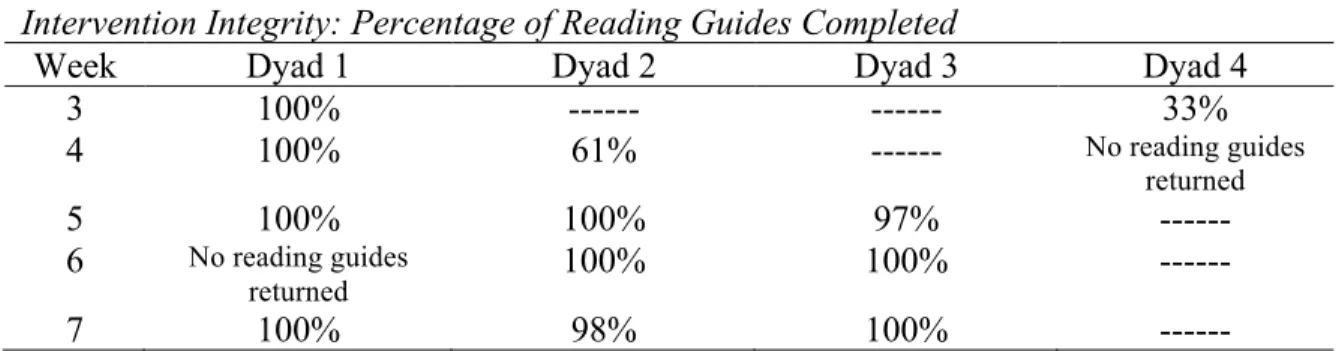
Intervention Integrity 85
Parent-Child Mathematical Dialogue Pre- and Post-Intervention 87
Visual Analysis 89
eNumeracy Early Math Assessments 89
Counting Arrays 89
Ordinal Position 91
Matching Quantities to Numerals 93
Partitioning Equal Quantities 94
Number Recognition 96
Total Math Score 97
PELI 98
Phonological Awareness 98
Vocabulary/ Oral Language 99
Masked Visual Analysis 101
Multi-Level Modeling 102
eNumeracy Early Math Assessments 102
Counting Arrays 102
Ordinal Position 103
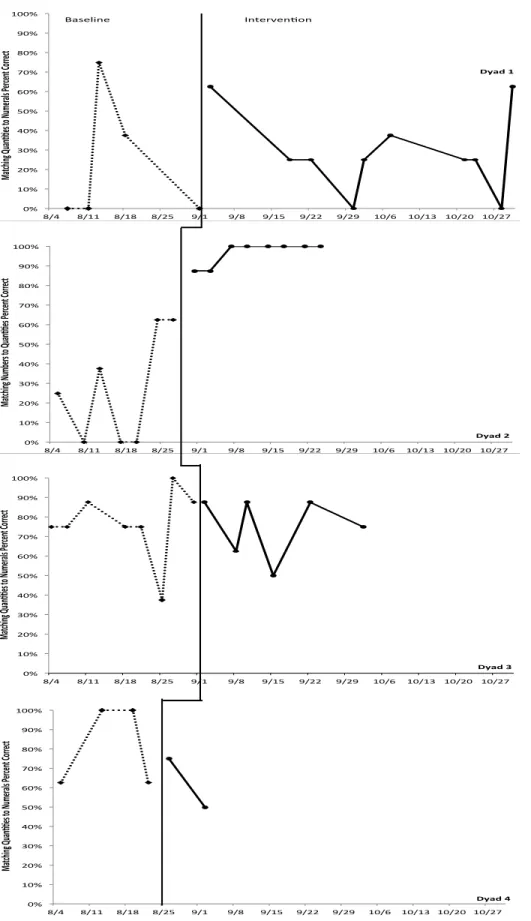
Matching Quantities to Numerals 104
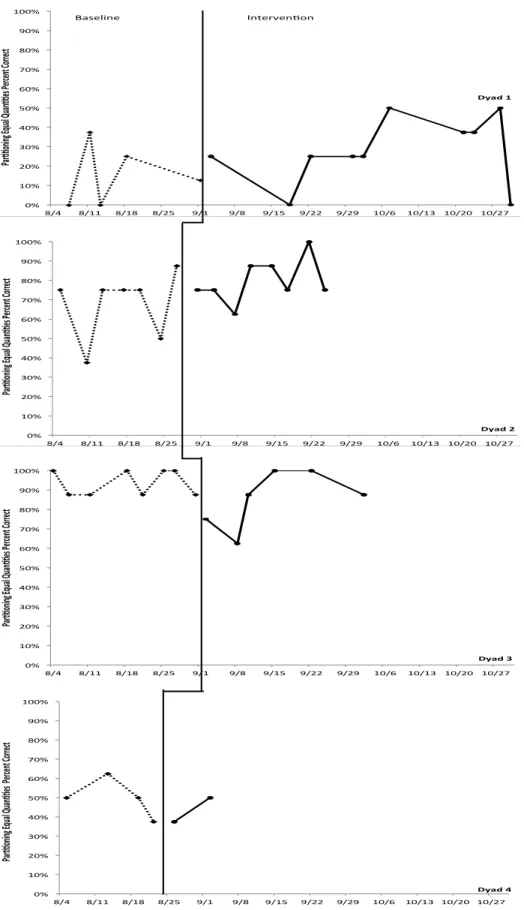
Partitioning Equal Quantities 105
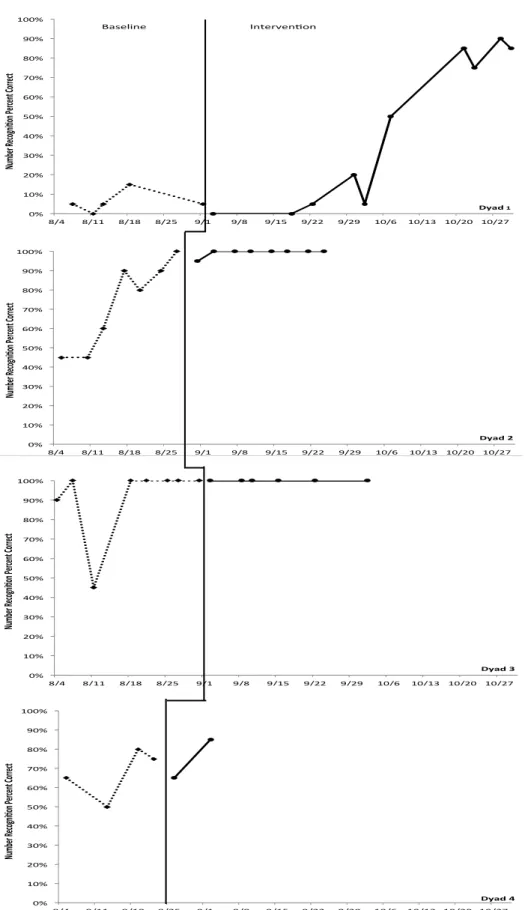
Number Recognition 106
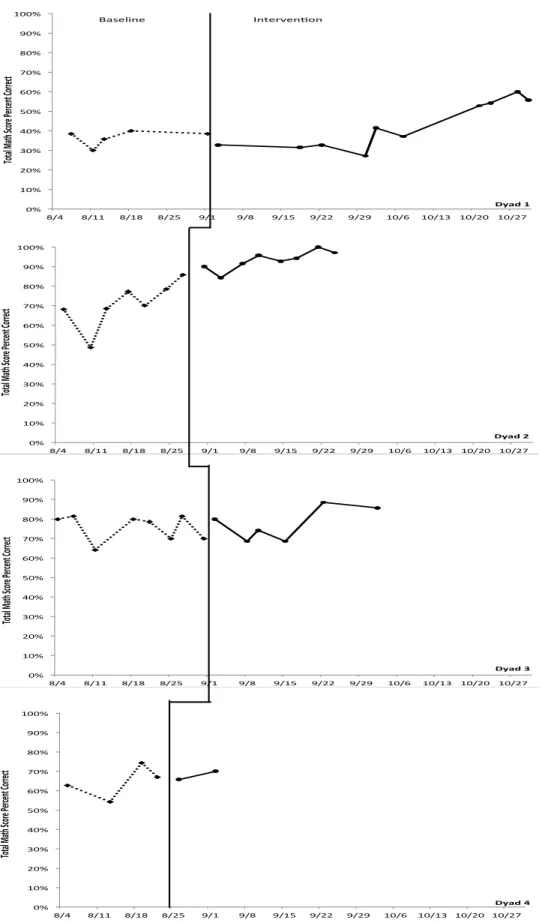
Total Math Score 107
PELI 109
Phonological Awareness 109
Vocabulary/ Oral Language 110
PELI Pre- and Post Intervention Assessments 111
Alphabet Knowledge 111
Vocabulary/ Oral Language 112
Comprehension 113
Phonological Awareness 113
PELI Composite Score 114
PELI Language Index 115
Social Validity 116
Overview 117
CHAPTER FIVE: DISCUSSION 127
Research Question 1 128
Research Question 2 129
Counting Arrays 129
Matching Quantities to Numerals 131
Partitioning Equal Quantities 131
Number Recognition 132
eNumeracy Total Math Score 132
Research Question 3 135
Research Question 4 138
Research Question 5 139
Contributions to the Literature 141
Implications for Research and Practice 144
Limitations of the Present Study and Future Directions 146
Conclusions 149
REFERENCES 151
APPENDICES 165
Appendix A: Parent Recruitment Flyer 166
Appendix B: Consent Form 167
Appendix C: Demographic Questionnaire 172
Appendix D: Storybook List 174
Appendix E: Phone Screening Script 175
Appendix F: Book Reading Survey (Baseline Phase) 177
Appendix G: Recruitment Flyer for School Principals 178
Appendix H: Consent to Audio Record 179
Appendix I: IRB Letter of Approval 181
LIST OF TABLES
Table 1 Domains of Early Numeracy 11
Table 2 Participating Parent and Child Demographic Information 56
Table 3 Baseline Schedule for Participants 59
Table 4 Intervention Schedule for Participants 59
Table 5 eNumeracy Reliability/ Validity Data 68
Table 6 PELI Reliability/ Validity Data 72
Table 7 Descriptive Statistics for PELI Vocabulary Inter-Rater Agreement 83 Table 8 Intervention Integrity: Percentage of Reading Guides Completed 86 Table 9 Percentage of Parent-Child Mathematical Dialogue 88 Table 10 Number of Parent-Child Mathematical & Total Utterances 88 Table 11 Descriptive Statistics for eNumeracy, Counting Arrays Subtest 90 Table 12 Non-Overlap Statistics for eNumeracy, Counting Arrays Subtest 90 Table 13 Descriptive Statistics for eNumeracy, Ordinal Position Subtest 92 Table 14 Non-Overlap Statistics for eNumeracy, Ordinal Position Subtest 92 Table 15 Descriptive Statistics for eNumeracy, Matching Quantities
to Numerals Subtest 94
Table 16 Non-Overlap Statistics for eNumeracy, Matching
Quantities to Numerals Subtest 94
Table 17 Descriptive Statistics for eNumeracy, Partitioning Equal 95 Quantities Subtest
Table 18 Non-Overlap Statistics for eNumeracy, Partitioning Equal 95 Quantities Subtest
Table 19 Descriptive Statistics for eNumeracy, Number Recognition Subtest 97 Table 20 Non-Overlap Statistics for eNumeracy, Number Recognition Subtest 97 Table 21 Descriptive Statistics for eNumeracy, Total Math Score 98 Table 22 Non-Overlap Statistics for eNumeracy, Total Math Subtest 98 Table 23 Descriptive Statistics for PELI, Phonological Awareness Subtest 99 Table 24 Non-Overlap Statistics for PELI, Phonological Awareness Subtest 99 Table 25 Descriptive Statistics for PELI, Vocabulary/ Oral Language Subtest 100 Table 26 Non-Overlap Statistics for PELI, Vocabulary/ Oral Language Subtest 101 Table 27 Fixed Effects for eNumeracy Counting Arrays Subtest 102 Table 28 Empirical Bayes (EB) eNumeracy Counting Arrays Subtest 103 Table 29 Fixed Effects for eNumeracy Ordinal Position Subtest 104 Table 30 Empirical Bayes (EB) eNumeracy Ordinal Position Subtest 104 Table 31 Fixed Effects for eNumeracy Matching Quantities to Numerals Subtest 105 Table 32 Empirical Bayes (EB) eNumeracy Matching Quantities to 105
Numerals Subtest
Table 33 Fixed Effects for eNumeracy Partitioning Equal Quantities Subtest 106 Table 34 Empirical Bayes (EB) eNumeracy Partitioning Equal Quantities Subtest 106 Table 35 Fixed Effects for eNumeracy Number Recognition Subtest 107 Table 36 Empirical Bayes (EB) eNumeracy Number Recognition Subtest 107
Table 37 Fixed Effects for eNumeracy Total Math Score 108
Table 38 Empirical Bayes (EB) eNumeracy Total Math Score 108 Table 39 Fixed Effects for PELI Phonological Awareness Subtest 109
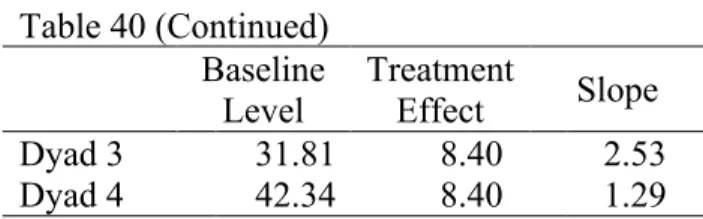
Table 40 Empirical Bayes (EB) PELI Phonological Awareness Subtest 109
Table 41 Fixed Effects for PELI Vocabulary Subtest 110
Table 42 Empirical Bayes (EB) PELI Vocabulary Subtest 111
Table 43 Descriptive Statistics for PELI Books, Alphabet Knowledge 112 Table 44 Descriptive Statistics for PELI Books, Vocabulary/ Oral Language 112 Table 45 Descriptive Statistics for PELI Books, Comprehension 113 Table 46 Descriptive Statistics for PELI Books, Phonological Awareness 114 Table 47 Descriptive Statistics for PELI Books, PELI Composite Score 115 Table 48 Descriptive Statistics for PELI Books, PELI Language Index 116 Table 49 Descriptive Statistics for Shared Storybook Reading Project Rating Sale 117
LIST OF FIGURES
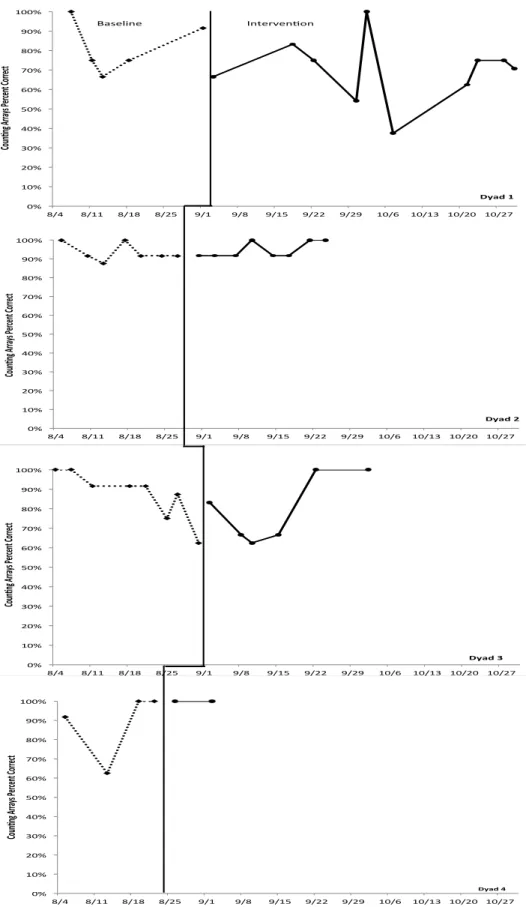
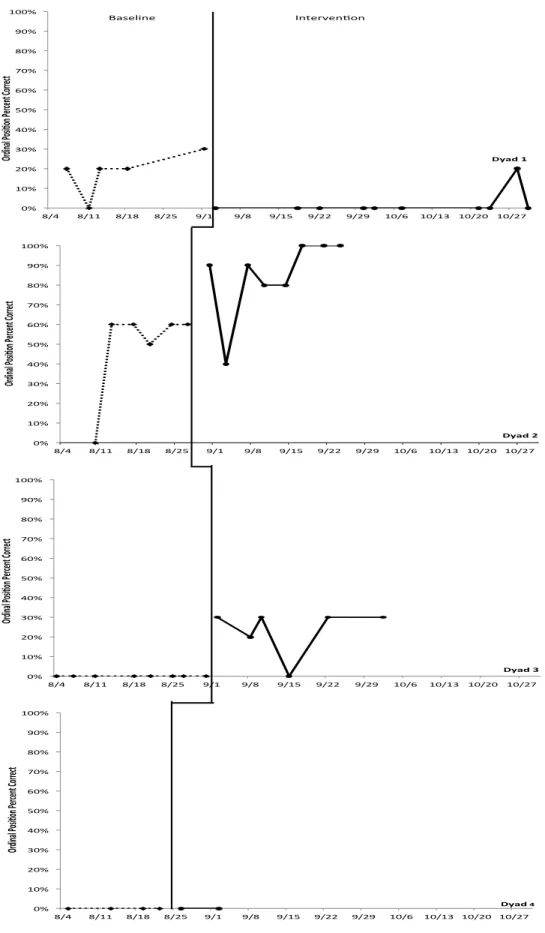
Figure 1. Multiple Baseline Results for eNumeracy, Counting Arrays Subtest 119 Figure 2. Multiple Baseline Results for eNumeracy, Ordinal Position Subtests 120 Figure 3. Multiple Baseline Results for eNumeracy, Matching Quantities
to Numerals Subtests 121
Figure 4. Multiple Baseline Results for eNumeracy, Partitioning Equal 122 Quantities Subtests
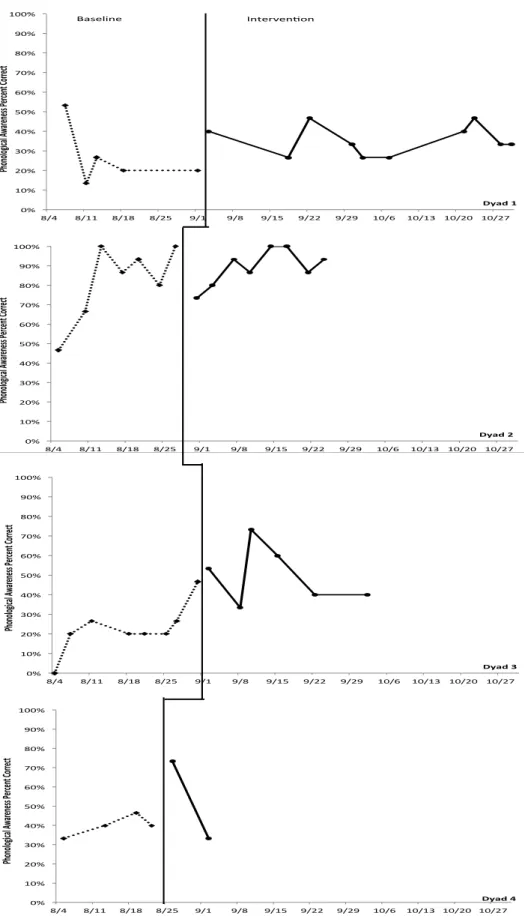
Figure 5. Multiple Baseline Results for eNumeracy, Number Recognition Subtests 123 Figure 6. Multiple Baseline Results for eNumeracy, Total Math Score 124 Figure 7. Multiple Baseline Results for PELI, Phonological Awareness Subtests 125 Figure 8. Multiple Baseline Results for PELI, Vocabulary Subtests 126
ABSTRACT
The present study examined the effectiveness of a shared storybook reading intervention in increasing children’s early numeracy and early literacy skills through a multiple baseline single case design. Four parent-child dyads were included in the study, and children’s early numeracy and early literacy skills were measured using the eNumeracy Early Math Assessments and the Preschool Early Literacy Indicators, respectively. The study also measured mathematical dialogue to determine if an increase in children’s early numeracy skills is due to the intervention and not other confounding variables. Finally, the study measured intervention integrity, and parent ratings of social validity. Results of the study indicated that parent-child mathematical dialogue increased for three participants and could not be calculated for the fourth participant due to attrition. Visual analysis and hierarchical linear modeling results indicated no statistically significant early numeracy or literacy outcomes across participants. A masked visual analysis indicated that there was an observable difference in children’s scores on the eNumeracy Ordinal Position measures, but none of the other outcome measures. Additionally, the majority of parents were able to implement the intervention with integrity and all parents reported high levels of social validity. The findings of this study show that the parent directed shared mathematical storybook reading intervention was effective in increasing mathematical dialogue between parents and children. Future studies should examine the impact of shared mathematical storybook reading interventions on discrete early numeracy and literacy skills specifically targeted during the book reading interventions.
CHAPTER ONE: INTRODUCTION
Mathematics achievement is an area of weakness for students across the United States because they are not meeting standard proficiency levels or performing at the same level as their international peers. The 2013 National Assessment of Educational Progress (NAEP)
assessment, which covered five mathematical content areas, including (1) number properties and operations, (2) measurement, (3) geometry, (4) data analysis, statistics, and probability, and (5) algebra, and placed students into one of four achievement levels based on their performance (advanced, proficient, basic, or below basic) demonstrated that students in the US are not succeeding in mathematics (National Center for Education Statistics, 2013). The goal is for students to be performing at or above the proficient level, which indicates they are competent in the presented mathematical material. The results of the assessment revealed that fewer than half (42%) of fourth grade students scored at the proficient or advanced levels (34% and 8%,
respectively), and 36% of eighth grade students scored at the proficient or advanced levels (27% and 9%, respectively). Additionally, the Program for International Student Assessment (PISA) conducted an international assessment in 2012 to measure 15-year-old student’s abilities to apply mathematical concepts to real-life problems (Kelly et al., 2013). The assessment was scored on levels of 1 to 6 with a score of 5 or above indicating a student demonstrates high levels of math skills (i.e., “top performers”), and with scores of level 2 or below demonstrating low levels of math skills (i.e., “baseline level of proficiency”; Kelly et al., 2013, p. 7). The study showed that only 9% of 15-year-old students scored a level 5 or above, and 26% scored a level 2 or below. These results show that few U.S. students are meeting high mathematical standards, and more
students are performing at baseline proficiency levels when compared to the international averages (13% and 23% respectively). Collectively, these studies indicate that mathematical achievement is a concern at both the national and international levels.
In addition to few students in the U.S. meeting high mathematical standards, students’ mathematical achievement is related to their overall academic outcomes, which makes low math achievement in the U.S. particularly concerning. The academic skills children possess when beginning school are predictive of their academic achievement later in life. Duncan and colleagues (2007) conducted a longitudinal study that examined the relationship between children’s academic skills when they initially entered school and their later academic
achievement. The authors found that early mathematics skills have the greatest predictive power of later academic achievement for children in both the domains of reading and math (Duncan et al., 2007). Overall, previous research emphasizes the importance of early intervention and prevention of mathematics skills to enhance future school success.
Early numeracy skills are not only predictive of later academic achievement (Duncan et. al., 2007), but they are also the foundation upon which more advanced mathematical skills are developed. Children’s early numeracy skills are defined as a “child’s fluidity and flexibility with numbers, the sense of what numbers mean, and an ability to perform mental mathematics and to look at the world and make comparisons” (Gersten & Chard, 1999, pp. 19-20). Purpura and Lonigan (2013) conducted a study to determine the specific skills that children need to develop early numeracy skills. They found that early numeracy is composed of three specific domains: numbering, relations, and arithmetic operations. These domains require children to understand counting processes and sequences, critically think about numbers and quantity, understand the association between collections of objects and numbers on a mental number line, know the
meaning of numerals, and understand how to compose and decompose specific quantities (Purpura & Lonigan, 2013). Research suggests that early numeracy skills are necessary for developing higher order mathematics and problem solving skills (Gersten & Chard, 1999), further illustrating the importance of children developing a strong foundation in early numeracy.
Research has also revealed that children who either engaged in early numeracy activities at home with their parents, or students who had a moderate to strong understanding of early numeracy concepts when entering kindergarten, had higher math achievement in the fourth and eighth grade (Mullis, Martin, Foy, & Arora, 2012). By helping young students develop a strong understanding of early numeracy skills, educators and parents have the potential to enable children to experience future success in their mathematical achievement. Specifically, early intervention and preventative measures should target early numeracy skills such as counting, quantity discrimination, and number naming which have been found to be moderate to strong predictors of mathematics achievement (Lembke & Foegen, 2009).
Although effective early numeracy interventions have been identified, few empirical studies have focused on how parents can interact with their children to help them develop early numeracy skills. Parent directed early numeracy interventions that have been examined include schools helping parents implement early numeracy interventions (Starkey & Klein, 2000), game board interventions (Ramani & Siegler, 2008; Siegler & Ramani, 2009), and storybook
interventions (Hojnoski, Columba, & Polignano, 2014). Of these options, shared storybook reading, defined as parents reading mathematical storybooks with their child, is particularly promising because it incorporates both early numeracy and early literacy concepts. Previous studies have shown that shared storybook reading has been used as a way to increase
numeracy skills (Anderson, Anderson, & Shapiro, 2004; Anderson, Anderson, & Shapiro, 2005; Flevares & Schiff, 2014; Hojnoski, Columba, & Polignano, 2014; Van den Heuvel-Panhuizen & Boogard, 2008; Van den Heuvel-Panhuizen & Elia, 2013). Specifically, Hojnoski and
colleagues (2014) conducted a study that examined the impact of shared parent-child storybook reading on mathematical dialogue. Previous studies have shown that high levels of mathematical dialogue between parents and children can improve children’s early numeracy skills (Gunderson & Levine, 2011; Levine, Suriyakham, Rowe, Huttenlocher, & Gunderson, 2010; Suriyakham, Levine, & Huttenlocher, 2006). Hojnoski and colleagues (2014) provided parents with mathematical storybooks and reading guides to help parents incorporate math dialogue into shared book reading between parents and children. The results of the study showed that shared storybook reading could increase math dialogue between parents and children. Additionally, parent surveys demonstrated that the intervention had a high level of social validity (e.g., parents were able to implement the intervention, and found it meaningful). However, the study did not measure children’s early numeracy achievement outcomes. This type of intervention also has the potential to impact children’s early literacy outcomes due to the increase in shared parent-child book reading.
Problem Statement and Purpose of the Study
Given the potential of storybook interventions to increase children’s academic skills in multiple domains (i.e., early numeracy and early literacy) and high reported levels of social validity, this type of intervention seems particularly promising. The purpose of this study was to empirically examine parent-child mathematical storybook interventions and the impact they have on children’s early numeracy and early literacy skills, as well as the impact on parent-child mathematical dialogue. Specifically, the current study aimed to duplicate the findings of
Hojnoski and colleagues by examining mathematical dialogue, and expand on the study by exploring the impact of a storybook intervention on preschool students’ early numeracy and literacy outcomes (Hojnoski et. al., 2014). Previous studies have shown that mathematical dialogue increases between parents and children when they read mathematical storybooks (Anderson et al., 2004; Anderson et al., 2005; Flevares & Schiff, 2014; Hojnoski et al., 2014; Van den Heuvel-Panhuizen & Boogard, 2008; Van den Heuvel-Panhuizen & Elia, 2013), and that mathematical dialogue is correlated with young children’s early numeracy skills (Gunderson & Levine, 2011; Levine et al., 2010; Suriyakham et al., 2006). However, no studies have been conducted that examine the impact of parent-child mathematical storybook reading on children’s early numeracy achievement. Additionally, parents typically report that they believe children’s early literacy skills are more important than children’s early numeracy skills (Cannon &
Ginsburg, 2008; Ramani, Rowe, Eason, & Leech, 2011; Sonnenschein et al., 2012), and that they spend more time engaging in early literacy activities with their children (Chang, Sandhofer, Adelchanow, & Rottman, 2011; Hunt & Hu, 2011). Incorporating mathematical concepts into storybook reading may increase parent’s willingness to engage in mathematical activities with their child, especially if the intervention has the potential to increase children’s early literacy skills as well. The current study measured the impact of shared book reading between parents and children on mathematical dialogue, as well as the impact on children’s early numeracy and literacy achievement.
Research Questions
This study examined the following research questions:
1) To what degree does a parent-led intervention increase mathematical dialogue between parents and children (when compared to baseline observations)?
a. Hypothesis: Shared mathematical storybook reading will increase mathematical dialogue between parents and children. Previous studies have shown that reading storybooks including mathematical concepts increases mathematical dialogue between parents and their children (Anderson et al., 2004; Anderson et al., 2005; Flevares & Schiff, 2014; Hojnoski et al., 2014; Van den Heuvel-Panhuizen & Boogard, 2008; Van den Heuvel-Panhuizen & Elia, 2013).
2) To what degree does a parent-led intervention improve children’s early numeracy skills (e.g., cardinality, ordinality, number naming, matching numerals with quantity, and partitioning equal quantities)?
a. Hypothesis: Shared mathematical storybook reading between parents and children will increase children’s early numeracy skills in the areas of cardinality,
ordinality, number naming, matching numerals with quantity, and partitioning equal quantities. Although no previous studies have measured these specific early numeracy outcomes, previous studies have indicated that reading mathematical storybooks leads to an increase in mathematical dialogue (Anderson et al., 2004; Anderson et al., 2005; Flevares & Schiff, 2014; Hojnoski et al., 2014; Van den Heuvel-Panhuizen & Boogard, 2008; Van den Heuvel-Panhuizen & Elia, 2013), and that mathematical dialogue between parents and children is predictive of children’s early numeracy skills (Gunderson & Levine, 2011; Levine et al., 2010; Suriyakham et al., 2006). Therefore, one would expect to see an increase in children’s early numeracy skills based on the current intervention. Additionally, the lessons generated for each storybook focus on cardinality, number naming, matching numerals with quantity, and partitioning equal quantities. Ordinality is
only taught directly in one lesson, but is an applied skill that could develop through other lessons as well.
3) To what degree does a parent-led intervention improve children’s early literacy skills (e.g., phonological awareness and vocabulary)?
a. Hypothesis: Shared mathematical storybook reading between parents and children will increase children’s early literacy skills in the area of vocabulary but not phonological awareness (Lonigan, Anthony, Bloomfield, Dyer, & Samwel, 1999; Lonigan, & Whitehurst, 1998; Wasik, & Bond, 2001; What Works Clearinghouse, 2007; Whitehurst, Arnold, et al., 1994; Whitehurst, Epstein, et al., 1994;
Whitehurst, et al., 1988). The proposed intervention will use a modified version of dialogic reading to increase mathematical dialogue between parents and children. This hypothesis is based on previous studies that have shown that dialogic reading techniques have a positive impact on children’s vocabulary but no discernable effects on their phonological awareness (What Works
Clearinghouse, 2007).
4) What is the level of intervention acceptability of the early numeracy intervention? a. Hypothesis: Parents will provide high ratings of intervention acceptability for this
intervention (Hojnoski et al., 2014). In a previous study, Hojnoski and colleagues (2014) measured the parent’s level of intervention acceptability after completing the mathematical storybook reading intervention, and found that the majority of the participants found the intervention appropriate, acceptable, effective, and easy to implement (Hojnoski et al., 2014). Additionally, because parents typically think that children’s early literacy skills are more important than early numeracy
skills (Cannon & Ginsburg, 2008; Ramani et al., 2011; Sonnenschein, et al., 2012), an intervention that allows a parent to incorporate both early literacy and early numeracy skills may be more acceptable than an intervention focusing solely on children’s early numeracy skills.
5) To what degree was the intervention implemented with integrity?
a. Hypothesis: Parents will implement the intervention with a high rate of intervention integrity given the evidence-based practices used to increase intervention integrity (i.e., parent training, lesson plan packets, audio recording intervention sessions). Previous research has shown that monitoring procedures (Hook & DuPaul, 1999; Powell-Smith, Stoner, Shinn, & Good, 2000) and training parents (Persampieri, Gortmaker, Daly, Sheridan, & McCurdy, 2006; Sterling-Turner, Watson, Wildmon, Watkins, & Little, 2001) can both increase the fidelity of intervention implementation.
Definition of Key Terms
Early Numeracy, Number Sense, and Informal Mathematical Skills
Early numeracy, number sense, and informal mathematical skills are defined in the research literature as the foundational skills that children need in order to develop mathematical competence (Powell & Fuchs, 2012). Gersten and Chard (1999) expand upon this definition by stating that number sense is “the child’s fluidity and flexibility with numbers, the sense of what numbers mean, and an ability to perform mental mathematics and to look at the world and make comparisons” (p. 19-20). Although number sense, early numeracy, and informal mathematical skills are often used interchangeably in the research literature, the term early numeracy will be used for the duration of this study because that is the term most often used in the educational
research literature. Research suggests that children’s early numeracy skills are composed of three main factors: numbering, relations, and arithmetic operations (NRC, 2009; Purpura & Lonigan, 2013). These constructs are defined further in the sections below.
Numbering
Numbering is one of the three main factors of early numeracy, and is defined as a child’s understanding of counting rules, processes, sequences, and their ability to critically think about numbers and quantity. Skills included in the numbering domain are verbal counting, counting forward and backward, identifying counting errors, one-to-one correspondence, cardinality, counting a set of objects without touching or manipulating the set, counting subsets, subitizing, and estimation (Purpura & Lonigan, 2013).
Relations
Relations is also a component of early numeracy, and it is defined as a child’s
understanding of the association between sets/collections of objects, numerals, or numbers on a mental number line (Purpura & Lonigan, 2013). The skills in this domain of early numeracy include ordinal numbers, relative size, number comparison, set comparison, number order, sequencing, set reproduction, numeral identification, and numerals.
Arithmetic Operations
Arithmetic operations are also a component of children’s early numeracy skills, and they are defined as “the understanding of the ways in which groups are composed and decomposed by differentiating sets and subsets” (Purpura & Lonigan, 2013, p. 182). Skills included in arithmetic operations include addition and subtraction with objects, story problems, initial equivalence, two-set addition, equivalent sets, number composition/ decomposition, and number
Cardinality
Cardinality is a concept included in the numbering factor of early numeracy.
Specifically, cardinality refers to a child’s understanding that, when counting a set of objects, the last number named represents the total number of items in the set (Powell & Fuchs, 2012). When children learn this concept, it helps them understand the importance and purpose of counting.
Ordinality
Ordinality is a concept included in the relations factor of early numeracy (Purpura & Lonigan, 2013). Specifically, ordinality (or ordinal number) signifies the position where a number or object falls in relation to other numbers or objects (e.g., first, second, third, etc.; Cross, Woods, and Schweingruber, 2009).
Number Recognition
Number recognition is a concept included in the relations factor of early numeracy (Purpura & Lonigan, 2013). This skill requires children to identify written numbers, and it partially mediates the relationship between early numeracy skills and formal mathematical knowledge (i.e., mathematical calculation; Purpura, Baroody, & Lonigan, 2013).
Matching Numerals with Quantities
Matching numerals with quantities is a task that requires children to match a written numeral to an array of objects or images. This skill is a concept in the relations factor of early numeracy (Purpura & Lonigan, 2013), and helps to mediate the relationship between early numeracy skills and formal mathematical knowledge (i.e., mathematical calculation; Purpura, Baroody, et al., 2013).
Partitioning Equal Quantities
Partitioning equal quantities is a task that requires children to view an array of objects and to divide them equally among two people, or to view arrays of objects for two people and decide if their arrays contain equal amounts. This task fits within the arithmetic operations of early numeracy (Purpura & Lonigan, 2013). Table 1 shows the three domains of early
numeracy, the specific skills in each domain, and the name of the assessment that will be used in the present study to measure each construct.
Table 1
Domains of Early Numeracy
Numbering Relations Arithmetic Operations
A child’s understanding of counting rules, processes, sequences, and their ability
to critically think about numbers and quantity.
A child’s understanding of the association between sets/
collections of objects, numerals, or numbers on a
mental number line
“The understanding of the ways in which groups are composed and decomposed
by differentiating sets and subsets” (Purpura & Lonigan, 2013, p. 182).
Early Numeracy Assessments By Domain
Cardinality Ordinality Partitioning Equal Quantities Number Recognition
Matching Numerals with Quantities
Dialogic Reading
Dialogic reading is a shared storybook reading method that allows a child to interact and engage with a story as they read with an adult. Studies have shown that dialogic reading is an intervention method that increases children’s language and literacy skills (Lonigan et al.,1999; Lonigan, & Whitehurst, 1998; Wasik, & Bond, 2001; What Works Clearinghouse, 2007; Whitehurst, Arnold, et al., 1994; Whitehurst, Epstein, et al., 1994; Whitehurst, et al., 1988). When implementing dialogic reading techniques with a child, an adult uses a variety of prompts (i.e., completing a sentence, recalling events, open-ended questions, asks the child to relate the
story to events in their life, or asks who, what, when, where, why, and how questions) to engage the child with the story. After providing a prompt, the adult will provide the child with feedback regarding the answer, add additional information to the child’s response, and repeat the prompt to make sure that the child has learned something from the adult’s feedback and additional information (What Works Clearinghouse, 2007).
Pre-school Students
Pre-school students are children between the ages of four and five years old.
Voluntary Pre-Kindergarten
Voluntary Pre-Kindergarten (VPK) is a preschool program for children between the ages of four and five. This program is funded by the Florida legislature, and children must be Florida residents between the ages of four and five to register for these services. The program is focused on helping children develop reading, math, social, and cognitive skills so they have the necessary skills when they begin kindergarten.
Parental Involvement
Parental involvement can be broadly defined as “parents’ or caregivers’ investment in the education of their children” (LaRocque, Kleiman, and Darling, 2011, p. 116). More specifically, parental involvement refers to numerous activities and relationships between families, schools, and communities (Epstein, 2011). Epstein (2011) defines six specific types of parental involvement that include the following: (a) assisting parents with developing positive and supportive environments for their children at home, (b) having parents assist with
educational activities at home, school, or in the community, (c) communication between teachers and parents, (d) allowing parent involvement with school wide decision-making, (e) teaching parents how to help their children with school work at home, and (f) strengthening school
programs through community resources and services (Epstein, 2011). Parent involvement both at home (Anders, Rossbach, Weinert, Ebert, Kuger, Lehrl, & Maurice, 2012; Blevins-Knabe & Musun-Miller, 1996; Kleemans, Peeters, Segers, Veroheven, 2012; LeFevre, Skwarchuck, Smith-Chant, Fast, Kamawar, & Bisanz, 2009; Levine, Suriyakham, Rowe, Huttenlocher, & Gunderson, 2010; Manolitsis, Georgiou, & Tziraki, 2013; Niklas & Schneider, 2013;
Skwarchuk, 2009; Skwarchuk, Sowinski, & LeFevre, 2014;Vandermaas-Peeler, Nelson,
Bumpass, & Sassine, 2009) and at school (Blevins-Knabe & Musun-Miller, 1996; Fan & Chen, 2001; Galindo & Sheldon, 2012; Hill & Taylor, 2004; Kleemans, Peeters, Segers, Veroheven, 2012; LeFevre, Skwarchuck, Smith-Chant, Fast, Kamawar, & Bisanz, 2009; Miedel & Reynolds, 1999; Powell, Son, File, & San Juan, 2010; Sheldon & Epstein, 2005; Wade, 2004; Yap & Enoki, 1995) has a positive impact on children’s early numeracy and mathematical skills.
Math Talk (or Math Dialogue)
Math talk or math dialogue occurs when an adult (i.e., teacher or parent) and children discuss math related topics (Boonen, Kolkman, & Kroesbergen, 2011; Gunderson & Levine, 2011; Klibanoff, Levine, Huttenlocher, Vasilyeva, & Hedges, 2006; Levine, Suriyakham, Rowe, Huttenlocher, & Gunderson, 2010; Suriyakham, Levine, & Huttenlocher, 2006). Research shows that math talk between parents and children is significantly related to children’s performance on early numeracy tasks (Gunderson & Levine, 2011; Levine et al., 2010;
Suriyakham et al., 2006). In previous studies, math talk has been measured through qualitative analysis, and involves coding parent-child dialogue into discussions related to early numeracy and mathematics, and unrelated discussions.
Multiple Baseline Design
A multiple baseline research design is a type of single case experimental design that employs experimental control by staggering the baseline and intervention phases of the study over time. By starting the intervention for one student, while the remainder of the students stay in the baseline phase, one would expect to see a change in performance for the student receiving treatment but not for the students in baseline. This pattern suggests that the change in
performance is likely due to the intervention and not extraneous variables. In addition to it’s methodological rigor, a multiple baseline design allows the measurement of change in student knowledge and skills once the intervention begin. Finally, a multiple baseline design can be used to conduct statistical analyses that measure the effectiveness of treatment for both individual students and across students (e.g., hierarchical linear modeling).
Significance of the Study
The results of this study are significant for a number of reasons. First, no studies to date have examined the effect of parent-child mathematical storybook reading on children’s early numeracy achievement. Additionally, no studies have examined the impact of this type of
intervention on children’s early literacy achievement. By measuring both early literacy and early numeracy constructs, this study has given educators and parents a better understanding of how reading mathematical storybooks impacts children’s early achievement. Previous studies have shown that there is a connection between parent-child mathematical storybook reading and the increase of parent-child mathematical dialogue (Anderson et al., 2004; Anderson et al., 2005; Flevares & Schiff, 2014; Hojnoski et al., 2014; Van den Heuvel-Panhuizen & Boogard, 2008; Van den Heuvel-Panhuizen & Elia, 2013), and that mathematical dialogue can increase
al., 2006). Therefore, this research has expanded on previous studies by determining if an increase in mathematical dialogue between parents and children, in the context of shared mathematical storybook reading, impacts children’s early numeracy skills. In addition to
measuring mathematical dialogue and children’s early numeracy skills, this study investigated if applying dialogic reading to mathematical storybook reading will increase children’s early literacy skills because previous research has shown positive literacy outcomes when using dialogic reading (Lonigan et al.,1999; Lonigan, & Whitehurst, 1998; Wasik, & Bond, 2001; What Works Clearinghouse, 2007; Whitehurst, Arnold, et al., 1994; Whitehurst, Epstein, et al., 1994; Whitehurst, et al., 1988). If both early literacy and early numeracy skills are impacted by this intervention, this research also has the potential to increase social validity of the intervention for parents if positive results are found for both sets of academic skills. In addition, if parents are able to implement this intervention with integrity, it has the potential to be a useful intervention for schools to recommend to parents. Finally, by using a single case, multiple baseline design the study allows for a rigorous investigation of the research questions.
CHAPTER TWO: LITERATURE REVIEW
Children’s number sense and early numeracy skills are predictive of their later academic achievement. Therefore, helping children to develop a strong foundation in these skills is imperative to preventing future academic difficulties. This chapter will provide a review of the literature regarding number sense and early numeracy, parental involvement, and early numeracy interventions. Specifically, the first part of this chapter will provide a definition of early
numeracy and number sense, the factors and sub skills that compose early numeracy, how early numeracy and number sense develop, and their relation to later mathematical achievement. Next, parental involvement will be defined, and the importance of parental involvement at school, parental involvement at home, and parental beliefs related to early numeracy will be discussed to highlight the relation of these factors to children’s early numeracy achievement. Finally, the chapter will close with a review of the different types of early numeracy interventions, including school assisted, game board, and story book interventions.
Early Numeracy and Number Sense
The first section of this chapter will discuss the definitions of number sense and early numeracy, and the various sub-skills that are encompassed by number sense and early numeracy. Additionally, this section will discuss how number sense and early numeracy develop as children age, and how these skills relate to later mathematical achievement.
Definition
Research has demonstrated that number sense is a skill that is present at birth (in a very primitive form), and improves with age. Cognitive scientists and math educators do not explain number sense in exactly the same way, which makes the construct hard to define (Berch, 2005). Berch (2005) reported almost 30 different definitions of number sense present in the research literature. Cognitive scientists define number sense as a “primitive sense of number” (Libertus, Feigenson, & Halberda, 2011, p. 1293), which produces imperfect estimations of numbers that can be manipulated and used for computations of addition, subtraction, division, multiplication, and greater than/ less than comparisons (Libertus et al., 2011). The National Council of the Teachers of Mathematics (1989) describe number sense as a flexible understanding of numbers, measurement, and the relationships between numbers and their relative size (NCTM, 1989). In addition to number sense having a variety of definitions, there are other terms in the research literature that are used synonymously with number sense. Two terms that are commonly used as alternatives for number sense are early numeracy and informal mathematical knowledge. Powell and Fuchs (2012) define early numeracy as “the early numerical competencies that are
foundational to building competence in mathematics” (pg. 1) and indicate that early numeracy and number sense are often used interchangeably in research. Informal mathematical knowledge is explained by Purpura and Lonigan (2013,) as mathematical skills children learn before
entering school, through their environment and play situations, that do not involve written numerals, mathematical symbols, or formal math procedures.
Despite the disconnect between fields regarding the definition of number sense, there are some overarching themes that can be used to define number sense that are nicely illustrated by Gersten and Chard (1999). They state that number sense is “the child’s fluidity and flexibility
with numbers, the sense of what numbers mean, and an ability to perform mental mathematics and to look at the world and make comparisons” (p. 19-20). This definition is frequently used in the literature and will be adapted for the current study. These researchers also compare number sense to phonemic awareness in reading because it is seen as the foundation upon which more advanced mathematical skills are developed. Additionally, they note that number sense is necessary but not sufficient for developing higher order mathematics and problem solving skills (Gersten & Chard, 1999). Although number sense, early numeracy, and informal mathematical skills are often used interchangeably in the research literature, the term early numeracy will be used for the duration of this paper because that is the term most often used in the educational research literature.
Components of Early Numeracy
There is little consensus among researchers regarding the number of factors contributing to early numeracy skills; different studies report that early numeracy is based on a 3 factor model, a 2-factor model, and a 1 factor model. The National Research Council (NRC)
Mathematics Learning in Early Childhood: Paths Towards Excellence and Equity report (NRC, 2009) identifies numbering, relations, and arithmetic operations as the core skills of early numeracy. Numbering is defined as a child’s “knowledge of the rules and processes of the counting sequence and the ability to obtain quantity in a flexible manner” (Purpura & Lonigan, 2013, p. 180). Numbering skills include verbal counting, counting forward and backward, identifying counting errors, one-to-one correspondence, cardinality, counting a set of objects without touching or manipulating the set, counting subsets, subitizing, and estimation. Relations is defined as understanding “how two or more items (collections or numbers) are connected or relevant to each other and the association between the numbers on the mental number line”
(Purpura & Lonigan, 2013, p. 180). Skills in the relations category include ordinal numbers, relative size, number comparison, set comparison, number order, sequencing, set reproduction, numeral identification, and numerals. Finally, arithmetic operations are defined as “the
understanding of the ways in which groups are composed and decomposed by differentiating sets and subsets” (Purpura & Lonigan, 2013, p. 182). Skills included in arithmetic operations include addition and subtraction with objects, story problems, initial equivalence, two-set addition, equivalent sets, number composition/ decomposition, and number combinations.
Based on a synthesis of the literature, it is unclear whether numbering, relations, and arithmetic operations are “separate aspects of [early] numeracy skills or simply different means of assessing a general-[early]-numeracy skill construct” (Purpura & Lonigan, 2013, p. 182). Pupura and Lonigan (2013) conducted a study to further examine the structure of numbering, relations, and arithmetic operations, and to assess how these constructs relate to each other (Purpura & Lonigan, 2013). The authors assessed 393 preschool children across 45 public and private preschool settings. The children ranged in age from 3 to 6 years old and were assessed using the Preschool Early Numeracy Skills (PENS) Test (Purpura, 2010; Purpura & Lonigan, 2013). The subtests in the PENS Test include multiple activities assessing numbering, relations, and arithmetic operations.
Once the data were collected, the researchers used factor analysis to examine the factor structure of early numeracy skills, compare the accuracy of various fact or models, and to determine if the early numeracy factor structure differed based on a preschool student’s age (Purpura & Lonigan, 2013). The researchers found that the tasks administered during subtests for numbering, relations, and arithmetic operations each significantly loaded on their respective factors, and shows that “each factor represents a unidimensional construct” (Purpura & Lonigan,
2013, p. 195). They also found that the tasks were representative of their domains and that the constructs fit the data. Next they found that the three-factor model of early numeracy
characterized the data better compared to other models (e.g., 2 factor models and 1 factor models). This suggests that numbering, relations, and arithmetic operations are correlated but separate factors that make up children’s early numeracy skills. Finally, the authors showed that children’s early numeracy skills are composed of the same factors and skills regardless of age (Purpura & Lonigan, 2013). The findings from this study were important because they suggest that a three factor model of early numeracy is likely the most accurate representation compared to other models that have been proposed.
Development and Importance of Early Numeracy Skills for Achievement
There is evidence that early numeracy begins to develop at a very young age. For
example, infants have the ability to discriminate between differing quantities and sizes of objects by the time they reach 4-6 months of age. Bannon, Lutz, and Cordes (2006) used a habituation task with 6-month-old infants and found that babies could discriminate changes in the area of an Elmo face, but this ability was dependent on a ratio. The infants were successfully able to discriminate area with a ratio of 1:4, 1:3, and 1:2 but not a ratio of 2:3. Additionally, Xu and Spelke (2000) conducted a study examining infants’ abilities to discriminate between arrays of dots. They also used a habituation task, and found that infants could discriminate between a ratio of 1:2 (e.g. 8 versus 16 dots) but not a ratio of 2:3 (e.g. 8 versus 12 dots). Finally, studies have shown that infants have expectations about numbers. Wynn (1992) conducted a study where she placed a doll on a stage, hid the doll behind a screen, and then placed another doll behind the same screen while an infant watched. The purpose of this was to simulate the addition of two objects (i.e. 1+1=2). When the screen was taken away, it revealed either one doll (simulating that
1+1=1, i.e. an incorrect solution) or two dolls (simulating 1+1=2, i.e. a correct solution). The infants looked longer when the solution revealed one doll, indicating that they were surprised by the results. Further research has been done on this topic by Berger and colleagues (2006) in which infants’ brain activity was monitored (through event-related potentials) while performing the same task. The researchers found that infants looking time and brain activity was greater during the incorrect solution and that infants patterns of brain activity were similar to adults’ patterns of brain activity when they observed incorrect mathematical equations.
In addition to early numeracy being present very early in life, these skills improve as children age (Halberda & Feigenson, 2008; Odic, Libertus, Feigenson, & Halberda, 2013) and early number sense abilities are predictive of later mathematics achievement (Jordan, Kaplan, Locuniak, & Ramineni, 2007; Libertus, Fiegenson, & Halberda. 2011; Mazzocco, Feigenson, & Halberda, 2011). For example, Halberda and Fiegenson (2008) conducted a study examining how numeracy skills develop as children increase in age. The researchers conducted a cross sectional study with 3-, 4-, 5-, and 6-year-old children and adults, and there were 16 participants included for each age group (Halberda & Fiegenson, 2008). The children and adults were tested using a numerical discrimination task where they were asked which of two characters (i.e., Big Bird and Grover) had more items. The items were displayed on a computer screen, with Big Bird’s items in one box and Grover’s in the other, for 2,000 milliseconds (Halberda &
Fiegenson, 2008). Based on data gathered during pilot testing, this gave the participant enough time to compare each character’s items, but not to count. Participant responses during the discrimination task were used to calculate Weber fractions, defined as “the smallest numerical change to a stimulus that can be reliably detected,” for each age group (Halberda & Fiegenson, 2008, p. 1457). Weber fractions were used as the outcome measure in this study, which allowed
the researchers to determine the smallest ratio of numbers that an age group could reliably discriminate. The researchers used statistical modeling techniques to examine the trend of participants’ Weber fractions over time. Included in the models were Weber fractions of 6-month-old infants, gathered from previous studies (i.e., Lipton & Spelke, 2003; Xu & Spelke, 2000), as well as the data from the 3-, 4-, 5-, and 6-year-olds, and adults from the current study (Halberda & Fiegenson, 2008). However, the statistical modeling methods also allowed the researchers to predict Weber fractions for age ranges that were not included in the study (e.g., ages seven through eighteen). The results showed that a person’s ability to discriminate between quantities improves with age, and then becomes stable in adulthood. The data models also showed that, even after formal instruction in math has started, a child’s numeracy skills continue to develop and improve until late adolescence (Halberda & Fiegenson, 2008). A follow-up study conducted by Odic and colleagues (2013) found similar results, supporting the idea that
numeracy skills develop as children age (Odic et al., 2013).
Additionally, early numeracy abilities are predictive of later mathematics achievement (Jordan et al., 2007; Libertus et al., 2011; Mazzocco et al., 2011). A longitudinal study by Mazzocco and colleagues (2011) tested a sample of preschool children (n = 17) through a quantity discrimination task. The children were then evaluated again in kindergarten, first, or second grade, and administered a standardized math test (Test of Early Mathematics Ability – Third Edition [TEMA-3]), an intelligence test (Weschler Abbreviated Scale of Intelligence [WASI]), and rapid automatized naming tasks for colors, numbers and letters. The researchers then conducted linear regression models to determine if number sense in preschool predicted children’s performance on these later assessments. The results showed that number sense was predictive of later mathematical achievement on the TEMA-3 and rapid automatized naming of
numbers, but not the other measures. This illustrates that number sense is predictive of mathematics ability even when it is measured several years prior to children formally starting school.
Duncan and colleagues (2007) examined the relationships between key components of school readiness, specifically academic, attention, and social-emotional skills at the beginning of kindergarten, and later reading and mathematics performance in school through a meta-analysis. Six large-scale longitudinal data sets were used in the study, and these data sets all included measures of early academic skills, attention, socioemotional skills, behavior, and later achievement outcomes. The data sets included in the study were: the Early Childhood Longitudinal Study – Kindergarten Cohort (n = 21,260), the children of the National
Longitudinal Survey of Youth (n = 1,756), the NICHD Study of Early Child Care and Youth Development (n = 2,816), the Infant Health and Development Program (n = 985), the Montreal Longitudinal-Experimental Preschool Study (n = 1,928), and the 1970 British Birth Cohort Study (n = 11,200; Duncan et. al., 2007). Initial measures were conducted at “school entry” and the samples of children ranged in age from 5 to 6 years (Duncan et. al., 2007). Samples were collected from a variety of locations including two nationally representative samples of US children, two multisite studies of US children, a sample from Great Britain, and a sample from Canada. Initial measures of child performance included a variety of standardized tests, rating scales, and observations filled out by teachers and parents (Duncan et. al., 2007). Follow up measures were achievement tests in reading and math, and these assessments were conducted when children were between the ages of eight and fourteen years; because the researchers
synthesized data from six different large scale studies, the follow up measures were administered at different time points depending on the data set. The researchers controlled for relevant family
and child variables that could potentially impact children’s outcomes, such as socioeconomic status, child gender, age, etc. Regressions were used to determine which initial set of skills was most predictive of later achievement (Duncan et. al., 2007). The study indicated that early numeracy skills at school entry were the most robust predictors of mathematics and reading achievement between the ages of eight and fourteen years as measured on standardized tests for reading (i.e., Achievement Test Reading Item Response Theory (IRT), Peabody Individual Achievement Tests (PIAT) Reading Recognition, Woodcock-Johnson Psycho-Educational Battery – Revised (WJ-R) Reading, Verbal Skills, and the Edinburgh Reading Test) and for Math (i.e., Achievement Test Math IRT, PIAT Math, WJ-R Math, Number Knowledge Test, and the University of Bristol Math Test; Duncan et. al., 2007). Specifically, early numeracy skills were more than two times as predictive of later achievement as early reading skills, and four times as predictive of later achievement as children’s attention, with average standardized coefficients of 0.33, 0.13, and 0.07 for math, reading, and attention, respectively. Additionally, while early literacy skills were not predictive of later math achievement (average standardized coefficient = 0.10), early numeracy skills were predictive of both later reading (average standardized
coefficient = 0.26) and math skills (average standardized coefficient = 0.42; Duncan, et. al., 2007).
Another study, conducted by Purpura, Baroody, and Lonigan (2013), examined which early numeracy skills best predict later mathematical achievement. The researchers acknowledge that early numeracy skills may not have a direct effect on formal mathematical knowledge. Instead, they suggest that another set of skills that connect early numeracy skills to written number symbols, referred to in the study as numeral knowledge, may serve as a mediator between formal mathematical and early numeracy knowledge (Purpura, Baroody, et al., 2013).
The researchers conducted a longitudinal study with preschool children to test this hypothesis. Data was collected from 393 preschool children in the first year of the study, and then retested 206 of the same children 1 year later. The children ranged in age from 3 to 6 years, and the children were assessed on formal, informal, and numeral knowledge tasks (Purpura, Baroody, et al., 2013). The early numeracy knowledge tasks included activities such as verbal counting (child would count as high as they could), one to on counting (counting a set of objects), cardinality (indicating the total number of objects counted), subitizing (indicating how many objects in a set without counting), set comparison (identifying which of four sets of dots had the most or the fewest), and story problems containing simple addition and subtraction situations (e.g. “Johnny had one cookie and his mother gave him one more cookie, how many cookies did he have now?”; Purpura, Baroody, et al., 2013, p. 456). The numeral knowledge tasks included identifying written numbers, and matching a set of dots with a numeral or a numeral with a set of dots. The formal knowledge tasks included formal addition problems, and the
Woodcock-Johnson III Calculation subtest (Purpura, Baroody, et al., 2013). The early numeracy and numeral knowledge tasks were administered at time one, and the formal knowledge task was administered at time two. The results of the study showed that the relationship between early numeracy and formal mathematical knowledge is mediated by children’s numeral knowledge (Purpura, Baroody, et al., 2013). This suggests that children need to be able to identify written numerals and understand the relationship between written numerals and their quantity in order to develop formal mathematical knowledge.
Collectively, these studies show the importance of children developing a strong mathematical foundation at an early age. By improving children’s early mathematical knowledge, parents and educators have the potential to improve children’s mathematics and
overall achievement as they progress through school. The next section of this chapter will examine the impact of parental involvement on children’s early numeracy skills.
Parental Involvement
Parental involvement can be broadly defined as “parents’ or caregivers’ investment in the education of their children” (LaRocque et al., 2011, p. 116). More specifically, parental
involvement refers to numerous activities and relationships between families, schools, and communities (Epstein, 2011). Epstein (2011) defines six specific types of parental involvement that include the following: (a) assisting parents with developing positive and supportive
environments for their children at home (parenting), (b) having parents assist with educational activities at home, school, or in the community (volunteering), (c) communication between teachers and parents (communicating), (d) allowing parent involvement with school wide decision-making (decision-making), (e) teaching parents how to help their children with school work at home (learning at home), and (f) strengthening school programs through community resources and services (collaborating with the community; Epstein, 2011). This section will focus on the importance of parental involvement in the context of early numeracy. First, research describing parent involvement at school and its relation to mathematics achievement will be outlined. Second, research outlining how parent involvement in the home environment has been linked specifically to early numeracy outcomes will be described. Finally, parental attitudes towards children’s mathematical skills and implications of these attitudes will be discussed.
Parental Involvement at School
The research literature has established that parent involvement in their children’s education is correlated with academic success (Fan & Chen, 2001; Galindo & Sheldon, 2012;
Hill & Taylor, 2004; Miedel & Reynolds, 1999; Powell et al., 2010; Sheldon & Epstein, 2005; Wade, 2004; Yap & Enoki, 1995). Additionally, research has illustrated that parental
involvement in children’s mathematics education has positive impacts on their math and early numeracy achievement (Blevins-Knabe & Musun-Miller, 1996; Kleemans et al., 2012; LeFevre et al., 2009; Sheldon & Epstein, 2005). A study conducted by Powell and colleagues (2010) examined the connection between parent-school relationships and the academic and social outcomes of pre-school children at the end of the year. The authors define parent-school
relationships as a two-dimensional construct including participating and volunteering for school events (i.e. parental school involvement) and parental perceptions of a teacher’s responsiveness to the child and parent (i.e. perceived teacher responsiveness; Powell et al., 2010). Participants in the study were 13 preschool teachers from 12 elementary schools in the Midwest, and 140 children and their parents. The researchers used the Peabody Picture Vocabulary Test – III, the Woodcock Johnson III Tests of Achievement: Letter Word Recognition, the Woodcock Johnson III Tests of Achievement: Applied Problems, and the Social Skills Rating System (Powell et al., 2010). Parent interviews were used to collect demographic data during the fall and spring to measure parental school involvement, perceived teacher responsiveness, and parental home involvement. The participating teachers filled out the Social Skills Rating System for each of their students. All teacher and student measures were conducted in both the fall and the spring, which allowed the researchers to statistically control for children’s initial academic and social skill levels at the beginning of the preschool year (Powell et al., 2010).
The results of this study illustrated that parental school involvement predicted children’s social skills, classroom behavior, and their mathematics achievement (Powell et al., 2010). Additionally, perceived teacher responsiveness had a positive impact on children’s early reading
and social skills, and a negative impact on problem behaviors (Powell et al., 2010). These
findings were present even when statistically controlling for quality of teacher/ child interactions, parent involvement at home, parent education level, child race/ ethnicity, and children’s
academic skills at the beginning of the year. Parent involvement at home did not significantly predict any of the child outcome measures. This study demonstrates the importance of parental school involvement on children’s academic and social skills.
In addition to parent involvement having a positive impact on academic and social skills broadly, research has shown that parental involvement has a positive impact specifically on math and early numeracy achievement (Blevins-Knabe & Musun-Miller, 1996; Kleemans et al., 2012; LeFevre et al., 2009; Sheldon & Epstein, 2005). Sheldon and Epstein (2005) conducted a study examining the types of family and community involvement practices that had a positive
influence on students’ mathematics achievement. Eighteen schools in various states agreed to participate, and the schools were highly diverse including a variety of grade levels (n = 10 elementary schools, and n = 8 middle or high schools), locations (inner city, urban, suburban, and rural), sizes (ranging in size from 124 to 1,280 students), and student demographics (ranging from 4.8% to 88% students enrolled in free and reduced lunch, and 0% to 44% students enrolled in English as a Second Language). Schools provided aggregated mathematics performance data, from standardized tests and student report cards, for a specific grade level of their choice. This data was reported for two consecutive school years, and report card data was examined for fall and spring semesters of both years. The schools provided data for grade levels 3 through 9 with the majority of secondary level school data coming from middle schools. In addition to school characteristics and student mathematics achievement, the researchers also collected data on schools utilization of a variety of partnership practices focused on mathematics. These practices
included (a) providing parent workshops, (b) distributing teacher contact information, (c)
scheduling parent teacher conferences, (d) recognizing students for mastering new math concepts (e.g., sending home a certificate), (e) helping students understand how math can be applied outside of school (e.g., discussing math with parents or organizing presentations to demonstrate how math is used by professionals), (f) encouraging parents and other community members to be involved in school math activities, and (g) providing families with math activities to do at home or to do at school on Saturdays (Sheldon & Epstein, 2005). The researchers found that, when controlling for student’s prior achievement and school level, two of the fourteen partnership practices were related to students’ mathematics achievement. Specifically, assigning math homework that requires discussion and interaction with their family and offering mathematics game packets or lending library materials for students to use at home were both significantly related to math achievement outcomes. This study suggests that subject-specific, family
involvement activities in math are positively associated with students’ mathematics achievement (Sheldon & Epstein, 2005).
Overall, these studies illustrate that parent involvement is important both for children’s overall academic success (Fan & Chen, 2001; Galindo & Sheldon, 2012; Hill & Taylor, 2004; Miedel & Reynolds, 1999; Powell et al., 2010; Sheldon & Epstein, 2005; Wade, 2004; Yap & Enoki, 1995) as well as mathematical and early numeracy achievement (Blevins-Knabe & Musun-Miller, 1996; Kleemans et al., 2012; LeFevre et al., 2009; Sheldon & Epstein, 2005). By engaging families in their children’s education and providing subject-specific family
involvement activities in math, educators can potentially increase children’s mathematical achievement.
Parental Involvement at Home
In addition to research establishing a link between parent-school relationships and parent involvement and math outcomes in third grade and beyond, studies have also shown the
importance of parental-involvement at home with developing young children’s early numeracy skills (Anders et al, 2012; Blevins-Knabe & Musun-Miller, 1996; Kleemans et al., 2012; LeFevre et al., 2009; Levine et al., 2010; Manolitsis et al., 2013; Niklas & Schneider, 2013; Skwarchuk, 2009; Skwarchuk et al., 2014;Vandermaas-Peeler et al., 2009). One study, conducted by LeFevre and colleagues (2009), examined the frequency of specific, numeracy related activities and indirect numeracy activities (where numeracy skills are not the focus but they could be included) in children’s home environments. The study included 146 parents and children from two different cities in Canada, and the children were distributed across
Kindergarten through Grade 2. Parents completed surveys that gathered information on demographic characteristics, and frequency of involvement in math and reading activities at home. Parents were asked to report how frequently they engaged in each of 40 activities on a 5 point scale ranging from 0 (did not engage in the activity) to 4 (the activity occurred almost daily; LeFevre et al., 2009). Children were assessed using the Numeration, Addition, and Subtraction subtests of the KeyMath Test – Revised, Form B, a single digit addition task to measure fluency, the Peabody Picture Vocabulary Test, 3rd Edition (PPVT-III), and a spatial memory task using a computerized version of the Corsi blocks task (LeFevre et al., 2009).
The results showed that parents reported engaging in literacy activities, such as writing letters and identifying letter names and sounds, more frequently than numeracy activities (LeFevre et al., 2009). Additionally, the results showed that home numeracy experiences accounted for 4% of the variance in math knowledge and 13% of the variance in math fluency