Accepted Manuscript
Agribusiness Supply Chain Risk Management: A Review of Quantitative Decision Models
Golnar Behzadi, Michael Justin O’Sullivan, Tava Lennon Olsen, Abraham Zhang
PII: S0305-0483(16)30274-2
DOI: 10.1016/j.omega.2017.07.005
Reference: OME 1804
To appear in: Omega
Received date: 2 June 2016
Revised date: 25 June 2017
Accepted date: 8 July 2017
Please cite this article as: Golnar Behzadi, Michael Justin O’Sullivan, Tava Lennon Olsen,
Abraham Zhang, Agribusiness Supply Chain Risk Management: A Review of Quantitative Decision
Models,Omega(2017), doi:10.1016/j.omega.2017.07.005
This is a PDF file of an unedited manuscript that has been accepted for publication. As a service to our customers we are providing this early version of the manuscript. The manuscript will undergo copyediting, typesetting, and review of the resulting proof before it is published in its final form. Please note that during the production process errors may be discovered which could affect the content, and all legal disclaimers that apply to the journal pertain.
ACCEPTED MANUSCRIPT
Highlights
• Providing the first literature review of risk management models specifically for agribusiness
supply chains.
• Focusing on specific sources of uncertainty in agribusiness industries.
• Providing new implications and further directions for developing the research in the context of
agribusiness supply chain risk management.
• Providing the first literature review of risk management models specifically for agribusiness
ACCEPTED MANUSCRIPT
Agribusiness Supply Chain Risk Management: A Review of
Quantitative Decision Models
Golnar Behzadi*a, Michael Justin O’Sullivana, Tava Lennon Olsenb, Abraham Zhangc,d
aDepartment of Engineering Science, Faculty of Engineering, The University of Auckland, Auckland 1010, New
Zealand
bInformation Systems and Operations Management, Business School, The University of Auckland, Auckland 1010,
New Zealand
cAuckland University of Technology (AUT) Business School, AUT, Auckland 1010 New Zealand
dDepartment of Management Systems, University of Waikato Management School, Hamilton 3240, New Zealand
Abstract
Supply chain risk management is a large and growing field of research. However, within this field, mathematical models for agricultural products have received relatively little attention. This is some-what surprising as risk management is even more important for agricultural supply chains due to challenges associated with seasonality, supply spikes, long supply lead-times, and perishability. This paper carries out a thorough review of the relatively limited literature on quantitative risk manage-ment models for agricultural supply chains. Specifically, we identify robustness and resilience as two key techniques for managing risk. Since these terms are not used consistently in the literature, we propose clear definitions and metrics for these terms; we then use these definitions to classify the agricultural supply chain risk management literature. Implications are given for both practice and future research on agricultural supply chain risk management.
Keywords: Agribusiness supply chain, risk management, robust, resilient
1. Introduction
In the past two decades, supply chain risk management (SCRM) has emerged as an important re-search topic [1]. Several reasons are behind this development: 1) globalization has made supply chains longer and more complex; consequently, supply chains are now exposed to more risks and have be-come more vulnerable; 2) the lean management philosophy has bebe-come widely implemented in many industries; this philosophy advocates waste elimination/minimization and embraces just-in-time pro-duction/logistic; although it improves supply chain efficiency, the removal/reduction of redundancies has resulted in greater supply chain vulnerability under adverse events; and 3) the world has paid increasing attention to the many supply chain disruptions that have been caused by catastrophic events (e.g., [2, 3, 4, 5]).
ACCEPTED MANUSCRIPT
Agribusiness plays an indispensable role in the world’s economy as a key source of food supplies. Agribusiness products have three specific characteristics that make risk management for agribusiness supply chains (ASCs) more complicated when compared to risk management for typical manufac-turing supply chains. These characteristics are seasonality, supply spikes (sometimes referred to as “bulkiness”), and perishability. Dealing with seasonality requires planning as growth is seasonal whereas consumption is throughout the year. Further, most agricultural products have long supply lead times that cannot be easily altered against nature. Harvesting and post-harvest activities, in-cluding packing, processing, storage, and transportation, can be very demanding because of supply spikes. Furthermore, there is often significant time pressure on post-harvest activities as most agricul-tural products are perishable. Also, because of the perishability, there is a need for specific handling, storage, and inventory management. If not properly managed, a delay in transportation may cause substantial loss of product value.
In addition to product specific characteristics, risk management is important for ASCs because they often involve more sources of uncertainties than manufacturing supply chains [6]. In an ASC, the supply process is related to biological production (food crops, meat, etc.), which is affected by weather variability (e.g., droughts), disease (e.g., Psa kiwifruit disease), and pests (e.g., locusts). Such factors imply that both harvest levels and harvest times are subject to uncertainties. In addition, these factors can impact on the quality of the produce. In particular, in the processing stage, there are special risks associated with food quality and food safety (e.g., botulism risks). These uncertainties make ASCs more vulnerable than typical manufacturing supply chains. Furthermore, recent practices in agribusiness have added to the complexity of ASCs, thus making the application of risk manage-ment strategies more critical [7]. Such practices include the use of new marketing strategies (e.g., in product differentiation/proliferation) and the interlinked design of global supply chains [7].
This paper fills a gap in the literature by providing a review of quantitative models for ASC risk management. Our focus is on risks at the supply chain level, and related risk management method-ologies for ASCs that foster resilience and robustness, terms that we will carefully define. We review different quantitative risk management (RM) approaches that provide resilience and robustness for a variety of agricultural products. As pointed out by [3] and [1], there are a lot of inconsistencies in the meanings of SCRM terms. One contribution of this review is to suggest metrics for resilience and robustness.
ACCEPTED MANUSCRIPT
The remainder of this paper is organized as follows. Section 2 outlines the scope of our review in Agribusiness Supply Chain Risk Management (ASCRM) and reviews related survey papers. The key concepts and terms in this review are defined in Section 3. Section 4 classifies the available modeling studies in ASCRM according to different aspects of product type, risk types, risk measures, and RM strategies (i.e., robustness and resilience). In this section, modeling approaches are further analyzed for different types of agricultural products. At the end of Section 4, a specific overall sum-mary of the section is provided that identifies gaps in the research literature. The paper is concluded in Section 5 by proposing directions for future research.
2. Literature
Applications of quantitative models in agricultural problems date back to the 1950s and have been addressed widely in the literature [8, 7]. Modeling approaches in agribusiness have been predomin-antly used for problems related to transportation, distribution, harvesting, facility location, and farm planning (e.g., [9, 10, 11, 12]), with a specific focus on farm planning problems. Key considerations in agricultural problems (i.e., yield, harvest time, demand, etc.) are influenced by different sources of uncertainty such as weather conditions, animal or crop diseases, and price variability. Although, as described in the following, there are separate and extensive review studies on both quantitative risk management and agribusiness models, we are not aware of any review paper thus far on SCRM models in agribusiness, which is the topic of our review.
Articles [13], [14], [15], [16], [5], [1], and [17] reviewed the bulk of the quantitative SCRM liter-ature, mostly in the context of manufacturing industries. Agribusiness decision models have been reviewed in the areas of production, harvesting, and distribution [8, 7, 18, 19], facility locations [11], supply-side resource utilization [20], ASC planning challenges [21], and operational issues that res-ult in post-harvest waste [22]. Further, [23] reviewed quantitative ASC models in the contexts of: planting, harvesting, production, distribution, and inventory; [24] extended the review of agribusiness problems (in the context of supply chains) in considering factors of uncertainty. However, neither of the review papers discuss risk management strategies, so cannot be considered as reviews of SCRM. Thus, as depicted in Figure 1, to the best of our knowledge, there is no review specific to quantitative models in the joint area of SCRM and agribusiness. As mentioned above, this overlap will be covered by our review paper.
ACCEPTED MANUSCRIPT
Figure 1: Venn diagram on the research gap in literature reviews/survey papers
[8][25][11] [7] [20][18][21][19]
[22][23] [24]1
Agribusiness The scope of
this review paper [13] [14] [15]
[16][5] [1][17] SCRM
Note that risk management is not new to agribusiness planning. For instance, [26, 27] introduced the basic concepts of risk management in agriculture. Further, [25] reviewed farm decision-making under risk from several aspects such as utility functions, farmer risk preferences, and response approaches to both short-term and long-term uncertainty. However, the main concern of these aforementioned studies was farm level risks and uncertainties, whereas we have focused on risks at the supply chain level.
We reviewed papers from different journals in Operations Management (OM), Operations Research (OR), Supply Chain Management (SCM), and agriculture. We searched the Scopus database using combinations of keywords including “risk management,” “quantitative risk management,” “supply chain,” “operations research,” and “agribusiness”. In addition, we went through all the papers sur-veyed in the review papers from Figure 1 for SCRM papers with an agribusiness application (left hand side survey papers) and agribusiness papers that focused on SCRM (right-hand-side survey papers). We defined supply chain broadly as any paper that modeled multiple locations or firms.
We believe [28], published in 1993, is the first quantitative study in the field of agribusiness that considered risks in supply chains, although without directly referring to the term “supply chain.”
1 Article [24] reviews agribusiness problems in supply chain structures and includes uncertainty attributes; however,
as risk management strategies have not been clearly discussed in this review, the review has not been categorized under the SCRM section.
ACCEPTED MANUSCRIPT
Before that, risks in agribusiness had only been discussed at the farm level (see [26]). Article [28] studied a vegetable processing supply chain problem with two echelons that consider production, trimming, and processing decisions under uncertain climatic factors. In contrast with [28], most of the reviewed papers after 2000 have explicitly referred to the term supply chain in their studies.
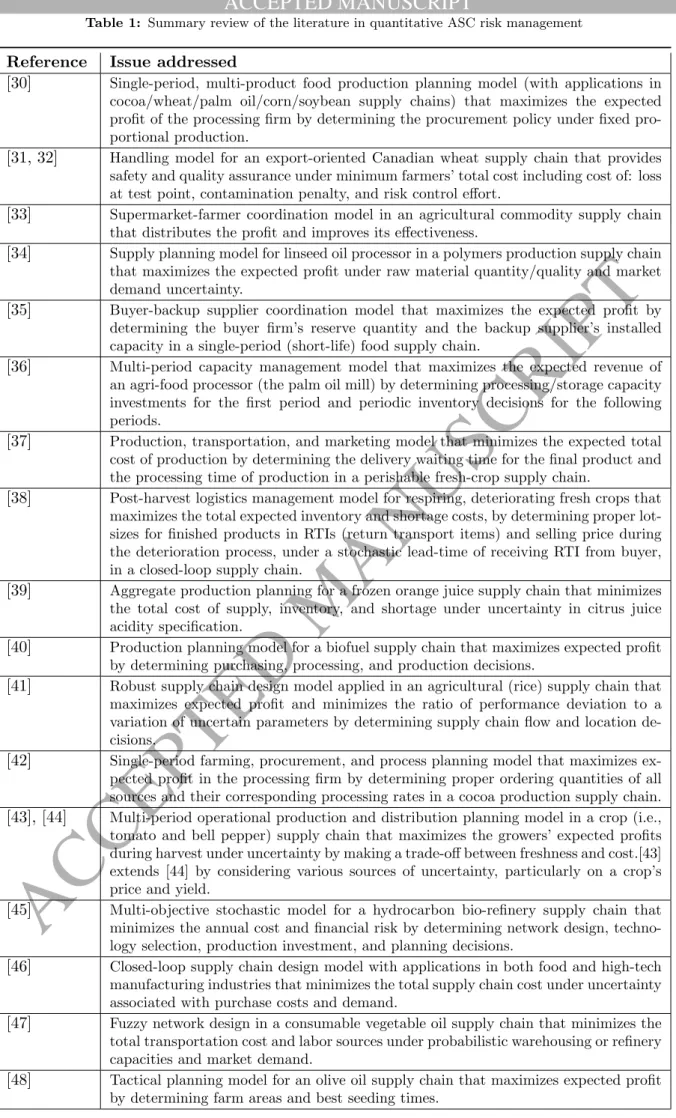
As 1993 appeared to us to be a late date for a first study, we carried out further research on the timing of the field. The term “supply chain management” appears to have first been used in an interview in the Financial Times in 1982 [29]. However, the concept of multi-echelon inventory control was addressed well before the introduction of “supply chain management (SCM)” [29]. Our search on “multi-echelon” and “agribusiness” yielded no RM papers earlier than [28]. It appears that when a flurry of articles and books came out on the subject of SCM in the mid-1990s, the concept began to be used in other fields of study, such as agribusiness. However, a recent review on SCRM indicates that the concept of risk management has still received noticeably less attention in the field of agribusiness and biological sciences compared to fields such as engineering, decision sciences, and business [1]. The latter statement has been supported by the findings of our review that particularly focused on agribusiness supply chain risk management studies. Table 1 lists the main issues addressed in the literature of quantitative SCRM modeling in agribusiness from 1993 until the present, ordered by decreasing publication date.
ACCEPTED MANUSCRIPT
Table 1: Summary review of the literature in quantitative ASC risk management
Reference Issue addressed
[30] Single-period, multi-product food production planning model (with applications in cocoa/wheat/palm oil/corn/soybean supply chains) that maximizes the expected profit of the processing firm by determining the procurement policy under fixed pro-portional production.
[31, 32] Handling model for an export-oriented Canadian wheat supply chain that provides
safety and quality assurance under minimum farmers’ total cost including cost of: loss at test point, contamination penalty, and risk control effort.
[33] Supermarket-farmer coordination model in an agricultural commodity supply chain
that distributes the profit and improves its effectiveness.
[34] Supply planning model for linseed oil processor in a polymers production supply chain that maximizes the expected profit under raw material quantity/quality and market demand uncertainty.
[35] Buyer-backup supplier coordination model that maximizes the expected profit by
determining the buyer firm’s reserve quantity and the backup supplier’s installed capacity in a single-period (short-life) food supply chain.
[36] Multi-period capacity management model that maximizes the expected revenue of
an agri-food processor (the palm oil mill) by determining processing/storage capacity investments for the first period and periodic inventory decisions for the following periods.
[37] Production, transportation, and marketing model that minimizes the expected total cost of production by determining the delivery waiting time for the final product and the processing time of production in a perishable fresh-crop supply chain.
[38] Post-harvest logistics management model for respiring, deteriorating fresh crops that maximizes the total expected inventory and shortage costs, by determining proper lot-sizes for finished products in RTIs (return transport items) and selling price during the deterioration process, under a stochastic lead-time of receiving RTI from buyer, in a closed-loop supply chain.
[39] Aggregate production planning for a frozen orange juice supply chain that minimizes the total cost of supply, inventory, and shortage under uncertainty in citrus juice acidity specification.
[40] Production planning model for a biofuel supply chain that maximizes expected profit by determining purchasing, processing, and production decisions.
[41] Robust supply chain design model applied in an agricultural (rice) supply chain that maximizes expected profit and minimizes the ratio of performance deviation to a variation of uncertain parameters by determining supply chain flow and location de-cisions.
[42] Single-period farming, procurement, and process planning model that maximizes ex-pected profit in the processing firm by determining proper ordering quantities of all sources and their corresponding processing rates in a cocoa production supply chain.
[43], [44] Multi-period operational production and distribution planning model in a crop (i.e.,
tomato and bell pepper) supply chain that maximizes the growers’ expected profits during harvest under uncertainty by making a trade-off between freshness and cost.[43] extends [44] by considering various sources of uncertainty, particularly on a crop’s price and yield.
[45] Multi-objective stochastic model for a hydrocarbon bio-refinery supply chain that minimizes the annual cost and financial risk by determining network design, techno-logy selection, production investment, and planning decisions.
[46] Closed-loop supply chain design model with applications in both food and high-tech manufacturing industries that minimizes the total supply chain cost under uncertainty associated with purchase costs and demand.
[47] Fuzzy network design in a consumable vegetable oil supply chain that minimizes the total transportation cost and labor sources under probabilistic warehousing or refinery capacities and market demand.
ACCEPTED MANUSCRIPT
Summary review of the literature in quantitative ASC risk management continued
Reference Issue addressed
[49] Single-period multi-product meat supply chain design model that maximizes the
packer’s expected profit, plant utilization, and animal non-uniformity given procure-ment, processing, and production decisions.
[50] Production planning model for multi-period, multi-product (perishable/powder) dairy supply chain that maximizes the expected profit by determining the optimal sales policy.
[51] Single-period production planning model that maximizes the expected return by de-termining the optimal amount of space to be leased for production and the quantity of olives to be provided from external sources under yield and yield-dependent cost uncertainties in a Turkish olive oil supply chain.
[52] Investment and production planning model in a single-period biofuel supply chain that maximizes the expected profit by determining investment decisions in a processing plant and flow decisions along the supply chain.
[53] Robust aggregate production planning model that minimizes the total cost of produc-tion, staffing, inventory, transportaproduc-tion, and shortage and maximizes the customers’ satisfaction in a wood and paper production supply chain under uncertainty associ-ated with cost parameters and demand.
[54] Inventory model under supplier-retailer collaboration on demand forecasting in a per-ishable agri-food supply chain that maximizes the expected profit by determining an optimal replenishment policy.
[55] Robust optimization model for harvest planning in a grape (wine) supply chain un-der yield (harvest productivity) uncertainty that maximizes the expected profit by determining the optimal labor assignments at different harvest-blocks and times.
[56] Enterprise decision model (i.e., to join to or form a co-op) in a dairy supply chain that maximizes the expected income of farmers by determining co-op decisions (about size, conditions, and product quantity), production, and shipment planning.
[57] Winery allocation model in a wine supply chain that maximizes the expected profit composed of sales and salvage value minus total production, packaging, and storage costs under demand uncertainty.
[58] Contract model between a large seed supplier and multiple retailers in a seeds supply chain that maximizes the expected total channel of profit by determining contract parameters that result in supply chain coordination.
[59] Inventory model for perishables in a fresh vegetable supply chain that maximizes
expected profit by determining the optimal planting batch in each harvest period.
[60] Robust multi-site, medium-term production planning model that minimizes the
ex-pected total cost for the producer including costs of production, labor, workforce change, shipment, and inventory by determining shipment, inventory, sale, and labor decisions in a cotton/silk (lingerie) supply chain.
[61] Production planning model for a premium-brand tomato supply chain that maximizes
the expected profit and meets the minimum service level by balancing overage cost, especially related to perishability, and underage cost of lost customers.
[62] Capacity management and logistic network design model for an export fruit supply
chain that maximizes throughput by determining the optimal flow between nodes and investigating the possibility of a capacity extension.
[63] Production planning and scheduling model in a multi-commodity fruits/juices (apples and pears) supply chain that maximizes the expected sales’ income by determining storage, process, and sales policies.
[64] Investment management in a concord grape and juice production supply chain that
minimizes the expected total cost of underage and overage through a trade-off between overinvestment and lack of capacity by determining the optimal pressing rates.
[65] Single long-period (two-year) production planning model that maximizes expected
sales in an olive oil supply chain by determining optimal leased farms and the pro-duction policy.
ACCEPTED MANUSCRIPT
Summary review of the literature in quantitative ASC risk management-further continued
Reference Issue addressed
[66, 67] Sequential two-period newsvendor harvest/inventory planning model in a hybrid
seed-corn supply chain that maximizes the margin by determining the number of acres in each period (in the 2003 version the model has been extended to multi-product production planning).
[68] Production planning model in an Ilium flower supply chain that maximizes the expec-ted total revenue by determining quantities of varieties of bulbs and flowers in each stage of the supply chain.
[69] Facility location/allocation model that minimizes the expected production and trans-portation costs under a green production scheme, uncertain daily demand, and scen-arios of supply failures in a dairy (raw milk) supply chain.
[70] Medium-range horizon multi-period production planning model in a tomato supply
chain that minimizes the total packing cost for the packing plant and the penalty cost for the delayed harvest.
[28] Multi-period production model in a vegetable processing supply chain that minimizes the total harvest and production cost and meets capacity and market limitations by determining harvesting, flow, processing, and logistics decisions.
As demonstrated in Table 1, quantitative agricultural risk models have been discussed in various contexts of farm management, production management, scheduling, and pest/disease management for supply chains in different crops/livestock. The following characterizes this work further and highlights gaps for future research.
3. Agribusiness SCRM Classification Terms
In this section, we identify the key concepts of our review in agribusiness supply chain risk manage-ment (ASCRM). In particular, we describe different aspects that have been discussed in the reviewed papers, which include: product types, risk types, and approaches to the modeling and management of risk. In Section 4, we use these aspects to classify the papers in Table 1.
3.1. Agribusiness Supply Chain Product Types
An agribusiness supply chain encompasses all components of a “farm-to-fork” process for a given food product; these include various stages related to supply, production, post-harvest, storage, processing, distribution, and linkages between components. Thus, the basic concepts are similar to manufacturing supply chains. However, the additional characteristics of ASCs (as described in Section 1, especially perishability) can make ASCs relatively more complex.
ASCs can be classified into different classes by the types of products produced. Some agricultural food products are referred to as crops (and sometimes agri-food crops) and include products obtained dir-ectly from plants. Other agricultural products such as cattle, meat, or seafood are known as livestock.
ACCEPTED MANUSCRIPT
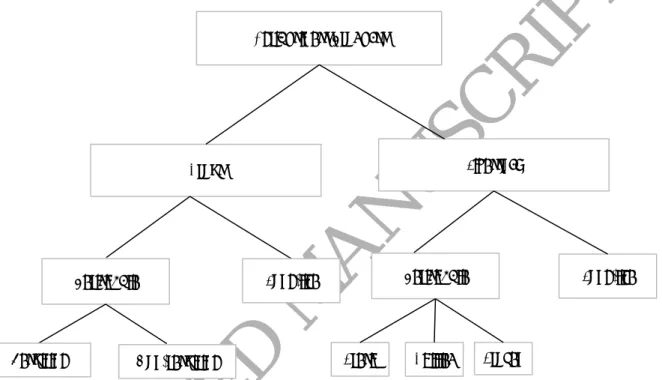
The livestock category also includes dairy products (e.g., milk, cheese) and non-food products (e.g., wool, hair, silk). Importantly, both livestock products and crops are either perishable or long-life. For example, fruits, fresh vegetables, and meat products are perishable. However, wheat and wool are considered to be long-life. Perishable crops can be further classified into respiring or non-respiring products and perishable livestock is divided into three classes of fresh, chilled, and frozen products. Within agri-foods, respiring crops and fresh livestock products are extremely prone to risk because of their particular biological characteristics. In Figure 2, we illustrate the classification of different products within ASCs.
Perishable Long-life
Crops
Perishable Long-life
Respiring
Livestock
Fresh Chilled Frozen Agribusiness Products
Non-respiring
Figure 2: Product classification of ASCs
Although crops and livestock are common product classifications for ASCs (e.g., in [6]), from a modeling standpoint, agricultural products can be classified as perishable or long-life because models that include perishability are often quite different from those that do not. Within the perishable category, there are second-order characteristics, such as respiring versus non-respiring (for crops) and fresh versus chilled/frozen (for livestock, e.g. meat), that can also be considered when modeling perishability. In Section 4, we will divide the literature into long-life and perishable products. First, in the following subsections, we highlight the modeling differences between these two categories.
3.1.1. Long-life Agricultural Products
The basic modeling difference between long-life and perishable agricultural products is that models in the category of long-life agriculture products are usually considered in multiple periods over a
ACCEPTED MANUSCRIPT
long time horizon. Studies in the context of risk management for long-life agricultural products are aimed at a variety of decisions such as crop planning, harvest and cultivation scheduling, capacity investment, production planning of processed foods, food handling, and facility location. Two recent representative examples of such work include [32] and [30].
Article [32] studied a handling problem for an export-oriented Canadian wheat supply chain that considers safety and quality issues. They developed a supply chain model to determine appropriate testing strategies by minimizing the farmer’s total costs including the cost of loss at a test point, a contamination penalty, and a risk control effort under risks of a farmers’ misrepresentation of data and technological failure. They proposed a simulation approach in the context of ASC with detailed assumptions including assumptions on an individual farmer’s behavior.
A second example of an ASC risk model in the context of long-life agriculture is provided by [30]. They investigate a capacity management problem in a palm oil supply chain. The model is developed as a multi-period supply chain that maximizes the expected revenue of an agri-food processor (the palm oil mill) through a dynamic stochastic programming approach with a series of two-stage models. The optimal solution is found by determining processing/storage capacity investment decisions in the first period, and making inventory decisions under yield and price uncertainties in the remaining periods. Their model compares three capacity portfolios that address processing dominated, storage dominated, and mixed processing policies.
3.1.2. Perishable Agricultural Products
Risk management approaches for perishable agriculture products require particular consideration be-cause of the additional level of vulnerability associated with perishability. A simple approach to deal with perishability and short lifecycles is newsvendor modeling (i.e., through a single-period invent-ory management model). One recent representative example of such modeling is [49], who discuss procurement strategies in a beef supply chain in order to minimize the packer’s expected cost under yield and demand uncertainty. They studied mixed spot and contract strategies under single period planning. The newsvendor model is used to reflect the perishability of beef products. Under the op-timal solution, the expected total cost of the beef packer is minimized by determining procurement, processing, and production decisions.
ACCEPTED MANUSCRIPT
the remaining shelf-life/freshness of the agricultural products at risk. Such models are capable of tracing the impact of a disruptive event or risk from one planning period to another. However, shelf-life/perishability modeling considerations increase the complexity of the proposed mathemat-ical models.
A recent example of a multi-period model is [37]’s study of a fresh fruit producer that sells to local and international markets under known (Make-To-Order: MTO) or uncertain (Make-To-Stock: MTS) demands and transportation disruptions. In this problem, the international market is more profitable but has the risk of transportation failures. Such failures affect both unfinished (ordered, not yet processed), and finished (processed, not yet delivered) products. Indeed, the waiting time until delivery is an important threat for perishable products. Thus, the key decision is whether to wait or to sell the finished product in the local market at a discounted price. However, for unfinished products, the decision is made on whether to slow down or change the process to adjust to a suitable delivery time. These decisions are made to prevent perishability and loss, and ultimately, minimize the expected total cost of the production system.
3.2. Supply Chain Vulnerability and Risk
Supply chain vulnerability is “the propensity of risk sources and risk drivers to outweigh risk mitiga-tion strategies, thus causing losses and adverse supply chain consequences” [71]. Hence, vulnerability is a “function of certain supply chain characteristics such as supply chain density, complexity, and node criticality” that affects both the probability and the severity of supply chain risks [72]. The latter definition highlights varying origins of vulnerability and risk. Vulnerability is a concept that depends on the characteristics of the underlying supply chain, and risk is an external threat [5]. Thus, vulnerability management could result in both reducing the probabilities of being affected by various risks and the levels of their impact.
In ASC problems, risks and vulnerabilities have been discussed in various contexts such as yield, cost (supply-side), and price (demand-side) variability for different agricultural products. Perishab-ility, as a key ASC characteristic, can impact on all these uncertainties; for instance, price can be affected by changes in perishability. Generally speaking, there are two categories of risk events: high probability low consequence (HPLC) events versus low probability high consequence (LPHC) events [73]. HPLC events are often referred to as business-as-usual risks. LPHC events are risks that stem from severe disruptions to normal practices. Many types of agribusiness risks (e.g., pests) can be
ACCEPTED MANUSCRIPT
seen in both varieties of HPLC (e.g., mild infestations) and LPHC (e.g., locust swarms). HPLC and LPHC events are both important as they can both occur in various supply chains. Hence, both types of risk need to be considered in ASCRM approaches. However, most studies focus on only one of these risks. One exception is [74] who define supply delay uncertainty (i.e., delayed supply that is still available within the time horizon – HPLC) and supply shortage disruption (i.e., supply that is not available within the time horizon – LPHC) in a dynamic supply portfolio selection problem.
In addition to these two categories, different types of risks may be further defined. Article [75] defines five regular types of risks: 1) supply; 2) process; 3) demand; 4) intellectual property; and 5) behavioral, political, and social. In a similar vein, [76] characterizes risks as: risks which are internal to the firm, namely process and control risks; risks which are external to the firm, but internal to the supply chain: demand or supply risks; and, finally, external risks related to the environment. While all of these risks are relevant to agribusiness, operational and disruption risks of supply/demand are particularly pertinent. This criticality stems from the additional vulnerability in agribusiness supply/demand-related elements such as supply quantity, cost, quality, market demand, price, etc.
According to [77], supply-side risks can be further categorized into five forms: 1) disruptions; 2) yield uncertainty; 3) capacity uncertainty; 4) lead-time uncertainty; and 5) input cost parameter uncertainty. In ASCs, yield and lead-time uncertainty are particularly important (often as business as usual risks). However, severe variations in either yield or lead time (or both) represent disruptions and need to be planned for as such. For example, uncertain factors such as weather conditions regu-larly affect crop yields, but unusual weather conditions (e.g., a hurricane) can produce an extremely low yield, which represents a disruption rather than a normal yield uncertainty.
Article [78] describes food supply risks in the following contexts: product contamination and re-call, loss of access due to terrorism, loss of access due to protests, loss of site, reduced capacity (e.g., production capacity shortfalls when sites are compromised), loss of people, loss of supplier, and reduced contractual cover in the event of a service failure or general shortage. According to [79], terrorist threats to food supply are very real and current threats have significant global consequences. Pests and diseases could also be considered as another source of risk. As an example, in the case of kiwifruit, supply has been disrupted by Pseudomonas syringae pv. actinidiae (Psa) a bacterial disease of kiwifruit vines that caused disruptions to worldwide kiwifruit production (e.g., Italy in 1992/2008 and New Zealand in the early 2010s) [80].
ACCEPTED MANUSCRIPT
Further supply risks can stem from the failure or unavailability of some inexpensive items. For instance, shortage of a cheap tool in a manufacturing industry may damage production and results in a significant loss in supply chains. These kinds of risks are referred to as hidden risks [81]. In agribusiness, the massive use of industrial agriculture (i.e., large, highly specialized farms with large inputs of fossil fuels, pesticides, and other chemicals derived from oil) can be considered a hidden risk. In fact, most of the costs from industrial agriculture have been ignored in short-term calculations of performance, but serious long-term consequences for the agribusiness system as a whole include damage to natural systems and increasing health risks [82].
In contrast to supply risks, agricultural demand risks can be viewed in terms of market and price uncertainty, e.g., in processed agricultural foods [49, 42]. Demand risks stem fundamentally from the variable and unpredictable expectations in markets as highlighted in the review by [83]. In addition, demand uncertainty may relate to major disruptions (e.g., by LPHC events). For instance, demand risks such as market/brand failure may result in demand disruptions. Moreover, demand-side risks could stem from supply-side risks, especially when supply risks are related to safety issues that may significantly impact the perceptions of the public and their associated demand (e.g., recently, con-cerns for the safety of milk powder produced by Fonterra in the botulism scare of 2014 led to massive product recalls and cast a shadow on the reputation of the entire NZ dairy industry) [84].
In summary, both supply-side and demand-side risks are crucial in agribusiness. Given the natural uncertainty in ASCs and the severe impacts of disruptions on ASCs, demand and supply disruptions need a particular focus. Section 4 classifies the risks considered in the reviewed papers as supply and demand side risks.
3.3. Supply Chain Risk Management
Broadly speaking, a risk management process includes the following steps: 1) risk identification; 2) risk assessment; 3) decision analysis (i.e., how decisions are affected by risks under different scen-arios); 4) mitigation; and 5) contingency planning [75]. In the initial steps, the risk identification and assessment process should be comprehensive enough to evaluate all types of risks, including hidden risks, because of their possible disruptive impacts on the supply chain (as described in Subsection 3.2). A comprehensive risk assessment may be achieved through a vulnerability map that maps the probable catastrophic events with their associated likelihoods and consequences [81].
ACCEPTED MANUSCRIPT
In [75]’s definition of a structured evaluation process for implementing a risk-related strategy, the final two steps of the risk management process (i.e., Steps 4 and 5) recognize two main groups of SCRM strategies; these are mitigation (i.e., proactive/ pre-disruption strategies) and contingency strategies (i.e., reactive/ post-disruption strategies). Article [4] suggests that both preparation (i.e., mitigation) and first response (i.e., contingency strategies) are critical in minimizing the total impacts of risk in supply chains.
Article [85] divides risk mitigation strategies into three categories: inventory control (e.g., order-ing and stockorder-ing decisions); sourcorder-ing (e.g., dual sourcorder-ing, product substitution); and acceptance. The acceptance strategy, i.e., not protecting against disruption, is considered when the cost of dealing with a disruption outweighs losses from the disruption (assuming cost is the main objective). Article [86] investigates optimal mitigation strategies for perishable products, i.e., when inventory control is not a possible option for mitigation because of the perishability concerns. In this case, one of the possible mitigation strategies is supplier diversification (i.e., routinely sourcing from multiple sup-pliers). Article [49] proposes a mitigation strategy for diversifying procurement from both contract and spot markets in a beef supply chain under optimal portfolio management decisions (i.e., procure-ment, processing, and production decisions). Although diversifying the supply sources is a common mitigation strategy under supply risks, it may not be effective when other objectives rather than cost or profit are considered. In particular, [87] considers an integrated supply and scheduling problem with a mixed integer bi-objective model and shows that, given a service-oriented model (i.e., when service level maximization is prioritized), a diversified supply strategy is less attractive than in the cost-oriented model given local and regional supply disruptions.
In contrast with what has been explained so far about mitigation strategies, the default strategy after risk materializes is reactive (i.e., contingency planning). This is particularly necessary when a supply chain operates without any concern about risks on a daily basis, but utilizes contingency plans (e.g., “fall back” suppliers or routes) when a disruption occurs. Reactive and contingency planning have been claimed to be critical in minimizing the crossover from risk management to crisis and event management [88, 89]. Article [86] discusses two approaches in contingency risk management: contin-gency sourcing (i.e., switching to backup suppliers) and demand switching (i.e., rerouting between demand markets or encouraging customers to buy an alternative product–product substitution) after a disruption takes place. Article [89] provides a qualitative framework for contingency risk
man-ACCEPTED MANUSCRIPT
agement in the case of food supply chains. In doing so, they focus on six measures: the speed of response, communication, escalation, resource and fund availability, multi-partner collaboration, and leadership. In their study, speed of response (i.e., a measure of flexibility) varies according to the degree of risk impact on food safety.
In total, from a practical standpoint, sometimes reactive strategies are preferred. Although many researchers support proactive approaches in SCRM (see [90, 91, 92, 93, 78, 94]), there are notable gaps in the preparedness of organizations in practice as there is little investment into mitigation strategies [89]. One underlying reason for this lack of investment is related to justifying the cost of fixing problems that may never happen. In addition, proactive (mitigation) approaches focus on identifying and minimizing the impacts of the expected risks. Hence, these approaches require the use of predictive tools to identify risks, calculate probabilities of risks, and implement mechanisms for risk mitigation. In ASCs, due to their nature-based uncertainty, such predictions could be even harder to achieve [89].
Although studies in the context of SCRM often either address mitigation- or recovery-based strategies, in some studies both types of RM strategies have been considered; hence the optimal strategy could be varied given different problem settings [95]. For instance, a backup supplier strategy as a reactive strategy is addressed in [95] under supply capacity risks in an automotive supply chain problem. In [95], an alternative transportation capacity is also introduced as a recovery-based strategy. Article [95] studies mitigation strategies such as inventory holding (i.e., an increase in order-quantity) and additional warehouse or transportation capacity. As another example, [96] selects the primary sup-plier portfolio to mitigate possible supsup-pliers’ failures in advance; it also determines the selection of recovery suppliers (after disruption) to improve the service level, which is measured by both time and cost of recovery.
Mitigation and contingency risk management strategies are applied in supply chain problems through two modeling approaches, referred to as robust and resilient strategies. To define robust and resilient approaches in supply chains, we start by comparing these concepts to the well-known concept of leanness in a supply chain. As discussed in Section 1, lean supply chains provide great cost efficiency with minimum redundancy, except in cases of disruption. By definition, lean supply chains are also vulnerable. This is exactly in contrast to robust and resilient risk management strategies, which focus on decreasing the vulnerability of the network.
ACCEPTED MANUSCRIPT
While not always used consistently in the literature, here we define robustness as an ability to with-stand disruption with an acceptable loss of performance, whereas resilience is the potential to recover quickly from disruption. The key advantage of these definitions, as used here, is that robustness and resilience fit within the common overarching theme of risk management as described in [78]. In par-ticular, robustness is a suitable capacity for managing business-as-usual risks (i.e., high probability, low impact risks), while resilience is suitable for disruption risks (i.e., low probability, high impact risks).
Robust strategies in the supply chain are considered as proactive and upfront RM options that mitigate risks and provide minimum variation in performance under disruption (e.g., [97, 98, 99, 14, 100, 101, 102]) that could be provided through approaches such as stochastic programming (e.g., [103, 104]) and robust optimization (e.g., [105, 106, 60]). In comparison, resilience is referred to as a post-disruption recovering capacity [107, 21, 108, 109], and stems from characteristics including flexibility, availability, velocity, and visibility [110]. Flexibility is a key measure in providing resi-lience that provides quick reactions to unforeseen circumstances [77]. Thus, time is an important component in the resilience concept. However, time-based resilience has received limited attention in the existing supply chain management literature (see [111] and [112] for examples). More details about robustness and resilience metrics will be discussed in Subsection 4.2.3.
3.4. Modeling Approaches for ASC Risk Management
In this section, we classify different mathematical modeling approaches for ASCRM. These model-ing approaches have been selected accordmodel-ing to their application in different agricultural problems. Our classification starts in Subsection 3.4.1 with the classical risk programming approach, called minimization of total absolute deviation, that has been used the most in farm planning problems. Other approaches to risk include game theory in Subsection 3.4.2, linear programming-based (LP) approaches (mixed-integer linear programming, multi-objective optimization, goal programming) in Subsection 3.4.3, stochastic programming, stochastic dynamic programming, and fuzzy optimization in Subsection 3.4.4, simulation in Subsection 3.4.5, robust optimization in Subsection 3.4.6, and other less common approaches in Subsection 3.4.7.
These modeling approaches are applied in ASC problems to adapt RM strategies including robustness and resilience under different types of operational and disruption risks as described in Subsection 3.3.
ACCEPTED MANUSCRIPT
Most of the reviewed models in this section focus on business-as-usual uncertainty that is mitigated through robust strategies. The types of risks and the related RM strategies referred to through these models will be discussed further in Section 4.
3.4.1. MOTAD
Minimization of the total absolute deviation (MOTAD) provides an efficient frontier between expec-ted profit and variance of the profit, under a quadratic programming (QP) model [113]. MOTAD is the most common approach in classical agriculture risk modeling, especially in problems such as crop planning. MOTAD minimizes the sum of negative deviations from a prefixed income target and was first introduced by [114] for the farm investment portfolio problem under return variability. Later, [115] suggested an extension to the [114] model in the form of either LP or QP instead of just QP.
Article [116] has developed a short-run crop planning model with MOTAD under cost, price, and yield uncertainty. The problem is formulated as a linear approximation to the original formulation. The risk programming portfolio model in the context of farm management has also been developed under some alternative distributional assumptions in the portfolio programming. This approach suggests a direct solution to the expected utility function of cropping activities under an average estimation of the farm-level situation [117]. Surprisingly, this old and common approach does not seem to have been applied to ASCs.
3.4.2. Game Theory
Game theory (GT) approaches address risk in two ways: 1) explicitly defining risk metrics and including these metrics in the game; and 2) creating coordination between players in a game, hence sharing and reducing risk for each player. According to [118]’s survey, game theory models were initially considered in agricultural problems as games that incorporate uncertainty in nature through a parametric game approach: one goal is optimized while the other is treated as a parametric constraint (e.g., minimizing the variance of the cropping pattern when the expected return is addressed as a parametric constraint). However, this classical GT approach to risk in agriculture was later criticized, for the reason that the applied decision criteria were incompatible with the principle of rational choice in their concerned case-studies [20]. Recently, game theory was applied in advanced food and agriculture studies, such as [33], which considers different coordination approaches between farmers and supermarkets under yield and demand uncertainties.
ACCEPTED MANUSCRIPT
3.4.3. LP-based Approaches
There are different LP-based optimization methods used in modeling risk in agribusiness: goal programming (GP), multi-objective optimization (MOO), and mixed-integer linear programming (MILP). Before describing these methods, we give a brief, general description of LP models that are used in agribusiness studies.
LP is a method for the optimization of a linear objective function, subject to linear constraints [119]. LP is widely utilized in agribusiness models, mainly for the purpose of profit maximization under certainty in problems such as: land allocation, selecting cultivation techniques, labor or ma-chinery allocation, production planning, cropping pattern selection, crop scheduling, and integrated production-distribution for seeding (e.g., [70, 69, 44]).
MILP is a generalization of an LP model where some of the variables are restricted to be integers [119]. In ASC problems in order to consider integer variables and capture failure scenarios (e.g., plant closure status via a binary variable), LP models have been extended to MILP models [69].
MOO is another optimization method that is used when more than one linear function needs to be optimized simultaneously [120]. GP is a branch of MOO that handles multiple, normally conflicting objectives (goals); then, each of these goals is given a pre-described target value and deviations from this set of target values are minimized [120]. While in LP and MILP methods the objective function is measured in one dimension, in GP goals with different priorities and weights that can be combined with each other in the objective function. There are a number of studies in the context of agriculture where LP models were extended to GP/MOO models to encompass risk attributes. In these models, performance (e.g., profit) maximization is not the only concern and risk minimization is considered as another objective, which is especially important in agricultural models. For instance, [121] develops crop planning as a GP model, with multiple objectives including risk avoidance, maintaining the minimum level of required food, and maximizing the farmer’s profit.
3.4.4. Stochastic Programming/Stochastic Dynamic Programming
Uncertainty and risk can be captured by a stochastic programming (SP) approach, where right-hand-sides or coefficients related to the objective function/constraints, are uncertain. SP is a common approach in ASC models that seeks to model risks mainly in the category of business-as-usual uncer-tainty in parameters such as price, resource availability, and rainfall.
ACCEPTED MANUSCRIPT
SP has various applications in agricultural problems that are described by the following representative examples. Article [122] develops an SP model for a cropping problem that considers a set of fresh vegetables with alternative harvesting schedules. In this model, variable weather (hence, indirectly yields), and prices are used to construct the random scenarios. Article [123] analyzes the capital structure and investment decisions in a farm problem by measuring liquidity risk, collateral risk, and credit-reserve risks via an SP formulation. Article [64] provides an SP model for a strategic harvest decision under uncertain crop size and harvest rates when both crop size and harvest rates are af-fected by weather volatility. Further, to support sequential decisions under realizations of supply and demand uncertainties, two-stage SP models have been applied in some recent studies in the context of agribusiness (e.g., [36] and [49] in the context of multi-product food production planning).
Considering uncertainty and risk parameters with decisions across different time periods has res-ulted in stochastic dynamic programming (SDP) approaches being used. Initially, SDP has been considered in agribusiness problems with possible periodic or repeated failures, e.g., a farm ma-chinery replacement problem when machine failure is stochastic [124]. The earliest model of dynamic programming (DP) in the context of agriculture (crop planning) appears to be [125], which discussed periodic decisions on growing versus fallowing to determine sufficient levels of moisture in the soil during each growing period.
Some of the SDP applications in agricultural problems include: irrigation planning (under scarce wa-ter situations), cropping, and production planning. For example, [126] and [127] discuss the optimal water and capacity allocation model over time periods under uncertainty of different soil moisture level scenarios. In another example, SDP is applied in a periodic pest control problem when infected fractions of the plant are used to construct stochastic scenarios [128]. Recently, [36] discusses SDP models in a multi-period palm oil supply chain to provide optimal capacity management and suggest a periodic production plan.
In some other examples, the uncertainty incorporated in the optimization model relates to fuzzy parameters, e.g., frequently imprecise environmental uncertainties. Information about fuzzy para-meters is often incomplete and/or unavailable over the problem horizon. In these circumstances, fuzzy set theory can be useful and has been used to incorporate uncertainty into RM models. The triangular function is one of the most common membership functions for describing fuzzy parameters
ACCEPTED MANUSCRIPT
and defines three possibilities for each fuzzy parameter. Article [47] defines a triangular membership function to capture fuzzy parameters for both supply-side and demand-side capacities in a vegetable oil supply chain problem.
3.4.5. Simulation
Simulation (SIM) has been mainly applied to scheduling/estimation problems in agriculture, e.g., harvest-time planning and transplant scheduling under uncertain ecological factors. Simulation ap-proaches can be categorized as either multi-agent or system dynamics models.
In multi-agent models, the behavior of individuals (i.e., agents) is dictated by their schemata. Ac-cording to [129], a schema is “a cognitive structure that determines what action the agent takes at
timet, given its perception of the environment.” System dynamics is another simulation-based
ap-proach to address the nonlinear behavior of complex systems over time using stocks, flows, internal feedback loops, and time delays. The key difference of system dynamics, when compared with agent-based approaches, relates to the inclusion of structure in system dynamics versus the agents’ rules in agent-based simulation [130]. In a recent study by [95], a system dynamics model is adopted for a multi-stage supply chain problem under network disruptions. Here, disruption scenarios are modeled through a continuous time function in the system dynamics model. Within the disruption scenarios, elements in the multi-stage supply chain are disrupted at different times and to varying extents. In fact, the network structure is dynamic where nodes and arcs may become unavailable for different durations. The model provides recovery policies by redirecting the material flow during the disrup-tion. The optimal reconfiguration policies are determined by taking into account the performance impact of the disruption and the recovery costs.
Nevertheless, multi-agent simulation models are increasingly being used in agricultural resource prob-lems, e.g., in socio-economic, environmental, and land-use problems as reviewed by [131]. Similarly, [132] and [133] studied planting problems by using a multi-agent simulation approach to provide biophysical estimation models under uncertainty.
Another application of simulation in the context of agriculture relates to food safety analysis. Articles [31, 32] discuss a multi-agent simulation model for a handling problem in a Canadian wheat supply chain under risk of farmer or technology failures to provide safety and quality assurance. Article [32] extended the static agent-based simulation model in [31] by proposing a corresponding dynamic
ap-ACCEPTED MANUSCRIPT
proach that characterizes the wheat supply as a dynamic complex system. In such a dynamic wheat supply chain model, both farmers and handlers interact and respond to the unpredictable system changes over time. SIM is particularly useful in such a problem because the complex behavioral assumptions could not be inserted in a corresponding analytic model. Hence, the complexity of ag-ribusiness problems encourages the use of simulation models to address the complex characteristics of ASCs more precisely. Article [32] compared solutions and policies generated using the SIM approach versus those generated by the alternative analytic model under restrictive assumptions about indi-vidual behavior. This study recognizes that although analytic and SIM approaches result in different solutions, in many respects, they reach similar conclusions on the proposed policy for test and quality control in the described case-study.
3.4.6. Robust Optimization
Article [105] used GP to perform robust optimization (RO), which involves two types of robustness: solution robustness and model robustness. In this approach, robustness is addressed proactively, i.e., “close” to optimal and “almost” feasible for all input scenarios. The RO model provided by [105] has been mainly applied to LP models. However, there is another type of RO introduced later by [134] that includes non-linear applications. Further, [135] provides a flexible adjustment in RO that reduces the level of conservatism related to suboptimal solutions for the nominal value in previous RO models (i.e., to ensure that the solution remains feasible and near optimal under all scenarios). The flexible adjustment in [135] is provided by considering ellipsoidal uncertainties, which involve solving the robust counterparts of the nominal problem in the form of conic quadratic problems (i.e., as a reasonable approximation to the complicated uncertainty set). This modified RO approach is called distributionally robust optimization. The distributional RO model sets up the first and second moments of the distribution as an uncertain parameter. One of the key factors in distributional RO is called the budget of uncertainty, which is the maximum number of parameters that can deviate from their nominal values and is especially used to mitigate demand uncertainty (e.g., in different customer zones).
RO has been applied to ASC problems recently in a limited context such as production planning, harvest planning, and facility location problems, mainly for long-life agricultural products [60, 55, 41]. In general, the key benefit of RO is to deal with uncertainty even if the actual information about uncertain parameters is limited, i.e., when SP could not be applied effectively (see [55]). Hence, it is expected to receive more attention in ASC modeling problems under examples of rare disruptions in
ACCEPTED MANUSCRIPT
this context.
3.4.7. Other Modeling Approaches
Safety-first models and chance constraints are among the other modeling approaches that have been applied in agricultural risk models, particularly in farm planning models under uncertainty, as de-scribed by [26, 27]. In safety-first models, the preference for safety as a measure of risk is satisfied first, and then decisions are made to maximize the profit. In the chance constraint formulation, the probability of the available resources is given by known distributions and the risk measure is forced to be above a satisfactory lower bound via the corresponding (chance) constraint.
3.5. Summary
In this section, we described the key concepts of the review related to both ASC and RM. We focused on ASCs by differentiating between the types of products and their different requirements in applying RM strategies. Under RM, attributes such as types of risks, strategies, and modeling approaches with particular applications in agribusiness have been discussed. The key aspects studied in this section form the basis for our classification approach to categorize the reviewed papers in Section 4.
4. ASCRM Paper Classification and Findings
In this section, we categorize the papers presented in Table 1 (in Section 2) using the concepts from Section 3. First, Subsection 4.1 describes the classification approach used in reviewing and categorizing these papers. Then, Subsection 4.2 presents the findings of the review by summarizing the results and providing specific implications/suggestions for future studies in the field of ASCRM.
4.1. Classification
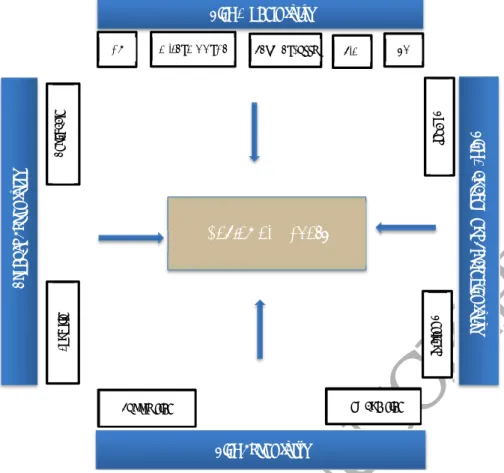
In this section, we classify the papers that were initially identified in Table 1 according to the criteria depicted in Figure 3. These criteria were formally defined in Section 3. Figure 3 summarizes these criteria with the associated subsections from Section 3.
ACCEPTED MANUSCRIPT
ACCEPTED MANUSCRIPT
Risk Models (3.4) Pro duct Typ es (3.1) MILP, MOO, GP GT SP/SDP, Fuzzy SIM Reviewed Papers Lon g‐ lif e Peris h ab le Risk Types (3.2) Supply‐side Demand‐side R isk Managem ent Strateg ies (3.3) Ro bust Res ilient ROFigure 3: Classification of the reviewed papers
Figure 3 depicts a combination of aspects that we will use to classify the literature. According to the first criterion (i.e., 3.1 product type: long-life vs. perishable products), each paper is placed either in Table 2a or Table 2b. If the paper has been placed in Table 2b, the modeling/considerations towards perishability have also been briefly discussed in one column. Within Tables 2a and 2b the papers are categorized, through the associated columns, by other aspects (beyond perishability) of risk types (i.e., 3.2), modeling approach towards risk (i.e., 3.4), and an interpretation of whether the paper represents robust or resilient RM strategies (i.e., 3.3). Note that the concepts of robustness and resilience are interpreted for the reviewed papers based on the attributes and potential of their models and our given definitions for these terms, whether or not the terms are exactly used in the papers.
ACCEPTED MANUSCRIPT
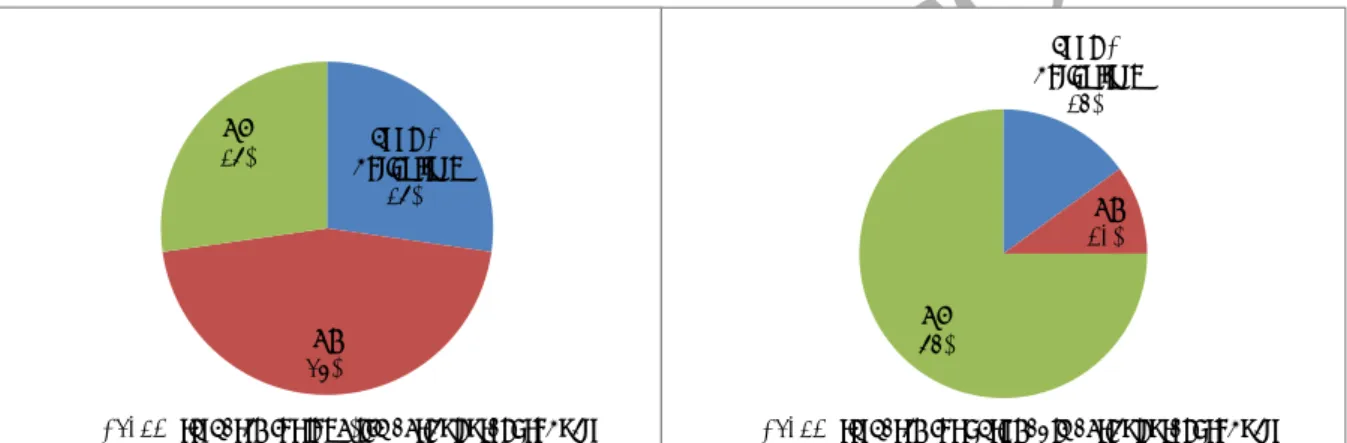
T able 2a: Detailed literature review on quan titativ e SCRM mo dels for long-l if e agri-pro ducts Author Risk Risk mo deling RM strategy (in terpretation) Remarks Supply-side Demand-side Resilien t Robust [31] • F armer’s misrepresen ta-tion of qualit y in testing • Handlers’ tec hnology failures SIM (static agen t-based mo del) ✓ • Comparing results from sim ulation and analytic mo dels [32] • F armer’s misrepresen ta-tion of qualit y in testing • Handlers’ tec hnology failures SIM (dynamic agen t-based mo del) ✓ • Comparing results from sim ulation and analytic mo dels • [32] extends the study earlier pro vided in [31] b y pro viding a dynamic agen t-based mo del and addressing a comparison b et w een the solution approac hes in the analyt-ical mo del with the corresp onding sim ulation mo del [33] • Yield uncertain ty Game Theory ✓ • Pro viding a n in v estmen t mo del using the Shapley v alue metho d [30] • Yield of fresh fruit palm bunc h (under v ariable w ea the r/ p est condi-tions) • Sp o t price uncertain ty SDP ✓ • Considering three capacit y p or tfolio options: pro cessi ng dominating, storage dom-inating, and mixed • Using SDP in a series of indep enden t tw o-stage problems [34] • Ra w material quan tit y • Ra w material qualit y • End-pro duct price Tw o-stage S P ✓ • Selection of the area for con tract farming and reserv ed maxim um amoun t for op-tional supply (stage 1) • Cho osing w he th er to buy or not from the optional su ppl y (stage 2) • Considering non-fo o d application of renew able resources (instead of fo ssi l resources) in p olymers pro duction [40] • End-pro duct demand • Price of the end-pro duct (geomet-ric Bro wnian mo-tion) SP (Linear) ✓ [41] • P a th based supply dis-ruptions • Demand size R O (MILP) ✓ • Considering path-based v ariable • Considering differen t attitudes to w ards risk (i. e., risk neutral or risk-a v erse decision mak ers) • Ev aluating the ratio of change in the normaliz ed p er formance to the change in an uncertain parameter as a robustness measure • Considering robust optimization in [105 ] with the piece-wise linear metho dACCEPTED MANUSCRIPT
T able 2a -Con tin ued Author Risk Risk mo deling RM strategy (in terpretation) Remarks Supply-side Demand-side Resilien t Robust [45] • F ee dsto ck Supply • Biofuel demand Tw o-stage S P ✓ • Pro viding a m ulti-ob jectiv e sto chastic mo del considering differen t attitudes to w ards risk (i.e., ri sk neutral or risk-a v erse decision mak ers) • Comparing risk measures of do wnside risk and C V aR • Pro viding a trade-off b et w een risk an d p erformance measures [47] • F uzz y supply-side capa-cities (i n refinery and storage facilities) • F uzzy demand-side capacities (in refinery and storage facilities) • F uzzy demand F uzzy m ulti-ob jectiv e LP ✓ [48] • Maturation time • Harv est time • Yield • Demand size Tw o-stage S P ✓ • Considering b oth strategic and tactical decisions [50] • Milk supply Multi-stage SP ✓ • Pro viding linear price-demand curv e with dynamic outer appro ximation sa m p ling • Selecting the planning horizon acc o rding to the maxim um fixed storage time and ignoring deterioration during this tim e • Addressing uncertain ty using an a utoregressiv e mo del with random errors [52] • Biomass supply • Biomass cost • Biomass demand • Biomass price MILP ✓ • Comparing m ultiple design scenarios with a nominal desi g n scenario as a robustness measure [56] • Demand (sto chastic demand for eac h individual farmer) SP ✓ • Comparing B2B and B2C strategies in a dairy supply chain [53] • Supply-side cost pa ra-meters • Demand-side cost parameters • Demand size Robust Optim-ization ✓ • Considering a m ulti-ob je ctiv e that minimizes total pro duction costs and maximizes the customers’ satisfaction b y minimizing the sum of the maxim um shortage in mark ets and p erio ds • Solving MILP as a single ob jectiv e b y using the LP-metric metho d [57] • Demand (scenario-based) Tw o-stage S P ✓ • Addressing seasonalit y of pro duction in winery farms • Applying a p ostp on emen t strategy in the finishing pro cess (i.e. , lab eling and pac k-aging) to mitigate risk of customized demand uncertain tyACCEPTED MANUSCRIPT
T able 2a -Con tin ued Author Risk Risk mo deling RM strategy (in te r pretation) Remarks Supply-side Demand-side Resilien t Robust [58] • Demand (uniform) SP ✓ • Comparing b et w een tw o incen tiv e systems for the seed supplier • Recognizing differen t b eha vior of the problem in the seeds industry [60] • Demand uncer-tain ty (mark et scenarios) R O ([105] ap-proac h) ✓ • Analyzing solution robustness vs. mo del robustness as a robustness measure [62] • Supply scenarios SP ✓ • Comparing b et w een net w ork algor ithms suc h as augmen ting path, pre-flo w push, and successiv e shortest path • Prioritizing exp ort in case of congestion [68] • Harv est • Price SP (Linear) ✓ • Selling in b oth daily auctions and future mark ets [69] • Scenarios of plan t clos-ure • Scenarios of additional restriction on green p oli cy • Demand size MILP ✓ • Considering sto ck just for long shelf-life pro ducts • Deciding on the n um b er of plan ts, lo cations, and allo cation p olicies • Ev aluating the impact of differen t supply chain design strategies suc h as regionaliz-ation, consolidation, pro duct sp ecialization, and pro cess sp ecialization in man ufac-turing plan ts to impro v e risk mitigation and p erformance [70] • Harv est time • P ac king rate • Shortage cost LP/ F uzzy ✓ • Considering fuzzy typ e uncertain ty related to the p erception of the line sup ervisor; pac k ing rate is set after visual insp ection of the qualit y of arriv ed pro ducts [28] • Uncertain harv est (cli-matic factors) Linear GP ✓ • Dev eloping a m ulti-ob jectiv e function to minimize cost, meet gr o wing and pro cessing capacities as w ell as mark et demand under differen t scenarios of harv estACCEPTED MANUSCRIPT
ACCEPTED MANUSCRIPT
T able 2b: Detailed literature review on quan titativ e SCRM mo dels for p erishable agri-pro ducts Author Risk P erishabilit y mo deling Risk mo deling RM strategy (in terpreta-tion) Remarks Supply-side Demand-side Resilien t Robust [36] • Input sp ot price • Output sp ot price • Demand size un-certain ty Newsv endor mo del Tw o-stage SP ✓ • Comparison b et w een fixed pro p ortional (cost-p o oling), flexible (capacit y-p o oling), and dedicated pro duction p olic ies • Cost-p o oling v alue of prop ortional pro duction increases as correlated with the demand rate (when demand of one pro duct is high and the other is lo w) • Considering input pro cessing an d output pro duction capacit y (stage 1), input pro ce ssing lev els within capacit y (stage 2) [35] • Cheap unreliable sup-plier (Bernoulli dis-ruption) • Demand size un-certain ty Newsv endor mo del Tw o-stage SP ✓ • Considering supply from an exp ensiv e emergency supplier for an y demands ab o total capacit y of primary and bac kup suppliers • Pro viding win-win co ordination • Utilizing bac kup supplier as a resil ience measure [37] • Exp ort public trans-p ort fa ilure Shelf-life exten-sion; exp onen tial deca ying cost SP/SDP ✓ • Mo deling p erishabilit y and disruption features sim ultaneously • Considering b oth static and dynamic mo dels under MTO and MTS demands • Considering resilien t bac kup str ategy under harsh disruption scenarios [38] • Dela y in returning transp ortation equip-men t (e.g. con tainer) results in sto ck-out or deterioration Impact on rip e-ness (lot-sizing mo del) SDP ✓ • Considering bac k order shortages • Mo deling the impact of lot-size on deterior ation of fresh pro duce under a rip ening pro ce ss with exp onen tial R TI lead-time in an SDP [39] • Orange juice acidit y sp ecification • Juice demand Accepted b ounds for qualit y sp e-cification (acidit y) of juice R O with un-certain acid-it y sp ec. ✓ • F orecasting fr uit maturation curv e b y soluble solids in o range jui ce dep ending en viro nme n tal and orc hard main tenance co nditi o ns • Mitigating supply-side uncertain ty b y co nsi d er ing tw o sourcing strategies including con tract-based and sp ot-based (or short-term con tracted) fruit • Pro ce ssing of in termediary pro duct (base-juice) in sta ge 1 and blending of the final juice in stage 2 after uncertain ty realization [42] • Yield • Qualit y o f the crop (impacts on pro duc-tion ra te of the pro-cessing firm) • Op en mark et supply cost Newsv endor mo del Tw o-stage SP ✓ • Concerning the impact o f v ar ia bl e qualit y of the crop on the pro ducti o n rateACCEPTED MANUSCRIPT
ACCEPTED MANUSCRIPT
T able 2b -Con tin ued Author Risk P erishabilit y mo deling Risk mo deling RM strategy (in terpreta-tion) Remarks Supply-side Demand-side Resilien t Robust [46] • Supply cost • Demand size Pro duct w are-housing limited life-time In terv al R O ([136]) ✓ • Considering closed-lo op (eco-friendly) supply chain • Customizing tw o-side applications (i.e., b oth in fo o d and high-tec h electronics industry) [49] • Yield (quan tit y) uncertain ty • Demand size uncertain ty for standard/ premium pro ducts Newsv endor mo del Tw o-stage SP ✓ • Prop osing a price-based clearance • Suggesting the complemen tary use of b oth supply con tract and sp ot mark ets hedge mark et • Considering the fixed ca pacit y in short/medium horizons [51] • Yield uncertain ty • Yield-dep enden t trading cost • Yield dep end-en t trading selling price Newsv endor mo del Tw o-stage SP ✓ • Considering impacts o f endogenous cost and fruit futures fo r a risk-a v erse decision mak er • Deciding on the space to lease (b efore harv est) • Selection b et w een one of the follo wing (after harv est): – Con v erting the cr op to the final pro duct – Buying more from external gro w ers – Selling some (or all) of the crop in the op en mark et b efore pro cessing [44] • Harv est maturit y (qualit y) iden tified b y color and firm-ness • Op en mark et price-sensitiv e demand Yield color estim-ation in an ac-ceptance in terv al of firmness, shelf-life, and qualit y MILP ✓ • Mo deling cost of rejected/discoun ted shipmen ts for pro duce that first passed qualit y threshold but ha v e then b een affected b y qualit y change during supply chain stages • Applying a biological fo rm ulation to the exp ected qualit y [43] • Crop yield • Crop price See [44] Tw o-stage SP ✓ • Considering b oth risk neutral and risk a v ersion ob jectiv es, i.e., exp ected profit and exp ected losses [54] • Demand size (normal) In v en to ry deterior-ation (certain de-ca y ing rate) SP ✓ • Considering supplier-retailer collab oration in forecasting demand [55] • Yield (harv est pro ductivit y) Qualit y cost R O (MILP mo del using [135]) ✓ • Prop osing tw o new robust approac hes including aggr eg ated mo dified robust and adv ersarial rob ust mo dels [59] • Demand size • Demand arriv al • Fixed shelf-life-time (equal to the selling hori-zon) • Pro ducts’ qual-it y deterioration rate QP (solv ed with heuristic) ✓ • Differen tiating b et w een fresh and unsp oiled pro ducts • Considering customer choice in buying or not buying unsp oiled pro ductsACCEPTED MANUSCRIPT
ACCEPTED MANUSCRIPT
T able 2b -Con tin ued Author Risk P erishabilit y mo deling Risk mo deling RM strategy (in terpreta-tion) Remarks Supply-side Demand-side Resilien t Robust [61] • Yield (biological and en viron-men ta l) • Harv est failure (biological and en vironmen tal) Demand size Newsv endor mo del Tw o-stage SP ✓ • Balancing customer service that retailer is willing to accept under pro duction in v estmen t • Pro viding robu st mo del with service lev el constra in t [63] • Yield • Qualit y Qualit y loss cost: trade-off cost vs. time for optimal assignmen t of p er-ishables to storage SP ✓ • Considering qualit y comp onen ts in the ob jectiv e function comp osed of pro duct sale, w aste fruit sale, out-of-sp ec pro duct sales, purc hasing cost, fruit co oling cost, cold main tenance cost, and lab or cost [65] • Yield uncertain ty (b eca use of w eather, disease, etc.) • Yield-dep enden t cost uncertain ty • Demand size • Yield- dep enden t price un-certain ty Newsv endor mo del Tw o-stage SP ✓ • Pro viding conca v e ob jectiv e function for the amoun t of farm space leased in stage 1 problem • Deciding on