W&M ScholarWorks
W&M ScholarWorks
Dissertations, Theses, and Masters Projects Theses, Dissertations, & Master Projects
2020
The Impact of High School Science, Technology, Engineering, and
The Impact of High School Science, Technology, Engineering, and
Mathematics (Stem) Magnet Programs on the Academic
Mathematics (Stem) Magnet Programs on the Academic
Performance of Students
Performance of Students
Eric AcostaWilliam & Mary - School of Education, [email protected]
Follow this and additional works at: https://scholarworks.wm.edu/etd Part of the Education Policy Commons
Recommended Citation Recommended Citation
Acosta, Eric, "The Impact of High School Science, Technology, Engineering, and Mathematics (Stem) Magnet Programs on the Academic Performance of Students" (2020). Dissertations, Theses, and Masters Projects. Paper 1582641566.
http://dx.doi.org/10.21220/m2-3aby-dz52
THE IMPACT OF HIGH SCHOOL
SCIENCE, TECHNOLOGY, ENGINEERING, AND MATHEMATICS (STEM) MAGNET PROGRAMS ON THE ACADEMIC PERFORMANCE OF STUDENTS
A Dissertation
Presented to the
The Faculty of the School of Education
The College of William and Mary in Virginia
In Partial Fulfillment
Of the Requirements for the Degree Doctor of Education
By Eric Acosta December 2019
THEIMPACTOFHIGHSCHOOL
SCIENCE,TECHNOLOGY,ENGINEERING,ANDMATHEMATICS(STEM) MAGNETPROGRAMSONTHEACADEMICPERFORMANCEOFSTUDENTS
By
Eric Acosta
Approved December 5, 2019 by
JAMES H. STRONGE, Ph.D.
Co-Chairperson of Doctoral Committee
THOMAS J. WARD, Ph.D.
Co-Chairperson of Doctoral Committee
MARGARET E. CONSTANTINO, Ph.D.
This dissertation was completed in fulfillment of the culminating group research project in compliance with the requirements of the Executive Ed.D. program in Educational
Policy, Planning, and Leadership at the College of William and Mary.
Eric Acosta Evonne S. Alvarez
Gilberto D. Bonce Melanie Megias Guillermo Muñoz
Dedication
We dedicate this dissertation to our families who have sacrificed greatly alongside us as we have made this journey. Thank you for supporting us even as we missed family activities, left parts of our homes covered with books and papers, and participated in group meetings late into many nights and almost every Saturday for more than a year. We would be remiss if each one of us did not specifically address our individual dedications.
Eric Acosta
Gaby, Melanie, and EJ, you are my reason for getting up in the morning and pushing to be a better version of myself every day. It is never too late to pursue your dreams. To Marta, my life-long love, time and space will never separate us. I love you and thank God for you and our family.
Evonne S. Alvarez
To my beautiful daughters Gabriela and Sophia, you are smarter and way more capable than I will ever be, so lead the way, trail blaze, and find what you are passionate about. I am certain you will make a difference in this world. The effort it took to complete this dissertation was truly fueled by both of you. To my father, Pedro, your determination and resolve as an exiled immigrant are constant reminders of the many sacrifices you made to provide me with a better life. Thank you for your faith in my abilities, love, and support.
Gilberto Bonce
To my loving wife, Carmen, you have always been my rock, thank you for your continual support, encouragement, patience and understanding. Daniel and Matthew, I
am extremely proud of the men you have become, you are my inspiration and I cannot wait to see what amazing futures you will have. Mom and Dad, thank you for being my first cheerleaders and for always pushing me to be the best version of myself. I thank God for the incredible people he has placed in my life, I love you all.
Melanie Megias
To my daughters, Elena, and Gaby, I hope that this dissertation reminds you that your future is limitless. You can do anything you set your minds to. Being your mom is an honor and a privilege. I love you both. Uncle Kevin, since I first started my doctoral program, you reminded me that I could – and would – accomplish this goal. Thank you for being a constant supporter! Mother, thank you for inspiring me to always be the best person I can be. You taught me to work hard, be resilient, set goals, and serve others. Everything I do well is because of your example. I love you.
Guillermo Muñoz
To Norma: Mom, I know how much this means to you. Thank you for all the support you provide me and my family. I love you. To Raydelin, my beautiful wife, you have been incredibly supportive throughout this process. I love you very much. You are the rock that keeps our family together. To Alexa and Gabriella, you have both made me realize my capacity to love unconditionally. Words cannot express the happiness you each bring to my life. I hope you view this as an example in your lives to always seek new challenges and enjoy the process of learning.
Table of Contents
List of Tables ...x
List of Figures ... xi
Chapter 1: Introduction ...2
Background ...2
Theoretical or Conceptual Framework ...8
Problem Statement ...11
Research Questions ...12
Significance of the Study ...13
Definitions of Terms ...15
Chapter 2: Review of Related Literature ...18
Science, Technology, Engineering, and Mathematics ...18
A History of STEM Education in the United States ...22
Magnet Programs ...29
STEM Magnet Programs ...36
Summary ...45 Chapter 3: Methods ...47 Participants ...48 Data Sources ...52 Data Collection ...59 Data Analysis ...61
Delimitations, Limitations, Assumptions ...65
Summary ...69
Chapter 4: Findings ...71
Demographic Information ...72
Research Question 1: How do students who participate in a high school STEM magnet program perform academically? ...73
Research Question 2: How many mathematics and science credits do students in STEM magnet programs successfully earn during four years of high school, compared to students from target schools not participating in the STEM magnet program? ...78
Research Question 3: What are administrator and teacher perceptions regarding STEM instruction? ...82
Research Question 4: What factors contribute to, or inhibit, a student’s successful completion of a STEM magnet program? ...89
Summary of Findings ...98
Chapter 5: Discussion ...100
Discussion of the Findings ...100
Implications for Policy and Practice ...108
Recommendations ...115
Recommendations for Future Research ...124
Summary ...126
Chapter 6: Professional Reflections ...128
Eric Acosta ...128
Gilberto D. Bonce ...136
Melanie E. Megias ...138
Guillermo A. Muñoz ...143
Appendices ...148
Appendix A: M-DCPS Graduation Withdrawal Codes ...148
Appendix B: Science, Technology, Engineering, and Mathematics Teacher Efficacy and Attitudes Survey (T-STEM) ...150
Appendix C: Science, Technology, Engineering, and Mathematics Principal Leadership Survey (P-STEM)...154
Appendix D: T-STEM Survey Permission (Science Teacher) ...157
Appendix E: T-STEM Survey Permission (Technology Teacher) ...158
Appendix F: T-STEM Survey Permission (Engineering Teacher) ...159
Appendix G: T-STEM Survey Permission (Mathematics Teacher) ...160
Appendix H: P-STEM Survey Permission (Principals) ...161
Appendix I: T-STEM Survey Results of Personal Teaching Efficacy and Beliefs ...162
Appendix J: T-STEM Survey Results of Teacher Outcome Expectancy (TOES) ....163
Appendix K: T-STEM Survey Results of STEM Instruction ...165
Appendix L: Florida SUS 2019-2020 Counselor Guide ………...167
Appendix M: Florida Bright Futures Scholarship Program, Florida Academic Scholarship / Florida Medallion Scholarship 2019-2020 ……….. 168
References ...169
Biographical Summaries ...193
Gilberto D. Bonce ...197 Melanie Eileen Megias ...198 Guillermo Muñoz ...200
Acknowledgments
We would like to acknowledge Miami-Dade County Public Schools for providing us with this opportunity. As a team of professionals who have dedicated our lives to the education profession and the students of this county, we acknowledge that this program strengthened our skills and made us better administrators. We appreciate the opportunity to conduct research that was meaningful to us collectively and hope that our findings add value to the District. We appreciate the data provided by the Office of Assessment, Research and Data Analysis along with the assistance that was provided by multiple colleagues, especially those who took part in this journey with us in pursuit of our
doctoral degrees. Finally, this research would have been incomplete without the teachers and administrators who answered our surveys. We appreciate their support as well.
We would especially like to acknowledge our dissertation committee. A special thank you to Dr. James Stronge and Dr. Thomas Ward, our committee co-chairs who spent countless hours reading our work, providing guidance, and encouraging us. We also appreciate the leadership of Dr. Margaret Constantino, the third member of our Committee and the program advisor, who provided guidance throughout the process and served as the liaison between the college and our county.
This dissertation is the product of teamwork. For the past year, the five of us read, wrote, discussed, revised, respectfully disagreed at times, and ultimately reached consensus on every word in this dissertation. The five of us knew each other at the beginning of this journey, but this experience allowed us to learn from each other and support each other through family challenges and new work experiences. We believe this process has enriched us professionally and led to lifelong friendships.
List of Tables
Table 1. Subject Schools and Demographics during 2018-2019 School Year …… 50 Table 2. Standard Diploma Graduation Requirements in Florida ……….... 54 Table 3. Grade Point Values ………...………... 56 Table 4. Cronbach’s Alpha for T-STEM Surveys by Construct ………. 59 Table 5. Summary of the Research Questions, Data Sources, Type, and
Analysis ……… 66
Table 6. Table of Teacher Homogeneity of Responses ……….. 74 Table 7. Cross Tabulation for Magnet Students versus Graduation Status
for Cohort Groupings ………... 78
Table 8. Descriptive Statistics for Grade Point Average by Cohort and
Magnet Status ………... 79
Table 9. ANOVA Tests of Between-Subjects Effects on Grade Point
Average ……… 80
Table 10. Descriptive Statistics on Number of Mathematics Courses Taken
by Cohort and Magnet Status ……….. 82
Table 11. Tests of Between-Subjects Effects on Number of Mathematics
Courses Taken……….. 82
Table 12. Descriptive Statistics for Number of Science Courses Taken by
Cohort and Magnet Status ………...……… 84
Table 13. Tests of Between-Subjects Effects on Number of Science Courses
Taken ………... 84
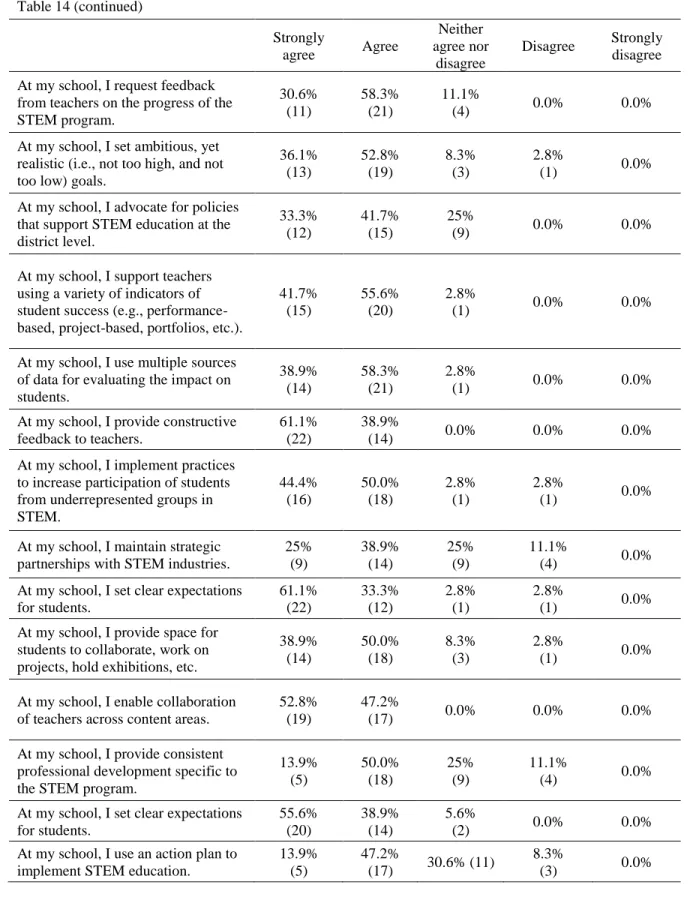
Table 14. P-STEM Survey Results ……….. 86 Table 15. Group Statistics on T-STEM Results ……….. 90 Table 16. Independent Samples Test on T-STEM Survey Results ………….. 90 Table 17. Findings and Related Recommendations ………... 113
List of Figures
Figure 1. The percentage of graduates by cohort of magnet versus
non-magnet students ……… 76
Figure 2. Mean GPAs by cohort grouping of magnet students versus
non-magnet students ……… 80
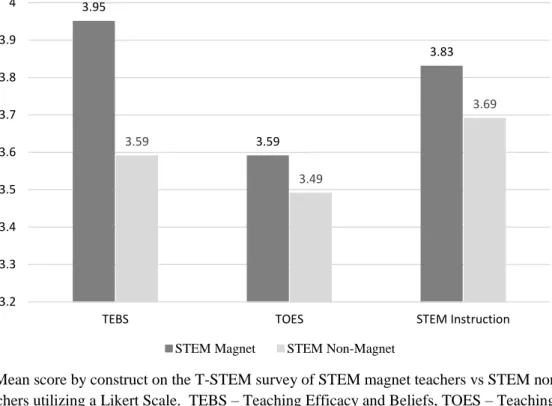
Figure 3. Mean core by construct on the T-STEM survey of STEM magnet teachers vs STEM non-magnet teacher utilizing a Likert Scale
Abstract
Concern about the impact of science, technology, engineering, and mathematics (STEM) programs on society are not new. STEM employment in the United States has grown twice as fast as other fields during the last decade. School districts have been encouraged to consider STEM-focused schools to meet this demand and have responded by offering STEM magnet program options. This mixed-methods study used Lewin’s Theory of Change and Fullan’s ideas on Coherence as the theoretical frameworks to examine how students who participate in a high school STEM magnet program perform academically. Academic performance was measured using grade point average (GPA) and graduation rate. We compared the number of mathematics and science courses students in a STEM magnet program completed to the number of courses completed by students not
participating in a STEM magnet program. Additionally, we surveyed teachers and administrators to learn their perceptions of student success factors in STEM magnet programs. There was a positive difference in graduation rates with a low effect size. The differences in the number of math and science courses completed were not practically significant. Moreover, magnet students earned a statistically significant higher GPA than non-magnet students. Furthermore, teachers reported a high degree of teacher efficacy, while administrators rated themselves higher on general leadership ability than on STEM leadership. We recommend clearly defining STEM education, additional professional development for teachers and administrators, streamlining accountability for STEM programs, and continuing to invest in STEM education as a pathway to producing college and career ready students.
THE IMPACT OF HIGH SCHOOL SCIENCE, TECHNOLOGY, ENGINEERING, AND MATHEMATICS (STEM) MAGNET PROGRAMS ON THE ACADEMIC
CHAPTER 1
INTRODUCTION
Background
Concern regarding the impact of science, technology, engineering, and
mathematics (STEM) programs on society is not a new phenomenon. The United States (U.S.) began creating STEM-like programs in the 1870s when mathematics and
engineering students were taught using manual training methods designed by professor Calvin Woodward employing the mantra “technological literacy for all” (Sanders, 2009, p. 24). During the 1950s, the U.S. was reacting to the launch of the Soviet Union’s Sputnik satellite and questioning its own STEM capacity. This concern led to the passage of the National Defense Education Act of 1958, which promoted, among other things, improved mathematics and science education in elementary and secondary schools (Judson, 2014). The concern expressed as a response to Sputnik, along with suggestions for increased STEM education, has been repeated many times since then. For example, A Nation at Risk (National Education Association, 1983) called for teacher training in mathematics and science, and the National Academy of Sciences (2007) produced a study, Rising Above the Gathering Storm, that advocated for scholarships for mathematics and science teachers.
According to the National Research Council ([NRC], 2011), many jobs in the 21st century require some level of STEM knowledge. Over the last two decades,
38% of the U.S. economy, as reflected in the gross domestic product, has relied heavily on intensive industries. These knowledge-and-technology-intensive industries depend significantly on science and technology economic activity to drive growth (National Science Foundation [NSF], 2018). Nevertheless, developing nations, such as China—whose output in high-technology manufacturing has risen sharply over time and now exceeds that of the European Union (NSF, 2018)—have challenged the U.S. stronghold on this industry.
The need for STEM. The demand for professionals in the fields of STEM careers in the U.S. is unprecedented (U.S. Department of Education [USDOE], 2016). According to the U.S. Department of Labor (2007), STEM employment has grown more than twice as fast as other fields during the last decade. The need for more
STEM-focused education was captured by former President Barack Obama (White House Office of the Press Secretary, 2010) during his announcement of the Change the Equation
initiative when he challenged business leaders and educators to bring an unparalleled number of new and innovative mathematics and science programs to local communities. This commitment to STEM education is even referenced in the Every Student Succeeds Act ([ESSA], 2015), which identifies STEM as a vital element in providing a
well-rounded educational experience for all students. During his presidency, President Obama also supported a call to recruit and train 100,000 STEM teachers and open 1,000 new STEM-focused schools by 2020, mostly in elementary and middle schools (President’s Council of Advisors on Science and Technology, 2012). In fact, President Obama promoted an agenda to invigorate the country’s focus on STEM by addressing “the economic competitiveness of the United States [as] dependent on an adequate supply of
high-quality workers in the STEM field” (Angle et al., 2016, p. 43). In response to President Obama’s call to action, a STEM Coalition made up of business and educational advocates was formed. This emphasis resulted in educational institutions across the U.S. developing and incorporating STEM programs from the elementary level through the post-secondary level to meet the demand for high-quality workers in the progressively changing STEM fields (NSF, 2017).
A study by the Bayer Corporation claims there is a great need to produce new scientists and engineers in the U.S. if we are to remain a viable competitor in the global marketplace, harnessing talent from a diverse and multicultural student pool is essential in these efforts (Hrabowski, 2012). This threat to our national economy has captured the attention of education policymakers at the state and federal levels. As such, interest has renewed in STEM education and its impact on developing an educated workforce that can meet the demands of a growing technological marketplace.
Currently, the call for a STEM-capable workforce continues. In 2015, the NSF highlighted the need for STEM knowledge and skills in the 21st century, not only in STEM careers but also in many jobs in non-STEM fields. According to Backes, Goldhaber, Cade, Sullivan, and Dodson (2018), “A growing number of policymakers argue that for the United States to remain a worldwide economic and technological leader, it must do more to improve the quality of K-12 science, technology, engineering and mathematics (STEM) education” (p. 184). Current trends with a focus on STEM education have resulted in extraordinary amounts of funding through various sources to promote STEM education and to create and enhance STEM learning environments.
Funding STEM. Policymakers and economists predict that without additional investments in STEM education to produce a workforce that will enter STEM careers, the U.S. will continue to have significant shortfalls in the gross national product and the gross national income (Donovan, Moreno Mateos, Osborne, & Bisaccio, 2014). The federal government signed a spending bill into law on March 23, 2018, that increased funding for various programs and initiatives in the ESSA. The bill encourages and supports STEM education (NGSS Lead States, 2013) by increasing funding $1.438 billion over the prior year’s budget, allocating $21.337 billion specifically to develop STEM programs across the country with an emphasis on underserved and
underrepresented students and the communities in which they live. Additionally, ESSA calls for innovative programs that include high-quality STEM courses with hands-on learning (NGSS Lead States, 2013).
The National Science Board (2005) in its 2020 Vision for the NSF highlighted, “Near-Term Goal 3: NSF will critically evaluate current education investments and develop new strategies to increase their impact on the quality of science, technology, engineering, and mathematics (STEM) education” (p. 7). The NSF (2017) is a financial sponsor of STEM programs, investing more than $880 million per year directly to its education foundation and human research funding. Due to this financial commitment, the NSF has a goal to evaluate its investments and ensure that STEM-focused programs are of high quality. These hefty investments should provide promising evidence that instructional programs with this focus are providing desired results.
STEM in schools. To eliminate STEM shortfalls, school systems, colleges, and universities offer a range of STEM-focused educational programs. The goal of these
programs with a concentration in cybersecurity, information technology, engineering, scientific research, medical fields, and environmental sciences, is to ensure the U.S. remains competitive within the global economy (Hinojosa, Rapaport, Jaciw, LiCalsi, & Zacamy, 2017).
School districts have been encouraged to consider the adoption of STEM-focused schools as one way to meet this demand (NRC, 2011). The NRC (2011) identifies three models for such schools: 1) selective STEM schools (or programs within schools) for academically talented and motivated students which have selective admission
requirements; 2) inclusive STEM schools, which emphasize a STEM discipline but have no selective admissions requirements; and 3) schools and programs with STEM-focused career and technical education. However, magnet school programs with a STEM focus, which most closely resemble the selective model, are the fastest-growing model in Miami-Dade County Public Schools (M-DCPS).
Magnet schools. The concept of magnet schools emerged in the 1960s as an effort to integrate schools voluntarily by offering innovative programs in predominantly Black neighborhoods at the height of the school desegregation battles (Rossell, 2005). Civil rights protection was a strong component in these schools initially. However, these schools did not have a selective admissions process. These schools were a response to the civil rights movement and provided an answer to questions about equity and access for all students. Federal government funding, aimed at desegregating schools and increasing parental choice, provided magnet schools with a period of unprecedented growth in the U.S. during the 1960s and 1970s (Orfield, Frankenberg, & Garces, 2008). Since then, with increasing financial support from the federal government, magnet
schools have gained popularity in the U.S. However, the concept of magnet schools was a new one with many untested assumptions. Waldrip (2011) opined that one of the lessons learned from this era is that all students do not learn in the same ways and that educators must consider students’ interests and aptitudes if students are to achieve at higher levels. Waldrip (2011) also asserted that every child can learn and that there must be enough options so parents of all children (or students themselves) will have the opportunity to choose the programs best suited for them.
STEM magnet schools at the local level. M-DCPS (2015) has implemented magnet programs for more than 40 years. Mirroring the pattern of magnet schools nationally, M-DCPS created multiple magnet schools and programs with various themes and emphases. “The objectives are to create educational interests, honor cultural and ethnic diversity, and promote student achievement” (M-DCPS, 2018b).
In 1990, the district opened its first whole-school STEM magnet program, Maritime and Science Technology Academy (MAST Academy). The school met with such success that the district franchised the school and created three additional MAST Academies in other areas of the county. In addition to these and a few other Whole School Magnet programs, M-DCPS opened numerous innovative STEM-focused magnet Programs Within Schools at various locations throughout the district (M-DCPS, 2015). These programs typically have established entrance criteria including course
prerequisites, minimum academic and conduct grade point average, and an acceptable attendance record. The district has spent more than $45 million since 2006 to fund these programs. It currently manages a multi-year $15 million magnet school grant to fund the
operation of three new inclusive high school STEM magnet programs (Robert Strickland, personal communication, October 1, 2018).
The response to the national call in M-DCPS has been the evolution of 38 high schools with STEM magnet programs (M-DCPS, 2019a). Of the 38 high schools, 11 are schoolwide STEM magnet schools with every student enrolled in one of the school’s STEM strands. Most of the district’s 61 senior high schools offer students at least one STEM program of study. M-DCPS has applied for and been awarded numerous grants to support and establish STEM magnet programs. Is this money being well-spent? The present study was designed to help answer this question.
Theoretical or Conceptual Framework
The theoretical frameworks we have chosen to underpin this study are change theory and coherence. Each is summarized in turn.
Change theory. The theoretical framework for this study is change theory. The Theory of Change byLewin is the foundation of most change theories today (Schein, 1999). Kurt Lewin describes change management as Changing as Three Steps; that is, unfreeze, change, refreeze (Burnes, 2004). Many regard his model as a simple, practical approach to the change process. In unfreezing, the focus is on recognizing the need to change and, through a process he calls force field analysis, understanding that it will be more beneficial to change than to leave things the same. Change is the implementation stage—all the steps that occur during the process of adopting new practices or new ideas. Freezing (or refreezing) is making the change the new norm; it is a process of reinforcing the change, so it becomes operational and continues. Lewin’s ideas are met with some
disagreement today, but overall, there seems to be agreement that his views are foundational to the concept of change management (Schein, 1996).
Fullan (2006) has his own ideas about change. He identifies seven core aspects of change: (a) motivation; (b) capacity building focused on results; (c) learning in context; (d) capacity to change the broader context; (e) reflective action; (f) tri-level engagement (school/community, district, and state); and (g) persistence and flexibility. Fullan ties motivation and engagement together concerning educational reform and suggests that all seven aspects of change require motivated stakeholders who engage across all levels if the change is to be effective.
Fullan (2001) discusses the importance of coherence making. This entails facing some of the challenges of change head-on and working through the discomfort that change can cause. Fullan and Quinn (2016) continue the discussion focusing on
coherence and suggest that the pace and complexity of change are altering our ideas of an effective change process. Change is not linear. It is not an event. It is a process of moving from one practice to another. Fullan and Quinn (2016) summarize the change process in four steps. Directional vision involves developing a shared purpose and vision along with those who will take part in the change. Focused innovation is allowing the change participants the opportunity to innovate, experiment, and at times fail as part of moving toward a needed change. The diffusion of next practice involves providing intentional opportunities for new, innovative practices to be visible to everyone in the organization. Sustained cycles of innovation require organizations to sustain change by allowing for innovation, sharing innovative practices across all levels of the organization, and acknowledging successes all along the way.
Lewin’s, Fullan’s, and Quinn’s ideas on change are relevant to the current research. If STEM education produces significant results, it will be essential to have strategies in place to embrace the changes necessary to continue to build and implement STEM programs. Also, as STEM evolves, understanding how to manage change will allow for continued growth and innovation.
Theoretically, changing the environment and academic climate in public schools is possible. Change theory concepts, when applied to school academic achievement, entail unfreezing, changing, and refreezing the schools’ instructional programming (Burnes, 2004). Translated into the school setting, this represents ownership changes by the highest levels of leadership within the organization, breaking down barriers for teaching professionals, and lastly, mobilizing and empowering school sites to create ownership of new accepted norms and concepts (Burnes, 2004).
Coherence theory. Are STEM programs delivering the desired effects? It is imperative that educators strategically plan and invest in the right drivers to positively impact the education of U.S. students. The Fullan and Quinn’s (2016) Coherence Framework has four principle tenets important to this study: (1) focusing direction and providing a clear strategy for STEM education; (2) developing a collaborative culture with teachers to understand how to integrate various disciplines in STEM; (3) creating ways for students in STEM to engage in deeper learning; and (4) providing measures of accountability to ensure academic achievement results. These four tenets help explain the connection between change and the importance of institutionalizing adopted changes in terms of STEM magnet programs. Additionally, to reform M-DCPS’s culture and ensure that systems have the right drivers, it is necessary that education decision makers
understand the purpose of equity and access in magnet programs. Moreover, once leaders understand the purpose, they must act in accordance with the purpose by developing programs, in this case, STEM magnet programs, and opening them in areas that will provide equity and access to those students who most need it.
Problem Statement
STEM education has emerged as a way to meet industry demands and to create a STEM-capable workforce (NRC, 2014). The policy shift to promote and fund STEM education is evident in our K-12 schools, and M-DCPS has taken full advantage of funding opportunities by expanding STEM high school magnet programs throughout the county. Although the record shows a significant amount of growth in K-12 STEM programs at the national level, no consensus has emerged on what STEM is (Mitts, 2016). In M-DCPS, schools interested in establishing a STEM magnet program are provided with the flexibility to implement a program best suited for their unique student population. The programs vary greatly and may range from robotics to engineering, biomedicine, information technology, and more.
The problem we investigated in this study is, how do students who participate in a high school STEM magnet program perform academically? For this study, academic performance was measured by grade point average (GPA) and graduation rate. We also examined the number of mathematics and science courses students in STEM magnet programs completed, compared to the number of courses students not participating in STEM magnet programs completed. Moreover, we administered surveys to STEM teachers and administrators to learn their perceptions of the effect of STEM magnet programs.
Research Questions
This research identified and explored the impact of a STEM magnet curriculum on the academic performance of participating students, compared to students not
participating in a STEM curriculum. Specifically, we investigated the following research questions:
1. How do students who participate in a high school STEM magnet program perform academically?
a. What is the graduation rate of students in STEM magnet programs compared to students from target schools not participating in the STEM magnet program?
b. What is the average GPA of students graduating from STEM magnet programs, compared to students graduating from target schools not participating in the STEM magnet program?
2. How many mathematics and science credits do students in STEM magnet programs successfully earn during four years of high school, compared to students from target schools not participating in the STEM magnet program?
a. How many mathematics credits beyond the four required courses for graduation do students in STEM magnet programs successfully complete?
b. How many science credits beyond the three required for graduation do students in STEM magnet programs successfully complete?
3. What are administrator and teacher perceptions regarding STEM instruction?
a. What are administrators’ perceptions of their leadership for STEM instruction?
b. What are teachers’ perceptions of their efficacy and beliefs, impact
on student outcomes, and STEM instructional practices?
4. What factors contribute to or inhibit a student’s successful completion of a
STEM magnet program?
Significance of the Study
There is a void of empirical data in M-DCPS as to the effectiveness of STEM programs in relation to increasing student academic performance. This creates a challenge in justifying the expansion of such programs. Investigating the causes of this void is beyond the scope of this study. However, studying the impact of STEM magnet schools is important in underscoring their value as it relates to M-DCPS’s singular goal of improving student achievement and ultimately rising to the challenge of producing a STEM-savvy workforce that can compete in a knowledge-and-technology-intensive environment.
Political pressure for developing additional STEM magnet programs has added a layer of complexity and a further need to study the effectiveness of these programs. Within an environment of limited financial resources and competing interests for these resources—such as Advanced Placement, International Baccalaureate, and Cambridge Programs—is the expansion of STEM magnet programs a wise decision? This study explored the impact high school STEM magnet programs have on the academic
performance of students. The evidence derived from this study can provide valuable information that may have an impact on the decisions of M-DCPS on whether it should continue to expand STEM magnet choice options throughout the county. Our study had mixed results. We found that students completing a four-year STEM magnet program earned a higher weighted GPA than students completing a non-STEM academic program within the same school, suggesting there is a slight advantage to participating in a STEM magnet program.
Since the call for STEM education continues to grow, both locally and across the U.S., it is essential to consider the effectiveness of STEM education. This study will add to the growing body of research related to the effectiveness of STEM magnet programs. The literature to date regarding the effectiveness of STEM programs reports mixed results (Blazer, 2012). Some studies (e.g., John, Smith, Thompson, & Wicklein, 2016; Poppell & Hague, 2001) suggest that magnet students have higher achievement than non-magnet students, while other studies find comparable performance (Cullen, Jacob, & Levitt, 2005; Judson, 2014) between the two groups. Other studies (Wiswall, Stiefel, Schwartz, & Boccardo, 2014) find that students in non-STEM programs outperform students in STEM programs when considering students’ prior achievement. Limited research exists, however, on the effects of participating in an M-DCPS STEM magnet high school. The findings of our study may be useful to the M-DCPS leadership as they make decisions about continuing to invest in STEM programs. The study results may also provide information to other school systems as they, too, consider the academic options they will offer their students in the future.
Definitions of Terms
For this study, the following definitions apply:
• A-Respondent – Administrator Respondent
• Academic Disparities – A lack of equality or similarity in academic opportunities and outcomes.
• Academic Performance – GPA, graduation rate, and the number of mathematics and science courses students successfully complete.
• Advanced Placement Program (AP) – A program in the U.S. and Canada created by the College Board, which offers college-level curricula and examinations to high school students.
• Cambridge Program – Advanced International Certificate of Education (AICE) – An international curriculum and examination system offered to high school students.
• Career and Technical Education (CTE) – Schools, institutions, and educational programs that specialize in skilled trades and career preparation.
• Change Theory – A three-stage model of change that is known as the unfreeze-change-refreeze model that requires prior learning to be rejected and replaced.
• Coherence – A framework for implementing change in schools that focuses on four elements: focusing direction, cultivating collaborative cultures, securing accountability, and deepening learning (Fullan & Quinn, 2016).
• Cohort 1 – Students who entered ninth grade in one of the 12 study schools in the fall of 2011-12.
• Cohort 2 – Students who entered ninth grade in one of the 12 study schools in the fall of 2012-13.
• Cohort 3 – Students who entered ninth grade in one of the 12 study schools in the fall of 2013-14.
• College and Career Readiness – Preparing students to possess the academic and behavioral skills colleges and employers expect from their workforce.
• Divergent Thinkers – Individuals who generate several creative ideas and explore many possible solutions to problems.
• Effectiveness – The degree to which something is successful in producing a desired result.
• Every Student Succeeds Act (ESSA) – This law, passed in December 2015, governs U.S. K-12 public education policy and demonstrates the nation’s commitment to equal opportunity for all students.
• Graduate – A student who entered one of the 12 study schools and completed all of the graduation requirements at the same school.
• Graduation Rate – For this study, the graduation rate was calculated by school and by Cohort and then in aggregate (all the students in all the schools by cohort.) We identified the number of students who began and remained at one of the 12 study schools and completed the graduation requirements within four years and one summer. This number was divided by the number of students who entered 9th grade in the same Cohort and the same schools less the number of students who withdrew to a verified alternate location (in county, out of county, out of state, or a private school).
• Innovation – A new idea, method, or transformation.
• International Baccalaureate (IB) – A program that offers a continuum of international education to high school students.
• Student Outcome Expectancy – A teacher’s belief that effective teaching can bring about student learning, regardless of external factors.
• Socioeconomic Status – An individual’s or family’s economic position in relation to others.
• STEM – Science, Technology, Engineering, and Mathematics.
• STEM Magnet School Programs – Programs within free public schools with a focused science, technology, engineering, and mathematics theme operated by the local school district. These programs often have a delineated set of entrance criteria such as a minimum academic and behavioral grade point average and record of attendance.
• STEM-Capable Workforce – Individuals who can use science, technology, engineering and/or mathematics knowledge and skills in a variety of settings to devise or adopt innovations or to complete occupational and technical tasks.
• Student Achievement – A student’s success in meeting short- or long-term academic goals, for example, grades.
• Teacher Beliefs – A teacher’s opinions about teaching and learning.
• Teacher Efficacy – A teacher’s belief in his/her ability to guide students to success.
CHAPTER 2
REVIEW OF RELATED LITERATURE
It is undeniable that the global marketplace is becoming increasingly reliant on technology and innovation. As such, countries are examining ways to remain
competitive in a technologically savvy and global economy. Many have turned to K-12 Science, Technology, Engineering, and Mathematics (STEM) magnet schools as a conduit to prepare students who can meet market demands in the field of STEM (ACT, 2017; Angle et al., 2016; Marshall, 2010; Mativo, Smith, Thompson, & Wicklein, 2016; McKnight, 2016). This literature review explores several topics that are important to the understanding of issues related to the effectiveness of STEM magnet programs. Topics include a definition of STEM, the need for STEM workers, Federal and State policy to support STEM in the U.S., STEM education, the contemporary needs of students in STEM classrooms, the history of magnet programs, and the proliferation of STEM magnet programs and related funding. The literature, along with a discussion of magnet schools in M-DCPS, provides background for the current study.
Science, Technology, Engineering, and Mathematics
Judith A. Ramaley, then director of the National Science Foundation’s (NSF) Education and Human Resources Division, takes credit for introducing the term STEM to represent the integration of Science, Technology, Engineering, and Mathematics (Chute, 2009). Previously, some attention was given to the integration of the four disciplines,
using a different term, SMET, which emphasized mathematics and science. In education, STEM refers to programs that include one or more of the four subjects (Science,
Technology, Engineering, and Mathematics). The NSF (2019) currently recognizes biological sciences, physical sciences, mathematical sciences, computer and information sciences, geosciences, engineering, and technology areas associated with these disciplines as STEM programs.
The call to increase the STEM workforce. There has been a concern about the importance of science almost since the U.S. was founded (Stevenson, 2014). In his first State of the Union Address, George Washington acknowledged the importance of scientific knowledge (Stevenson, 2014). During the 1950s, U.S. leaders worried that Russia was producing twice as many scientists and engineers than the U.S. As such, the discussion in the U.S. turned to a need for more STEM workers during the 1950s after the launch of the Sputnik satellite (Gonzalez & Kuenzi, 2012).
In each decade since Sputnik, the call to increase the STEM workforce continued. During the 1980s, the NSF reinforced the need to increase the STEM workforce,
particularly Ph.D. scientists (Stevenson, 2014). The conversation during the late 1990s further stressed the need for a STEM-capable workforce as Information Technology firms reported a worker shortage (Stevenson, 2014). The rapid growth of internet use led to the need to fill many internet-related jobs.
During the mid-2000s, the call to produce more STEM workers began to be linked to a need for increased education. With a goal for the U.S. to remain globally competitive, Rising Above the Gathering Storm (National Academy of Sciences, 2007) called for an increase in K-12 and post-secondary STEM education to provide a pipeline
to meet the workforce need. This influential publication warned about the perceived weaknesses in the existing U.S. STEM education system and the threat it posed on national prosperity and power (Gonzalez & Kuenzi, 2012). In 2012, the President’s Council of Advisors on Science and Technology projected demand for “one million more STEM professionals than the United States will produce at the current rate” (p. i). There is a debate about exactly which STEM workers may be needed; however, the consensus is that there continues to be a need for STEM workers if the U.S. is to remain globally competitive (Angle et al., 2016; Stevenson, 2014; Xue & Larson, 2015). The call for STEM education endures today. According to Bruce-Davis et al. there is a “belief that American productivity in [STEM] fields is tantamount to the nation’s long-term viability” (2014, p. 274). Moreover, Backes et al. (2018) suggest that “A growing
number of policymakers argue that for the United States to remain a worldwide economic and technological leader, it must do more to improve the quality of K-12 science,
technology, engineering, and mathematics (STEM) education” (p. 184).
Answering the call: Federal and state policy support for STEM programs.
During the past 10 years, federal, state, and local support for and investments in STEM education has skyrocketed. In 2009, in response to the deficient performance of students on mathematics and science exams, President Barack Obama expressed his firm support for STEM education (President’s Council of Advisors on Science and Technology, 2012). President Obama (State of the Union 2013: President Obama's address to Congress, 2013) also issued a call to action to improve STEM education and formed a STEM Coalition made up of business and educational advocates. The Coalition produced a campaign of ongoing “events to: (1) improve educational outcomes, (2)
inspire students to pursue STEM careers, (3) improve hands-on laboratory environments, and (4) raise student, parent, and public awareness of the importance of science and technology to our nation’s future” (Angle et al., 2016, p. 43).
The Carnegie Foundation (2011), in its report Growing Opportunity, issued an update on four goals for STEM education identified in 2009 to address the shortage of STEM talent and the need for all adults to be STEM-capable, regardless of their
aspiration to work in STEM fields or not. It proposed a broad change in U.S. education with four primary recommendations: (a) require all students to take additional
mathematics and science courses; (b) institute common, rigorous standards aligned with assessments; (c) support improved teaching and professional development; and (d) improve instructional models for teaching mathematics and science. The report suggests that “significant progress has been made in each area—enough to suggest that a
movement has started that will produce real improvements in STEM education in the United States” (p. 4). However, the authors renew the call to action for making
excellence and equity the cornerstones of the STEM education movement in the U.S. The U.S. government answered that call by committing $3.7 billion of the U.S. federal budget to STEM education in 2011. This commitment continues today. Feller (2011) submits that the need for skilled STEM workers and national economic and business interests has produced a trend in which spending on STEM education and career training has multiplied and must continue to do so. In 2018, President Donald Trump held the first-ever State-Federal STEM Education summit to support the development of the federal five-year STEM Education Strategic Plan (White House Office of Science and Technology Policy, 2018).
A History of STEM Education in the U.S.
Historically, the U.S. began creating STEM-like programs in 1802, with the establishment of West Point, and then during the 1870s when mathematics and
engineering students were taught using manual training methods, designed by professor Calvin Woodward, employing the mantra “technological literacy for all” (Sanders, 2009, p. 24). Woodward was able to combine the sciences, mathematics, and the technology of the time along with other academic areas to advance a philosophy in which the ideology developed. Following the successful launch of Sputnik by the Russians in 1957, the U.S. turned its educational focus toward science and mathematics for the development of technologies along with the evolution of engineering programs (Gubbins et al., 2013; Sanders, 2009). In the post-Cold War era, bipartisan support for STEM education grew at the federal and state level. This support was due to the belief that the nation’s long-term economic viability was at stake (Bruce-Davis et al., 2014).
Eventually, many schools evolved that specialized in STEM arenas. Colleges and universities with strong science and mathematics programs attracted the nation’s best and brightest to become engineers evolving into pioneers within the STEM fields. At the same time, education at the elementary and secondary levels changed and evolved to meet the needs of the nation’s future. Over the past two decades, “an opportunity for technology educators to develop and implement new integrative approaches to STEM education [was] championed by [the] STEM education reform doctrine” (Sanders, 2009, p. 24). Despite these efforts, Change the Equation (2015), a nonprofit, non-political association advocating for STEM literacy, reports that the U.S. still struggles to achieve STEM literacy.
Change the Equation (2015) suggests that student performance in science decreases from elementary to high school: 42% of U.S. fourth-grade students are proficient in science, while 20% of 12th-grade students are proficient. In addition, according to the 2015 PISA assessment, 15-year-old U.S. students continue to lag behind students from many other countries. The U.S. ranked 41st out of 70 countries in
mathematics and 25th out of 70 countries in science (Jackson & Kiersz, 2016). Furthermore, data collected from STEM high schools demonstrate that they are not serving the needs of students who graduate and undertake STEM majors in college, especially students who are underrepresented, including women, Hispanics, African Americans, and economically disadvantaged students (Almarode, Subotnik, & Maie Lee, 2016). Change the Equation (2015) also suggests that STEM jobs will grow by 19% compared to non-STEM jobs that will grow by 12% during the next 10-year period. Although STEM schools have existed for more than a century, proclamations made by the NSF regarding threats to the U.S. stronghold on the science and technology industry have propelled policymakers to double their efforts to ensure students are fully prepared to enter jobs in STEM (Erdogan & Stuessy, 2015b; NSF, 2018). As a result, to improve education across the country, and to increase access to high-quality education, more secondary programs have infused STEM education than ever before (Lynch, Peters Burton et al. 2017; Rothwell, 2013). The aim of these programs with a concentration in cybersecurity, information technology, engineering, scientific research, medical fields, and environmental sciences is to ensure that the U.S. remains competitive within the global economy (Hinojosa et al., 2017). Despite these efforts, the current research
reiterates the notion that the U.S. still has much work to do to prepare to meet its STEM needs.
The struggle to teach STEM. The educational system in the U.S. has struggled to meet the demand for a STEM-educated populace. To begin with, there is no universal agreement on what constitutes STEM. In addition, at the national level, there is a lack of clarity on what comprises STEM education (Gerlach, 2012). Moreover, according to Kelly and Knowles (2016), in practice, STEM educators lack a cohesive understanding of STEM education in practice.
Mohr-Schroeder, Cavalcanti, and Blyman (2015) define STEM education as: An interdisciplinary approach to learning where rigorous academic concepts are coupled with real-world lessons as students apply science, technology,
engineering, and mathematics in contexts that make connections between school, community, work, and the global enterprise enabling the development of STEM literacy and with it the ability to compete in the new economy. (p. 10)
Others support this definition. Greene (2019) indicates that STEM is inherently interdisciplinary. Chiu, Price, and Ovrahim (2015) suggest that “the basis of STEM education involves integration of these [STEM] subjects by breaking down the silos of discipline-independent teaching that students often encounter” (p. 3). Overall, the definition highlights the need for STEM programs to be comprehensive and offer an integrated approach to learning the four disciplines included in the acronym, STEM.
The ACT (2017) produced a report, STEM Education in the U.S.: Where We Are and What We Can Do, that highlights in its introductory sentence, “it’s difficult to admit, but the United States is a STEM-deficient nation” (p. 1). The ACT is the only college
readiness test that includes science in its assessment of students. “According to the ACT data, not enough U.S. students are equipped for STEM opportunities—now or in the future” (ACT, 2017, p. 1). Dagley, Georgiopoulos, Reece, and Young (2016) report that colleges and universities state that students are entering college unprepared for the rigors associated with STEM programs and majors. The ACT reports that 78% of students did not meet standards to enter entry-level college courses in STEM subjects. Gubbins et al. (2013) surmised in their study that students require resources that will provide them the needed rigor and coursework to progress in STEM fields. According to Dagley et al. (2016), this issue is of primary concern because students entering college in STEM majors often leave STEM fields due to their weakness in higher-level mathematics coursework.
In addition to student readiness concerns, the Gubbins et al. (2013) highlighted the difficulty colleges experience hiring qualified teachers and paints a bleak picture of the nation’s readiness to educate students for STEM programs at the collegiate level leading to careers within the STEM field. The ACT’s 2017 report highlights in its findings that providing students with access and opportunities to high-quality instruction is jeopardized by our nation’s lack of high-quality STEM teachers and the lack of academically challenging curriculum.
Teachers’ role in STEM education. Researchers have identified several shortcomings in today’s STEM classrooms, beginning with teachers lacking in their understanding of what it is to think like a scientist or an engineer (Gubbins et al., 2013; Education Scotland, 2017; Weiman, 2012). According to these researchers, teachers typically lack many of the requisites needed to design lessons with specific learning tasks
that require students to think as scientists and engineers would. “Furthermore, their lack of content mastery, combined with a lack of pedagogical content knowledge, prevents them from properly evaluating and guiding the students’ thinking” (Weiman, 2012, p. 14). Additionally, Weiman (2012) believes teachers spend too much time in class with students engaged in passive activities such as listening and using specific methods to practice new skills. Neither of these strategies consists of the required cognitive components “nor require the level of strenuousness that are important in learning” (p. 14). Toulmin and Groome (2007) opine there is a lack of highly qualified STEM teachers and identify the quality of teachers attracted into the teaching profession and retained in schools as a significant problem. They cite a 2006 study by the Illinois Education Research Council providing evidence that merely raising mathematics standards will not increase student achievement. The study found that while more
students were enrolled in mathematics courses considered to be advanced, underqualified teachers undercut student progress (Toulmin & Groome, 2007).
Contemporary needs of students in STEM classrooms. The STEM classroom needs teachers that can meet the needs of students by providing lessons that are
differentiated to meet their needs while providing rigor and relevance along with practical applications to real-life (Gubbins et al., 2013; LaForce et al., 2016; NRC, 2014; Toulmin & Groome, 2007; Weiman, 2012). Weiman (2012) postulates that most teachers fall short in these aspects, which may be detrimental factors affecting the number of U.S. students not seeking STEM majors in colleges or for their careers.
Finding commonalities among successful STEM programs and schools and what makes them effective was the focus of a 2016 NSF-funded project. The study identified
several elements in common among recognized successful STEM schools and deemed those elements as essential after interviewing school leaders and teachers at those schools. We deduced that each of the schools in their study had the following common characteristics: personalization of learning (differentiated instruction), problem-based learning, and rigorous and relevant learning (LaForce et al., 2016).
Differentiated or personalized instruction. The need to differentiate or
personalize instruction is a common mantra employed among educational systems and classrooms. Researchers consider the need to personalize instruction as an essential element to maximize the impact teachers have on STEM students’ success (Glancy & Moore, 2013; Perez, 2018; Woodland, 2014). “Personalization of learning takes the classroom away from a ‘one-size-fits-all’ strategy to allow for truly individualized instruction” (LaForce et al., 2016, p. 7). Targeting students’ learning needs, thinking while building upon their prior knowledge, and recognizing possible cognitive challenges lead to the personalization of instruction (Weiman, 2012). Moreover, teachers should be provided with professional development to enhance their pedagogical repertoire and positively impact student learning on an individualized basis (Perez, 2018).
Problem-based learning. Problem-based learning involves having students work on projects that require interdisciplinary skills to solve and master content and stress the ability to apply learning to real-life situations (LaForce et al., 2016). Toulmin and Groome (2007) advocate the need to shift instruction from rote learning practices and activities toward a problem-based instructional format. They recommend incorporating questioning and investigative activities in the classroom to engage and challenge
required of all students for success in the STEM disciplines: “Using critical thinking to recognize a problem; using math, science, technology, and engineering concepts to evaluate a problem; and correctly identifying the steps needed to solve a problem” (Thomasian, 2011, p. 12). How would this investigative practice or problem-based learning take place? Problem-based or investigative learning requires the ability to develop an interdisciplinary approach to STEM education. Forcing students to think critically, employ information studied, and apply knowledge to solve problems is the essence of problem-based or investigative learning (Weiman, 2012).
Rigor and relevance. One proven strategy for improving student achievement outcomes at STEM high schools with high concentrations of minorities is to increase the academic rigor by providing advanced academic classes and high-quality Project Based Learning ([PBL] Edmunds, Arshavsky, Glennie, Charles, & Rice, 2017). Rigorous learning “focuses on [the] content and process that are challenging for the students and call for high cognitive demand” (LaForce et al., 2016, p. 7). Students in mathematics classrooms often ask, “When am I ever going to use this?” Providing students with the relevance they crave and require is the answer to this question. The teacher who can consistently show the connection between concepts being taught, by providing students with real-world applications, will afford students the relevance they need (Matthews, 2018). The National Governor’s Association report identified the lack of connecting classwork with real-world problems and applications as a substantial issue in STEM classrooms, resulting in a significant lack of relevance for students (Thomasian, 2011). Challenging coursework that engages students is essential to incorporate new knowledge and skills that may be applied to real-world situations. When teachers provide students
with intensive problem-based lessons, the rigor and relevance of instruction are enhanced (Blackburn, 2018).
Magnet Programs
History. The civil rights movement of the 1960s was the catalyst for the creation of magnet schools, which sought progressive reform and integration of students from different racial backgrounds. Curtailing the continuous cycle of academic discrepancies evident in minority and economically disadvantaged student populations has been a focal point of proponents of educational equity since the 1954 ruling on the landmark Supreme Court case Brown v. Board of Education. The unanimous ruling, in this case, sought to voluntarily integrate schools in the U.S. under the Equal Protection Clause of the Fourteenth Amendment to the U.S. Constitution (Brown v. Board of Education, 1954). During the 1960s, magnet schools were conceived to create reform and integrate students from different socioeconomic backgrounds. Essentially, school systems created
“programs with special themes and emphases…to promote racial integration” (Institute on Metropolitan Opportunity, 2013, p. 1) and to support equity and equality for all students. Districts hoped that these programs would create “voluntary racially integrated schools” (p. 1).
Federal government funding aimed at desegregating schools and increasing parental choice provided magnet schools with a period of unprecedented growth in the U.S. during the 1960s and 1970s (Orfield et al., 2008). “Congressional support for desegregation first came in the form of the Emergency School Aid Act” in 1972 to “encourage the voluntary reduction, elimination, or prevention of minority-group isolation” (USDOE, 2003, p. v). The U.S. government began supporting this effort
financially in 1977 through an amendment to Emergency School Aid Act and then in 1984 by creating the Magnet Schools Assistance Program. By 1985, the federal Magnet Schools Assistance Program, authorized by the U.S. Congress, provided grant funding to magnet schools to desegregate public schools. Magnet schools evolved from the early movement of themed education into the innovative programs offered today to eliminate the achievement gaps between minorities (Magnet Schools of America, n.d.).
The Magnet Schools Assistance Program (Federal Register, 2016) funds magnet programs based on five overarching goals:
1. The programs must decrease or eliminate minority group isolation in elementary and secondary schools with large numbers of minority students. 2. They must support systemic reforms and allow all students to work with challenging academic content.
3. They must include innovative practices that promote diversity and increase choices for students.
4. They must build capacity in the schools through professional development. 5. Finally, they must strengthen students’ knowledge of academic subjects and marketable career and technical education.
Despite these different goals, the Magnet Schools Assistance Program’s primary goal for magnet schools is desegregating schools. In summary, magnet programs aim to reduce, eliminate, and prevent minority group isolation by integrating diverse student populations to narrow and close the achievement gap (Federal Register, 2016). Waldrip (2011) opines that “Magnet schools are still used to reduce racial isolation, but they are more and more considered superior options within the public sector for all students, even in
districts of primarily one race” (para 16).
Chen (2019) describes magnet schools more simply as schools that have three distinctive features. They have a unique curriculum or instructional approach; they admit students from outside the school’s attendance boundaries, and they explicitly seek to have a diverse student body. Interestingly, school choice in the U.S. has existed for as long as schools have existed. Parents with financial means could choose parochial schools, private tutoring, private schools, or even boarding schools for their children (Carpenter & Kafer, 2012). However, because they are free public schools, magnet schools made choice available to all parents, regardless of income.
While not the topic of this paper, charter schools also increase school choice options for students and their parents. Public school choice via charter and magnet schools continues to be popular in school districts in the U.S. According to data from the National Center for Education Statistics (n.d.), 2014-15 magnet programs enrolled
approximately the same number of students served by charter schools, with more than 2.5 million students in the U.S. attending magnet schools. Currently, there are 4,340 magnet schools, of which 31% are high schools, serving more than 3.5 million students (Magnet Schools of America, n.d.). This 40% increase in enrollment illustrates the momentum that magnet schools have gained. Thus, this highlights the need to measure the effect of magnet schools on student academic achievement.
The funding priorities of Magnet Schools Assistance Program remain the same, yet the expansion of school choice has affected the implementation of magnet schools (Frankenberg & Siegel-Hawley, 2008). Typically, magnet school growth is funded using federal dollars. However, some districts, such as M-DCPS, supplement magnet funding
with district funds. As a result, magnet programs may have shifted away from the focus on desegregating school districts (Institute on Metropolitan Opportunity, 2013).
Equity and access. Although outside the scope of this research, it is essential to note that equity and access are foundational to the concept of magnet schools. Equity is not a product but a process of building culture over time (Powell, 2015). The concept of equity assumes that educators understand that there are barriers that prevent students from accessing the curriculum. Assurances of access to challenging academic opportunities for all students would require schools to eliminate racial segregation. These rights were embedded in The Fourteenth Amendment under the Equal Protection Clause, although education was not explicitly addressed and left to each state’s purview.
According to Darling-Hammond (2010), current educational policy attempts to make reparations for the lack of diversity in our classrooms. All students need to be educated to compete in a global marketplace. Ensuring that school systems implement equitable practices is a vital component of closing opportunity gaps. Boykin and
Noguera (2011) suggest that race and class are strong predictors of student achievement, and minority students living in generational poverty tend to achieve at lower levels. Unfortunately, research indicates that poor educational outcomes are a byproduct of resource inaccessibility among different populations of students (Darling-Hammond, 2010).
The U.S. fails to invest in the intellectual development of its children. This marks one of the most significant missed opportunities in providing children with the equity and access necessary for future upward mobility (Finn & Northern, 2018). Unfortunately, it is also not a new phenomenon. The 1954 landmark U.S. Supreme Court case Brown v.
Board of Education was viewed as an opportunity to correct some racial inequities in the U.S. educational system. Regrettably, however,Darling-Hammond (2010) makes a statement about assumptions of school integration after this case: “By 1964, fully a decade later, 98% of African American students in southern schools were still enrolled in all Black schools” (p. 35). By the 1970s, unequal schooling for Black and Hispanic students had not changed much; 30 years after federal mandates to desegregate, schools continue to have homogenous minority populations (Darling-Hammond, 2010).
Currently, the conceptual adaptation of desegregation efforts to increase access for students refers to the reduction of minority group isolation. Ultimately, minority students, when learning among diverse groups of students, develop skill sets, strategic thinking, and complex reasoning, thus setting the foundation for demonstrating improved student achievement (Konan, Chatard, Selimbegovic, & Gabriel, 2010).
Magnet schools were developed as a strategy to desegregate schools (Rossell, 2005). These efforts were a precursor to the goal of reducing minority group isolation (USDOE, 2003). Desegregation efforts are successful when magnet programs accept students based on interest in curricular programs rather than established criteria (USDOE, 2018). Unfortunately, many magnet programs have prerequisites that filter students by academic ability with course requirements in mathematics, science, or minimum GPA standards, and therefore, do not address the goal of decreasing minority group isolation. This practice undermines the tenets of equity and access. While many magnet programs in M-DCPS follow the selective model, the district understands the importance of equity and access and takes deliberate action to reduce minority group isolation (M-DCPS, 2018b). During its magnet school student recruitment process, M-DCPS targets students
from identified zip codes that have historically been under-represented for enrollment into magnet schools (M-DCPS, 2017).
Models. There are two commonly used instructional models for magnet schools. A school may operate as a Whole School Magnet. The Whole School Magnet model offers a magnet curriculum to all students within the school. A second model operates as a magnet Program Within a School, offering the magnet curriculum to selected students within a school (USDOE, 2003). Magnet schools and programs within a school also offer many different themes and emphases. They may emphasize a particular academic discipline, such as STEM or the arts; an instructional model, such as open schools, academies, or multi-grade classrooms; or a specific instructional approach, such as Montessori, Cambridge, or International Baccalaureate (Magnet Schools of America, n.d.). All of the schools in this study operate using the Program Within a School model.
Magnet school impact. Magnet Schools of America (n.d.) reports that magnet schools demonstrate higher graduation rates, have lower teacher turnover rates, report higher mathematics test scores, and have a more diverse student population than non-magnet schools. Meanwhile, research examining whether non-magnet schools improve academic performance has produced mixed results, with some studies finding that magnet students have higher levels of achievement and other studies finding comparable
performance between magnet and non-magnet students (Betts, Rice, Zau, Tang, & Koedel, 2006: Blazer, 2012; Institute on Metropolitan Opportunity, 2013).
Some of the earliest research on the academic achievement of magnet schools demonstrates that these programs have a positive impact on student achievement (Ballou, Goldring & Liu, 2006; Gamoran, 1996; Siegel-Hawley & Frankenberg, 2011; Wang,