Scholarship & Creative Works @ Digital UNC
Dissertations Student Research
8-2018
Evaluating Educators’ Competency in the Use of
Computer Technology Toward Integrating
Technology into Libyan Higher Education
Ilham A. Hbaci
Follow this and additional works at:https://digscholarship.unco.edu/dissertations
This Text is brought to you for free and open access by the Student Research at Scholarship & Creative Works @ Digital UNC. It has been accepted for inclusion in Dissertations by an authorized administrator of Scholarship & Creative Works @ Digital UNC. For more information, please contact [email protected].
Recommended Citation
Hbaci, Ilham A., "Evaluating Educators’ Competency in the Use of Computer Technology Toward Integrating Technology into Libyan Higher Education" (2018).Dissertations. 489.
UNIVERSITY OF NORTHERN COLORADO Greeley, Colorado
The Graduate School
EVALUATING EDUCATORS’ COMPETENCY IN THE USE OF COMPUTER TECHNOLOGY TOWARD INTEGRATING
TECHNOLOGY INTO LIBYAN HIGHER EDUCATION
A Dissertation Submitted in Partial Fulfillment of the Requirements for the Degree of
Doctor of Philosophy
Ilham A. Hbaci
College of Education and Behavioral Sciences Department of Educational Technology
This Dissertation by: Ilham A. Hbaci
Entitled: Evaluating Educators' Competency in the Use of Computer Technology Toward Integrating Technology into Libyan Higher Education
has been approved as meeting the requirement for the Degree of Doctor of Philosophy in the College of Education and Behavioral Sciences in Department of Educational
Technology
Accepted by the Doctoral Committee
_____________________________________________________ Heng-Yu Ku, Ph.D., Research Advisor
______________________________________________________ Mia Kim Williams, Ph.D., Committee Member
_______________________________________________________ Jenni Harding, Ed.D., Committee Member
______________________________________________________ Anna Ursyn, Ph.D., Faculty Representative
Date of Dissertation Defense _________________________________________
Accepted by the Graduate School
_________________________________________________________ Linda L. Black, Ed.D.
Associate Provost and Dean
iii
ABSTRACT
Hbaci, Ilham. Evaluating Educators' Competency in the Use of Computer Technology Toward Integrating Technology into Libyan Higher Education. Published Doctor of Philosophy dissertation, University of Northern Colorado, 2018.
The primary purpose of this quantitative survey research with supplemental qualitative data was to evaluate issues related to the integration of technology into Libyan higher education from Libyan educators’ perspectives. All participants were Libyan educators who worked at the main universities in Eastern Libya (Benghazi and Omer Al-Moktar). The study focused on four critical computer technology skill areas: basic computer operation, use of application software, use of the Internet, and use of peripheral technologies (equipment that could be connected to computers such as printers and cameras). A total of 161 Libyan educators participated in this study by completing an Arabic version of the Competency in Using Computer Technology Scale; additional qualitative questions generated data about broader aspects of technology integration in Libya and demographic information.
The first objective of this study was to evaluate educators’ competencies in using computer technology in the four areas. The results of a quantitative analysisshowed statistically significant differences in educators’ technological competency depending on the competency type. Libyan educators’ perceived levels of competency in the different skill areas ranked in the following order: basic computer operations, use of peripheral technologies, use of Internet resources, and use of software applications. A follow-up
iv
analysis determined levels of perceived competency in each skill area differed
significantly from perceived competence in each of the other areas. Taken together, the results indicated many Libyan educators had some basic computer skills but they needed to add skills in using Internet resources, software applications, and peripheral
technologies for educational purposes.
Second, the researcher investigated a Libyan stereotype that implied Libyan educator disciplines would influence the details of efforts to integrate technology into Libyan higher education. Therefore, differences in technological competence in the four areas between technically oriented and nontechnically oriented educators were evaluated. A multivariate analysis of covariance (MANCOVA) showed a statistically significant difference between the discipline groups (technical and nontechnical) in overall competence (across skill areas) in using computer technologies after controlling for gender and educator source of degree (either Arabic university or Western university). In addition, MANCOVA showed there were significant differences between educator groups in basic computer operating skills and in competency in the use of software skills but there were no significant differences between educator groups in the areas of use of Internet resources and use of peripheral technologies. Educators in technical disciplines expressed more competence in the general use of computers and software applications. All in all, this comparison indicated a need to tailor training and implementation efforts to the needs of educators in various disciplines rather than using a standardized approach.
Barriers to technology integration in Libya and advantages of using technology in Libyan classrooms from the educators’ perspectives were also key elements the
v
survey questions directed at obtaining information about participants’ perspectives on issues related to technology integration into Libyan higher education systems. Response frequencies and lists of statements from educators provided data summaries for this group of questions. These supplemental data indicated fundamental infrastructure issues must be addressed before training Libyan educators could be effectively implemented. The researcher attempted to document all participants’ comments from the qualitative data to record and ensure each opinion about integrating technology into Libyan higher
vi
ACKNOWLEDGEMENTS
First and foremost, thanks to Allah for giving me this opportunity, strength, and patience through my life, and persistence in finally completing my dissertation despite the challenges and difficulties.
In my journey toward this degree, I have found a husband, a teacher, a friend, an inspiration, a role model, and a pillar of support in my life, Dr. Ramadan Abdunabi. He is always providing his heartfelt support and guidance at all times and has given me invaluable guidance, inspiration, and suggestions in my quest for knowledge. He has given me all the freedom I need to pursue my education while silently and unobtrusively ensuring I have stayed open and flexible with regard to learning and have pursued advanced education while also being a mom. My words cannot express my feeling and appreciation to my daughters: Reham, Nour, and Sajda. You are one of the reasons I want to be successful and why my life is so beautiful. No one else will ever know how much I love you, not even you. At least not until each one of you is a mother yourself. I am very thankful for my younger sister, Areag, who is living with her small family with us in Fort Collins, Colorado. She is a good sister, neighbor, and supportive helper, and she was a second mom for my daughters while I was busy with school work. To my daughters’ Arabic teacher, May Shatila, you are not only a teacher, you are my friend, sister, authority and guide, all rolled into one person. My daughters and I will always be grateful to you for your support and kindness.
vii
My acknowledgement would be incomplete without thanking the biggest source of my strength, my parents, Abdalrazeg and Soaad, for supporting me spiritually
throughout my life, and my siblings, Asma, Mohummed, Abobaker, Omer, and Kansa. My sincere thanks also go to my father-in-law, Farag and mother-in-law Fayza for praying for me to be successful in my life. It is also my duty to record my thankfulness to all my sisters-in-law for their generous souls.
It is my good fortune to have all my committee members’ signatures on my dissertation. I would like to express my sincere gratitude to my advisor Dr. Heng-Yu Ku for his continuous support of my doctoral study, for his patience, motivation, and
immense knowledge. His guidance helped me continually during the research and writing for this dissertation. I could not have imagined having a better advisor and mentor for my doctoral study. Besides my advisor, I would like to thank the rest of my dissertation committee. I am grateful to Dr. Mia for handiness and support, not only personally with me but also for her tremendous efforts in redesigning and improving the Education Technology department.
I am very thankful for Dr. Jenni. Since 2014 during my work with her as a graduate assistant, she has truly inspired me to never give up and that anything is possible. She taught me that patience is one of the keys to success. When I started my job with her at the beginning of my doctoral program, I did not feel I was confident in my efforts toward conducting research. My job as her research assistant was experienced as a complete class. She was following a process of teaching and guidance. Before any task, she first discussed the expectations for the work with me. She made it a point to understand what knowledge I needed to accomplish the task and then provided the
viii
various resources to do so. My academic achievement was her first concern, which was apparent in the balance between the amount of work she required and my class
obligations. As an international student, I have been grateful that she was always open to sharing my culture and to teaching me about American culture as well.
In many areas, both personally and professionally, Dr. Jenni has taught and encouraged me to meet challenges I had never before thought possible to overcome. Dr. Jenni helped me a lot to cope with the fear of taking my comprehensive exam plus through the defense of my dissertation project. She has taught me that answering
questions is a skill that always needs to be supported and justified by real examples. Her feedback was always constructive. Her ability to construct questions led me to think critically and confidently to make decisions about various points in my doctoral process and for my future profession.
I am very thankful to Dr. Ana for her insightful comments and encouragement. Thank you for loving to share knowledge with me and my committee members. I am very thankful to her for being cheerfully welcoming when I walked to her office or when skyping.
Many others have been instrumental in this process. I would like to acknowledge their roles in the completion of my work, mainly, in the data collection phase from Libya. I appreciate the generous assistance of my sisters-in-law, Dr. Naiema Al-Hadad and Rabbia Al-Hadad, for their time and effort. I am very thankful for my husband’s relative Salah Al-Hadad, my husband’s friend Khaled Al-Drese, and my husband’s family friend Halema Al-Mejrese. Without the support of all those members, the completion of this degree would not have been possible.
ix
Many thanks go to all my friends in the College of Education and Behavioral Sciences, especially Yosra Bugis and Nora Al-mansour, who have provided friendship and support and with whom I have shared laughter, frustration, and companionship. In addition, I would to express my deepest sense of gratitude to Dr. Deborah Parker for editing this dissertation work and assisting by guiding and shaping my writing to make my argument clearer.
Finally, I am grateful to have had the privilege of attending the prestigious University of Northern Colorado. This experience has afforded me the opportunity to work with some of the best and brightest and provided the resources for me to achieve great success. Thank you for this opportunity.
x
DEDICATION
This work is dedicated to my generous husband and beautiful daughters. To my loving parents, supportive siblings, and husband’s kind family. All of you have made me stronger, motivated, better, and more fulfilled than I could have ever imagined to be.
xi
TABLE OF CONTENTS
CHAPTER I. INTRODUCTION ... 1
Statement of the Problem ... 4
Purpose of the Study ... 9
Research Questions ... 10
Rationale of the Study ... 10
Significance of the Study ... 11
Theoretical Foundation ... 12
Definition of Terms... 14
Summary ... 15
CHAPTER II. LITERATURE REVIEW ... 17
The Need to Use Technology in Teaching and Learning ... 18
Competency in the Use of Computer Technology ... 25
Theoretical Foundation ... 27
Technology-Related Research Based on Rogers’ Model ... 37
Libya ... 43
Implementing Technology in Technical and Nontechnical Disciplines in Advanced and Developing Countries ... 59
Summary ... 63
CHAPTER III. METHODOLOGY ... 65
Research Design... 66
Participants ... 67
Sampling Method ... 71
Instrumentation ... 72
Pilot Survey ... 77
Data Collection and Confidentiality ... 78
Data Analysis Procedures ... 80
xii
CHAPTER IV. RESULTS ... 83
Construct Validity (Factor Analysis) ... 83
Reliability Test (Cronbach's Alpha) ... 88
Quantitative Analysis of Competency in Using Computer Technology Scale Survey: Parts A and B ... 89
Competency in Using Computer Technology Scale Survey, Part C: General Information ... 95
Summary ... 105
CHAPTER V. DISCUSSION ... 107
Procedures ... 107
Research Question One ... 110
Research Question Two ... 113
Competency in Using Computer Technology Scale Survey, Part C: General Information ... 115
Implications and Recommendations ... 120
Limitations ... 124
Recommendations for Future Research ... 125
Summary ... 126
REFERENCES ... 128
APPENDIX A. PERMISSION TO USE INSTRUMENT ... 142
APPENDIX B. ENGLISH VERSION OF THE SURVEY ... 144
APPENDIX C. ARABIC VERSION OF THE SURVEY ... 152
APPENDIX D. ENGLISH VERSION OF THE CONSENT FORM ... 157
APPENDIX E. ARABIC VERSION OF THE CONSENT FORM ... 159
APPENDIX F. BENGHAZI UNIVERSITY APPROVAL ... 161
APPENDIX G. OMER AL-MOKTAR UNIVERSITY APPROVAL ... 163
xiii
LIST OF TABLES
1. Demographic Characteristics of Participants ... 70
2. Factor Loadings and Eigenvalues Based on a Principal Axis Factoring with Oblique Rotation for the Likert-Type Survey Items of the Competency in Using Computer Technology Scale ... 86
3. Reliability of the Twenty-Four Items and Subscale Scores ... 88
4. Output of the Multivariate Analysis of Covariance Test ... 94
5. Participant Responses Regarding Needed Support and Resources... 102
xiv
LIST OF FIGURES
1. Diffusion of innovation model ... 29
2. Map of the main universities in Eastern Libya ... 45
3. The structure of Libyan education system ... 47
CHAPTER I
INTRODUCTION
There has been rapid growth during the past several decades in the use of technology, computers, and the Internet to facilitate teaching and learning in many institutions around the world. However, the Arabic region, specifically Libya, is still using traditional instruction throughout its educational settings (Rhema, Miliszewska, & Sztendur, 2013). To successfully compete in today’s technological world, students at each level and area of education require exposure to and experience with technology in academic settings (Palak & Walls, 2009). Before educational reforms can be undertaken, however, a thorough analysis of the challenges associated with the integration of
technology into educational settings, especially for educators in Libyan classrooms with no prior experience in teaching with technology, could identify issues that need to be addressed in order to guide effective and efficient integration efforts.
Successful integration of technologies into classroom learning is associated with many factors but one of the main supporting determinants is user competency
(Abouchedid & Eid, 2004; Gorder, 2008; Sadik, 2006). Users, mainly educators, perceive technology to be an effective tool for teaching and learning if they feel comfortable using it (Masrom, 2007). Spotts and Bowman (1995) found through their research that once educators started to use technology in their classrooms and became
more comfortable using it, they tended to use it more often. Furthermore, educators who were comfortable in using one technology were more likely to explore a new technology (Kagima & Hausafus, 2001). Hence, as part of an initiative to improve the Libyan education system as a whole, this study focused on the competencies of educators (teachers in universities) relative to the implementation of technology in Libyan higher education. Educators were selected because they serve as models for perspective teachers. Other stakeholders such as students, administrators, and other staff members were beyond the scope of this study.
In addition to the focus on educators’ competencies in the use of technology, the academic specialty of each educator was investigated because of a unique characteristic in Libyan higher education (Rhema et al., 2013). Some disciplines in Libya are
considered to be technical disciplines, (e.g., engineering, science, and economics) where the curriculum content already has some built-in technologies such as computers. This consideration has led Libya to assume educators within these disciplines are already skilled in using technology (Rhema et al., 2013) and would not struggle with
implementing educational technologies into Libyan classrooms. Because of this assumption, more attention has been given to incorporating technology into the more scientific disciplines.
On the other hand, disciplines considered to be nontechnical (e.g., law, arts, and education) consist of curricula that might not require the use of technology, leading to the speculation that these disciplines might encounter many obstacles in the implementation of technology into Libyan classrooms (Rhema et al., 2013). This speculation has been driven in part by the belief that incorporating technology into these disciplines was not
necessary. Moreover, research conducted in other countries around the world indicated social studies educators were not fully skilled in the development of tailored content using computer technology (Beck & Eno, 2012). Therefore, a careful investigation of educator competencies among different disciplines needed to be conducted before
integrating technology into Libyan higher education. Because of the assumptions related to a discipline’s influence on technology integration in Libya, this study included
participants from both technical and nontechnical disciplines in order to understand whether or not educators in different academic areas had different competency levels. Would the discipline matter when integrating technology into Libyan higher education?
In summary, to successfully integrate technology into Libyan higher education, it was essential that educators be competent in using basic computer technologies and apply them to the classroom. An important part of establishing a plan for integrating
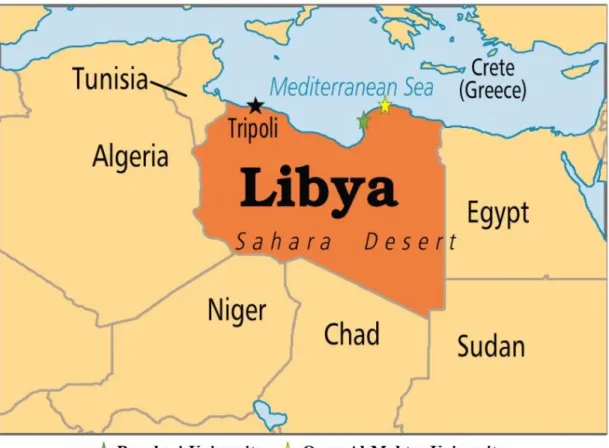
technology into Libyan higher education was to assess the current competencies of educators in the use of technology in order to establish an initial baseline of skills and areas in need of development. Because the majority of research in Libya has focused on educators in institutions in Western Libya, this research focused on educators from Eastern Libya, mainly Benghazi and Omer Al-Moktar Universities. This study evaluated educators’ competencies in the use of computer technologies (such as computer software or applications, Internet, and peripherals) with a view toward evaluating potential
differences in technological competencies between educators who specialized in a technical area and those who specialized in a nontechnical discipline. In addition, challenges or barriers related to the future of integrating technology into Libyan higher education classrooms are presented as part of this study’s findings.
Statement of the Problem
Libya has always ensured access to suitable education for all members of society --male and female. The Libyan government has sought to improve its entire educational system. In addition to curriculum development and the appraisal of its scientific content, integrating education technology mainly in the higher education sector is an
indispensable element in Libya’s inclusive plans (Rhema & Miliszewska, 2010).
Furthermore, Libya has sought to play an important role in leading educational reform in neighboring countries in Africa such as Chad, Niger, and Rwanda (Rhema &
Miliszewska, 2010).
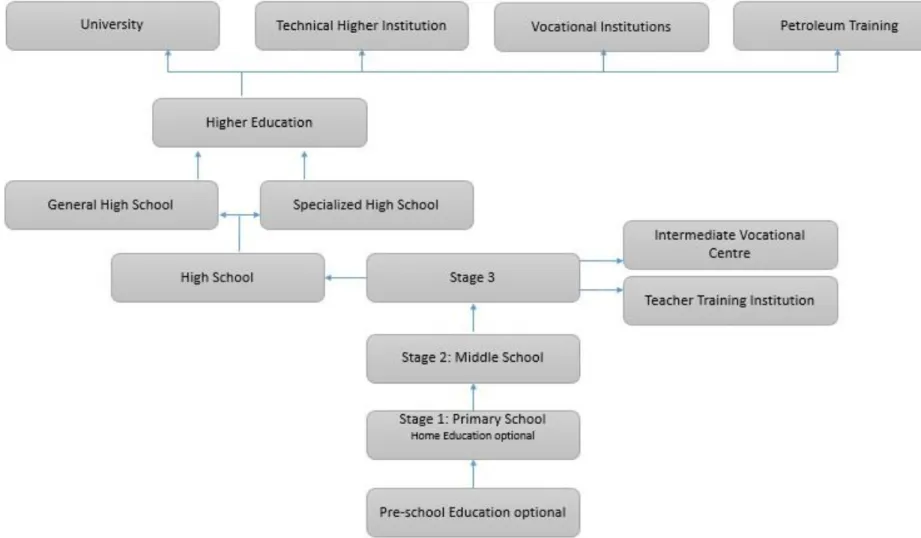
Education in Libya is free from elementary to post-graduate levels; students can attend institutions either at home or abroad. Full scholarships are provided to students in pursuit of their education (El Zoghbi, Kumar, & Naidu, 2010). The education system in Libya has several levels (Bukhatowa, Porter, & Nelson, 2010). The first level is the primary stage starting at age six and is mandatory for six years. The second level is preparatory school or middle school; it is mandatory, lasts for three years, and ends with a national exam. At the third level, students have various options; they can choose either to attend high school (general or specialized high schools), intermediate vocational centers, or teacher training institutions. The third level also ends with a national exam for all types of institutions. Depending on the type of institution students attend, successful graduates receive a general high school certificate or a diploma (Clark, 2004). Students who receive a high school certificate/diploma with high marks are able to advance to higher education (Bukhatowa et al., 2010).
Libyan education needs development and renovation because most students in Libyan universities continue to experience and regard physical, non-technological classrooms (in contrast to classrooms with computer technology) as the only place to learn, receive materials, meet face-to-face with instructors and classmates, and have questions answered by instructors or colleagues. In addition to communication and resource access issues, students are inhibited in having enough time to ask questions as interruptions are interpreted by their professors and peers as wasting the time available for the lecture (Rhema & Miliszewska, 2010). If students cannot attend a class, they lose their chance to obtain instructional material, learn about a presented topic, or ask
questions.
In the case of educators, restriction to the physical classroom has become
increasingly problematic. For example, if instructors are unable to hold a class, they fall behind in the presentation of the scheduled material, which forces them to either
eliminate the missed content altogether or fit the missed material into one presentation. However, each option has negative effects on students’ exposure to the material and their understanding (Rhema & Miliszewska, 2010). Investing in educational technology, such as computers and Internet access, would improve Libyan education by providing
alternative opportunities for students and educators to gain access to educational
materials, supplying opportunities for collaboration and communication with colleagues throughout the world, and enabling educators and students to stay abreast of new
advancements and improvements.
Educators are blamed for the weak education in Libya because they are reluctant to change their traditional ways of teaching (Elzawi & Underwood, 2010). This
explanation, however, is based on research indicating Libya does not specifically focus on educators and their different skills and needs (Elzawi & Underwood, 2010). Because of the lack of focus on educators’ needs, Libyan research should involve educators in every step of educational reform, especially in planning the integration of technology into Libyan classrooms. The involvement of educators could ensure institutions adopt
technologies tailored to their competencies within each educational context (Elzawi & Underwood, 2010). Therefore, exploring Libyan educators’ competency in the use of computer technology was the main focus of this study.
Many Libyan educators have shown their willingness to use technology and are eager to improve higher education in Libyan institutions (Rhema et al., 2013).
Computers and Internet access are nominally available in large universities in Eastern Libya, mainly Benghazi and Omer Al-Moktar, but they are not available in university classrooms and not used for education. Furthermore, throughout Libya and even with infrastructure in place, Internet access can be erratic and unreliable. Libyan users (students and educators) have found it easy and enjoyable to use technology for entertainment and for professional purposes in work but become anxious and worried when it comes to learning (Rhema & Miliszewska, 2010). Kenan, Pislaru, and Elzawi (2011) conducted a study that presented possible ways to successfully implement technology in a Western Libyan institution. Based on the strengths of the United Kingdom’s use of technology in education, their study proposed the notion of using technology, mainly the Internet, in Libya. Kenan et al. also asserted that although the infrastructure of technology had been improving in some Libyan universities, there was still a need to establish appropriate training at different levels of Libyan education to
develop expertise in the use of technology for learning purposes, carry out more research to obtain data, and initiate useful reports for future development toward using technology in Libyan higher education. Consequently, this study investigated certain factors
(competency and discipline of educators) to determine the current skill levels of Libyan educators and reasons for the rare use of technology in their classrooms.
Rhema et al. (2013) conducted a quantitative study with engineering educators in Western Libya. The purpose of their study was to specifically investigate students’ and educators’ attitudes toward technology and incorporate it at two different Western Libyan universities--the Universities of Tripoli and Al-Jabal Al-Gharbi. Rhema el al. found Libyan students and educators showed positive attitudes and willingness to use
technology in their courses even with the difficulties related to consistently accessing the Internet in Libya. Because their study was conducted in a specific region of Libya and with technically oriented participants, it called attention to the need to gather more data confirming the future of technological implementation in Libyan higher education using research that focused on those who did not possess a technical background as well as those who did. Therefore, this study included both technically oriented and
nontechnically oriented participants.
So far, the number of studies conducted by Libyan researchers to investigate the future implementation of education technology in Libya has been limited. This might be explained by the fact that Libyan education has been isolated from the rest of the world due to political issues and instability and, concurrently, from technological
advancements. Furthermore, most of these studies did not differentiate between the types of users (students or educators) and used both educators and students in obtaining their
data (Elkaseh, Wong, & Fung, 2015; Elmarzugi et al., 2014; Rhema et al., 2013). In addition, almost all of the studies that investigated or explored the future of implementing technology in Libyan higher education were conducted in Western Libya (Elkaseh et al., 2015; Elmarzugi et al., 2014; Rhema & Miliszewska, 2010; Rhema et al., 2013) and excluded East Libyan universities and institutions. This exclusion was a result of the country’s centralized decision system, which is located in Western Libya, leading to delayed responses to the needs of the universities and institutions in Benghazi and surrounding cities (Eastern side) from the Ministry of Education located in Tripoli (Western side). Therefore, to the best of the researcher’s knowledge, no study has focused specifically on Libyan educators’ competency in the use of technologies in Eastern Libyan higher education.
Although Rogers (2003) claimed individuals shape their attitudes about using technology after they know how and why to use it, many of the studies (Emhamed & Krishnan, 2011; Othman, Pislaru, Kenan, & Impes, 2013; Rhema & Miliszewska, 2014; Rhema et al., 2013) focused on the attitudes of Libyan educators and students regarding the use of technology without confirming what participants knew about computer
technologies before proceeding. Also, no study has been conducted either in Western or Eastern Libya that included participants from both technical and nontechnical disciplines. This study did not focus on the attitudes toward technology of educators. Rather, it focused only on the competencies of Eastern Libyan educators in the use of technology in the classroom. The study included Libyan educators from both technical and
competencies and gathered information that could help guide the process of integrating technology into Libyan higher education.
Purpose of the Study
The primary purpose of this quantitative survey research with limited qualitative data was to evaluate the implementation of technology into Libyan higher education from the educators’ perspective using both a survey and some open-ended questions. The first research objective was to evaluate educators’ competencies in using computer technology in four areas: basic computer operation, the use of application software, the use of
internet, and the use of peripheral technologies. The justification for selecting these four areas was these areas formed the basis for the development and validation of an
established competency survey developed by Yusuf and Balogun (2011). These four skill domains are the most common and essential operations that involve the use of computer software and hardware, Internet, and external devices that can be connected to computers (Yusuf & Balogun, 2011). This instrument was adapted slightly to reflect Libyan culture for use in this study. Participants’ levels of knowledge in these four areas of competency were evaluated to formulate future workshops Libyan educators might provide.
Second, the researcher tested a Libyan stereotype that implied Libyan educator disciplines would influence the future integration of technology into Libyan higher education. Hence, this research determined if a difference existed in levels of
competency between educators who majored in technical areas and those who majored in nontechnical disciplines. This comparison provided rudimentary data, indicating a relative need for special efforts in particular educational areas or standardized efforts
across all disciplines with regard to integrating educational technology. All participants were Libyan educators who worked at the main universities in Eastern Libya (Benghazi and Omer Al-Moktar). The purview of this study of technology integration included computer hardware and software, Internet usage, and other peripheral equipment that could be connected to computers, e.g., printers and cameras.
Research Questions
The following research questions guided this study:
Q1 Does the skill level of Libyan educators differ across the four competency areas of basic computer operation and issues, use of application software, use of the internet, and use of peripheral technologies as measured by a self-report instrument?
Q2 Do the competency levels of Libyan educators who specialize in a
technical discipline differ from competency levels of those who specialize in a nontechnical discipline in the areas of basic computer operation and issues, use of application software, use of the internet, and use of
peripheral technologies as measured by a self-report survey?
Rationale of the Study
Technology plays an important role in our daily lives and has changed the manner in which we receive and react to information. The use of technology has increasingly and exponentially affected worldwide interaction and communication. Its role in education has challenged traditional learning where teachers control the learning process and students merely receive information. Technology enhances learning through engagement, collaboration, feedback and interaction; it bridges the context to real experiences. Technology also expands what students learn (Roschelle, Pea, Hoadley, Gordin, & Means, 2000).
Although technology has become commonly used in classrooms around the world, Libya is still technologically far behind other countries because it continues to use a traditional classroom model--a teacher-focused lecture style where students listen and take notes (Rhema et al., 2013). Therefore, this study sought to persuade educators, administrators, and policy makers in Libya to integrate technology into higher education. This task was not an insurmountable undertaking as this study was guided by Creswell (2012) through a logical sequence of manageable pieces of research providing educators, administrators, and policy makers with a rigorous plan.
Significance of the Study
To the best of this researcher’s knowledge, no published research has investigated the integration of technology in Libya at Benghazi and Omer Al-Moktar Universities. The current study is the first to be conducted in the Eastern Libya geographic area. Assessing current educators’ competencies in using computer technologies could provide needed information for creating professional development workshops to train educators and prepare them to use classroom technologies.
In addition, the findings of this study provide Libyan policy makers and administrators with initial data that might influence their decisions regarding the integration of technology into Libyan higher education. Specifically, the results might assist administrators in constructing a preliminary vision for integrating technology into Libyan higher education classrooms based on current educators’ relative levels of
competency in using classroom technology. Data also indicated whether or not technical and nontechnical academic areas required the same or different amounts of effort and focus in training and implementation efforts. Finally, this study promotes and increases
the awareness of participants about the importance of technology use in their classrooms. Participants were provided with an opportunity to evaluate their own competency in the use of computer technology and to participate in rebuilding their country’s educational system.
Due to the lack of research in Libyan higher education in general and integrating technology into Libyan higher education in particular, this research provided a method that guided Libyan researchers in other topics. Studies using the same instrument add to the comparative value of studies in the presented topic.
Theoretical Foundation
The theoretical framework that formed the foundation of this research came from Rogers’s (2003) diffusion of innovations theory, which investigated the processes and decisions around the adoption of innovations, particularly in higher education
environments (Sahin, 2006). Rogers (2003) used the terms innovation and technology as synonyms and many studies have been conducted that involve technological innovations (Sahin, 2006). As Rogers (2003) stated, “A technology is a design for instrumental action that reduces the uncertainty in the cause-effect relationships involved in achieving a desired outcome” (p. 13). Technology consists of two parts: hardware and software. Whereas hardware is “the tool that embodies the technology in the form of a material or physical object,” software is “the information base for the tool” (Rogers, 2003, p. 259). In the case of integrating technology into Libyan higher education when these two parts are newly presented in classrooms in creating a transfer from the traditional approach of teaching and learning to a technological one, the adaptation process will be quite slow (Sahin, 2006) for both students and educators.
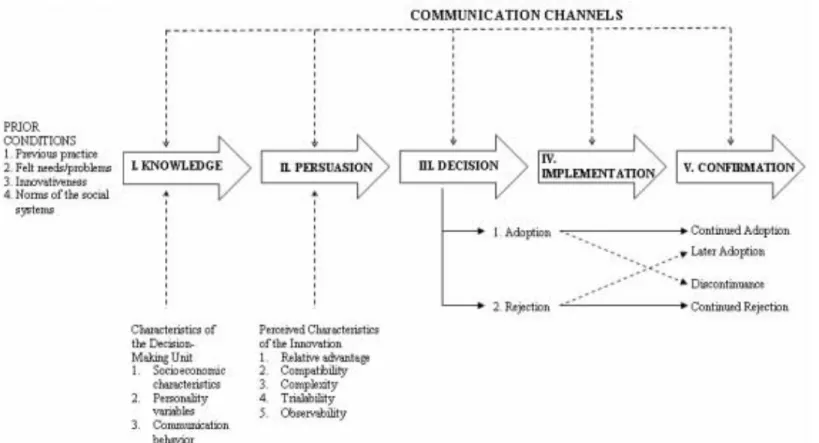
Rogers (2003) defined the innovation-diffusion process as an “uncertainty reduction process,” which basically means this process will assist in predicting whether individuals adopt or reject an innovation (p. 232). He described the process typically as proceeding in five ordered stages: knowledge, persuasion, decision, implementation, and conformation. Rogers’s framework established a foundation for this research and helped create a comprehensive framework for future researchers to use as they advance the diffusion of technology into Libyan higher education. This research particularly focused on the first phase—knowledge—in order to establish a baseline of technical skill levels among Libyan educators, thus providing a foundation of knowledge for future research directed at the integration of technology into Libyan higher education.
Various conditions prior to the knowledge phase include previous practices, needs or problems, and norms of the social system where the innovation is to be integrated. In the knowledge phase, an individual learns about the innovation and seeks information about it. The knowledge phase is considered as a primary, critical phase in the
innovation-decision-process (Rogers, 2003) because when integrating technology into classrooms, the biggest barrier to educators’ use of technology in teaching is their lack of knowledge of how and why to integrate technology in the classroom (Sprague, Kopfman, & Levante Dorsey, 1998). Hence, to facilitate the adoption of an innovation, an
individual should have a sufficient level of how to use the innovation prior to the trial of the innovation (Sahin, 2006). The current objective of this study focused on the
knowledge stage of the innovation-diffusion process, providing a useful base of
information for the future work of this researcher and other Libyan researchers interested in integrating technology into Libyan higher education.
In the second phase (persuasion), individuals form an attitude after they know about the innovation. In the third phase (the decision), an individual decides whether to adopt or reject the innovation. In the fourth stage (implementation), the innovation is put into practice and in the last stage (confirmation), the individual looks for support for his or her decision. Before the implementation and conformation stages of the diffusion of
technology into Libyan higher education classrooms take place, the knowledge stage that answers the questions about “what the innovation is and why and how it works” (Rogers, 2003 p. 12) needs to be accomplished through investigating educators’ current skill status, learning needs, and problems. This research investigated the knowledge phase of Rogers’s (2003) model by evaluating educators’ current competencies in the use of computer technology for educational purposes.
Definition of Terms
Numerous technical terms are commonly used in the field of educational technology and are defined as follows:
Competency. A cluster of skills and knowledge that enables an individual to perform a task that “can be measured against well-accepted standards, and that can be improved via training and development” (Parry, 1996, p. 50).
Computer technology. For the purposes of this study, computer technology refers to advanced and peripheral technologies such as the Internet and common software applications that can be used for the purpose of education in classrooms to ease the communication between educators and their students and provide various resources and material.
Educator. A person who provides instruction or education. In this study, an educator is defined as a teacher who teaches students in higher education.
Non-technically oriented discipline in Libya. Any discipline not related to vocational or technical curriculum. In the context of this study, nontechnical disciplines include arts, law, and education (called social sciences in the United States).
Technically oriented discipline in Libya. Any discipline related to vocational or technical curriculum. In the context of this study, technical disciplines included engineering, science, and economics with the exclusion of information technology disciplines such as computer science, computer engineering, and computer
information systems.
Technology. “A distinctive phenomenon referring to the use of knowledge, materials, tools, techniques, systems, and sources of power to make life easier and better and to work more productively and efficiently” (Cemalettin, 2006, p. 15).
Technology integration. Full implementation of computers, applications, Internet, and other technologies (e.g., projectors, printers, and so on) for education within and beyond classrooms.
Traditional instruction. An instructional environment where classroom furniture is arranged into rows of desks or chairs facing a chalkboard and teacher talk overrides student talk (Cuban,1993).
Summary
Compared to worldwide institutions of higher education, Libya primarily relies on traditional instructional methods of lecture by instructors and a more passive reception of knowledge by students. Libya desperately needs to improve its educational system,
incorporate technology to overcome drawbacks to the traditional education model, and compete successfully in today’s world. Therefore, this study attempted to understand how the integration of classroom technology could best be undertaken to support improvements in higher education in Libya.
Chapter II provides detailed information about Libya and its education system. The theoretical foundation for this work is also discussed in detail. Chapter III describes the methodology as it relates to the survey design, participants, sampling methods, instruments used, research procedures, and steps in data analysis. Chapter IV presents the data analysis and results and Chapter V provides a discussion of the study’s findings, implications for administrators and policy makers, limitations of the study, and
CHAPTER II
LITERATURE REVIEW
Today, technology plays an important role in our daily living and has changed the manner in which we receive and use information. For example, digital, audio, and visual media have replaced many traditional teaching methods such as lecturing. The role of technology in instructional methods is to simplify complex content, provide resources other than printed text via the Internet, reduce teachers’ efforts, and provide more learning options for students.
Even though computer applications and Web content are more user-friendly, users still need to be skilled to utilize these resources to gain information from local and global communities efficiently. Particularly, today’s educators are required to be skilled in using computer applications and in navigating through the Internet. Furthermore, they are required to learn the use of computer skills quickly as instructional technologies grow and change rapidly. Competency in using technology is important for educators across all basic disciplines; thus, technological competence should be widely established among elementary, secondary, and high school teachers coming from different backgrounds including biology, mathematics, English, and social science studies (Rogers, 2000).
Educators in developing countries where traditional instruction is the most
countries in changing the way they teach. Traditional educators need to learn new skills to effectively integrate advanced technologies such as computers and the Internet into teaching instead of using outdated chalk and blackboards. Libya is a developing country that faces this specific difficulty because technology use in universities for education is limited. Therefore, the purpose of this study was to explore existing competencies of Libyan educators in the use of current technology as these competencies relate to long-term efforts directed at integrating technology into Libyan higher education.
This chapter discusses literature related to the problem this study addressed— Libya is still using traditional instruction processes (Cuban, 1993) in today’s
technological world. The first section discusses the need to use advanced computer technology for education. The second section defines competencies in the use of
computer technology for the purposes of this study. The third section explains Rogers’s (2003) diffusion of innovation model, which served as the theoretical foundation for investigating the issue of integrating technology into Libyan higher education. The fourth section discusses technology-related research based on Rogers’s model. The fifth section provides information pertaining to Libya, its education system, and the challenges related to integrating technology into Libyan higher education. The last section presents information regarding the implementation of technology in technical and nontechnical disciplines.
The Need to Use Technology in Teaching and Learning
Most of us have experienced classroom-based traditional instruction where teachers conduct direct instruction consisting of a sequence of lectures. Teachers are the
decision makers regarding curricula and learning outcomes; they control the entire learning environment. In such an environment, students play the role of knowledge buckets into which information is poured. In other words, in a traditional instruction environment, teachers are the main influence in learning, the individual needs of students are ignored, and the development of problem solving and other higher order intellectual skills is neglected. Also, the traditional instruction approach requires long class periods to cover material adequately and for learners to digest extensive information. Since classroom time is limited and students have different skills and abilities within the same classroom, teachers might have difficulty delivering lesson content tailored to different students’ needs (Cuban, 1993; Hannum & Briggs, 1982).
Technology has begun to overcome obstacles that emerged with the traditional approach to education. Many debates recently emerged considering whether or not technology (media) influenced learning. From the perspective of some researchers, media modalities are mere vehicles for delivering instructions to students and do not affect their learning (Clark, 1994). On the other hand, if we merely consider technology as a vehicle, we will never understand its relationship with learning. One argument is there is no reason to invent educational technology if there is no relationship between technology and learning (Kozma, 1994). If so, why are technologies integrated and accessed by people in offices, classrooms, and living rooms all over the world (Kozma, 1994)? As such, the learning influences of modern technology are infinite.
Recently, universities and schools have had many opportunities to ensure their faculty members and students are fully equipped in the use of technology. These demands emerged after research indicated computer technology could be a motivational
tool to help students become armed with high levels of analytical skill, critical thinking ability, and creativity (Roschelle et al., 2000). Interestingly, cognitive research shows effective learning can be achieved through participation among groups, active
engagement, interaction and feedback, and real-world communication (Roschelle et al., 2000). Cognitive research also illustrated that expanding what students learn could occur by varying options of educational resources available (Roschelle et al., 2000). These goals could be reached through the use of technology. The following subsections discuss how technology could be used to improve learning outcomes.
Enhancing Learning through Engagement
Roschelle et al. (2000)asserted the traditional method of learning of using
lectures and texts compels students to be passive; it fails to connect their understanding to thinking outside of the classroom. Numerous learning studies have been conducted, indicating that to enhance learning, more attention should be focused on actively
engaging students in learning activities. The role of technology is to fill this learning gap as it offers many ways to guide students’ learning. Applications such as PowerPoint and videos assist students in creating presentations that reflect their understanding of a specific topic. For example, in a project for American high school students, two groups of students were asked to participate in a “multimedia designers” competition and create an electronic yearbook to share with their children’s museum. The results of the study indicated students from classes who used computer applications were more motivated, demonstrated more task engagement, and were more confident in their designs than
students who learned in more traditional noncomputer classrooms (Roschelle et al., 2000).
When technology is integrated, educators establish and present content that is relevant and interesting to students. Students become more engaged and active learners when the learning content is relevant to them. How is this going to happen? With the increased intensity of accessing learning resources, tools, and information, students are pulled deeper into the discussion topic and become able to direct their own learning. Through the power of technology, variations in lessons and practices can be
accomplished easier, resulting in increased student engagement. Some examples of instructional methods that use technology to increase students engagement can be (a) using visual displays, particularly for constructing, comparing, demonstrating and
analyzing; (b) creating opportunities where students have options about how they interact with content; (c) allowing for opportunities to work jointly on an activity both within the classroom and across classrooms, institutions, or the world; (d) connecting students with experts from across the globe; and (e) using up-to-date real-world problems, information, and news in teaching and learning (Peterson-DeLuca, 2014).
Enhancing Learning through Collaboration
Collaboration is a well-known practice at all levels of education (Strijbos, 2016). It can be defined as “a learning phenomenon where individuals in a social constellation (e.g., group, team, or community) within a physical or virtual environment interact on the same or different aspects” in order to accomplish explicit or implicit individual or group learning goals (Strijbos, 2016, p. 302). Technology has proven its power for use as a
social instrument for learning. It has been studied intensively in both recent research (because of the spread of technology use and availability) and in numerous studies conducted many years ago to determine its role in learning (Strijbos, 2016).
For instance, Roschelle et al. (2000) stated learning in a social context provides students with an opportunity to solve complex problems more effectively than when they relied on solving these problems individually. The conversations among learners and the use of gestures allow a deeper and more accurate understanding of subjects. For instance, networking technologies such as videos, online and offline discussion rooms, and other Internet resources permit learners to share their knowledge from different regions around the world (Roschelle et al., 2000).
A study examining such networking technologies was conducted in the United States to investigate students’ collaborative production of writing (Roschelle et al., 2000). During this study, many classrooms in different countries were merged using the Internet. The results revealed students were more motivated to discuss and share their opinions through online communication than when they enrolled in an actual face-to-face classroom. The authors suggested this type of communication was successful because classroom time was not restricted by physical walls. In addition, the project incorporated students from many different nationalities, which allowed them to share knowledge from the perspectives of different cultures (Roschelle et al., 2000).
Enhancing Learning through Feedback and Interaction
In traditional classrooms, students have minimal time to interact with the required material and must wait to receive feedback from their teachers. Research provides
consistent evidence that learning happens through receiving direct feedback (Skinner, 1984). If feedback is immediate, it shows students how well they are performing tasks; thus, they can either be encouraged to proceed if they are doing well or notified they are performing incorrectly. Hence, they can obtain a clearer understanding of subject matter and determine how to correct misunderstandings in real time.
Technology is an effective tool for providing immediate feedback, especially in large classrooms where it becomes difficult for teachers to track every student’s
performance. Moreover, in specific majors such as math and science that require students to practice many and various problems, Zhang, Trussell, Gallegos, and Asam (2015) found student learning from the Splash Math app allowed them to make more than one attempt to practice problem sets and receive corrections, “which was unlikely to occur in a paper and pencil condition” (p. 38).
Another example illustrating how students could be provided with immediate feedback is using software whereby students can create interactive graphs and receive immediate feedback when they change the parameters in a mathematical model. This immediate feedback enhances student learning because it would take a long time to recognize the variations between the graphs if the same students had to graph each parameter by hand. Moreover, teachers could use software applications to track and analyze students’ performance over time and receive an immediate report of student evaluations and assessments (Roschelle et al., 2000).
Enhancing Learning through Bridging Context to the Real World
Roschelle et al. (2000) stated the most common problem in learning in the 20th century, and it still exists currently (21st century), is transferring what students learn from their textbooks to solving real-world problems. In fact, problem-solving assignments used in traditional learning provide students with a vast number of real problems but do not help in transference because most of them can be solved immediately using class materials. Injecting technology into the transference process—acquiring the skill to extend what has been learned in one context to other contexts—assists learners to understand the main concepts of a problem instead of memorizing solutions and facts (Byrnes, 2001). Technology provides an invaluable repository of data and a vast quantity of real problems students might encounter in their real lives and students can use
technologically generated problems to practice applying the knowledge they have acquired through instructions (Harasim, 2012). Technology also provides students with tangible results, affirming for them that learning occurs by doing (Kolb, 1984).
A good example of connecting students’ knowledge to the real world is the Global Learning and Observation to Benefit the Environment (GLOBE) program (cited in Roschelle et al., 2000). This program was begun in 1992 by Vice President Al Gore as an aid to help students learn science. The notion of GLOBE is to assist students in learning about the environment while they monitor it. Students are motivated to be engaged in learning because they deal with real research, and they use technology for the purpose of organizing and analyzing their data. In addition, they feel their data are valuable for the entire community (Roschelle et al., 2000).
Expanding What Students Learn
Besides being a tool to assist in motivating students to learn, technology can also expand what students learn within the walls of the classroom. By using computers and the Internet, students have an opportunity to access multiple resources such as links, simulations, web definitions and translators, articles, blogs, and the like. These resources can compensate for what students could not grasp and what teachers could not cover during class time (Roschelle et al., 2000). In addition, with the rapid growth of
technology and with its affordable prices for many students around the world, students can use their IPads, cellphones, and other smart technologies during class time to expand their understanding.
It is essential to recognize that using the Internet “is an add-on that complements the existing curriculum” (Harasim, 2012, p. 28). Internet access provides students with online activities that do not replace traditional methods or provide a significant part of the course grade. Online activities are used to enhance or expand activities inside
classrooms, providing opportunities such as reading more examples, taking more quizzes, discussing with peers, and watching videos related to the discussed topic (Harasim, 2012).
Competency in the Use of Computer Technology
Currently, competence in the use of technology plays a significant role in higher education because the rapid growth of technology worldwide requires educators to be skilled in the use of computer technology in order to teach successfully in the 21st
and use of technology for education might influence how future teachers integrate technology into instruction in their profession (Rogers, 2000).
In our technological world, educators need to be knowledgeable about advanced technologies such as the use of computers and the Internet. This knowledge includes being skillful or competent in operating digital technologies that ease communication, assist in student grading, maintain class attendance, and keep students’ records. In general, these competencies or skills include the ability to operate computer hardware and to use software tools such as spreadsheets, word processors, e-mail, Internet
browsers, and authoring software, meaning “toolkits, systems, or shells that can be used by nonprogramming authors to develop an educational Adaptive Hypermedia Software” (Brusilovsky, 2003, p. 392). Important competencies also include creating and archiving documents, installing and removing peripheral devices, and installing and uninstalling software programs (Mishra & Koehler, 2006).
In addition to computer competencies, educators need to be competent in the use of advanced digital technologies that assist in improving the delivery of the subject matter they teach including being able to differentiate the tools used for specific tasks and the ability to apply educational strategies with available technologies. For instance, educators need to be able to use tools for running discussion boards and chatting (Mishra & Koehler, 2006) where students are given a task and access to online resources to accomplish their task via online discussion.
Despite numerous advantages offered by advanced software tools, a key issue related to most of the software tools currently available was they were not produced specifically for classroom needs; rather, they were initially created to solve problems in
the business sector (Zhao, 2003). Therefore, transforming these tools for classroom use will not be effortless (Mishra & Koehler, 2006). The process of transformation requires educators to be aware of the available technologies, be skilled in their use, and be creative enough to tailor a specific tool to a specific educational goal within a specific content area (Mishra & Koehler, 2006).
As stated by Rogers (2000), competency in the use of technology across all disciplines and worldwide universities should not rely solely on how much the integrated technology costs in terms of dollars and the availability of contemporary computers at educators’ desks. Integrating technology into higher education requires universities to develop cohesive training programs or workshops that assist faculty members’ learning about advanced digital technology. Moreover, universities will be required to provide educators with knowledge on how to obtain the most effective “mix of the best of the old and the best of the new” teaching methods in parallel with “just in time” technical
support (Rogers, 2000, p. 19). Training should not be focused only on technical matters; it must also give priority to explaining learning theories and to the learning styles of individual students. The combination of applying learning theories and technical skills will help the paradigm shift to sail from the teaching to learning harbor with less difficulty (Rogers, 2000).
Theoretical Foundation
This research is based on Rogers’s (2003) diffusion of innovation model (see Figure 1). Rogers’s model is a theoretical framework widely used in the area of
technology diffusion and has been adapted for use mainly in the higher education sector in different disciplines including economics and education (Dooley, 1999).
“Diffusion is the process by which an innovation is communicated through certain channels over time among the members of a social system” (Rogers, 1983, p. 5). Rogers (2003) considered innovation, communication channels, time, and social systems as the four main elements of the model. Furthermore, the model included the innovation-decision process consisting of the knowledge, persuasion, innovation-decision, implementation, and confirmation stages. The attributes of innovations, rate of adoption, and adopter
categories are also included in Rogers’s (2003) model. All of the components of the model are described in detail in the following sections.
Figure 1. Diffusion of innovation model (Source: Diffusion of Innovation, Fifth edition by Everett M. Rogers. Copyright © 2003 by the Tree Free Press. Printed with permission pending of the Free Press: A Division of Simon & Schuster.
Main Elements in the Diffusion of Innovation Model
Innovation. “An innovation is an idea, a practice or project that is perceived as
new by an individual or other units of adoption” (Rogers, 2003, p. 12). Rogers (2003) used the term innovation and the term technology as synonyms. An innovation might have been invented a long time ago but if it is presented to individuals as a new tool, it is still an innovation for them. It should not be anticipated that the diffusion and adoption of all innovations is desirable. The same innovation might be desirable for one individual in a specific situation but undesirable for another individual in a different situation. For instance, “mechanical tomato pickers have been adopted rapidly by large commercial farmers in California, but these machines were too expensive for small-sized tomato growers, and thousands have thus been forced out of tomato production” (Rogers, 1983, p. 12). Consequently, a technological innovation could produce uncertainty for
individuals or users in either adapting or rejecting the new technology when it is
presented. Hence, to reduce the uncertainty of technology adoption, individuals need to be informed about the advantages and disadvantages of the innovation (Rogers, 2003).
Moreover, innovations have consequences that are the “changes that occur to an individual or to a social system as a result of the adoption or rejection of an innovation” (Rogers, 2003, p. 436). The consequences of innovations are classified into three types: (a) desirable versus undesirable consequences, depending on whether the effects of an innovation in a social system are functional (practical) or dysfunctional; (b) direct versus indirect consequences, depending on whether the changes to a social system or an individual happen as an immediate result of the innovation or as an intermediate result;
and (c) anticipated versus unanticipated consequences, depending on whether the changes are recognized by the members of the social system or not (Rogers, 2003).
Communication channels. “Communication is a process in which participants
create and share information with one another in order to reach a mutual understanding” (Rogers, 2003, p. 5). This basically means a message conveyed from one individual to another. Rogers (2003) considered mass media as the most effective channel for establishing knowledge of innovations; whereas interpersonal channels are more
powerful channels in shaping and changing attitudes about a new innovation, influencing the decision to adopt or reject the new innovation.
Most individuals evaluate innovations based on the opinion of a “near-peer” who has adopted the innovation. Therefore, distinctive aspects are presented in the diffusion of innovation called heterophily and homophily. Heterophily “is the degree to which pairs of individuals who interact are different in certain attributes, such as beliefs, education, social status, and the like,” whereas homophily “is the degree pairs of individuals who interact are similar in certain attributes” (Rogers, 2003, p. 19). Since most of human communication happens when individuals are homophilous, securing effective communication is often reachable through homophily in the diffusion of innovation.
Time. Rogers (2003) claimed the time aspect has been given less attention in most behavioral science research than other issues. He mentioned time does not exist independently of events; it is an element of every activity. The time dimension is involved in the innovation-decision process by which an individual passes into the adoption or rejection of an innovation from the initial knowledge of the innovation. The
time element is also involved in categorizing the members of the social system into innovators, early adopters, early majority, late majority, and laggards. Moreover, time plays an important role in rating the adoption of an innovation in a system. Adoption rate is usually measured by the number of members in a given system that adopt the
innovation in a specific period. These aspects of Rogers’s model are discussed later in detail.
Social system. “A social system is a set of interrelated units that are engaged in
joint problem solving to accomplish a common goal” (Rogers, 2003, p. 23). As Rogers (2003) mentioned, the members or units of a social system can be individuals,
organizations, informal groups, or subsystems. The social system shapes a boundary in which the innovation is diffused. Because individuals are influenced by their
characteristics and by the nature of the social system, Rogers claimed members of a given social system need to be categorized into different types of adopters. Adopter
categorization by Rogers is discussed later.
Innovation-Decision Process
The knowledge phase. The innovation-decision process starts with the
knowledge phase. In this phase, an individual learns about an innovation and information regarding its existence; they seek to answer the questions of “what the innovation is and why and how it works” (Rogers, 2003, p. 21). As stated by Rogers (2003), these
questions shape three types of knowledge: awareness-knowledge, how-to-knowledge, and principles-knowledge.
Through awareness-knowledge, an individual learns more about an innovation. Through how-to-knowledge, an individual learns how to use an innovation correctly.
Educators who have a technical background may not use technology in their teaching if they do not know how to use it correctly (Sahin, 2006). Therefore, educators need assistance in how to effectively use technology in the teaching process (Johnson, Adams Becker, Estrada, & Freeman, 2015). Rogers (2003) considered how-to-knowledge as a primary factor in the innovation-decision-process. “To increase the adoption chance of an innovation, an individual should have a sufficient level of how-to-knowledge prior to the trial of the innovation” (Sahin, 2006, p. 16). Principle-knowledge encompasses functioning principles that describe why an innovation operates. If an innovation is adopted without knowledge or skill in using it, the misuse results in discontinuance of the innovation (Sahin, 2006).
The persuasion phase. Individuals might possess all of the knowledge in the how and why of using a specific innovation but they might not adopt this innovation because their attitudes influence their decision to either adopt or reject it (Sahin, 2006). This phase follows the knowledge stage because individuals cannot shape their attitudes toward an innovation if they do not know about the innovation and how to use it (Rogers, 2003). Furthermore, Rogers (2003) asserted individual opinions and beliefs about a specific innovation or technology are more likely to be influenced by colleagues or peers. For example, in education, “while information about a new innovation is usually
available from outside experts and specific evaluations, teachers usually seek it from trusted friends and colleagues whose subjective opinions of a new innovation are most convincing” (Sherry, 1997, p. 70).
The decision phase. Individuals continue the innovation evaluation process in order to select whether to adopt or reject the new innovation. In simple words, this stage