Constraints facing Small Medium and Micro Enterprises in Khayelitsha,
Western Cape
by
BUKELWA MBINDA
Dissertation submitted in fulfilment of the requirements for the degree of
Master of Technology:
Business Administration
in the Faculty of Business and Management Sciences
at the Cape Peninsula University of Technology
Supervisors:
Professor JP Spencer
Ms V Mafunda
Professor A Slabbert
Cape Town
October 2015
CPUT copyright information
The dissertation may not be published either in part (in scholarly, scientific or technical journals), or as a whole (as a monograph), unless permission has been obtained from the University
DECLARATION
I, Bukelwa Mbinda, declare that the contents of this dissertation represent my own unaided work, and that the dissertation has not previously been submitted for academic examination towards any qualification. Furthermore, it represents my own opinions and not necessarily those of the Cape Peninsula University of Technology.
ABSTRACT
The aim of this study was to determine the extent of constraints to entrepreneurial development in the townships supporting the Cape Town economy, specifically that of Khayelitsha, and to establish whether any government incentives were available to develop this township economy. These small, medium and micro sized businesses face numerous constraints. The vital role of small businesses in stimulating economic activity, in poverty alleviation, and in the raising of living standards, has been widely recognised in most countries. In fact, in several countries, small businesses are used as catalysts to generate economic activities within relatively poor communities. The City of Cape Town has developed economic initiatives to provide assistance to entrepreneurs with recommendations on how innovations should be encouraged to help entrepreneurs in such poor communities as Khayelitsha to start new businesses, and to create jobs. In order to obtain information on the Khayelitsha business community both qualitative and quantitative approaches were used. Questionnaires were employed to answer open and closed ended questions dealing with economic activities in the area, as well as interviews with formal and informal business persons. Generally, the findings reveal numerous constraints of trade facing businesses in Khayelitsha including governmental restrictions, lack of a skilled workforce, poor infrastructure, and services delivery. The recommendations made could lead to an improvement in operating conditions as this study argues that the existence of positive business conditions, in terms of social, economic, and personal factors, are necessary for business ventures and entrepreneurs to succeed. However, innovation is essential for small businesses to be able to respond effectively to the changing environment that has been triggered by globalisation forces.
ACKNOWLEDGEMENTS
I wish to thank:
Almighty God for his grace and for blessing me all the time
My supervisor, Professor Andre Slabbert, for his guidance and persistence
My supervisor, Ms Vimbayi Mafunda, for her understanding, patience, guidance, and support
My supervisor, Professor John Spencer, for believing in me, and for his unconditional support, guidance, and words of encouragement
Dr Ncedo Ntloko, for inspiring me, and for the support given to me during my journey of research
Dr Noluthando Matsiliza, for being a sister and friend, and for unconditional support in this research (you were always there for me, and whenever I needed support, you always listened to me, and gave me your valuable input)
Professor Mzikayise Shakespeare Binza, the Dean of Faculty of Business and Management Sciences for giving me sufficient time in which to finish my research The Centre for Post Graduate Studies, for providing me with assistance
The Research Directorate at CPUT, for the financial support by University Research Fund given to me to conduct the fieldwork
The research participants who managed to make time for me, and who facilitated continuance of the study
To my colleague Parveen Ebrahim for all your assistance, sincerely appreciated My family and friends, for their support in assisting me in administering the survey
questionnaire, their contribution was much appreciated
Lastly, my mother, Nomfundo Mbinda, for being with me from the initial stage to the final stage of this research, and for her unconditional and constant love, support, and understanding, as well as the rest of my family.
The financial assistance of the University Research Foundation towards this research is acknowledged. Opinions expressed in this dissertation and the conclusions arrived at, are those of the author, and are not necessarily to be attributed to the University Research Foundation.
DEDICATION
This dissertation is dedicated to the memory of my late grandmother, Tina Eleanor Mbinda (Mambanjwa, Gebane, Thikazi, Mpetwana), for planting a seed of education in me, and for being a champion of education to my family at large. You have shown me and the rest of the family, the significance of receiving an education, and, for that, I will cherish your input forever. My mother, Nomfundo Mbinda, deserves my undying devotion, in this regard, for believing in me throughout my studies.
TABLE OF CONTENTS
DECLARATION ...ii ABSTRACT ...iii ACKNOWLEDGEMENTS ... iv DEDICATION ...v TABLE OF CONTENTS ... vi LIST OF GRAPHS ...xLIST OF FIGURES ... xii
LIST OF TABLES ... xii
LIST OF APPENDICES ... xii
GLOSSARY ... xiii
CHAPTER ONE: INTRODUCTION TO THE STUDY ...1
1.1 Introduction ...1
1.2 Background to the study ...1
1.3 Statement of the research problem ...5
1.4 Aim of the study ...5
1.5 Research objectives ...6
1.6 Research questions ...6
1.7 Background to the problem ...7
1.8 Research methodology ...9
1.9 Ethics ...9
1.10 Delineation of the research ...9
1.11 Significance of the study ... 10
1.12 Outline of the proposed study... 10
1.13 Summary ... 11
CHAPTER TWO: LITERATURE REVIEW OF SMME ACTIVITIES IN SOUTH AFRICA ... 12
2.1 Introduction ... 12
2.2 Socio-economic profile of Khayelitsha in Cape Town ... 14
2.3 Poverty in South Africa ... 16
2.5 Micro enterprise ... 21
2.5.1 Business entrepreneurs as catalysts ... 23
2.5.2 Economic empowerment of women ... 25
2.6 Government support of SMMEs ... 26
2.6.1 Government policy in support of SMMEs ... 27
2.6.2 Department of Trade and Industry (DTI) ... 28
2.6.3 National Credit Act (NCA), No. 34 of 2005 ... 29
2.6.4 Financial service centres for SMMEs ... 31
2.6.4.1 The Small Enterprise Development Agency (SEDA) ... 31
2.6.4.2 Industrial Development Corporation (IDC) ... 31
2.6.4.3 Khula ... 32
2.6.4.4 National Youth Development Agency (NYDA) ... 32
2.6.5 Non-financial service centres for SMMEs ... 33
2.6.5.1 Business development service centres (BDSCs) ... 33
2.6.5.2 Local economic development (LED) in South Africa ... 36
2.6.5.3 Khayelitsha Central Businesses (KCB) ... 36
2.6.5.4 Khayelitsha Business Support Centre (KBSC) ... 37
2.6.5.5 Various role players in economic development in Khayelitsha ... 38
2.7 Business Incubators as a development tool for SMMEs in South Africa ... 39
2.7.1 The non-governmental organisations’ (NGOs’) business incubator in Khayelitsha ... 43
2.8 SMME opportunities in South Africa ... 44
2.8.1 Local business opportunities for SMMEs in Khayelitsha ... 44
2.9 Business linkages in South Africa ... 45
2.10 Constraints facing small business entrepreneurs ... 48
2.10.1 Finance ... 48
2.10.2 Education and training ... 50
2.10.3 Business skills ... 50
2.10.4 Lack of infrastructure ... 52
2.10.5 Crime ... 54
CHAPTER THREE:RESEARCH DESIGN ... 60
3.1 Introduction ... 60
3.2 Background of the research exercise ... 60
3.3 Problem statement ... 62
3.4 Objectives ... 63
3.5 Research questions ... 63
3.6 Research data collection techniques ... 64
3.6.1 Data collection ... 64
3.6.2 Pilot study ... 64
3.6.3 Survey questionnaires ... 65
3.6.4 Interviews ... 67
3.7 Research population and sampling ... 69
3.8 Data analysis ... 71
3.9 Ethical issues ... 72
3.10Summary ... 72
CHAPTER FOUR: DATA PRESENTATION, INTERPRETATION AND DISCUSSION ... 73
4.1 Introduction ... 73
4.2 Analysing survey questionnaires coded using SPSS ... 73
4.2.1 Theme 1: Profile of Participants ... 74
4.2.3 Theme 3: Government Initiatives ... 82
4.2.4Theme 4: Private Sector support ... 86
4.2.5Theme 5: Employment creation ... 89
4.2.6Theme 6: Barriers for SMMEs ... 91
4.2.7Theme 7: Technology ... 99
4.2.8Theme 8: Business opportunities ... 101
4.3 Analysing interviews using content analysis ... 102
4.3.1Theme 9: Barriers ... 102
4.3.2Theme 10: Black women empowerment... 106
4.3.3Theme 11: Addressing poverty ... 108
4.3.4Theme 12: Barriers to success ... 111
4.4 Summary ... 122
CHAPTER FIVE: CONCLUSIONS AND RECOMMENDATIONS ... 123
5.1 Introduction ... 123
5.2 Overview of the research ... 123
5.3 Research objectives ... 124
5.4 Contribution made by the study ... 125
5.5 Limitations ... 125
5.6 Summary of the research findings ... 125
5.6.1 Financial support ... 126
5.6.2 Lack of government support... 126
5.6.3 Unemployment challenge ... 126
5.6.4 Inadequate infrastructure ... 127
5.6.5 Lack of access to technology ... 127
5.6.6 Lack of awareness ... 127 5.6.7 Crime ... 127 5.7 Recommendations ... 128 5.7.1 Entrepreneurship education: ... 128 5.7.2 Financial education: ... 129 5.7.3 Government support: ... 129 5.7.4 Effective infrastructure: ... 129
5.7.5 Addressing skills shortages: ... 129
5.7.6 Addressing Unemployment: ... 130 5.7.7 Provision of technology: ... 130 5.7.8 Trade constraints: ... 130 5.7.9 Identify opportunities: ... 131 5.7.10 Combating Crime ... 131 5.7.11 Business operations: ... 131 5.7.12 Women empowerment ... 132 5.8 Conclusions ... 134 REFERENCES ... 135 APPENDICES ... 152
Appendix A: Survey Questionnaire ... 152
Appendix B: Interview Schedule ... 160
Appendix C: Letter requesting permission and consent letter ... 161
Appendix D: Letter of consent ... 162
Appendix E: Language editing ... 163
LIST OF GRAPHS
Graph 4.1: Gender composition ... 74Graph 4.2:Age group ... 76
Graph 4.3:Home language ... 77
Graph 4.4: Nationality ... 77
Graph 4.5:Sectors of operation ... 78
Graph 4.6:Categories of the operations sectors ... 78
Graph 4.7:Experience in operating a business ... 79
Graph 4.8: Business registration ... 80
Graph 4.9: Business turnover per week ... 81
Graph 4.10:Government initiatives ... 82
Graph 4.11: Provincial help desk ... 84
Graph 4.12:Knowledge of the CoCT programmes ... 85
Graph 4.13: Business listed in database ... 86
Graph 4.14: Subcontracting awareness ... 86
Graph 4.15: Private business support SMMEs with subcontracting ... 87
Graph 4.16: Business incubation ... 87
Graph 4.17: Knowledge that private businesses undertake skills transfer initiatives to assist the previously disadvantaged ... 88
Graph 4.18: Thinking that their business will assist to address poverty ... 89
Graph 4.19: The ability of the businesses to assist in creating jobs in Khayelitsha ... 90
Graph 4.20: Need for financial assistance for business ... 91
Graph 4.21: Finance as a challenging aspect for small business entrepreneur ... 92
Graph 4.22: Whether turned away by a bank when applying for financial assistance ... 93
Graph 4.23:Whether turned away by a micro-finance organisation when applying for financial assistance………... 93
Graph 4.24: Enough being done in terms of infrastructure for business ... 94
Graph 4.25: Crime as a concern for business ... 95
Graph 4.26: Crime is hindering my business chances of growth in Khayelitsha ... 96
Graph 4.27: Disadvantage in terms of price by suppliers, owing to the fact that businesses operate far from the central business district ... 96
Graph 4.28: Completing the form/document seen as a problem ... 97
Graph 4.29: Business education and training crucial to knowing how to operate the businesses ... 98
Graph 4.30: Knowledge of e-commerce. ... 99
Graph 4.31: Use of telecommunications for emailing ... 100
Graph 4.32: Knowledge of other business opportunities in Khayelitsha ... 101
Graph 4.33: Major challenges experienced in the business ... 102
Graph 4.34: What can be done to address the challenges ... 104
Graph 4.35: Kind of assistance required for business ... 105
Graph 4.36: Empowerment of black women in business for success and sustainability ... 106
Graph 4.37: Strategies for addressing the empowerment of black women... 107
Graph 4.38: Decrease the high rate of poverty in Khayelitsha ... 108
Graph 4.39: The ability of the business to reduce existing poverty levels... 109
Graph 4.40: Assistance required in successfully completing such forms as tender applications, and applications to join databases……….. 110
Graph 4.41: Kind of crime experienced in the business ... 111
Graph 4.42: Decreasing of levels of crime in Khayelitsha ... 112
Graph 4.43: Assistance granted to small businesses to acquire funding, and to improve their financial situation ... 113
Graph 4.44: Overcoming problems of infrastructure in Khayelitsha ... 114
Graph 4.45: Problems encountered with suppliers ... 115
Graph 4.46: Benefiting of the business through business linkages ... 116
Graph 4.47: Subcontracting as a benefit to the business ... 117
Graph 4.48: Using business opportunities to advantage ... 118
Graph 4.49: Kind of assistance regarded as crucial to assisting the business succeed ... 119
Graph 4.50: Other factors thought to be crucial to assisting the business to develop and grow ... 120
LIST OF
FIGURES
Figure 1.1: Map of Khayelitsha (Source: Adapted from Google map). ...2
Figure 2.1: Factors contributing to the success of business incubators. ... 40
Figure 2.2: Benefits of incubators. ... 42
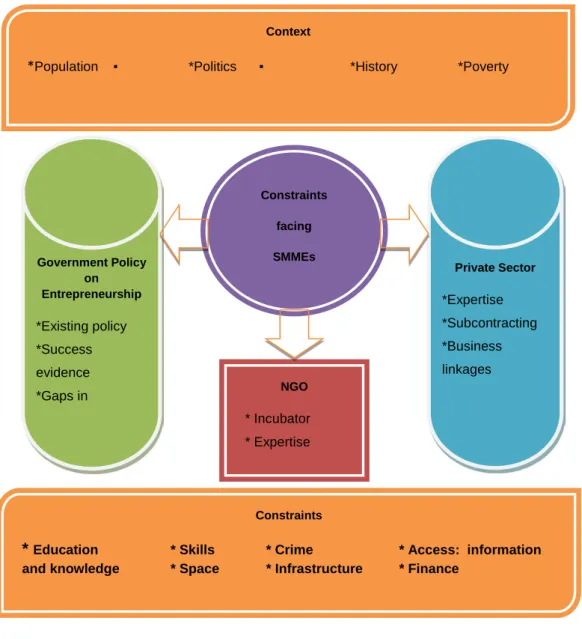
Figure 2.3: Summary of the chapter ... 57
Figure 3.1: Data collection strategy used in the study ... 70
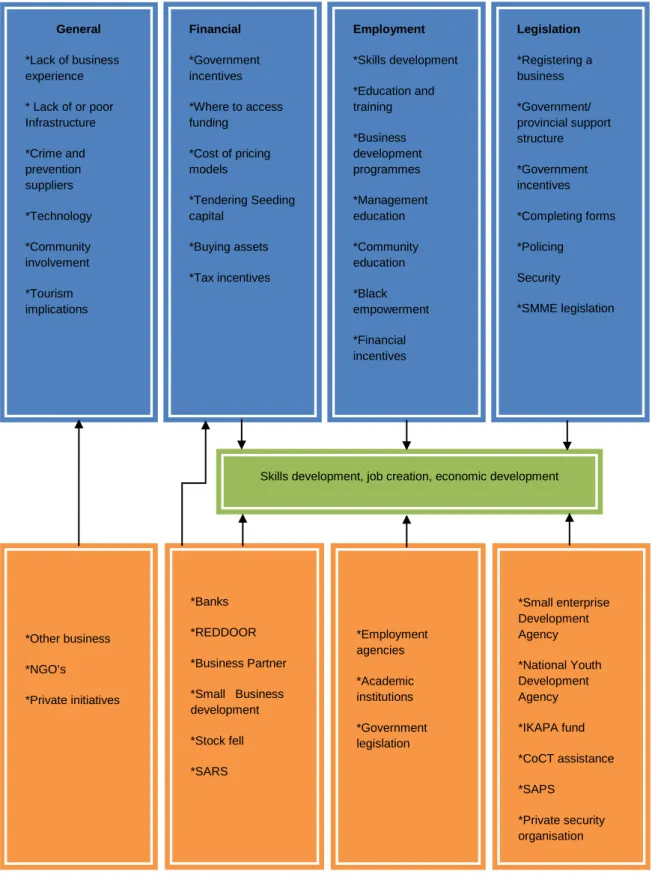
Figure 5.1: Model for identifying constraints to trade in townships ... 133
LIST OF
TABLES
Table 2.1: Broad structure of SMMEs... 20Table 4.1: Cross-tabulation between gender and education ... 75
Table 4.2: Frequency tabulation of government strategies to assist SMMEs ... 83
LIST OF APPENDICES
Appendix A: Survey Questionnaire ... 152Appendix B: Interview Schedule ... 160
Appendix C: Letter requesting permission and consent letter ... 161
Appendix D: Letter of consent ... 162
GLOSSARY
Terms/Acronyms/Abbreviations Definition/Explanation
ANC African National Congress
BBBE Broad-based Black Economic Empowerment
BCBD Bellville Central Business District
BDSC Business Development Service Centre
BMR Bureau Market Report
CBD central business district
CCTV closed-circuit television
CPPP Community Public Private Partnership
CSBP Centre for Small Business Promotion
CoCT City of Cape Town
CRSCI Crime Research and Statistics Crime Intelligence
DTI Department of Trade and Industry
GDP gross domestic product
GF Golden Future
KfW Kreditantstalt fϋr Wiederaufbau
ICT information and communications technology
IDC Industrial Development Corporation
ISBDS Integrated Small Business Development Strategy
KBD Khayelitsha Business District
KCB Khayelitsha Central Business
KBSC Khayelitsha Business Support Centre
KCT Khayelitsha Community Trust
LBCs library business corners
LBSCs local business service centres
LED local economic development
NAMAC National Co-ordinating Office for Manufacturing
Advisory Centres
NBSA National Small Business Act
NBI National Business Initiatives
NCR National Credit Regulator
NCA National Credit Act
NGO non-governmental organisation
NYDA National Youth Development Agency
SAPS South African Police Services
SEDA Small Enterprise Development Agency
SBP Small Business Project
SMMEs small, medium and micro enterprises
Stats SA Statistics South Africa
URP Urban Renewal Programme
VPUU Violence Prevention through Urban Upgrading
WCPERO Western Cape Provincial Economic Review and
CHAPTER ONE
INTRODUCTION TO THE STUDY
1.1 Introduction
Small, medium and micro enterprises (SMME’s) are found in most townships and informal settlements in South Africa. SMMEs are vehicles for creating employment and sustaining a livelihood for many underprivileged communities. This study investigated SMMEs in Khayelitsha, a multi-racial community outside Cape Town. In this chapter the background to the study is developed, and the research problem presented. The study aim and objectives are explained, and the study questions are presented in order to establish the business situation in Khayelitsha. A brief overview of relevant literature and the research methodology is also given.
1.2 Background to the study
Khayelitsha is one of the largest, as well as one of the most populated and poorest communities in the Western Cape Province of South Africa. A large proportion of the residents originally came from the Eastern Cape region, which is one of the poorest provinces in the country. The community, which was originally established in 1985, comprises approximately 98.6% Black African, 0.6% Coloured, 0.1% Asian, 0.1% White, and 0.6% and Other residents (City of Cape Town, 2013:3).
The vital role of small businesses is to stimulate economic activity and poverty alleviation, and to promote, or improve, the prevailing living standards, as has been widely recognised in countries as diverse as the United States of America, the United Kingdom, Italy, Germany, and France. In fact, in several countries, small businesses are used as catalysts to generate economic activities within the relatively poor communities (Van Vuuren & Groenewald, 2007:269).
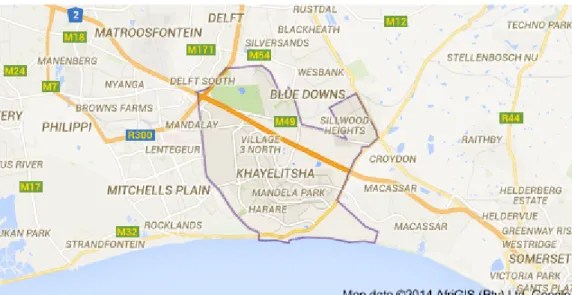
A City of Cape Town report (CoCT, 2005:34) revealed that the majority of households in Khayelitsha are underprivileged, with 57.4% living in shacks in informal settlements; 30.0% living in houses on separate stands; 7.3% living in backyard shacks; 0.3% living in rooms in flats, or on shared property; 1.6% living in informal housing; 0.6% living in town cluster housing; and 2.8% living in unspecified forms of accommodation. The majority of the residents lack access to electricity, and to other basic amenities. The CoCT Census 2011 report (2012:5) revealed that people, in general, are underprivileged and that 54% still live in informal settlements, with the majority of people still lacking access to electricity. The government’s goal evidently is to alleviate poverty, and to improve people’s lives, which, however, has yet to be realised. Little improvement has occurred in terms of social and economic development in Khayelitsha. As far as job creation is concerned, in terms of poverty alleviation over the past eight years, some people’s lives have improved, while others have become worse off. Overall, however, there has been some slight improvement. Figure 1.1 below shows a geographical map of Khayelitsha.
Figure 1:Map of Khayelitsha (Source: Adapted from Google map).
Figure 1.1: Map of Khayelitsha
Source: Adapted from Google map, 2014
This study was intended to identify the constraints facing small, medium and micro enterprises (SMMEs) in Khayelitsha, with the intention of recommending an appropriate approach to be taken in an attempt to improve the status quo. This statement is further examined under point 1.3, the aim of the study. Since South Africa is facing an unemployment crisis, the SMME sector could serve as a
catalyst for economic growth, and for the stimulation of job creation. Similarly, SMMEs have a role to play in creating job opportunities, and in fighting poverty. They have a responsibility to create jobs, and to assist in the fight against poverty. There are challenged to address such issues as lack of skills, capital, and the knowledge to run a business.
Small businesses have a role to play in curbing unemployment and poverty within South Africa, including within the community of Khayelitsha. They can help to overcome the challenge of unemployment, and therefore assist in job creation (Richards, 2006:5). Some of the SMME businesses in Khayelitsha lack appropriate business skills, education, and knowledge in terms of running a business, and also require capital to operate, and to expand, their businesses. As a result, the small business entities concerned are neither viable, nor sustainable, and have benefitted little from other developments taking place in Khayelitsha. It is essential, therefore, that the government should provide an adequate environment, and resources, for the small businesses to develop, and to grow. The appropriate environment and resources would assist small businesses to have the necessary infrastructure, business skills, finances, and safety and security that would enable them to function, and expand in the economy of 2014/15.
Identifying tools that are essential for the businesses, and recognising skills shortages, is of critical importance to the future development of the area. To ensure that there are remedies in place that could facilitate the stimulation of growth, the added sustainability, and the competitiveness of such businesses in the fast-growing global environment, growth limitations must be identified. Once the limitations to small business development have been identified, it will become vital for the relevant government policies to be tailored to meet the needs of the businesses concerned and to have a mechanism in place that will assist the businesses, and development programmes, concerned (National Credit Regulator, 2011:76).
While the CoCT (2009:5) has developed economic initiatives to provide assistance to entrepreneurs, it also suggested that innovations should be encouraged to help entrepreneurs in such poor communities as Khayelitsha to start new businesses,
and to create jobs. Kuratko and Hodgetts (2007:729) describe entrepreneurs as innovators, or developers, who recognise and take opportunities, converting them into workable ideas and solutions. Innovation is essential for small businesses to respond effectively to environmental change that has been triggered by the pressure of globalisation, and by the liberation of markets worldwide. The businesses concerned need to rethink their modes of operandi, and they also need to develop new business models, so as to enable them to survive and thrive in the ever-changing and dynamic global economy (Kuratko & Hodgetts, 2007:5).
According to Van Vuuren and Groenewald (2007:270), positive business conditions, in terms of social, economic, and personal factors, are necessary for business ventures and entrepreneurs to succeed. Important economic factors include access to capital, new technology, and government support. Non-economic factors include opportunities to accumulate personal wealth, research and development, a desire for personal development, and an effective educational system. An example of social factors is the encouragement that is received from other family members, and the support of friends, which might influence the desire to become an entrepreneur. Pickernell, Packham, Jones, Miller and Thomas (2011:186) note that, for small businesses to grow, they are required to be resourceful, and to develop abilities, competencies, organisational processes and business knowledge to enable the business to improve their efficiency and effectiveness. These factors are explored in Chapter Four of this study.
In South Africa, small business entrepreneurs in the rural communities tend to face more obstacles, like financial and environmental issues, than do their counterparts in the well-developed suburbs and cities (Van Vuuren & Groenewald, 2007:269). Halkias, Nwajiuba, Harkiolakis and Caracatsanis (2011:225) postulate that small entrepreneurs in Africa face many obstacles in trying to generate revenue; furthermore, entrepreneurs in poor urban areas still face challenges in growing their businesses. Therefore, entrepreneurs should undertake proper research, in the form of environmental scanning, that will enable them to understand such forces as market demand (Kuratko & Hodgetts, 2007:159).
1.3 Statement of the research problem
Small businesses in Khayelitsha have, as yet, benefitted little from government initiatives and development in the area. Business entrepreneurs in the area tend to lack adequate business skills and capital to be able to operate and expand their businesses. Such problems are further exacerbated by the insufficiency of the information that is available, and sometimes, the complete ignorance of government development initiatives to promote small business entrepreneurial ventures. Several businesses, as they are in their current form, are unsustainable, due to the number of existing constraints, which mainly take the form of lack of resources, funds, and adequate information to grow. Compounding these problems is the high crime rate within the Khayelitsha community, with small businesses being plagued by robberies that are perpetrated on a daily basis by criminal elements, with little regard for the value of human life. This aspect has also adversely affected business development in Khayelitsha. Constraints such as lack of business knowledge, lack of finance, poor infrastructural development, and lack of operational skills, in addition to the presence of crime, are hindering small businesses in Khayelitsha.
Businesses in Khayelitsha face numerous problems in maximising their operations and these problems or constraints need to be identified and solutions found before the community is able to operate on an equal footing with businesses in traditional areas.
1.4 Aim of the study
The aim of the study is to determine the extent of constraints to entrepreneurship development and to determine government incentives available for small businesses, so that the Khayelitsha economy can progress and the challenge of unemployment can be addressed.
1.5 Research objectives
The specific primary research objectives for the study are:
1. To recognise the constraints facing small business entrepreneurs;
2. To determine the role that the government can play to effectively assist, and promote, SMMEs;
3. To examine the impact of skills shortages on entrepreneurship in Khayelitsha;
4. To identify empowerment tools that could assist black women in being successful in business, and in being sustainable; and
5. To recommend the adoption of a workable approach towards improving and addressing of the constraints facing SMMEs.
1.6 Research questions
The formulation of the above-mentioned objectives led to the development of the following broad research questions which need to be answered to establish the constraints facing business persons in Khayelitsha, and solutions which could lead to an improved business climate.
1. What are the constraints facing SMMEs in Khayelitsha?
2. What are the existing government initiatives that are being undertaken to support SMMEs in Khayelitsha?
3. What specific skills are critical to making Khayelitsha’s entrepreneurs competitive within the global context?
4. How can black women entrepreneurs be empowered, and become sustainable, in their own businesses?
5. What must be included in the development programme proposals for entrepreneurs?
1.7 Background to the problem
In apartheid South Africa, the majority of the black population lacked access to entrepreneurship, because of their exclusion from appropriate education and training, and from the right of access to financial, and other, resources. Consequently, it is essential to recognise to what degree, and in what manner, previously disadvantaged individuals are able to engage in business enterprises. The need to develop appropriate SMMEs served as a challenge to the new government after the dissolution of the apartheid laws. The South African government lacked adequate resources to sustain small businesses (Mboyane & Ladzani, 2011:550).
However, Mago and Toro (2013:19) proclaim that the South African government has now put in place a number of institutions, including financial and non-financial support for services, in order to assist SMMEs. The Small Enterprise Development Agency (SEDA) was formed in 2004, through the merger of two institutions, namely the National Manufacturing and Advisory Centre (NAMAC) and the Community Public Private Partnership Programme (CPPP). Furthermore, the government has, through the Department of Trade and Industry (DTI), established the Centre for Small Business Promotion (CSBP), at a national level, to promote the development of small businesses in the country. The Centre created the now no longer functioning Ntsika Enterprise Promotion Agency, and Khula Enterprise Finance Limited, to transform the government’s objectives into action.
Chiloane-Tsoka (2013:349) proclaims that in the past South African laws deprived Black women in the economic stream as laws were gender biased. The new ANC government has a mandate to transform all sectors. Black business women face many challenges such as a lack of access to credit which inhibits them from operating in the small, medium and micro enterprise sector. Finance poses a challenge to black women-owned businesses due to a lack of guarantee required by external financing institutions, and other socio-economic factors such as illiteracy, poverty, and teenage pregnancy. Black women-owned businesses trade in the small and micro arena purely for survival rather than for independence and satisfaction. They play a major role in the communities as they support their families and are pillars in society, however they are still oppressed.
Ngxiza (2011:11) suggests that, in Khayelitsha, the most dominant economic sector is still the survivalist informal sector. The informal businesses are well-defined as not registered, unregulated economic activities that contribute to the gross domestic product (Von Broembsen, 2010:4). A large proportion of these businesses operate mainly in the informal sector, including sewing, fruit and vegetable street vendors, catering, spaza shops, running shebeen and taverns (Chiloane-Tsoka 2013:349). Evidently, still more needs to be done in this respect, with more resources being harnessed to enhance the development of the businesses concerned, so as to break down the poverty barriers that currently still exist in the area. Golden Future (2011:6) reveals that small informal businesses are a key to survival. In Khayelitsha, broadly speaking, the informal sector has increased in size, as the number of such businesses in the area has substantially increased over the past decade.
The capacity to deliver sustainable business development, specifically in the area of small business support, has been proven to be insufficient (Ngxiza, 2011:11). The shortage of skills relating to the completion of forms for funding applications for micro enterprises poses a challenge, and still inhibits the on-going needs of SMMEs. The function of the Business Support Centre is to provide business support, and advice, for emerging small businesses, and to serve primarily as an agent. However, in Khayelitsha, the Centre is manned by only one person, who is not properly resourced to provide adequate assistance (Ngxiza, 2010:96).
Furthermore, the costly burden of crime in South Africa affects all its inhabitants negatively, ranging from the rich to the poor. While crime may affect people in different ways, it has an adverse impact, both on individuals, and on businesses. Theft of property is of particular concern for every household; however, business owners are anxious about other kinds of crime, ranging from petty theft and shoplifting, to hijacking. There is a link between crime, poverty, and the existing levels of inequality (Ikejiaku, 2009:455). Developing entrepreneurship could be part of the solution to lower crime levels through job creation (Van Vuuren & Groenewald, 2007:269).
1.8 Research methodology
The study adopted a mixed research methodology, using both quantitative and qualitative investigation. The data collection technique utilised in this study was a questionnaire and also interviews with formal and informal business persons. Details of the questionnaire and interview schedule are given in Chapter Three.
1.9 Ethics
The participants in the study were informed in advance about the nature of the study. They were also informed that their participation in the study was voluntary, and of the fact that they might withdraw from the research at any time. The participants were guaranteed confidentiality and anonymity, as regards their input to the study. The researcher obtained permission from the Khayelitsha Business Forum to carry out the research (Annexure D). The questionnaire (Annexure A) accompanied by a covering letter explaining the aim of the study (Annexure C), and highlighting its importance, and the interview schedule (Annexure B) was introduced to interviewees by the researcher. The letter also contained an explanation that the data would be used for the benefit of the small business entrepreneurs in Khayelitsha.
1.10 Delineation of the research
The research was limited to a previously disadvantaged area, namely Khayelitsha in the Western Cape. The study involved the small business entrepreneurs who sell goods and services in the area, including both South Africans and non-South Africans. It specifically focused on the challenges facing SMMEs in Khayelitsha, and not the SMMEs in the other surrounding areas, such as Mitchell’s Plain.
1.11 Significance of the study
In the study the researcher sought to understand how small businesses could remain competitive, and even excel, in the harsh operating environment of Khayelitsha. By identifying the critical success factors relating to the local enterprises, the study provides insights into, and an improved understanding of, why some small business operators are successful, and why others fail. It is also likely to help change the mindset of business entrepreneurs in Khayelitsha. The study, accordingly, is not only likely to empower Black SMME business entrepreneurs, but may also contribute to the enhancement of the academic body of knowledge on SMMEs.
1.12 Outline of the proposed study
Chapter One: Introduction and background
The introduction and background to the problem of the research study is discussed in chapter one. The problem statement, the aim and objectives of the study, as well as limitations and delineation of the study are also presented.
Chapter Two: Literature review
This chapter offers a comprehensive literature review of the constraints facing SMMEs and also the business opportunities in support of these businesses. The secondary data information was collected using different sources, such as journal articles, textbook, internet sources and completed thesis.
Chapter Three: Research methodology
This chapter provides a brief explanation of the research methodology used and the design applied in this study, where a mixed research methodology was followed using questionnaires and interviews as the data collection tools. The
population and sample utilised had been advised about the objectives in support of the research, and a pilot study was done in order to test the reliability and validity of the instrument in gathering the data. The chapter gives an overview of the software employed to analyse the data.
Chapter Four: Research findings
An analysis of the research findings is offered in this chapter, including the interpretations and discussions of the study.
Chapter Five: Conclusions and recommendations
This is the final chapter of the research study. The objectives allow for conclusions and to make recommendations on SMMEs in Khayelitsha.
1.13 Summary
In Chapter One an introduction and background to the problem has been explained, in relation to small business entrepreneurs in Khayelitsha. The purpose statement is highlighted, and the objectives of the study, together with the research questions, are clearly stated. An introduction to the literature available on constraints facing small businesses is given, and the research methods are briefly explained, along with the consideration that is given to the Cape Peninsula University of Technology’s ethical requirement. The next chapter reviews multiple relevant sources in which different authors give their views on small business entrepreneurs, and their different opinions on the constraints that are faced by small business entrepreneurs.
CHAPTER TWO
LITERATURE REVIEW OF SMME ACTIVITIES IN SOUTH AFRICA
2.1 Introduction
This chapter will introduce a number of concepts of SMME activities in South Africa. Especially Black entrepreneurs in urban townships and rural areas face a number of constraints and problems in operating their businesses successfully. The chapter highlights a number of important considerations relevant to the SMME movement, discussed under Sections 2.2 to 2.10 in the following pages.
In apartheid South Africa, the majority black population lacked access to entrepreneurial opportunities, because of their exclusion from appropriate teaching systems, and from the right of access to financial and other resources. Consequently, it is essential to recognise to what degree, and in what manner, previously disadvantaged individuals are now able to engage in business enterprises. The development of SMMEs has been a challenge that the new government has been required to face after the dissolution of the apartheid laws. However, the South African government lacks adequate resources to sustain small businesses (Mboyane & Ladzani, 2011:550). The previous government discriminated against non-white ethnic groups, in terms of the allocation of the sparse number of resources made available to the general public. The government in question also created a hostile education environment (in terms of which there were unsteady life relations, inadequate livelihood circumstances, and no jobs forecast), and failed to supply the expertise required by the South African economy. It is evident that this discriminatory system presented an unstructured small business sector with slight, or negative, investment opportunities in relation to human resources (Hess & Rust, 2010:3691).
After the 1994 democratic election, the government of national unity recognised that widespread unemployment, and underemployment, would strongly affect the
country’s capacity to boost the economy (Oseifuah, 2010:50). The African National Congress (ANC) government faced several challenges, including the pressing need to repeal the apartheid inheritance of deficiency and disproportion. In the new administration, the objectives concerned proved to be very daunting to attain for the new government. The government in question considered altering the direction of the economy in favour of supporting the previously disadvantaged groups. Extreme pressure was exerted by the neo-liberals on the government to integrate the South African economy with the global economy, in order to boost the amount of leverage available, in terms of the most pressing, and convincing forces that are at work in South Africa today (Hart, 2008:690).
The South African government adopted the White Paper on the National Strategy for the Development and Promotion of Small Business in South Africa (South Africa. Department of Trade and Industry, 1995). The Integrated Small Business Development Strategy was set to embrace an approach that was aimed at enhancing the environment for small business development in South Africa. This was done following an exhaustive process of reassessment, consultation, research, and modification. The purpose of the National Strategy is to certify that small businesses are progressive, and that they largely focus on their own involvement in the expansion, and in the accomplishment, of the overall aims of the South African financial system, in terms of such crucial areas as job formation, fairness, and entrance to marketplaces.
The key intentions of the National Small Business Strategy are to:
• Create, and permit, an environment for small enterprises;
• Enable improved access to learning about finance and the growth of prosperity, as well as about gross opportunities;
• Tackle the inheritance of apartheid in relation to the empowerment of black businesses;
• Sustain the improvement of women in all trade areas; • Generate extensive period employment;
• Reinforce the consistent linking of small enterprises;
• Ensure that there is equal balance on the playing field among small and big businesses, as well as between rural and urban businesses; and
• Organise small business, so that it is able to overcome the barriers with which it meets in the international competitive environment (South Africa. DTI, 1995:13).
2.2 Socio-economic profile of Khayelitsha in Cape Town
According to Statistics South Africa midyear in 2011, the South African population was 50.59 million (Stats SA, 2011:6), with the estimated population of the Western Cape being 5 287 863, while the population in Cape Town was 3 740 026 strong in number (Stats SA, 2011:3). The population of Cape Town has since increased by 29%, with the composition of the Cape Town population, in terms of ethnic groups, coming to be 38.6% black, 42.4% coloured, 1.4% Asian, and 17.6% white. The CoCT (2012:1) defines a household as a person living alone, or, collectively, as a group of persons who live together, and who provide for themselves jointly regarding food and other essential services. Household income is that income which is required to cover the acquisition, or the accessing, of such basic necessities as food, clothing, fuel, light, and washing.
The CoCT report for 2013 indicates that Census 2011 revealed that the population of the suburb of Khayelitsha was 391 749, and that the number of households was 118 809, with an average household size being 3.30. Khayelitsha’s population grew by 79 000 from 1996 to 2001, owing to urbanisation, and to the immigration of people from the other provinces. Over the period in question, the Khayelitsha population growth rate rose in comparison with the rest of the Western Cape; there has been an increase, during the period mentioned, in terms of Cape Town’s population growth rate (CoCT, 2012:4). The expansion of the community resulted in many opportunities and gaps that could be exploited by SMMEs in the area, due to there being a substantial market to cater for.
The literature suggests that, in terms of population, there has been an increase, both nationally and provincially, owing to immigration to the Western Cape. Ngxiza (2011:185) indicates that urbanisation and immigration into the area is especially due to people from the Eastern Cape coming to seek greener pastures in this province than were available in their home province. Although, in terms of personal income, the Western Province is indicated as being the wealthiest province in South Africa, in Khayelitsha the state of affairs is still shocking. An increasing number of economically active youth in Khayelitsha are employable but unemployed.
The Western Cape is one of the leading provinces in South Africa, as the province has a number of wealthy inhabitants who earn more income than the national average (Bureau of Market Research, 2008:4). The Western Cape province unemployment rate also tends to be below the national rate, with it being recorded as being 20.3% in the first quarter of 2010, but escalating to 21.9% in the fourth quarter of 2010, and to 22.2% in the first quarter of 2011 (Stats SA, 2011:6). The 2011 mid-year figures indicate that the Western Cape unemployment rate decreased by 1.7% (Stats SA, 2012a:3). This unemployment level has remained unchanged for 2013 for the Western Cape (Stats SA, 2014: xvi). These statistics reveal that, of the 25% living on a monthly income of R3 200, 50% were residents of Khayelitsha (CoCT, 2013:4).
In terms of employment, Census 2011 revealed that, in Cape Town, 49.7% of the population between the ages of 15 and 64 years old were employed, with the unemployment percentage being 15.6%, discouraged work seekers being 3.1% and other not economically active being 31.6% (CoCT, 2012:8). In Khayelitsha the 2011 Census labour force indicates that the unemployment rate was 38.32%, with the employed making up 40.15%, and with the labour force participation rate standing at 65.10% (CoCT, 2013:4). Clearly, the dual negative forces of unemployment and poverty are very much present in Khayelitsha, resulting in levels of household income being very low in the suburb. According to the South African census of 2001 data, 50.8% of the Khayelitsha population were unemployed at the time.
With the unemployment rate being so high in South Africa, the Western Cape is, nevertheless, better off overall, as compared to the other provinces. Khayelitsha, in contrast, was the worst off area in this province at the time of the above-mentioned census, with it posing a challenge, in terms of job creation, in relation to the curbing of poverty by the SMMEs. Clearly, there is a need for job creation in the suburb, as it is evident that the unemployment rate is still high, and the entrepreneurs need to identify the gap, especially in relation to the youth. The high unemployment rate in Khayelitsha indicates that the poverty levels in the suburb are high. The City of Cape Town 2013 Report indicates that the age group 15 to 64, which forms 40.40% of the population, were found to be economically active (CoCT, 2013:4). In terms of education, women were found to have a higher level of schooling at all levels than did the men, 80% of the women had received a secondary-level education, as compared to 71.8% of the men.
The issue of poverty is discussed next, and in the following sections specific aspects of SMME activities and constraints to effective and profitable operations are discussed in some detail.
2.3 Poverty in South Africa
Poverty is a concept that has various meanings, depending on the perspective from which it is seen. According to Ndingaye (2005:16), people can be regarded as being poor if their income level is intolerably low. The versatility of poverty means that it can be interrelated to issues of hunger, unemployment, exploitation, and lack of access to clean water, sanitation, health care, and schooling (Woolard, 2002:2).
Armstrong, Lekezwa and Siebrits (2008:12) declare that South Africa’s apartheid system resulted in the formation of a huge gap of a racial nature, in terms of both poverty levels, and of the distribution of income and wealth. Furthermore, after a system of democratic governance was instituted, the incidence of poverty among black and coloured individuals remained dramatically higher than it was among white people. In South Africa, poverty rates in the nine provinces vary extensively, and, simultaneously, differ between the urban and the rural areas of the country
(Armstrong et al., 2008:9). South Africa is regarded as being one of the most complex and heterogeneous countries in the world. Several wide-ranging socio-economic challenges exist, in the form of severe poverty, and inadequate health services, which are widespread throughout the black townships, such as Soweto in Johannesburg, Mdantsane in East London, and Khayelitsha in Cape Town. The vast majority of people in South Africa live in devastating conditions resulting from poverty. The incidence of poverty, however, tends to be higher in the rural areas of South Africa. The transition of the democratically elected, non-racial government has stirred a debate on such socio-economic issues as poverty, inequalities, unemployment, and political corruption (Ikejiaku, 2009:452).
The poverty gap, which was estimated to stand at R28 billion in 1995, and the levels of unemployment pose a challenge, as being one of the most significant contributors to, and important indicators of, poverty (Ndingaye, 2005:26). Furthermore, elaborating on the phenomenon in the South African context, poverty levels, and the monetary value of consumption, are factors that distinguish between the poor and rich. The households concerned number 19 million in South Africa, which is slightly less than half of the South African population. It is essential to note that the level of income inequality in South Africa is high in racially diverse areas, as well as among the different race groups. The median income earned by African and Coloured people in the rural areas is almost half the median income that is earned by African and Coloured people in the urban areas.
According to Stats SA (2011), the unemployment rate in South Africa is very high, and has increased since 2008, with 3.9 million people being unemployed. Owing to the financial crisis of the time, the level of unemployment escalated from
R318 000 to 4.2 million between 2008 to 2009 (Stats SA, 2012b:10). Unemployment, which is a common dominator of poverty, hit its highest point among black people in the rural areas, especially among women, youth, and those with no work experience. A relationship exists between unemployment and poverty as the two forces are intertwined (Ndingaye, 2005:29).
Yu and Nieftagodien (2008:2) declare that there are inequalities in the South African economy. In comparison with the Eastern Cape, which is overwhelmed by
poverty, the Western Cape Province is seen to have the lowest incidence of poverty among all the provinces. Khayelitsha forms part of the south-east region of the CoCT Metro, which is commonly known as being poverty-stricken. Ngxiza (2011:186) and the CoCT (2006:2) expand on why Khayelitsha and Mitchell’s Plain are faced with social ills and development challenges, due to the economic injustices perpetrated by the previous government, and have come to be regarded as a poverty trap. Furthermore, in terms of business, there are high security risks involved, with the areas in question being isolated from the economic opportunities that are available in such places as Bellville and Somerset West. The communities concerned are not identical, as the majority are classified as being poor.
In spite of the attempts that have been made to change the prevailing circumstances, the Khayelitsha community’s source of revenue is under pressure, and engulfed by plentiful social ills. The area was originally planned to accommodate 250 000 residents, but currently houses approximately 600 000 people (Golden Future, 2011:13). According to Yu and Nieftagodien (2008:12), Khayelitsha and Mitchell’s Plain, in the Tygerberg substructure, are the largest townships in the Western Cape, and experience multidimensional poverty. The areas are characterised by inadequate services, and by the lack of affordable housing, as well as by poor education, poor health, unemployment, poverty, and malnutrition. Despite such difficulties, it is evidence that, in Khayelitsha, those who are economically successful tend to move to areas that are well off, and which are middle class in nature (Golden Future, 2011:13).
Many of those who seek to escape poverty in the Eastern Cape come to settle in Khayelitsha. The Eastern Cape and the Western Cape are completely different in terms of services and employment opportunities, accounting for why many from the Eastern Cape Province tend to move to urban areas in the latter province, in search of improved living standards. The two provinces are both in coastal areas, with the Western Cape being wealthier than the Eastern Cape, and the statistics indicating that the former province falls in the top three provinces in the country with relatively high incomes. The poverty-stricken nature of Khayelitsha means that it is a challenge to the province, especially in the light of it being regarded as the biggest township in the Western Cape. The literature suggests that much can
be done in order to eliminate the poverty syndrome. Interventions are required, as well as policies that attempt to assist the communities in making their lives better.
Ngxiza (2011:82) posits that the municipality is obliged by the South African Constitution, as well as by the White Paper on Local Government, to improve the quality of life of community members who are currently living in an unsustainable way, as well as to promote the satisfaction of their socio-economic and material needs. Golden Future (2011:13) confirms that the current trend will continue, unless interventions are undertaken to solve:
• The deterioration of the physical living conditions that are linked to the high levels of HIV/Aids/TB;
• The high levels of crime; and
• The physical separation from the metro, which is also linked to the issue of economic integration.
Despite twenty years of democratic rule in South Africa, there are still inequalities, in terms of income among the different races, and poverty is still prevalent among black South Africans. Some still cannot access basic services, and some are still poor, with the rich becoming richer, and the poor becoming worse off. SMME development and support is one strategy that can assist with poverty alleviation, in responding to the general social and economic needs that are faced by the poorest of the poor within the society, as such development and support should focus on enhancing the improvement of small businesses. In South Africa, SMMEs are categorised according to their size, as discussed below.
2.4 SMMEs in South Africa
The study focused on very small, medium and micro, enterprises, and on both formal, and informal, businesses. According to the National Small Business Act of 1996, No. 102 (South Africa, 1996) as amended by Act 26 of 2003 (SA. NSB, 2004) the 14 categories of small business in South Africa form distinctive groups, namely “survivalist, micro, very small, small and medium, hence the use of the term ‘SMME’ for the small, medium and micro enterprises” (South Africa. DTI,
1996:15). The above-mentioned Act defines a small business as “a separate and distinct business entity, including cooperative enterprises and non-governmental organizations, managed by one owner or more, including its branches or subsidiaries if any, [which] is predominantly carried on in any sector or subsector of the economy mentioned … [in] … Schedule 14”. (South Africa. DTI, 2004:2).
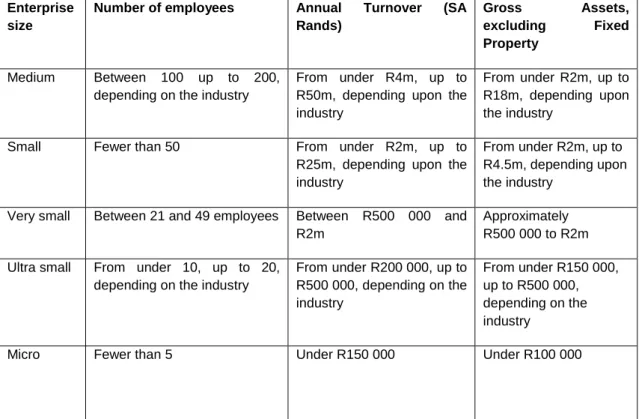
The broad structure of SMME in South Africa is categorised according to the size and also the sector is a very dynamic. Table 2.1 below provides a broad structure of SMMEs.
Table 2.1 Broad structure of Small, Medium and Micro Enterprises (SMMEs) Enterprise
size
Number of employees Annual Turnover (SA Rands)
Gross Assets, excluding Fixed Property
Medium Between 100 up to 200, depending on the industry
From under R4m, up to R50m, depending upon the industry
From under R2m, up to R18m, depending upon the industry
Small Fewer than 50 From under R2m, up to R25m, depending upon the industry
From under R2m, up to R4.5m, depending upon the industry
Very small Between 21 and 49 employees Between R500 000 and R2m
Approximately R500 000 to R2m
Ultra small From under 10, up to 20, depending on the industry
From under R200 000, up to R500 000, depending on the industry From under R150 000, up to R500 000, depending on the industry
Micro Fewer than 5 Under R150 000 Under R100 000
Source: Adapted from Falkena, Abedian, Von Blottnitz, Coovadia, Davel, Madungadaba, Masilela & Ress (2001).
The majority of the enterprises covered in the study fall into the very small and micro definition, while a few fall into the small and medium categories.
2.5 Micro enterprise
The Western Cape Provincial Economic Review and Outlook (WCPERO, 2007:160) states that a micro enterprise can be classified as a survivalist or a non-survivalist enterprise, in terms of the following criteria:
• Survivalists do not employ anyone, with examples of such entrepreneurs including hawkers, vendors, and spaza shop owners.
• Non-survivalist enterprises, which employ no more than four regular workers, form part of the informal economy.
The informal sector includes those business activities that are economical, but which, however, are not recorded in the national accounts, and which are not licensed. The role-players in the sector are likely to be surrounded by children, men, and older relatives. Commonly, the woman, who is the head of the family, is the driving force behind the business, providing the skills, the hard labour, and the strength required, as well as being steadfast, and longing to maintain their family survival (Morris, Jones & Nel, 2010: 3).
Formal and informal SMMEs are enormously important, in terms of job creation in the form of local jobs, and in relation to increasing the amount of local earnings accrued. The reason to be self-employed in the informal sector might be driven by economic factors, among others (Du Toit & Nerve, 2007:9). Moreover, in South Africa, it has been appraised that the informal sector comprises 51% of non-agricultural engagement (WCPERO, 2007:172). The informal sector in South Africa, in providing employment for South Africans, employs 12% of the labour force (Stats SA, 2011). The informal economy supplies a means of survival, rather than opportunities for entrepreneurs. The involvement in the business concerned creates a means of fighting poverty in order to survive (Charman, Petersen, Duda, Davids & Simons, 2012:2).
In South Africa, informal economy actors are entrepreneurs not by choice, but rather by opportunity, and are likely to take up formal employment where such opportunities arise. Due to the lack of formal sector opportunities and the limited
state of welfare, a large number of individuals, operating in terms of a small-scale, cash-based business, are defined as survivalist enterprises (Charman et al., 2012:2).
It is crucial, in understanding the needs of the businesses concerned, to maximise the effectiveness of resources in terms of the development of township businesses. Black residents, under the previous apartheid government, responded to gaps in the market in which they lived by identifying the existing needs, and by establishing their own system of commerce and services to cater to such needs (Racionzer, 2008:131). Currently, the informal sector does not seem to be growing; it appears to be inactive, neither creating as many jobs as in the formal sector, nor making as great a contribution to the provincial economy. On a national scale, it is the sector which, at the provincial level, reveals that the Western Cape’s informal sector is much smaller than that of the other provinces (WCPERO, 2007:154).
The Western Cape, therefore, is seen as having the smallest informal sector, and a large formal sector, comparative to the rest of the country. It is of concern that the informal sector does not contribute to employment and growth in the province. Notably, the shrinking in the size of the Western Cape‘s informal sector is not imitated nationally. The informal sector in the Western Cape, among all the provinces, makes the lowest contribution to the GDP. Thus, there is more that can be done to encourage, and to support, the informal sector. Those who are in the sector tend to be job creators, and they are likely to be able to transform their businesses into becoming both formal and sustainable (WCPERO, 2007:154).
Ngxiza (2011:11) suggests that, in Khayelitsha, the most dominant economic sector is still the survivalist, or informal sector. Still more needs to be done in this sector, however, as the amount of resources that are available are insufficient, so, therefore, more needs to be done for the development of the businesses concerned. Golden Future (2011:6) reveals that small informal businesses are a key to survivalist policies. In Khayelitsha, broadly speaking, there has been an increase in the size of the informal sector over the past decade. The literature suggests that, given the state of micro enterprises, the informal sector can act as a catalyst for innovation and job creation. In spite of the fact that informal traders
tend not to be in business out of choice, there is neither sufficient experience, nor skill, to run such businesses, which necessitates human resource training and development.
The national government hopes that small business will form part of the plan to remedy the problem of unemployment in South Africa. The government recognises that micro entrepreneurs play a major role in the economy. Tlhomola (2010:xxx) concludes that SMMEs have even more of a contribution to make in terms of providing employment opportunities than they do at present, and that they will be able to play an important role as an economic engine. Entrepreneurs break the cycle of poverty by creating jobs, so it is essential that the government should nurture and encourage the development of small business entrepreneurs, as is described below.
2.5.1 Business entrepreneurs as catalysts
The characteristics of small business are job creation, economic empowerment, and poverty reduction (NCR, 2011:7). SMMEs perform a vital role in any economy. In terms of lucrative growth policies in both developing, and developed, countries, SMMEs are given prominence, due to their labour absorptive capability, their involvement in the alleviation of destitution improvement and in providing work opportunities (Ndabeni, 2008:259).
Kerimova (2008:9) suggests that entrepreneurial innovation places an emphasis on the role of information and recognition, in terms of the process of market equilibration. The approach, which arises mostly from the work of Ludwig von Mises and Friedrich von Hakey, views the market as an entrepreneurially ambitious and equilibrating practice. Kerimova (2008:10) further asserts that competition is important, in terms of both idea and execution, and that it serves to emphasise the dynamic, and competitive, nature of the market’s entrepreneurial discovery process.
The evidence suggests that, in terms of being innovative, unique and creative, SMMEs should assist in the marketing of their business, especially in the light of the efforts that are made in this respect by their competitors. Tlhomola (2010:
xxviii) specifies that SMMEs need to be creative and innovative, in order for their business to succeed, and to survive. Job creation and poverty alleviation are two pressing challenges facing the South African government. According to Richards (2006:9), addressing the high unemployment rate and poverty levels has been hampered by the poorly developed entrepreneurial culture of job creation. The South African government recognises the major role that micro entrepreneurship plays in the economy. Entrepreneurs, through their business enterprise, can help to break the cycle of poverty, and to create jobs. Consequently, it is essential that government support should nurture and encourage the business entrepreneur’s efforts. Richards (2006:5) argues that there has been limited coordinated government support for micro entrepreneurship initiatives, other than the provision of general SMME assistance.
According to Kerimova (2008:1), to improve the poor entrepreneurship culture that currently exists, policy design should emphasise supporting and developing an entrepreneurial mind-set that will promote innovation, and sustainability. Isaacs, Visser, Friedrich and Brijal (2007:13) point out that economic growth remains a central issue in both developed, and developing, countries. They argue that particular interest should be focused on the role of entrepreneurship in opening and modernising economies. Kuratko and Hodgetts (2007:2) perceive entrepreneurs to be individuals who are capable of distinguishing opportunities from misperceptions, with the creation of entrepreneurships going beyond the mere formation of a business. The distinctiveness of pursuing prospects, of taking risks beyond preventative measures, and of having sufficient perseverance to push conceptions through to reality, are all hallmarks of entrepreneurial endeavour. Mahadea and Pillay (2008:11) have shown in their studies that the transition from poverty to wealth in most nations was achieved through the private sector, as well as through farmers, investors, and small and large business.
According to Orford and Wood (2006:3), small businesses make an important contribution to the South African economy, including that of the Western Cape. However, comparative literature from the international business community suggests that the rate of entrepreneurial activity in South Africa, including in the Western Cape, is significantly below that which is undertaken in other developing countries. In order to assist the informal sector, it is crucial to have an empowering
tool that caters for the unique sectoral needs. The obstacles, and challenges, of such businesses differ from one township area to another and from one informal settlement to another. Emphasis needs to be placed on the economic empowerment opportunities that are created through SMMEs, as it is critical to include more women in the sector. Women have been neglected in the past, but play a major role in their communities. The economic empowerment of women is discussed in detail below.
2.5.2 Economic empowerment of women
The economic empowerment of South African women is a fundamental issue in the South African government’s broader economic agenda; women have been disadvantaged, or disempowered, in the past. However, since women tend largely to dominate micro enterprises, their empowerment is crucial in any efforts that are aimed at growing the country’s small businesses (Ndabeni, nd.:11).
In South Africa, growing unemployment is a daunting economic problem. The issue of the marginalisation of women in particular has both political, and socio-economic, implications. There is still gender discrimination in labour, as there has been in the past; men are mostly involved in manufacturing and mining, whereas women are largely concentrated in the spheres of domestic work and child care. In business, some women are still locked into performing such traditional female activities as hawking, street trading, beer brewing, knitting, and other home-based trade tasks (Ndabeni, n.d.:11).
Von Broembsen (2008:13) asserts that women are more likely to operate their business in backyard shacks that are made from old corrugated iron and wooden planks. A slight improvement has occurred, in terms of the small amount of investment that has been made in human capital, in relation to survivalist endeavours. However, the chance to tackle other markets, in respect of SMMEs, is, as yet, slim. The informal trades tend to generate minimal returns, as they largely operate on the fringes of major economic sectors, and they tend only to serve the local, and, in most cases, very small markets (Ndabeni, n.d.:11).
It is, therefore, crucial that the enterprises that are operated by women, especially black women, should effectively contribute to growth in the South African economy. It is essential to infuse such enterprises with enthusiastic innovations and inventiveness. Furthermore, South African black people, and women in particular, tend to be under-represented among small business owners. The business involvement of both these groups is more likely to be limited by the scarcity of resources than other groups in the society. Hence, members of the two groups generally experience more negative returns than do their white male counterparts. With the fall of apartheid, young black South Africans, and mainly youthful black women have ventured into entrepreneurship and have become job creators, rather than job seekers. Women often play significant roles as family providers and as breadwinners in their households. (Ndabeni, n.d.:11).
According to the South African Constitution, and to local government laws, the CoCT municipality has a responsibility to develop the socio-economic profile of Khayelitsha, as well as to create jobs, to develop skills, and to fight poverty (Ngxiza, 2011:2). Government support should be gained by means of implementing tailor-made programmes to assist the enterprises concerned. Such support is dealt with in the following section.
2.6 Government support of SMMEs
The South African government has some measures in place to develop, and to nurture SMMEs. The government has a mandate to promote such business, specifically in disadvantaged communities. Hence, there are policies and regulations in place that support SMMEs through establishments that offer both financial and non–financial support. The government plays an important role in providing support to small businesses. However, although there are already programmes in place to assist small businesses, more still needs to be done in this regard. The success of these businesses relies on the support that they receive from the government, which is described in more detail in sections 2.6.1 to 2.6.5 below.