The Correctness Criterion for Deferred Update Replication
Tadeusz Kobus, Maciej Kokoci´nski, Paweł T. Wojciechowski
Institute of Computing Science, Poznan University of Technology, Poland
{Tadeusz.Kobus,Maciej.Kokocinski,Pawel.T.Wojciechowski}@cs.put.edu.pl
Abstract
In this paper we proposeupdate-real-time opacity, a new correct-ness criterion based on opacity, that precisely describes the guaran-tees offered by Deferred Update Replication (DUR) protocol. We specify update-real-time opacity as a member of theopacity fam-ily of properties, which we also introduce in this paper. We provide additional properties (as part of theopacity family), which relax to various extent the transaction order requirements of opacity, in order to embrace a wider class of strongly consistent transactional systems. In the paper we discuss the relation between the mem-bers ofopacity and other popular correctness criteria used in the context of transactional systems.
Keywords correctness, deferred update replication, opacity
1.
Introduction
Replication is an established technique used for building depend-able and highly availdepend-able services. In a replicated system, a service is deployed on multiple machines whose actions are coordinated, so that a consistent state is maintained across all the service repli-cas (processes). In this way the clients, that can issue requests to any of the replicas, are served despite of (partial) system failures.
Deferred Update Replication (DUR) [5] is one of the most widely employed protocols for concurrency control in database and distributed transactional memory (DTM) systems that use replica-tion for achieving high availability.1 In DUR, every request sent
by a client to any of the replicas, is executed by the replica that received it as an atomic transaction, and then, the resulting up-dates are broadcast to all processes, so they can update their state accordingly. However, upon receipt of a message with a transac-tion’s update, the processes do not update their state right away. In order to ensure that consistency is preserved across the system, all processes (independently) execute a certification procedure that checks if the transaction read any stale data. If so it has to be rolled back and restarted. Since all updates are delivered in the same order (by using, e.g., a Total Order Broadcast protocol [7]), all processes
1In this paper, we assume DUR based on Total Order Broadcast, as in [5].
However, our results do not depend on the way DUR is implemented. For a broader discussion on various implementations of DUR, see Section 2.
Permission to make digital or hard copies of all or part of this work for personal or classroom use is granted without fee provided that copies are not made or distributed for profit or commercial advantage and that copies bear this notice and the full citation on the first page. Copyrights for components of this work owned by others than ACM must be honored. Abstracting with credit is permitted. To copy otherwise, or republish, to post on servers or to redistribute to lists, requires prior specific permission and/or a fee. Request permissions from [email protected].
TRANSACT ’15, July 15–16, 2015, Portland, Oregon, USA. Copyright c2015 ACM 978-1-nnnn-nnnn-n/yy/mm. . . $15.00. http://dx.doi.org/10.1145/nnnnnnn.nnnnnnn
change their state in the same way. Since read-only transactions do not modify the system’s state in any way, they do not require a distributed certification. Instead, only the process that executed a read-only transaction, certifies it to ensure that it has not read any stale data.
Opacity[9] [10] is often a desired property for transactional systems. Systems that satisfy opacity guarantee that no transaction (no matter whether live, aborted or committed) ever reads stale or inconsistent data. DUR, in fact, guarantees that no transaction ever reads inconsistent data, but allows live, aborted and read-only transactions to observe stale data.
To better understand why DUR breaks opacity, consider a sys-tem consisting of a few replicas (servers), where one of them is lagging behind. Clientc1interacts with an up-to-date replica, while clientc2interacts with the lagging one. Now, suppose thatc1 exe-cutes an update request (an updating transaction) and receives feed-back from its replica. This update does not reachc2’s replica be-cause of the lag. If the two clients communicate with each other,c2 may notice it is missing an update, or even worse, it may not notice, but still take actions which depend on the update. Indeed, ifc2starts a new transaction on its replica, contrary to its expectations, it will not be able to observe the update. If the transaction undergoes cer-tification it will be aborted, but still up to some point in time (possi-bly until commit) it will execute on a stale snapshot.2Moreover, if
the transaction executed byc2is a query (a read-only transaction), the transaction may even commit (no inter-process synchronization is required for read-only transactions). This clearly stands in con-trast with thereal-time orderproperty guaranteed by opacity, i.e. if one transaction precedes another, all its effects must be visible to the latter. This requirement of opacity is usually difficult and costly to ensure in a distributed environment. The question is, then, which property can we use to properly describe what DUR actually guar-antees?
Naturally, DUR guarantees serializability [18], a much weaker property compared to opacity. Serializability only requires that the execution of transactions is equivalent to some serial execution of all committed transactions. It does not impose any limitations on the order in which the transactions are serialized. In particular, in a serializable execution it is possible for two transactions executed sequentially by the same process to appear as if they were executed in a different order. Moreover serializability does not provide any safety guarantees to live or aborted transactions.
In this paper we proposeupdate-real-time opacity, a correctness criterion based on opacity, which precisely describes the guarantees offered by DUR. We present update-real-time opacity as a member of theopacityfamily of properties, that we also introduce in this paper. By providing a set of closely related properties that relax transaction order requirements of opacity to various extent, we are
2To prevent live transactions from reading stale data, the system would have
able to embrace a wider class of strongly consistent transactional systems. We show the relation between the properties and discuss how different order requirements impact the perception of the sys-tem’s behaviour from the clients’ point of view. We also prove that DUR relying on TOB satisfies update-real-time opacity.
The rest of the paper is structured as follows. In Section 2 we discuss the work relevant most closely to ours. Then, in Section 3 we provide the formal definition of theopacity family of proper-ties. Next, in Section 4 we briefly describe DUR and show why it guarantees update-real-time opacity. Finally, we conclude in Sec-tion 5.
2.
Related Work
DUR, which we explain in more detail in Section 4, is the most basic protocol for achieving multi-primary-backup replication [5]. Various flavours of DUR are implemented in several commercial database systems, including Ingress, MySQL Cluster and Oracle. These implementations use 2PC [1] as the atomic commitment protocol. In this paper, we consider DUR based on Total Order Broadcast (TOB) [7]. This approach is advocated by several authors because of its nonblocking nature and predictable behaviour (see [2, 19, 20] among others). Most recently, it has been implemented in D2STM [6] and Paxos STM [23] [15]. It has also been used as part of the coherence protocols of S-DUR [22] and RAM-DUR [21].
There are a number of optimistic replication protocols that have their roots in DUR, e.g., Postgres-R [14] and Executive DUR [17]. The differences between these systems lie not in the general ap-proach to processes synchronization, but in the way the transaction certification is handled. Both of these protocols, similarly to DUR, certify read-only transactions without inter-process synchroniza-tions. It means that they are not opaque. However, one can show that they guarantee update-real-time opacity, similarly to DUR.
Over the years a multitude of correctness criteria have been de-fined for strongly consistent transactional systems. Serializability is the most basic of them all [18]. It specifies that all committed transactions are executed as if they were executed sequentially by a single process. Strict serializability [18] additionally requires that the real-time order of transaction execution is respected (i.e. the execution order of non-overlapping committed transactions is pre-served). Update serializability [12] is very similar to serializability, but allows read-only transactions to observe different (but still le-gal) histories of the already committed transactions.
All three correctness criteria mentioned above regard only com-mitted transactions and say nothing about live or aborted transac-tions. As briefly discussed earlier, sometimes this is not enough. Therefore, new correctness criteria emerged that formalize the be-haviour of all transactions in the system, including live transactions. Although some of them, such as recoverability, avoiding cascading aborts or strictness [1] specify the behaviour of read and write for both live and completed transactions, but they say nothing about global ordering of transactions (unlike serializability and proper-ties similar to it). This, in turn, limits their usefulness in the context of strongly consistent transactional systems. Therefore, our atten-tion focuses on properties that maintain (in most cases) a global serialization for all transactions.3
The following properties maintain a global serialization only for some of the transactions. Extended update serializabilty [12] ensures update serializability for both committed and live trans-actions. Therefore, it features a global serialization for all the
up-3Interestingly, the majority of correctness criteria discussed below were
for-mulated with a local environment in mind, where communication between processes is relatively inexpensive. Therefore they are not suitable for using in a distributed environment.
dating transactions (read-only transactions may observe a differ-ent serialization). Virtual world consistency [13] allows an aborted transaction to observe a different (but still legal) history.
Similarly as extended update serializabilty extends update seri-alizability, opacity [9] [10] extends strict serializability to guaran-tee live transactions to always read a consistent state. It features a global serialization of all transactions. Rigorousness [4], TMS2 [8] and DU-opacity [3] offer even stronger guarantees. They restrict some particular sets of histories compared to opacity: rigorousness and TMS2 impose stronger requirements on the ordering of concur-rent transactions, while DU-opacity explicitly requires that no read operation ever reads from a transaction that is not commit-pending or committed. Moreover, all these three properties are defined only in a model that assumes read-write registers. TMS1 [8] was pro-posed to slightly relax opacity. It allows not only each transaction, but even each operation, to observe a different view of past transac-tions. The possible histories are, however, restricted by a few con-ditions, which enforce quite strong consistency (despite lack of a global serialization). All of the properties mentioned above, includ-ing opacity, require that the real-time order of transaction execution is respected, similarly as in case of strict-serializability.
Update-real-time opacity proposed in this paper can be seen as a blend of various features of the above properties. On one hand it re-sembles (extended) update serializability, because it differentiates between updating and read-only transactions. On the other hand, it guarantees that all transactions (regardless of their type or current state of execution), share a common equivalent history of transac-tions’ execution, as in opacity. However, in update-real-time opac-ity only committed updating transactions need to respect real-time order of transaction execution. Live and read-only transactions can operate on a stale snapshot of shared objects.
Theopacity family of properties currently features six mem-bers, ordered by the strength of offered guarantees. The strongest property of them all isreal-time opacity which is equivalent to opacity defined in [10].Commit-real-time opacityallows live and aborted transactions to read stale (but still consistent) data. Write-real-time opacityfuther relaxes real-time order guarantees on trans-actions that are knowna priorito be read-only.Update-real-time differs from write-real-time opacity by allowing all read-only trans-actions to break real-time order.Program order opacityrequires real-time order only for transactions executed by the same process. In this sense, it is similar to virtual time opacity [13]. However, unlike virtual time opacity, program order opacity does not require that each live transaction recognizes its causal past across all pro-cesses. Finally,arbitrary order opacitymakes no assumptions on the relative ordering of transactions. In this respect, it is similar to serializability. However, it also ensures that live transactions always observe a consistent view of the system’s state.
3.
Opacity
We follow the formal framework of opacity from [10], but we extend it to accommodate several new ordering relations. We also borrow some definitions from [11].
We consider a system consisting of a finite setP={p1, p2, ...,
pn}ofnprocesses. Processes are independent and execute steps in parallel (or alternately). The system manages a set X = {x1, x2, ...}of transactional objects calledt-objects. Each t-object has a unique identity and a type. Each type is defined by a sequen-tial specificationthat consists of:
• a setQof possible states for an object, • an initial stateq0∈Q,
• a setINVof operations that can be applied to an object, • a setRESof possible responses an object can return, and
•a transition relationδ⊆Q×INV ×RES×Q.
This specification describes how the object behaves if it is accessed by one operation at a time. If(q,op,res, q0) ∈δ, it means that a possible result of applying operationop to an object in stateqis that the object moves to stateq0and returns the responseresto the process that invokedop. For simplicity, we assume that operation arguments are encoded in the operation itself.
We say that an operationopisupdatingfor a given stateq∈Q, if and only if there exists(q,op,res, q0)∈δ, such thatq6=q0. We say thatopisread-only, if and only if there does not exist a stateq
for whichopis updating.
We distinguish a setT ={T1, T2, ...}of transactions. A trans-action is an abstract notion fully controlled by some process. For convenience, we say that a transactionTk performs some action when a given process executes this action as part of the trans-actionTk. T-objects can only be accessed through the TM inter-face (see below) and by any transaction Tk. A transaction that only executes read-only operations is called aread-only transac-tion. Otherwise, we say that it is anupdating transaction. In gen-eral, it is impossible to tell whether a transaction is read-only be-fore it finishes its execution. However, we distinguish a special class of transactions calleddeclared read-only(DRO), which are knowna priorito be read-only (they are allowed to execute only read-only operations on t-objects). Then, for any such transaction
Tk, we writeDRO(Tk) =true. Every transactionTkfor which DRO(Tk) =trueis read-only, but the opposite is not necessarily true.
We consider a TM interface consisting of the following opera-tions:
•texec(Tk, x.op)→ {v, Ak}which executes an operationopon a t-objectx, of some typeT = (Q, q0,INV,RES, δ), within a transactionTkand as a result produces a return valuev∈RES or the special valueAk;
•tryC(Tk) → {Ak, Ck}which attempts to commit a transac-tionTk, and returns the special valuesAkorCk;
•tryA(Tk) → Ak which aborts a transactionTk and always returnsAk.
The special valueAk, that can be returned by all the operations, indicates that the transactionTk has been aborted. The valueCk returned by the operation tryC(Tk) means thatTk had indeed committed. For any t-object of typeT = (Q, q0,INV,RES, δ),
Ak∈/RES, andCk∈/RES. A response event with a return value
AkorCkis called, respectively, anabort eventorcommit event(of transactionTk). The commit or abort events of a transactionTkare always the last events forTk.
When a process pi executes a TM operation op, it invokes an eventinvi(op)and expects a response eventrespi(v). A pair of such events is called a(completed) operation executionand is denoted byop→iv. An invocation event that is not followed by a response event is called apending operation execution.
We model the system execution as a (totally ordered) sequence of events called ahistory. Naturally, histories respect program order (events executed by the same process are ordered according to their execution order), and also causality between events across processes (if two events executed in the system are causally related, one will precede the other in the history). Events that happen in parallel (in separate processes), and that are not causally dependent, can appear in a history in an arbitrary order.4 For any history
4An alternative approach to model the system execution would be to
em-ploypartially ordered sets(or simplyposets). In fact, this approach is equiv-alent to ours, because a poset can be represented by a set of totally ordered histories (and we always analyze all the possible histories a given system
H, we denote byH|pi the restriction of H to events issued or received by the process pi. Similarly, we denote by H|Tk the restriction of H to events concerningTk, i.e. invocation events of the operationstexec(Tk, x.op), tryC(Tk), tryA(Tk)or their corresponding response events (for any t-objectxand operation op). We say that a transaction Tkis inH ifH|Tkis not empty. Letxbe any t-object. We denote byH|xthe restriction of H to events concerningx, i.e. the invocation events of any operation texec(Tk, x.op)and their corresponding response events (for any transactionTkand operationoponx).
A history H is said to bewell-formed if, for every process
pi,H|piis a (finite or infinite) sequence of operation executions, possibly ending with a pending operation execution. We consider only well-formed histories.
LetHbe any history. We say that a transactionTkiscommitted inH, ifH|Tkcontains operation executiontryC(Tk)→iCk(for some processpi). We say that transactionTkisabortedin H, if
H|Tkcontains response eventrespi(Ak)from any TM operation (for some processpi). If an aborted transactionTk contains an invocation of the operationtryA(Tk) it is said to beaborted on demand, otherwise we say that transactionTkisforcibly abortedin
H. A transactionTk inH that is committed or aborted is called completed. A transaction that is not completed is calledlive. A transaction Tk is said to be commit-pending in a history H, if
H|Tkhas a pending operationtryC(Tk)(Tkinvoked the operation tryC(Tk), but has not received any response from this operation).
Let H be any history. We say that H is completed if every transactionTk inH is completed. A completionof a historyH is any (well-formed) complete historyH0such that:
1.His a prefix ofH0, and
2. for every transactionTkinH, sub-historyH0|Tkis equal to one of the following histories:
•H|Tk, whenTkis completed, or
•H|Tk· htryA(Tk) →i Aki, for some processpi, whenTk is live and there is no pending operation inH|Tk, or •H|Tk· hrespi(Ak)i, whenTkis live and there is a pending
operation inH|Tkinvoked by some processpi, or •H|Tk· hrespi(Ck)i, whenTkis commit-pending for some
processpi.
Let Ti and Tj be any two transactions in some history H, whereTiis completed. We define the following order relations on transactions inH:
• real-time order≺r
H — we say that Ti ≺rH Tj (read asTi precedesTj) if the last event ofTiprecedes the first event of
Tj. We call≺r
Hthereal-time orderrelation inH; • commit-real-time order≺c
H — we say thatTi ≺cH Tjif (1)
Ti ≺rH Tj, and (2) bothTiandTjare committed, or bothTi andTjare executed by the same processpi. We call≺cH the commit-real-time orderrelation inH;
• write-real-time order ≺w
H — we say thatTi ≺wH Tj if (1)
Ti ≺rH Tj, and (2) bothTiandTjare not declared read-only and are committed, or bothTiandTjare executed by the same processpi. We call≺w
Hthewrite-real-time orderrelation inH; • update-real-time order≺u
H — we say thatTi ≺uH Tj if (1)
Ti ≺rH Tj, and (2) both Ti and Tj are updating and are
can produce). We argue, that an approach based on totally ordered histories is more elegant, because it better matches the sequential specifications used for t-objects. We also want to stay close to, and remain compatible with, the original formal framework of opacity presented in [10].
committed, or bothTiandTjare executed by the same process
pi. We call≺u
Htheupdate-real-time orderrelation inH; •program order≺pH— we say thatTi≺pHTjifTi≺rH Tjand
bothTiandTjare issued by the same processpi. We call≺pH theprogram orderrelation inH.
•arbitrary order≺a
H— equivalent to∅. NeverTi≺aH Tjholds true. We call≺a
Hthearbitrary orderrelation inH.
Let H, H0 be two histories. We say that H0 respects the
order ofHiff≺
H⊆≺
H0. For any historyHthe following holds: ∅=≺a H⊆≺ p H⊆≺ u H⊆≺wH⊆≺cH⊆≺rH.
We say thatTiandTjareconcurrentif neitherTi ≺rH Tjnor
Tj ≺rH Ti. We say that any historyHist-sequentialifHhas no concurrent transactions.
LetS be any completed t-sequential history, such that every transaction inS, possibly except the last one, is committed. We say thatS ist-legalif, for every t-objectx, the subhistoryS|x= htexec(Tk, x.op1) →i res1,texec(Tl, x.op2) →j res2, ...i(for any processespi,pj, ..., and for any transactionsTk,Tl, ...) satisfies the sequential specification of x, (Q, q0,INV,RES, δ), in the following sense: there exists a sequence of statesq1, q2, ...inQ, such that(qi−1,opi,resi, qi)∈δfor anyi.
Let S be any completed t-sequential history. We denote by visibleS(Tk)the longest subsequenceS0ofSsuch that, for every transactionTiinS0, either (1)i=k, or (2)Tiis committed andTi precedesTk. We say that a transactionTkinSist-legalinS, if the historyvisibleS(Tk)is t-legal.
We say that historiesH andH0 areequivalent, and we write
H≡H0, if for every transactionTkinT,H|Tk=H0|Tk.
Definition 1. A finite historyHisfinal-stateopaqueif there exists a t-sequential historyS equivalent to any completion ofH, such that:
1. every transactionTkinSis t-legal inS, and 2.Srespects the(order) ofH.
Definition 2. A historyHisopaqueif every finite prefix ofHis final-stateopaque.
In the above two definitionscan be either real-time, commit-real-time, write-commit-real-time, update-commit-real-time, program order, or arbi-trary order. Therefore we obtain a whole family ofopacity proper-ties. Real-time opacity is equivalent to opacity. By substituting real-time with weaker ordering guarantees we obtain gradually weaker properties with arbitrary order opacity being the weakest one.
Real-time opacity, which is equivalent to the original definition of opacity [10], requires that all transactions, regardless of their state of execution (live, aborted, commit-pending or committed) al-ways observe a consistent and the most recent view of the system. Commit-time opacity relaxes opacity, by restricting the real-time order to only committed transactions (thus allowing aborted transactions to observe stale, but consistent data). Write-real-time opacity and update-time opacity additionally relax the real-time order requirement on transactions that, respectively, are known a priorito be read-only (are declared read-only), or do not perform any updating operations (are read-only). Program order opacity en-sures that transactions respect program order (i.e. the order of ex-ecution of all local transactions has to be respected across all pro-cesses). Finally, arbitrary order opacity imposes no requirements on the order of transactions’ execution, as long as all transactions are t-legal.
Write-real time opacity is suitable only for systems that can dis-tinguish between transactions that did not perform any updating operations and transactions knowna priorito be read only (only for the latter ones the DRO predicate holds). In such systems, the additional information about transactions can be either
pro-vided by the programmer or can be deduced prior to a transaction execution from the transaction code itself. By manually marking some transactions as declared read-only, a programmer can decide whether a read-only transactionTkmay read-stale data (DRO(Tk) holds) or has to respect real-time order (DRO(Tk)does not hold). We can make the following two observations. Firstly, given a his-toryH which is write real-time opaque, if there are no transac-tions for which theDROpredicate holds,His also commit-real-time opaque. Secondly, given a historyHthat is update real-time opaque, if for all read-only transactions the predicateDROholds,
His also write real-time opaque.
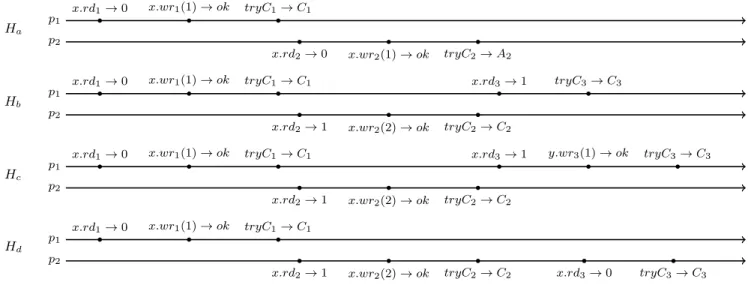
Figure 1 illustrates the relations between the members of the
opacity family by example. It depicts four histories (two variants of historyHbcan be deduced depending on the value ofDRO(T3)). Each history represents a case when one property is satisfied while another, a stronger one, is not.
HistoriesHaandHb represent our main motivation: enabling aborted and read-only transactions to read from a stale (but consis-tent) snapshot. Let us first considerHa. TransactionsT1andT2 ac-cess the same t-objectx.T1precedesT2, howeverT2reads a stale value ofx, and subsequently aborts. The only possible serializa-tion ofHain which all transactions are t-legal ishHa|T2·Ha|T1i. This serialization does not respect the real-time order, as clearly
T1 ≺rHa T2. Therefore,Habreaks (real-time) opacity. It satisfies,
however, commit-real-time opacity, becauseT2 is aborted and it may observe stale data.
In historyHb, transactionT3, which does not perform any up-dating operations, is preceded by transactionT2. However,T3does not observe the operationx.wr2(2)ofT2, as its operationx.rd3 re-turns the value written byT1. Therefore,Hbalso breaks real-time opacity. Moreover, it breaks commit-real-time opacity. On the other hand,Hbsatisfies write-real-time opacity whenDRO(T3)holds, and update-real-time opacity whenDRO(T3)does not hold.
In historyHc, similarly as in the previous example,T3 does not obey the real-time order. This time, however,T3is an updating transaction. This causes the history to satisfy only program order opacity and not update-real-time opacity, nor any stronger property. Finally, in historyHd, even the program order is not preserved, as
p2’s transactionT3 does not observe the effects of another trans-action (T2) executed byp2earlier. This history, however, satisfies arbitrary order opacity, as the transactionsT2 andT3 can be re-ordered, yielding an equivalent legal execution. This trait makes arbitrary order opacity similar to serializability.
4.
Deferred Update Replication
In this section, we briefly describe a basic version of the De-ferred Update Replication protocol and then show why it guaran-tees update-real-time opacity. We follow the description of DUR from [16].
4.1 Specification
DUR typically assumes full replication of shared data items (or shared objects), on which transactions operate. In our pseudocode, which is presented in Algorithm 1, each shared object is identified by a unique value of a special typeobjectId. For simplicity, we assume that each shared object can only be read or written to.
Transactions are submitted to the system by clients. Each re-quest consists of three elements:code, which specifies the oper-ations to be executed within a transaction,args, which holds the arguments needed for the code execution andclock, a special inte-ger value necessary for ensuring that all earlier requests issued by the client are serialized before the most recent client’s request.
Each process maintains two global variables. The first one,LC, represents the logical clock which is incremented every time a process applies updates of a new transaction (line 57).LCallows
Ha p1 p2 x.rd1→0 x.wr1(1)→ok tryC1→C1 x.rd2→0 x.wr2(1)→ok tryC2→A2 Hb p1 p2 x.rd1→0 x.wr1(1)→ok tryC1→C1 x.rd2→1 x.wr2(2)→ok tryC2→C2 x.rd3→1 tryC3→C3 Hc p1 p2 x.rd1→0 x.wr1(1)→ok tryC1→C1 x.rd2→1 x.wr2(2)→ok tryC2→C2 x.rd3→1 y.wr3(1)→ok tryC3→C3 Hd p1 p2 x.rd1→0 x.wr1(1)→ok tryC1→C1 x.rd2→1 x.wr2(2)→ok tryC2→C2 x.rd3→0 tryC3→C3
Figure 1. Example histories for two processesp1andp2. HistoryHais commit-real-time opaque, but not real-time opaque. HistoryHbis update-real-time opaque, but not commit-real-time opaque. Additionally,Hbis write-real-time opaque, iffDRO(T3)inHb. HistoryHcis program order opaque, but not update-real-time opaque. HistoryHdis arbitrary order opaque, but not program order opaque.
the process to track whether its state is recent enough to execute the client’s request (line 19). Additionally,LCis used to mark the start and the end of the transaction execution (lines 24 and 54). The transaction’s start and end timestamps, stored in the transaction descriptor(line 16), allow us to reason about the precedence order between transactions. LetHbe some execution of the algorithm,
TiandTjsome transactions inHandtiandtjbe their transaction descriptors, respectively. Then,ti.end ≤ tj.start holds only if
Ti ≺rH Tj.5 The second variable,Log, is a set used to store the transaction descriptors of committed transactions. Maintaining this set is necessary to perform transaction certification.
The DUR algorithm detects any conflicts among transactions by checking whether a given transactionTkthat is being certified read any stale data. The latter occurs whenTkread any shared objects that have been modified by a concurrent but already committed transaction. For this purpose, DUR traces the accesses to shared ob-jects independently for each transaction. The identifiers of obob-jects that were read and the modified objects themselves are stored in private, per transaction, memory spaces:readsetandupdates. On every read, an object’s identifier is added to thereadset (line 30). Similarly, on every write a pair of the object’s identifier and the cor-responding object is recorded in theupdatesset (line 28). Then, the
CERTIFYfunction compares the givenreadsetagainst theupdates of all the committed transactions inLogthat are concurrent with the tested transaction. If it finds any non-empty intersection of the sets, the outcome is negative. Otherwise, it is positive (no conflicts detected, the transaction is certified successfully). Note that every time a transaction reads some shared object, a check against con-flicts is performed (line 31). This wayTkis guaranteed to always read from a consistent snapshot. When a conflict is detected,Tkis aborted and forced to retry.
When a transaction’s code completes, the COMMIToperation (line 35) is used to end the transaction and initiate the committing phase, which can be explained as follows. IfTkis a read-only trans-action (Tkdid not modify any objects), it can commit straight away,
5Moreover, if bothT
iandTjare committed updating transactions,Ti≺rH
Tj andti.end > tj.start, thenTiandTj must not be in conflict (as otherwiseTjwould be aborted).
without performing any further conflict checks or process synchro-nization (lines 36–37). A read-only transaction does not need to perform certification as the possible conflicts would have been de-tected earlier, upon read operations (line 31). On the other hand, for updating transactions, first, the local certification takes place (line 38), which is not mandatory, but allows the process to detect conflicts earlier, and thus sometimes avoid costly network commu-nication. Next, the transaction’s descriptor containingreadset and updatesis broadcast to all processes using TO-BROADCAST(line 40). The message is delivered in the main thread, where the final certification takes place (line 52). Upon successful certification of transactionTk, processes apply the updates performed byTkand commit it (lines 54–57). Otherwise,Tkis rolled back and reexe-cuted by the same process.
To manage the control flow of a transaction, the programmer can use two additional operations:ROLLBACKandRETRY, whose se-mantics is similar as in transactional memory systems. TheROLL
-BACKoperation (line 46) stops the execution of a transaction and revokes all the changes it performed so far. TheRETRYoperation (line 48) forces a transaction to rollback and restart.
For clarity, we made several simplifications. Firstly, note that the operations onLC(lines 24, 54, 57),Log(lines 10 and 55) and the accesses to transactional objects (lines 7 and 56) have to be synchronized. For simplicity, a single global lock is used. For better performance, the implementation can rely on fine-grained locks. Secondly, in our pseudocode,Logcan grow indefinitely. In reality, Log can easily be kept small by garbage collecting information about the already committed transactions that ended before the oldest live transaction started its execution in the system.
In the presented algorithm, we use the same certification proce-dure for both the certification test performed upon every read oper-ation (line 31) and the certificoper-ation test that happens after a trans-action descriptor is delivered to the main thread (line 52). In prac-tice, however, doing so would be very inefficient. It is because for every read operation, we check for the conflicts against all the con-current transactions (line 10), thus performing much of the same work again and again. However, these repeated actions can be eas-ily avoided by associating the accessed shared objects with version
Algorithm 1Deferred Update Replication for processpi 1: integerLC←0
2: setLog← ∅
3: functionGETOBJECT(txDescriptort, objectIdoid)
4: if(oid, obj)∈t.updatesthen
5: value←obj
6: else
7: value←retrieve objectoid
8: returnvalue
9: functionCERTIFY(integerstart, setreadset)
10: lock{L← {t∈Log:t.end > start} }
11: for allt∈Ldo
12: writeset← {oid:∃(oid, obj)∈t.updates}
13: ifreadset∩writeset6=∅then
14: returnf ailure
15: returnsuccess
Threadqon requestrfrom clientc(executed on one replica)
16: txDescriptort← ⊥ // type: record (id, start, end, readset, updates)
17: responseres← ⊥ 18: uponINIT
19: wait untilLC≥r.clock
20: raiseTRANSACTION
21: return(id, LC, res)to clientc
22: uponTRANSACTION
23: t←(a new uniqueid,0,0,∅,∅)
24: lock{t.start←LC}
25: res←executer.codewithr.args
26: COMMIT()
27: uponWRITE(objectIdoid, objectobj)
28: t.updates← {(oid0, obj0)∈t.updates:oid06=oid} ∪{(oid, obj)}
29: uponREAD(objectIdoid)
30: t.readset←t.readset∪ {oid}
31: lock{ifCERTIFY(t.start,{oid})=f ailurethen
32: raiseRETRY
33: else
34: returnGETOBJECT(t,oid)}
35: procedureCOMMIT
36: ift.updates=∅then
37: return to INIT
38: ifCERTIFY(t.start, t.readset)=f ailurethen
39: raiseRETRY
40: TO-BROADCASTt
41: wait foroutcome
42: ifoutcome=f ailurethen
43: raiseRETRY
44: else //outcome=success
45: return to INIT
46: uponROLLBACK
47: stop executingr.codeand return to INIT
48: uponRETRY
49: stop executingr.code
50: raiseTRANSACTION
The main thread of DUR(executed on all replicas)
51: uponTO-DELIVER(txDescriptort)
52: outcome←CERTIFY(t.start, t.readset)
53: ifoutcome=successthen
54: lock{t.end←LC
55: Log←Log∪ {t}
56: applyt.updates
57: LC←LC+ 1}
58: iftransaction witht.idexecuted locally by threadqthen
59: passoutcometo threadq
number equal to the value ofLCat the time the objects were most recently modified.
4.2 Correctness
Now we show that DUR indeed satisfies update-real-time opacity.
Theorem 1. Deferred Update Replication satisfies update-real-time opacity.
Proof sketch.In order to prove that DUR satisfies update-real-time opacity, we have to show that for every historyH produced by DUR, there exists a sequential historyS equivalent to some com-pletion ofH, such thatSrespects the update-real-time order ofH
and every transactionTkinSis t-legal inS.
Informally, we have to prove that for any execution historyHof DUR there exists a sequential historySsuch that: (1) all updating transactions inS are ordered in a way that respects the real-time order of their original execution, (2) S reflects the transaction execution order of every process (program order) and (3) every transactionTk (no matter its state of execution) always observes a consistent state of the system, i.e., inS, every read operation of
Tkon each t-objectxreturns the value stored by the most recent preceding write operation onxof some committed transaction (or
Tkitself).
Now, we show how to construct a sequential historySfrom any executionH, such thatS satisfies (1), (2) and (3). Letupdate :
N→ T be a function that maps the valuesLChave taken during the execution to committed updating transaction which set that particular value. Let S = hH|update(1)·H|update(2)·...i. This waySincludes the operations of all the committed updating transactions inH. Now, let us add the rest of transactions fromH
toSin the following way. For every such a transactionTkwith a transaction descriptortk, find a committed updating transactionTl with a transaction descriptortlinS, such thattk.start =tl.end, and insertH|Tk immediately afterTl’s operations in S. If there is no such transactionTl(tk.start = 0), then addH|Tk to the beginning ofS. In case of a process that executed multiple such transactions with the samestarttimestamp, rearrange them inS
according to the order in which they were executed by the process. Let us now see why S satisfies (1). All committed updating transactions are serialized inS according to the order in which they modifiedLCupon commit. This order is established by TOB. Consider two committed updating transactionsTiandTjinS, such thatTi ≺rH Tj. It means that, the first operation ofTjinH must have appeared after the commit ofTi. Therefore,Timust have been broadcast (and delivered by the majority of processes) by TOB beforeTjwas broadcast.
Now, let us consider (2). Trivially, S respects program order for all committed updating transactions (≺pH⊆≺
r
H). In order to show whyS respects program order also for other transactions, let us consider two transactionsTi and Tj (with transaction de-scriptorstiandtj) executed by the same processpi. Since, a pro-cess can execute only one transaction at a time, eitherTi ≺rH Tj orTj ≺rH Ti. Without loss of generality, let us assume the for-mer holds. Since,LC increases monotonically during the execu-tion,ti.start≤tj.start. Ifti.start< tj.start, then, according to the procedure described earlier,Tiwas inserted after a committed updating transactionTkwith anend timestamp equal toti.start (orTi was inserted at the beginning of S), and Tj was inserted after a committed updating transactionTlwith anend timestamp equal totj.start. Thus,Tkmust precedeTlinS(orTkdoes not
exist), and soTihas to precedeTjas well. On the other hand, if
ti.start=tj.start, then, according to the procedure, we rearrange
TiandTjinSaccording to the order in which they were executed bypi, thus explicitly satisfying (2).
The proof of (3) is based on the following two observations. Firstly, every process maintains only the most recent value of every t-object. It means that if some transactionTk executed by some process pi reads a t-objectx, the read value either is the initial state of x, has been written by Tk, or has been written by the most recently committed transaction that modifiedxand whose updates have been applied to the state ofpi. Secondly, before any transactionTkcan read some t-object, it has to ensure that it is not about to read from a concurrent but already committed transaction. An attempt to read an inconsistent value results in a rollback and restartTk. Since the order of updating transactions inS (and the order of every write operation) is equivalent to the order in which updates are applied to the local state, (3) is satisfied for every transaction inH.
Since for every execution historyH of DUR we can find an equivalent sequential historySthat satisfies (1), (2) and (3), DUR guarantees update-real-time opacity.
5.
Conclusions
In this paper we tackled the problem of opacity being an inade-quate correctness criterion for Deferred Update Replication proto-col, typically used for achieving consistency in transactional dis-tributed systems. Our new property, called update-real-time opac-ity, precisely describes the characteristics of DUR by relaxing real-time order requirements for transactions that do not perform any updating operations. Update-real-time opacity is suitable not only for describing the behaviour of DUR but also of similar replication protocols such as Postgres-R and EDUR.
We described update-real-time opacity as a member of a new
opacity family of properties whose members relax time ordering requirements of opacity to various extent. This way we are able to formalize the behaviour of a wider class of strongly consistent transactional systems.
In the future, we plan to extend the family of properties based on opacity to account for other replication protocols, including the eventually consistent ones.
Acknowledgments
The project was funded from National Science Centre funds granted by decision No. DEC-2012/07/B/ST6/01230.
References
[1] P. A., Bernstein, V. Hadzilacos, and N. Goodman. Concurrency con-trol and recovery in database systems. Addison-Wesley, 1987. [2] D. Agrawal, G. Alonso, A. E. Abbadi, and I. Stanoi. Exploiting atomic
broadcast in replicated databases (extended abstract). InProc. of Euro-Par ’97, Aug. 1997.
[3] H. Attiya, S. Hans, P. Kuznetsov, and S. Ravi. Safety of deferred update in transactional memory. InProc. of ICDCS ’13, 2013.
[4] Y. Breitbart, D. Georgakopoulos, M. Rusinkiewicz, and A. Silber-schatz. On rigorous transaction scheduling. IEEE Transactions on Software Engineering, 17(9), 1991.
[5] B. Charron-Bost, F. Pedone, and A. Schiper, editors. Replication -Theory and Practice, volume 5959 ofLNCS. Springer, 2010. [6] M. Couceiro, P. Romano, N. Carvalho, and L. Rodrigues. D2STM:
Dependable distributed software transactional memory. InProc. of PRDC ’09, Nov. 2009.
[7] X. D´efago, A. Schiper, and P. Urb´an. Total order broadcast and multicast algorithms: Taxonomy and survey. ACM Comput. Surv., 36 (4), Dec. 2004.
[8] S. Doherty, L. Groves, V. Luchangco, and M. Moir. Towards formally specifying and verifying transactional memory.Formal Asp. Comput., 25(5), 2013.
[9] R. Guerraoui and M. Kapalka. On the correctness of transactional memory. InProc. of PPoPP ’08, Feb. 2008.
[10] R. Guerraoui and M. Kapalka. Principles of Transactional Mem-ory. Synthesis Lectures on Distributed Computing Theory. Morgan & Claypool Publishers, 2010.
[11] R. Guerraoui and E. Ruppert. Linearizability is not always a safety property. InProc. of NETYS ’14. May 2014.
[12] R. Hansdah and L. Patnaik. Update serializability in locking. InProc. of ICDT ’86. Sept. 1986.
[13] D. Imbs, J. R. G. De Mendivil Moreno, and M. Raynal. On the Consistency Conditions of Transactional Memories. Research Report PI 1917, 2008. URLhttps://hal.inria.fr/inria-00350131. [14] B. Kemme and G. Alonso. Don’t be lazy, be consistent: Postgres-R, a
new way to implement database replication. InProc. VLDB ’00, Sept. 2000.
[15] T. Kobus, M. Kokoci´nski, and P. T. Wojciechowski. Hybrid repli-cation: State-machine-based and deferred-update replication schemes combined. InProc. ICDCS ’13, July 2013. .
[16] T. Kobus, M. Kokoci´nski, and P. T. Wojciechowski. Introduction to transactional replication. In R. Guerraoui and P. Romano, editors,
Transactional Memory. Foundations, Algorithms, Tools, and Applica-tions, volume 8913 ofLNCS. Springer, 2015.
[17] M. Kokoci´nski, T. Kobus, and P. T. Wojciechowski. Make the leader work: Executive deferred update replication. InProc. of SRDS ’14, Oct. 2014.
[18] C. H. Papadimitriou. The serializability of concurrent database up-dates.J. ACM, 26(4):631–653, Oct. 1979.
[19] F. Pedone, R. Guerraoui, and A. Schiper. Exploiting atomic broadcast in replicated databases. InProc. of Euro-Par ’98, Sept. 1998. [20] F. Pedone, R. Guerraoui, and Andr´e. The database state machine
approach.Distributed and Parallel Databases, 14(1), July 2003. [21] D. Sciascia and F. Pedone. RAM-DUR: In-Memory Deferred Update
Replication. InProc. of SRDS ’12, Oct. 2012.
[22] D. Sciascia, F. Pedone, and F. Junqueira. Scalable deferred update replication. InProc. of DSN ’12, June 2012.
[23] P. T. Wojciechowski, T. Kobus, and M. Kokoci´nski. Model-driven comparison of state-machine-based and deferred-update replication schemes. InProc. of SRDS ’12, Oct. 2012. .