BOURNEMOUTH UNIVERSITY
Performance Evaluation Framework for
Destination Management Organisations:
Managers’ Perspectives
Thanasis Spyriadis
A thesis submitted in partial fulfilment of the requirements of
Bournemouth University
for the degree of
Doctor of Philosophy
Abstract
This study aims to develop a performance evaluation framework for Destination Management Organisations (DMOs). Although tourism researchers (Ritchie and Crouch 2005; Pike 2005; Bornhorst et al. 2010; Morrison 2013; Pike and Page 2014) acknowledge that the organisational performance of a DMO is a key determinant of destination development and competitiveness, existing studies in this area are scarce. Therefore, the major contribution of this study is towards the advancement of knowledge and understanding of the construct of DMO effectiveness, and ultimately the development of a robust DMO performance evaluation framework (PEF). A stronger focus on evaluation of DMO effectiveness is particularly relevant in light of the recent public sector funding cuts in England that have significantly affected DMOs.
The thesis is informed by a critical review of the existing tourism destination development and performance management literature. The discussion focuses on the strategic and operational roles of DMOs as key development agents within the contemporary context of destinations in England. Moreover, the study is informed by relevant performance management theories applied in wider private, public and non-profit organisational contexts. The principles of organisational effectiveness in this study are examined by a synthesis of multiple theoretical lenses: goal theory, stakeholder theory and competing values approach. Particular emphasis is placed on existing theory and practice of evaluating organisational effectiveness in the context of small and medium organisations, as well as development agencies, as they are pertinent to the organisational nature of DMOs.
The study’s research design is underpinned by an interpretive social sciences paradigm and employs a qualitative methodology. A total of twenty semi-structured interviews were conducted with senior DMO managers across England. Emphasis is on identifying senior DMO managers’ perspectives on the concept of effectiveness and organisational performance. Furthermore, the interviews focus on exploring the key determinants of DMO performance evaluation. The thematic analysis and critical discussion of DMO managers’ views with the relevant literature has led to relevant conclusions that informed the performance evaluation framework as presented in the final chapter of the thesis.
perspectives that enable the comprehensive evaluation of operational effectiveness and strategic impact of DMOs. The findings of this study suggest that DMO effectiveness is defined by the organisation’s rationale for existence and non-profit strategic impetus, which includes supporting the visitor economy by means of strategic value creation and co-creation, strategic leadership for tourism development, and advancing the collaborative governance structures for tourism development. The study ascertains that several features of the specific destination context determine the complexity of destination development and ultimately the emphasis of DMOs in particular performance evaluation perspectives. Nevertheless, it was found that a holistic approach to DMO performance evaluation requires a focus on two key interrelated perspectives: outward-looking and internal.
From an outward-looking perspective, DMO performance evaluation primarily focuses on the achievement of strategic tourism development results that the DMO creates or co-creates with its stakeholders. These strategic results (or value) is underpinned by the DMO’s rationale for existence, and is associated with its supporting and leadership role in four destination development areas: identifying the rationale for intervention; designing action plans for the strategic support of tourism; administering the implementation of destination development activity; and, monitoring the impact of development interventions. Internal performance perspectives focus on internal value creation within a DMO in terms of business planning and organisational capability. The former relates to evaluation of business objectives and functions, as well as structures and processes; while, the latter relates to evaluation of resources, skills and competences. Importantly, the interface between outward-looking and internal perspectives of DMO effectiveness is elusive, as internal and external stakeholders co-create value with various levels of contribution at different stages of the process of development. The study specifies the nature and mechanisms of value creation and co-creation across outward-looking and internal perspectives of DMO performance; therefore, it supports an advanced understanding of the dynamics that determine the elusiveness between DMO and destination success.
The study has several practical applications for DMO managers and policy makers. The study can help DMO managers conduct systematic and robust performance evaluations of their organisation by combining both outward-looking and internal perspectives of DMO effectiveness. This can help them identify areas for improvement of economy, efficiency, capacity and effectiveness in achieving strategic and operational results. Ultimately, this can
lead to improvements in return on investment for DMOs and their resource providers (e.g. funders). The study can help DMO managers and stakeholders determine each other’s contribution to the value creation and value co-creation in destination development activities. This can assist DMOs evaluate their added value or additionality in destination development initiatives, which in turn can support or clarify the rationale for the DMO’s existence. Moreover, the study supports improvements in destination development initiatives by promoting the need for DMO managers to work in partnership with stakeholders and advance unified theories of change and impact chain models for destination development. This way, DMO managers can improve effectiveness in monitoring and controlling the processes of project and programme implementation. The study also helps DMO managers identify gaps in skills and competences for performance monitoring and evaluation. Demonstrating commitment in developing performance evaluation capability, as well being able to demonstrate return on investment can be valuable for DMOs. It enables them to gain credibility, trust and legitimacy, which can lead to improved capacity to develop successful partnerships with key stakeholders. This is then particularly important in the contemporary context of DMOs in England, where they work as key partners within LEPs. In addition, it is valuable in times of scarce public sector funding as strengthening partnerships with key stakeholders can lead to opportunities for revenue generation. Finally, the study can enable policy makers to evaluate DMO performance and rationalise their existence and their roles in the context of sustainable destination development.
Table of Contents
Table of Contents ... 5 Acknowledgements ... 11 List of Figures ... 12 List of Tables ... 14 List of Abbreviations ... 15CHAPTER 1 Introduction to the Study ... 16
1.1 Introduction ... 16
1.2 Background to the study ... 16
1.3 Tourism development and DMO performance evaluation ... 17
1.4 The context of the study ... 20
1.4.1 An overview of recent developments in tourism structures in England ... 21
1.5 Study aim and objectives ... 25
1.6 Overview of the research methodology ... 25
1.7 The structure of the study ... 26
CHAPTER 2 Destination Management and the Role of DMOs ... 29
2.1 Introduction ... 29
2.2 Conceptualising the tourism destination ... 30
2.3 Tourism destination development ... 32
2.3.1 Destination experiences: aggregate products and tourism system complexity . 36 2.3.2 Destination development policy and planning ... 39
2.4 Destination success and DMO effectiveness: an elusive relationship ... 48
2.5 Strategic roles of DMOs ... 54
2.5.1 DMOs: Management vs. Marketing? ... 59
2.6 Tactical activities of DMOs ... 61
2.6.2 External Destination Marketing (EDM) ... 70
2.7 Operational functions and activities of DMOs ... 74
2.8 Conclusion ... 81
CHAPTER 3 Organisational Effectiveness and DMOs ... 84
3.1 Introduction ... 84
3.2 Organisation: Definition and theoretical approaches ... 84
3.2.1 Towards a holistic view of organisational management: the importance of strategy... 87
3.3 Principles of effectiveness and performance management ... 91
3.3.1 The goal approach ... 91
3.3.2 The stakeholder approach ... 95
3.3.3 The competing values approach... 100
3.4 Effectiveness of small and medium organisations ... 102
3.5 Effectiveness within various organisational domains ... 104
3.5.1 Balancing supply and market-oriented approaches to organisational effectiveness ... 108
3.6 Effectiveness of development agencies ... 115
3.6.1 Evaluation of development programmes and ‘theory of change’ ... 117
3.6.2 The ‘impact chain’ as a tool for development evaluation ... 119
3.6.3 Programme dynamics and challenges in evaluation ... 124
3.6.4 Evaluation of ‘additionality’ and added value ... 127
3.6.5 Integration and alignment of evaluation regimes at various spatial levels ... 129
3.7 Evaluation of organisational effectiveness and performance measurement systems (PMS) ... 133
3.7.1 Business Excellence Models ... 139
3.7.2 Balanced Scorecard ... 141
3.7.3 BSC for the public and the non-profit sectors ... 150
3.7.4 Performance Prism ... 155
3.8 From evaluation to meta-evaluation of DMOs ... 161
3.9 Towards a performance evaluation framework (PEF) for DMOs ... 162
3.10 Conclusion ... 166
CHAPTER 4 Research Methodology ... 167
4.1 Introduction ... 167
4.2 The research problem and approach ... 167
4.3 Performance management research in the context of DMOs: the conceptual framework ... 168
4.4 Research design and chosen methodology ... 171
4.4.1 An interpretive paradigm approach ... 172
4.4.2 Qualitative strategies of inquiry ... 174
4.4.3 The role of the literature in this qualitative study ... 175
4.4.4 Reflexivity and the role of the researcher ... 176
4.4.5 Ethical considerations of the research ... 177
4.4.6 The rationale for employing semi-structured interviews ... 182
4.4.7 The design of the semi-structured interviews ... 183
4.4.8 Designing the study’s sample ... 187
4.5 The process of the semi-structured interviews ... 197
4.6 Primary data analysis ... 198
4.6.1 Data preparation and the use of NVivo software ... 199
4.6.2 The framework for data analysis ... 201
4.6.3 Units of analysis and units of coding ... 203
4.6.4 Thematic analysis ... 203
4.6.5 The hybrid step-by-step process of thematic analysis ... 205
4.7 Practical implications of the study ... 215
4.8 Limitations and quality of the methodology ... 216
4.9 Conclusions ... 223
CHAPTER 5 Development Agent Logic to DMO Effectiveness ... 224
5.1 Introduction ... 224
5.2 DMO strategic rationale and performance evaluation ... 225
5.2.1 Supporting the visitor economy and adding strategic value ... 225
5.2.2 Strategic leadership for tourism ... 227
5.2.3 Supporting strategic development of the visitor economy ... 228
5.2.4 Improving governance structures for tourism development ... 231
5.3 Strategic context influences on the focus of DMO effectiveness ... 234
5.3.1 Local socio-cultural characteristics ... 236
5.3.2 Nature of tourism product characteristics ... 239
5.4 Challenges of DMO performance evaluation ... 245
5.4.1 Clarity in understanding performance evaluation and defining success ... 246
5.4.2 Critical funding and other constraints ... 253
5.4.3 The effects of the non-profit, quasi-public logic of DMOs ... 257
5.4.4 External vs. internal focus ... 260
5.4.5 Technical challenges of performance management ... 261
5.5 The importance of DMO strategic performance evaluation ... 263
5.6 Summary ... 270
CHAPTER 6 Outward-looking Perspectives of DMO Effectiveness ... 276
6.1 Introduction ... 276
6.2 The importance of outward-looking perspectives of DMO effectiveness ... 276
6.3 Leading the advancement of the destination development strategy ... 278
6.3.1 Identifying the strategic rationale for intervention ... 279
6.3.2 Designing action plans for the strategic support of tourism ... 285
6.3.3 Administering the implementation of destination development activity ... 288
6.4 Summary ... 330
CHAPTER 7 Internal Perspectives of DMO Effectiveness ... 339
7.1 Introduction ... 339
7.2 The importance of an internal perspective of DMO effectiveness ... 339
7.3 Business planning and value creation ... 348
7.4 Organisational capability for DMO effectiveness ... 355
7.5 Summary ... 368
CHAPTER 8 Synthesis and Conclusions ... 373
8.1 Introduction ... 373
8.2 The benefits of performance evaluation for DMOs and destinations ... 373
8.3 Key challenges of DMO performance evaluation ... 375
8.4 Defining DMO effectiveness ... 379
8.5 Strategic context variations and DMO rationale ... 382
8.6 Presenting the synthesis of the Performance Evaluation Framework (PEF) for DMOs ... 383
8.6.1 Outward-looking performance perspectives of DMO evaluation ... 385
8.6.2 Internal perspectives of DMO performance evaluation ... 389
8.7 Main Contributions of the Study ... 391
8.8 Recommendations for Research and Practice ... 393
8.9 Limitations of the study ... 395
8.10 Personal reflections and final thoughts ... 396
References ... 398
Appendices ... 443
Appendix 1: Tourism Management Structures in England ... 443
1A) Tourism management structures in England between 2006 and 2010 ... 443
1B) Tourism management structures in England between 2010 and 2013 ... 448
Appendix 2: Regional and Sub-regional Tourism Management Structures in England (June 2008) ... 453
Appendix 3: Tourism Management Structures in England between 2006-2010 (figure) . 456
Appendix 4: The Interview Guide ... 457
Appendix 5: The LEP Network map ... 461
Appendix 6a: Sample of scoring tables for the sub-regional DMOs: NW England ... 462
Appendix 6b: Sample of scoring tables for the sub-regional DMOs: SW England ... 463
Appendix 6c: Sample of scoring tables for the sub-regional DMOs: NE of England .. 464
Appendix 6d: Sample of scoring tables for the sub-regional DMOs: East Midlands .. 465
Appendix 6e: Sample of scoring tables for the sub-regional DMOs: West Midlands . 466 Appendix 7: Interview Participant Consent Form ... 467
Appendix 8: The Initial Codes Manual ... 468
Acknowledgements
There are many people I would like to thank for their contribution to the completion of this study. First of all, I would like to thank the participants who devoted their precious time and contributed to this study with their valuable insights.
I would like to thank my supervisors Professor Alan Fyall and Professor John Fletcher for their guidance, patience and support throughout this journey. Moreover, I would like to thank Dr Roger Carter and Professor Victor T. Middleton for their invaluable contributions at the early stages of this study.
The thesis is dedicated to Argyro, Christoforos, Kyriaki and Maria; whose love, understanding and support gave me strength to fulfil this journey. I look forward to spending more time with them in the very near future!
A very special thank you goes to Maeve, for the support she so generously provided me with and for sharing this life-changing journey!
List of Figures
Figure 2.1 The process of transformation of tourism destinations ... 32
Figure 2.2 The VICE Model ... 35
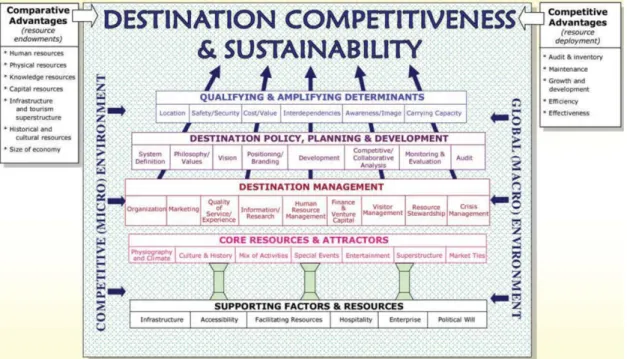
Figure 2.3 The process of tourism policy and strategy formulation and implementation40 Figure 2.4 Destination competitiveness and sustainability ... 47
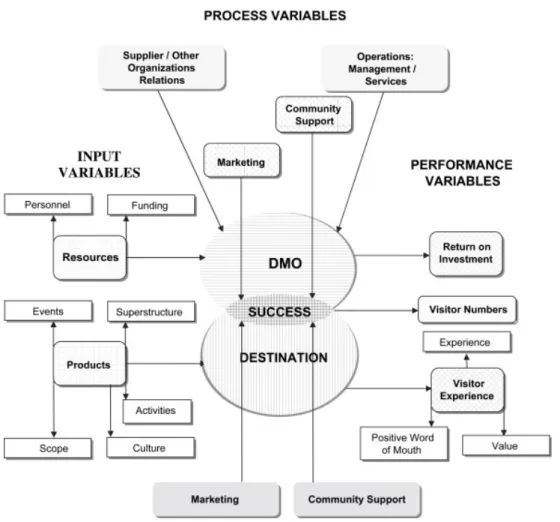
Figure 2.5 Comparison of success determinants for an ideal DMO and destination ... 50
Figure 2.6 Indicators of DMO effectiveness ... 53
Figure 2.7 Major components of organisational development and policy ... 56
Figure 2.8 The linear-rational strategic process ... 58
Figure 2.9 DMO information and research management: types and roles ... 66
Figure 2.10 The Six Markets Model ... 68
Figure 2.11 Elements of destination marketing ... 73
Figure 2.12 Five basic components of an organisation ... 75
Figure 2.13 The generic value chain ... 76
Figure 2.14 Primary value processes ... 78
Figure 2.15 The value shop diagram ... 80
Figure 2.16 The value network diagram ... 80
Figure 2.17 A summary of DMO strategic roles and operational activities ... 82
Figure 3.1 Understanding strategy ... 88
Figure 3.2 The principal elements of a business environment ... 90
Figure 3.3 A description of effectiveness ... 94
Figure 3.4 Traditional approach to the measurement of organisational effectiveness ... 95
Figure 3.5 Stakeholder network structures ... 98
Figure 3.6 Spatial model of organisational effectiveness ... 100
Figure 3.7 Value layers with a public and private role and a common core of shared organisational qualities and standards ... 112
Figure 3.9 The impact chain ... 119
Figure 3.10 A framework for evaluation of outcomes and impacts ... 131
Figure 3.11 A framework for performance measurement system design ... 138
Figure 3.12 The EFQM model ... 140
Figure 3.13 The Balanced Scorecard ... 142
Figure 3.14 The DMO Balanced Scorecard schematic ... 144
Figure 3.15 A Strategy Map represents how the organisation creates value ... 146
Figure 3.16 The devolved scorecard ... 148
Figure 3.17 Adopting the BSC Framework for non-profit organisations ... 151
Figure 3.18 The seven perspectives of the PSS ... 154
Figure 3.19 The Performance Prism ... 156
Figure 3.20 Conceptualisation of intellectual capital ... 159
Figure 3.21 Knowledge Assets Map ... 160
Figure 3.22 Knowledge Asset Dashboard ... 161
Figure 3.23 Perspectives of DMO effectiveness ... 163
Figure 3.24 Preliminary PEF for DMOs ... 165
Figure 4.1 The conceptual framework of the study ... 169
Figure 4.2 Components of Data Analysis: Flow Model ... 202
Figure 4.3 Example of theme and sub-themes ... 212
List of Tables
Table 2.1 The Tourism Production Function ... 37
Table 2.2 Key stakeholders in destination management ... 44
Table 2.3 Unique and common variables of success for destinations and DMOs ... 49
Table 2.4 Managerial tasks to ensure an effective, smoothly operating DMO ... 62
Table 2.5 Customer journey, CLC, and destination actions ... 71
Table 2.6 Overview of alternative value configurations ... 79
Table 3.1 Promises of accountability as means and ends ... 107
Table 3.2 Elements of Monitoring and Evaluation Plan ... 123
Table 4.1 Research design components of this study ... 172
Table 4.2 Sampling of sub-regional DMOs in England ... 189
Table 4.3 Phases of the hybrid thematic analysis in this study ... 205
Table 4.4 Example of a code and selected excerpts of data ... 209
List of Abbreviations
BIS CC DCMS DMO DMP DMS DTI KPI LA LBTB MM NFT NT PEF SAV STEAM TMP VB VCD VM(Department of) Business Innovation and Skills County Council
Department of Culture Media and Sport Destination Management Organisation Destination Management Partnership Destination Management System Department of Trade and Industry Key Performance Indicator
Local Authority
Lancashire and Blackpool Tourist Board Marketing Manchester
New Forest Tourism Northumberland Tourism
Performance Evaluation Framework Strategic Added Value
Scarborough Tourism Economic Activity Monitor The Mersey Partnership
Visit Britain
Visit County Durham Visit Manchester
CHAPTER 1
Introduction to the Study
1.1
Introduction
This study aims to identify key performance perspectives that enable the comprehensive evaluation of the operational effectiveness and strategic impact of Destination Management Organisations (DMOs). In this introductory chapter, the background to the study is presented, together with the objectives set to achieve the overall aim. Moreover, the chapter outlines the research methodology used and the structure of the thesis.
1.2
Background to the study
Destinations are widely regarded as complex phenomena to manage (Howie 2003; Zahra and Ryan 2007; Schianetz and Kavanagh 2008; Baggio 2014). Therefore, it is essential that, in the fiercely competitive environment of tourism, a destination excels in its ability to maintain all dimensions of sustainability (environmental, economic, social, cultural and political) if it is to successfully develop and preserve its competitiveness in the marketplace. Moreover, satisfying (or even better exceeding) visitor expectations by providing quality products and services can improve the profitability of the local tourism businesses, which are fundamentally the lifeblood of any destination’s visitor economy. Although, various sectors (e.g. private, public, not-for-profit) contribute towards the management of a destination, a key role is taken by the Destination Management Organisations (DMOs) (Kotler et al. 1993; Morrison et al. 1997; Buhalis 2000; Jeffries 2001; Kerr et al. 2001; Pike 2004; WTO 2004; Sheehan and Ritchie 2005; Ritchie and Crouch 2005; Vanhove 2005; Carter and Fabricius 2006; Holloway 2006; Jennings and Nickerson 2006; Michael 2007).
DMOs operate at various geographical and administrative levels (national, regional, local) and endeavour to facilitate the development and implementation of tourism strategies that offer the destination an advantage over its competitors (Cracolici and Nijkamp 2006). Achieving, however, this competitive advantage is argued to be influenced by the organisational performance of DMOs themselves (Pike 2005; Ritchie and Crouch 2005; Morrison 2013). This said, there is a surprising paucity of research exploring this important
area. The few existing studies have examined ‘destination’ performance variables and models (for example see Dwyer and Kim 2003; Ritchie and Crouch 2005; Sainaghi 2006; Crouch 2011; Volgger and Pechlaner 2014); however, acknowledging the important role of DMOs in influencing as well as monitoring destination performance (Morrison 2013). A recent study by Volgger and Pechlaner (2014) focused on understanding DMO and destination success by investigating the role played by networking capability; while, Bornhorst et al. (2010) presented a comparison of destination and DMO success determinants. Moreover, Frechtling (2005) conceptually examined the application of the Balanced Scorecard (BSC) to DMOs. As a result, there are several gaps in the literature with regards to DMO performance management and evaluation, the first and most important being that there is no clear theoretical understanding on the meaning and nature of ‘effectiveness’ for DMOs. Second, the key perspectives of DMO effectiveness are unidentified. Third, there is no clear guidance as to what methods can be used to evaluate DMO performance and what their potential limitations are. Therefore, this study sets the aim to identify the key performance perspectives that enable the comprehensive evaluation of the operational effectiveness and strategic impact of DMOs. This will also advance the understanding of the effectiveness construct as it applies to the context of DMOs.
1.3
Tourism development and DMO performance evaluation
Tourism is widely articulated to be contributing to the long-term prosperity and development of destinations, and local communities. For instance, it can potentially be an important source of local employment and a vital income generator for local businesses (Jeffries 2001; Holloway 2006; Cooper et al. 2008). The rapid growth of tourism over the last decades has been mostly attributable to private sector entrepreneurs; however, this growth has also been heavily dependent on government support in the form of infrastructure developments, stimulation of increased affluence, leisure time, and security. Government intervention has been evident, often in the form of coordination and collaboration of public and private stakeholders (Pastras and Bramwell 2013; Garnes 2014). High levels of effectiveness and sustainability of the public-private partnerships are critical in achieving optimal development, organisation and promotion of destinations. Similarly, it is deemed critical to optimise tourism impacts as well as to endeavour to achieve the strategic
functions of various entities, together with their interrelationships and the environments in which they operate. Overall, the development of a destination requires a robust long-term tourism policy, and implementing tourism destination policy is based on effective destination management, as well as robust organisational planning (Getz et al. 1998; Buhalis 2000; Godfrey and Clarke 2000; Ritchie and Crouch 2005; Sheehan and Ritchie 2005). Both public and private tourism organisations at all levels (international, national, regional, entrepreneurial) increasingly show augmented concern on quality management that affects effectiveness and competitiveness by increasing their visibility, reducing costs and enhancing local co-operation (Augustyn 1998; Buhalis 2000). Moreover, research (Faulkner 2001) has identified the value of flexibility to change on continuing basis, reflecting market trends, in addition to the need to develop proper disaster management plans and strategies to cope with any potential threats. However, future practices are seen to endorse the use of cutting edge technology to create “virtual” tourism destination organisations (Palmer and McCole 2000).
Sustainable tourism planning calls for a well organised and effective plan for the tourism destination. As governments increasingly recognise the significant economic value of tourism for communities, the contribution of DMOs in the success of a destination is critical (Pike 2004; Morrison 2013). The effective leadership and coordination of a committed DMO is articulated to be a key determinant in a destination being competitive or sustainable, which led to the evident proliferation of DMOs (Kotler et al. 1996; Jeffries 2001; Kerr et. al 2001; Ritchie and Crouch 2005; Middleton, 2005; Carter and Fabricius 2006; Holloway 2006; Jennings and Nickerson 2006; Michael 2007; Cooper et al. 2008). Therefore, there is a consensus in academia that the activities of DMOs are significant in the development and the management of a tourism destination. DMOs mainly engage in developing action plans for the destination area, marketing the destination, carrying out research, managing resources, act as the primary point of contact for the private sector at a sub-regional level, provide e-tourism services, provide information through Tourist Information Centres (TICs), partnering with various stakeholders with the principal objective to enhance the quality of the destination experience and benchmark effectiveness and return on investment. Overall, DMOs are the organisations responsible for the management and/or marketing of destinations, with a principal focus on enhancing the quality of the visitor’s experience (Morrison et. al 1997; WTO 2004; Pike 2004; Sheehan and Ritchie 2005; Morrison 2013).
Determining the typology of DMOs is as complex as it is to determine the typology of destinations. Researchers such as Holloway (2006) often adopt a broad categorisation of destinations by delineating them according to geographical features, hence, a destination can be: a particular resort or town, a region within a country, the whole of a country. Despite the variety of DMO types, they generally fall into three main categories, which refer to different destination levels (Sheehan and Ritchie 2005):
• National Tourism Authorities (NTAs) or Organisations (NTOs) responsible for the management and marketing of tourism at a national level
• Regional, provincial or state DMOs (RTOs) responsible for the management and marketing of tourism in a geographic region (county, state or province) • Local or sub-regional DMOs, responsible for the management and marketing
of tourism based on a smaller geographic area: Urban (city or town) and Rural (coastal, mountain or countryside)
The different types of DMOs have particular implications for the nature of the challenges that they face. Moreover, to whom the DMO management reports to is a principal issue. Either it reports to a publicly elected official, to a board of directors elected by industry members, to a corporate/agency board of directors, or to a partnership involving a joint public/private sector board of directors, the structure of the DMO management modifies both the manner and practices that dominate. To determine the policy-level issues that designate the basic structure and the funding base of DMOs is a difficult task. Nevertheless, for a DMO to operate effectively and smoothly the daily managerial tasks need to be addressed. These tasks mainly relate to internal programmes (e.g. definition of organisational by-laws, organisational administrative procedures, determination of committee structures) and external programmes (e.g. marketing, visitor management, information research, resource stewardship) (Sheehan and Ritchie 1997; Pike 2004; Ritchie and Crouch 2005; Sheehan and Ritchie 2005).
Tourism development, management and marketing should be managed within an integrated structure (Morrison 2013). Furthermore, planning and development, as core elements of the destination policy, concern the need for and importance of the monitoring and evaluation of policies and their outcome (Hall 2008). The ultimate outcome is as much a function of how well the policies are implemented as a function of the policies themselves. Consequently, policy formulation, planning and development must continue to incorporate research into
how well such policies are performing, whether improvements in implementation are needed, or whether circumstances have altered so as to render the policies no longer relevant or effective (Godfrey and Clarke 2000; Jeffries 2001). Similarly, destinations are challenged to manage and organise their resources in order to outperform competition (Ritchie and Crouch 2005). Therefore, DMOs need to endeavour to develop tourism strategies and implement operating actions that enhance their effectiveness and performance in order to offer the destination an advantage over its competitors. A key determinant of the organisational performance of DMOs is their organisational structure, as it provides the framework of an organisation and makes possible the application of the process of management. Decisions have to be made about what work or function is to be done, how it is to be divided between jobs, and how jobs are to be grouped into sections, departments and even larger groupings (Stewart 1997; Ritchie and Crouch, 2005; Cracolici and Nijkamp 2006).
Researchers (Morrison et al. 1997; Pike 2004; Gretzel et al. 2006) acknowledge that key knowledge gaps in the domain of DMOs include a clear understanding of the construct of DMO effectiveness, as well as robust models and methodologies to evaluate it. Therefore, this study sets off to investigate and contribute to the unexplored area of organisational effectiveness and performance evaluation of DMOs. The study incorporates several other issues that are fundamental to the study of DMOs (Pike 2004), namely: the rationale for the establishment of DMOs; the structure, roles, goals and functions of DMOs; the key opportunities, challenges and constraints that DMO face in evaluating their performance. DMOs operate in a composite industrial environment of tourism destination, which can provide a fertile domain for existing performance management theory to be tested and developed further (Spyriadis et al. 2009). In fact, the thesis is challenging existing understanding of organisational effectiveness by infusing it with existing destination development and management knowledge and understanding.
1.4
The context of the study
Existing research on performance management within the area of tourism development and destination management mainly focuses on the tourism destination as a unit of analysis (Dwyer and Kim 2003; Ritchie and Crouch 2005; Sainaghi 2006; Crouch 2011). Despite the
extensive research on organisational effectiveness within for-profit, not-for-profit and governmental contexts, DMO organisational effectiveness has rarely been the focus of previous investigation (Bornhorst et al. 2010). This study attempts to advance understanding of the organisational effectiveness construct in the context of sub-regional DMOs in England. Researchers (Pike 2004; Blumberg 2005) suggest that sub-regional DMOs have more direct and immediate relationship to all the elements (stakeholders) of the ‘tourism system’ at the destination including tourists and visitors, residents and the community, local tourism businesses and commercial operators, as well as local and regional governmental bodies. The key leadership role of DMOs in the local tourism management structures in England is also recognised in the policy of the current Coalition Government (HM Government 2010). Overall, DMOs at this level (sub-regional) are seen to have a more direct influence on the development and management of the destination product than at any other level (regional or national) (Blumberg 2005). In order to set the context of this study, a brief account of the recent developments in tourism management structures in England is presented in the following section, while a more detailed discussion is presented in Appendix 1.
1.4.1 An overview of recent developments in tourism structures in England
In the context of the UK economy, tourism and leisure have come to play an increasingly significant role in the economic development and regeneration of a wide range of destinations (Middleton 2005; DCMS 2006a). The Department of Culture, Media and Sport (DCMS) is the main Government department that “is responsible for supporting the tourism industry at national level and for putting regional and local support for the sector into a strategic context” (DCMS 2013). The DCMS aims to provide strong leadership, by seeking to raise the profile of tourism, increase the productivity of the industry, and to improve the efficiency and effectiveness of funding through enhanced co-ordination (DCMS 2004; 2013). Over the last decades, the turbulent macro and micro environment of tourism resulted in a radical transformation and devolution of the tourism management structures in the UK that strongly reflects on the management and the marketing of UK’s tourism destinations. One of the early actions was the establishment of the Tourism Alliance in 2001 with the aspiration to communicate and represent the sector’s views and concerns more effectively to the Government. Since its foundation, this body has had the key target to harness the
commitment of its members in developing marketing strategies and to actively encourage its members to consider contributing to the formulation and funding of joint programmes and campaigns (Tourism Alliance 2006). More recently, the Tourism Alliance has taken the role of “the voice of the Tourism Industry”, and its rationale evolved to identification and development of “policies and strategies to raise standards and promote quality within the industry and work with and lobby government on all key issues relevant to the growth and development of tourism and its contribution to the economy” (Tourism Alliance 2013). In 2002, the DCMS initiated an extensive tourism restructuring programme that was based on strong relationships and co-operation with partners from both the public and the private sector. This programme aimed in achieving improvements in delivery in five key identified areas: marketing and e-tourism; product quality; workforce skills; improved data; advocacy across Government. These priorities were clearly not self-supporting; therefore, they were not progressed in isolation. It was recognised that better marketing will only work if there are high quality products, which in turn required investment in skills. Moreover, improved decision making in these – and other areas – would be possible only if accurate, relevant and timely data was available (DCMS 2010). In April 2003, VisitBritain was established as a strategic, marketing-focussed body, bringing together the former English Tourism Council and the British Tourist Authority (established in 1969). VisitBritain’s key role has been to promote the British brand overseas and charged with exploiting the tourism legacy potential of London 2012 and other major sporting and cultural events. Moreover, VisitBritain “provides the overseas network that supports the Britain brand as well as the tourism initiatives of the devolved nations and regions”. “It supports DCMS with independent advice on the current key policy areas for tourism” and “provides shared service platforms to the nations and regions reducing duplication and releasing resources for the promotion of tourism” (DCMS 2010, p.107).
The Regional Development Agencies (RDAs) in England opened in 1999 (BIS 2012). However, it was between 2003 and 2004 that they received strategic responsibility for tourism in their regions (Ladkin et al. 2008) and in the spring of 2004 major reviews were carried out in accommodation quality and business data. Additionally, in May 2004, the ‘Poeple1st’ was launched, as the new Sector Skills Council for the tourism, hospitality and leisure sectors, which was soon after assigned the implementation of the National Skills Strategy (NSS) (DCMS 2004; The Tourism Network 2006; DCMS 2013). In 2004, the Tourism Review and
Implementation Group (TRIG) was established to monitor and oversee the developments on the abovementioned five key improvement drivers. In particular, it focused on wider structural issues affecting the productivity and the performance of the sector (on these five key areas). The TRIG reports to DCMS and includes key partners from the industry, from the public sector (local and regional government), as well as from academia (DCMS 2006a; Tourism Network 2006). One of the early results of TRIG’s evaluation indicated that the devolution had resulted in less clarity in strategic direction at national level, which in turn posed problems of communication and coordination in some regions, especially for the industry and local authorities (DCMS 2005).
The tourism management restructuring process has been very dynamic, with diverse levels of progress being made across England (Fyall et al. 2010). Unsurprisingly, the UK Government soon acknowledged that the reform programme itself “demonstrated a need for a new statement of the roles and responsibilities of the DCMS and its key partners in areas which the Government and the industry together agreed were vital to delivering progress” (DCMS 2006b). Additionally, the DCMS acknowledged that the aforementioned five key priorities “need to stimulate the key actions of DCMS, VisitBritain, the RDAs, local government and the Tourism Alliance in cooperatively building on the progress already made under the reform programme” (DCMS 2006b). In 2009, VisitEngland was introduced as the strategic body representing the public and private sector stakeholders of English tourism. VisitEngland was the former England Marketing Advisory Board, known as VisitEngland Board since October 2007. Working in partnership with VisitBritain, the RDAs, local authorities, and the private sector, it aimed at optimisation of marketing investment and the development of the visitor experience across England (DCMS 2010).
Despite the fact that the political landscape in England changed during the elections in May 2010 when the coalition government replaced the labour party government, the overall strategy for the development of tourism in England, as set out in “Tomorrow’s Tourism” in 1999, is still valid today (DCMS 2013). However, the new government has changed radically the tourism management structures that are in place to implement this strategy. In June 2010 the coalition government announced its decision to close the RDAs, which were introduced in the late 1990s (Marshal 2008, BIS 2012), and to replace them with the Local Enterprise Partnerships (LEPs). Local Authorities and local businesses were given a primary role in providing support to tourism development and management through partnerships
with sub-regional DMOs, the key partners for tourism related development at the destination areas (BIS 2010).
The operational closure of RDAs was phased between June 2010 and July 2012 (BIS 2012) and has been the most recent radical shift in regional and sub-regional tourism structures in England. Most of the research process of this study (e.g. the sample selection and data collection) was conducted between October 2006 and July 2010, a time characterised by instrumental changes in the destination management arrangements in England (Fyall et al. 2010). The evolving structures at regional and sub-regional levels are presented in more detail in two sections in Appendix 1. The first (section A) concentrates on the tourism structures up to 2010, when all the data of the study were collected; while the second (section B) pays attention to post-2010 developments and the implications of introducing Local Area Partnerships (LEPs) in the managing structures of tourism in England.
It is important to note that the particular developments in the context of tourism management structures in England after 2010 do not diminish the value of this study. The findings of the study provide useful lessons for the future of DMO performance evaluation both in the pre and post RDA era. In fact, a better understanding of DMO organisational effectiveness and performance evaluation is very valuable in the contemporary context of DMOs that includes LEPs. For example, the Greater Manchester LEP submitted “A Proposal to Government” that emphasised the need for establishing a performance management framework that is underpinned by a focus on efficiency to ensure value for money, maximise impact of investment on growth and reduce dependency (GM LEP 2010). Overall, performance management is an integral part of the business planning within the governance structures of the Greater Manchester LEP (GM LEP) and its “Manchester family of agencies” (GMCA 2012, p.4). The local DMO (Visit Manchester / Marketing Manchester) is a key member in this ‘family’, along with the New Economy, and MIDAS (GMCA 2012). All these agencies have formed the “Centres of Excellence” partnership and aim to “continue operating under a single performance management framework reporting to a number of structures within the Governance framework” (GMCA 2012, p.6). The benefits of this approach include complementarity and effective capturing of the totality of activity that is under way across Greater Manchester in support of the Greater Manchester Strategy. Additionally, a single performance management framework for the “Manchester family of agencies” is expected to reduce “the reporting burden on policy and delivery teams” (GMCA
2012, p.6). The single performance management framework will also inform the annual budget, allowing resource prioritisation and allocation.
Another example of the increased interest in performance management within local and national constituents of governance structures is the introduction of the Local Economic Assessments (LEAs) in April 2010 as part of a move to strengthen the economic development and regeneration role of local authorities in England (Pugalis and Carling 2012). Evidently, a performance evaluation framework (PEF) for DMOs can complement a LEP’s wider performance management framework, particularly in determining the DMO’s contribution or accountability towards the achievement of the LEP’s strategic aims. More specifically, evaluation of DMO performance relates to the development, implementation and evaluation of specific tourism development programmes that are often integral parts of broader strategic plans of LEPs and, in effect, the even wider government agenda.
1.5
Study aim and objectives
The aim of the study is to identify key performance perspectives that enable a comprehensive evaluation of the operational effectiveness and strategic impact of DMOs. To achieve the overall aim, a number of objectives are set:
1) to examine the rationale for and the roles of DMOs; 2) to critically analyse the operational activities of DMOs;
3) to critically explore the theories of organisational effectiveness within the context of DMO management;
4) to identify the key determinants of effectiveness of DMOs;
5) to establish a framework for the evaluation of the organisational performance of DMOs.
1.6
Overview of the research methodology
The aforementioned aim and objectives of the study were met by combining secondary and primary research. As mentioned earlier, there is scarcity in existing studies focusing on an
in-effectiveness and strategic impact of DMOs. Secondary research also included general management literature on organisational effectiveness and performance management. Particular attention was given to studies within the small, quasi-public, non-profit sector domains as they relate to the organisational remit of DMOs in England. At this stage of the study, a number of generic research questions arose from the review of the literature, which led to the development of four research propositions that ultimately provided the foundation and parameters for the remainder of the study (see section 3.9). An interpretive social science paradigm underpinned the study, lending a qualitative approach to its primary research element. The four research propositions that were developed from the critical review of the literature informed the development of question prompts for semi-structured interviews with managers. Twenty semi-structured interviews were conducted with industry practitioners, namely senior DMO managers, a destination management consultant, and a performance management specialist form the Audit Commission. A thematic approach to the analysis of the primary data was adopted, and a combined inductive and deductive analytical approach revealed several key themes that informed the three discussion chapters of the thesis. The analysis of the data developed further themes and insights that informed the achievement of the research aim. Through a synthesis of these, relevant conclusions are drawn leading to important implications for practice and recommendations for further research.
1.7
The structure of the study
This study is organised in eight chapters, a brief outline of which is presented next.
Chapter 1
This chapter introduces the background and rationale for the study. Moreover, it outlines the overall aim, objectives and the structure of the thesis.
Chapter 2
This chapter presents a critical review of the existing literature on destination management and DMOs. Emphasis is given to clarifying the concepts of destination and destination development, as well as the important role of DMOs in this context. The elusive relationship between destination and DMO success is discussed, before exploring the key strategic and
tactical roles of DMOs. The latter includes an exploration of DMO roles, tasks and responsibilities, grouped into Internal Destination Development and Management (IDDM) and External Destination Marketing (EDM) activities. In addition, the chapter discusses the operational functions and activities that DMOs undertake in order to pursue their tactical and strategic roles.
Chapter 3
This chapter presents a critical account of the literature on performance management, identifying links and relevance to the evaluation of DMO effectiveness. At the outset, the chapter defines key concepts and draws attention to the value of a holistic approach to the understanding of organisations and their effectiveness. Key principles of effectiveness and performance management are identified from the integration of several approaches to organisational effectiveness routed within a variety of pertinent theories including goal theory, stakeholder theory, and competing values theory. Effectiveness is examined within the context of small, quasi-public, non-profit organisational context as it is seen relevant to DMOs. In addition, the chapter critically discusses existing performance measurement and management systems and identifies key elements that can be useful components of a performance evaluation framework (PEF) for DMOs.
Chapter 4
The chapter discusses the systematic research design process of this study. At the outset, the chapter defines the research problem and presents the conceptual framework of the study. Next, the chapter discusses in detail the research design and the chosen methodology, which are underpinned by an interpretive paradigm approach and qualitative strategies of inquiry. The decisions made on the strategies for primary data collection and analysis are also critically discussed in this chapter, together with their limitations and details of implementation. Finally, the chapter presents the discussion on practical implications of the study and a critique on the quality criteria and limitations of the chosen methodology.
Chapter 5
This is the first findings and discussion chapter of the study. The focus is on the implications of the rationale for and strategic impetus of DMOs on the evaluation of their performance. The chapter presents an analysis of destination managers’ insights and discusses the key themes identified with the relevant literature. The discussion in this chapter is underpinned
by the quasi-public, non-profit nature of DMOs in England, while their role as tourism development agents directs to the analysis of their strategic added value. Moreover, the discussion explores the strategic context influences on the focus of DMO effectiveness, as well as challenges and the importance of DMO performance evaluation.
Chapter 6
This chapter explores the study findings related to outward-looking perspectives of DMO effectiveness. The discussion is based around the fundamental roles of DMOs in terms of devising the strategy and the plan for destination development. More specifically, the discussion explores key perspectives that include: identifying the strategic rationale for intervention; designing action plans for the strategic support of tourism; administering the implementation of destination development activity; monitoring the impact of development interventions.
Chapter 7
This is the third findings and discussion chapter that focuses on internal perspectives of DMO effectiveness. The focus is on determinants of value creation within DMOs. The discussion establishes the significance of an internal perspective for the comprehensive evaluation of DMO effectiveness. The analysis entails the configuration of functions, processes and structures that define a DMO’s business model and determine its performance. Further elements of analysis include DMO resources and competences, as they provide the key catalysts to achieve effectiveness and therefore form important aspects for DMO performance evaluation.
Chapter 8
This last chapter draws conclusions by a critical synthesis of the discussions in the preceding chapters. The study’s conceptual framework is revised, along with the level of achievement of the objectives set. The discourse identifies key contributions of the study and presents the final developed PEF for the evaluation of the effectiveness of DMOs. Moreover, the chapter provides recommendations both for further academic studies in the area of DMO performance management; as well as, for industry practitioners. Finally, the thesis concludes with an account of personal reflections on the PhD journey.
CHAPTER 2
Destination Management and the Role of DMOs
2.1
Introduction
Tourism is widely articulated to be contributing to the long-term prosperity and development of destinations and local communities (Sharpley and Telfer 2002; Middleton 2005). The major attributes in the development of tourism is that it can be an important source of local employment, as well as a vital income generator for local businesses (Brown 1998; Carter and Fabricius 2006). On the other hand, some studies (Tooman 1997; Shaw and Williams 1994; 2002) question the beneficial effects of tourism development and highlight its potential limitations as an agent of change. Therefore, as with any form of economic activity, successful achievement of its implicit or explicit objectives requires careful planning and management (Gunn 1994; Dwyer et al. 2003; Kotler et al. 2006; Hanlan et al. 2006). At the physical space where tourism activity takes place, the local tourism destination, planning and management necessitates a focus on a coalition of several organisations and stakeholders working towards common development goals (Hall 2008). In order to maximise benefits from tourism development, destination management calls for strong leadership and coordination of activities of such collaborative efforts under a coherent strategy, a role that is mostly attributed to the Destination Management Organisation (DMO) (WTO 2007). As governments increasingly recognised tourism activities to bare an important economic value for communities, the critical roles of the DMOs in the success of any destination were given augmented attention (Pike 2004). Researchers suggest that without the effective leadership and coordination of a committed DMO, a destination is deemed not to succeed in being competitive or sustainable (Presenza et al. 2005; Ritchie and Crouch 2005). It is the effectiveness of these important organisations that is of interest to this study, which aims to identify the key determinants of operational effectiveness and strategic impact of DMOs, understand what drives the performance of these organisations, and ultimately propose a framework for the evaluation of this performance. This chapter illustrates the rationale for destination management and DMOs, their role in the tourism system, as well as their key strategic functions and operational activities. Moreover, the chapter sets the context within which specific characteristics, as well as key issues and challenges, of destination
management framework for DMO organisational effectiveness. Before embarking on a discussion on the rationale, the roles and responsibilities of a DMO, it is useful to conceptualise the context within which these organisations operate: the tourism destination.
2.2
Conceptualising the tourism destination
Destinations are argued to be complex phenomena to manage (Howie 2003). It is essential that, in the fiercely competitive environment of tourism, a destination excels its ability to maintain all dimensions of sustainability (environmental, economic, social, cultural and political) if it is to successfully develop and preserve competitiveness. Sustainable tourism planning calls for a well organised and effective regional plan that bears in mind the long-term development of the tourism destination (Swarbrooke 1999; Ritchie and Crouch 2005). Moreover, satisfying (or even better exceeding) visitor expectations by providing quality products and services, improves the profitability of the local tourism business sectors, which are fundamentally the lifeblood of any destination’s visitor economy. Towards this direction, the role of DMOs is critical as they are organisations from both the public, quasi-public and the private sectors, which have vested interests in all aspects of society affecting and being affected by tourism (Carter and Fabricius 2006; Michael 2007).
Defining a destination seems to necessitate a multifaceted approach. A destination can be argued to be a “purpose build area” at which visitors temporally base themselves to participate in “tourism related activities” (Pike 2004). However, the dynamics embedded in the “composite industrial environment” of destinations (Spyriadis et al. 2009) become explicit when a destination is viewed as (WTO 2002 cited Lew and McKercher 2006, p.405):
“a physical space that includes tourism products such as support services and attractions, and tourism resources. It has physical and administrative boundaries defining its management, and images and perceptions defining its market competitiveness. Local destinations incorporate various stakeholders, often including a host community, and can nest and network to form larger destinations. They are the focal point in the delivery of tourism products and the implementation of tourism policy”.
The notion of destination can relate to various spatial or geographical levels, which means that the term destination may relate to: a whole country (i.e. UK, Greece or Spain); a region (i.e. the Lake District or the Alps); an island (i.e. Crete or Bali); a village, town or city (e.g. Manchester); or even a self-contained centre (i.e. a cruise ship or Disneyland) (WTO 2007). For the interest of this study, it is useful to highlight that destinations are places that attract visitors with a unique composition of their tourism products. These products encompass a diversity of component features that are tangible, intangible and symbolic; which stem from an amalgam of resources (e.g. natural, built, socio-cultural) and services (e.g. transport, hospitality, supporting services). As the characteristics of the tourism product and the combination of the resources and services varies from one destination to another, each destination is deemed to have its individual character and uniqueness (Seaton and Bennett 1996; Buhalis 2000; Cooper et al. 2008). It is important to note, however, that this portfolio is dynamic as it changes and evolves over time, hopefully in accordance with changes in demands and preferences of the targeted tourist markets (Middleton 2001).
Contemporary destinations are understood to have strong links to “place”, and therefore to:
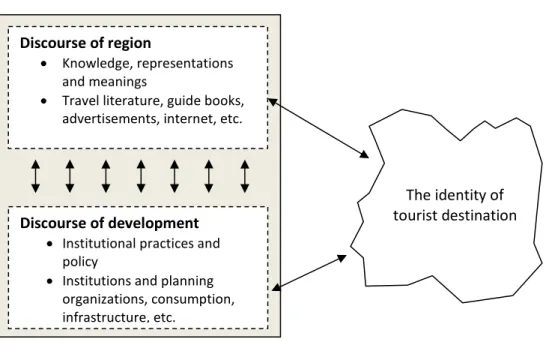
location (particular geographical coordinates on the planet); locale (material and physical settings: landscapes, servicescapes, experiencescapes); and, sense of place (“the subjective, personal and emotional attachments and relationships people have to a place” that are often subconscious) (Cooper and Hall 2008, p.116). Saarinen (2004) sees the notion of a tourism destination as being the result of a dynamic synthesis of several, possibly even conflicting, ideas or discourses. These “discourses include the immaterial and material production of ‘reality’. This dual nature of discursive processes implies both the idea of tourism destination and the actions constructing the physical and symbolic landscape based on that idea(s), which can be conceptualised through a discourse of region and discourse of development” (or, as the author also articulates, the discourses of “place” and “action”) (Saarinen 2004, p.167) (see Figure 2.1). The “discourse of region” relates to the idea and conceptual nature of the region as a historical and social construction, while the “discourse of development” relates to the material and economic nature of tourism. As the identity of a destination is socially constructed; it is constantly changing and the aforementioned (interrelated) discourses are the catalysts affecting and determining the outcome of that change (Saarinen 2004).
Figure 2.1 The process of transformation of tourism destinations
Source: Saarinen (2004)
The competitiveness of a destination is affected by the nature of tourism development and management, with DMOs acting as key tourism development agents (Sautter and Leisen 1999; Blumberg, 2005; Ritchie and Crouch 2005). Moreover, DMOs are important players in tourism policy and planning (discourse of development), as well as in marketing and promotion of the destination (discourse of region); therefore, DMOs are salient parts of the identity of a tourism destination, while they play a central role in tourism destination development.
2.3
Tourism destination development
Sharpley and Telfer (2002) suggest that the particular characteristics of a destination, the nature of tourism demand, and the existing industrial sectors of tourism (supply) are factors that influence the manner or extent to which tourism contributes to development. In other words, tourism supply, tourism product characteristics, and targeted markets impinge on development. Development is described as Sharpley and Telfer (2002, p.23):
Discourse of region
• Knowledge, representations and meanings
• Travel literature, guide books, advertisements, internet, etc.
Discourse of development
• Institutional practices and policy
• Institutions and planning organizations, consumption, infrastructure, etc.
The identity of tourist destination
“an ambiguous term that is used descriptively and normatively to refer to a process through which a society moves from one condition to another, and also to the goal of that process; the development process in a society may result in it achieving the state or condition of development”.
Sharpley and Telfer (2002, p.23-24) also suggest that development is a philosophical concept:
“as it alludes to a desirable future state for a particular society (though desirable to whom is not always clear), whilst development plans set out the steps for the achievement of that future state. In short, development can be thought of as a philosophy, a process, the outcome or product of that process, and a plan guiding the process towards desired objectives. More broadly, development is also considered to be virtually synonymous with progress, implying positive transformation or ‘good change’ (see Thomas 2000). In this sense, development is neither a single process nor set of events, nor does it suggest a single, static condition”
Such multiple use, and potentially ambiguous definition, of the term development could create difficulties in examining, analysing, studying or applying the concept in different contexts.
Conventional wisdom, following a rather modern western-style perspective, identifies development to be achieved through economic growth, which implies that development and economic development are synonyms by axiom (Sharpley and Telfer 2002; Beaumont and Dredge 2010). However, this seems to be a rather simplistic approach, and that there is a need for more explicit reference to issues related to the quality of life and the social welfare of the host/local population. Destinations (seen as public spaces) reflect both the social and communal life of a community, relating to values such as citizenship, democracy, pluralism and tolerance of diversity. Therefore, destinations are central to support public life, vitality, and quality of life. Public realm, in addition to the physical realm, is important in destination development as it touches symbolic, political, relational, emotional spheres. Indeed, DMOs as key development agents would need to take a more critical approach to tourism development. Their approach needs to involve not only a focus on investment incentives, destination planning and the measurement of economic impacts, but also an understanding of disruptions to the vital peace and stability that the industry hinges on, a policy that
raises ethical issues (Tribe 2008).
In England, for example, development with a spatial focus has been strongly associated with the “3Rs” interventions. These are “regeneration”, “renewal” and “regional development”, and take the form of ‘Area Based Initiatives’ that have intensive orientation towards sustainable development distributional impacts and improved outcomes in social, economic, and environmental terms (DCLG 2006). A similar conceptualisation of destination development was expressed twenty years ago by Kotler et al. (1993) who identified that the destination development process has four critical components that relate to: the character of the place (aesthetic qualities and values); the fixed environment (basic infrastructure compatible with the environment); the services provided (services of quality that meet business and public needs); and, entertainment and recreation (attractions for the inhabitants and visitors). From an economic and marketing perspective, destination development requires investments at a destination that secure improvement of “livability, investibility and visitability” (Kotler et al. 1993, p.100).
Destination development requires engagement from all bodies (public and private) who are concerned with actions to encourage the industry to develop and improve supply. The range and extent of actions related to destination development can certainly vary according to the existing level of development at each destination. Visitors are attracted to destinations by a number of natural (i.e. beach, mountain), or built attractions (i.e. theme park, museum, heritage monument). The characteristics that relate to destination uniqueness, for instance sights of interest, environmental quality, as well as safety and friendliness of local people are significant drivers for visitors to a destination. Moreover, the overall cost of visiting attractions and staying at the destination, or using the services, as well as the currency exchange costs also affects tourism demand for a destination (WTO 2007; Cooper et al. 2008). Destination development incorporates some crucial elements of infrastructure like roads, railways, ports, and airports, all of which provide accessibility to and within the geographical area. Of equal significance, however, are elements of immaterial nature (i.e. knowledge networks, communication, education, culture), which is also known as superstructure. The level of development at a destination even relates to the equipment (and technology) employed, as well as the services available (Nijkamp and Ubbels 2005; Jeffries 2001; Baggio 2004; Ndou and Petti 2007). Overall, destination development levels can be reflected in the development in key destination elements: attractions, access points,
amenities, ancillary services (Cooper et al. 1998), available packages, and activities (Buhalis 2000); in addition to, awareness, appearance (destination impressions on visitors), assurance (security and safety), appreciation (welcome and hospitality of locals), action (availability of a long-term tourism plan), and accountability (evaluation of performance) (Morrison 2013).
Both academia and industry advocate a holistic approach to destination development. One of the recent attempts is the VICE model (Figure 2.2) (Countryside Agency 2001; Middleton 2002; Climpson 2008). The underpinning rationale of the model is that for every development initiative, the impact on the four elements of the model should be analysed: how will it affect the visitor? What are the implications for the industry? What is the impact on the community? What is the environmental effect? In effect, the focus is on resources, coordination and integration in the destination. Emphasis on this ‘quadruple bottom line’ (visitors, community, environment, industry) becomes the pillar of sustainable development for destinations.
Figure 2.2 The VICE Model
Source: Climpson (2008)
Industry Community
Environment Visitor
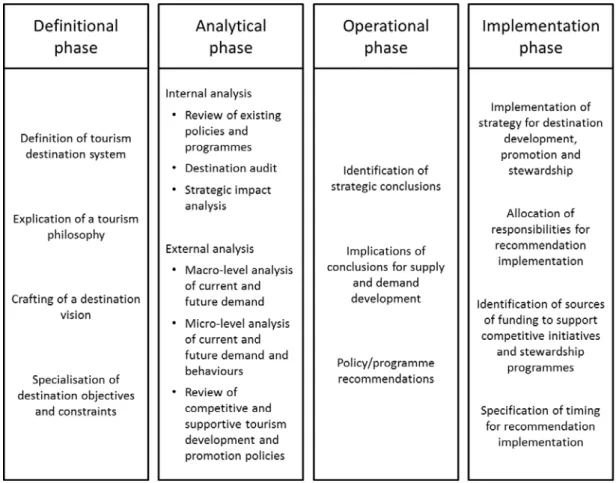
Researchers (Wahab 1996; Soteriou and Roberts 1998; Moutinho 2000;Kerr 2003; Hanlan et al. 2006) suggest that tourism policy, strategic planning and strategic management are critical for the development of tourism destinations. A strategic approach to planning and management is argued to be important in pursuing sustainability and specifically relates to the impact of tourism developments in ecological, economic, socio-cultural and political dimensions (Hanlan et al. 2006). Therefore, destination development initiatives that follow principles of sustainability need to be comprehensive, iterative or dynamic (readily responding to environmental and policy changes), integrative (functioning within wider approaches to development), community oriented, renewable, and goal oriented. The latter in particular relates to a dynamic portfolio of realistic development targets and results with equitable distribution of benefits (Simpson 2001). Overall, sustainability considerations are vital when authorities and policymakers attempt to stress the particularities and interdependencies that emerge in the production of the tourism destination ‘product’ (Papatheodorou 2001). Within the context of destinations, the ‘product’ of tourism relates to ‘destination experiences’, which are also dependent on corporate power, industrial organisation, and comprehensive policies across the component sectors of visitor economy (i.e. the transport, accommodation, and tour operation sectors) (Papatheodorou 2001). The chapter continues to discuss these areas in more detail.
2.3.1 Destination experiences: aggregate products and tourism system complexity
Cooper and Hall (2008, p.129-130) suggest that “the destination product is the sum of all experiences the tourist has at the destination as a result of encounters with a variety of tourism resources including firms, people, communities and the destination environment”. Consequently, to perform the tourism ‘production process’, destinations utilise tangible and intangible resources (primary inputs) and develop or manage facilities (intermediate inputs) in order to create services (intermediate outputs) that ultimately transform into experiences (final outputs) (Table 2.1) (Smith 1994). Ultimately, destination experiences are the result or outcome of the synthesis of interdependent sectors that form the ‘visitor economy’ (Middleton et al. 2009). These interdependent sectors fall into three main categories (Gunn 1994): the business sector (e.g. travel, accommodation, food and beverage, attractions, tour operators, travel agents); the non-profit sector (voluntary, attractions, health, religious, ethnic, etc.); and, the governmental sector (e.g. infrastructure, water supply, sewage