FOREWORD
CHAPTER
1
: Overview
CHAPTER
2
: Emergency oil response systems in IEA member countries
CHAPTER
3
: Natural gas security in the IEA
Part 1
The following part 1 is an excerpt from Energy Supply
Security 2014 publication and is not intended as a
stand-alone publication.
INTERNATIONAL ENERGY AGENCY
The International Energy Agency (IEA), an autonomous agency, was established in November 1974. Its primary mandate was – and is – two-fold: to promote energy security amongst its member countries through collective response to physical disruptions in oil supply, and provide authoritative research and analysis on ways to ensure reliable, affordable and clean energy for its 29 member countries and beyond. The IEA carries out a comprehensive programme of energy co-operation among its member countries, each of which is obliged to hold oil stocks equivalent to 90 days of its net imports. The Agency’s aims include the following objectives:
n Secure member countries’ access to reliable and ample supplies of all forms of energy; in particular, through maintaining effective emergency response capabilities in case of oil supply disruptions.
n Promote sustainable energy policies that spur economic growth and environmental protection in a global context – particularly in terms of reducing greenhouse-gas emissions that contribute
to climate change.
n Improve transparency of international markets through collection and analysis of energy data.
n Support global collaboration on energy technology to secure future energy supplies and mitigate their environmental impact, including through improved energy
efficiency and development and deployment of low-carbon technologies.
n Find solutions to global energy challenges through engagement and dialogue with non-member countries, industry, international
organisations and other stakeholders. IEA member countries:
Australia Austria Belgium Canada Czech Republic Denmark Estonia Finland France Germany Greece Hungary Ireland Italy Japan
Korea (Republic of) Luxembourg Netherlands New Zealand Norway Poland Portugal Slovak Republic Spain Sweden Switzerland Turkey United Kingdom United States
Please note that this publication is subject to specific restrictions © OECD/IEA, 2014 International Energy Agency
9 rue de la Fédération 75739 Paris Cedex 15, France
www.iea.org
Foreword
ForEword 3
©
OECD/IEA
2014
The year 2014 is a special one for the International Energy Agency as we celebrate our 40th anniversary. In 1974, the IEA was founded with the primary mission of ensuring and improving global energy security. Today, energy security still remains at the centre of the IEA mandate. This publication returns to that core responsibility, providing an overview of the most recent five-year review cycle of our member countries’ energy security and preparedness.
The world has changed dramatically since the founding of the IEA, driving the Agency to evolve and develop its capabilities accordingly. Oil demand patterns have shifted, and, where IEA members once accounted for around three-quarters of global demand, they now account for less than half. This is a challenge but also an opportunity. The IEA works to strengthen and deepen relationships with key partners, pursuing dialogue and information sharing – including in the area of emergency response. Accordingly, this publication contains overviews of emergency policies in Chile, China, India, and in the countries of the Association of Southeast Asian Nations (ASEAN).
While the IEA continues to evolve in response to changing energy security priorities, one thing remains constant, and that is the need to be prepared. The Emergency Response Review cycle provides regular peer assessments of emergency response mechanisms in each IEA member country. These reviews are not only a powerful tool for maintaining emergency preparedness among IEA members, but they also serve as a means to identify and share best practices among and beyond IEA members, thus helping to enhance an effective response to oil supply disruptions and strengthen energy security worldwide. The global nature of energy markets, and the oil market in particular, demands such breadth.
Still, energy security is no longer just about oil. Secure supplies of natural gas and electricity are also of growing importance for keeping our economies and societies functioning. The Emergency Response Review cycle described in this publication has been the first to start incorporating these expanded priorities. Natural gas security has become an integral part of our review process throughout this past cycle, while the current review cycle, already underway at the time of publication, also incorporates assessments of the electricity security of member countries. The more recent work on electricity is reflected and discussed in an annex to this publication.
Emergency oil stocks are a very powerful policy tool for mitigating short-term physical supply disruptions and for providing liquidity to allow market recovery. The stockholding system has undeniably worked well in the past. A recent IEA study, discussed in this publication, shows that not only has the system provided clear benefits, but it has done so at relatively low cost.
As this publication also demonstrates, emergency stocks are not alone in the IEA toolbox. Demand restraint measures, fuel switching capacity and other measures all contribute to a range of emergency response capabilities available to member countries.
As a result, the IEA stands ready to face future energy security challenges with confidence. This publication is produced under my authority as Executive Director of the IEA.
Maria van der Hoeven Executive Director International Energy Agency
Overview
CHAPTER 1
2014
Overview
Introduction
Against the backdrop of the oil crisis of 1973-74, the need to increase energy security was the main objective for the establishment of the International Energy Agency (IEA). Placing a particular emphasis on oil security, the Agency’s founders – a collective of major energy-consuming countries – sought to create effective mechanisms for implementing policies on a broad spectrum of energy issues: mechanisms that were workable, reliable and could be implemented on a co-operative basis.
Forty years on, ensuring energy security is as urgent as ever. Whilst oil security remains a cornerstone of the IEA, the Agency is progressively taking a more comprehensive approach to emergency preparedness. Through periodic reviews, the Agency has strengthened and sharpened the emergency response mechanisms created to counteract short-term oil supply disruptions (see Chapter 2). The Agency has recently expanded these reviews to cover natural gas security as well (Chapter 3). This work continues to evolve, and the Agency has begun work to incorporate electricity security as part of its assessments of energy security and emergency response capabilities (see Annex A).
Defining energy security
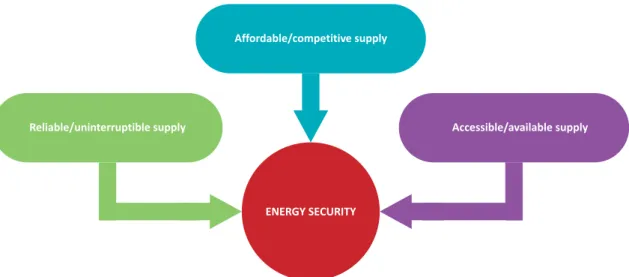
The IEA defines energy security as “the uninterrupted availability of energy sources at an affordable price”. Energy security has many dimensions: long-term energy security mainly deals with timely investments to supply energy in line with economic developments and sustainable environmental needs. Short-term energy security focuses on the ability of the energy system to react promptly to sudden changes within the supply-demand balance.
Lack of energy security is thus linked to the negative economic and social impacts of either physical unavailability of energy, or prices that are not competitive or are overly volatile. In cases such as the international oil market, where prices are allowed to adjust in response to changes in supply and demand, the risk of physical unavailability is limited to extreme events. Supply security concerns are primarily related to the economic damage caused by extreme price spikes. The concern for physical unavailability of supply is more prevalent in energy markets where transmission systems must be kept in constant balance, such as electricity and, to some extent, natural gas. This is particularly the case in instances where there are capacity constraints or where prices are not able to work as an adjustment mechanism to balance supply and demand in the short term.
Ensuring energy security has been at the centre of the mission of the IEA since its inception. The ability to respond collectively in the case of a serious oil supply disruption with short-term emergency response measures remains one of the core activities of the IEA. The long-term aspect of energy security was also included in the Agency’s founding objectives, which called for promoting alternative energy sources in order to reduce oil import dependency. The IEA continues to work to improve energy security over the longer term by promoting energy policies that encourage diversification, both of energy types and supply sources, and that facilitate better functioning and more integrated energy markets.
EnERgy SuPPly SECuRiTy 2014 14 © OECD/IEA
2014
Figure 1.1 Defining energy security
Affordable/competitive supply
Reliable/uninterruptible supply Accessible/available supply
ENERGY SECURITY
Note: unless otherwise indicated, all tables, figures and boxes in this chapter derive from IEA data and analysis.
Establishment of the IEA
The impetus for the Agency grew out of fundamental changes in economics and politics associated with the international oil market leading up to the Middle East War of 1973-74. Oil demand had grown rapidly in countries belonging to the Organisation for Economic Co-operation and Development (OECD). A few decades earlier, oil had begun to erode the dominance of coal as a power source; by mid-century (1950s), it had taken over as the preferred fuel.
To a large degree, oil fuelled the rapid post-war economic growth achieved in OECD member countries. By the 1970s, petroleum was powering transportation, supplying one-third of industrial sector power and roughly one-quarter of electricity generation. This increase in demand for oil, coupled with a decline in oil self-sufficiency in the United States, created a situation in which OECD dependence on oil imports rose steeply in the years leading up to the crisis. Moreover, the Organization of the Petroleum Exporting Countries (OPEC) commanded a very large spare capacity of oil production, which added downward pressure on oil prices. The low prices and apparent abundance of oil encouraged its growing use.
The most vivid political impact of changing market conditions was the decision by Arab producers to use oil as an economic weapon. In October 1973, several countries belonging to the Organization of Arab Petroleum Exporting Countries (OAPEC, consisting of the Arab members of OPEC plus Egypt and Syria) took concerted action to reduce oil production from about 20.8 million barrels per day (mb/d) to about 15.8 mb/d (global oil demand in 1973 was 57.1 mb/d). Around the same time, OPEC opted to fix prices 400% above previous levels. In a relatively short time, the world’s dominant energy source became scarce and expensive.
Overall, the embargo caused a shortfall in the international oil market that reached 4.3 mb/d. A significant reduction in spare capacity in non-OPEC countries further exacerbated the problem. OAPEC production cuts disrupted essential oil supplies to industrial countries, which could do little in the short run to reduce the price spike.
2014
These events alerted policy makers in the industrialised countries to the extent of their dependence on oil imports – and to the inherent vulnerability of this dependence. The 16 countries belonging to the OECD had very limited control over one of the commodities most vital to their economies, with no system in place to counter the potentially serious economic and political consequences of an oil supply disruption. These governments agreed to create the IEA and in November 1974 signed the Agreement on an International Energy Program (I.E.P. Agreement). This treaty laid the foundation for a multi-faceted system aimed at helping member countries cope with short-term oil supply disruptions in a co-ordinated and unified manner and build more resilient markets in the medium and longer term.
Box 1.1
Objectives of the International Energy Agency
The primary function of the IEA is to act as energy policy advisor for the governments of its 29 member countries, as well as the premier international energy forum to bring together both members and non-member partner countries and organisations – all with the aim of promoting reliable, affordable and clean energy for consumers. It was founded during the oil crisis of the early 1970’s, with a mandate to coordinate measures in times of oil supply emergencies. This remains a core mission of the agency. Governments of IEA member countries commit to undertaking joint measures to mitigate the impact of oil supply emergencies. In support of this commitment, they also agree to share energy information, co-ordinate energy policies and co-operate in the development of rational energy programmes. These provisions are embodied in the Agreement on an International Energy Program (I.E.P.), the treaty pursuant to which the Agency was established in 1974.
Since 1974, the IEA has kept pace with developments in the energy scene. Today the basic aims of the IEA are to:
maintain and improve systems for coping with oil supply disruptions
promote energy policies in a global context through co-operative relations with industry, non-member
countries, and international organisations
develop energy market analyses and forward-looking scenarios that can inform sound decisions making promote environmental sustainability and climate goals by encouraging the transition to a clean energy
economy through technological exchange and sustainable policies.
Evolving oil market conditions
At the time of the creation of the IEA, oil demand in OECD countries represented nearly three-quarters of global oil demand. The oil crises of the 1970s triggered efforts to switch away from oil use towards other energy sources, such as the launch of large nuclear programmes in several countries. As a result, oil use in power generation dropped significantly. At the same time, a number of OECD countries developed domestic oil production. These factors significantly reduced OECD countries’ dependence on imports; by the mid-1980s, dependence reached its lowest level since the 1960s, when the OECD first became a net oil importer.
Within ten years of having established the IEA, oil demand in OECD countries had fallen substantially and represented less than two-thirds of global oil use. However, by the second half of the 1980s growing demand for transportation fuels re-stimulated oil demand growth in OECD member countries, causing demand to outpace increases in domestic supply. As a result, OECD countries’ dependence on imported oil steadily increased. Oil demand in developing countries, principally in Asia, also began to increase in the late 1980s, resulting in an ever-growing share of global oil demand outside of the OECD.
EnERgy SuPPly SECuRiTy 2014 16 © OECD/IEA
2014
In mid-2013, emerging markets and developing economies overtook the OECD countries in oil consumption for the first time. Non-OECD economies are expected to widen their lead in oil consumption, jumping from the 49% of global oil demand they accounted for in 2012 to more than 54% by 2018.
As with oil demand, there have also been significant shifts in sources of global oil supply since the time of the creation of the IEA. In 1974, over half of the world’s oil was being supplied by OPEC countries. Sustained high oil prices triggered a substantial increase in non-OPEC supplies; production in the Soviet Union doubled between the early 1970s and the mid-1980s, and new frontier production was initiated in Alaska and the North Sea. These additional supplies, coupled with declining demand, resulted in a reduced share of a smaller market for OPEC producers. By the mid-1980s the share of global oil production coming from OPEC countries had declined to less than one-third. The producer group steadily regained market share after oil demand picked up from the low point it had reached in 1985. In 2012, some 41% of global supply came from OPEC countries.
Table
1.1
World oil supply and demand, 1985-2018 (million barrels per day)
1985 1990 1995 2000 2005 2010 2012 2018* OECD DEMAND Americas 19.1 20.7 21.8 24.3 25.9 24.1 23.6 23.3 Europe 12.8 13.8 14.8 15.3 15.7 14.7 13.7 12.9 Asia Oceania 5.7 7.4 8.9 8.9 8.9 8.2 8.6 8.2 Total OECD 37.5 41.9 45.4 48.6 50.5 47.0 46.0 44.4 NON-OECD DEMAND FSU 8.9 8.2 4.3 3.8 3.9 4.1 4.5 5.3 Europe 0.8 0.9 0.6 0.6 0.7 0.7 0.7 0.8 China 1.8 2.3 3.4 4.6 6.7 8.9 9.8 12.0 Other Asia 3.1 4.5 6.2 7.8 9.0 10.7 11.3 13.2 Latin America 3.1 3.5 4.1 4.7 5.0 6.1 6.4 7.4 Middle East 2.9 3.3 4.3 4.7 5.9 7.3 7.7 9.2 Africa 1.7 2.0 2.2 2.5 3.0 3.5 3.7 4.5 Total Non-OECD 22.3 24.6 25.1 28.6 34.1 41.4 44.0 52.3 Total demand** 59.9 66.5 70.5 77.2 84.7 88.4 90.0 96.7 SUPPLY Total OECD 20.3 19.0 21.0 21.9 20.2 18.9 19.9 23.7 Total Non-OECD (Non-OPEC) 20.3 22.7 20.5 22.6 27.2 29.9 29.5 30.9 Total Non-OPEC*** 41.7 43.2 43.3 46.6 50.0 52.6 53.3 59.3 Total OPEC 17.6 23.9 27.4 30.8 34.8 34.7 37.6 Total supply**** 59.3 67.2 70.7 77.3 84.8 87.4 90.9
Notes: Totals in table might not add up due to rounding. * 2018 figures are forecasts.
** Measured as deliverables from refineries and primary stock, comprises inland deliveries, international marine bunkers, refinery fuel, crude for direct burning, oil from non-conventional sources and other sources of supply.
*** Non-OPEC supplies include crude oil, condensates, NGL and non-conventional sources of supply such as synthetic crude, ethanol and MTBE. This also includes “Processing gains” and “Other biofuels”, which are not shown in either the Total OECD or Total non-OECD (Non-OPEC) lines. **** Comprises crude oil, condensates, NGLs, oil from non-conventional sources and other sources of supply.
2014
Oil production in the OECD as a whole peaked in 1997, and entered what was previously expected to be a path of long-term decline. However, a new trend has emerged recently because of the resurgence of oil and gas production in North America. Reserves which were previously considered too challenging or uneconomical to develop have become accessible through techniques such as horizontal drilling and hydraulic fracturing. The consequential increases in light tight oil (LTO) production in the United States, coupled with efficiency measures to curb oil consumption, will significantly reduce the country’s oil import dependency. Canadian oil sands production is also expected to grow, amplifying the impact this will have on inter-regional global trade in crude oil. North America as a whole is on track to become a net exporter of oil before 2030 (World Energy
Outlook [WEO], 2013).
By reversing the trend towards greater dependency on imports, the United States stands out from most other major oil consuming regions and countries, which are expected to have a growing reliance on imports. Within the OECD regions, Japan and Korea remain almost entirely dependent on imports, whilst Europe is expected to steadily grow more import reliant. China and India will also grow more reliant on imports to meet future demand; the combined net oil imports of the two countries are expected to surpass those of the OECD by 2035 (WEO, 2013).
Figure 1.3
Total oil net imports, 2000-35
0 5 10 15 20 25 OECD India+China
million barrels per da
y 2000 2009 2020 2035 Source: IEA, 2013b.
Figure
1.2
World oil demand, 1990-2018
-10 000 20 000 30 000 40 000 50 000 60 000 1990 1991 1992 1993 1994 1995 1996 1997 1998 1999 2000 2001 2002 2003 2004 2005 2006 2007 2008 2009 2010 2011 2012 2013 2014 2015 2016 2017 2018
million barrels per day
OECD NON-OECD
Note: 2014-18 data are forecasts. Source: IEA, 2013a.
EnERgy SuPPly SECuRiTy 2014 18 © OECD/IEA
2014
The changing oil map
The reduction in North American oil imports, in combination with rising oil consumption in emerging economies, is set to be a major driver for changing patterns of global oil trade. Increased domestic production in the United States has had the result of pushing out imports previously supplied to the country, primarily from the Middle East and West Africa. This is resulting in a visible eastward shift in global oil trade, as oil is being drawn increasingly towards Asia-Pacific markets and away from the Atlantic basin.
Figure 1.4
Crude exports in 2018 and growth over 2012-18 for key trade routes
This map is without prejudice to the status of or sovereignty over any territory, to the delimitation of international frontiers and boundaries and to the name of any territory, city or area.
3.1
0.3
Red numbers in brackets denote growth in period 2012-18
OECD Europe OECD Asia Oceania OECD Americas (-0.6) (-0.8) 1.2 (-0.3) 0.5(+0.4) 2.9 (+0.3) 6.2 (+0.8) 3.9 (-0.9) 0.5(+0) 1.7(-1) 2.9 (-1.4) 0.3(+0.1) 1.4 (+0.7) 0.7 (+0.3) 1.3 (-0.3) China 1.5 1.6 (+0.8) (+0.4) Other Asia
Source: IEA, 2013a.
Trends in global refining are also reshaping the map of world oil flows. An increasing amount of crude is being refined closer to production sources as well as the growing demand centres outside the OECD. As North American refining is increasingly supplied by regional production and more and more Middle Eastern crude is refined domestically, global trade in crude oil is expected to decline over the coming years. The bulk of this crude trade will be flowing to non-OECD countries, whose share of the global refining market is set to rise sharply and represent over half of all international crude imports by 2018. International trade in refined oil products is expected to increase as a consequence.
Continuing concentration of oil
demand in transportation
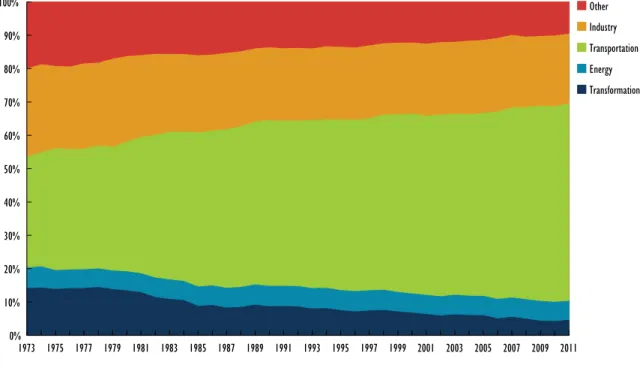
The share of oil used for transportation has grown steadily since the 1980s. The transport sector accounts for well over half of global oil consumption today. This share is expected to rise further in the coming decades as oil demand for transport in emerging economies grows. In OECD countries, the transportation sector’s share of oil consumption has grown from roughly 40% in the early 1980s to nearly 60% in 2011.
2014
Figure 1.5
OECD oil consumption by sector, 1973-2011
0% 10% 20% 30% 40% 50% 60% 70% 80% 90% 100% 1973 1975 1977 1979 1981 1983 1985 1987 1989 1991 1993 1995 1997 1999 2001 2003 2005 2007 2009 2011 Other Industry Transportation Energy Transformation Source: IEA, 2014b.
The increased concentration of oil usage in the transportation sector accentuates the potential economic impact of a supply disruption. Demand for transportation fuels is considered to have a relatively low “price elasticity”, meaning that rises in fuel prices will typically result in relatively small and slow reductions in demand. This is due primarily to the lack of alternative options, particularly in the short-term, for consumers to switch away from oil-based transportation fuels.
Moreover, increased fuel costs pass rapidly through to other sectors of the economy; for example, rising transportation costs make delivery of foodstuffs and other products more expensive. In turn, retailers pass these rising costs on to consumers by raising the prices of goods. The longer oil prices remain at high levels, or the more they rise, the greater the threat to economic growth in importing countries. The burden is particularly heavy in developing countries in which food and energy already represent a high proportion of consumer spending.
Major oil supply disruptions
and emergency response actions
There have been many supply interruptions since oil became a dominant energy source in the 1950s. The first significant disruption was the Suez Canal Crisis in 1956-57. This conflict limited oil traffic in the canal, effectively blocking the passage of approximately half of the canal’s transit of oil. The estimated gross peak supply loss was around 2 mb/d. Since 1957, the oil market has experienced several significant disruptions, the largest being the Iranian revolution of 1978-79.
The severity of an oil supply disruption is not, however, only measured in the oil lost. It is also related to other factors, such as the level of commercial inventories, the likely duration of the disruption and available spare production capacity. More technical
EnErgy Supply SEcurity 2014 20 © OECD/IEA
2014
factors play a role as well, such as the quality of the crude oil lost, seasonality trends and logistical issues. As such, all supply disruptions must be assessed individually.
The market context of an oil supply disruption determines when an emergency action is warranted. If the world market does not have sufficient excess capacity, a relatively small disruption can be quite severe. By contrast, a larger disruption in terms of gross peak
Figure 1.6
Major oil supply disruptions
2.0 2.0 4.3 5.6 4.1 4.3 2.1 2.6 2.3 1.5 1.3 1.5 0.0 1.0 2.0 3.0 4.0 5.0 6.0 Nov 1956 - Mar 1957 Jun - Aug 1967 Oct 1973 - Mar 1974 Nov 1978 - Apr 1979 Oct 1980 - Jan 1981 Aug 1990 - Jan 1991 Jun - Jul 2001 Dec 2002 - Mar 2003 Mar - Dec 2003 September 2005 September 2008 Feb - Oct 2011
Gross peak supply loss (mb/d)
Libyan Civil War Hurricanes Gustav/Ike Hurricanes Katrina/Rita War in Iraq Venezuelan strike Iraqi oil export suspension Iraqi invasion of Kuwait Outbreak of Iran-Iraq war Iranian Revolution
Arab-Israeli War and Arab oil embargo Six-Day War
Suez Crisis
Box 1.2
The objective of an IEA collective action
The primary purpose of an IEA collective action is to mitigate the economic damage associated with a disruption of oil supply. By temporarily replacing disrupted supplies, the action is intended to help oil markets re-establish the supply/demand balance at a lower price level than would otherwise have been the case.
Managing oil prices is not the purpose of an IEA collective action, however, as high prices can have underlying causes which temporary emergency measures cannot address. Moreover, attempting to manage prices with emergency measures risks masking important market signals, such as the need to invest in supply infrastructure or more fuel efficient technologies, which are essential to assuring supply security in the future.
At the time the IEA was created, policy makers were primarily concerned with the physical unavailability of oil supplies and sought to define a threshold for activating an emergency response based on a specified volume of disrupted oil supply. Oil markets have changed enormously since the first oil shock of 1973-74. As a result of the liberalisation of the oil industry and the development of spot and futures markets, changes in supply and demand are quickly reflected in the international market prices of crude oil and refined products. Increases in spot prices quickly feed through into higher retail prices and the very notion of a “supply shortfall” is misplaced: a reduction of supply would cause prices to rise immediately whilst higher prices would lead to lower demand and bring the market back into balance. However, this rebalancing might require prices to increase substantially in response to a relatively small fall in supply, given the high concentration of oil use in the transportation sector where few short-term alternative options exist.
In the absence of price controls that might cause physical shortages, a sudden fall in global oil supply can cause economic damage through sudden price increases. The purpose of an IEA collective action is to limit the extent and impact of a sudden fall in global oil supply caused by a disruption. In such instances, IEA countries would want to replace lost supplies on a temporary basis in order to prevent economic damage, but they would still allow the market to set the price. Such a move is best described as an effort to stabilise the market rather than to manage prices.
2014
supply loss can be manageable in the short term if there is sufficient spare production capacity or commercial oil stocks to offset the oil supply loss.
IEA emergency response mechanisms (described in further detail below) were established to create a concrete and co-operative action plan in the event of a major oil supply disruption. These measures were initially designed to take effect in the event of oil supply disruptions involving a loss of 7% or more of normal oil supply, either for the IEA as a whole or any individual member country. However, as oil markets have evolved, so have the tools of the IEA for responding to supply disruptions. In the event of a supply disruption, a detailed impact assessment is used to determine how and when to resort to emergency measures.
Since the creation of the IEA, member countries have taken collective action on three occasions: in the build-up to the Gulf War in 1991; after hurricanes Katrina and Rita damaged offshore oil rigs, pipelines and oil refineries in the Gulf of Mexico in 2005; and in response to the prolonged disruption of oil supplies from Libya in 2011 (for more information on these actions, see Annex F).
IEA emergency oil response measures
Forty years after the establishment of the IEA, emergency response to oil supply disruptions remains a core mission of the IEA. The Agency’s collective response capabilities aim to mitigate the negative impacts of sudden oil supply shortages
Figure 1.7
IEA emergency response system
Production surge Stockdraw Government Public Agency Loans Loans Sale/tender Sale/tender
Reduction of mandatory level
Instruct physical release
Use of spare production capacity Industry Increased indigenous production Demand restraint Fuel switching Persuasion/public campaigns (e.g. eco-driving, carpooling) Administrative/compulsory
(e.g. speed reduction) Administrative/compulsary
(e.g. driving restrictions) Electricity generation in multi-fired installations Light-handed Medium Heavy-handed Temporarily replacing
oil use with other energy sources Incr ease supply R educe demand
EnERgy SuPPly SECuRiTy 2014 22 © OECD/IEA
2014
by making additional oil available to the global market. This is achieved through a combination of emergency response measures designed to increase supply and reduce demand with stock release as the preferred option.
The IEA emergency policy focuses on alleviating short-term oil supply disruptions. It is not a tool for price intervention or long-term supply management, both of which are more effectively addressed through other policies that the IEA encourages, such as: oil import reduction, energy efficiency, energy diversification, or research, development and investment in alternative energy technologies.
Box 1.3
How does the IEA system work in practice?
In the event of an actual or potentially severe oil supply disruption, the IEA Secretariat first assesses its market impact and the need for an IEA co-ordinated response. The assessment includes an estimate of the market’s net loss of oil, taking into account any spare production capacity that can be quickly brought on line following an exchange of information with producers, producing countries’ governments and international organisations.
This assessment is the basis on which the IEA Executive Director then consults with and provides advice to the IEA Governing Board.1 In the past, this consultation process to determine the need for IEA co-ordinated action and subsequent recommendation has been accomplished within 24 hours.
Once the need for co-ordinated action has been agreed, member countries participate according to national circumstances. Each member country’s share of the total response is generally proportionate to its share of total IEA oil consumption.
Throughout the decision-making and implementation process, IEA stakeholders benefit from the input and advice of industry experts through the IEA Industry Advisory Board (IAB, established in 1975). In order to fulfil its role, the IAB participates regularly in IEA meetings on oil supply security. The IAB membership is drawn from the major oil companies with headquarters in IEA countries.
Measures to increase oil supply
Stockdraw
Among the emergency response measures at hand, stockdraw is the most commonly used: it is the most effective first line of defence for providing additional oil to an under-supplied market and can be complemented by other emergency measures during a co-ordinated action.
IEA countries are obliged to hold stock levels equivalent to at least 90 days of their net imports (see Chapter 2, Box 2.1). Stocks are generally held either by industry or a combination of industry and a public entity, i.e. by the government and/or agency established to fulfil this role. During an oil supply disruption, member countries can release stocks through various options. In countries where there is a substantial obligation on industry to hold stocks, the most common course of action is for the government to allow, temporarily, a decrease in industry’s compulsory stockholding levels in line with the country’s share of the total IEA response. For countries with publicly held stocks, stock release typically involves offering specified amounts from these public reserves for sale or lease. (Stockholding arrangements are described in detail in Chapter 2; for a country-by-country analysis, see Chapter 4.)
1. The IEA Governing Board is the IEA highest political decision-making body comprising ministers and/or their representatives.
2014
Figure
1.8 Total oil stocks in IEA regions
Europe Americas Public Industry Public Industry Public Industry Asia Oceania
Data as of end June 2013
Crude, NGLs and feedstocks Finished product
696 1 642 665 211 255 362 510 386 21 242 167
This map is without prejudice to the status of or sovereignty over any territory, to the delimitaon of internaonal froners and boundaries and to the name of any territory, city or area. Note: oil stocks as of end-June 2013.
Source: IEA, 2014b.
Total oil stocks in IEA countries amounted to just under 4.2 billion barrels as of end-June 2013. More than 1.5 billion barrels of this amount was in the form of public stocks, held exclusively for emergency purposes. The 2.6 billion barrels of industry stocks include both stocks held to meet government imposed minimum stockholding obligations and stocks held for commercial purposes.
Figure 1.9
Total oil stocks at year end, 1984-2013*
0 500 1 000 1 500 2 000 2 500 3 000 3 500 4 000 4 500 1984 1986 1988 1990 1992 1994 1996 1998 2000 2002 2004 2006 2008 2010 2012 Million barrels Industry Public
*End-year oil stock levels; 2013 is level at end-June. Source: IEA, 2014b.
EnERgy SuPPly SECuRiTy 2014 24 © OECD/IEA
2014
The IEA minimum stockholding requirement does not stipulate the type of oil held; it can be met with stocks of either crude or refined products. In this respect, there are important differences in the composition of stocks held publicly or by industry. At present, some 83% of publicly held stock is in the form of crude oil. By contrast, industry holds roughly 45% in crude oil and the majority in oil products.
Significant regional differences in stockholdings are also evident. In IEA North America, over 65% of all stocks and virtually all public stocks are in the form of crude oil. IEA Europe holds a greater share of oil products, reflecting EU regulations on stockholding (see Chapter 2 and Annex D). In IEA Pacific, three-quarters of all stocks are in the form of crude oil and in IEA North America the vast majority of publicly held stocks (95%) are also crude oil.
The aggregate stock level for IEA countries of 4.2 billion barrels is a significant increase from the mid-1980s, when these barely reached 3.0 billion barrels. The steady growth of aggregate stocks reflects the increase in oil demand and subsequent net imports resulting in larger stockholdings, political decisions by some member countries to increase their public stockholding, as well as increased IEA membership.
Production surge
Surge production is another emergency response measure designed to increase the availability of oil supply. More specifically, it is a short-term measure to increase indigenous oil production within a very short period of time. The measure is limited to member countries with significant levels of production, and the potential volume available in a crisis depends on the amount of spare or surge production capacity maintained in individual member countries.
In the current oil market climate, this option is much less viable: overall, IEA countries have little or no spare capacity. In addition, the need to maintain good oilfield practices limits the extent to which oil production can be increased on a short-term basis.
Measures to reduce oil use
Demand restraint
Short-term reductions in the use of oil are an important part of any response to a supply disruption; the most important means of achieving this is through demand restraint measures. One of the key goals of demand restraint measures is to free up oil in an under-supplied market. Such measures are not restricted to one particular sector of consumption. For instance, in the residential sector when oil is used for heating, oil consumption can be substantially reduced through publicity campaigns that encourage people to turn down the thermostat a few degrees during the winter. Where the industry sector uses oil for power, a possible limit on operating times may be effective for reducing consumption.
Because of the high – and increasing – proportion of oil used for transportation, most demand restraint policies focus on this sector. This sector is more multi-faceted and requires a range of measures. At one end of the spectrum, measures can be very light-handed such as encouraging people to drive less, to carpool or to drive more efficiently. At the other extreme, governments can impose very heavy-handed measures, such as rationing or allocation of oil. (See Chapter 2 for more details on demand restraint capabilities in IEA countries.)
2014
Fuel switching
Fuel switching is another measure that, similarly to demand restraint, seeks to reduce the use of oil during a supply disruption. It is a short-term measure that encourages the use of other energy sources as alternatives to oil. This includes, for example, using coal or natural gas rather than oil in electricity production.
The actual potential to use fuel switching in a crisis has declined significantly in member countries since the 1970s. In particular, the growth in natural gas and gas-only power stations leaves little scope for fuel switching in power generation. Oil-fired electricity generation in IEA countries has declined significantly since 1973, when oil accounted for close to 25% of electricity generation, compared to around 3% in 2012. An increasing share of oil is used in the transport sector. In 1973, this sector accounted for less than 35% of oil consumption; this percentage had increased to nearly 60% in 2011. In the short run, there is virtually no potential to switch to other fuel sources for transportation. (Chapter 2 has a more detailed analysis of fuel switching capabilities in IEA countries.)
Being prepared is key
The emergency measures available through the IEA would not be sufficient to effectively deal with a disruption in oil supply without continuous monitoring and communicating of regular updates on the global oil market, along with regular training and testing. The IEA pursues a range of preparatory activities, many of which require direct participation by member countries.
IEA analysts continuously monitor the market. The Agency collects comprehensive oil data from OECD member countries on a monthly basis. It also gathers data for non-OECD member countries on a periodic basis, according to availability. In the case of a crisis, the regular reporting of data is complemented by additional information gathered from various sources, including specific emergency questionnaires. IEA oil market analysts use these data for various purposes. Every month, the IEA publishes the Oil
Market Report, which highlights results of its in-depth data collection and analysis of the
oil market, focusing on current issues such as demand, supply, stocks, price and refining. In addition, the Agency produces internal daily and weekly reports as well as annual
Medium-Term Market Reports to analyse market trends five years forward. Its strong
analytical capabilities enable the IEA to assess supply disruptions quickly and to provide member countries with timely and appropriate information.
The IEA system’s ability to communicate with its members on a real time basis across continents enables it to reach decisions within hours. It reinforces this ability by periodically conducting emergency response exercises (EREs), which are made up of a series of workshops and exercises to train and test policies, procedures and personnel. In addition to the participation of all member countries, the Agency invites candidate countries and major consuming non-member countries to participate. The objective is to ensure countries’ readiness to act quickly and effectively by simulating the decision-making process.
In a five-year cycle, the IEA Secretariat and member country representatives conduct peer reviews of each IEA country’s national emergency preparedness. These reviews assess procedures and institutional arrangements. Each member country then receives its report with recommendations; reports and recommendations are discussed by all member countries.
A critical component of the IEA crisis management strategy is robust dialogue with major oil producers and the OPEC Secretariat. IEA and OPEC have already co-operated
EnERgy SuPPly SECuRiTy 2014 26 © OECD/IEA
2014
on a number of occasions to mitigate the effects of an oil supply disruption as both organisations have a clear interest in the stability of the world oil market.
Recognising that oil consumption and net imports in some non-member countries are increasing rapidly, the IEA promotes dialogue and information sharing on oil security policies and shares information and experience on creating national emergency oil stocks with key transition and emerging economies, such as China, India and countries of the Association of Southeast Asian Nations (ASEAN). Expanding international co-operation with all players in the global energy markets to improve market transparency through the collection of more accurate and timely data is also a critical component of IEA work towards greater energy security.
Box 1.4
Quantifying energy security
Historically, energy security was primarily associated with oil supply. Whilst oil supply remains a key issue, the increasing complexity of energy systems requires systematic and rigorous understanding of a wider range of vulnerabilities. Disruptions can affect other fuel sources, infrastructure or end-use sectors. Thus, analysis of oil supply security alone is no longer sufficient for understanding a country’s energy security situation as a whole.
One of the ways in which the IEA is responding to this challenge is by developing a comprehensive tool to measure energy security. The Model of Short-term Energy Security (MOSES) examines both risks and resilience factors associated with short-term physical disruptions of energy supply that can last for days or weeks. MOSES extends beyond oil to monitor and analyse several important energy sources, as well as the non-energy components (such as infrastructure) that comprise an energy system. Analysis of vulnerability for fossil fuel disruptions, for example, is based on risk factors such as net-import dependence and the political stability of suppliers. Resilience factors include the number of entry points for a country (e.g. ports and pipelines), the level of stocks and the diversity of suppliers. For more information on MOSES, see Annex B.
An evolving energy landscape
Since the founding of the IEA, considerable changes have taken place in the energy world that have impacted both the nature and scope of energy security. Whilst the share of oil in the world’s energy supply mix has declined, it will remain the most important fuel in the world’s primary energy supply for the foreseeable future. Oil will continue to play a vital role in the economic health of the global economy, particularly in the transportation sector where oil dependency has remained high and there are few viable alternatives. It remains as critical as ever to have effective and rapidly deployable emergency response measures. Yet fundamental changes, such as the growing share of global oil demand from countries outside the IEA and the shifting patterns in global oil market flows require continued vigilance that emergency response systems remain effective.
Natural gas has taken on an ever greater role in the world’s energy mix, growing from 16% to over 21% of total primary energy supply in the period since the IEA was created. In IEA countries, natural gas accounted for over 25% of the total primary energy supply mix in 2012. Natural gas markets have become more integrated, and as most major consumer countries become more reliant on imports, a greater share of gas is supplied via longer pipelines and longer liquefied natural gas (LNG) routes. Given the rising importance of natural gas as an energy source and the increasing physical distances between production and consumption, there is a growing need to assess countries’ vulnerabilities and response options for dealing with a severe disruption. For this reason, the IEA included natural gas in the most recently concluded round of emergency
2014
response reviews of member countries. The results of these reviews, covering oil and gas emergency response, are examined in more detail in the following chapters.
In recent years, electricity security has become a growing concern in many emerging markets as well as in OECD countries. Demand for electricity is set to rise faster than any other final form of energy, expanding by more than two-thirds over the period from 2011 to 2035 (WEO, 2013).There is a formidable need for global energy investment to meet growing demand from emerging countries and to replace ageing generation capacity in OECD countries. Another important challenge will be integrating an increasing share of variable renewable energy generation without jeopardising security of supply. Natural gas is gaining prominence as a primary fuel for power generation, providing flexibility to base load and critical peak power and setting the price of electricity. As such, gas and electricity markets are increasingly intertwined in security, cost and reliability. The IEA is undertaking work to expand its analysis to cover electricity security by including the topic in emergency response reviews. Based on these developments, future updates to this publication will include detailed analysis of electricity security in individual IEA countries.
References
International Energy Agency (IEA) (2013a), Medium-Term Oil Market Report, OECD/IEA,
Paris.
IEA (2013b), “Inter-regional oil net trade in the New Policies Scenario,” World Energy
Outlook, OECD/IEA, Paris.
IEA (2014a), Oil, Gas, Coal and Electricity, Volume 2014 Issue 1, Quarterly Statistics, Third Quarter 2013, OECD/IEA, Paris.
IEA, (2014b), Monthly Oil Statistics, OECD/IEA, Paris.
International Monetary Fund (IMF) (2013), World Economic Outlook (WEO), IMF, Washington, D.C.
List of figures
Figure 1.1: Defining energy security 14
Figure 1.2: World oil demand, 1990-2018 17
Figure 1.3: Total oil net imports, 2000-35 17
Figure 1.4: Crude exports in 2018 and growth over 2012-18 for key trade routes 18 Figure 1.5: OECD oil consumption by sector, 1973-2011 19
Figure 1.6: Major oil supply disruptions 20
Figure 1.7: iEA emergency response system 21
Figure 1.8: Total oil stocks in iEA regions 23
Figure 1.9: Total oil stocks at year end, 1984-2013 23
List of table
Table 1.1: World oil supply and demand, 1985-2018 16
List of boxes
Box 1.1: Objectives of the international Energy Agency 15 Box 1.2: The objective of an iEA collective action 20 Box 1.3: How does the iEA system work in practice? 22
2014
Emergency oil response systems
in IEA countries
CHAPTER 2
Introduction
The emergency response systems of International Energy Agency (IEA) member countries are mechanisms through which the Agency is able to co-ordinate actions to mitigate the effects of short-term oil supply disruptions. Part of the IEA mandate is to ensure that the measures remain effective as the oil market evolves. To this end, the IEA conducts country-by-country Emergency Response Reviews (ERRs) on a regular basis. While the scope of these reviews has been broadened beyond just oil, reviewing the ability of IEA countries to cope with short-term oil supply disruptions remains a primary focus. This chapter summarises the findings of the oil portion of the latest cycle of reviews, which was concluded in 2012.
Decision-making structure
In most IEA countries, the responsibility for oil security policy ultimately rests with one particular government minister. Security policy encompasses decisions regarding the release of emergency oil stocks or implementation of other emergency measures. The minister typically delegates responsibility for the preparation and implementation of national emergency measures to the country’s national emergency strategy organisation (NESO), along with the task of liaising with the IEA on matters of international co-ordination during an emergency. The structures of NESOs differ from country to country, reflecting a wide variety of oil supply and political structures. NESOs also involve oil industry personnel to varying degrees. The permanent core of the NESO structure usually comprises oil market experts from within the government department concerned with energy matters. When activated during an emergency, the NESO structure expands to include a broader range of government offices and industry representatives. Most NESOs have a dual mission: in addition to holding governmental authority for national oil emergency management, they monitor domestic oil market activities.
Stockholding requirements
In accordance with the International Energy Program (I.E.P.) Agreement, each IEA country has an obligation to hold oil stocks that equate to no less than 90 days of net imports (see Box 2.1). This basic oil stockholding obligation of IEA countries was first formulated in 1974 to establish “a common emergency self-sufficiency in oil supplies.” In 2013, there were three net exporting IEA countries: Canada, Denmark and Norway. These countries do not have a stockholding obligation under the I.E.P. Agreement.
Of the 29 IEA countries, 20 countries also have minimum stockholding obligations as member states of the European Union (EU). A new oil stockholding EU Directive was adopted in 2009, which has brought the EU system closer in line with that of the IEA
EnERgy SuPPly SECuRITy 2014 30 © OECD/IEA
2014
(see Annex D). For the majority of countries that are members of both organisations, the IEA and EU minimum stockholding obligations are now the same, with the additional requirement under the EU rules that at least one-third of the obligation be met with refined product stocks (the IEA stockholding requirement does not specify how the oil is to be held).
For a small number of countries, the minimum stockholding obligation is greater under the EU system than under that of the IEA, as the EU rules require countries to cover either 90 days of net imports or 61 days of consumption, whichever is greater. Thus net exporting countries (e.g. Denmark), or countries with relatively small levels of net imports compared to domestic consumption (e.g. Estonia, United Kingdom), are required to hold 61 days of consumption under the EU requirements compared to no obligation or only a minimal stockholding obligation under the IEA system.
Stockholding systems of IEA countries
Stockholding regimes vary across IEA countries, reflecting differences in oil market structure, geography and national policy choices related to emergency response. In the case of countries that are also members of the European Union, the stockholding policy reflects the need to comply with both systems. In general, there are three approaches to guarantee that overall stock levels meet minimum requirements: industry stocks, government stocks and agency stocks. Some countries use only one category of stockholding to meet the minimum obligation; most countries use a combination of categories.
Box 2.1
IEA emergency reserve calculation: Minimum 90 days of net imports
The IEA minimum stockholding obligation is based on net imports of all oil, including both primary products (such as crude oil and natural gas liquids [NGLs]) and refined products. It does not cover naphtha and volumes of oil used for international marine bunkers.
The 90-day commitment of each IEA country is based on average daily net imports of the previous calendar year. This commitment can be met through stocks held exclusively for emergency purposes and stocks held for commercial or operational use, including stocks held at refineries, port facilities and in tankers in ports. The obligation specifies several types of stocks that cannot be counted towards the commitment, including military stocks, volumes in tankers at sea, in pipelines, at service stations or amounts held by end-consumers (tertiary stocks). It also does not include crude oil not yet produced.
Member countries can arrange to store oil outside of their national boundaries and include such stocks in meeting their minimum requirement. This option is particularly important for countries in which storage capacity constraints or supply logistics make domestic storage insufficient. To exercise this option and count the stocks held abroad towards the obligation, the governments involved must sign bilateral agreements assuring the viability of the stocks in an emergency.
When evaluating a country’s compliance with the 90-day obligation, the IEA applies a 10% deduction to its total stocks, net any oil held under bilateral agreements. This accounts for any volumes that are technically unavailable (such as tank bottoms). (See “Annex C: Definitions and methodology” and www.iea.org/ netimports.asp).
2014
Stockholding structure
Industry stocks
Stocks held by industry, whether for commercial purposes or in order to comply with national stockholding rules, count towards meeting a country’s IEA stockholding commitment. Most member governments require certain companies, such as importers, refiners, product suppliers or wholesalers, to hold a minimum number of days of stocks. Generally, the required amount is set in proportion to the company’s oil import share or its share of sales in the domestic market. These obligated industry stocks are included in the overall industry stock levels reported for a country. IEA data on industry oil stocks, unless otherwise noted, are defined as all primary stocks on national territory, including stocks held by industry to comply with national emergency stockholding rules.
In 2013, 20 out of the 29 countries opted to meet all or part of their obligation by placing a stockholding requirement on industry. Of the 20 countries imposing minimum stockholding obligations on industry, six use this approach to meet the totality of their IEA obligation. They are Greece, Italy, Luxembourg, Sweden, Turkey and the United Kingdom. Norway has no IEA stockholding obligation as a net-exporter, however it places an obligation on companies that produce or import petroleum products in Norway to store product stocks corresponding to 20 days of normal consumption, which would then be used for emergencies. The following countries do not place such an obligation on industry: Australia, Canada, the Czech Republic, Estonia, Germany, Hungary, New Zealand, the Slovak Republic and the United States. Although these countries place no formal obligation on industry, their industry commercial stocks count towards the IEA obligation of 90 days of net imports.
Government stocks
Government-owned stocks are one of the means by which countries can ensure their IEA minimum stockholding requirement. These are typically financed through the central government budget and held exclusively for emergency purposes. In 2013, eight countries held government stocks: the Czech Republic, Ireland, Japan, the Republic of Korea, New Zealand, Poland and the United States.
Agency stocks
Some countries have a stockholding arrangement that involves establishing a separate agency endowed with the responsibility of holding all or part of the stock obligation. The agency structure and arrangements vary from country to country but in all cases are clearly defined by state legislation. Several countries have government-administered schemes (e.g. Belgium, Estonia, Finland, Hungary, Ireland, the Netherlands, Portugal and Spain). Others are industry-led and/or industry-owned entities (e.g. Austria, Denmark, France, Germany and the Slovak Republic).
Public stocks
The IEA refers to government and agency stocks as “public” stocks (including stocks held by industry-owned stockholding agencies). Such stocks have the advantage of providing a clear indication of oil available solely for emergency purposes. In recent years, the role of public stocks has increased noticeably in the overall emergency response potential of the IEA, both in terms of the number of countries holding public stocks and in the total volume being held.
EnERgy SuPPly SECuRITy 2014 32 © OECD/IEA
2014
In 2013, 19 out of the 29 IEA countries held public stocks. This compares to 10 out of 21 member countries in 1984. This increase reflects a rise in the number of countries with stockholding agencies, which has increased from 4 to 12 since the early 1980s. With the recently adopted changes to the EU minimum stockholding rules, Italy has recently decided to create an agency and a number of countries are currently considering establishing agencies (e.g. Greece, Luxembourg and the United Kingdom). This could further raise the number of member countries holding public stocks in the future.
Table 2.1
Overview of oil stockholding systems in IEA member countries
IEA membership EU membership Structure of stockholding responsibility
Australia 1979 -
-Austria 1974 1995 Agency/industry obligation
Belgium 1974 1957 Agency
Canada 1974 -
-Czech Republic 2001 2004 Government
Denmark 1974 1973 Agency/industry obligation
Estonia 2014 2004 Agency
Finland 1992 1995 Agency/industry obligation
France 1992 1957 Agency/industry obligation
Germany 1974 1957 Agency
Greece 1976 1981 Industry obligation
Hungary 1997 2004 Agency
Ireland 1974 1973 Agency
Italy 1974 1957 Industry obligation /(agency) (from 2014)
Japan 1974 - Industry obligation/government
Korea, Republic of 2002 - Industry obligation/government
Luxembourg 1974 1957 Industry obligation
Netherlands 1974 1957 Agency/industry obligation
New Zealand 1977 - Government
Norway 1975 - Industry obligation
Poland 2008 2004 Industry obligation/government
Portugal 1981 1986 Agency/industry obligation
Slovak Republic 2007 2004 Agency
Spain 1974 1986 Agency/Industry obligation
Sweden 1974 1995 Industry obligation
Switzerland 1974 - Industry obligation
Turkey 1974 - Industry obligation
United Kingdom 1974 1973 Industry obligation
United States 1974 - Government
2014
The relative portion of the minimum stockholding obligation covered by public stocks varies from country to country. In most cases, public stocks, including both crude and refined products, cover more than half of the country’s minimum stockholding obligation. In other countries public stocks cover well beyond 90 days of net imports (see Figure 2.2). In some instances, this is because of declining net imports, resulting in a greater number of days’ cover for a given volume of public stocks. In the case of Estonia, the IEA stockholding requirement in terms of net imports is substantially lower than the level of stocks the country must hold to meet its 61 days of consumption as a member of the European Union. Denmark also holds public stocks to meet its EU stockholding requirements; however, as a net-exporter, Denmark has no IEA minimum stockholding requirement.
Figure 2.2
Public stocks as a share of a country’s IEA stockholding obligation
0% 50% 100% 150% 200%
Crude Oil Refined Product
Note: public stock levels at end-June 2013; 100% = 90 days. Source: IEA, 2014.
In ten IEA countries, public stocks are combined with a minimum stockholding obligation on industry. These include Poland, Portugal and Spain, where the proportion of public stock cover is lower compared to other public stockholding member countries. In these countries, the remainder of the IEA minimum requirement is met by stockholding obligations set on industry. In the case of New Zealand, while there is no stockholding obligation set on industry, the country relies on industry’s commercial stocks to cover the bulk of its IEA minimum requirement and holds public stocks in the amount necessary to meet the remaining portion of the 90-day level.
Figure
2.1
Industry versus public stocks as share of total IEA stocks
Public 23% Public 37% Industry 63% Industry 77% 1984 2013 Source: IEA, 2014.
EnERgy SuPPly SECuRITy 2014 34 © OECD/IEA
2014
One general attraction of a mixed system, where both public stocks are held and a minimum obligation is set on industry, is that it can improve overall “visibility” of emergency stocks while maintaining an operational link with the oil companies. This should help to ensure rapid drawdown in an emergency. Nevertheless, there is no single, perfect system for maintaining the required minimum stockholding level. Any given stockholding arrangement will have both advantages and disadvantages in terms of efficiency, cost and equity. Ultimately, the choice will depend on the particular country’s circumstances.
Box 2.2
Comparing stockholding arrangements
The arrangement for stockholding (industry, agency, or government, or any combination thereof) may differ from the way in which physical stocks are actually held. For example, obligatory industry stocks may be commingled with operational stocks, with the benefit of ensuring that stocks are ready for use – i.e.they are already “in” the supply chain. However, in some cases it can be difficult to distinguish between operational and obligatory stocks and thus difficult to monitor the stockholding obligation and the availability of these stocks in a crisis. By contrast, it is relatively easy to monitor stocks that are totally segregated from operational stocks (e.g. kept in separate emergency reserves or in single-purpose caverns). Segregation may add visibility to emergency stocks, but it may take longer to release such stocks into the market and, particularly in the case of refined products, it may require a programme of refreshing the volumes in order to maintain quality specifications. Another approach is to hold emergency stocks in tanks located within commercial tank farms, where the location of the volume of emergency stock can be pinpointed at any moment and made available during a crisis. This approach may offer the dual benefits of the held stocks being visible and easy to check, yet also readily available to be quickly brought into the operational system in times of emergency.
A large proportion of the total of IEA publicly held stocks is segregated, i.e. not commingled with industry operational stocks. This is principally because of the large volume of public stocks held in segregated underground salt dome formations in the United States. There are also substantial portions of public stocks held segregated in Belgium, the Czech Republic, Denmark, Hungary and the Slovak Republic (see Table 2.2). Segregated public stocks have the benefit of being highly visible and thus injecting a sense of stability into the market.
Crude oil versus product stocks
The IEA stockholding obligation does not specify whether stocks should be held in the form of crude or refined oil. IEA countries that also belong to the European Union typically hold product stocks based on EU regulations which require that at least one-third of the obligation be covered by product stocks.
The choice between holding reserves in either crude oil or refined products will depend on specific factors in each individual member country. One factor is the financial burden of storage, which can be significantly higher for refined products than for crude oil. Countries with a large refining industry will likely hold more crude oil, which provides greater flexibility in times of crisis. In countries that have limited domestic refining capacity or rely on product imports to meet a large share of domestic demand, there is a greater tendency to hold reserves of refined products.
As of 2013, total oil stocks in IEA countries (including both volumes held exclusively for emergency purposes and those held for commercial or operational use) were weighted towards crude (60%) over petroleum products (40%). This reflects the large volumes
2014
of crude in the Strategic Petroleum Reserve (SPR) in the United States and Japan’s government-owned stocks managed by Japan Oil, Gas and Metals National Corporation (JOGMEC). In IEA Europe, the split was reversed, with just over 40% crude and nearly 60% in petroleum products – a direct result of the EU obligation to hold product stocks. Significant differences are also evident from country to country. At one end of the spectrum, Japan holds over 80% of its stocks as crude (nearly all government-owned stocks managed by JOGMEC are crude oil). Similarly, the US government holds all but a fraction of its public stocks in the form of crude oil, while industry holds the majority of its stocks in products. In contrast, Luxembourg and Switzerland hold all or virtually all their stocks in products: the former has no refineries; the latter has only two refineries. To make up for this limited (or complete lack of) refining capacity, both countries have industry-only stockholding arrangements that require product importers to stock a given percentage of their imports.
Location and availability
In specific instances, member countries are able to count stocks held in the territory of other countries in order to fulfil their minimum stockholding requirements. This can include stocks held in other countries for logistical purposes, such as at a neighbouring country’s port where volumes are unloaded and delivered by pipeline (e.g. the Italian port of Trieste for Austrian stocks). Stocks counted towards the minimum obligation can also include those held under bilateral agreements between governments, which guarantee access to such stocks during a crisis. This creates efficiencies in stockholding, especially for countries with insufficient storage capacity or in which a major demand centre is located on or near an international border.
Interconnectivity of the oil market infrastructure can also facilitate spare storage capacity or more cost-effective storage by utilising capacity in neighbouring countries. This flexibility is often an important means of enabling industry participants to meet stockholding obligations imposed by the government. In some cases, the stocks held abroad are actually owned by the company or agency with the stockholding obligation. In other cases, the company or agency does not own the stocks but has the right – based on short-term lease contracts or tickets – to purchase them in a crisis (see Box 2.3).
Figure 2.3
Total oil stocks by product and crude, 2013
0% 10% 20% 30% 40% 50% 60% 70% 80% 90% 100% Japan United States Kore a
Norway Poland Canada Turke
y German y Netherland s Austri a
Slovak Republic Czech Republic
Be lgiu m United Kingdo m Australi a Spai n
Greece Portugal Hungar
y Franc e Finl an d Denmar k New Zealan d
Sweden Italy Estoni
a
Irelan
d
Switzerland Luxembourg IEA Europe Total IEA
Crude Oil Refined Product
Note: total public and industry stock levels at end-June 2013; country results include stocks held abroad to meet IEA obligation. Source: IEA, 2014.
EnERgy SuPPly SECuRITy 2014 36 © OECD/IEA
2014
Most IEA countries allow the use of such bilateral stockholding arrangements to meet the IEA minimum stockholding obligation. At the same time, many countries impose a limit on the share of stock obligations that can be held abroad – normally up to maximum of about 10 to 30% of actual stocks. Some countries prohibit completely the holding of emergency stocks in other countries (see Table 2.2).
Table 2.2
Public and obligated industry stockholding practices in IEA member countries
Segregated/commingled in another country (location)Possibility of holding stocks
Australia N/A No existing bilateral agreements
Austria ELG commingled Not allowed (with exception of stocks at Trieste oil terminal, Italy)
Belgium APETRA stocks partly segregated 30% maximum (FR, DE, IR, LV, NL, UK)
Canada N/A No existing bilateral agreements
Czech Republic ASMR crude segregated; small proportion of
products commingled Allowed (DE, SK), but not in form of tickets Denmark FDO mostly segregated; obligated industry
stocks commingled 10% maximum (EE, FI, IR, LV, NL, SW, UK) Estonia OSPA commingled Allowed (DK, SW, FI)
Finland NESA segregated; obligated industry stocks
commingled NESA not allowed; 20% maximum of obligated industry stocks (DK, EE, LV, SW) France SAGESS partly segregated; obligated industry
stocks commingled 10% maximum (small amount of SAGESS stocks held in BE, DE, NL) Germany EBV partly segregated 10% maximum (BE, FR, IT, NL)
Greece Obligated industry stocks commingled Allowed in EU countries but no bilateral agreements are concluded with other IEA countries
Hungary HUSA segregated Not allowed
Ireland NORA partly segregated Allowed (BE, DK, FR, NL, SW, UK) Italy Obligated industry stocks commingled Allowed (DE, DK, EE, HU, MT, NL, SI, CY*) Japan Government crude stocks segregated while
its products stocks are commingled; obligated industry stocks commingled
Not allowed
Korea,
Republic of KNOC partly segregated; obligated industry stocks commingled Not allowed
Luxembourg Obligated industry stocks commingled Allowed (BE, DE, FR, NL) Netherlands COVA partly segregated; obligated industry
stocks commingled Allowed (amounts of COVA stocks held in DE, SW, BE) New Zealand Ticketed volumes commingled Allowed (AU, DK, JP, NL, UK)
Norway Obligated industry stocks commingled No existing bilateral agreements Poland ARM segregated; obligated industry stocks
commingled No existing bilateral agreements
Portugal Obligated industry stocks commingled 10% maximum for obligated industry, 20% maximum for total national obligation (DE, EE, NL)
Slovak Republic Segregated Allowed (CZ), but not in form of tickets Spain CORES partly segregated, obligated industry
stocks commingled Allowed (FR, IT, PO)
2014
Segregated/commingled in another country (location)Possibility of holding stocks
Switzerland Obligated industry stocks commingled Not allowed Turkey Obligated industry stocks commingled Not allowed
United Kingdom Obligated industry stocks commingled Allowed (BE, DK, FR, IR, NL, SW) United States SPR segregated No existing bilateral agreements
Notes: AU=Australia; BE=Belgium; CY=Cyprus1,2; CZ=Czech Republic; DE=Germany; DK=Denmark; EE=Estonia; FI=Finland; FR=France; HU=Hungary; IR=Ireland; IT=Italy; JP=Japan; LV=Latvia; MT=Malta; NL=Netherlands; PO=Poland; SI=Slovenia; SK=Slovak Republic; SW=Sweden; UK=United Kingdom; No industry obligation/no public stocks.
1. Footnote by Turkey
The information in this document with reference to “Cyprus” relates to the southern part of the Island. There is no single authority represent-ing both Turkish and Greek Cypriot people on the Island. Turkey recognises the Turkish Republic of Northern Cyprus (TRNC). Until a lastrepresent-ing and equitable solution is found within the context of United Nations, Turkey shall preserve its position co