Theses
11-22-2019
Network-based APT profiler
Network-based APT profiler
Benjamin Bornholm [email protected]
Follow this and additional works at: https://scholarworks.rit.edu/theses
Recommended Citation Recommended Citation
Bornholm, Benjamin, "Network-based APT profiler" (2019). Thesis. Rochester Institute of Technology. Accessed from
This Thesis is brought to you for free and open access by RIT Scholar Works. It has been accepted for inclusion in Theses by an authorized administrator of RIT Scholar Works. For more information, please contact
Network-based APT profiler
By: Benjamin Bornholm Committee Members: Justin Pelletier Bill Stackpole Robert Brandon ThesisIn partial fulfillment of the requirements for the degree of
Master of Science in Computing Security
Rochester Institute of Technology
B. Thomas Golisano College of Computing & Information Sciences Department of Computing Security
Copyright 2019 Ben Bornholm ALL RIGHTS RESERVED
Acknowledgments
● Thanks to Splunk for providing a license to perform the experiments ● Thanks to my loving and supportive parents
● Thanks to my capstone committee for guiding me on this adventure ● Thanks to the Threat Hunting Slack community for being great mentors
Table of contents
Acknowledgments 2 Table of contents 3 Definitions 8 List of figures 10 List of tables 10 List of equations 11 Abstract 12 Introduction 13 Background 15Advanced Persistent Threat (APT) 15
Techniques, tactics, and procedures (TTPs) 17
TTPs in perspective of the MITRE ATT&CK matrix 18
Adversary models 18
Cyber kill chain by Lockheed Martin 19
Attack life cycle by Mandiant 20
Bryant kill chain 21
MITRE ATT&CK matrix 22
Origin story 22
Architecture 23
Threat hunting 24
What is threat hunting? 24
Endgame’s threat hunting process 24
Threat hunting process in action 25
Network security monitoring (NSM) platforms 27
What is network security monitoring (NSM) 27
Criteria for network security monitoring (NSM) 27
Network security monitoring criteria 31
Network security monitoring platform comparison 32
Adversary emulation 33
What is adversary emulation? 33
Adversary emulation process 34
Criteria for adversary emulation platform 37
Adversary emulation platform comparison 42
MITRE ATT&CK matrix as an open system 44
Our MITRE ATT&CK matrix - our origin story 45
Process and method 46
Preface 46
Building the foundational matrix 47
Preface 47
Attack themes 48
Bryant Kill Chain attack themes 48
Literature review attack themes 49
Aggregating techniques 49
Validating our APT source 49
Reviewing APT reports 50
Foundational matrix 53
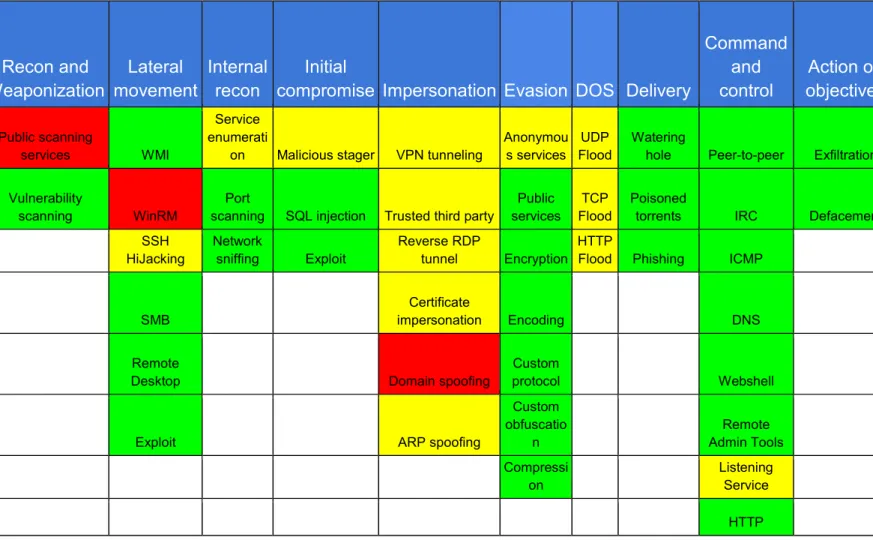
Matrix heatmap - APT reports 54
Experiment 1 - APT reports 56
Preface 56
Criteria for choosing threat actors 56
Test case reporting model 58
Calculating efficacy of matrix vs. threat actor 58 Calculating efficacy of matrix vs. all threat actors 59
Experiment 2 - Adversary simulation 60
Who are we emulating and why? 60
Adversary emulation process 61
Gather threat intelligence 61
Extract techniques 61
Analyze and organize 61
Develop tools 63
Emulate the adversary 63
Network setup 63
Data collection 64
Calculating efficacy of matrix vs. APT3 adversary emulation 65
Experiment 3 - 2017 NCCDC PCAP dataset 65
What is NCCDC? 65
Why we choose this dataset? 66
Convert NCCDC PCAPs to Zeek logs 69
Methodology for detecting the adversary 69
Calculating efficacy of our matrix vs. NCCDC red team 71
Experiments and results 73
Experiment 1: APT reports 73
Test case 1: APT 3 73
Description 73 Aliases 73 Network techniques 74 Tools/malware 76 References 76 Heat map 77
Test case 2: Lazarus group 78
Description 78 Aliases 79 Network techniques 79 Tools/malware 84 References 84 Heat map 85
Test case 3: Iranian Cyber Espionage (APT 33, 34, 35, 39, 41) 86
Description 86 Aliases 87 Network techniques 88 Tools/malware 93 References 94 Heat map 94
Test case 4: APT 28 96
Description 96 Aliases 96 Network techniques 97 Tools/malware 100 References 100 Heat map 101
Matrix heatmap - Experiment 1 102
Experiment 2: Adversary emulation tool 104
Start data collection 104
Weaponizing a document 104
Detonating implant 105
Watching campaign 106
Splunk queries 106
Matrix heatmap - Experiment 2 107
Experiment 3: 2017 National Collegiate Cyber Defense Competition (CCDC) PCAP
dataset 108
Splunk queries 108
Matrix heatmap - All experiments 119
Discussion 122
Preface 122
Missing techniques 122
Defense in depth - addressing encryption 124
NIDS/NIPS comparison 126
Network heatmap of network detection 126
Final matrix heatmap 127
Attribution vs. detection 127
Keeping techniques 128
Public scanning services 128
VPN tunneling 129
Certificate impersonation 129
Communities impacted by our research 130
Practitioner 130
Scholarly 130
Final matrix 131
Contributions 132
Python PDF keyword extractor 132
EQL supporting Zeek logs 133
What is EQL? 133
Install/Setup EQLLIB for Zeek logs 133
Converting Zeek logs on MacOS 134
EQL + Zeek 135
Jekyll 136
Why Jekyll 136
Adding new attack theme 136
Adding new technique 138
Community contributions 139
Public datasets 139
References 141
Appendix 153
PDF master keyword list 153
Github repos 155
NCCDC 2017 PCAP to Zeek logs bash script 155
APT 3 techniques 156
Host-based techniques 156
Network-based techniques 159
Zeek script vs. our matrix techniques 167
Techniques 167
2017 NCCDC 173
CCDC network diagram 173
Asset list 173
Network setup for experiments 2 and 3 176
Why Zeek and pf_ring? 176
Network diagram 176
Network hardware resources 177
Init Windows Server 2016 178
Install Ansible on macOS 180
Deploy Windows domain controller 180
Init Windows clients 181
Deploy Windows client 182
Create domain users 182
Disable Windows Defender on hosts 183
Allow SMB through firewall 183
Install/Setup Zeek + pf_ring with Ansible 184
Init Ansible setup 184
Set variables for zeek setup 184
Init Ubuntu box 185
Deploy Zeek sensor 185
Deploy Splunk on zeek 186
Create an index for Zeek logs 187
Definitions
● Advanced persistent threat (APT) - An adversary targeting a network with the
capability and resources to develop advanced tools used to thwart security controls and the time, money, and personnel to maintain a presence on the network.
● Attack themes - Contains a grouping of adversary techniques to describe attacker
activity on a network.
● Techniques - Method of achieving a result during an attack.
● Recon and weaponization - The attacker conducts research on a target. The attacker
identifies targets (both systems and people) and determines his attack methodology. The attacker may look for Internet-facing services or individuals to exploit.
● Lateral movement - The attacker uses his access to move from system to system
within the compromised environment.
● Internal recon - The attacker explores the victim’s environment to gain a better
understanding of the environment, the roles and responsibilities of key individuals, and determines where an organization stores information of interest.
● Initial compromise - The attacker successfully executes malicious code on one or more
systems. This most likely occurs through social engineering (most often spear phishing), by exploiting a vulnerability on an Internet-facing system, or by any other means
necessary.
● Impersonation - A type of attack where the attacker pretends to be an authorized user
of a system in order to gain access to it or to gain greater privileges than they are authorized for.
● Evasion - The Attacker also attempts to bypass an information security device in order
to deliver an exploit, attack, or other forms of malware to a target network or system, without detection. Evasions are typically used to counter network-based intrusion
detection and prevention systems (IPS, IDS) but can also be used to bypass firewalls and defeat malware analysis.
● DOS - A denial-of-service (DoS) is any type of attack where the attackers attempt to
prevent legitimate users from accessing the service.
● Delivery - A network mechanism used to distribute the malicious code to the target.
● Command and control - A command and control (C&C) Server is a computer controlled
by an attacker or cybercriminal which is used to send commands to systems compromised by malware and receive stolen data from a target network.
● Actions on objective - The attacker accomplishes his goal. Often this means stealing
intellectual property, financial data, mergers and acquisition information, or Personally Identifiable Information (PII). Once the mission has been completed, most targeted attackers do not leave the environment, but maintain access in case a new mission is directed.
● Dwell time - is calculated as the number of days an attacker is present on a victim
List of figures
● Figure 1: MITRE ATT&CK and TTPs explained ● Figure 2: Lockheed Martin Cyber Kill Chain ● Figure 3: Mandiant Attack Lifecycle
● Figure 4: Bryant Kill Chain ● Figure 5: Snort rule for APT1
● Figure 6: MITRE adversary emulation process ● Figure 7: APT3 adversary emulation plan
● Figure 8: PDFs that contain command and control ● Figure 9: Our matrix HTTP technique
● Figure 10: Foundational matrix ● Figure 11: APT report heatmap
● Figure 12: Network diagram for adversary emulation ● Figure 13: Pyramid of pain
● Figure 14: Heatmap using our matrix vs. APT3 ● Figure 15: Heatmap using our matrix vs. Lazarus
● Figure 16: Heatmap using our matrix vs. Cyber Espionage groups ● Figure 17: Heatmap using our matrix vs. APT28
● Figure 18: Heatmap of our matrix vs. APT reports
● Figure 19: Heatmap of our matrix vs. APT3 adversary emulation ● Figure 20: Heatmap of our matrix vs. 2017 NCCDC red team ● Figure 21: Heatmap of our matrix vs. all experiments
● Figure 22: Final matrix
● Figure 23: Python PDF keyword extractor command line args ● Figure 24: APT keywords example
● Figure 25: 2017 NCCDC network diagram
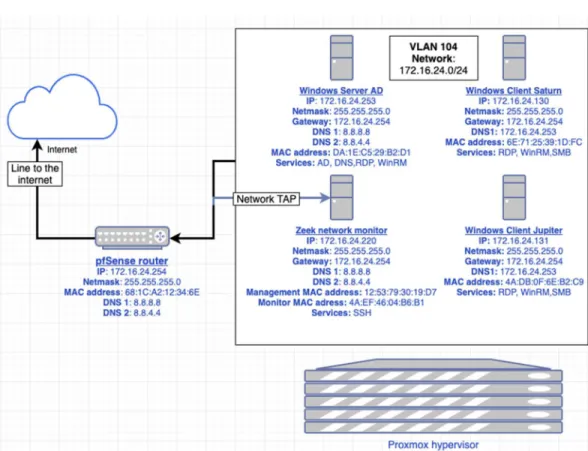
● Figure 26: Network diagram for adversary simulation
List of tables
● Table 1: NSM platform comparison
● Table 2: Adversary emulation platform comparison ● Table 3: APT report heatmap key
● Table 4: NCCDC red team vs. different types of threat actors ● Table 5: Our matrix vs. APT 3
● Table 6: Our matrix vs. Lazarus
● Table 7: Our matrix vs. Cyber Espionage groups ● Table 8: Our matrix vs. APT28
● Table 9: Experiment one - efficacy of our matrix vs. APT reports ● Table 10: Splunk queries for adversary emulation
● Table 11: Efficacy our matrix vs. APT3 adversary emulation ● Table 12: Splunk queries for NCCDC 2017 PCAP dataset
● Table 13: Efficacy of our matrix vs. 2017 NCCDC red team ● Table 14: Coloring scheme for techniques on all experiments ● Table 15: 2017 NCCDC asset table
List of equations
● Equation 1: efficacy of matrix vs. threat actor ● Equation 2: efficacy of matrix vs. all threat actors
● Equation 3: Efficacy of our matrix vs. APT3 adversary emulation ● Equation 4: calculating efficacy of our matrix vs. NCCDC red team
Abstract
Constant innovation in attack methods presents a significant problem for the security community which struggles to remain current in attack prevention, detection and response. The practice of threat hunting provides a proactive approach to identify and mitigate attacks in real-time before the attackers complete their objective. In this research, I present a matrix of adversary
techniques inspired by MITRE’s ATT&CK matrix. This study allows threat hunters to classify the actions of advanced persistent threats (APTs) according to network-based behaviors.
Introduction
Advanced persistent threats (APTs) have become an ever-increasing plague in the IT environment. APTs have been known to steal intellectual property (IP) [79] [86], personally identifiable information (PII) [86] such as social security numbers, and the Magecart attacks [2] demonstrated by financially motivated attackers. Our current method of setting up security controls to wait for an alert to be triggered is no longer effective. As defenders, we need a more proactive approach to seeking out attackers and one solution is threat hunting.
Threat hunting turns the tables and allows defenders to become the hunters within their
environment. Threat hunting empowers security analysts to search for the existence of APTs on the network that has security controls implemented but have gone undetected. The ultimate goal of threat hunting is to reduce the dwell time of an attacker within the network [1]. Our research will implement Endgame’s threat hunting process because it is built on the foundation of the scientific method, which makes the process repeatable and our findings measurable.
The first step in their process is generating a hypothesis in which the analyst can prove or disprove the existence of malicious activity in their environment. The Endgame process uses the MITRE ATT&CK matrix to facilitate generating hypotheses because it provides a list of known APT techniques
In the current landscape, the MITRE ATT&CK matrix targets endpoint detection. Meaning the current MITRE ATT&CK matrix only contains host-based techniques and does not provide network-based techniques to be hunted for on the network. I am challenging that APT detection is not limited to endpoint monitoring and that detection can be performed from the network as well. Our research will generate a MITRE ATT&CK style-like matrix to describe APT techniques
from a network perspective that can be used for network-based threat hunting. Therefore, our research will reduce the dwell time of an attacker on the network because security analysts will have a set of network-based and host-based techniques to hunt for.
Background
Advanced Persistent Threat (APT)
APT is a cliche term that has been recycled within the cybersecurity industry so much that it seems everyone has their own definition. Our definition of APT will be “an adversary targeting a network with the capability and resources to develop advanced tools used to thwart security controls and the time, money, and personnel to maintain a presence on said network.”. The motivation to devote this massive amount of resources differs between APT groups. Over the past 20 years, we as a society have seen the results of each APT groups motivation in our daily lives.
In the Spring of 2019, Magecart took the cybersecurity community by storm when targeted attacks were discovered. RiskIQ reports that Magecart is “responsible for recent high-profile breaches of global brands Ticketmaster, British Airways, and Newegg in which its operatives intercepted thousands of consumer credit card records” [2]. In the Summer of 2019, multiple municipalities in the state of Florida [18] [19] [20] and Georgia [21] [22] [23] were victims of targeted ransomware campaigns. These ransomware campaigns targeted municipalities with cyber insurance policies; therefore, the payout was guaranteed. In light of the recent financial attacks, Fireeye has created a new term called FIN which is an abbreviated term for financially
motivated attackers [24].
The 2016 United States (U.S.) election was the first time in U.S. history that the power of the internet was used to force a desired outcome on an election in a democratic nation. As time evolved, multiple reports including academic reports [25] [26] [27], public reports [28] [29], the Mueller
report [30], and news articles [32] [33] [34] have been released pertaining to Russia’s capabilities during the 2016 election. These capabilities include, but are not limited to, the capability to infiltrate our social media to change the way we perceive information, our democratic system, and the capability to perform cybersecurity espionage.
During the 2016 election, the Democratic National Committee (DNC) was hacked by a group referred to as APT 28. Crowd Strike was brought in to perform an investigation and discovered a “Russian-based threat actor, which has been active since the mid 2000s, and has been responsible for targeted intrusion campaigns against the Aerospace, Defense, Energy, Government and Media sectors. Their victims have been identified in the United States, Western Europe, Brazil, Canada, China, Georgia, Iran, Japan, Malaysia, and South Korea. Extensive targeting of defense ministries and other military victims has been observed, the profile of which closely mirrors the strategic interests of the Russian government” [35].
The last type of threat actors that we are going to discuss is hacktivist groups such as
Anonymous. Hacktivists have been known to target individuals and organizations to increase the awareness of their agenda. In the Fall of 2010, Anonymous launched “DDoS attacks as part of Operation Payback against Amazon, PayPal, MasterCard, Visa, and PostFinance, in 2010 in response to these companies’ 20 attempts to block donations to WikiLeaks, an international non-profit journalist organization that leaks and publishes confidential information provided by anonymous sources” [36].
In summary, these APT groups have shown that they are capable of accomplishing their object, regardless of difficulty or cost. These current events are examples of the capabilities that APTs possess and the consequences that follow as a result of their actions.
Techniques, tactics, and procedures (TTPs)
The acronym TTPs stands for Techniques, Tactics, and Procedures. TTPs are used to
represent the behaviors of adversaries [37]. This term TTP comes from the military and is used to describe the actions of the adversary and how they do it in increasing levels of detail [136]. A breakdown of TTPs [37] [38] [39] is outlined below.
A TTP can be broken out as:
● Tactics - Outline the way an adversary chooses to carry out his attack from the beginning to the end.
○ Phases of an attack like initial compromise, lateral movement, persistence, and etc
● Techniques - Approach of achieving intermediate results during the campaign ○ Send targeted emails to potential victims with a malicious document
○ Documents attached containing malicious code which executes upon opening ○ Captures credit card information from keystrokes
○ Uses HTTP to communicate with a command and control server to transfer information
● Procedures - What the adversary is looking for within the target’s infrastructure. ○ Perform open-source research to identify potentially gullible individuals ○ Craft a convincing socially engineered email and document
○ Create malware/exploit that will bypass current antivirus detection ○ Establish a command and control server by registering a domain called
mychasebank.org
○ Send mail to victims from a Gmail account called [email protected].
TTPs in perspective of the MITRE ATT&CK matrix
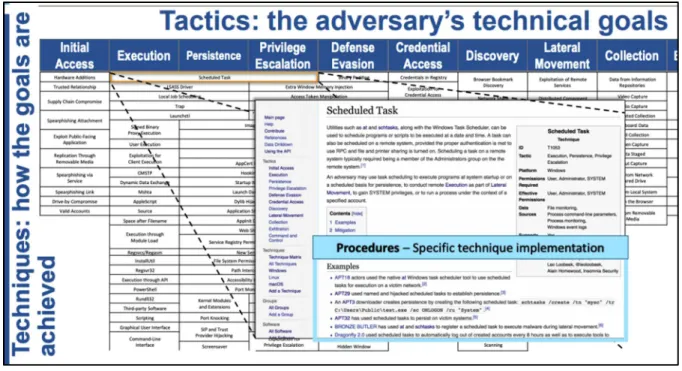
This screenshot below (Figure 1: MITRE ATT&CK and TTPs explained) is a perfect example of how the MITRE ATT&CK matrix represents TTPs. The column headings (color blue) are the tactics, the white cells are techniques, and the instructions to perform a particular technique are the process.
Figure 1: MITRE ATT&CK and TTPs explained
● Nickels, K., & Thomas, C. (2018). Retrieved from https://www.sans.org/cyber-security-summit/archives/file/summit-archive-1536260992.pdf
Adversary models
Before we can understand threat hunting, we must understand the process of an APT. In our current landscape, there are two favored models to describe the process of an advanced persistent threat. These two models are the Lockheed Martin Cyber Kill Chain [40] and the Mandiant Attack Lifecycle [41]. However, for this research, we chose the Bryant Kill Chain [42]
which is an evolution of the Mandiant Attack Lifecycle and the Lockheed Martin Cyber Kill Chain for network-based forensics.
Cyber kill chain by Lockheed Martin
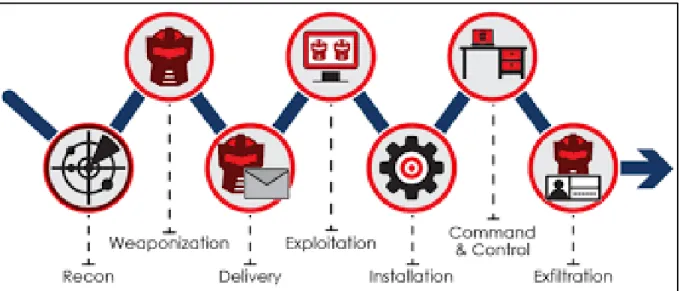
Figure 2: Lockheed Martin Cyber Kill Chain
● (2017). Retrieved from https://www.eventtracker.com/EventTracker/media/EventTracker/Images/Newsletters/Cyber-Kill-Chain.png
The first publicly known attack model was the cyber kill chain developed by Lockheed Martin. This model was an attempt to describe the activities adversaries must complete in order to achieve their objective [43]. However, this model was created from the perspective of the
adversary but was intended to be used by defenders. As stated by Lockheed Martin “This paper describes an intelligence-driven, threat-focused approach to study intrusions from the
adversaries’ perspective. Each discrete phase of the intrusion is mapped to courses of action for detection, mitigation and response.” [40]
This model is inadequate for defenders because it contains phases of the attack process that defenders can’t detect. For example, the cyber kill chain contains an attack phase called
“weaponization”; the creation of a zero-day exploit or malicious document to control a machine on the target network.
Weaponization is a phase that can not be detected by defenders. In fact, Lockheed Martin states “This is an essential phase for defenders to understand. Though they cannot detect weaponization as it happens, they can infer by analyzing malware artifacts.” [43]. This is one reason why the Cyber Kill Chain is not an appropriate model for defenders and our model.
Second, the Cyber Kill Chain’s visual representation is incorrect. The Cyber Kill Chain shows a linear progression for attackers but does not accurately represent the actions of attackers. Attackers will continually perform internal recon, lateral movement, and placing persistence until they achieve their objectives [44]. These flaws lead to the creation of the Attack Life Cycle by Mandiant.
Attack life cycle by Mandiant
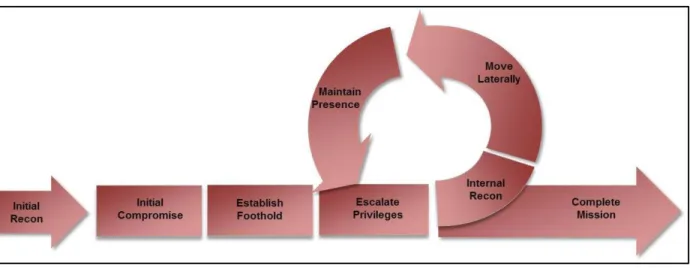
Figure 3: Mandiant Attack Lifecycle
The Mandiant Attack Life Cycle provides an attack model that can be used by red teamers (attackers) and blue teamers (defenders) to describe the actions of APTs. This model removes the weaponization phase because it is not something that can be detected by defenders. All the phases on the Attack Lifecycle are phases that can be detected by defenders. Next, the model visually represents the path of attackers by adding a loop. This loop is demonstrating that an attack is not a linear progression.
The Attack Lifecycle is the preferred adversary model these days in the infosec community. However, for our purposes, the Attack Lifecycle contains phases that cannot be observed from the network. For example, privilege escalation is something that happens on the host and can not be detected from a network perspective. This statement assumes the premise that
defenders do not have the ability to detect the delivery of the privilege escalation exploit. Since the Attack Lifecycle does not meet our needs of being network focused, we started to look for alternative adversary models.
Bryant kill chain
Figure 4: Bryant Kill Chain
● Bryant, B. D., & Saiedian, H. (2017). Retrieved from https://www.researchgate.net/publication/314782193_A_novel_kill-chain_framework_for_remote_security_log_analysis_with_SIEM_software
The Bryant kill chain is an exceptional alternative for an adversary model [42]. This model is an evolution of the Lockheed Martin Cyber Kill Chain and the Mandiant Attack Lifecycle and has a focus on network-based forensics. This model also addresses the flaws described earlier and
provides phases of an attack from a network perspective. Our matrix uses this adversary model as a foundation for the column headings.
Our model acknowledges each phase of the Bryant Kill Chain except for one, which is privilege escalation. This was discussed earlier as a phase that occurs on the machine itself and cannot be observed from a network perspective. Furthermore, our model combines the phases “actions on objectives” and exfiltration because we believe exfiltration is part of “actions on objectives”.
MITRE ATT&CK matrix
Origin story
This section will provide the origin story of the MITRE ATT&CK matrix [45]. In 2013, MITRE started a project called FMX [46] [47] [48] [49]. The goal of FMX was to figure out better ways of detecting adversaries after they have already gained access to the network. FMX would help map how they moved around, how they completed their objective, and how they learned about the environment [47]. By doing this project, the hope was to take a deep dive into the mindset of an attacker and understand the artifacts left behind by their actions.
At ATT&CKcon, Blake Storm, the creator of the MITRE ATT&CK matrix, states [50] that a lot of companies were basing their security strategy on indicators of compromise (IOCs). These IOCs would typically be an IP address, file hash, domain name, registry values, and unique strings within the malware. These IOCs were ephemeral, meaning, the intelligence was only actionable for a short period of time. Furthermore, a threat actor would use one set of IOCs to attack organization A but use another set to attack organization B. FMX was the genesis of a list of
adversary behavior on a system and a combination of behaviors would act as a fingerprint for a specific threat actor.
At the time, the biggest challenge in our industry was that we didn’t have a common framework to describe adversary behavior. This lead to not being able to cross-correlate threat actor activity, being restricted to forensic artifacts which were low fidelity IOCs or only discussed how the malware functioned but not how the adversary was operating it. MITRE noticed this issue and started to collect all the public reports on known APTs. After reading each report, they tried to extract the techniques being used by each APT.
Next, MITRE created a list of known techniques based on knowledge from their internal red team. Then they cross-referenced those techniques with public reports on known threat actors, public reports on malware, and threat intelligence. Eventually, it became apparent that a set of techniques created a grouping. These groupings are what we now know as tactics or column headings on the current MITRE ATT&CK matrix. The evolution of the FMX project is what we now call the MITRE ATT&CK matrix.
Currently, the MITRE ATT&CK matrix allows the infosec community to communicate effectively [47] about host-based adversary behavior. Our matrix provides a framework to describe the behavior of an APT on the network. Furthermore, our matrix can be used by APT reports to describe the behavior of APT malware, instead of relying on ephemeral IOCs, like IP addresses.
Architecture
The architecture of the MITRE ATT&CK matrix is composed of three levels. The levels correspond to what we refer to as TTPs - tactics, techniques, and procedures. Each level increases in granularity about the adversaries behavior. The first level, tactics, is the column
heading across the top of the matrix. The second level, techniques, is the cells in each column. The third level, procedures, explains the details provided in each cell to accomplish a technique.
You may have recognized that a majority of the column headings on the MITRE ATT&CK matrix correspond to the phases from the Mandiant Attack Lifecycle. The MITRE ATT&CK matrix takes the concept of the Mandiant Attack Lifecycle and expands upon what it is trying to represent.
The column headings of the ATT&CK matrix are phases of the Attack Lifecycle [47]. As you go down each column (phase) of the matrix, these are the techniques used by APTs. Finally, now that we have an understanding of adversary models, TTPs, and the MITRE ATT&CK matrix, we can now start to discuss threat hunting.
Threat hunting
What is threat hunting?
Threat hunting like APT has several definitions within our industry. However, our definition of threat hunting is “a human analysis with automation to search for the existence of malicious activity that has evaded the detection of security controls within your environment”. A simpler version is how Endgame states threat hunting, which is a “process of actively looking
for signs of malicious activity within enterprise networks, without prior knowledge of those signs.” [1]. Listed below is the threat hunting process by Endgame [1]:
Endgame’s threat hunting process
1. Propose a hypothesis
3. Develop analytics 4. Automate
5. Document
6. Communicate and report
Threat hunting process in action
The first step in this process is generating a hypothesis which the analyst can prove or disprove [1]. A beginner to threat hunting may generate a hypothesis of “hunt for malicious activity within my environment”. This may seem like an acceptable hypothesis but this approach is incorrect. An approach such as this provides an unrepeatable experiment that does not have a definite conclusion. An experienced threat hunter will generate a scoped hypothesis that will result in a definite conclusion. The final conclusion should state whether or not signs of malicious activity were discovered in our environment for that particular technique.
One approach and a commonly preferred method of generating a scoped hypothesis is utilizing the MITRE ATT&CK matrix [1]. The MITRE ATT&CK matrix has column headings that are composed of the phases from the Mandiant Attack Lifecycle and additional themes that
emerged from research on APT groups. For example, the “Lateral Movement” column contains techniques used by attackers to move laterally in an environment. If we wanted to hunt for lateral movement in our environment, we would choose one technique from this column to hunt for and subsequently generate a hypothesis.
For instance, let’s say we want to hunt for Server Message Block (SMB) being used for lateral movement in our environment. A potential hypothesis would be: “Attackers are leveraging SMB to move laterally in our environment”. A Sub-hypothesis may be required to provide a definite conclusion. An example of sub-hypothesis would be: “Attackers are leveraging PsExec to
perform SMB lateral movement in our environment.” Next, we would collect information in our environment to prove or disprove our hypotheses.
After collecting the appropriate data, we want to reduce our data set to cut down the amount of analysis required by a human. Reducing the dataset may exclude IT servers that use PsExec to remotely manage systems. Once a reduced dataset has been constructed, you need to
automate the collection and reduction process. Once automated, this process should be documented so the hunt is reproducible, provides all the decisions for data reduction, and how to interpret the findings.
Any findings need to be communicated and reported. It is important to note the absence of malicious activity does not mean the hunt was unsuccessful. The absence of malicious activity demonstrates your security controls are functioning as intended for that particular technique. This premise assumes the following: your security controls are working as intended, your security controls are collecting the proper information for the intended hunt, the security analyst’s filtering does not exclude malicious activity, and the security analyst interprets the results correctly
Our approach to network-based threat hunting will take a similar approach. Our MITRE
ATT&CK style-like matrix will empower a security analyst to hunt for the behavior of APT activity on the network. The process mentioned above can be used to determine the likelihood of APT acting within a network. To accomplish this objective, we will utilize the network security monitoring platform, Zeek (formerly known as BRO), to analyze network traffic for malicious behavior.
Network security monitoring (NSM) platforms
What is network security monitoring (NSM)
Richard Bejitlich states network security monitoring (NSM) is “the collection, analysis, and escalation of indications and warnings to detect and respond to intrusions. NSM is a way to find intruders on your network and do something about them before they damage your enterprise.” [53]. An NSM will sit on your network inspecting the network traffic looking for signs of malicious traffic. The infosec community has various platforms to perform NSM operations and choosing the best platform for our use case was not easy.
Criteria for network security monitoring (NSM)
One of the hardest tasks of this thesis was choosing the best network security monitoring platform for the experiments. The painless part was finding a diverse set of platforms but the criteria to choose the best platform was not so trivial. Our literature review didn’t reveal one set of criteria to be used but rather themes emerged from the literature review. These themes were used as our criteria to choose the best network security monitoring platform.
The literature review emerged the following themes: have an extensible framework and/or rule engine [51] [65], must be protocol-aware [63] [64] [65], must have a network monitoring fidelity [52] [63] [64] [65], must provide a detailed timeline of events that occurred on the network [53] [63] [65], and must provide scope on an incident [52] [65] [66] . The extensible framework enables the security analyst to utilize pre-made rulesets and create/modify rules to detect malicious activity. No two
environments are alike and an NSM system has to be flexible for each environment. In addition, your environment may have homegrown software, which means no single solution will protect it out of the box.
The NSM platform must be protocol aware. In the event that malware communicates [132] [133] with HTTP (no encryption) over port 443 (which is the standard port used for HTTPS), a protocol aware platform will not make the mistake of assuming it’s encrypted traffic and will inspect the traffic properly. Not only is being protocol aware important but so is providing a timeline of events. For example, let’s say ransomware infects a machine on your network and spreads to other machines. The NSM should provide a timeline of the initial beacon from the first infected machine to the ransomware C2 server.
Next, the NSM should provide a timeline of when other machines were infected and how fast it spread. Continuing with this hypothetical, the NSM should provide scope to incidents. The network logs should show all the machines that were infected (calling out to C2 server) and who each machine talked to. The criteria discussed so far is great but it only provides so much context about the incident, which is why different levels of fidelity are needed.
NSM platforms have the following logging levels which are: statistical-based logging, event-based logging, session data, and full PCAP capture [52] [63] [64] - logging levels are ordered by fidelity. The first logging level, statistics, “shows the nature and volume of the data moving through your network” [52]. Statical based logging has the advantage of being able to detect irregular volumes of traffic and detect beaconing.
With enough statistical data, one could find huge spikes of data leaving a network which would indicate exfiltration. Statistical data of the network can be used to detect beaconing activity which occurs on a specified interval. Lastly, statistical-based logs can be used to look for suspicious data around a particular time frame.
Event-based systems “will generate events (or alerts) when the predefined conditions are observed on the monitored network.” [52]. Event-based monitoring is probably the most popular option being used in enterprise environments [52]. This type of monitoring generates alerts when conditions of the connection meet a predefined signature. For example, the Snort IDS rule below (Figure 5: Snort rule for APT1) is specially crafted to detect the existence of APT1 on the network. At a high level, this rule is looking for a certificate that has a serial number that starts with “7C A2” and contains “mail.aol.com” for the issuer of the certificate.
Figure 5: Snort rule for APT1
alert tcp $EXTERNAL_NET 443 -> $HOME_NET any (msg:"ET TROJAN FAKE AOL SSL Cert APT1"; flow:established,from_server; content:"|7c a2 74 d0 fb c3 d1 54 b3 d1 a3 00 62 e3 7e f6|"; content:"|55 04 03|"; content:"|0c|mail.aol.com"; distance:1; within:13;
reference:url,www.mandiant.com/apt1; classtype:trojan-activity; sid:2016469; rev:3;)
Session data “is a record of the conversation between two network nodes.” [53]. Session data collects the following data: “timestamp, source IP address, source port, destination IP address, destination port, protocol, application bytes sent by source, and application bytes sent by destination, and other information” [53]. The other information may include more information about a connection such as the HTTP method (GET, POST) or the HTTP URI for an HTTP connection. For example, an IT system may use PsExec over SMB to remotely administrate a box. Session data could be used to detect an infected Windows client initiating SMB calls via PsExec to the Windows server, which shouldn’t be happening.
Lastly, full packet logging is “collecting the data transferred between systems to help the IR team generate signatures, monitor activity, or identify data that has been stolen” [52]. This type of
collection is the entire conversation including the data payload. Full PCAP data can be used to investigate alerts from event-based systems. Also, full PCAP monitoring “offers the highest fidelity, because it represents the actual communication passed between computers on a network.” [52]. While this option provides the highest fidelity, it also requires a lot of resources to store these PCAPs long term.
In addition to the themes that emerged from the literature review, the researchers added their own criteria which are: an open-source platform, not a conglomerate of tools like SecurityOnion (SO), consideration of hardware requirements, and enterprise battle-tested. The overall goal of these additional requirements is to ensure our research can be employed by all organizations, including organizations with small IT budgets.
If our research required full PCAP captures to implement our solution, it would be impossible for small businesses. Northrop Grumman reported in 2011 that a 1 gigabyte saturated link would generate 6TB of PCAP in one day. Depending on the small business, 6TB of data may be more data than the entire organization as a whole - based on the small business pricing of cloud storage providers like Dropbox OneDrive, and Google Drive.
This means the hardware for this type of solution would not be practical. Staying with the theme of small IT budgets, an open-source solution is something that any organization can implement. The researchers would like the reader to note that even though Zeek is open-source, it doesn’t mean it’s only a solution for small IT budgets. Zeek has been implemented and battle-tested at organizations with 100G links [69] [70].
Berkeley labs demonstrated that Zeek can be run on commodity hardware [69]. Berkeley is monitoring a 100G link with the following hardware: [69]
● 2x Intel 3.5GHz Ivy Bridge dual hex--core ● 128GB DDR3 1600 MHz ECC/REG RAM ● 2x Intel 6GB/s 2.5” 120GB SSD drives
● 6x WD1000CHTZ 10K RPM 6GB/s 1TB SATA drives for RAID -6 ● Myricom NIC
Lastly, the researchers tried to stay away from NSM stacks like Security Onion (SO). SO at the time of this writing supports 20+ [135] [136] [137] tools. While SO is fantastic in the abundance of features it provides, the tooling can be overwhelming. Our researchers wanted to focus on one tool to perform network security monitoring.
Network security monitoring criteria
● Open-source platform
○ No commercial platforms were evaluated ● Not a conglomerate of tools like SecurityOnion ● Extensible framework and/or rule engine [51] [65]
○ 0 - No rules
○ 1 - Rules provided by an entity but can not add/modify rules ○ 2 - Rules provided by an entity and can add/modify rules ● Protocol-aware [63] [64] [65]
○ 0 - Not protocol aware ○ 1 - Protocol aware
● Network monitoring fidelity [52] [63] [64] [65]:
○ 1 - Statistics: High-level statistics are generated to show the nature and volume of the data moving through your network
○ 2 - Event-based: Generate events(or alerts) when the predefined conditions are observed on the monitor network
○ 3 - Session data: A record of the conversation between two network nodes. Session data collects: source IP, source port, destination IP, destination port, protocol, application bytes sent by the source, application bytes sent by destination, and additional application information.
○ 4 - Full content data: Collecting all information that passes across a network - full packet capture
● Generate a timeline of DETAILED network events [53] [63] [65] ○ 0 - No timeline
○ 1 - Timeline of alerts
○ 2- Timeline of network events ● Enterprise battle-tested [69] [72] [73]
○ 0 - No known setups
○ 1 - Known setups in environments ● Considerate hardware requirements [52] [67] [71] [72]
○ 2 - 0-5k for hardware ○ 1 - 5k-10k for hardware ○ 0 - 10k+ for hardware
● Provide scope on an incident [52] [65] [66] ○ 0 - No scope
○ 1 - Scope
Network security monitoring platform comparison
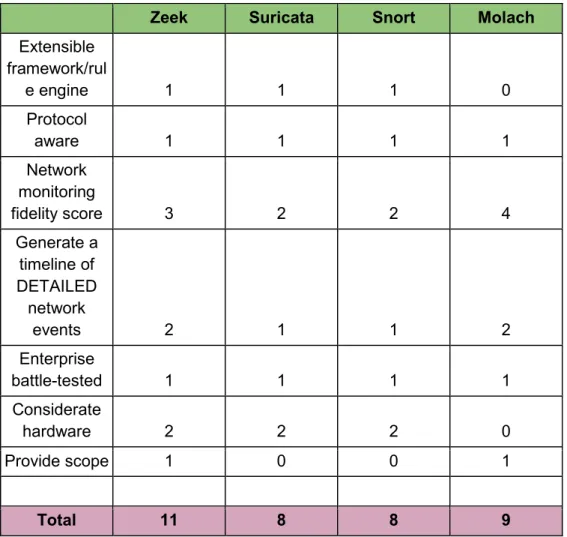
As stated above, our research discovered multiple platforms that could have been used to monitor network activity. Our final choice, was Zeek (formerly known as BRO) because it
produced the highest score based on the criteria below. The table below has network security monitoring platforms across the top and the criteria to evaluate each platform down the left. Each criterion has its own scale and the goal of this table is to show the best platform based on a score.
Table 1: NSM platform comparison
Zeek Suricata Snort Molach
Extensible framework/rul e engine 1 1 1 0 Protocol aware 1 1 1 1 Network monitoring fidelity score 3 2 2 4 Generate a timeline of DETAILED network events 2 1 1 2 Enterprise battle-tested 1 1 1 1 Considerate hardware 2 2 2 0 Provide scope 1 0 0 1 Total 11 8 8 9
Adversary emulation
What is adversary emulation?
Our industry has many terms for adversary emulation which include adversary simulation, threat simulation, and threat emulation. Our research will refer to this concept moving forward
as adversary emulation. Adversary emulation is defined by SANs as “activity where security experts emulate how an adversary operates. The ultimate goal, of course, is to improve how resilient the organization is versus these adversary techniques.” [60]
Our research will leverage an adversary emulation platform to emulate an APT group within a network environment. First, we will create an environment that will be monitored by Zeek for the adversary emulation platform to conduct its activities. This network will consist of two Windows 10 machines connected to a Windows Server 2016 domain controller, based on this network in this RSA presentation [60].
Once the simulation has been completed we will analyze the Zeek logs for network-based techniques. Next, we will create a heatmap of the techniques performed by the adversary emulation platform vs. the techniques discovered by Zeek that exist on our matrix. Our goal is to demonstrate the efficacy of our matrix by comparing the techniques used by the adversary emulation platform to emulate a threat actor vs. the techniques on our matrix.
Adversary emulation process
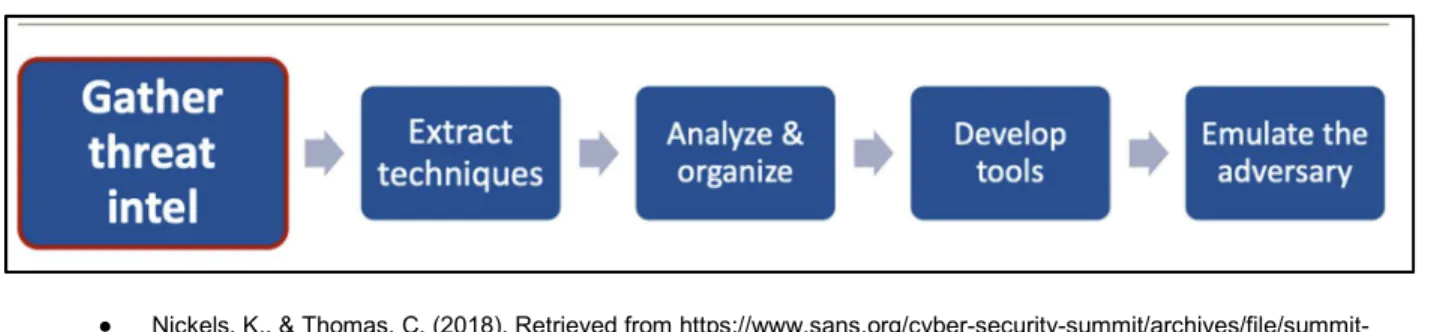
Figure 6: MITRE adversary emulation process
● Nickels, K., & Thomas, C. (2018). Retrieved from https://www.sans.org/cyber-security-summit/archives/file/summit-archive-1536260992.pdf
MITRE has a very simple process to perform adversary emulation which is [39]: 1. Gather threat intelligence about a threat actor
2. Extract techniques used by a threat actor 3. Analyze and organize
4. Develop tools
5. Emulate the adversary
First, we need to identify the adversary you want to emulate. This process can be done by considering who is targeting your organization and what gaps you’re trying to asses. Once you have identified a threat actor you would like to emulate in your environment, you need to gather threat intelligence. Threat intelligence may include, but is not limited to, APT reports, malware samples on VirusTotal, and indicators of compromise (IOCs) from a particular threat group [127].
Next, extract techniques used by the threat actor from the threat intelligence. These techniques should be mapped to techniques on the MITRE ATT&CK matrix [45] [76] [77] [78]. At the time of this writing, the MITRE ATT&CK matrix only provides a list of techniques for host-based techniques. The deliverable from this research should provide a matrix of techniques from a network
perspective, allowing security analysts to map network techniques. Lastly if necessary, perform additional research on how to perform certain techniques or tools to emulate each technique.
Next, analyze and organize the techniques extracted from your research. Establish a goal, if the threat actor were to gain access to your environment. For example, APT3 is known to steal intellectual property (IP) and that could be your goal [79]. Once a goal is established, use the list of techniques used by this threat actor to plan a technique flow for your environment. Once the flow is established, split the flow into phases that can be accomplished in a reasonable amount of time. Below is a screenshot (Figure 7: APT3 adversary emulation plan) of the adversary emulation phases for APT3 created by MITRE [79].
● Nickels, K., & Thomas, C. (2018). Retrieved from https://www.sans.org/cyber-security-summit/archives/file/summit-archive-1536260992.pdf
Next is to engineer the proper tooling to accomplish this emulation plan. Depending on the threat actor, you will need to find tools to accomplish each technique you wish to perform. If a tool doesn’t exist, you may need to engineer the tooling to make it happen. Once the tooling is created, you will need to create payloads but the payloads should emulate the adversary but shouldn’t get detected by signature detection. When appropriate, obfuscate your activities where the hope would be to obfuscate your behavior the same way the threat actor did.
Finally, emulate the adversary! As you conduct your adversary emulation keep in mind the timeline of the threat actor and act accordingly. One of two outcomes will be that the adversary emulation was successful or it wasn’t. Once the adversary emulation exercise has come to an end, it’s time for the red and blue team to discuss what was detected, what wasn’t, and possible detections and prevents.
Criteria for adversary emulation platform
Again, one of the challenges of this thesis was choosing the best adversary emulation platform for the experiment. The painless part was finding a diverse set of platforms but the criteria to choose the best platform was not so trivial. Our literature review didn’t reveal one set of criteria to be used but rather themes emerged from the literature review. These themes were used as our criteria to choose the best adversary emulation platform.
The literature review emerged the following themes: can perform phases of the Mandiant attack lifecycle [129] [131] (external reconnaissance [60] [62] [74] [129] [131], weaponization [60] [127] [131] [150], initial compromise [60] [61] [74] [127] [129] [131] [150], persistence [131] [150], escalating privileges [60] [61] [129] [131], internal recon [60] [74] [131] [150], lateral movement [39] [60] [74] [129] [131] [150], and actions on objectives [60] [129] [150]), post-exploitation modules [60] [150], multiple C2 channels [74] [130] [131] [150], can bypass security controls [39] [60] [61] [131], and can thwart signature detection [39] [60] [61].
If an adversary emulation platform states it can emulate an APT, it should be able to perform techniques from each phase on the Mandiant attack lifecycle. For the criteria below, we
combined the establish foothold and maintain persistence phases into persistence. Depending on the threat group, they may use the same or different techniques for each phase. In either case, they are just placing persistent mechanisms.
APTs are known to use any technique to accomplish their mission, therefore the adversary emulation platform should do the same. The platform should contain a plethora of
post-exploitation techniques to completely emulate the APT. For example, APT3 used 13 techniques for credential access, 3 techniques for lateral movement, 8 techniques for defense evasion, and 7 techniques for persistence [85]. Following this trend, APT3 used 6 techniques for command and
control from the MITRE ATT&CK matrix and 4 different techniques from our matrix (Experiment 1: Test case 1). This means the adversary emulation platform should have multiple
communication methods for C2.
Finally, the adversary emulation platform should be able to perform defense evasion. The literature emerged two themes to do this which are bypass security controls and thwart
signature detection. Bypassing security controls could be as simple as disabling AV or knowing a vulnerability to go undetected by the AV. In addition, your defenders should not be able to create signatures for your adversary emulation artifacts. For example, if your defenders detect a binary related to your adversary emulation exercise and create a signature to detect that file hash, this hash should not be used again in future exercises.
In addition to the themes that emerged from the literature review, the researchers added their own criteria which are: extensible framework [150], platform must map techniques to the MITRE ATT&CK matrix [39] [74] [127] [129] [131] [150], paid or open-source platform, capable of performing full chain attacks [60] [150], and generate logging and reporting [60] [130].
First, as stated in multiple references, the platform must without exception map techniques to MITRE ATT&CK. This presentation at the RSA conference [60] states that everyone (red and blue team) want to speak the same language. Therefore, without exception, our research did not evaluate any platforms that did not have this capability.
The researchers wanted to address why open-source was strict for the NSM criteria above but not for the adversary emulation platform criteria. The researchers had a wonderful opportunity to test an up-and-coming adversary emulation platform called Scythe. In addition, when you
the other platforms combined. Also, the researchers have made the PCAPs (Contributions: Public datasets) from this adversary emulation exercise open-source for further research.
The adversary emulation platform should be able to perform full-chain attacks. A non-full chain attack is any platform that can only be used to test a single technique at a time. A platform should be able to perform payload generation (generate malicious document), initial compromise (with some user intervention), establishing a foothold (placing persistence), escalating privileges, internal recon, lateral movement, and exfiltration.
Lastly, after the adversary emulation exercise has ended, the platform should provide a report. This report should contain forensic artifacts, network artifacts, and a timeline of events. This type of reporting enables the defenders to go back and see if their system detected the activity.
Adversary emulation criteria
● Paid or and open-source platform
○ If open-source, the project must be maintained ■ Commit to master within the last 6 months
● Platform MUST map techniques to the MITRE ATT&CK matrix [39] [74] [127] [129] [131] [150] ● Extensible framework [150]
○ 0 - No set of techniques
○ 1 - Limited set of modules that can not be added to or modified ○ 2 - Extensible framework that can be added to or modified ● Capable of performing full chain attacks [60] [150]
○ 0 - Can only perform one technique at a time ○ 1 - Can perform a full-chain attack
○ Can perform attacker behavior such as external reconnaissance[60] [62] [74] [129] [131] [150]
■ 0 - Does not have the ability to perform external reconnaissance on a target
■ 1 - Has the ability to perform external reconnaissance on a target ■ 2 - Has the ability to perform external reconnaissance on a target and
suggest targeted attacks
○ Can generate attack specific payloads(weaponization)[60] [127] [131] [150] ■ 0 - Can not generate attack specific payloads
■ 1 - Limited set of attack specific modules
■ 2 - Provides an adequate amount of attack specific modules
○ Can perform attacker behavior such as initial compromise[60] [61] [74] [127] [129] [131] [150]
■ 0 - Can not perform an initial compromise ■ 1 - Limited set of initial compromise modules
■ 2 - Provides an adequate amount of initial compromise modules
○ Can place attacker behavior such as persistence (maintain presence/establish
foothold) [131] [150]
■ 0 - Can not place persistence
■ 1 - Limited set of persistence modules
■ 2 - Provides an adequate amount of persistence modules
○ Can perform attacker behavior such as escalate privileges [60] [61] [129] [131] ■ 0 - Does not have the ability to perform escalate privileges on a host ■ 1 - Has the ability to perform internal reconnaissance on a network ■ 2 - Has the ability to suggest different methods to escalate privileges on a
■ 3 - Has the ability to perform escalate privileges on a host and suggest ○ Can perform attacker behavior such as internal reconnaissance[60] [74] [131] [150]
■ 0 - Does not have the ability to perform internal reconnaissance on a network
■ 1 - Has the ability to perform internal reconnaissance on a network ■ 2 - Has the ability to perform internal reconnaissance on a target and
suggest targeted attacks
■ 3 - Has the ability to perform internal reconnaissance on a target and suggest targeted attacks
○ Can perform attacker behavior such as lateral movement[39] [60] [74] [129] [131] [150]
■ 0 - Can not perform lateral movement
■ 1 - Limited in modules to perform lateral movement
■ 2 - Provides an adequate amount of modules to perform lateral movement
○ Can perform attacker behavior such as action on objectives(Exfil) [60] [129] [150] ■ 0 - Can not perform action on objectives
■ 1 - Limited in modules to perform action on objectives
■ 2 - Provides an adequate amount of modules to perform action on objectives
● An abundance of post-exploitation modules [60] [150] ○ 0 - Can not perform post-exploitation ○ 1 - Limited set of post-exploitation modules
○ 2 - Provides an adequate amount of post-exploitation modules ● Multiple command and control (C2) channels modules [74] [130] [131] [150]
○ 0 - A single command and control channel ○ 1 - Limited set of command and control channels
○ 2 - Adequate amount of command and control channels ● Reporting and logging [60] [130]
○ 0 - No mechanism for reporting ○ 1 - Reports on actions taken
○ 2 - Reports on actions taken with a timeline of events
○ 3 - Reports on actions taken with a timeline of events and forensic artifacts ● Can bypass security controls [39] [60] [61] [131]
○ 0 - Can no bypass security controls ○ 1 - Limited set of bypass modules
○ 2 - Provides an adequate amount of bypass modules
● Can change signatures to thwart signature creation/detection [39] [60] [61] ○ 0 - Can not signature to thwart signature creation
○ 1 - Limited to what signatures can be changed to thwart signature creation ○ 2 - All aspects of the campaign can be changed to thwart signature creation
Adversary emulation platform comparison
As stated above, our research discovered multiple platforms that could have been used to perform adversary emulation. Our final choice, was Scythe because it produced the highest score based on the criteria below. The table below has adversary emulation platforms across the top and the criteria to evaluate each platform down the left. Each criterion has its own scale and the goal of this table is to show the best platform based on a score.
Table 2: Adversary emulation platform comparison
Criteria
MITRE CALDERA
Atomic Red
Extensible framework 0 1 2 1 Capable of performing full chain attacks 1 0 1 0 External reconnaissan ce 0 0 0 0 Generate attack specific payloads 0 0 2 0 Initial compromise 1 1 1 0 Persistence 1 1 3 0 Escalate privileges 1 1 2 0 Internal reconnaissan ce 1 1 2 0 Lateral movement 1 1 2 0 Post-exploitation modules 1 1 2 0 Multiple command and control (C2) channels modules 0 1 2 1 Reporting and logging 1 1 3 1 Can bypass security controls 0 0 0 0
Can change signatures to thwart signature creation/dete ction 0 0 3 0 Total 1/4 9/32 25/32 3/32
MITRE ATT&CK matrix as an open system
The definition of a system theory is “any set of distinct parts that interact to form a complex whole.'' [75]. The MITRE ATT&CK matrix is a system that is a collection of distinct parts and these distinct parts are the TTPs of APTs. Our matrix is a deviation of a known system but with a network focus. Furthermore, our system is an open system with a feedback loop [75].
Our model is an open system because it relies on a set of inputs to derive the output: our matrix. The known intelligence of adversary behavior on a network is the input. The classification of that intelligence is the creation of TTPs and they are placed on our matrix. In a future section
(Process and method: Building the foundational matrix), we discuss how we reviewed APT reports to create a list of known TTPs.
Once we had a collection of TTPs we were able to assign categories to groupings of
techniques, we call these groupings tactics. The specific tool or command used to accomplish this technique is known as the procedure. However, as time continues, new TTPs will be discovered which creates a feedback loop.
Our model is also a feedback loop because the absence of a new TTP can be a source of input. A feedback loop can be positive or negative. One way we can accomplish a positive feedback
loop is by having the community submit feedback via a survey on the model. This feedback allows us to validate the model in its current state and shows that the items on the matrix are useable. However, as APTs evolve over time, new TTPs will be created.
The evolution of attacks is the negative feedback loop portion. These new TTPs will result in our model missing a desired output or absence of a TTP. Therefore, a new TTP can be added to our matrix to account for the newly discovered adversary behavior. The constant evaluation of feedback allows us to improve and track the success and failure of our model. It should be noted that failure is not necessarily a bad thing, it just means a lack of potential visibility on a TTP. Our model is a framework which means if the model is missing something it can be added to accommodate the needs of the consumer.
Our MITRE ATT&CK matrix - our origin story
In the Summer of 2018, one of the researchers was employed as an incident responder. One of their goals was to create a process and methodology for threat hunting on the network. The researcher consulted the MITRE ATT&CK matrix to obtain guidance on how to hunt on the network. Specifically guidance on how to generate hypotheses for hunts, data sources to use for hunting, and what type of activity to focus on based on the environment.
When they arrived at the MITRE ATT&CK website, they noticed the current matrix landscape was focused on endpoint behavior. While some techniques from the original matrix leave artifacts on the network, the current state wasn’t a practical model. It was at that moment, the genesis of this thesis was born.
Process and method
Preface
This section includes details pertaining to the process and method used for building the foundational matrix and each experiment to validate our matrix and its ability to detect an APT on the network. First, we started by building our foundational matrix which will be used as the template for all our heat maps in all experiments moving forward. The goal of these heat maps in each experiment is to measure the efficacy of our matrix to detect an APT on the network and to measure the validity of a technique on our matrix. At the highest level, our three experiments analyzed APT reports, performed adversary emulation, and PCAP analysis.
The first experiment includes a diverse set of APT reports to be used for test cases to show the efficacy of the matrix against known seasoned APT groups. The reason we choose APT report was because they show the efficacy of our matrix with publicly released threat intelligence about particular APT groups. Lastly, the APT reports are a form of open-source threat intelligence that allows our experiment to be reproduced
The second experiment will emulate a known APT with the Scythe adversary emulation platform [58] in a controlled environment. This adversary emulation platform starts by gaining an initial compromise within a network. Once initial compromise has been completed, it follows a set of instructions to pivot around the network and exfiltrate data. This adversary emulation platform allowed the researchers to detonate an APT style network attack in a controlled environment. The controlled environment allowed the researchers to dial in on specific network flows of traffic
and to create detections with Zeek. This experiment was important because it demonstrated Zeek could be used to detect APT behavior on a network.
The third experiment uses a semi-publicly available dataset from the 2017 National Collegiate Cyber Defense Competition (NCCDC) [163], which can be obtained from the ImpactCyberTrust organization. NCCDC is a red (attackers) vs. blue (defenders) event where students at the collegiate level defend an enterprise network from the red team. The red team is comprised of industry-level pen testers and red teamers. This competition takes place over a weekend and the purpose is for the red team to simulate an advanced attacker like an APT for the students to respond too.
Building the foundational matrix
Preface
The process we used to create our MITRE ATT&CK style-like matrix with a focus on network-based techniques, followed a similar approach to MITRE’s described above (Background: MITRE ATT&CK matrix). First, we needed an attacker model to describe the actions of attackers within an environment from a network perspective. As discussed earlier, we
discovered the Bryant Kill Chain [42] (Background: Adversary models - Bryant Kill Chain) which is our attacker model and was used to generate our initial column headings (attack themes).
As a result, the Bryant Kill Chain provided us with keywords to search for in APT reports to start filling in the columns with techniques. Next, we used APT report repositories [12] [13] [14] as our threat intelligence to generate a list of techniques known to be used by APTs. This created the bedrock for our matrix moving forward, which will be referred to as the “foundational matrix”.
This foundational matrix is our bedrock matrix that will be used as the template for all our heatmaps moving forward. The goal of these heat maps is to measure the efficacy of our matrix to detect an APT on the network and to measure the validity of a technique on our matrix. However, if by the end of our experiments a technique does not have an adequate rating on our scale, we will discuss removing it.
Attack themes
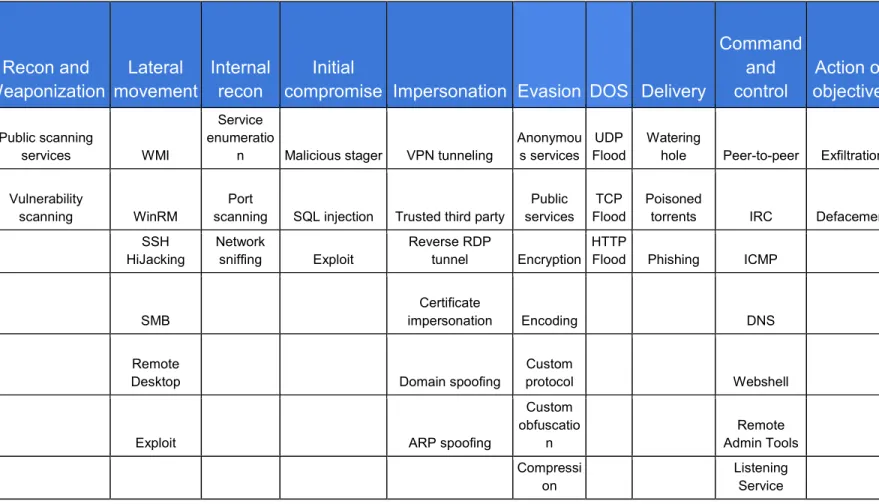
Our matrix has column headings like the original MITRE ATT&CK matrix, which represents phases of an APT from a network perspective, referred to as attack themes. As we have discussed several times already, the Bryant Kill Chain was our starting point for attack themes (column headings). In addition, attack themes discovered during our literature review were added to our matrix to represent a collection of techniques not included in the Bryant Kill Chain.
For instance, the attack theme “evasion” represents a collection of techniques APT groups may use to evade detection. This attack theme may not be a necessary phase of an attack but it’s still a behavior that an APT may perform on the network. Below is a list of the attack themes from the Bryant Kill Chain and themes that emerged from the literature review.
Bryant Kill Chain attack themes
● Recon and weaponization ● Lateral movement
● Initial compromise ● Delivery
Literature review attack themes
● Internal recon ● Impersonation ● Evasion ● DOS
● Command and control
Aggregating techniques
Validating our APT source
Our foundational matrix is composed of techniques that were discovered during the literature review of APT reports meaning this matrix represents techniques used by APTs; therefore, only techniques referenced by APT reports exist on the foundational matrix.
The researchers acknowledge that our source for APT reports is not an academically verified source. However, academia does not have the same volume of threat intelligence pertaining to APT reports when compared to the infosec community with publicly released reports. At the time of this writing, there were 0 academic papers on “APT 28” or “Advanced Persistent Threat 28” that included technical details of the APT’s behaviors via a Google Scholar search.
However, a Google Search returned 11 reports [8] [112] [113] [114] [117] [138] [139] [140] [141] [142] [143] pertaining to APT 28 with technical details. Furthermore, the following academic papers on APTs [8] [100] [144] [145] use publically unvetted sources as references. The APT report repositories used by our research is a collection of APT reports being used in academic papers and publicly released APT research
The researchers would like to note that academia has a plethora of papers regarding how to defend against APTs [146] [147] [148] [149] [154]. However, our research requires threat intelligence that is specifically targeted at individual APT groups and contains adversary behavior.
Reviewing APT reports
As stated above, the phases of the Bryant Kill Chain provided a perfect list of keywords to search for in PDFs but reading 1,979 reports (2 gigabytes, at the time of this writing) was unfeasible, in a reasonable amount of time. To help the researchers focus on specific reports containing criteria that pertained to the research, a Python script was created (Contributions: Python PDF keyword extractor). This Python script takes a list of keywords and a directory of PDFs as input and will scan all the PDFs in the directory for the existence of keywords.
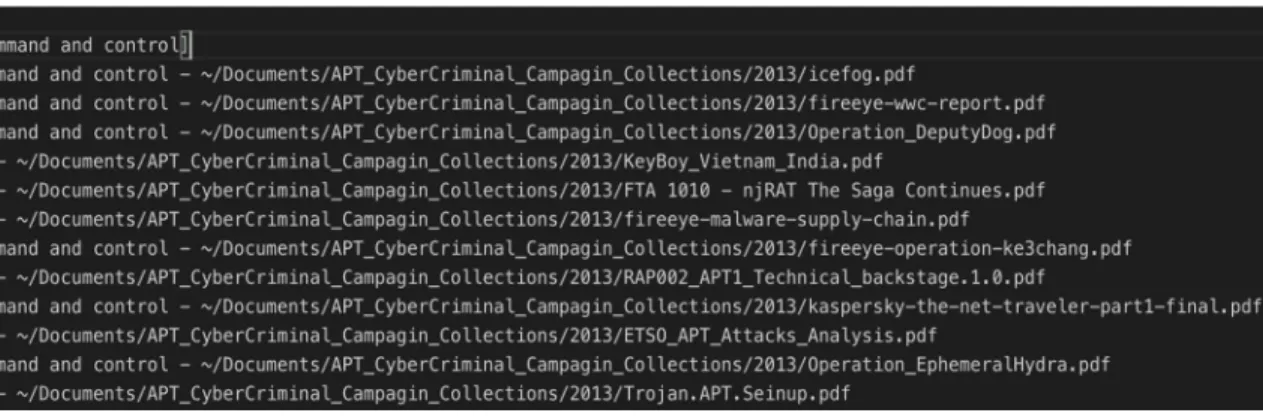
This solution allowed the computers to do the mundane process of looking for content and allowing the human to extract context. For example, if the keywords “command and control” or “C2” were detected in a PDF, it would be recorded to a text file for later review by a human, like in the figure below (Figure 8: PDFs that contain command and control). Once the list of PDFs that contained the phases of the Bryant Kill Chain was compiled, this allowed the researchers to target specific PDF reports.
Next, the researcher would open the PDF, search for the keyword, and read the literature pertaining to the keyword to obtain context. The context may reveal a new technique or a pre-existing known technique on the matrix. For example, the keyword “command and control” would be detected but the report would specify techniques such as HTTP or DNS tunneling in de