Establishing Ongoing, Early Identification Programs
for Mental Health Problems in Our Schools:
A Feasibility Study
ROBIN NEMEROFF, PH.D., JESSICA MASS LEVITT, PH.D., LISA FAUL, M.ED., AHTOY WONPAT-BORJA, B.A., SARA BUFFERD, M.A., STEPHEN SETTERBERG, M.D.,
ANDPETER S. JENSEN, M.D.
ABSTRACT
Objective:To investigate the feasibility of establishing ongoing, early identification services for mental health problems in school settings.Method:School counselors and other mental health professionals (N= 41) in middle, junior, and high schools (N= 23) were given training and supervision in the administration of an evidence-based mental health assessment tool, the Voice Diagnostic Interview Schedule for Children IV (DISC-IV), over the course of 12school years.Results: During the study, 530 students were selected to be assessed with the DISC, and 72% were confirmed to be at risk for a mental health problem (DISC+). Among DISC+ cases, 71% had never been in treatment before. The most common problems identified by the DISC were symptoms related to suicide (28%), social phobia (20%), attention-deficit/ hyperactivity disorder (19%), and oppositional defiant disorder (19%). Based on schools’ recommendations, 82% of parents with DISC+ children agreed to make an appointment for a follow-up evaluation. Of DISC+ children whose parents agreed to seek further evaluation, 65% of them were evaluated by a health or mental health professional within 2 weeks. Conclusions:Use of a computerized, evidence-based mental health assessment tool is a feasible strategy for providing early mental health identification services in schools and can help to bridge the gap between mental health providers and the unmet needs of children who are at risk for mental health problems within the community.J. Am. Acad. Child Adolesc. Psychiatry,2008;47(3):328Y338.Key Words:early identification in schools, evidence-based assessment.
Epidemiological studies indicate that approximately 20% of children and adolescents younger than the age of 18 have a diagnosable mental disorder, with up to 5% of these youths experiencing profound disturbances in their functioning as a result of these emotional
difficulties.1 Yet, the majority of youths in need of specialized mental health services do not receive such interventions.2,3 Research indicates that only 25% to 35% of youths who meet full criteria for a psychiatric diagnosis will be recognized as having a problem and receive treatment for it.4,5 Thus, statistics indicate that most children and adolescents who may benefit from mental health treatments are not accessing them.
In response to this public health concern, mental health experts and policymakers have come to believe that it is critical to assess children for mental health problems as a proactive means of identifying youths at risk.6 Primary care, juvenile justice, and school settings have been identified as optimal environments in which to identify children with mental health problems,1and several mental health screening and assessment tools have been shown to be reliable and valid when used in these settings.7Y11 Although several mental health
Accepted September 24, 2007, under the Editorship of Mina K. Dulcan, M.D. Dr. Nemeroff is with William Paterson University, Dr. Jensen is with The Reach Institute, Dr. Levitt is with Columbia University, Ms. Faul and Dr. Setterberg are with Prairie St. John’s, and Ms. Bufferd and Ms. WonPat-Borja are pursuing graduate studies.
This research was supported by the Carmel Hill Fund and Prairie St. John’s. The authors thank all of the counselors, administrators, school districts, and clinical sites in the Fargo, NDYMoorhead, MN area that participated in the Prairie Evaluation Project.
Correspondence to Dr. Robin Nemeroff, Department of Psychology, Science Hall, Room 250, William Paterson University, 300 Pompton Road, Wayne, NJ 07470; e-mail: [email protected].
0890-8567/08/4703-0328Ó2008 by the American Academy of Child and Adolescent Psychiatry.
screening and assessment tools have demonstrated their value in research studies, few of these tools have been evaluated for their feasibility and effectiveness in real-world settings.
Identifying Children at Risk for Mental Health Problems in School Settings
Schools offer the greatest potential for early identifica-tion programs because schools work with children and their families on a daily basis throughout the school year and are well positioned to screen and assess large numbers of children. Yet, there is little published research about school-based mental health programs that use evidence-based assessments to identify youths at risk for emotional and behavioral problems. The few studies that exist describe time-limited early identifica-tion programs that use outside staff to administer an evidence-based assessment to identify at-risk children.12 For instance, Shaffer and colleagues13,14 reported on a three-stage screening procedure that was completed on approximately 2,000 high school students. The results of this program demonstrated that 69% of teens who met criteria for major depression, 74% of teens who were having suicidal thoughts, and 50% of teens who had made a suicide attempt were not known by school personnel to have significant problems and were not receiving any type of treatment for their emotional problems. Thus, the screening procedure was extremely important in identifying youths who were likely to benefit from professional mental health services. How-ever, given the costs required for salaried screening staff, this type of program may not be feasible for long-term implementation in most school settings.
In reviewing school-based screening programs during the past decade, Gould and colleagues12concluded that
a number of obstacles need to be overcome to make early identification programs truly feasible. Specifically, the authors state that screening programs must be designed so that they are acceptable to school personnel and use an effective referral system to link identified students with treatment services. In addition, because mental health problems may wax and wane over time, Gould and colleagues argue that screening a student at one point in time is only sufficient for determining current risk. Thus, screening tools and trained staff must be available on an ongoing basis if schools are to be best prepared to evaluate students when symptoms first emerge.
Present Study
The present study attempted to develop a feasible and sustainable means of offering ongoing, early identifica-tion services for mental health problems within school settings by taking advantage of existing school resources rather than relying on outside staff who are not truly integrated into the school or larger community. Our goal was to enhance school counselors’ and other school-based professionals’ capacity for identifying students with potential mental health problems by training them to use an evidence-based assessment tool that would be available as needed. With feasibility issues such as cost-effectiveness and time efficiency in mind, we trained existing school staff to use a computerized version of the Diagnostic Interview Schedule for Children-IV (DISC-IV). This research seeks to determine whether we were successful in assisting school staff to use the assessment tool and to describe the outcomes of the youths who were identified by the early intervention.
METHOD
Background, Recruitment, and Procedures
After piloting use of the Voice DISC-IV with several school counselors, one of the authors (S.S.) contacted the other authors about establishing a formal mental health screening and assessment program in and around Fargo, ND. An exploratory meeting was held with community representatives to assess and develop momentum for the project. It was agreed that local school staff with mental healthYrelated job responsibilities would be offered free training in the administration and interpretation of the DISC, and each staff member would use the assessment tool in the way that he or she thought was most appropriate for his or her setting. Thus, school staff would have the flexibility to use the tool to screen all of the students in a school or to use it more selectively to assess students who presented with potential mental health problems. If the DISC identified a child as being at risk for a mental health problem, then school staff would discuss this finding with the child’s parents and recommend a follow-up evaluation with a mental health professional.
A treatment referral network was developed among 12 clinical sites that showed interest at the initial exploratory meeting. The network’s goal was to ensure that identified students could obtain a follow-up evaluation with a mental health professional within 2 weeks of a recommendation made by the school. The local psychiatric hospital triaged referrals to participating clinics on a rotational basis with attention to insurance parameters. Several clinics also offered scale fees for uninsured patients.
Middle, junior, and high schools were invited to participate in the project. To participate, principals and district superintendents were required to provide written commitments supporting the aim of the study and releasing counselors from other school responsibilities to attend a 12day training session on the DISC, participate in monthly
conference calls, and be available for periodic site visits by the study team. After institutional review board approval was obtained, confidentiality of responses was guaranteed to all of the project participants, and written, voluntary consent was obtained from all of the participating counselors. No identifying information was gathered about children who were assessed with the DISC, and each school followed its own procedures for informing children and parents about the use of the assessment in the school. Because the DISC was administered on a computer, the study team provided one computer, printer, computer cart, and set of headphones free of charge to every school that did not have these resources available.
Participants
Twenty-seven schools with full-time school counselors and other school-based mental health professionals who provided direct services to students for mental healthYrelated issues in the general school population were invited to participate in the evaluation of this project. School staff who worked exclusively with special populations (e.g., in truancy programs or special education) were excluded from the study. Twenty-four schools agreed to participate in the study; however, one school was not eligible for participation because the school did not have a full-time counselor on staff. Thus, analyses were conducted on 41 school counselors and other mental health professionals in 23 schools, representing 12 districts. All of the counselors in participating schools agreed to join the study. Two school districts with a total of three schools and eight counselors chose not to participate in the project.
Of the 23 schools that participated, each school had an average of two full-time counselors (SD 1) and 908 students (SD 471). Of the 41 counselors participating in the study, the majority were female (81%) and all of them were white. Most were between the ages of 31 and 40 (20%), 41 and 50 (44%), or 51 and 60 (29%), whereas the remaining 7% were older than 60 years. The majority (95%) of participants had an M.A. or M.S. degree. The average number of years of school counseling experience was 12.5 years (SD 8). During the study period, each counselor worked at the school for an average of 38.6 hours/week (SD 5) and had 356 students in his or her caseload (SD 68).
Evidence-Based Assessment Tool
The DISC has been well described in the research literature and was selected for use in this program because of its careful development as a tool for assessing the presence of mental health problems within the community and its demonstrated ability to assist professionals in identifying youths at risk in previous research.15Y17Several research studies have documented the criterion validity of the DISC and its high correlation with diagnoses derived from a more comprehensive evaluation.18,19 The most current
version of the DISC, the Voice DISC-IV, is administered by computer. As such, youths can sit at a desktop or laptop computer, listen to questions read aloud through headphones, and respond through the computer keyboard or mouse. (Voice DISC-IV software and training may be obtained by contacting Dr. Prudence Fisher at [email protected].)
With each student they evaluated, school counselors and other mental health professionals were given the opportunity to administer the entire DISC battery or to limit the assessment to specific diagnostic modules. The total number of modules assessed by the school counselors and other mental health professionals ranged from 1 to 20, with an average of 16 modules used for each student
assessment. A child was confirmed to be at risk for a mental health problem if he or she had either a positive diagnosis (meeting full symptom criteria) or an intermediate diagnosis (meeting at least half of symptom criteria) along with an impairment score of at least three associated with that diagnosis on the DISC report.
The most commonly used diagnostic modules were attention-deficit/hyperactivity disorder, major depressive disorder, dysthymia, generalized anxiety disorder, and questions relating to suicide, with each of these areas assessed in more than 90% of cases. The least commonly used diagnostic modules related to substance abuse and dependence, eating disorders, and specific phobia. Because the criteria for a substance use disorder tend to be too severe for most children younger than the age of 18 to meet the threshold for the diagnosis, counselors often chose not to administer this module. Instead, they frequently relied on a single-item question about whether students used alcohol, marijuana, or other drugs to get high. Counselors generally did not administer the eating disorders module to male students, which greatly reduced the number of DISC administrations for this module. In an effort to reduce administra-tion time, counselors often chose not to give a child an assessment for specific phobia because such a diagnosis would likely already be known to the school or the child’s parents.
Programmatic Approach
School counselors and other mental health professionals who had consented to participate in the study were offered 12days of training in the administration of the DISC and the interpretation of DISC reports. In addition, school staff were made aware of the treatment referral network that had committed to evaluating any child who had been assessed with the DISC within 2 weeks of the school’s recommendation for a follow-up evaluation. After all of the participating school staff members had been trained on the DISC and the software had been installed in each school setting, schools’ use of the DISC was monitored for the remainder of the school year and for one full academic year thereafter (January 2002YJune 2003). Over the course of the project, school staff were asked to participate in bimonthly conference calls and quarterly site visits. During these times, staff were offered technical support in the administration of the DISC, assistance in interpreting the results of DISC assessments, and guidance regarding obtaining consent from parents and assent from students, speaking with families about the DISC results, and strategies for linking at-risk youths with treatment providers. In September 2002, following the summer break, school staff attended a school yearBkick-off[meeting during which the project goals were restated and the DISC assessment procedures were reviewed. In addition, school staff were given individualized feedback about the frequency of their DISC use compared with other school counselors in February 2003.
Measures
The Mental Health Tracking Form (MHTF) was designed specifically for this study to collect information regarding use of the DISC and the outcomes of children who were assessed for mental health problems. School staff were asked to complete an MHTF for every child who was assessed during the study period, regardless of whether the DISC was used as part of the assessment. Although staff kept accurate records of students who had received DISC assessments, they often failed to keep records of students who were assessed without the DISC. The MHTF was sent to the study team by mail every month. When applicable, school staff removed all
identifying child information from the results of the DISC assessment and submitted these results along with the corresponding MHTF. Table 1 details MHTF questions, counselor response rates, and item answers. Questions 1a, 2a, and 2b were added to the MHTF at a later point in the study, in September 2002.
Data Analyses
The two main outcomes of this study relate to schools’ use of the DISC and child outcomes associated with DISC use. Analyses of DISC use as a function of time were conducted for both counselors and schools. In addition, a threshold was established for DISC use frequencies, with infrequent DISC users categorized as those who
administered the DISC at least once, moderate DISC users categorized as those who administered the DISC at least five times, and frequent DISC users categorized as those who administered the DISC 10 or more times during the course of the study period. Post hoc analyses examined whether DISC use changed as a result of specific programmatic supports (e.g., site visits, individualized feedback regarding DISC use). Because frequency distributions of the number of DISCs administered monthly appeared to more closely approximate a Poisson distribution than a normal distribution, a log link in a Poisson regression model was estimated. In addition, an overdispersion parameter was included to account for variation induced by sampling schools and counselors within schools, and a repeated-measures parameter was included to account for intramonth correlation among the 15 months of DISC use by each counselor. Once the model was estimated, differences in DISC use before and after the five events were tested usingW2tests.
With respect to child outcomes, analyses were conducted to determine the frequency with which children were identified as having a mental health problem, in addition to the prevalence of specific DISC diagnoses and high-risk behaviors. AW2test was used to compare the frequency with which mental health problems were identified among children who did and who did not receive the DISC assessment. In addition, the perceived benefits of the DISC assessment for schools’ communication with parents, parents’ responsiveness to schools’ recommendation for a follow-up evalua-tion, and the rate with which children received a professional consultation were examined.
RESULTS
Frequency of DISC Use
In total, the 41 school counselors and other school-based mental health professionals who participated in the study completed 666 MHTFs, providing feedback about mental health assessments that were conducted between January 2002 and June 2003. Of the total number of MHTFs that were submitted, 80% (n= 530) reflected schools’ use of the DISC as a means of assessing students for potential mental health problems (Table 1). The remaining 136 assessments were in-person, unstructured interviews that, at times, also included a structured assessment tool (e.g., the Beck Depression Inventory). However, in all of the remaining cases, the schools’ assessments were completed without the use of the DISC. It is noteworthy that schools often failed to submit information about children who had been evaluated without the use of the DISC. Because school personnel are in frequent contact with students and often find occasions to informally assess students’ well-being, the frequency of mental health assessments that were not documented and reported to the investigators cannot be determined.
DISC Use by Schools.Over the course of the study, there was a steady increase in the number of DISCs that
TABLE 1
Mental Health Tracking Form Questions
N Yes,n(%)
Missing,
n(%) Questions about the
identification process 1. Was this child assessed
for mental health issues using the DISC?
666 530 (80) 0 (0)
2. Were potential mental health issues identified as a result of the assessment?
530 381 (72) 11 (2)
3. Did you contact the parents to discuss potential mental health issues?
381 357 (94) 9 (2)
4. Did you recommend further evaluation by a mental health professional?
357 336 (94) 9 (3)
5. Based on the recommendation, did the parents agree to make an appointment with a health or mental health professional?
336 276 (82) 8 (2)
6. Did you follow up with parents about their
appointment within 2 weeks?
276 214 (77) 24 (9)
7. Did the child see a health or mental health professional within 2 weeks of the school’s recommendation?
214 140 (65) 9 (4)
Additional questions about identified youths 1a. Do you think the DISC
made a difference in getting this child into treatment?
227 115 (51) 88 (39)
2a. Before the DISC assessment, had this child ever been in treatment before?
156 42 (27) 3 (2)
2b. If this child has never been in treatment before, did the DISC help to identify child?
111 40 (36) 60 (54)
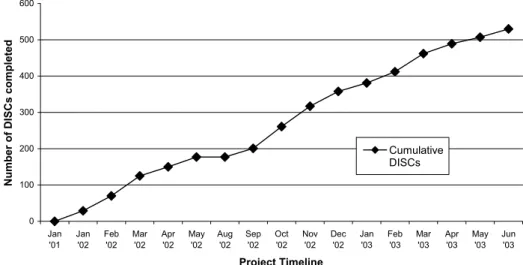
were administered to students (Fig. 1). This may reflect the fact that school staff found the DISC to be useful on an ongoing basis throughout the course of the school year. Figure 2 reflects DISC use patterns that were reported by each of the participating schools. Although every participating school used the DISC at least once during the study, 83% of the schools (19/23) used the DISC at least five times, and 61% of the schools (14/23) used the DISC more than 10 times during the period of the study. Although every school made use of the DISC, not every school staff member who was trained to use the assessment tool chose to use it.
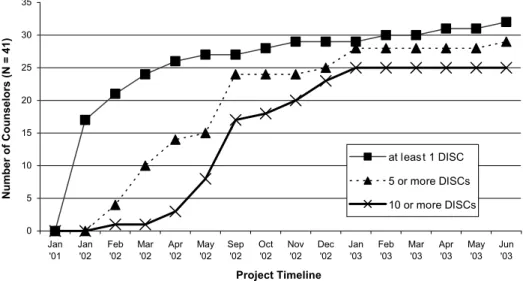
DISC Use by Counselors.As Figure 3 indicates, 78% (32/41) of the counselors who were trained in the DISC incorporated it into their work routine at least once during the course of this study. Furthermore, of those counselors who used the DISC at least once during the study period, 84% of them (27/32) tried it for the first time within the first 5 months of the study (January 2002YMay 2002), and, by the end of the first study year (January 2002YDecember 2002), 72% of counselors who were using the DISC (23/32) had used it to assess 10 or more students. Once school staff had tried using the DISC with one student, the majority continued to
Fig. 1 Cumulative Diagnostic Interview Schedule for Children (DISC) use over the study period. The cumulative monthly tally of DISCs for all participating counselors across 23 schools. Because school is not in session during the months of June and July, those time points were not included.
Fig. 2 Frequency of Diagnostic Interview Schedule for Children (DISC) use by schools. Shown, on a monthly basis, are the number of schools that used the DISC at least once, at least five times, and at least 10 times during the study period. Because school is not in session during the months of June and July, those time points were not included.
use it with more of their students. By the end of the study (January 2002YJune 2003), 91% of counselors using the DISC (29/32) administered it to at least five students and 78% of the counselors using the DISC (25/32) could be considered routine DISC users because they had used it with 10 or more students (mean 26.6; range 11Y64).
Programmatic Influences on DISC Use. Post hoc analyses were conducted to determine whether there was an association between specific programmatic supports (e.g., site visits, individualized feedback regarding DISC use) and increases in DISC use. Analyses pointed to a consistent rate of DISC use across most of the study period. However, the average number of assessments administered by each counselor per month was observed to be significantly greater during the 2 months following the first site visit (FebruaryYMarch 2002) and during the 2 months following the kick-off meeting (OctoberY November 2002) than for the rest of the intervening months during the study period (mean 1.26 versus mean 0.69; (W21 = 6.81;p < .01).
Youth Outcomes
Table 1 describes the number of youths who were assessed for mental health problems and linked with services as a result of a DISC assessment. Please note that in Table 1, the sample sizes for questions 2 to 7 reflect the total number of positive answers to the previous question, and questions 1a, 2a, and 2b are contingent on positive responses to the earlier questions
with the same number. Thus, the sample size is different for each question on the MHTF. In addition, there is a reduced sample size for questions 1a, 2a, and 2b because these questions were added to the MHTF at a later point in the study, in September 2002.
Identifying Children with Mental Health Problems. The age of children who received an assessment with the DISC ranged from 9 to 18 years of age, with 72% of the youths between ages 12 and 14. In cases in which schools reported information about the sex of students who were assessed with the DISC, boys (n= 234) were assessed more often than girls (n = 165), but girls received a positive DISC result more often than boys (79%, 130/165 versus 63%, 148/234; W22 = 12.03;
p < .01). In the overall sample of children who were assessed with the DISC, approximately 72% of youths were identified as having a potential mental health problem (Table 1), and 71% of these DISC-positive youths (111/156) had never been in treatment before. As shown in Table 1, 39% (140/357) of the children whose parents were contacted by the schools as a result of positive DISC findings saw a health or mental health professional for a follow-up evaluation within 2 weeks of the school’s recommendation.
Diagnoses.Because 530 children were assessed for at least one diagnosis with the DISC, this denominator was selected as a conservative estimate of the number of children who could have been positively identified by the DISC. However, because all children were not assessed for all diagnoses, there were variations in the
Fig. 3 Frequency of Diagnostic Interview Schedule for Children (DISC) use by school counselors. Shown, on a monthly basis, are the number of counselors who used the DISC at least once, at least five times, and at least 10 times during the study period. Because school is not in session during the months of June and July, those time points were not included.
actual denominator of each of the following percentages. Among children who received a DISC assessment, the most common diagnoses were social phobia (108/530, 20%), attention-deficit/hyperactivity disorder (99/530, 19%), oppositional defiant disorder (99/530, 19%); obsessive-compulsive disorder (67/530, 13%), separa-tion anxiety disorder (66/530, 12%), major depressive disorder (59/530, 11%), and generalized anxiety dis-order (52/530, 10%). Each of the aforementioned statistics includes only children who met both symptom and impairment criteria forDSM-IVdiagnoses, accord-ing to the DISC findaccord-ings. Additional diagnostic data using criteria with subthreshold impairment scores are available upon request.
High-Risk Behaviors.Notably, 43% (164/381) of the children who tested positive on the DISC reported high-risk behaviors. Specifically, the DISC data showed that 28% (105/381) of students who were identified with a potential mental health problem reported one or more clinically significant symptoms related to suicide (e.g., thoughts of death or dying, suicidal ideation, past suicide attempt); 6% (24/381) met the criteria for substance abuse or dependency, 8% (29/381) reported use of alcohol, marijuana, or other drugs to get high; 18% (68/381) had been suspended or expelled from school; 4% (14/381) had been truant from school; 4% (16/381) had been in trouble with the police; and 2% (7/381) reported use of a weapon. It is noteworthy that these percentages are likely to be underestimates of the prevalence of high-risk behaviors within this sample because data were missing for 124 of the 381 children who were included in this denominator.
Benefits of the Evidence-Based Assessment
Facilitating Treatment.Among the high-risk children described above, counselors perceived that the DISC made a difference in getting the child into treatment in 87% (53/61) of cases by supporting diagnostic impres-sions (78% of cases, 38/49), encouraging parents to follow through with the school’s recommendation (69% of cases, 34/49), and facilitating communications between the school and local treatment providers (53% of cases, 26/49). Unfortunately, because these data were only collected on youths who were assessed with the DISC on or after September 2002, these data are not available for the total sample of high-risk children.
Schools’ Follow-Up.As can be seen in Table 1, when potential mental health issues were identified by the
DISC, most counselors contacted parents to recom-mend a follow-up evaluation with a mental health professional. On the rare occasion when counselors did not contact parents to discuss positive DISC findings, counselors who offered an explanation stated that 50% (7/14) of the time, this was due to a child being older than the age of 18 or because social services was already involved.
Parents’ Responsiveness.When schools recommended a follow-up evaluation with a mental health professional based on the DISC results, the vast majority of parents agreed to make an appointment for their child (Table 1). However, among those parents who did not plan to follow-up on the school’s recommendation, school staff reported that 50% (26/52) of these parents were not receptive to treatment at the time of the discussion, 19% (10/52) reported that the child was already receiving relevant services, 17% (9/52) stated that their decision was motivated by lack of insurance or financial burden, and 6% (3/52) cited some other reason such as the family’s plans to relocate or the student’s refusal to enter treatment. Parents were allowed to give multiple responses to this question. No response to this question was given in 19% (10/52) of cases.
Professional Consultation. Among those parents who did agree to seek out further evaluation for their child, counselors reported that 45% (123/276) agreed to follow up with a mental health professional, 13% (36/276) agreed to follow up with a health professional, 15% (42/276) planned to follow up with both health and mental health professionals, 19% (53/276) agreed to follow up with a mental health professional and did not indicate whether they would or would not see a health professional as well, and 8% (22/276) did not answer the question.
DISCUSSION
This study is, to our knowledge, the first systematic attempt to develop a feasible and sustainable means of offering ongoing, early identification services for mental health problems within school settings. With issues such as cost-effectiveness and time efficiency in mind, we developed a programmatic approach to introduce an evidence-based, mental health assessment tool in school settings. It is important to note that the time required of the school staff who administered the interview was limited to logging into the computer program, printing
out the computer-generated results, and interpreting the reports. In addition, it was possible to shorten the assessment period by eliminating specific disorder modules from the test administration that were not believed to be relevant. Thus, our goal was to enhance school staff’s capacity for identifying students with potential mental health problems by training them to use an evidence-based assessment tool that required little time for them to administer. To evaluate this program, we examined counselors’ DISC use and the outcomes of youths who were given the assessment.
Frequency of DISC Use
Throughout the duration of this study, the steady and frequent use of the DISC in all of the participating schools and by a majority of school staff indicates that schools may be a productive and effective venue in which to proactively identify adolescents at risk for mental health problems. It is noteworthy that the DISC assessment was most often used in cases when counselors thought that they would benefit from collecting additional information about a child whom they believed to be at potential risk. Students who were already receiving treatment, who were known to be in crisis, and who had parents who were receptive to schools’ concerns and recommendations for a follow-up evaluation often did not receive a DISC assessment. Thus, the number of children who received a DISC assessment is far fewer than the overall number of children who were seen by the school counselors over the course of the school year.
The results suggest that school staff found the DISC to be a feasible means of assessing students for potential mental health issues, and anecdotal reports from the schools suggest that much of the feasibility is due to staff being able to use the DISC flexibly in their schools. As a general rule, school counselors and other mental health professionals used the DISC to further explicate known difficulties, based on parent, teacher, or student referrals. However, across the 23 schools that partici-pated in the effort, school staff chose to make use of the DISC in a variety of additional ways that were reported anecdotally, including as additional substantiation of a school’s recommendation for a follow-up evaluation with a mental health professional, an in-depth assess-ment following positive results on a short grade-wide screening, hands-on learning in psychology and/or health class, additional information about special
populations such as special education students and students with truancy issues, and a required assessment for students who were being evaluated by student or teacher assistance teams. Although one rural school used the DISC to conduct a grade-wide assessment of its seventh grade students, this was not feasible for the majority schools that participated in this project due to other responsibilities and demands placed on school staff and considerably larger numbers of enrolled students.
The first 5 months of the study seemed to be a critical period for school staff to initially adopt the DISC and for them toBexperiment[ or try it out, resulting in a dramatic increase in new DISC users during this time. The data on counselors’ DISC use suggest that a year’s time may be required for school staff to routinely adopt the DISC. Yet, despite the widespread use of the DISC assessment, a small percentage of school staff failed to use the DISC even once over the course of the study. School staff reported several explanations for this phenomenon, including feeling intimidated by compu-ter technology, a greacompu-ter comfort level with previously used assessment techniques, and limited time avail-ability for mental health assessments given other job responsibilities. A future report will examine specific predictors of counselors’ and schools’ DISC use. However, even counselors who chose not to use the DISC often referred students to a colleague in their school who was willing to administer the DISC on their behalf. Thus, students in every school were given the opportunity to be evaluated with the evidence-based assessment.
Although the rate of DISC use was relatively consistent during the course of the study, the novelty of the evidence-based tool and in-person meetings with school staff may have motivated the school counselors to administer a greater number of DISCs during the periods immediately following the first site visit (FebruaryYMarch 2002) and the kick-off meeting (OctoberYNovember 2002). Yet, this rate of adminis-tration may have been too high to be sustainable on an ongoing basis. The aforementioned meetings with school staff were intentionally scheduled to correspond with the beginning of the study and the beginning of the following school year. As such, it is impossible for us to isolate the impact of our programmatic approach from the ebbs and flows of the school year. However, the increased DISC use at the beginning of the project and
at the start of the new school year may suggest that participants were excited about trying the assessment tool for the first time and beginning to integrate it into their work.
Youth Outcomes
The vast majority of children who were assessed with the DISC showed evidence of a potential mental health problem that warranted a follow-up evaluation by a mental health professional. In addition, sig-nificant numbers of these children were at high risk for negative outcomes such as suicide, met criteria for serious disorders with impairment and had never been in treatment before. Although there was a relatively low rate of substance abuse identified in this sample, this is not surprising because counselors often chose not to administer this diagnostic module. In addition, adolescents rarely reach the threshold for a DSM di-agnosis of substance abuse and are unlikely to report the full extent of their use when they are assessed by school staff.
Previous epidemiological studies with the DISC have estimated prevalence levels to be similar to those reported in other studies.20,21However, to our knowl-edge, there have been no studies of the prevalence of psychiatric diagnoses when the DISC was used to further explicate known difficulties based on parent, teacher, or student referrals, as was the case with the overwhelming majority of youths who were assessed over the course of this study. It is important to note that in cases in which a child was clearly in need of a consultation with a mental health professional, school staff generally did not spend additional time assessing a child with the DISC. Frequently, the DISC was used to identify potential mental health problems that would otherwise remain hidden such as depression, anxiety, and suicide risk. Thus, in more complex cases in which the need for a referral was less clear, the DISC was used to gather additional information about the child’s situation. Identifying children who are at risk but who do not present with easily identifiable symptoms or impairment is important and may not have occurred if the DISC was not available to school staff. Thus, although we do not have comparative data, it seems likely that schools’ use of the DISC resulted in the identification of additional children who are at risk for a mental health problem and, ultimately, was instrumental in helping them to receive follow-up care.
Benefits of the Evidence-Based Assessment
In cases in which the DISC yielded positive results, schools were proactive in contacting parents and, when appropriate, recommending that they seek further attention for the matter. Parents were generally receptive to schools’ recommendations for a follow-up evaluation based on the results of the assessment, with the vast majority of parents agreeing to make an appointment with a health or mental health professional. Among those children whose parents were recontacted by schools, 65% had received an evaluation within 2 weeks of the schools’ recommendation. However, it is important to note that this statistic reflects the rate of follow-up among parents who initially agreed to act on the school’s recommendation for further evaluation rather than the overall population of DISC-positive children whose parents were contacted by the school. Schools did not gather follow-up data on cases in which parents initially refused to follow up on the school’s recommendation.
The follow-up period in the present study was significantly shorter than that reported by other published studies of early identification programs for mental health problems. A 2-week follow-up period was chosen for this study with the hope of maximizing counselor follow-up and data submission, but it is likely that additional children received a follow-up evaluation sometime thereafter. Among families referred to a mental health professional for psychosocial problems by their primary care provider, Rushton and colleagues22report that 61% attended an evaluation within 6 months. Similarly, Scott and Shaffer23report that after a referral from the TeenScreen program, 58% of students obtained treatment within 6 months and 64% within 5 years. The relatively high rate of short-term follow-up in the present study may be a reflection of the tight-knit community setting in which this study was conducted. We might also hypothesize that the authority of these schools, the ongoing relationships they maintain with the families of their students, and the substantiation that the DISC lent to the schools’ recommendations factored into the highly responsive behaviors of these parents. Interestingly, the rapid rate of follow-up did not seem to be linked to the treatment referral network that had been organized within the community because only a small number of families received a follow-up evaluation from these providers.
The fact that 35% of children whose parents agreed to make an appointment with a health or mental health
professional had not been evaluated within 2 weeks of the school’s recommendation underscores the need for more proactive outreach efforts within the community. In addition, the significant number of children who received a follow-up evaluation from a health profes-sional instead of a mental health profesprofes-sional may reflect the ongoing stigma associated with mental health issues and the need for additional public education. Thus, even with this project’s success in identifying children at risk for a mental health problem and getting parents to follow-up on these issues, our results are consistent with epidemiological data that indicate many children who meet the full criteria for a psychiatric diagnosis are not receiving treatment. As such, the results of this study confirm that the children mental health professionals see in their practices represent only a subgroup of the children who may benefit from their services. Although effective gains may be made in identifying children at risk for mental health problems in school settings, a gap continues to exist between identification and treatment processes.
Future attempts to implement computer-based, early identification programs would be wise to assess the level of computer comfort and skill among participating staff, so that training and support can be provided as needed. It is possible that school staff’s initial attitudes toward computers or toward the adoption of new techniques may have influenced the degree to which the early identification tool was used in this study. Indeed, attitudes toward early identification programs and the DISC itself may serve to moderate or mediate the success of this type of program. Future project analyses will explore this possibility.
The sustained use of the DISC in the schools that participated in this project has yet to be determined. In the absence of active supports such as supervisory conference calls and site visits as well as the accompany-ing sense of accountability to the research team for the use of the DISC, it will be important to determine whether schools and individual school staff continue to assess students.
Unlike the schools participating in this project, other school systems may not have access to a collaborative referral network of local mental health providers. Even though most DISC-positive youths did not see these providers, school staff may feel less comfortable adopting this approach to early identification without such a referral network in place. The fact that DISC
software, training, computers, and required computer accessories were provided to participating schools free of charge may also affect the feasibility of implementing this approach to early identification in other schools.
Because school counselors generally did not keep thorough records of students who were assessed for mental health problems without the DISC, we were unable to draw some valuable comparisons between the characteristics and outcomes of students who did and did not receive a DISC assessment. The absence of a comparison group also limits our ability to assess the incremental benefits of the early identification program. With this in mind, the investigators plan to apply learning from this project to future work in other communities, where an experimental, control-compar-ison research design will be used.
Although research has documented the acceptability of the DISC in epidemiology and clinical practice, the school setting is different.19,24Reactions of the students to being given the DISC as part of seeing a school counselor were not evaluated in this study. As such, future research on the feasibility and acceptability of using the DISC in school settings may assess students’ reactions to a detailed diagnostic interview, such as the DISC, which is unusual in a school setting.
In demonstrating that an evidence-based mental health assessment tool can assist school staff in the early identification of students with potential mental health problems, this study has several important clinical implications. School-based programs have access to the overwhelming number of children with a psychiatric diagnosis who fail to receive mental health services. Thus, schools offer an optimal environment in which to reach children in the community, identify internalizing diagnoses that otherwise would be likely to be missed, and connect at-risk youths with mental health treatment providers. School-based early identification programs may help to identify children before problems worsen and in time for mental health clinicians to make a significant positive impact on the developmental trajectory of a child’s life. Parents may be more willing to follow up on a school’s recommendation to consult with a mental health professional when an evidence-based assessment has been used. After a school has administered such an assessment, this information can be sent to the appropriate mental health professional to facilitate the initial intake evaluation, reduce the time required to develop a treatment plan, and enhance
communication between school-based professionals and community-based clinicians.
In the present study, a high percentage of students who were positively identified by the DISC received treatment. The vast majority of these children had never been in treatment before. Thus, establishing ongoing early identification programs for mental health problems in schools may help to bridge the gap between mental health providers and the unmet needs of children who are at risk for mental health problems within the community.
Disclosure: Dr. Nemeroff is a stockholder in Abbott Laboratories, Amgen, Johnson & Johnson, and Pfizer. Dr. Setterberg has ownership in Prairie St. John’s, a psychiatric treatment facility in Fargo, ND. Dr. Jensen is a stockholder with Eli Lilly, has investigator-initiated grants with Janssen and McNeil PPC, and participates on speakers’ bureaus for Janssen-Ortho, USB Pharma, and Cephalon. The other authors report no conflicts of interest.
REFERENCES
1. U.S. Department of Health and Human Services. Mental Health: A Report of the Surgeon General. Rockville, MD: U.S. Department of Health and Human Services, Substance Abuse and Mental Health Services Administration, Center for Mental Health Services, National Institutes of Health, National Institute of Mental Health; 1999.
2. U.S. Public Health Service.Report of the Surgeon General ’s Conference on Children’s Mental Health: A National Action Agenda. Washington, DC: Department of Health and Human Services; 2000.
3. Kataoka SH, Zhang L, Wells KB. Unmet need for mental health care among U.S. children: variation by ethnicity and insurance status.Am J Psychiatry. 2002;159:1548Y1555.
4. Burns BJ, Costello EJ, Angold A, et al. Children’s mental health service use across service sectors.Health Aff. 1995;14:147Y159.
5. Leaf PJ, Alegria M, Cohen P, et al. Mental health service use in the community and schools: results from the four-community MECA study. Methods for the Epidemiology of Child and Adolescent Mental Disorders Study.J Am Acad Child Adolesc Psychiatry. 1996;35:889Y897. 6. New Freedom Commission on Mental Health.Achieving the Promise: Transforming Mental Health Care in America. Final Report(DHHS Pub. No. SMA-03-3832). Rockville, MD: U.S. Department of Health and Human Services; 2003.
7. Murphy JM, Jellinek M, Milinsky S. The Pediatric Symptom Checklist: validation in the real world of middle school.J Pediatr Psychol. 1989; 14:629Y639.
8. Shaffer D, Scott M, Wilcox H, et al. The Columbia Suicide Screen: validity and reliability of a screen for youth suicide and depression.J Am Acad Child Adolesc Psychiatry. 2004;43:71Y79.
9. Thompson EA, Eggert LL. Using the Suicide Risk Screen to identify suicidal adolescents among potential high school dropouts.J Am Acad Child Adolesc Psychiatry. 1999;38:1506Y1514.
10. Wasserman GA, McReynolds LS, Ko SJ, et al. Screening for emergent risk and service needs among incarcerated youth: comparing MAYSI-2 and Voice DISC-IV. J Am Acad Child Adolesc Psychiatry. 2004;43: 629Y639.
11. Winter LB, Steer RA, Jones-Hicks L, Beck AT. Screening for major depression disorders in adolescent medical outpatients with the Beck Depression Inventory for Primary Care. J Adolesc Health. 1999;24: 389Y394.
12. Gould MS, Greenberg T, Velting DM, Shaffer D. Youth suicide risk and preventive interventions: a review of the past 10 years.J Am Acad Child Adolesc Psychiatry. 2003;42:386Y405.
13. Shaffer D, Craft L. Methods of adolescent suicide prevention.J Clin Psychiatry. 1999;60(Suppl 2):70Y74.
14. Shaffer D, Wilcox H, Lucas C, et al. The development of a screening instrument for teens at risk for suicide. Poster presented at Annual Meeting of the American Academy of Child and Adolescent Psychiatry, October 25Y28, 1996; New York.
15. Fisher PW, Shaffer D, Piacentini J, et al. Sensitivity of the Diagnostic Interview Schedule for Children, 2nd edition (DISC-2.1) for specific diagnoses of children and adolescents.J Am Acad Child Adolesc Psychiatry. 1993;32:666Y673.
16. Jensen P, Roper M, Fisher P, et al. Test-retest reliability of the Diagnostic Interview Schedule for Children (DISC-2.1). Parent, child, and combined algorithms.Arch Gen Psychiatry. 1995;52:658Y665. 17. Shaffer D, Fisher P, Lucas C. The Diagnostic Interview Schedule for
Children (DISC). In: Hersen M, ed. Comprehensive Handbook of Psychological Assessment. Hoboken, NJ: John Wiley & Sons; 2003: 256Y270.
18. Schwab-Stone M, Shaffer D, Dulcan M, et al. Criterion validity of the NIMH Diagnostic Interview Schedule for Children, Version 2.3 (DISC, 2.3).J Am Acad Child Adolesc Psychiatry. 1996;35:878Y888.
19. Shaffer D, Fisher P, Lucas CP, Dulcan MK, Schwab-Stone ME. NIMH Diagnostic Interview Schedule for Children Version IV (NIMH DISC-IV): description, differences from previous versions, and reliability of some common diagnoses.J Am Acad Child Adolesc Psychiatry. 2000;39: 28Y38.
20. Roberts RE, Roberts CR, Xing Y. Prevalence of youth-reportedDSM-IV
psychiatric disorders among African, European, and Mexican American adolescents.J Am Acad Child Adolesc Psychiatry. 2006;45:1329Y1337. 21. West P, Sweeting H, Der G, Barton J, Lucas C. Voice-DISC identified
DSM-IV disorders among 15-year-olds in the west of Scotland.J Am Acad Child Adolesc Psychiatry. 2003;42:941Y949.
22. Rushton J, Bruckman D, Kelleher K. Primary care referral of children with psychosocial problems. Arch Pediatr Adolesc Med. 2002;156: 592Y598.
23. Scott M, Shaffer D. Referral and service utilization after school-based screening for suicide and depression. Poster presented at Annual Meeting of the American Academy of Child and Adolescent Psychiatry. Washington, DC; October 25Y28, 2004.
24. Lucas CP. The use of structures diagnostic interviews in clinical child psychiatric practice. In: First MB , ed.Structured Evaluation in Clinical Practice (Review of Psychiatry Volume 22). Washington, DC: American Psychiatric Press; 2003:75Y102.