OTHER DISORDERS
H.6
Jane Pei-Chen Chang & Chung-Chieh Hung
PROBLEMATIC INTERNET USE
This publication is intended for professionals training or practicing in mental health and not for the general public. The opinions expressed are those of the authors and do not necessarily represent the views of the Editor or IACAPAP. This publication seeks to describe the best treatments and practices based on the scientific evidence available at the time of writing as evaluated by the authors and may change as a result of new research. Readers need to apply this knowledge to patients in accordance with the guidelines and laws of their country of practice. Some medications may not be available in some countries and readers should consult the specific drug information since not all dosages and unwanted effects are mentioned. Organizations, publications and websites are cited or linked to illustrate issues or as a source of further information. This does not mean that authors, the Editor or IACAPAP endorse their content or recommendations, which should be critically assessed by the reader. Websites may also change or cease to exist.
©IACAPAP 2012. This is an open-access publication under the Creative Commons Attribution Non-commercial License. Use, distribution and reproduction in any medium are allowed without prior permission provided the original work is properly cited and the use is non-commercial. Send comments about this e-book or chapter to jmreyATbigpond.net.au
Suggested citation: Chang J P-C, Hung C-C. Problematic internet use. In Rey JM (ed), IACAPAP e-Textbook of Child and Adolescent Mental Health. Geneva: International Association for Child and Adolescent Psychiatry and Allied Professions 2012.
Jane Pei-Chen Chang MD, MSc
Institute of Clinical Medical Science, China Medical University and Department of Psychiatry, China Medical University Hospital, Taichung, Taiwan
Conflict of interest: None declared
Chung-Chieh Hung MD
Department of Psychiatry, China Medical University Hospital, Taichung, Taiwan Conflict of interest: None declared ‘Age of Empires III’ computer game. ©Microsoft Corporation
T
he Internet has become the most popular medium utilized by the general population, especially by children and adolescents. It is as common for children to use a computer as it is to play with their favorite toys. Studies have shown that the percentage of students using the Internet has increased dramatically, for example from 24.5% to 79.5% between 1996 and 2001 in the US (Odell et al, 2000). The number of Internet users who go online regularly had surpassed 1.5 billion in 2009 ─19% of them in China alone (Flisher, 2010). Converging modern technologies, such as cellular phones and the Internet, have allowed people to affordably communicate at long distances as well as facilitating many tasks, including science, commerce, shopping, paying bills, taking educational classes, working, and keeping in touch with loved ones. Children and adolescents also use the Internet for socializing and for leisure activities such as watching movies and television programs, listening to music, and playing online games. The Internet has made life more convenient, saves time and shortens the distance between people; as it becomes pervasive in the lives of youth, it presents risks and opportunities.The negative impact of Internet usage on individuals and their lives is often underestimated. Brown (2006) suggested that the choice of media individuals make is influenced by their character and the way they interact with the world; in turn, the way individuals interact with the media will be incorporated into their daily life, influence their behavior and views and even the development of their brain. Children and adolescents are more susceptible to trade off their real life activities with virtual reality ones. Young people are also more prone to use the Internet as a form of socialization without realizing the negative impact that may carry. Thus, when Internet use starts to take up a large portion of children’s and adolescents’ time, affect their mood, and jeopardize academic and social function and performance, Internet usage may become a problem that may require intervention.
Excessive Internet use in adults has been associated with failed marriages, unemployment, neglected children, and sleep deprivation (Young, 1998). Young’s research on problematic internet usage (PIU) has documented associated symptoms and problems, including losing control, craving and withdrawal, social isolation, academic failure, financial problems, job loss, and marital discord. Moreover, spending more than 18 hours a day online may lead to physical problems such as back pain, eye strain and carpal tunnel syndrome (Young, 1998). Internet addiction is considered a public health issue in South Korea (Block, 2008), where 10 cardiopulmonary-related deaths in Internet cafes (Choi, 2007) and a game-related murder (Koh, 2007) have been reported. In addition, Internet videogames are now more sophisticated, more violent, and often incorporate multiple players when compared to online games two decades ago (Anand, 2007). A negative correlation has been reported between time spent playing Internet games and academic performance, and a positive association between violent Internet game-playing and aggression (Anderson & Dill, 2000). Not only does excessive Internet use has a negative impact on the mental and physical health of children and adolescents with PIU, it might also increase risk of violence in this age group. Is Internet addiction an illness?
Since Internet addiction has not formally been accepted as a disorder yet, we will use problematic internet use or PIU as the term to designate Internet-related behaviors that cause significant psychosocial impairment. So, is Internet addiction
Internet gaming addiction leads to baby’s death. Click on the picture to watch video.
World of Warcraft
Dangerous addiction or cultural phenomenon? Click
Box H.6.1 Young’s diagnostic questionnaire for Internet addiction (adapted from Young, 1998)
Diagnosis suggested if there are five or more “yes” answers to:
• Do you feel preoccupied with the Internet (think about previous online activity or anticipate next online session)?
• Do you feel the need to use the Internet for increasing amounts of time in order to achieve satisfaction?
• Have you repeatedly made unsuccessful efforts to control, cut back, or stop Internet use?
• Do you feel restless, moody, depressed, or irritable when attempting to cut down or stop Internet use?
• Do you stay online longer than originally intended?
• Have you jeopardized or risked the loss of significant relationship, job, educational or career opportunity because of the Internet?
• Have you lied to family members, therapist, or others to conceal the extent of involvement with the Internet?
• Do you use the Internet as a way of escaping from problems or of relieving a dysphoric mood (e.g. feelings of helplessness, guilt, anxiety, depression)?
an illness? One current of thought upholds that PIU merits our attention since children and adolescents are more likely to indulge most of their time in Internet games, activities, and social networking at the expense of their school work and sports, and PIU can arise from involvement in a range of online activities (Beard, 2005; Davis, 2001; Griffiths et al, 2000; King et al, 2009; Young, 1996). Block (2008) has recently highlighted the increasing incidence of Internet addiction and its high comorbidity with other psychiatric conditions. He also proposed the inclusion of “Internet addiction disorder” in the forthcoming Diagnostic and Statistical Manual of Mental Disorders, Fifth Edition (DSM-V). David Greenfield (1999) also considers Internet addiction a form of addictive disorder, pointing out that individuals with PIU tend to show symptoms of withdrawal and tolerance. Governments such as South Korea have declared Internet addiction a serious problem and a public health hazard (Block, 2008); Chinese psychologists also support Internet addiction to be recognized as a formal disorder by the World Health Organization (Flisher, 2010).
Some experts, however, do not see Internet use as an illness. They perceive Internet use as a medium for communicating and of avoiding dealing with underlying problems (Bell, 2009; Shaffer et al, 2000). For example, they believe depression or social anxiety to be the core issues in problematic Internet use rather than a new disorder itself (Bell, 2009; Shaffer et al, 2000). Moreover, some forensic psychiatrists believe that we should treat online gamblers primarily as gamblers rather than classifying them as Internet addicts (Lenihan, 2007). Therefore, more evidence is required to clarify whether PIU should be looked upon as a separate disorder.
Definition and diagnosis
The first diagnostic criteria for Internet addiction were proposed by Young (1996) − a modified version of the DSM-IV criteria for substance dependence − since there are similarities between the tolerance and withdrawal symptoms of Internet use and those of substance use. She also developed an Internet Addiction
Click on the picture to view a New York Post report on
Questionnaire (Young, 1998) (Box H.6.1). However, evidence of its reliability and validity is lacking.
The term “Internet addiction” was changed to the less controversial “problematic Internet use” (PIU) by Shapira et al (2000). PIU can be defined as showing:
• A maladaptive preoccupation with Internet use, experienced as irresistible, for periods of time longer than intended
• Significant distress or impairment resulting from Internet use • Absence of other psychiatric pathology that might explain the
excessive Internet use, such as mania or hypomania.
PIU can also be classified into specific and generalized (Davis, 2001). Specific PIU refers to particular content that exists independently from the Internet, such as gambling and video games, whereas generalized PIU refers to specific Internet content including chat rooms, e-mail, and social networks such as Facebook and Twitter.
In our opinion, Internet use should be considered problematic or an addiction when children or adolescents exhibit the following characteristics:
• Salience: prominent use of the Internet
• Mood modification: moody when not being able to use the Internet • Tolerance: need to spend more time on the Internet
• Withdrawal: feeling agitated and irritable when the Internet is inaccessible
• Conflict: conflict with family and friends when not able to access the Internet
• Relapse: fails to stay away from using the Internet after a period of abstinence from Internet use.
Common clinical presentations include a loss of sense of time or neglect of basic needs while using the Internet; becoming angry, restless and moody
Activities included in problematic Internet use (Davis, 2001) Specific • Net compulsion (online gambling addiction)
• Online game playing addiction General • Net compulsion (online shopping addiction) • Online research addiction. • Cybersexual addiction • Cyber-relational
addition (chat rooms: social networking, e.g., Facebook, Twitter; personal messaging; and e-mail addiction).
Box H.6.2 Ko et al’s (2005) proposed diagnostic criteria for Internet addiction
A. Six or more of:
1. Preoccupation with Internet activities
2. Recurrent failure to resist the impulse to use the Internet
3. Tolerance: a marked increase in Internet use needed to achieve satisfaction.
4. Withdrawal, as manifested by either of the following: a) dysphoric mood, anxiety, irritability, and boredom after several days without Internet activity; b) use of the Internet to relieve or avoid withdrawal symptoms.
5. Use of the Internet for a period of time longer than intended.
6. Persistent desire and/or unsuccessful attempts to cut down or reduce Internet use. 7. Excessive time spent on Internet activities.
8. Excessive effort spent on activities necessary to obtain access to the Internet.
9. Continued heavy Internet use despite knowledge of physical or psychological problem caused or exacerbated by Internet use.
B. Functional impairment. One or more of:
1. Recurrent Internet use resulting in a failure to fulfill major obligations. 2. Impairments in social relationships.
3. Behavior violating school rules or laws due to Internet use.
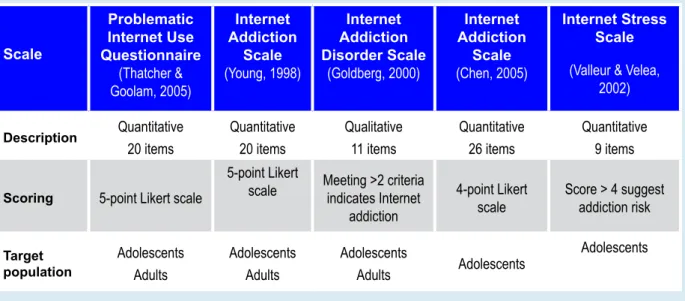
Table H.6.1. Scales to measure Internet misuse Scale Problematic Internet Use Questionnaire (Thatcher & Goolam, 2005) Internet Addiction Scale (Young, 1998) Internet Addiction Disorder Scale (Goldberg, 2000) Internet Addiction Scale (Chen, 2005) Internet Stress Scale
(Valleur & Velea, 2002) Description Quantitative 20 items Quantitative 20 items Qualitative 11 items Quantitative 26 items Quantitative 9 items
Scoring 5-point Likert scale
5-point Likert
scale Meeting >2 criteria indicates Internet addiction
4-point Likert
scale Score > 4 suggest addiction risk
Target
population AdolescentsAdults AdolescentsAdults AdolescentsAdults Adolescents
Adolescents when unable to use the Internet; needing better and more computer equipment
and software and more time online; showing more negative behaviors associated with online activities such as lying and starting arguments, impaired academic performance and social relationships (Beard et al, 2001).
Ko et al (2005) proposed diagnostic criteria for Internet addiction (Box H.6. 2) and tested them in 468 Taiwanese high school students and 216 Taiwanese college students. These criteria showed good specificity (97%) and sensitivity (86%). However, larger studies on the validity and reliability of the diagnostic criteria for PIU are still needed.
There are several scales available to evaluate the severity of PIU. The more commonly used scales include the Problematic Internet Use Questionnaire (PIUQ) (Thatcher et al, 2005), the Internet Addiction Test (IAS) (Young, 1998), the Goldberg Internet Addiction Disorder Scale (GIAD) (Armstrong et al, 2000), the Chen Internet Addiction Scale (Yen et al, 2008) (CIAS), and the French Orman Internet Stress Scale (ISS) (Valleur & Velea, 2002).The characteristics of these scales are summarized in Table H.6.1.
Epidemiology
No reliable data exist on the global prevalence of this phenomenon. Estimates vary from country to country and from study to study. It has been estimated that 1%-18% of adolescents have PIU in both Western and Eastern societies (Cao et al, 2007; Jang et al, 2008). More specifically, about 1%-2% of Italian students have moderate to severe PIU (Poli & Agrimi, in press), 1%-12% of children and adolescents in Middle Eastern countries (Canan et al, 2010) and 2%-18% of children and adolescents in Asian countries appear to have PIU (Cao & Su, 2007). Small scale studies in Korea and China revealed that around 2% (210,000) of South Korean children aged 6 to19 years have PIU and many may require treatment (Choi, 2007), while around 10 million adolescent Internet users in China may meet criteria for Internet addiction (Cao & Su, 2007).
Previous studies had shown that adolescents with problematic Internet use tend to be boys, have poorer academic performance and are more likely to access Internet at home and Internet cafes than in school settings (Kormas et al, 2011).
Individuals with PIU are also more likely to use Internet to converse in chat rooms, play interactive games, and access sexual information, and are less likely to use Internet for educational purposes (Kormas et al, 2011). Adolescents with PIU also have more behavior problems such as hyperactivity, conduct problems and worse overall psychosocial maladjustment than their peers (Kormas et al, 2011).
Pathophysiology
Researches have shown that some of the behavioral and neural characteristics of individuals with PIU are similar to those of individuals diagnosed with pathological gambling and substance use disorders (Ko et al, 2009). This is further supported by a recent functional magnetic resonance imaging study where a cue-induced online gaming urge activated similar brain areas as those activated by craving for drugs in people with substance addiction (Ko et al, 2009). Increased activation in the orbitofrontal cortex in gain trials and decreased activation in the anterior cingulate cortex in loss trials have been described in individuals affected with PIU (Dong et al, in press). Individuals with PIU also exhibit poorer executive control and poorer impulse control than non-affected individuals; for example affected individuals had longer reaction times and more response errors than their counterparts in the Stroop Test (Dong et al, 2011).
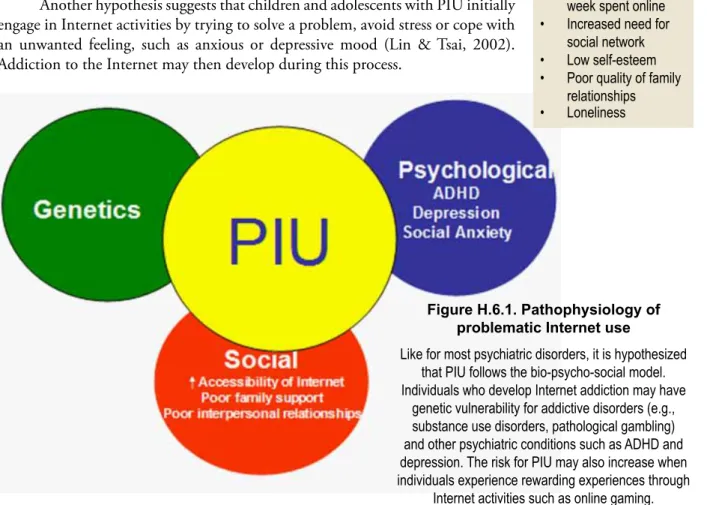
Interaction between environmental and genetic factors appears to play an important role in the development of PIU (see Figure H.6.1). The current understanding of addiction suggests that some individuals may be more susceptible to PIU than others due to their genetic vulnerabilities, but other factors are needed for those individuals to eventually develop Internet addiction or problems with Internet use.
Another hypothesis suggests that children and adolescents with PIU initially engage in Internet activities by trying to solve a problem, avoid stress or cope with an unwanted feeling, such as anxious or depressive mood (Lin & Tsai, 2002). Addiction to the Internet may then develop during this process.
Figure H.6.1. Pathophysiology of problematic Internet use
Like for most psychiatric disorders, it is hypothesized that PIU follows the bio-psycho-social model. Individuals who develop Internet addiction may have
genetic vulnerability for addictive disorders (e.g., substance use disorders, pathological gambling) and other psychiatric conditions such as ADHD and depression. The risk for PIU may also increase when individuals experience rewarding experiences through
Internet activities such as online gaming.
Negative Consequences of PIU • Impaired academic performance • Impaired social interaction/family relations • Decreased self-perceived acceptance by peers • Increased drinking in males • Lower self-worth in females PIU-associated psychiatric symptoms and comorbidity • Hostility • Depression, irritability or mood changes • Phobic anxiety • Daytime sleepiness or sleep deprivation
Risk factors for PIU
• Greater hours per week spent online • Increased need for
social network • Low self-esteem • Poor quality of family
relationships • Loneliness
Click on the picture to watch an interview with David Greenfield PhD on Internet
and video game addiction Onset of PIU is most likely during late childhood and early adolescence
(Pridgen, 2010). Adolescence is a period of biological, psychological and social change and navigating these changes is stressful for many youth. Adolescents with emotional and behavioral disorders are also more vulnerable to the negative effects of Internet use (Pridgen, 2010). Furthermore, affected youth often deny their problems with Internet use, denial being one of the main factors in maintaining PIU. Denial enables adolescents to continue engaging in Internet usage in spite of obvious negative consequences; it is also a way to protect themselves from seeing or feeling things that are unpleasant. Owing to denial, the impact of one’s Internet usage is seldom fully appreciated until the consequences become serious.
Some studies suggest that children and adolescents with ADHD (Yoo et al, 2004), depression, and those who are socially isolated (Armstrong et al, 2000) are at higher risk of PIU. PIU shares some risk factors with impulsive-compulsive spectrum disorders and addictions such as pathological gambling and substance use disorder (Yen et al, 2008). A recent US study of Internet use among young adolescents and adults showed that most males used the Internet on a weekly basis, while most females had not played more than a single Internet game in a year (Padilla-Walker et al, 2010). They also found that Internet video game playing, regardless of gender, tends to associate with negative social behaviors such as recreational drugs use, alcohol drinking, and impaired interpersonal relationships. Internet use for chat rooms, shopping, entertainment, pornography, and videogames are further associated with drinking, illicit drugs use, greater number of sexual partners and lower self-worth. Moreover, playing violent Internet games is associated with having more sexual partners and poorer quality of interpersonal relationships in this group. On the other hand, when Internet use is for academic purposes, there is a positive correlation with less substance use, greater self-worth, and better parent-child relationships (Padilla-Walker et al, 2010).
TIM
Tim, a 15 year-old boy, was brought to the psychiatric clinic by his parents due to his spending excessive time on the Internet and deterioration in his daily activities, performance at school and relationships with peers. Tim was first introduced to the Internet at school when he was working on an assignment in 3rd grade. In the
last 2 years, he had joined online social networks such as Facebook and MySpace, where most of his friends share their activities and thoughts. He also prefers using text messages to telephone calls when he wants to communicate with his friends. He enjoys online role-playing games and often feels obligated to be online when his game-partners are also online. He spends more than 12 hours per day (90 hours per week) online, even cutting down his sleeping time. His grades have dropped recently and he has started to skip classes to be on the Internet. He feels happier and more empowered when online –he does not have to think about his grades and problems. Tim finds schoolwork increasingly difficult. He has more arguments with his parents, and quarrels are often associated with his Internet use. Thus, he has started lying to them about the hours he spends online. He feels restlessness, irritable and unhappy when at school or somewhere else away from the computer. When he first walked into the clinic, he told the psychiatrist “I know I should cut down on the hours I spend online and concentrate on my school work, but I just can’t. I feel so anxious and joyless when not online.” Tim feels his life is a failure, and that his parents dislike him. He had thought about suicide, but says he does not have the courage to do it. Tim’s depressed mood had worsened in the previous 2 months, since the beginning of the new semester. The psychiatrist diagnosed Tim with depression and problematic Internet use.
What is the Internet Doing to our Brains? Click on the picture to view
Dr Paul Howard Jones discuss the scientific findings
about what technology is doing to us (26 minutes)
TREATMENT
There are currently no treatments for PIU that are supported by evidence, which is not surprising considering that it is not yet an officially accepted diagnosis. No pharmacologic or psychotherapeutic intervention has received adequate testing in randomized controlled trials. Most interventions suggested for PIU are based on personal clinical experience, small anecdotal studies or trials without randomized double blind design. A recent systematic review showed several limitations in available clinical trials (King et al, 2011). These include:
• Inconsistencies in definition and diagnosis • Lack of randomization and blinding • Lack of adequate control groups, and
• Insufficient information concerning recruitment, sample characteristics, and treatment effect size.
These shortcomings are highlighted in Table H.6.2, which summarizes the characteristics of Internet addiction treatment studies currently available.
While there is no agreement on the diagnostic criteria for Internet addiction or PIU, there seems to be a demand for treatment for these problems, especially in China, Taiwan, and South Korea (King et al, 2011). Interventions for PIU range widely from boot-camp style programs in Eastern countries to clinics specializing in the psychological treatments including CBT, family and group therapy, social skills training, and addiction counseling (King et al, 2011). Programs often extrapolate treatments used for substance abuse.
Before going into details about intervention, a careful clinical evaluation and assessment of comorbid conditions is essential. For example, a depressed child may start leading a virtual life to boost his self-esteem at the expense of offline interactions and duties, hence treating the depression will be a priority in this child’s treatment plan.
There has been no double-blind placebo-controlled study on the pharmacotherapy for PIU. Thus no specific medication can be recommended at this stage, although a wide range of them has already been tried, as summarized in Table H.6.2. The only randomized controlled study published so far allocated 56 adolescents aged 12 to 17 years into either active treatment (8-sessions of multimodal school-based group CBT) or no treatment (Du et al, 2010). While Internet use decreased in both groups, the active treatment group improved more in the areas of time management, emotional, cognitive, and behavior symptoms.
Children and adolescents affected with PIU may benefit from family based interventions, although there is no evidence so far that this is the case (Yen et al, 2007). For example, family therapy may help to improve communication within the family and teach Internet techniques to monitor Internet use better (Yen et al, 2007). Ironically, PIU may also improve with online educational programs (King et al, 2011). There are several online services, mostly based on the ‘12 step’ self-help treatment philosophy.
Although other management options, such as intensive and expensive residential treatments, have received much attention from the media and the public in some countries, there are no empirical data about their effectiveness.
Behavioral strategies for clinicians and self- help tips for dealing with PIU
• Help patients identify their pattern of Internet use using a logbook.
• Set clear, specific goals with the patients.
• Limit and shorten Internet usage time. External prompts, such as timers may be helpful to remind them when it is time to log off.
• Negotiate a computer free day once each week. • Write down negative
consequences of Internet use on reminder cards and encourage patients to carry and read them.
• Help patients make a list of hobbies or interests they used to enjoy.
• Increase time spend on sports, hobbies and other non-Internet activities • Join a PIU support
group.
Websites that offer help for problematic Internet use www.netaddiction.com http://www. netaddictionrecovery.com www.onlineaddiction.com. au
Table H.6.2 Available treatment studies for Internet addiction (adapted from King et al, 2011) STUDY (COUNTRY) DEFINITION OF INTERNET ADDICTION TREATMENT NUMBER (AGE) COMMENTS Du et al, 2010
(China) Beard’s Diagnostic Questionnaire 8 session CBT vs control Treatment (n = 32) vs clinical controls (n = 24).
(12-17)
The only controlled study available
Han et al, 2009
(South Korea) Young Internet Addiction Scale > 50 methylphenidate8 weeks of 62 (8-12)
All subjects in the study had comorbid ADHD Han et al, 2010
(South Korea) >4h/day, 30h/week; Young Internet Addiction
Scale score > 50
6 weeks bupropion
sustained release 19 (17-29)
Small sample size (11) and no control group Kim, 2008
(South Korea) Korean Internet Rating Scale 5 weeks “reality training” group counseling vs untreated controls
25 (age not reported)
Limited information (e.g., age of participants not described)
Shek et al, 2009
(Hong Kong) Young Internet Addiction Scale; Chinese Internet Addiction Scale 15-19 months multi-modal counseling 59 (11-18) No control group Su et al, 2011
(China) Questionnaire: Internet Young’s Diagnostic use of 14+ hr/week
Healthy Online Self-Helping Center (Natural
Environment; Learning Environment, Non-Interactive) vs Control 65 (age not reported)
Limited information (e.g., age of participants not reported)
Young, 2007
(USA) Internet Addiction Test 12 sessions of CBT 114 (age not reported)
No control group
TIM (continuation)
The psychiatrist worked together with Tim to devise a plan of action. This entailed asking Tim to keep a diary, particularly noting the time spent online, homework and house duties as well as other activities, and to rate his mood every day. Once a baseline was obtained, they worked on ways to increase participation in activities Tim used to enjoy apart from the Internet. With Tim’s agreement, his parents were invited to participate in the sessions and encouraged to discuss activities and hobbies they could do with Tim and rewards for time offline. After discussion, it was agreed by Tim and his parents to move Tim’s computer from his bedroom to a more public space in the lounge room, that Monday would be an Internet free day for the whole family and a reward for Tim every time he was successful in doing that. Once this was in place, Tim agreed to limit his Internet use to one hour per day on the remaining weekdays and 2 hours on weekends. After a month of treatment, Tim’s depressed mood had improved and he had reduced substantially his time online, although with some relapses. He began to be involved again in outdoor activities with his family and friends and there were fewer arguments at home. Temptations to use the Internet remained, particularly when frustrated with homework or after arguments with his parents.
Course and outcome
Due to the ready accessibility of the Internet, and the need to use it in modern life, relapse rates are high. Many adults with PIU started using the Internet when they were in grade school and Internet use usually became problematic without the affected individual being aware of it. However, little is still known about its natural history. Uncontrolled and anecdotal studies suggest that Internet addiction is often resistant to treatment and has high relapse rates.
Prevention
Online gaming seems to be a particular problem in many Asian countries, where much of the online gaming commercial promotion targets children and adolescents. Asian adolescents often face tremendous academic pressure, while online gaming can temporarily provide a stress-free virtual reality for many. Schools, governments and health departments should encourage research on this problem to clarify its causes and promote preventative interventions. For example, South Korea, a country in which multiplayer online games are very popular, has decided to introduce a ban from midnight to 6:00AM for Internet use by children and adolescents less than 18 years of age (Block, 2008). The South Korean government also has a system that slows down the Internet connection of Internet game players who played for more than 6 hours. China is another country experiencing problems with Internet use. The Chinese government restricts daily Internet game use among youth by demanding online game operators to set up a "game fatigue system" that encourages players under 18 to play less than 3 hours a day since 2007 (Block, 2008).
Conclusion
The Internet has revolutionized human life, is here to stay and has many positive aspects that can enhance youth learning and empowerment. The younger generations are growing up with and making Internet an integral part of their lives, however, in a few instances, Internet use becomes problematic. Is this a disorder that requires treatment or an example of medicalization of a social phenomenon? Because Internet addiction or problematic Internet use is not recognized by DSM-IV and ICD-10, the research evidence is very limited yet. This situation will need to change if we are to provide answers supported by evidence to the questions posed in this chapter.
Click on the picture to watch a news item about Internet
addiction in China
Legend of Zelda: Ocarina of Time, one of the most popular video games
REFERENCES
Anand V. A study of time management: The correlation betweenvideo game usage and academic performance markers. Cyberpsychology Behavior, 2007; 10:552-559.
Anderson CA, Dill KE. Video games and aggressive thoughts, feelings, and behavior in the laboratory and in life. Journal of Personality and Social Psychology, 2000; 78:772-790.
Armstrong L, Phillips JG, Saling LL. Potential determinants of heavier Internet usage. International Journal of Human-Computer Studies, 2000; 53:537-550.
Beard KW. Internet addiction: a review of current assessment techniques and potential assessment questions. Cyberpsychology Behavior, 2005; 8:7-14.
Beard KW, Wolf EM. Modification in the proposed diagnostic criteria for Internet addiction. Cyberpsychology Behavior, 2001; 4:377-383.
Bell V. Taking an internet history. British Journal of Psychiatry, 2009; 194:561-562.
Block JJ. Issues for DSM-V: internet addiction. American Journal of Psychiatry, 2008; 165: 306-307. Brown JD. Emerging adults in a media-saturated world. In
Arnett JJ, Tanner JL (eds). Emerging Adults in America: Coming of Age in the 21st Century. Washington DC: American Psychiatric Association 2006: 279-299. Canan F, Ataoglu A, Nichols LA et al. Evaluation of
psychometric properties of the internet addiction scale in a sample of Turkish high school students. Cyberpsychology Behavior and Social Networking 2010; 13:317-320.
Cao F, Su L. Internet addiction among Chinese adolescents: prevalence and psychological features. Child Care Health and Development 2007; 33:275-281.
Choi YH. Advancement of IT and seriousness of youth Internet addiction. In 2007 International Symposium on the Counseling and Treatment of Youth Internet Addiction. Seoul, South Korea: National Youth Commission 2007: 20.
Davis RA. A cognitive-behavioral model of pathological Internet use. Computers in Human Behavior, 2001; 17:187-195. Dong G, Huang J, Du X. Enhanced reward sensitivity and
decreased loss sensitivity in Internet addicts: An fMRI study during a guessing task. Journal of Psychiatric Research, in press.
Dong G, Zhou H, Zhao X. Male Internet addicts show impaired executive control ability: evidence from a color-word Stroop task. Neuroscience Letter, 2011; 499:114-118. Du YS, Jiang W, Vance A. Longer term effect of randomized,
controlled group cognitive behavioural therapy for Internet addiction in adolescent students in Shanghai.
Australian and New Zealand Journal of Psychiatry, 2010; 44:129-134.
Flisher C. Getting plugged in: an overview of internet addiction. Journal of Paediatric Child Health, 2010;46:557-559. Greenfield D. Virtual Addiction: Help for Netheads, Cyberfreaks,
and Those Who Love Them. CA: New Harbinger Publications 1999.
Griffiths M, Wood RT. Risk factors in adolescence: The case of gambling, videogame playing, and the internet. Journal of Gambling Studies, 2000; 16:199-225.
Han DH, Lee YS, Na C et al. The effects of methylphenidate on Internet video game play in children with attention-deficit/hyperactivity disorder. Comprehensive Psychiatry, 2009; 50:251-256.
Jang KS, Hwang SY, Choi JY. Internet addiction and psychiatric symptoms among Korean adolescents. Journal of School Health, 2008; 78:165-171.
King DL, Delfabbro PH, Griffiths MD et al. assessing clinical trials of Internet addiction treatment: a systematic review and CONSORT evaluation. Clinical Psychology Review, 2011; 31:1110-1116.
King VL, Stoller KB, Kidorf M et al. Assessing the effectiveness of an Internet-based videoconferencing platform for delivering intensified substance abuse counseling. Journal of Substance Abuse Treatment, 2009; 36:331-338. Ko CH, Liu GC, Hsiao S et al. Brain activities associated with
gaming urge of online gaming addiction. Journal of Psychiatric Research, 2009; 43: 739-747.
Ko CH, Yen JY, Chen CC et al. Proposed diagnostic criteria of Internet addiction for adolescents, Journal of Nervous and Mental Disease, 2005; 193:728-733.
Koh YS. Development and application of K-Scale as diagnostic scale for Korean Internet addiction. In 2007
International Symposium on the Counseling and Treatment of Youth Internet Addiction. Seoul, South Korea: National Youth Commissions 2007: 294. Kormas G, Critselis E, Janikian M et al. Risk factors and
psychosocial characteristics of potential problematic and problematic internet use among adolescents: A cross-sectional study. BMC Public Health, 2011; 11:595. Lenihan F. Computer addiction-a sceptical view. Advances in
Psychiatric Treatment, 2007; 13: 31-33.
Lin SSJ, Tsai CC. Sensation seeking and Internet dependence of Taiwanese high school adolescents. Computers in Human Behavior, 2002; 18:411-426.
Odell PM, Korgen KO, Schumacher P et al. Internet use among female and male college students. Cyber Psychology & Behavior, 2000; 3: 855-862.
a game: video game and internet use during emerging adulthood. Journal of Youth and Adolescence, 2010; 39:103-113.
Poli R, Agrimi E. Internet addiction disorder: Prevalence in an Italian student population. Nordic Journal of Psychiatry (in press).
Pridgen B. Navigating the internet safely: recommendations for residential programs targeting at-risk adolescents. Harvard Review of Psychiatry, 2010; 18:131-138. Shaffer HJ, Hall MN, Vander BJ. "Computer addiction":
a critical consideration. American Journal of Orthopsychiatry, 2000; 70:162-168.
Shapira NA, Goldsmith TD, Keck P Jr et al. Psychiatric features of individuals with problematic internet use. Journal of Affective Disorders, 2000; 57: 267-272.
Su W, FangX, Miller JK et al. Internet-based intervention for the treatment of online addiction for college students in China: a pilot study of the Healthy Online Self-helping Center. Cyberpsychology Behavior Social Network, 2010; 14: 497-503.
Thatcher A, Goolam S. Development and psychometric properties of the Problematic Internet use Questionnaire. South African Journal of Psychology, 2005; 35:793-809.
Valleur M, Velea D. Les addictions san Drougues 2002. Yen JY, Ko CH, Yen CF et al. Psychiatric symptoms in
adolescents with Internet addiction: Comparison with substance use. Psychiatry and Clinical Neuroscience, 2008; 62:9-16.
Yen JY, Yen CF, Chen CC et al. Family factors of internet addiction and substance use experience in Taiwanese adolescents. Cyberpsychology and Behavior, 2007; 10:323-329.
Yoo HJ, Cho SC, Ha J et al. Attention deficit hyperactivity symptoms and internet addiction. Psychiatry Clinical Neuroscience, 2004; 58:487-494.
Young KS. Psychology of computer use: XL. Addictive use of the Internet: a case that breaks the stereotype. Psychological Reports, 1996; 79:899-902.
Young K S. Internet addiction: The emergence of a new clinical disorder. Cyberpsychology and Behavior, 1998; 1: 237-244.
Young KS. Cognitive behavior therapy with Internet addicts: treatment outcomes and implications. Cyberpsychology and Behavior, 2007; 10:671-679.