Journal of Applied Linguistics and Language Research Volume 4, Issue 1, 2017, pp. 199-212
Available online at www.jallr.com ISSN: 2376-760X
* Correspondence: Kourosh Keshani, Email: kuroush1978 yahoo.com © 2017 Journal of Applied Linguistics and Language Research
A Comparative Study of Apology Strategy Use by Iranian
and German EFL Learners: Gender Differences in Focus
Kourosh Keshani *
Department of English, Shahreza Branch, Islamic Azad University, Shahreza, Iran
Mohammad Ali Heidari-Shahreza
Department of English, Shahreza Branch, Islamic Azad University, Shahreza, Iran
Abstract
The present research intended to compare and contrast the use of apology strategies by Iranian and German EFL learners. To this end, through Oxford Quick Placement Test (OQPT) and a sociolinguistic background survey, 32 intermediate adult EFL learners, 16 Iranians and 16 Germans, were selected as the final participants. They were, then, divided into four equal groups of male and female speakers to examine possible gender differences in the use of apology strategies. Afterwards, all the participants took part in a Discourse Completion Test (DCT) with five situations. In the DCT scenarios, the participants were supposed to apologize in interaction with individuals in a higher or equal status. Follow-up interviews with the learners and video-recorded role plays were also employed to safeguard the DCT findings. The descriptive and inferential analysis of the participants' responses revealed that 'apology expression' (IFIDs), 'responsibility statements', 'promise of forbearance', 'offer of repair' and 'concern for the hearer' were most frequently used by both Iranian and German learners. Moreover, no significant difference in the frequency of apology strategy use between Iranian and German EFL learners was discerned. Likewise, the observed gender-based discrepancies between male and female learners in employing apology strategies did not reach statistical significance. In this paper, the findings are briefly discussed in light of EFL learners' communicative prerequisites and pedagogical implications are highlighted.
Keywords: Apology strategies, Gender differences, Iranian EFL learners, German EFL learners, Communicative competence
INTRODUCTION
Heidari-Shahreza, 2016 a,b). A considerable amount of literature has been published on communicative competence as goal of teaching a second/foreign language and gained importance in recent years since its introduction by Hymes in 1960s. As Hymes (1972) points out communicative competence involves not only rules of the language but also abstract knowledge about social and functional rules of language. For Hymes, knowledge of linguistic rules is supported by the competence of using the language appropriately in situations.
Most of these cross-cultural studies have been carried out within CCSARP (Cross Cultural Speech Act Realization Pattern) project ‘‘to compare across languages the realization patterns of two speech acts – requests and apologies – and to establish the similarities and differences Olshtain, 1984, p. 196). The results were to be used in communicative language teaching. It is also worth mentioning that, while acquiring the language, native speakers of a language also acquire the knowledge of choosing the speech acts when communicating with others (Masaeli & Heidari-Shahreza, 2016 a,b) . However, the situation is different when people learn a second/foreign language since speech acts have been accepted as one of the troublesome points in learning a second/foreign language (Wolfson, 1989; Harlow, 1990; Heidari-Shahreza, 2014). In connection with speech acts, apology sounds to be most frequently used in human's daily life. This kind of speech act seems to be culturally influenced providing several opportunities for contrasting and comparing different languages on a cultural basis. Cross-cultural studies suggest that the communication differences across different cultural groups and speech communities (Gudykunst, 2003; Heidari-Shahreza, Vahid-Dastjerdi & Marvi, 2011; Hofstede, 1997). In the light of Brown and Levinson (1987), apologies are politeness strategies. An apology is primarily a social act. It is aimed at maintaining good relation between participants. To apologize is to act politely, both in vernacular sense and in more technical sense of paying attention to the addressee’s face needs (Brown and Levinson, 1987).
RESEARCH ON APOLOGY SPEECH ACT
One of the speech acts which has long attracted the attention of scholars dealing with social and cultural patterns in language is apologizing. Speech act theory defines and classifies prototypical apology based on the felicity conditions for its realization that includes an apologetic performative verb and an expression of regret (Suszczyn´ ska, 1999). Apologies have been increasingly investigated in the field of cross-cultural pragmatics (Deutschmann, 2003) to compare the use of apology speech act between native English speakers and native speakers of other languages.
of apologies by non-native language learners. They have so far compared the use of apologies in English with other languages including German (Meier, 1997; Vollmer and Olshtain, 1989), Polish and Hungarian (Suszczyn´ska, 1999), Spanish (Uruguay, Marquez Reiter, 2000), Russian (Olshtain and Cohen, 1983), and Hebrew (Olshtain and Cohen, 1983; Olshtain, 1989).
In light of the above-mentioned studies, the present research tried to answer the following questions:
1. What pragmatic strategies do Iranian and German EFL learners most frequently use in their L2 (English)
2. Does gender play any significant role in the use of these strategies by the participants?
METHOD
Participants
The purpose of the present research was to compare and contrast the gender differences in the use of apology strategies by Iranian and German EFL learners. To answer the research questions, Thirty-two participants were chosen in this study. Sixteen male and female Iranian EFL learners from an Iranian university and sixteen German EFL learners who were traveling in Isfahan took part in this research. They were divided into four equal groups of male and female learners. The participants' age ranged from 22 to 35 years. An Oxford Quick Placement Test (OQPT) was also selected in order to have a homogeneous sample.
Instruments
Demographic Survey
Using a demographic survey, the participants were asked to give basic information such as age, gender, level of education and their first language. Such background information helps the researchers to control for extraneous factors.
Discourse Completion Test (DCT)
capture all the formulas in spoken discourse and that the elicited responses tend to be shorter than the spoken responses. Moreover, it has been found that DCTs do not give a picture of real language use (Golato, 2003). Kasper (2000) notes that DCTs cannot reflect the dynamic aspects of conversation such as turn-taking. This leads Kasper and Dahl (1991) to consider DCTs, along with oral role-plays, as a rather constrained method of data collection.
In this study, a DCT was used for Iranian EFL learners in their usual class hours by their core course teachers. The learners were instructed to write the first thing that came into their minds. German learners also followed the same DCT rubrics. Both groups were, then, interviewed and video-recorded. The DCT used in this study was based on Cross-Cultural Speech Act Realization Project (CCSARP) (Blum-Kulka, 1984). Five situations were created through which the participants were expected to react and make apologies. More specifically, in these scenarios, the participants were supposed to apologize in interaction with individuals in higher or equal status (see the Appendix). Oxford Quick Placement Test (OQPT)
The participants' proficiency level needed to be ascertained. Therefore, at the beginning of the present study, an Oxford Quick Placement Test (OQPT) was used to measure the participants' language proficiency. The test consisted of sixty items with different question formats. There were multiple choice, item matching, and cloze test type items in the test. Based on the test scoring level chart of OQPT, those whose scores in the test were between 30 and 46 were considered as the upper-intermediate level and categorized to be at the same level according to the OQPT results.
Procedure
The learners were homogenized according to OQPT in order to make sure that the results of the study were not due to the initial differences between the participants. Afterwards, to have the cooperation of the participants, the aim of the study was explained to them. The DCT was, then, given to the participants. The learners were supposed to identify themselves with the person committing the offenses in the situations and respond normally in such situations.
Data Analysis
To find answers to the research questions, firstly, the participants' responses were identified and then coded according to the model presented in Cross-Cultural Speech Act Realization Project (CCSARP) (Blum-Kulka, 1984). The list of the main apology categories were as follows:
1. An expression of apology (IFID) i. An expression of regret, e.g., I’m sorry ii. An offer of apology, e.g., I apologize
iii. A request for forgiveness, e.g., Forgive me
3. An acknowledgement of responsibility (RESP) i. Accepting the blame, e.g., It was my fault. ii. Expressing self-deficiency, e.g., I was confused.
iii. Recognizing the other person as deserving apology, e.g., You are right. iv. Expressing lack of intent, e.g., I didn’t mean to….
4. An offer of repair (REPR), e.g., I’ll help you get up. 5. A promise of forbearance, e.g., It won’t happen again
Secondly, the overall frequencies of occurrence of each apology strategy in all five situations were calculated. Finally, the types of apology strategies used by both men and women when apologizing to the same gender and the opposite were identified and the frequencies were calculated. Chi square was also run to locate statistically significant differences.
RESULTS AND DISCUSSION
The present research aimed at identifying apology strategies employed by Iranian and German EFL learners. In addition, it was also intended to compare the role of gender in Iranian and German EFI learners' use of these strategies. To this end, descriptive statistics were used to present a general picture of the data obtained from the participants under investigation. Furthermore, inferential statistics were utilized to gain a better understanding of the results. To do so, the participants' answers to the DCT were analyzed and contrasted to detect the utilized apology strategies and find any possible differences between Iranian and German EFL learners.
Apology strategies used by Iranian and German EFL Learners
The first research question intended to investigate pragmatic strategies which Iranian and German EFL learners most frequently used in their L2 (English). The following section is devoted to the results of the analysis of the DCT for the first research. As the DCT consisted of five real-life scenarios, the results relevant to each one are presented separately below:
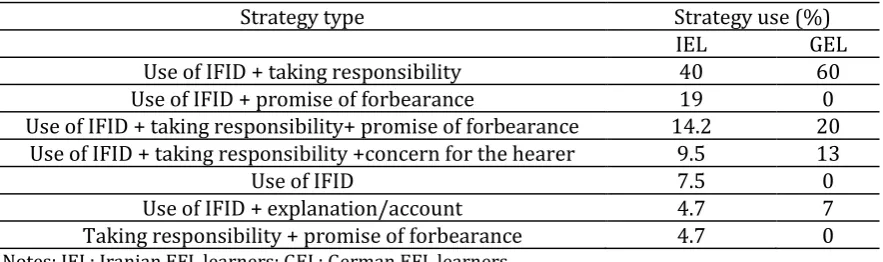
Table 1. Apology strategy use by Iranian and German EFL learners (situation 1)
Strategy type Strategy use (%)
IEL GEL
Use of IFID + taking responsibility 40 60
Use of IFID + promise of forbearance 19 0
Use of IFID + taking responsibility+ promise of forbearance 14.2 20
Use of IFID + taking responsibility +concern for the hearer 9.5 13
Use of IFID 7.5 0
Use of IFID + explanation/account 4.7 7
Taking responsibility + promise of forbearance 4.7 0
According to Table 1, the use of an IFID along with taking responsibility has the highest percentage. It is the most common strategy used by the subjects in both groups (Germans 60% and Iranians 40%). But the frequency of the next strategy hasn't been followed in an organized way and it is not the same in both groups. Whereas for Iranian learners, the use of IFID proceeded by promise of forbearance is considered as the second strategy that they use frequently (19%), for German learners it is followed by taking responsibility (20%). Based on the data in this table, it can also be understood that in this situation, German students usually do not use the strategies 2, 5 and 7; however, those strategies might be used by Iranian learners.
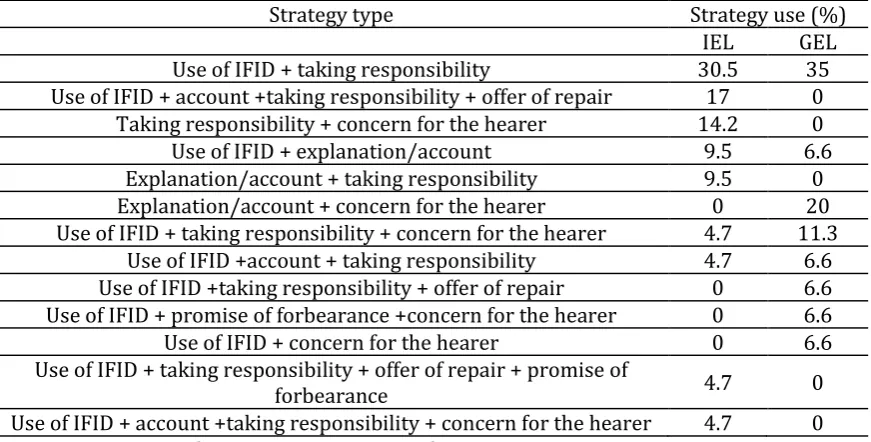
Table 2. Apology strategy use by Iranian and German EFL learners (situation 2)
Strategy type Strategy use (%)
IEL GEL
Use of IFID + taking responsibility 30.5 35
Use of IFID + account +taking responsibility + offer of repair 17 0
Taking responsibility + concern for the hearer 14.2 0
Use of IFID + explanation/account 9.5 6.6
Explanation/account + taking responsibility 9.5 0
Explanation/account + concern for the hearer 0 20
Use of IFID + taking responsibility + concern for the hearer 4.7 11.3
Use of IFID +account + taking responsibility 4.7 6.6
Use of IFID +taking responsibility + offer of repair 0 6.6
Use of IFID + promise of forbearance +concern for the hearer 0 6.6
Use of IFID + concern for the hearer 0 6.6
Use of IFID + taking responsibility + offer of repair + promise of
forbearance 4.7 0
Use of IFID + account +taking responsibility + concern for the hearer 4.7 0
Notes: IEL: Iranian EFL learners; GEL: German EFL learners
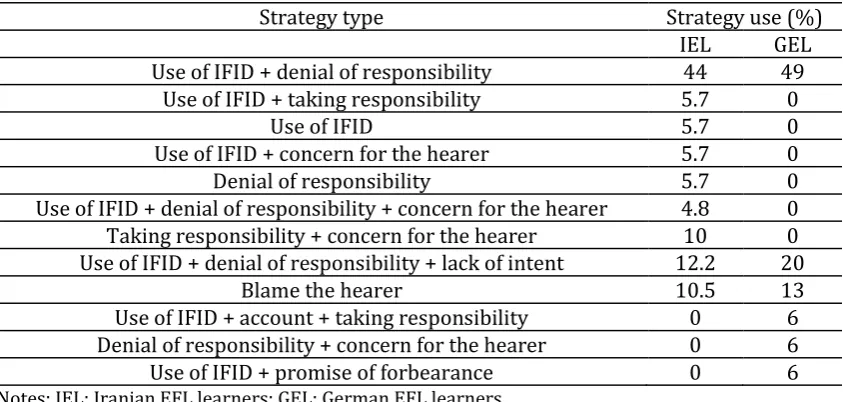
Table 3. Apology strategy use by Iranian and German EFL learners (situation 3)
Strategy type Strategy use (%)
IEL GEL
Use of IFID + denial of responsibility 44 49
Use of IFID + taking responsibility 5.7 0
Use of IFID 5.7 0
Use of IFID + concern for the hearer 5.7 0
Denial of responsibility 5.7 0
Use of IFID + denial of responsibility + concern for the hearer 4.8 0
Taking responsibility + concern for the hearer 10 0
Use of IFID + denial of responsibility + lack of intent 12.2 20
Blame the hearer 10.5 13
Use of IFID + account + taking responsibility 0 6
Denial of responsibility + concern for the hearer 0 6
Use of IFID + promise of forbearance 0 6
Notes: IEL: Iranian EFL learners; GEL: German EFL learners
Here, what is apparent can be put in some similarities in the use of strategies number 1 in both groups with the highest frequency of occurrence (for Iranian EFL learners 44% and for German learners 49%) and more inconsistencies in the use of other strategies. As the data in this table displays, German learners did not use some strategies which have been used by Iranian EFL learners (strategies number 2, 3, 4, 5, 6, 7) and vice versa. That is, Iranian EFL learners also did not make use of some strategies that German learners have used (strategies number 10, 11, 12).
Table 4. Apology strategy use by Iranian and German EFL learners (situation 4)
Strategy type Strategy use (%)
IEL GEL
Use of IFID + taking responsibility 30 6.6
Use of IFID + offer of repair 28.5 73.3
Blame the hearer + offer of repair 17.9 0
Offer of repair 9.9 6.6
Use of IFID + taking responsibility + offer of repair 4.7 13.5
Taking responsibility 4.7 0
Taking responsibility + offer of repair 4.7 0
Notes: IEL: Iranian EFL learners; GEL: German EFL learners
Table 5. Apology strategy use by Iranian and German EFL learners (situation 5)
Strategy type Strategy use (%)
IEL GEL
Use of IFID + explanation/account 28.5 46.6
Use of IFID + account + concern for the hearer 4.7 33.3
Use of IFID + account + taking responsibility 19 6.6
Use of IFID + promise of forbearance 14.2 6.6
Use of IFID + account+ taking responsibility + concern for the
hearer 4.7 0
Use of IFID + taking responsibility + promise of forbearance 4.7 6.6
Use of IFID + concern for the hearer 14.2 0
Use of IFID + denial of responsibility 4.7 0
Use of IFID + justification of hearer 4.7 0
Notes: IEL: Iranian EFL learners; GEL: German EFL learners
As the data presented in Table 5 reveal, the use of IFID is repeated in all the strategies in this situation. It seems that the subjects had this perception that they should certainly apologize by using IFID and that is compulsory in this situation. Also, they used different types of expression of remorse to show that they were unhappy with whatever happened. Some of the strategies have not been used by German EFL learners too (strategies number 5, 7, 8, 9).
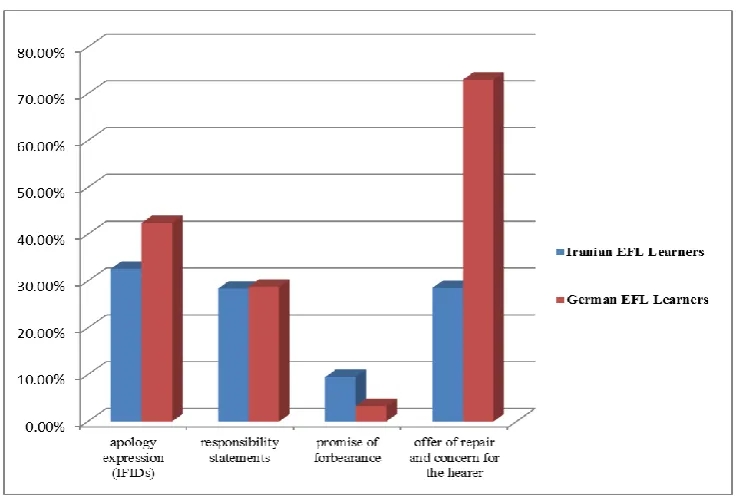
Figure 1 shows the four main apology strategies used in the situations by Iranian and German EFL learners: apology expression (IFIDs), responsibility statements, promise of forbearance, offer of repair and concern for the hearer.
Table 6. Results of Chi-Square Test for differences in apology in strategy use
Value df Asymp. Sig. (2-sided)
Pearson Chi-Square 15.000 3 .241
Likelihood Ratio 13.322 3 .346
Linear-by-Linear Association 3.812 1 .051
N of Valid Cases 5
As shown in Table 6, the significance value is greater than the identified level of significance (.241 > .05). Accordingly, it can be claimed that the first null hypothesis of the study was maintained; hence, there is no significant difference in the frequency of apology strategies between Iranian and German EFL learners.
Gender differences in the use of apology strategies
The second question of the present research intended to investigate the role of gender in Iranian and German EFL learners' use of apology strategies. In order to find possible answers, the data were analyzed in light of gender differences in the DCT five situations. The findings are presented below:
Table 7. Gender differences in apology strategy use (situation 1)
Strategy type Strategy use (%)
Male Female
Use of IFID + taking responsibility 42.4 50
Use of IFID + promise of forbearance 19 0
Use of IFID + taking responsibility+ promise of forbearance 12.2 19
Use of IFID + taking responsibility +concern for the hearer 8.5 13
Use of IFID 6.5 10
Use of IFID + explanation/account 5.7 8
Taking responsibility + promise of forbearance 5.7 0
According to the results in Table 7, the use of an IFID along with taking responsibility has the highest percentage. It is the most common strategy used by males and females in both groups (males, 42.4% and females, 50%). But the frequency of the next strategy hasn't been followed in an organized way and it is not the same in both groups. Whereas for male students, the use of IFID proceeded by promise of forbearance is considered as the second strategy that they use frequently (19%), for female students it is followed by taking responsibility (0%).
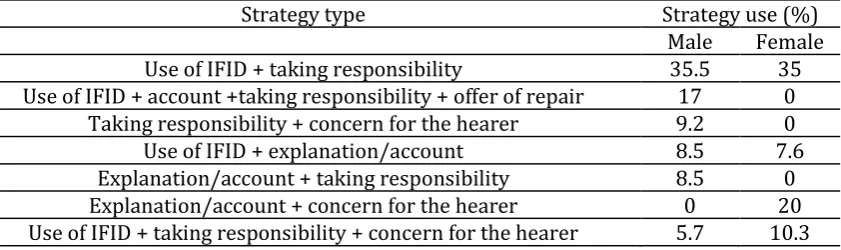
Table 8. Gender differences in apology strategy use (situation 2)
Strategy type Strategy use (%)
Male Female
Use of IFID + taking responsibility 35.5 35
Use of IFID + account +taking responsibility + offer of repair 17 0
Taking responsibility + concern for the hearer 9.2 0
Use of IFID + explanation/account 8.5 7.6
Explanation/account + taking responsibility 8.5 0
Explanation/account + concern for the hearer 0 20
Use of IFID +account + taking responsibility 5.7 5.6
Use of IFID +taking responsibility + offer of repair 0 5.6
Use of IFID + promise of forbearance +concern for the hearer 0 5.6
Use of IFID + concern for the hearer 0 6.6
Use of IFID + taking responsibility + offer of repair + promise of
forbearance 4.7 3
Use of IFID + account +taking responsibility + concern for the hearer 4.7 0
As illustrated in Table 8, for both Iranian and German male and female students in English, the use of “IFID along with taking responsibility” (strategy number 1) has the highest percentage of use (35.5% for male students and 35% for female learners).
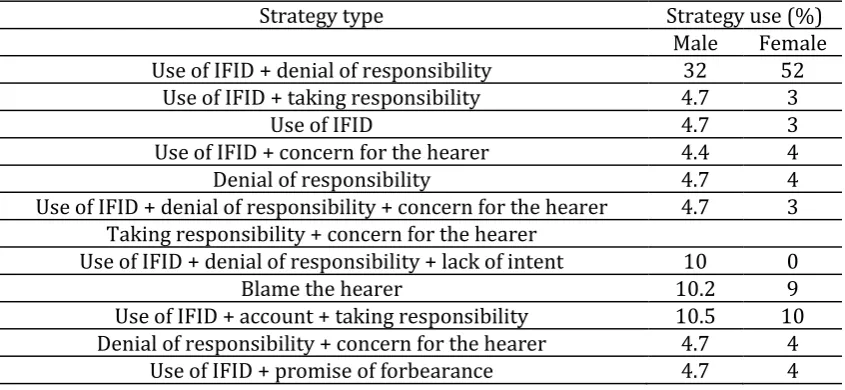
Table 9. Gender differences in apology strategy use (situation 3)
Strategy type Strategy use (%)
Male Female
Use of IFID + denial of responsibility 32 52
Use of IFID + taking responsibility 4.7 3
Use of IFID 4.7 3
Use of IFID + concern for the hearer 4.4 4
Denial of responsibility 4.7 4
Use of IFID + denial of responsibility + concern for the hearer 4.7 3
Taking responsibility + concern for the hearer
Use of IFID + denial of responsibility + lack of intent 10 0
Blame the hearer 10.2 9
Use of IFID + account + taking responsibility 10.5 10
Denial of responsibility + concern for the hearer 4.7 4
Use of IFID + promise of forbearance 4.7 4
Here, there are some similarities in the use of strategies number 1 in both groups with the highest frequency of occurrence for males 32% and for females 52%.
Table 10. Gender differences in apology strategy use (situation 4)
Strategy type Strategy use (%)
Male Female
Use of IFID + taking responsibility 35 30
Use of IFID + offer of repair 45 35
Blame the hearer + offer of repair 5 4.3
Offer of repair 7 7
Use of IFID + taking responsibility + offer of repair 10 10
Taking responsibility 4 14
Taking responsibility + offer of repair 4 4.7
Table 11. Gender differences in apology strategy use (situation 5)
Strategy type Strategy use (%)
Male Female
Use of IFID + explanation/account 28.5 46.6
Use of IFID + account + concern for the hearer 4.7 33.3
Use of IFID + account + taking responsibility 19 6.6
Use of IFID + promise of forbearance 14.2 6.6
Use of IFID + account+ taking responsibility + concern for the
hearer 4.7 0
Use of IFID + taking responsibility + promise of forbearance 4.7 66
Use of IFID + concern for the hearer 14.2 0
Use of IFID + denial of responsibility 4.7 0
Use of IFID + justification of hearer 4.7 0
As the data presented in Table 11 reveal, the use of IFID is repeated in all the strategies in this situation. It seems that the participants had this perception that they should certainly apologize by using IFID.
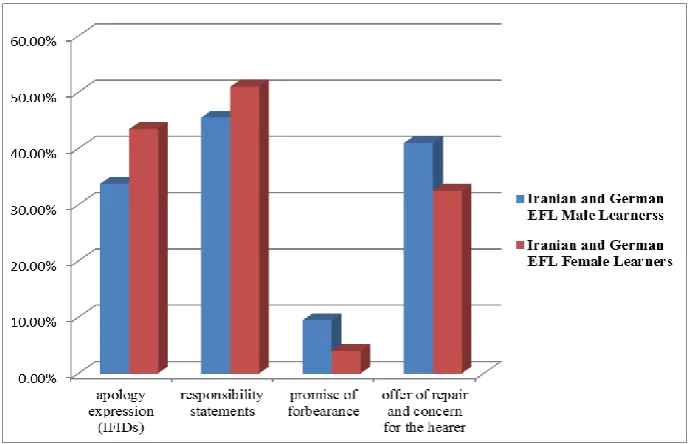
Figure 2. Main apology strategies used by male and female participants
Figure 2 shows main apology strategies used by male and female participants: apology expression (IFIDs), responsibility statements, promise of forbearance, offer of repair and concern for the hearer. According to the Chi-square test, the significance value is 0.285, which is higher than the observed level of significance (.05 <. 285). This tells us that there is no statistically significant difference between male and female Iranian and German EFL learner in employing apology strategies.
CONCLUSION
languages (Heidari-Shahreza, 2014). Speech acts as a sub-branch of socio-pragmatic competence are of importance for language learners. Among speech acts, apologizing is one of them; therefore, this speech act must be realized with care. This research helps language teachers to put more emphasis on speech acts. The study was in fact an attempt to investigate the speech acts of apologizing and politeness as used by Iranian and German EFL upper intermediate learners. As it was illuminated in the preceding section of the study, the findings of the study revealed that more or less both Iranian and German EFL learners have used the same apology strategies including: apology expression (IFIDs), responsibility statements, promise of forbearance, offer of repair and concern for the hearer. In addition, the results of a chi-square test showed that the first null hypothesis of the study, according to which there is no significant difference in the frequency of apology strategies between Iranian and German upper intermediate EFL learners, cannot be rejected.
As far as the first research question of the present study is concerned, it was found that both Iranian and German EFL learners make use of a number of similar strategies such as apology expression (IFIDs), promise of forbearance and responsibility statements with a single different strategy like, offer of repair which might be related to sociocultural differences. The study was in fact an attempt to investigate whether or not gender played any significant role in Iranian and German EFL learners' choice of apology strategies. This study tells us that there is no statistically significant difference between male and female Iranian and German EFL learners in employing apology strategies (see Tabibian & Heidari-Shahreza, 2016 for further information on the use of strategies in Iranian EFL contexts). In addition, the results of a chi-square test showed that the second null hypothesis of the study, according to which there was no significant difference in the frequency of apology strategies between male and female Iranian and German upper intermediate EFL learners, cannot be rejected (see Heidari-Shahreza, 2014; Heidari-Shahreza, Vahid-Dastjerdi & Marvi, 2011 for gender studies with a special focus on Iranian EFL learners).
REFERENCES
Brown, P., & Levinson, S. (1987). Politeness: Some Universals of Language Use. Cambridge University Press.
Bublitz, W., & Norrik, N. R. (2011). Foundations of Pragmatics. Walter de Gruter Gmbh & CO. KG, Berlin/ Boston.
El Hiani, K. (2015). Speech Act Knowledge Among Moroccan EFL Learners at the University. Lambert Academic Publishing.
Farashaiyan. A., & Yazdi Amirkhiz. S. (2011). A Descriptive-Comparative Analysis of Apology Strategies between Iranian EFL and Malaysian ESL University Students. English Language Teaching Publishing.
Heidari-Shahreza, M. A. (2014). A sociolinguistic and cross-cultural investigation into the speech act of suggestion. International Journal of Culture and History, 1 (1), 1-18.
Heidari-Shahreza, M. A., Vahid-Dastjerdi, H., Marvi, S. (2011). Discoursal variation and gender: The case of compliment responses among male and female speakers. Mediterranean Journal of Social Sciences 2 (3), 159-168.
Kasper, G., & Blum-Kulka, S. (1993). Interlanguage Pragmatics. Oxford University Press. Latif, H. (2014).The Place of Pragmatics in the EFL Classroom: Implications for Teacher
Training. 2nd International Conference on “Professional Development and Reflective Teaching on May 7th, 2014. Meknes: Moulay Ismail University.
Leech, G. N. (1983). Principles of Pragmatics. London: Longman University Press. Levinson, S.C. (1983). Pragmatics. New York: Cambridge University Press.
Masaeli, B., Heidari-Shahreza, M. A. (2016 a). Iranian EFL learners' attitude towards the development of L2 writing through collaborative blogging. Modern Journal of Language Teaching Methods, 6 (8), 153-160.
Masaeli, B., Heidari-Shahreza, M. A.(2016 b). The effects of collaborative blogging on communicative aspects of Iranian EFL learners' writing. Modern Journal of Language Teaching Methods, 6 (7), 8-17.
Sheoery, R., & Mokhtari, K. (2001). Coping with academic materials: Differences in the reading strategies of native and non-native readers. System: An International Journal of Educational Technology and Applied Linguistics.
Song, X., & Cheng, L. (2006). Language learner strategy use and test performance of Chinese learners of English. Language Assessment Quarterly.
Tabibian, M., Heidari-Shahreza, M. A.(2016). The effect of cognitive and metacognitive strategy use on Iranian EFL learners' receptive skills. Journal of Applied Linguistics and Language Research, 3 (6), 67-79.
APPENDIX
Discourse Completion Test (DCT) & Questionnaire
Dear participant, you are kindly requested to complete this questionnaire which contains situations in which you might find yourself. Thank you for your help and co-operation. First, please fill in the following form:
Name: Age: Nationality: L1: L2:
Situation: 1
At the professor's office you have borrowed a book from your teacher, which you promised to return today. When meeting your teacher, however, you realize that you forgot to bring it along.
Teacher: "I hope you brought the book I lent you." You: ………... .
Situation 2
You promised you would buy your neighbor a newspaper while in town, but you forgot. Your neighbor: "Did you get the paper?"
You: ………..
Situation 3
An acquaintance you had given bus directions to the day before sees you on the street. The acquaintance: "You know you gave me the wrong bus number for the movie theatre yesterday! By the time we got there, we had already missed half the movie."
You: ………..
Situation 4
Parking your car at work in the morning, you bump into a colleague's car. The other car is damaged and it is clearly your fault. Your colleague is there.
You: ……….. Your colleague: Do not worry.
Situation 5
You arranged to meet a friend in order to study together for an exam. You arrive half an hour late for the meeting.