www.adv-radio-sci.net/8/257/2010/ doi:10.5194/ars-8-257-2010
© Author(s) 2010. CC Attribution 3.0 License.
Radio Science
Context-awareness for heterogeneous access management
C. Mannweiler, A. Klein, J. Schneider, and H. D. Schotten
Chair for Wireless Communications and Navigation, University of Kaiserslautern, Germany
Abstract. The increasing availability of both static and dy-namic context information has steadily been driving the de-velopment of context-aware communication systems. Adapt-ing system behavior accordAdapt-ing to current context of the net-work, the user, and the terminal can yield significant end-to-end performance improvements. In this paper, we present a concept for how to use context information, in particu-lar location information and movement prediction, for Het-erogeneous Access Management (HAM). In a first step, we outline the functional architecture of a distributed and ex-tensible context management system (CMS) that defines the roles, tasks, and interfaces of all modules within such a sys-tem for large-scale context acquisition and dissemination. In a second step, we depict how the available context informa-tion can be exploited for optimizing terminal handover deci-sions to be made in a multi-RAT (radio access technology) environment. In addition, the utilized method for predict-ing terminal location as well as the objective functions used for evaluating and comparing system performance are de-scribed. Finally, we present preliminary simulation results demonstrating that HAM systems that include current and future terminal context information in the handover decision process clearly outperform conventional systems.
1 Introduction
Context awareness has been introduced to a multitude of sys-tems in order to adaptively control system behavior. Today, context information is made available for a broad variety of applications, for instance context-aware services for mobile terminals. These services increasingly rely on data gathered by terminal sensors, (wireless) sensor and actuator networks deployed in public places or indoor environments
(Schnei-Correspondence to: C. Mannweiler
der, 2009). Sensor data is complemented by information re-trieved from the World Wide Web (such as social networks) or stored in databases. Classification and inference algo-rithms are used to semantically augment and transform data to higher levels of abstraction. The processed data can then be exploited by actuator networks, for adaptive system be-havior, or for context-aware service creation and delivery. In a similar way, user and network context can be used for optimizing Heterogeneous Access Management (HAM) sys-tems.
The growing need for wireless Internet access in combi-nation with a more diverse landscape of radio access tech-nologies (WLAN, GPRS, UMTS, HSDPA, WiMAX, etc.) as well as the demand for high data rates in the mobile domain increases the relevance of these systems. From a user per-spective, they shall provide features such as “always on” and “always best connected”. Operators are looking for solutions that more precisely allow charging and billing customers ac-cording to their actual resource consumption, thus more ef-fectively controlling system utilization. In order to facilitate the achievement of these objectives, HAM systems have to be able to exploit not only radio network parameters but any available context information of the users. Systems using both network context information (such as network utiliza-tion or link capacity) and user context informautiliza-tion (such as location or movement variables) are also called intelligent radio network access (IRNA) systems (Klein, 2009).
258 C. Mannweiler et al.: Context-awareness for heterogeneous access management context prediction, respectively. In Sect. 5, we present
pre-liminary simulation results that allow for a comparison of context-aware and conventional HAM. A conclusion and an outlook on future work is given in Sect. 6.
2 State of the art and related work
Context-aware network access management brings together two areas of research. On the one hand, Heterogeneous Access Management enabling intelligent access has become very relevant in a world that increasingly relies not only on being “online” permanently, but also on guaranteeing a high-speed network connection. On the other hand, context aware-ness is a key feature of systems that have to intelligently de-cide how to manage network resources.
2.1 Network selection and heterogeneous access management
In a more and more fragmented and heterogeneous wireless network landscape and with an increasing demand for high data rates, the need for efficient network access management across different radio access technologies (RATs), referred to as “Heterogeneous Access Management”, becomes emi-nent. Radio resources are of course limited due to physical, technology-specific and regulatory constraints. Context, ei-ther provided by terminals, network nodes or from sensors deployed in the user’s environment, may be utilized to sig-nificantly reduce the waste of scarce radio resources and effi-ciently manage wireless access across heterogeneous RATs.
The issue of network selection in an environment of di-verse wireless access possibilities is widely addressed in to-day’s research. HAM describes a concept for controlling radio resource allocation and utilization, as e.g. bandwidth, power, etc., across various RATs, where the main goals are to optimize overall system performance and to enable seam-less mobility. HAM decisions and actions may be influenced by network operator policies (Taha et al., 2004), service level agreements (Yang et al., 2005), user preferences (Ormond et al., 2005), user location information (Pawar et al., 2009) or as a result of sophisticated resource utilization analysis (Blau et al., 2007). Further, the integration of a multitude of wire-less access networks under a cross-layer context-aware ar-chitecture (Hasswa et al., 2007) has shown to increase user satisfaction and network throughput.
Inherently related to HAM is the issue of when to change the user’s point of attachment to a specific network to an-other network due to limited resources in the former one, also referred to as “handover”. Hence, the availability of network context is a prerequisite for efficient handover de-cisions. Moreover, it is beneficial to consider additional con-text information. However, the afore mentioned approaches exhibit no feature for incorporating movement prediction for network adaptation and HAM decisions.
2.2 Context awareness
The notion of context awareness can be found in manifold variations in different research areas of computer science. On the one hand, context consumers, such as context-aware ap-plications and services, require context information in order to adapt to changes in their environment. On the other hand, context providers, e.g. sensors and (wireless) sensor net-works, are key components for detecting the requested con-text. Moreover, GPS modules, temperature, ambient light, and acceleration sensors are becoming widespread with the recent success of smartphones and other mobile devices. For categorization of context sources, Chen (2004) proposes the following classes:
1. Direct access to sensors – Sensors deployed on network terminals can collect environmental context such as lo-cation or temperature as well as network context infor-mation.
2. Middleware infrastructure – The introduction of mid-dleware infrastructure aims at strictly separating the processes of context acquisition and context manage-ment. The separation improves system extensibility and reusability.
3. Context server – In this approach, a resource-rich con-text server takes over the task of administering concon-text data that it receives from various context sources. It lieves sensors and terminals from managing context re-quests from other entities.
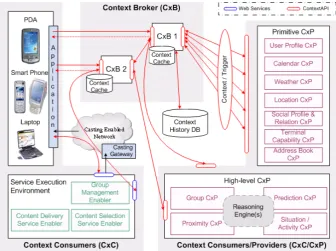
Fig. 1. C-CAST context management architecture.
However, all of these frameworks miss a comprehensive con-cept for a vertically disintegrated structure that facilitates the acquisition and dissemination of context information across different domains. In contrast, the proposed context man-agement system disposes of open interfaces and a uniform context representation schema.
3 A context management system for HAM
Ideally, context management systems should be agnostic with respect to their application. However, depending on the intended utilization of context information, context manage-ment concepts have to comply with different requiremanage-ments. In this section, we propose a context management system (CMS) that is based on the producer-consumer role model that can frequently be found in the area of context manage-ment, e.g. Pils et al. (2007). The C-CAST CMS as depicted in Fig. 1 is designed to acquire, manage, and distribute con-text information and to control the concon-text quality required for HAM purposes. This functionality requires the following core architectural components: Context Providers, Context Brokers, and Context Consumers. Two different communi-cation modes are available within the system. In the asyn-chronous mode, context is published if a specified condition or event comes true (“subscribe/publish mode”). In the syn-chronous mode, a request for context information is instantly answered (“request/provide mode”).
3.1 Context provider
Context Providers (CxP) gather data from a collection of sen-sors, network, services (e.g. web services) or other relevant sources. A CxP employs various filtering, aggregation and reasoning mechanisms to infer context from raw sensor or other source data. This created context is then modeled ac-cording to a specified representation schema. Each provider is tailored to provide a particular type of context e.g. Calen-dar Provider provides calenCalen-dar information about an entity and a Location Provider provides location information about an entity. Every CxP registers its availability and capabilities by sending appropriate announcements to the CMA and ex-poses interfaces to provide context information to the CMA. 3.2 Context broker
Context Brokers (CxB) take on the role of middlemen. Their main functionality is to maintain a distributed registry of available CxPs and their capabilities based on the announce-ment sent by CxPs. Based on that registry, they can provide a CxP look-up service to entities searching for certain con-text data. The distributed structure of the registry needs to be maintained constantly in order to have an even distribution of information.
3.3 Context consumer
260 C. Mannweiler et al.: Context-awareness for heterogeneous access management application or a network management entity. A CxC can
re-trieve context information by sending a request to the system, i.e. by directly invoking a CxP over a generic interface. An-other way for the CxC to obtain information is to subscribe to a specific context information. It will be notified by a CxP as soon as the specified notification condition materializes.
4 A concept for heterogeneous access management
The heterogeneity of today’s wireless access possibilities im-poses challenges for efficient access and resource manage-ment across different RATs. The proposed HAM concept, as shown in Fig. 2, accounts for the characteristics and status of each RAT while simultaneously trying to accommodate users, who face different environmental conditions, with the best possible end-to-end performance.
Since the use of context information enriches the informa-tion basis on which HAM decisions are taken, network selec-tion and handover decisions will be significantly improved, given context such as network load and user movement pre-dictions is available.
Further, the a-priori knowledge of available access net-works within reach will significantly reduce terminal scan times for access networks, yielding decreased terminal power consumption. Multicasting streams will be efficiently rerouted and transmitted knowing terminal capabilities and points of attachment (Janneteau et al., 2009). Mechanisms of modern wireless RATs as e.g. link adaptation will also benefit from detailed context information such as user envi-ronment and history information of certain hotspots.
Since each wireless access network provides a different level of Quality of Service (QoS), capacity, and coverage, various parameters are accounted for to ensure satisfying end-to-end performance. Relevant parameters are either static (e.g. system bandwidth) or dynamically changing due to users’ movements and environmental conditions (e.g. ceived signal strength). While static parameters will be re-trieved from databases, dynamic parameters need to be mea-sured, monitored and assessed.
In case thatnreal-valued, non-negative context scopes are available for HAM, we can denote their values at timet as
x1,t,x2,t,...,xn,t where each of the scopes can lie within an interval[lk,uk], k=1,2,...,nthat is relevant for HAM de-cisions. Values lying outside their respective interval have to be considered separately. In order to normalize different context scopes to the interval[0,1], eachxk,t is divided by the respective interval widthuk−lk:
xk,t0 =xk,t−lk
uk−lk
(1) In the domain of Heterogeneous Access Management, the majority of context scopes have to be considered per user (or terminal) and base station since they describe a charac-teristic of the connection between the terminal and the base
station. An example would be the signal strength of differ-ent WLAN access points detected by differdiffer-ent user terminals. Hence, it is necessary to more specifically denote context val-ues with two additional indexesiandj, whereirepresents the terminal andj the base station. However, scopes exist that fulfillxi,j,k,t=xj,k,t, i.e. context scopes being equal for all i, e.g. the current number of users attached to an access point. Moreover, we can weigh the normalized context val-ues according to their relevance (ri,j,k∈ [0,1]) for the evalu-ation of the (possible) connection and their confidence level (ci,j,k∈ [0,1]). In conjunction with Eq. (1), this yields
xi,j,k,t00 =ci,j,k·ri,j,k·
xi,j,k,t−li,j,k
ui,j,k−li,j,k
(2) For decisions related to HAM, it is crucial to find (based on available context information) the best radio connection for a single terminal, taking into account overall system perfor-mance. Hence, for every point in timet, the qualityq(j )of each (possible) connection to the available point of attach-mentsj (base stations, access points, etc.) is evaluated by calculating
qi,t(j )= n
X
k=1
xi,j,k,t000 , (3)
wherexi,j,k,t000 =xi,j,k,t00 if xk,t0 is positively correlated to the evaluation of the possible connection, i.e. an increasing value of x0k,t yields a high-rated connection (e.g. received signal strength), and xi,j,k,t000 =1−xi,j,k,t00 ifx0k,t is negatively cor-related to the evaluation of the possible connection, i.e. a decreasing value ofxk,t0 yields a higher rating (e.g. distance to point of attachment). For every terminali, the maximum
qi,t,maxof allqi,t(j )identifies the (theoretically) best point of attachment to be connected to. However, this does not take into account cost associated to an executed handover (such as terminal battery power, use of network resources, etc.). If
j=j0denotes the point of attachment for the currently ac-tive connection of the terminal, we define a marginyi,j by whichqi,t,maxhas to exceedqi,t(j0). Thus, the handover is only performed if
qi,t,max> qi,t(j0)+yi,j. (4) The marginyi,j, besides ensuring a better connection qual-ity in absolute terms, allows for trading off handover costs against enhanced connection quality, where handover costs are not limited to signaling costs but also comprise costs spent for acquiring, processing, and evaluating context in-formation.
Fig. 2. Concept for heterogeneous access management.
and system performance requires quality control and man-agement of the acquired context information. The aim of the proposed context management architecture therefore is to adaptively control and manage context information accord-ing to the requirements of different Context Consumers, e.g. the HAM module as depicted in Fig. 2.
5 Simulation results
For a quantitative verification of the outlined concept, a context-aware radio network simulator with the following key characteristics has been implemented. The overall de-ployment can be set up flexibly by selecting cell number, structure (hexagonal, either one (centrally positioned) BS per cell or one BS serving three cells via directed antennas) and layout. Base stations can have an off-set to one another and can (depending of RAT) vary in their transmission power. The number of terminals can be set up flexibly and remains constant during simulation time. Different speed classes can be attributed to every single terminal and, depending on the assigned speed, a terminal performs a defined form of ran-dom walk. Depending on a set of analyzed parameters (dis-tance to BS, idle BS capacity, geometry factor, etc.), a termi-nal is assigned to the best ranked BS. One simulation time step is 10 ms.
In order to evaluate the influence of available context in-formation, a movement prediction method is integrated into the simulation and considered for HAM decisions. The used prediction algorithm calculates the possible terminal loca-tions 50 simulation steps in advance using a simplified pre-diction model based on the “dead reckoning” method. Fur-ther, using the estimated location and knowing the location of base stations in the vicinity, the terminal evaluates its ge-ometry factor (Holma et al., 2007) to available (and active) base stations around. The evaluation process only foresees a handover execution when the estimated geometry of the re-spective terminal exceeds a predefined threshold (e.g. usual handover margin for UMTS 3–10 dB). If these conditions are met, handover execution is triggered. For an initial
compar-Fig. 3. Number of Intra-RAT handovers for simulated terminals.
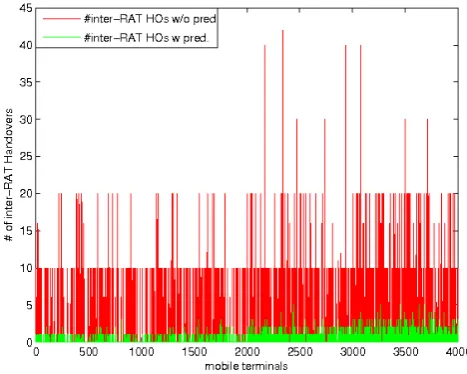
Fig. 4. Number of Inter-RAT handovers for simulated terminals.
ison of HAM performance with and without movement pre-diction, the number of performed handovers is considered. In general, a lower number is preferable since a handover is costly in terms of resource utilization. Figures 3 and 4 depict the amount of inter-RAT and intra-RAT handovers for 4000 terminals.
262 C. Mannweiler et al.: Context-awareness for heterogeneous access management 6 Conclusions
HAM is one of the key future research areas for optimizing radio network performance. This paper presented a frame-work for the integration of context information into Het-erogeneous Access Management (HAM). A formal method assessing link quality based on available context informa-tion has been developed for triggering handover mechanisms. The proposed Context Management Architecture is respon-sible for large-scale context acquisition and dissemination. Finally, based on the outlined HAM concept, we presented a context-aware radio network simulator that is capable of modeling manifold mobile communications scenarios. First results show that the availability of current and predicted context information yields significant performance improve-ments in HAM. Although only preliminary, these findings demonstrate the potential of context-awareness for HAM. Further research activities include a more detailed analysis of the impact of context information availability on simu-lation results beyond the preliminary findings. In order to draw more valid conclusions, additional context models will be implemented within the simulator, the aim being, among other, to separate context of major influence from that of low or medium influence on system performance.
Acknowledgements. This work has been partially supported by the Collaborative Project Context Casting (C-CAST – Provide an End-to-End Context-Aware Communication Framework), which is funded by the European Commission under the Seventh Framework Programme.
References
Abowd, G. D., Atkeson, C. G., Hong, J., Long, S., Kooper, R., and Pinkerton, M.: Cyberguide: a mobile context-aware tour guide, Wireless Networks, 3(5), 421–433, 1997.
Blau, I., Wunder, G., Karla, I., and Sigle, R.: Cost Based Heteroge-neous Access Management in Multi-Service, Multi-System Sce-narios, The 18th Annual IEEE International Symposium on Per-sonal, Indoor and Mobile Radio Communications (PIMRC’07), Athens, 2007.
Chen, H.: An Intelligent Broker Architecture for Pervasive Context-Aware Systems, University of Maryland, College Park, MD, 2004.
Cheverst, K., Davies, N., Mitchell, K., Friday, A., and Efs-tratiou, C.: Developing a context-aware electronic tourist guide: some is-sues and experiences, in: Proceedings of the SIGCHI conference on Human Factors in Computing Systems, The Hague, 2000. Flor´een, P., Przybilski, M., Nurmi, P., Koolwaaij, J., Tarlano, A.,
Wagner, M., Luther, M., Bataille, F., Boussard, M., Mrohs, B., and Lau, S.: Towards a Context Management Framework for MobiLife, 14th IST Mobile and Communications Summit, Dres-den, 2005.
Hasswa, A., Nasser, N., and Hassanein, H.: A seamless context-aware architecture for fourth generation wireless networks, Wire-less Personal Communications, Springer, Heidelberg, 43, 1035– 1049, 2007.
Holma, H., Reunanen, J., Chan, L., Mogensen, P., Pedersen, K., Horneman, K., Vihri¨al¨a, J., and Juntti, M.: Physical Layer Per-formance, in: WCDMA for UMTS : HSPA Evolution and LTE, edited by: Holma, H. and Toskala, A., Chichester, England, 2007.
Janneteau, C., Simoes, J., Antoniou, J., Christophorou, C., Kellil, M., Klein, A., Neto, A., Pinto, F. C., Roux, P., Sargento, S., Schotten, H. D., and Schneider, J.: Context-aware Multiparty Networking, Conference Proceedings of ICT MobileSummit, Santander, 2009.
Jo, D., Lee, J., Lee, S., Ha, T., Kwon, T., and Choi, Y.: Signal Dragging: Effects of Terminal Movement on War-Driving in CDMA/WCDMA Networks, in: LoCA 2007. LNCS, edited by: Hightower, J., Schiele, B., and Strang, T., Springer, Heidelberg, 4718, 211–227, 2007.
Klein, A., Mannweiler, C., Schneider, J., and Schotten, H.: A Framework for Intelligent Radio Network Access Based on Con-text Models, Proceedings of 22nd WWRF Meeting, Paris, 2009. Ormond, O., Perry, P., and Murphy, J.: Network Selection Decision in Wireless Heterogeneous Networks. IEEE 16th International Symposium on Personal, Indoor and Mobile Radio Communica-tions, Berlin, 2005.
Pawar, P., van Beijnum, B.-J., Wac, K., Hermens, H., and Konstan-tas, D.: Towards Location Based QoS-Aware Network Selection Mechanism for the Nomadic Mobile Services. IEEE Consumer Communications and Networking Conference, Special Session on Beyond GPS – Where Navigation meets Consumer Commu-nications (CCNC’09), Las Vegas, NV, 2009.
Pils, C., Roussaki, I., Pfeifer, T., Liampotis, N., and Kalatzis, N.: Federation and Sharing in the Context Marketplace, in: LoCA 2007, edited by: Hightower, J., Schiele, B., and Strang, T., LNCS, Springer, 4718, 121–138, Heidelberg, 2007.
Schneider, J., Mannweiler, C., Klein, A., and Schotten, H.: Erfas-sung von Umgebungskontext und Kontextmanagement, 14. ITG Fachtagung Mobilkommunikation, Osnabr¨uck, 2009.
Sumi, Y., Etani, T., Fels, S., Simonet, N., Kobayashi, K., and Mase, K.: C-map: Building a context-aware mobile assistant for exhi-bition tours, in: Community Computing and Support Systems, Social Interaction in Networked Communities, edited by: Ishida, T., LNCS, Springer, Heidelberg, 1519, 137–154, 1998.
Taha, A.-E. M., Hassanein, H. S., and Mouftah, H. T.: On Robust Allocation Policies in Wireless Heterogeneous Networks. Pro-ceedings of the First International Conference on Quality of Ser-vice in Heterogeneous Wired/Wireless Networks (QSHINE’04), 2004.
Yang, X., Bigham, J., and Cuthbert, J.: Resource Management for Service Providers in Heterogeneous Wireless Networks, Wire-less Communications and Networking Conference, New Or-leans, LA, 2005.