Mr. V. Chinni Krishnaiah Assistant Professor,
Department of Pharmacology Annamacharya College of Pharmacy, Rajampet-516126, India
E.mail: [email protected] Address for correspondence
Access this article online www.japer.in
Putative antioxidant property of
Annona squamosa
on acetic acid
induced ulcerative colitis
INTRODUCTION
Ulcerative colitis (UC) is a chronic inflammatory
bowel disease (IBD) of the colon and rectum. The
main etiological factors to cause UC have been
reported, includes genetic, immunologic, and
environment [1-2].In recent research it was reported
that oxidative stress also plays a major role in the
development of UC. Generation of reactive oxygen
species (ROS), hypochlorous acid and oxidant
derivatives in inflamed mucosa, may be pathogenic in
IBD [3-4. Various mechanisms has been proposed for
the generation of ROS in inflamed mucosa like
activated phagocytic leukocytes and neutrophils,
capable of producing superoxide and cascade of
various reactive species leading to a very reactive
hydroxyl radical and peroxide. These products cause
the impairment in cell membrane stability and death
of the cells by lipid peroxidation in IBD [5-7. Several
experimental and human studies proved that
anti-oxidant supplementations like vitamin E, selenium
and trimetazidine were found to be beneficial in UC
models [8-10].
Existing drugs to treat UC shows effective and may
exert maximum side effects. So, the search of new
therapeutic agents with fewer side effects and also
with putative antioxidant properties would be very
useful [11].The plant Annona squamosa (annonaceae)
is commonly called as custard apple in English sharifa
in Hindi [12]. Hepatoprotective activity of leaves of
Annona squamosa documented by Saleem et al.
[13-14]. The crushed leaves are sniffed to overcome
hysteria & fainting spells. Traditionally the leaves
were applied to ulcer and wounds [15](Pandey and
Barve, 2011), the antiulcer activity of leaves of this
plant also well documented [16](Mohamed Saleem et
al., 2012). This research was aimed at investigating
the protective role of leaves of Annona squamosa
acetic acid induced UC in order to support or refute
the claims by traditional herbalists in India. Research
Research Research
Research ArticleArticleArticleArticle
The purpose of the present study is to evaluate the protective role of ethanolic extract of Annona squamosa against acetic acid induced ulcerative colitis. Male Wistar rats received two different doses of extract (250 and 500 mg/kg bw p.o.), sulfasalazine, or vehicle for 3 consecutive days before induction of ulcerative colitis by intra-rectal acetic acid administration, and continued further for 7 days after the induction. The colonic mucosal injury was assessed by macroscopic scoring. Furthermore, the mucosal content of malondialdehyde (MDA) and endogenous antioxidants (GSH, SOD and catalase) activity were considered as parameters of the redox state. Acute inflammatory response was determined by measuring myeloperoxidase (MPO) from rat colon. Effect of Annona squamosa against ulcerative colitis was identified by decreasing mucosal epithelium damage, evident by decrease in macroscopical score, wet weight of the colon. All biochemical parameters were reverting by Annona squamosa treatment in ulcerated rats and the protective role of Annona squamosa was comparable with reference standard sulfasalazine. From this study it has been concluded that Annona squamosa attenuates acetic acid induced ulcerative colitis by reducing oxidative stress in rats.
Key words: Inflammatory bowel disease, Oxidative stress, Annona squamosa,
Endogenous antioxidant, Rat colon ABSTRACT
ABSTRACT ABSTRACT ABSTRACT V. Chinni Krishnaiah*1,2, T. S.
Mohamed Saleem2, D. Sujatha1,3,
B. Pusphakumari1, G.Anitha1
Department of Pharmacology, Sri Padmavathi School of Pharmacy, Tirupathi, India Department of Pharmacology, Annamacharya College of Pharmacy, Rajampet-516126, India Department of Pharmacology, National Institute of Pharmaceutical Education & Research, Hyderabad, India
MATERIALS AND METHODS
Plant material
Annona squamosa was collected in and around
Tiruchanoor in the month of June 2009 and identified
by Dr. N. Yasodamma, Prof. of Botany, Sri
Venkateswara University, Tirupathi. The coarsely
powdered leaves were extracted with ethanol on a
reflux water bath for 3 hr. The cycle was repeated for
three times. The extract was concentrated on rotary
flash evaporator to semi solid consistency and then
dried over a water bath (yield – 200 g/kg).
Drugs and chemicals
Acetic acid and sulfasalazine were procured from
Himedia Pvt.Ltd, India and all other chemicals and
reagents used were of analytical grade, procured form
SD fine chemicals Pvt. Ltd. India.
Animals
Male Wistar albino rats (150-200 g) were used for this
study. The study was approved by the Ethics
Committee for animal experimentation
(1016/a/06/CPCSEA/003/2009),. The animals were
obtained from the parent institute and kept in animal
house in standard conditions. All animals were fasted
24 h prior to the experimental procedure.
Induction of ulcerative colitis
A polypropylene tube with 2 mm diameter was
inserted through the rectum into the colon to a
distance of 8 cm. A solution of two ml (3%, v/v) acetic
acid (Merck , Germany) in saline was instilled. The
rats were then maintained in a supine Trendelenburg
position for 30 s to prevent early leakage of the
intracolonic instillate [17](Millar et al., 1996).
Treatment protocol
Animals were divided into six groups (n = 6), Group 1:
Normal control group received saline, Group 2: Colitis
model received saline and subjected to rectal
instillation of acetic acid after 3 days, Group3:
received sulfasalazine (500 mg/kg) and subjected to
rectal instillation of acetic acid after 3 days, Group 4 &
5: Annona squamosa treated group received 250 and
500 mg/kg bw p.o, respectively and subjected to
rectal instillation of acetic acid after 3 days. All
treatment regimens were continued for another 7
consecutive days. On the 11th day, rats were sacrificed
under ether anesthesia and laparatomy was
performed. Colonic segments were excised, freed of
adherent adipose tissue, washed with saline, and were
examined for macroscopic scoring and biochemical
studies. Average wet weight of the colon was
observed.
Macroscopic scoring
Mucosal damage was assessed macroscopically by the
scoring system of Millar et al. [17], where 6 cm of
colon extending proximally for 2 cm above the anal
orifice were cut, weighed then split longitudinally. In
each rat, the macroscopic injury of each ulcer was
scored by an independent observer according to a
scale ranging from 0 to 4 as follows: (0) no
macroscopic changes, (1) mucosal erythema only, (2)
mild mucosal edema, slight bleeding or small erosions,
(3) moderate edema, bleeding ulcers or erosions, and
(4) severe ulceration, erosions, edema and tissue
necrosis. Intermediate values reflected intermediate
appearances.
Biochemical parameters
Colons were scrapped and homogenized in chilled
phosphate buffer (pH 7.4) using a homogenizer. The
homogenates were centrifuged at 800 rpm for 5 min
at 4°C (REMI C-24) to separate the molecular debris.
The supernatant so obtained was centrifuged at
10,000 rpm for 20 min at 4°C (REMI CM-12) to get the
post mitochondrial supernantant (PMS), which was
used to assay the tissue myeloperoxidase (MPO) [18],
lipid peroxidation (LPO) [19], reduced glutathione
(GSH) [20], superoxide dismutase (SOD) [21], catalase
(CAT) [22].
Statistical analysis
All values were expressed as Mean ± SEM. (n = 6 in
each groups). One way ANOVA was applied to test for
significance of biochemical data of the different
RESULTS
Acute toxicity study
Annona squamosa was found to be safe, as no animal
died at a single oral dose of 4g /kg. Annona squamosa
didn’t exhibit any gross behavioral changes at the
single oral dose of 4g /kg.
Acetic acid induced ulcerative colitis model
Effect of Annona squamosa on activity index Administration of acetic acid has slow down the
animals, indicated by the slowness in the activity
when compared to the normal animals. The animals
treated with standard drug sulfasalazine (G-II) were
observed to be more active when compared to the
control animals (G-I). On administration of Annona
squamosa at low dose (250 mg/kg) the activity was
found to be slow as observed in the control group
(G-I), while the activity was intermediate in case of
animals treated with high dose of Annona squamosa
(500 mg/kg). The results were presented in Table 1.
Effect of Annona squamosa on crypt abscesses formation
Administration of acetic acid caused severe crypt
abscesses in the colon of the animal. The standard
group treated with sulfasalazine (100 mg/kg), has
shown absolutely no crypt abscesses formation, when
compared to the control group (G-I). Whereas, the
abscesses formation was moderate in the animals
receiving low dose of Annona squamosa and mild
when high dose of Annona squamosa was
administered when compared to the control
group(G-I). The results were presented in Table 1.
Effect of Annona squamosa on gross mucosal inflammation
A severe mucosal inflammation was observed in
control group (G-I) when treated with acetic acid. The
mucosal inflammation was very mild in the standard
group (G- II) when treated with sulfasalazine. The
gross mucosal inflammation was moderately severe
upon administration of Annona squamosa at low dose
(G-III), where as it was observed to be mild when
treated with high dose of Annona squamosa (G-IV), on
comparison with the control group (G-I) (Table-4).
The results were presented in Table 1.
Effect of Annona squamosa on wet weight of the colon
The average wet weight of the colon was increased
when treated with acetic acid (G-I), but the wet weight
of the colon decreased upon administration of the
standard drug sulfasalazine (G-II), when compared to
the control (G-I). Animals treated with the
high dose of Annona squamosa (G-IV) showed a
significant decrease in the wet weight of the colon (p <
0.01) when compared to the control group (G-I). The
effect of Annona squamosa at low dose on the wet
weight of the colon was not significant on comparison
with the control group. The results were presented in
Table 2.
Effect of Annona squamosa on diarrhea
Administration of acetic acid causes severe diarrhea
as observed in the control group (G-I). The standard
group (G-II) treated with sulfasalazine has shown mild
diarrhea when compared to the control group. On
administration of Annona squamosa moderate
diarrhea was observed with the low dose group (G-III)
and mild diarrhea with the high dose group (G-IV)
when compared to the severity of the control group
(G-II). The results were presented in Table 2.
Effect of Annona squamosa on disease score Acetic acid has induced severe disease score was
observed in the control group animals (G-I). The
group treated with standard drug sulfasalazine
showed moderate score when compared to the
control group (G-I). The groups treated with Annona
squamosa has shown mild disease score in high dose
and moderate disease score in low dose group (G-III)
when compared to the control group (G-I) (Table-).
The effect of Annona squamosa on different
parameters of UC was observed to be dose dependent.
The effect of Annona squamosa at the high dose was
almost comparable with that of the standard. The
results were presented in Table 2.
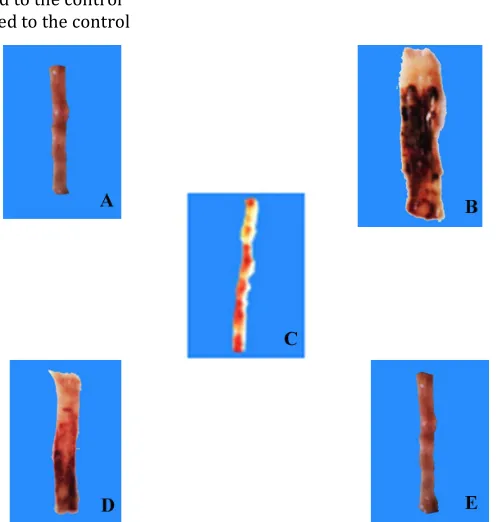
The colon in untreated animals was normal without
Administration of acetic acid caused severe mucosal
inflammation and crypt abscesses formation (plate
1-b). Treatment with sulfasalzine has reduced mucosal
inflammation and crypt abscesses formation (plate
1-c). The effect of Annona squamosa at low dose was not
much promising, as traces of mucosal inflammation
and crypt abscesses were noted (plate 1-d). Annona
squamosa at high dose has shown similar action as
that of sulfasalzine, as no mucosal inflammation and
crypt abscesses could be observed (plate 1-e).
Effect of Annona squamosa on MPO activity A significant increase in MPO activity was observed in
disease control when compared to the normal. The
MPO values were decreased significantly in groups
treated with sulfasalazine and ethanolic extract of
Annona squamosa at both the doses (250 mg/kg, 500
mg/kg), when compare to the control group
respectively. The results were presented in Table 3.
Effect on SOD
There was a significant (p < 0.05) decrease in the SOD
levels of the disease control group (G-II) when
compared to the normal group (G-I). The standard and
test groups (G-III and IV, V) showed a significant (p <
0.001) increase in the SOD levels when compared to
the control groups (G-II) (Figure-2)
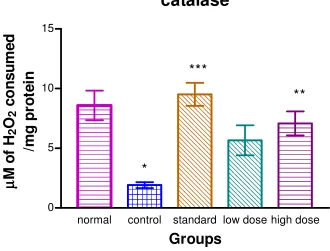
Effect on catalase
On administration of acetic acid a significant (p <
0.001) reduction in the catalase levels was observed
in the control group (G-II) when compared to the
normal group (G-I). On treatment with sulfasalazine
and alcoholic extract of Annona squamosa at both the
doses caused (100 mg/kg) a significant (p < 0.001,
0.05) increase in the enzyme levels when compared to
the control group (G-II) (Figure-3).
Effect on reduced glutathione
Glutathione levels were observed to decrease
significantly (p < 0.001) in control group (G-II) when
compared to the normal group (G-I). The standard
group and the test groups (G- III and IV, V) showed a
significant (p < 0.001; 0.01) elevation in the enzymes
levels when compared to control group (G-I)
respectively (Figure-4).
Effect on lipid peroxidation
There was a significant (p < 0.001) increase in the
malondialdehyde levels in the control group (G-II)
when compared to the normal group (G-I). On the
treatment with sulfasalzine (G-III), a significant (p <
0.001) decrease was observed when compared to the
control group animals (G-II). Group IV and V receiving
different doses of alcoholic extract of Annona
squamosa showed a significant (p < 0.001) reduction
in LPO when compared to the control group (G-II)
(Figure-5)
DISCUSSION
Acetic acid induced colitis is an easily inducible model
of IBD and the similarity of the inflammatory
mediators phase bears some resemblance to acute
human intestinal inflammation. The acetic acid
induced colitis model has been extensively used by
various authors as a model which causes severe
diffuse distal colitis [23-25]. Several major causative
factors in the initiation of human colitis such as
enhanced vasopermeability, prolonged neutrophils
infiltration and increased production of inflammatory
mediators are also seen involved in this animal model
of Inflammatory bowel disease. In the present study,
moderate but persistent ulceration was observed in
the control animals supporting acetic acid induced
ulcerative colitis as one of the suitable model for
evaluating useful drugs against UC.
In acetic acid induced ulcerative colitis model,
epithelial or mucosal necrosis and transient
inflammation and edema that variably extended in to
the lamina propria, sub mucosa (or) external muscle
layers, depending on the concentration and length of
exposure of acetic acid mucosal and sub mucosal
inflammation followed by epithelial injury is common
and was associated with activation of arachidonic acid
pathways.
Both the test groups treated with 250 mg and 500
mg/kg A. squamosa showed a significant reduction in
crypt abscess formation and gross mucosal
evident improvement in the different scores like
activity score, disease score and severity of diarrhea.
Similar improvement in the parameters of the colitis
was reported by the established drugs used against UC
[26-27].
The wet weight of the inflamed colonic tissue is
considered reliable and sensible indication of severity
and extract of inflammatory response. The average
wet weight of the test groups treated with 250 mg and
500 mg/kg of Annona squamosa showed significant
reductions which were almost comparable to that of
standard group implying its potential use in the
treatment of UC.
Diarrhea forms one of the most important clinical
manifestations of ulcerative colitis. The decrease in
severity of diarrhea in test groups treated with
Annona squamosa implies the protective activity of
Annona squamosa against the inflammatory UC.
Myeloperoxidase is an important enzyme of
neutrophils, related to oxidant burst for bacterial
killing. The colonic MPO activity, an index of
neutrophil activation and inflammation was increased
in acetic acid treated animals. Activated neutrophils
pass out of the circulation and enter the inflamed
mucosa and submucosa of the large intestine during
acute inflammation, leading to over production of
reactive oxygen and nitrogen species, proteases,
lactoferin and lipid mediators that can contribute to
intestinal injury [28]. This increase in MPO activity
was substantially reduced in rats treated with Annona
squamosa at both the doses. This indicates
anti-inflammatory effect of Annona squamosa in the
prevention of acetic acid induced ulcerative colitis.
Reactive oxygen species, either directly or via the
formation of lipid peroxidation products, may play a
role in enhancing inflammation through the activation
of stress kinases (c-Jun activated kinase, extracellular
signal-regulated kinase, p38) and redox-sensitive
transcription factors, such as NF-kB. This results in
increased expression of a battery of distinct
proinflammatory mediators [29].
ROS attack the cellular macromolecules, thus
disrupting epithelial cell integrity and hindering
mucosal recovery, especially in case of impaired
endogenous defense systems [7]. In acetic acid
induced model ROS formation may play a major role,
as indicated by the elevation of LPO and decreasing of
SOD, CAT and GSH, thus supporting the role of
oxidative stress in ulcerative colitis.
It was observed from the present study, that there is a
significant increase in the levels of protective SOD,
CAT and GSH enzymes. This effect is followed by an
reduction in LPO levels, indicating the antioxidant
property of the Annona squamosa.
The presence of phytoconstituents like flavanoids and
polyphenols may be responsible for the antioxidant
activity of Annona squamosa, similar potential of
Annona squamosa as good antioxidant source was
reported earlier, but against in vitro scavenging of 1,
1-diphenyl-2-picryl hydrazyl, 2,2- azinobis- (3-ethyl
benjothizoline-2-sulphonate and nitric oxide)
[30](Baskar et al., 2006).
Our study once again justifies that potent antioxidants
may be of use to treat UC and we can also suggest that
protection offered by Annona squamosa against acetic
acid induced UC might be due to its antioxidant
property. Further studies to identify responsible
active constituents and probable mechanism of action
might be rewarding.
CONCLUSION
From this research it has been concluded that the
protective role of ethanolic extract of Annona
squamosa provide pharmacological support to
folkloric, ethno-medical uses of this plant in the
management of inflammatory GIT disorders.
Therefore, Annona squamosa could be beneficial as a
complementary agent in UC and offers an alternative
approach to modulate the inflammatory process
involved in this disease. Results from the current
study can generate promising outcomes in other
Table 1: Effect of Annona squamosa on acetic acid induced ulcerative colitis
S. No Name of the group Activity score Crypt abscesses Gross mucosal
inflammation
1 Control (acetic acid 8%) Slow (4/6) Severe abscesses (6/6) Severe (5/6)
2 Standard (acetic acid 8%+sulfasalazine100mg/kg) Active (5/6) No abscesses (0/6) Mild (3/6) 3 Low dose (acetic acid 8%+ A.squamosa 250mg/kg) Slow (4/6) Moderate abscesses (4/6) Moderate (4/6) 4 High dose (acetic acid 8%+ Annona
squamosa500mg/kg) Intermediate (5/6) Mild abscesses (3/6) Mild (4/6)
Table 2: Effect of A. squamosa on acetic acid induced ulcerative colitis
S. No Name of the group Disease score Wet weight (g) Diarrhea
1 Control (acetic acid 8%) Severe (6/6) 1.01±0.02 Severe
2 Standard (acetic acid 8%+sulfasalazine 100mg/kg) Moderate (4/6) 0.690±0.1** Mild 3 Low dose (acetic acid 8%+ A.squamosa250mg/kg) Moderate (5/6) 0.897±0.04* Moderate 4 High dose (acetic acid 8%+ A. squamosa 500mg/kg) Mild (4/6) 0.71±0.09** Mild All values are expressed as mean ± S.E.M.
* =p < 0.05, when compared to the control.
** =p < 0.05, when compared to the control
Table 3: Effect of A. squamosa on MPO activity in colon
S. No Name of the Group MPO activity
1 Normal (vehicle) 0.63±0.11
2 Control (acetic acid 8%) 0.91±0.09*
3 Standard (acetic acid 8% + sulfasalazine 100 mg/kg) 0.52±0.11*** 4 Low dose (acetic acid 8%+ A.squamosa250mg/kg) 0.71±0.03** 5 High dose (acetic acid 8%+ A. squamosa 500mg/kg) 0.48±0.04***
* =p < 0.01, when compared to the normal
** =p < 0.05, when compared to the control
*** =p < 0.01, when compared to the control
Figure 1: Macroscopical evaluation of rat colon. A) Normal colon, B) Colon treated with acetic acid alone, C) Colon treated with acetic acid and sulfasalazine, D) Colon treated with acetic acid and low dose of Annona squamosa, E)
Figure 2: Effect of A. squamosa extract on SOD levels in colon
superoxide dismutase
normal
control standard low dose high dose
0
10
20
***
*
***
groups
U
/m
g
p
ro
te
in
All values are expressed as mean ± S.E.M. * = p < 0.05 when compared to the normal *** = p< 0.001 when compared to control
Figure 3: Effect of A. squamosa extract on CAT levels in colon
catalase
normal
control
standard low dose high dose
0
5
10
15
*
***
**
Groups
µµµµ
M
o
f
H
2
O
2
c
o
n
s
u
m
e
d
/m
g
p
ro
te
in
Figure 4: Effect of A. squamosa extract on GSH levels in colon
Glutathione
normal control standard low dose high dose
0 10 20 30
*
**
***
***
Groups
µµµµ
g
o
f
G
S
H
All values are expressed as mean ± S.E.M. * = p < 0.001when compared to the normal ** = p < 0.01when compared to the control *** = p< 0.001 when compared to control
Figure 5: Effect of A. squamosa extract on LPO levels in colon
Lipid peroxidation
Normal
Control Standard Low dose High dose
0.0
0.5
1.0
1.5
2.0
2.5
3.0
3.5
*
***
***
***
Groups
n
m
o
f
M
D
A
/m
g
p
ro
te
in
REFERENCES
1. Kirsner J.B., Shorter R.G. Recent developments in nonspecific inflammatory bowel disease (first of two parts). N. Engl. J. Med. 1982;306:775-785.
2. Jewell D.P., Patel C. Immunology of inflammatory bowel disease. Scan. J. Gastroenterol 1985;115:119-126.
3. Keshavarzian A., Morgan G., Sedghi S., Gordon J.H., Doria M. Role of reactive oxygen metabolites in experimental colitis. Gut. 1990;31: 786-790.
4. Grisham M.B. Oxidants and free radicals in inflammatory bowel disease. Lancet. 1983;344:859-861.
5. Fantone J.C., Ward P.A. Role of oxygen derived free radicals and metabolites in leukocyte dependent inflammatory reactions. Am. J. Pathol. 1982;107:395-418.
6. Flohe L., Beckmann R., Giertz H., Loschen G. Oxygen centered free radicals as mediators of inflammation. In: oxidative stress. Ed Sies H, Academic Press London. 403-436.
7. Buffinton G.D., Doe W.F. Depleted mucosal antioxidant defenses in inflammatory bowel disease. Free. Rad. Biol. Med. 1995;19:911–918
8. Yoshida N., Yoshikawa T., Yamaguchi T., Naito Y., Tanigawa T., Murase H., Kondo M. A novel water soluble vitamin E derivative protects against experimental colitis in rat. Antioxid. Redox. Signal. 1999;1:555-562.
9. Kuralay F., Yildiz C., Ozutemiz O., Islekel H., Caliskan S., Bingol B., Ozkal S. Effects of trimetazidine on acetic acid induced colitis in female swiss rats. J. Toxicol. Environ. Helath. 2003;66:169-179.
10.Ademoglu E., Erbil Y., Tam B., Barbaros U., Ilhan E., Olgac V., Multu-Turkoglu U. Do vitamin E and selenium have beneficial effects on trinitrobenzenesulfonic acid induced experimental colitis. Dig. Dis. Sci. 2004;49:102-108.
11.Yuan H., Wan-Sheng J., Ke-Xiang W., Jian-Xin J., Liang-Hua S., Yong-Tang F. Anti-inflammatory effect of Diammonium Glycyrrhizinate in a rat model of ulcerative colitis. World. J. Gastroenterol. 2006;12(28):4578-4581.
12.Morton J. Sugar apple. Fruits. Warm. Climate. 1987;69-72
13.Saleem T.S.M., Christina A.J.M., Chidambaranathan N., Ravi V., Gauthaman K. Hepatoprotective activity of
Annona squamosa Linn. on experimental animal model.
Int. J. Appl. Res. Nat. Prod. 2008; 1: 1-7.
14.Saleem T.S.M., Ramkanth S., Azagusundharam M., Gnanaprakash K., Angala Parameswari S., Thiruvengada Rajan V.S., Gauthaman K. Protective Effect Of Methanolic Extract Of Annona Squamosa Linn In Isoniazid-Rifampicin Induced Hepatotoxicity In Rats. Pak. J. Pharm. Sci. 2011; 24(2): 129-134
15.Pandey N., Barve D. Antioxidant Activity of Ethanolic Extract of Annona squamosa Linn Bark. Int. J. Res. Pharm. Biomed. Sci. 2011; 2(4): 1692-1697
16.Mohamed Saleem T.S., Pradeep Kumar R., Priyanka N., Madhuri M., Sravanti U., Sarala K. Antiulcerogenic effect of aqueous extract of Annona squamosa Linn. Int. J. Res. Phytochem. Pharmacol. 2012; 2(3): 157-159.
17.Millar A.D., Mpton R.A., Chander D.S., Claxson C.L., Blake D.R. Evaluating the antioxidant potential of new treatments for inflammatory bowel disease in a rat model of colitis. Gut. 1996;39:407–415.
18.Yasushi H., Mikie S., Nobuo K. Thromboxane A2 Up-Regulates Neutrophil Elastase Release in Syrian Hamsters with Trinitrobenzene Sulfonic Acid-Induced Colitis. J. Pharmacol. Sci. 2005;98:430-438.
19.Slater T.F., Sawyer B.C. The stimulatory effects of carbon tetrachlo- ride and other halogenoalkanes on peroxidative reactions in rat liver fractions in vitro General features of the systems used. Biochem. J. 1971;123:805–814.
20.Moran M.S. Levels of glutathione, glutathione reductase and glutathione- Stransferase activities in rat lung and liver. Biochimica. Et. Biophysica. Acta. 1979;582:67–78.
21.Misra H.P., Fridovich I. The role of superoxide anion in the autoxidation of epinephrine and a simple assay for superoxide dismutase. J. Biol. Chem. 1972;247:3170– 3175.
22.Aebi H. Catalase In: Methods of enzymatic analysis. HU Bergmeyer, editor. Weinheim Verlag Chemic Academic Press; 1974;673–685.
23.Mac Pherson B., Pfeiffer G. Experimental production of diffuse colitis in rats. Digestion. 1978;17: 135-150. 24.Sekizuka D., Grisham M.B., Li Deitch E., Granger D.
25.Yamada T., Marshall S., Specian R.D., Grisham M.B. A comparative analysis of two models of colitis in rats. Gastroenterology. 1991;102: 1524– 1534.
26.Laura C., Isabel V., Juan M.S., Elena T., Susana SF., Virginia M., Catalina A.L. Curcumin, a Curcuma longa constituent, act on MAPK p38 pathway modulating COX-2 and iNOS expression in chronic experimental colitis. International Immunopharmacology. 2007;7: 333-342.
27.Hanan S.E., Lamiaa N.A., Hammad., Hala S., Abdel G. Modulatin effect of ginger extract on rats with ulcerative colitis. J. Ethanopharmacol. 2008; 118: 367-372.
28.Abreu M.T., Arditi M. Innate immunity and toll-like receptors: clinical implications of basic science research. J. Pediatr. 2004;144:421-9.
29.Rosanna D.P., Emanuela E., Emanuela M., Luisa R.R.C., Roberto D.T., Giovanna P., Salvatore C. Teupolioside, a phenylpropanoid glycosides as Ajuga reptans, Biotechnologically produced by IRBN22 plant cell line, exerts beneficial effects on a rodent model of colitis. Biochem. Pharmacol. 2009;77: 845-857.
30.Baskar R., Rajeswari V., Satish Kumar T. In vitro antioxidant studies in leaves of Annona Species. Indian. J. Exp. Biol. 2007;45: 186.
How to cite this article: V. Chinni Krishnaiah*, T. S. Mohamed Saleem, D. Sujatha, B. Pusphakumari, G. Anitha; Putative antioxidant property of Annona squamosa on acetic acid induced ulcerative colitis; J. Adv. Pharm. Edu. & Res. 2013: 3(2): 177-186.