Dr. (Ms.) Mahua Ghosh
Dept. of Chemical Technology,
University of Calcutta
92, A.P.C. Road,
Kolkata-700 009, India
E-mail: [email protected]
Address for correspondence
Access this article online www.japer.in
A Comparative study of the antioxidative properties of the
different seed spices available in India
Introduction
Spices or herbs are classified as the exotic crops which
may have pungency or flavour of aromatic chemicals
[1]. Commonly, spices or herbs could be put into food
as full herbs, ground spices or herbs, as well as in concentrated amounts for increasing the flavour. Herbs and spices have been extensively used as food
additives not only to add flavours but also play the role of natural antioxidants. They are also considered to be essential in diet and medical therapies for
delaying aging and biological tissue deterioration [2].
The search for naturally occurring antioxidants as alternatives to synthetic antioxidants is of great
interest both in industry as well as in scientific research. The seed spices can be good choice for that.
The antioxidant property of the plant material is due to the presence of many active phytochemicals
including vitamins, flavonoids, terpenoids, carotenoids, cumarins, lignin, saponins, plant sterol
and etc [3-5]. Numerous spices or herbs happen to be
proven to possess medicinal attributes and have quite a few beneficial therapeutic effects along wellness,
such as antioxidant action, digestive stimulants, [6]
anti-inflammatory, [7,8] germicide, [9] hypolipidemic, [10]
antimutagenic, [11] anticarcinogenic prospective, [12]
and so on. It has also been shown that the increased consumption of fruits and vegetables has generally been found protective against a variety of diseases
[13-15]. Like most herbs, the composition of spices varies
with the geographic distribution, time of harvest and
agronomic practices [16].
The aromatic seeds of angiospermic plants are cumin and coriander which belongs to Apiaceae family [17].
The plants are cultivated in different areas of India and different varieties of them release the aromatic volatile oils. Fenugreek (Trigonella foenum-graecum
L.) is an annual herb from Papilionaceae Leguminosae family, and is extensively cultivated in Southern The study demonstrates phenolic content and the total antioxidant capacity of common seed spice extracts and establishes the relationship between antioxidant activity and phenolic compounds. Due to its profuse availability in our state, it has turned into a topic of research interest to work with. Many researchers, worldwide claimed that the phenolic compounds in spices were responsible for their antioxidant activity and we established the same through this study. The in vitro antioxidant activity confirms the beneficial aspects of
dietary seed spices against oxidative stress related disorders within the human body. Four common seed spices of India, fenugreek, cumin, black cumin and coriander, which are consumed along with different meals more or less regularly in the diet of the people of India, were tested for their antioxidative property. 1,1-diphenyl-2-picryl hydrazyl radical (DPPH), hydroxyl radical (OH.), 2,2'-azino-bis (3-ethylbenzothiazoline-6-sulphonic acid) radical (ABTS) scavenging activity as well as reducing activity and total polyphenol content were measured to analyze for its antioxidant efficacy. Preliminary phytochemical analysis exhibited the presence of phenolic compounds, saponins, flavonoids, tannins and phytosterols as major phytochemical groups. The extract exhibited significant (p<0.05) and concentration dependent antioxidant and free radical scavenging activities of DPPH, OH., ABTS as well as reducing activities when compared to the standard compound. The extract was also reported to possess a high amount of total phenolic content. These findings justify the biological and traditional use of these four seed spices as confirmed by its promising antioxidant efficacy. It was also observed that the anti-oxidative property of the particular spice depends on its polyphenol content and not on the aromatic oil content.
Keywords: Spices, Polyphenols, ROS, Oxidative stress, Antioxidants.
ABSTRACT ABSTRACT ABSTRACT ABSTRACT
Kankana Das1, Tanima Modak Dhar2, Mahua Ghosh1*
1Dept. of Chemical Technology,
University of Calcutta, Kolkata
2Bose Institute, Main Campus,
Kolkata
Europe, Northern Africa, Central Asia, North America, and some parts of Australia [18]. It is generally
cultivated as a forage crop because it contains high amounts of protein, vitamins, essential amino acids, and offers good digestibility to cattle [19]. It has been
reported that fenugreek seed when supplemented to a dairy cattle diet significantly increased the amount of
polyunsaturated fatty acids in the milk, and decreased the level of milk cholesterol [20]. Black cumin plant is
botanically known as Nigella sativa L, member of
Ranunculaceae family, and it produces an economically important seed spice with various beneficial effects. Sprinkles of black cumin seeds are
frequently used in Indian cousin and many others. The seeds are also used as antioxidant and in diabetic complications and cancer treatment. These four seed
spices were chosen for the study for their significant importance in providing flavour and phyto-chemicals
in food items. The current study was designed to characterize indigenous variety of different spice seeds and thus nutritional profile of essential oils
which could possibly be used for their potential applications against lifestyle related disorders.
Materials and methods
Collection of seed samples
Authentic seed samples were directly collected from the field of harvesting from Malda district, West Bengal, India. Seeds were collected, packed in a zip
lock packet, brought to laboratory within overnight and stored at -20°C for further analysis.
Preparation of seed extract
The seed samples (10 g) were extracted by stirring with 100 ml of methanol at 25°C for 24 h and filtering
through Whatman No. 1 filter paper. The residues were re-extracted with an additional 50 ml of
methanol, as described above, for 3 h. The solvent of the combined extract was evaporated under reduced pressure, using a rotary vacuum evaporator at 40°C
and the remaining water was removed by lyophilization. The freeze dried extract thus obtained was used directly for measurements of total phenolics,
and also for the assessment of antioxidant capacity through various chemical assays.
Determination of DPPH˙ radical scavenging
activity
DPPH (2,2-diphenyl-1-picrylhydrazyl) radical
scavenging activity of seed extract was measured according to the methods described by Braca et al.
(2002) with slight modification [21]. The percent of
inhibition (PI) was calculated as follows:
Where A0 is the absorbance of control and A1is the
absorbance of sample.
Determination of OH˙ radical scavenging activity
The hydroxyl radical scavenging activity was determined by the method of Halliwell et al. (1992)
[22]. The percentage scavenging potential was
calculated using the following formula,
Where A0 is the absorbance of the control and A1 is the absorbance of the sample.
Determination of ABTS•+ radical scavenging
activity
ABTS•+ radical cation scavenging activity was
evaluated following the method described by
Loˇzien˙et al. (2007) [23]. The percentage scavenging
activity of seed extract was calculated using the
following formula.
Where A0 is the absorbance of blank and A1 is the absorbance of sample.
Determination of reducing power
The reducing power of different solvent extracts was determined according to the method of Oyaizu (1986)
[24]. A higher absorbance of the reaction mixture
indicated greater reducing power.
Determination of total polyphenol content
Total phenolic content was estimated by the method of Singleton and Rossi (1965) [25] using Folin
Ciocalteau’s phenol reagent (FC reagent). A calibration
acid (20, 40, 60, 80 and 100 mg/L). Results were expressed as mg gallic acid equivalents (GAE)/100 g
of extract.
Statistical analysis
The data were subjected to a one way analysis of variance and the significance of the deference
between means was determined by Duncan’s multiple range test (P < 0.05) using Origin Pro 8.0. Values expressed are mean of triplicate determination ± SEM.
Results and discussion
The biochemical reactions occurring within the living
systems are one of the prime driving forces to lead human life normally. If this equilibrium is disturbed in any case, then it may give rise to different pathological
conditions. Antioxidants play a major part in maintaining the normal cellular functions and
normalcy of human life [26]. Antioxidants are
synthesized within the body endogenously. It can also be obtained as a part of a diet or as dietary
supplements exogenously [27]. Few dietary compounds
that do not neutralize free radicals, but elevate
endogenous activity may also be classified as antioxidants [28]. An ideal antioxidant should be
readily absorbed and quench free radicals, and chelate
redox metals at physiologically relevant levels [29].
Cumin, coriander, fenugreek and black cumin and are some of the seed spices which are widely consumed
by human. Spice related research work has been carried out in the different parts of the world widely
through the ages. But very little of it has been performed in India, most specifically in our own province West Bengal.
Analysis of total phenolic content
The phenolic compounds may contribute directly to
the antioxidant action; therefore, it is necessary to investigate total phenolic content [30]. Generally, the
mechanisms of phenolic compounds for antioxidant
activity are inactivating lipid free radicals and preventing decomposition of hydroperoxide into free radicals[31]. The result revealed that among the four
seed spices of the different districts, Black Cumin of Malda district had higher polyphenol content
compared to Cumin of Hooghly, Fenugreek of Nadia and lastly Coriander of Malda district (Table 1). The data also demonstrated that black cumin seed extract
had higher polyphenol content compared to other variety of seed extracts.
Table 1: Total polyphenol content (TPC) of the four different seed extracts expressed as gallic acid
equivalent
Spice TPC Gallic Acid eq. (mg/gm of seed extract)
Fenugreek (Nadia) 0.4
Cumin (Hooghly) 0.5
Black cumin (Malda) 2.1
Coriander (Malda) 0.31
Analysis of DPPH radical scavenging activity
The stable DPPH radical has been used to evaluate antioxidants for their radical quenching capacity and
to better understand their antioxidant mechanism(s) each seed extract was evaluated for radical scavenging activity against DPPH free radical [32]. Three different
concentrations (100, 200 and 500 µg/ml) of methanolic seed extracts of the four spices were used
for the DPPH radical scavenging activity, as shown in Figure 1. The results have showed that, all the four spices had high scavenging potential at 500 µg/ml
concentration. Cumin showed the highest significant scavenging activity (p<0.05) compared to Fenugreek, Coriander and Black Cumin. The result also
demonstrated that the scavenging activity of all four different seeds was increased with the increase in
concentration.
parallel measurements. p <0.05 are considered as significant.
Fig. 2: Hydroxyl radical scavenging activity of the three (100, 200, and 500 μg/ml) different concentrations of the methanolic extracts of Fenugreek, Cumin, Black Cumin and Coriander seed extract. Results are expressed as mean ± SEM of five parallel measurements. P <0.05 was considered as
significant.
Fig. 3: ABTS free radical scavenging activity of Fenugreek, Cumin, Black Cumin and Coriander seed extract. Results are expressed as mean ± SEM of five parallel measurements. P <0.05 was considered as
significant.
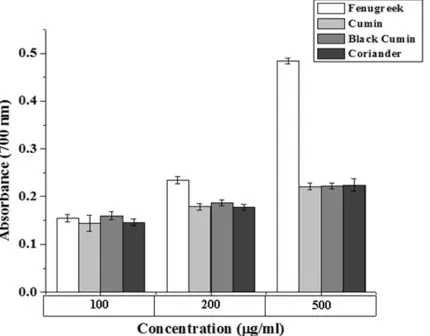
Fig. 4: Reducing activity of Fenugreek, Cumin, Black Cumin and Coriander seed extracts. Results are
expressed as mean ± SEM of five parallel measurements. P <0.05 was considered as significant.
Analysis of OH. Scavenging activity
Among the oxygen radicals, hydroxyl radical is the most active and induces severe damage to adjacent
biomolecules [33]. As shown in Figure 2, all four
studied samples exhibited potent or moderate
scavenging activity in concentration dependent manner. Among the four seed extract, fenugreek seed extract showed higher OH. scavenging potential
compared to other seed extract.
Analysis of ABTS radical scavenging activity ABTS radical scavenging activities [34] of four seed
extracts are presented in Figure 3. The results indicated that methanolic seed extract had potent ABTS radical scavenging activity at three
concentrations (100, 200 and 500 μg/ml). The result showed that all the four spices had significant higher
scavenging activity (p<0.005) at 500 µg/ml concentration compared to lower concentration. At 100 μg/ml concentration fenugreek seed extract
showed higher scavenging activity than other three seed extract but with the increase in concentration;
the activity did not increase significantly. On the other hand black Cumin seed extract showed the highest significant scavenging activity (p<0.05) among all the
said concentration, in comparison with Fenugreek, Coriander and Cumin seed extract respectively.
Analysis of reducing power
Earlier reports demonstrated that the reducing power of bioactive compounds is associated with antioxidant
activity. The reducing power of the extracts increased with an increase in the amount of the extract as shown in Figure 4. Among four seed extract, only fenugreek
seed extract showed significant (p<0.05) reducing activity with increasing in concentration. The
relationship between the amount of total phenolic content and reducing power is established by the study.
spices are consumed along with different meals more or less regularly in the diet of the people of West
Bengal. Due to its profuse availability in the state, it has turned into a topic of research interest to work with. Many researchers, worldwide claimed that the
phenolic compounds in spices were responsible for their antioxidant activity, but few could establish real
correlative relationships and provide convincing statistical data to reveal the relationship between the activity and phenolics on the basis of large numbers of
spice samples. No significant research has been done with dietary seed spices in such a localized pattern till date in India. Hence the work has ample significance.
Conclusion
The results of the study showed that, though oil seeds
are used in very small quantity in food, but they are potential sources of antioxidants. Thus, spices might
be regarded as a promising strategy for the protection of cells and different organ systems against oxidative stress. The novel scientific merit of this study is the
validation of the age old practice of the use of herbs and spices for several health benefits and for
therapeutic measures across the continents.
Acknowledgements
The authors wish to thank State Council for Science and Technology, Govt. of West Bengal for financial assistance (Sanction No-416
(Sanc.)/ST/P/S&T/2G-5/2011; dated September 09, 2011) and Directorate of Agriculture, Govt. of West Bengal for the collection
of different seed spices Malda district.
References
1. Lampe JW. Spicing up a vegetarian diet: chemopreventive effects of phytochemicals. Am J Clin Nutr. 2003;78(3 Suppl):579S-583S.
2. Frankel EN. Antioxidants in lipid foods and their impact on food quality. Food Chem. 1996;57(1):51-55.
3. Saxena M., Mir AH., Sharma M., Malla MY., Qureshi S., Mir MI., Chaturvedi Y. Phytochemical screening and in-vitro antioxidant activity isolated bioactive
compounds from Tridax procumbens Linn. Pak J Biol Sci. 2013;16(24):1971-7.
4. Kanthal LK., Dey A., Satyavathi K., Bhojaraju P. GC-MS analysis of bio-active compounds in methanolic extract of Lactuca runcinata DC. Pharmacognosy Res. 2014;6(1):58-61.
5. Riffault L., Destandau E., Pasquier L., Andre P., Elfakir C. Phytochemical analysis of Rosa hybrida cv. 'Jardin de Granville' by HPTLC, HPLC-DAD and HPLC-ESI-HRMS: polyphenolic fingerprints of six plant organs. Phytochemistry. 2014;99:127-34.
6. Mehmood MH., Gilani AH. Pharmacological basis for the medicinal use of black pepper and piperine in gastrointestinal disorders. J Med Food. 2010;13(5):1086-96.
7. Kolberg M., Paur I., Balstad TR., Pedersen S., Jacobs DR, Jr.., Blomhoff R. Plant extracts of spices and coffee synergistically dampen nuclear factor-kappaB in U937 cells. Nutr Res. 2013;33(10):817-30. 8. Basnet P., Skalko-Basnet N. Curcumin: an
anti-inflammatory molecule from a curry spice on the path to cancer treatment. Molecules. 2011;16(6):4567-98.
9. Zaika LL. Spices and Herbs: Their Antimicrobial activity and Its determination. J Food Saf. 1988;9(2):97-118. 10. Chithra V., Leelamma S. Hypolipidemic effect of coriander seeds (Coriandrum sativum): mechanism of action. Plant Foods Hum. Nutr. 1997;51(2):167-72.
11. El Hamss R., Idaomar M., Alonso-Moraga A., Munoz Serrano A. Antimutagenic properties of bell and black peppers. Food Chem Toxicol. 2003;41(1):41-7. 12. Unnikrishnan MC., Kuttan R. Tumour reducing and
anticarcinogenic activity of selected spices. Cancer Lett. 1990;51(1):85-9.
13. Koo LC. The use of food to treat and prevent disease in chinese culture. Social Science & Medicine. 1984;18(9):757-766.
14. Knox EG. Foods and diseases. Br J Prev Soc Med. 1977;31(2):71-80.
15. Rudkowska I., Jones PJ. Functional foods for the prevention and treatment of cardiovascular diseases: cholesterol and beyond. Expert Rev. Cardiovasc. Ther. 2007;5(3):477-90.
pharmacognosy, phytochemistry, market and regulations. Curr Med Chem. 2009;16(19):2475-84. 17. Henderson RFJ., Clifford HT. A Recircumscription of
the Phormiaceae Agardh. Taxon. 1984;33(3):423-427.
18. Thomas JE., Bandara M., Lee EL., Driedger D., Acharya S. Biochemical monitoring in fenugreek to develop functional food and medicinal plant variants. New biotechnology. 2011;28(2):110-7.
19. Pittler MH. Herbal Medicine. Expanded Commission E Monographs. Focus Altern Complement Ther. 2000;5(3):232-232.
20. Shah MA., Mir PS. Effect of dietary fenugreek seed on dairy cow performance and milk characteristics. Can J Anim Sci. 2004;84(4):725-729.
21. Braca A., Sortino C., Politi M., Morelli I., Mendez J. Antioxidant activity of flavonoids from Licania licaniaeflora. J Ethnopharmacol. 2002;79(3):379-81. 22. Halliwell B., Gutteridge JM. Biologically relevant
metal ion-dependent hydroxyl radical generation. An update. FEBS Lett. 1992;307(1):108-12.
23. Ložienė K., Venskutonis PR., Šipailienė A., Labokas J. Radical scavenging and antibacterial properties of the extracts from different Thymus pulegioides L. chemotypes. Food Chem. 2007;103(2):546-559. 24. Oyaizu M. Studies on Products of Browning
ReactionAntioxidative Activities of Products of Browning Reaction Prepared from Glucosamine. The Japanese Journal of Nutrition and Dietetics. 1986;44(6):307-315.
25. Singleton VL., Rossi JA. Colorimetry of Total Phenolics with Phosphomolybdic-Phosphotungstic Acid Reagents. Am J Enol Vitic. 1965;16(3):144-158. 26. Valko M., Leibfritz D., Moncol J., Cronin MTD., Mazur
M., Telser J. Free radicals and antioxidants in normal physiological functions and human disease. Int J Biochem Cell Biol. 2007;39(1):44-84.
27. Halliwell B. Antioxidants in human health and disease. Annu Rev Nutr. 1996;16:33-50.
28. Heim KE., Tagliaferro AR., Bobilya DJ. Flavonoid antioxidants: chemistry, metabolism and structure-activity relationships. J Nutr Biochem. 2002;13(10):572-584.
29. Machlin LJ., Bendich A. Free radical tissue damage: protective role of antioxidant nutrients. The FASEB Journal. 1987;1(6):441-5.
30. Balasundram N., Sundram K., Samman S. Phenolic compounds in plants and agri-industrial by-products: Antioxidant activity, occurrence, and potential uses. Food Chem. 2006;99(1):191-203. 31. Halliwell B., Murcia MA., Chirico S., Aruoma OI. Free
radicals and antioxidants in food and in vivo: what they do and how they work. Crit Rev Food Sci Nutr. 1995;35(1-2):7-20.
32. Craft BD., Kerrihard AL., Amarowicz R., Pegg RB. Phenol-Based Antioxidants and the In Vitro Methods Used for Their Assessment. Compr Rev Food Sci Food Saf. 2012;11(2):148-173.
33. Halliwell B. Reactive oxygen species in living systems: Source, biochemistry, and role in human disease. Am J Med. 1991;91(3, Supplement 3):S14-S22.
34. Ozgen M., Reese RN., Tulio AZ., Scheerens JC., Miller AR. Modified 2,2-Azino-bis-3-ethylbenzothiazoline-6-sulfonic Acid (ABTS) Method to Measure Antioxidant Capacity of Selected Small Fruits and Comparison to Ferric Reducing Antioxidant Power (FRAP) and
2,2‘-Diphenyl-1-picrylhydrazyl (DPPH) Methods. J Agric Food Chem.
2006;54(4):1151-1157.
How to cite this article: Kankana Das, Tanima Modak Dhar, Mahua Ghosh; A Comparative study of the antioxidative properties of the different seed spices available in India; J. Adv. Pharm. Edu. & Res. 2015: 5(1): 44-49.