R E S E A R C H A R T I C L E
Open Access
A randomised controlled trial of three or
one breathing technique training sessions
for breathlessness in people with malignant
lung disease
Miriam J Johnson
1*, Mona Kanaan
2, Gerry Richardson
3, Samantha Nabb
4, David Torgerson
2, Anne English
5,6,
Rachael Barton
7and Sara Booth
8,9Abstract
Background:About 90 % of patients with intra-thoracic malignancy experience breathlessness. Breathing training is helpful, but it is unknown whether repeated sessions are needed. The present study aims to test whether three sessions are better than one for breathlessness in this population.
Methods:This is a multi-centre randomised controlled non-blinded parallel arm trial. Participants were allocated to three sessions or single (1:2 ratio) using central computer-generated block randomisation by an independent Trials Unit and stratified for centre. The setting was respiratory, oncology or palliative care clinics at eight UK centres. Inclusion criteria were people with intrathoracic cancer and refractory breathlessness, expected prognosis≥3 months, and no prior experience of breathing training. The trial intervention was a complex breathlessness intervention (breathing training, anxiety management, relaxation, pacing, and prioritisation) delivered over three hour-long sessions at weekly intervals, or during a single hour-long session. The main primary outcome was worst breathlessness over the previous 24 hours (‘worst’), by numerical rating scale (0 = none; 10 = worst imaginable). Our primary analysis was area under the curve (AUC)‘worst’from baseline to 4 weeks. All analyses were by intention to treat.
Results:Between April 2011 and October 2013, 156 consenting participants were randomised (52 three; 104 single). Overall, the‘worst’score reduced from 6.81 (SD, 1.89) to 5.84 (2.39). Primary analysis [n = 124 (79 %)], showed no between-arm difference in the AUC: three sessions 22.86 (7.12) vs single session 22.58 (7.10);Pvalue = 0.83); mean difference 0.2, 95 % CIs (–2.31 to 2.97). Complete case analysis showed a non-significant reduction in QALYs with three sessions (mean difference–0.006, 95 % CIs–0.018 to 0.006). Sensitivity analyses found similar results. The probability of the single session being cost-effective (threshold value of £20,000 per QALY) was over 80 %.
Conclusions:There was no evidence that three sessions conferred additional benefits, including cost-effectiveness, over one. A single session of breathing training seems appropriate and minimises patient burden.
Trial registration:Registry: ISRCTN; Trial registration number: ISRCTN49387307; http://www.isrctn.com/ISRCTN49387307; registration date: 25/01/2011
Keywords:Breathing training, Breathlessness, Dyspnoea, Cancer, Neoplasm
* Correspondence:[email protected] 1
Hull York Medical School, Hertford Building, University of Hull, Hull HU6 7RX, UK
Full list of author information is available at the end of the article
Background
Lung cancer is the most common cause of death from cancer worldwide, responsible for an estimated one in five (1.59 million deaths, 19.4 % total deaths) [1]. Rarely curable, breathlessness is a problem in up to 90 % of patients [2]. Breathlessness is harder to treat than pain and is a cause of emergency hospital admission [3, 4]. Complex non-pharmacological sup-portive care interventions for people with lung cancer appear to be beneficial and cost-effective, although which intervention components are the most benefi-cial is less clear [5–11]. Four phase III trials have compared a complex breathlessness intervention with standard care [7, 9–11], two using intensity of breath-lessness as the primary outcome [7, 9], one using the mastery subscale of the Chronic Respiratory Ques-tionnaire (CRQ) [11], and one using patient distress due to breathlessness (numerical rating scale (NRS) 0–10) [10]. All trials demonstrated clinically and sta-tistically significant benefit with the intervention.
The National Institute for Health and Clinical Ex-cellence (NICE) guidance for Lung Cancer recom-mends access to these treatments [12], although there is a need for further research regarding optimum ser-vice delivery, particularly for cancer patients where the evidence base is less strong than for rehabilitation programmes in non-malignant cardiorespiratory con-ditions [13, 14]. A review of exercise-based training for people with non-small cell lung cancer concluded that there was some benefit for exercise tolerance (often limited by breathlessness), but these studies fo-cussed on people having surgery, rather than those living with lung cancer [15].
The systematic implementation of breathing training services for people with cancer in practice is challen-ging [16]. Visits to or by clinicians may be onerous to patients with a poor performance status and progres-sive disease, such as those with lung cancer, even if provided in their own home. However, many patients have no training at all or receive a single ad hoc ses-sion only; it is unknown whether such single sesses-sions are effective.
The primary hypothesis was that three sessions are su-perior to one, in terms of worst breathlessness intensity over the previous 24 hours in people with intrathoracic cancer. The primary objective was to assess the effective-ness of these two modes of delivery with regard to the relief of breathlessness intensity. We anticipated that three sessions of breathing training would have greater benefit than one.
Secondary objectives were to test which mode was more effective for other aspects of breathlessness, func-tion, quality of life, psychological distress and coping, and cost-effectiveness.
Methods
Trial design
This multi-centre pragmatic randomised controlled non-blinded parallel arm trial assessed the effect of breathing training delivered over three 1 hour-long sessions at weekly intervals, or during a single session in the man-agement of patients with refractory breathlessness due to intrathoracic cancer.
Participants and setting
Patients from eight centres in England, Scotland, and Wales attending hospital respiratory, oncology, pallia-tive care clinics or hospices were screened by the re-search nurse in conjunction with the patients’ usual clinical team. Adults with intra-thoracic malignancy (primary or secondary tumours) were eligible. Partici-pants could be randomised to trial intervention if they had refractory breathlessness with a self-reported inten-sity of≥3/10 on a NRS, where 0 = no breathlessness and 10 = worst imaginable breathlessness, and a clinician-estimated prognosis of at least 3 months. Participants with breathlessness intensity of <3/10 were followed-up at monthly intervals to assess eligibility for randomisa-tion. Refractory breathlessness was defined as persistent breathlessness despite treatment of reversible causes [17]. Patients were excluded if they had intercurrent ill-ness or co-morbidities making completion of the trial unlikely, worsening breathlessness requiring urgent medical intervention, or prior breathing training.
Centres were eligible if clinicians provided breathing training and were willing to deliver the trial intervention. The intervention could be delivered in the hospital, hos-pice, or a patient’s home according to patient choice.
The protocol, procedures, and trial documentation were approved by the independent UK Integrated Research Approval System via the Sheffield Research Ethics Committee (ref 10/H1308/66). Subsequent Research and Development NHS governance approval was obtained for all sites prior to recruitment. The trial was registered (ISRCTN49387307) and the protocol followed CONSORT recommendations. All participants gave written informed consent.
Intervention and comparator
The four techniques of breathlessness training were stan-dardised prior to trial commencement, but different cen-tres could provide local additional non-pharmacological therapies such as exercise if this was a usual part of their service. The type of professional (e.g. nurse, physiotherap-ist, occupational therapist) was not stipulated.
Outcomes
The primary outcome measure, defined by previous feasibility work [18], was patient-reported intensity of the worst breathlessness over the past 24 hours (‘worst’; 0–10 numerical rating scale [NRS], 0 = no breathless-ness; 10 = the worst imaginable breathlessness) [19, 20].
Secondary measures included average intensity of breathlessness over the past 24 hours (‘average’); distress due to breathlessness and 0–10 NRS coping with breath-lessness (‘distress’) using NRS 0–10 scales anchored with 0 = none and 10 = worst; ‘coping’ and satisfaction with care of breathlessness (using 0–10 NRS scales anchored with 0 = none and 10 = best outcome); injustice and
catastrophizing scale; quality of life Chronic Respiratory Questionnaire - Self-Administered-Survey (CRQ-SAS) [21]; Hospital Anxiety and Depression Scale (HADS) [22]; Karnofsky performance scale (KPS), [23], health status (EQ-5D and EQ-visual analogue scale (EQVAS)) [24]; cop-ing (BriefCOPE) [25]; and global impression of change and health service utilisation.
Baseline assessments included demographic data (age, sex, smoking history), KPS, medication and personality aspects (Big Five Inventory (BFI) [26]; Mental Toughness Question-naire (MTQ)), and pre-randomisation preference for trial allocation. Follow-up assessments were at weeks 1, 2, 3, 4, and 8 after the first training session. All outcome measures were assessed at baseline, week 4, and week 8 except the Big Five Inventory and Mental Toughness Questionnaire. At weeks 1–3 only NRS scores, EQ-5D and EQVAS were mea-sured. Adverse events were noted at each contact. The primary analysis point was week 4. After week 8 participants had an optional monthly telephone call from the trial nurse to record NRS intensity until withdrawal or death.
Sample size
Using data from previous feasibility work [18] to detect a difference of 30 % in area under the curve (AUC) for NRS worst breathlessness (standard deviation (SD), 2.6) at 4 weeks at 80 % power and 5 % two-tailed statistical significance, with a 2:1 randomisation, allowing for 30 % attrition, a sample size of 146 participants was needed. Al-though week 4 attrition in the feasibility trial was 50 %, a reduction to 30 % was anticipated with earlier consent (consent to trial participation even if their reported breathlessness intensity did not fulfil the criteria for ran-domisation). AUC was chosen as more indicative of the experience of breathlessness over the trial than change in NRS scores, or comparison of week 4 NRS scores as it in-cludes measures at weekly time points.
Sample size re-calculation
A review of week 4 attrition (June 2013) showed nearly 30 % drop out. In order to reduce the risk of loss of power, a further 10 participants were recruited.
Randomisation and masking
Online 3- or 6-block randomisation (central computer generated sequence) and allocation of consenting partici-pants was performed by the York Trials Unit using a 1:2 ratio (1 three: 2 single). This was done in order to minim-ise a potential increase in demand on usual services from participating in a trial actively seeking to recruit patients. As this was a pragmatic trial, centres maintained their usual practice other than providing the intervention stand-ard components. To account for site differences in cancer therapies and additional breathlessness measures, partici-pants were stratified by centre. Initially, stratification for
Box 1. Breathing management techniques
Breathing control
The patient sits comfortably with their back supported, the shoulders relaxed, and the upper chest remaining as still as possible. The patient places their hand in front of the lower ribs and upper abdomen, and is asked to breathe in and then out, taking longer than the time taken to breathe in.
Pacing/prioritising
The patient is taught to control their breathing when walking up stairs or on level ground. They are instructed to breathe in time with the steps taken, e.g. breathe in for one step and then breathe out for two. The patient is instructed to find the rhythm that suits them best. Participants define their priorities regarding daily activity which is limited by dyspnoea. Goals are set, and a plan discussed with the therapist on how they may be achieved.
Relaxation
The patient is instructed in progressive muscle relaxation using a standard script and given a study-specific CD to practise at home.
Anxiety management
site of first intervention (home or clinic) was planned, but as this would not always be known at randomisation, this was not done. Due to the likelihood of participants inad-vertently disclosing their allocation arm to the research nurse, allocation was not blinded [18]. Trial assessments were conducted by research nurses.
Statistical methods
Baseline characteristics are described and presented in tabular form for all participants and presented by whether they were lost to follow-up or remained in the trial. Mean and SD are presented for quantitative data and number and percentage for categorical data. Sum-mary statistics over time are also reported for the re-peated outcome measures as are missing data.
For the primary analysis of AUC at 4 weeks (worst breathlessness), we used a two-sample t-test to compare the two arms. Multiple regression was used to estimate the effect of three sessions compared to one adjusting for baseline characteristics (age, sex, baseline breathlessness intensity, and smoking status). To account for missing data we i) utilised multiple imputation method for the pri-mary outcome and ii) used complete cases for all second-ary measures. Variation resulting from different practices at different sites was accounted for in the analysis by the stratification [27]. Management of missing data for the cost-effectiveness analysis is described below.
Cost-effectiveness analysis
The cost-effectiveness of three sessions versus one was com-pared. Costs were estimated for both arms and included the cost of the intervention and other health-related resource use costs. The effectiveness measure for this analysis was the Quality Adjusted Life Year (QALY) generated from re-sponses to the EQ5D. A sensitivity analysis using multiple imputation to account for missing data was performed.
Results
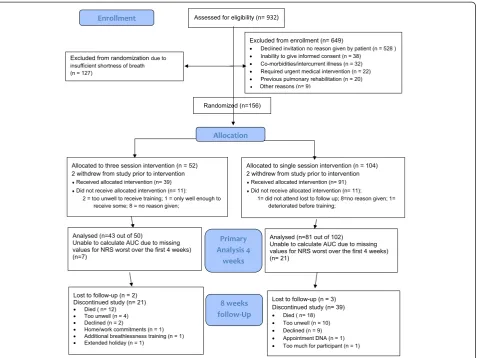
Between April 2011 and October 2013, 156 participants were randomised (52 to three sessions; 104 to single ses-sion). Two withdrew from each arm prior to the inter-vention and were excluded from the analysis. Data for the AUC from baseline to week 4 for the primary out-come was available for 124 (79 %) participants. Partici-pant flow throughout the trial, including reasons for withdrawal, can be seen in Fig. 1.
Trial setting and implementation
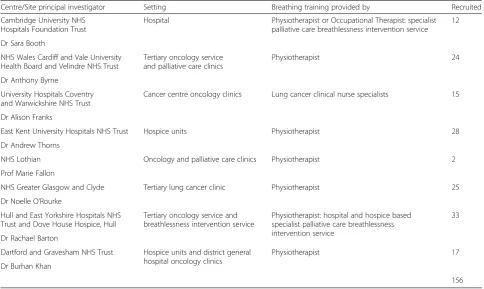
In this pragmatic trial, the intervention was delivered in a variety of settings and by different therapists (Table 1). All four techniques were documented in the clinical rec-ord. In the single arm, 91 (89 %) received one session of all four techniques. In the three session arm, 39 (78 %) received three sessions of all the techniques.
Trial population
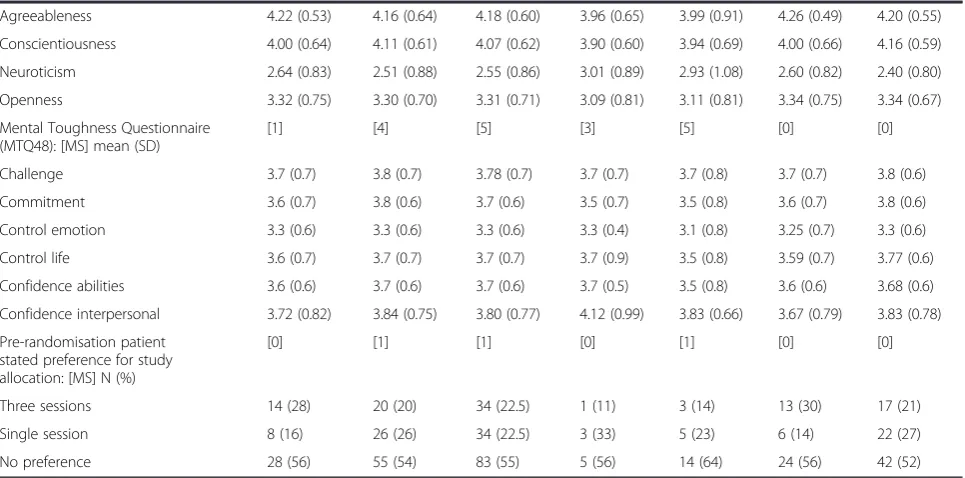
Baseline characteristics between the two arms were similar apart from a clinically important difference in the mastery domain of the CRQ-SAS (three 3.9 [SD, 1.18]; single 4.48 [1.17]) and anxiety (HADS three 7.62 [4.34]; single 6.12 [4.19]; Table 2). For the group as a whole, the average age was 69.4 [9.35] years and 40 % were women. ‘Worst’ and ‘average’ breathless-ness intensity was 6.81 [1.89] and 5.53 [1.68], respect-ively; 133 (88.6 %) had a primary lung carcinoma, 12 (8 %) had mesothelioma, and 5 (3.3 %) had an extra-thoracic primary site. Lung metastases were present in 23 (17 %). The average KPS was 70.6 % [9.54]. Most were ex-smokers (114 [76 %]) or current ex-smokers (23 [15 %]). Baseline measures were similar for pre-randomisation preference for trial allocation, mood, personality, or cop-ing approaches, which might have influenced engagement with the intervention.
Primary outcome
Overall, the‘worst’score reduced from 6.81 (SD, 1.89) at baseline to 5.84 (2.39) at week 4. There was no between-arm difference in the AUC (cubic): three sessions 22.86 (7.12) versus single session 22.58 (7.10);P value = 0.83; mean difference 0.2, 95 % CIs (−2.31 to 2.97).
Secondary outcomes
There was no evidence of a between-arm difference in the AUC for ‘average’and ‘coping’ although both arms improved by week 4 for all domains of the CRQ-SAS. However, in the three session arm, both distress from breathlessness (AUC 16.23 [7.17] three vs 12.29 [8.27] single; P = 0.01) and sense of mastery over breathless-ness (4.44 [1.25] three vs 5.03 [1.15] single; P = 0.02) were worse.
Cost-effectiveness
Complete case analysis showed a small non-significant re-duction in overall QALYs with three sessions (mean differ-ence –0.006, 95 % CIs –0.018 to 0.006). These results were confirmed in a sensitivity analysis using multiple im-putation of data (mean difference in QALYs–0.008, 95 % CI–0.022 to 0.006). Complete case analysis also showed a small non-significant increase in costs associated with three sessions. Thus, the single session would be consid-ered dominant (improved outcomes at lower cost). The probability of the single session being cost-effective at a threshold value of £20,000 per QALY was over 80 %.
There was no evidence that the additional cost of three sessions is offset by lower resource use elsewhere and three sessions is associated with a worse QALY profile. Therefore, the single session intervention is likely to be cost-effective.
Sensitivity analyses
The sensitivity analyses using complete cases for second-ary outcomes did not show any material difference.
Likewise, the analysis using multiple imputation for the primary outcome measure failed to demonstrate any significant difference.
A post hoc sensitivity analysis was performed in view of the clinically significant difference in baseline CRQ mastery domain and HADS anxiety in order to adjust for this difference, but did not materially affect the results (Additional file 1).
Harms
Overall, 50/156 (32 %) participants experienced 58 serious adverse events (deaths (30) or hospitalisation (28)). All were unrelated to the intervention and were expected events in the context of progressive cancer/comorbidities, apart from two (one in each allocated arm) which were unrelated to the intervention, but were unexpected (a fractured neck of femur following a fall and a femoral artery embolus).
Discussion
There was a clinically significant improvement, equating to a moderate effect [28], in breathlessness intensity and
several other breathlessness measures in both arms and consistent with the benefit identified in usual care con-trolled trials [7, 9–11]. However, there was no evidence that three sessions conferred greater benefit than a sin-gle session for any of the outcomes. Furthermore, al-though not statistically significant, there was a greater reduction in health status in the three session arm com-pared with those receiving only one.
In both arms, improvements relating to the perception of breathlessness and response to living with it (intensity of breathlessness, distress due to, coping with and satisfac-tion of care of breathlessness; dyspnoea and mastery CRQ-SAS, anxiety, depression, sense of injustice and cata-strophizing) were seen. This is consistent with the model of breathlessness as having two recognisable components, namely perception and emotional response [29], which can be reported by the patient [30] and has a physiological basis demonstrable by neuroimaging [31]. Measures which are more likely to represent underlying pathological pro-cesses such as the fatigue domain and KPS, either im-proved very little or deteriorated.
The prognosis for lung cancer remains poor for those unsuitable for surgery or other radical treatment and breathlessness is a feature of advanced rather than early stage cancer [32]. In our trial, participants were required to have at least moderate breathlessness (>3/10 NRS) to be randomised. Although the average performance status
at baseline was 71 %, 30 (19 %) had died and 14 (8 %) were too unwell to provide data by 4 weeks, consistent with breathlessness as a sign of poor outcome.
The burden of unmet psychological and daily living needs in people with lung cancer is high [33], leading to calls for attention to palliative care needs, in the light of effective interventions [34] and evidence that palliative care reduces inappropriate and costly healthcare inter-ventions [35]. A trial of early palliative care involvement in people with non-small cell lung cancer demonstrated improvement in quality of life and mood in conjunction with improved survival and less aggressive care at the end of life [36]. Two recently reported ‘fast track’trials, which included breathlessness management interven-tions, confirmed benefit for those randomised to early rather than late palliative care [10, 11].
The economic and clinical burden of lung cancer treatment has been highlighted [37], but less is known about the burden of palliative care. The burden of non-pharmacological interventions should not be assumed to be negligible for people with advancing disease although reported patient and carer experience suggests that a comprehensive complex intervention is valued [10, 11]. However, just as the optimum dose of cancer treatment is assessed for net-benefit, so palliative care interven-tions should be given the same consideration. It is of concern that distress due to breathlessness was rated
Table 1Implementation of intervention in centres
Centre/Site principal investigator Setting Breathing training provided by Recruited
Cambridge University NHS Hospitals Foundation Trust
Hospital Physiotherapist or Occupational Therapist: specialist palliative care breathlessness intervention service
12
Dr Sara Booth
NHS Wales Cardiff and Vale University Health Board and Velindre NHS Trust
Tertiary oncology service and palliative care clinics
Physiotherapist 24
Dr Anthony Byrne
University Hospitals Coventry and Warwickshire NHS Trust
Cancer centre oncology clinics Lung cancer clinical nurse specialists 15
Dr Alison Franks
East Kent University Hospitals NHS Trust Hospice units Physiotherapist 28
Dr Andrew Thorns
NHS Lothian Oncology and palliative care clinics Physiotherapist 2
Prof Marie Fallon
NHS Greater Glasgow and Clyde Tertiary lung cancer clinic Physiotherapist 25
Dr Noelle O’Rourke
Hull and East Yorkshire Hospitals NHS Trust and Dove House Hospice, Hull
Tertiary oncology service and breathlessness intervention service
Physiotherapist: hospital and hospice based specialist palliative care breathlessness intervention service
33
Dr Rachael Barton
Dartford and Gravesham NHS Trust Hospice units and district general hospital oncology clinics
Physiotherapist 17
Dr Burhan Khan
Table 2Baseline characteristics
All participants Participants lost Remaining participants
Variable Three sessions Single session Total Three Single Three Single
N 52 104 156 9 23 43 81
Withdrew at baseline 2 2 4
Age in years:
mean (SD [MS] 68 (11) [0] 69 (9) [1] 69 (9) [1] 67 (8) [0] 68 (8) [1] 69 (11) [0] 70 (9) [0]
min, max 38, 87 47, 92 38, 92 53, 77 55, 83 38, 87 47, 92
Sex: N (%) [MS]
Female 21 (43) [1] 39 (39) [2] 60 (40) [3] 1 (11) [0] 6 (29) [2] 21 (50) [1] 33 (41) [0]
Intrathoracic tumour: N (%) [0 MS] [2 MS] [2 MS] [0 MS] [2 MS] [0 MS] [0 MS]
Non-small cell 14 (28) 21 (21) 35 (23.3) 4 (44) 5 (24) 11 (26) 17 (21)
Small cell 1 (2) 4 (4) 5 (3.3) 2 (9) 1 (2) 2 (2)
Lung (histology not stated) 30 (60) 63 (63) 93 (62) 5(56) 13 (62) 26 (60) 51 (63)
Mesothelioma 4 (8) 8 (8) 12 (8) 1 (5) 4 (9) 7 (9)
Other 1 (2) 4 (4) 5 (3.3) 1 (2) 4 (5)
Metastases: N (%) [MS]
Yes 9 (19) [2] 14 (16) [12] 23 (17) [14] 1 (14) [2] 5 (29) [6] 8 (19) [1] 9 (12) [6]
Preference: N (%) [0 MS] [1 MS] [1 MS] [0 MS] [1 MS] [0 MS] [0 MS]
High 14 (28) 20 (20) 34 (22.5) 1 (11) 3 (14) 13 (30) 17 (21)
Low 8 (16) 26 (26) 34 (22.5) 3 (33) 5 (23) 6 (14) 22 (27)
No preference 28 (56) 55 (54) 83 (55) 5 (56) 14 (64) 24 (56) 42 (52)
Smoking: N (%) [0 MS] [2 MS] [2 MS] [1 MS] [1 MS] [0 MS] [1 MS]
Never 6 (12) 7 (7) 13 (9) 6 (14) 7 (9)
Current 7 (14) 16 (16) 23 (15) 2 (25) 3 (14) 5 (12) 13 (16)
Ex-smoker 37 (74) 77 (77) 114 (76) 6 (75) 19 (86) 32 (74) 60 (75)
Karnofsky
Mean (SD) [MS] 70.6 (9.0) [3] 70.6 (9.9) [7] 70.6 (9.5) [10] 62.5 (8.9) [1] 63.8 (13.2) [2] 71.7 (8.6) [2] 72.2 (7.9) [5]
Breathlessness scores NRS: mean (SD) [MS]
Worst 6.7 (2.0) [6] 6.9 (1.9) [12] 6.8 (1.9) [18] 7.6 (1.8) [1] 7.4 (1.8) [3] 6.6 (2.0) [6] 6.7 (1.9) [10]
Average 5.4 (1.8) [6] 5.6 (1.6) [13] 5.5 (1.7) [19] 6.0 (1.3) [1] 6.6 (2.0) [3] 5.3 (1.9) [6] 5.3 (1.4) [11]
Distress 4.7 (2.8) [7] 4.6 (3.1) [12] 4.6 (3.0) [19] 4.5 (2.3) [1] 5.7 (3.0) [3] 4.7 (2.8) [7] 4.3 (3.1) [10]
Cope 6.4 (2.1) [6] 7.0 (2.1) [12] 6.8 (2.1) [18] 6.3 (2.4) [1] 6.3 (2.1) [3] 6.5 (2.0) [6] 7.2 (2.1) [10]
Care provided 6.3 (3.4) [9] 6.5 (3.4) [20] 6.5 (3.4) [29] 5.6 (2.8) [2] 6.0 (3.6) [4] 6.3 (3.6) [8] 6.8 (3.3) [17]
Chronic Respiratory Questionnaire– SAS: mean (SD) [MS]
Dyspnoea domain 4.41 (1.25) [0] 4.38 (1.31) [1] 4.39 (1.30) [1] 3.95 (1.32) [1] 4.38 (1.43) [1] 4.50 (1.22) [0] 4.38 (1.27) [0]
Fatigue 3.02 (0.95) [0] 3.32 (1.11) [2] 3.22 (1.07) [2] 2.72 (0.81) [1] 2.94 (1.14) [2] 3.06 (0.97) [0] 3.41 (1.08) [0]
Emotional function 4.17 (1.10) [0] 4.50 (1.28) [2] 4.39 (1.23) [2] 3.54 (1.12) [1] 3.81 (1.38) [2] 4.26 (1.09) [0] 4.68 (1.17) [0]
Mastery 3.90 (1.19) [0] 4.48 (1.17) [2] 4.2 9 (1.20) [2] 2.94 (0.50) [1] 3.78 (1.35) [2] 4.06 (1.19) [0] 4.66 (1.03) [0]
Hospital Anxiety and Depression Scale (HADS): mean (SD) [MS]
Anxiety 7.6 (4.3) [0] 6.1 (4.4) [4] 6.6 (4.3) [4] 8.5 (4.8) [1] 8.4 (5.0) [3] 7.6 (4.3) [0] 5.6 (3.7) [1]
Depression 6.6 (3.0) [0] 6.2 (3.9) [2] 6.3 (3.6) [2] 8.1 (2.2) [1] 7.9 (4.9) [2] 6.4 (3.1) [0] 5.8 (3.5) [0]
Big Five Inventory (BFI): [MS] mean (SD) [0] [4] [4] [1] [4] [0] [1]
worse in those receiving three sessions. It is interesting to note that those who withdrew from the trial had a lower performance status. If patients are taught how to address their breathlessness themselves in a single ses-sion and then allowed to see how they manage without repeat visits (with their inherent logistic challenges for those who are unwell to get to a clinic, or arrange their day to accommodate a clinician to visit) then this may be increasing self-efficacy, reducing logistic challenges related to health service contact and thus reducing dis-tress. In this clinical context of ongoing deterioration due to intra-thoracic cancer, our data do not support more than one session of supervised breathing training.
Strengths and limitations
In keeping with our research question, we did not have a ‘usual care’control arm and cannot show the trajectory of outcome variables without any breathing intervention. We did not attempt to blind trial allocation from the re-search team. Others have attempted assessor blinding; advertent or inadvertent disclosure occurred in about half [10].
We have no objective measure of physical activity (e.g. walk test), aiming to maximize trial data completion with the most clinically relevant answers to the question, whilst minimizing participant burden. Repeat measures of performance and health status give a measure of everyday activity. Likewise, we made the decision not to document physiological measures of respiratory function
such as peak expiratory flow rate or other comorbidities. By the time a patient with lung cancer becomes moder-ately or severely breathless, their prognosis is poor and symptom management is of paramount importance. Therefore, in order to focus on the most patient-relevant outcome, our primary outcome was patient-reported breathlessness, with other measures of breathlessness and performance status as secondary outcomes, rather than surrogate pathophysiological biomarkers. Both peak flow rate and the 6-minute walk test correlate poorly with quality of life and breathlessness in this complex setting [38]. Likewise, we have described our population (those who have had the treatment for their cancer and any other co-morbidities causing breathlessness opti-mized; refractory breathlessness) by symptom intensity and performance status rather than with co-morbidities. Potential participants with medical problems or comor-bidities considered sufficient to affect trial completion were excluded. Eligibility criteria also required that iden-tified reversible causes of breathlessness were treated prior to trial entry if appropriate to do so, in the opinion of the attending clinician.
Generalizability
The pragmatic nature of this trial is a major strength. It in-volved a variety of settings, centres, and clinicians across the UK. The results should therefore be generalizable across a wide range of service settings and delivery models. Furthermore, there are few trials of supportive Table 2Baseline characteristics(Continued)
Agreeableness 4.22 (0.53) 4.16 (0.64) 4.18 (0.60) 3.96 (0.65) 3.99 (0.91) 4.26 (0.49) 4.20 (0.55)
Conscientiousness 4.00 (0.64) 4.11 (0.61) 4.07 (0.62) 3.90 (0.60) 3.94 (0.69) 4.00 (0.66) 4.16 (0.59)
Neuroticism 2.64 (0.83) 2.51 (0.88) 2.55 (0.86) 3.01 (0.89) 2.93 (1.08) 2.60 (0.82) 2.40 (0.80)
Openness 3.32 (0.75) 3.30 (0.70) 3.31 (0.71) 3.09 (0.81) 3.11 (0.81) 3.34 (0.75) 3.34 (0.67)
Mental Toughness Questionnaire (MTQ48): [MS] mean (SD)
[1] [4] [5] [3] [5] [0] [0]
Challenge 3.7 (0.7) 3.8 (0.7) 3.78 (0.7) 3.7 (0.7) 3.7 (0.8) 3.7 (0.7) 3.8 (0.6)
Commitment 3.6 (0.7) 3.8 (0.6) 3.7 (0.6) 3.5 (0.7) 3.5 (0.8) 3.6 (0.7) 3.8 (0.6)
Control emotion 3.3 (0.6) 3.3 (0.6) 3.3 (0.6) 3.3 (0.4) 3.1 (0.8) 3.25 (0.7) 3.3 (0.6)
Control life 3.6 (0.7) 3.7 (0.7) 3.7 (0.7) 3.7 (0.9) 3.5 (0.8) 3.59 (0.7) 3.77 (0.6)
Confidence abilities 3.6 (0.6) 3.7 (0.6) 3.7 (0.6) 3.7 (0.5) 3.5 (0.8) 3.6 (0.6) 3.68 (0.6)
Confidence interpersonal 3.72 (0.82) 3.84 (0.75) 3.80 (0.77) 4.12 (0.99) 3.83 (0.66) 3.67 (0.79) 3.83 (0.78)
Pre-randomisation patient stated preference for study allocation: [MS] N (%)
[0] [1] [1] [0] [1] [0] [0]
Three sessions 14 (28) 20 (20) 34 (22.5) 1 (11) 3 (14) 13 (30) 17 (21)
Single session 8 (16) 26 (26) 34 (22.5) 3 (33) 5 (23) 6 (14) 22 (27)
No preference 28 (56) 55 (54) 83 (55) 5 (56) 14 (64) 24 (56) 42 (52)
**
Adjusted for baseline breathlessness intensity, gender, smoking status, and age; Descriptive statistics of the primary and secondary breathlessness outcome measures,Pvalues and unadjusted and adjusted confidence intervals for the difference between the two arms
Table 3Primary analysis point (4 weeks)
Variable Three sessions One session Total P-Value† 95% Confidence Interval Adjusted coefficient ** (95% Confidence Interval)
N with sufficient NRS scores over 4 weeks to calculate AUC
43 81 124
AUC (Cubic) by Week 4 Breathlessness NRS: mean (SD)
Worst 22•86(7•12) 22•58(7•10) 22•68(7•08) 0•83 (-2•31, 2•87) 1•05 (-1•64,3•75)
Average 19•45(6•51) 19•14(6•27) 19•24(6•33) 0•79 (-2•00, 2•62) 0•81 (-1•48,3•10)
Distress* (NHI =42, NLI = 84) 16•23(7•17) 12•29(8•27) 13•60(8•11) 0•01 (0•98,6•91) 3•24 (0•25,6•23)
Cope 25•47(7.36) 27.16(6.96) 26.58(7.12) 0.20 (-4.27, 0.90) −0.87 (-3.72,1.99)
Care 31.02(8.62) 31.11(8.13) 31.08(8.27) 0.95 (-3.11,2.93) 0.25 (-2.78,3.28)
Chronic Respiratory Questionnaire -SAS at Week 4: mean (SD)
N= 37 N= 71 N = 108
Dyspnoea domain 4•41(1•33) 4•62(1•43) 4•55(1•39) 0•47 (-0•77,0•35) −0•38 (-0•89,0•13)
Fatigue 3•36(1•05) 3•47(1•25) 3•43(1•18) 0•63 (-0•59,0•36) 0•06 (-0•40,0•51)
Emotional Function 4•59(1•08) 4•68(1•13) 4•65(1•11) 0•69 (-0•54,0•36) 0•12 (-0•26,0•51)
Mastery 4•44(1•25) 5•03(1•15) 4•83(1•21) 0•02 (-1•06,-0•11) −0•34 (-0•75,0•07)
Descriptive statistics of the primary and secondary breathlessness outcome measures, P-values and unadjusted and adjusted confidence intervals for the difference between the two arms
SASself administered survey (supported by research nurse);SDstandard deviation;AUCarea under the curve;NHInumber in three sessions arm;NLInumber in one-session arm
*adjusted for baseline breathlessness intensity, gender, smoking status and age
†P-values based on student’s test with equal variance assumed
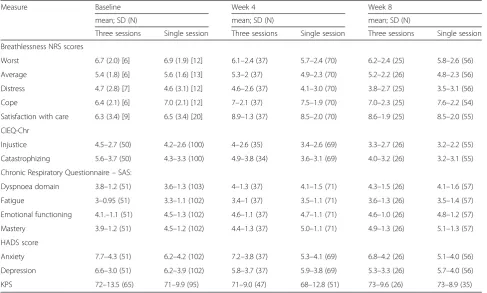
Table 4Descriptive statistics for the summary weekly measures for repeated measures
Measure Baseline Week 4 Week 8
mean; SD (N) mean; SD (N) mean; SD (N)
Three sessions Single session Three sessions Single session Three sessions Single session
Breathlessness NRS scores
Worst 6.7 (2.0) [6] 6.9 (1.9) [12] 6.1–2.4 (37) 5.7–2.4 (70) 6.2–2.4 (25) 5.8–2.6 (56)
Average 5.4 (1.8) [6] 5.6 (1.6) [13] 5.3–2 (37) 4.9–2.3 (70) 5.2–2.2 (26) 4.8–2.3 (56)
Distress 4.7 (2.8) [7] 4.6 (3.1) [12] 4.6–2.6 (37) 4.1–3.0 (70) 3.8–2.7 (25) 3.5–3.1 (56)
Cope 6.4 (2.1) [6] 7.0 (2.1) [12] 7–2.1 (37) 7.5–1.9 (70) 7.0–2.3 (25) 7.6–2.2 (54)
Satisfaction with care 6.3 (3.4) [9] 6.5 (3.4) [20] 8.9–1.3 (37) 8.5–2.0 (70) 8.6–1.9 (25) 8.5–2.0 (55)
CIEQ-Chr
Injustice 4.5–2.7 (50) 4.2–2.6 (100) 4–2.6 (35) 3.4–2.6 (69) 3.3–2.7 (26) 3.2–2.2 (55)
Catastrophizing 5.6–3.7 (50) 4.3–3.3 (100) 4.9–3.8 (34) 3.6–3.1 (69) 4.0–3.2 (26) 3.2–3.1 (55)
Chronic Respiratory Questionnaire–SAS:
Dyspnoea domain 3.8–1.2 (51) 3.6–1.3 (103) 4–1.3 (37) 4.1–1.5 (71) 4.3–1.5 (26) 4.1–1.6 (57)
Fatigue 3–0.95 (51) 3.3–1.1 (102) 3.4–1 (37) 3.5–1.1 (71) 3.6–1.3 (26) 3.5–1.4 (57)
Emotional functioning 4.1.–1.1 (51) 4.5–1.3 (102) 4.6–1.1 (37) 4.7–1.1 (71) 4.6–1.0 (26) 4.8–1.2 (57)
Mastery 3.9–1.2 (51) 4.5–1.2 (102) 4.4–1.3 (37) 5.0–1.1 (71) 4.9–1.3 (26) 5.1–1.3 (57)
HADS score
Anxiety 7.7–4.3 (51) 6.2–4.2 (102) 7.2–3.8 (37) 5.3–4.1 (69) 6.8–4.2 (26) 5.1–4.0 (56)
Depression 6.6–3.0 (51) 6.2–3.9 (102) 5.8–3.7 (37) 5.9–3.8 (69) 5.3–3.3 (26) 5.7–4.0 (56)
KPS 72–13.5 (65) 71–9.9 (95) 71–9.0 (47) 68–12.8 (51) 73–9.6 (26) 73–8.9 (35)
and palliative care complex interventions with a cost-effectiveness analysis; it is important that we can demon-strate that the reduced clinic time for participants allocated to the single session arm did not appear to need additional clinic time elsewhere in the health service.
Clinical service implications
This trial provides important data to inform service pro-viders and commissioners. A single session prevents un-necessary burden for patients and carers and allows services to see more patients within current resources. Centres see hundreds of new lung cancer patients each year, but breathlessness services only see a fraction. Access to breathlessness clinics can be improved within current capacity; if services who currently offer more than one ses-sion change to a standard of single sesses-sion breathing train-ing, then more patients will receive this care.
Conclusions
There was no evidence that three sessions conferred additional benefits over one and it was not cost-effective. A single session therefore seems an appropriate way to provide this service. It should not be assumed that non-pharmacological supportive and palliative care interven-tions are without burden and assessment of this aspect should be incorporated in future supportive and pallia-tive care research.
Additional file
Additional file 1:Post hocsensitivity analysis adjusting for the clinically significant difference in baseline CRQ mastery domain and HADS anxiety.
Abbreviations
AUC:Area under the curve; CRQ-SAS: Chronic Respiratory Questionnaire-Self-administered survey; EQVAS: EQ-visual analogue scale; HADS: Hospital Anxiety and Depression Scale; KPS: Karnofsky performance scale; NRS: Numerical rating scale; QALY: Quality Adjusted Life Year; SD: Standard deviation.
Competing interests
All authors have completed the Unified Competing Interest form at www.icmje.org/coi_disclosure.pdf (available on request from the corresponding author) and declare that (1) MJ, RB, SN, MK, DT have institutional support from the National Institute for Health Research, Research for Patient Benefit funding stream for the submitted work and AE’s institution received NHS support costs from the clinical local research network; (2) MJ is a consultant (institutional funding) with Mayne Pharma that might have an interest in the submitted work. There are no other interests to declare.
Authors’contributions
MJ acts as guarantor for this trial and affirms that the manuscript is an honest, accurate, and transparent account of the trial being reported; that no important aspects of the trial have been omitted; and that any discrepancies from the trial as planned (and, if relevant, registered) have been explained. MJ conceived the trial; all authors contributed to the design; MK provided statistical expertise and GR provided health economic expertise. MK, GR, and MJ interpreted the data; MJ prepared the first draft of the manuscript and all authors contributed to important intellectual content, critical review, and approved the final draft.
Acknowledgements
With thanks to the patients who participated, the site investigators and clinical teams who supported the trial, and in particular the clinicians who delivered the trial intervention: Chris Maloney, Claire Myers, Clare Horne, Felicity Pryor (Physiotherapists) at East Kent University Hospitals NHS Trust; Lindsay Fitzpatrick and Dawn Beaty (Lung Cancer Clinical Nurse Specialists) at University Hospitals Coventry and Warwickshire NHS Trust; Anne English (Physiotherapy Clinical Specialist) at Hull and East Yorkshire Hospitals NHS Trust and Dove House Hospice, Hull and Marie D’Arcy (Lung Cancer Clinical Nurse Specialist) at Hull and East Yorkshire Hospitals NHS Trust; Catherine Moffat and Malika Harboun (Physiotherapists) and Julie Burkin (Occupational Therapist) at Cambridge University Hospitals NHS Foundation Trust; Jennifer Sherburn (Physiotherapist) at Dartford and Gravesham NHS Trust; Phillippe Nicoll (Physiotherapist) at NHS Wales Cardiff and Vale University Health Board and Velindre NHS Trust; Lesley Somerville, (physiotherapist) at Greater Glasgow and Clyde NHS. Thanks also to Ms Annie Jones, our public and patient involvement representative member of the management group for invaluable advice.
Funding
This is a summary of independent research funded by the National Institute for Health Research, Research for Patient Benefit funding stream; grant reference number PB-PG-0609-19066. The views expressed are those of the authors and not necessarily of the NHS, the NIHR, or the Department of Health. The funders of the trial had no role in trial design, data collection, analysis or interpretations, or writing of the report. The corresponding author had full access to all the data and final responsibility for the decision to submit for publication.
Data sharing
Relevant anonymised patient level data available on reasonable request to the chief investigator.
Role of the sponsor
The sponsors did not have any role in the design, conduct, interpretation, review, approval, or control of this article.
Author details
1Hull York Medical School, Hertford Building, University of Hull, Hull HU6 7RX,
UK.2Department of Health Sciences, University of York, York, UK.3Centre for
Health Economics, University of York, York, UK.4Department of Sport, Health
and Exercise Science, University of Hull, Hull, UK.5Dove House Hospice, Hull,
UK.6Humber NHS Foundation Trust, Willerby, UK.7Castle Hill Hospital, Hull,
UK.8University of Cambridge, Cambridge, UK.9Palliative Care Service,
Cambridge University Hospitals NHS Trust, Cambridge, UK.
Received: 15 May 2015 Accepted: 14 August 2015
References
1. International Agency for Research on Cancer. GLOBOCAN 2008 (IARC). 2013. http://globocan.iarc.fr/Default.aspx. Accessed 24thAugust 2015
2. Muers MF, Round CE. Palliation of symptoms in non-small cell lung cancer: a study by the Yorkshire Regional Cancer Organisation Thoracic Group. Thorax. 1993;48:339–43.
3. Edmonds P, Higginson I, Altmann D, Sen-Gupta G, McDonnell M. Is the presence of dyspnea a risk factor for morbidity in cancer patients? J Pain Symptom Manage. 2000;19:15–22.
4. Saracino A, Weiland TJ, Jolly B, Dent AW. Verbal dyspnoea score predicts emergency department departure status in patients with shortness of breath. Emerg Med Australas. 2010;22:21–9.
5. Zhao I, Yates P. Non-pharmacological interventions for breathlessness management in patients with lung cancer: a systematic review. Palliat Med. 2008;22:693–701.
6. Booth S, Farquhar M, Gysels M, Bausewein C, Higginson IJ. The impact of a breathlessness intervention service (BIS) on the lives of patients with intractable dyspnea: a qualitative phase 1 study. Palliat Support Care. 2006;4:287–93.
8. Corner J, Plant H, A’Hern R, Bailey C. Non-pharmacological intervention for breathlessness in lung cancer. Palliat Med. 1996;10:299–305.
9. Yates P, Hardy J, Kwun F, Brunelli V, Zhao I, Clavarino I. A randomised controlled trial of a nonpharmacological intervention for dyspnoea. [Abstract] Clinical Oncological Society of Australia (COSA) 38th Annual Scientific Meeting, Perth, Western Australia. Asia-Pacific Journal of Clinical Oncology. Blackwell Publishing Asia, Australia 2011; 7:82
10. Farquhar MC, Prevost A, McCrone P, Brafman-Price B, Bentley A, Higginson IJ, et al. Is a specialist breathlessness service more effective and cost-effective for patients with advanced cancer and their carers than standard care? Findings of a mixed-method randomised controlled trial. BMC Med. 2014;12:194.
11. Higginson IJ, Bausewein C, Reilly C, Wei G, Gysels M, Dzingas M, et al. An integrated palliative and respiratory care service for patients with advanced disease and refractory breathlessness: a randomised controlled trial. Lancet Respir Med. 2014;2:979–87.
12. NICE. Guidance for the Diagnosis and Treatment of Lung Cancer. Methods, evidence & guidance. London: National Collaborating Centre for Acute Care; 2005.
13. Spruit MA, Singh SJ, Garvey C, ZuWallack R, Nici L, Rochester C, et al. ATS/ ERS Task Force on Pulmonary Rehabilitation. An official American Thoracic Society/European Respiratory Society statement: key concepts and advances in pulmonary rehabilitation. Am J Respir Crit Care Med. 2013;188:e13–64. 14. Heran BS, Chen JM, Ebrahim S, Moxham T, Oldridge N, Rees K, et al.
Exercise-based cardiac rehabilitation for coronary heart disease. Cochrane Database Syst Rev. 2011;7, CD001800.
15. Granger CL, McDonald CF, Berney S, Chao C, Denehy L. Exercise intervention to improve exercise capacity and health related quality of life for patients with non-small cell lung cancer: a systematic review. Lung Cancer. 2011;72:139–53.
16. Johnson M, Moore S. Research into practice: the reality of implementing a non-pharmacological breathlessness intervention into clinical practice. Eur J Oncol Nurs. 2003;7:33–8.
17. Booth S, Bausewein C, Higginson I, Moosavi SH. Pharmacological treatment of refractory breathlessness. Expert Rev Respir Med. 2009;3:21–36. 18. Barton R, English A, Nabb S, Rigby AS, Johnson MJ. A randomised trial of
high vs low intensity training in breathing techniques for breathless patients with malignant lung disease: a feasibility study. Lung Cancer. 2010;70:313–9.
19. Wilcock A, Crosby V, Clarke D, Tattersfield A. Repeatability of breathlessness measurements in cancer patients. Thorax. 1999;54:375.
20. Gift AG, Narsavage G. Validity of the numeric rating scale as a measure of dyspnea. Am J Crit Care. 1998;7:200–4.
21. Schunemann HJ, Goldstein R, Mador MJ, McKim D, Stahl E, Puhan M, et al. A randomised trial to evaluate the self-administered standardised chronic respiratory questionnaire. Eur Respir J. 2005;25:31–40.
22. Zigmond AS, Snaith RP. The hospital anxiety and depression scale. Acta Psychiatr Scand. 1983;67:361–70.
23. Karnofsky DA, Burchenal JH. The clinical evaluation of chemotherapeutic agents in cancer. In: MacLeod CC, editor. Evaluation of chemotherapeutic agents in cancer. New York: Columbia University Press; 1949. p. 191–205. 24. Kind P. The EuroQoL instrument: an index of health-related quality of life. In:
Spilker B, editor. Quality of life and pharmacoeconomics in clinical trials. Philadelphia: Lippincott-Raven; 1996.
25. Carver CS. You want to measure coping but your protocol’s too long: consider the brief COPE. Int J Behav Med. 1997;4:92–100.
26. John OP. Big five trait taxonomy. In: Pervin LA, John OP, editors. Handbook of Theory and Research. 2nd ed. New York, NY: The Guilford Press; 2001. 27. Kahan BC, Morris TP. Adjusting for multiple prognostic factors in the analysis
of randomised trials. BMC Med Res Methodol. 2013;13:99.
28. Johnson MJ, Bland JM, Oxberry SG, Abernethy AP, Currow DC. Clinically important differences in the intensity of chronic refractory breathlessness. J Pain Symptom Manage. 2013;46:957–63.
29. Lansing RW, Gracely RH, Banzett RB. The multiple dimensions of dyspnea: review and hypotheses. Respir Physiol Neurobiol. 2009;167:53–60. 30. Parshall MB, Meek PM, Sklar D, Alcock J, Bittner P. Test-retest reliability of
multidimensional dyspnea profile recall ratings in the emergency department: a prospective, longitudinal study. BMC Emerg Med. 2012;12:6. 31. von Leupoldt A, Ambruzsova R, Nordmeyer S, Jeske N, Dahme B. Sensory
and affective aspects of dyspnea contribute differentially to the Borg scale’s measurement of dyspnea. Respiration. 2006;73:762–8.
32. Currow DC, Smith J, Davidson PM, Newton PJ, Agar MR, Abernethy AP. Do the trajectories of dyspnea differ in prevalence and intensity by diagnosis at the end of life? A consecutive cohort study. J Pain Symptom Manage. 2010;39:680–90.
33. Li J, Girgis A. Supportive care needs: are patients with lung cancer a neglected population? Psychooncology. 2006;15:509–16.
34. Rueda JR, Sola I, Pascual A, Subirana CM. Non-invasive interventions for improving well-being and quality of life in patients with lung cancer. Cochrane Database Syst Rev. 2011;9, CD004282.
35. Morrison RS, Penrod JD, Cassel JB, Caust-Ellenbogen M, Litke A, Spragens L, et al. Cost savings associated with US hospital palliative care consultation programs. Arch Intern Med. 2008;168:1783–90.
36. Temel JS, Greer JA, Muzikansky A, Gallagher ER, Admane S, Jackson VA, et al. Early palliative care for patients with metastatic non-small-cell lung cancer. N Engl J Med. 2010;363:733–42.
37. Kutikova L, Bowman L, Chang S, Long SR, Obasaju C, Crown WH. The economic burden of lung cancer and the associated costs of treatment failure in the United States. Lung Cancer. 2005;50:143–54.
38. de Torres JP, Pinto-Plata V, Ingenito E, Bagley P, Gray A, Berger R, et al. Power of outcome measurements to detect clinically significant changes in pulmonary rehabilitation of patients with COPD. Chest. 2002;121:1092–8. 39. Blagbrough M, Coulthard M. The Calming Hand. Oxford Textbook of
Palliative Medicine. 4th ed. Oxford: Oxford University Press; 2010.
Submit your next manuscript to BioMed Central and take full advantage of:
• Convenient online submission
• Thorough peer review
• No space constraints or color figure charges
• Immediate publication on acceptance
• Inclusion in PubMed, CAS, Scopus and Google Scholar
• Research which is freely available for redistribution