TO IMPROVE ON-TASK INTERACTION FOR FIRST GRADE USERS
by
Matthew William Gudenius
A thesis
submitted in partial fulfillment of the requirements for the degree of Master of Science in Educational Technology
Boise State University
© 2012
DEFENSE COMMITTEE AND FINAL READING APPROVALS
of the thesis submitted by
Matthew William Gudenius
Thesis Title: A Developmental Study of ASR-Enhanced E-Book Software to Improve On-Task Interaction for First Grade Users
Date of Final Oral Examination: 16 March 2012
The following individuals read and discussed the thesis submitted by student Matthew William Gudenius, and they evaluated his presentation and response to questions during the final oral examination. They found that the student passed the final oral examination.
Ross Perkins, Ph.D. Chair, Supervisory Committee
Kerry Lynn Rice, Ed.D. Member, Supervisory Committee Lee Ann Tysseling, Ph.D. Member, Supervisory Committee
iv DEDICATION
v
ACKNOWLEDGEMENTS
This research is just one of many stepping stones on a long journey, a journey which has enjoyed the benefit of several helpful companions and likely will seek the support of many more along the way.
I would like to thank Dr. Ross Perkins, not only for continual constructive criticism as committee chair, but also as the first professor to usher me into the online learning experience at Boise State University, and to guide me several times along the way throughout the past few years. I would also like to thank Dr. Kerry Rice and Dr. Lee Tysseling for their high standards and honest feedback.
vi ABSTRACT
This developmental research study explores the effects of audio-visual feedback and user input mechanisms on user behaviors and satisfaction, through development of a first-grade reading program for the computer. Specific design elements investigated include human vs. synthesized audio feedback, segmented vs. whole-word pronunciation, format of supporting graphic (image vs. animation), use of automatic speech recognition (ASR) to encourage or enforce oral reading of an e-book, and effect of tutorial with mouse-click word identification or ASR-controlled word synthesis games. The study examines a variety of quantitative and qualitative measures including use logs, recorded screen-capture videos of use sessions, one-on-one interviews, and satisfaction surveys. The results of testing for each design element are analyzed and most appropriate design choice is implemented for subsequent design phases in an iterative manner. Design guidelines are given confirm the existing literature's findings of user preference for human speech over computer-synthesized speech (TTS) and that supporting graphics can increase user satisfaction of e-books, but also have the potential for distraction and
vii
TABLE OF CONTENTS
DEDICATION ... iv
ACKNOWLEDGEMENTS ... v
ABSTRACT ... vi
LIST OF TABLES ... xi
LIST OF FIGURES ... xii
CHAPTER 1: THE RESEARCH PROBLEM ... 1
Introduction ... 1
Statement of the Problem ... 1
Purpose of the Study ... 6
Definition of Terms... 7
Limitations and Delimitations ... 9
Significance of the Study ... 11
CHAPTER 2: REVIEW OF THE LITERATURE ... 13
Introduction ... 13
Theoretical Foundations and Research Findings in Early Literacy ... 14
Social Constructivist Theory and CAI Design... 17
Cognitive Load Theory and CAI Design ... 19
Usability and Human-Computer Interface Design ... 23
viii
Efficacy of CAI and e-books ... 27
Effects of CAI ... 27
Effects of e-books ... 29
Summary ... 31
CHAPTER 3: METHODOLOGY ... 33
Research Design... 33
Participants ... 35
Data Collection ... 37
Data Analysis ... 38
Procedures ... 39
Phases of Development ... 40
Development of the DinoRead Software Application ... 41
Spoken Audio Format ... 48
Format of Graphics / Visuals ... 51
ASR Input ... 53
Tutorial and Practice ... 55
CHAPTER 4: FINDINGS ... 59
Introduction ... 59
Spoken Audio Format ... 59
Format of Graphics/Visuals ... 63
ASR Input ... 71
Tutorial and Practice ... 79
ix
DinoRead Software Development ... 83
CHAPTER 5: SUMMARY, CONCLUSION, AND RECOMMENDATIONS ... 90
Summary ... 90
Conclusion and Recommendations ... 91
Reading CAI / eBook Development ... 91
Developmental Research Best Practices – Lessons Learned ... 93
REFERENCES ... 98
APPENDIX A ... 109
Parental Consent Letter ... 109
APPENDIX B ... 114
Technology Exposure / Knowledge Survey ... 114
APPENDIX C ... 116
User Satisfaction Survey “Happy Face” Form ... 116
APPENDIX D ... 119
Interview Scripts ... 119
APPENDIX E ... 122
Needs Assessment Survey ... 122
APPENDIX F... 125
Spoken Audio Feedback Form... 125
APPENDIX G ... 128
Visuals Test Case E-Book Screens ... 128
APPENDIX H ... 137
x
APPENDIX I ... 146
Tutorial Screens ... 146
APPENDIX J ... 148
Word Identification and Synthesis Practice ... 148
APPENDIX K ... 151
Running Record Texts ... 151
APPENDIX L ... 155
xi
LIST OF TABLES
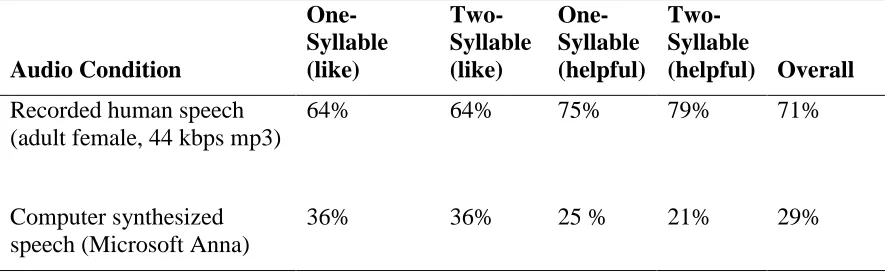
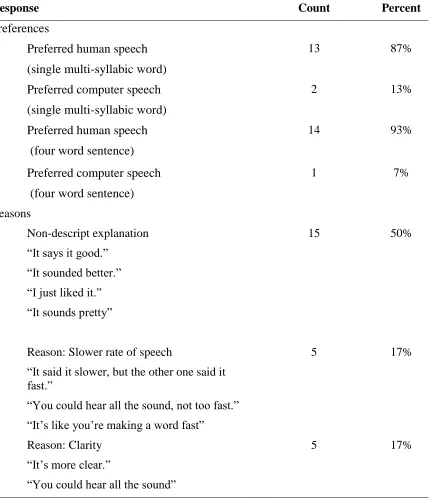
Table 1 Preferences for Recorded Human or Computer Synthesized Speech ... 60
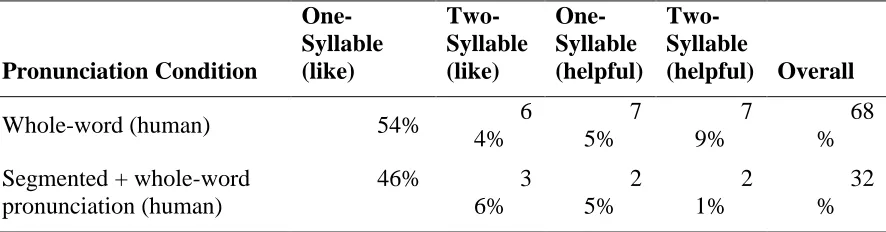
Table 2 Preferences for Whole-Word or Segmented Pronunciation. ... 61
Table 3 Themes of Audio Speech Format Interview Responses ... 62
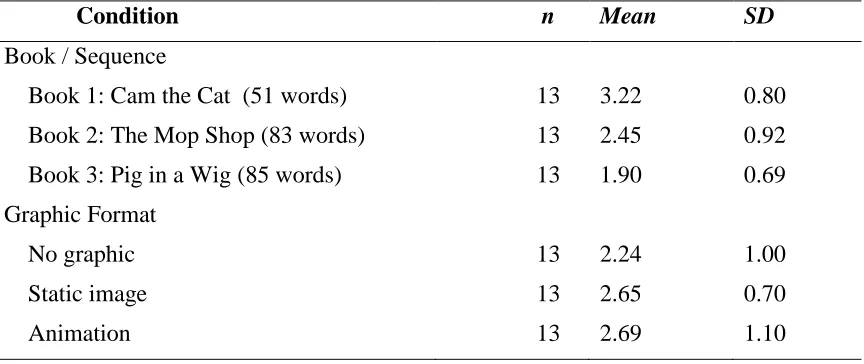
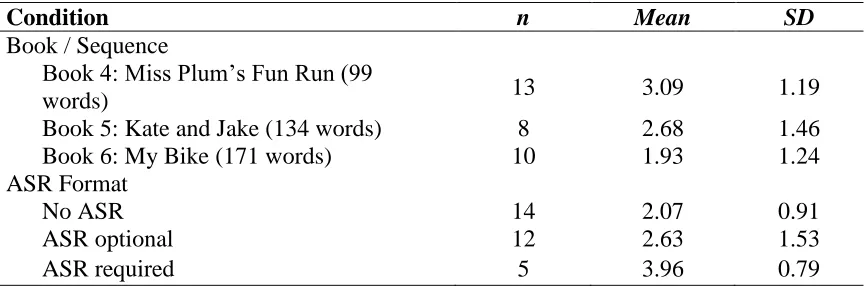
Table 4 Seconds Per Word, by Book Sequence and Graphic Format ... 65
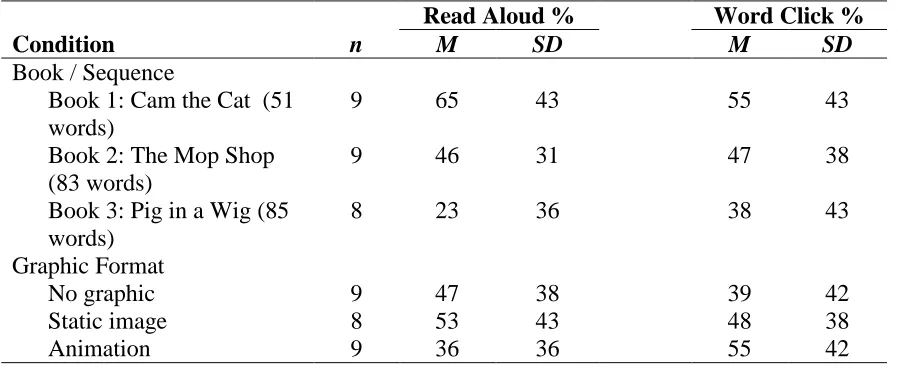
Table 5 Active Behaviors, by Book Sequence and Graphic Format ... 67
Table 6 Passive Behaviors, by Book Sequence and Graphic Format ... 67
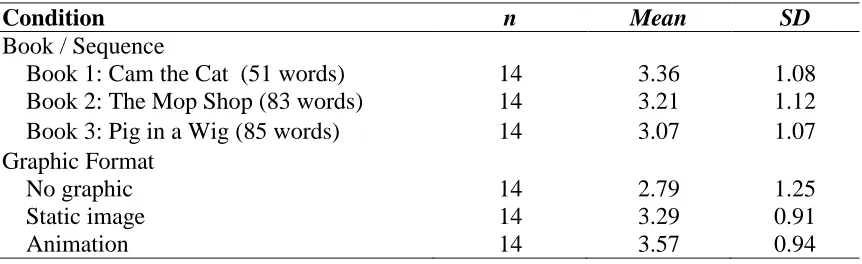
Table 7 User Satisfaction, by Book Sequence and Graphic Format ... 69
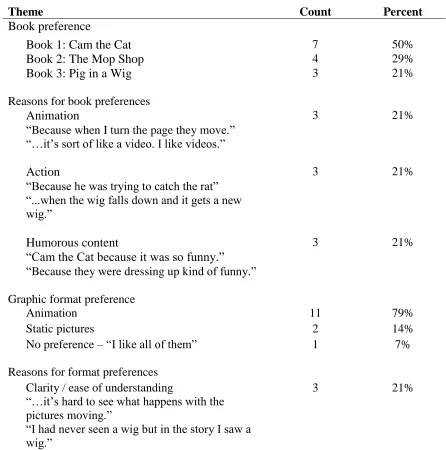
Table 8 Themes of Graphic Format Interview Responses ... 70
Table 9 Seconds Per Word, by Book Sequence and ASR Format ... 73
Table 10 Active Behaviors, by Book Sequence and ASR Format ... 74
Table 11 Passive Behaviors, by Book Sequence and ASR Format ... 74
Table 12 Observed Interaction Problems and Difficulties ... 76
Table 13 User Satisfaction, by Book Sequence and ASR Format ... 77
Table 14 Themes of ASR Format Interview Responses ... 79
Table 15 Observed Interaction Problems for ASR Input in Tutorial Testing ... 81
Table 16 Mean ASR Success Rates in Tutorial Practice ... 82
xii
LIST OF FIGURES
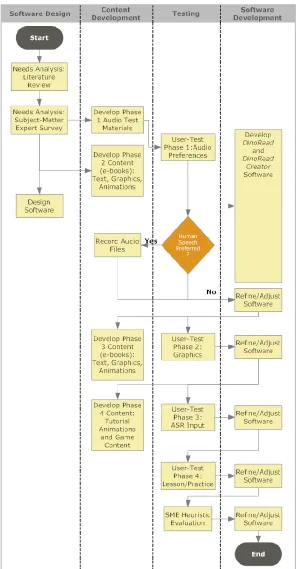
Figure 1. DinoRead design, development, and testing sequence. ... 45
Figure 2. Navigation and processes of DinoRead software. ... 46
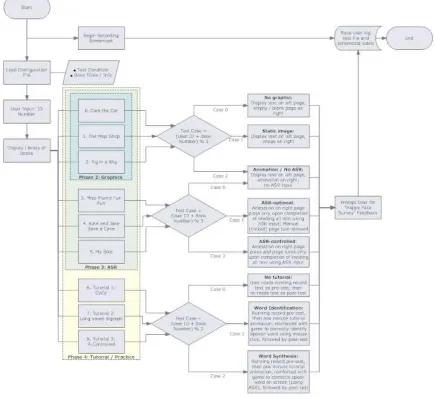
Figure 3. Audio clipping due to excessive volume. ... 81
Figure 4. Format of word identification practice screen. ... 149
CHAPTER 1: THE RESEARCH PROBLEM
Introduction
Proficiency in English literacy continues to fall below desired goals and
expectations in the United States. At-risk groups including ethnic minorities and students coming from poverty continue to show the lowest performance on reading assessments. Numerous interventions over the past several decades have resulted in modest
performance gains for these students, but a literacy divide still exists (National Center for Education Statistics, 2010b). Meanwhile, the number of American children aged 5 to 17 who spoke a language other than English at home increased from 3.8 to 10.9 million, or from 9 to 21 percent of the U.S. population, between 1979 and 2008 (National Center for Education Statistics, 2010a). Students of low socioeconomic status and non-English-speaking households have been found to enter school with lower than average oral vocabulary, putting them at a disadvantage in literacy acquisition. These facts call to attention the importance of early and effective intervention for reading, especially for at-risk populations.
Statement of the Problem
lack of sufficiently-trained personnel. How, then, can literacy intervention be administered in a consistent and cost-effective manner?
One proposal for individualized intervention without the need for special training or hiring of additional personnel has been through the use of computer-aided instruction (CAI). For decades, CAI interventions have been researched as a viable alternative to traditional teacher-based instruction in support of building reading skills. These studies have focused on a variety of methods and literacy subtasks, but one of the most
promising areas has been the use of CAI software for improving phonological awareness (Barker & Torgesen, 1995; Foster, Erickson, Foster, Brinkman, & Torgesen, 1994; Reitsma & Wesseling, 1998).
Unfortunately, there are drawbacks to the use of standard CAI for phonemic instruction. Several studies have shown a need for targeted intervention for students with low oral fluency (Chuang, Porfelli, & Algozzine, 2008) as well as listening
comprehension and phonemic awareness (Juel, Griffith, & Gough, 1986). One of the noted strengths of modern CAI programs is their ability to build upon foundational skills such as listening comprehension (Karemaker, Pitchford, & O’Malley, 2010);
unfortunately, listening comprehension is one of the specific skills shown to be
individualized activity (Foster, Erickson, Foster, Brinkman, & Torgesen, 1994; Kegel, van der Kooy-Hofland, & Bus, 2009; Prabhu, 2010).
There are several factors which indicate that, instead of CAI limited to specific skill-building, it may be more beneficial to embed reading skills into interactive e-books. One problem is that most CAI programs focus on a narrow subset of skills inherent in systematic reading instruction. Although the design and engineering of these programs may be “research-based”, focusing only on small subsets of early literacy skills and excluding pragmatic application of those skills likely limits the efficacy of these programs since the majority of reading research indicates that it is best to combine phonics instruction with authentic reading tasks including fluently reading words in context of sentences and books (Ehri, Nunes, Willows, & Schuster, 2001b; Pufpaff, 2009; Sensenbaugh, 1996). E-books may also enhance CAI due to their ability to repeatedly expose the reader to written and oral vocabulary in multiple contexts, which is an important stepping-stone to reading comprehension (Hemphill & Tivnan, 2008; Silverman & Crandell, 2010).
Aside from the limitations of content and skill-building tasks, e-books and CAI software have also suffered from ineffective design of user input, navigation, and
These challenges seem to be exacerbated by a lack of ability to control or guide users of CAI and e-books. Several studies have shown that, despite the promise of individualized learning, CAI and e-books are more effective when utilized in peer-pairs (Mathes, Torgeson, & Allor, 2001; Shamir, Korat, & Barbi, 2008; Shamir, 2009) and most effective when supported by an adult (Korat, Segal-Drori, & Klien, 2009). This calls attention to a potential problem of user control or interaction with such e-books and CAI programs, the majority of which rely on manual interaction as the sole means of user input. Aside from the clear benefits of non-manual input for the physically disabled, Kegel et al. (2009) also noted that students with low regulatory skills suffer from uncontrolled and misguided mouse clicks. Behaviors that are frequently observed in e-books and CAI, due to open-ended user control and voluntarily-selected support options, include minimal interaction; under-accessing (not requesting help as needed); over-accessing (clicking for support when not necessary); reliance on the computer to identify unknown words rather than developing his/her own strategies; and having no mechanism for detecting and correcting errors unless the user specifically requests assistance (Lewin, 2000; McKenna, 1998).
Lefever-Davis and Pearman (2005) make reference to the drawbacks of this “voluntary support” mechanism traditionally found in e-books and liken it to “learned helplessness.” They note that human supporters such as teachers are much better equipped to deal provide feedback in such a system of reading support:
However, this is not necessarily always the case for computer feedback. Over the past several years, great strides have been made in advancement of automatic speech recognition (ASR) technology (Gerosa, Giuliani, Narayanan, & Potamianos, 2009; Hagen, Pellom, & Cole 2007; Hagen, Pellom, & Hacioglu, 2009; Hagen, Pellom, Van Vuuren, & Cole, 2004; Potamianos & Narayanan, 2003) and studies have shown its application to reading and learning tasks (Adams, 2006). However, Leitch and
MacMillan (2003) acknowledged that the speed and accuracy of ASR technology is not yet capable of 100% natural and fluid speech and these limitations can reduce efficiency or increase frustration in reading or learning tasks. Additionally, the speech patterns of children and especially emergent readers pose even greater challenges to ASR accuracy (Gerosa et al., 2009; Hagen, et al., 2007; Hagen, et al., 2009; Hagen, et al., 2004; Potamianos & Narayanan, 2003).
Developmental research may provide valuable insight and research-based guidelines for the design and engineering of e-books and CAI software for early literacy instruction in primary grades. Developmental research provides a means for applying and testing existing theories in a pragmatic context, allowing development of practical tools while accepting the variability and flexibility of actual application in praxis. Design-based research involves an actively evolving environment and a participatory dialogue with its inhabitants, allowing for a pragmatic extension of theory to real-world
including incremental phases of end-user testing and feedback (Richey, Klein, & Nelson, 2003). In this way, theoretical expectations can be both tested and pragmatically applied in iterations, incorporating key formative input from the end-users themselves and the implications of applying such research and theories to technology design. In the case of CAI and interactive e-books, important aspects that will determine effectiveness of the software include content delivery, human-computer interface and interactions, and effects on motivation and time-on-task.
Purpose of the Study
The purpose of this study is multi-fold:
1. To explore or confirm the findings of existing theories and research as applied to user satisfaction and on-task behavior in interactive e-books and CAI for reading. 2. To develop theory-grounded and research-based guidelines for development of an
all-purpose CAI program in early reading for first grade students (users aged 5 to 7 years old).
3. Begin development of a prototype CAI software demonstrating the principles representing the framework/guidelines.
Definition of Terms
The following terms will be used throughout the study and are based upon previous research, assessments, and specifications:
At-risk readers. “At-risk students” refers to those students in the United States
who have an increased chance of academic success due to a variety of factors, including: welfare/low socioeconomic status; a primary language other than English spoken in the home; only one parent in the household; or low levels of education attained by parents (National Center for Education Statistics, 2000). Several factors have been shown to contribute to the level of risk for academic difficulties specifically in reading. One particularly important factor is amount of initial oral vocabulary (Hemphill & Tivnan, 2008; Silverman & Crandell, 2010).
Automatic speech recognition (ASR). Automatic speech recognition refers to the
Computer-aided instruction (CAI). Computer-aided instruction refers to the use of
computers to assist specifically in instruction/tutorial or guided practice activities for attaining targeted educational skills. For the purposes of this study, all CAI interventions will be referring specifically to software programs available on personal computers.
Computer-assisted language learning (CALL). Computer-assisted language
learning (CALL) is a subset classification of CAI designed specifically to enhance acquisition of a language. Although CALL software tends to be used for acquiring a second language (L2), it is not limited to such use and may also refer to acquisition of a primary language (L1). For the purpose of this study, all CALL software will be included under the CAI label, and thus referred to as CAI.
Developmental research. Developmental research combines aspects of
design-based research and instructional systems design. It is a systematic, iterative process of developing a specific product or tool – formative research” or “Type 1 research” – or with a focus on the study of the developmental and evaluative processes themselves – “Type 2 research” (Richey, et al., 2003). This study is primarily a Type 1 developmental study, with a goal of creating a reading software tool. However, elements of Type 2 research will also be included, such as reflection on the efficacy of evaluative tools used.
Interactive e-books. This study will focus on the use of interactive,
Phonemic awareness. Phonemic awareness refers to the ability to distinguish and
recognize the small sound chunks (phonemes) that form words. Phonemic awareness includes segmentation of words to distinguish individual phonemes, as well as blending these phonemes together to create words and word parts.
Phonological awareness. Phonological awareness is a more encompassing term
than phonemic awareness and includes additional phonological tasks such as rhymes, alliteration, and syllabification. These skills include, and build directly upon, phonemic awareness. Although phonemic and phonological awareness are slightly different, literature sometimes uses the terms “phonemic awareness”, “phonological awareness”, and “phonics” interchangeably. This study maintains a focus on early readers and, as such, will primarily be concerned with the specific subset of skills known as phonemic awareness.
Limitations and Delimitations
Despite the numerous practical advantages afforded by developmental research, there are also many limitations. This systematic, formative research involves collecting extensive amounts of both quantitative and qualitative data from multiple sources; conclusions are drawn from this data, but much of the data may be excluded from conclusions and results, and qualitative processes including interviews and observations lend themselves to possibility of through selective attention or focus (Wang & Hannafin, 2005).
Additionally, as Kelly (2004) points out, design-based research does not lend the same level of rigorous scientific validity that true experiments would hold. The
larger population. In addition, the notion of experimental control is consciously violated in the direct dialogue and interaction with participants. This flexibility allows for
socially-responsible and practical adjustment and refinement, but at the cost of weakening any causal or relationship claims made pertaining to any of the variables (Kelly, 2004).
As Richey et al. (2003) note, a Type 1 study, focused on creating a tool or product, is inherently context-specific. This limited scope of specificity is also
emphasized by the small number of participants (15 first grade students) in this study. It is especially important to note this contextual nature in regard to the specifications of the software tool being developed: conclusions found within this study may be specific to the hardware, programming implementation, and instructional and support content designed for this tool. It is possible, and perhaps even likely, that alternative implementations of the same concepts – with different audio-visual content, hardware configurations, or ASR-implementation – could provide different results than those discovered in this study. In addition, it is important to note that in the current software prototype, not all of the commonly-found features of reading CAI or e-books will be implemented or tested. For example, effect of sound effects and music will not be explored – in fact, these audio features will be excluded entirely.
A final but significant limitation of developmental (and design) research is that these are relatively new concepts, lacking the same rigor of methodology and
such, an attempt has been made throughout this study to adhere to use of clearly-defined “working words” as suggested by Kelly: "hypothesis," "conjecture," "observation," "model," "framework," "explanation," "belief," "rationale," "logical or argumentative structure," "perspective," "analysis,” or "synthesis,” rather than empirical concepts such as development of “theories” (Kelly, 2004, p.123).
As a developmental study, an effort is made herein to describe and explain both quantitative and qualitative data, but the complex nature of the tool being developed and the goals of development (to increase both time-on-task and motivation/satisfaction levels) mean that evidence may be contradictory or inconclusive. Instead, an effort is made to present the data and observations in an explanatory context with interpretations of implications for design and for future developmental studies of educational software for first grade students.
Significance of the Study
This study will provide a descriptive exploration of the formative results of development and testing of first grade software for practice and enhancement of elementary reading skills. Over the past two decades, many studies have examined the use of CAI and interactive e-books for elementary school users. Results and conclusions have been mixed, often due to the unique context-specific combinations of content, interface, technology, and specific implementation (Ertem, 2011; Pearman & Chang, 2010). This study seeks to further illuminate the effects of two well-documented support mechanisms (visual illustration/animation and spoken audio pronunciations) on user satisfaction and time-on-task. An additional, and less well-documented, aspect of
reward to encourage increased time-on-task. Implications of these findings may show encouraging directions for use of ASR to increase focus on the task at hand and reduce passive use or learned helplessness in computer-based reading programs.
CHAPTER 2: REVIEW OF THE LITERATURE
Introduction
The use of computer-aided instruction (CAI) for reading has existed and been researched for several decades. Design and development of CAI for language and literacy acquisition has been based on findings of numerous early literacy and language
acquisition studies. Such studies have explored the importance of various factors in complex models of emergent literacy that distinguish and correlate multiple components of literacy including phonemic awareness, oral fluency, word recognition, vocabulary, and overall reading comprehension.
Multiple studies have shown that phonemic awareness is an essential building block in early literacy and a causal predictor of future skills such as word recognition and comprehension. Although there is little debate that phonemic awareness is an important building block for literacy, there is some debate (e.g., Fox & Routh, 1984; Perfetti, Beck, Bell, & Hughes, 1987; Silverman & Crandell, 2010; Torgesen, Morgan, & Davis, 1992) about the importance of phonemic awareness and its validity as a predictor of reading comprehension when isolated from vocabulary acquisition and word recognition, especially as students advance beyond second grade.
This review of literature focuses primarily on experimental and
Web of Science, Education Research Complete, PsycINFO, Academic Search Premiere, and JSTOR. These studies represent findings and advances in emergent reading and literacy theories, effects of CAI and e-book design elements including audio-visual aids and support features, and a review of advances, benefits, and complications of automatic speech recognition (ASR) as it pertains to educational technologies.
Theoretical Foundations and Research Findings in Early Literacy
The acquisition of language, its processes, and potential methods of improving or accelerating the process have been studied for decades. By the mid-1980s, practitioners and researchers were aware that literacy acquisition was a complex and multi-faceted process comprised of multiple components or interrelated variables which combine, sometimes synergistically, to influence emergent reading and writing.
In 1997, the Director of the National Institute of Child Health and Human Development consulted with the U.S. Secretary of Education to convene a National Reading Panel of 14 individuals to review research on alphabetic, comprehension, fluency, teacher education, and technology. The alphabetic groups consisted of two meta-analyses, one of phonemic awareness and one of systematic phonics instruction.
an isolated variable because there must be some basic level of phonemic proficiency before benefits can be attained from increased exposure to print (Juel, Griffiths, & Gough, 1986).
Many of these current conclusions about early literacy support elements of social constructivist theory as espoused by Vygotsky, in which social interaction with adults or more knowledgeable peers can accelerate cognitive growth through assisted exposure to new knowledge in a child’s “Zone of Proximal Development” (Vygotsky, 1978). This Vygotskian theory supports the premise of guided sequential, systematic instruction of “stepping stone” skills toward literacy and is supported by studies that have shown spoken interaction with peers to improve subsyllabic phonological awareness and phonemic segmentation, real word reading, pseudoword reading, oral reading fluency, and comprehension (Mathes, Torgesen, & Allor, 2001; Shamir, 2009).
Juel et al. (1986) proposed a literacy model based on existing research and
observations and included these primary factors: phonemic awareness, cipher knowledge, lexical knowledge, and word recognition. The strength of causal relationships between these factors – as well as external influences including ethnicity, IQ, initial oral language, and exposure to print – were tested using path analysis and multiple significant
The nature of phonemic awareness as an essential building block for word recognition has also been supported by other studies (Swank & Catts, 1994). Although the literature is in agreement that phonemic awareness is an important skill in the
development of emergent literacy, there is some debate over which specific sub-skills of phonemic awareness have the greatest impact. In a longitudinal study of first grade students, Perfetti et al. (1987) examined the effect of phonological analysis (identification of individual phonemes) and phonological synthesis (creation of words by connecting phonemes together) and found synthesis to be the most significant predictor of reading skills. However, in two separate training studies, Fox and Routh (1984) and Torgesen, et al. (1992) found that interventions focusing on both analysis and synthesis skills
improved performance more than analysis or synthesis training alone.
Another area of some debate is the long-term value of phonemic awareness versus explicit instruction of vocabulary in which students are simply immersed into
Acknowledging the importance of direct vocabulary and semantic instruction as early as prekindergarten, Silverman and Crandell (2010) studied practical implications of different methods of teaching vocabulary in the classroom. By creating separate
experimental groups for students with low and high levels of initial vocabulary (IV), interventions could be differentiated to determine whether they were effective for low IV, high IV, or both subsets of students. Results showed that the most traditional method of explicit explanation/definition of new words increases comprehension for both low and high IV students, but with only moderate results. The findings show that more significant gains in both groups were found through varied and repeated use of vocabulary in
multiple contexts. However, another important implication of this study is the fact that there are interventions which may not work as well for high IV learners, but are effective when targeted toward at-risk (low IV) students, including methods such as acting out and illustrating the vocabulary.
These studies show the importance of systematic instruction of phonological awareness (including phonemic awareness and phonics) is an invaluable component of early reading instruction, but that the best approach is to combine phonics instruction with synthesis tasks (oral speaking of words), vocabulary, and authentic reading opportunities to apply and transfer phonemic skills (Sensenbaugh, 1996; Ehri, et al., 2001b; Pufpaff, 2009).
Social Constructivist Theory and CAI Design
This theory originally specified that cognitive growth would be aided through social interaction with a “more knowledgeable other” (MKO), with the implication that this “other” would be another human being. This concept has been extended to computer technology as a possible MKO, for example through the use of spoken feedback and clickable support scaffolds.
With the improvement of recorded human speech as well as ever-improving synthesized speech, there has been a growing body of literature regarding “pedagogical agents” which serve as digital teachers and learning assistants in software. The roles of these agents “reinforce the notion that social interaction is central to learning with agents” (Veletsianos, 2009, p. 346). Even without such a virtual MKO, Reeves and Nass (1996) posit that humans treat computers and other media in fundamentally social and human-like ways, ascribing the same social rules to their interactions with media that they do with other humans. This psychological phenomenon has been dubbed “The Media Equation” (Reeves & Nass, 1996). This implies that use of CAI and e-books, especially when paired with audio-visual feedback and virtual agents or assistants, may be just as effective as a human MKO.
improvements in literacy for all students participating in PALS, with or without additional CAI. However, the addition of CAI intervention did not result in significant improvement above PALS alone. The finding of this study shows the value of verbal interaction, but it is unclear exactly what factors involved in the oral discourse caused improvement in performance. It is possible that feedback or interaction from the peer helped to build knowledge from a peer-based MKO. On the other hand, improved performance could be due to the reader’s actual oral reading (authentic phonemic
synthesis of words) due to the presence of a listener. This suggests that CAI and e-books may be best designed to serve not only as support and feedback mechanism, but also as an aural listener.
Additional studies have focused on the effect of peer collaboration and have come to similar conclusions. For example, Shamir (2009) found that, when using e-books, collaborative activities including discussions, computer sharing, and verbal initiative all positively affected sub-syllabic phonological awareness. However, the study does not examine whether the benefit of discussions and verbal initiative come from human/social aspects; is it possible that verbal interaction with a computer would provide the same benefits? Answers to these questions would be invaluable in more precisely tailoring effective interventions, and could play a role in improving the efficacy of CAI.
Cognitive Load Theory and CAI Design
Aside from Vygotskian social constructivist theory, a great deal of focus in software engineering and interface design for CAI software has been founded in
Deneke, & Schmitz, 2010). Conscious cognitive activity (i.e., “mental processing”) uses the limited capacity resources of working memory, although this capacity can be
improved by using multiple sensory channels for input, since audio and visual input is processed separately and can be processed simultaneously. Additionally, information in long-term memory is stored and accessed through use of mental schemata, or
knowledge/memory models. Learning occurs through construction of schemata that can be retrieved and used efficiently in working memory (Hollender et al., 2010).
This concept is supported by some core tenets of usability design. Robertson (1994) points out that some aspects of work-oriented principles (such as efficiency, i.e., quickness of task completion) may actually be antithetical to learning, in which slowing down and processing of information may actually result in better learning through schema-building and transferability of knowledge. Due to this, it may actually be preferable to introduce expanding complexity by making a program simple enough to enter but complex enough to provide growth (Robertson, 1994).
Based on the concept of germane load, rapidly completing a task is not always beneficial and may, in fact, indicate ignoring the task at hand or a lack of genuine mental processing, such as indicated by off-task behaviors in the use of CAI and e-books that allow completely open-ended user control (Kegel, et al. 2009; Lewin, 2000; McKenna, 1998). One critical factor to be weighed and balanced in the design of CAI is the level of learner control allowed. At one end of the spectrum, computer-controlled media have sequencing and pacing completely predetermined by the software; at the other end of the spectrum, learner-controlled systems allow the user the freedom to choose from variable choices including sequencing, content, and how that content is represented (Scheiter & Gerjets, 2007). Problems in allowing learner control may arise from usability mistakes causing disorientation, distraction, or cognitive overload, but may also be moderated by learner characteristics including prior knowledge and regulatory skills. Students with low prior knowledge or poor regulatory skills have been shown to benefit from more
The level of computer control can also be considered with regard to media output, such as spoken instructions and praise. This, too, must be finely balanced. A study by Buckleitner (2006) underscored the importance of this balance. In this study, one group of children used CAI software with audio instructions and praise for correct answers, while the other group used identical software with audio instructions and praise turned off. The children receiving no audio praise or instructions were more active, attempting three times as many problems in the same amount of time, and also expressed greater motivation and enjoyment. On the other hand, children using the more structured interface with audio feedback showed decreased interest and activity, but had a higher percentage of correct answers (84.95% vs. 67.97%), implying the benefit of some level of structure and guidance as well as the important of avoiding excessive or unnecessary feedback.
With regard to spoken and synthesized speech, research shows that children’s response latencies for synthesized speech were significantly longer than for natural speech, reinforcing the notions of the processing constraint model in which cognitive processing demands slow reaction time (Drager, Reichle, & Pinkoski, 2010). Veletsianos (2009) found that enhancing verbal expressiveness through pauses and inflections caused learners to score higher on post-task exams and to perceive pedagogical agents as being more interactive. These studies imply that using recorded human speech may be
Another aspect to consider is the use of pedagogical agents, which are virtual characters embedded in CAI to serve as assistants or provide feedback. The use of human-like pedagogical agents can actually impede learning and focus due to distraction caused by movements and animation (Veletsianos, 2009). Although the purpose is to improve receptiveness due to human-like expressivity, the “media effect” explained by Reeves and Nass (1996) shows that this may be an unnecessary feature due to the fact that people attribute human and social qualities to media even in absence of such features.
Usability and Human-Computer Interface Design
Cognitive load theory plays a large role in usability and human-computer interaction (HCI) design. According to the International Organization for
Standardization, usability is defined as the extent to which a user can fulfill a task using a tool effectively, efficiently, and with satisfaction (ISO 9241-11, 1998). Factors that influence usability include learnability, efficiency, memorability, handling of user errors, and user satisfaction (Nielsen, 1993).These aspects are analyzed, tested, and incorporated into the engineering cycle. However, Robertson (1994) and Nelson, Bueno, and
Hufstutler (1999) emphasize that, for educational software, these general principles and phases are not enough.
“Human Factors” methodologies can be incorporated into design of educational systems. The field of Human Factors is traditionally tied to work performance, with worker ease and efficiency being a central goal and with the process being user-oriented such that workers themselves play a direct role in feedback and design decisions
usability should permeate every aspect of design and development, with four phases including:
1. Design with a concern for usability. 2. Develop with input from users. 3. Field test with a concern for usability.
4. Revise and maintain software with a concern for usability.
The benefit of user-centered and iterative design for optimizing usability
underscores the value of developmental research. By monitoring and analyzing systems using both theoretical foundations to guide expectations as well as continuous feedback from authentic users in natural environments, the developmental process can test and refine theory as well as apply it to actual educational goals in a pragmatic way.
Automatic Speech Recognition (ASR)
One technological advance that may alleviate off-task behaviors and distractions in CAI and e-books, as well as potentially bring the realm of traditional Vygotskian sociocultural practices to CAI, is the use of automatic speech recognition (ASR).
Unfortunately, the effect of ASR on phonemic awareness, oral fluency, or comprehension is underrepresented in the research literature (Adams, 2006). This may be due to the fact that ASR technology has not been widely available or effective on personal computers until recently.
Further impacting the use of ASR for early-literacy software, there are
adult speech (Potamianos & Narayanan, 2003). Strommen and Frome (1993) observed that children demonstrate significant variability in their speech patterns, including extra words and premature phonations more often than adults. As expected, this increased variability reduces the number of correctly-matched patterns of the template-based ASR for children. Further analyzing and detailing aspects of children’s speech, Lee,
Potamianos, and Narayanan (1999) studied acoustic characteristics including pitch, formants, and duration of vowels and sentences, and concluded that children’s speech is much more variable than adult speech. The implication of these studies is that special design considerations must be used to control for these additional variables when designing or modifying ASR software for use by children.
ASR methods and processing have continued to evolve and improve, and several of these advancements have focused on the challenges inherent in children’s speech. Various demonstrated methods to improve accuracy of ASR recognition of children’s speech have included: speaker-adaptive training (Hagen, et al, 2004); subword analysis to analyze syllables and phonemes and accommodate children’s variable fluency (Hagen, et al, 2007); and using algorithms to shift pitch and formant qualities of adult speech to approximate an acceptable resemblance of children’s speech (Hagen et al, 2009).
highlighting and feedback targeting the point of difficulty in a sentence. Using such a system, combined with training the ASR grammar via a large corpus of recorded children’s speech, resulted in performance on par with larger, more powerful desktop computing systems.
Despite the difficulties and challenges posed by using ASR with children, results of early studies have shown some positive benefits. Higgins and Raskind (2004) tested ASR-enabled software for 17 weeks with 28 students with learning disabilities and compared its effects on reading and spelling improvement with a control group of 16 students who did not receive the intervention. Users of ASR saw significant
improvements in word recognition, comprehension, and phonological awareness skills, though spelling ability was not affected. In addition, in a field test of ASR-enabled Reading Assistant software, Adams (2006) found that 228 students in 11 classes, grades
2-5, showed significant gains in oral reading fluency over a control group of 182 students across 10 classes, even when using the software for as little as 131 minutes on average. The message is that surprisingly little authentic reading is needed to make a difference, and ASR can provide a tool to track what, when, and how well students have read as well as which segments provided difficulty and which types of supports were provided
accordingly.
improvement for 11-year-old Italian learners of English. Like many other CAI studies, this study does not imply that computer training is superior to traditional teacher
instruction, but that it may be an effective alternative. Although this particular study did not focus on emergent literacy in a primary language, it supports the notion that
pronunciation skills are strongly tied to phonemic awareness, a skill set essential to literacy acquisition.
Efficacy of CAI and e-books
Effects of CAI
Based on the demonstrated importance of phonemic awareness, whole-word vocabulary, and authentic reading practice for reaching the ultimate goal of
comprehensive literacy, existing software and relevant CAI research has focused on the ability of computers to build both phonological awareness and vocabulary acquisition through tools such as direct tutorial, guided practice, and interactive scaffolding including interactive e-books with digitized speech and built-in dictionary tools.
Although CAI software designed to improve literacy has existed for several decades, most of the early programs required extensive teacher training, involvement, and administration of the software, making it difficult to accurately assess effectiveness due to variables such as teacher/administrator interest or training. One of the first programs to isolate these factors and allow independent student use through built-in tutorial was DaisyQuest, a multimedia program designed specifically to improve phonological
Foster et al. (1994) studied CAI-based phonological awareness instruction as a viable alternative to traditional classroom instruction and found that, using the CAI intervention, only 18% of experimental group failed to improve by at least two raw score points, while 69% of the control group did not improve by at least two points.
Importantly, the effect size after these interventions totaling eight hours and five hours was as large, or larger than, two previous studies that found similar results for students using the same post-assessment after seven weeks of traditional teacher-led phonological awareness training. This study demonstrated that results similar to classroom-based intervention can be effectively achieved using CAI, with the benefit of significantly less teacher/aide preparation and instruction time, as well as less variability of results based on teacher or classroom environment. Barker and Torgesen (1995) replicated the Foster et al. (1994) experiment with a focus on below-average readers using DaisyQuest and its sequel, Daisy’s Castle. The results showed significant growth for specific phonemic awareness subtasks that had been taught using CAI, including segmentation and phoneme elision. Reitsma and Wesseling (1998), however, point out that by administering no intervention to the control group, these initial studies did not control for potential
confounding variables such as training effect or use of computers itself playing a role on the outcomes. In their study, they improved upon the design and methodology by
CAI has demonstrated the ability to improve phonological awareness, it may be best used as a supplemental intervention rather than replacing traditional instruction.
Effects of e-books
Although there is a strong focus on phonological awareness at the emergent literacy level, several studies have also examined the effects of e-books and interactive tools such as student-triggered dictionaries on demand. Karemaker et al. (2010)
compared the results of e-books versus corresponding traditional “big books” for beginning readers. Both formats were produced by the same publisher and contained similar content including difficulty, vocabulary, and length. Both big books and e-books served to improve word recognition, with the authors noting a likely causal factor of repeated high-frequency words in both formats. However, some additional advantages became apparent in e-book format, particularly the built-in audio-visual feature of highlighting individual words or sentences accompanied with audio narration, which could reinforce the connection between orthography (word appearance) and phonology (word sounds).
Other authors point out that easily-accessible “interactive hotspots” – screen locations that can be clicked by the user to cause an action – for tools such as the
aforementioned audio-visual support, and especially interactive dictionaries, can improve vocabulary recognition and comprehension (Li, 2010), as well as prove motivating to many reluctant readers (Oakley & Jay, 2008).
Brueck, & Widman, 2009; Pearman & Chang, 2010; Ertem, 2011). Of particular concern, several researchers have noted that hotspots can distract from a focus on actual reading tasks, and that audio-visual supports can actually be detrimental instead of supportive if they are not well-tied to the text. McKenna (1998) showed that e-book features can inhibit development of intrinsic reading strategies and thus impede literacy development in beginning readers. Lefever-Davis and Pearman (2005) found that e-books have the potential to promote reading skill and that both struggling and strong readers benefitted from use of actual reading supports, but that an overabundance of hot spots leads users to adopt a “spectator stance” by wasting valuable academic time by instead focusing on finding and triggering visual hotspots, treating the book more like a game for mere entertainment. Perhaps the most important design consideration related to this concept is whether audio-visual supports (graphics and particularly animations and sounds) are “considerate” (integral and supportive of the story) or “inconsiderate” (incidental or incongruent with the story text.) Labbo and Kuhn (2000) showed that inconsiderate multimedia features led to passive reading and did not support understanding. This was further confirmed by Trushell and Maitland (2005), who found that allowing Year 4 and Year 5 (8-9 years old) students to access cued animations and sound effect features in an e-book resulted in detrimental effects to verbal recall of the story as well as inferential comprehension questions, compared to students who could not access these multimedia features at will.
interface, and level of user control can allow for off-task distractions and mere entertainment in lieu of actual learning.
Summary
Several studies have found early reading ability in kindergarten and first grade to be valuable predictors of reading fluency and comprehension in later grades. Early intervention in foundational reading skills via systematic phonemic instruction has been found to be particularly beneficial. This may be especially true for at-risk student populations including ethnic minorities, students of low socioeconomic status, and students from households speaking a different first language. However, some of the most effective intervention methods require resources such as additional personnel or
specialized training. In addition to these resources which may not be available to all schools, there are limitations to effectiveness for students who may need individualized, differentiated instruction.
Computer-assisted instruction (CAI) provides an alternative to traditional early reading interventions. Use of CAI can be more economical, easier to manage, and provide more consistent results than teacher-led intervention while providing similar benefits. However, design in CAI for early reading has suffered from narrow focus on specific sub-skills and narrowly-focused quasi-experimental research.
passive use and can actually detriment comprehension and literacy acquisition, especially when they are non-supportive of the text or are overused.
Human-computer interface design and usability studies, combined with
CHAPTER 3: METHODOLOGY
Research Design
This study employed developmental research as a method of pragmatically applying and testing research- and theory--grounded principles in situ. Multiple experimental and quasi-experimental studies have targeted specific features, elements, interfaces and effects of CAI software for reading. Although such studies purport to hold validity, their narrow focus and rigid experimental conditions also pose some drawbacks:
1. Unlike the physical sciences, educational sciences occur in “messy” environments with multiple variables. Attempting to create a “controlled” laboratory
environment actually introduces a new variable (a controlled learning environment) that may not be present in real-world praxis, thus potentially weakening the pragmatic generalizability when attempting to apply the processes in real-world settings (Brown, 1992; Design-Based Research Collective, 2003). 2. Much like the narrow focus of the research studies, CAI software has been
designed to narrowly focus on specific sub-skills rather than holistic programs that recognize the potential synergy of combined components. (Wang & Hannafin, 2005).
condition, and that condition may be affected by the research itself. Insofar as knowledge is being gained for knowledge sake, it is useless; that is, without a pragmatic application of findings to actually invent or improve education,
educational research is moot. Even when research is valuable and relevant, it may take so long to piece together all of the narrowly-focused findings related to the myriad variables involved in a learning environment that instructional treatments cannot be modified fast enough.
Like action research and design-based research, developmental research modifies the learning environment and interacts with its inhabitants. However, action research focuses on theory-based solutions to a localized problem. Unlike action research,
developmental research has the pragmatic goal of systematically creating a theoretically-sound and research-based solution, with the aid of ongoing testing, data collection, and formative assessment.
Establishing this study as developmental research means that several conditions were met:
1. Design and development of this prototype CAI/e-book tool for first grade readers was iterative and systematic, breaking down each phase to analyze specific variables and features that built upon previous design implementations.
2. Design was user-centered, incorporating observation, feedback, and interaction data of users in an authentic incorporating social cognitive theory, cognitive load theory, and dual coding theory.
4. A secondary product was guidelines for future design, development, or similar research and testing.
The design elements considered were:
1. User preferences for spoken audio: synthesized vs. recorded human; segmented vs. whole-word.
2. Effect of visuals (static, animated, or no graphic) on user satisfaction and time on task
3. Effect of ASR-control (optional, required, or no ASR) on user satisfaction and time on task
4. Effect of tutorial and practice (mouse-based identification or ASR-based synthesis) on oral fluency.
Participants
University, since this study focused on software development and used participant feedback only as a means to refine the product, I was not required to submit an
application for Human Subject Research to the Institutional Review Board. The parental consent form was used as a formal invitation and to provide a detailed level of
information that parents may have wanted to know. Translation of the forms into Spanish was done by the principal investigator and proofread by the bilingual school site
secretary.
Three of the participants (all male) had been previously identified as advanced readers through scoring 70% or higher on a test of reading comprehension (Grade 2, Theme 6 Comprehension test developed by the Reading Lions Center in conjunction with the Sacramento County Office of Education.) Five of the students -- 2 male and 3 female -- were identified as English Language (EL) learners.
Prior knowledge and experience with the requisite computer hardware was assessed via an exposure / ability survey (Appendix B). This survey established that 100% of
participants had previous experience using a laptop computer with mouth and headphone speakers. Two-thirds of participants also had access to a computer at home, but 60% indicated that they had never used a headset microphone, indicating a need for further training to build familiarity with that input device.
representative test groups by equally distributing EL learners, advanced learners, and gender amongst the groups.
Data Collection
Like evaluation and design-based research, developmental research relies on a variety of research methods and instruments to obtain descriptive, ethnographic insights about multiple variables that comprise a system being used in its natural context (Collins, 1992; Reeves, et al., 2005; Richey, et al., 2003). Moreover, developmental research is user-focused, and usability evaluation includes testing and measuring a variety of aspects both qualitatively and quantitatively, using observations, interviews, questionnaires, expert reviews, and measures of actual use (Nelson, et al., 1999).
In this design study, participants used DinoRead in the natural context of a whole-class computer lab with up to 20 peers simultaneously using computers and microphone headsets. Each participant’s interaction with the software was tracked and logged using a combination of data metrics programmed into the system for automatic storage in a log file (associated by each participant number) as well as screen-capture software to video-record each use session including mouse movements and clicks along with spoken audio. The software used for this task was a free screencasting program, BlueBerry Software’s FlashBack Express. This software was tested prior to the study and chosen for its ease of use and its abilities to be scheduled to begin recording triggered by use of the DinoRead software and to run silently in the background without notifying or distracting the participant user.
(Robertson, 1994) at the end of each activity using a “happy face scale” (Appendix C), as well as short, scripted, audio-recorded interviews for each phase of development
(Appendix D).
Development and usability testing also called for needs assessments of the subject-matter expert (SME) teacher to help guide development (Appendix E), alongside existing research studies and findings.
Data Analysis
Data included a mixture of quantitative metrics and qualitative observational and interview data. Quantitative data included Likert-style survey questions for user
satisfaction and data logging programmed into the DinoRead software to be saved as a log file identified by participant ID number. This data log was used to record use metrics including total time spent, time per page, time per word, words clicked, number of
spoken word attempts, and the percentage of those attempts that were correct or incorrect. Quantitative metrics were evaluated to find the mean and standard deviation of each score, although these scores were designed to be supplemented and explained via use of the observation and interview tools, especially for cases of extreme outliers.
categorized into common threads, with specific examples noted to exemplify important themes.
Procedures
This developmental study followed an ongoing iterative process of software development over the course of four months. Development and testing focused on theory-driven aspects and empirically-guided design over several phases. Based upon the key design considerations outlined in the current literature, four key factors were investigated while developing the initial prototype of the DinoRead software. First, needs were
determined based on indications of existing literature as well as an survey of perceived reading software needs completed by first-grade teachers at a rural elementary school. Based on these assessments, the aspects of considerate design of holistic reading software to encourage on-task reading included:
1. format of spoken audio feedback; 2. design of support graphics/visuals;
3. potential use of ASR to encourage word synthesis and authentic reading;
4. and the incorporation of tutorials and practice games to enhance phonemic skills including identification and synthesis.
possible methods of implementing ASR including a variety of hardware/software permutations.
Each design aspect called for an iterative process of development in multiple phases. Testing of each phase was enabled by assigning each participant a participant ID number (1-15) which was then used as the identifier on all surveys, interview transcripts, and log and video files. This participant ID was also used to automatically assign
appropriate test cases within the DinoRead software. Any personally-identifying information about the participants was stored in a separate file as a cross-reference to participant ID numbers.
Phases of Development
Development of each software component was guided by the literature-supported principles and developed using systematic phases:
Phase One: Determine needs based on review of literature, existing studies and
guidelines, and subject-matter expert (SME) feedback.
Phase Two: Design solution based on theoretical and research-based foundations
as well as SME feedback, keeping users and learning context in mind.
Phase Three: Test solution including user feedback interviews, satisfaction surveys, and
recorded screencasting videos for observations of behavioral trends and patterns. Phase Four: Use data and feedback to revise component before moving on to
Development of the DinoRead Software Application
To ensure that testing of each design aspect could occur rapidly in succession after evaluating the previous design variable, the DinoRead software was developed before testing any design cases (see Figure 1). Development occurred over the course of two months and consisted of creating an Adobe Flash desktop application for Windows as the e-book platform, as well as concurrently creating the story texts and multimedia content required for each e-book. The software was programmed to allow for
configuration in a variety of permutations by using configuration variables that could be switched on or off to allow for the results of test cases to be applied quickly and easily to the software to establish a given design paradigm for each aspect based on the results of testing in each phase. Thus the software developed was not static but was dynamically capable of switching on different test case conditions as a result of of/off flags set for graphics, ASR, and lessons in the configuration XML file.
The DinoRead software was created using Adobe Flash Builder 4.0 (Flex framework) for development of rich internet applications and desktop apps. The DinoRead software was designed and developed as a stand-alone desktop app using
Adobe AIR (Adobe Integrated Runtime) architecture to allow it to be installed on various operating systems. The basis for the interactive book component is the Flex Large Book component by Miti Pricope
(http://miti.pricope.com/2008/09/10/flex-large-book-component/), which is an extension of the Flex Book component by Ruben Swieringa (http://www.rubenswieringa.com/blog/flex-book-component-beta).
interactive e-book format. This application allows the user to choose which text would go onto each page, and parses the text into XML files delineating pages, sentences, and individual words with the tags <p></p>, <s></s>, and <w></w>. These files are stored in a special folder for the new book, and the book’s information – including title, author, cover image, number of pages, and number of words – are added to a library file to allow the user to choose e-books within DinoRead. The DinoRead Creator also simultaneously created specific grammars for ASR, specified to listen for the whole sentence, any sub-portion of the sentence commencing from the first word, and for individual words or word pairs if speaking terminated before the end of the sentence.
The ASR grammars were written as scripts (.pie format) for GlovePIE
(http://sites.google.com/site/carlkenner/glovepie), an alternative interface emulator for computers which also incorporates access to Microsoft’s built-in Speech Application Programming Interface (SAPI) which is included in all current versions of Windows since Windows XP. The Microsoft SAPI allows access to the Microsoft speech
recognition engine as well as the voice synthesis engine for text-to-speech functionality. For this study, the netbooks used were running Windows XP with Microsoft Speech Engine version 6.1. This engine allows for “user independent” recognition, but the speech recognition can be improved through user-specific training.
patterns are the least consistent with the pitch and formants of young children (Hagen, et al., 2009). Due to these constraints, the speech recognition default user profile was trained using an adult female voice, which has been shown to more closely align with the characteristics of children’s speech (Hagen et al., 2009).
Upon running, the DinoRead software displays a library of e-book selections based on the e-books created and available. When the user clicks on an e-book, that book’s demarcated XML story text is loaded and formatted into individual, clickable large-font words. These words are assigned functions to turn blue upon mouse-over, and to load and play the corresponding pronunciation file when clicked. Along with loading the words for each odd-numbered page of the book, each even-numbered page is pre-loaded with the appropriate type of graphic (static, animation, or no graphic) based on test case for the current user and selected book.
When the DinoRead program is run, each participant enters his or her ID number to enter the program. For ease of use, participant ID number was based on assigned seat and each user had a written version of the number for reference. The test case for each book was determined using a modulo function on participant number (numbers 1-15) + book number (numbers 0-2) to automatically set a test case of 0, 1, or 2. Depending on which design aspect was being tested (determined by variable flags in the
library/configuration file), the appropriate test condition would automatically be applied for each book.
a “happy face questionnaire” item asking, in general terms, how much the user enjoyed the activity. This survey included faces to represent a Likert-scale of satisfaction, supported by audio statements upon mouse-over (Appendix C), and upon mouse click closes the current e-book.
Figure 2. Navigation and processes of DinoRead software.
In addition to the quantitative metrics and observable user behaviors, participants further explained their internal feelings and feedback via post-activity one-on-one interviews, recorded and transcribed digitally into the same secure computer log folder.
to be relatively easy to use as a source of practice of Theme 1 skills outlined in the 1st Grade Houghton-Mifflin Reading curriculum for California (which includes books such as The Cat Sat, The Mat, Nan and Fan, We Can!, The Big Hit, and Big Pig.) Based on the same consonant-vowel-consonant phonemic skills and a similar base of high-frequency words, three e-book stories were written: Cam the Cat, The Mop Shop, and Pig in a Wig (Appendix G). Additional stories for the ASR and tutorial test cases were designed to likewise correlate to Houghton-Mifflin reading curriculum pacing concurrently or imminently arising for students in their regular class instruction.
Development of considerate audio-visual features occurred in conjunction with these written texts – designed to be read sequentially with slight an increase in difficulty and word count. Each story was broken down into eight pages of text and an animation was designed to illustrate the character, setting, and actions described by the text on that page. Software and content design heeded many of the research-supported guidelines put forth by Seo and Woo (2010), including:
Colors were high-contrast and carefully selected; the book format followed a traditional black-on-white text paradigm, color changes for text were used only for important events such as noting clicked pronunciation, or recognizing correct or incorrect user pronunciation via ASR.
minimal and unambiguous, and to avoid potential distractions such as excessive graphics and cued animation or sounds (Seo & Woo, 2010).
Learning-disabled students have a tendency to attribute success and failure to luck or to the ease of a task rather than their own abilities. Because of this, students should receive ability attribution feedback acknowledging their efforts and successes (Seo & Woo, 2010). This feature was incorporated visual color change to green words for correct ASR pronunciations of words, and was done with both audio and visual feedback rewards for correct answers in both the mouse-clicked and ASR-triggered tutorial practice games.
Spoken Audio Format
save valuable time and money resources and promises to be more scalable than employing voice talent for discrete recorded passages.
Another important consideration for clickable pronunciation in e-books is whether it is preferable to use whole-word or segmented phonetic pronunciation to assist the user. If segmented speech improves phonemic awareness, it may be a worthwhile feature. However, it increases the complexity and time spent in development, and could prove detrimental by slowing down the reading process or decreasing motivation to use the support feature.
The focus of this study is on increasing efficiency of time-on-task for authentic reading of interactive e-book software, while maintaining an acceptable level of user satisfaction. As such, the effect of segmented audio on reading abilities was not addressed; instead, the study focused on user preferences and feelings about different formats of audio feedback.
To determine these preferences, participants were given a feedback sheet containing 16 boxes of words and the letters A and B underneath each word (see
In half of the cases, one sound clip was a recording of an adult female voice pronouncing the word (recorded as 44Kbps mp3 format) while the other clip was a synthesized pronunciation of the same word using the most commonly-accessible synthesized speech voice, Microsoft Anna (normal speed). Half of these cases used one-syllable words while the other half used two-one-syllable words to test whether
length/duration of the word pronounced had an effect.
The other half of test cases prompted participants to select a preference between a word pronounced alone versus the same word segmented and pronounced as phonemes before being pronounced as a whole word. Again, these cases were divided evenly into one-syllable and two-syllable examples.
To prevent against a possible bias due to participants simply repeatedly selecting one letter or the other, the order of audio types was switched for each iteration of the test case; i.e., if the first example provided synthesized speech as Sound A, then human speech was used as Sound A in the next word example comparing these two types. Additionally, the pattern was further broken up by staggering prompts comparing human vs. computer speech and prompts comparing whole-word and segmented pronunciation (always recorded human speech in these cases).