Verbum
Verbum
Volume 9 Issue 1
Article 19
12-1-2011
Full Issue
Full Issue
No Author
Follow this and additional works at:
https://fisherpub.sjfc.edu/verbum
Part of the
Religion Commons
How has open access to Fisher Digital Publications
benefited you?
Recommended Citation
Recommended Citation
Author, No (2011) "Full Issue," Verbum: Vol. 9 : Iss. 1 , Article 19.
Available at:
https://fisherpub.sjfc.edu/verbum/vol9/iss1/19
This document is posted at https://fisherpub.sjfc.edu/verbum/vol9/iss1/19 and is brought to you for free and open access by Fisher Digital Publications at St. John Fisher College. For more information, please contact
Full Issue
Full Issue
Abstract
Abstract
This is the full issue of Volume 9, Issue 1 of Verbum, published in Fall 2011 by the REST Club at St. John
Fisher College. Articles from this issue are available as separate PDFs at http://fisherpub.sjfc.edu/
verbum/vol9/iss1/
VERBUM
St. John Fisher College
Religious Studies Department Club
Verbum 2011
Volume 9, Issue 1
Publisher
Rest Club
Faculty Advisor
Dr. Rev. Michael Costanzo
Copyright 2011
Department of Religious Studies, St. John Fisher College, 3690 East Avenue, Rochester, NY 14618
All rights reserved
Rest Club Officers
President: Jonathan P. Cotugno
Vice President: M. Husain Bawany
Letter from the Editor
Dear Reader,
Thank you for your interest in this Fall 2011 edition of Verbum.
Verbum has been a long standing publication and your continued
readership has been the reason for it. Verbum always receives a variety
of new, interesting, and exciting pieces from the Fisher campus and this
semester is no different. I would like to thank all those who made
contributions to this exciting new issue! These contributions have made
this new Verbum issue one of the best yet.
This issue offers a thought-provoking and heart-stirring series of
submissions that will allow you to see into the life of a recent graduate
about her new children and to witness the love of God from a current
student. This issue reminds us of our recent past in remembering the ten
years since 9/11 and our political society and views in 1928. These
pieces illustrate the powerful views that we have on this campus.
I would also like to thank the review boards, compilers/editors, and
of course the REST Club‘s academic advisor, Dr. Michael Costanzo. He
has been dedicated to Verbum and has helped both the publication and
REST Club grow under his tutelage. We also thank the Office of
Multicultural Affairs & Diversity, the campus bookstore, and all the
other individuals and organizations that made contributions for the
prizes presented to the Verbum writers.
Thank you again for reading the Fall 2011 issue of Verbum!
Faithfully Yours,
Jonathan Cotugno
Table of Contents
Original Essay
Anti-Catholicism v. Al Smith
Poetry Bend
Nine Eleven
My Childhood Memories of Life in Palestine
Apples and Oranges
On Love
The World Seen Through the Lens of Faith
Oh, How He Loves Us
Reflections On Love
God Is Here
Alumni Corner
How to Have 4 Kids in 8 Months: Big Boy Brendan + 3
Brief Essay
Amaryllis – amaryllis
“Better Together”
Parent and Child
Seven Dwarfs @ Jesus’ Crib
Faculty Essay
Damasus Winzen Lecture
What Was Sherlock Holmes’ Alma Mater? Elementary: St. John Fisher College
Diversity Vision
Original Essay
*** Prize provided by
137 W. Commercial St. - East Rochester
www.lemoncello137.com
385-8565
Submissions Review Committee:
Michael Rooney
Anti-Catholicism v. Al Smith:
An Analysis of Anti-Catholicism in the 1928 Presidential Election
Introduction
With few exceptions, the details of past presidential elections are largely forgotten over the course of history. As
specific campaigns and elections become more distant from contemporary society, people tend to focus on the larger picture of
what that election produced, mainly, who actually became the president. And for the majority of the American public, the
presidential election of 1928 is no exception to this. But as Allan Lichtman suggests in his book Prejudice and the Old Politics:
The Presidential Election of 1928, ―Presidential elections are central events of American politics, often bearing the detailed
imprint of the society in which they occur. The careful study of a single election can test theories of social process and illuminate
the meaning of a historical era‖ (Lichtman 25). In this regard, all past presidential elections are ‗American studies‘ in their own
right, and are of importance because they provide insight about a specific society at any particular time in our country‘s history.
The campaign for the presidency of the United States in 1928 featured two men of drastically different backgrounds
and mindsets: Herbert Hoover, the candidate for the Republican Party, and Alfred Smith, the Democratic Party‘s candidate.
Lichtman says of this election, ―No burning issues had to be resolved by the election; no national crisis preoccupied the
American public. Rather, the backgrounds of Smith and Hoover, their personalities, their careers in public service, and their
approaches to politics gave the campaign its special significance‖ (5). Hoover and Smith stood for and represented two different
and opposing sides of American society at the time, as will be discussed later in this paper. But one of the main differences
between these two candidates, a difference that this paper will argue was the most significant and pressing issue which affected
in Hoover‘s Protestant background to a great extent, the America public was deeply intrigued by and drawn into the fact that Al
Smith was a Roman Catholic. The fact that Smith‘s religion played a role in the perception of the voting public is what leaves
the ‗detailed imprint‘ of the 1928 society and of this election in particular.
Al Smith‘s presidential nomination for the Democratic party in 1928, ―marked the first time in American history that a
Roman Catholic was nominated by either major party‖ (Hattery 37). And, as John Hattery simply puts it in his essay ―The
Presidential Campaigns of 1928 and 1960: A Comparison of The Christian Century and America‖, Smith‘s Catholicism begged
the question, ―Can a loyal and faithful member of the Roman Catholic Church function effectively as Chief Executive of the
United States?‖ (36). In 1928, the answer to this ‗dual allegiance‘ concern between the Catholic Church and the State, also
known as ‗religious question‘ or ‗Catholic issue‘, was a resounding no. But this issue of faith influencing political discussions
and affecting the public‘s perception of a candidate is not something that died with Smith‘s failed attempt for the presidency. It
is, rather, a recurring theme in our country‘s history. John F. Kennedy is recognized for, among other things, being the first
Catholic to be elected president of the United States in 1960. But, he did not win without first having to clarify that, ―his
religious beliefs and political responsibilities were compatible‖ (Dolan 6). And as recently as 2008, with the presidential
campaign of Barack Obama, issues of religious affiliation and public perception made their way into public discussion once
again.
While both Kennedy and Obama were ultimately able to successfully address such questions and issues, few recognize
the fact that there was another politician, Al Smith, who was unable to successfully overcome questions regarding his religion.
This paper will explore and illustrate the origins, the influence, and the extent to which anti-Catholic sentiment played a role in
the outcome of the 1928 presidential election. It will argue that while there were ultimately other factors which worked against
Smith, his Catholic faith significantly contributed to the outcome of the election by negatively affecting voting behaviors and the
public‘s perception of what Smith was capable of achieving as president of the United States of America.
Anti- Catholicism
Before further exploring this point and analyzing specific examples of anti-Catholicism during the 1928 presidential
campaign, it is essential to first define anti-Catholicism and place this presidential election in a historical and social context.
Robert Lockwood, in his book Anti-Catholicism in American Culture, states: ―Like any other prejudice, anti-Catholicism is a
fundamental judgment that defines a group of people as a whole by negative and preconceived assumptions as to their thoughts,
motives, and actions‖ (Lockwood 19). He goes on to say, ―The bigot creates these assumptions- or inherits them- and they are
used as the basis of all judgments on a particular group‖ (19). The anti-Catholic sentiment and propaganda which were prevalent
in society prior to the election of 1928 were not something new to America. Lockwood asserts throughout his book that,
―Anti-Catholicism is fundamental to the culture of the United States‖ (19). It is an emotion that dates as far back as the colonial days in
Catholics the right to hold office or freedom to practice their faith. Many of the new states in the union would have similar
legislation on the books, if not formally enforced‖ (19). Lockwood puts into perspective the lasting impact of these laws by
noting, ―New Hampshire would not formally remove its law barring Catholics from public office until late in the nineteenth
century‖ (19). Roman Catholics have had a seemingly difficult time since our country‘s founding (and even before) assimilating
and being accepted into mainstream American culture because of these common prejudices.
It is important to understand the reasons why Catholics and the Roman Catholic Church were negatively viewed in
American society in order to better appreciate why Smith encountered so much criticism in 1928. Catholics were discriminated
against as a result of, arguably, three main factors: who they were (immigrants), where they came from (foreign countries), and
because they believed in and associated themselves with the strictly hierarchical institution that was the Catholic Church
(allegiance to Rome and the Pope). These three factors all contributed to the perception that Catholics were, as Mark Massa S.J.
suggests, ―un-American‖ (Massa 7). Roman Catholicism was a religion that was, for the most part, originally brought to the
country by European immigrants. Author Jay Dolan in his book, In Search of an American Catholicism, explains that when the
Church became a real and substantial presence in America, during the time period of 1820-1920, it was largely defined and
created by the massive immigrant movements into the country.
This ―immigrant church‖ (Dolan 54), as Jay Dolan refers to it, struck fear in Protestant Americans whose ancestors had
established the country with certain principles in mind such as, democracy, liberty, and freedom. It is ironic, given the emphasis
in our country on religious freedom, that Catholic immigrants were ostracized so much from the society of that time. Though, by
the nineteenth century, as Michael Williams points out in his book The Shadow of the Pope, ―all of [the States in America] had
stripped their constitutions of provisions discriminating against any religion, and had fallen into line with the federal principles‖
(Williams 3), this did not imply Catholics were accepted as equal citizens. As more immigrants came into the country from
undemocratic European countries, believing in an undemocratic religion like Catholicism, Catholic immigrants were seen as
posing a real threat to fundamental American values. Along with this, there was also a stereotypical and widely held belief
among the people who were native to America that Roman Catholics were a type of combatant group acting on behalf of the
Pope in Rome, with the intention of trying to extend Papal rule and Church authority to America. Relating this idea to the 1928
presidential election, Lichtman says, ―Those who objected to electing a Catholic president alleged that Smith would obey the
edicts of a foreign potentate, that Catholics were organized as a political phalanx to promote their own parochial interests, and
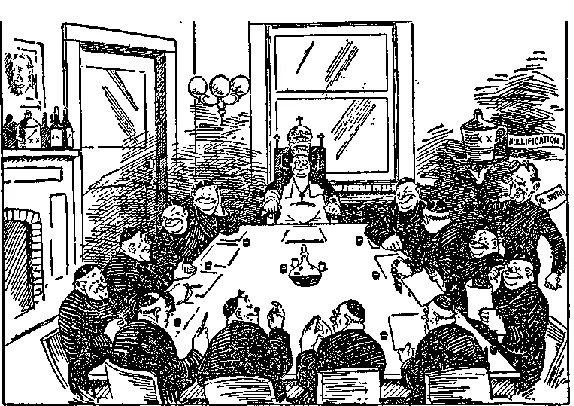
that Catholics…would use public authority to propagate their faith‖ (Lichtman 69). (This is illustrated through Figure 3 on page
30 of the paper). The thought that a large group of people living in America obeyed a figure like the Pope was an unsettling idea.
And this idea, as seen through the previous quote, is something that hurt Al Smith in the election of 1928.
Fears among native Protestants resonated because religions such as Catholicism were ―‗un-American‘ precisely to the
ostensibly founded‖ (Massa 3). This ‗lively experiment‘ was, of course, America. Massa explains, ―The Roman Catholic
Church provided the single largest pool of ‗others‘, particularly in the nineteenth century, with so many illiterate, hard-drinking
immigrants arriving from nondemocratic nations like Ireland, Italy, and the Rhineland‖ (8). This quote plays very much into the
harsh stereotypes with which immigrants were associated. But, it is an interesting quote in that it demonstrates how presidential
candidate Al Smith was perceived and how he, in a way, personified Protestant Americans‘ reservations about Catholic
immigrants.
Alfred Smith was raised as a Roman Catholic by his family. His mother was Irish and his father was of German and
Italian descent (nondemocratic nation‘s stereotype). Born in 1873 in New York City, a city ―that was felt by many rural and
small-town Americans to be the least American part of America‖ (Moore 28), Smith ―grew up in a country that was deeply
divided between natives and immigrants‖ (Finan 4). In terms of education, Smith received no formal schooling beyond high
school. Allan Lichtman notes that Smith often said his college alma mater was ―F.F.M. - Fulton Fish Market‖ (Lichtman 10),
which was near his childhood neighborhood. This also alluded to the fact that Smith viewed himself as one who had much
practical and ‗real world‘ experience. Despite his high school education, when compared to Herbert Hoover‘s Stanford
education, the perception of Smith was consistent with that of the stereotypical ‗illiterate‘ immigrant that Massa spoke of in the
preceding paragraph. Edmund Moore supports this, ―There is much evidence in the letters of the campaign months that many
educated Americans…regarded Al Smith as much below the presidential standard in educational and social background‖ (Moore
116). Lastly, part of Smith‘s platform in 1928 was anti-Prohibition, something that played further into the un-American, Irish
Catholic immigrant, ‗hard-drinking‘ stereotype that plagued him. It is clear that based on his personal background, the Catholic
Democrat personified the worries of much of the voting public in 1928 about ‗outsiders‘ attempting to ruin the American
‗experiment‘.
Because Catholic immigrants, as previously explained, stood for something which was perceived as a threat to
Protestant America and the American ideals of democracy and liberty, certain groups formed in the nineteenth century in efforts
to combat this problem. Nativist groups such as the Know-Nothing Party, the Ku Klux Klan, and the American Protective
Association all practiced forms of anti-Catholic sentiment starting in the 1850‘s. These anti-Catholic groups had the mindset that
since Catholics, by the very nature of the religion, took an oath to obey the undemocratic hierarchical Catholic Church, The
Catholic religious philosophy directly countered the principles on which America was founded. This is the idea that groups such
as the KKK were against, and what they tried to make known to the public. The KKK wrote in their publicized Fellowship
Forum, ―The Roman Catholic Church is the most intolerant thing in the world—has been, is now, and forever will be‖ (Lichtman
70). Edmund Moore writes of the KKK, ―No single reason for the organization‘s success outweighed the exploitation of hostility
This was the conflict in which Al Smith found himself and that he encountered in the political realm of the 1920s. And
though some nativist groups withered away before 1928, the resurgence of the KKK in the 1920‘s was a large reason why so
much anti-Catholic propaganda surfaced during the campaign. Massa says that the, ―Klan had one last hurrah in the presidential
election of 1928‖ (Massa 32). Dolan supports this statement: ―Anti-Catholic attitudes still remained an integral part of the
Protestant ethos in the 1920s‖ (Dolan 132-133). Examples of KKK anti-Catholic propaganda will be dealt with in the ‗The
Campaign and Election of 1928‘ section of this paper.
The Catholic Issue
This brief background illustrates the political and social scene in which the campaign and election of 1928 took place.
It also sheds light on why concerns about the actual religious question surfaced on a national level in response to Smith‘s running
for president. Though Al Smith had a successful political career as governor of New York State beginning in 1918, his
impressive political achievements to that point were not enough to overcome anti-Catholicism and questions of dual allegiance
during the presidential campaign. In April of 1927 Smith had not yet officially received the Democratic nomination for the
presidency. But, based on his successful tenure as governor of New York State and the interest the Democratic Party had shown
in Smith in the previous election of 1924, it seemed probable that Smith would win the nomination in the near future for the 1928
election. Author Donn Neal writes, ―By mid- 1927 Smith was generally favored to win the nomination‖ (Neal 226). In
anticipation of this, some people, such as Charles Marshall, wasted no time in raising and getting to the heart of the Catholic
issue. This was publicly illustrated in the form of an exchange of letters between Charles Marshall and Al Smith appearing in the
magazine The Atlantic Monthly. Though the ‗Marshall-Smith exchange‘, as it has come to be known, took place before Smith
had even received the nomination for the presidency, this primary exchange of letters can still be used as evidence of the
skeptical feelings and rather legitimate concerns people had towards Smith based on the issue of his Catholicism.
Charles Marshall, ―an Episcopalian lawyer‖ (Hostetler 16) from New York, initiated the conversation in the April 1927
issue of The Atlantic Monthly. Entitled, ―An Open Letter to the Honorable Alfred E. Smith‖, the purpose of the letter was to
elicit a response from Smith on how he would resolve the theoretical and apparent practical conflict between issues of Church
and State. Again, because Smith was a Roman Catholic, there was the question of whether he would adhere to Catholic Doctrine
and obey Papal orders or follow his constitutional duties when issues of Church and State arose. Marshall asked Smith in the
letter, ―Is not the time ripe and the occasion opportune for a declaration, if it can be made, that shall clear away all doubt as to the
reconcilability of her [the Catholic Church] status and her claims with American constitutional principles?‖ (Marshall 2).
Marshall, after quoting from Catholic Doctrine as well as from the Constitution of the United States and several Supreme Court
rulings, states:
agree, the Jurisdiction of the Church shall prevail; whether, as a statesman, you accept the teaching of the Supreme Court of the United States that, in matters of religious practices which in the opinion of the State are inconsistent with its peace and safety, the
jurisdiction of the State shall prevail; and, if you accept both teachings, how you will reconcile them. (Marshall 4)
This statement sums up the main point which Marshall wants Smith to address. The letter is well crafted and precisely
written in that the first part deals with the theoretical conflict between the ―doctrine of the Two Powers‖ (Church and State) as
they call for their own and separate oaths, obligations, and loyalties. The second part of the letter then offers Smith three
practical situations in which this conflict became a reality: in the debate of public schools versus parochial schools in the country,
in the differing ways in which the Church and State regarded matrimonial issues, and finally in the ―Mexican situation‖ (6), a
problem which at the time illustrated conflicts and tensions between the Church and State in Mexico. Marshall makes a
convincing argument that it, ―Follows naturally on all this that there is a conflict between authoritative Roman Catholic claims on
the one side and our constitutional law and principles on the other‖ (Marshall 4).
Al Smith‘s response came in the May 1927 issue of The Atlantic Monthly. Though at first he did not want to answer or
acknowledge Marshall‘s letter, for as he told one of his advisors ―I‘m not going to answer the damn thing‖ (Finan 194), Smith
was eventually convinced that responding was, in fact, the right move. In ―Catholic and Patriot: Governor Smith Replies‖, Smith
established his thoughts on the Church and State matter, as well as establishing his strategy for dealing with the inevitable
Catholic issue. This strategy was to treat the Catholic issue as a non-issue and to respect the separation of Church and State by
keeping religious issues out of political discussions. Essentially, Smith wanted to avoid the issue and acknowledge it as little as
possible because he did not believe it was either legitimate or important. He says in his response to Marshall, ―I should be a poor
American and a poor Catholic alike if I injected religious discussion into a political campaign‖ (Smith 2). This is a rather
important point which, as Michael Hostetler argues in his essay ―Governor Al Smith Confronts the Catholic Question: The
Rhetorical Legacy of the 1928 Campaign‖, distinguishes Smith‘s approach from John F. Kennedy‘s approach on the same issue
over thirty years later. Smith was convinced that the apprehension and anti-Catholic sentiment was a concern and the work of
bigots. This is why Smith wished not to acknowledge the issue. Hostetler suggests, ―Smith‘s reply leaves tension unresolved as
he tried to answer Marshall respectfully, all the while insisting that the issue is nonexistent and those who raise it are mere
bigots‖ (Hostetler 19). Smith never acknowledges in this response or in his Oklahoma City campaign speech (to be discussed
later) that the issue of dual allegiance was a real concern. In following Hostetler‘s argument, I think this is where Smith made a
calculated error in his handling of this situation. Though anti-Catholicism was the result of a great deal of bigotry, it was unfair
and, to a certain extent, politically unwise on Smith‘s part to assume all of this sentiment came from anti-Catholics. Simply
because he had never encountered concerns about the Catholic issue while serving as governor, Smith felt confident that the issue
With this said, Smith does bring up equally convincing counter-points to Marshall‘s argument which elucidate his
mindset and strategy. Throughout his reply to Marshall, just as often as Marshall asserts that dual allegiance is an inevitable and
real problem, Smith counters and provides actual instances which demonstrate it is not. He says in his letter of the supposed
conflict:
Everything that has actually happened to me during my long public career leads me to know that no such thing as that is true. I have taken an oath of office in the State nineteen times. Each time I swore to defend and maintain the Constitution. I have never known any conflict between my official duties and my religious belief. (Smith 2)
Here, Smith illustrates that he, himself, never had a problem with issues of Church and State in practice. By this reasoning, he is
convinced that it will not be an issue as president. Later, he also states that other Catholics have served in State positions that call
for dual allegiance and similarly encountered no problems or questions. He says, ―I know your imputations are false when I
recall the long list of other public servants of my faith who have loyally served the State‖ (3). First, he makes notice of the priest
who aided him with his use of Church Doctrine in this response, Fr. Francis Duffy. Fr. Duffy was a distinguished member of the
United States Army and chaplain during World War I. There were also, of course, the many Catholic soldiers who fought in
World War I in order to protect the same American principles as Protestants. Second, Smith shows that the Supreme Court of the
United States was led by Catholic Justices and encountered no problem. ―During one fourth of its history it has been presided
over by two Catholics, Roger Brooke Taney and Edward Douglas White. No one has suggested that the official conduct of either
of these men was affected by any unwarranted religious influence…‖ (3). Whether talking about politics, the military, or simply
being an everyday citizen of the country, Smith tried to demonstrate that dual allegiance was not a problem.
There is a reason why so much attention should be given to this ‗Marshall- Smith exchange‘, even though it took place
before Smith received the official nomination for the 1928 ticket. It illustrates, in my opinion, three major concepts which
unquestionably affected the perception of Smith and haunted him throughout the 1928 campaign. The first concept is that Smith
was unable to separate himself from the idea of the hierarchal Catholic Church. One of Smith‘s criticisms of Marshall‘s initial
letter, as Hostetler points out in his essay, was that, ―Marshall mistakenly attributes the opinions of church leaders to all
Catholics‖ (Hostetler 19). To counter this, the last part of Smith‘s response to Marshall was a personal creed which he himself
followed, part of which was, ―I believe that no tribunal of any church has any power to make any decree of any force in the law
of the land, other than to establish the status of its own communicants within its own church‖ (8). By stating his personal beliefs,
Smith was attempting to separate himself from institutional Church Doctrine which did not commonly apply in everyday practice
to typical Catholics. He was trying to run for president as an individual, like his opponent, Herbert Hoover, was able to do. But
instead, people grouped him, and all Catholics, into one stereotype (which is anti-Catholicism). The prevalent stereotypical view
was that since Catholics adhered to a very strict structure of authority, they were unable to be true Americans. For example,
because Smith heavily relied on Fr. Duffy to help write his response to Marshall, it ―simply demonstrated…that the Governor
This idea of linking Smith together with the institution of the Catholic Church is what, then, leads to the second concept
which is illustrated by the ‗Marshall-Smith exchange‘: the fact that Smith‘s perception suffered from the widespread sentiment of
anti-Catholicism. Because anti-Catholic propaganda surfaced even after this 1927 ‗Marshall-Smith exchange‘ and even after
Smith had explicitly stated his personal beliefs, Smith was still very clearly the victim of society‘s preconceived judgments and
notions about Catholics. Allan Lichtman says, ―Reasoned opposition to Al Smith was lost in a welter of anti-Catholic prejudice.
Inflexible judgments against Catholics as a group were uncritically applied to Al Smith as an individual‖ (Lichtman 70). As
mentioned earlier, Smith was of Irish, Italian, and German descent. He was opposed to the Prohibition laws. He was from New
York City. And, he had no formal education beyond high school. These are all sub-issues which factored into and which were
associated with the larger issue of Smith being a Catholic. Smith was unable to separate himself, even before being nominated,
from the questions and fundamental accusations which Marshall brought forth in the first letter.
The third concept which is illustrated by the ‗Marshall-Smith exchange‘ is the amount of interest the public had in this
religious question. Both Edmund Moore and Christopher Finan reference the increase in sales of The Atlantic Monthly when
these letters appeared in April and May of 1927 (Moore 67, Finan 195). Though Moore does acknowledge the logical fallacy
that would suggest this increase was solely because of the two letters (Moore 67), it can indisputably be said that the increase was
in part due to this exchange. The American society of the time was interested in this issue. Because this issue had never before
arisen on this national level, people had a legitimate curiosity and interest in knowing how Smith could reconcile the question of
dual allegiance. There were then, of course, the prejudices which prevented people, such as Charles Marshall, from ever giving
Smith a chance from the start. But again, the fact that Smith‘s Catholicism was even an issue, and the fact that Marshall chose to
write this letter to Smith at all, demonstrates that the perception of what Smith was capable of achieving in the White House was
skewed, however much, from the beginning of the 1928 presidential campaign.
The Campaign and Election of 1928
The Oklahoma City Speech
Whereas the ‗Marshall-Smith exchange‘ illustrates how Smith dealt with the Catholic issue prior to the campaign, his
speech at Oklahoma City, Oklahoma on September 20, 1928 reveals how the Democratic candidate dealt with the issue during
the actual campaign. By that point in the campaign, a great deal of anti-Catholic propaganda and criticism had surfaced
throughout the country. There were even rumors that the Republican Party was secretly funding and supporting such efforts.
Christopher Finan, who authors the most recent biography of Smith, writes of an example of the Republican Party‘s chairman in
Alabama, who ―admitted disseminating 200,000 copies of an anti-Catholic pamphlet that he had written‖ (Finan 213). Not only
was he not fired by the Republican Party, but he ―was so unabashed by his reprimand that he continued to insist that the Catholic
Church was ‗a very live and vital issue‘ in the campaign‖ (213). Finan further illustrates Republican involvement in the
As Smith prepared for his first campaign trip in early September [1928], the extent of Republican involvement seemed to become clear. On September 7, an official of the [Republican] Coolidge administration appeared before 2,500 members of the Ohio conference of the Methodist Episcopal Church and urged them to use their church to help defeat Smith…At a time of extreme polarization between Catholics and Protestants, it sounded for many like a declaration of a holy war. (213-214)
The specific quote that this official delivered to the congregation was reiterated in Smith‘s Oklahoma City speech.
Smith quoted the official, ―There are two thousand pastors here. You have in your church more than 600,000 members in the
Methodist Church in Ohio alone. That is enough to swing the election. The 600,000 have friends in other states. Write to them‖
(Smith 56). It is examples of anti-Catholic demonstrations and propaganda like these, which truly illustrate the significance of
the religious question in 1928. Because of the controversy revolving around the Catholic issue, one of Smith‘s advisors said
before the Oklahoma City speech, ―We all felt that it was very important that he carry the fight in regard to the Ku Klux Klan and
the religious issue right into the enemy territory‖ (Finan 215). The speech was, according to Edmund Moore, ―The high point of
the drama of the anti-Catholicism in the campaign‖ (Moore 179).
But, as I argued when referencing the ‗Marshall-Smith exchange‘, during this Oklahoma City speech, Smith still never
gave any credibility to the religious issue. He never acknowledged that the issue might have been raised by concerned voters, as
opposed to only the anti-Catholic bigots to whom he attributed the concern. His perception of the source of the concern about his
religious beliefs affected how he chose to address it. He says in the opening of his Oklahoma City speech, ―In a presidential
campaign there should be but two considerations before the electorate: The platform of the party, and the ability of the candidate
to make it effective. In this campaign an effort has been made to distract the attention of the electorate from these two
considerations…‖ (Smith 43). He is specifically referring to all of the attention that his Roman Catholic faith had received up
until that point (and inevitably, thereafter). Smith goes on to say, ―The Republican Party will leave no stone unturned to defeat
me…I can think of no greater disaster to this country than to have the voters divide upon religious lines‖ (48, 52). And he closes
the speech by saying to the audience:
I declare it to be in the interest of the government, for its betterment, for the betterment and welfare of the people, the duty of every citizen to study the platforms of the two parties, to study the records of the candidates and to make his choice for the Presidency of the United States solely on the ground of what best promotes interest and welfare of our great republic and all its citizens. If the contest is fought on these lines, as I shall insist it must be, I am confident of the outcome in November. (59)
To put this speech into a more contemporary context, Smith was attempting to formally address and put an end to the
Catholic issue much like John F. Kennedy was able to do in his September 1960 speech to the Houston Ministerial Association in
Houston, Texas. There, Kennedy ―made a sweeping statement concerning his position on the separation of church and
state…This probably did more than anything to clear the air and settle many questions about his religion and political ambitions‖
(Hattery 38). Further, Smith‘s speech at Oklahoma City was as important and essential during the campaign of 1928 as President
comparable in that the candidates dealt with their backgrounds and, arguably, with the leading non-political issues with which
they were faced in the hopes of suppressing the issues. But, while Kennedy and Obama were ultimately successful, Smith failed.
John Hattery suggests that Smith‘s speech ―was not an objective discussion of the issue, but a fervently emotional harangue. This
tactic did little either to dispel the effect of the violently anti-Catholic propaganda that was circulating, or to sway the voter who
was yet uncommitted and who had real, pertinent, and honest questions about the religious issue‖ (44). Smith did not deal with
the Catholic issue effectively, and as a result of this, the anti-Catholic campaign against him was a significant success.
Other Issues in the Election: The Counter-Argument
As mentioned in the introduction of this paper, Smith‘s Catholicism was not the only issue which came into discussion
during the 1928 presidential campaign. Indeed, it was not simply Smith the Catholic against Hoover the Protestant. Rather, as
Lichtman, notes, it was Smith running for the ―Catholic-wet-foreign-urban Americans‖ and Hoover representing the
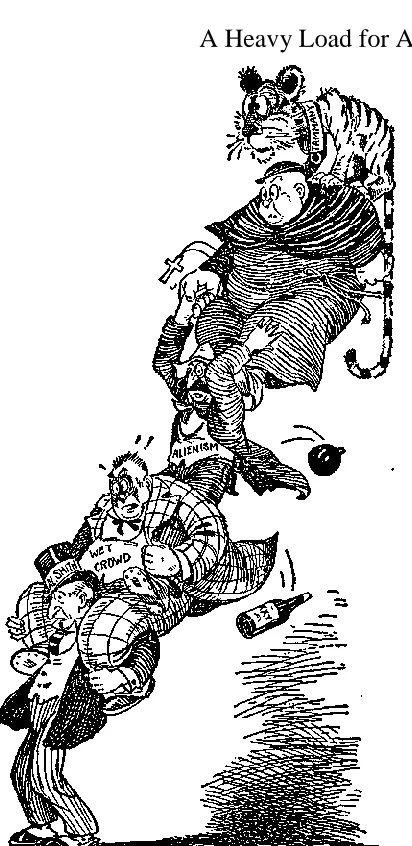
―Protestant-dry-native-rural Americans‖ (Lichtman 16). An illustrated example of this description can be seen through Figure 1on page 27
of this paper. By this description of the two candidates, it is apparent how they stood for two differing sides in American society. While this paper is not meant to get into an in-depth political science argument, it is important to consider at least three of the
political issues in the 1928 election and platforms of Smith and Hoover to understand critics‘ counter-argument to the claim I am
putting forth.
This counter-argument suggests that Smith‘s Catholicism did not affect the ultimate outcome of the election, and that
even if Smith had not been a Catholic, he still would have lost in 1928. Herbert Hoover, himself, is one of these critics. Edmund
Moore points out that Hoover said following the election, ―The issues which defeated the Governor were general prosperity,
prohibition, the farm tariffs, and Tammany. Had he been a Protestant, he would certainly have lost and might even had a smaller
vote…the religious issue had no weight in the final result‖ (Moore 151). The three issues I will briefly analyze are Smith‘s
involvement with Tammany Hall, the difference in platforms between the candidates regarding Prohibition, and finally, the era of
Republican prosperity which the country was experiencing at the time. I am choosing to look at these three political topics
because I feel as if they provide the greatest challenge to my argument. In this section, I will also introduce two political
cartoons produced by the Ku Klux Klan which illustrate the anti-Catholic campaign against Al Smith.
Edmund Moore suggests that Smith suffered in 1928 ―because of his affiliation with an organization regarded over
much of the land as uniquely iniquitous‖ (116). The organization to which Moore was referring is Tammany Hall. Besides being
notoriously corrupt, Tammany Hall was popularly known as a ‗political machine‘ associated with the Democratic Party and
working on behalf of and being sympathetic towards New York City immigrants. Smith was a product of this organization in his
early political years and his critics throughout the campaign kept revisiting this fact even though he had since disassociated
himself from the organization. Moore admits that, ―The reputation of Tammany was, indeed, a very important part of the
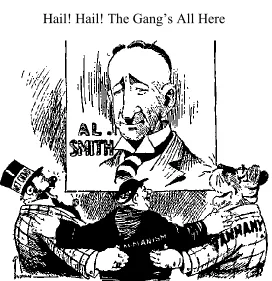
(116-117). Many of the political cartoons in 1928, such as Figure 1 and Figure 2 featured Smith with, among other things, the
Tammany tiger (this was the symbol of Tammany Hall). Not only was Tammany Hall opposed by Republicans, but it was also
opposed to by rural Americans who did not like the idea of an organization standing up for immigrants‘ rights. The corrupt
Tammany worked for the immigrants because it drew so much of its support from the immigrants living in New York City. And,
since Tammany was seen as such a pro-immigrant organization, the Tammany issue and criticisms that Smith faced can be, I
think, grouped into and associated with the native American verses foreign American debate.
Another issue which critics say was dominant in the 1928 presidential election was prohibition. Because it was,
unquestionably, a major political issue at the time, choosing to stand against it, as Smith did, was a bold platform. Hattery points
out, ―Smith was an outspoken wet, who did not agree with the principles of the Eighteenth Amendment and who stated on more
than one occasion that he would actively work to weaken or repeal that Amendment‖ (Hattery 44). Figure 3,I think, makes clear
that prohibition, especially, only drew more light on the fact that Smith was a Catholic. I would argue similarly to Edmund
Moore on this issue. ―There is convincing body of evidence that the very thought of the wet cause led by a New York Catholic
magnified Smith‘s religion‖ (Moore 40). This is because, ―Prohibition was in large measure the culmination of a moral and
religious crusade which was geared to a great commitment on the part of the majority of the evangelical Protestant churches‖
(39). From this perspective, it is arguable that Smith‘s religion and his stance on prohibition were grouped together and almost
indistinguishable. To those who argue that prohibition was the paramount issue in the election, I would suggest that, as the
KKK‘s cartoon in Figure 3 shows, Smith‘s Catholicism was as great, if not more so, of an influence in this election.
The final issue I want to discuss is that of the general prosperity which the country was enjoying at the time of this
election. If we revisit the Allan Lichtman quote in the introduction of this paper, the prosperity of the country becomes clear.
―No burning issues had to be resolved by the election; no national crisis preoccupied the American public‖ (Lichtman 5). Prior to
the 1928 election, two Republicans had served as president. Because of this, the Republican Party‘s candidate, Herbert Hoover,
was generally viewed as the deserving candidate in 1928. The claim that I am putting forth does concede that there were other
factors which worked against Smith in this campaign and election. However, none of these three issues provide substantial
evidence which would suggest that Smith‘s Catholicism did not significantly affect the ultimate outcome. If anything, his
‗association‘ with Tammany, his stance on prohibition, and the prosperity of the country only emphasized and gave people an
excuse to exploit his Roman Catholic faith in this election. When President Barack Obama became the first African American
president of this country, we were in the midst of two wars and an economic recession. There was not ‗general prosperity‘ in this
country which would allow the voting public to focus on such non-political issues as race. However, because America in 1928
Results
As demonstrated by the previously discussed ‗Marshall-Smith exchange‘, the popularity of the 1928 election among the
voting public was significant. Christopher Finan notes in his biography, ―[Smith] had lost by a landslide: Hoover polled a record
21 million votes, defeating him by more than six million; Hoover‘s margin was even larger in the electorate, 444 to 88…But
something new happened in 1928: the turnout had grown by 7.5 million, a 26 percent increase over 1924‖ (Finan 228-229). I
would argue that based on all of the propaganda and controversy that surfaced because of the Catholic issue, Smith‘s Catholicism
was not only the reason why so many citizens turned up to vote, but also the reason why Smith lost by such a significant margin.
Allan Lichtman‘s Prejudice and the Old Politics: the Presidential Election of 1928 is a quantitative study of the voting behaviors
and voting results of the 1928 presidential election. He looks at and compares the voting behaviors of: Catholics versus
Protestants, Wets versus Drys, Immigrants versus Natives, City versus Country, Blacks versus Whites, and Men versus Women.
Of the data that he researched and uncovered, he concludes:
Of all possible explanations for the distinctive political alignments of 1928, religion is the best. A bitter conflict between Catholics and Protestants emerged in the presidential election of 1928; religious considerations preoccupied the public, commanded the attention of political leaders, and sharply skewed the behavior of voters. Regardless of their ethnic background, their stand on prohibition, their economic status…Catholics and Protestants split far more decisively in 1928 than in either previous or subsequent years. (Lichtman 231)
Though Lichtman made this argument in 1979 with statistical data, some people knew it was the case even soon after
the election. Finan points out that George W. Norris, a Senator from Nebraska, said following the election, ―The greatest element
involved in the landslide was religion…The religious issue has done damage‖ (Finan 230). And while Finan also writes that in
public, Al Smith would say that the reasons he lost the election in 1928 were ―first to prosperity, second to prohibition, and only
third to bigotry…in private, Smith reversed the order‖ (230). Smith told an advisor, ―To tell you the truth, the time hasn‘t come
when a man can say his beads in the White House‖ (230). This last quote from Smith is in reference to his personal belief that
his Catholicism was the paramount issue in the campaign and election, and that the country was not ready for a Catholic to be
president of the United States in 1928.
Conclusion
Michael Williams includes a picture of a pamphlet in the conclusion of his book that reads, ―For Hoover and America,
or For Smith and Rome. Which? Think it over Americans‖ (Williams 297). This question further illustrates the religious
question and issue of dual allegiance that was brought about because of Al Smith running for president. Allan Lichtman writes,
―Nationally and regionally, the division between Catholics and Protestants dominates a statistical description of voter decisions;
even Protestants without formal church affiliation and those from traditionally tolerant denominations resisted voting for a
Catholic presidential contender‖ (Lichtman 76). Finally, in the November 24th
, 1928 issue of America (a Catholic magazine)
you in your recent campaign. Politically, it hurt you to be one of us. It ruined you…We didn‘t stand by you in the campaign.
There wasn‘t a word in your favor uttered in our pulpits. You stood by us…‖ (Hattery 43).
Throughout this paper, I have attempted to illustrate the origins, the influence, and the extent to which anti-Catholic
sentiment played a role in the outcome of the 1928 presidential election. And, though there were, most certainly, other factors
which came into the political discussion of the two candidates, I have argued that no other issue was as prominent and influential
as Al Smith‘s Roman Catholic faith. This is because Smith‘s Catholicism, and the stereotypes which accompany such a religion,
affected the perception of what the voting public thought Smith was capable of achieving as president of the United States. This
was based on the reasoning that, despite Smith‘s best efforts in the ‗Marshall-Smith exchange‘ and the Oklahoma City speech,
the question of dual allegiance was incompatible and irreconcilable. The anti-Catholic campaign against the Catholic Democrat
was truly significant, widespread, and ultimately hurt his chances of winning in 1928. As Al Smith submitted to the audience in
Oklahoma City, ―In a presidential campaign there should be but two considerations before the electorate: the platform of the
party, and the ability of the candidate to make it effective‖ (Smith 43). Though Smith had proven as Governor of New York that
he was politically capable of being president, anti-Catholic stereotypes and propaganda convinced the public otherwise.
Why is the presidential election of 1928 deserving of our study? As I suggested in the introduction of this paper, the
issue of faith influencing political discussions and affecting the public‘s perception of a candidate‘s ability to perform a role, is
not something that ended with Smith‘s failed attempt for the presidency. Subjects such as faith and race are reoccurring topics in
our political world. Though John F. Kennedy settled the Catholic issue and President Obama settled the race issue, America has
yet to elect a candidate of Jewish faith, of Muslim faith, and of Mormon faith. As Republican Mitt Romney (Mormon) runs for
president in 2012, it will be interesting to see what types of political cartoons and discussions will arise in reference to his
religion if he receives his party‘s nomination. And, while clear progress has been made in our acceptance of difference, America
has a long way to go before overcoming the stereotype that our president must be white, male, and Protestant. What happened to
Al Smith in 1928 is an example of the impact that discriminatory propaganda and public sentiment can have on a candidate when
controversial issues are escalated to a national level.
Political Cartoons
Figure 1
A Heavy Load for Al
This much-used cartoon piles up many objections to Smith's candidacy, among which the symbol of his religion is the only one left unlabeled. (New York State Library, Albany)
Figure 2
Hail! Hail! The Gang‘s All Here
One of the Klan cartoons of 1928
It reads: Wet Crowd, Romanism, Tammany
Figure 3
Cabinet Meeting—If Al Were President
This representation of Smith as the servant of the Catholic hierarchy appeared in The Fellowship Forum, November 3, 1928. It is typical of the extreme anti-Catholic KKK propaganda. (New York State Library, Albany)
(Retrieved from, Moore 109)
Works Cited
Primary Sources
Marshall, Charles C. "The Atlantic | April 1927 | An Open Letter to Alfred E. Smith | Marshall." TheAtlantic.com. Web. 03 Mar. 2011. Smith, Alfred E. "Address at Oklahoma City." Campaign Addresses. Albany: J.B. Lyon, 1928. 43-59. Print.
Smith, Alfred E. "The Atlantic | May 1927 | Catholic and Patriot | Smith." TheAtlantic.com. Web. 03 Mar. 2011.
Secondary Sources
Dolan, Jay P. In Search of an American Catholicism: a History of Religion and Culture in Tension. Oxford: Oxford UP, 2002. Print.
Finan, Christopher M. Alfred E. Smith: The Happy Warrior. New York: Hill and Wang, 2002. Print.
Hattery, John W. "The Presidential Election Campaigns of 1928 and 1960: a Comparison of the Christian Century and America." A Journal of Church and State IX.1 (Winter 1967): 36-50. Print.
Hostetler, Michael J. "Gov. Al Smith Confronts the Catholic Question: The Rhetorical Legacy of the 1928 Campaign." Communication Quarterly
Vol. 46 (Winter 1998): 12-24. Web.
Lichtman, Allan J. Prejudice and the Old Politics: the Presidential Election of 1928. Chapel Hill: UNC Press, 1979. Print.
Lockwood, Robert P. Anti-Catholicism in American Culture. Huntington: Our Sunday Visitor, 2000. Print.
Massa, S.J., Mark S. Anti-Catholicism in America: the Last Acceptable Prejudice. New York: Crossroad Pub., 2005. Print.
Moore, Edmund A. A Catholic Runs for President: The Campaign of 1928. New York: Ronald, 1956. Print.
POETRY BEND
*** Prize provided by
Nine Eleven
You could see them through the smoke
Halos shining bright
Arms wide open, comforting
Making peace from fright
Up to Heaven with our brothers
Granting serenity
Leaving us to ponder our future
And our security
Tears and fire raining down
Fear and panic on the ground
The world it heard our nation‘s cries
The day that Angel‘s filled our skies
You could hear it throughout the day
The horn of Gabriel
Calling his forces to our land
To combat these acts of Hell
Heaven sent to ease our pain
A wake up to us all
In the name of God they struck
By his hand they‘ll fall
Tears and fire raining down
Fear and panic on the ground
The world it heard our nation‘s cries
The day that Angel‘s filled our skies
My Childhood Memories of Life in Palestine
Families pick olives from their trees as shepherds graze their sheep
We carry stones to build the family home
We sit on sheep skins placed on top of straw carpet all gathered around a kerosene heater.
Seated on small straw chairs we eat newly-pressed olive oil and Grandma’s just-baked bread.
I jump rope and play hopscotch with friends
and Bedouin children on the sandy hill.
I walk to school with my sister
We line up and say prayers before entering
Bismillāhir-ra
ḥ
mānir-raḥ
īm Alḥ
amdu lillāhi rabbi l-'ālamīnLearning to read and write Arabic letters and Arabic numbers we absorb science, religion, and manners
we sing Arabic children’s songs My uncle Mansoor the carpenter Our minds nourished we return to picking and eating wheat.
We visit Jerusalem The Dome of the Rock
a home where my father was born Walking through the marketplace
we eat cheese-filled, syrup-drenched kunafa. [1]
We stay with Grandma and Grandpa Grandma bathes us as she sings We peel garlic for molokhia [2]
Grandpa tells me the story of Little Red Riding Hood We visit Great-Grandmother in the evening
watch relatives pray
look and talk about the moon and stars with grandparents.
Faculty/Staff Flowers
Apples and Oranges
Waking to darkness and senseless cold makes us recoil on the edge of our beds until we make our leap to swipe the snooze button on the radio--
Dumbstruck, the numbers flip to 5:12 a.m. on the red dial, and we curse under our breath, the ungodly beauty of our creased faces, hair stuck flat to our heads...
Downstairs, under the kitchen light, we meet: My daughter,
head-bent, snatches a green apple and bites-- tartness puckers her lips; she chews thoughtfully her eyes open wide and wider-- watching
me watch toast-- the slice she‘ll filch off my plate and I‘ll be left with one, and a minute
to talk to her...
She disappears before light fills the sky; and I‘m in the doorway, moving backwards in her steps to stand again in the kitchen before the basket:
I pick the orange, and peel open its bumpy-side; let it blossom slowly.
M.J. Iuppa
On Love
The boy looked to his father
for an explanation of love
it is my son a candy store
each morsel for the tasting
some are to your liking, some not so
remember to give each due consideration
And always remember the dentist!
John E. Diehl
The World Seen Through the Lens of
Faith
*** Prize provided by
Steven K. Walker
***
Oh, How He Loves Us
―Go to Hell.‖ It's a quote we've all heard, whether it's been said to us or someone around us. I heard it the other day when it was said to someone wearing a ‗Rays‘ jersey by a Red Sox fan. The Rays fan responded with, ―I can't... God loves me.‖
That made me think. Why is there a perception that God only loves the ones who are ―saved‖ or that God can't possibly love anyone or else He wouldn't say we are sinners and send people to Hell? If God truly loved us and didn't think we were mistakes, then why is there even a need for Jesus? The first thing to remember is that we are not mistakes. Also, God sends us to Hell because He loves us. Hold up, that sounds drastic, did I really just say that? Yes, because it's true. You see God gave us choices. He gave us the choice to have love. If we're forced to love someone, how can we truly love? God understands this concept. That's why he gave us free will. He loves us so much that we can choose to walk with Him or walk a part from Him. You see God loves us so much that if we choose to walk with Him, He loves and respects us enough to let us walk with Him forever, into Heaven. If we choose to not walk with Him, He loves and respects us enough to let us walk without Him forever. This does not mean He will just let us go away from Him. God will give you signs of His love. It‘s up to us to make decisions. God loves us so much that He gave us Jesus so that we can be with Him.
said, ―I thank God for making me blind, because when I get to Heaven, Jesus will be the first thing I see.‖ She doesn't complain about not being able to see, she uses her blindness as a gift.
I worked at a summer camp for children with special needs. I had a camper who was confined to a wheelchair and was told he can never walk. He saw campers playing basketball or baseball and felt left out. He didn't complain though. I took him to the beach area and he said to me, ―God said to me that I can walk can you help me?‖ I was hesitant. I had fully read the bio and medical reports given to me. He said, ―Trust me.‖ I was still not fully comfortable with it, until he said the words, ―With God all things are possible. He loves me and you, he will not let anything bad happen.‖ I unstrapped him from his wheelchair. He put his feet on top of mine and wrapped his arms around me asking me to walk. I walked backwards so he could know the feeling of walking forward. After a few minutes, I put his feet down on the sand and held on to his hands. I knew that if something went wrong, there was a good probability that I could get fired, but I trusted my camper and God. He took five full steps before asking to go back into the wheelchair. I asked how he felt and if he was okay. I will never forget his response. He said, ―I couldn't walk, but God allowed it to happen. I may never be able to walk again, but I had asked God to allow me to walk just three steps. I didn't think He would answer, but I knew He loved me. I don't deserve His love, but He loved me enough to send an angel to allow me to walk.‖ I have not had contact with this camper since he left that summer, but it greatly changed my life. My supervisors were split on my decision to let him try to walk, but through this camper, God was showing me His love.
I hope through reading this, you are able to see that God makes things happen for a reason. He shows His love to everyone. If it was easy for us all the time, no one would ever love anyone.
St. John the Evangelist Roman Catholic Church – Center Moriches, NY
Amy Burgett
Reflections on Love
The feeling you have when you meet someone new is not love.
The butterflies in your stomach whenever you see a specific person is not love.
Kissing and hugging and touching is not love.
Sex is not love.
Love is when you go through hard times together and you still hang on.
Love is being patient and kind even when the other person is not.
Love is forgiving even when they don‘t deserve it.
Love is laying down your life for someone else.
You cannot find unconditional love in humans. We are very selfish beings.
Love is found in God.
Love is modeled by Christ.
If you want to truly be loved start with God.
Humans will just disappoint you. (After all, they‘re not perfect.)
St. John the Evangelist Roman Catholic Church – Center Moriches, NY
Heather Kime
2011-2012 REST Club Secretary
God is here
Mother Teresa once said, ―I know God will not give me anything I can't handle. I just wish He didn't trust me so much.‖ I often think of this quote when I am struggling with daily obstacles. When the day is over and I reflect on the obstacles God gave me I always realize that He gave them to me to make me a stronger person. God knows what I can handle and will only give me those obstacles that I can get through. There are obstacles that are tough but I always turn to Mother Teresa‘s quote and realize that God is with me and trusts me. I think that if people had more faith in God and realized God is with them in every challenge and in every good thing that happens to them, the world would be a better place.
The world I live in and the people around me do not seem to have all that much faith in God. Some people do, but when something bad happens to them they become mad at God and say things that they do not mean. It hurts me to see my friends act like this, but it is who they are; they just need to find God and understand that God is with them through everything that they do. It must also hurt God to see His people act as if He is out to get them. I do not believe that God is out to get people or cause harm. However, I think that God has control over the final goal of history. When bad things happen to people, God helps them to become stronger persons. Even when people around me seem not to notice this point, I see that when bad experiences happen to affect my friends, they over time become emotionally stronger.
The bad experiences I had while growing up, shaped me into who I am today and how I see the world. Mother Teresa also said about the people she met, ―Each one of them is Jesus in disguise.‖ Thinking about this quote by Mother Teresa also makes me remember that Jesus is with me through the good and the bad. I think that, if the world around me understood this quote and believed its truth, people would not be losing faith every day. Jesus is with us and Mother Teresa knew this. I wish that more people, especially the world that I live in, could
Alumni Corner
Nicole Hough Velazquez Class of 2010
How to Have 4 Kids in 8 Months: Big Boy Brendan + 3
Bringing a child into your life is one of the hardest things. Things change drastically, but
for the better. Your life revolves around the needs, wishes and ―wants‖ of a child. You give all
you can give to your child and all they give back to you is a messy house, whining and loads
dirty of laundry. Children also give something that you cannot touch, see, feel, hear or smell;
they give you their unconditional love.
Last time I wrote for the Verbum, I wrote about Baby Brendan. Baby Brendan is now
Big Boy Brendan and is a very rambunctious and happy 2-year old. Since then, I gave birth to a
healthy baby girl Anadelia in February. Life was difficult raising a newborn and still having to
care for a 16 month old. Not too long after Anadelia was born, Brendan went home. It was a
very hard adjustment even though life was easier with one child. While I still had Anadelia, I
lost Brendan. People were constantly telling me that it would be okay because ―I have my own
kid now‖. It doesn‘t matter if he was my biological son or foster son; I had lost a very important
person in my life. I had to grieve his absence while still being there for my daughter. There is
no difference in how much I love my daughter and how much I love Brendan. Love doesn‘t
In the past month, I became a mother again. I know what you are thinking, ―Didn‘t you
just have a baby in February?‖ and the answer is yes. I have 4 children now. Three of them are
not my biological children. I have Big Boy Brendan and his siblings. Love is endless so there is
always love to give. I treat Anadelia and her new siblings each the same. She loves interacting
with the kids and watching them play.
It is a difficult transition from the life we used to lead and the life we now lead. It has
taken its toll on everyone mentally, emotionally and physically, but that‘s what parenthood does
Brief Essay
*** Prize provided by
Dr. Rev. Michael Costanzo
Emily Barbero
*** Amaryllis –
amaryllis
Fair Amaryllis sat on a mountainside When she fell in love with Alteo in a blink of an eye,
To win his love she needed advice So with a wound she gave a sacrifice To declare her love, a flow of red fell to the ground And with her blood the larks of love made a sound.
-Emily Barbero
There was a very beautiful girl Who saw a man that made her want to twirl
She has to win him over
Needed to find a flower better than just a plain old clover With some advice and sacrifice she found the best one
And now she impressed the man she loves a ton -Katie Burgstrom
Amaryllis fell in love at the very first sight But he, Alteo, did not feel right.
A new flower need be Which the oracle did foresee.
An arrow to the heart Will bleed twice a work of art.
-Gabby Dattellas
Her beauty is dark and lovely She wears her colors compassionately
She does not like the sold And she is often told To wait until August To show her true thrust
-Caity Droste
The Amaryllis flower can be found all over the world. According to myth it was named after a girl. This is why its nickname is the ―naked lady‖ I suppose, It also grows in all colors but especially red, pink, and rose.
The girl used the flower to win the heart of the Sheppard, But if you ask me this story sounds rather absurd.
-Peter Gigliotti
A striking crimson flower bled from the heart Determined to gain Alteo‘s affection from the start Amaryllis committed herself, presented in maidens white
Appeared at his door, doing the same for thirty nights Piercing her heart with a golden arrow for hers truly Produced the Amaryllis full of love and radiant beauty
Sometimes beauty starts form the beginning, The love between these two was not a fling.
Amaryllis had so much glory, That she always told a story. This stunning flower had too much pride,
The Alteo asked her to be his bride. -Christina LiPani
With petals so colorful, with a stem so green, The most unique flower that I have ever seen.
The story so tragic, the death of a lover. The emotions that the flower seems to uncover.
So red was the flower, even from the start. The Amaryllis so striking, right from the heart.
-Kevin Lute
The Amaryllis flower is elegant without doubt; It is always a sight to see when it finally sprouts. The redness of the flower is never a sign to start, But it can always be seen as a symbol to the heart.
It will calm even the most irritable wife; Knowledge of it will allow you to embrace life.
-Tim McMaster
A handsome young Sheppard looking for love, Attracted many young beautiful maidens.
Sadly for them he shared his love with flowers and nature instead. While other maidens gave up, Amaryllis stayed true, for true love overtook her. She decided to do whatever she could, by piercing her heart for twenty-nine days. Day thirty the blood turned to flowers, and the Sheppard found love and healed her heart.
-Chelsea Neaverth
If you‘re looking for a date Or finding your soul mate
This beautiful flower Will give you the power
The get the girl So give it a whirl
-Peter Valade