
Volume 6
Issue 2 Spring 2018 Article 14
April 2018
Occupational Therapy Adjunct Faculty Self-Perceptions of
Occupational Therapy Adjunct Faculty Self-Perceptions of
Readiness to Teach
Readiness to Teach
LaRonda Lockhart-Keene
Thomas Jefferson University - USA, [email protected]
Marie-Christine Potvin
Thomas Jefferson University - USA, [email protected]
Follow this and additional works at: https://scholarworks.wmich.edu/ojot
Part of the Occupational Therapy Commons
Recommended Citation Recommended Citation
Lockhart-Keene, L., & Potvin, M. (2018). Occupational Therapy Adjunct Faculty Self-Perceptions of Readiness to Teach. The Open Journal of Occupational Therapy, 6(2). https://doi.org/10.15453/ 2168-6408.1415
This document has been accepted for inclusion in The Open Journal of Occupational Therapy by the editors. Free, open access is provided by ScholarWorks at WMU. For more information, please contact
Abstract Abstract
To meet the demands of a growing profession, occupational therapy (OT) education programs rely on adjunct faculty to augment their faculty pool. Clinicians transitioning into faculty roles frequently do not have formal training in teaching and learning practices. This problem is compounded with adjunct faculty, as they are not using best teaching practices in OT education programs and do not have easy access to university resources. A qualitative study was conducted to describe the perceptions of new OT adjunct faculty on their degree of preparedness to teach, the supports needed to be successful in transitioning from clinician to academician, and their familiarity with and use of evidence-based teaching strategies. New OT adjunct faculty perceived they were prepared to teach, provided they have supports in place and command of the subject. New OT adjunct faculty make limited use of EBTP and use occupational therapy skills to aid in classroom teaching. New OT adjunct faculty feel ready to teach in terms of content
knowledge but not in terms of pedagogical knowledge. They do not fully understand their academic role and have limited access to pedagogical content provided by their academic institutions.
Comments
The authors have no conflicts of interest to disclose.
Keywords Keywords
adjunct faculty, evidence-based teaching practices, mentoring, orientation, teaching readiness
Cover Page Footnote Cover Page Footnote
The authors would like to acknowledge the research participants; Lyn Carvel, OTD, MS, OTR/L; and Nicole Lester, COTA/L, for their contributions to this research study.
Credentials Display
LaRonda Lockhart-Keene, OTD, OTR/L Marie-Christine Potvin, PhD, OTR/L
Copyright transfer agreements are not obtained by The Open Journal of Occupational Therapy (OJOT). Reprint permission for this Topics in Education should be obtained from the
corresponding author(s). Click here to view our open access statement regarding user rights and distribution of this Topics in Education.
DOI: 10.15453/2168-6408.1415
As a profession, occupational therapy (OT) has a strong career outlook. Employment of
occupational therapists is projected to grow 24% from 2016 to 2026 (Bureau of Labor Statistics, 2018). To meet the demand for new occupational therapists, the number of educational programs has had to grow. In fact, since 2007 there has been an 88% growth rate in the number of OT educational programs in the United States and a 36% faculty vacancy rate (American Occupational Therapy Association [AOTA], 2016; Harvison, 2015). This shortage of faculty is compounded with the reported 35% of OT faculty expecting to retire by 2024 (Falzarano & Zipp, 2012). Because of the shortage of OT faculty, educational programs are hiring more adjunct faculty, many of whom are new to academia (Fagan-Wilen, Springer, Ambrosino, &White, 2006).
OT adjunct faculty are generally clinicians with a specific area of expertise who are hired on a course-by-course basis as a teaching assistant or as an instructor. Clinicians who move into faculty roles traditionally do not have formal training in adult teaching and learning practices since their own
educational background generally does not include training in effective teaching-learning approaches (Frantz & Smith, 2013). For example, OT students do not receive formal education about faculty roles or adult learning-teaching theory as part of their curriculum (Crist, 1999). Thus, OT clinicians who become adjunct faculty are unlikely to have received any formal education in effective teaching-learning strategies or evidence-based teaching practices. OT education includes a focus on the use of research in clinical practice, which gives occupational therapists a transferable foundation to understand and
interpret research. However, adult learning-specific content is not included. New OT Adjunct Faculty Support
Clinicians who make the transition to academia can experience a time of stress, as they must learn new roles, processes, and procedures (Frantz & Smith, 2013). These clinicians also must learn a new skill set to be effective evidence-based educators. Universities and colleges, acknowledging this need, provide faculty access to teaching and learning resource centers. However, adjunct faculty who are part-time employees frequently cannot readily make use of these resources, and they do not have as much time to adjust to the demands of their roles as do new full-time faculty (Copolillo, Peterson, & Helfrich, 2002). With the influx of new adjunct faculty and the demands of the transition from the role of clinician to academic, it would appear that universities and OT programs should strategize options for addressing the needs of new OT adjunct faculty to develop their skills as evidence-based educators.
The experience and needs of allied health professionals who transition to faculty roles, such as occupational therapists, is described in the literature. Researchers have found intrinsic and extrinsic factors that may facilitate or hinder the transition process from clinician to academician, including a person’s confidence, competence, and personality (Frantz & Smith, 2013). Australian occupational therapists describe the transition from clinician to full-time academician as stressful because of the expectation to learn multiple aspects of a new role, the different values and beliefs of academic environments, and the amount of time it takes to achieve success (Murray, Stanley, & Wright, 2014). Another study investigating faculty’s perceptions of their experiences with support and work-life
balance found that faculty mentoring was an important predictor for success (Eaton, Osgood, Cigrand, & Dunbar, 2015). While these studies focused on full-time faculty, many occupational therapists begin their transition to academia as adjunct faculty. There is an absence of published studies regarding transition to adjunct faculty roles in the OT literature.
Svoboda, Ryan, & Fitzgerald, 2016; Rice, 2016; Santisteban & Egues, 2014; Schaar, Titzer, &
Beckham, 2015). It was found that new nursing adjunct faculty benefitted from intentional support from a mentor, specifically around acquisition of teaching-learning skills (Suplee, Gardner, & D’Emelia, 2014). Nursing academic leaders have an opportunity and responsibility to create adjunct faculty support programs that recognize, develop, nurture, and retain adjunct faculty who are invested in the institution and are committed to providing a quality education (Elder et al., 2016). Similar studies have yet to be conducted with OT adjunct faculty.
Evidence-Based Teaching Practices in Allied Health Programs
Evidence-based teaching practices (EBTP) are defined as the conscientious, explicit, and judicious integration of best available research evidence on teaching-learning techniques and expertise in the context of student, teacher, department, college, university, and community characteristics (Groccia & Buskist, 2011). Colleges and universities, like health care organizations, have transitioned to evidence-based practice (Schaber, 2014). As a result, faculty, including adjunct faculty, are being called on to be accountable to maximize the educational outcomes of students just as clinicians are asked to be accountable for clinical outcomes (Schaber, 2014). Thus, effective student learning depends on the faculty’s ability to appropriately design evidence-based learning experiences (Eslaminejad, Masood, & Ngah, 2010). To foster student learning, faculty must implement teaching pedagogy and strategies and be cognizant of adult learning processes (Eslaminejad et al., 2010). Unfortunately, allied health
profession’s faculty may be deficient in their knowledge and use of EBTP as illustrated in a study that found that nursing faculty could identify clinical evidence-based practice but were unaware of EBTP (Kalb, O’Conner-Von, Brockway, Rierson, & Sendelbach, 2015). There is an absence of published literature in the field of OT education broadly, and specifically for adjunct OT faculty, about their knowledge and use of EBTP.
Rationale and Study Objectives
There is a lack of OT literature regarding the transition of clinicians to the adjunct faculty role and their use of EBTP. An exploratory study was conducted to inform the profession, OT educational programs, colleges, and universities regarding the needs of new OT adjunct faculty to ease their transition to academic roles and promote their use of EBTP strategies. The study aimed to:
1. Describe new OT adjunct faculty perceptions on their degree of preparedness to teach in person, online, and/or hybrid formats.
2. Describe new OT adjunct faculty perceptions of support needed to be successful in their transition from clinician to academician.
3. Describe new OT adjunct faculty perceptions of their own knowledge and use of evidence-based teaching strategies.
Method Research Design
An ethnographic study was conducted to uncover the perception of new OT adjunct faculty related to the support provided and their own preparedness to transition to academia.
Recruitment
Participants for this study included OT adjunct faculty with up to 3 years of experience as the lead instructor in an educational program course. To be included in the study, the occupational therapists had to have been responsible for teaching, designing learning activities, and assessing
study as they generally have more time to use university resources to improve their teaching and participate in a thorough orientation process (J. Ashley, personal communication, June 27, 2016). A sample size of 30 to 50 participants was believed to be required to reach a point of saturation (Mason, 2010).
The participants in this study were recruited through purposive sampling. An email was sent to program directors of local OT academic programs requesting that they share a flyer with their pool of adjunct faculty. In addition, local OT academic program websites were searched for email addresses of faculty to whom the recruitment flyer was sent. Finally, the recruitment flyer was posted on the
Philadelphia Region Fieldwork Consortium website. Data Collection
The data for this qualitative study were collected primarily through audio-recorded, hour-long, one-on-one interviews conducted by the primary investigator using a responsive interviewing method. Interview questions are provided in Figure 1. As a secondary source of data, hand-written field notes were taken by the primary researcher during the interviews. The primary researcher typed the field notes and transcribed the audio recordings verbatim. A research assistant compared all of the interview audiotapes against the transcripts for accuracy. To increase the reliability of the data collection, member checking was performed with 50% of the participants who were asked to review the emergent codes and themes. Of these, less than half (17% of the participants) responded with suggestions. Finally, to minimize the impact of the researcher’s bias, the primary researcher maintained an audit trail detailing the procedure for analyzing the data and completed reflexivity journal entries to actively identify any personal, professional, or philosophical biases that may have affected data collection and analysis.
Describe new OT adjunct faculty perceptions on their degree of preparedness to teach in person, online, and hybrid formats.
1. Describe what your first adjunct teaching experience was like as a lead instructor.
2. Describe any steps or actions that you may have taken to prepare yourself to teach this course. 3. Describe how you felt about your preparedness to teach.
4. Describe how you prepared to properly or adequately grade assignments.
Describe new OT adjunct faculty perceptions of supports for successful transition from clinician to academician.
1. Describe orientation activities that might have occurred at the university and OT department. 2. Tell me about your experiences with the course management system(s).
3. Tell me about what would have been useful to you as you began to teach as a lead instructor/adjunct faculty.
Describe new OT adjunct faculty perceptions of their own familiarity, use, and knowledge of evidence-based teaching strategies.
1. Tell me about how you choose teaching strategies. 2. Tell me about the teaching strategies that you use.
3. Describe your familiarity with adult teaching and learning theory.
4. Describe your familiarity with evidence-based teaching practices (EBTP).
5. If you have used EBTP, which have you used and what was your experience with them?
Data Analysis
The formal data analysis and interpretation process followed the guidelines outlined by Leedy and Ormrod (2016). Transcripts were formatted and open coding was completed. Preliminary themes and categories were identified from field notes. Written sentences in the transcripts were divided into units that were individually coded. The list of codes was pilot tested by the primary researcher and revised as needed to determine if the codes accurately captured the meaning that the transcripts held. A final list of codes was created. This list of organized codes was used to perform the final coding of all the transcripts. The interpretation of the information shared by the participants continued with
identification of patterns and relationships among the codes. These patterns and relationships were used to answer the research objectives.
Triangulation
To triangulate the study and ensure reliability, credibility, and neutrality of the data a second researcher reviewed the pilot-tested list of codes and coded two transcripts. The results were compared to the primary researcher. The second researcher also analyzed the audit trail reviewing the primary researcher’s rationale for choosing the codes and themes.
Ethical Considerations
Philadelphia University’s Institutional Review Board approved the study and the participants provided informed written consent. To ensure anonymity of the participants, the transcripts were de-identified and pseudonyms were used both in the transcripts and this article.
Results
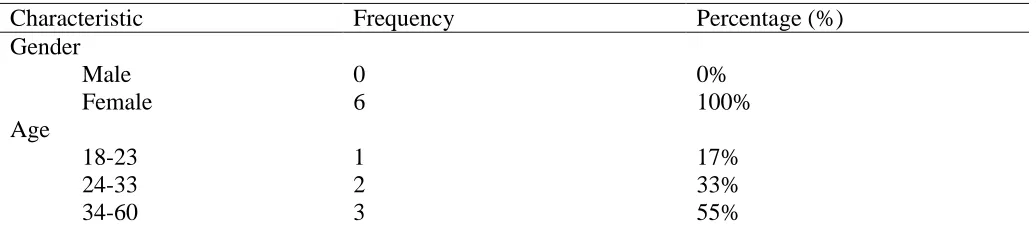
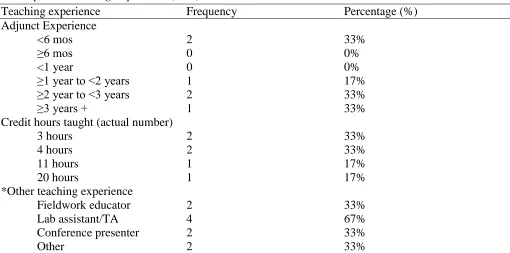
To obtain a description of the participant’s characteristics and adjunct teaching experience, a demographic questionnaire was completed by the participants immediately following each interview (see Tables 1 and 2). Interviews were conducted with six occupational therapists ranging in age from 23 to 60 years. Of these six participants, two were OT assistants and four were occupational therapists. Half of the participants (50%) had 20 years or more of clinical practice experience and had 2 to 3 years of adjunct teaching experience. Two of the participants taught graduate-level OT students while the remainder of the participants taught OT assistant students. All of the participants taught in person with an online component, such as discussion boards and online assignments. The insights gained from the participant interviews are presented in the following paragraphs organized by study objectives. Pseudonyms will be used throughout the results section to conceal identities and maintain the confidentiality of the data provided by the participants. Quotations from the written transcripts are identified by the pseudonym’s initial followed by the page number in parentheses (see Table 3).
Table 1
Participants’ Demographic and Professional Background Information (n = 6)
Characteristic Frequency Percentage (%)
Gender
Male 0 0%
Female 6 100%
Age
18-23 1 17%
24-33 2 33%
Ethnicity
White 5 83%
Hispanic or Latino 1 17%
Profession
OT 4 83%
OTA 2 33%
Years Clinical Exp.
0-5 years 2 33%
6-10 years 0 0%
11-15 years 1 17%
16-20 years 0 0%
20+ years 3 50%
Table 2
Participants’ Teaching Experience (n=6)
Teaching experience Frequency Percentage (%) Adjunct Experience
<6 mos 2 33%
≥6 mos 0 0%
<1 year 0 0%
≥1 year to <2 years 1 17%
≥2 year to <3 years 2 33%
≥3 years + 1 33%
Credit hours taught (actual number)
3 hours 2 33%
4 hours 2 33%
11 hours 1 17%
20 hours 1 17%
*Other teaching experience
Fieldwork educator 2 33%
Lab assistant/TA 4 67%
Conference presenter 2 33%
Other 2 33%
Note. *Will not add to 100% as participants could choose more than one option.
Table 3
Participants’ Pseudonyms
Participant Pseudonym
Participant #1 Betty (B)
Participant #2 Ann (A)
Participant #3 Margaret (MA)
Participant #4 Mary (M)
Participant #5 Sara (S)
Participant #6 Rose (R)
Objective 1: Perception of Preparedness to Teach
The participants who participated in the study identified key factors that facilitated their
transition to teaching from clinical practice. They mentioned the benefit of having prior experience as a teaching or lab assistant, fieldwork educator, a relationship with the college or university prior to
teaching, strong knowledge of the course subject matter, and access to pre-made course material (e.g., syllabus, exam questions, and learning activities).
Prior teaching experience. Theparticipants alluded to the fact that having prior teaching experience helped with their transition from clinician to adjunct faculty. Rose stated, “As a [teaching assistant], I focused on honing my skills at handling many differences of opinions in the classroom. [Also], making sure [that] I was very comprehensive so there would be no question about my grading” (R 26-28). Margaret mentioned that “prior to becoming an OT, I was a special education teacher for 18 years” (MA 40-41). “I was trained as a teacher so I was familiar with teaching strategies” (MA 90-91). Most of the participants discussed requesting to be teaching assistants to “get their feet wet” (R 6; M 9; B 35-36; S 30-31) before becoming an adjunct faculty member.
Experience as a fieldwork (clinical) educator. Another participant explained the benefit of having been a fieldwork clinical educator before becoming an adjunct faculty member. She explained, “I know what is important for students to understand when they get to fieldwork; I know what they need to have in their toolbox. If they do not have the tools, then [the fieldwork placement is] not going to go very well” (S 69-72). She believes that it helped her know what the students needed to learn in the classroom to be successful in the clinic.
Prior relationship with the college or university. Two of the participants revealed that being familiar with the academic institution made the transition to academia easier. Ann stated, “I’m familiar with a lot of the staff . . . which made it . . . a much easier transition . . . than if I had gone to another school or university [where] I didn’t know the faculty members” (A 2-4). Similarly, Betty stated “I think [it was] easier for me than others because I am familiar with the faculty [since I went] . . . through OT school [there]” (B 74-75).
Knowing subject matter well. Some of the adjunct faculty spoke of their knowledge of the course subject as contributing to their feeling of preparedness to transition from the clinic to the classroom. They also spoke of preparing, to ensure they had command of the subject matter. Mary stated, “Luckily the material is like the back of my hand so that wasn’t an issue” (M 13-14). When speaking of her first teaching experience, Rose said, “the first time I walked into the class [as a lead instructor], I was extremely prepared to teach the material . . . it was my first time and I had made a point to get all the material that I needed so that I would be very knowledgeable” (R 40-42).
Access to previously developed course material. All of the participants mentioned that they had access to previously prepared course content, including syllabi, test question banks, and online course content. Many of the participants spoke of their apprehension to deviate at first from the inherited syllabi and materials. “I was given a syllabus and was told that I could develop it however I wanted, [however,] I took the framework of the syllabus [and made] minor changes (R-57-59). I didn’t want to step too far out of it because I had not done this before” (R 61-62). Another participant
Objective 2: OT Adjunct Faculty Perceptions of Needed Supports
The adjunct faculty who participated in the study explained that they needed supports for the transition into academic life that included knowing the roles, responsibilities, and expectations of both educators and students. They also noted the importance of mentoring and proper orientation.
Knowing roles and responsibilities. A few of the participants discussed the need to be given more information to have a clearer understanding of the roles and responsibilities of adjunct faculty and of their students. Ann said, “I feel like an orientation should go over some procedural things, for example the expectation that the university has even though I read it in the policies and procedures” (A 137-138). Betty stated, “You don’t need to have a teaching degree to teach in this sort of program, but information on teaching styles, student outcomes, roles and responsibilities, could have been helpful” (B 85-88).
Mentoring. Half of the participants mentioned mentoring as a key factor needed for a successful transition from clinic to classroom. The participants alluded to having as their mentor the program chair, a faculty member, or an outside mentor:
I think that [the] first semester, I might have stayed late with [the program director] after every class to process what happened. When I was writing test questions, she would go over the questions with me and ask, what are [you] trying to get at with this question? She was super helpful. (M 224-226)
Mary spoke of how a classroom observation was helpful. “She came to class to do an observation the first year and gave me really awesome and constructive feedback” (M 233-234). Betty mentioned reaching out to a mentor outside of the university. “I had a client who was a professor. I talked to her about my first year, about my own challenges. I got a lot of information from her experience” (B 78-79). Rose compared the experience of becoming a new adjunct to that of a new clinician. “When you teach, you don’t really get to see anybody else teaching. When you were a new clinician, there were therapists all over. I could watch, I could learn from [them]. That is why I asked to be a teaching assistant first” (R 11-14). Although not everyone had a mentor, as one participant stated, “It would be helpful to have a person, a faculty person to use as a resource” (S 126-127).
Orientation. All of the participants stated that they experienced only an informal departmental orientation and no formal university orientation:
There wasn’t really a transition. There was email correspondence over the few months but [no formal orientation] just kind of a sit down prior to classes, what to
expect, this is what we have been teaching, this is what we do here. It was kind of like show up, follow suit, and you’ll get it. (A 188-190)
The participants clearly expressed a need for both a formal departmental orientation and a university orientation, including information about EBTP. “I think that it [orientation] would be really helpful, especially for the new timers who come to a very large university and to teach a very big OT class” (S 185-187). Margaret said, “I think an orientation to the department would really be beneficial. I would have liked to have something like a formal orientation to some of the new approaches and some of the outlook now on evidence-based teaching strategies” (MA 85-87). A few adjunct faculty interviewed specifically stated there was minimal orientation to course management systems, teaching tips, and managing teaching/lab assistants, all of which would have been useful to them. Ann spoke of her
by trial and error [for example] setting up online quizzes and setting up the structure for grading” (A 140-141).
Objective 3: OT Adjunct Faculty Perceptions of Their Use and Knowledge of EBTP. During the interviews, a few themes emerged related to the adjunct faculty’s perceptions, knowledge, and use of EBTP as well as their own teaching styles and strategies.
Perceptions of knowledge of EBTP. One participant, when asked about her familiarity with EBTP, stated, “I am not, that’s a little embarrassing to say. I wasn’t taught anything off the bat. I chose to know more because I don’t have that background” (B 189-192). Ann spoke of being unfamiliar with EBTP stating, “I haven’t been exposed to it nor have I dived into learning more about learning to teach someone or a class of students” (A 101). Margaret felt that she had some concepts of EBTP declaring, “I’m familiar with the fact that you need to have goals for each class as well as the total course. You need to make sure throughout your lessons and after the lessons that the students are achieving what your goals are” (MA 90-93). Sara said, “I just kind of went head first, I drew on my own experience [as a student] to how I teach. I never really looked up an article on best ways to teach a class” (S 103-104). Margaret referred to wanting to learn more about EBTP but had issues with attending university
offerings:
I have not been able to take advantage of what the university does because I live far away; I work and have a family. Maybe if they made them more available to
adjuncts who are there on different schedules that would be great because they do look interesting. (M 259-261)
Adjunct teaching styles and strategies. All of the adjunct faculty interviewed shared their individual teaching styles and strategies. They mentioned trying and altering learning activities based on their perception of whether they thought it worked or not. “It [lab activity] was a complete failure and I’m sure it’s partly my design of it. The teaching assistant and I talked about it afterward and we came up with new design [that] we’ll try next time” (MA 198-199). Rose also spoke of trial and error teaching, stating, “So the next time I taught the same course, I didn’t change everything but I changed the things I didn’t like or that didn’t work out” (R 67-69).
Many adjuncts used active learning, an EBTP, but did not name the strategy directly. Instead, they used terms such as hands-on, visual learning, and interactive learning. One participant described her style as, “I would say hands-on, interactive and with visual feedback making sure to have an interactive exchange between the students and myself” (S 79-80). Another participant stated, “I also integrate some small group work. They’re not my favorite to be honest but I try to integrate them” (MA 182-183).
Some adjunct faculty spoke of using their OT skills in the classroom. “I think a teacher and an OT need to really be able to identify through body language and through skilled observation of people, what they’re doing, how they’re doing, and if [the students] understand what you’re saying” (MA 121-123). Sara stated, “You have to use therapeutic use of self, clinical reasoning and skilled observation to determine what kind of student they are” (S 167-169). A participant felt that teaching is innate to occupational therpists who transition to academic roles since “a lot of the OT practice is teaching people” (M 185-186).
Discussion
that new adjunct faculty perceived that they were prepared to teach if they had supports in place. These supports include access to prior course content, mentoring from experienced faculty, prior teaching experience, and orientation, especially to technology and course management systems. Adjunct faculty also reported feeling ready to teach when they had command of the subject matter to be taught.
These results seem to support the notion that many factors contribute to adjunct faculty readiness to teach and are in line with other studies conducted to date. In a study on how mentors judge readiness to teach, Haigh, Ell, and Mackisack (2013) found that prior experiences, mentorship, and an
individualized orientation to teaching were indicators of readiness to teach.
Having a mentor in place was not only perceived as an indicator of readiness to teach but also as a needed support to transition successfully to academia from clinical practice. The need for mentoring described by the OT participants is consistent with the findings of previous allied health profession studies (Eaton et al., 2015; Falzarano & Zipp, 2012; Franz & Smith, 2013; Schoening, 2013). In fact, one of the participants in this study echoed one of Franz and Smith’s (2013) participants when speaking of mentoring and having someone available to act as a guide and answer questions.
Frantz and Smith (2013) explored the subjective experiences of allied health professionals in their transition from clinical educators to academician and spoke of supportive environments, including knowledge of departmental culture being an extrinsic factor aiding in the transition from clinician to academic. They defined departmental culture as organizational thinking, infrastructure, and institutional rules. Murray, Stanley, and Wright (2014), in their study of transitioning from clinicians to academics, stated that participants struggled to understand the nature of the academic culture. This is in line with this study, which revealed the need for new adjuncts to have a deeper understanding of the OT programs and universities in which they teach. The participants in the current study expressed wanting to be given more information about their roles and responsibilities as instructors, as well as the roles and
responsibilities of students through an orientation. Considering that all of the participants reported that they received no formal orientation, there seemed to be a gap in the adjunct faculty knowledge related to the objectives, goals, and missions of the programs and institutions where they taught. This supports the findings by Elder, Svoboda, Ryan, and Fitzgerald (2016), who reported that 75.7% of their nursing faculty respondents had never held a full-time contracted faculty role before becoming an adjunct faculty member. Therefore, typical institutional policies, schedules, and teaching responsibilities may not be fully understood.
The study results suggest that new adjunct faculty make limited use of EBTP. New adjunct faculty who want to improve their knowledge may have poor access to university resources, as these opportunities often are offered when the adjunct faculty are not available. This supports previous findings that nursing adjunct faculty often have full-time jobs and do not have the time or inclination to devote to teaching issues (Elder et al., 2016). Similar to the present study, Elder et al. (2016) also found that adjunct faculty are not being oriented, evaluated, and given the resources that regular faculty
receive.
reasoning, and therapeutic use of self, is used to aid the adjunct faculty participants with classroom teaching.
To aid new OTP adjunct faculty in their transition to academia, this study suggests that OTP programs should offer a formalized orientation that includes an overview of roles and responsibilities of the faculty and students as well as the program and university’s mission. This orientation should also include training in course management systems (technology), general policies and procedures, and information on EBTP used in the program. Also important is identifying mentors for new adjunct faculty to aid them with problem solving, reasoning, and fostering a connection to the institution. Universities should consider which actions are needed to ensure that adjunct faculty members can readily access pedagogical content that is disseminated to full-time faculty.
Limitations
The primary limitation of this study is the lack of generalizability without additional
confirmation of a larger study. The participants were taken from a limited geographical area. Of the six OTP programs represented, one university was represented by 50% of the participants. A point of saturation was not reached as ethnographic studies require at least 30 to 50 interviews to reach saturation (Mason, 2010).
Conclusion
New OTP adjunct faculty often purposefully choose to be a teaching assistant or take on other roles first that will ease the transition from clinician to academia. They perceived that they were ready to teach in terms of content knowledge but not pedagogical knowledge. The OTP adjunct faculty identified mentoring and orientation as key factors for facilitating a successful transition from clinician to academia. Mentoring, formalized orientation, and access to university teaching resources may aid new OTP adjunct faculty in meeting the missions and aims of the department and university where they teach. New OTP adjuncts attempt to incorporate EBTP; however, it is on a very limited scale and without formal knowledge.
References
American Occupational Therapy Association. (2016).
Report of the executive director. Retrieved from
https://www.aota.org/AboutAOTA/Get-Involved/BOD/management-reports.aspx Brannagan, K. B., & Oriol, M. (2014). A model for orientation and mentoring of online adjunct faculty in nursing. Nursing Education Perspectives, 35(2), 128-130.
http://dx.doi.org/10.5480/1536-5026-35.2.128
Bureau of Labor Statistics. (2018). Occupational outlook handbook. Retrieved from
http://www.bls.gov/ooh/healthcare/occupational-therapists.htm
Copolillo, A. E., Peterson, E. W., & Helfrich, C. A. (2002). Combining roles as an academic instructor and a clinical practitioner in
occupational therapy: Benefits, challenges, and strategies for success. Occupational Therapy in Health Care, 15(1-2), 127-143.
http://dx.doi.org/10.1080/j003v15n01_13
Crist, P. (1999). Career transition from clinician to academician: Responsibilities and reflections.
American Journal of Occupational Therapy,
53(1), 14-19.
http://dx.doi.org/10.5014/ajot.53.1.14
Eaton, C. K., Osgood, A. K., Cigrand, D. L., & Dunbar, A. L. (2015). Faculty perception of support to do their job well. InSight: A Journal of Scholarly Teaching, 10, 35-42. Retrieved from
http://insightjournal.net/
Elder, S. J., Svoboda, G., Ryan, L. A., & Fitzgerald, K. (2016). Work factors of importance to adjunct nursing faculty. The Journal of Nursing Education, 55(5), 245-251.
http://dx.doi.org/10.3928/01484834-20160414-02
Eslaminejad, T., Masood, M., & Ngah, N. A. (2010). Assessment of instructors’ readiness for implementing e-learning in continuing medical education in Iran. Medical Teacher, 32(10), e407-e412.
Fagan‐Wilen, R., Springer, D. W., Ambrosino, B., & White, B. W. (2006). The support of adjunct faculty: An academic imperative. Social Work Education, 25(1), 39-51.
https://doi.org/10.1080/02615470500477870
Falzarano, M., & Zipp, G. P. (2012). Perceptions of mentoring of full-time occupational therapy faculty in the United States. Occupational Therapy International, 19(3), 117-126.
http://dx.doi.org/10.1002/oti.1326
Frantz, J. M., & Smith, M. (2013). Exploring the subjective experiences of allied health professionals in their transition from clinical educators to academia: Barriers and facilitators to successful transition. African Journal of Health Professions Education, 5(1), 37-41.
http://doi.org/10.7196/ajhpe.224
Groccia, J. E., & Buskist, W. (2011). Need for evidence‐ based teaching. New Directions for Teaching and Learning, 128, 5-11.
http://dx.doi.org/10.1002/tl.463
Haigh, M., Ell, F., & Mackisack, V. (2013). Judging teacher candidates’ readiness to teach. Teaching and Teacher Education, 34, 1-11.
https://doi.org/10.1016/j.tate.2013.03.002
Harvison, N. (2015). Academic programs annual data report. Retrieved from http://www.aota.org/-/media/corporate/files/educationcareers/educator s/2014-2015-annual-data-report.pdf
Kalb, K. A., O’Conner-Von, S. K., Brockway, C., Rierson, C. L., & Sendelbach, S. (2015). Evidence-based teaching practice in nursing education: Faculty perspectives and practices.
Nursing Education Perspectives, 36(4), 212-219.
http://dx.doi.org/10.5480/14-1472
Leedy, P. D., & Ormrod, J. E. (2016). Practical research planning and design (11th ed.). Boston: Pearson. Mason, M. (2010). Sample size and saturation in PhD
studies using qualitative interviews. Qualitative Social Research, 11(3), Article 8. Retrieved from
http://www.qualitative-research.net/index.php/fqs/index
Murray, C., Stanley, M., & Wright, S. (2014). Weighing up the commitment: A grounded theory of the transition from occupational therapy clinician to academic. Australian Occupational Therapy Journal, 61(6), 437-445.
http://dx.doi.org/10.1111/1440-1630.12146
Rice, G. (2016). An orientation program for clinical adjunct faculty. The ABNF Journal: Official Journal of the Association of Black Nursing Faculty in Higher Education, Inc., 27(1), 7- 10. Retrieved from
http://www.scimagojr.com/journalsearch.php?q= 26730&tip=sid
Santisteban, L., & Egues, A. L. (2014). Cultivating adjunct faculty: Strategies beyond orientation.
Nursing Forum, 49(3), 152-158.
http://dx.doi.org/10.1111/nuf.12106
Schaar, G. L., Titzer, J. L., & Beckham, R. (2015). Onboarding new adjunct clinical nursing faculty using a quality and safety education for nurses– based orientation model. Journal of Nursing Education, 54(2), 111-115.
http://dx.doi.org/10.3928/01484834-20150120-02
Schaber, P. (2014). Keynote address: Searching for and identifying signature pedagogies in occupational therapy education. The American Journal of Occupational Therapy, 68 (Suppl. 2), S40-S44.
http://dx.doi.org/10.5014/ajot.2014.685s08
Schoening, A. M. (2013). From bedside to classroom: The nurse educator transition model. Nursing
Education Perspectives, 34(3), 167-172.
https://doi.org/10.5480/1536-5026-34.3.167
![Investments. as % of stimulus package. In EUR (exchange rates of 22 May 2009) as % of 2008 GDP. [total stimulus package] In local currency](data:image/gif;base64,R0lGODlhAQABAIAAAP///wAAACH5BAEAAAAALAAAAAABAAEAAAICRAEAOw==)