A Comparative Study of Analytical Solutions to the
Coupled Van-der-Pol’s Non-linear Circuits Using the
He’s Method (HPEM) and (BPES)
Hüseyin Koçak
1, Ahmet Y
ı
ld
ı
r
ı
m
1, Dahong Zhang
2, Karem Boubaker
3, Syed Tauseef Mohyud-Din
4 1Department of Mathematics
,
Ege University
,
Bornova–
İ
zmir
,
Turkey
2
Department of Physics
,
South China University
,
Guangzhou
,
China
3
École Supérieure des Sciences et Techniques de Tunis
,
University of Tunis
,
Tunis
,
Tunisia
4Department of Basic Sciences
,
HITEC University
,
Taxila Cantt
,
Pakistan
:
[email protected]
,
[email protected]
,
Received
October
6, 2010;
revised May
13, 2011;
accepted May
20, 2011
Abstract
In this paper, the He’s parameter-expanding method (
HPEM
) and the 4q-Boubaker Polynomials Expansion
Scheme (
BPES
) are used in order to obtain analytical solutions to the non-linear modified Van der Pol’s
os-cillating circuit equation. The resolution protocols are applied to the ordinary Van der Pol equation, which
annexed to conjoint delayed feedback and delay-related damping terms. The results are plotted, and
com-pared with exact solutions proposed elsewhere, in order to evaluate accuracy.
Keywords:
Van-der-Pol’s Oscillating Circuit, Delayed Feedback, Damping, BPES, HPEM, Exact Solutions,
Electrical Triode-Valve Circuit
1. Introduction
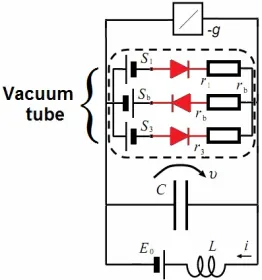
[image:1.595.320.532.530.677.2]Originally, the Van der Pol’s equation was associated, in
the 1920s, with an electrical triode-valve circuit (
Figure
1
). In the last decades’ literature, it was the subject of
several investigations due to the panoply of dynamical
oddness as relaxation oscillations, elementary
bifurca-tions, quasiperiodicity, and chaos. Its application has
already reached nerve pulse propagation and electric
potential evolution across neural membranes.
Figure 1. Van der Pol oscillator synoptic scheme.
The actual study tries to give a theoretical supply to
the recent attempts to yield analytical solutions to this
equation, like the studies of D. D. Ganji
et al.
[1,2] and A.
Rajabi
et al.
[3] in the heat transfer domain, the
investi-gations of L. Cveticanin [4] and J. H. He [5-7] on non-
linear mechanics, fluid dynamics and oscillating systems
modelling (
Figure 2
).
Figure 2. A prototype of Van der Pol oscillating systems modelling (The two integrators are Trapezoidal-type
[image:1.595.107.238.562.702.2]H. KOÇAK ET AL. 197
Among the different formulations, the well-known
standard boundary value-free Van der Pol oscillator
problem (BVFP) is given by F. M. Atay [8] by the
fol-lowing system (1):
2
,
,
,
,
1
x t
x t
f x t x t x t
f x t x t x t
x t
x t
k x t
(1)
where
is a positive parameter representing the delay,
> 0 and is the feedback gain.
k
A simpler formulation is that of W. Jiang
et al.
[9]:
2 1
x t y t
y t x t kf x t
x t y t
(2)
In this study, an attempt to give analytical solution to
the nonlinear second-order Van der Pol equation annexed
to conjoint delayed feedback and delay-related damping
terms as presented by A. Kimiaeifar
et al.
[10]:
2 0 0 1 0 0 0 0x t y t
y t x t x t y t k x t
x x H
x x
(3)
2. Analytical Solutions Derivation
2.1. The Enhanced He’s Parameter-Expanding
Method (HPEM) Solution
The resolution protocol based on the enhanced He’s
pa-rameter-expanding method (HPEM) is founded on the
infinite serial expansions:
0
0 n n n n n n
x t x t
x t x t
(4a)
Substituting these expansions in the main equation
Equation (3) and processing with the standard
perturba-tion method, it has been demonstrated [10] that a
solu-tion of the kind:
0 cos
x t H
t
(4b)
where
H,
and
are constant, gives:
2
1 1 1
3 2
( ) sin( ) ( ) cos( )
cos ( )sin( )
cos( ) cos( )
sin( )sin( ) 0
x t H t x t H t
H t t
kH t kH t
.2. The Boubaker Polynomials Expansion
y-nomials expansion scheme (BPES) [11-23]. The first
step of this scheme starts by applying the
(4c)
with, as a final solution (Equation (4d)):
2
Scheme (BPES)-Related Solution
The resolution protocol is based on the Boubaker pol
expressions:
4
0
1
λ
2
k k k k0
1
N
x t
B
t r
N
(4e)
where
B
4kare
4k-order Boubaker polynom
the normalized time (
the
ials, is
0,1t
),
r
kare
minimal
po
tege
4kB
r, and
sitive roots,
N
0is a prefixed in
0
1..
k k N
λ
are u
po
ing
Consequently, it comes that:
nknown
nder
real coefficients.
0
4 1 0
2
d
k k k k ky t
x t
λ
r
N
t
(5)
The main advantage of these formulations (Equations (4)
and (5)) is the fact of verifying the boundary conditions in
d
1
NB
t r
t stage of
fact, due to the properties of the Boubaker polynomials
[12-18], and since
Equation (3), at the earlies
resolution protocol. In
0
1..
k N k
r
r
kare the roots of
B
4k k1..N0,
the following conditions stand :
0 0 0 0 1 0 4 1 0 0 0 1 0 dd 1 0
d 2 d
N k t k N k k k k k t t
x t λ A x
N
B t r x t
r
t N
t
(6)
By introducing expressions (4) and (6) in the system
(3), and by majoring and integrating along the interval
0,1,
x t
is confined, through the coefficients
0
1..
k k N
, to be a weak solution of the system:
0 0 0
0
2
1 1 1
2 1 4 2 0 1 4 0 1 4 0 1 4 0
0 0 0
1 0 d d d d d d d d
N N N
k k k k k k k k k
k k k
k k
k
k k
k
k k k
k k k
N
k k
r M r P Q k R
B t r
M t
t B t r
P t
t
Q B t r t
R B t r t
N x N H
(7)
4 2 2 4 2 2
2
2 6 3 36 36 3 6
cos k k k k k
x t H t
The set of solutions
0
1, ,
ˆ
k
k N
is the one which mini
mizes, for given values of
and the Minimum
Square function
(8)
(9)
The condition expressed by Equation (9) ensures a
non-zero solution to the system (8). The convergence of
the algorithm is tested relatively to increasing values of
e correspondent solutions are represented in
Figure
3
for the data gathered in
Table 1
,
solutions given by F. M. Atay [8] and A. Kimiaeifar
et
al
yi
k
,MS
k
:
0 0 0 2
2
1
,
ˆ
ˆ
ˆ
MS
N N N
k k k
k
k
r
M
r
P
Q
k R
1 k k k 1 k k k
k k
under the intrinsic condition:
0
0 1
ˆ
N
k k
N H
0 N
.
Th
along with the exact
[image:3.595.311.537.77.264.2].
[10]. It is noted that F. M. Atay [8] demonstrated that
the presence of delay can change the amplitude of limit
cycle oscillations, or suppress them altogether through
derivative-like effects, while A. Kimiaeifar
et al.
[10]
elded a highly accurate solution to the same classical
Van der Pol equation with delayed feedback and a
modi-fied equation where a delayed term provides the damping.
The features of the proposed solutions [8-10] (namely
behavior at starting phase, first derivatives at limit time,
etc.) are concordant with the actually proposed results.
[image:3.595.62.288.81.229.2]Figure 3. Analytical solutions plots.
Table 1. Solution parameters values.
Parameter Value
0.1
k −1.0
1.0
0
x 2.75
0
x 0.0
0 N
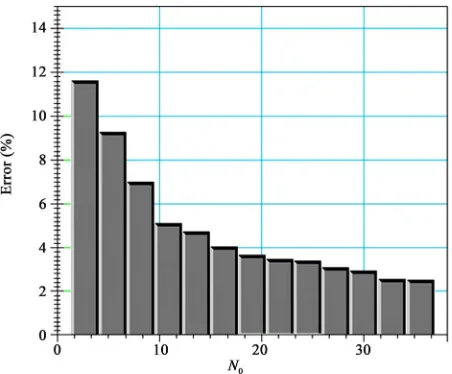
Figure 4. Mean absolute error versus N0.
3. Results and Discussions
The results show a good agreement between the
pro-posed analytical solutions (
Figure 3
) and those of the
recent studies published elsewhere. The mean absolute
error (for
) was less than 3.33% (
Figure 4
).
The conve
he
BPES
-related protocol has been
recorded f
s of
superior to 30.
4. Conclusions
In this paper, we have used the enhanced He’s parame
ter-expanding Method (HPEM) along with th Boubaker
olynom
r to
ob-c periodiob-cal solutions.
acceptable agreement
into an
istic nonlinear system. This simple
duction is carried out through the
0 30 N
rgence of t
or the value
N0-e
ials Expansion Scheme (BPES) in orde
P
tain the Van der Pol’s characteristi
The obtained solutions were in
with those obtained from values of similarly performed
methods. The typical periodical aspect of the oscillations,
already yielded [2,10,24-27] by the enhanced He’s
pa-rameter-expanding method (HPEM) could be reproduced
using a simple and convergent polynomial
approxima-tion. This method was based on an original protocol
hich reduces the stochastic nonlinear system
w
equivalent determin
nd controllable re
a
verification of the initial conditions, in the solution basic
expression, prime to launching the resolution process.
The results show that the methods are very promising
ones and might find wide applications, particularly when
exact solutions expressions are difficult to establish [28-34].
5. References
[1] D. D. Ganji and A. Rajabi, “Assessment of Homotopy Perturbation and Perturbation Methods in Heat Transfer Radiation Equations,” International Communications in
31
[image:3.595.64.279.443.571.2]H. KOÇAK ET AL. 199
Heat and Mass Transfer, Vol. 33, No. 3, 2006, pp. 391- 400.doi:10.1016/j.icheatmasstransfer.2005.11.001
[2] D. D. Ganji and A. Sadighi, “Application of He’s Homo-topy-Perturbation Method to Nonlinear Coupled Systems of Reaction-Diffusion Equations,” International Journal of Nonlinear Sciences and Numerical Simulation, Vol. 7, No. 4, 2006, pp. 411-418.
doi:10.1515/IJNSNS.2006.7.4.411
[3] A. Rajabi, D. D. Ganji and H. Taherian, “Application of Homotopy Perturbation Method in Nonlinear Heat Con-duction and Co
Vol. 360, No.
nvection Equations,” Physics Letters A, 4-5, 2007, pp. 570-573.
doi:10.1016/j.physleta.2006.08.079
[4] L. Cveticanin, “Homotopy-Perturbation Method for Pure Nonlinear Differential Equation,” Chaos, Solitons & Fractals, Vol. 30, No. 5, 2006, pp. 1221-1230.
doi:10.1016/j.chaos.2005.08.180
[5] J. H. He, “Homotopy Perturbation Method for Bifurca-tion of Nonlinear Problems,” International Journal of Nonlinear Sciences and Numerical Simulation, Vol. 6, No. 2, 2005, pp. 207-208.
[6] J. H. He, “Homotopy Perturbation Method For Solving Boundary Value Problems,” Physic
No. 1-2, 2006, pp. 87-88. s Letters A, Vol. 350, [7] J. H. He, “Limit Cycle and Bifurcation of Nonlinear
Problems,” Chaos, Solitons & Fractals, Vol. 26, No. 3, 2005, pp. 827-833.doi:10.1016/j.chaos.2005.03.007
[8] F. M. Atay, “Van der Pol’s Oscillator under Delayed Feedback,” Journal of Sound and Vibration, Vol. 218, No. 2, 1998, pp. 333-339.doi:10.1006/jsvi.1998.1843
[9] W. Jiang and J. Wei, “Bifurcation Analysis in Van der Pol’s Oscillator with Delayed Feedback,” Journal of Computational and Applied Mathematics, Vol. 213, No. 2 2008, pp. 604-615.
,
doi:10.1016/j.cam.2007.01.041
[10] A. Kimiaeifar, A. R. Saidi, A. R. Sohouli and D. D. Ganji, “Analysis of Modified Vander Pol’s Oscillator Using He’s Parameter-Expanding Methods,” Current Applied Physics, Vol. 10, No. 1, 2010, pp. 279-283.
doi:10.1016/j.cap.2009.06.006
[11] J. Ghanouchi, H. Labiadh and K. Boubaker, “An Attempt to Solve the Heat Transfert Equation in a Model of Pyro-lysis Spray Using 4q-Order m-Boubaker Polynomials,”
International Journal of Heat & Technology, Vol. 26, No. 1, 2008, pp. 49-53.
[12] O. B. Awojoyogbe and K. Boubaker, “A Solution to Bloch NMR Flow Equations for the Analysis of Homo-dynamic Functions of Blood Flow System Using m-Bou- baker Polynomials,” Current Applied Physics, Vol. 9, No. 3, 2009, pp. 278-288.doi:10.1016/j.cap.2008.01.019
[13] H. Labiadh and K. Boubaker, “A Sturm-Liouville Shaped
ials Solution to Heat Equation for
ated
mials B_4q(X) (Named
e and F. Moses,
Characteristic Differential Equation As a Guide to Estab-lish a Quasi-Polynomial Expression to the Boubaker Po-lynomials,” Differential Equations and Control Processes, Vol. 2, No. 2, 2007, pp. 117-133.
[14] S. Slama, J. Bessrour, M. Bouhafs and K. B. Ben Mah-moud, “Numerical Heat Transfer, Part A: Application,”
An International Journal of Computation and
Methodol-ogy, Vol. 48, No. 6, 2005, pp. 401-404.
[15] S. Slama, M. Bouhafs and K. B. Ben Mahmoud, “A Boubaker Polynom
Monitoring A3 Point Evolution During Resistance Spot Welding,” International Journal of Heat and Technology, Vol. 26, No. 2, 2008, pp. 141-146.
[16] H. Rahmanov, “Triangle Read by Rows: Row n Gives Coefficients of Boubaker Polynomial B_n(x), Calcul for X = 2cos(t), Centered by Adding –2cos(nt), Then Di-vided by 4, in Order of Decreasing Exponents,” OEIS (Encyclopedia of Integer Sequences), A160242.
[17] H. Rahmanov, “Triangle Read by Rows: Row n Gives Values of the 4q-28Boubaker Polyno
after Boubaker Boubaker (1897-1966)), Calculated for X = 1 (or –1),” OEIS (Encyclopedia of Integer Sequences), A162180.
[18] S. Tabatabaei, T. Zhao, O. Awojoyogb
“Cut-Off Cooling Velocity Profiling Inside a Keyhole Model Using the Boubaker Polynomials Expansion Scheme,” Heat and Mass Transfer, Vol. 45, No. 10, 2009, pp. 1247-1255.doi:10.1007/s00231-009-0493-x
[19] S. Fridjine and M. Amlouk, “A New Parameter: An ABACUS for Optimizig Functional Materials Using the Boubaker Polynomials Expansion Scheme,” Modern Physics Letters B, Vol. 23, No. 17, 2009, pp. 2179-2182.
doi:10.1142/S0217984909020321
[20] A. Belhadj, J. Bessrour, M. Bouhafs and L. Barrallier, “Experimental and Theoretical Cooling Velocity Profile Inside Laser Welded Metals Using Keyhole Approxima-tion and Boubaker Polynomials Expansion,” Journal of Thermal Analysis and Calorimetry, Vol. 97, No. 3, 2009, pp. 911-920.doi:10.1007/s10973-009-0094-4
[21] A. Belhadj, O. Onyango and N. Rozibaeva, “Boubaker Polynomials Expansion Scheme-Related Heat Transfer Investigation Inside Keyhole Model,” Journal of Ther-mophysics Heat Transfer, Vol. 23, No. 6, 2009, pp. 639- 642.
[22] A. Chaouachi, K. Boubaker, M. Amlouk and H. Bou-zouita, “Enhancement of Pyrolysis Spray Disposal Per-formance Using Thermal Time-Response to Precursor Uniform Deposition,” The European Physical Journal - Applied Physics, Vol. 37, No. 1, 2007, pp. 105-109. doi:10.1051/epjap:2007005
[23] D. H. Zhang and F. W. Li, “A Boubaker Polynomials Expansion Scheme BPES-Related Analytical Solution to Williams-Brinkmann Stagnation Point Flow Equation at a Blunt Body,” Journal of Engineering Physics and Ther-mophysics, Vol. 84, No. 3, 2009, pp. 618-623.
[24] Z. L. Tao, “Frequency–Amplitude Relationship of Non-linear Oscillators by He’s Parameter-Expanding Me-thod,” Chaos, Solitons & Fractals, Vol. 41, No. 2, 2009, pp. 642-645.doi:10.1016/j.chaos.2008.02.036
[25] L. Xu, “He’s Parameter-Expanding Methods for Strongly Nonlinear Oscillators,” Journal of Computational and Applied Mathematics, Vol. 207, No. 1, 2007, pp. 148-154.
doi:10.1016/j.cam.2006.07.020
Perturba-s for Nonlinear VibrationPerturba-s
s, Vol. 90, tion and Numerical Method
Equations,” International Journal of Nonlinear Dynamics in Engineering and Sciences, Vol. 1, No. 1, 2009, pp. 1- 20.
[27] J. H. He, “Determination of Limit Cycles for Strongly Nonlinear Oscillators,” Physical Review Letter
No. 17, 2003, pp. 1-11.
doi:10.1103/PhysRevLett.90.174301
[28] Z. M. Odibat and S. Momani, “Application of Variational Iteration Method to Nonlinear Differential Equations of Fractional Order,” International Journal of Nonlinear Sciences and Numerical Simulation, Vol. 7, No. 1, 2006, pp. 27-34.doi:10.1515/IJNSNS.2006.7.1.27
[29] E. Yusufoglu, “Variational Iteration Method for Con-struction of Some Compact and Non Compact Structures of Klein-Gordon Equations,” International Journal of Nonlinear Sciences and Numerical Simulation, Vol. 8, No. 2, 2007, pp. 152-158.
[30] M. D’Acunto, “Self-Excited Systems: Analytical
Deter-mination of Limit Cycles,” Chaos, Solitons & Fractals, Vol. 30, No. 3, 2006, pp. 719-724.
doi:10.1016/j.chaos.2006.03.070
[31] J. K. Hale, “Averaging Methods for Differential Equa-tions with Retarded Arguments and a Small Parameter,”
Journal of Differential Equations, Vol. 2, No. 1, 1966, pp. 57-73.doi:10.1016/0022-0396(66)90063-5
Dynamics in
Engi-1, 2009, pp. 59-66. [32] A. Golbabai and D. Ahmadian, “Homotopy Pade Method
for Solving Linear and Nonlinear Integral Equations,”
International Journal of Nonlinear neering and Sciences, Vol. 1, No.
[33] J. H. He, “Some Asymptotic Methods for Strongly Non-linear Equations,” International Journal of Modern Physics B, Vol. 20, No. 10, 2006, pp. 1141-1199. doi:10.1142/S0217979206033796