AN ASSESSMENT OF ENGLISH LANGUAGE TEACHERS USE OF AUTHENTIC MATERIAL IN TEACHING
READING SKILL; THE CASE OF AYERTENA SECONDARY
Lecturer, Department of English Language and Literature, Mettu University, Mettu, Ethiopia
ARTICLE INFO ABSTRACT
The purpose of this study was to identify whether teachers use authentic materials while they teach reading skill. For this reason, this assessment is on teachers’ use of authentic materials for reading skill. The study was conducted in a sample of 40 purp
Ayertena secondary preparatory school. To collect the required data for the study, interview, and questionnaire and document analysis were used as an instrument. Moreover, four kinds of questionnaires, which focus
frequency of teachers’ use of authentic materials in their English class, factors that hinders the teacher to teach using authentic materials and students’ opinion on how often their tea
reading strategies to engage them with the reading materials were administered. The data indicated that majority of the teachers believed the relevance of using authentic materials in teaching reading skill. However, teachers’ use them
the materials can expose them to real language and communication, increase their knowledge of vocabulary items which they need in real situation and doing reading activities with the mat activities which are important to them. Consequently, the researcher has recommended that teachers should use authentic reading materials if they need to create interesting and interactive lesson to happen in the class. And to boost their student
reading materials.
Copyright © 2018, Yohannes Joressa et al. This is an open use, distribution, and reproduction in any medium, provided
INTRODUCTION
For students to develop communicative competence in reading classroom, reading activities must be designed in such a way that they are based on real life reading tasks. This is because real life reading tasks involve meaningful communication that makes sense to the readers. The inexorable push since the 1970s century towards communicative approaches to language teaching has brought along with it a need to develop students’ skills for the real world communication (Adams, 1995; Widdowson, 1990). In Ethiopian context, even though language teachers and curriculum designers invest a lot to develop students’ reading skill, its result is not rewarding and their reading communicative competence remains not sounding. Especially at secondary level, learners are in nee new language learning style and language teachers are expected to provide optional materials which meet the need of the learners and help them to develop their language skills. But currently what is practiced in language classroom is far from
*Corresponding author: Yohannes Joressa,
Lecturer, Department of English Language and Literature, Mettu University, Mettu, Ethiopia.
ISSN: 0975-833X
Article History:
Received 25th September, 2018
Received in revised form 14th October, 2018
Accepted 29th November, 2018
Published online 29th December, 2018
Citation: Yohannes Joressa. 2018. “An assessment of english language teachers use of authentic material in teaching reading skill; the case of ayertena secondary and preparatory school”, International Journal of Current Research
Key Words:
Specific Objectives of the Study, Basic Research Questions, Statement of the Problem.
RESEARCH ARTICLE
AN ASSESSMENT OF ENGLISH LANGUAGE TEACHERS USE OF AUTHENTIC MATERIAL IN TEACHING
READING SKILL; THE CASE OF AYERTENA SECONDARY AND PREPARATORY SCHOOL
*Yohannes Joressa
Lecturer, Department of English Language and Literature, Mettu University, Mettu, Ethiopia
ABSTRACT
The purpose of this study was to identify whether teachers use authentic materials while they teach reading skill. For this reason, this assessment is on teachers’ use of authentic materials for reading skill. The study was conducted in a sample of 40 purposefully selected grade eleven students of Ayertena secondary preparatory school. To collect the required data for the study, interview, and questionnaire and document analysis were used as an instrument. Moreover, four kinds of questionnaires, which focused on teachers’ opinion on teaching reading with authentic materials, frequency of teachers’ use of authentic materials in their English class, factors that hinders the teacher to teach using authentic materials and students’ opinion on how often their tea
reading strategies to engage them with the reading materials were administered. The data indicated that majority of the teachers believed the relevance of using authentic materials in teaching reading skill. However, teachers’ use them very rarely. In addition to this, most of the students perceive that the materials can expose them to real language and communication, increase their knowledge of vocabulary items which they need in real situation and doing reading activities with the mat activities which are important to them. Consequently, the researcher has recommended that teachers should use authentic reading materials if they need to create interesting and interactive lesson to happen in the class. And to boost their students’ interest teachers need to adapt and prepare authentic reading materials.
open access article distributed under the Creative Commons Attribution provided the original work is properly cited.
For students to develop communicative competence in reading classroom, reading activities must be designed in such a way that they are based on real life reading tasks. This is because real life reading tasks involve meaningful communication that se to the readers. The inexorable push since the 1970s century towards communicative approaches to language teaching has brought along with it a need to develop students’ skills for the real world communication (Adams, 1995; context, even though language teachers and curriculum designers invest a lot to develop students’ reading skill, its result is not rewarding and their reading communicative competence remains not sounding. Especially at secondary level, learners are in need of new language learning style and language teachers are expected to provide optional materials which meet the need of the learners and help them to develop their language skills. But currently what is practiced in language classroom is far from
Lecturer, Department of English Language and Literature, Mettu
what is expected to be included in the study area because language teachers are not in a position to provide alternative materials like authentic texts and that is why teachers’ use of authentic materials in teaching reading skill and students’ attitudes need to be assessed under this study. Thus, English language teachers have to take advantage of that skill and make their students aware of that. But as it occurs with the other receptive skills like listening, teachers often forget to give credit differently in an authentic manner in language teaching. As Nuttall (1989) explains, authenticity of language and text selection is an essential task on the part of the teachers and has to be done ‘according to the students’ interest and teachers are therefore, expected to “simulate” real situations in language classroom by incorporating reading instruction using authentic materials. In addition the use of authentic materials helps to bridge the gap between classroom knowledge and students’ capacity to partici
events and using authentic materials also helps students acquire an effective communicative competence in the target language. In language history, views range from strong caution to encouragement and significant differences in opinion h emerged regarding the presence of authentic materials in language classroom (Chaves, 1998, Taylor, 1994). On the
International Journal of Current Research
Vol. 10, Issue, 12, pp.76120-76127, December, 2018
DOI: https://doi.org/10.24941/ijcr.32637.12.2018
An assessment of english language teachers use of authentic material in teaching reading skill; the case of ayertena International Journal of Current Research, 10, (12), 76120-76127.
AN ASSESSMENT OF ENGLISH LANGUAGE TEACHERS USE OF AUTHENTIC MATERIAL IN TEACHING
AND PREPARATORY SCHOOL
Lecturer, Department of English Language and Literature, Mettu University, Mettu, Ethiopia
The purpose of this study was to identify whether teachers use authentic materials while they teach reading skill. For this reason, this assessment is on teachers’ use of authentic materials for reading osefully selected grade eleven students of Ayertena secondary preparatory school. To collect the required data for the study, interview, and questionnaire and document analysis were used as an instrument. Moreover, four kinds of ed on teachers’ opinion on teaching reading with authentic materials, frequency of teachers’ use of authentic materials in their English class, factors that hinders the teacher to teach using authentic materials and students’ opinion on how often their teachers’ use different reading strategies to engage them with the reading materials were administered. The data indicated that majority of the teachers believed the relevance of using authentic materials in teaching reading very rarely. In addition to this, most of the students perceive that the materials can expose them to real language and communication, increase their knowledge of vocabulary items which they need in real situation and doing reading activities with the materials as activities which are important to them. Consequently, the researcher has recommended that teachers should use authentic reading materials if they need to create interesting and interactive lesson to s’ interest teachers need to adapt and prepare authentic
ribution License, which permits unrestricted
what is expected to be included in the study area because language teachers are not in a position to provide alternative materials like authentic texts and that is why teachers’ use of authentic materials in teaching reading skill and students’ eed to be assessed under this study. Thus, English language teachers have to take advantage of that skill and make their students aware of that. But as it occurs with the other receptive skills like listening, teachers often forget to ly in an authentic manner in language teaching. As Nuttall (1989) explains, authenticity of language and text selection is an essential task on the part of the teachers and has to be done ‘according to the students’ interest and ected to “simulate” real-world situations in language classroom by incorporating reading instruction using authentic materials. In addition the use of authentic materials helps to bridge the gap between classroom knowledge and students’ capacity to participate in real-world events and using authentic materials also helps students acquire an effective communicative competence in the target language. In language history, views range from strong caution to encouragement and significant differences in opinion have emerged regarding the presence of authentic materials in language classroom (Chaves, 1998, Taylor, 1994). On the INTERNATIONAL JOURNAL
OF CURRENT RESEARCH
other hand, foreign language pedagogy is increasingly focusing on the functional use of language while language teachers look for materials that more closely reflect the language students will encounter outside of the classroom. Grammar practice, drills, exercises, and reading and listening texts found in common textbooks are necessary, but students need to be exposed and need to have access to the same language that native speakers typically use through related materials. In this respect, Harmer (2001) believes that, despite many textbooks’ use of non-authentic materials to practice specific language points, utilizing authentic materials will ‘genuinely’ improve students reading skills. If teachers use ‘authentic’ materials rather than materials which are simplified or materials that are specially written for the learners who are motivated to learn and want to use English as quickly as possible. In general, based on such backgrounds, this study is designed to provide a deeper understanding on using authentic materials. It aims, in particular, at assessing English language teachers’ towards using authentic materials in teaching reading Skill.
Statement of the Problem
In teaching and learning of any language skills can be more facilitated if language teachers and learners adapt and use real materials which expose them to real language of the native speakers’ culture and beliefs. One way of doing this is using authentic materials in teaching and learning language skills which help the teachers and learners feel confident in using the target language properly. It is a common problem that most Ethiopian high school students fail to read adequately in the foreign language. Very commonly, high school students’ reading proficiency seems at lower level and students learn reading with less understanding and motivation. I have noticed the problem during my five years of teaching English in the schools; for example I have observed that most students face problems in effective use of the language in communication with their teachers, friends and others in writing and speaking. As a result, they do not have the required abilities to meet the academic demands in the school. Basically, the major driving force for researching such issue is that the researcher believes that students reading ability and exposure for reading materials is getting low and teachers provisions of different materials for language teaching purpose is not that much motivating. The use of authentic material in EFL classes is very significant, because it prepares the learners for the real world situation in terms of the target language and these materials must be motivating and raise learners’ interest. If teaching reading materials are not interesting and motivating, learners will learn nothing. Hyland (2003:94) states that one of the most important advantages of using authentic materials is that it increases learners’ motivation and reflects positively on the learning process. In the other words, students learn the language better when we as teachers use authentic materials as teaching aid in our reading classrooms. As Hedge (2000) states the main goal of teaching English as a foreign language everywhere is to enable students to communicate with English speakers and to offer them a window to the world.
But the main question here is that do all language teachers and learners in general and in Ayertena secondary and preparatory schools English language teachers and students in particular use authentic materials in the reading skills classroom? Because, in reality, the students’ English reading proficiency remains very low and unsatisfactory due to a number of extraneous factors because language teachers might not use
motivating materials which are authentic. Therefore, this study tries to assess whether EFL teachers use authentic materials in teaching reading skill.
Objectives of the study
General Objective of the Study
The general objective of this study is to assess EFL teachers use of authentic materials in teaching reading skill at Ayertena Secondary and Preparatory School.
Specific Objectives of the Study
The specific objectives of the study aims:
To find out to what extent English language teachers use authentic materials.
To assess the attitudes of English language teachers towards using authentic materials
To identify whether the English textbook contains authentic material.
To identify factors that hindres teachers not to use authentic material.
Basic Research Questions
The research attempts to answer the following basic questions
To what extent do teachers use authentic materials for reading classes?
What is the teachers’ attitude towards using authentic material for reading classes?
Does the English textbook contain authentic materials?
What are the factors which hinder teachers not to use authentic reading materials?
Review of Related Literature
communicative purpose, where the writer has a certain message to pass on to the reader” Lee (1995: 324). On the other hand, others believe that there are more elements to the definition of the term authentic than textual authenticity (Breen, 1985 Ur, 1996). Widdowson (1990), for example, distinguishes between authentic text and authentic discourse, saying : “The language presented to Second Language learners may be genuine record of native speaker behavior, genuine, that is to say, as textual data, but to the extent that it does not engage native speaker response it cannot be realized as authentic discourse” (p.45). Taylor (1994), similarly, states, “Authenticity is not a characteristic of a text in itself: it is a feature of a text in a particular context. Therefore, a text can only be truly authentic in the context for which it was originally written.” Furthermore, Kilickaya (2004) gave a common definition of authentic materials as “Exposure to real language and use in its own community” (p.1). In general, authentic material can be said to be the kind of language which is used by native speakers, communicating orally or in writing, and which is not simplified for FL/SL learning purposes (Nuttal, 1989 p. 3).
RESEARCH DESIGN AND METHODOLOGY
Research Design: Thus, this present study included both
quantitative and qualitative methods. The quantitative method of the study looked at statistical data that the students, teachers and external evaluators provide in their response to the questionnaire. The qualitative phase of the study aimed to better understand the results from the quantitative phase which is made by the researcher.
Research Setting: The data collection was carried out in one
government secondary and preparatory schools in a period of almost one month January 12 to February 12, 2016. The schools are found in Addis Ababa. The selection of the school was purposive. It was selected because of their accessibility to the researcher on the proximity and the researcher had worked at the schools as a teacher for three years. As a result, schools are cooperative to researcher.
Population: In the schools, there are 754 students with 6
sections. In addition to this, there are 11 English language teachers. Accordingly, all English language teachers and 120 students were selected from grade 11. Furthermore, from 11 English teachers; four of them were interviewed, because they are well experienced in teaching English language.
Sampling Technique: The total number of grade 11 students
at Ayertena secondary and preparatory school is 754, the teachers were taken using purposive sampling technique but the students were selected randomly. The researcher selected 12O students from the total population.
Instruments: The main instruments of data collection used in
the current study were, questionnaire and interview.
Questionnaire: The questionnaires were filled by English
teachers and grade11 student’s. The questionnaire had four parts for teachers and one parts for students. The first part of the questionnaire consisted of items dealing with the teachers' opinion on reading with authentic materials. The second part was focused on how often teacher use authentic reading materials in their English class. The third part used to obtain information from the students as how often their teachers use different reading strategies to engage them with the reading
materials. The last and fourth one was on factors that hinder the teacher to teach reading using authentic materials.
Interview: Interview was used to elicit detailed information
from the teachers. The purpose of interview was to obtain information by actually talking to the subject. The semi-structured interview consisted of specific and defined questions determined beforehand.
Document analysis: In this study document analysis was
employed. Therefore, a grade eleven English for Ethiopia textbook was analyzed taking only the reading skills to check whether the textbook is prepared incorporating authentic material or not.
DATA PRESENTATION, ANALYSIS AND DISCUSSION
[image:3.595.323.543.420.492.2]This chapter is concerned with the analysis and interpretation of the findings. It has three major parts of which part one deals with the discussion of results of teachers’ belief and experience of teaching reading with authentic materials .The second part focuses on the discussion of the types of teaching reading techniques in line with authentic materials and how often they are used by the subject teachers of the sample schools. The third section is aimed at assessing teachers’ reflection on factors which hinder to teach reading using authentic materials. The last part is aimed to investigate learners’ reflection on how often their teachers employed different teaching reading techniques during English class.
Table 1. Teaching reading is interesting
Responses Number of respondents Percentage
Strongly agree 8 66.6%
Agree 4 33.3%
Disagree
Strongly disagree - -
Undecided - -
Total 12 100%
According to the table 1, (33.3%) of the respondents agreed that they like teaching reading because it is interesting. Whereas, the majority, 66.6% of them responded that they strongly agree on it. None of them responded disagree, strongly disagree and undecided. Therefore most of agreed that it is interesting in teaching reading. This implies that the teachers have got a positive feeling for teaching reading.
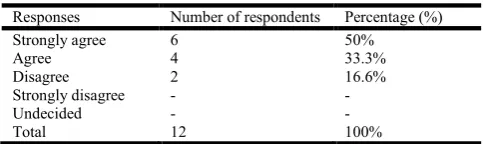
Table 2. I believe that reading helps to improve student’s language proficiency
Responses Number of respondents Percentage (%)
Strongly agree 6 50%
Agree 4 33.3%
Disagree 2 16.6%
Strongly disagree - -
Undecided - -
Total 12 100%
[image:3.595.312.554.625.697.2]that many teachers are aware of the importance of reading as it helps to improve student’s language proficiency and even if they are not that much committed to apply authentic reading materials that plays a significant role in making students language proficiency better.
Table 3. Teachers’ response on using magazine, newspapers and internet materials in making reading activities attractive
Responses Number of respondents Percentage (%)
Strongly agree 2 16.6%
Agree 6 50%
Disagree 4 33.3%
Strongly disagree - -
Undecide - -
Total 12 100%
[image:4.595.51.275.149.220.2]The above table shows that 50% of the respondents replied that reading activities enable the students to read and comprehend other materials outside the classroom. Whereas 33.3% of them responded that they do not agree on those activities. The remaining 16.6% of them also responded that they strongly agree and always use different reading activities to enable students read and comprehend other materials outside the classroom. None of them responded strongly disagree and undecided. It can thus be seen that most of the sampled teachers recognize the importance of using different materials for helping students comprehend texts.
Table 4. Using authentic materials help students to read and comprehend other materials
Responses Number of respondents Percentage
Strongly agree - -
Agree 7 58.3%
Disagree 5 41.6%
Strongly disagree - -
Undecided - -
Total 12 100%
[image:4.595.53.271.388.461.2]As can be seen from the Table 4 above, 58.3% of the participants said that reading activities uses as a way to introduce the students to how language is used in the real world. These activities must be given prime consideration in the class. Whereas, 41.6% of them do not believe in helping the use of authentic material to comprehend other reading materials. None of them responded strongly agree, disagree and undecided. To put differently, the majority of the teachers realized that the use of authentic materials in teaching reading skill play an important role in increasing student understanding.
Table 5. I believe that exposure to authentic materials should start at intermediate and advanced levels of language learning
Responses Number of respondents Percentage
Strongly agree 6 50%
Agree 4 33.3%
Disagree 2 16.6%
Strongly disagree - -
Undecided - -
Total 12 100%
As the above table indicated, 50% of the participants strongly agreed that using authentic texts should start at intermediate and advanced levels. Whereas, 33.3% of them agreed on using the material should begin at intermediate and advanced level. Moreover, 16.6% of them disagreed on the exposure of authentic materials at intermediate and advanced level. None of them responded ‘strongly disagree’ and ‘undecided’. Therefore the finding shows that many of the subject teachers
believed that the exposure to authentic materials should start at intermediate and advanced levels taking some points in to consideration such as the students’ level in order not to disappoint the students.
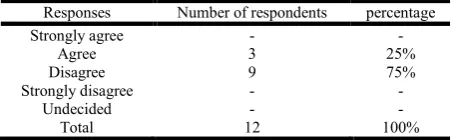
Table 6. Most exercise of reading activities are simple
Responses Number of respondents percentage
Strongly agree - -
Agree 3 25%
Disagree 9 75%
Strongly disagree - -
Undecided - -
Total 12 100%
From the table above, it is possible to see that the majority of respondents (75 %) disagreed that the reading activities in the textbooks are simple, and 25% of them do not agree with its simplicity. None of them responded strongly agree, strongly disagree and undecided. This shows that the textbook does not incorporate tasks that are simple to understand.
Part 2. How often the teachers use different authentic materials for teaching reading lessons? Table 7. I use short stories for
teaching reading when I feel appropriate to use them
Responses Number of respondents Percentage
Always - -
Usually 2 16.6%
Sometimes 7 58.3%
Rarely 3 25%
Never - -
Total 12 100%
As we observe from the table above, 58.3% of the respondents responded that they sometimes use short stories when they teach reading .Whereas, 25% of the subjects of teachers also responded that they rarely use short stories when they teach reading . Moreover, 16.6% of them also usually use it when they teach reading. None of them responded always and never.
[image:4.595.320.546.627.698.2]Therefore, many of the sample teachers do not employ short story when they teach reading. The results of the interview also indicated that all the sample teachers do not utilize other materials out of reading text. This implies that the awareness of teachers using authentic texts for teaching reading is low. Consequently, students may become poor on all aspects of language skills.
Table 8. I realized that when I teach reading using authentic
materials, the students feelfrustrated
Responses Number of respondents Percentage
Always - -
Usually 1 8.3%
Sometimes 7 58.3%
Rarely 4 33.3%
Never - -
Total 12 100%
[image:4.595.54.271.628.699.2]teachers neglect using authentic materials when they teach reading in the classroom. Furthermore, this indicated that all the sample teachers rarely used authentic materials when they teach reading. However, authentic materials improve instructions and students’ understanding, but the sample teachers do not apply them appropriately.
Table 9. I use authentic texts because I believe that it improves student’s cultural understanding
Responses Number of respondents Percentage
Always - -
Usually 2 16.6%
Sometimes 3 25%
Rarely 7 58.3%
Never - -
Total 12 100%
[image:5.595.328.539.200.271.2]According to the above table 58.3% of the teachers indicated that they rarely use the materials without consideration of the text that improves students’ cultural understanding. Whereas 25% of them also responded that they sometimes use to teach reading. Moreover, 16.6% of them usually use considering students’ cultural understanding. None of them responded always and never. As it has been underscored by Kim (2000). authentic materials have a great role in helping resolve certain cultural barriers” This means that cross-cultural comparison is an indivisible feature of authentic materials, observing differences in culture is essential for understanding other nations and awareness of cultural background is important in learning a language. However, many of the sample teachers rarely used it.
Table 10. I realize that the use of authentic materials is time consuming
Responses Number of respondents Percentage
Always - -
Usually - -
Sometimes 4 33.3%
Rarely 8 66.6%
Never -
Total 12 100%
The above Table shows that the respondents sometimes presented additional real materials when they teach reading. 66.6% of them also rarely use authentic reading material considering it takes much time to present it in reading class. Moreover, none of them responded always, usually and never. Therefore, more than half of the teachers did not always apply the material since they think that the materials consume too much time. This implies that teachers do not prefer to use the material since it takes ample time.
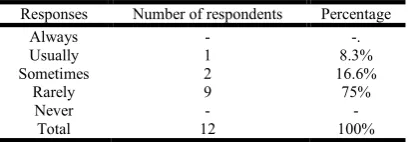
Table 11. I prefer to use authentic texts rather than textbooks in reading classes
Responses Number of respondents Percentage
Always - -.
Usually 1 8.3%
Sometimes 2 16.6%
Rarely 9 75%
Never - -
Total 12 100%
The above table indicates that 8.3% of the respondents reported that they usually prefer to apply other real materials to teach reading .Whereas, 16.6% also responded that they sometimes prefer to apply it. Moreover, 75% of them
[image:5.595.53.273.453.523.2]responded that they rarely prefer to use authentic materials in the class. Therefore this is to mean that more than half of the samples teachers sometime prefer to use authentic materials than textbooks in their reading classes. Accordingly to the information in the table, half of the sampled teachers opt to use authentic materials to the text. This could be possibly meant that the teachers recognize the immense role of authentic materials for helping improve students’ performance in reading. However, the preference and actual practice have got some mismatch.
Table 12. I prefer to use authentic texts as supplementary materials in my reading class
Responses Number of respondents Percentage
Always - -
Usually - -
Sometimes 4 33.3%
Rarely 8 66%
Never - -
Total 12 100%
As clearly indicated the in table, (12) 66% of the subjects responded that they rarely use authentic texts as supplementary materials when they teach reading. Moreover, 33.3% of them said that they sometimes use supplementary materials. None of them responded always, usually and never. Therefore, it can be said that all teachers did not apply supplementary materials when they present reading lesson to their students. This implies that student would not get an exposure to increase their reading skills
Analysis of students’ Questionnaire Responses
Part 1 The students’questionnaire was designed to gather data
about how often their teachers use different teaching reading strategies using authentic materials during English classroom.
Table 13. How often does the teacher provide specific feedback to while teaching reading skill?
Responses Number of respondents Percentage
Always - -
Usually 2 5%
Sometimes 9 22.5%
Rarely 29 72.5%
Never - -
Total 40 100%
From the table above, it is possible to observe the majority respondents (72.5%) said that their teachers rarely give them a feedback to reading materials that they are learning. Furthermore, 22.5% of the respondents also replied that their teachers sometimes provide them feedback on their reading activities .Whereas, the smallest number 5% of them responded that their teachers usually provided them a kind of feedback to reading activities. Therefore, it implies that most of their teachers do not give their students a feedback to their reading activities that can support them for their reading development. This implies that students are not given ample guidance and information on how to undertake reading texts.
Table 14. How often does your teacher give explanation on texts while he is teaching reading?
Responses Number of respondents Percentage
Always 5 12.5%
Usually 5 12.5%
Sometimes 15 37.5%
Rarely 15 37.5%
Never - -
[image:5.595.324.543.479.550.2] [image:5.595.61.266.671.742.2] [image:5.595.330.537.732.802.2]The table above shows that 37.5% of the students responded that their English teachers rarely provide explanation while reading lesson is being delivered. In addition, 37% of the students said that their English teachers sometimes explain about the text. Whereas, 12.5% of the students responded that their English teachers always and usually explain the materials that are used in reading classroom in relation the lesson. From the above students’ response, one can conclude that teachers’ explanation of the materials for their students plays a great role for students about the lesson that they are learning. Nevertheless, teachers sometimes apply it while they teach reading lesson.
Table 15. How often does your teacher encourage you to read texts outside class?
Responses Number of respondents Percentage
Always - -
Usually 2 5%
Sometimes 29 72.5%
Rarely 9 22.5%
Total 40 100%
[image:6.595.58.268.234.296.2]As can be observed from the table above, the majority of participants (72.5%) replied that their English teachers sometimes encourage them to read other reading materials outside the classroom. Whereas, 22.5% of them said their English teachers rarely encourage them to read other reading materials outside the school, and 5% of the respondents also responded that their English teachers usually encourage and tell them to read other materials outside the school. So, it implies that teachers seem reluctant to encourage and advise the students to read materials outside the classroom.
Table 16. How often does the teacher encourage you to use reading strategies in reading classes?
Responses Number of respondents Percentage
Always - -
Usually - -
Sometimes 12 30%
Rarely 28 70%
Total 40 100%
According to the table above, the majority of respondents responded (70%) that when their English language teachers present reading lesson, they rarely allow them to practice reading strategies. Whereas, 30% of them responded that their teacher sometimes allow them to practice reading strategies and give them some choice of reading materials. None of them responded always and usually. Therefore, many of them did not let the students to practice some reading strategies and it also affects students reading abilities.
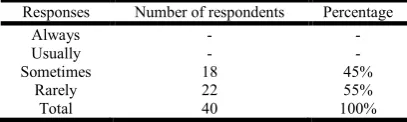
Table 17. How often does the teacher use authentic materials, like newspapers, Journals and magazines while teaching reading?
Responses Number of respondents Percentage
Always - -
Usually - -
Sometimes 18 45%
Rarely 22 55%
Total 40 100%
According to the above table 45% of the respondents replied that their English teachers sometimes use newspapers, journals and magazines to teach reading. On the other hand, 55% responded that their teachers rarely use newspapers, journals
[image:6.595.53.272.466.527.2]and magazines to teach reading. This implies that newspapers, journals and magazines (real objects) are rarely implemented. Consequently; students could not exposed to real language and factual acquisition of them, in addition all these materials are inspirational for students and they motivate them to learn since motivation is a crucial key for successful learning.
Table 18. How often does your teacher create an environment that supports social interaction in reading class?
Responses Number of respondents Percentage
Always
Usually 8 20%
Sometimes 10 25%
Rarely 22 55%
Total 40 100%
As the above table shows, 55% of the participants said that their teachers rarely give them the chance to discuss on a given issue in reading class. Moreover, 25% of them reacted that their English teachers sometimes create an environment that supports discussion in reading class. Whereas, 20% of them also responded that their teachers usually provide them the chance to discuss in reading class. This shows that it is very important to give the chance for students to make the activities personalize and to encourage learners to learn reading in a good manner. This could make the reading lesson more attractive and interesting.
Analysis of Teachers’ Interview
Teachers were interviewed to give their own opinion and suggestion regarding to their implementation of teaching reading using authentic materials. Their responses are summarized as follows.
Questions: 1.Do you think that authentic materials are
highly useful for classroompurpose or not?
From the interviewed teachers most of them see the authentic materials from its motivational advantage, they said that bringing newspapers and magazines in the classroom to teach a language increases learner’s interest and stimulates the students to learn. In addition they said incorporating such material in teaching reading skills gives purpose for students learning.
Questions: 2. what are the main factors that hinder you in
selection, preparation and using of authentic materials for reading class?
Even if most of the teachers rarely used these materials in their actual reading class, they believed that there are some difficulties which faced them in selecting and preparing materials. One of the problems is related to teacher’s inadequate knowledge of adapting and preparing teaching materials. And the second one is related with their negative perception towards the use of authentic materials. As aresult, most participants indicated a need for additional training in using authentic materials, particularly in preparation and designing appropriate tasks that can fit the students’ interest and class level.
Question: 3. why do you prefer to use authentic reading
materials?
[image:6.595.60.264.680.741.2]They suggested that they sometimes use authentic materials to their students in order to develop students’ language skills and they apply it because the textbook by itself is not enough to teach reading with the need and interest of the students, moreover these materials can increase reading development by introducing students to new vocabulary and expressions. Furthermore, it helps them maintaining and increasing student’s motivation for language since they give the feeling that he or she is learning the real and target language. However the response which was obtained from the students indicated that most of the teachers did not use or implement any authentic materials in reading classroom.
Question: 4. what is your attitude towards using or not
using authentic reading materials.
Most of the interviewed teachers said that teaching with these materials is challenging and complex. Some of the teachers replied that they have never even heard about authentic material before. But the remaining 6 of them suggested that they have awareness about authentic materials and they sometimes use it in their classroom even if its time consuming and challenging.
Document Analysis
A close examination of the textbook depicts that the grade eleven textbook is not well organized and structured in a way that help students to learn reading lesson. Most of the goals of the reading tasks are not stated vividly. In addition the tasks which are found in the textbook do not attract learners to participate. In addition, the reading tasks in the textbook do not adequately incorporate tasks that allow students to engage themselves in genuine communication using the target language. Similarly, in examining the sample units it can be ascertained that the reading tasks do not possess enough activities which allow students to interact meaningfully.
Summary, Conclusion and Recommendation
Summary of the Findings
The purpose of this study was to assess teachers’ use of authentic materials in reading lesson. The study employed interview, questionnaire and document analysis as a means collecting data. Qualitative a quantitative analysis was made on the gathered data and revealed the following major findings.
The majority of the teachers believed in using additional authentic reading materials in reading lesson. Even though, they did not give due emphasis to using authentic reading materials, such as magazines, journals, newspapers, short stories and other internet sources.
The majority of teachers believed that it is important to use authentic materials in EFL reading instruction, but more than half of the participants said that they never used any authentic materials since they don’t have adequate knowledge how to select and design such materials.
More than half of the students said that their teachers sometimes encourage them to read materials outside the classroom and the majority of them perceived that reading other materials outside the class helps them to
increase reading development by introducing them the new vocabulary and expressions.
The majority of the students said that their teacher rarely provided them with constructive feedback and praise for their attempt in reading lessons. In addition, students said that teachers rarely assisted them to make active participation. However, most of them believed that getting teachers’ appreciation and praise encourage them to do better.
Half of the students said that their teachers rarely use authentic materials that help them to develop their reading skills and the majority of students perceived that learning with authentic materials motivates them to learn a language.
Conclusions
Based on the findings of the study, the researcher has arrived at the following conclusions.
It is possible to conclude that, magazine, newspaper, journal and other authentic reading materials were very rarely used by the teachers. Teachers do not give due emphasis to selecting and preparing authentic materials in teaching reading lesson.
The most frequently used authentic material reading strategies by the sample teachers are: definition, explanation, and translation. These strategies are sometimes employed by most of the teachers although these teaching reading strategies are not sufficient.
The findings indicated that, almost all teachers have positive attitude towards using authentic materials. They believed that such materials improve students’ skill and expose them to the real language. Even though, they rarely included those materials for their language classrooms.
On the contrary, teachers lack the knowledge on how to select and prepare the authentic reading materials in the classroom.
Recommendations
Depending on the findings discussed, the following recommendations are made:
Teachers should use authentic reading materials to have interesting and interactive class. And to boost their students’ interest teachers need to adapt and prepare some stimulating authentic reading materials based on students’ preference in the class as well outside the class.
Teachers should give opportunities for their students to respond to reading texts through drama, storytelling and other expressions which help students to learn a real life expressions, in addition students feel as they are learning with the material that they prefer
Even though teachers’ attitude towards using authentic reading materials is positive, but they must bring the material to the classroom and implement it.
Teachers should be given training on material selection and preparation.
REFERENCES
Adams, T. 1995. What Makes Materials Authentic? (ERIC Document Reproduction Service No. ED 391389).
Berardo, S. 2006. The use of Authentic Materials in the Teaching of Reading.The ReadingMatrix, 6 (2), 60-69. Breen, M. 1985. Authenticity in the language classroom.
Applied Linguistics, 6, 60-70.
Chaves, M. 1998. Learner’s perspectives on authenticity.
International Review of Applied Linguistics in Language
Teaching, 36(4), 277- 306.
Gilmore, A. 2007. Authentic materials and authenticity in foreign language learning. LanguageTeaching, 40, 97-118. Guariento, W., & Morley, J. 2001. Text and task authenticity
in the EFL classroom. ELTJournal, 55 (4), 347 - 353. Harmer, J. 1998. How to Teach English. Harlow: Longman. Harmer, J. 2001. The practice of English Language Teaching
(3rd edition).London: Longman.
Hedge, T. 2000. Teaching and Learning in the language
Classroom. Oxford: Oxford University Press.
Hyland, K. 2003. Second Language Writing. Cambridge: Cambridge University Press.
Kilickaya. F. 2004. Authentic materials and cultural content in EFL classrooms. The Internet
Kim, D. 2000. A qualitative approach to the authenticity in the foreign language classroom: a study of university students learning English in Korea. Texas Papers in Foreign
Language Education, 5(1), 189-205
Lee, W. 1995. Authenticity revisited: text authenticity and learner authenticity. ELT Journal, 49 (4), 323-328.
Little, D. et al. 1988. Authentic texts, Pedagogical Grammar
and Language awareness in Foreign Language learning.
London: Longman.
McNeil, A.1994. What Makes Authentic Materials Different? Paper presented at the Annual International Language in
Education Conference: Hong Kong.
TESL Journal, 10 (7). Retrieved December 12,2010 from
http://iteslj.org/Techniques/KilickayaAutenticMaterial.html