PRACTICE MENTORS' ATTITUDES AND PERSPECTIVES OF INTERPROFESSIONAL WORKING AND INTERPROFESSIONAL
PRACTICE LEARNING FOR STUDENTS: A MIXED-METHODS CASE STUDY
Veronica O’Carroll
A Thesis Submitted for the Degree of PhD at the
University of St Andrews
2017
Full metadata for this item is available in St Andrews Research Repository
at:
http://research-repository.st-andrews.ac.uk/
Please use this identifier to cite or link to this item: http://hdl.handle.net/10023/10482
Practice Mentors’ Attitudes and Perspectives of Interprofessional
Working, and Interprofessional Practice Learning for Students:
A Mixed-Methods Case Study
Veronica O’Carroll
This thesis is submitted in partial fulfilment for the degree of PhD
at the University of St Andrews
1
1. Candidate’s declarations:
I, Veronica O’Carroll, hereby certify that this thesis, which is approximately 57748 words in length, has been written by me, and that it is the record of work carried out by me, or principally by myself in collaboration with others as acknowledged, and that it has not been submitted in any previous application for a higher degree. I was admitted as a research student in November, 2012 and as a candidate for the degree of PhD in November, 2012; the higher study for which this is a record was carried out in the University of St Andrews between 2012 and 2016.
2. Supervisor’s declaration:
I hereby certify that the candidate has fulfilled the conditions of the Resolution and Regulations appropriate for the degree of PhD in the University of St Andrews and that the candidate is qualified to submit this thesis in application for that degree.
Date ……...signature of supervisor ………...
3. Permission for publication: (to be signed by both candidate and supervisor)
In submitting this thesis to the University of St Andrews I understand that I am giving permission for it to be made available for use in accordance with the regulations of the University Library for the time being in force, subject to any copyright vested in the work not being affected thereby. I also understand that the title and the abstract will be published, and that a copy of the work may be made and supplied to any bona fide library or research worker, that my thesis will be electronically accessible for personal or research use unless exempt by award of an embargo as requested below, and that the library has the right to migrate my thesis into new electronic forms as required to ensure continued access to the thesis. I have obtained any third-party copyright permissions that may be required in order to allow such access and migration, or have requested the appropriate embargo below. The following is an agreed request by candidate and supervisor regarding the publication of this thesis: PRINTED COPY
• No embargo on print copy
ELECTRONIC COPY
• No embargo on electronic copy
2
Acknowledgements
I would like to express my sincere appreciation and gratitude to my supervisor Dr Martin Campbell and co-supervisor Dr Linda McSwiggan for their continuous support, advice and guidance. Martin, thank you for persuading me to do this PhD. Your supervision and mentorship has been admirable and I hope that I can go on to inspire other students in the same way.
Importantly, I would like to acknowledge the health care and social work professionals who took the time to take part in this study, welcomed me into their workplaces, and spoke openly and honestly about their experiences of working interprofessionally. I would also like to thank Paul Gardner for helping me get my head around SPSS, Fidan Fraser for her help with transcribing interviews, and Katherine Paramore for her help with the thematic analysis. I would also like to extend my sincere thanks to friends and colleagues at the University of St Andrews, University of Dundee, and CAIPE for their support and encouragement.
My heartfelt thanks to my family and friends who inspire me in many different ways. Most importantly, thank you to my husband Tony and our beautiful girls Kiera and Áine. I am truly grateful for your support and patience, for generally putting up with me, and not letting me give up. I could not have done this without you. A special thanks to my mother and namesake Veronica O’Carroll who lit several candles for me. Mother, you taught me courage, determination and perseverance; traits which were much needed in doing this PhD. Thank you to my brother Jonathan and sister Elizabeth for encouraging me to let my hair down and relax when I needed to. We need a family reunion again to celebrate.
3
Contents
Declaration 1
Acknowledgements 2
Contents list 3
List of appendices 8
List of figures 9
List of tables 9
Table of abbreviations used in this thesis 10
Abstract 11
Contents List
Chapter 1 Introduction and background
12
1.1 Chapter overview 12
1.2 The drivers for working and learning together 12
1.3 Defining interprofessional working 15
1.4 Defining interprofessional education and interprofessional practice
learning 16
1.5 The increasing momentum for interprofessionalism 17
1.6 Aims of the thesis 18
1.7 The importance of the study 19
1.8 Chapter summary 19
Chapter 2 Literature review
202.1 Chapter overview 20
2.2 Systematic search strategy 21
2.2.1 Search terms 21
2.2.2 Screening and assessment of papers 22 2.3 Assessment of the quality of the studies 23
2.4 Identification of themes 25
4 2.4.2 The effect of previous experience of IPE on attitudes to IPW and IPE 28 2.4.3 Other variables which influence attitudes 30 2.5 Identifying gaps in the literature 30 2.6 Implications for future research and practice 32
2.7 Limitations of the review 33
2.8 Main research questions and hypotheses 33
2.9 Chapter summary 34
Chapter 3 Methodology and research design
35
3.1 Chapter overview 35
3.2 Theoretical framework for the study 35
3.3 Theoretical frameworks related to IPW and IPPL 36 3.3.1 Theory related to the relationship between attitudes and behaviour 38 3.4 A mixed-methods case study approach 40
3.5 Characteristics of a case study 41
3.5.1 Issues of generalisability and transferability with case studies 42 3.6 The use of mixed-methods to address the study objectives 43 3.7 A conceptual framework for the integration of methods 44
3.8 Chapter summary 46
Chapter 4: Part I Methods
47
4.1 Chapter overview 47
4.2 Study site and population: defining the case 47 4.3 Ethical approval and access to the study site 48
4.4. Study sample 49
4.4.1 Sampling strategy 50
4.5 Recruitment 52
4.5.1 Phase 1: Support from key gatekeepers 54 4.5.2 Phase 2: Face to face recruitment opportunities 55 4.5.3 Phase 3: Widening recruitment opportunities and ensuring inclusivity 56
4.6 Quantitative data generation 58
4.6.1 Use of a multiple-group measurement scale to measure attitudes
5 4.6.1.2 Use of an adapted version of the readiness for interprofessional
learning scale (RIPLS) to measure practice mentors’ attitudes to IPPL 62 4.6.2 Rationale for combining scales 64
4.7 Test-retest reliability of an online survey to measure attitudes to IPW,
and IPPL for students 65
4.7.1 Test-retest results 66
4.7.2 Changes made as a result of measuring the reliability of the
survey 67
4.8 Ethical considerations and protecting survey participants 68
4.8.1 Informed consent 69
4.8.2 Confidentiality 69
4.9 Quantitative data analysis 70
4.9.1 Descriptive statistics 71
4.9.2 Inferential statistics 71
4.10 Chapter summary 73
Chapter 5: Part II Methods
74
5.1 Chapter overview 74
5.2 Qualitative data generation 74
5.2.1 Semi-structured interview sampling strategy 75 5.2.2 Format of the semi-structured interviews 76 5.3 Ethical considerations and protecting interview participants 80
5.3.1 Informed consent 80
5.3.2 Confidentiality 81
5.3.3 Reflexivity and the researcher in the middle 82
5.4 Qualitative data analysis 84
5.5 Ensuring rigour in the analysis of qualitative data 88
5.6 Chapter summary 88
Chapter 6: Part I Results
90
6.1 Chapter overview 90
6.2 Sample profile 90
6 6.3.1 Attitudes to interprofessional working and the effect of governing
body 94
6.3.2 Attitudes to interprofessional working and the effect of gender 94 6.3.3 Attitudes to interprofessional working and the effect of area of work 95
6.3.4 Attitudes to interprofessional working and the effect of number of years
qualified 95
6.3.5 Attitudes to interprofessional working and the effect of prior experience
of IPE 96
6.3.6 Attitudes to interprofessional working and the effect of prior type of IPE
experience 97
6.4 Mean scores for attitudes to interprofessional practice learning 98 6.4.1 Attitudes to IPPL and the effect of governing body 100 6.4.2 Attitudes to IPPL and the effect of gender 100 6.4.3 Attitudes to interprofessional practice learning and the effect of area
of work 101
6.4.4 Attitudes to interprofessional practice learning and the effect of number
of years qualified 101
6.4.5 Attitudes to interprofessional practice learning and the effect of previous
IPE experience 102
6.4.6 Attitudes to interprofessional practice learning and the effect of type of
previous IPE experience 102
6.5 Chapter summary 103
Chapter 7 Part II Results
104
7.1 Chapter overview 104
7.2 Semi-structured interview sample characteristics 104
7.3 Enablers of IPW 106
7.4 Barriers to IPW 115
7.5 Enablers of IPPL 131
7.6 Barriers to IPPL 135
7
Chapter 8 Discussion
146
8.1 Chapter overview 146
8.2 Summarising the background issues driving the study 146 8.3 Returning to the study objectives and addressing the research
questions 147
8.4 Chapter summary 166
Chapter 9 Conclusion
168
9.1 Chapter overview 168
9.2 Summary of the findings 168
9.3 Contribution to interprofessional research 169 9.4 Contribution to interprofessional practice 170
9.5 Limitations of the study 170
9.6 Recommendations for research 173
9.7 Recommendations for practice 173
9.8 Concluding remarks 175
8
List of Appendices
Appendix 1: Glossary of terms 194
Appendix 2: Research appraisal tool 195
Appendix 3: Summary of the assessment of included studies 196 Appendix 4: Copy of ethics approval letter 203
Appendix 5 PhD timeline 205
Appendix 6: Study advertisement 207
Appendix 7: Copy of ethics approval for amendments 208 Appendix 8: Survey used to measure attitudes to IPW, and IPPL for students 209 Appendix 9: Survey participant information sheet 220 Appendix 10: Interview participant information sheet 223
Appendix 11: Interview consent form 226
Appendix 12: Interview transcription guidance 227
Appendix 13: Interview topic guide 230
Appendix 14: Debriefing information sheet 231
Appendix 15: Excerpt from a research diary: personal reflections on the rationale
for the study 233
Appendix 16: Excerpt from the thematic analysis of the interview data 236 Appendix 17: Skewness and kurtosis values, and associated z-scores for
attitudes to IPW 237
Appendix 18: Skewness and kurtosis values, and associated z-scores for
9
List of Figures
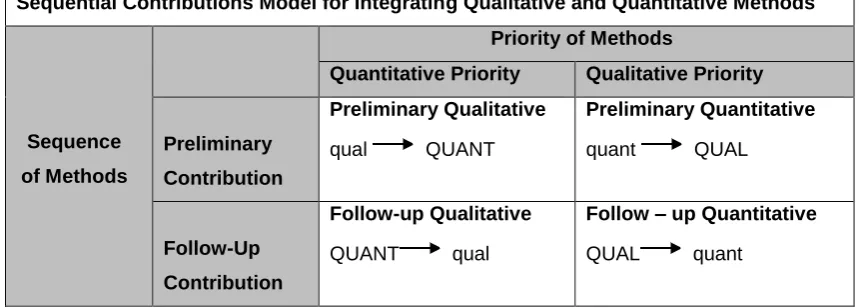
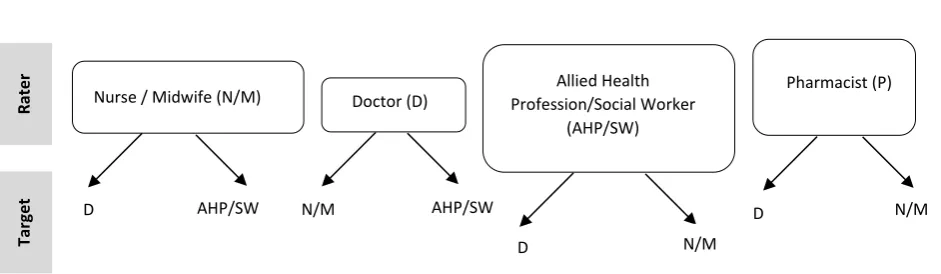
Figure 1. Process for identifying relevant studies 22 Figure 2. Schematic presentation of the reasoned action model 39 Figure 3. The sequential priorities model 45 Figure 4. Number of survey participants at each phase of recruitment 53 Figure 5. Structure of rating groups and targeted professions 62 Figure 6. Attitudes to IPW: Mean scores of health care and social
work professions 92
Figure 7. Attitudes to IPPL: Mean scores of health care and
social work professions 98
Figure 8. Thematic map of the enablers of IPW 107 Figure 9. Thematic map of the barriers to IPW 116 Figure 10. Thematic map of the enablers of IPPL 132 Figure 11. Thematic map of the barriers to IPPL 136
Figure 12. Study findings and the reasoned action model 165
List of Tables
Table A. Summary of inclusion and exclusion criteria 21 Table B. Summary of search terms and key words 21 Table C. Summary of studies included in the review 26 Table D. The multiple group measurement scale 60 Table E. The adapted readiness for interprofessional learning scale 63 Table F. Characteristics of the sample of health care professions included
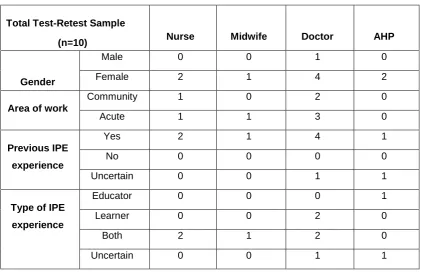
in the intra-rater reliability analysis 66
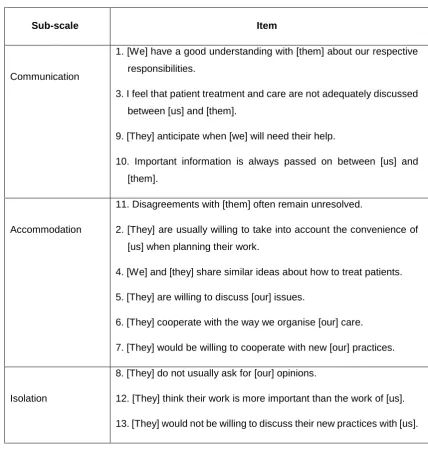
Table G. Sample demographic profile of the survey participants 91 Table H. Attitudes to IPW and professions’ mean scores 93 Table I. Attitudes to IPPL and professions’ mean scores 99 Table J. Comparison of number of survey and interview participants 104 Table K. Sample demographic profile of semi-structured interview
10
Table of Abbreviations Used in This Thesis
AHP Allied health profession
CAIPE Centre for the advancement of interprofessional education
GMC General Medical Council
GP General Practitioner
GPhC General Pharmaceutical Council
HCPC Health and Care Professions Council
HEIs Higher education institutes
IOM Institute of Medicine
IPE Interprofessional education
IPL Interprofessional learning
IPPL Interprofessional practice learning
IPW Interprofessional working
MPE Multiprofessional education
NMC Nursing and Midwifery Council
SSSC Scottish Social Services Council
11
Abstract
The demands on health and social care organisations require professions to work more collaboratively. During pre-registration training, health care and social work students learn within practice settings, supported by practice mentors. These settings are rich learning environments to experience interprofessional working (IPW) and for students to learn together through interprofessional practice learning (IPPL). There is, however, evidence that students’ experiences of both are varied or limited. The value placed on IPW, and IPPL, is therefore of interest. This thesis will investigate practice mentors’ attitudes to IPW and IPPL, and explore their perspectives of the enablers and barriers to these occurring in practice settings.
A mixed-methods case study approach was used to measure the attitudes of practice mentors from health and social work, and to identify enablers and barriers to IPW, and IPPL for students. Online surveys and semi-structured face to face interviews were carried out with a range of professions within one Scottish health board and associated local authority.
Results showed that attitudes to IPW, and IPPL for students were generally positive. Attitudes were not significantly affected by governing body, gender, area of work, years of experience, or prior experience of IPE. IPW was perceived to be enabled by shared processes and policies, IPPL for staff, effective communication, established teams, and shared processes and policies. Proximity to other professions and shared spaces encouraged informal communication and positive interprofessional relationships. Regular structured IPPL opportunities for students were limited. However, where opportunities did occur, this was linked to areas where practice mentors perceived that there was a strong interprofessional team identity.
12
1. Introduction and Background
1.1 Chapter overview
In this introductory chapter, the key areas of concern in relation to health and social care professions working together, and students from different programmes of training learning together will be discussed. The aim and scope of the study presented in this thesis will be identified, as will its value and contribution to research and health and social care practice.
1.2 The drivers for working and learning together
As the demands on health and social care services increase within the 21st century, health and social care professionals strive to meet the increased demands on their systems of working, amidst an increasingly complex context of care. As stated by the Institute of Medicine [IOM] (2015, p.11):
“Soaring population rates, climate change, rapid urbanisation, technological
innovation, and globalisation all are intersecting in ways that would have been unthinkable just a few decades ago.”
13 which contributed to the failings of a health care organisation. These failings resulted in the death of up to 1200 individuals, physical and emotional damage to service users and their families, and shattered the confidence that the general public had in the health service. In the report’s series of recommendations, Francis (2013) stressed that changes in organisational culture were required to improve care, including changes in the way that different professions work together. He emphasised contributions from all team members needed to be valued to ensure that effective “collective care”, which puts the service user first, could be provided.
It is believed that improving interprofessional working (IPW) between health and social care professions can help with the increased demands on health and social care services, and improve the quality of care delivery (World Health Organisation [WHO], 2010; IOM, 2015). IPW is defined by Thomas, Pollard and Sellman (2014, p.13) as:
“The process whereby members of different professions and/or agencies work
with each other and with patients/service users, to provide integrated health and/or social care”.
One of the most recent drivers for IPW within the United Kingdom has been the introduction of the Health and Social Care Act (2012) and Public Bodies (Joint Working) (Scotland) Act (2014). The act aims to provide a more coordinated, cost effective approach to the provision of health and social care, by integrating services from health boards and local authorities. Furthermore, to address the increasing demands on services, it aims to reduce the numbers of unnecessary admissions to hospitals, by providing care for people at home. These expected outcomes are echoed nationally in the Scottish Government’s vision for the year 2020 to provide quality care, improve the health of the population, and improve value and financial sustainability (Scottish Government, 2013a). In the reorganisation of services and changing landscape of health and social care, different groups of professions are required to work more collaboratively (Association of Directors of Social Work, 2013). However, as discussed in the literature, there are a number of complexities and challenges in practice which can impact on the effectiveness of collaborative working.
14 priorities, and access to other professions (Snelgrove and Hughes, 2000; Hughes and McCann, 2003; Larkin and Callaghan, 2005; Bailey, Jones, and Way, 2006; Kvarnström, 2008; Braithwaite, Westbrook, Nugus, Greenfield, Travaglia and Runciman, 2012). In relation to the lack of understanding of roles and responsibilities, significant changes in the scope of practice for some professions has added to this confusion. For example, roles which have been traditionally associated with doctors, have been taken on by advanced nurse practitioners (The Royal College of Nurses [RCN], 2012). Uncertainty with professional accountability has led to uncertainty in role boundaries (Goldman, Meuser, Rogers, Lawrie and Reeves, 2010; Harmer, 2010; Rashid, 2010).
Further to the high profile inquiries referred to in this section, issues with organisational culture negatively impacting on IPW in health and social care have been previously discussed in the literature (Gordon, 2012; Leape et al., 2012). Conflict between different professions and hierarchies have been found to exist, not only interprofessionally, between different professions, but also intraprofessionally, with professions from the same discipline (Brown, Lewis, Ellis, Stewart, Freeman and Kasperski, 2011; Powell and Davies, 2012). Aggressive and disrespectful behaviour occurring between professions have been reported to affect morale, stifle teamwork and communication, and have a “toxic impact on patient safety” (Leape et al., 2012). Equally, more subtle behaviours; “a gesture, a stance in a hallway, a quick comment made during ward rounds,” can also impact on IPW (Gordon, 2012). Gordon goes on to suggest that those who are often most vulnerable are new members of already established teams, as they are initially subjected to a period of initiation, where trust must be earned before they become accepted into the team.
15 team members are, and how teams function. They suggest that the factors which make teams work effectively and ineffectively need to be understood.
Interprofessional education (IPE) is defined as “when two or more professions learn with, from and about each other” (Centre for advancement of interprofessional education [CAIPE], 2002). The aim of IPE is to improve IPW by helping professions to understand and appreciate roles and responsibilities, break down professional boundaries, and improve the delivery of care (CAIPE, 2002; WHO, 2010; Barr and Low, 2013). It is valued as a way of preparing pre-registration health care and social work students to work together by learning together. IPPL for students during their practice placements provides the opportunity to enhance university based IPE and will help students gain first-hand experience of IPW in action (Bar and Low, 2013; IOM, 2015).
1.3 Defining interprofessional working
16 these different contexts. A full glossary of terms used in this thesis, is provided in Appendix 1.
1.4 Defining interprofessional education and interprofessional practice learning
Despite a growing body of evidence relating to IPE, there continue to be misconceptions and confusion related to this educational process and what constitutes effective IPE (Reeves, Zwarenstein, Goldman, Barr, Freeth, Hammick et al., 2009; Reeves, Goldman, Gilbert, Tepper, Silver, Suter et al., 2011). As well as
the term IPE, the terms multiprofessional education (MPE) and interprofessional learning (IPL) are often used interchangeably within the literature to describe learning involving more than one professional group (Freeth, Reeves, Koppel, Hammick and Barr, 2005b). Medical and nursing students receiving the same lecture, being delivered didactically, is a good illustration of multiprofessional education (MPE). In this instance, learning may be occurring side by side, but their understanding of each other is limited (Gordon, 2012). In contrast, IPE is a much more interactive learning experience. For example, students from two or more professions jointly discussing a client’s case and identifying the roles and responsibilities of different members of a health and social care team. Students are encouraged to share, respect, appreciate and understand each other’s professional knowledge, skills, expertise and contribution to the team. Furthermore, IPE can be differentiated from IPL, as IPE refers to an educational process bringing two or more professions together, and IPL refers to the outcome of IPE (Freeth, Hammick, Reeves, Koppel and Barr, 2005a; Barr and Low, 2013).
17 settings, the term interprofessional practice learning (IPPL), as referred to by Barr and Low (2013), is used in this thesis when referring to IPE and IPL occurring within practice settings.
1.5 The increasing momentum for interprofessionalism
According to Barr et al. (2011) “discrete initiatives” to try and improve IPW were apparent from the 1960s. However, as noted by Barr, Helme, and D’Avray (2011), momentum for interprofessionalism gathered at the turn of the century, attributed to changes in health and social care, and education policy, as part of the Government’s modernisation strategy. Barr et al. (2011) go on to explain that the Government called upon pre-registration programmes of training for health and social care to provide programmes of common learning. The vision was that shared learning would prepare students to work in a more flexible and efficient way. The deaths of 35 children identified in the Bristol Heart Inquiry, and the deaths of Victoria Climbié and Baby Peter (Kennedy 2001; Laming, 2003; 2009) reaffirmed that changes needed to occur to improve IPW. However, the focus was no longer just on improving efficiency, as previously promoted by the Government’s modernisation strategy, but was predominantly on ensuring the delivery of safe care.
A review written by Barr (2002) reflected on the past, present and future of IPE. Barr asserted that ambiguity and uncertainty around IPE stemmed from the lack of an evidence base and lack of clarity around the meaning of IPE. This uncertainty and ambiguity may have accounted for the delay in support for IPE by the governing bodies for health and social care. From 2003 onwards, standards of education for health and social care programmes of training, and subject benchmarks began to place some emphasis on the need for students to learn with other professions (Scottish Social Services Council [SSSC], 2003; General Medical Council [GMC], 2009; Nursing and Midwifery Council [NMC], 2010; Health Care Professions Council [HCPC], 2012).
18 (Smith and Karban, 2006, IOM, 2015). Whilst positive examples of IPW and IPPL have been previously reported in the by some studies (Cashman, Reidy, Cody, and Lemay, 2004; Ponzer, Hylin, Kusoffsky, Lauffs, Lonka, Mattiasson, 2004), other studies have noted that students have limited experience of IPPL, and their observations in practice often draw attention to ineffective IPW (Stew, 2005; Pollard, Miers and Rickaby, 2012). Negative attitudes to IPE has been reported as one of the reasons why IPE initiatives sometimes fail (Freeth et al., 2005; Curran, Sharpe and Forristall, 2007; Rees and Johnson, 2007) but this research has mainly focussed on IPE within academic settings.
As recommended by the IOM (2015), further engagement is required from organisations in health and social care and education to encourage a consistent thread of IPE along the education-to-practice continuum. IPPL would provide a continuum of IPE from the university setting to the practice setting but requires the alignment between both settings, and the support of practice mentors (Hammick, 1998; WHO, 2010; Barr and Low, 2013; IOM, 2015). However, if opportunities for students to engage in IPPL remain untapped (Smith and Karban, 2006; IOM, 2015) and students’ experiences of effective IPW are variable, this raises concerns related to professions’ attitudes to IPW, and IPPL for students, particularly those professions who mentor, guide and support students learning within practice settings.
1.6 Aims of the thesis
19 health care and social work students learn as part of their training. As a single case study, this context focused on one health board and local authority within a region in Scotland. Secondly, the attitudes and perspectives of health care and social work professions, specifically professions who mentor students during their practice placements, were sought.
1.7 The importance of the study
This study makes an original contribution to the field of IPW and IPE for two main reasons. Firstly, it advances knowledge related to the attitudes of health care and social work practice mentors to IPW, and IPPL for students. Although it is an investigation within a single health board and local authority, the findings may be transferable to other contexts. It has the ability to “shed light on a larger class of cases” (Gerring, 2007, p.20) and add to existing knowledge and experience (Stake, 1978; 1995; Yin, 2014).
Secondly, the findings of this study make an important contribution to future practice and policy related to IPW and IPPL. The integration of health and social care relies on effective IPW amongst frontline professionals and for students to be prepared for IPW in their future careers. It is vital that their perspectives are sought to: understand their attitudes, identify the challenges associated with interprofessional working, and to identify ways to negotiate around these challenges. This study may play an important part in identifying measures to improve IPW in practice, and to improve students’ experiences of IPPL.
1.8 Chapter summary
20
Chapter 2. Literature Review
2.1 Chapter overview
In this chapter, a systematic review of the literature to evaluate the relevant evidence base is provided. The processes which were used to gather relevant literature are described and key themes identified from the analysis and evaluation of the literature are discussed. This chapter concludes by identifying the contribution of existing research and the limitations in current research. The research questions and hypotheses posed in this current study to address these limitations are then identified. 2.2 Systematic search strategy
21
Table A. Summary of inclusion and exclusion criteria
Inclusion criteria Exclusion criteria
• Studies measuring and comparing
health and social work staff attitudes
to IPE and IPW within practice
settings
• Studies using quantitative, qualitative
or mixed-methods
• Empirical studies published in peer
reviewed journals between January
2000 and December 2014
• Studies written in the English
language
• Students’ attitudes (only) to IPE and
IPW
• Academic staff attitudes (only) to IPE
and IPW
• Studies exploring the attitudes of
only one professional group
• Editorials
• Descriptive articles
• Opinion pieces
2.2.1 Search terms
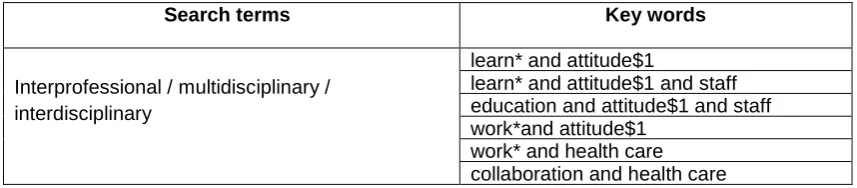
As shown in Table B, the search terms interprofessional, multidisciplinary, and interdisciplinary were used in combination with the following key words: learning, education, working, collaboration, attitudes, staff and health care. These terms and key words were searched within the fields of title, abstract and full texts. Truncations and Boolean operators were used to find alternative endings to key words and allow for variability of terms adopted in the literature.
Table B. Summary of search terms and key words
Search terms Key words
Interprofessional / multidisciplinary / interdisciplinary
learn* and attitude$1
learn* and attitude$1 and staff education and attitude$1 and staff work*and attitude$1
work* and health care collaboration and health care
Notes: Search terms and key words used within the fields of title, abstract and full text. Truncations
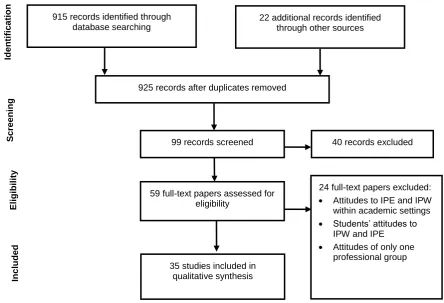
[image:23.595.89.518.569.663.2]22 915 records identified through
database searching
22 additional records identified through other sources
925 records after duplicates removed
99 records screened 40 records excluded
59 full-text papers assessed for eligibility
35 studies included in qualitative synthesis
24 full-text papers excluded: • Attitudes to IPE and IPW within academic settings • Students’ attitudes to
IPW and IPE • Attitudes of only one
professional group Id e nti fic a tio n S c ree ni ng Eli gi bi li ty In c lu de d
2.2.2 Screening and assessment of papers
[image:24.595.90.535.405.708.2]The Preferred Reporting Items for Systematic Reviews and Meta-Analyses (PRISMA) adapted from Moher, Liberati, Tetzlaff and Altman (2009) was used as a framework to provide a step by step process for identifying the relevant and appropriate literature. Figure 1 reports on the number of studies included and excluded at different phases of the literature search. A total of 925 records were identified through a systematic search of the databases and additional sources, as discussed in Section 2.2. On initial screening of the titles and abstracts of papers, this was narrowed down to 99 records, using the set exclusion criteria. Following a secondary screening of these records, the full texts of 59 papers were read to determine whether they met the inclusion criteria identified in Section 2.2, Table A. Thirty-five papers were selected after excluding the following: studies within the context of academic settings, studies reporting on students’ attitudes to IPW and IPE, and studies reporting on the attitudes of only one professional group.
23
2.3 Assessment of the quality of the studies
The full texts of relevant studies were accessed and interrogated using Hawker, Payne, Kerr, Hardy, and Powell’s (2002) framework for appraising research (Appendix 2). This framework has been previously used for reviewing literature within the field of IPE and provides an effective tool for reviewing studies where mixed methodologies are used (Ireland, Gibb and West, 2008). The three stages for appraising research outlined by Hawker et al. were used as a guide: assessment of the relevancy of the studies using the inclusion and exclusion criteria, extracting data to assist in the process of identifying themes, and scoring the methodological rigour of each study. In this review, an assessment of methodological rigour in the studies identified led to the identification of strengths and limitations which fell into two broad themes: research design and study samples. The remainder of this section provides a discussion of these themes.
Strengths and limitations in research designs
Some studies used quantitative methods to collect data for statistical analysis, which was valuable in measuring the effect of certain variables on attitudes, such as professional background, gender, or level of job satisfaction (Reid, Bruce, Allstaff and McLernon, 2006; Chang, Ma, Chiu, Lin and Lee, 2009; Braithwaite, Westbrook, Nugus, Greenfield, Travaglia and Runciman, 2013). However, this data did not provide a detailed understanding of specific enablers and barriers to IPW and IPE. Furthermore, there were missed opportunities to explore the effect of other variables, such as prior experience of post qualifying IPE on staff attitudes to IPE and IPW (Reid et al., 2006).
24 professional groups in terms of the value they placed on IPE were reported in some of the studies (Reid et al., 2006; Robben et al., 2012), it would be difficult to generalise from the findings based on one department or unit, in view of the different systems of working that may exist. The context and structure of the team may affect how a team works (Snelgrove and Hughes, 2000; Baxter and Brumfit, 2008) and attitudes to IPW may be influenced by how established the team is (Gibbon, Watkins, Barer, Waters, Davies, Lightbody et al., 2002; Pollard and Miers, 2008).
A more in-depth investigation of professions attitudes and perceptions of IPW and IPE was evident where researchers used mixed-methods (McCray, 2003; Reeves and Lewin, 2004; Russell, Nyhof-Young, Abosh, and Robinson, 2006; Baxter and Brumfit, 2008; Anderson, Cox and Thorpe, 2009; Anderson and Thorpe, 2010; Wittenberg-Lyles et al., 2010; Lingard et al., 2012; Robben et al., 2012). These researchers could gain in-depth insights into staff attitudes and an understanding of the challenges associated with IPW in their organisations. Furthermore, where the location of the study included several different departments, such as the multiple case study by Baxter and Brumfit (2008), the attitudes of professions working within a range of departments could be compared.
Strengths and limitations in study samples
Sampling techniques, sample size and representativeness of samples were varied across studies, highlighting limitations and strengths for each of the studies. Although use of mixed-methods was identified as a strength in research design, one of the challenges of using mixed-methods was maintaining the sample size for the duration of some studies. For example, in the study by Anderson, Thorpe and Hammick (2011), pre and post semi-structured interviews were used to measure facilitators’
attitudes to IPE before and after facilitating IPE for students. There was a marked reduction in the number of study participants who were interviewed post IPE facilitation, which Anderson et al. attributed to clinical and academic work pressures. The transitory nature of teams and high turnover of staff within a health care setting may be a contributory factor here. This is important to consider for future research and for identifying ways in which sample size can be maintained.
25 2008; Anderson et al., 2009; Anderson and Thorpe, 2010; Baker, Egan-Lee, Martimianakis and Reeves, 2011). Without consideration for different learning environments, it was difficult to identify enablers and barriers to IPW and IPE which may have been specific to each of these contexts. For many of the studies, sample demographics were unspecified which made it impossible to identify specific characteristics of different professional groups (Gibbon et al., 2002; Reeves and Lewin, 2004; Lindblad, Kjellgren, Ring, Maroti and Serup, 2006; Baxter and Brumfit, 2008; Anderson et al., 2009; Suter, Arndt, Arthur, Parboosingh, Taylor and Deutschlander et al., 2009; Anderson and Thorpe, 2010; Wittenberg-Lyles et al., 2010). The studies that were successful in recruiting large samples of staff from a mixture of professional groups primarily used quantitative methods to collect data (Reid et al., 2006; Pollard and Miers, 2008; Chang et al., 2009; Braithwaite et al., 2012). This approach may have facilitated the inclusion of large samples, however, by using only quantitative methods, the researchers’ ability to investigate participants’
responses to questionnaires was restricted.
2.4 Identification of themes
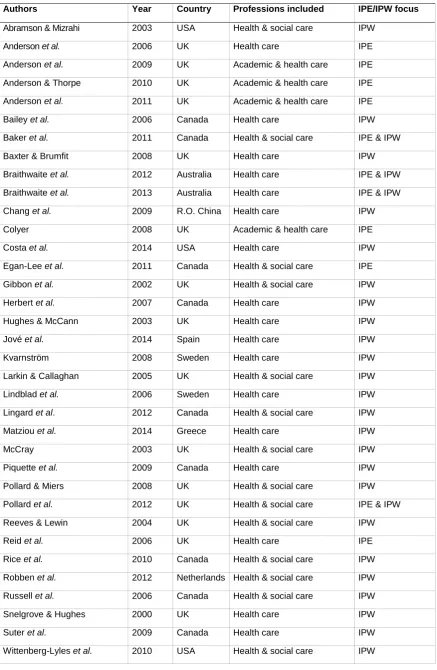
A total of 35 studies met the inclusion criteria for this review (Table C); no studies were excluded on the basis of poor quality. Fourteen of these studies compared the attitudes of health and social care professions; the remainder included comparisons of professions within health care only or comparisons between academic and health care staff. Whilst most of the studies focused on attitudes to IPE or IPW, only four studies explored attitudes to both IPE and IPW. The study by Baker et al. (2011) was the only study to include health and social care staff attitudes to both IPW and IPE for students within the context of a health care setting. Despite these limitations, this review was valuable in identifying two main themes which were:
• The effect of professional background on attitudes to IPW and IPE
26
Table C. Summary of studies included in the review
Authors Year Country Professions included IPE/IPW focus
27
2.4.1 The effect of professional background on attitudes to IPW and IPE.
The effect of professional background on attitudes to IPW and IPE, and differences in attitudes among different professional groups was discussed by a number of researchers. Although studies reported that attitudes to IPW and IPE were generally positive, when comparisons were made between professions, differences in attitudes were noted. Reid, Bruce, Allstaff, and McLernon (2006) measured attitudes to IPW and reported that doctors had less positive attitudes to IPW, in comparison to nurses. Similar professional differences were reported by Chang, Ma, Chiu, Lin, and Lee (2009), with doctors reported to have the least positive attitudes to IPW. In addition, Braithwaite et al. (2012; 2013) found that allied health professionals (AHPs) had more positive attitudes to IPW and IPE than doctors and nurses. Furthermore, Piquette, Reeves and Leblanc (2009) found that nurses valued IPW more that doctors, following medical crises in an intensive care setting. These studies were carried out in a number of different countries. Their findings highlight that although there may be cultural differences across global health care teams, professional background may be a common influence on attitudes.
Professional culture and professional identity
28 This reinforces the important role that IPE may have in helping professionals to develop an appreciation of each other’s skills and expertise (Robben et al., 2012).
Differences in the perceived level of IPW
Within some of the studies reviewed, there was evidence to suggest that professions differed in their perceptions of how effective IPW was within their own teams. This was evident within the studies by Chang et al. (2009) and Matziou, Vlahioti, Perdikaris, Matziou, Megapanou and Petsios (2014) who found that nurses reported IPW to be less effective in their teams, in comparison to doctors. One mixed-methods study by Wittenberg-Lyles, Oliver, Demiris, and Regehr (2010) found that there was consensus amongst professions that IPW was effective within their team, evidenced in their questionnaire responses. However, from the researchers’ observations of a group of professions in practice, the actual level of IPW between them was found to be limited. Collectively, these studies indicate that as well as professional differences in the perceived level of IPW, there may be a lack of awareness of how effective IPW is within some teams.
2.4.2 The effect of previous experience of IPE on attitudes to IPW and IPE
Prior IPE as an influence on attitudes to IPW
Experiences of IPE as an influence on professions attitudes to IPW were explored in a number of studies (Gibbon et al., 2002; Bailey et al., 2006; Kvarnström, 2008; Pollard and Miers, 2008; Braithwaite et al., 2012; Pollard et al., 2012; Robben et al., 2012). In two of the studies, IPE interventions provided during undergraduate training were assessed as a positive influence on attitudes to IPW (Pollard and Miers, 2008; Pollard et al., 2012). As qualified health care professionals, those with experience of IPE in their pre-registration training felt more prepared for IPW compared to those without prior IPE experience (Pollard and Miers, 2008). Pollard et al. (2012) found that professions with prior experience of IPE reported more awareness in their practice of the barriers to effective IPW such as professional boundaries, hierarchies, and poor communication.
29 example, despite stated behavioural intentions to work in a more interprofessional manner following experiences of IPE, these intentions seemed to diminish over time (Bailey et al., 2006; Robben et al., 2012; Braithwaite et al., 2013). A study by Braithwaite et al. (2012) demonstrated that in some instances, experiences of IPE reinforced inaccurate perceptions of professions’ roles. Braithwaite et al. (2012) reported that following a series of varied IPE interventions and measurement of attitudes to IPE and IPW over 3 years, there were no significant changes in attitudes to IPE and IPW. However, in relation to their perceptions of doctors as the central role in a team, mean scores increased over the duration of the study, indicating that these perceptions were reinforced over time.
Prior IPE as an influence on attitudes to IPE
Some researchers considered the possible influence that prior experiences of IPE as a learner or as an educator may have on attitudes to IPE (Anderson, Manek, and Davidson, 2006; Reid et al., 2006; Pollard and Miers, 2008; Anderson and Thorpe, 2010; Anderson et al., 2011; Egan-Lee et al., 2011; Pollard et al., 2012;). In their longitudinal study, to determine health care and social work professions’ attitudes to IPE and IPW from training to practice, Pollard and Miers (2008), reported that staff who had prior experience of IPE during their training were less positive about IPE as qualified professionals. As previously discussed, Pollard and Miers found that experiences of IPE as students still influenced their practice, as was evident by their positive attitude to IPW. It is interesting that staff were less positive about IPE than expected, and further investigation into the nature of their IPE experiences as students would be required to explain this result.
30
2.4.3 Other variables which influence attitudes
The effects of other variables such as professional experience, income, job satisfaction and gender on attitudes were considered briefly by some researchers. According to Chang et al. (2009), staff who were most satisfied with their jobs had more positive attitudes to IPW. Some significant findings related to age, professional experience and attitudes were discussed by Reid et al. (2006), Herbert, Bainbridge, Bickford, Baptiste, Brajtman and Dryden (2007), Pollard and Miers, (2008), and Matziou et al. (2014). The team’s size and structure, staff location and physical access to each other, and the variation in each professionals’ operational polices were also considered as possible influences on the ability to deliver effective IPW and IPE (Larkin and Callaghan, 2005; Baxter and Brumfit, 2008). Prior experience of IPW was discussed by Jové et al. (2014) who found that those staff who had worked collaboratively before, were found to have more positive attitudes to IPW. The differences in attitudes between regions and locality of hospitals was also considered as a possible influence on attitudes, although researchers acknowledged that this relationship would need to be further explored (Jové et al., 2014).
2.5 Identifying gaps in the literature
Performing this literature review provided the opportunity to evaluate the research pertaining to attitudes to IPW and IPE, and to identify strengths and limitations in these studies, as well as gaps in research. One of the main gaps identified is that there is a dearth of studies which explore health and social care staff attitudes to IPW and IPPL for students. Although 35 studies were deemed eligible, only four of these studies focused on attitudes to both IPW and IPE (Baker et al., 2011; Braithwaite et al., 2012, 2013; Pollard et al., 2012); two of these studies included health and social
care staff (Baker et al., 2011; Pollard et al., 2012) and only one study by Baker et al. (2011) focused on health and social care staff attitudes to IPW and to IPE for students learning in the practice environment.
31 effect of professional background) doctors were reported to have the least positive attitudes to IPW in five of the studies (Abramson and Mizrahi, 2003; Reid et al., 2006; Russell et al., 2006; Chang et al., 2009; Rice et al., 2010). Two of the studies found that AHPs were more positive in their attitudes to IPW and IPE, in comparison to other members of the health care team (Braithwaite et al., 2012; 2013). Professional identity and perception of the doctor as the main decision maker was highlighted as a possible influence on doctors’ negative attitudes to IPW. Furthermore, Baker et al. (2011) also reported that doctors were less engaged with IPPL initiatives for students. However, this was the only study identified in this review where attitudes to IPW and IPPL were considered from the perspective of health and social care staff.
With regards to the second theme of the effect of previous experience of IPE, two studies reported IPE during pre-qualifying training as a possible effect on attitudes to IPW as qualified professionals: Pollard and Miers (2008) found that staff had an increased awareness of their positioning in a team, and Pollard et al. (2012) reported that staff with prior experiences had a better understanding and awareness of the challenges to effective IPW. A lack of clarity and understanding around the true concept of IPW and IPE remains in health care and education (Reeves, et al., 2011) and as reported by Egan-Lee et al. (2011), experience of facilitating IPE can assist with providing this clarity. The positive impact that prior IPE experience as a facilitator can have on attitudes to IPE was also reported in three of the studies in this review (Anderson et al., 2006; Anderson et al. (2009); Anderson and Thorpe, 2010). However, as Pollard and Miers (2008) reported, positive attitudes to IPE during pre-qualifying training may not necessarily continue from training into qualified practice. This highlights that further research is required to investigate the effect of prior experience of IPE on attitudes to IPW and IPE. As previously claimed by Reeves, Perrier, Goldman, Freeth, Hammick and Koppel (2013), it reinforces the need for further high quality research to assess the impact of different types of IPE interventions on practice.
32 may already be ambassadors of IPW or IPE (Anderson et al., 2009; Anderson and Thorpe, 2010; Robben et al., 2012). Sample size and representativeness of the sample groups was identified as another limitation. Some studies were successful in including a wide range of professions within their studies (Reeves and Lewin 2004; Baxter and Brumfit, 2008; Rice et al., 2010; Wittenberg-Lyles et al., 2010; Lingard et al., 2012). The observational methods used in these studies to investigate
interactions between different professions within a health care context may have enabled researcher to gain access to a wider representative sample of professions.
2.6 Implications for future research and practice
This review highlights that there is limited evidence related to the attitudes of health and social care professions to IPW, and IPE for students learning within the practice environment, i.e., IPPL. Health and social care professions play a primary role in ensuring the provision of safe, quality care, and for also ensuring that students who are learning in a working environment have a positive and influential experience of IPW. It is important that IPPL is valued, particularly by those who are responsible for mentoring students within practice settings, as a way of preparing students for future collaborative working.
In light of the restructuring of health and social care services in the UK, the drive for improving IPW, and the push for the IPE continuum to extend into practice settings, further research is required to investigate health and social care professions’ attitudes to IPW, and IPPL. Without this knowledge, it will be difficult to determine what influences health and social care professions’ attitudes to IPW and IPPL, and what enables or acts as a barrier to IPW, and IPPL for students.
33
2.7 Limitations of the review
Two main limitations are noted in relation to the search strategy employed in this review. Firstly, by electing to focus on literature published from 2000, in line with the previously noted rise in the profile of IPE and IPW, research that pre-dated this time has been excluded. Secondly, while the search terms and keywords may have accounted for some of the interchangeable terms used to describe IPE and IPW, the search strategy did not take into account alternative terms for ‘attitudes’.
2.8 Main research questions and hypotheses
From the literature review, it has been suggested that there is evidence that professional background and prior IPE experience are the main influencing factors of attitudes to IPW and IPE. In addition, this review identified a number of research gaps. Firstly, there is limited understanding of the attitudes of health care and social work professions to IPW, and to IPE for students within the context of practice settings i.e. IPPL. Secondly, there is limited evidence to help identify which variables affect attitudes to IPW, and IPPL for students, and thirdly, there is a gap in research in relation to the barriers and enablers to IPW amongst health and social work professions, and IPPL for students. In response to these research gaps, the following primary research questions were posed:
a) What are the attitudes of practice mentors to IPW, and IPPL for students? b) Which variables affect practice mentors’ attitudes to IPW, and IPPL? The secondary questions posed were:
c) What are the enablers of and barriers to IPW in practice? d) What are the enablers of and barriers to IPPL for students? The objectives specific to the scope of this study:
I. To measure practice mentors’ attitudes to IPW, and IPPL for students
II. To analyse which variables affect practice mentors’ attitudes to IPW, and IPPL for students
34 The two main hypotheses related to this study were:
1. There are significant differences in the attitudes of practice mentors to IPW. 2. There are significant differences in the attitudes of practice mentors to IPPL
for students.
2.9 Chapter summary
35
Chapter 3. Methodology and Research Design
3.1 Chapter overview
This chapter will discuss the theoretical frameworks underpinning the methodology and design of this study, and will provide an overview of the theory related to IPW, IPPL, and the relationship between attitudes and behaviour. The rationale for a mixed-methods case study approach, and the use of a framework to guide the integration of methods, will be provided. Reference to the main research questions and study objectives will help explicate the decisions which were made in relation to the methodology and the research design.
3.2 Theoretical framework for the study
Gillham (2010) reinforces that good research comes from the ability of the researcher to be aware of how they relate to different theoretical approaches. The research questions inherent in a study should guide its methodological approach and research design (Crowe, Creswell, Robertson, Huby, Avery, and Sheikh, 2011; Robson, 2011). Crowe et al. (2011) maintain that, where necessary, researchers can often draw on more than one theoretical framework to address their research question.
36 closely with the ontological stance of objectivism in that phenomena are perceived as predictable, ordered, and existing in isolation.
However, the study’s secondary questions (Chapter 2, Section 2.8) related to exploring practice mentors’ perspectives of enablers and barriers to IPW, and IPPL for students required a more subjective research approach. These questions required the researcher to explore these perspectives within the context in which practice mentors worked, and students learned in. The traditional objective methods employed by an experimental researcher would not have provided the insight that was required to understand “real life phenomena” and an understanding of study participants’ “real world” and their values (Lincoln and Guba, 2013). The methodology for this study, therefore, drew mainly from the theoretical frameworks of interpretivism and the ontological stance of constructivism.
As interpretivism has evolved, the quantitative methods which were traditionally associated with a more positivist paradigm are now more valued for their opportunity to examine phenomena via different “lenses” (Gillham, 2010; Lincoln and Guba, 2013). The interpretivist researcher believes that social phenomena are studied through the perspective of the participant as “social actors” (Matthews and Ross, 2010). Constructivism takes into consideration study participants’ perceptions, how they may differ between individuals, and the context in which they are in (Lincoln and Guba, 2013). Social phenomena are viewed as “constructed ideas which are continually being reviewed and reworked” by the research participants as “social actors” (Matthews and Ross 2010, p.25). Unlike the traditional positivist approach where the researcher takes an objective and independent stance, participants and researchers are perceived as equal partners (Lincoln and Guba 2013).
3.3 Theoretical frameworks related to IPW and IPPL
37 the underpinning theory for IPE initiatives (Barr and Low, 2013). Barr and Low (2013) advise that IPE initiatives should draw from a range of theories to suit the learning context but should also ensure that the basic IPE principles of “learning with, from and about,” as defined by CAIPE (2002), are followed.
In relation to investigating attitudes to IPPL, this study draws from adult learning theory (Knowles, 1984; Knowles, Shepherd, Holton and Swanson, 2005) and context-based learning (Resnick, 1987). Knowles’ adult learning theory is context-based around five assumptions related to how adults learn:
1. Adult learners are independent and self-directed as opposed to child learners who are dependent on knowledge from others.
2. Adult learners enhance their learning by the prior experiences they bring. 3. Adult learners have a readiness to learn which is driven to learn by the social
roles they play.
4. Adult learners are interested in the immediate application of knowledge. Their orientation to learn is based on problem solving rather than being content centred.
5. Adult learners are motivated to learn by internal factors as opposed to external factors.
Whilst Knowles’ theory focused on the characteristics of adult learners, Resnick’s (1987) theory focused on the context in which learning occurs; that is, he compared learning which occurs within an academic or classroom setting, to learning which occurs within a work based setting. Resnick discussed the value of the academic setting for encouraging reflection and reasoning but emphasised that learning out with the classroom enabled “contextualised reasoning” by providing opportunities for learners to link actions to events.
38 In relation to IPW, this study draws from the social psychology theory of social identity (Tajfel, 1978; Turner, 1987). This theory has previously been used to explain how professions behave and interact within health care organisations (Reeves et al, 2010; Mitchell, Parker and Giles, 2011; Kreindler, Dowd, Star and Gottschalk, 2012). As discussed by Tajfel (1978) and Turner (1987), security, familiarity and confidence are evident within ‘inter-group’ interactions where individuals have membership in a group. Tensions can arise with ‘outer-group’ interactions with individuals perceived as not belonging to a group. Kreindler et al. (2012) maintain that the theory of social identity is an effective theory for understanding why professions are often perceived as working in silos in health care organisations. They go on to suggest that understanding group interactions and individual perceptions within specific contexts can help to identify ways of changing patterns so that teamwork can be improved.
3.3.1 Theory related to the relationship between attitudes and behaviour
Within the field of social psychology, the relationship between attitudes and behaviour has been considered extensively (Festinger, 1957; Bem, 1970; Azjen and Fishbein, 1977; Fishbein and Ajzen, 2010). Whilst there is significant evidence to support the view that attitudes predict behaviour (Kraus, 1995), there may be other variables that affect the attitude-behaviour relationship (Fazio and Zanna, 1981; Fazio and Ewoldsen, 2005; Fishbein and Ajzen, 2010). These authors do not completely abandon the theory of attitudes influencing behaviour but consider other theories which suggest that sometimes, the relationship between attitudes and behaviour may be affected by direct and indirect experiences, personality traits, and norms in relation to behaviour in certain situations. Fazio and Zanna (1981, p.165) asserted that:
“Rather than asking whether attitudes relate to behaviour, we have to ask under
what conditions do what kinds of attitudes held by what kinds of individuals predict what kinds of behaviour.”
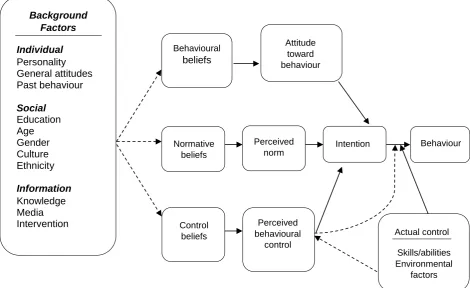
39 perceived to be the norm, and thirdly, control beliefs refer to behavioural controls such as environmental factors or skills and abilities. These behavioural controls can be perceived, or actual, and can affect behavioural intentions and onward performance of the behaviour. Fishbein and Ajzen (2010, p.21) maintain that a desired behaviour is achieved by a combination of the three predictors of intentions:
“The more favorable the attitude and perceived norm, and the greater the perceived behavioral control, the stronger should be the person’s intention to perform the behavior in question.”
[image:41.595.76.547.292.580.2]
Note: The background factors are just some of the examples highlighted in the original model. Fishbein and Ajzen explain that the dotted arrows indicate that further empirical work would need to be carried out to investigate causal links.
Figure 2. Fishbein and Ajzen’s (2010) schematic presentation of the reasoned action model.
Fishbein and Ajzen (2010) emphasise that the background factors referred to in their model, are purely a guide to which factors may affect beliefs and attitudes. They maintain that these variables warrant further investigation, within the context of any
Behavioural beliefs Attitude toward behaviour Normative beliefs Perceived norm
Intention Behaviour
40 given situation, to determine their influence. Furthermore, they advise that predictors can vary between individuals and populations, and that for some individuals, behavioural beliefs may be a greater predictor than control beliefs.
To apply an explanation of the model to the context of this study, the following example can be considered. A health care professional may have no intention of working interprofessionally and therefore not collaborate with other professions because of attitudes shaped by religion or culture. For another health care professional, they may have positive intentions to work interprofessionally, motivated by their behavioural and normative beliefs, stemming from their knowledge of the impact of effective IPW. However, environmental factors may prevent them from following their positive intention to work in a more interprofessional manner.
This model provides a useful framework to consider the attitude-behaviour relationship of practice mentors’ in relation to IPW, and IPPL for students. Fishbein and Ajzen (2010) emphasise that behaviour can only be fully understood when attitudes and behavioural controls are assessed. As discussed in Chapter 1, Section 1.5, attitudes to IPE have previously been investigated, but mainly from the perspective of academics within university settings. Fishbein and Ajzen’s (2010) model offers a potentially useful means of exploring how practice mentors’ attitudes, or other behavioural controls, affect their intentions to work interprofessionally or support IPPL for students. If there is a need to change the way that professions work together and to change organisational culture, the challenges which exist at the frontline of health and social care need to be understood. To fully understand the relationship between attitudes and behaviour in relation to IPW and IPPL, it is important that these issues are investigated within a relevant context, and from the perspective of professions who work within practice, and who mentor students within practice settings.
3.4A mixed-methods case study approach
41 investigate phenomena has become more valued (Gillham, 2010). To meet the objectives of this study (Chapter 2, Section 2.8), multiple methods were required to enable attitudes to be objectively measured, to analyse the effect of specific variables on attitudes to IPW, and IPPL for students, and to understand practice mentors’ perspectives of the enablers and barriers to IPW, and IPPL for students. A mixed-methods case study approach enabled the researcher to investigate practice mentors’ attitudes and perspectives using multiple “lenses”, and to understand these issues in relation to the context in which practice mentors work in, and pre-qualifying students learn.
3.5 Characteristics of a case study
As defined by one of the main authors associated with this approach, Yin (2014, p.16) identified a case study as:
“An empirical inquiry that investigates a contemporary phenomenon (the ‘case’)
in-depth and within its real-world context, especially when the boundaries between phenomena and context may not be clearly evident.”
With such an approach, the use of quantitative and qualitative methods to collect data are valued as a way of gathering multiple forms of evidence, studying multiple variables, and expanding on knowledge and theory (Tellis, 1997; Baxter and Jack, 2008; Yin, 2014). This diversity of methods assists in creating strong evidence within a study (Yin, 1999; 2014). As discussed earlier in this chapter (Section 3.2), the theoretical framework for this study drew from an interpretivist and constructivist approach. It is suggested that case studies orientate toward an interpretivist epistemological stance (Yin, 2014) and remain “true to the moral imperatives of constructivism” (Lincoln and Guba, 2013, p.80). The flexibility of this approach enables the researcher to explore beyond objective data and gain insight into participants’ perceptions and experiences (Gillham, 2010).
42 used where time and resources have to be taken into consideration, such as when a researcher is undertaking a study independently. In relation to other types of case studies, intrinsic and instrumental case studies are described by Stake (1995). The intrinsic case study is labelled as such when there may not be a specific question but an intrinsic interest in a particular case. In comparison, the instrumental case study has a specific question to guide the inquiry but the inquiry can be instrumental to understanding other issues. Swanborn (2010) draws a distinction between an extensive and intensive approach, with the former referring to the study of many instances or a large population. Alternatively, an intensive approach is said to focus on an in-depth study of one instance within its own context.
As a specific inquiry into the attitudes of practice mentors to IPW and IPPL, within their own working context and within one single health board, this case study relates to the case study definitions provided by Stake (1995), Swanborn (2014) and Yin (2014). This case study can therefore be defined as a single, intensive, instrumental case study of a group of practice mentors working within one health board and associated local authority. It focuses only on those professions who have a remit in mentoring or supervising health care and social work students learning within practice settings. In studying their attitudes to IPW and IPPL, it is anticipated that this case study will be instrumental in providing further insight into attitudes to IPW, IPPL for students, which variables affect these attitudes, and the factors perceived to act as enablers of and barriers to IPW, and IPPL for students.
3.5.1 Issues of generalisability and transferability with case studies