Munich Personal RePEc Archive
Does self-control depletion affect risk
attitudes?
Gerhardt, Holger and Schildberg-Hörisch, Hannah and
Willrodt, Jana
Institute for Applied Microeconomics, University of Bonn, Germany,
Düsseldorf Institute for Competition Economics (DICE), Heinrich
Heine University Düsseldorf, Germany, Bonn Graduate School of
Economics, University of Bonn, Germany
19 September 2017
Online at
https://mpra.ub.uni-muenchen.de/81644/
Does self-control depletion
affect risk attitudes?
⋆
Holger Gerhardt, Hannah Schildberg-Hörisch, and Jana Willrodt✩
Accepted for publication in theEuropean Economic Review DOI:10.1016/j.euroecorev.2017.09.004
September 19, 2017
Abstract
A core prediction of recent “dual-self” models is that risk attitudes depend on self-control. While these models have received a lot of attention, empirical evidence regarding their predictions is lacking. We derive hypotheses from three prominent models for choices between risky monetary payoffs under regular and reduced self-control. We test the hypotheses in a lab experiment, using a well-established ego depletion task to reduce self-control, and measuring risk attitudes via finely graduated choice lists. Manipulation checks document the effectiveness of the de-pletion task. We find no systematic evidence in favor of the theoretical predictions. In particular, depletion does not increase risk aversion.
Keywords: Risk attitudes, Self-control, Ego depletion, Dual-self models, Experi-ment
JEL Codes:D03, D81, C91
⋆We thank Carlos Alós-Ferrer, Simon Dato, Thomas Dohmen, Armin Falk, Drew Fudenberg, Wil-helm Hofmann, George Loewenstein, Sebastian Schaube, Martin Strobel, Matthias Sutter, and Joël van der Weele, as well as participants of theIMEBESS2015 conference, the “Motivation, Self-Control, and Economic Behavior” seminar at the University of Cologne, and theM-BEES2015 conference for helpful comments and discussion. We also thank four anonymous reviewers and the Associate Ed-itor for valuable comments that helped to substantially improve the manuscript. Financial support by the German Research Foundation (Deutsche Forschungsgemeinschaft,DFG) through the Collab-orative Research CenterSFB/TR15 and the Bonn Graduate School of Economics (BGSE) is gratefully acknowledged. We declare no competing financial interests.
✩Gerhardt: Institute for Applied Microeconomics, University of Bonn, Germany (holger.
1. Introduction
A decision maker’s attitude toward risk is a core component of her “economic per-sonality”. Risk preferences are an integral part of theoretical models in virtually all domains of economics, and empirical evidence documents that risk attitudes are an important predictor of both economic and health outcomes. For instance, a higher willingness to take risks is positively correlated with being self-employed, investing in stocks, and not having insurance, as well as being a smoker, drink-ing heavily, and bedrink-ing overweight (Anderson and Mellor, 2008; Barsky et al., 1997; Dohmen et al., 2011; Kimball et al., 2008).
Given the central role of risk attitudes in economic theory and their predictive power for individual behavior, a better understanding of factors that potentially influence risk attitudes is of great importance to economists. Inspired by the dif-ficulty of expected-utility theory to explain empirical phenomena like the Allais paradox or small-stakes risk aversion, various recently developed models build on insights from psychology and posit that risk attitudes are shaped by the interaction of “dual systems” (a deliberative and an affective system, respectively; Loewen-stein and O’Donoghue, 2005; Mukherjee, 2010) or of “dual selves” (a long-run and a short-run self; Fudenberg and Levine, 2006, 2011, 2012). In this framework, “self-control” amounts to the long-run self imposing restrictions on the short-run self. Consequently, a crucial determinant of a decision maker’s risk attitude is her cur-rent level of self-control resources. In particular, the prominent Fudenberg–Levine model predicts that lower levels of self-control induce stronger risk aversion for stakes within a particular range.
In this paper, we derive three explicit hypotheses on the relationship between self-control and risk preferences, using the model by Fudenberg et al. (2014), a ver-sion of the Fudenberg–Levine model that is particularly well-suited to address de-cision making under risk in the case of pairwise lottery choice. The hypotheses refer to choices among pairs of two-outcome lotteries, choices among a safe payoff and two-outcome lotteries (all paid out immediately), and to choices among pairs of two-outcome lotteries that will only be paid out with a delay. We adopt a fourth hy-pothesis directly from Loewenstein and O’Donoghue (2005); their model predicts that self-control depletion leads to more pronounced probability weighting (p. 28). From the similar dual-self model by Mukherjee (2010) we derive a set of alternative predictions. We test these hypotheses in a laboratory experiment.
The purpose of the experiment is to provide causal evidence on the link be-tween self-control and risk preferences. We exogenously manipulate the level of self-control between subjects using ego depletion, a concept from psychology (Baumeister et al., 1998). In doing so, we also provide sound empirical evidence regarding the effect of ego depletion on risk attitudes.
Our experiment uses a between-subject design with two conditions. At the be-ginning, subjects in the treatment group perform a so-called ego depletion task that is well-established in the literature and has been found to induce low
control in numerous studies (see the meta-analysis by Hagger et al., 2010). Deple-tion tasks are based on the noDeple-tion that the exerDeple-tion of self-control in one activ-ity consumes self-control resources, thereby increasing self-control costs in sub-sequent activities (Baumeister et al., 1998). The control group performs a similar, though nondepleting task, i.e., a task that does not reduce self-control resources.
Immediately following the respective task, we obtain precise measures of sub-jects’ risk attitudes. Our measures are based on finely graduated choice lists, one for each of the four hypotheses derived from Fudenberg et al. (2014) and Loewen-stein and O’Donoghue (2005); they also allow for testing the alternative predictions based on Mukherjee (2010). Each row of the choice lists consists of a choice be-tween two two-outcome lotteries. Inspired by Eeckhoudt and Schlesinger (2006) and Ebert and Wiesen (2014), we chose one lottery to be a mean-preserving spread of the other, with a sure payoff (a risk premium) being added or subtracted. A note-worthy feature of this method is that it allows quantifying subjects’ risk attitudes without assuming a specific utility function. This is particularly important in our case, since the Fudenberg–Levine model contains several functions of unknown parametric form as well as unobservable, difficult-to-estimate quantities.
Contrary to the predictions that we derive from the Fudenberg–Levine model, we do not find any evidence for increased risk aversion after ego depletion. For all of our four choice lists, subjects in the depletion group even exhibit a nonsignificant tendency toward less risk-averse choices, compared to the control group. Also evi-dence in favor of the fourth hypothesis (taken from Loewenstein and O’Donoghue, 2005) that reduced self-control leads to more pronounced probability weighting is limited at best. Neither do we find support for the alternative predictions derived from the model by Mukherjee (2010).
We do not observe that subjects behave in a more random manner under de-pletion. Depleted subjects also do not decide more quickly, as one would expect if they relied on heuristics to a stronger extent. Finally, self-control as a character trait (as opposed to the temporary level of self-control resources) does not explain heterogeneity of risk attitudes across individuals.
Overall, we deem our empirical results on the apparently weak link between self-control and risk attitudes informative for the future modeling of decision mak-ing under risk. In principle, we have no doubt that economics can benefit from in-corporating psychological concepts in general and self-control in particular. Just as much, we acknowledge the potential of dual-self models to explain behavior in neighboring areas like intertemporal choice and economic theories of addic-tion. However, different levels of self-control do not seem to influence risk attitudes strongly—and if they do, the influence is primarily in the opposite direction of the prediction of the most prominent applicable model. This casts doubt on the “uni-fied explanation” offered by Fudenberg and Levine (2006).
or stress—influence decision making under risk.1A common feature of this line of research is that it challenges the standard assumption of stable preferences (which has shaped economics since Stigler and Becker, 1977). Our results provide evidence that self-control does not belong to the aspects of the decision environment that induce large variations in risk preferences; hence, the standard view of stable pref-erences may be adequate at least with regard to risk prefpref-erences and self-control.
Related literature
Traditionally, economics has modeled decision makers without any reference to psychological concepts like “self-control”. However, in some cases, the standard models of economic choice—expected-utility theory and the discounted-utility model—have difficulties explaining observed behavior both in the field and in the laboratory. To remedy these problems, numerous theoretical models have been developed recently which capture the notion that some economic decisions may involve a competition between conflicting motives. Resolution of the conflict de-pends on the use of “self-control” (e.g., Gul and Pesendorfer, 2007; Dekel et al., 2009).
In particular, models involving “multiple selves” or “multiple systems” have be-come increasingly popular in economics. These “selves” or “systems” are either conceived of as diverging motives held by a decision maker at different points in time (e.g., Laibson, 1997; Diamond and Kőszegi, 2003; Heidhues and Kőszegi, 2009) or as conflicting motives that are present in a decision maker simultaneously (e.g., Loewenstein and O’Donoghue, 2005; Brocas and Carrillo, 2008; Fudenberg and Levine, 2006, 2011, 2012; Fudenberg et al., 2014). While the most common appli-cation of these models is temporal discounting, the dual-self model by Fudenberg and Levine (2006, 2011) as well as the “dual-system” models by Loewenstein and O’Donoghue (2005) and Mukherjee (2010) also explicitly address decision making under risk.
A particular strength of the model by Fudenberg and Levine is that it offers a “unified explanation” (Fudenberg and Levine, 2006, p. 1449) for several commonly observed discounting-related phenomena such as time inconsistency as well as risk-related phenomena such as the Rabin paradox2(Rabin, 2000) and the Allais paradox (Allais, 1953). More specifically, a core prediction of the Fudenberg–Levine model is that lower levels of self-control induce more risk-averse behavior for
1For instance, the results of Cohn et al. (2015), Guiso et al. (2014), Schulreich et al. (2014), and Schul-reich et al. (2016) are based on emotional priming and suggest that sadness and fear induce stronger risk aversion. By contrast, the results of Conte et al. (2016) indicate that sadness, fear, anger, and jovi-ality induce risk-seeking behavior. Benjamin et al. (2013), Deck and Jahedi (2015), and Gerhardt et al. (2016) find that cognitive load increases risk aversion. Concerning stress, Kandasamy et al. (2014) find that induced stress increases risk-averse behavior, while Buckert et al. (2014) observe stronger risk proclivity for gains, however only for a relatively small subgroup of participants.
2This paradox refers to the observation that the levels of small-stakes risk aversion observed in laboratory experiments are too high to be reconciled with behavior for higher stakes when assuming that decision makers care only about final wealth.
stakes within a specific range. However, empirical evidence on this particular rela-tionship between self-control and risk attitudes is scarce. This paper aims at pro-viding the first direct test of a central prediction of the Fudenberg–Levine model.
Fudenberg and Levine (2006, p. 1467), Fudenberg et al. (2014, p. 66), and espe-cially Fudenberg and Levine (2012, p. 3) motivate characteristics of their dual-self model by referring to the so-called “strength model” of self-control. This model was introduced to the psychology literature by Baumeister et al. (1998). The strength model is based on the idea that exerting self-control consumes self-control sources that can be depleted. As a consequence, use of self-control in one task re-duces the availability of self-control resources in a subsequent task. This process is referred to as “self-control depletion”, “willpower depletion”, or “ego depletion” (in analogy to the Freudianegothat controls theid). The strength model has also found its way into the economics literature. Not only does it serve as the basis of the models by Fudenberg and Levine (2012) and Ozdenoren et al. (2012); it is also part of the motivation of the analysis of resource allocation in the human brain by Alonso et al. (2014).
The foundations and implications of the strength model of self-control have been empirically investigated by both psychologists and economists numerous times (see Hagger et al., 2010, Carter and McCullough, 2014, Hagger et al., 2016, for extensive overviews and meta-analyses; see Bucciol et al., 2011, 2013, for economic applications). Yet, regarding the link between ego depletion and risk attitudes, the existing evidence is scarce and inconclusive. Moreover, none of the existing papers is tailored to testing the predictions of the Fudenberg–Levine dual-self model or the models by Loewenstein and O’Donoghue (2005) and Mukherjee (2010). Unger and Stahlberg (2011) find that depleted subjects make more risk-averse decisions, based on the results of a strongly framed investment experiment. Since Unger and Stahlberg instructed subjects to imagine that they were managers making a deci-sion on behalf of their firm, subjects’ decideci-sions in this experiment do not neces-sarily reflect only their own individual risk preferences. Measuring risk attitudes via choice lists, but with a total sample size of only N=54in a between-subject design, Stojić et al. (2013) find that subjects tend to be more risk-averse under ego depletion—however, not significantly so. By contrast, Friehe and Schildberg-Hörisch (2017) find that depleted subjects tend to be less risk-averse than nonde-pleted subjects. Their measure of risk attitudes, however, only captures risk-averse up to risk-neutral behavior and does not cover the domain of risk proclivity.3
The experimental method perhaps most closely related to willpower depletion is putting subjects under concurrent cognitive load while they make decisions. Cognitive load usually takes on the form of working-memory load. So far, three studies have investigated the relationship between individual risk attitudes and cognitive load: in Benjamin et al. (2013) and in Deck and Jahedi (2015), the working-memory load manipulation was remembering a 7-digit number, while it was re-membering a spatial arrangement of dots in Gerhardt et al. (2016). All three studies consistently find a significant increase in risk aversion due to cognitive load. At first glance, these findings seem to contradict the findings of our study, but at closer in-spection they do not.
While closely related, willpower depletion and cognitive load are not identical. Baumeister and Vohs (2016b, p. 70) see the crucial difference in that ego depletion targetsself-regulation, while cognitive load affectsattention. This view is supported by the results of Maranges et al. (2017). A similar distinction is made by Kahneman (2011, p. 43): “Ego depletion is not the same mental state as cognitive busyness.” He posits that “unlike cognitive load, ego depletion is at least in part a loss of mo-tivation” (pp. 42/43). If one wanted to frame it in terms of dual-system thinking, ego depletion could be interpreted as shifting the balance of power between the affective “System 1” and the deliberative “System 2” in favor of “System 1”, while cognitive load rather seems to influence thecontentsof “System 2”. Hence, it is not clear that the two manipulations should have the same effect.
Moreover, as Gerhardt et al. (2016, p. 27) note, the stake sizes in their study are so low that the Fudenberg–Levine model is unlikely to predict any effect. Thus, it is unlikely that the particular channel envisioned by Fudenberg and Levine (2006, 2011) can account for the observed increase in risk attitudes caused by cognitive load. From the point of view of Gerhardt et al. (2016), cognitive load probably in-fluences risk attitudes through a different channel.
Our study goes beyond the existing literature in that it tests the role of self-con-trol guided by the theoretical frameworks of Fudenberg and Levine (2006), Loewen-stein and O’Donoghue (2005), and Mukherjee (2010). Additionally, we provide par-ticularly clean evidence regarding the effect of ego depletion on risk attitudes. For this purpose, several aspects of the design of our experiment are crucial. We use (i) incentivized choices, (ii) ego depletion is the only manipulation, and (iii) all probabilities associated with the payoffs are known to subjects. Our risk measure (iv) covers the entire domain of possible risk attitudes and (v) enables us to detect even small effect sizes. (vi) We take restrictions on the magnitude of the involved payoffs, as they follow from the Fudenberg–Levine model, into account.
Moreover, we use several survey and behavioral responses of our subjects to provide an independent manipulation check, showing that subjects in the treat-ment group were more depleted than subjects in the control group.
Finally, our sample size (N=308) yields sufficient statistical power to docu-ment relevant effect sizes. The average effect size (Cohen’sd) isd=0.62in the meta-analysis by Hagger et al. (2010) that is based on a total of 83 papers
ing 198 independent studies. Carter and McCullough (2014) reevaluate the same ego depletion literature. They find evidence for small-study effects which, when con-trolled for, lead to lower estimates of the average effect size. In order not to fall prey to this issue, our study features a comparatively large sample size (N=308; this exceeds the sample size of all but one of the 198 studies covered by Hagger et al., 2010). Given our large number of observations, a power analysis shows that, using at-test and a significance levelα=0.05, we are able to detect, for each choice list separately, an effect size as small asd=0.32at the conventional level of power of 80% or above.
The rest of the paper is structured as follows.Section 2presents the Fudenberg– Levine model (2.1) and the hypotheses that we derive from the model regarding the impact of reduced self-control on risk attitudes (2.2) as well as the hypothe-ses based on Loewenstein and O’Donoghue (2005) (2.3) and Mukherjee (2010) (2.4). Section 3describes the design and procedural details of our laboratory experiment. Section 4presents the results.Section 5discusses our findings and concludes.
2. Theory and hypotheses
In the psychology literature, it has been argued that depletion induces an increased propensity to engage in risk-seeking behavior (Freeman and Muraven, 2010). The dual-self model by Fudenberg and Levine (2006, 2011) makes the opposite predic-tion: we should typically observe more pronounced risk aversion under depletion. Fudenberg et al. (2014) explicitly model self-control as a determinant of choices be-tween lotteries. Thus, their model allows us to derive precise hypotheses regarding the influence of ego depletion on pairwise lottery choice between two-outcome lotteries (as we use in our experiment).
2.1. Overview of the model by Fudenberg et al. (2014)
In all variants of the Fudenberg–Levine model, decision making is the outcome of the interaction of a short-run and a long-run self. One might think of the in-teraction between the two selves as that of a “planner” (the long-run self ) and a “doer” (the short-run self ), a terminology introduced by Thaler and Shefrin (1981). Both “selves” have the same per-period utility function, which is assumed to be monotonically increasing and concave. They differ, however, in the way they re-gard the future. The short-run self is completely myopic, i.e., it cares only about same-period consumption.4Consequently, it prefers to spend all available income immediately. Having a concave per-period utility function, the short-run self is risk-averse. The long-run self, in contrast, also derives utility from consumption in future periods and discounts them exponentially. Combined with its concave per-period utility function, this creates a preference for smoothing consumption over time. As a consequence of spreading consumption over a large number of
riods, the long-run self is (very close to) risk-neutral (for a formal derivation, see Fudenberg and Levine, 2011, p. 44).
The short-run self’s preference for immediate consumption and the long-run self’s consumption-smoothing motive generate a conflict of interest. By exerting self-control, the long-run self can restrict the short-run self to a consumption level below the latter’s desired consumption level. Importantly, in the model by Fuden-berg and Levine, the described conflict of interest only arises forunanticipated in-come.Anticipatedincome does not create a need to exert self-control: based on foreseeable income, the long-run self allocates a budget to the short-run self of each period, and the short-run selves spend exactly that budget.
Exertion of self-control when deciding over how to spend unanticipated in-come is assumed to be costly. This cost increases in the difference between the short-run self’s utility derived from the consumption that the long-run self “per-mits” and the short-run self’s preferred course of action, i.e., spending the entire period income immediately. To fit “the psychological evidence that self-control is a limited resource” as well as to explain the Allais paradox, the self-control cost function has to be convex, as Fudenberg and Levine (2006, p. 1467; 2011; 2012, pp. 3, 16) argue.
Fudenberg et al. (2014) develop a version of the Fudenberg–Levine model that improves the model’s applicability to decision making under risk. Their main sim-plifying assumption is linearity of the long-run value function. This means that the marginal utility of saving is constant, such that the long-run self is completely risk-neutral (instead of being only very close to risk-risk-neutral). InSection A, we use this version of the Fudenberg–Levine dual-self model to formally derive Hypotheses1, 2, and3. In the following, we present the hypotheses and explain the intuition be-hind them.
2.2. Hypotheses derived from Fudenberg et al. (2014)
Hypothesis 1. Ego depletion leads to greater risk aversion for choices between lot-teries if at least one of the lotlot-teries contains a small payoff below and another larger payoff above a cutoff valuezˆ.
ˆ
z denotes a threshold such that monetary lottery payoffs belowzˆ are spent completely, while any part of a payoff that exceedszˆis saved for future consump-tion. The thresholdzˆis endogenously determined by the interplay of the long-run self and the short-run self. It depends on the lottery under consideration, the menu of lotteries as well as the marginal cost of self-control. Therefore, ego depletion— which increases the marginal cost of self-control if the cost function is convex— shifts the balance of power in favor of the risk-averse short-run self, resulting in an increase in the degree of risk aversion expressed by the lottery choice. This is due to two effects: First, for a givenzˆand a lottery with one payoff below and one payoff abovezˆ, the relative contributions of the short-run self’s and the long-run self’s utility to the expected utility of this lottery change, with the effect that the
combined preferences exhibit increased risk aversion (seeSection A). Second, the thresholdzˆincreases. As a consequence, there are decisions which the short-run self is entirely in charge of under depletion even though the long-run self would have exerted self-control under nondepletion.
Hypothesis 2. The effect of ego depletion (i.e., increased risk aversion) is stronger when one “lottery” is a sure payoff.
When the per-period utility function is concave, a sure payoff leads to higher utility than a lottery with the same expected value. Consequently, self-control costs are higher in case the long-run self actually exerts control over the short-run self. Compared to a decision among two two-outcome lotteries, this amplifies the in-crease in risk aversion due to ego depletion (see also Fudenberg and Levine, 2011, pp. 35, 46, 66).
Hypothesis 3. When payoffs are delayed, ego depletion has no effect.
In case we observe the effects of ego depletion that we predict in Hypotheses1 and2, these need not necessarily be caused by a decrease in self-control resources. Other channels—for instance, a change in the propensity to rely on heuristics— could generate the same effects. Our third hypothesis thus serves to distinguish an influence of self-control from other possible explanations.
For this purpose, we exploit a particular feature of the dual-self model, namely that the short-run self cares only about the current period. Although Fudenberg and Levine (2006) do not specify the length of one period—i.e., the time horizon for one run self—it should not exceed a few days: “the horizon of the short-run self is on the order of a day to a week” (Fudenberg and Levine, 2011, p. 39). Thus, when both lotteries exclusively feature payoffs that occur in the future—i.e., beyond the short-run self’s time horizon—self-control does not affect decisions. Therefore, self-control costs or an increase in self-control costs will not make a dif-ference for risk attitudes over future payoffs.5If, however, ego depletion affected risk attitudes through the increased use of heuristics, this would also be the case for choices concerning the future. Thus, according to this alternative hypothesis, we would find the same change in risk aversion when payoffs are delayed as when they are immediate.
2.3. Hypothesis derived from Loewenstein and O’Donoghue (2005)
Hypothesis 4. For a long shot, ego depletion leads to a lower degree of risk aversion.
A long shot is a lottery that offers a low probability of obtaining a high pay-off and a high probability of obtaining a low paypay-off. These lotteries are sometimes
also referred to as “dollar bets”. Hypothesis4is based on the idea that the deci-sion maker overweights small probabilities and that this distortion becomes more pronounced under ego depletion. Overweighting the small probability of winning a large amount makes a long shot subjectively attractive despite its being relatively risky. A stronger distortion of the small probability in the direction of ½ under ego depletion should thus make averse decision makers less averse, and risk-seeking decision makers more risk-risk-seeking.
Hypothesis4is a direct implication of Loewenstein and O’Donoghue (2005,
p. 28). It deviates from the Fudenberg–Levine model in that Fudenberg and Levine assume the absence of probability weighting and a strictly risk-averse short-run self. The background of this hypothesis is empirical evidence that many subjects exhibit risk proclivity for long shots (Harbaugh et al., 2010). A common explana-tion for this phenomenon is probability weighting, in particular overweighting of small probabilities that are associated with large payoffs (as modeled by cumula-tive prospect theory, Tversky and Kahneman, 1992). Probability weighting is mod-eled explicitly as the outcome of the interaction of a deliberative and an affective system by Loewenstein and O’Donoghue (2005). In their model, the preferences of the deliberative system can be represented by expected-utility maximization, i.e., the deliberative system takes probabilities at face value. In contrast, the affective system assigns identical weight to all possible outcomes (i.e., ½ in the case of two-outcome lotteries) instead of using the true probabilities. The interplay of both sys-tems then results in an inverse-S-shaped probability weighting function. Loewen-stein and O’Donoghue (2005, p. 28) explicitly state that “if a person’s willpower is depleted . . ., then she should exhibit a more [inverse-]S-shaped probability weight-ing function”. Thus, for long shots, we expect reduced risk aversion or increased risk proclivity, respectively, under depletion, because attaching a higher probabil-ity weight to the large payoff makes picking the long shot more attractive.
2.4. Hypotheses derived from Mukherjee (2010)
Hypothesis 1 b. (Alternative to Hypothesis1.)Ego depletion leads to increased risk aversion when choosing between 50%-50% lotteries.
Hypothesis 2 b. (Alternative to Hypothesis2.)Ego depletion leads to increased risk aversion when choosing between a 50%-50% lottery and a sure payoff.
Hypothesis 3 b. (Alternative to Hypothesis3.)Ego depletion also leads to increased risk aversion when choosing between two 50%-50% lotteries for which the payoffs are delayed.
Assuming that the strength of the affective system relative to the deliberative system depends on self-control resources, we can also derive predictions for our experiment from the model by Mukherjee (2010). According to this model, the af-fective system replaces all original nonzero probabilities by a weight of1/n (just like in the model by Loewenstein and O’Donoghue, 2005), and it combines these
with a concave value function (e.g.,vA(x)=sgn(m)xm withm<1). Note that the combination of both effects can generate averse as well as neutral or risk-seeking behavior. The deliberative system, by contrast, uses the correct probabili-ties and combines them with a linear value function, i.e., it exhibits risk neutrality. Total valuation is given by a weighted sum of the separate valuations by the affec-tive and the deliberaaffec-tive system.
In combining the affective with the deliberative valuation, a parameterγ∈[0, 1] determines the relative strength of the affective system. As a consequence, a de-crease in willpower—i.e., an inde-crease inγ—affects risk attitudes through two si-multaneous effects: a shift in probability weighting (in the direction of completely uniform1/nweighting) and a shift in the evaluation of the outcomes (in the direc-tion of more strongly concave valuadirec-tion).
This entails that the prediction regarding a weakening of willpower is straight-forward for equal-probability gambles: for a 50%-50% two-outcome gamble, the 1/nweighting is exactly correct, so that both systems use the same, correct weight-ing of probabilities. At the same time, the depletion-induced shift away from the linear toward the concave value function leads toincreasedrisk aversion. Hence, the model by Mukherjee (2010) predicts the alternative Hypotheses1 b,2 b, and3 b.
Hypothesis 4 b. (Alternative to Hypothesis4.)For a long shot, there is greater vari-ance of observed risk attitudes in the depleted group than in the nondepleted group of subjects.
The model’s prediction for the “long shot” is a bit more involved. Since a de-crease in willpower entails the two effects described above that potentially go in opposite directions, the total effect depends on two factors: the exact probabilities of the outcomes and the exact curvature of the affective system’s value function (see Table 2 of Mukherjee, 2010, for an illustration). More precisely, depending on the probabilities and outcomes, there is a curvature parameterm∗such that for m<m∗, the affective system exhibits risk aversion, and an increase inγleads to greater risk aversion of the total valuation. Conversely, form>m∗, the affective system exhibits risk proclivity, and an increase inγleads to greater risk proclivity of the total valuation. Form=m∗, both systems are risk-neutral, such thatγhas no effect.
3. Experiment
3.1. General setup
Our objective is to test whether there is a causal effect of the current level of self-control on risk attitudes. We employ a between-subject design with two groups and exogenously vary the level of self-control using an ego depletion task.6More specif-ically, subjects in the depletion and in the control group work on different versions of a task that bring about different levels of self-control capacity. Subsequently, we measure subjects’ risk attitudes via incentivized choices between lotteries.
3.2. Depletion task
In our experiment, the depletion task serves as the source of exogenous variation between subjects. Being such a vital part of the experiment, we required it to be both well established and as effective as possible in inducing low self-control. The task of our choice, the crossing-out letters task, meets both criteria and is also easily implementable in the lab. According to the meta-analysis of Hagger et al. (2010) the crossing-out letters task is the most effective of all ego depletion tasks. It has been used successfully to induce changes in outcomes like persistence in watching a boring movie, resistance to persuasion, advice on risk taking given to others in a vignette-style questionnaire, and offers made in a dictator or ultimatum game (Baumeister et al., 1998; Wheeler et al., 2007; Freeman and Muraven, 2010; Achtziger et al., 2015, 2016, respectively).
In the depletion group, the task works as follows. Subjects are first given a printed text spanning 22 lines and are asked to cross out all instances of the letter “e” (including the uppercase letter “E”). Subjects work on this task for three
min-utes. Immediately afterwards, subjects in the depletion group are given a different text spanning 44 lines. This time they are asked to cross out all instances of the let-ter “e” except when there is a vowel right aflet-ter the “e” or two letlet-ters away (in either direction). Subjects work on this second part of the task for seven minutes. The ra-tionale why this task depletes self-control is that it requires the constant cognitive suppression of an automatic impulse—the impulse to cross out the letter “e” that was built up in the first part of the task.
The task assigned to the control group also follows the standard of the litera-ture. Subjects work on the same texts as the depletion group for the same dura-tion but are only required to cross out all “e”s, without any addidura-tional rule, in both parts. Hence, there is no self-control–consuming impulse suppression in the con-trol group.
6A within-subject design would have had the advantage of providing us with a baseline measure of risk attitudes at the individual instead of group level. However, we would have needed to present sub-jects the same lottery choices before and after the self-control manipulation. This would have been a severe drawback because subjects are likely to remember their earlier choices. Paired with a prefer-ence for consistency (Falk and Zimmermann, 2017), recalling previous choices might counteract any depletion effect.
We chose texts that we expected to be irrelevant and uninteresting to most sub-jects. The texts were based on the appendix of a statistics text book (Bamberg and Baur, 2001) and describe criteria for the choice of statistics software in a very gen-eral way. We provide the exact texts of the depletion task inOnline Appendix C.
We deliberately chose not to pay subjects for this task because there is evi-dence that receiving payment for a task counteracts ego depletion (Muraven and Slessareva, 2003). In addition to announcing private feedback (to be provided at the end of the experiment), the instructions asked subjects to work on the task consci-entiously. The data show that the vast majority of subjects did.7
3.3. Measure of risk attitudes
We used the following criteria to choose the method for quantifying subjects’ risk attitudes:
• It does not require assuming a specific utility function or choice model.8
• Lotteries of various types, including long shots (lotteries with a low probabil-ity of winning a high prize) and safe choices (degenerate lotteries), need to be implementable.
• It has to allow for the measurement of risk aversion, risk neutrality, and risk proclivity—ideally in a single decision situation.
• It should provide a fine measure of risk attitudes to enable us to detect small effect sizes.
Following these criteria, we chose a measure using two-outcome lotteries and mean-preserving spreads of these lotteries. Our method was inspired by Ebert and Wiesen (2011, 2014) whose experimental measures are based on the model-independent concept of risk apportionment (Eeckhoudt and Schlesinger, 2006). Ebert and Wiesen (2014) classify an individual as risk-averse if she prefers a lottery L = (cL,1,pL,1;cL,2,pL,2) = (x−r, 50%;x−k, 50%) over the lottery M = (cM,1,pM,1;cM,2,pM,2) =(x−r−k, 50%;x, 50%), where x, r, and k are monetary payoffs. Note that this coincides with preferring a lottery to a mean-preserving spread of that lottery. In case the individual prefersM overL, she is classified as risk-seeking. In general—i.e., with arbitrary probabilitiespL,1,pL,2—LotteryM is constructed by settingcM,1=x−(pL,2/pL,1)r−k. This is needed for constructing the mean-preserving spread of the long shot.
7For the first paragraph of the first part of the task, 85% of subjects reported the correct value or a value within the 10% interval around the correct value (typically below the correct value). This task was the same for both groups. For the first paragraph of the second task, performance was compara-ble for the control group (91% of subjects reported values inside the 10% interval around the correct value), but inferior for the treatment group who had a more difficult task to fulfill (only 56% of sub-jects stated values inside the 10% interval around the true value).
Table 1
Overview of the choice lists presented to subjects.
AlternativeA AlternativeB
cA,1 pA,1 cA,2 pA,2 cB,1 pB,1 cB,2 pB,2
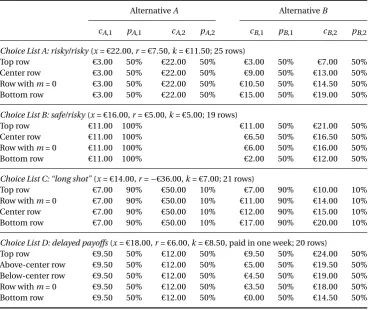
Choice List A: risky/risky(x=€22.00,r=€7.50,k=€11.50; 25 rows)
Top row €3.00 50% €22.00 50% €3.00 50% €7.00 50%
Center row €3.00 50% €22.00 50% €9.00 50% €13.00 50%
Row withm= 0 €3.00 50% €22.00 50% €10.50 50% €14.50 50%
Bottom row €3.00 50% €22.00 50% €15.00 50% €19.00 50%
Choice List B: safe/risky(x=€16.00,r=€5.00,k=€5.00; 19 rows)
Top row €11.00 100% €11.00 50% €21.00 50%
Center row €11.00 100% €6.50 50% €16.50 50%
Row withm= 0 €11.00 100% €6.00 50% €16.00 50%
Bottom row €11.00 100% €2.00 50% €12.00 50%
Choice List C: “long shot”(x=€14.00,r=−€36.00,k=€7.00; 21 rows)
Top row €7.00 90% €50.00 10% €7.00 90% €10.00 10%
Row withm= 0 €7.00 90% €50.00 10% €11.00 90% €14.00 10%
Center row €7.00 90% €50.00 10% €12.00 90% €15.00 10%
Bottom row €7.00 90% €50.00 10% €17.00 90% €20.00 10%
Choice List D: delayed payoffs(x=€18.00,r=€6.00,k=€8.50, paid in one week; 20 rows)
Top row €9.50 50% €12.00 50% €9.50 50% €24.00 50%
Above-center row €9.50 50% €12.00 50% €5.00 50% €19.50 50%
Below-center row €9.50 50% €12.00 50% €4.50 50% €19.00 50%
Row withm= 0 €9.50 50% €12.00 50% €3.50 50% €18.00 50%
Bottom row €9.50 50% €12.00 50% €0.00 50% €14.50 50%
To measure the intensity of a subject’s risk attitude, we determine the monetary
amountm(compensation or “risk premium”) that is needed to make her
indiffer-ent between the lotteriesLandM+m. To this purpose, we use a choice list format, as introduced by Holt and Laury (2002). The switching row in the choice list deliv-ers a proxy of the indifference-generating risk premiumm∼(L,M). Ifm∼(L,M)>0,
the decision maker exhibits risk aversion for that particular lottery pair; conversely, m∼(L,M)<0indicates risk proclivity.
Table 1provides an overview of all four choice lists (one per hypothesis) that we used, in the order in which they were presented to subjects: Choice List A is de-signed to address Hypothesis1, while Choice List B relates to Hypothesis2, Choice List C to Hypothesis4, and Choice List D to Hypothesis3.
We decidednotto randomize the order of the choice lists since the most basic hypothesis, Hypothesis1, is addressed by Choice List A. We had all subjects com-plete this choice list first to ensure that even if depletion effects fade out over a time as short as a minute, they should be present consistently when testing our most ba-sic hypothesis.
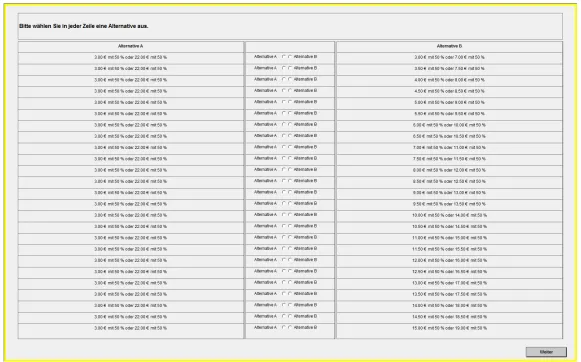
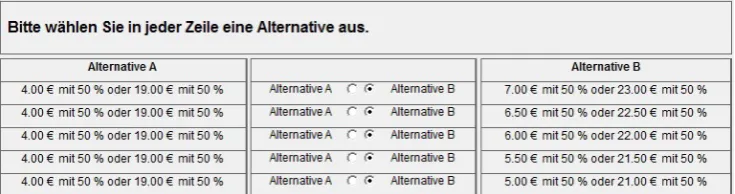
In the instructions we referred to the choice lists as “tables”. A sample screen-shot displaying the exact representation that subjects saw is included inFig. 1.
Each choice list starts from a first-order stochastically dominated choice and spans risk aversion, risk neutrality, and risk proclivity. To make the decisions easy for subjects to grasp, probabilities remain the same within a given choice list. More-over, in all choice lists, the left lottery stays constant, while the right lottery’s payoff changes in steps of €0.50 per row. Additionally, the expected value of “AlternativeA” is similar (between €10.75 and €12.50) for all four choice lists.
To address a recent criticism of choice-list–based measurement of risk attitudes by Andersson et al. (2016), we put the expected median switching row in the control condition to the center of each list.9
Moreover, we balanced the exposition of our choice lists: in two of our choice lists, the dominated choice in the first row is on the left, and in the other two, it is on the right.
Obviously, there is a trade-off between the brevity of a choice list and the fine-ness and extent of measurement. Some experimenters solve this by using differ-ently sized increments, i.e., smaller increments in intervals they expect to be most relevant. Since we were concerned that this might confound subjects’ choices by steering the switching row in a certain direction, we used constant increments (of €0.50) throughout all choice lists. To be able to pick up finer depletion-induced changes in risk attitudes, switching points in four additional “small” choice lists were elicited after subjects had made their choices in all four “large” choice lists. These “small” choice lists consisted of six rows covering the switching range in the respective “large” choice lists and had increments of €0.10. Importantly, one of the rows of the “small” choice lists was randomly chosen for payment if and only if the respective switching range of the associated “large” choice list had been se-lected for payment. This ensures that subjects have no incentive to misrepresent their preferences in the “large” choice lists in order to face lotteries with greater expected value in the “small” choice lists.
A particular feature of our computerized implementation of the choice lists is that, once a subject switches, all subsequent rows are automatically filled in. Sub-jects could still adjust their choices and had to press a “Continue” button to confirm their choices before moving on to the next choice list. This was done to let as little time as possible pass between the depletion task and the measurement of risk atti-tudes. While it is typically assumed that self-control resources replenish after some time, we are not aware of any evidence on how long depletion effects last. Further-more, we did not want to exhaust or annoy subjects, and thus possibly impair the quality of our data, by forcing them to make 85 clicks.
Fig. 1.Choice List (“Table”) A: risky versus risky.
Translation:“Please choose one alternative in each row. Alternative A [first row:] €3.00 with 50% or €22.00 with 50%. Alternative B [first row:] €3.00 with 50% or €7.00 with 50%.”
A final aspect to consider is the value of zˆ in the Fudenberg-Levine model, the theoretical threshold above which all additional income is saved. At least one of the lotteries needs to be such that one outcome is above and one belowzˆ. To elicit a proxy for subjects’ individualzˆ values, we use two vignettes in the post-experiment questionnaire. The vignettes asked subjects to imagine two scenarios. The first scenario is going out with friends in the evening. The vignette asked sub-jects to indicate the minimal amount of money spent while going out such that they would consider the evening “expensive”. The second scenario is casually dis-covering an item that one would like to buy in a store. It asks subjects to state the minimal price of that item that would induce them to deliberate about the expen-diture instead of buying the item immediately.
Median values in the two vignettes are €15 and €20, respectively. Thus, taking these values as proxies forzˆ, our design of the choice lists ensures that, for most of the subjects, the vast majority of lottery choices under consideration should be affected by self-control depletion.
Although the “true” cutoff zˆ is unobservable, one can argue that our choice lists likely fulfill the payoff requirements mentioned above even without taking the proxies provided by the vignettes into account. Strictly speaking,zˆvaries between subjects, between lotteries, and between conditions, as well as over time, because all these factors might affect the marginal costs of self-control. However, as long as, for example, €3<zˆ<€22for Choice List A, the list covers the payoff range that en-ables a test of the prediction of the Fudenberg–Levine model that lower self-control leads to greater risk aversion. The upper bound of €22 seems very reasonable given that the median daily disposable income, net of rent, in our sample is only €10 (sur-veyed through the post-experiment questionnaire). Regarding the lower bound, we argue that the value ofzˆmust be above the minimum payoff of our lotteries (€3) for the majority of subjects. If this was not the case, subjects would have to exhibit risk neutrality according to the Fudenberg–Levine model. Contrary to this, most of our subjects turn out to be risk-averse, as we report in theResultssection. These arguments jointly suggest that the payoff ranges were appropriate for our purposes.
3.4. Manipulation checks
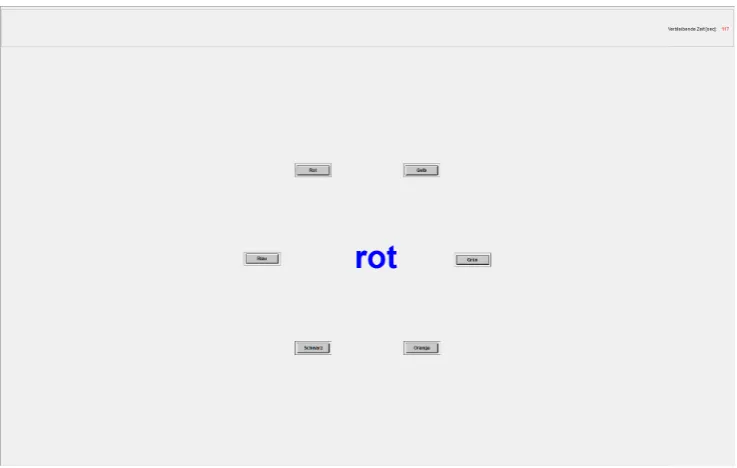
Fig. 2. Screenshot of the computerized Stroop test.
Notes:The screenshot depicts an incongruent trial, i.e., the meaning of the color word “rot” (“red”) does not correspond to the color of the word (in this case, shown in blue on the screen). Subjects would have to press the “Blau” (“Blue”) button.
candidates for manipulation checks (e.g., the Stroop test) are, however, likely to alter subjects’ level of self-control themselves. We therefore include a short ad hoc measure that we do not consider depleting right after the depletion task and a more comprehensive, but possibly depleting part of the manipulation check right after measuring risk attitudes. Because self-control resources are generally thought to replenish over time, doing parts of the manipulation check only after the main part of the experiment may have the disadvantage that self-control resources could have already replenished partly or completely.
Our first short ad hoc measure consists of choosing the difficulty of a puzzle (on a scale from one to ten). Our conjecture was that depleted subjects would select an easier puzzle. Since the puzzle is solved only later, the mere choice of its difficulty level should not affect subjects’ level of self-control resources.
The second part of the manipulation check, performed after risk attitudes have been measured, is a computerized version of the Stroop test (Stroop, 1935; MacLeod, 1991). The Stroop test is well-established both as a depletion task and as a dependent variable in depletion studies (see Hagger et al., 2010). In our com-puterized version, the name of a color appears in bold letters at the center of the screen. The letters themselves are also printed in color. In “congruent trials”, this color corresponds to the word’s meaning, while it differs from the word’s meaning in “incongruent trials”. Subjects’ task is to indicate the color in which the letters are printed—and not the meaning of the color word. To this end, the screen shows six buttons that are labeled with color names and located on a circle around the bold
color word. For a screenshot, seeFig. 2. Subjects have to click the button corre-sponding to the color in which the word is printed as fast as they can. Just as in the depletion task, in incongruent trials of the Stroop test, subjects have to exert self-control to suppress an automatic impulse, namely clicking the button correspond-ing to the meancorrespond-ing of the word. Immediately after each button click, a new word appears. Subjects receive no feedback. In our experiment, subjects work on this task for three minutes. Widely used measures to check for depletion effects are av-erage response times per trial and the number of correct answers. We expect longer response times and a lower number of correct answers in the depletion compared to the control group.
As a third measure that is employed frequently (see Hagger et al., 2010), we asked subjects at the beginning of the final questionnaire how much they had to concentrate in each part of the depletion task and how exhausted they felt before the experiment and at the present moment. For both we calculate differences and compare them between treatment and control group.
Based on these five independent components of the overall manipulation check (choice of difficulty of a puzzle, response times and number of correct re-sponses in the Stroop test, difference in self-reported need to concentrate during the two parts of the depletion task, and difference in self-reported fatigue at the be-ginning and end of the experiment) that all have their distinct strengths and weak-nesses, we construct a joint index of depletion. Wez-standardize each of the five measures, average over them, and againz-standardize the result. Averaging over different measures of the same construct is a common procedure to reduce mea-surement error. Thus, we believe that the aggregate depletion index is suited best to indicate the effectiveness of the depletion task.
3.5. Procedural details and implementation
The detailed sequence of events in each session was as follows:
(i) Instructions. Upon entering the lab, subjects drew a card containing a number and were asked to sit in the respective booth. They read the in-structions, were encouraged to ask questions in private, and answered sev-eral control questions on the computer. (A translation of the instructions to English can be found inOnline Appendix B.)
(ii) Depletion task.Subjects participated in the treatment-specific version of the crossing-out letters task that either induced low control or left self-control unchanged.
(iii) Part 1 of the manipulation check.Subjects chose the difficulty of a puzzle (on a scale from 1 to 10) that they solved at the end of the experiment.
(iv) Measurement of risk attitudes.Subjects made lottery decisions in the four choice lists.
(vi) Puzzle.Subjects solved the puzzle with the chosen level of difficulty.
(vii) Postexperiment questionnaire, includingPart 3 of the manipulation check
(self-reported required concentration during each part of the depletion task and self-reported exhaustion before and after the experiment).
The experiment was conducted at the BonnEconLab, using the software z-Tree (Fischbacher, 2007). We usedORSEE(Greiner, 2015) for inviting subjects and for recording their participation. The experiment consisted of thirteen sessions in July and October 2014. Treatment and control were balanced with respect to day of the week and time of the day, since there is empirical work that suggests that both self-control and measured risk attitudes may exhibit a correlation with time of the day (Kouchaki and Smith, 2014).
All written instructions and all recorded data (except, of course, personal data such as information on subjects’ bank accounts) as well as the source code used for running the experiment and used in the data analysis are available as supple-mentary material on the journal website.
308 subjects participated, each in only one group (152 in the depletion and 156 in the control group). 150 subjects were male (74 in the depletion and 76 in the con-trol group), 158 were female (78 in the depletion and 80 in the concon-trol group). Most subjects (92%) were students and majored in various subjects. Age varied between 17 and 55 years10(median age, 24 years; 93% in the range 19–30 years) and did not differ significantly between groups. No particular exclusion criteria applied, except for color blindness.
In total, the experiment lasted about 75 minutes (including payment). Sub-jects received on average €12.25 from the outcome of one randomly drawn lottery decision (random lottery incentive mechanism;RLIM) plus an additional €1 for filling out the questionnaire. Given that we are testing theories that deviate from expected-utility theory, a comment regarding incentive compatibility of the pay-ment mechanism is in order. Our instructions tell subjects that it is in their best interest to treat each choice as if it were the only one because only one lottery de-cision will be randomly selected for payment. Nevertheless, in case subjects do not “isolate” decisions but integrate them at least partially into a compound lot-tery, experiments with only one choice may yield different results than
experi-ments with repeated decisions. This can even occur when theRLIMis used,
un-less subjects obey “statewise monotonicity” (Azrieli et al., 2017), a condition equiv-alent to “compound independence” (Segal, 1990). In fact, the Fudenberg–Levine modelcanpredict that different choices are made in a setup with a single choice than in a setup with multiple choices and remuneration via theRLIM. Importantly, however, we show inSection A.4inAppendix Athat the qualitative prediction re-garding the treatment effect is unaffected. Hence, judged by the dual-self model,
10Underage subjects must provide written consent by their parents in order to participate in ex-periments at the BonnEconLab.
theRLIMis appropriate for detecting treatment differences resulting from reduced self-control.
Payments were made in a separate room to ensure privacy. Those subjects for whom the delayed lottery was drawn did not receive the lottery’s payoff until a week later. They could choose between a dated bank transfer and collecting the amount in cash in person.
The postexperiment questionnaire measured socioeconomic and demo-graphic characteristics (age, gender, high schoolGPA, latest math grade at school, student status and field of study, experience with experiments) and assessed sub-jects’ general attitudes toward risk and time, using questions from theSOEP ques-tionnaire (German Socio-Economic Panel). Additionally, via ten questions adopted from Hauge et al. (2014), we aimed at measuring whether subjects primarily used the deliberative or the affective system while making their lottery choices. Subjects also answered a questionnaire on character trait self-control (Tangney et al., 2004; Bertrams and Dickhäuser, 2009) as well as a questionnaire on positive and negative affect at the present moment (Watson and Clark, 1999).
4. Results
4.1. Manipulation checks
A manipulation check based on the aggregate depletion index indicates that sub-jects in the treatment group were significantly more depleted than their counter-parts in the control group (two-sidedt-test,p<0.001). Translating the aggregate depletion index into a standardized effect size, we find Cohen’sd=0.74. More-over, for each of the five separate parts that comprise the depletion index (see Sec-tion3.4), we observe differences between depleted and nondepleted subjects in the expected direction. That is, subjects in the depletion treatment chose slightly lower levels of difficulty of a puzzle (two-sided Wilcoxon rank-sum test,p=0.391), had slightly longer response times and a slightly lower number of correct answers in the Stroop test (two-sided Wilcoxon rank-sum test:p=0.286andp=0.222, re-spectively), a stronger increase in concentration required for the second part of the depletion task (two-sided Wilcoxon rank-sum test,p<0.001), and a stronger increase in exhaustion compared to their control-group counterparts (two-sided Wilcoxon rank-sum test,p=0.176).
4.2. Descriptive statistics
Recall that the switching row in each of the four choice lists measures an individ-ual’s risk attitude. More precisely, differences in expected values of the less risky lot-tery and its mean-preserving spread at the switching row measure an individual’s “risk premium”m∼that has to be added to the riskier lottery to make that subject
Table 2
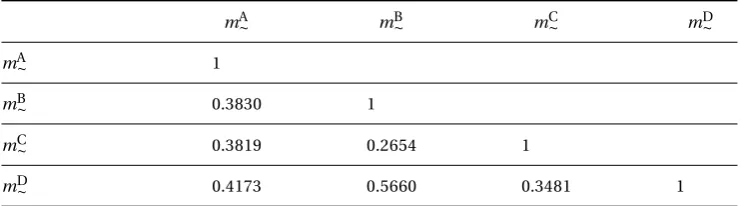
Pairwise Pearson’s correlation coefficients of the individual indifference-generating risk premia in the four choice lists.
mA∼ mB∼ mC∼ mD∼
mA∼ 1
mB∼ 0.3830 1
mC∼ 0.3819 0.2654 1
mD∼ 0.4173 0.5660 0.3481 1
Note.Forallcorrelations shown above:p<0.0001.
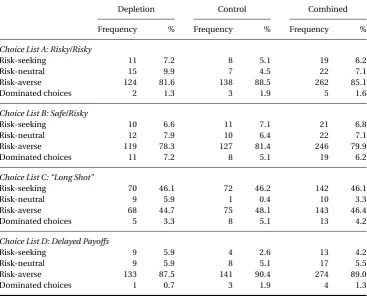
risk premium),risk-neutral(risk premium of zero),risk-averse (positive risk pre-mium), anddominated choices.
For Choice Lists A, B, and D, 80% to 89% of subjects made risk-averse choices. This is in line with the widely observed empirical result that a vast majority of in-dividuals is risk-averse (e.g., Harrison et al., 2007; Dohmen et al., 2011).
For Choice List C, where one of the alternatives is a long shot, i.e., offers a low probability of winning a large prize, only 46% of subjects are classified as risk-averse. This shift in expressed risk attitudes due to the presence of a long shot is expected, based on the commonly observed fourfold pattern of risk attitudes (Har-baugh et al., 2010) which is usually attributed to an overweighting of the small prob-ability associated with the large payoff.
A more detailed description of how the risk premium is calculated and how the categories are formed as well as a table displaying the absolute and relative frequencies of choices in the four choice lists can be found inOnline Appendix A.
It is noteworthy that the size of the indifference-generating risk premia reacts to differences between the choice lists in a plausible manner: On average, subjects exhibit the highest risk premium (mA∼=€2.69) for Choice List A (risky vs. risky
lot-tery), i.e., the choice list with the largest difference between the spreads of the two lotteries. For the long shot, the average risk premium ism∼C= −€0.36, indicating
that on average subjects behave in a slightly risk-seeking manner.
The risk premia measured in the different choice lists exhibit significant and positive pairwise correlation coefficients (seeTable 2). Hence, we are confident that our measures of risk attitudes pick up systematic variation in underlying individual risk attitudes.
4.3. Treatment effects
Fig. 3displays subjects’ choices in detail and serves as a graphical representation of our main results. The variable on the horizontal axis is the indifference-generating “risk premium”m∼, i.e., the difference in expected values between the lotteries in
the switching row in euros. Thus, subjects to the right of zero are classified as risk-averse, while those to the left are classified as risk-seeking.
Result 1. (Hypotheses1,2and1 b,2 b.)Ego depletion does not increase risk aversion.
We do not observe an increase in risk aversion of the treatment relative to the control group for any of the choice lists. For Choice Lists A and B, Wilcoxon rank-sum tests do not reject the null hypothesis of no treatment difference in risk pre-mia (two-sided p=0.245 and p=0.253, respectively). For both choice lists, de-pleted subjects even show a nonsignificant tendency toward less risk aversion, with depleted subjects exhibiting lower indifference-generating risk premia in both Choice List A (∆mA
∼=€0.30; Cohen’sd=0.13) and Choice List B (∆mB∼=€0.10; Co-hen’sd=0.07).
Result 2. (Hypotheses3and3 b.)When payoffs are delayed, ego depletion does not affect risk attitudes.
Also in Choice List D, where all payoffs are delayed by one week, depleted sub-jects are slightly less risk-averse than subsub-jects in the control group (∆mD
∼=€0.22; Cohen’sd=0.15). Using two one-sided mean equivalence tests, we reject the null hypothesis of a difference of half a standard deviation or more (p=0.001). This is in line with our initial hypothesis. However, this result would only be evidence in
support of the Fudenberg–Levine model, had Hypotheses1and2been confirmed
by the data.
Result 3. (Hypothesis4.)For long shots, there is no evidence for a difference in risk attitudes under ego depletion.
For Choice List C, where one of the lotteries yields an outcome of €50 with 10% probability, we hypothesized (based on Loewenstein and O’Donoghue, 2005, p. 28) that ego depletion induces less risk-averse choices through an increased overweighting of the small probability associated with the large payoff. On aver-age, subjects are mildly risk-seeking in both the treatment and control group for Choice List C. We again find that depleted subjects made slightly less risk-averse choices; however, the difference between the two groups is not statistically signifi-cant (∆mC
∼=€0.28, Cohen’sd=0.13, Wilcoxon rank-sum test, two-sidedp=0.335). Thus, for the sample as a whole, we find no evidence in support of the prediction by Loewenstein and O’Donoghue.
Result 4. (Hypothesis4 b.)For long shots, there is no evidence for greater variance of risk attitudes under ego depletion.
Fig. 3. Treatment comparison of indifference-generating risk premia.
Notes.The horizontal axis displays the indifference-generating risk premiam∼, i.e., the difference in
the expected values of the more risky and the less risky lottery at the switching row (in euros). Left col-umn: Histograms of observed risk premia. Right colcol-umn: Estimated kernel densities (Epanechnikov kernel functions, optimal-bandwidth routine by Stata).
4.4. Disaggregating the data: results from linear regressions
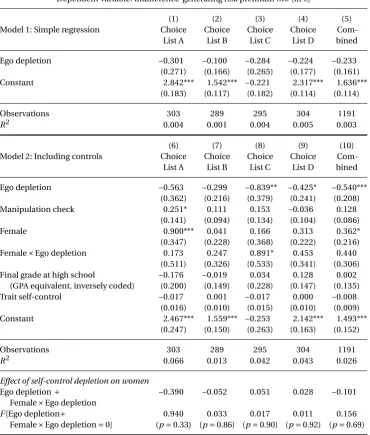
Even though we obtain an overall null result regarding the effect of ego depletion on risk attitudes, it is possible that there is heterogeneity in the effect of ego deple-tion depending on subject characteristics. Thus, we investigate whether choices and the effect of ego depletion in our experiment vary with observable character-istics. We do so by regressing choices on those observables which are most likely to determine risk attitudes. The results are presented inTable 3. In addition, the table contains (in its top part) the coefficients of a simple linear regression of risk attitude on the treatment dummy for convenient comparison.
In the specification with controls, we include gender as an explanatory vari-able because women are typically found to be more risk-averse than men (see Croson and Gneezy, 2009, for a general survey on gender differences in risk tak-ing). Furthermore, we regress our measure of risk attitudes on the final grade at high school (self-reported by subjects; reverse scoring compared to the American
GPA, i.e., higher grades are worse) as a proxy for IQ, since cognitive ability has been found to covary with risk attitudes (Dohmen et al., 2010).11Since there may be in-dividual differences in both subjects’ baseline self-control ability and in the treat-ment effect on self-control, we include trait self-control (questionnaire measure; Tangney et al., 2004) and the standardized aggregate score of the depletion index in the regression.
Columns 1 through 4 display the regression of choices in each choice list sep-arately, while column 5 uses the data from all choice lists. The dependent variable is the indifference-generating risk premiumm∼for the respective choice list
indi-cated in the column header. Note that the largerm∼, the greater is risk aversion.
The unit of this measure is €.
In line with the literature, baseline risk aversion is higher for women than for men across all choice lists but only significantly so in Choice List A (p=0.010). The coefficients of theIQproxy and of trait self-control turn out not to be significant, neither for individual choice lists nor for all choice lists jointly. Moreover, we find no evidence that risk attitudes vary by the extent of depletion. The coefficient of the aggregate depletion index is never significantly different from zero. Only for Choice List A, it is marginally significant (p=0.075).
Including the interaction of Female and Ego depletion allows us to split up the effect of ego depletion by gender. The coefficient on the regressor Ego deple-tion represents the influence of self-control depledeple-tion on men, and the sum of this coefficient and that on the interaction term (i.e., Ego depletion+Ego depletion× Female) represents the effect of depletion on women.
Table 3
Linear regressions of the measure of risk aversion on individual characteristics.
Dependent variable: indifference-generating risk premiumm∼[in €]
(1) (2) (3) (4) (5)
Model 1: Simple regression Choice
List A Choice List B Choice List C Choice List D Com-bined
Ego depletion −0.301 −0.100 −0.284 −0.224 −0.233
(0.271) (0.166) (0.265) (0.177) (0.161)
Constant 2.842*** 1.542*** −0.221 2.317*** 1.636***
(0.183) (0.117) (0.182) (0.114) (0.114)
Observations 303 289 295 304 1191
R2 0.004 0.001 0.004 0.005 0.003
(6) (7) (8) (9) (10)
Model 2: Including controls Choice List A Choice List B Choice List C Choice List D Com-bined
Ego depletion −0.563 −0.299 −0.839** −0.425* −0.540***
(0.362) (0.216) (0.379) (0.241) (0.208)
Manipulation check 0.251* 0.111 0.153 −0.036 0.128
(0.141) (0.094) (0.134) (0.104) (0.086)
Female 0.900*** 0.041 0.166 0.313 0.362*
(0.347) (0.228) (0.368) (0.222) (0.216)
Female×Ego depletion 0.173 0.247 0.891* 0.453 0.440
(0.511) (0.326) (0.533) (0.341) (0.306)
Final grade at high school −0.176 −0.019 0.034 0.128 0.002
(GPAequivalent, inversely coded) (0.200) (0.149) (0.228) (0.147) (0.135)
Trait self-control −0.017 0.001 −0.017 0.000 −0.008
(0.016) (0.010) (0.015) (0.010) (0.009)
Constant 2.467*** 1.559*** −0.253 2.142*** 1.493***
(0.247) (0.150) (0.263) (0.163) (0.152)
Observations 303 289 295 304 1191
R2 0.066 0.013 0.042 0.043 0.026
Effect of self-control depletion on women Ego depletion+
Female×Ego depletion
−0.390 −0.052 0.051 0.028 −0.101
F[Ego depletion+ 0.940 0.033 0.017 0.011 0.156
Female×Ego depletion=0] (p=0.33) (p=0.86) (p=0.90) (p=0.92) (p=0.69) Notes.Dependent variable: indifference-generating risk premiumm∼for the choice list indicated
in the column header. The largerm∼, the greater risk aversion. Robust standard errors
(cluster-corrected at the subject level for columns 5 and 10) in parentheses. Asterisks indicate significance levels: ***p<0.01, **p<0.05, *p<0.1. Missing observations (N<308) are due to exclusion of trials in which subjects chose a dominated option. The regressors Depletion Check, Final grade at high school and Trait self-control are mean-centered (so that the constant represents the indifference-generating risk premium at the sample mean of these variables). Also note that in the German grad-ing system, 1 is the best grade, and 4 is the worst among the passgrad-ing grades.
In all choice lists, men tend to become less risk-averse under depletion, for Choice Lists C and D even (marginally) significantly so (p=0.028, andp=0.079, respectively). Aggregating over all choice lists, the average man is indifferent at
a 54 cent lower risk premium in the depletion than in the control group (p=0.010), which goes against our hypotheses.12 Interestingly, self-control depletion has ba-sically no effect on women, as can be seen from the bottom three rows ofTable 3. This finding is in line with Friehe and Schildberg-Hörisch (2017).
Recall that in Choice List C, one of the lotteries is a “long shot”, i.e., it features a small probability of winning a large prize. Here, the tendency that depleted men are on average indifferent at a 84 cents lower risk premium than nondepleted men (p=0.028) conforms with Hypothesis4. This could be interpreted as evidence in favor of increased overweighting of the small probability associated with the large payoff, as Loewenstein and O’Donoghue (2005) predict for reduced self-control. However, we find a decrease in risk aversion, albeit less pronounced and mostly nonsignificant, also across the remaining choice lists—for which their model does not predict an influence of self-control depletion. Moreover, the effect is absent for women. Hence, in sum, there is only limited evidence for the channel proposed by Loewenstein and O’Donoghue (2005).
4.5. Summary
Although our manipulation check suggests that the manipulation effectively de-pleted the self-control resources of subjects in the treatment group, we do not find any significant difference in risk attitudes between subjects in the treatment and control group. However, we observe the same nonsignificant tendency for all four choice lists. Under depletion, subjects behave in a slightlylessrisk-averse manner, in contrast to the prediction of the Fudenberg–Levine model.
5. Discussion and conclusion
Our goal in this paper is to investigate the causal influence of self-control on risk attitudes. Self-control, a concept from psychology, has been conceptualized and formalized in economics through dual-self models (in particular, Fudenberg and Levine, 2006, 2011, 2012) and dual-system models (in particular, Loewenstein and O’Donoghue, 2005; Mukherjee, 2010). These models posit that a central determi-nant of risk attitudes is an individual’s current level of self-control.
Building on the Fudenberg–Levine dual-self model, we derive hypotheses for choices between risky monetary payoffs in a state of low self-control, compared to regular control. We show that the model predicts that lower levels of self-control induce stronger risk aversion for stakes within a particular range. We then test the hypotheses in a lab experiment with a large number of subjects by exoge-nously lowering self-control resources in half of our subjects via so-called ego de-pletion. We do not find any evidence for increased risk aversion after self-control