Munich Personal RePEc Archive
Affirmative Action Subcontracting
Regulations in Dynamic Procurement
Auctions
Rosa, Benjamin
1 April 2019
Online at
https://mpra.ub.uni-muenchen.de/93065/
Affirmative Action Subcontracting Regulations in Dynamic
Procurement Auctions
Benjamin V. Rosa
∗April 1, 2019
Abstract
I study affirmative action subcontracting regulations in a model where governments use auctions
to repeatedly procure goods and services at the lowest possible price. Through using disadvantaged
subcontractors, prime contractors build relationships over time, resulting in lower subcontracting costs
in future periods. I find that regulation in the form of a minimum subcontracting requirement expands
bidder asymmetries, favoring prime contractors with stronger relationships over those with weaker ones.
Simulations show that the manner in which relationships evolve determines not only the utilization of
disadvantaged subcontractors but also the procurement costs attained under affirmative action.
1
Introduction
Public procurement is a substantial part of government spending. In 2015, government procurement
ac-counted for 29.1 percent of all government spending and 11.9 percent of GDP in OECD countries.1
Embed-ded within many of these procurement markets are affirmative action regulations, which are implemented to
facilitate the participation of disadvantaged2 firms in government contracting. Although affirmative action
can take on many different forms, a common brand of policies in procurement are mandatory subcontracting
goals. Under these policies, a prime contractor (or prime) must set aside a percentage share of a contract for
subcontractors (or subs) designated as disadvantaged.
A key factor in a prime’s disadvantaged subcontractor selection and associated subcontracting cost is
their relationship with their pool of disadvantaged firms. In a needs assessment report by the Minnesota
∗Virginia Tech, Department of Economics, 3053 Pamplin Hall, Blacksburg, VA, 24061 (email: [email protected]).
1
See Government at a Glance 2017, which is available athttp://dx.doi.org/10.1787/gov_glance-2017-en.
2
Department of Transportation,3 surveys revealed that prime contractors rely on relationships to identify
and hire disadvantaged subcontractors and that primes prefer to hire disadvantaged firms with whom they
have existing relationships. The report concluded that relationships and credibility were integral to primes
meeting their affirmative action requirements. The economics literature indicates that relationships can
serve as a mechanism to lower coordination costs, promote learning-by-doing (Kellogg (2011)), and establish
reputations (Banerjee and Duflo (2000)). Gil and Marion (2013) find that prior subcontracting interactions
reduce bids on California highway procurement contracts, which is suggestive of lower subcontracting costs.
Thus, the goal of expanding disadvantaged subcontractor utilization and the cost of affirmative action are
both tied to the relationships primes build with their disadvantaged subs.
A shortcoming of the literature is that it does not directly address this relationship dynamic. Instead, the
literature often relies on a static framework or uses proxies for future demand to approximate continuation
values.4 In this paper, I seek to fill that gap in the literature by investigating how dynamic relationship
formation impacts procurement auctions in a model with affirmative action. To do so, I numerically solve
for the Markov-perfect equilibrium of a repeated auction game with relationship dynamics and contrast
the equilibria obtained with and without affirmative action subcontracting quotas. Primes in my model
stochastically improve relationships through the continued utilization of disadvantaged subs, leading to an
expectation of lower disadvantaged subcontracting costs in future periods. This relationship-building dynamic
endogenously creates asymmetries between bidders, where primes with stronger relationships have a cost
advantage over primes with weaker ones. By requiring primes to use disadvantaged firms, affirmative action
expands this asymmetry and increases the marginal value from attaining a better state of relationships in
the future. As a result, farsighted primes have more of an incentive to subcontract with disadvantaged firms
relative to myopic primes, and this incentive is amplified in markets with affirmative action.
The dynamic framework in this paper can answer several questions that a static framework cannot.
Given that an objective of these programs is to remove barriers to the participation of disadvantaged firms
in contracting,5 and in the subcontracting case, one of those barriers is a lack of established relationships
– a dynamic analysis can explore how relationships evolve and how much affirmative action contributes to
that evolution. Equally relevant is the long-run impact of removing affirmative action programs, which has
been implemented through laws such as California’s Proposition 209.6 In this case, a dynamic structure can
3
The full name of the report is the MnDOT DBE and OJT Program Needs Assessment.
4
Rosa (2018) and De Silva et al. (2012) use a static framework and Marion (2009) proxies for future demand using upcoming opportunities for disadvantaged firms.
5
For U.S. Department of Transportation contracting, see 64 FR 5126, Feb. 2, 1999, as amended at 79 FR 59592, Oct. 2, 2014.
6
provide insights on how relationships – and therefore disadvantaged subcontracting – will adjust when the
quotas are removed.
I explore these questions through a model simulated under a range of different parameter and starting
values. I find that the manner in which relationships transition between periods has implications for how
affirmative action affects a given market. When relationships are long-lasting, affirmative action has negligible
effects on bids yet leads to marked increases in disadvantaged subcontracting. When relationships deteriorate,
affirmative action still improves subcontracting but at the cost of higher bids. These simulations highlight
the importance of accounting for relationships in evaluating affirmative action programs.
My paper is closely related to the literature on mandatory subcontracting goals in government
procure-ment contracts. Rosa (2018) studies Disadvantaged Business Enterprise (DBE) subcontracting goals in New
Mexico using an estimated model of bidding and subcontracting that is similar to my paper. He finds that
subcontracting goals may not lead to significant changes in bids because primes have to use a common pool
of disadvantaged subs, leading to lower markups in equilibrium. I extend his model by including relationship
dynamics and allowing for asymmetries in the cost of using disadvantaged firms. Other empirical papers on
DBE subcontracting goals include Marion (2009) who finds that subcontracting goals significantly increased
subcontracting and the winning bids and De Silva et al. (2012) who use a structural model to compare costs
across contracts with and without subcontracting goals in Texas, finding negligible differences in project
costs. Similarly, Marion (2017) studies how a change in a goal exemption policy in Iowa impacted DBE
utilization.
My model borrows methods from the dynamic auction literature. In that literature, the model that
is closest to mine is Jeziorski and Krasnokutskaya (2016). They use a dynamic model of subcontracting
and bidding to explore how subcontracting affects capacity-constrained bidders, finding that subcontracting
reduces bidder asymmetries by allowing primes to modify current costs and control future costs via backlog
accumulation. Although I borrow their subcontracting model, our papers differ in dynamics; their paper
has dynamic capacity, while my paper has dynamic relationship formation. This distinction fundamentally
changes the role of subcontracting. In my model, primes subcontract with disadvantaged firms to gain a
cost advantage in future periods through relationship formation; therefore, subcontractingincreases bidder
asymmetry in future periods. My dynamics also differ from Saini (2012) who studies dynamic procurement
with capacity-constrained firms, except without subcontracting.
The remainder of the paper has the following structure. Section 2 outlines the model, and section 3
characterizes the model’s equilibrium. Section 4 contains solved examples of the model, which I use to show
how affirmative action subcontracting regulations affect bidding and disadvantaged subcontracting and to
study the long-run implications of subcontracting regulations. Section 5 concludes.
2
Model
In this section, I describe the dynamic procurement auction model with subcontracting regulation. Although I
make references to a repeated construction project, the model applies to many repeated procurement settings
with subcontracting possibilities.
Environment
In my environment, time is discrete, and the horizon is infinite. Each period, two infinitely lived prime
contractors bid for the rights to complete a homogeneous construction project. Prime contractors can either
complete the entire project in house or award part of it to subcontractors, some of which belong to the
dis-advantaged group of subcontractors. For simplicity, I group in-house costs and costs from non-disdis-advantaged
subcontractors for prime contractori in periodt into one cost, ci,t, which I refer to as a prime contractor’s
unregulated cost. Unregulated costs represent a prime contractor’s cost of completing the entire project
without using any disadvantaged subcontractors, and I assume that they are private information and are
independently and identically distributed according to the CDF Fc with support [c, c]. In contrast, the
disadvantaged subcontracting market determines the cost of using disadvantaged subcontractors.
Mirroring how the U.S. government awards its sealed-bid contracts, I assume that the government uses a
first-price sealed-bid format to select the winning firm. In many procurement settings, government agencies
have the right to reject any or all bids if they are irregularly high. Following the empirical literature,7 I
model that right as a secret reserve price with realizationrtthat, for simplicity, is distributed independently
across time according to the CDFFR with support [r, r]. The winning prime contractor is then the one that
submits the lowest bid, provided that it is below the reserve price. Observe that this bid-rejection power can
come, in part, through smaller irregular (or fringe) bidders that bid myopically.
The government can also impose regulations on the amount of a project that primes must award
dis-advantaged subcontractors. Within the context of the model, the government requires that primes allocate
a fraction of the project s ∈ [0,1] to disadvantaged subs in each period; if s = 0, then the market is
un-regulated. This feature of the model resembles the subcontracting regulations in the U.S. Department of
7
Transportation’s (USDOT’s) DBE Program.8
Disadvantaged Subcontracting Market
I assume that each prime has its own pool of disadvantaged subcontractors that myopically supply services
according to their relationship with prime contractor i at time t. Suppose that this relationship can be
summarized by a single state variable, ωi,t. Disadvantaged subcontractors then supply a share of total
services,si,t ∈[0,1] according to inverse supply function, P(si,t, ωi,t), which maps shares and relationships
into a price of using disadvantaged firms.
In this setup, the inverse supply function is central to a prime contractor’s disadvantaged subcontracting
decision. In particular, it generates a trade-off between using disadvantaged subcontractors and their
alter-natives. This trade-off is affected by relationships in the sense that a prime with better relationships may
face lower disadvantaged subcontracting costs for the same share of the project completed. In real-world
procurement, part of the cost of using disadvantaged subs comes from monitoring and the increased risk of
subcontractor insolvency. It is, therefore, plausible that primes with better relationships would have lower
disadvantaged subcontracting costs since, through repeat usage, disadvantaged subs become more
trustwor-thy. Primes may also have access to a more extensive network of disadvantaged subcontractors when their
relationships are better, which can lead to lower quotes on subcontracting services.
Observe that my subcontracting model is stylized and rules out some potentially complex subcontracting
issues. In particular, I do not allow the disadvantaged subcontractors to be capacity constrained, and I
abstract away from task heterogeneity. My assumptions do, however, lead to a tractable model that will
be shown to illustrate some of the primary facets of a prime contractor’s disadvantaged subcontracting
decisions. Namely, that more efficient primes are less inclined to use disadvantaged subcontractors and that
subcontracting costs increase as disadvantaged subcontractors complete more of the project.
I make the following regularity assumptions on the inverse supply function:
Assumptions on P:
1. P is increasing and convex in its first argument and decreasing in its second argument.
2. P(0, ωi,t) = 0 for everyωi,t.
8
3. lim
si,t→1P(si,t, ωi,t) = +∞.
4. P12(si,t, ωi,t)<0.
Assumption 1 requires that disadvantaged subcontracting costs increase at an increasing rate as primes use
more disadvantaged subcontractors and decrease with better relationships. This assumption helps generate
a unique subcontracting solution. Assumption 2 ensures that prime contractors that use no disadvantaged
subcontractors pay nothing to disadvantaged subcontractors, and assumption 3 makes subcontracting large
portions of a project prohibitively costly. Governments typically have a maximum subcontracting threshold
for firms to qualify as prime contractors. The USDOT, for example, has a subcontracting maximum that is
around 60 percent for its highway procurement projects. Assumption 3 is meant to approximate that rule.
My fourth and final assumption means that the marginal price increase decreases with better relationships.
That is to say, the inverse supply function is flatter with better relationships.
Relationship Dynamics
I assume that the state variable that describes relationships evolves according to how often primes use
disad-vantaged subcontractors. In particular, I assume that the state variable transitions stochastically according
to
σi(ωi,t, si,t) =ψωi,t+si,t+ǫi,t,
where ψ measures how easily past relationships carry over into future periods, si,t is prime contractor i’s
disadvantaged subcontracting share, andǫi,tis a time-invariant random shock that is distributed according to
FǫwithE[ǫi,t] = 0. Ifψ= 1, for example, then past relationships are expected to persist into future periods,
whereasψ <1 means that past relationships tend to diminish over time. This parameter’s value plays a major
role in a prime contractor’s dynamic incentive to use disadvantaged subs since more persistent relationships
lead to longer stretches of time with lower disadvantaged subcontracting costs in the future. In real-life
procurement,ψmight be low if there is high turnover in a prime’s pool of disadvantaged subcontractors from
firms exiting the market. The shock, ǫi,t, captures any randomness that affects the stock of relationships
next period.
To ensure that prime contractors will not face implausibly high or low disadvantaged subcontracting costs,
I bound each state variable from above by a constantM and below by a constantM so thatωi,t∈
The state space is then given by Ω∈M , M×M , M, and from now on I will defineωt= (ωi,t, ω−i,t) as
the state vector for prime iat timet.
Timing and Equilibrium Description
At the beginning of each period, primes observe their unregulated cost and the public history of states,
disad-vantaged shares, and bids by them and their competitor. For tractability, I assume that primes use Markov
strategies and focus attention on Markov-perfect equilibria, where strategies only depend on payoff-relevant
information. In my model, that information is the state vector of prime relationships, as it summarizes the
current period’s disadvantaged cost while its transition gives disadvantaged costs in the future. Furthermore,
payoffs do not depend on time given the state, so I can focus on stationary strategies.
Given my equilibrium assumptions, the relevant information that primes observe at the start of each period
is their unregulated cost, ci,t and the state, ωt. Primes use these two observations and their knowledge of
the reserve price and unregulated cost distributions to choose their disadvantaged subcontracting shares,
si,t ∈[s,1], and their bids on the project, bi,t ∈R+. A stationary Markov strategy is therefore a mapping
between a prime’s unregulated costs and the state, given the current regulatory regime, into disadvantaged
subcontracting shares and bids. I define the disadvantaged subcontracting strategy for prime contractor i
given regulationsas Si(·,ω;s) and the biding strategy byBi(·,ω;s), where stationarity allows me to drop
the time subscript. The stationary strategy profile is then{Bi(·,ω;s), Si(·,ω;s)}i=1,2;ω∈Ω.
Implicit in the timing is the assumption that prime contractors must commit to their disadvantaged
subcontracting, which prevents primes from revising their subcontracting plans after letting. Many states
have laws in place to avoid just that; in New Mexico, for example, prime contractors can be fined if their
disadvantaged shares ex-post do not align with their planned shares. As a result, the proposed disadvantaged
subcontracting shares rarely differ much from the final shares.
3
Equilibrium
Bellman Equation
I now construct a prime contractor’s Bellman equation. Let Vi(ω) be prime contractori’s value function
given state ω prior to observing its unregulated cost. For ease of notation, I drop the reliance of optimal
disadvantaged shares and bids on the state and subcontracting regulation where it does not cause confusion.
In each period, a prime can either outbid their competitor or not and either outbid the reserve price or
not. Therefore, there are four possible outcomes for prime contractori:
1. Primeibids below their opponent and reserve price.
2. Primeibids below thier opponent but above the reserve price.
3. Primeibids above their opponent and their opponent bids below the reserve price.
4. Primeibids above their opponent, but their opponent bids above the reserve price.
Each of these cases yields different payoffs for the prime.
Case 1. If the prime outbids its competitor with an unregulated cost ofci, a bid ofbi, and a disadvantaged
subcontracting share ofsi while bidding below the reserve price, then its payoff is
bi−(1−si)ci−P(si) +δEǫVi(σi(si), σ−i(0)).
Since the prime wins the contract in this case, it receives the static profit of bi−(1−si)ci −P(si),
which consists of the bid less the fraction of the unregulated cost used on the project, (1−si)ci, and
the disadvantaged subcontracting cost, P(si). The prime contractor also receives a dynamic payoff of
δEǫVi(σi(si), σ−i(0)), where δ∈[0,1) is the common discount factor. This portion of the payoff accounts
for the future value of using the disadvantaged subcontracting share si.
Case 2. In the event that the prime contractor outbids its opponent but bids above the reserve price, its
payoff is
δEǫVi(σi(0), σ−i(0)).
Indeed, the prime contractor loses in this case, but since there is no winner, no primes use any
disadvan-taged subcontractors and the next period’s payoff is the corresponding discounted value.
Case 3. When prime i is outbid by its competitor and the competitor beats the reserve price, prime i’s
expected payoff is
δEc−i
EǫVi(σi(0), σ−i(S−i(c−i)))
B−i < bi
.
In words, primeireceives the expected future value of its competitor using equilibrium shareS−i(c−i).
equilibrium bid, B−i, being less than their bid, bi.
Case 4. The final case occurs when primei bids above its competitor, but the competing firm bids above
the reserve price. In this situation, primei’s expected payoff is
δEc−i
EǫVi(σi(0), σ−i(0))
B−i< bi
.
The Value Function and Equilibrium. Combing all of the cases together and weighting them by their
appropriate probabilities yields the value function. LetWi(bi) = 1−Fc
(B−i)
−1
(bi)
be the probability of
winning given a bid ofbi. The value function is then
Vi(ω) = Z
ci max
bi,si
(
Wi(bi)
(1−FR(bi)) bi−(1−si)ci−P(si)
+δEǫVi(σi(si), σ−i(0))
+FR(bi)δEǫVi(σi(0), σ−i(0))
+ (1−Wi(bi))δEc−i
(1−FR(B−i(c−i)))EǫVi(σi(0), σ−i(S−i(c−i)))
+FR(B−i(c−i))EǫVi(σi(0), σ−i(0))
B−i< bi )
dFc(ci). (1)
A stationary Markov-perfect equilibrium in this game consists of strategy profile Bi(ci,ω), Si(ci,ω)
i=1,2;ω∈Ω;c∈[c,c] and value functions {Vi(ω)}i=1,2;ω∈Ω such that (i) given B−i and S−i, Vi(ω) solves the
bellman equation in (1) for everyiand (ii) givenB−i andS−i,BiandSi solve the optimization on the
right-hand side of equation (1) for all ω and all ci given correct beliefs about the unregulated cost distributions
and the reserve price distributions.
Subcontracting Strategies
I now turn to the prime contractor’s optimal subcontracting strategy. Primes choose their disadvantaged
subcontracting shares such that
Si(ci)∈arg max si∈[s,1]
bi−(1−si)ci−P(si) +δEǫVi(σi(si), σ−i(0)).
LetVi,1(·,·) be the partial derivative of the value function with respect to its first argument andVi,11(·,·)
prime’s objective must be concave, or
−P′′
(si) +δ[EǫVi,11(σi(si), σ−i(0))]<0.
Although this condition would be satisfied ifVi is concave in its second argument, proving the concavity ofVi
is difficult in this setting. Instead, I follow the literature in verifying that this condition holds via simulation.
Assuming the second-order conditions hold, the prime contractor’s optimal share is defined implicitly as
the solution to
P′
(si) =ci+δEǫVi,1(σi(si), σ−i(0)) (2)
but takes on a corner value ofsif
P′
(s)> ci+δEǫVi,1(σi(s), σ−i(0)).
My third assumption onP prevents primes from subcontracting the entire project.
Intuitively, the left-hand side of equation (2) is a prime’s marginal cost of increasing the share; the
right-hand is the marginal benefit – which consists of the marginal savings on unregulated costs, ci, and the
discounted marginal change in future value,δEǫVi,1(σi(si), σ−i(0)). With no regulations, prime contractors
choose a share that equates their marginal benefit and marginal cost, meaning that they cost minimize in
the event of a win. Prime contractors with higher unregulated costs have a higher marginal benefit from
subcontracting and, therefore, are more inclined to subcontract. Since primes likely derive a higher value
from having stronger relationships with disadvantaged firms, the dynamic component increases the marginal
benefit – thus increasing the incentive to subcontract for farsighted primes.
Regulations also play an essential role. As the government requires higher disadvantaged shares, primes
with strong relationships become more advantaged relative to primes with weak relationships since every
firm must subcontract. Regulations then lead to more pronounced differences in costs between primes with
strong and weak ties.
I summarize some properties of disadvantaged subcontracting below; the proofs are in the appendix.
Proposition 1. Disadvantaged subcontracting shares are weakly increasing in unregulated costs,ci.
Proposition 2. If P12 is sufficiently negative, then disadvantaged shares are weakly increasing in own
These properties follow from the implicit function theorem applied to the first-order conditions on
sub-contracting and mean that more efficient primes and primes with weaker relationships will subcontract less
with disadvantaged firms than less efficient primes and primes with stronger relationships.
Bidding Strategies
Next, I derive the bidding strategies. Throughout this section, I follow the literature in assuming properties
on how the value function changes in state. In particular, I assume that the value function is weakly
increasing in ωi, Vi,1(ωi, ω−i)≥ 0, and weakly decreasing inω−i, Vi,2(ωi, ω−i) ≤0. The intuition behind
these assumptions is that primes with better relationships receive lower disadvantaged subcontracting prices,
which lowers their costs and increases their profits. Similarly, when a prime’s opponent has a better state,
the prime must bid more aggressively to compete with its lower-cost competitor, leading to reduced profits. I
verify these properties in my simulations. For ease of exposition, I also follow the literature in assuming that
a prime’s disadvantaged subcontracting function, S(ci), is smooth so that its derivative exists everywhere.
This assumption is not too restrictive since a kink can only occur at the highestci such thatS(ci) =s, which
means that the derivative exists almost everywhere. Moreover, a kinked function can be approximated well
with a smooth function.
In this environment, a prime’s bid must account for both static costs and dynamic changes in state that
come from winning. To this end, the lowest possible value from losing for primeiin stateω is
Vi(ω) =EǫVi(σi(0), σ−i(S(c−i))),
which follows from my assumptions onV and the properties ofS. Dropping the reliance of Vi onω, I
define the effective cost as
φ(ci;ω) = (1−S(ci))ci+P(S(ci)) | {z }
static
−δ[EǫVi(σi(S(ci)), σ−i(0))−Vi] | {z }
dynamic
, (3)
which is the cost relevant for bidding. Notice that the effective cost has two components: the static cost
of completing the project and the dynamic opportunity cost of winning against an opponent with the highest
unregulated cost. In contrast to Jeziorski and Krasnokutskaya (2016), the dynamic part is positive, so a
Observe that
φ′
(ci;ω) = (1−S(ci)) +{P′(S(ci))−δEǫVi,1(σi(S(ci)), σ−i(0))−ci}S′(ci)>0.
This property holds because the term inside of the brackets is zero by the first-order conditions, and
S′(c
i) is zero at the corner and positive otherwise. Effective costs are, therefore, monotone in ci and can be
inverted.
A prime’s bid can now be expressed as a function that maps effective costs into bids given the state,
Bi(·,ω) : h
φi, φi i
→ B(ω), B(ω), instead of unregulated costs into bids. The inverse bid function, ξi,
then maps bids into effective costs, ξi(·,ω) :
B(ω), B(ω)→hφi(ω), φi(ω) i
. A prime chooses bidbi to
maximize expected profits:
max
bi
(bi−φi) (1−FR(bi)) +δ(EǫVi(σi(0), σ−i(0))−Vi)FR(bi)
(1−Fφ,−i(ξ−i(bi)))
+δ
ξ−i(bi)
Z
φ
−i
(1−FR(B−i(φ))) (EǫVi(σi(0), σ−i(S−i(φ))))
+FR(B−i(φ))EǫVi(σi(0), σ−i(0))−Vi
fφ,−i(φ)dφ.
Taking the first-order conditions leads to the system of differential equations:
(1−Fφ,−i(ξ−i(bi))) [(1−FR(bi))−(bi−φi)fR(bi) +δ(EǫVi(σi(0), σ−i(0))−Vi)fR(bi)] (4)
−fφ,−i(ξ−i(bi))ξ−′i(bi) (1−FR(bi)) [bi−φi−δ(EǫVi(σi(0), σ−i(S−i(ξ−i(bi))))−Vi)] = 0.
Notice that the support of a prime’s effective cost distribution can change with the state. Indeed, a
prime with the highest unregulated cost can use disadvantaged subcontractors to lower its effective cost and
can achieve even lower effective costs with better relationships. Therefore, the auction is asymmetric as in
Maskin and Riley (2000) but with different supports like in Kaplan and Zamir (2012). In these environments,
a bidder with no probability of winning – which occurs either because their effective cost is above the highest
equilibrium bid or the reserve price – is indifferent between any bid at or above its reserve price. I follow
Kaplan and Zamir (2012) in assuming that primes that find themselves in this situation bid their effective
cost.
without loss of generality, that φ1≤φ2, the boundary conditions are
ξ1 b,ω
=φ1 (5)
ξ2 b,ω=b
ξ1(b,ω) =φ1
ξ2(b,ω) =φ2,
whereb= minb0, φ2, r and, following Jeziorski and Krasnokutskaya (2016),b0is defined implicitly by
the equation
(1−Fφ,2(b0))(1−FR(b0))− b0−φ1
fR(b0) +δ(EǫV1(σ1(0), σ2(0))−V1)fR(b0) (6)
−fφ,2(b0) (1−FR(b0))
b0−φ1−δ(EǫV1(σ1(0), σ2(S2(b0)))−V1)
= 0.
The intuition behind the boundary conditions is that both primes must submit the same low bid in
equilibrium or else the low prime could increase its bid without changing its probability of winning. The high
bid is slightly more involved. When prime 1 has the lowest effective cost, it can use its first-order conditions
to find its high bid, which is equivalent to finding b0. In equilibrium, the least efficient prime cannot make
a profit, so b must be the minimum ofb0 andφ2. Moreover,bmust be at or below the upper bound of the
reserve price distribution since bids above the reserve price are rejected outright.
3.1
Discussion of Modeling Choices and Extensions
My analysis contains several abstractions used to produce a model with tractable results. In real
procure-ment markets, projects can be more complex and can require primes to make more involved bidding and
subcontracting decisions. In what follows, I discuss my modeling choices and consider additional factors that
may influence how primes use disadvantaged subcontractors.
Task Heterogeneity. Procurement projects are rarely homogeneous and can consist of many different
tasks. If tasks are sufficiently distinct, then primes may have to make subcontracting decisions in different
markets, which will affect their disadvantaged subcontracting. Likewise, primes may have specialties in
specific tasks, which again will perturb their disadvantaged subcontracting decisions. Since accounting for
prime, I abstract away from this feature of the disadvantaged subcontracting market.
Entry. For simplicity, my model assumes that the two competing primes invariably enter each period’s
auction, but in reality, primes can choose whether to participate. If entry is based on the expected
profitabil-ity of a project, then subcontracting regulations can potentially deter entrants, resulting in higher costs of
procurement than my model would predict. Less likely to be impacted, though, is a prime’s disadvantaged
subcontracting decisions since they are based on cost minimization rather than the number of entrants. In
fact, Jeziorski and Krasnokutskaya (2016) show that subcontracting shares do not depend on the number of
entrants in a closely related model, and empirically, studies such as Rosa (2018) find that disadvantaged
sub-contracting is uncorrelated with the number of participating firms. As a result, my findings on relationships
formed through disadvantaged subcontracting are unlikely to change significantly with entry unless there is
a substantial deterrence effect.
Capacity Constraints. The dynamic auction literature typically has a firm’s capacity as the dynamic
variable.9 In these environments, a firm that wins a project now will have higher costs in the next period
because they are operating closer to their capacity. In reality, disadvantaged firms are usually a small part
of total subcontracting and are less likely to be impacted by a prime’s capacity constraints. Moreover, some
studies show that capacity constraints are not a major factor in a prime’s overall subcontracting decisions;
in the case of construction, see Gonz´alez et al. (2000). As such, my analysis focuses on dynamic relationship
formation, which is one of the primary arguments for using affirmative action regulations in subcontracting.
Related to capacity issues for prime contractors is the possibility that the disadvantaged firms are
capac-ity constrained. Incorporating subcontractor capaccapac-ity constraints into the model would require additional
state variables for each disadvantaged subcontractor, leading to a high-dimensional state space that quickly
becomes unmanageable. Additionally, any capacity-related subcontracting concerns are likely short-lived
because the work subcontracted to each firm tends to be small. For these reasons, I abstract away from
capacity constraints in the disadvantaged subcontracting market.
The Reserve Price Distribution. I assume a time and state invariant reserve price distribution, but
governments may wish to condition their reserve price on the state to allow for more leniency in the range of
accepted bids when relationships are low. In practice, bids tend to be rejected for exceeding estimated costs,
and cost estimates rarely factor in subcontracting regulations.10 To keep the model simple, I abstract away
9
See Saini (2012), Jeziorski and Krasnokutskaya (2016), Jofre-Bonet and Pesendorfer (2003) and Groeger (2014).
10
from state-dependent reserve price distributions.
A somewhat related issue is that contracts rarely have only two bidders. There may be other
less-frequent bidders that often bid, which the literature refers to as fringe bidders. Although the reserve price
partially accounts for fringe bidders in my framework, an immediate extension would be to have the reserve
price distribution depend on the number of fringe bidders. This extension complicates the model by adding
another state variable, so I do not include it in this paper.
4
Simulation
To illustrate the impact of subcontracting regulations, I simulate bids, subcontracting, and industry outcomes
in two situations: one in which there is no regulation and one in which there is regulation. This section
contains those simulations and a brief description of my simulation methodology.
4.1
Simulation Method
To simulate the Markov-perfect equilibrium of the model, I must approximate the strategy profileBi(ci,ω),
Si(ci,ω) i=1,2;ω∈Ω;c∈[c,c] and value functions{Vi(ω)}i=1,2;ω∈Ω. Implicit in calculating the bids, I must also
approximate the PDF and CDF of the effective cost distribution. For the bids, value function, and effective
cost distribution, I use Chebyshev polynomial approximations; for subcontracting, I use Hermite splines,
which perform well in approximating the flat area that can occur at the corner.
My algorithm consists of an inner loop that calculates the strategy profiles on a select grid of states and
an outer loop that iterates on the value function. In the inner loop, I solve equation (2) to get the shares
and use the shares to approximate the effective costs. In approximating the bids, I use projection methods
with a mathematical programming with equilibrium constraints (or MPEC) optimization routine proposed
by Hubbard and Paarsch (2009). These equilibrium objects allow me to find the following period’s value
function, and I iterate until the difference between the current and next value functions is small. A concern
with this approach is that there can potentially be multiple equilibria. To ease that concern, I use the robust
equilibrium selection rule proposed in Chen et al. (2009). To extend my strategy profile approximations
to other states, I use linear interpolations. A detailed description of my numerical routine is contained in
4.2
Simulation Parameters
Simulating outcomes from the theoretical model requires parametric assumptions on the inverse supply
function, the unregulated cost distribution, the secret reserve price distribution, and the states. I begin by
assuming that the inverse supply function takes the from
P(si, ωi) =
si
ωi(1−si)
.
Observe that this specification adheres to my theoretical inverse supply function assumptions forsi ∈[0,1].
For simplicity, I assume that unregulated costs are distributed uniformly on an interval bounded below by
0 and above by 1.5. In real procurement environments, the government often provides a range of estimated
project cost values to primes prior to bidding. I envision a realization of 1 equivalent to the midpoint of any
cost range; a value of 1.5 would then be the upper bound, while a value of 0.5 would be the lower bound.
Consequently, I assume that the reserve price distribution is also uniform, but bounded below by the lower
cost estimate of 0.5 and above by the upper cost estimate of 1.5. In other words, bids can only be rejected
if they are within or above the established cost range.
To simulate plausible disadvantaged shares, I set the lower bound for the states to 0.5 and the upper
bound to 2. Given my previous assumptions, a prime that draws the average unregulated cost will not use
any disadvantaged subcontractors in the lowest state absent regulations, while an equivalent draw in the
highest state leads to a disadvantaged share of about 18 percent.
I investigate two different sets of values for the quota level,s, and the relationship deterioration parameter,
ψ. Subcontracting regulations typically range from 1 to 15 percent. In Iowa, for example, the DOT can
recommend a DBE goal anywhere from 1 to 10 percent, and in states such as Texas, DBE goals can reach
as high as 15 percent.11 To highlight the distinction between projects with and without subcontracting
regulations, I contrast the more extreme s= 0.15 case with the case where s= 0. I consider deterioration
parameter values of ψ ∈ {0.95,1}, which covers cases where relationships persist and where there is some
deterioration. Finally, I hold the common discount factor fixed atδ= 0.95, corresponding to a yearly interest
rate of about 5 percent.
11
4.3
Simulation Results: The Role of Subcontracting Regulations
My simulation analysis begins by analyzing the role of subcontracting regulations. To isolate this effect, I
fix ψat 1 so that relationships persist over time in expectation, and I vary the quota from 0 to 15 percent.
I first study bidding, disadvantaged subcontracting, and effective costs at select states and then move on to
the value function.
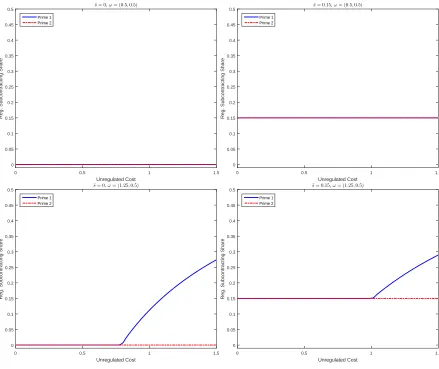
Figure 1 illustrates how primes select their disadvantaged shares at different states and under various
regulations. The two left panels depict optimal subcontracting when the market is unregulated and the right
two when the market is regulated. In the poor state (ω = (0.5,0.5) in the top two panels) primes use no
disadvantaged subcontractors at every unregulated cost when they are unregulated. As a result, primes in
this state would never build any relationships with disadvantaged subcontractors without relationship shocks,
even if those relationships would perfectly persist over time. Once the government imposes regulations, all
primes in the poor state subcontract exactly at the quota.
Introducing asymmetries between prime contractors (ω = (1.25,0.5) in the bottom two panels) lead to
different disadvantaged subcontracting behavior. With a stronger relationship than its competitor, prime
1 will subcontract at higher unregulated costs absent regulations, while prime 2 will still not subcontract
at any unregulated cost. When the government introduces regulations, primes follow a similar pattern,
except the lower bound on subcontracting increases to the quota level. These actions trace back to the
optimal disadvantaged subcontracting conditions in equation (2): primes with better relationships have a
lower marginal cost of subcontracting and will, therefore, subcontract more often.
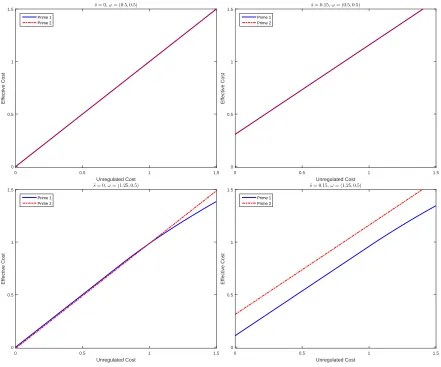
Next, I turn to the implied effective costs – which I display in figure 2 in the same format as the
disadvan-taged shares. Because primes are symmetric in their disadvandisadvan-taged subcontracting, their effective costs also
overlap in the poor state. Effective costs become more distinct when prime 1 builds stronger relationships. In
the unregulated case, effective costs are similar at lower unregulated costs but diverge at higher unregulated
costs. This result arises because prime 1 can use disadvantaged subcontractors to achieve lower effective
costs at higher unregulated costs. Effective costs are not exactly the same at lower unregulated cost levels
because the option value from losing against an opponent is different.12 The disparity between effective costs
is magnified when the government adds on regulations, which indicates that regulations make bidders more
asymmetric.
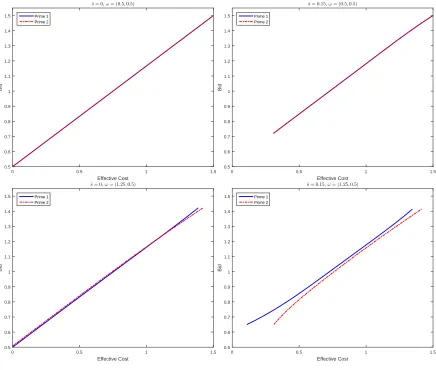
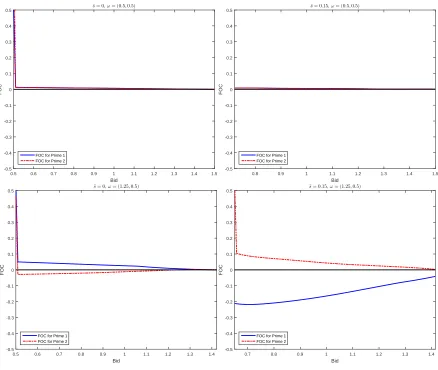
Figure 3 illustrates the equilibrium bids that have a positive probability of winning. As is implied by the
12
Unregulated Cost
0 0.5 1 1.5
Reg. Subcontracting Share
0 0.05 0.1 0.15 0.2 0.25 0.3 0.35 0.4 0.45 0.5 ¯
s= 0,ω= (0.5,0.5)
Prime 1 Prime 2
Unregulated Cost
0 0.5 1 1.5
Reg. Subcontracting Share
0 0.05 0.1 0.15 0.2 0.25 0.3 0.35 0.4 0.45 0.5 ¯
s= 0.15,ω= (0.5,0.5)
Prime 1 Prime 2
Unregulated Cost
0 0.5 1 1.5
Reg. Subcontracting Share
0 0.05 0.1 0.15 0.2 0.25 0.3 0.35 0.4 0.45
0.5 s¯= 0,ω= (1.25,0.5)
Prime 1 Prime 2
Unregulated Cost
0 0.5 1 1.5
Reg. Subcontracting Share
0 0.05 0.1 0.15 0.2 0.25 0.3 0.35 0.4 0.45
0.5 s¯= 0.15,ω= (1.25,0.5)
[image:19.612.87.526.82.451.2]Prime 1 Prime 2
Figure 1: Disadvantaged Subcontracting
effective costs, symmetric bidders in the poor state bid the same irrespective of the regulation. Once bidders
become asymmetric, the bid functions become more distinct in ways that mirror static asymmetric auctions.
In particular, the bids have a “weakness-leads-to-aggression” property,13whereby primes with higher effective
costs (or weak bidders) bid more aggressively (or closer to their effective costs) than strong bidders. As a
result, asymmetry softens competition between firms, leading to a reduced impact of relationship-related cost
savings on procurement costs.
In the no-regulation case, the weakness-leads-to-aggression property causes the bid functions to cross
because the identity of the weak and strong bidder changes at different effective costs. When there are
regulations, there is a pronounced separation in effective costs at every unregulated cost, leading to a similar
separation in bids. Because the state generates asymmetries and arises as a result of each prime’s past
13
Unregulated Cost
0 0.5 1 1.5
Effective Cost
0 0.5 1
1.5 ¯
s= 0,ω= (0.5,0.5) Prime 1
Prime 2
Unregulated Cost
0 0.5 1 1.5
Effective Cost
0 0.5 1
1.5 ¯s= 0.15,
ω= (0.5,0.5)
Prime 1 Prime 2
Unregulated Cost
0 0.5 1 1.5
Effective Cost
0 0.5 1
1.5 s¯= 0,ω= (1.25,0.5)
Prime 1 Prime 2
Unregulated Cost
0 0.5 1 1.5
Effective Cost
0 0.5 1
1.5 ¯s= 0.15,ω= (1.25,0.5)
Prime 1 Prime 2
Figure 2: Effective Costs
actions, bidder asymmetry is endogenous. The key observation in this environment is that subcontracting
regulations enhance that asymmetry.
The final equilibrium object is the value function, which I show in figures 4 and 5. My assumptions imply
that the value function is symmetric for each prime. To illustrate how symmetry works, let ωown∈
M , M
be an arbitrary state draw for a prime and ωrival ∈
M , M be an arbitrary state draw for the prime’s
competitor. Symmetry implies that V1(ωown, ωrival) =V2(ωown, ωrival) =V (ωown, ωrival), which obviates
the need for computing multiple value functions for a given parameter configuration.
The value functions, which differ in whether there is any regulation, have all of my conjectured properties:
the value function increases in own state and decreases in the competitor’s state. Regulations change the
steepness of the value function. Indeed, the gain in marginal value from attaining a higher state is only realized
[image:20.612.87.528.82.449.2]Effective Cost
0 0.5 1 1.5
Bid 0.5 0.6 0.7 0.8 0.9 1 1.1 1.2 1.3 1.4 1.5 ¯
s= 0,ω= (0.5,0.5)
Prime 1 Prime 2
Effective Cost
0 0.5 1 1.5
Bid 0.5 0.6 0.7 0.8 0.9 1 1.1 1.2 1.3 1.4 1.5 ¯
s= 0.15,ω= (0.5,0.5)
Prime 1 Prime 2
Effective Cost
0 0.5 1 1.5
Bid 0.5 0.6 0.7 0.8 0.9 1 1.1 1.2 1.3 1.4 1.5 ¯
s= 0,ω= (1.25,0.5)
Prime 1 Prime 2
Effective Cost
0 0.5 1 1.5
Bid 0.5 0.6 0.7 0.8 0.9 1 1.1 1.2 1.3 1.4 1.5 ¯
s= 0.15,ω= (1.25,0.5)
[image:21.612.90.526.83.453.2]Prime 1 Prime 2
Figure 3: Bidding
is realized for every unregulated cost when there are regulations because primes are required to subcontract.
As a result, regulations lead to a steeper value function.
4.4
Simulation Results: Dynamic Equilibrium
I now analyze the evolution of the relationship state variable over time. Central to this analysis is the initial
state,ω0, and the relationship deterioration parameter,ψ; the values that I consider for these variables are
ω0∈ {(0.5,0.5),(2,2)} andψ∈ {1,0.95}. My initial state values account for two extreme cases: one where
the market begins at the lowest possible state and the other where the market starts at the highest possible
state. Myψvalues cover the cases of when relationships persist and when there is some deterioration. Since
markets with different relationship deterioration will have different equilibria, I resolve the model every time
2
1.5
ω 1 1 No Regulations (¯s= 0)
0.5 0.5 1 ω 2 1.5 0.6 0.2 0.25 0.3 0.35 0.4 0.45 0.5 0.55 2 V1 2 1.5 ω 1 1 Regulations (¯s= 0.15)
[image:22.612.77.538.134.315.2]0.5 0.5 1 ω 2 1.5 0.6 0.2 0.25 0.3 0.35 0.4 0.45 0.5 0.55 2 V1
Figure 4: Three-Dimensional Value Functions
ω 2
0.5 1 1.5 2
V1 0.2 0.25 0.3 0.35 0.4 0.45 0.5 0.55
0.6 No Regulations (¯
s= 0)
ω 1 =0.5 ω
1 =1.25 ω
1 =2
ω 2
0.5 1 1.5 2
V1 0.2 0.25 0.3 0.35 0.4 0.45 0.5 0.55
0.6 Regulations (¯
s= 0.15)
ω 1 =0.5 ω
1 =1.25 ω
1 =2
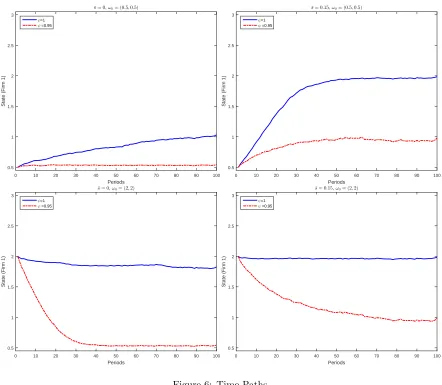
[image:22.612.88.529.443.632.2]Figure 6 illustrates the evolution of different markets. In creating this figure, I simulated 100 procurement
auctions for the first 100 periods, starting at various initial states. Figure 6 shows the average state for prime
1 across simulations in each period; the plot for prime 2 is similar and is, therefore, omitted.
Periods
0 10 20 30 40 50 60 70 80 90 100
State (Firm 1)
0.5 1 1.5 2 2.5 3 ¯
s= 0,ω0= (0.5,0.5)
ψ=1 ψ =0.95
Periods
0 10 20 30 40 50 60 70 80 90 100
State (Firm 1)
0.5 1 1.5 2 2.5 3 ¯
s= 0.15,ω0= (0.5,0.5)
ψ=1 ψ =0.95
Periods
0 10 20 30 40 50 60 70 80 90 100
State (Firm 1)
0.5 1 1.5 2 2.5 3 ¯
s= 0,ω0= (2,2)
ψ=1 ψ =0.95
Periods
0 10 20 30 40 50 60 70 80 90 100
State (Firm 1)
0.5 1 1.5 2 2.5 3 ¯
s= 0.15,ω0= (2,2)
[image:23.612.86.528.143.528.2]ψ=1 ψ =0.95
Figure 6: Time Paths
The top left panel depicts a market without regulations that starts in the lowest possible state. When
re-lationships deteriorate, primes never develop any rere-lationships because disadvantaged subcontractors are too
expensive. This market is reminiscent of the lack of disadvantaged subcontractor utilization before
affirma-tive action laws, as was the case in Atlanta in 1973 where one-tenth of one percent of the city’s procurement
business went to African American firms despite Atlanta’s majority African American population.14 When
relationships persist, random forces cause primes to slowly build relationships to a point where they are
willing to use disadvantaged subs. This scenario illustrates a case where affirmative action is not required for
14
long-term relationship formation.
When the government uses affirmative action quotas – which is displayed in the top right panel –
re-lationships no longer remain stagnant at the lowest state when there is relationship deterioration between
periods. The policy forces primes out of the lowest state through mandatory subcontracting, leading to a
higher average state than would be obtained absent affirmative action. When relationships persist between
periods, the average state increases more rapidly than without affirmative action and is not driven by
ran-dom forces. These results justify the early use of affirmative action quotas in procurement: assuming primes
develop long-lasting relationships, quotas can help markets reach states characterized by high disadvantaged
subcontracting quicker; when relationships are more short-lived, the state still improves, but not as much as
when relationships are long-lasting.
Now consider the market’s evolution when it begins at the highest state, which is shown in the bottom two
panels of figure 6. Even when relationships are long-lasting, random forces lead to a slight downward trend in
the average state. That trend is more extreme when relationships deteriorate between periods because more
factors lead to a reduction in the next period’s state. The mandatory subcontracting required by affirmative
action policies prevents the state from trending downward when relationships persist by correcting the random
shocks that lower relationships between periods. With less persistent relationships, affirmative action is not
strong enough to prevent a downward trend but does prevent primes from reaching the lowest state.
Figure 7 extends my analysis to the limiting (or ergodic) state distribution. I construct these figures by
first simulating 1,000 periods and then treating the next 100 periods as draws from the ergodic distribution.
I repeat this process 100 times, leading to a total of 10,000 draws. Since the limiting distributions look the
same irrespective of the starting value, I only present the cases with differing levels of affirmative action and
relationship deterioration.
The limit distributions are a natural consequence of extending the number of periods in figure 6. With
long-lasting relationships, the limit distribution has more density at the higher state for both primes. This
pattern emerges because past relationships tend to accumulate over time, culminating in a situation where
primes eventually reach the higher states. With the mandatory subcontracting that affirmative action entails,
the ergodic distribution becomes more concentrated in the higher states since winning primes are essentially
required to keep adding to their stock of existing relationships.
The limit distributions look much different when relationships tend to deteriorate, which occurs in the
two right-most graphs in figure 7. With deteriorating relationships and no affirmative action, the ergodic
arises as a consequence of the declining nature of relationships: a prime can only increase its stock conditional
on winning, yet its relationships deteriorate regardless of a win. Consequently, relationships eventually hover
around the lowest state, where primes avoid disadvantaged firms altogether. Affirmative action can work
against deteriorating relationships by requiring a minimum level of subcontracting, leading to an ergodic
distribution that is more disperse across states.
I conclude my simulation analysis by exploring industry statistics averaged over all simulations and time
periods. I consider the following outcome variables. Bid is the average equilibrium bid, and Subcon is the
average share of the project awarded to disadvantaged subcontractors. Perc. Bind is the percent of all
projects where the quota binds, which I use as a measure of how constraining affirmative action regulations
are. Proc. Cost is the average procurement cost conditional on the lowest bidder beating the reserve price,
and Perc. Allocated is the percent of all projects awarded to one of the two primes. I remark here that
a project awarded to neither prime does not necessarily go uncompleted; it is possible that the project is
[image:26.612.116.497.360.475.2]awarded to a fringe bidder, which is embedded in the reserve price distribution.
Table 1: Simulation Results
ψ s¯ ω0 Bid Subcon. Perc. Bind Proc. Cost Perc. Allocated
1.00 0.00 (0.5,0.5) 0.95 0.12 0.75 69.22
1.00 0.00 (2,2) 0.93 0.15 0.74 69.99
0.95 0.00 (0.5,0.5) 1.00 0.00 0.75 66.76
0.95 0.00 (2,2) 1.00 0.00 0.75 66.79
1.00 0.15 (0.5,0.5) 0.93 0.24 43.55 0.76 69.41
1.00 0.15 (2,2) 0.92 0.24 42.81 0.76 69.65
0.95 0.15 (0.5,0.5) 1.03 0.16 74.52 0.83 60.70
0.95 0.15 (2,2) 1.03 0.17 73.22 0.83 61.09
Note: Table shows the simulated market statistics.
I summarize the industry statistics in table 1. I begin by analyzing the first four rows, which summarize
markets without affirmative action regulations. A feature of these markets is that the average bid is lower and
the average level of subcontracting is higher when relationships are long-lasting relative to when relationships
deteriorate. These results are a consequence of disadvantaged subcontractors becoming a viable input in
completing a project under the high stocks of relationships that accumulate with long-lasting relationships:
primes willingly use disadvantaged subs to lower their project costs with sufficiently strong relationships,
resulting in lower bids. Although the bids are lower, procurement costs remain relatively similar across the
different relationship deterioration parameters because the winning prime is usually the more efficient one (in
that it has a lower unregulated cost) and therefore is less likely to use disadvantaged subs. The two primes
costs.
Next I turn to the markets with affirmative action quotas, which are contained in the bottom four rows
of table 1. Remarkably, bids in these markets are comparable to the bids received without affirmative action,
but procurement costs are generally higher. These results arise because subcontracting quotas are more likely
to distort the winning prime’s costs upwards, and the better states obtained through affirmative action allow
less efficient primes to lower their costs – and therefore their bids – through subcontracting. Subcontracting
under affirmative action is higher across the board, which is expected given that there is a quota. The values
for the percent of times the quota binds, which is my measurement for how constraining affirmative action is,
reveals that affirmative action is more binding when relationships are deteriorating because the lower stocks
of relationships mean that primes would want to subcontract less relative when relationships are long-lasting.
Taken together, my industry statistics suggest that the impact of affirmative action programs depends
crucially on how relationships between prime contractors and disadvantaged subcontractors evolve. With
persistent relationships, affirmative action does not have much of an impact on the bids and procurement
costs but leads to substantially higher subcontracting shares. This result is consistent with cross-project
analyses of Rosa (2018) for highway construction in New Mexico and De Silva et al. (2012) for asphalt
projects in Texas. On the other hand, deteriorating relationships lead to higher bids and procurement costs,
although disadvantaged subcontracting is noticeably higher. These results are consistent with Marion (2009)
for California highway procurement projects. From a policymaker’s point of view, it is crucial to assess
contractor-subcontractor relationships when setting or removing affirmative action regulations.
5
Conclusion
This paper explores the impact of affirmative action subcontracting regulations on a procurement environment
with dynamic relationship formation. Although evidence from the literature and actual procurement agencies
suggests that relationships are vital in a firm’s cost of and ability to comply with affirmative action, much of
the literature does not directly account for relationships. In this paper, I fill that gap by numerically solving
for the Markov-perfect equilibria of an infinitely repeated procurement auction, where relationships evolve
endogenously.
I first explore the role of affirmative action on farsighted bidders with relationship formation fixed. I
find that affirmative action accentuates bidder asymmetries, favoring primes with stronger relationships over
those with weaker ones. This leads to a value function that increases more rapidly in state when there are
firms relative to myopic primes. Without affirmative action, the value function is much flatter, indicating
less of a difference between myopic and farsighted bidders.
I then use the solved model to study how relationships evolve, allowing for the possibility that relationships
can deteriorate. I find that the impact of affirmative action quotas on a procurement market depends crucially
on the relationship formation process. When relationships are long-lasting, affirmative action rapidly improves
the state of relationships, increases the average share of a project allocated to disadvantaged subs, and creates
negligible differences in the cost of procurement. Conversely, a market characterized by higher relationship
deterioration has more substantial differences in procurement costs with and without affirmative action,
although affirmative action still markedly increases the utilization of disadvantaged firms.
My analysis highlights the importance of relationship formation in affirmative action subcontracting
reg-ulations. A potential avenue for future research would be to evaluate the long-run effectiveness of programs
aimed at directly improving relationships and how they interact with markets with affirmative action.
Ex-amples of these types of programs include the Mentor-Protege Program sponsored by the USDOT, which
seeks to match prime contractors with new disadvantaged firms. I leave the evaluation of such joint policies
for future research.
References
Banerjee, A. and E. Duflo (2000). Reputation Effects and the Limits of Contracting : A Study of the Indian
Software Industry. The Quarterly Journal of Economics 115(3), 989–1017.
Chen, J., U. Doraszelski, and J. E. Harrington (2009). Avoiding Market Dominance : Product Compatibility
in Markets with Network Effects. RAND Journal of Economics 40(3), 455–485.
De Silva, D. G., T. Dunne, G. Kosmopoulou, and C. Lamarche (2012). Disadvantaged business enterprise
goals in government procurement contracting: An analysis of bidding behavior and costs. International
Journal of Industrial Organization 30(4), 377–388.
Gil, R. and J. Marion (2013). Self-enforcing agreements and relational contracting: Evidence from California
highway procurement. Journal of Law, Economics, and Organization 29(2), 239–277.
Gonz´alez, M., B. Arru˜nada, and A. Fern´andez (2000). Causes of Subcontracting : Evidence from Panel Data
Groeger, J. R. (2014). A Study of participation in dynamic auctions. International Economic Review 55(4),
1129–1154.
Group, T. I. (2016). MnDOT DBE and OJT Program Needs Assessment. Technical report, MnDOT.
Holzer, H. and D. Neumark (2000). Assessing Affirmative Action. Journal of Economic
Litera-ture XXXVIII(September), 483–568.
Hubbard, T. P. and H. J. Paarsch (2009). Investigating bid preferences at low-price, sealed-bid auctions with
endogenous participation. International Journal of Industrial Organization 27(1), 1–14.
Hubbard, T. P. and H. J. Paarsch (2014). On the Numerical Solution of Equilibria in Auction Models with
Asymmetries within the Private-Values Paradigm. Handbook of Computational Economics 3(291), 37–115.
IowaDOT (2018). Iowa Department of Transportation Disadvantaged Business Enterprise Program Plan.
Technical report, Iowa Department of Transportation.
Jeziorski, P. and E. Krasnokutskaya (2016). Dynamic auction environment with subcontracting. RAND
Journal of Economics 47(4), 751–791.
Jofre-Bonet, M. and M. Pesendorfer (2003). Estimation of a Dynamic Auction Game. Econometrica 71(5),
1443–1489.
Judd, K. L. (1998). Numerical Methods in Economics. Cambridge, MA: The MIT Press.
Kaplan, T. R. and S. Zamir (2012). Asymmetric first-price auctions with uniform distributions: Analytic
solutions to the general case. Economic Theory 50(2), 269–302.
Kellogg, R. (2011). Learning by drilling: Interfirm learning and relationship persistence in the Texas oilpatch.
Quarterly Journal of Economics 126(4), 1961–2004.
Krishna, V. (2002). Auction Theory. San Diego: Academic Press.
Marion, B. J. (2017). Affirmative Action Exemptions and Capacity Constrained Firms. American Economic
Journal: Economic Policy 9(3), 377–407.
Marion, J. (2009). How Costly Is Affirmative Action? Government Contracting and California’s Proposition
209. Review of Economics and Statistics 91(3), 503–522.
OECD (2017). Government at a Glance 2017. Paris: OECD Publishing.
Rosa, B. V. (2018). Subcontracting Requirements and the Cost of Government Procurement.Working paper,
1–48.
Saini, V. (2012). Endogenous asymmetry in a dynamic procurement auction. RAND Journal of
Eco-nomics 43(4), 726–760.
A
Proofs
This section contains the proofs of my two propositions on optimal disadvantaged subcontracting. Because
this section aims to recover comparative statics, I include the state in the optimal subcontracting function.
A.1
Proof of Proposition 1
Proposition. Disadvantaged subcontracting shares are weakly increasing inci.
Proof. There are two cases forS(ci,ω): S(ci,ω) =sorS(ci,ω)∈(s,1). IfS(ci,ω)∈(s,1), then
differen-tiating the first-order conditions with respect toci gives
S1(ci,ω) =−
1
δ[EǫVi,11(σi(S(ci,ω), ωi), σ−i(0, ω−i))]−P11(S(ci,ω), ωi)
,
Since the denominator is negative by the second-order conditions, S1(ci,ω) > 0. If S(ci,ω) = s, then
S(ci,ω) does not change inci, implying that S1(ci,ω) = 0.15
A.2
Proof of Proposition 2
Proposition. If P12 is sufficiently negative, then disadvantaged shares are weakly increasing in own
rela-tionship, ωi,t.
Proof. For interior shares, differentiating the first-order conditions with respect toωi gives
S2(ci,ω) =
−P12(S(ci,ω), ωi) +δ[EǫVi,11(σi(S(ci,ω), ωi), σ−i(0, ω−i))ψ]
P11(S(c,ω), ωi)−δ[EǫVi,11(σi(S(ci,ω), ωi), σ−i(0, ω−i))]
.
15
Observe that when there are unregulated costs that yield corner solutions, then there are unregulated cost draws where the optimal disadvantaged subcontracting function is non-differentiable. In particular, definec as the marginal unregulated cost such thatS(c,ω) =sand S(c+ ˜ǫ,ω)> sfor an arbitrarily small ˜ǫ. SinceS(c+ ˜ǫ,ω)> S(c,ω), the increasing property is
The denominator is positive by the second-order conditions, so if
−P12(S(ci,ω), ωi) +δ[EǫVi,11(σi(S(ci,ω), ωi), σ−1(0, ω−i))ψ]>0
(or if P12 is sufficiently negative), thenS2(ci,ω)>0. For corner shares, take two arbitrary states ω′ and
ω′′, whereω′< ω′′andS(c
i, ω′, ω−i) =s. Then, eitherS(ci, ω′, ω−i) =S(ci, ω′′, ω−i) =sorS(ci, ω′, ω−i)<
S(ci, ω′′, ω−i), so the share is weakly increasing in the state.
B
Numerical Details
My numerical algorithm is similar to the one used by Jeziorski and Krasnokutskaya (2016). Ultimately, I
aim to approximate the solution to a dynamic auction game with subcontracting and asymmetric bidders.
To this end, I need to approximate the value function for the prime contractors as well as bidding and
subcontracting in each state. In this section, I will work backward, starting from bidding and subcontracting
and then moving into the value function computation. Finally, I will outline my methods for simulation.
B.1
Bidding and Subcontracting
Given a state, ω, and the current value function guess, ˆV(·), each prime contractor uses their first-order
conditions on subcontracting and bidding to determine their optimal disadvantaged subcontracting share
and bids. I use Monte Carlo integration techniques to get an approximation of the expected future value,
EǫVˆ. To obtain the optimal subcontracting shares, I solve the first-order conditions in equation (2) on a grid
of 50 uniformly spaced unregulated costs. I then interpolate that grid to a grid of 1,000 unregulated costs
using a Hermite polynomial, which is known to have fewer undulations than cubic splines. This property
of Hermite polynomials allows me to capture the flat spot in subcontracting that occurs at the left corner
solution.
Next, I calculate the effective costs on the fine grid of unregulated costs using equation (3). I then
run a Chebyshev regression through the effective cost grid and CDF values of the unregulated costs to get a
Chebyshev polynomial estimate of the effective cost CDF, ˆFφ,i(φ). I approximate the CDF with a Chebyshev
polynomial of degree 50; the PDF approximation for effective costs is then the derivative of the Chebyshev
approximation of the CDF.
The estimates of the effective cost distributions allows me to approximate the inverse bid functions. The
and settingbto the minimum ofb0, the upper bound of the reserve price distribution, and the least efficient
prime contractor’s highest effective cost. When the states differ between prime contractors, the auction
is asymmetric, so I then use projection methods in conjunction with the mathematical programming with
equilibrium constraints (or MPEC) optimization strategy suggested by Hubbard and Paarsch (2009) in the
case of asymmetric auctions. In particular, I assume that the inverse bid functions can be represented by an
eighth-degree Chebyshev polynomial of the first kind:
ˆ
ξi(bl,ω) = M X
m=0
αi,mTm[x(bl)], i= 1,2;l= 1, . . . , L,
where αi,m is themth Chebyshev coefficient for prime contractori,x(·) is in the interval [−1,1], andTm is
themth-degree Chebyshev polynomial. Here, the functionx(·) maps the interval of equilibrium bids, b, b,
into [−1,1] and is given by
x(bl) =
2 (bl−b)
b−b −1.
Following Judd (1998), I evaluate the inverse bid functions on the Chebyshev grid, which contains the
zeros of the Chebyshev polynomials.
To then get approximations of the inverse bid functions, my objective is to choose the Chebyshev
coef-ficients and an equilibrium low bid such that the first-order conditions in equation (4) are as close to zero
as possible, subject to the boundary conditions in equation (5) as well as monotonicity (bid functions are
increasing) and rationality (bidders do not bid below their effective costs) constraints. Letαbe a vector that
collects all Chebyshev coefficients, k = 1, . . . , K be a grid to evaluate the constraint points, and Ri(b|α)
distributions and inverse bid functions. My objective function is then
min
b,α
L X
l=1
R1(bl|α)2+R2(bl|α)2
s.t.
ˆ
ξi(b,ω) =φi, i= 1,2
ˆ ξi b,ω
= minφi, b, r , i= 1,2
b < b
ˆ ξ′
i(bk,ω)>0, i= 1,2;k= 1, . . . , K (Monotonicity)
ˆ
ξi(bk,ω)< bk, i= 1,2;k= 1, . . . , K (Rationality).
In practice, I use a grid of 10 uniformly spaced points onb, bto evaluate the monotonicity and rationality
constraints.
B.2
Value Function
Working backwards to the value function, I use the parametric value function procedure advocated by Judd
(1998) to approximate the value function. In particular, I assume that a prime contractor’s value function
can be represented by a tensor product between two fourth-degree Chebyshev polynomials:
V (ω1, ω2)≈Vˆ(ω1, ω2|ζ) = M1 X
m1 M2 X
m2
ζm1,m2Tm1(x1(ω1,l1))Tm2(x2(ω2,l2)),
where
xi(ωi,li) =
2 (ωi,li−ω) ω−ω −1.