DEFINITION OF FEATURES OF INTERNAL FORCE FACTORS FUNCTIONALLY GRADED PLATES
*,1
Igor Bokov and
1
Department of Applied Mathematics and Mathematical Modeling
Engineering Problems NAS of Ukraine
2
Professor, Doctor of Technical Sciences, Senior Researcher
A.N. Podgorny Institute of Mechanical Engineering Problems NAS of Ukraine
ARTICLE INFO ABSTRACT
The behavior of a plate of the functionally graded material under concentrated loads was under consideration. Using the method of decomposition of the desired functions in series by Legendre polynomials on the transverse coordinate, three
dimensional one. This approach has allowed us to take into account the transverse shear and normal stresses. On the basis of received equations, using the two
the generalization met
found. Numerical studies demonstrated the behavior patterns of the stress depending on the elastic constants of functionally graded material were performed.
Copyright © 2015 Igor Bokov and Elena Strelnikova.
unrestricted use, distribution, and reproduction in any medium, provided the original work is properly cited.
INTRODUCTION
Functionally graded materials (FGM) are materials that have a
density and elastic modules. These materials cause considerable recent interest from experts in the field of theoretical and mechanics and engineering community. By varying the volume
properties from one surface to another. This change in material properties can significantly reduce stress concentrations in structure elements by the action of various factors. Produc
study their behavior. These materials with spatially inhomogeneous microstructure are important in promising areas such as energy, gas turbines, nuclear fusion, etc.
The first works devoted to the study of the properties of functionally graded materials have been proposed (Yamanoushi 1990) and (Koizumi, 1993). Theory of plates and shells made of FGM is rapidly developing in recent years that is confirmed by large number of papers (Alijani et al., 2011; Zenkour, 2006; Chorfi & Houmat, 2010; Altenbach & Eremeyev, 2008, Matsunaga 2008), and others. According to the literature review, a detailed study was done to the questions of linear and non
and static analysis of functionally graded plates and membranes. The greatest attention is given to objects rectangular or round shape.
The large number of publications is dedicated to development of methods for constructing fundamental solutions (solutions corresponding to concentrated impacts) of equations of the theory of thin elastic plates and shells. Problem statement, methods for their solutions and a number of concrete results are presented in monographs and scientific articles of (Ambartsumyan, 1974; Gol'denveizer, 1944) as well as in a number of reviews of (Darevsky, 1966; Zhigalko, 1966) and others. Fundamental solutions of the static equations for isotropic plates and for transversely isotropic plates were obtained in the papers of (Bokov & Strel 2015).
*Corresponding author: Igor Bokov,
Department of Applied Mathematics and Mathematical Modeling Ukraine, Pozharsky Str. 2/10, Kharkov, Ukraine, 61046
ISSN: 0975-833X
Vol.
Article History:
Received 26th September, 2015 Received in revised form 24th October, 2015
Accepted 19th November, 2015
Published online 30th December,2015 Key words:
Functionally Graded Materials, Force Actions,
Static Equations, Fundamental Solution.
Citation: Igor Bokov and Elena Strelnikova,
International Journal of Current Research, 7, (12),
RESEARCH ARTICLE
DEFINITION OF FEATURES OF INTERNAL FORCE FACTORS FUNCTIONALLY GRADED PLATES
Igor Bokov and
2Elena Strelnikova
Department of Applied Mathematics and Mathematical Modeling, A.N. Podgorny Institute of Mechanical
Engineering Problems NAS of Ukraine, Pozharsky Str. 2/10, Kharkov, Ukraine, 61046
Professor, Doctor of Technical Sciences, Senior Researcher, Department of Strength
A.N. Podgorny Institute of Mechanical Engineering Problems NAS of Ukraine, Pozharsky Str. 2/10,
Kharkov, Ukraine, 61046
ABSTRACT
behavior of a plate of the functionally graded material under concentrated loads was under consideration. Using the method of decomposition of the desired functions in series by Legendre polynomials on the transverse coordinate, three-dimensional problem
dimensional one. This approach has allowed us to take into account the transverse shear and normal stresses. On the basis of received equations, using the two-dimensional Fourier integral transform and the generalization method that was built with a special G-function, the fundamental solution was found. Numerical studies demonstrated the behavior patterns of the stress
depending on the elastic constants of functionally graded material were performed.
This is an open access article distributed under the Creative Commons Att use, distribution, and reproduction in any medium, provided the original work is properly cited.
Functionally graded materials (FGM) are materials that have a continuous spatial variation of mechanical properties, such as a density and elastic modules. These materials cause considerable recent interest from experts in the field of theoretical and mechanics and engineering community. By varying the volume fractions of materials it is possible to obtain a smooth change in properties from one surface to another. This change in material properties can significantly reduce stress concentrations in structure elements by the action of various factors. Production of thin-walled elements of designs from FGM leads to the need to
These materials with spatially inhomogeneous microstructure are important in promising areas such as
oted to the study of the properties of functionally graded materials have been proposed (Yamanoushi 1990) and (Koizumi, 1993). Theory of plates and shells made of FGM is rapidly developing in recent years that is confirmed by
, 2011; Zenkour, 2006; Chorfi & Houmat, 2010; Altenbach & Eremeyev, 2008, Matsunaga ), and others. According to the literature review, a detailed study was done to the questions of linear and non
functionally graded plates and membranes. The greatest attention is given to objects rectangular or round
The large number of publications is dedicated to development of methods for constructing fundamental solutions (solutions ncentrated impacts) of equations of the theory of thin elastic plates and shells. Problem statement, methods for their solutions and a number of concrete results are presented in monographs and scientific articles of (Ambartsumyan, 1974; 4) as well as in a number of reviews of (Darevsky, 1966; Zhigalko, 1966) and others. Fundamental solutions of the static equations for isotropic plates and for transversely isotropic plates were obtained in the papers of (Bokov & Strel
Department of Applied Mathematics and Mathematical Modeling, A.N. Podgorny Institute of Mechanical Engineering Problems NAS of , Pozharsky Str. 2/10, Kharkov, Ukraine, 61046.
International Journal of Current Research
Vol. 7, Issue, 12, pp.24149-24156, December, 2015
Igor Bokov and Elena Strelnikova, 2015. “Definition of features of internal force factors functionally graded plates 7, (12), 24149-24156.
DEFINITION OF FEATURES OF INTERNAL FORCE FACTORS FUNCTIONALLY GRADED PLATES
A.N. Podgorny Institute of Mechanical
Pozharsky Str. 2/10, Kharkov, Ukraine, 61046
Strength and Optimization
Pozharsky Str. 2/10,
behavior of a plate of the functionally graded material under concentrated loads was under consideration. Using the method of decomposition of the desired functions in series by Legendre dimensional problem for plates was reduced to a two-dimensional one. This approach has allowed us to take into account the transverse shear and normal
dimensional Fourier integral transform and function, the fundamental solution was found. Numerical studies demonstrated the behavior patterns of the stress-strain state components depending on the elastic constants of functionally graded material were performed.
is an open access article distributed under the Creative Commons Attribution License, which permits
continuous spatial variation of mechanical properties, such as a density and elastic modules. These materials cause considerable recent interest from experts in the field of theoretical and applied fractions of materials it is possible to obtain a smooth change in properties from one surface to another. This change in material properties can significantly reduce stress concentrations in the walled elements of designs from FGM leads to the need to These materials with spatially inhomogeneous microstructure are important in promising areas such as
oted to the study of the properties of functionally graded materials have been proposed (Yamanoushi et al., 1990) and (Koizumi, 1993). Theory of plates and shells made of FGM is rapidly developing in recent years that is confirmed by a , 2011; Zenkour, 2006; Chorfi & Houmat, 2010; Altenbach & Eremeyev, 2008, Matsunaga, ), and others. According to the literature review, a detailed study was done to the questions of linear and non-linear dynamic functionally graded plates and membranes. The greatest attention is given to objects rectangular or round
The large number of publications is dedicated to development of methods for constructing fundamental solutions (solutions ncentrated impacts) of equations of the theory of thin elastic plates and shells. Problem statement, methods for their solutions and a number of concrete results are presented in monographs and scientific articles of (Ambartsumyan, 1974; 4) as well as in a number of reviews of (Darevsky, 1966; Zhigalko, 1966) and others. Fundamental solutions of the static equations for isotropic plates and for transversely isotropic plates were obtained in the papers of (Bokov & Strelnikova,
A.N. Podgorny Institute of Mechanical Engineering Problems NAS of OF CURRENT RESEARCH
From the analysis of these studies we can conclude that there are two approaches to the construction of fundamental solutions of equations of thin elastic plates and shells. The first is the study of singular solutions of homogeneous differential equations corresponding to a specific concentrated action.Such an approach has been successfully used for the spherical shell by (Gol'denveizer, 1954), for shallow spherical and cylindrical shells by (Vekua, 1970; E. Reissner, 1985) and then for shallow shells of double curvature – (Kiel, 1973; Ganowicz, 1973; Jahanshahi, 1963). A major shortcoming of this approach is that for the definition of a singular solution, corresponding to a particular concentrated action, it is necessary to satisfy the system of geometric and static conditions in the vicinity of the singular point. Sometimes, especially for non-spherical shells, it leads to erroneous results, or to solutions containing excess regular solutions.
The second approach leads to the solution of differential equations with right-hand sides of the Dirac delta function. This is used in a variety of methods for constructing fundamental solutions. The most common of them - the Fourier integral method - developed in the works of (Velichko et al., 1971; Velichko et al., 1968; Velichko et al., 1975; Sanders, 1970). All of these methods have been developed to study the nature of the component features of the stress-strain state of plates and shells, or to study the strength of plates and shells under local loads.
MATERIALS AND METHODS
Basic relations and mathematical formulation of the problem
In a rectangular Cartesian coordinate system we consider plate in thickness of , made of a mixture of cast iron and copper. Mechanical properties of the composite vary continuously across the thickness of the plate so that the upper portion is copper, and the bottom – cast iron. Suppose that on the plate a concentrated force is applied at the coordinate origin (singular point). Concentrated force can be represented as an abstraction (end-largest force acting on a small area of the surface (Han, 1988)).
In solving problems about the action of concentrated forces, required SSS is considered as local that does not extend to the outer contour line of the plate. Therefore, we consider the plate as an infinite and assume that the required components of the SSS tend to zero at infinity. The validity of this assumption is checked after solving the problem. The mathematical formulation of the problem contains a complete system of equations of the theory of elasticity without considering the boundary conditions on the edges of a real plate. The system of equilibrium equations of isotropic plates on the basis of the theory of S.P. Timoshenko describing the SSS at bending consists of (Pelekh & Lazko, 1982):
– geometrical relationships
x
h
e
x x
1 ,
x
y
h
e
xy1
x
y ,x
w
e
e
xz xz x
2 00
5
)
(
x
y
(1)– Hooke's law relationships
x
1
y
1
x
D
e
e
M
,M
y
D
e
y
1
e
x
1
,1
2 1
xy
De
H
,
5
20 xz
xz x
e
e
Q
(
x
y
)
, (2)where
2 2
1
3
2
h
E
D
,3 5hG
.
– equilibrium equations
0
x x
x
Q
m
y
H
x
M
,0
y y y
m
Q
x
H
y
M
,(3)
0
z y
x
q
y
Q
x
Q
. (3)
To find a fundamental solution of the system (1) – (3), the vector components of volumetric forces in formulas (3) should be taken in the form
x
y
h
m
x
y
m
x
,
2
*
x
,
,m
y
x
,
y
h
2
m
*
y
x
,
y
, (4)
x
y
h
q
x
y
q
z
,
2
*
z
,
(
x
y
)
,z
y
x
,
,
2hwhere
m
x*,
m
*y,
q
*z
const
,
x,
y
– two-dimensional Dirac delta function (Vladimirov, 1976). Statement of research methodSubstituting geometrical ratio (1) in the ratio of elasticity (2) and going to the dimensionless coordinate system
x
1
x
/
h
,h
y
x
2
/
,x
3
z
/
h
we obtain:
2 2 1 1 0 1x
x
D
M
, 1 1 2 2 0 2 x x D
M
,
1
2
2
1
0
2
1
x
x
D
H
, (5)
1 0 1 0 1x
w
Q
,
2 0 2 0 2x
w
Q
,where 2 2 0
1
1
3
2
Eh
D
D
, E G 3 5 0 .Stretch bending and torque are determined in relation to the value 2
Eh , shear forces– in relation to the value
Eh
.Going to the dimensionless coordinates, we obtain:
0
1
1
2
1
1
m
Q
x
H
x
M
,
2
2
0
1
2
2
m
Q
x
H
x
M
, (6)
0
3
2
2
1
1
q
x
Q
x
Q
,where
m
1
m
1*
x
1, x
2
,m
2
m
*2
x
1, x
2
,q
3
q
*3
x
1, x
2
.Solving specified system, we obtain the transform of generalized displacements:
4
2
1
0
*
2
4
1
0
*
3
2
2
2
2
*
1
4
2
1
0
*
1
1
5
,
2
1
3
2
1
~
p
D
m
p
i
D
q
p
p
m
p
D
m
5
,
2
1
3
2
2
2
1
*
2
p
p
m
, (7)
4
2
1
0
*
1
4
2
0
*
3
2
2
2
1
*
2
4
2
2
0
*
2
2
5
,
2
1
3
2
1
~
p
D
m
p
i
D
q
p
p
m
p
D
m
5
,
2
1
3
2
2
2
1
*
1
p
p
m
,
2
0
*
3
4
0
*
3
4
2
0
*
2
4
1
0
*
1
0
1
1
2
1
~
p
q
p
D
q
p
i
D
m
p
i
D
m
w
where
p
2
1
2
2
2
;
1
,
2
– point coordinates in the space of transform. Applying the Fourier transform to equations of Hooke's law (5):
1
1
2
2
0
1
~
~
~
i
i
D
M
,M
~
2
D
0
i
2
~
2
i
1
~
1
,
2
1
1
2
0
~
~
2
1
~
i
i
D
H
, (8)
1
1
0
0
1
~
~
~
w
i
Q
,Q
~
2
0
~
1
i
2
w
~
0
.Substitute the previously obtained transforms of generalized displacements (7) to the transforms of torque (8)
5
,
2
1
2
1
~
2 2 3 2 * 1 4 2 2 1 * 1p
p
i
m
p
i
m
H
(9)
5
,
2
1
1
2
2
2
2
1
*
2
4
2
2
1
*
2
4
2
1
*
3
p
p
i
m
p
i
m
p
q
5
,
2
5
,
2
2
2
2
2
1
*
1
2
2
3
1
*
2
p
p
i
m
p
p
i
m
.Let us denote
422 1 2 1 1
,
~
p
i
,
2
,
5
,
~
2 2 2 2 1 2 1 2
p
p
i
, (10)
2
,
5
,
~
2
2
3
1
2
1
3
p
p
i
,
4 2 1 2 1 5 , ~ p .Then, torque in the space of transforms are written as
1
1
*
~
1
1
,
2
1
*
~
3
2
,
1
2
1
~
m
m
H
(11)
1
q
*
3
~
5
1
,
2
1
m
*
2
~
1
2
,
1
m
*
2
~
2
2
,
1
1
2
1
*
2
1
2
3
*
2
,
~
,
~
m
m
,We must now turn ratio (11). First, we find the originals of functions (10) using a Fourier integral (Sneddon, 1955)
1
2
1
2
1
2
1
2
1
~
,
1 1 2 22
1
,
,
~
f
x
x
f
e
d
d
f
F
i
x
x
(12)Obtain
2
2 2 2 1 2 2 2 1 2 2 1 12
3
,
x
x
x
x
x
x
x
,
0
,
1
1
2
2
2
2
2
2
1
2
2
1
2
2
,
5
2
,
G
x
x
x
x
x
x
x
2
2
2
1
2
,
1
2
2
2
2
1
2
2
2
1
2
5
,
2
2
3
x
x
G
x
x
x
x
x
2
2
2
1
2
,
1
2
2
2
2
1
2
2
2
1
1
2
2
2
1
1
,
0
2
2
2
1
1
2
1
3
2
,
5
2
3
5
,
2
2
3
,
G
x
x
x
x
x
x
x
x
x
G
x
x
x
x
x
,
2 2 2 1 2 1 2 1 52
1
,
x
x
x
x
x
x
.where
G
n
,
rz
– a special G-function (Khizhnyak & Shevchenko, 1980).Applying inversion formula for the two-dimensional Fourier integral (12) to the transform of the internal power factor (11) and taking into account the expression (13), we obtain
1
2
2
2
2
1
*
2
2
2
1
2
2
2
1
2
*
1
2
2
2
1
5
,
2
2
3
1
2
1
m
x
x
x
x
x
x
x
x
m
x
x
H
2 2 2 1 2 2 2 1 1 * 2 2 1 * 3 2 , 1 2 2 2 1 2 2 2 1 1 , 02
3
1
2
1
3
x
x
x
x
x
m
x
x
q
G
x
x
x
x
G
(14)
1
,
2
2
2
2
1
2
2
2
1
1
,
0
*
2
1
2
2
2
1
3
5
,
2
G
x
x
x
x
G
m
x
x
x
.We received expression for
H
in the space of originals.RESULTS
The results of studies of the influence of the elastic parameters on the SSS of the plate
To study the features of the SSS of functionally graded plates under concentrated force action we set:
1
*
3
*
2
*
1
m
m
m
.Results are presented in a dimensionless Cartesian coordinate system
x
1
,x
2
. Numerical studies have been conducted for the [image:5.595.136.471.560.732.2]following composite materials: copper and cast iron. Poisson's ratios
for these materials are: 0,348 and 0,17 respectively (Dementyev et al., 2002).Fig. 1 shows graphs of changes of generalized moment
H
along the abscissa axis ( 2x
0
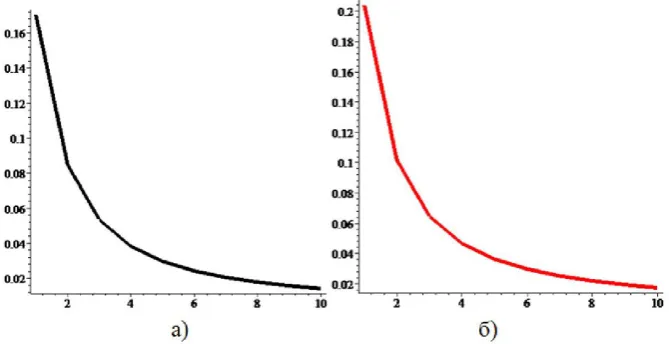
) for individual materials. These graphs show that with decreasing the Poisson's ratio values of torque increases.Fig. 2. Torque Н. The composite of copper and iron
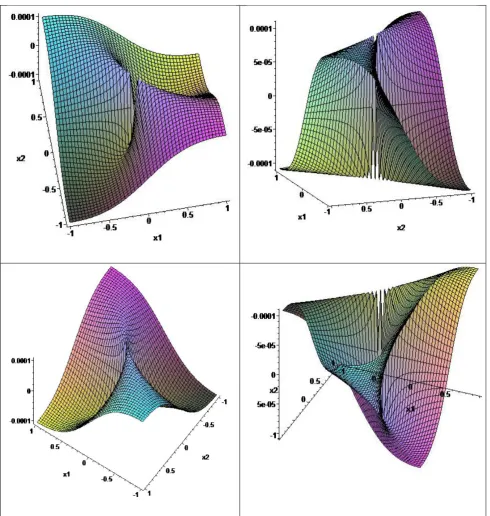
Fig. 2 shows graphs of changes of torque
H
for functionally graded material that is the mixture of copper and cast iron. Poisson's ratio for this material varies linearly in the interval
3 2 ; 3
1 of thickness the plate. The dependence of the torque value
from the Poisson's ratio is the same as shown in Fig. 1.
DISCUSSION AND CONCLUSION
[image:6.595.54.545.93.610.2]In the presence of concentrated dislocations fundamental decisions - Green's functions - are the foundation for building potential representations as integrals of displacement jumps distributed with unknown density. Such integral representations will be used in solving the problems of bending the plates with different kinds of defects, cuts and incisions. The proposed method allowed us to take into account the transverse shear and normal stresses, so we overcome the shortcoming of the classical Kirchhoff-Love theory. Numerical studies of the SSS of functionally graded material are carried out. These studies allowed revealing patterns of behavior of the SSS components, depending on the elastic constants of composite materials.
The practical significance of these results is the possibility of using the developed methods for solving problems in the calculations associated with the design and definition of the operating parameters of thin-walled structural elements of functionally graded materials under the action of concentrated force impacts. Due to the large depreciation of the energy, refinery and chemical equipment at the moment, relevant issue is the problem of extending the working life of equipment, even in the presence of micro-defects in it. Calculation of the strength of such elements by using the theory of shells and plates of medium thickness in the presence of different kinds of defects based on the obtained fundamental solutions will facilitate the adjustment of the terms of reserve maintenance periods, priority of replacement of worn-out equipment.
REFERENCES
Alijani, F., Amabili, M., Karagiozis, K., Bakhtiari-Nejad, F. 2011. Nonlinear vibrations of functionally graded doubly curved shallow shells. J. Sound Vib. 330, 1432 – 1454.
Altenbach, H. and Eremeyev, V. 2008. Direct approach based analysis of plates composed of functionally graded materials.
Archive of Applied Mechanics, vol. 78, no. 10, pp. 775 – 794.
Ambartsumyan, S. A. 1974. The general theory of anisotropic shells. M.: Science, 446.
Bokov, I. P. and Strelnikova, E. A. 2015. Construction of fundamental solutions static equation isotropic plates of medium thickness. Eastern-European Journal of Enterprise Technologies, Vol. 4, № 76, 27–34.
Bokov, I. P. and Strelnikova, E. A. 2015. Fundamental solution of static equations of transversely isotropic plates. International Journal of Innovative Research in Engineering & Management, Vol-2, Issue-6, 56–62.
Chorfi, S.M. and Houmat, A. 2010. Non-linear free vibration of a functionally graded doubly-curved shallow shell of elliptical plan-form. Composite Structures 92, 2573-2581.
Darevskii, V. M. 1966. Contact problems of the theory of shells (the action of local loads on the shell). Proceedings of VI All-Union Conference on the theory of shells and plates. M.: Nauka, 927–933.
Dementyev, A. D., Nazarov, L. A., Nazarova, L. A. 2002. Applications of the theory of elasticity. Novosibirsk, 224.
Ganowicz, R. 1973. On fundamental singularity in the theory of shallow cylindrical shells. Arch. mech. Stosowanej, Vol. 25, № 6, 985–992.
Gol'denveizer, A. L. 1944. Research of the stress condition of the spherical shell. Applied Mathematics and Mechanics, Vol. 6, 441–467.
Gol'denveizer, A. L. 1954. On the question of the calculation of shells on concentrated forces. Applied Mathematics and Mechanics, Vol. 8, № 2, 181–186.
Han, H. 1988. Elasticity Theory: Fundamentals of linear theory and its application. M.: World, 344.
Jahanshahi, A. 1963. Force Singularities of Shallow Cylindrical Shells. Journal of Applied Mechanics. ASME International, Vol. 30, № 3, 342–345.
Khizhnyak, V. K. and Shevchenko, V. P. 1980. Mixed problem in the theory of plates and shells. DonGU: Donetsk, 128.
Kiel, N. A. 1973. On the action of local loads on the shell. Proceedings of the universities. Construction and architecture, № 3, 43– 46.
Koizumi, M. 1993. The concept of FGM, Ceramic Trans. Functionally Graded Mater. 34, 3 – 10.
Matsunaga H. 2008. Free vibration and stability of functionally graded shallow shells according to a 2D higher-order deformation theory. Compos Struct; 84(2):132 – 46.
Pelekh, B. L., Lazko, V. A. 1982. Laminated anisotropic plates and shells with stress concentrators. K.: Science thought, 296. Reissner, E. 1985. Reflections on the theory of elastic plates. Applied Mechanics Reviews, Vol. 38, № 11, 1453–1464. Sanders, J. L. 1970. Singular Solutions to the Shallow Shell Equations. Journal of Applied Mechanics, Vol. 37, № 2, 361–366. Sneddon, I. 1955. Fourier transform. M.: Foreign literature publishing house, 668.
Vekua, I. N. 1970. Variational principles of the theory of shells. Publisher of Tbilisi, 300.
Velichko, P. M., Khizhnyak, V. K., Shevchenko, V. P. 1968. Research local stresses in plates and shells under concentrated load. Proceedings of III All-Union Congress on theor. mechanics. M.: Publishing House of the USSR Academy of Sciences, 67. Velichko, P. M., Khizhnyak, V. K., Shevchenko, V. P. 1971. Deformation of shells of positive curvature in the concentrated
actions. Stress concentration, Vol. 3, 31.
Velichko, P. M., Khizhnyak, V. K., Shevchenko, V. P. 1975. Local stresses in the shells of positive, neutral and negative curvature. Proceedings of X All-Union Conf. on the theory of shells and plates. Vol. 1. Tbilisi: Publishing house Mitsniereba, 31–41.
Yamanoushi, M., Koizumi, M., Hiraii, T., Shiota, I. 1990. Proceedings of the First International Symposium on Functionally Graded Materials, Japan.
Zenkour, A. M. 2006. Generalized shear deformation theory for bending analysis of functionally graded plates. Appl Math Modell; 30:67 – 84.
Zhigalko, Y. P. 1966. Calculation of thin elastic cylindrical shells at local loads (literature review, methods and results). Investigations in the theory of plates and shells, Vol. 4, 3–41.