METHOD AND IMPLEMENTATION OF ENHANCED RIDGE AND OPTIMIZATION
WITH ANN IN FINGERPRINT RECOGNITION SYSTEM
1,*
Yousuf Haider and
1
Department of Computer Science and Engineering, National Institute of Technical Teachers Training and
2
Department of Electronics and Communication Engineering, National Institute of Technical Teachers Training
ARTICLE INFO ABSTRACT
One of the major issues in verification of fingerprints is the lack of robustness against image degradation. Poor
overall system. Due to this, it proposes a fingerprint recognition system with enhancement of image ridges and also optimization of dataset by ANN. The objective of the proposed system is t
the biometric recognition frameworks, by adding liveness assessment in a fast and user manner through the use of image quality assessment. To remedy the ridge areas and enhance the contrast of the local ridges, we first enhance the finge
results show that our proposed algorithm is able to handle achieves better results in terms of BER and PSNR value.
Copyright © 2016, Yousuf Haider and Dr. Maitreyee Dutta
permits unrestricted use, distribution, and reproduction in any medium, provided the original work is properly cited.
INTRODUCTION
BIOMETRICS, i.e., described as the science of recognizing an individual based on his or her physical or behavioral
beginning to gain acceptance as a legitimate method for the determination of an individual’s identity
2004). Image processing is a rapidly growing area of computer science. Its growth has been fuelled by technological advances in digital imaging, computer processors and mass storage devices. Fields which traditionally used analog imaging are now switching to digital systems, for their flexibility and affordability. Important examples are medicine, film and video production, photography, remote sensing, and security monitoring. These and other sources produce huge volumes of digital image data every day, more than could ever be examined manually. Digital image processing is concerned primarily with extracting useful information
Ideally, this is done by computers, with little or no human intervention.
*Corresponding author: Yousuf Haider,
Department of Computer Science and Engineering, National Institute of Technical Teachers Training and Research, Chandigarh
ISSN: 0975-833X
Article History:
Received 14th December, 2015
Received in revised form 20th January, 2016
Accepted 26th February, 2016
Published online 31st March,2016
Key words:
Fingerprint Recognition system, Biometrics, ANN,
Enhancement of Image etc.
Citation: Yousuf Haider and Dr. Maitreyee Dutta
Recognition System”, International Journal of Current Research
RESEARCH ARTICLE
METHOD AND IMPLEMENTATION OF ENHANCED RIDGE AND OPTIMIZATION
WITH ANN IN FINGERPRINT RECOGNITION SYSTEM
Yousuf Haider and
2Dr. Maitreyee Dutta
Department of Computer Science and Engineering, National Institute of Technical Teachers Training and
Research, Chandigarh
Department of Electronics and Communication Engineering, National Institute of Technical Teachers Training
and Research, Chandigarh
ABSTRACT
One of the major issues in verification of fingerprints is the lack of robustness against image degradation. Poor-quality images result in spurious features, thus degrading the performance of the overall system. Due to this, it proposes a fingerprint recognition system with enhancement of image ridges and also optimization of dataset by ANN. The objective of the proposed system is t
biometric recognition frameworks, by adding liveness assessment in a fast and user manner through the use of image quality assessment. To remedy the ridge areas and enhance the contrast of the local ridges, we first enhance the fingerprint image
results show that our proposed algorithm is able to handle various types of input image contexts and achieves better results in terms of BER and PSNR value.
Maitreyee Dutta. This is an open access article distributed under the Creative Commons Att use, distribution, and reproduction in any medium, provided the original work is properly cited.
IOMETRICS, i.e., described as the science of recognizing an behavioral traits, is beginning to gain acceptance as a legitimate method for the determination of an individual’s identity (Gonzalez et al.,
Image processing is a rapidly growing area of computer science. Its growth has been fuelled by technological advances in digital imaging, computer processors and mass storage devices. Fields which traditionally used analog imaging are now switching to digital systems, for their flexibility and affordability. Important examples are medicine, film and video tography, remote sensing, and security monitoring. These and other sources produce huge volumes of digital image data every day, more than could ever be Digital image processing is concerned primarily with extracting useful information from images. Ideally, this is done by computers, with little or no human
Department of Computer Science and Engineering, National Institute of Technical Teachers Training and Research, Chandigarh
Among all the biometric indicators, fingerprints are one of the highest levels of reliability and have been extensively used by forensic experts in criminal investigations
2002). Fingerprint recognition has emerged as one of the most reliable means of biometric authentication because of its universality, distinctiveness, permanence, and accuracy. However, the performance of fingerprint recognition techniques relies heavily on the
images. Fingerprint images are frequently of low quality, because of the contexts of the image
Normally, noise from input devices can be easily eliminated using simple filters; however, the imperfection
structures from each individual are not typically well defined, and it is very hard to enhance the contexts of these images. quality of a fingerprint image may be poor or significantly different because of various factors, such as wetness and dryness, pressure strength, smears, and so on, which lead to different types of degradation in fingerprint images. conventional fingerprint identification system is composed of a fingerprint sensor for the acquisition of fingerprint images; an image processor for enhancement of the fingerprint image and extraction of the user’s fingerprint features; and memory for storage of captured images and extracted features.
International Journal of Current Research
Vol. 8, Issue, 03, pp. 28314-28318, March, 2016
INTERNATIONAL
er and Dr. Maitreyee Dutta, 2016. “Method and Implementation of Enhanced Ridge and Optimization with ANN in FingerPrint
International Journal of Current Research, 8, (03), 28314-28318.
METHOD AND IMPLEMENTATION OF ENHANCED RIDGE AND OPTIMIZATION
WITH ANN IN FINGERPRINT RECOGNITION SYSTEM
Department of Computer Science and Engineering, National Institute of Technical Teachers Training and
Department of Electronics and Communication Engineering, National Institute of Technical Teachers Training
One of the major issues in verification of fingerprints is the lack of robustness against image-quality result in spurious features, thus degrading the performance of the overall system. Due to this, it proposes a fingerprint recognition system with enhancement of image ridges and also optimization of dataset by ANN. The objective of the proposed system is to enhance biometric recognition frameworks, by adding liveness assessment in a fast and user-friendly manner through the use of image quality assessment. To remedy the ridge areas and enhance the in the spatial domain. Experimental various types of input image contexts and
is an open access article distributed under the Creative Commons Attribution License, which
Among all the biometric indicators, fingerprints are one of the highest levels of reliability and have been extensively used by forensic experts in criminal investigations (Gonzalez et al.,
Fingerprint recognition has emerged as one of the most reliable means of biometric authentication because of its universality, distinctiveness, permanence, and accuracy. However, the performance of fingerprint recognition techniques relies heavily on the quality of the input fingerprint images. Fingerprint images are frequently of low quality, because of the contexts of the image-acquisition process. Normally, noise from input devices can be easily eliminated using simple filters; however, the imperfection of ridge structures from each individual are not typically well defined, and it is very hard to enhance the contexts of these images. The quality of a fingerprint image may be poor or significantly different because of various factors, such as wetness and dryness, pressure strength, smears, and so on, which lead to different types of degradation in fingerprint images. A conventional fingerprint identification system is composed of a fingerprint sensor for the acquisition of fingerprint images; an cessor for enhancement of the fingerprint image and extraction of the user’s fingerprint features; and memory for storage of captured images and extracted features.
INTERNATIONAL JOURNAL OF CURRENT RESEARCH
Figure 1. Conceptual Diagram of Block Scheme of Image (Gonzalez et al., 2004)
An optical-type fingerprint sensor, which is used widely in fingerprint identification systems, requires a set of optical systems that include LED and lens to generate light and provide an optical path for the image capture process. Since this system is rather expensive and bulky, it is not suitable for applications in portable equipment’s and smart card (David Maltoni, 2003). In this work, we develop a novel methodology for a fingerprint recognition system with training of dataset with ANN. Also designs a fingerprint recognition system with emphasis on enhancement of data using feature discretization technique.Further, in section II, it represents related work of proposed system. In Section III, It defines proposed system model of system. In Section IV, It defines results of proposed System. Finally, conclusion is explained in Section V.
Related prior work
Recently, there was a research on an effective algorithm for fingerprint image quality improvement. The algorithm consisted of two stages. The first stage was decomposing the input fingerprint image into four sub-bands by applying two-dimensional discrete wavelet transform. At the second stage, the compensated image was produced by adaptively obtaining the compensation coefficient for each sub-band based on the referred Gaussian template. The experimental results indicated that the compensated image quality was higher than that of the original image. The proposed algorithm can improve the clarity and continuity of ridge structures in a fingerprint image (Wang
et al., 2015). In second group, some presented a novel
software-based fake detection method that can be used in multiple biometric systems to detect different types of fraudulent access attempts. The objective of the proposed system was to enhance the security of biometric recognition frameworks, by adding liveness assessment in a fast, user-friendly, and non-intrusive manner, through the use of image quality assessment. The proposed approach presented a very low degree of complexity, which made it suitable for real-time applications, using 25 general image quality features extracted from one image (i.e., the same acquired for authentication purposes) to distinguish between legitimate and impostor samples (Galbally and Sébastien Marcel, 2014). Some authors proposed a biometrics-based authentication scheme for
multi-server environment using elliptic curve cryptography. To the best of our knowledge, the proposed scheme was the first truly three-factor authenticated scheme for multi-server environment. They also demonstrated the completeness of the proposed scheme using the Burrows–Abadi–Needham logic. In contrast, biometric methods, such as fingerprints or iris scans, have no such drawbacks. Therefore, biometrics-based authentication schemes gain wide attention (He and Ding Wang, 2014).
Flow system model
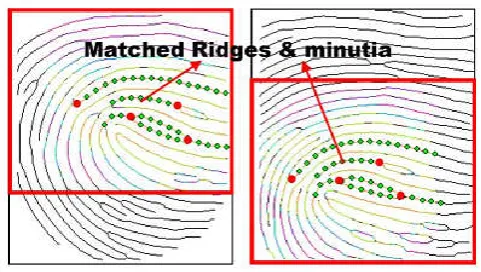
[image:2.595.314.555.375.511.2]In this paper, we introduce a novel method for fingerprint image recognition, which can be used to extract the greatest amount of combined information from multiple snapshots. To accurately estimate the transform, we find correspondences initially by matching the minutia and the ridges attached to the matched minutia. Then, additional correspondences are found by iteratively matching the unpaired ridges to minimize the registration error. Also, in this paper, we propose a way to effectively eliminate erroneous correspondences by using the geometric relationship between the correspondences and checking if the registration error decreases or not. The proposed method consists of three stages. First, the pre-processing procedure extracts the ridge information and produces the normalized distance. Next, the alignment procedure is applied to estimate the required transformation.
Figure 2. Matches Ridges Points and Minutia (Wang et al., 2015)
than a given threshold. The short ridges are classified into bifurcation–bifurcation ridges (bridges), end–bifurcation ridges (spurs), and end–end ridges (short ridges). In case of bifurcation–bifurcation ridges, a triangle with three ridge points (equidistant from the bifurcation) is generated. If any vertex of the maximum side of the triangle is not on the short ridge, and the direction of the short ridge is nearly perpendicular to the orientation of its neighbour, the short ridge is regarded as a bridge and is removed. In case of endbifurcation ridges, a triangle is made in a similar way to the bridge removal. It is necessary to check whether the end minutia is on the minimum side of the triangle or not, as shown in Fig. 5(c). In case of end–end ridges, the short ridges are simply removed. Next, a distance is obtained from the thinned ridge image. In case of the general distance map, the distance at a point is defined as the minimum distance from the point to the nearest ridge in the thinned image. We normalize the distance value between 0 and 1 as follows:
( , ) = ( , )/( ( , ) + ( , ))
Where ( , ) and ( , )represents the distances from a point (x, y) to the nearest ridge and valley, respectively.
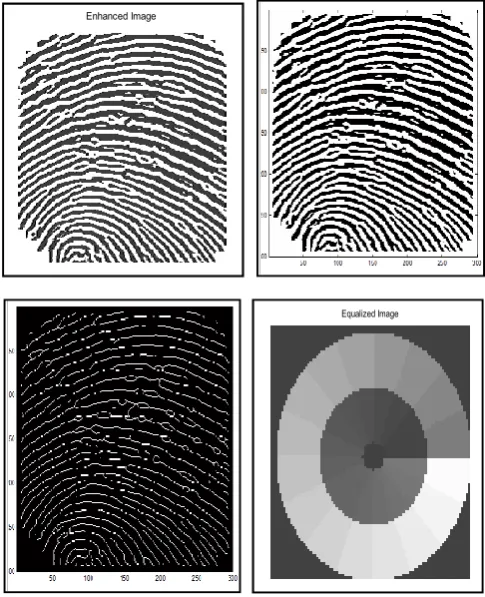
Figure 3. Fingerprint Processing Operations Enhancement b) Binarization c) Thinning d) Normalization
The features of our method are as follows.
Using a multi-stage scheme to enhance the low-quality fingerprint image in both the spatial domain and the frequency domain based on the learning from the images.
The first-stage enhancement scheme enhances the contrast of ridges and valleys and repairs the ridge structures very well in the low-quality images, and the second-stage filter will obtain the filters’ parameters from both the original
image and the first-stage enhanced image instead of acquiring from the original image solely, thus helping in the next stage of enhancement.
In the first-stage processing, local normalization is used to reduce the variations in gray-level values along ridges and furrows instead of using traditional global normalization.
Using a local compensation filter to enhance the fingerprint image with a mask enhances the ridges’ pixels’ gray level values along the local ridge orientation, while reducing the gray-level values of non-ridges’ pixels.
Using local orientation and local frequency as the parameters’ estimation based on the learning from the images for fingerprint filter design.
[image:3.595.308.552.140.525.2] With this two-stage enhancement algorithm, it will enhance fairly low-quality fingerprint image completely, thus help to deal with the various input contexts.
Figure 4. Proposed System Model
Figure 5. False Ridge Examples: a) Broken Ridges b) Bridges c) Spur d) Short Ridge
The enhancement performs ridge compensation along the ridges in the spatial field. This step enhances the fingerprint’s local ridges using the neighbourpixels in a small window with a weighted mask along the orientation of the local ridges. Each pixel in the fingerprint is replaced with its weighted neighbor sampling pixels in a small window and with the controlled contrast parameters along the orientation of the local ridges. Normalization is used to reduce the local variations and standardize the intensity distributions in order to consistently estimate the local orientation. The pixel wise operation does not change the clarity of the ridge and furrow structures but reduces the variations in gray-level values along ridges and furrows, which facilitates the subsequent processing steps. The global normalization method is also used for the fingerprint enhancement employing a Gabor filter.
norimg (i,j) = M0 + coeff (img(i,j) − M)
Enhanced Image
[image:3.595.42.285.331.630.2]Here, img(i,j) is the gray-level value of the fingerprint image in pixel (i, j), norimg(i,j) is the normalizing value in pixel (i, j), and coefficient is the amplificatory multiple of the normalized image. M is the mean of the sub-image.
[image:4.595.350.519.89.278.2]Experimental results and analysis
Figure 6. FVC Database DB1 (Gonzalez et al., 2004)
In order to overcome the shortcomings of the existing algorithms on the fairly poor fingerprint images with cracks and scars, dry skin, or poor ridges and valley contrast ridges, we propose a novel and effective enhancement algorithm for low-quality fingerprint images, in this paper, by integrating spatial- and frequency-domain filters. The method adequately uses the information of the first enhanced image for the estimation of second filters’ parameters. There are two main types of features in fingerprints: (i) global ridge and furrow structures which form a special pattern in the central region of the fingerprints, and (ii) minute details associated with local ridges and furrows. A fingerprint is typically classified based on only the first type of features and uniquely identified based on the second type of features. The minutiae-based representation is the most popular representation of fingerprints as it has a long history of use by the forensic experts who visually match fingerprints. Forensic experts also use other features such as ridge count between pairs of minutiae and ridge width in conjunction with minutiae for identification purposes.
However, automatic processing of fingerprints allows the use of Cartesian coordinates and Euclidean distances in establishing the similarity between fingerprints. Similarly, the use of an alternate representation of fingerprint that has good discriminatory power is also feasible for automatic systems.A fingerprint recognition system constitutes of fingerprint device, minutia extractor and minutia matching. Image acquisition is
[image:4.595.37.289.130.415.2]first step in the approach. It is very important as quality of the fingerprint image must be good and free from any noise.
[image:4.595.352.517.310.497.2]Figure 7. Tested Image from Database
Figure 8. Equivalent Image from Database
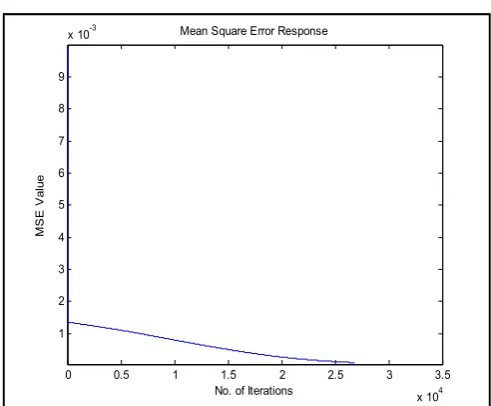
Figure 9. Mean Square Error Response Image to be tested
Equivalent Image
0 0.5 1 1.5 2 2.5 3 3.5
x 104
1 2 3 4 5 6 7 8 9
x 10-3 Mean Square Error Response
No. of Iterations
M
S
E
V
a
lu
[image:4.595.310.556.514.717.2]A good fingerprint image is desirable for better performance of fingerprint algorithms. Fingerprint image quality is an important factor in performance of minutiae extraction and matching algorithms. A good quality fingerprint image has high contrast between ridges and valleys. A poor quality fingerprint image is low in contrast, noisy, wrecked, or smudgy, causing spurious and missing minutiae.Signal Quality term is often used to characterise the signal at the output of the decoder. There is no universally accepted measure for signal quality. One measure that is often cited is the signal to noise ratio
SNR
, which can be expressed asenergy
signal
noise
energy
signal
input
encoder
SNR
10
log
10The noise signal energy is defined as the energy measured for a hypothetical signal that is the difference between the encoder input signal and the decoder output signal. Note that,
SNR
, defined here is given in decibels (dB).Conclusions
The goal of this work is to design a fingerprint image matching system with enhancement using ANN. The ANN used here is for minimization of error upto desired goal value. It is used to study the security impact of partial fingerprints on automatic fingerprint recognition systems and to develop an automatic system that can overcome the challenges presented by partial fingerprint matching.This algorithm is tested on different types of images using Dataset Db 2004.The proposed algorithm is implemented in MATLAB. To solve this problem, we suggested a new enrolment scheme that was able to obtain a sequence of images by rolling and sliding a finger on a sensor. However, at that time, we could not accurately estimate transform when the amount of plastic distortion between images was too severe. Therefore, in the future, the proposed method can be applied to compensate for the amount of severe plastic distortion caused by frictional force. In this way, we will be able to robustly mosaic a sequence of images.
REFFERENCES
Akbari, N., A. Sadr, “Automation of Fingerprint Recognition Using OCT Fingerprint Images”, International Journal of
Engineering Research & Technology (IJERT), Vol. 2, Issue
6, 2012.
Bartunek, J.S., M. Nilsson, B. Sällberg and I. Claesson, “Adaptive Fingerprint Image Enhancement With Emphasis on Preprocessing of Data”, IEEE Transactions On Image
Processing, Vol. 22, No. 2, February 2013.
Chen, S., Fernando Cerda, Piervincenzo Rizzo, “Semi-Supervised Multi resolution Classification Using Adaptive Graph Filtering With Application to Indirect Bridge Structural Health Monitoring”, IEEE Transactions on
Signal Processing, Vol. 62, No. 11, June 1, 2014.
Chunming Li, Rui Huang, Zhaohua Ding, “A Level Set Method for Image Segmentation in the Presence of Intensity In-homogeneities With Application to MRI”,
IEEE Transactions on Image Processing, Vol. 20, No. 7,
July 2011.
Digital Image Processing by Rafael C. Gonzalez and Richard E. Woods, Pearson Education, 2003.
Galbally, J., Sébastien Marcel, “Image Quality Assessment for Fake Biometric Detection: Application to Iris, Fingerprint, and Face Recognition”, IEEE Transactions on Image
Processing, Vol. 23, No. 2, February 2014.
Gonzalez, R., R. Woods and S. Eddins, “Digital Image Processing Using Matlab”, 2004, Prentice Hall.
Gonzalez, R.C., Woods, R., “Digital Image Processing”, 2nd Edition, Prentice-Hall, 2002.
Handbook of Fingerprint Recognition by David Maltoni, Dario Maio, Anil K. Jain and Salil Prabhakar , Springer, New York, pp. 2003.
He, D. and Ding Wang, “Robust Biometrics-Based Authentication Scheme for Multi server Environment”,
IEEE Systems Journal, 2014.
Jucheng Yang, Naixue Xiong, “Two-Stage Enhancement Scheme for Low-Quality Fingerprint Images by Learning from the Images”, IEEE Transactions on Human-Machine
Systems, Vol. 43, No. 2, March 2013.
Kumar, S., K B Raja, R K Chhotaray, S. Pattanaik, “DWT Based Fingerprint Recognition using Non Minutiae Features”, IJCSI International Journal of Computer
Science Issues, Vol. 8, Issue 2, March 2011.
Maiorana, E., P. Campisi, “Fuzzy Commitment for Function Based Signature Template Protection”, IEEE Signal
Processing Letters, Vol. 17, No. 3, March 2010.
Matthew C. Stamm and K. J. Ray Liu, “Forensic Detection of Image Manipulation Using Statistical Intrinsic Fingerprints”, IEEE Transactions on Information Forensics and Security, Vol. 5, No. 3, September 2010.
Wang, J., Ngoc Tuyen Le, Chou-Chen Wang, “Enhanced Ridge Structure for Improving Fingerprint Image Quality Based on a Wavelet Domain”, IEEE Signal Processing
Letters, Vol. 22, No. 4, April 2015.
Xiaodi Hou, Jonathan Harel, “Image Signature: Highlighting Sparse Salient Regions”, IEEE Transactions on Pattern
Analysis and Machine Intelligence, Vol. 34, No. 1, January
2012