Hospital-Adapted Clonal Complex 17 Enterococcus
faecium Found among Sand Enterococcal Isolates
*
Daniela Pinto1, Marta Ruivo2, Peter Vandamme3, Maria de F. S. Lopes1,2
1
Instituto de Biologia Experimental e Tecnológica, Oeiras, Portugal; 2Instituto de Tecnologia Química e Biológica, Oeiras, Portugal;
3
Laboratorium voor Microbiologie, Vakgroep Biochemie, Fysiologie en Microbiologie, Universiteit Gent, Gent, Belgium. Email: [email protected]
Received October 3rd, 2011; revised November 8th, 2011; accepted December 18th, 2011
ABSTRACT
Though poorly studied, sand is an environment with an extended degree of interaction with man. Enterococcal strains can be found in sand but we do not know to what extent these ubiquitous opportunistic nosocomial pathogens isolated from sand carry antimicrobial resistances and virulence traits. In an attempt to fill in this knowledge gap, two distinct types of sand (beach and children playground) were examined concerning composition in enterococcal species, genetic diversity of isolates and abundance of resistance to antimicrobials and virulence traits. Five different species were found, namely Enterococcus faecium, Enterococcus faecalis, Enterococcus hirae, Enterococcus flavescens and Enterococcus casseliflavus. Although genetic diversity was evident, two different E. faecium clones, common to the two types of sand, were detected, suggesting the existence of clones well adapted to this specific environment or from a common source. E. faecium was associated with multiple antibiotic resistances, including to fluoroquinolones and tetracycline that are commonly used by veterinarians and clinicians. Among the multiresistant E. faecium strains from beach sand, two were from sequence type (ST) 442, which belongs to the wide-spread Hospital-adapted clade CC17. They both carried the esp gene and the genomic island associated with CC17. The other virulence factors screened were disseminated among E. faecalis strains, but seldom detected in the other species, evidencing the existence, in these environments, of E. fae-calis strains carrying the same virulence factors as the clinical ones. The present work thus stresses the need to fol-low-up the presence and characterization of enterococcal strains from both beach and children playground sands and of including these environments in the epidemiological global analysis of enterococcal isolates.
Keywords: Antibiotic Resistance; Beach Sand; Clonal Complex 17; Enterococcus; Playground Sand; Virulence Factors
1. Introduction
Enterococcus are human commensal Gram-positive bac-teria, able to withstand a great diversity of environmental conditions, and probably for this reason they are com-monly isolated from environments as diverse as food products [1], water and soil [2]. The presence of entero-cocci in these environments is probably due to fecal con-tamination [3]. However, the general assumption that fecal indicators, like Escherichia coli and enterococci, do not occur in natural environments such as soil or water, has recently been challenged [4], because 1) sediments could provide favorable nutrient conditions and protec-tion from sunlight inactivaprotec-tion [1] and 2) enterococci could survive desiccation and regrow in rewetted sedi-ments [5]. In fact, in the last years a few authors reported
the presence of enterococci in sand [3-6].
For many years members of the genus Enterococcus were considered harmless, but this view has changed. Nowadays they are also seen as human nosocomial path- ogens, emerging as the second most frequently reported cause of surgical wound and nosocomial urinary tract in- fections and the third most frequently reported cause of bacteraemia [1]. The emergence of enterococci as noso- comial infectious agents is related to the use of antibiot- ics and to the fact that these bacteria are intrinsically re-sistant to many of the antibiotics used in clinical settings. Recently, enterococcal isolates from different sources have been screened for resistance to some of the more clinically important antibiotics [7-10], and results have shown that resistance is present in almost all environ-ments, although to different extents. This recent aware-ness, and consequent concern, of enterococci as a health problem has led researchers to invest a lot of efforts to understand the factors that influence the relationship of
*The authors acknowledge financial support from the Fund for
these organisms with their host, i.e. the virulence factors. Several virulence factors have been identified, including aggregation substance, surface protein Esp and adhesin Ace, all playing a role in adhesion to host cells and tis-sues; cytolysin, gelatinase and hyaluronidase, which are responsible for tissue damage [11]; bile salt hydrolase, contributing to survival in the gastrointestinal tract [12]; and the Enterococcusfaecalis endocarditis antigen (EfaA), for which the role in virulence has not yet been completely clarified [13]. All these factors have been studied in E. faecalis, although some of them have been also reported in other species of the genus [14] and in strains not associ-ated with nosocomial environments [15].
The presence of enterococci in sand, though acknowl-edged, has not been subject of a more thorough analysis that could provide information on how this environment can contribute to the general trafficking of antibiotic re-sistance and virulence determinants carried by entero-cocci. Thus, the objectives of the present study were to determine the genetic diversity, antibiotic resistance and carriage of virulence determinants by enterococci resi-dent in sand in Portugal. Beach sand has been sampled by others. Therefore, we included in this study a sample of children playground sand, which, to our knowledge, has never been studied as an environmental source of enterococci.
2. Materials and Methods
2.1. Microorganisms
A total of 97 enterococal isolates from beach (78 isolates) and playground sand (19 isolates) were collected and sent to our Laboratory after primary identification to the genus level. In the Lab, all microorganisms were grown in Brain Hearth Infusion (BHI) (Oxoid, Hampshire, UK) at 37˚C, unless otherwise mentioned. For identification purposes Enterococcus type-strains obtained from the
Deutsch Sammlung von Mikroorganismen and Zellkul- turen (DSMZ; Braunschweig, Germany), were used as references: Enterococcus casseliflavus DSM 20680, En- terococcus dispar DSM 6630, Enterococcus durans DSM 20633, Enterococcus faecalis DSM 20478, Enterococcus faecium DSM 20477, Enterococcus flavescens DSM 7370, Enterococcus gallinarum DSM 20628, Enterococcus hirae DSM 20160, Enterococcus mundtii DSM 4838, Enterococcus raffinosus DSM 5633, Enterococcus solitarius DSM 5634. Enterococcus faecalis DSM 2570 was used as the control strain in the disk antimicrobial susceptibility assays.
2.2. DNA Preparation
Total DNA extraction was performed as described before [16] with minor changes: cells were harvested and re-suspended in 3/20 of the initial volume of TES and incu-bated in the presence of lysozyme (5 mg/mL) (Sigma, Steinheim, Germany) for 40 minutes. 300 µL of saline solution and 40 µL of SDS 20% (w/v) (Sigma) were added and mixed by inversion. Phenol extractions and ethanol precipitation were preformed and the final prod-uct was treated with RNase (10 µg/mL) (Sigma).
2.3. Identification Procedures
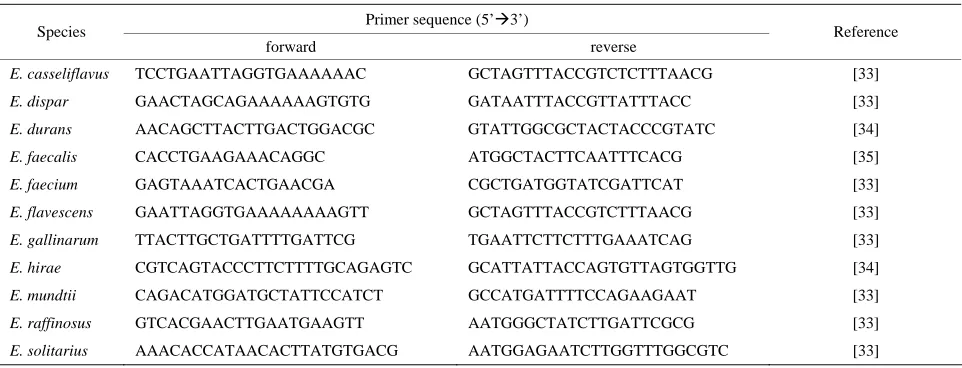
[image:2.595.58.539.554.738.2]All isolates were screened by PCR with species specific primers (Table 1). Since E. faecalis and E. faecium are the most abundant enterococcal species, all 97 isolates were screened using primers for both species. Those not identified as one of these two species, were then tested, sequentially and using the same approach, with primers for E. durans, E. hirae, E. casseliflavus, E. mundtii, E. dispar, E. flavescens, E. gallinarum, E. raffinosus and E. solitarius, as described in Table1. After this procedure 41 isolates remained unidentified. All isolates were typed using PFGE and among these 41 unidentified isolates we
Table 1. Primers used to amplify specific genes from each species.
Primer sequence (5’3’) Species
forward reverse Reference
E. casseliflavus TCCTGAATTAGGTGAAAAAAC GCTAGTTTACCGTCTCTTTAACG [33]
E. dispar GAACTAGCAGAAAAAAGTGTG GATAATTTACCGTTATTTACC [33]
E. durans AACAGCTTACTTGACTGGACGC GTATTGGCGCTACTACCCGTATC [34]
E. faecalis CACCTGAAGAAACAGGC ATGGCTACTTCAATTTCACG [35]
E. faecium GAGTAAATCACTGAACGA CGCTGATGGTATCGATTCAT [33]
E. flavescens GAATTAGGTGAAAAAAAAGTT GCTAGTTTACCGTCTTTAACG [33]
E. gallinarum TTACTTGCTGATTTTGATTCG TGAATTCTTCTTTGAAATCAG [33]
E. hirae CGTCAGTACCCTTCTTTTGCAGAGTC GCATTATTACCAGTGTTAGTGGTTG [34]
E. mundtii CAGACATGGATGCTATTCCATCT GCCATGATTTTCCAGAAGAAT [33]
E. raffinosus GTCACGAACTTGAATGAAGTT AATGGGCTATCTTGATTCGCG [33]
detected 18 types. One isolate from each type was se-lected for repetitive sequence-based PCR fingerprinting with the (GTG)5 primer [17]. Fingerprints were analyzed
with BioNumerics version 3.0 software (Applied Maths, Sint Martens Latem, Belgium) using the Pearson Corre- lation Coefficient and UPGMA for pattern analysis, and were compared with available data for enterococcal ref- erence strains [17]. For strains which were not identified by the (GTG)5-PCR approach, part of the pheS gene was
amplified and sequenced, as described before [18]. Se-quences were analyzed by using the BioNumerics ver-sion 3.0 software and compared with sequences of en-terococcal reference strains present in public databases. The remaining unidentified isolates (23 isolates) which were not selected for (GTG)5-PCR and pheS analyses
were genetically indistinguishable, as determined by PF GE, from the ones that were analyzed and were therefore assumed to represent the same species.
2.4. Pulsed Field Gel Electrophoresis
PFGE was performed as described before [19].
2.5. Antimicrobial Susceptibility Test
The susceptibility of enterococcal strains to antibiotics was determined using the disk diffusion method accord- ing to CLSI [20]. Antibiotics tested and disk content were as described before [1]. All isolates were cultured overnight in Mueller-Hinton Broth (MHB) (Oxoid, Ham- pshire, UK), with the exception of four isolates which presented impaired growth in this medium and for this reason were grown in BHI broth. MIC was determined, for a few isolates and antibiotics, using E-test from AB Biodisk (Solna, Sweden) according to manufacturer in-structions.
2.6. Screening of Virulence Factors
Gelatinase activity was verified as described before [14]. Blood agar plates (BioMerieux, Marcy l’Etoile, France) were used to detect hemolytic activity and, after inocula-tion, plates were incubated for 48 hours in anaerobic conditions before assessment of that activity. All isolates were tested for the presence of fsrA, fsrB, fsrC, gelE, sprE, ace, efaAfs and asa1 genes. PCR amplifications
were performed in a T-personal Combi thermocycler using primers targeting these genes [21]. Screening for virulence factors Hyl and Esp was performed using the following primers and only for a few E. faecium isolates, as described ahead:
hylEfmf (5’-GTTAGAAGAAGTCTGGAAACCG-3’),
hylEfmr (5’-TGCTAAGATATTCCTCTACTCG-3’),
espEfmf (5’-TGCTAATGCTAGTCCACGACC-3’) and
espEfmr (5’-GCGTCAACACT TGCATT GCCGA-3’)
[22]. Reference [23] identified a new genomic Island (GI)
specific to hospital-acquired strains belonging to CC17. This genomic island was composed by 7 genes (orf1474 to orf1483) encoding a potential new metabolic pathway involved in the metabolism and transport of carbohy- drates. To determine the presence of this GI in some of our E. faecium isolates, orf1477 was amplified by PCR using the following set of primers:
1477F (5’-CATTACTGTATTGGGCTTCGA-3’) and 1477R (5’-CTCTATGGTATGCTTCTGCTCC-3’).
2.7. Multilocus Sequence Typing (MLST)
Five unrelated (by PFGE) E. faecium isolates, resistant to more then 20 antibiotics by disk diffusion method, were selected for MLST typing. Internal fragments of seven housekeeping genes were amplified by PCR with the sets of primers described before [24]. Sequencing was done at Baseclear (Leiden, Netherlands). MLST alleles and se-quence types (ST) were identified using the database (http://efaecium.mlst.net/).
3. Results and Discussion
Beaches are quite dynamic ecosystems, subject to influ-ence from man, land, wind and rain and sea water. Play- ground sand is a different ecosystem, influenced by hu- mans, land, rain and wind. Together, they constitute im-portant reservoirs of microorganisms and are vehicles for human cross-contamination. Enterococci are opportunis-tic human nosocomial pathogens, with a recognized abil-ity to survive outside environments, such as food, soil and water. The omnipresence of these bacteria in and out of the human host, together with their ability to exchange genetic material, allows them to play an important role in transmission, between environments, of both strains and genes coding for antibiotic resistance and virulence de- terminants. Although acknowledged as a site of con- tamination with enterococci [2-6,25,26], sand has not been very well explored and characterized as a reservoir of Enterococcus strains. The presence of enterococci in sands has been pointed [6] as a possible cause of water quality failures. Finding enterococci in water and sand is relevant because they can be a vehicle for infection and/or carriage of potentially virulent strains and eventu-ally contribute to the increasing number of infections caused by these bacteria. In order to understand the role of these environments in the global epidemiology of en-terococcal strains we must, first, characterize the genetic diversity of the collected isolates and also two most im-portant factors relevant for infection, namely carriage of antibiotic resistance and virulence.
waste water being deposited near the beach. As in other reports [6,9,10], the predominant species found were E. faecium (46%) and E. faecalis (33%), but other species were also detected, including E. hirae (8%), E. flaves-cens (5%) and E. casseliflavus (5%). E. mundtii, E. du-rans, E. avium and E. gallinarum were not detected al-though they have also been associated with sand [2,6]. However, the distribution of species was different be-tween samples: in the playground sand we found 42% of E. faecium and only 5% of E. faecalis, whereas in beach sand the frequency of the same species was 50% and 41%, respectively, and E. flavescens was not detected. No obvious reason or deduction can be withdrawn from these data, but it is clear that E. faecalis is less repre- sented in the playground sample.
[image:4.595.57.287.574.738.2]Relevant findings from the antibiotic resistance screening are summarized in Table 2. We included in this study antibiotics for which the genus Enterococcus is considered intrinsically resistant or susceptible because it would be possible, in sand, to find different behavior, as we did previously in food isolates [27]. Analysis of Ta- ble 2 shows an association between E. faecium and re- sistance to fluoroquinolones, tetracyclines and -lactams. For all other antibiotics tested, the results obtained re-vealed a similar behavior of E. faecium and E. faecalis isolates. Overall, the enterococcal isolates studied were resistant to bacitracin (90%), colistin (97%), kanamycin (83%), lincomycin (80%), methicillin (97%), polymixin B (97%) and susceptible to amoxicillin, ampicillin, chlo- ramphenicol (97%), imipenem, penicillin, piperacillin, vancomycin (90%) and sulphamethoxazole/trimetho- pim (96%). These results are similar to data previously reported for environmental enterococcal strains from food, and also corroborate resistance and susceptibilities com- mon to the genus Enterococcus [1]. Resistance to norfl- oxacin, ciprofloxacin, enrofloxacin, erythromycin, nitro-furantoin and vancomycin observed in sand enterococci
Table 2. Percentage of isolates which were found to be re-sistant (R) and susceptible (S) to antibiotics showing differ-ent behaviors in the two most represdiffer-entative species.
Total (%) Contribution to total R (%) Antibiotic
S R E. faecalis E. faecium
Amoxicillin 97 1 0 100
Ampicillin 93 7 0 57
Enrofloxacin 64 12 0 64
Imipenen 92 8 0 62
Nitrofurantoin 57 24 13 48
Ciprofloxacin 18 25 0 71
Norfloxacin 56 6 0 83
Ofloxacin 42 18 6 70
Oxitetracycline 51 48 9 67
Penicillin G 92 8 0 62
Piperacillin 82 9 0 62
Tetracycline 50 50 11 64
is at the same level as reported in enterococci from other non clinical environments such as dairy products [1,8], wastewater [7], animal food products and animals [9]. Concerning tetracyclin and bacitracin we observed resis-tances similar to the ones found in clinical enterococcal isolates (50% for tetracycline and 90% for bacitracin). The enterococci studied showed higher resistances to kanamycin and rifampicin than the enterococci isolated from wild animals [10] and wastewater [8]. Altogether, these observations point out that we can find in sand more resistant isolates than in other non-clinical envi-ronments and raises the question about the primary origin of these isolates.
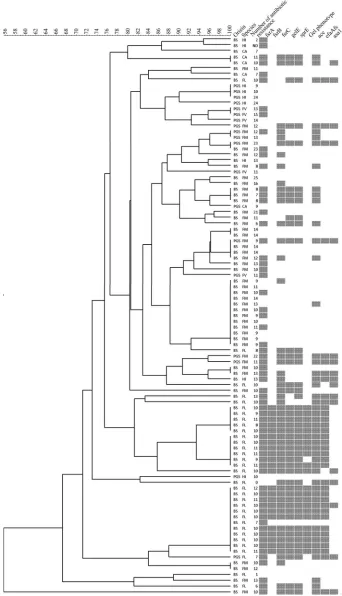
All 97 isolates were typed using PFGE, band patterns were analyzed using the Tenover criteria [28], and iso-lates were considered genetically related accordingly. A total of 46 PFGE types were defined, assuming that re-lated isolates have similarity higher than 96% (Figure 1). In our study we found a diversity of 2.6 and 1.8 for E. faecalis and E. faecium, respectively. Diversity was cal- culated by dividing the number of strains of one species by the number of PFGE types for that species. Overall, these results demonstrate a high genetic diversity which appears to be a common feature in the genus Enterococ- cus as it has been described in other environments as well. Although most of the PFGE types were composed of isolates from the same sand type, we found two PFGE types, among E. faecium species, with isolates from both beach and playground sand. This suggests the existence of E. faecium clones well adapted to this specific envi-ronment, sand. This result is quite interesting, because the two sand samples are not only spatially distant but also subject to different environmental influences and contamination sources. The fact that we found the same clones in these two samples points out that not only sand can be a reservoir of enterococcal strains, but also that these environments should start to be included in the epidemiological global analysis of enterococcal isolates.
Columns represent origin, species, number of antibiotic resistances and genotypes concerning virulence factor as well as gelatinase phenotype.BS, beach sand; PGS, playground sand; HI, E. hirae; CA, E. casseliflavus; FM, E. faecium; FL, E. faecalis; FV, E. flavescens; +, presence; –, absence. Dendrogram constructed using Dice coeffi-cient and UPGMA.
resistance. This species has evolved in the last 15 years from an avirulent commensal to the third most frequently isolated nosocomial pathogen among intensive care unit patients in the United States [30]. Molecular epidemiol-ogical studies of E. faecium using MLST revealed the existence of a distinct genetic subpopulation, named clonal complex 17 (CC17), responsible for the majority of hospital-related infections and outbreaks. CC17 has spread globally [31] and seems well adapted to the Hos-pital settings as well as associated with high-level cipro-floxacin resistance and ampicillin resistance [28]. It ap-pears that the acquisition of ampicilin resistance was one of the first steps in the adaption of E. faecium to hospital environment facilitating the subsequent emergence of vancomycin resistance [32]. We thus decided to investi-gate further the five E. faecium strains resistant to more then 20 antibiotics and type them by MLST. Two of the strains (16D7 and S1-2), constituting one of the clones found simultaneously in PGS and BS, although con-firmed as E. faecium by both ddl and sodA specific PCR, did not amplify any of the seven genes of the MLST scheme. It was thus impossible to type these two isolates
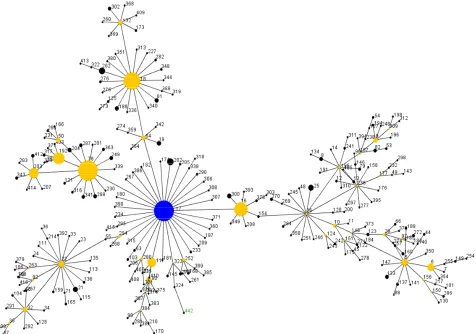
by MLST. This typing method has been developed with E. faecium isolates from similar environments, namely human and animals, both commensals and from clinical infections, as already mentioned. We thus reinforce the possibility that environmental strains, such as the ones we isolated from sand, have differences in the sequences of the house-keeping genes used for the MLST scheme. These isolates originate from an unusual source that has not been sampled before, which could suggest the exis-tence of a distinct E. faecium subpopulation with deviant MLST genes. For the other three isolates, MLST was carried out successfully. Two of them (5LM6 and 5LM8, both from beach sand) were ascribed to the new ST442 (atpA 5, ddl 1, gdh 1, purK 2, gyd 6, pstS 1 and adk 1) and one (14D5, from playground sand) to the new ST470 (atpA 25, ddl 13, gdh 34, purK 48, gyd 19, pstS 26 and adk 6). When eBURST analysis, comparing the entire MLST database, was done it was clear that ST442 is still part of the CC17 (Figure 2). ST442 is a single-locus variant (SLV) of ST324 and a double-locus variant (DLV) of six other ST’s: ST416, ST121, ST55, ST323 (co-founder), ST92 (co-founder) and ST313. CC17 is also characterized
[image:6.595.63.539.361.695.2]The new found ST442 is identified in green. Blue dot represents the CC17 founder. Yellow dots represent CC17 co-founders. Each dot represents one ST and the dots size is proportional with the number of isolates in the database with the same ST.
by the presence of a GI, which includes the esp gene. We detected both esp and orf1477 in the CC17 sand strains but hyl gene was absent in the same strains. These two CC17 sand strains were vancomycin and ampicillin sen-sitive (MICs of 2 g/mL and 1 g/mL, respectively). One, 5LM6, was confirmed as resistant to fluoroquinolones by MIC determination (32 g/mL for ciprofloxacin, oflox-acin and enrofloxoflox-acin and 16 g/mL for norfloxacin). None of these two strains carried any of the virulence factors screened other then those already mentioned, namely esp and the PAI. Our results clearly show that CC17, which until this moment includes mainly hospital strains and some strains isolated from calf, pigs and dogs, is also disseminating into “abiotic” environments, like beach sand, where the selective pressure of antibiotics is most likely irrelevant. It is possible that these CC17 sand strains, bearing some of the characteristics of the CC17 nosocomial strains, were brought to that environment by man or animals, most likely pets (dogs). Further studies need to be carried out to understand this phenomenon. Our findings stress, and urge, the need to closely survey and include sand, and eventually other “abiotic” envi-ronments influenced by man, in the epidemiological evaluation of enterococcal strain trafficking.
Research on enterococcal virulence has demonstrated that factors, initially ascribed a role in E. faecalis viru-lence, are in fact disseminated in the genus and are found in non-clinical environments [15]. Analysis of Figure 1
clearly shows that the virulence factors screened in this study are disseminated among E. faecalis, evidencing the existence in sand of E. faecalis strains carrying the same virulence factors as the clinical ones. This fact, however, does not imply any correlation between E. faecalis sand strains and pathogenicity. The same virulence traits were seldom detected in the other species, somehow contra-dicting the previous assumption that E. faecalis virulence determinants are common in the genus Enterococcus.
The screening of ace, efaAfs and asa1 genes revealed
that these genes were absent in 48% of the isolates, 52% were positive to ace gene, 34% were positive to efaAfs
and 16% to asa1. E. faecalis genes coding for surface proteins were found in other species, namely E. hirae, E. faecium and E. casseliflavus. Until now, to our knowl-edge, these virulence factors were only reported in E. faecalis and E. faecium. None of the strains studied was hemolytic and 23% produced gelatinase. All gelatinase producers were E. faecalis (Figure 1). The screening of genes involved in gelatinase expression (fsrA, fsrB, fsrC and gelE) showed that all the isolates with gelatinase activity were also positive for all the genes screened, as expected from previous work [14]. We were able to de-tect all genes screened in one of the isolates without ge-latinase activity. This silent behavior of the gege-latinase operon has been reported previously [14], but reasons for
the discrepancy between genotype and phenotype have not yet been reported. Gelatinase activity is associated with organisms that are able to cause infection. However, there is also one report of this virulence factor in food associated enterococci [14] and in this work we were able to detect gelE gene, the fsr operon and also the ge-latinase phenotype in environmental isolates, presumably not associated with human infections. The presence of virulence factors in the sand enteroccal isolates does not preclude, per se, the pathogenic potential of the same bacteria. However, it reveals that enterococci colonizing, or simply surviving, in “abiotic” environments carry the same genes which, in the nococomial environment, have proven relevant for the infection induced by E. faecalis. We cannot exclude the possibility that the virulence fac-tors we found in the sand isolates are relevant for the survival and establishment of these bacteria in the sand.
In summary, PFGE revealed the presence of two dif-ferent E. faecium clones in both sand samples, suggesting the existence of clones well adapted to this specific en-vironment. E. faecium was associated with multiple an-timicrobial resistances (five strains were resistant to more then 20 antibiotics) and in particular to fluoroquinolones and tetracycline. The virulence factors screened were disseminated among E. faecalis strains, but seldom de-tected in the other species, evidencing the existence, in these environments, of E. faecalis strains carrying the same virulence factors as the clinical ones. Finally, we detected two E. faecium strains belonging to the hospital clade CC17, carrying the esp gene, the GI and resistance to fluoroquinolones. Enterococci are able to colonize environments traditionally not colonized by fecal bacte-ria. These bacteria are resistant to salt and have been found before in sand. However, the high frequencies of resistance to some antibiotics were unexpected as was the resemblance of some strains to hospital-adapted strains. These results strongly advise monitoring beach and playground sands, places where the contact between humans and sediments is important and highlights the imperative need to include sand in the epidemiological global analysis of enterococcal isolates, together with its characterization concerning antibiotic resistance and pre- sence of virulence traits.
4. Acknowledgements
The authors acknowledge Professor Alexandra Nogueira Silva, from Faculdade de Farmácia de Lisboa, for giving us the enterococcal isolates, and Teresa Braga for con-firmation of some results.
REFERENCES
tance Profiles of Dairy and Clinical Isolates and Type Strains of Enterococci,” International Journal of Food
Microbiology, Vol. 103, No. 2, 2005, pp. 191-198.
doi:10.1016/j.ijfoodmicro.2004.12.025
[2] A. J. de Oliveira and J. M. Watanabe-Pinhata, “Antim- icrobial Resistance and Species Composition of Entero-
coccus spp. Isolated from Waters and Sands of Marine
Recreational Beaches in Southeastern Brazil,” Water
Re-search, Vol. 42, No. 8-9, 2008, pp. 2242-2250.
doi:10.1016/j.watres.2007.12.002
[3] E. W. Alm, J. Burke and A. Spain, “Fecal Indicator Bac-teria Are Abundant in Wet Sand at Freshwater Beaches,”
Water Research, Vol. 37, No. 16, 2003, pp 3978-3982.
doi:10.1016/S0043-1354(03)00301-4
[4] R. L. Whitman, D. A. Shively, H. Pawlik, M. B. Nevers and M.N. Byappanahalli, “Occurrence of Escherichia coli and Enterococci in Cladophora (Chlorophyta) in Near-shore Water and Beach Sand of Lake Michigan,” Applied
and Environmental Microbiology, Vol. 69, No. 8, 2003,
pp. 4714-4719. doi:10.1128/AEM.69.8.4714-4719.2003 [5] P. G. Hartel, K. Rodgers, J. A. Fisher, J. L. McDonald, L.
C. Gentit, E. Otero, Y. Rivera-Torres, T. L. Bryant and S. H. Jones, “Survival and Regrowth of Fecal Enterococci in Desiccated and Rewetted Sediments,” Proceedings of the
2005 Georgia Water Resources Conference, Athens,
25-27 April 2005.
[6] D. M. Ferguson, D. F. Moore, M. A. Getrich and M. H. Zhowandai, “Enumeration and Speciation of Enterococci Found in Marine and Intertidal Sediments and Costal Water in Southern California,” Journal of Applied Micro-
biology, Vol. 99, No. 3, 2005, pp. 598-608.
doi:10.1111/j.1365-2672.2005.02660.x
[7] P. M. M. da Costa, P. M. Vaz-Pires and F. M. Bernardo, “Antibiotic Resistance of Enterococcus spp. Isolated from Wastewater and Sludge of Poultry Slaughterhouses,” Jour-
nal of Environmental Science and Health B, Vol. 41, No.
8, 2006, pp. 1393-1403. doi:10.1080/03601230600964258
[8] L. Mannu, A. Paba, E. Daga, R. Comunian, S. Zanetti, I. Duprè and L. A. Sechi, “Comparision of the Incidence of Virulence Determinants and Antibiotic Resistance be-tween Enterococcus faecium Strains of Dairy, Animal and Clinical Origin,” International Journal of Food
Microbi-ology, Vol. 88, No. 2-3, 2003, pp. 291-304.
doi:10.1016/S0168-1605(03)00191-0
[9] J. Peters, K. Mac, H. Wichmann-Schauer, G. Klein and L. Ellerbroek, “Species Distribution and Antibiotic Resis-tance Patterns of Enterococci Isolated from Food of Ani-mal Origin in Germany,” International Journal of Food
Microbiology, Vol. 88, No. 2-3, 2003, pp. 311-314.
doi:10.1016/S0168-1605(03)00193-4
[10] P. Poeta, D. Costa, Y. Sáenz, N. Klibi, F. Ruiz-Larrea and C. Torres, “Characterization of Antibiotic Resistance Genes and Virulence Factors in Faecal Enterococci of Wild Animals in Portugal,” Journal of Veterinary
Medi-cine. B Infectious Disease and Veterinary Public Health,
Vol. 52, No. 9, 2005, pp. 396-402.
[11] G. Kayaoglu and D. Orstavik, “Virulence Factors of
En-terococcus faecalis: Relationship to Endodontic Disease,”
Critical Reviews in Oral Biology and Medicine, Vol. 15,
No. 5, 2004, pp. 308-320. doi:10.1177/154411130401500506
[12] S. M. McBride, V. A. Fischetti, D. J. Leblanc, R. C. Moellering Jr. and M. S. Gilmore, “Genetic Diversity among Enterococcus faecalis,” PLoS ONE, Vol. 2, No. 7, 2007, p. e582. doi:10.1371/journal.pone.0000582
[13] A. M. Lowe, P. A. Lambert and A. W. Smith, “Cloning of
an Enterococcusfaecalis Endocarditis Antigen:
Homol-ogy with Adhesins from Some Oral Streptococci,”
Infec-tion and Immunity, Vol. 63, No. 12, 1995, pp. 703-706.
[14] M. F. S. Lopes, A. P. Simões, R. Tenreiro, J. J. Marques and M. T. Crespo, “Activity and expression of a Viru-lence Factor, Gelatinase, in Dairy Enterococci,”
Interna-tional Journal of Food Microbiology, Vol. 112, No. 3,
2006, pp. 208-214.
doi:10.1016/j.ijfoodmicro.2006.09.004
[15] T. Semedo, M. A. Santos, M. F. Lopes, J. J. Figueiredo Marques, M. T. Barreto Crespo and R. Tenreiro, “Viru-lence Factors in Food, Clinical and Reference Enterococci: A Common Trait in the Genus?” Systematic and Applied
Microbiology, Vol. 26, No. 1, 2003, pp. 13-22.
doi:10.1078/072320203322337263
[16] P. Serror, T. Sasaki, S. D. Ehrlich and E. Maguin, “Elec-trotransformation of Lactobacillus delbrueckii subsp.
bulgaricus and L. delbrueckii subsp. lactis with Various
Plasmids,” Applied and Environmental Microbiology, Vol. 68, No. 1, 2002, pp. 46-52.
doi:10.1128/AEM.68.1.46-52.2002
[17] P. Svec, M. Vancanneyt, M. Seman, C. Snauwaert, K. Lefebvre, I. Sedlácek and J. Swings, “Evaluation of (GTG)5-
PCR for Identification of Enterococcus spp.,” FEMS
Mi-crobiology Letters, Vol. 247, No. 1, 2005, pp. 59-63.
doi:10.1016/j.femsle.2005.04.030
[18] S. M. Naser, F. L. Thompson, B. Hoste, D. Gevers, P. Dawyndt, M. Vancanneyt and J. Swings, “Application of Multilocus Sequence Analysis (MLSA) for Rapid Identi-fication of Enterococcus species Based on rpoA and pheS Genes,” Microbiology, Vol. 151, No. 7, 2005, pp. 2141- 2150. doi:10.1099/mic.0.27840-0
[19] T. Ribeiro, M. Abrantes, M. F. Lopes and M. T. Crespo, “Vancomycin-Susceptible Dairy and Clinical Enterococ-cal Isolates Carry vanA and vanB Genes,” International
Journal of Food Microbiology, Vol. 113, No. 3, 2007, pp.
289-295. doi:10.1016/j.ijfoodmicro.2006.08.010
[20] National Committee for Clinical Laboratory Standards, Performance Standards for Antimicrobial Susceptibility Testing, Eleventh-Informational Supplement. Disk dif- fusion, M100-S11, NCCLS, Villanova, 2001,.
[21] T. C. Ribeiro, V. Pinto, F. Gaspar, M. F. S. Lopes, “
En-terococcus hirae Causing Wound Infections in a
Hospi-tal,” Journal of Clinical Chinese Medicine, Vol. 3, No. 3, 2008, pp. 150-152. doi:10.1086/367711
[22] L. B. Rice, L. Carias, S. Rudin, C. Vael, H. Goossens, C. Konstabel, I. Klare, S. R. Nallapareddy, W. Huang and B. E. Murray, “A Potential Virulence Gene, hylEfm,
Pre-dominates in Enterococcus faecium of Clinical Origin,”
Journal of Infectious Disease, Vol. 187, No. 3, 2003, pp.
[23] E. Heikens, W. van Schaik, H. L. Leavis, M. J. M. Bonten and R. J. L. Willems, “Identification of a Novel Genomic Island Specific to Hospital-Acquired Clonal Complex 17
Enterococcus faecium Isolates,” Applied and
Environ-mental Microbiology, Vol. 74, No. 22, 2008, pp. 7094-
7097. doi:10.1128/AEM.01378-08
[24] W. L. Homan, D. Tribe, S. Poznanski, M. Li, G. Hogg, E. Spalburg, J. D. A. van Embden and R. J. L. Willems, “Multilocus Sequence Typing Scheme for Enterococcus
faecium,” Journal of Clinical Microbiology, Vol. 40, No.
6, 2002, pp. 1963-1971.
doi:10.1128/JCM.40.6.1963-1971.2002
[25] H. Li-Ming and H. Zhenli, “Water Quality Prediction of Marine Recreational Beaches Receiving Watershed Base-flow and Stormwater Runoff in Southern California, USA,” Water Research, Vol. 42, No. 10-11, 2008, pp. 2563-2573. doi:10.1016/j.watres.2008.01.002
[26] A. Pianetti, F. Bruscolini, L. Sabatini and P. Colantoni, “Microbial Characteristics of Marine Sediments in Bath-ing Area along Pesaro-Gabicce Coast (Italy): A Prelimi-nary Study,” Journal of Applied Microbiology, Vol. 97, No. 4, 2004, pp. 682-689.
doi:10.1111/j.1365-2672.2004.02352.x
[27] H. L. Leavis, R. J. Willems, W. J. van Wamel, F. H. Schuren, M. P. Caspers and M. J. Bonten, “Insertion Se- quence-Driven Diversification Creates a Globally Dis- persed Emerging Multiresistant Subspecies of E.
fae-cium,” PLoS Pathogens, Vol. 3, No. 1, 2007, p. e7.
doi:10.1371/journal.ppat.0030007
[28] H. L. Leavis, M. J. Bonten and R. J. Willems, “Identifica-tion of High-Risk Enterococcal Clonal Complexes: Glo- bal Dispersion and Antibiotic Resistance,” Current Opi-
nion in Microbiology, Vol. 9, No. 5, 2006, pp. 454-460.
doi:10.1016/j.mib.2006.07.001
[29] M. Kawalec, J. Kedzierska, A. Gajda, E. Sadowy, J. We-grzyn, S. Naser, A. B. Skotnicki, M. Gniadkowski and W. Hryniewicz, “Hospital Outbreak of Vancomycin-Resis- tant Enterococci Caused by a Single Clone of Enterococ-
cus raffinosus and Several Clones of Enterococcus
fae-cium,” Clinical Microbiology Infections, Vol. 13, No. 9,
2007, pp. 893-901.
doi:10.1111/j.1469-0691.2007.01774.x
[30] J. Top, R. Willems, H. Block, M. de Regt, K. Jalink, A. Troelstra, B. Goorhuis and M. Bonten, “Ecological Re-placement of Enterococcus faecalis by Multiresistant Clonal Complex 17 Enterococcus faecium,” Clinical
Mi-crobiology of Infections, Vol. 13, No. 3, 2007, pp. 316-
319. doi:10.1111/j.1469-0691.2006.01631.x
[31] M. F. Lopes, T. Ribeiro, M. P. Martins, R. Tenreiro and M. T. Crespo, “Gentamicin Resistance in Dairy and Clini-cal EnterococClini-cal Isolates and in Reference Strains,” Jour-
nal of Antimicrobial Chemotherapy, Vol. 52, No. 2, 2003,
pp. 214-219. doi:10.1093/jac/dkg304
[32] F. C. Tenover, R. D. Arbeit, R. V. Goering, P. A. Mickelsen, B. E. Murray, D. H. Persin and B. Swamina- than, “Interpreting Chromosomal DNA Restriction Pat- terns Produced by Pulsed-Field Gel Electrophoresis: Cri- teria for Bacterial Strain Typing,” Journal of Clinical
Microbiology, Vol. 33, No. 9, 1995, pp. 2233-2239.
[33] C. R. Jackson, P. J. Fedorka-Cray and J. B. Barrett, “Use of a Genus- And Species-Specific Multiplex PCR for I-dentification of Enterococci,” Journal of Clinical Micro-
biology, Vol. 42, No. 8, 2004, pp. 3558-3565.
doi:10.1128/JCM.42.8.3558-3565.2004
[34] C. A. Arias, B. Robredo, K. V. Singh, C. Torres, D. Panesso and B. E. Murray, “Rapid Identification of
En-terococcushirae and Enterococcus durans by PCR and
detection of a Homologue of the E. hiraemur-2 Gene in
E. durans,” Journal of Clinical Microbiology, Vol. 44,
No. 8, 2006, pp. 1567-1570.
doi:10.1128/JCM.44.4.1567-1570.2006
[35] F. Depardieu, B. Perichon and P. Courvalin, “Detection of the Van Alphabet and Identification of Enterococci and Staphylococci at the Species Level by Multiplex PCR,”
Journal of Clinical Microbiology, Vol. 42, No. 12, 2004,