ALLELOPATHIC POTENTIALITIES OF TWO ORNAMENTAL PLANTS
JACK AND
ALAMANDA CATHARTICA
Amal Debnath, Chiranjit Paul, Sarat Kumar Yadev and *Bimal Debnath
Plant Diversity and Forest Biotechnology laboratory, Department of Forestry and Biodiversity, Tripura
University, Suryamaninagar
ARTICLE INFO ABSTRACT
An experiment was from Murraya paniculata
agricultural crops of Tripura, India. The te
photoperiod of 24 hours and an average temperature of 22±2°C. The effect of different concentrations of both the
different concentratio
elongation and dry biomass of receptor crops. Bioassays also
proportional to the concentrations of the extracts and higher concentrati effect in both the species. These
suggested that the leaf extracts of the both species might contain allelochemical(s).
Copyright©2017, Amal Debnath et al. This is an open access article distributed under the Creative Commons Att distribution, and reproduction in any medium, provided the original work is properly cited.
INTRODUCTION
The term allelopathy originated from the Greek word ‘allelon’ meaning each other and ‘pathons’ means suppressing (Gross, 1999). Allelochemicals are water-soluble non
secondary metabolites like terpenoids and phenolics have specific action, produced by living organisms (i.e., plants) which have stimulatory or inhibitory effects upon the growth, reproduction, health, behavior, or population
neighboring organisms (Abhilasha et al., 2008; Ghafar 2000 & Khanh et al., 2007) and yield of the agro ecosystem (Debnath et al., 2016a).These chemicals are release from roots, stems and leaves of plant in to the environment (Rizvi and Rizbi, 1992; Inderjit, 1996) and mainly affects plant at seed emergence/germination and on seedling growth (Alam and Islam, 2002). Allelopathic plants interfere with nearby plants by directly to the neighboring seedlings or dispersing chemical compounds in to the soil that may inhibit germination, seedlings emergences, its growth and yielding capacity (Debnath et al., 2016b; Ghafar et al., 2000).
effects may be species specific (McEwan
conditions such as life stage (Barto et al., 2010), nutrients
*Corresponding author: Bimal Debnath, Plant Diversity and Forest Biotechnology laboratory, Department of Forestry and
University, Suryamaninagar-799022, Agartala, Tripura, India
ISSN: 0975-833X
Article History: Received 15th April, 2017
Received in revised form 08th May, 2017
Accepted 24th June, 2017
Published online 26th July, 2017
Citation: Amal Debnath, Chiranjit Paul, Sarat Kumar Yadev and Bimal Debnath
paniculata (L.) jack and Alamanda catharticaL. on germination and growth behaviour of four selected crops (07), 53831-53836.
Key words:
Allelochemical, allelopathy, Murraya
paniculata, Alamanda cathartica.
RESEARCH ARTICLE
ALLELOPATHIC POTENTIALITIES OF TWO ORNAMENTAL PLANTS
MURRAYA PANICULATA
CATHARTICA
L. ON GERMINATION AND GROWTH BEHAVIOUR
OF FOUR SELECTED CROPS
Debnath, Chiranjit Paul, Sarat Kumar Yadev and *Bimal Debnath
Plant Diversity and Forest Biotechnology laboratory, Department of Forestry and Biodiversity, Tripura
University, Suryamaninagar-799022, Agartala, Tripura, India
ABSTRACT
experiment was conducted to understand the growth inhibitory effects of aqueous extracts obtain
Murraya paniculata (L.) Jack and Alamanda cathartica
agricultural crops of Tripura, India. The test was conducted in
photoperiod of 24 hours and an average temperature of 22±2°C. The effect of different concentrations both the leaf extracts were recorded and compared with control (i.e., distil water). Result showed different concentrations of aqueous leaf extracts caused inhibitory effect on germination, root &shoot elongation and dry biomass of receptor crops. Bioassays also indicated that the inhibitory effect was proportional to the concentrations of the extracts and higher concentrati
effect in both the species. These kinds of concentrations dependent response of the receptor plants suggested that the leaf extracts of the both species might contain allelochemical(s).
is an open access article distributed under the Creative Commons Attribution License, which distribution, and reproduction in any medium, provided the original work is properly cited.
The term allelopathy originated from the Greek word ‘allelon’ meaning each other and ‘pathons’ means suppressing (Gross, soluble non-nutritional secondary metabolites like terpenoids and phenolics have produced by living organisms (i.e., plants) which have stimulatory or inhibitory effects upon the growth, reproduction, health, behavior, or population biology of 2008; Ghafar et al.,
and yield of the agro ecosystem 2016a).These chemicals are release from roots, stems and leaves of plant in to the environment (Rizvi and Rizbi, 1992; Inderjit, 1996) and mainly affects plant at seed emergence/germination and on seedling growth (Alam and s interfere with nearby plants to the neighboring seedlings or dispersing chemical compounds in to the soil that may inhibit germination, seedlings emergences, its growth and yielding capacity 2000). But allelopathic effects may be species specific (McEwan et al., 2010)
2010), nutrients
Plant Diversity and Forest Biotechnology laboratory, Department of Forestry and Biodiversity, Tripura
799022, Agartala, Tripura, India.
(Cipollini et al., 2008) and all the chemicals present may not always be harmful, as beneficial interactions have also been reported (Foy and Inderjit, 2001).
Jack (orange jasmine) a native species belongs to family Rutaceae and, being used as a medicinal and ornamental shrub and landscaping in the tropical and subtropical parts of the world (Olawore et al., 2005). The extracts from leaf and bark had shown anti-nociceptive, anti
diarrhoeal, anti-diabetic, anti
fungal and anti-oxidant activities (Narkhede Goutam et al., 2012, Rahman et al.,
Recently a study showed that the plant have effects on some weed species like,
Amarathus spinosus L., Echinochloa
Chloris barbata Sw. (Pangnakorn and Poonpaiboonpipattana, 2013). According to (Rohman and Riyanto, 2005),
catharticaL. is commonly planted as an ornamental in gardens and yard. It is also planted as ground cover and as a hedge plant (Francis, 2000). A. cathartica
medicine in the West Indies, where teas prepared from the leaves and roots are used as a strong purgative (Liogier, 1990). It is native to South America including Brazil, French Guyana, Guyana, Suriname, and Venezuela (USDA
belongs to the family Apocynaceae. It is a fast
like woody shrub and within just one or two growing seasons,
International Journal of Current Research
Vol. 9, Issue, 07, pp.53831-53836, July, 2017
Paul, Sarat Kumar Yadev and Bimal Debnath, 2017. “Allelopathic potentialities of two ornamental plants
on germination and growth behaviour of four selected crops”, International Journal of Current
MURRAYA PANICULATA
(L.)
ON GERMINATION AND GROWTH BEHAVIOUR
Debnath, Chiranjit Paul, Sarat Kumar Yadev and *Bimal Debnath
Plant Diversity and Forest Biotechnology laboratory, Department of Forestry and Biodiversity, Tripura
799022, Agartala, Tripura, India
conducted to understand the growth inhibitory effects of aqueous extracts obtain
cathartica L. (Ornamental plants) on four st was conducted in sterilized Petri dishes with a photoperiod of 24 hours and an average temperature of 22±2°C. The effect of different concentrations were recorded and compared with control (i.e., distil water). Result showed ns of aqueous leaf extracts caused inhibitory effect on germination, root &shoot indicated that the inhibitory effect was proportional to the concentrations of the extracts and higher concentration had the stronger inhibitory kinds of concentrations dependent response of the receptor plants suggested that the leaf extracts of the both species might contain allelochemical(s).
ribution License, which permits unrestricted use,
2008) and all the chemicals present may not always be harmful, as beneficial interactions have also been reported (Foy and Inderjit, 2001). Murraya paniculata (L.) native species belongs to family Rutaceae and, being used as a medicinal and ornamental shrub and landscaping in the tropical and subtropical parts of the 2005). The extracts from leaf and bark nociceptive, anti-inflammatory, diabetic, malarial, bacterial, anti-oxidant activities (Narkhede et al., 2012,
et al., 2010 and Dosoky, 2016). that the plant have allelopathic effects on some weed species like, Bidens pilosa L.,
Echinochloa crusgalli (L.) Beauv. and (Pangnakorn and Poonpaiboonpipattana, According to (Rohman and Riyanto, 2005), Alamanda
is commonly planted as an ornamental in gardens and yard. It is also planted as ground cover and as a hedge
cathartica is also used in traditional medicine in the West Indies, where teas prepared from the aves and roots are used as a strong purgative (Liogier, 1990). is native to South America including Brazil, French Guyana, Guyana, Suriname, and Venezuela (USDA-ARS, 2013) belongs to the family Apocynaceae. It is a fast-growing
vine-within just one or two growing seasons,
OF CURRENT RESEARCH
Allelopathic potentialities of two ornamental plants Murraya
it can form compact colonies and completely out-compete native vegetation (Pier, 2013). Plant parts are also bitter and toxic if ingested. All parts contain the toxic iridoid lactone, allamandin, which is toxic to livestock and humans, and the sticky milky sap can cause skin irritation (Francis, 2000). The GC-MS analyses determined the presence of 28 different phytochemical compounds in the ethanolic leaf extract of A. cathartica (Johnson et al., 2012).
However, recently the herbicidal activities have been investigated in Murraya paniculata, but there is no comprehensive research on allelopathic effects of these two species on agricultural crops. Therefore the objective of the present study was to determine, the allelopathic effects of aqueous leaf of the species Murraya paniculata and Alamanda cathartica on germination and seedling growth of four widely cultivated agricultural crops.
MATERIALS AND METHODS
The experiment was conducted in complete randomized design (CRD) in the lab of Plant Diversity and Forest Biotechnology TU, Tripura, India in 2015, with different concentrations of leaf extracts (Control, 1.25%, 2.5%, 5%, 10% and 20%) labeled as T0, T1, T2, T3, T4 and T5 respectively and replicated
3 times.
The receptor plants
The receptor agricultural crops were Cicer arietinum L. (Chick pea), Vigna radiata L. (Mung bean), Vigna mungo (L.) Hepper (Black gram) and Trigonella foenum-graecum L. (Fenugreek seed).
Donor plant and sample collection
Donor plant and preparation of leaf extracts for the present experiment we collected the mature leaves of Murraya paniculata and Alamanda catharticain the month of February (2015) from the areas surrounding vegetable fields west Tripura district. After collection the leaves were thoroughly washed and placed in the shade for drying within the laboratory at room temperature for 144 hours. After that the leaves were pieces into small sizes up to 1cm long and further dried up. Fully dried leaves were grinded into a powder using kitchen grinder.
Preparation of Aqueous extracts
Hundred grams of leaf powdered sample were soaked in 500 ml of distilled water within 1 liter conical flask for both the species separately. After that the conical flasks were kept on a mechanical shaker for 24 hours and filtered through cotton cloth. The supernatant were centrifuged at 10,000 rpm for 10 minutes for separating the extra debris from the solutions, which served as a stock solution (20%) for aqueous extract. From that solution various concentrations of extract were prepared by the way of dilution for both the donor species.
Experiment design
Healthy seeds of all four selected pulses were surface sterilized with 0.1% sodium hypochlorite solution for 2 min and washed thoroughly with distilled water in such a way that the excess of sodium hypochlorite should not contaminate the inner cotyledons of the seeds. Then sufficient numbers of autoclaved
Petri dished were prepared; each containing a single layered of No.3 What man filter paper. Each Petri dish was wetted with 5 ml of test solutions of different concentrations of leaf extracts obtain from both the species separately. The Petri dish wetted with distilled water were taken as control and considered to be set 0. In each Petri dish, 25 surface sterilized seeds were placed separately for each tested species. A total of 3 replications of all the sets of various concentrations were kept undisturbed at room temperature (22 ± 2°C) in the laboratory for 5 days. The numbers of germinated seeds, length of radical and plumule of each set were recorded for the different experimental set used for both the leaf extracts at 5th days. The emergence of a radical approximately 1 mm in length was taken into considered as germination. For radical and plumule length measurement 10 seedlings were selected randomly from every Petri plate and measured by using proper cm scale. To observe the effects of allelochemicals on seedling biomass in aqueous leaf solution of Murraya paniculata and Alamanda cathartica, 10 seedlings of each Petri plate were taken and cut separated all of them into radical and plumule. Fresh biomass of that separated parts of the seedlings were taken separately into trussing papers and weighted by using electronic balance and for estimating the dry weight biomass all the fresh seedling parts were kept in to hot air oven (45°C) for 3 days and further weighted in to same electronic balance.
Treatments
The following treatments were followed during the experiment:
T0 Seeds of receptor plants grown in distill water only
(Control);
T1 Seeds of receptor plants grown in extracts of 1.25%
concentration;
T2 Seeds of receptor plants grown in extracts of 2.5%
concentration;
T3 Seeds of receptor plants grown in extracts of 5%
concentration;
T4 Seeds of receptor plants grown in extracts of 10%
concentration;
T5 Seeds of receptor plants grown in extracts of 20%
concentration.
Statistical analysis
Calculations of inhibition and germination percentage were determined by the formulae given below. Radical/plumule growth and biomass (dry weight) were estimated by using Microsoft excel, 2008 and IC50 values were calculated by using
an online linear regression calculator. In case preparation of graph with standard deviation using standard bar, we used MS-Excel (2008 Version)
Inhibition percentage I= [1- (Et/Ec) x 100]
Where, Et = Mean of the treated sample
Ec= Mean of the controlled sample
Germination percentage = 100 – inhibition percentage
RESULTS AND DISCUSSION
Germination: The germination percent of the 4- receptor
plants Cicer arietinum L., Vigna radiata L., Vigna mungo (L.) Hepper and Trigonella foenum-graecum L. is shown in (Table 1&2; Figure 1&2).
Table 1. Percentage of inhibition on germination, growth and seedling biomass of four crops treated with aqueous leaf extracts of Murraya paniculata
Parameters Cicer arietinum Vigna radiata Vigna mungo Trigonella foenum-graecum
G R P B G R P B G R P B G R P B
T0(control) 0 0 0 0 0 0 0 0 0 0 0 0 0 0 0 0
T1 (1.25%) 6.67 36.56 51.80 42.59 2.71 18.34 28.95 36 6.79 15.61 38.75 44.69 17.45 2.84 27.79 25
T2 (2.5%) 70.78 37.42 54.68 59.26 9.45 19.24 29.43 48 10.78 17.1 39.64 53.2 25.45 4.74 29 58.33
T3 (5%) 77.45 92.26 92.26 81.48 17.45 37.36 60.80 52 13.79 17.84 56.35 68.09 29.45 35.54 89.12 70.83
T4 (10%) 100 100 100 100 46.11 70.92 72.65 72.8 40.11 57.99 78.4 77.87 86.78 67.30 97.88 86.67
T5 (20%) 100 100 100 100 91.5 100 100 100 91.5 100 100 100 100 100 100 100
IC50% 4.44 3.93 2.18 2.99 11.18 8.30 6.76 6.1 11.49 9.57 5.95 4.56 9.79 9.25 4.89 4.85
[image:3.842.100.747.195.493.2]G, Germination; R, Radical; P, Plumule; B, Biomass (Dry)
Table 2. Percentage of inhibition on germination, growth and seedling biomass of four crops treated with aqueous leaf extracts of Alamanda cathartica
Parameters Cicer arietinum Vigna radiata Vigna mungo Trigonella foenum-graecum
G R P B G R P B G R P B G R P B
T0 (control) 0 0 0 0 0 0 0 0 0 0 0 0 0 0 0 0
T1 (1.25%) 37.82 3.56 14.44 42.43 8 11.81 26.02 25 2.56 21.68 59.35 15.79 30.93 15.81 16.62 41.18
T2 (2.5%) 84 44.86 26.67 54.55 18.19 37.90 64.34 41.67 5.78 49.59 73.66 36.82 37.98 49.88 31.72 82.35
T3 (5%) 89.44 81.14 82.22 65.16 30.89 61.86 89.76 62.5 9.88 56.1 84.15 47.37 43.93 62.29 57.70 91.18
T4 (10%) 100 100 100 100 75.23 78.16 94.58 100 57.68 63.96 89.95 63.16 70.89 100 100 100
T5 (20%) 100 100 100 100 100 100 100 100 100 100 100 100 100 100 100 100
IC50% 1.46 5.46 5.68 3.97 8.63 6.82 3.45 5.42 10.33 6.80 1.14 7.81 7.08 5.47 6.26 1.24
G, Germination; R, Radical; P, Plumule; B, Biomass (Dry)
Figure 1. Effects of M. paniculata leaf extracts on seed germination % of four selected crops at 5th day. The vertical bars indicate SD of mean
Figure 3. Effects M. paniculata on radical-plumule growth (cm) of four selected crops. The vertical bars indicate SD of mean
Figure 4. Effects of A.cathartica on radical- plumule growth (cm) of four selected crops. The vertical bars indicate SD of mean
Figure 5. Effects of aqueous leaf extracts of Murraya paniculata on DWR of four selected crops after 5thdays. The vertical bars
indicate SD of mean
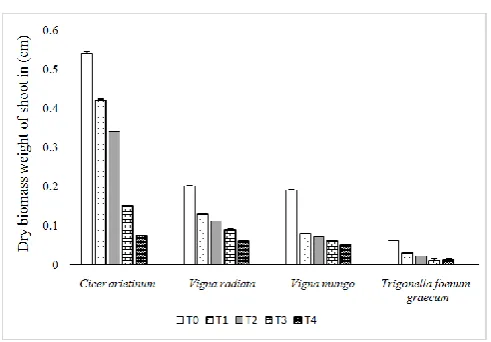
[image:4.595.38.298.226.371.2]Figure 6. Effects of M.paniculataon DWS of four selected crops after 5thdays. The vertical bars indicate SD of mean
[image:4.595.305.562.240.373.2]Figure 7. Effects of A. cathartica L. DWR of four selected crops after 5th days. The vertical bars indicate SD of mean
Figure 8. Effects of A. cathartica L. DWS of four selected crops after 5th days. The vertical bars indicate SD of mean
In almost all cases, variation of germination percent varied evenly due to different concentrations. With the increase of concentration, the germination rates were decreased treated with both the species and the inhibitory effect was progressively increased. In all cases, the maximum inhibitory effect (100%) was found at T5 treatment (20% conc.) except V.
radiata (91.5%) and V. mungo (91.5%) when treated with the extracts of Murraya paniculata while, 100% inhibitions were showed by the all receptor crops, extract treated with
Alamanda cathartica. The IC50 values were recorded (4.44,
11.18, 11.49 and 9.79%) in case of Murraya paniculata while in Alamanda cathartica the IC50 values were (1.46, 8.63, 10.33
and 7.08%) for Cicer arietinum, Vigna radiata, Vigna mungo
and Trigonella foenum-graecum respectively, which indicate
Alamanda cathartica is more effective than the Murraya paniculata to all the receptor species. Among the receptors
Vigna radiata and Vigna mungo were little bit less sensitive in different concentrations of the both donor plant. It was also perceived that leaf extracts of Murraya paniculata and
Alamanda cathartica delayed the germination significantly in all the receptor crops compared to the control treatments. These results are more or less similar to the findings of Bora et al. (1999), who found the allelopathic effect of aqueous leaf extracts of Acacia auriculiformis on seed germination of some agricultural crops.
The allelopathic effect of Bambusa arundinacea on Arachis hypogaea was reported (Eyini et al., 1989) to conclude that, aqueous extracts of weeds inhibited the seed germination of selected crops. Debnath et al., (2016) also found that the aqueous extracts of an invasive weed Solanum sisymbriifolium
have inhibitory effects on some agricultural crops. 53834 Amal Debnath et al. Allelopathic potentialities of two ornamental plants Murraya paniculata (L.) jack and Alamanda catharticaL.
[image:4.595.39.288.412.561.2] [image:4.595.41.287.601.772.2]Growth behaviors
Radical and plumule elongation
The average mean root &shoot lengths and inhibitory effects of the germinated seedlings of agricultural crops in all the receptor are shown in (Table 1&2; Figure 3&4). The study revealed that in comparison to control and the inhibitory effect was gradually increased with the increase of concentrations for both the species. The greater inhibitory effects of radical and plumule were found as like germination inhibition where Cicer arietinum and Trigonella foenum-graecum were highly sensitive than other two receptor species. All the receptor species showed (100%) inhibitory effects at T5while, Cicer
arietinum showed same at T4 in case of both the species and
Trigonella foenum-graecum also showed(100%) inhibitory effects at T4 when treated with Alamanda cathartica, which
indicate Cicer arietinum and Trigonella foenum-graecum is high sensitive to the donor plant Alamanda cathartica. Among the survivors the highest inhibition was found (97.88) in case of Trigonella foenum-graecum shoot when treated with leaf extract of Murraya paniculata at T4 and the lowest inhibitory
effect was found on Trigonella foenum-graecum (2.84) in extract of M. paniculata at T1. IC50 values of aqueous extract
for radical and plumule growth of Cicer arietinum, Vigna radiata, Vigna mungo and Trigonella foenum-graecum were recorded from 1.14% to 9.25% (Table 1&2). Our observations are support by the previous workers (Kato-noguchi, 2001; Caussanel, 1979; Chung and Miller, 1995; Babu and Kandasamy, 1997) that the activity of the weeds residue is directly proportional to the concentrations used in the experiment.
Biomass (dry weight)
The dry weight of 5 days old receptor seedlings were effected upon treated with the various aqueous leaf extracts concentration of M. paniculata and A. cathartica. Although at T1, the inhibition of dry weight of the seedlings were 15-40%,
higher concentration reduced the weight and when it reach at T5 then almost all the sets were completely inhibited. The
inhibition activity of both the donor species are more or less similar and insignificantly different to all the receptor species. Among the survivor, lowest inhibition percentage was see in V. mungo (15.79%) at T1 within the A. cathartica leaf extracts
while highest was found in Trigonella foenum-graecum
(91.18) at T4 of the same extract. Inhibition percentage of dry
biomass of M. paniculata and A. cathartica on the four receptor plants were shown in (Table 1&2) and reduction in biomass was also observed with increase in concentrations. These reductions in biomass may be due to stunted and reduced growth of the seedlings reported by (Tripathy et al.,
2000). In this comparative study, though both the extracts showed allelopathic potential, the degree of inhibition to all the receptor species seemed to be highest but A. cathartica is higher effective than the M. paniculata.
Conclusion
It is evident from the present investigation that both the donor species M. paniculata and A. cathartica has allelopathic potentiality to all the receptor species. Our study also reveals that aqueous extracts of both the leaves of ornamental species are the potent source of toxic metabolites as compare to the receptor seeds which might reduce the economy of the
commercial vegetables. Therefore the site selection for these two ornamental plants will be maintained.
Acknowledgement: Authors are highly gratitude to CSIR for
providing a grant which helped to carry out this work. Authors are also acknowledge to the HOD, department of Forestry and Biodiversity for provide laboratory facilities during this work done.
REFERENCES
Abhilasha, D., Quintana, N., Vivanco, J. and Joshi, J. 2008. Do allelopathic compounds in invasive Solida canadensis. L. restrain the native European flora. Journal of Ecology, 96: 993-1001.
Alam, S. M., Islam, E. U. 2002. Effect of aqueous extract of leaf, stem and root of nettle leaf goosefoot and NaCl on germination and seedling growth of rice. Pakistan Journal of Science and Technology, 1 (2): 47-52.
Babu, R. C. and Kandasamy, O. S. 1997. Allelopathic effects of Eucalyptus globutusLabill. On Cyperusrotundus L. And Cynodondactylon L. Pers. Journal of Agronomy and Crop Science, 79: 123-126.
Barto, K., Friese, C. and Cipollini, D. 2010. Arbuscular mycorrhizal fungi protect a native plant from allelopathic effects of an invader. Journal of Chemical Ecology, 36: 351-360.
Bora, I.P., J. Singh, R. Borthakur and Bora, E. 1999. Allelopathic effects of leaf extracts of Acacia auriculiformis on seed germination of some agricultural crops. Annals of Forestry, 7: 143-146.
Caussanel, J. P. 1979. Non-competitive effects between lamb’s quarters (Chenopodium album L.)And Maize (INRA 258).
Weed research, 19: 123-135.
Chung, I. M. and Miller, D. A. 1995. Natural herbicide potential and alfalfa residue on selected weed species.
Agronomy Journal, 87: 920-925.
Cipollini, D., Stevenson, R. and Cipollini, K. 2008. Contrasting effects of allelochemicals from two invasive plants on the performance of a non-mycorrhizal plant.
International Journal of Plant Science,169: 371-375. Debnath, B., Debnath, A. and Paul, C. 2016b. Allelopathic
effects of invasive weed (solanumsisymbriifoliumlamk.) on germination and seedling growth of four widelycultivated Indian crops. International journal of science and nature, 7 (1): 194-198.
Debnath, B., Debnath, A. Paul, C. and Chakrabarty, K. 2016a. Allelopathic effects of Hevea brasiliensis leaf extract on four common legumes. International Journal of Current Research, 8(1): 24897-24901.
Dosoky N. S., Satyal P.,Gautam, T. P. and Setzer, W. N. 2016.
Composition and Biological Activities of
Murrayapaniculata (L.) Jack Essential Oil from Nepal.
Medicines, 3(7): 1-10.
Eyini, M., Joyakumar, M. and Pannirselvam, S. 1989. Allelopathic effect of bamboo leaf extracts on the seedling of groundnut. Tropical Ecology, 30 (1): 138-141.
Foy, C.L. and Inderjit. 2001. Understanding the role of allelopathy in weed interference and declining plant diversity. Weed Technology, 15: 837-878.
Gautam, M. K., Gangwar, M., Nath, G., Rao, C. V. and Goel R. K. 2012. In-vitro antibacterial activity on human pathogens and total phenolic, flavonoid contents of
Murrayapaniculata Linn. leaves. Asian Pacific Journal of Tropical Biomedicine, 2 (3): 1660-S1663.
Ghafar, A., Saleem, B. and Qureshi, M.J. 2000. Allelopathic effects of sunflower on germination and seedling growth of wheat. Pakistan Journal of Biological Science, 3 (8): 1301-1302.
Gross, E. 1999. Allelopathy in benthic and littoral areas case studies on allelochemicals from benthic cyanobacteria and submerged macrophytes. In: Inderjit, K. M., M. Dakshini, and C. L. Foy (eds), Principles and Practices in Plant Ecology Allelochemical Interactions, 179-199. CRC Press, Boca Raton
Inderjit. 1996. Plant phenolics in allelopathy. The Botanical Review. 62: 186-202.
Johnson, M., Prabhadevi, V., SahayaSathish, S.,
Venkatramani, B. andJanakiraman, N. 2012.
Phytochemical studies on Allamandacathartica L. using GC-MS. Asian Pacific Journal of Tropical Biomedicine, 2 (2): 550-554.
Kato-noguchi, H. 2001. Assessment of allelopathic potential of
Ageratum conyzoides. BiologiaPlantarum, 44(2): 309-311. Khanh, T.D., Xuan, T.D. and Chung, I.M. 2007. Rice
allelopathy and the possibility for weed management.
Annals of Applied Biology, 151: 325-339.
Liogier H. A. 1990. Plantasmedicinales de Puerto Rico y el Caribe. San Juan, Puerto Rico: Iberoamericana de Ediciones.
McEwan, R. W., Arthur-Paratley, L. G.,Rieske L. K. and Arthur M. A. 2010. A multi-assay comparison of seed germination inhibition by Loniceramaackiiand co-occurring native shrubs. Flora, 205: 475- 483.
Narkhede, M.B., Ajmire, P.V., Wagh, A.E. 2012. Evaluation of anti-nociceptive and anti-inflammatory activity of ethanol extract of Murrayapaniculata leaves in experimental rodents. International Journal of Pharmacy and Pharmaceutical Sciences, 4: 247-251.
Olawore, N.O., Ogunwande, I.A., Ekundayo, O. and Adeleke, K.A. 2005. Chemical composition of the leaf and fruit essential oils of Murrayapaniculata(L.) Jack, (Syn.
Murraya exotica Linn.). Flavour and Fragrance Journal,
20: 54-56.
Pangnakorn, U. and Poonpaiboonpipattana, T. 2013.
Allelopathic Potential of Orange Jessamine
(Murrayapaniculata L.) against Weeds. Journal of Agricultural Science and Technology A, 3: 790-796. PIER, 2013. Pacific Islands Ecosystems at Risk. Honolulu,
Hawaii, USA: HEAR, University of Hawaii.
http://www.hear.org/pier/index.html
Rahman, M. A., Hasanuzzaman, Md., Uddin, N. and Shahid I. Z. 2010. Antidiarrhoel and anti-inflamantory of
Murrayapaniculata (L.) Jack. Pharmacology online, 3: 768-776.
Rizvi, S. J. H. and Rizvi, V. 1992. Allelopathy: basic and applied aspects. Chapman and Hall, London.
Rohman, A. and Riyanto, S. 2005. Antioxidant potency of ethanolic extract of Kemuning leaves (Murrayapaniculata
(L) Jack) in vitro. MajalahFarmasi Indonesia, 16: 136-140. Tripathy, S., Tripathy, A., Kori, D. C.and Paroha, S. 2000. The effects of Dalbergiasissoo extracts, rhizobium and nitrogen on germination, growth and yield of Vignaradiata,
Allelopathy Journal, 7: 255-63.
USDA-ARS, 2013. Germplasm Resources Information Network (GRIN). Beltsville, Maryland, USA: National Germplasm Resources Laboratory. http://www.ars-grin.gov.
53836 Amal Debnath et al. Allelopathic potentialities of two ornamental plants Murraya paniculata (L.) jack and Alamanda catharticaL. on germination and growth behaviour of four selected crops