A PROSPECTIVE STUDY ON EFFECTIVENESS OF
AEGLE FOLIA
IN
CASES OF IRRITABLE BOWEL SYNDROME - A SINGLE BLIND
RANDOMIZED CONTROLLED TRIAL
Dr. Tarkeshwar Jain1 andDr. Pramila Kajla*2
1
Professor and H.O.D. (Department of Materia Medica), Dr. M. P. K. Homoeopathic Medical
College Hospital and Research Centre, Jaipur, Registrar Homoeopathy University, Jaipur.
2
M.D. (Hom.) Scholar, Dr. M. P. K. Homoeopathic Medical College Hospital and Research
Centre, Jaipur.
ABSTRACT
Background: Irritable bowel syndrome (IBS) is a gastrointestinal (GI)
disorder characterized by altered bowel habits in association with
abdominal discomfort or pain in the absence of detectable structural
and biochemical abnormalities.[1] The vast population has suffered
from IBS in some form or the other and due to ignorance by people,
this disease has been suppressed or managed by taking inappropriate
medication. So based on this fact purpose of the study is to give
effective and long lasting relief in cases of IBS by Homoeopathic
medicine. Objectives: To assess the effectiveness of Aegle folia in
cases of irritable bowel syndrome by using Irritable Bowel Syndrome-
Symptom Severity Scale (IBS-SSS) and to explore & identify other clinical symptom of
Aegle folia. Materials and Method: A randomized single blind controlled trial was
conducted at Dr. Madan Pratap Khunteta Homoeopathic Medical College, Hospital and
Research Centre, Jaipur. 70 cases of IBS were enrolled in the study. Randomly selected 35
cases received Aegle folia (Group A), 35 cases received Placebo (Group B). Irritable Bowel
Syndrome Symptom Severity Scale was used to assess the improvement in the study. Result:
There was a significant role of Aegle folia in treating the cases of IBS as compared with
placebo as determined by statistically significant differences between the means of both
independent groups i.e. Group A- Aegle folia and Group B - Placebo. Levene’s test indicated
equal variance (F= .066, P= .798) so = 68. There is significant (p < 0.005) improvement in
IBS with Aegle folia (M=67.71, SD= 62.666) than Placebo (M= 160.29, SD= 63.373), t(68)=
Volume 7, Issue 18, 1130-1140. Research Article ISSN 2277– 7105
Article Received on 11 September 2018,
Revised on 02 October 2018, Accepted on 23 Oct. 2018,
DOI: 10.20959/wjpr201818-13604
*Corresponding Author
Dr. Pramila Kajla
M.D. (Hom.) Scholar, Dr.
M. P. K. Homoeopathic
Medical College Hospital
6.145, p< 0 .005. Conclusion: This study showed that there was effectiveness in cases of IBS
from Aegle folia and Placebo both, but the effect of Aegle folia was far better than Placebo.
Cases of IBS if treated with Aegle folia (if the symptoms correspond can be improved to a
great extent.
KEYWORDS: IBS, Homoeopathy, Aegle folia, Randomized, Irritable Bowel Syndrome,
Symptom Severity Scale.
INTRODUCTION
Irritable bowel syndrome (IBS) is a functional bowel disorder characterized by abdominal
pain or discomfort and altered bowel habits in the absence of detectable structural
abnormalities.[2] No clear diagnostic markers exist for IBS, thus the diagnosis of the disorder
is based on clinical presentation.[2] The Rome 3rd criteria is currently accepted in clinical
practice.[3] Nevertheless, IBS is the most common cause of gastrointestinal referral and
accounts for frequent absenteeism from work and impaired quality of life.[4] Young women
are affected 2–3 times more often than men.[5]
Population- based studies estimate the prevalence of IBS at 10- 20% in western countries and
incidence of IBS at 1-2% per year. Prevalence of IBS is 4.2-7.9% in India.[6]
IBS is a disorder that affects all ages, although most patients have their first symptoms before
age 45years.Pain or abdominal discomfort is a key symptom for the diagnosis of IBS. These
symptoms improve with defecation and/or have their onset associated with a change in
frequency or form of stool. Supportive symptoms that are not part of the diagnostic criteria
include defecation straining, urgency or a feeling of incomplete bowel movement, passing
mucus, and bloating. The pathogenesis of IBS is poorly understood, although roles of
abnormal gut motor and sensory activity, central neural dysfunction, psychological
disturbances, mucosal inflammation, stress, and luminal factors have been proposed.[2]
IBS is a common health problem affecting a substantial proportion of the population. Many
individual with symptoms of IBS do not seek medical attention or have stopped consulting
because of disillusionment with current treatment options,[7,8] Modern therapies like
Allopathy associated with poor efficacy & side effect in cases of IBS. So homoeopathy could
There are number of Indian drugs which were commonly used in Ayurvedic system of
medicine since ancient time,[9] now being proved and showing significant role in
Homoeopathy so lesser used Indian Homeopathic drug Aegle folia can also be beneficial for
such conditions.
MATERIALS AND METHODOLOGY
Study Setting
The study was undertaken at Dr M.P.K. Homoeopathic Medical College, Hospital & research
centre, sindhi camp/saipura Jaipur. The cases were taken from the OPD /IPD. The study
duration was for 1 year (June 2016-May2017) with minimum 6 follow- ups.
Study Design
It was a prospective randomized placebo controlled study design.
Allocation- Patients fulfilling the eligibility criteria were enrolled and randomized
systematically (computer generated randomization chart) to receive either homoeopathic
interventions (Aegle folia) or Placebo. Group A (N= 35) medicine group and Group B (n=35)
controlled group. Sample size was 70.[10]
The council’s ethical committee approved the study protocol. Written informed consent was
received from the patients.
Inclusion Criteria
Patient satisfying the Rome 3rd criteria,[11] of IBS.
All patient were included in the study irrespective of their age, sex, caste, religion &
duration of illness.
Those who were willing to sign Informed Consent Form (ICF).
Exclusion Criteria
Those who were taking regular medicine for GIT complaints other than IBS and systemic
disease.
Pregnant or breastfeeding females.
According to investigator desertion.
Withdrawal Cases
Any condition requiring emergency treatment including IBS.
Patient withdraws consent.
Intervention
Experimental group
Patients randomized to Group A received Homoeopathic medicine Aegle folia for six follow-
ups customized to each patient, which started with 30C/TDS up to 1M potency according to
patient’s susceptibility and homoeopathic principles.
GMP certified medicine was used of globules no. 60 by oral route of administration by
hospital dispensary from a certified pharmacist.
Controlled Group
Patients randomized to the Group B group received Placebo, which was similar in all the
manners to that of Group A including the globules no, route of administration. However, it
constituted un-medicated poppy size sugar globule impregnated with dispensing alcohol.
Data analysis & Statistical techniques
Subjects were assessed through the following indices i.e. on the basis of Rome 3rd criteria
and outcome was measured according to symptom severity scale (IBS-SSS).[12] Statistical techniques - “Paired t-test” and “Independent t-test”.
RESULTS AND DISCUSSION
For assessing the improvement of IBS cases Symptom Severity Scale was used. Scores
before treatment and after treatment were compared in both groups. The analysis was
conducted through the software SPSS (ver.16) applying Paired t- test & Independent t- test.
Table 1: Group A, Paired Samples Statistics.
Mean N Std. Deviation Std. Error Mean
Table 2: Group A, Paired Samples Test
Group A
Paired difference
T Df Sig.
(2- tailed)
Mean Std.
Deviation
Std. Error Mean
95% confidence interval of the
Difference
Lower Upper
Score A before Score A after
151.00 73.712 12.460 125.679 176.321 12.119 34 .000
A paired t-test was conducted to compare before and after score of Group A- Aegle folia in
cases of IBS.
There was a significant difference in the scores for Group A- Aegle folia.
Before (M=218, SD=45.703) and after score (M=67.71, SD= 62.666) conditions; t (34) =
12.119, p = 0.000.
These results suggest that Aegle folia medicine had shown significant result in cases of IBS.
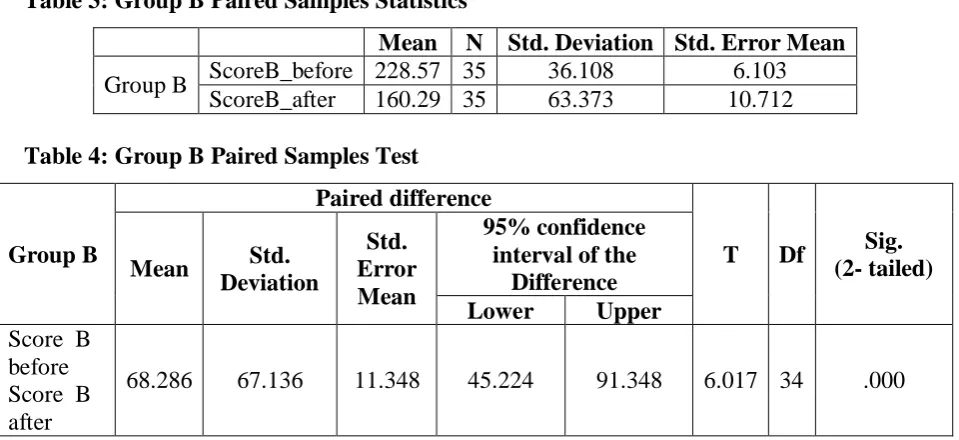
Table 3: Group B Paired Samples Statistics
Mean N Std. Deviation Std. Error Mean
Group B ScoreB_before 228.57 35 36.108 6.103 ScoreB_after 160.29 35 63.373 10.712
Table 4: Group B Paired Samples Test
Group B
Paired difference
T Df Sig.
(2- tailed)
Mean Std.
Deviation
Std. Error Mean
95% confidence interval of the
Difference
Lower Upper
Score B before Score B after
68.286 67.136 11.348 45.224 91.348 6.017 34 .000
A paired t-test was conducted to compare before and after score of Group B- Placebo in cases
of IBS.
There was a significant difference in the scores for Group B- Placebo Before(M=228.57,
SD=36.108) and after score(M=160.29, SD= 63.373) conditions; t(34)= 6.017, p = 0.000.
[image:5.595.60.540.406.626.2]Table 5: Group Statistics
Group N Mean Std. Deviation Std. Error Mean
Score_after Exp. 35 67.71 62.666 10.592 Control 35 160.29 63.373 10.712
Table 6: Independent Samples Test in IBS cases
Levene's Test for Equality of
Variances
t-test for Equality of Means
F Sig. T Df
Sig. (2-tailed) Mean Difference Std. Error Difference
95% Confidence Interval of the Difference
Lower Upper
Score_ after
Equal variances assumed
.066 .798
-6.145 68 .000 -92.571 15.065
-122.633 -62.510
Equal variances not assumed
-6.145 67.991 .000 -92.571 15.065
-122.633 -62.510
Levene’s test indicated equal variance (F= .066, P= .798) so = 68. There is significant (P <
0.005) improvement in IBS with Aegle folia (M=67.71, SD= 62.666) than Placebo (M=
160.29, SD= 63.373), t(68)= 6.145, P< 0 .005, therefore rejecting null hypothesis(H0) and
accepting alternating Hypothesis (H1) that Aegle folia has a significant role in treating the
cases of IBS.
Taken together, these results suggests that intervention of Aegle folia appears to be
significantly effective in treating cases of IBS as compared to Placebo.
A Discussion on various aspects observed in study has been given below.
Most of patients with IBS in India are of middle age group as in U.C. Ghoshal’ study,[13]
higher prevalence in mean age 39.4 yr. was recorded. Similar to previous studies, it has been
observed that maximum incidence of IBS were observed in age group 20-30 yrs., i.e. in 24
cases (34%), followed by 30-40 yrs., i.e. in 22 cases (31%), 40-50 yrs. age group in 12 cases
(17%) and the minimum patients were observed in age group of 60-70 yrs. i.e. in 1 case (1%)
IBS is more common in women then in men in most part of the world.[14,15,16] In India IBS is
reported more often in male.[17] Interestingly, similar finding has been observed that
maximum incidence of IBS were observed in males i.e. 55 cases (78.57%), whereas in
females incidence was observed in 15 cases (21.43%). Similar to previous studies in India
male dominance was recorded in Ghoshal’s study.[13]
In this study, maximum incidence of IBS were observed in vegetarian patients i.e. 55 cases
(79%), whereas in non-vegetarian incidence was 15 cases (21%) out of 70. No similar finding
was found in previous studies.
There is increasing evidence regarding the role of immune activation in the etiology of IBS,
which has mainly been shown in studies investigating mechanisms of Post Infectious IBS.[18]
So similar to past studies this study had shown past history of Typhoid in 13 cases, Dengue in
9 cases, malaria history in 5 cases, chikungunya history in 2 cases.
Psychological stress is an important factor for the development of irritable bowel syndrome
according to the research in the last decade.[19,20] Interestingly 11 cases had shown past
history of acute stress disorder.
However, it remains unknown whether immune activation in IBS patients is largely
dependent on infectious gastroenteritis and/or psychological stress. Additional studies are
necessary to understand the precise mechanism of immune activation and its relationship to
the development of IBS.[21]
In this study following modality were observed in patients
18 Cases had shown of aggravation of flatulence after eating.
24 Cases had shown amelioration after defecation in abdominal pain and discomfort. 30 Cases had shown aggravation in evening in upper abdominal pain, Aegle folia was
given to 22 cases among which 18 showed improvement. Abdominal pain, aggravated
from 4-5pm was given in CCRH clinical verification study.[22]
11 Cases had shown hard, knotty stool with mucous aggravated after eating.
Dyspepsia aggravated after taking tea in 30 patients, Aegle folia was given to 14 cases
25 Cases had shown constipation with incomplete evacuation and insufficient stool
aggravated after stress, Aegle folia was given to 14cases among which 12 showed
improvement.
8 Patient were with urticaria with itching aggravated in evening, out of which Aegle folia
was given to 5cases among which 3 showed improvement. 10 Cases had shown loose, watery stool aggravated after stress.
Most studies report that around one third of patients have diarrhoea predominant IBS (IBS-D)
and one third have constipation predominant IBS(IBS-C), the remainder having a mixed
bowel pattern (IBS-M) with both loose and hard stool.[23,24,25] Previous Ghoshal’s study,[13]
showed that maximum patients were observed of M-TYPE (57%) then 39% of IBS-C and 4%
of IBS-D.
In this study, maximum no. of IBS patients were observed of C-TYPE i.e. 42 cases (61%), as
compared to M-type i.e. 15 cases (20%) & D- TYPE i.e. 13 cases (19%) out of 70.
In this study, 26 cases (37%) had shown Marked Improvement, out of which maximum cases
were from Group A –Aegle folia i.e. 20 cases, 14cases (20%) had shown Moderate
Improvement, out of which maximum cases were from both Group A- Aegle folia & Group
B- placebo i.e. 7 cases each, 28cases (40%) has shown Mild Improvement, out of which
maximum cases were from Group B- Placebo i.e. 20 cases and 2 cases (3%) become worse
but as it was within the limits patho-physiologically, the subjects did not experienced any
unfortunate incidence.
In this study it was observed that maximum no. of patients were observed with upper
abdomen complaints i.e. 34 cases (48%), as compared to patients with whole abdomen
complaints i.e. 20 cases (29%) & patients with lower abdominal complaints i.e. 16 cases
(23%) out of 70 cases. Similar to previous studies,[26] in India upper abdominal complaints
was recorded in this study.
Further Recommendations
This study was conducted with small sample size. So, in future different population with
large sample size is recommended for more reliable results.
The study period was short. So, to confirm the conclusions long term studies are
CONCLUSION
This was a single blind randomized controlled trial with positive results. This study proved
that intervention of Aegle folia can be significantly effective in treating cases of IBS as
compared to placebo.
In this study, Aegle folia showed better result in the symptoms of Patients suffering from
upper abdominal pain, which is aggravated in evening and constipation with incomplete
evacuation and insufficient stool aggravated after stress and dyspepsia aggravated after taking
tea.
This study showed that there was effectiveness in cases of IBS from Placebo and Aegle folia
both, but the effect of Aegle folia was far better than Placebo. Placebo showed effect because
of the life style management given to the patients. Cases of IBS if treated with Aegle folia (if
the symptoms correspond) along with life style management, can be improved to a great
extent.
REFERENCES
1. Drossman DA, Corrazziari E, Delvaux M, Spiller R, Talley NJ, Thompson WG. Rome
III: The Functional Gastrointestinal Disorders. McLean, VA: Degnon Associates, 2006.
2. Wiener C. Harrison’s principles of internal medicine. 19th edition. New York: McGraw
Hill Education, 2015.
3. Yao X, Yang YS, Cui LH, Zhao KB, Zhang ZH, et al. J Gastroenterol Hepatol, 2012 Apr;
27(4): 760-5.
4. Kumar S, Asha Misra A., Ghoshal U.C.J Neurogastroenterol Motil. 2010 Jul; 16(3):
299–305. Published online 2010Jul26. doi: 10.5056/jnm.2010.16.3.299PMCID:PMC2
912123 available from- https://www.ncbi.nlm.nih.gov/pmc/articles/PMC2912123.
5. Haslette C, Chilvers E. R, Hunter J. A.A, Boon N. A. Davidson’s principles & practice of
medicine. 22thedition. London: Churchill livingstone, 2014.
6. Upadhyay R, Singh A. Irritable Bowel Syndrome: The Indian Scenario. [last accessed on
2016 aug 26]. Available from- www.apiindia.org/ medicine_update_2013/chap56.pdf
7. Hahn BA, Saunders WB, Maier WC. Differences between individuals with self-reported
irritable bowel syndrome (IBS) and IBS-like symptoms. Dig Dis Sci., 1997; 42:
2585-2590.
8. Wilson, S., Roberts, L., Roalfe, A. et al. Prevalence of irritable bowel syndrome: a
9. Ravishankar B, Shukla V.J. Afr J Tradit Complement Altern Med, 2007; 4(3):
319-337[last accessed on 2018 july 27]. Available from https://www.ncbi.nlm.nih.gov/
pmc/articles/PMC2816487.
10. Lesele Gross P.Watking.Fundamentals of Clinical Research, Application to Practice, 662.
11. Drossman DA. The functional gastrointestinal disorders and the Rome III process.
Gastroenterology, 2006 Apr 1; 130(5): 1377-90.
12. Betz c, Mannsdorferk, Bischoff SC, validation of the IBS-SSS,Z gastroenterol, 2013 oct;
51(10): 1171-6. doi: 10. 1055/s-0033-1335260. [last accessed on 2016 aug 26]. Available
from- https://www.ncbi.nlm.nih.gov/ pubmed/24122378.
13. Ghoshal UC, Abraham P, Bhatt C, et al. Epidemiological and clinical profile of irritable
bowel syndrome in India: report of the Indian Society of Gastroenterology Task Force.
Indian J Gastroenterol, 2008; 27: 22-8.
14. Barbezat G, Poulton R, Milne B, Howell S, Fawcett JP, Talley N. Prevalence and
correlates of irritable bowel symptoms in a New Zealand birth cohort.NZ Med j, 2002;
115: U220.
15. Baretic M, Bilic A, Jurcic D, Mihanovic M, Sunic-Omejc M, Dorosulic Z, et al.
Epidemiology of irritable bowel syndrome in Croatia. Coll Antropol, 2002; 26: 85-91.
16. Boekema PJ, van Dam van Isselt Ef, Bots ML, Smout AJ. Functional bowel symptoms in
a general Dutch population and associations with common stimulants. Neth J Med, 2001:
59: 23-30.
17. Shah SS, Bhatia SJ, Mistry FP. Epidemiology of dyspepsia in the general population in
Mumbai. Indian J Gastroenterol, 2001; 20: 103-6.
18. Matricon J, Meleine M, Gelot A, Piche T, Dapoigny M, Muller E, Ardid D. Review
article: Associations between immune activation, intestinal permeability and the irritable
bowel syndrome. Aliment Pharmacol Ther, 2012; 36: 1009–1031. [PubMed]
19. Camilleri M, Di Lorenzo C. Brain-gut axis: from basic understanding to treatment of IBS
and related disorders. J Pediatr Gastroenterol Nutr., 2012; 54: 446–453. [PMC free
article] [PubMed]
20. Sperber AD, Drossman DA. Irritable bowel syndrome: a multidimensional disorder
cannot be understood or treated from a unidimensional perspective. Therap Adv
Gastroenterol, 2012; 5: 387–393. [PMC free article] [PubMed])
21. Ishihara S, Tada Y, Fukuba N, Oka A, Kusunoki R, Mishima Y, Oshima N, Moriyama I,
22. Homoeopathic medicines through clinical verification; vol 1st [last accessed on 2016 OCT
25]. Available from- www.ccrhindia.org.
23. Tillisch K, Labus JS, Naliboff BD, et al. Characterization of the alternating bowel habit
subtype in patients with irritable bowel syndrome. Am J Gastroenterol, 2005; 100:
896–904.
24. Mearin F, Balboa A, Badia X, et al. Irritable bowel syndrome subtypes according to
bowel habit: revisiting the alternating subtype. Eur J Gastroenterol Hepatol, 2003; 15:
165–72.
25. Drossman DA, Morris CB, Hu YM, et al. A prospective assessment of bowel habit in
irritable bowel syndrome in women: defining an alternator. Gastroenterology, 2005; 128:
580–9.
26. Hungin AP, Whorwell PJ, Tack J, Mearin F. The prevalence, patterns and impact of
irritable bowel syndrome: an international survey of 40,000 subjects. Aliment Pharmacol
Ther, 2003; 17: 643-650. [last accessed on 2017 sep 20]. Available