MOOBELA, Cletus.
Available from Sheffield Hallam University Research Archive (SHURA) at:
http://shura.shu.ac.uk/20078/
This document is the author deposited version. You are advised to consult the publisher's version if you wish to cite from it.
Published version
MOOBELA, Cletus. (2004). Exploring the potential of complexity theory in urban regeneration processes. Doctoral, Sheffield Hallam University (United Kingdom)..
Copyright and re-use policy
See http://shura.shu.ac.uk/information.html
JMUQ06
V - l0 9 MAR ?R06
tjpnO--a. t
All rights reserved
INFORMATION TO ALL USERS
The quality of this reproduction is dependent upon the quality of the copy submitted.
In the unlikely event that the author did not send a com plete manuscript and there are missing pages, these will be noted. Also, if material had to be removed,
a note will indicate the deletion.
uest
ProQuest 10697385
Published by ProQuest LLC(2017). Copyright of the Dissertation is held by the Author.
All rights reserved.
This work is protected against unauthorized copying under Title 17, United States C ode Microform Edition © ProQuest LLC.
ProQuest LLC.
789 East Eisenhower Parkway P.O. Box 1346
Regeneration Processes
Cletus Moobela
A Thesis Submitted in partial fulfilment of the requirements of
Sheffield Hallam University
for the Degree of Doctor of Philosophy
The carrying out and completion of this research project was a stimulating experience for me in an area that I have come to develop an ever-increasing amount of personal interest. In the course of the execution of the project, I indubitably interacted with, and sought recourse to, many people’s time, material and connoisseur resources so much that I remain heavily indebted to all of them. I first and foremost would like to acknowledge and express my sincere gratitude to my Director of Studies, Professor llfryn Price, whose fathomless support during the time of my studies remains an unparalleled contribution. I would also like to thank the other members of my supervisory team - Mr. Steve Crocker, Professor Paul Syms, and Dr. Martin Loosemore - for their guidance, encouragement, and for providing the latitude that made it possible for me to chart an unequivocal focus for the study. I am also indebted to all the members of the Facilities Management Graduate Centre for providing the enabling environment for research students. I owe a debt of gratitude to Ms Barbara McLoughlin and her team at the Moss Side and Hulme (Regeneration) Partnership for “opening the gates” to the inner city area of Hulme and providing the much-needed data for the research. Similarly, I would like to thank all the community leaders and local authority officers in Hulme for giving me access to information with regard to their organisations. Sincere thanks to my wife Kalinda and our son Hachibi Kubantu who endured the innumerable hours and distractions which are inevitable in one’s pursuit of an academic endeavour of this enormity. I also thank my parents for being so inspirational, and brothers and sisters for their love and care. Thank you to a constellation of friends and relatives wherever they may be on the globe for the social networks of inestimable value that we shared together for common and individual benefits. Lastly, but by no means the least, I would like to express my thanks to the School of Environment and Development and the Facilities Management Graduate Centre at Sheffield Hallam University for co-sponsoring my studies. I also thank the Copperbelt University administration for granting the study leave I needed to pursue my studies.
Table of contents... ii
List of figures... v iii List of tables... x
Abstract... xi
Author’s declaration... x iii Chapter One: Introduction... 1
1.1 Introduction... ... 1
1.2 Background: Origins of Britain’s urban problem... 2
1.3 Rationale for the research... 4
1.4 Introducing complexity theory... 5
1.5 Research aim, objectives and hypothesis ... 6
1.6 Research originality... 7
1.7 Research methodology... 8
1.8 Structure of the dissertation... 9
Chapter two: Epistemological Dimensions of Complexity Research 12
2.1 Introduction... 12
2.2 The complexity revolution... 12
2.2.1 Defining complexity theory... 15
2.2.2 Characteristics of complex systems... 17
2.2.3 Life at the edge of chaos... 20
2.3 Early models of complexity... ... 21
2.3.1 John Holland’s Classifier Systems model ... 22
2.3.2 Stuart Kauffman’s NK Landscape model... 22
2.3.3 John Von Neuman’s Cellular Automata... 24
2.4 Complexity and postmodernism... 25
2.5 Complexity and connectionism... 28
2.5.1 Language as a complex adaptive system... 29
2.5.2 Connectionism in organisational settings... 31
2.6 The realist account of complexity... 33
2.6.2 Kant’s transcendental idealism... 38
2.6.3 Roy Bhaskar’s transcendental realism... 40
2.7 Discussion: Realism in social complexity research... 41
2.8 Conclusion... 47
Chapter Three: Theoretical Foundations of Planning and Urban Change... 48
3.1 Introduction... 48
3.2 Approaches to urban planning... 48
3.2.1 Pluralism... 48
3.2.2 The power of public bureaucracy... 49
3.2.3 Reformism... 50
3.2.4 Marxism: The political economy of urbanism... 50
3.3 Theories of planning and urban change... 51
3.3.1 The Garden City and the Radiant City... 52
3.3.2 von Thunen’s Isolated State... 55
3.3.3 Location theory and spatial analysis... 57
3.3.4 Planning theory... 61
3.3.4 A systems view of planning... 63
3.3.5 The concept and process of urban regeneration... 65
3.4 Locating the planner’s dilemma... 68
3.5 The potential of self-organisation... 70
3.6 Conclusion ... 71
Chapter Four: The Complexity of Urban Regeneration Initiatives in Britain... 73
4.1 Introduction... 73
4.2 Evolution of urban regeneration initiatives... 74
4.3 Early urban initiatives... 75
4.3.1 The Urban Programme (UP)... 75
4.3.2 Community Development Projects (CDPs)... 76
4.3.3 Inner Area Studies (IAS)... 77
4.4 The 1977 White Paper: Policy for Inner Cities... 79
4.4.1 Aims and objectives of the White Paper... 79
4.4.2 Agencies of regeneration... 80
4.4.3 The introduction of partnerships ... 81
4.5 The rise of private sector initiatives in the 1980s... 83
4.5.1 Property-led regeneration... 84
4.5.2 Financially based regeneration initiatives... 87
4.6 Urban regeneration initiatives between 1990 and 2003... 91
4.6.1 City Challenge programmes... 92
4.6.2 Single Regeneration Budget (SRB)... 93
4.6.3 English Partnerships... 93
4.6.4 Private Finance Initiatives (PFI)... 94
4.6.5 New Labour and urban regeneration... 94
4.6.6 Resident consultations and the concept of Best Value... 96
4.6.7 New Deal for Communities... 97
4.6.8 Housing Market Renewal Pathfinder programmes... 100
4.7 Conclusion... 104
Chapter Five: Research Methodology and Strategy... 106
5.1 Introduction... 106
5.2 Why social surveys and not social simulations?... 107
5.3 Case study selection: Hulme - Manchester... 110
5.4 From among the stack rats: Reliability of archival records... 113
5.5 Using social network analysis in social research... 115
5.5.1 Type of data used in social network analysis... 116
5.5.2 Levels of analysis in social network analysis... 117
5.5.3 Graph theory and the tools of social network analysis ... 117
5.5.4 Common problems in handling relational data... 121
5.5.5 The place of social network analysis in complexity research 122
5.6 The research strategy and approach... 124
5.6.1 Objective One: Implications of central control on urban regeneration processes... 125
1990-2000... 130
5.6.3 Objective Three: Network structure and the quest for an enabling environment... 131
5.7 Summary... 139
Chapter 6: From Prize Winners to Architects of a Disaster: Lessons from Hulme... 140
6.1 Introduction... 140
6.2 Manchester's industrial legacy... 140
6.3 Location of Hulme in Manchester... 141
6.4 Industrial Age Hulme... 143
6.5 The dawn of the physical approach to regeneration... 145
6.6 Evolution of Hulme regeneration: 1960 - 1990... 149
6.6.1 The rise of deck-access housing... 150
6.6.2 The deck access disaster... 153
6.6.3 The dilemma of the 1980s... 155
6.6.4 Consensus at the dawn of the 1990s... 157
6.6.5 Hulme City Challenge... 158
6.7 Conclusion... 159
Chapter 7: Research Findings and Analysis... 160
7.1 Introduction... 160
7.2 Implications of central control in decision-making processes... 161
7.2.1 Evidence of multiple agents... 161
7.2.2 Evidence of interactions among the agents... 162
7.2.3 System dynamics and unpredictability... 163
7.2.4 Evolution and adaptation to the edge of chaos... 165
7.3 Organic analysis: Structure of social networks - 1990 - 2000... 169
7.3.1 Early stages in the creation of a new Hulme: 1991 - 1992... 170
7.3.2 The rise of community involvement: 1993 - 1994... 171
7.3.3 Round 2 of City Challenge: 1995-1996... 172
7.3.4 The challenge of the end of City Challenge: 1997 - 1998... 174
7.4 Functional analysis... 176
7.4.1 The deprivation landscape for Hulme: 1990 - 2000... 177
7.4.2 Relationship between network density and deprivation... 179
7.4.3 Volume of community participation and level of deprivation 182
7.4.4 Central control and level of deprivation... 183
7.4.5 Extent of community involvement in the regeneration processes... 185
7.5 Structure of social networks and the quest for an enabling environment... 186
7.5.1 Degree centralities... 188
7.5.2 Betweenness centralities... 191
7.5.3 Clique analysis... 193
7.5.4 The enabling environment for emergence of social connectivity 196 7.6 Discussion... 199
7.7 Conclusion... 206
Chapter Eight: Summary and Conclusions... 208
8.1 Introduction... 208
8.2 Summary: What did the research find out?... 208
8.3 Conclusions and hypothesis evaluation... 213
8.4 Contributions of the study... 218
8.4.1 Holism in urban regeneration... 218
8.4.2 Decision-making at the edge of chaos... 219
8.4.3 Level of civic involvement in urban regeneration... 220
8.5 Limitations of the study and areas for future research... 222
8.6 Recommendations for future research... 224
References... 227
Appendices... 237
Appendix 1 Social network analysis questionnaire... 237
Appendix 2 Extracts from chapter 2 of the Ucinet 5 for windows 245
Appendix 3 List of agents in the regeneration of Hulme, 1990-2000... 255
Appendix 5: Director of Studies introductory letter for data collection.... 269 Appendix 6 Social network analyses of density, centrality, and clique... 270
LIST OF FIGURES
Fig. 2.1 Complexity titles by year of publication... 14
Fig. 2.2 Stuart Kauffman’s NK Lanscape Model... 24
Fig. 2.3 Epistemological location of the research... 46
Fig. 3.1 Diagrams from Garden Cities of Tomorrow... 53
Fig. 3.2 von Thunen's land use patterns... ... 56
Fig. 3.3 Christaller's central places... ... :... 57
Fig. 3.4 Losch's spatial equilibrium model... 59
Fig. 3.5 Three generalisations of urban land use... 60
Fig. 3.61 The process of scientific inquiry in planning... 62
Fig. 3.62 Chadwick's scientific inquiry of complex systems... ... 64
Fig. 3.63 A systems approach to rational planning... 65
Fig. 3.7 The urban regeneration process... 67
Fig. 4.1 Central control in early urban initiatives... 78
Fig. 4.2 White paper Policy implementation and central control... 82
Fig. 4.3 Power relations in urban regeneration initiatives of the 1980s... 90
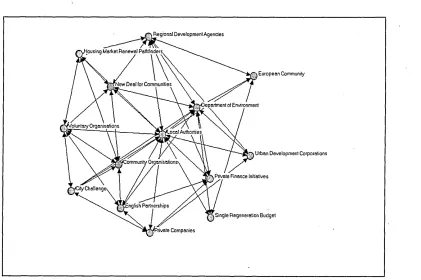
Fig. 4.4 Power relations in the post 1990 regeneration initiatives ... 102
Fig. 4.5 Evolution of urban regeneration policy. ... 103
Fig. 5.1 The process of abstraction, simulation and interpretation... 107
Fig. 5.2 The context of the research objectives... 125
Fig. 5.3 Framework for surfing the edge of chaos in Flulme: 1960 - 1990... 129
Fig. 6.1 Location map of Hulme - Manchester... 142
Fig. 6.2 Hulme Arch Bridge... 143
Fig. 6.3 Population change in Hulme 1971 - 2001... 148
Fig. 6.4 Pictures of the Hulme Crescents... 152
Fig. 7.1 Evolution of Hulme regeneration to the edge of chaos... 166
Fig. 7.2 Participants in the regeneration of Hulme, 1990 - 2002... 169
Fig. 7.31 Social network properties for 1992 in the regeneration of Hulme 171
Fig. 7.32 Social network properties for 1994 in the regeneration of Hulme 172
Fig. 7.33 Social network properties for 1996 in the regeneration of Hulme 173
Fig. 7.34 Social network properties for 1998 in the regeneration of Hulme 174
Fig. 7.35 Social network properties for 2000 in the regeneration of Hulme 175
1990-2000... 176 Fig. 7.51 Density of relations and unemployment in Hulme 1990 - 2000... 181 Fig. 7.52 Community participation and unemployment in Hulme
1990-2000... 182 Fig. 7.53 Central control, community participation and unemployment 1990 -2000... 183 Fig. 7.61 Extent of community participation in Hulme regeneration 1990 - 2000 185 Fig. 7.62 Structure of the Hulme regeneration networks 2002... 188 Fig. 7.63 Freeman's average degree centralities the agents in 2002... 191 Fig. 7.64 Composition of the largest cliques in the 2002 networks... 195
Fig. 7.71 Bases of formation of community agents of regeneration in Hulme 197
Fig. 7.72 Community agents and their reasons for locating in Hulme... 198 Fig. 8.1 New directions for urban regeneration policy and practice... 217
Table 1.1 Outline of chapters for the dissertation... 11
Table 2.1 The classical and the systems view of the world... 14
Table 2.2 Characteristics of complex systems... 20
Table 4.1 Partnerships, Programme Areas and Designated Areas... 81
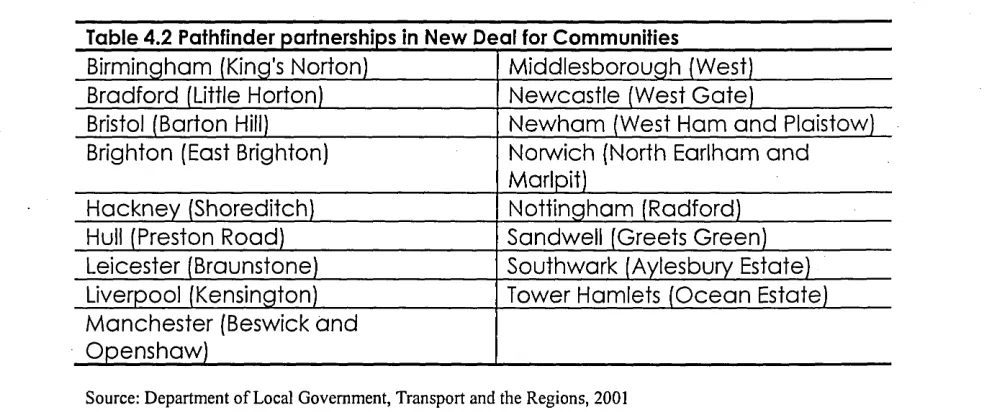
Table 4.2 Pathfinder Partnerships in New Deal for Communities... 98
Table 4.3 Round 2 Partnerships for New Deal for Communities... 98
Table 5.1 Successful projects from City Challenge programmes... 111
Table 5.2 Verifying archival records as sources of data... 115
Table 5.3 Testing the complexity of a system... 126
Table 5.41 Structure of questionnaires for the Hulme social surveys... 132
Table 5.42 Agents of regeneration in 2002... 134
Table 5.5 Definitions of agents in the regeneration of Hulme... 138
Table 7.1 Major events in the decision-making processes of Hulme regeneration... 167
Table 7.2 Correlation between unemployment and crime in Hulme: 1990 - 2000 178 Table 7.3 Adjustment of density measures to real values... 180
Table 7.4 Composition of agents in the regeneration of Hulme... 187
Table 7.5 Freeman's degree centralities for agents of Hulme regeneration 2002 189 Table 7.6 Freeman's betweenness centralities for the agents in 2002... 192
Table 7.7 Three-member cliques from Hulme regeneration networks 2002... 194
Table 7.81 Least active agents in the regeneration of Hulme 1990 - 2000... 201
Table 7.82 Most active agents in the regeneration of Hulme 1990 - 2000... 202
Table 7.9 Factors influencing the emergence of community networks of regeneration... 205
The research project was conceived out of a desire to explore the potential application of complexity theory in understanding urban regeneration processes. The science is still in its infancy, having been born out of a general milieu of, and paralleled, the dissatisfaction with the classical science approach to the problems of the world. At the heart of the complexity project is, therefore, the defiance of the reductionist paradigm in favour of holism and emphasis on emergent properties in the understanding of complex systems. As a new way of thinking and one that boasts of its ability to cut across disciplinary boundaries, the emerging science has found its maiden expression in many spheres of the social and physical inquiry - offering, in each case, potential solutions to the vexing problems and questions that have survived the test of time. In urban studies, such questions reside within the general thesis of the persistence of the urban problem in the midst of a myriad of theoretical tools and policies designed to secure a better understanding and tackle the problem. The translation of this promising theoretical platform into the study and the pursuit of the research agenda were conducted through the case study of the Hulme inner city area in Manchester. The task basically involved three phases of analysis. The first was a historical narrative that attempted to weigh the evolution of the Hulme regeneration processes between 1960 and 1990 against the characteristic features of complex systems, with the aim of establishing a case for conceptualisation of urban regeneration as a subject of complexity. Using selected analytical tools of social network analysis, the second phase sought to quantify the regeneration networks of Hulme so as to weigh them against the deprivation indices for the area between 1990 and 2000, with the aim of testing for any correlations and their implications in the complexity project. Though equally facilitated by social network analysis, the third level was more concerned about investigating the enabling environment for the evolution of urban regeneration networks than mere quantification of the network parameters. Put together, the three levels of analysis provided a framework that serves as a fundamental analytical framework for urban regeneration processes. It offers a much more robust, emergent based, holistic approach to urban regeneration than that which is
I confirm that this thesis is the sole work of the author
H H H A
CHAPTER TW C
CHAPTER THREE
CHARTER ECUR
CHARTER EIVE
CHARTER S i \
CHAPTER SEVEN
CHAPTER 1: INTRODUCTION
1.1 Introduction
It has almost become customary for many writers and commentators on complexity theory to prefix their studies with a contrast between the traditional and the emerging worldview approaches to research. The traditional or classical science approach is largely identified with the philosophical assumptions of reductionism, objective observation, entity as a unit of analysis, linear causation, and many other tools of analysis associated with the scientific method. The dominant goal of this positivist approach has been to predict (and ultimately control) the behaviour of systems not yet explored (but similar to those that have been studied), under conditions not yet extant and in time periods not yet experienced (Arrow, et al. 2000). Although many worldview assumptions still work well within a certain range of conditions, beyond that (where complexity begins) they no longer give us a reliable guide to the understanding of the real world. It is, therefore, imperative that new theories are found to replace the old ones, or rather, to extend them by improving the approximation (Dent, 1999). The complexity revolution and the postmodernist approach appear to have generally been endorsed as an alternative to the traditional worldview. This is because the dawn of complexity theory on the research scene has paralleled an increase in dissatisfaction with the traditional approach. Capra (1982) calls this dissatisfaction a crisis of perception and suggests that it occurs when people subscribe to a mental model that no longer achieves their standards, of accuracy.
paradigm), there are still more questions than answers in the understanding of the urban system. Perhaps viewing the system through the lenses of the emerging science of complexity might give us a break- through. After all, even a cursory analysis of the intricacies of the urban system should reveal a compelling case for adopting complexity theory as a basis for understanding cities. That is why the main purpose of this research was to explore the potential of complexity theory in understanding-cities in general and urban regeneration processes in particular.
The aim of this introductory chapter is to set the framework within which the research was conducted. The chapter is organised into seven main sections beginning with a general background to the research problem. This then leads to an outline of the research rationale in section 1.3, which, together with the general background, essentially serves as the preamble to the research. Section 1.4 offers a brief introduction to the science of complexity, with the sole purpose of putting into context the research aims and objectives, which are outlined in section 1.5. Section 1.6 is a research originality note that makes reference to past research perceived to have taken a similar line of thought as the main arguments in this research with a view to providing a basis for judging the contribution of the research to the body of knowledge in chapter eight. The penultimate section (1.7) is no more than a statement on the nature and source of the methodological tools employed in the research to pursue the aims and objectives. Finally, section 1.8 provides a guided tour of the dissertation in the form of a chapter outline.
1.2 Background: Origins of Britain’s urban problem
Mankind's rise from the doldrums of the primordial village-based and nomadic
inspired generations in terms of designs, economic strengths and cultural diversity.
This piece of research is one in many testimonies to that desire to continue searching, as expressed in the research rationale.
1.3 Rationale for the research
The need for continued research in the general field of urban regeneration cannot be over emphasised. It primarily stems from the bleak picture of the urban system painted by the after-effect of the Industrial Revolution and its associated problems as outlined above. The secondary set of reasons for continued inquiry into the subject derive from the persistence of the urban problem; challenges posed by the city as a multidimensional and dynamic system; and failure of past programmes and theories in this regard. Even land use planners have now started to pose such questions as:
“Why is it that however well we plan, things still turn out to be different from what we expected? Why are we left with so many planning disasters, from car-choked cities to homeless young people? And why, no matter how hard we try or no matter how inclusive a process we attempt, are people left feeling isolated and frustrated at the system?” (Allmendinger, 1999: 255).
Allmendinger suggests that the answer to all these questions is that they involve complexity, and this study generally upholds this fundamental argument, as will become evident in the remainder of the report.
fail to articulate the connections among the different components of the regeneration processes. The different elements are often grouped together in an illusory way (Campbell, 2001). This piece of work proposes complexity theory as a potential foundation upon which to understand urban regeneration processes. In order to put the research aims and objectives into context, a brief introduction to complexity theory is appropriate here, although this is given a more detailed account in a conceptual exposition in chapter 2.
1.4 Introducing complexity theory
As a label of scientific (including social) interest area, complexity generally refers to the study of systems with many interacting components. It is an interdisciplinary science which embraces chaos theory and is centred on the understanding of self-organising systems composed of many interacting components that create patterns at ever increasing scales of complexity (McMillan, 2001). These self-organising complex systems are, therefore, characterised by multiple interacting agents, spontaneous self-organisation, adaptation/co-evolution and dynamism. Central to this piece of work is the attribute of self-organisation, which is the ability of the system to spontaneously organise itself in response to the activities in its environment. This ability is a product of the very richness of the interactions among agents. It is held that self-organisation and maximum innovation occur at the “edge of chaos”, a special kind of balance between the forces of order and those of chaos.
The edge of chaos hypothesis appears to be a good starting point for exploring the potential of complexity theory in understanding urban regeneration processes. If we started from a consensual premise that this abstract phase transition is where complex systems should be in order to solve complex problems (Waldrop, 1992), our major challenge will be how to get the (urban) system to that edge. But are we actually able to do this? Unfortunately the answer is in the negative, since the edge of chaos is constantly changing and possibly unpredictable. While planners may think that they have foresight beyond others in planning for the system, the fact is that an emergent system is far better placed to identify a balance that will keep the whole complex adaptive system on the edge of chaos (Allmendinger, 1999). Our role as urban regeneration policy-makers is rather reduced to that of availing conditions necessary for the system to emerge. The immediate task, therefore, is to investigate what these enabling conditions are and how they can be created. This basically entails understanding the interaction of the various agents involved in urban regeneration processes and how such connectivity evolves. How we proceed in such a task was part of the agenda for inquiry in the research.
1.5 Research aim, objectives and hypothesis
The aim of the research was to consider the application of complexity theory as a potential basis for analysing urban regeneration processes. To achieve this aim, the specific objectives were threefold:
1) To investigate the implications of central control on decision
making in urban regeneration processes.
2) To assess the evolution of social connectivity and how this
relates to the outcomes of urban regeneration processes.
3) To investigate the nature of existing social networks among the
The research sought to test the hypothesis that decision-making in urban regeneration is more of a subject of emergence than a necessarily planned process. This obviously poses a great challenge to the conventional planning and urban policy-making processes and invites a horde of issues to that effect. Pursuance of these issues can be summarised into a single three-in- one research question: When plans are conceived for urban regeneration programmes, is the resulting situation a product of: design? accident? or complexity? These research questions together with their parent aim, objectives and hypotheses form the axis around which the research revolved. Although the tone of the research hypothesis assumes that of a general statement, it is important to stress from the onset that this was a case study based research that does not claim any universality in terms of its findings and conclusions. This issue is taken further in the discussion of the study limitations in chapter eight. The next part of the chapter takes a swipe at what other researchers have said or done on the broad subject?
1.6 Research originality
The thesis of the research hinges on the conceptualisation of urban regeneration as a complex self organising system. Although the view that cities in general are self-organising systems is hardly new, the research dimension of this notion is relatively limited. This study benefited from the contributions of recent research, notably Martinez’s (2001) regional networks for economic development, Green’s (2001) East End artists agglomeration, and Gillies’ (1999) industrial networks.
the evolution of artists in London’s East End as a complex adaptive system. He used a pure historical narrative to investigate the complex adaptive capability of the East End artists’ agglomeration, coupled with an unsuccessful attempt to engage social network analysis. The main lesson from his work can therefore be narrowed down to the virtues of using history to understand systems. This technique was earlier employed by Putnam (2000) in his study of the collapse of the American community and the associated impact on the socio-economic lives of Americans. Using mainly archival records, Putnam was able to unearth the civic-ness of the American community over a timescale of circa 50 years. This time factor is essentially missing in Gillies’ (1999) research on the adaptability of industrial networks in the Italian district of Prato. However, unlike Martinez’s work, her research was more inclined towards theory building and modelling than an empirically based study of industrial networks.
This piece of work drew lessons from the above recent studies. The tools of social network analysis, historical narrative, and archival records (for data collection) were all employed in the research. However, there are certain pockets of “structural holes” in these studies that the research built on, apart from having a unique direction of its own in urban regeneration and decision making. Indeed, no such complexity research has been carried out in the field of urban regeneration, at least to the extent of this researcher’s literature review. The overall contribution of the research to the body of knowledge is highlighted at the end of the report in chapter eight.
1.7 Research methodology
properties of the networks within which individual actors are embedded, and for detecting emergent social phenomena that have no existence at the individual level. This is perfectly attuned with complexity theory, where it is argued that regardless of how they are defined, each constituent agent of a complex adaptive system finds itself in an environment which is a product of its interaction with other agents in the system.
The task in the research approach was to uncover the dynamics inherent in the urban regeneration processes and to investigate the extent to which and / or whether these fit into the complexity project. The first of the three research objectives was pursued through mainly a historical narrative that tested for the extent to which urban regeneration processes can be conceptualised as complex systems. The second objective relied on the tools of social network analysis to relate network parameters to the outcomes of urban regeneration at various times. The source of relational data was mainly in the form of archival records. The third objective equally made use of social network analysis to uncover network structure and to investigate the enabling environment for the emergence of such networks. The data for this last objective was collected by way of internet and paper-based questionnaires to the agents of regeneration. These two sets of primary and secondary data were then pooled together to arrive at a systematic qualitative and quantitative analysis of the research aims and objectives. A more detailed discussion of the research methodology is given in the methodological framework in chapter five.
1.8 Structure of the dissertation
The thesis is organised into four main phases and eight chapters. The first part is an introduction and consists of chapter 1. The second is a literature review and consists of chapters 2 to 4. The third phase is a methodological framework accounting for chapter 5. The last phase, consisting of chapters 6, 7 and 8, deals with the research findings and critical reflections. In terms of individual chapters, the first is an introduction that sets out the aims and objectives of the research. Chapter two is about the environment of social research enquiry. Key philosophical underpinnings of complexity research are
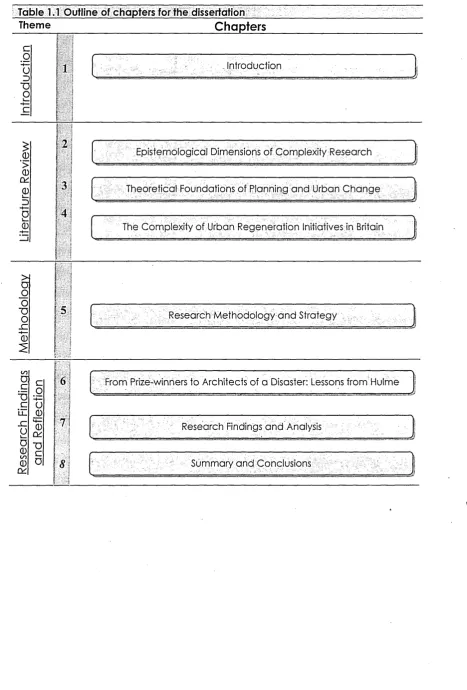
-discussed so as to put the adopted research approach into perspective. The chapter also discusses a selection of the application tests of complexity theory especially in organisational settings. The third chapter constitutes a conceptual and theoretical framework. The chapter begins by analysing past and contemporary theories of urban change, before exploring the potential of complexity theory in urban studies in general and decision-making in urban regeneration in particular. Chapter four is an analysis of the evolution of urban regeneration processes in Britain with a view to identifying their natural place in complexity theory. This lays a firm foundation upon which to examine the evolution of urban regeneration processes in the case study area of Hulme, Manchester in the sixth chapter. Chapter five presents the methodological framework within which the research was carried out. It also spells out the tools of analysis that were employed. Since the methodology is largely based on social network analysis, an introduction to social network analysis is also given in this chapter. The seventh chapter presents the research findings together with analysis and discussion. Finally, chapter eight consists of a summary, conclusions and recommendations. The chapters are intended to meet the aims of the four main themes of the dissertation as outlined in the table 1.1 below.
-Table 1.1 Outline of chapters for the dissertation
Theme Chapters
c i- :
o u D ■Oo V— c
i : . Introduction I
■ j
L £
0 2\ Epistemological Dimensions of Complexity Research >
0) CY. a)
i— 3- l’" :• Theoretical Foundations of Planning and Urban Change 1 "j D
o
0 •4 ^ i; The Complexity of Urban Regeneration Initiatives in Britain
i M et ho do lo av -1
[5i
Research Methodology and Strategy|
iI I ; CO
a
c c0 61 From Prize-winners to Architects of a Disaster: Lessons from Hulme 0
p 1 i u0)
.. i
JZ
o M—O'0 71 Research Findings and Analysis o CD CO 0 O' T5 O
F8 j Summary and Conclusions
[image:29.622.56.524.38.729.2]CHARTER TW O
Epistemological Dimensions of Com plexity Research
CHARTER THREE
CHARTER ECHR
CHARTER EIVE
CHAPTER S IX
CHARTER SEVEN
CHAPTER 2: EPISTEMOLOGICAL DIMENSIONS OF COMPLEXITY
2.1 Introduction
Chapter one served as a general introduction to the study by providing the research agenda and exposing the utility of adopting complexity theory in understanding decision-making in urban regeneration processes. Chapter two discusses the environment of social research inquiry with particular emphasis on the epistemological foundations of complexity research. The ultimate aim is to establish a firm foundation for the adopted methodological approach and also to unmask the complexity language that is being used in the study. It is, therefore, a matter of necessity that the chapter begins with an exposition of complexity theory in terms of meaning, origins and scope. The second part of the chapter consists of sections 2.4 to 2.6 and discusses the epistemology behind complexity thinking. Against each of the epistemological dimensions, a selection of associated application tests is also discussed. The penultimate section (2.7) is a general discussion that suggests the epistemological inclination of the study.
2.2 The complexity revolution
According to the journalistic account of complexity by Waldrop (1992), the complexity revolution began the first time someone said,
“Hey, I can start with this amazing simple system, and look - it gives rise to these complicated and unpredictable consequences”.
It appears that the science of complexity emerged as a product of the desire to explore the real1 world. Since the time of Isaac Newton, scientists had become used to dealing with linear approximations - thinking of the world as a fundamentally neat and predictable place obeying well understood laws. The reductionist approach was the royal road to Nobel Prize (Waldrop, 1992)
Table 2.1 The classical and the systems view of the world
Mechanistic View (Classical) Holistic View (Systems)
Nature as machine with replaceable parts Nature as irreducible and interpenetrative organisms
Deterministic and linearly causal Innate but non-deterministic purpose - flows and process oriented
Atomistic and individualistic Nature and people are communal and interlinked
Materialistic: Things are distinct measurable material entities with fixed properties and highly predictable
Matter as configuration of energetic flow in probabilistic processes allowing for self creativity and unpredictability.
Ever expanding growth in material wealth defines “success” and promotes greater use of natural resources
Sustainability of interlinked whole and development through flexibility and accommodation among co-operative parts Anthropocentric: Man dominates nature.
Control and mastering it for own ends and self-evolving whole.Humans an organic part of a self-maintaining In social sciences the dominant notions are
struggle for survival, profit of individual and some “assumed automatic coincidence of individual and societal good.”
Competition mitigated by co-operation; individualistic work ethos tempered with tolerance for diversity and experimentation fostering adaptation and harmony
In medical science: body as machine. Medicine impersonal and factual
intervention. Body and mind are separate
Mind and body a whole and a system of interacting parts. Psychic and interpersonal as important as physical and physiological
Source: Adapted from Runnion, 2002_______________________________________________________
The language and practice of complexity are still relatively new in science in general and in the domains of social sciences in particular. Its serious consideration as a subject matter is barely two decades old, and may be accurately traced to the ideological revolt by a determined group of multidisciplinary researchers who founded the Santa Fe Institute in May 1984. Two years later, in 1986, Stephen Wolfram established the Centre for Complex Systems at the University of Illinois. Since then, complexity theory seems to have taken an upward swing as suggested by figure 2.1.
?bl.jn 1 c .ittifJMKjiy liil^ v ^ l- «,? rulilUr cilMn;
2002
1992 1994
Year of publication
1996 1998 2000
1988 1990
The graph shows a general upward movement in terms of research and publications based on the complexity theme particularly towards the conclusion of the last decade of the 20th century. The general thesis at the heart of complexity is the rejection of reductionism, although this part is not always appreciated even by those who propose it (Byrne, 1998). Perhaps this is partly due to the multidimensional and multidisciplinary nature of the theory as evident in the dilemma surrounding its definition.
2.2.1 Defining complexity theory
As figure 2.1 above suggests, there has been a growing amount of literature on complexity since its genesis in the early to mid 1980s. The various dimensions and issues surrounding this emerging science are expressed in this burgeoning account of the new world view, notably by writers such as Waldrop, 1992; Lewin, 1992; Kauffman, 1994; Gell-mann, 1994; Holland, 1995; Cilliers, 1998, and many others too numerous to list. The definition of complexity is therefore spread across the diversity of the subject matter, itself. For example, Cilliers, 1998 begins by defining complexity in terms of its location with respect to mere “complicatedness”. According to this view, if a system can be given a complete description in terms of its individual components despite having a large number of such constituent elements, then the system is merely complicated and not a subject of complexity. Price (2000) equally acknowledged this notion, although he went a little further by proposing a three-layered distinction in defining complexity. The first level (without any implication on the order) pertains to the complexity associated with non-equilibric systems. To consolidate this notion, Price made reference to Dawkins’ (1986) definition of life as a property of improbable complexity possessed by an entity that works to keep itself out of equilibrium with its environment. He also replicated Dawkins’ most graphic example:
“...a dead parrot thrown into the air obeys the laws of physics, describes a perfect parabola, and then falls back to earth. A live one disappears over the country boundary; its components working together to maintain their collective entity against the force of gravity.” (Dawkins, 1986).
the intention of this discussion to put a premium on the semantics surrounding the language of complexity. Rather than grappling with a definition that may not be ripe at the present moment, there is perhaps more utility in merely examining the characteristic features of complex systems.
2.2.2 Characteristics of complex systems
Complex adaptive systems are everywhere and are found in many different forms. However, they all seem to share certain common properties that distinguish them from mere complicated objects. Cilliers, (1998) proposed a ten- point criterion for identifying such systems. However, a close analysis of his ten points reveals that many of them are simply variations of the same themes and that these are actually summarisable into the four main characteristics of multiple interacting agents, self-organisation, adaptation, and non-linearity, all of which are consistent with Waldrop’s (1992) definition of complex adaptive systems.
consumers through to firms, economic sectors, national economies and finally the global economy.
The third feature of complex systems relates to their ability to respond to the activities within their surroundings. The systems are constantly rearranging their building blocks as they gain experience. Thus the human brain constantly reorganises its neural networks so as to learn from experience. Species evolve for better survival in a changing environment and the market place responds to changing consumer demands. Furthermore, complex systems are constantly making predictions based on their various internal models of the world, this element of modelling and prediction transcends human foresight and consciousness. John Holland's classifier systems model (see below) attempts to explain how complex systems achieve this task of unparalleled magnitude.
adaptive but under conditions that no longer prevail. In other words, the environment of the complex adaptive system may change at a faster rate than the evolutionary mechanisms can accommodate. Gell-mann’s thesis obviously puts a caveat on certain areas of mainstream complexity thinking, particularly the challenge increasingly cast on the power of central control in decision making. At best his argument can help us understand why and how certain influential individuals in society have managed to steer whole social systems towards their own ideological beliefs, only to be defeated by the emergent forces of complexity years later. The demise of communism in the Eastern bloc is a classic example of this phenomenon. At worst, Gell-mann’s thesis has the potential of breeding complacency with the (often temporary) equilibrium conditions created by the powers of central control.
The final characteristic feature of complex systems is the non-linearity of such systems. Each of the complex, self-organising, adaptive systems possesses a kind of dynamism that qualitatively distinguishes it from non-complex systems. Complex systems are more spontaneous, more disorderly and more alive than static objects which might merely be complicated. This dynamical nature of complex systems is better explained by chaos theory - that amazing science of the unpredictable (Gleik, 1993). The basic notion of this theory is that very simple dynamical rules can give rise to extraordinarily intricate behaviour. Chaos is not synonymous with disorder but suggests that it is extremely difficult if not impossible to model certain systems even though the systems themselves are ordered (Allmendinger, 1999). But chaos theory on its own has very little to say about the fundamental principles of living things (social systems inclusive) or of evolution. It does not explain how systems, from a state of randomness, organise themselves into complex wholes. It doesn't provide a solution to the paradox of the growth of order and structure in the universe despite the world's tendency towards decay.
Table 2.2 Characteristics of complex systems
Property Description
I Non-linearity Behave as whole systems. Cannot be understood by decomposing them into pieces which are added or multiplied together
II Hierarchical Are hierarchically nested. Such nestings cannot be understood by focussing on one hierarchical level alone III Internal
causality organising.Non-Newtonian, not mechanisms, but rather are self- IV Window of
vitality (Edge of chaos)
Must have enough complexity but not too much. There is a range within which self-organisation can occur
V Dynamically
stable There may not exist equilibrium points for the system VI Multiple stead
states There is not necessarily a unique preferred system state in a given situation. Multiple attractors may be possible and the current system state may be as much a function of historical accidents as anything else.
VII Catastrophic
behaviour Moments of unpredictable behaviour. Sudden discontinuity VIII Chaotic
behaviour Our ability to forecast and predict is always limited.
Source: Adapted from Kay, et al. (1999)
So, despite having a common area of intersection, chaos and complexity are two different spheres of the knowledge enterprise. One concept that puts the two into perspective is Christopher Langton's “something mysterious” that makes life and mind possible (Waldrop, 1992). That something (he says) is a special kind of balance between the forces of order and those of chaos. Its name is “the edge of chaos”.
2.2.3 Life at the edge of chaos
both stable enough to store information and yet evanescent enough to transmit it. These are systems capable of being organised to perform complex computations, to react to the world, to be spontaneous, adaptive and alive. But how do complex systems get to the edge of chaos? The answer can easily be deduced from the above illustration about solids and liquids. In competitive terms it becomes logical to conclude that frozen systems can always do better by loosening up a bit, and turbulent ones can do better by getting themselves together a little more organised. If a system is not on the edge of chaos, learning and evolution would push it in that direction. If the system is already on the edge of chaos, learning and evolution would pull it back if ever it tries to drift away, as long as adaptive conditions are prevalent. Learning and evolution would make the edge of chaos stable, a natural place for complex systems to be, in the absence of maladaptive behaviour (Murray Gel-Mann, 1994). But it seems that learning and evolution do not just pull agents to the edge of chaos, they also move agents along the edge of chaos in the direction of greater complexity. This aspect of emergence has the potential of explaining how complex systems ascend higher and higher on the ladder of advancement with time. Modelling such systems is not the easiest undertaking to pursue although the dawn of complexity has seen a few such models mushrooming alongside the emergence of the theory itself.
2.3 Early models of complexity
It has already been mentioned that one of the reasons for the late arrival of the science of complexity on the research scene was the limited nature of the tools of analysis. As Brian Arthur suggested, when it comes to real world complexities, the elegant equations and the fancy mathematics learnt in schools are no more than limited tools (Waldrop, 1992). Most of the conventional techniques like calculus or linear analysis are only suitable for describing unchanging particles moving in a fixed environment. To really get a deep understanding of complex systems, what is needed are mathematics and computer simulation techniques that emphasise internal models, the emergence of new building blocks and the rich web of interactions among multiple agents. Using computer simulation, it is possible to experiment with simple models that
-can be run on a desk top so as to try out how well they really work (ibid). One can try to pin down vague notions with more and more precision and extract the essence of how interactions, learning, emergence, etc really work in nature. There is a wide range of such models that have been experimented on by researchers in the recent past including, John Holland's classifier systems, Stuart Kauffman's genetic networks, autocatalytic set model for the origin of life, cellular automata, to mention but a few. Three of these models are briefly considered here.
2.3.1 John Holland’s Classifier Systems model
The classifier systems approach was developed by John Holland to explain how complex systems build internal models and predictions using the principle of feedback from the environment (Waldrop, 1992). He started from the premise that the system simply has to try out the models, see how well their predictions work in the real world, and (if it survives the experience) adjust the models for the better next time. In cognition, the agents are individual minds, the feedback comes from teachers and direct experience and the improvement is called learning. In order to test these hypotheses, Holland built a computer simulated adaptive agent which he designed as a hybrid, incorporating the neural network and the rule-based systems approaches. He called the set of rules "classifiers." His conclusion was that whenever the agent does something right and gets a positive feedback from the environment, it would strengthen the classifiers responsible. Whenever it did something wrong, it would weaken the classifiers responsible. Either way, it should ignore the classifiers that are irrelevant.
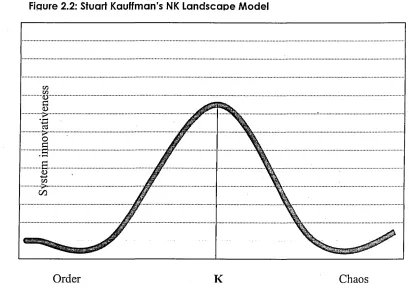
2.3.2 Stuart Kauffman’s NK Landscape model
Figure 2.2: Stuart Kauffman’s NK Landscape Model
oo
Order K Chaos
From Kauffman’s numerical simulations, it turned out that the maximum fitness occurred right at the phase transition, conceptualised as the edge of chaos.
2.3.3 John Von Neuman's cellular automata
rules. Each square in each generation would first look around at its immediate neighbours. If too many of those neighbours were already alive, in the next generation the square would die of overcrowding. If too few neighbours were alive, then the square would die of loneliness. However, if the number of neighbours was just right (edge of chaos?) then the square would be alive. One could start up this game with a random scattering of live squares, and watch them instantly organise themselves into all manner of coherent structures.
The first of the above models of complexity pronounces the essence of feedback processes in complex systems, while the other two demonstrate the edge of chaos principle. One other common feature of all these models of complexity is the notion of connectionism which received recognition at the Santa Fe Institute particularly by Doyne Farmer (ibid). It is the idea of representing a group of interacting agents as a network of “nodes" linked by connections. The concept shows how the capacity for learning and evolution can emerge even if the nodes, the individual agents, are brainless and dead. By putting the power in the connections and not the nodes, the idea points the way toward a very precise theory that the essence of life is in the organisation and not the molecules. This is given appropriate detail in section 2.5 below but it is sufficient to say here that connectionism seems to be at the very heart of postmodernism as an epistemological enterprise for much of the natural and social sciences.
2.4 Complexity and postmodernism
derived. It follows from this therefore that the postmodern approach represents some kind of scepticism towards m eta narratives.
Unlike the modern approach which ajms at finding a simple dissertation that can unify all form of knowledge, postmodernism encourages accommodation of multiple discourses whose characteristic is that they are locally determined and not externally legitimised. It is this eclectic approach by postmodernism that makes it appealing to complexity theory. Although there are some inconsistencies between the two, these are mainly confined to the domains of natural sciences (Allmendinger, 1999). Their literal and metaphoric uses in the social sciences are similar in many ways. For example, both complexity and postmodernism question the overriding deterministic, linear and reductionist assumptions embraced in much of social science. They both pronounce the dynamism, unpredictability and subjectivity of social science canons. Further, and perhaps most importantly, they both provide an alternative set of criteria upon which to build pseudo-scientific disciplines, including those founded on the quest for a better understanding of the gyrations that drive the urban system. The general suggestion from this set of parallels is that the postmodern approach is inherently sensitive to complexity, that it acknowledges the importance of self-organisation while at the same time denying a conventional theory of representation.
One important argument that is often used against postmodernism is the view that if all discourses were to have only local legitimisation, then the resultant fragmentation of the social fabric would put all knowledge into a relative perspective. In the absence of external checks, no local discourses can be seriously criticised and each treatise would become independent of all others (Cilliers, 1998). This would lead to isolation of discursive communities and ultimately imply that each entity has only itself as a reference point with no means of an objective pursuit of knowledge. Parushnikove, 1992 (quoted in Cilliers, 1998) argues that this would create a situation where "anything goes”, a position considered as unacceptable in the philosophy of science. This argument of “anything goes” has been branded as a fallacy by many
-proponents of the postmodern condition (Cilliers, 1998; Feyerabend, 1975; Lyotard, 1984). Using the idea of language games, Lyotard (1984) mounted a formidable critique of the argument as may be discerned from his own words:
“A self does not amount to much, but no self is an island; each exists in a fabric of relations that is now more complex and mobile than ever before. Young or old, man or woman, rich or poor, a person is always located at nodal points of specific communication circuits, however tiny these may be...No one, not even the least privileged among us, is ever entirely powerless over the messages that traverse and position him at the post of sender, addressee, or referent. One’s mobility in relation to these language game effects is tolerable, at least within certain limits...it is even solicited by regulatory mechanisms, and in particular by the self adjustments the system undertakes in order to improve its performance” (Lyotard, 1984:15)
Lyotard’s passage clearly pronounces the connectionist model of, not only language games, but the operation of social systems as well. In fact, a critical analysis of the passage should reveal the presence of all the characteristic features of a complex system outlined above. The perception of language as a complex adaptive system is given appropriate illustration in Saussure’s model of language in section 2.5.1 below. The preoccupation here is to counter the “anything goes” hypothesis. Lyotard’s attack of the argument is in the form of a dual-faceted critique. The first level argues that although society is composed of different discourses (nodes), these cannot isolate themselves from the whole network because there are always connections to other discourses. The different local narratives interact in different scales, but no one particular discourse is fixed or stabilised in isolation from the others. In short Lyotard here upholds Saussure’s signifier-signified concept of meaning (see section 2.5.1 below) where local narratives only make sense in terms of their contrasts and differences to surrounding narratives. What this whole description suggests is a self-organising system in which meaning is generated through dynamic processes and not through the passive reflection of independent agents that can make anything go (Cilliers, 1998). The second aspect of Lyotard’s critique is equally drawn from the network perspective of society and is grounded in the distributed nature of social networks. Here, the core argument, which is
-perfectly consistent with complexity theory, is that information is not represented by specific agents but encoded in connections distributed across many agents. Although this notion puts the final nail to the argument claiming that the postmodern approach results in isolation of entities, there is a third point that is deducible from Lyotard’s passage on language games, which is crucially important to the understanding of complex systems. It is the acknowledgement of self-organisation, a characteristic feature of complex systems that emanates from the interactions among nodal entities. The resultant social setting is not designed by means of some transcendental force, but emerges as a result of the manner in which the system responds to the contingent information in a dynamic fashion.
“The process is a complex one involving many individuals with complex non-linear relationships between them, including feedback relations. Individuals co-operate to form clusters, but also compete for resources in the network. The history of the system is vitally important in the way in which meaning is generated in any part of it. The evolution of structures in the social fabric, causing continuous alterations, is an integral part of its dynamics” (Cilliers, 1998:17)
The emphasis of the postmodern condition has thus been identified as hinging heavily on the notion of connectionism rather than isolation of entities. This is postmodernism’s important intersection point with the project of complexity. Since the latter is at the heart of this research, connectionism is, therefore, given discrete account here especially with regard to how it relates to complexity research.
2.5 Complexity and connectionism
merely the sum of their parts, but also by the intricate relations between the constituent agents. In dividing the system into atomistic units, the reductionist approach destroys the very fabric of what it seeks to understand. The study of complex systems should conversely place more importance on understanding the connections than the individual agents themselves. This notion finds its expression in many of the connectionist networks models, which happen to share the characteristics of complex systems. It is, therefore, possible to use these distributed modelling techniques as general models for complex systems, which can be implemented either physically or conducted through computer simulations (Cilliers, 1998). The merits of the former and its subsequent adoption in this research are discussed in chapter five.
The conceptualisation of connectionism from a philosophical perspective is best traceable to the work of Saussure (1974) and his structural model of language as interpreted in complexity terms by Cilliers (1998).
2.5.1 Language as a complex adaptive system
Language is a system constituted not by individual speech acts, but by a system of relationships that have no bearing at the individual user’s level. Due to the arbitrariness of the signifier-signified relationship, a sign does not possess a natural identity but rather derives its significance from its relational position within the system. The sign is determined by the manner in which it differs from all the other signs in the system (ibid). Thus, the signifier pink will only have meaning to the extent that it can be differentiated from the signifiers brown, green, black, chair, etc. Therefore, language can be conceptualised as a complex (adaptive) system with the sign being a node (the agent or the actor) within a network of relationships. The sign is the natural product of the interactions among the linguistic units and cannot be ascribed to the choices of any individual user. That’s exactly what Cilliers means by suggesting that because the users of language have to operate within the system of language they inherited, and because their understanding of language is constituted by that system, they can not break out of it. The system perpetuates itself in such a way that guarantees its integrity. All complex adaptive systems are evolutionary. Concerning the evolutionary nature of language, Saussure had the following to say:
“Nothing could be more complex. As it is a product of both the social force and time, no one can change anything in it...and the arbitrariness of its signs theoretically entails the freedom of establishing just any relationship between phonetic substance and ideas. The result is that each of the two elements united in the sign maintains its own life to a degree unknown elsewhere, and that language changes or rather evolves, under influence of all the forces which can affect either sounds or meanings. The evolution is inevitable; there is no example of a sign language that resists it. After a certain period of time, some obvious shifts can always be recorded”. (Saussure, 1974:76).
rise to a transformation of the old system. Saussure further argues that there is no external (central) control that provides a direction for change. Change is rather a product of contingencies arising within the context that language is used. This aspect is strongly upheld by complexity theorists and is manifested in the emphasis on the power of connections rather than any individual agent in the system. For example, in business organisations, it is now argued that the success of an organisation is squarely embedded in the relations among the agents and not in any one particular Chief Executive Officer. This is discussed in more detail in section 2.5.2 below. These qualities are also present in - perhaps the best-known example of a complex adaptive system - the brain and in particular the secret behind memory. Memory does not reside in any one particular neuron, but in the relationships among neurons (Frued, 1950). This scenario fits well with the post-structural project of logic, according to which, no word in language, or neuron in the brain, has any significance by itself. Meaning is rather determined by the dynamic relationships among the components of the system (Cilliers, 1998). This notion has recently, and appropriately, been interpreted in business organisations, notably by Bill McKelvy and his concept of Distributed Intelligence (McKelvy, 2001) as well as other organisational complexity theorists such as Axelrod and Cohen (1999), and Price and Shaw (1998).
2.5.2 Connectionism in organisational settings
connectionism in human organisations. His starting point is the definition of order and especially what causes emergent order and self-organisation. It is apparently obvious that one would not exhaust this question without mentioning (in fact starting with) Darwinism in the biological world, where order is defined in terms of diversity of entities. In the social realm, Durkheim (1893) and Spencer (1898) similarly defined order as the emergence of social entities. Building on these earlier conceptions, Sommerhoff (1950), Ashby (1956, 1962) and Rothstein (1958) defined order not only in terms of entities but also in terms of connections among those entities. Ashby (1956) in particular argues that order exists in the midst of entities if only the enabling environment is availed. This led him to conclude that environmental constraints are the causes of order and that this order does not emerge if the environmental conditions are chaotic. The immediate questions that arise include, what are these enabling conditions, and at what level are they said to be chaotic? Taking this issue a little further would take us back to the edge of chaos hypothesis as we search for the appropriate balance in the enabling environment. However, for the purpose of this discussion, it is sufficient to emphasise that connectivity is acknowledged as a fundamental driving force in complex systems. Reverting to McKelvy’s concept of corporate brain, we see that Dl consists of the same basic elements of nodes and links for order; human (H) and social capital (S) for distributed intelligence. The principle is, therefore, summed up in the following equation:
McKelvy equally emphasised the importance of environmental constraints. It is important, therefore, to note that S and H (defined as networked human capital) cannot amount to Dl unless the emergent social capital (S) is in the context of non-chaotic environmental constraints. The argument may also be extended by pointing out that neither would the social capital emerge if the environment was too rigid or centrally controlled.
PI = St + H
Where t is the time at which environmental conditions are at the edge of chaos.
This view, based on emergent networks in the context of environmental constraints is in perfect tune with the complexity project, especially the line of thinking embedded in Stuart Kauffman’s network model discussed above. At a methodological and conceptual level this is manifested in the concept of social networks, especially the principle contained in Granovetter’s (1973) strength of weak ties identified in chapter five.
The postmodern condition and its associated connectionist models are undoubtedly appealing to the new world view. If there is a more robust, more specific and more novel enterprise that is harmonious with the complexity project, this can only be found in Roy Bhaskar’s (1975,1998) realism.
2.6 The realist account of complexity research
2.6.1 The