University of Warwick institutional repository: http://go.warwick.ac.uk/wrap
A Thesis Submitted for the Degree of DClinPsy at the University of
Warwick
http://go.warwick.ac.uk/wrap/49301
This thesis is made available online and is protected by original copyright.
Please scroll down to view the document itself.
Bilingualism, Language Development and
Psychological well-being: an example of
Deafness
Hayley Ford, Trainee Clinical Psychologist
A thesis submitted in partial fulfillment of the requirement for the
degree of Doctorate of Clinical Psychology
University of Warwick, Department of Psychology
Coventry University, Faculty of Health and Life Sciences
2
Contents
Page Numbers
_______________________________________________________________________
Title Page 1
Contents 2
List of tables and figures 8
List of appendices 9
List of abbreviations and glossary 11
Interview transcript key 13
Disclaimers 14
Acknowledgements 15
Declaration 16
Summary of thesis 17
Chapter One 18
Chapter Two 46
Chapter Three 80
Appendices 90
3
Chapter One: Literature paperThe effects of bilingualism with two spoken language on a child’s psychosocial development: A critical review
_______________________________________________________________________
1.0 Abstract2.0 Introduction
2.1 Typical language development in childhood 2.2 Bilingualism and child development
2.3 Aims of the literature review
3.0 Method 3.1 Search Strategy 3.2 Inclusion criteria 3.3 Exclusion criteria
3.4 Summary of the structure of the review
4.0 The consequences of bilingualism on psychosocial development: A critical review. 4.1 Social, cultural, and familial relationships
4.1.1 Pressure to abandon the mother-tongue in bilingualism: Family and school 4.1.2 Desirability to maintain minority languages in bilingualism
4.1.3 Integration of the influence of environmental factors on bilingualism 4.1.4 Summary of bilingualism and, social, cultural, and familial relationships 4.2 Psychological well-being
4.2.1 Subjective well-being and the integration of two cultural orientations 4.2.2 Personality and behavioural factors
4.2.3 Summary of bilingualism, and psychological well-being
5.0 Methodological factors and areas for future research 5.1 Methodological approaches
4
6.0 Clinical implications7.0 Conclusions
5
Chapter Two: Empirical paperThe experiences of bilingualism within the deaf and the hearing world: The views of d/Deaf young people
_______________________________________________________________________
1.0 Abstract2.0 Introduction
2.1 Prevalence and nature of deafness in the United Kingdom 2.2 Language development and deafness
2.3 British Sign Language 2.4 Cultural factors in deafness 2.5 Education for deaf children
2.6 Introduction to bilingual development for deaf children 2.7 Deaf bilingualism and psychological well-being
2.8 Rationale for current study 2.9 Aims and research questions
3.0 Method 3.1 Design 3.2 Participants
3.2.1 Inclusion criteria 3.2.2 Exclusion criteria 3.3 Data gathering
3.4 Procedure
4.0 Results
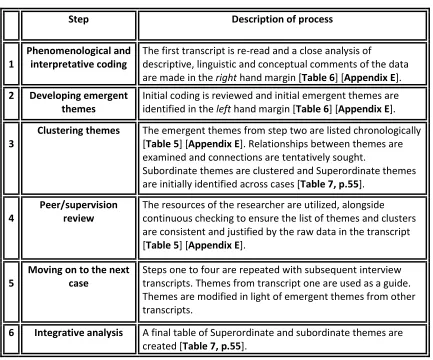
4.1 Outline of Interpretative Phenomenological Analysis and steps taken
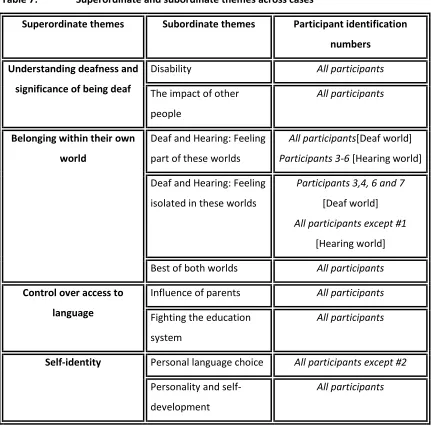
4.2 Superordinate theme 1: Understanding deafness and significance of being deaf 4.2.1 Subordinate theme 1: Disability
4.2.2 Subordinate theme 2: The impact of other people 4.3 Superordinate theme 2: Belonging within their own world
6
4.3.2 Subordinate theme 4: Deaf and Hearing: Feeling isolated in these worlds 4.3.3 Subordinate theme 5: Best of both worlds4.4 Superordinate theme 3: Control over access to language 4.4.1 Subordinate theme 6: Influence of parents
4.4.2 Subordinate theme 7: Fighting the education system 4.5 Superordinate theme 4: Self-identity
4.5.1 Subordinate theme 8: Personal language choice
4.5.2 Subordinate theme 9: Personality and self-development
5.0 Discussion
5.1 Summary of the results and theoretical interpretations of the research 5.1.1 Understanding deafness and significance of being deaf 5.1.2 Belonging within their own world
5.1.3 Control over access to language 5.1.4 Self-identity
5.2 Model of superordinate themes 5.3 Methodological factors
5.3.1 Sensitivity to context 5.3.2 Limitations of the research 5.3.3 Future research
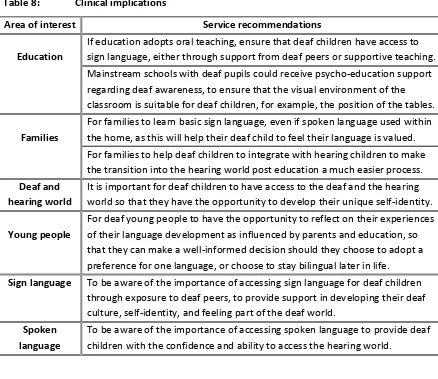
5.4 Clinical implications
6.0 Conclusions
7.0 References
7
Chapter Three: Reflective PaperCommunication within the d/Deaf world: Reflections on the research and clinical process
_______________________________________________________________________
1.0 Choosing a reflective topic2.0 The d/Deaf community and communication
3.0 Communication with deaf signers
3.1 The first interaction between hearing people and deaf people 3.2 Talking and listening
3.3 Confidence to communicate with deaf signers
4.0 Barriers for deaf people with access to spoken language 4.1 Access to spoken language for the deaf
4.2 Confidence to communicate with deaf people using the voice
5.0 The integration of sign and spoken language: Voice ‘on’ or voice ‘off’
6.0 Being aware of the environment 6.1 Group and one to one communication 6.2 Use of interpreters
7.0 Summary of personal and professional learning
8
List of tables and figures Page
_____________________________________________________________________________
Chapter One
Table 1: Exclusion of journal articles 114
Table 2: Themes for psychosocial development 23
Chapter Two
Table 3: Process of gaining ethical approval 109
Table 4: Steps taken for Interpretative Phenomenological Analysis 54
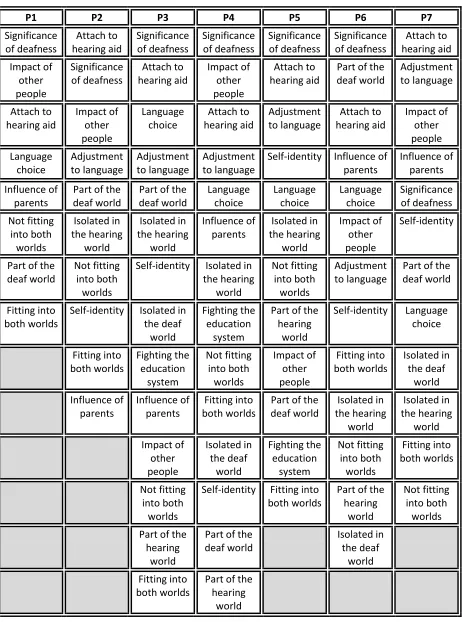
Table 5: Chronological list of emergent themes across cases 147
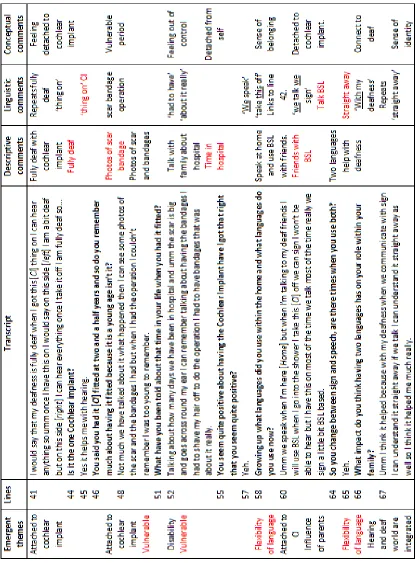
Table 6: Initial coding and emergent themes identified
[Inter-rater reliability of coding] 148
Table 7: Superordinate and subordinate themes across cases 55
Table 8: Clinical implications 75
Figure 1: Model of superordinate themes 72
Figure 2: Eye contact between interpreter, hearing person and deaf person 88
9
List of appendices Page
_____________________________________________________________________________
A. Ethical approval letters 90
Coventry University: Research Registry Unit 91 Coventry University ethical approval confirmation 92 Coventry University: Insurance indemnity and sponsor 93 Non-NHS: Birmingham, East, North and Solihull REC 95
Non-NHS: Derbyshire REC 96
NHS: Black Country REC: Provisional opinion 97
NHS: Black Country REC: Favourable opinion 101
Research and Development: Dudley & Walsall MHPT 104 Honorary contract: Dudley & Walsall MHPT 107 Process of gaining ethical approval [Table 3] 109
B. Search strategy and table of papers reviewed for Chapter One 110
Search strategy process 111
Exclusion of journal articles [Table 1] 114
C. Recruitment and Participant Information 120
Recruitment flowchart 121
Covering letter 122
Information sheet for deaf bilingual young people 123
Consent form to be contacted 125
Consent form for deaf bilingual young people 126
Consent form for sign interpreter 127
Debriefing sheet for deaf bilingual young people 128
Information sheet for hearing parents 129
Consent form for hearing parents 131
10
D. Schedules 133
Interview schedule 134
Interview schedule process 136
Feedback from Speech and Language Therapist on Interview Schedule 138
Questionnaire schedule 139
E. Analysis 142
Reliability and validity of Interpretative Phenomenological Analysis 143
Sensitivity to context 146
Chronological list of emergent themes across cases [Table 5] 147 Initial coding and emergent themes identified and
[Inter-rater reliability of coding] [Table 6] 148
F. Author guidelines for journals 149
11
List of abbreviations and glossary_____________________________________________________________________________
ASL American Sign Language
BSL British Sign Language
CAMHS Child and Adolescent Mental Health Service
CI Cochlear Implant
CSW Communication Support Workers
Deafness Generally, people who describe them as ‘Deaf’ with a big “D” identify themselves as culturally Deaf, and have a strong deaf
identity*.
deafness Generally, people who describe them as ‘deaf’ with a small “d” do not associate with other members of the deaf community, strive to identify themselves with hearing people, and regard their hearing loss solely in medical terms*.
*When writing about deafness, many writers will use a capital D when referring to aspects of deaf culture, and a lower case d when speaking solely about the hearing loss, and some just simply use d/Deaf.
EAL English as an Additional Language
IPA Interpretative Phenomenological Analysis
LREC Local Research Ethics Committee
LSW Learning Support Workers
12
NHS National Health Service
PHU Partially Hearing Unit
Pre-lingual deafness Hearing impairment that is sustained prior to the acquisition of language, which can occur as a result of a congenital condition or through hearing loss in early infancy.
Post-lingual deafness Hearing impairment that is sustained after the acquisition of language, which can occur as a result of disease, trauma, or as a side-effect of a medicine. This is also referred to as d/Deafened.
PUMS Public Use of Microdata Sample
R&D Research and Development
RNID Royal National Institute for Deaf people
SALT Speech and Language Therapist
Sign Bilingualism Deaf children who utilise two languages in different modalities (usually BSL and English) as opposed to the use of two spoken
languages.
SSE Sign Supported English
13
Interview transcript key_____________________________________________________________________________
… = Short pause
*…+ = Long pause
/ = Sentence interrupted
14
Disclaimers_____________________________________________________________________________
Definitions
1. In the empirical paper, there is awareness of the difference between Deafness with capital D and deafness with lower case d depending on how individuals value the meaning of their hearing impairment. However, for the purposes of this paper, to avoid making assumptions, the term will be referred to as deaf, unless starting a new sentence, and will be referred to as Deaf.
2. In the empirical paper, the definition of being ‘bilingual’ is unique for each individual, therefore when referring to bilingualism or sign bilingualism, it is referring to
bilingualism with English language and sign language, regardless or fluency or
preference. Furthermore, participants are asked to take part if they define themselves as bilingual, rather than adhering to any rules.
3. When discussing individuals who are bilingual in two languages, whether that is two spoken languages, as in the literature paper, or one spoken and one signed language, as in the empirical paper, for ease of writing the term bilinguals may be used.
Furthermore, when discussing individuals who are monolingual in one language, the term monolinguals may be used.
References
15
Acknowledgements_____________________________________________________________________________ I would like to thank my academic supervisor, Dr Eve Knight, for her interest, enthusiasm, help and support during her time of supervising this project. Eve guided me through the different stages of the thesis, helping me to stay focused and manage the stress effectively. I would also like to say thank you to my clinical supervisors; Dr Sarah Kent and Dr Sylvia Glenn, for their continued support throughout the recruitment process, as their continued contributions helped to make the empirical study happen.
I am grateful for the support from my clinical supervisors at National Deaf CAMHS, Mrs. Sandra Wylie at Mary Hare School, Mrs. Karen Saywood at Braidwood School, and Mrs. Cheryl Ford at Royal School for the Deaf, for their help to identify potential research participants during the recruitment process.
My appreciation goes to the participants who have been involved in the empirical study, for their time and willingness to share their experiences with me. Their contributions have helped me to gain insight into the experiences of deaf individuals integrating within a dominantly hearing world.
16
Declaration_____________________________________________________________________________ The material in this thesis has not been submitted for any other degree or to any other institution.
The thesis was carried out under the academic and clinical supervision of Dr Eve Knight, Programme Director of Doctorate of Clinical Psychology, Coventry University, and Dr Sarah Kent, Clinical Psychologist, and Dr Sylvia Glenn, Principal Clinical Psychologist based at National Deaf CAMHS – Central England. Apart from these collaborations, all material presented in the thesis is my own work.
A summary of the research will be produced and disseminated to all participants and services involved. A copy of the full research paper can be obtained upon request.
Chapter One has been written for submission to International Journal of Bilingual Education and Bilingualism [Appendix F for instructions to authors - Journal word Count is 7,000]. Chapter One word count: 7,231 [Tables, figures, and references not included in word count].
Chapter Two has been written for submission to Deafness and Education International [Appendix F for instructions to authors - Journal word Count is 7,000]. For submission of this thesis to meet the requirements of the University of Warwick, this paper deviates from journal requirements in that the references are presented in APA style. The stated journal requests that references be presented in the Harvard stylethese will be amended prior to submission. This is also relevant to the word count requirement for this publication, and will be amended. Chapter Two word count: 8,114 [Tables, figures, quotes, and references not included in word count].
Chapter Three is a reflective account, not prepared for publication.
Chapter Three word count: 3,724 [Figures and references, not included in word count]
17
Summary of thesis_____________________________________________________________________________ Chapter One: The effects of bilingualism with two spoken languages on a child’s
psychosocial development: A critical review.
This paper critically reviews the literature to explore the effects of bilingualism with two spoken languages on a child’s psychosocial development. Researchers have primarily been concerned with the effects of bilingualism on intelligence (e.g., Darcy, 1963, as cited in
Ricciardelli, 1992, p.301) and educational achievement (e.g., Tucker & d’Anglejan, 1971). More recently research has focused on the psychological impact of bilingualism on a child, and how their social, cultural, and familial relationships may be affected (e.g., Han & Huang, 2010). A search of papers identified 12 papers for review. The findings portrayed that societal, cultural, and familial factors are not only important with regard to language development, but are important for psychological well-being including relationships and behaviours (e.g., Han, 2010).
Chapter Two: The experiences of bilingualism within the deaf and the hearing world: The views of d/Deaf young people
Research into bilingualism and the learning potential offered by a second language are widely reported, with much of this evidence relating to both languages being spoken. However, further reviews have identified that learning a language in two different modalities, offers a much richer learning environment for children. Therefore, it is imperative to understand the language development of deaf children who access both a signed language and a spoken language. For this empirical paper, 7 deaf bilingual young people were interviewed to explore their views and experiences of bilingualism and deafness. The results were analysed using Interpretative Phenomenological Analysis. It highlighted the experiences for deaf young people of having a strong identity within the deaf and the hearing communities (e.g., Calderon, 2000).
Chapter Three: Communication within the d/Deaf world: Reflections on the research and clinical process
18
Chapter One: Literature paperThe effects of bilingualism with two spoken languages on a child’s psychosocial development A critical review
_____________________________________________________________________________
1.0 Abstract
This paper outlines the typical development of language and the acquisition of a second language in bilingualism. Bilingualism is a complex concept, which may have an effect on many aspects of a child’s development. There are important implications for understanding the impact of bilingualism on a child’s integration into their society and consequential
psychological well-being. Relevant literature was reviewed, highlighting the consequences of bilingualism on a child’s psychosocial development. It discusses the pressures faced by ethnic minorities to abandon their mother-tongue in favour of the majority language to fit into their new cultural society (e.g., Agirdag, 2010). On the other hand, it also discusses the desire for ethnic-minority groups to maintain their minority language to receive the benefits of their bilingual identity, such as feeling part of their society, whilst maintaining their uniqueness (e.g., Kanno, 2000). The consequences of bilingualism on social, cultural, and familial relationships have implications for a child’s psychological well-being, and successful integration into their society (e.g., Chen, Benet-Martinez, & Bond, 2008). Methodological factors, clinical
19
2.0 IntroductionThis paper begins with a brief overview of the important role that language plays in the development of children. The concept of bilingualism is then introduced; setting the scene for a critical review of the existing literature into the consequences of bilingualism on psychosocial development.
2.1 Typical language development in childhood
There has been an ongoing debate regarding whether language skills are acquired through an inherent capacity to learn language, or whether they are acquired through nurturing (e.g., Brennan, 1999). However, regardless of the exact process, complex linguistic and
communication skills are acquired within the context of a child’s social interaction within their family. These skills become evident from around the age of one year and continue to develop in complexity through the pre-school period (e.g., Tabors, 1997). Most of the basic skills of language are acquired by the time a child is five years old, which sets the child up for transition into school, forming peer relationships, and with regard to their emotional adjustment
(Moffitt, 1993).
2.2 Bilingualism and child development
Many families speak more than one language and many children are increasingly developing skills in a second spoken language. The acquisition of two spoken languages is known as bilingualism (e.g., Kohnert & Bates, 2000). Tabors (1997) outlined two methods by which bilingualism may be achieved. The first is known as simultaneous acquisition, whereby children are exposed to both languages from an early age, often from each parent speaking a different language. The second is referred to as sequential acquisition, which sees a child learn one language from birth, usually that of their parents, and a second language later in childhood, often the language used in education. The latter is increasingly prevalent, and it is recognized by the Office for Standards in Education [OFSTED] (2001) that during childhood it takes around 5-7 years to become fully competent in the second language, and thus to achieve bilingualism.
20
bilingualism might hinder a child’s cognitive development (e.g., Saer, 1923, as cited inRicciardelli, 1992, p.301). More recently however, accumulated evidence has suggested that bilingualism can have a positive effect on intelligence (e.g., Bialystok, 1999; Ricciardelli, 1992). Within the educational literature there have been similar views. Until the late 1970s, there was a general belief that bilingual children were at an educational disadvantage (e.g., Tucker & d’Anglejan, 1971), yet more recent evidence has suggested that bilingualism can help to stimulate a child’s development and benefit their education (e.g., Verhoeven, 2007).
Whilst there has been substantial research exploring the cognitive and educational impacts of bilingualism, much less focus has been paid to the psychological impact of bilingualism on a child, and how their social, cultural, and familial relationships may be effected. Language plays a key role in the development of cultural identity, and if a child is speaking different languages in different environments they may find themselves caught between different cultures (e.g., Tannenbaum & Howie, 2002). It has been argued that it is not the experience of the two language systems in bilingualism that can affect development, but what plays a greater part is the experience within two different cultural systems and their integration (Kharkhurin, 2010). These factors will impact on language development, which are not only vitally important for education but are important for the development of psychological well-being including; relationships with others and, behaviour and emotional regulation (Han, 2010; Linton, 2004).
Some of the early work on the impact of bilingualism on psychological well-being considered bilingualism to be damaging to a child’s emotional adjustment by being stressful, provoking anxiety, and causing depression (e.g., Park, 1928; Stonequist, 1935, as cited in Chen, Benet-Martinez & Bond, 2008, p.805). However, whilst little is currently known about the impact bilingualism may have on a child’s wider adjustment and psychological well-being, the notion of it being damaging has been challenged (e.g., Han & Huang, 2010; Ricciardelli, 1992).
2.3 Aims of the literature review
21
3.0 MethodA search of relevant journal articles highlighted literature on bilingualism and the consequences for a child’s psychosocial development, for critical review. Psychosocial development refers to exploring the impact of bilingualism on a child’s social, cultural, and familial relationships, and on a child’s psychological well-being. This involved a search of databases through a number of search terms. Filters were used to include and exclude criteria.
3.1 Search Strategy
Eight search strategies [Appendix B, p.111] were used to find relevant articles [Table 2, p.23] in the following databases: PsycINFO, Medline, and CINAHL with full text. These databases were used to capture literature specific to a child’s development and language, which included: behavioural science and mental health, medical advances, and allied health journals. These searches were carried out between May and October 2010. The search term bilingualism was used for title searches. The search terms: cognitive development, language development, education, psychological well-being, cultural identity, social identity, self-esteem, and mental health, were used for keyword searches. The search terms were based on the initial findings in the introduction, on bilingualism and a child’s development, which were used as a guide for the search terms for this critical review. The inclusion and exclusion criteria were adopted.
3.2 Inclusion criteria
Filters were used to include those journal articles that were: written in English, with references available, dated from the last two decades, and peer reviewed. The last two decades were chosen because much of the earlier work in the field of bilingualism has focused on the consequences for cognitive development and educational achievement. However, recent research has highlighted the importance of understanding the impact of bilingualism on a child’s social, cultural, and familial relationships, and consequential psychological well-being. All articles that focused on the consequences of bilingualism for a child’s psychosocial development were included. Journal articles were checked for secondary references. Martin and Stuart-Smith (1998) were found in Agirdag (2010), but the primary reference was used.
3.3 Exclusion criteria
22
did not meet the inclusion criteria. Therefore, those journal articles that focused on areas of bilingualism other than the psychosocial effects of two spoken languages were excluded. This included reading and writing, parental or counsellor bilingualism, language assessment tools, linguistics, policies of bilingualism, gender differences, other literature reviews, and those related to deafness [Appendix B: Table 1]. Of the remaining journal articles, those that only focused on cognitive development or educational achievement without consideringpsychosocial development were subject to further exclusion.
3.4 Summary of the structure of the review
23
Table 2:Thematic headings for psychosocial development [N=12]: Page 128
4.0 The consequences of bilingualism on psychosocial development: A critical review. This critical review will summarise and evaluate the relevant articles on the consequences of bilingualism for a child’s psychosocial development, which is divided into the two areas of, first, social, cultural, and familial relationships, and second, psychological well-being.4.1 Social, cultural, and familial relationships
From the 12 studies, 8 articles contained aspects of social, cultural, and familial relationships within bilingualism. This is illustrated with reference to relevant themes in Table 2 [p.23].
4.4.1 Pressure to abandon the mother-tongue in bilingualism: Family and school In the United Kingdom there are a growing number of ethnic minority children who adopt a second language to fit into the norms of a growing multi-ethnic society, and that bilingualism becomes a natural part of their identities (Conteh, 2007). Languages are a reflection of the psychosocial attitudes of parents, siblings, and friends, and these attitudes have a decisive influence on the linguistic process, and puts pressure on the maintenance or loss of languages in a community (Choi, 2003). With each family generation, bilingual children are becoming increasingly reluctant to speak their family’s language, choosing instead to speak the dominant language of the society (Choi, 2003). There is socio-political pressure on linguistic minority bilingual students to abandon their mother tongue, and for immigrant parents to avoid passing their native language onto their children (Agirdag, 2010). This means minority languages are at risk of decline with an increase in the rise of children adopting the majority language.
29
interview design was adopted to collate data from parents, only quantitative data wasexplored, thus losing some of the richness of the findings.
Many schools in western countries also put increasing pressure on linguistic minorities to abandon their mother-tongue, which is related to feelings of it being the most socially valued tongue, and fears that bilingualism will invite discrimination (Agirdag, 2010). In contrast to the pressures to abandon the mother-tongue, some researchers supported the mother-tongue, as without it children risked lower academic achievements (Agirdag, 2010; Conteh, 2007).
Agirdag (2010) interviewed a total of 19 Turkish-Dutch bilingual and native-Dutch monolingual students, aged 14-17 years to explore how they evaluated their languages, and responded to the dominance of Dutch monolingualism. Agirdag found that all bilingual and monolingual students believed monolingualism in Dutch the majority language to be advantageous, as Turkish the mother-tongue was perceived as a barrier to educational success. However, Agirdag argued that immigrant children using their mother-tongue actually had stronger educational achievements than their native peers. Agirdag’s study had the strength of exploring the bilingual experiences of Turkish-Dutch immigrants, because Turkish minority students were considered under-achievers in both Flanders and England, which had previously received little attention from researchers. However, the sample was limited as only male participants were recruited, and most of these were from a working-class background.
30
To reach a balanced view of the consequences of abandoning the mother-tongue, there was a clear consensus among later generations, that the native language should be maintained for specific purposes such as speaking with parents, but that it should be used interchangeably with a second language to support integration into their society (Choi, 2003; Conteh, 2007). Educational achievements depended on the opinions of the community, and were reflected in the attitudes of its people (Agirdag, 2010; Choi, 2003; Conteh, 2007). Therefore, the positive change in the linguistic behaviour of parents was quite significant as it reflected not only a positive linguistic attitude towards their native language, but also shaped a bilingual society (Choi, 2003). The positive change in education for equal language status for immigrant children encouraged schools to allow children to use their mother-tongue (Agirdag, 2010). However, despite this motivation, languages continued to be viewed as hierarchical, therefore more cohesion was needed (Conteh, 2007) as depriving linguistic minorities of this supportive right could be considered a failure on schools to provide an appropriate service (Conteh, 2007). To achieve this, equal status could be provided within the curriculum (Agirdag, 2010; Choi, 2003; Conteh, 2007) with more ethnic minority teachers (Conteh, 2007). A concerted effort is needed to increase the use of both languages, and to reduce the effect of stigma on the minority language, by valuing their social, cultural, and familial importance, as these factors have an impact on maintaining bilingualism (Agirdag, 2010; Choi, 2003).31
4.1.2 Desirability to maintain minority languages in bilingualismIt is often assumed that bilinguals can, and do everything in two languages. However, this is a misconception, as most bilinguals live some aspects of their lives in one language and other aspects in the other language. Therefore, it was not unusual for bilinguals to have two different identities (Kanno, 2000; Linton, 2004). Kanno was aware that when individuals had the desire to be included within a new culture as well as the desire to assert ones own uniqueness, by maintaining their own culture, this could result in conflict. Kanno argued that this conflict occurred when children were adjusting to their new culture as they could lose the protective features of their home culture. Social comparison could also impact on the desirability of bilingualism for children who were beginning to see their own cultural identities as different from their peers, and were strongly influenced by their new cultural environment (Kanno, 2000; Linton, 2004). In every culture, children learned the majority language through the home, school, and community (Pearson, 2007), but Pearson argued that it was also crucial to have contact with monolingual speakers of the minority language to provide sufficient
exposure to both languages. The social desirability of two cultural identities was evident in two studies (Kabadayi, 2008; Kanno, 2000), but both these studies were limited with a bias towards the majority language in their methodology.
32
Kabadayi (2008) explored adjustment to bilingualism using a questionnaire with 120 Turkish-German bilingual children living in Turkish-Germany. Kabadayi found that immigrant children in Germany had to face the challenges of two cultural identities, and the impact on theirdesirability for bilingualism. They had to master Turkish their mother-tongue to communicate effectively with their family, but also German to integrate into society. Results indicated that 31% of Turkish immigrant children, and 47% of German native children, valued their
bilingualism, as it gave them access to making friends with both German and Turkish speaking children. Seventy-seven percent of all children stated feeling comfortable in German society, which showed that bilingual children had come a long way in their adjustment. However, there was an uneven bias in their sample towards the majority language, as 91 out of 120 had
German nationality, and 29 had Turkish nationality. Thus, perhaps the reason most children felt comfortable in German society was because most of them were born in Germany.
The same data set were used in two studies (Linton, 2004; Shin & Alba, 2009), which were taken from the Public Use of Microdata Sample [PUMS]. However, there were some differences. Linton used 1% of data from PUMS (1990), which included native born or 1.5% immigrant generation Hispanics who migrated to the United States [US]; all were aged 18-75 years and were fluent in Spanish and English. Shin and Alba used 5% of data from PUMS (2000), which included native born or 1.5% immigrant generation Hispanic and Asian ethnic groups who came to the US between the ages of 0-12 years, all were aged 25-64 years and had English as a second language. The Hispanic and Asian groups were selected to capture a different pattern of ethnicity in geography and labour market. The social and economic desirability of bilingualism was evident in two studies (Linton, 2004; Shin & Alba, 2009). Both studies were limited in their definitions of bilingualism and failed to provide a measure of competency in the second language. The range of participant ages was also flawed. Older people were likely to have lived or worked in a dominated Hispanic sector, which influenced their native language.
33
Spanish-English bilingual immigrants who lived in ethnic neighbourhoods were more likely to become bilingual, whereas those who did not would usually be English monolingual, as they felt socially stigmatised. Thus, it is only when bilinguals were appreciated for their existence that they could retain both languages. Linton’s study had the strength of specifying thecontextual, economic, social, and individual circumstances in which their bilingualism was likely to be a stable feature of their identity. However, Linton’s definition of Spanish-English
bilinguals was weak, as it was defined as speaking Spanish at home and speaking English ‘very well’. Furthermore, it did not provide a measure of competency in Spanish, but Linton argued that speaking Spanish at home was the best indicator available.
Shin and Alba (2009) aimed to examine how bilingualism affected the wages of Asian and Hispanic workers, and examined the impact on education and employment. In contrast to Linton focusing on feeling socially accepted which enhanced the desirability to stay bilingual, Shin and Alba speculated that bilingualism would be desirable only to the extent that it
represented an economic advantage and translated into good jobs and high incomes. However, Spanish-English bilinguals in the US actually earned less than English monolinguals (Linton, 2004; Shin, & Alba, 2009). The criteria for Shin and Alba’s sample were Hispanic and Asian salary workers, who were native born or belonged to 1.5% of the immigrant generation, aged 25 to 64 years, worked at least 160 hours, and reported non-zero salary income in the preceding year. However, the limitations of Shin and Alba’s study were their definition of bilingualism, as it was categorised as English monolingualism, bilingualism with fluent English proficiency, and limited English proficiency. They also failed to include a measure of
competence in the second language.
4.1.3 Integration of the influence of environmental factors on bilingualism
34
a critical mass effect (Linton, 2004). Second, the attraction of the majority language wasinfluenced by the languages of education (Agirdag, 2010; Conteh, 2007). Third, the enhancement of literacy in both languages provided children with more input. Fourth, the most potent predictor was child and family characteristics, such as parent’s beliefs, which impacted on decrease in bilingualism over generations from fluent bilingualism to
monolingualism (Choi, 2003). Fifth, children were more likely to maintain their minority language if speaking it was free from social stigma (Kabadayi, 2008; Kanno, 2000).
One of Pearson’s limitations was that the children were not comfortable in their second language [Spanish] to respond to remarks by their parents or the research team, much less initiate an interaction in that language themselves. However, Pearson provided a summary of the environmental factors that impacted on the consequences of bilingualism on a child’s psychosocial development, which enhanced support for the existing literature.
35
4.2 Psychological well-beingFrom the 12 studies, 4 articles contained aspects of psychological well-being within bilingualism. This is illustrated with reference to relevant themes in Table 2 [p.26].
4.2.1 Subjective well-being and the integration of two cultural orientations The integration of minority linguists into a new society has led nations to be become both multilingual and multicultural. The impact of this integration has been explored in societal, cultural, and familial relationships. However, as these factors have brought many psychological changes to these individuals, the research on bilingualism has received increasing attention in the psychological literature (Chen, Benet-Martinez, & Bond, 2008). The impact of bilingualism through integration into two cultural orientations on subjective well-being was evident in two studies (Chen et al., 2008; Martin & Stuart-Smith, 1998). However, both studies were limited with a bias towards the majority language. In both studies individuals were asked to report on their first and second language, and on the extent to which they identified with their home culture and the receiving culture. Martin and Stuart-Smith (1998) found that positive factors such as self-confidence and self-esteem through cultural integration helped the development of bilingualism, whilst negative factors such as anxiety, alienation and low self-esteem hindered its development. Chen et al., (2008) also found that immigrants with elevated levels of stress may be at risk of anxiety and depression.
Chen et al., (2008) examined the impact of bicultural identity, bilingualism, and social context on the psychological adjustment of multicultural individuals, across three different studies. Three distinct groups completed a number of questionnaires to measure psychological adjustment and included: 67 mainland Chinese immigrants who permanently relocated
themselves from one cultural context to another, 153 Filipino domestic workers who worked in a foreign culture for a limited period of time, and 452 Hong Kong and Chinese students who were majority individuals all residing in Hong Kong, and who came into contact with a second language in their home culture. Chen et al., (2008) indicated that when an individual
36
Chen et al., (2008) indicated that pressures associated with integration into a new society could exert a negative effect on psychological adjustment, not just for minority individuals, but also for the majority group as well. This was because the majority group were less likely to feel the pressure to learn multi-languages, which meant deficiency in a second-language could make them feel that their own environment was not representative to the new cultural richness (Chen et al., 2008). The strength of this study was that a number of the measures were replicated across all three studies [Table 2, p.26]. However, this study was limited as the sample of students was not comparable in number across the studies, as there was a bias towards the majority of the sample residing in the home country and adopting the majority language. This meant the author’s could have been biased in their perceptions towards the native country and language. Furthermore, the samples needed to reflect the sociocultural, economic, political and historical uniqueness, rather than being defined by cultural difference and length of time in the new society.37
4.2.2 Personality and behavioural factorsThe same data set were used in two studies (Han, 2010; Han & Huang, 2010), which were taken from the Early Childhood Longitudinal Study Kindergarten Cohort between 1998 and 1999, and were used for assessing the relationship between language status and proficiency, and behavioural problems. The former study from January 2010 investigated the relationship between personality traits and behavioural problems. However, in the latter study from May 2010 the growth rate of personality traits was not assessed. Han used a sample of Latino bilingual children and their monolingual counterparts, whereas Han and Huang used a sample of children who originated from Asian countries, and US born non-Hispanic white children who served as the comparison. Both studies used large samples [Table 2, p.27]. However, they were limited by the subjectivity of their results, as both used teacher reported data to measure internalising and externalising behavioural problems. These studies accounted for language and immigration status at home, language proficiency, school environment and, child and family characteristics. In addition, Han and Huang measured reading comprehension. Results in both studies (Han, 2010; Han & Huang, 2010) were consistent, indicating that fluent bilingual and non–English-dominant bilingual children had the lowest levels of internalizing and externalizing behaviours, compared to non-English monolinguals.
Han found a positive correlation between high levels of personality traits, and low levels of behavioural problems. They found that fluent bilingual [5.59%], non–English-dominant
38
kindergarten and fifth grade was used. Fifth, the definition of language proficiency could be measured more accurately.Han and Huang contributed the positive relationship between bilingualism and lower levels of externalizing and internalizing behaviours, to the influence of English language used in school, and from receiving extra benefits from the cultural resources within their families and ethnic communities. Their comparisons between white children and Asian children showed that Asian children were more likely to live with married parents with high educational expectations, which could impact on behaviours. Han also commented that the positive outcomes for bilingual children could be as a result of living in a two parent family, and having fewer family members under the age of 18 years. Furthermore, Han’s study could be influenced by access to English rather than a bilingual advantage, as non-English monolinguals were the only group who did not demonstrate this positive outcome. Despite the advantage for English monolingual children, the self-control and interpersonal skills of the bilingual group in both studies
increased at a faster rate from Kindergarten to year five, compared to the monolingual group.
4.2.3 Summary of bilingualism, and psychological well-being
39
5.0 Methodological factors and areas for future researchThis section will compare the methodologies of the studies in this critical review, identify their limitations, and give ideas for future research. The clinical implications will also be given.
5.1 Methodological approaches
From the 12 journal articles selected for this critical review of the consequences of bilingualism on psychosocial development, 8 reviewed social, cultural, and familial relationships, and 4 reviewed psychological well-being. Methodological comparisons will be made across all the articles. There were 8 quantitative studies and 4 qualitative studies. The same data set were used for Linton (2004) and Shin and Alba (2009), and Han (2010) and Han and Huang (2010) studies. The data for the former studies was taken from PUMS in 1990 and 2000, respectively. These studies have been reviewed to capture the consequences of bilingualism on the
desirability to maintain minority languages. The data for the latter studies was taken from the early childhood longitudinal study of a cohort of children. These studies have been reviewed to capture the consequences of bilingualism on behavioural problems [Table 2, p.23].
The methods for these studies consisted of interviews for the qualitative studies, and a range of methods for the quantitative studies including: questionnaires, language proficiency tests, surveys and observations. The questionnaires captured participant’s views on bilingualism and their environment. There was a range of participants from different minority ethnic groups, with 7 studies, which collected data directly from bilingual students within education, 1 study collected data from bilingual teachers, and the remaining 4 studies collected data from the PUMS and subsample of the early childhood study of a cohort of children. The samples consisted of different bilingual groups; Dutch, Spanish-Guarani, Urdu-English, Turkish-German, Japanese-English, Hispanic, Asian and Latino, English-Spanish, Chinese-English, and Punjabi-English, which captured a range of minority ethnic groups.
5.2 Methodological limitations
40
& Stuart-Smith, 2008) whereby participants were provided with the opportunity tocommunicate in their minority language, they were translated for use in the report, which meant some of the data could have been lost. Two studies (Martin & Stuart-Smith, 1998; Pearson, 2007) captured a bilingual approach in their methodology by collecting data in both languages. This ensured both languages were regarded as having equal status, and removed any bias towards one language being seen as superior. However, Martin and Stuart-Smith did not mirror this bilingual approach in the education for these children, as although they were being taught English literacy, the same support was not provided for Punjabi literacy. This power inequality was also evident in an uneven sample of participants from each language group (e.g., Kabadayi, 2008). The language used for methodology was imperative, as Pearson (2007) noted how some participants were uncomfortable using their second language.
Another limitation was that there were several factors that needed to be considered to truly understand the experiences of bilingual children, such as social class, immigrant status and, family and school characteristics. This was recognised by most researchers (e.g., Agirdag, 2010; Chen et al., 2008; Han, 2010). However, it was difficult to have consistency across all these factors in the same sample. Some studies included factors such as social class and socio-economic status in their study (e.g., Choi, 2003; Linton, 2004; Pearson, 2007). It was identified that although proficiency in the majority language was measured, the same consideration was not given to the second minority language (e.g., Linton, 2004; Shin & Alba, 2009), which limited a true understanding of the impact of minority languages.
These studies were selected to explore the consequences of bilingualism on a child’s
psychosocial development therefore the age of participants was imperative. In the majority of the studies participants were in education. However, Linton (2004) and Shin and Alba (2009) recognised that their sample recruited teenagers up to older adults, thus different views were expected.
41
5.3 Future researchFuture research needs to consider the influence of adopting the methodology in the majority language, as this created a bias, which could hinder the perceptions of ethnic minority groups towards their bilingualism, particularly towards their minority language. To remove this bias, future studies should adopt a bilingual approach (e.g., Martin & Stuart-Smith, 1998; Pearson, 2007) by collecting data in both languages. Future research also needs to take into account family and school characteristics as it was evident that the linguistic attitudes of bilingual children did not reflect linguistic behaviours, as they were influenced by their environment (Choi, 2003). The age of participants in future research is imperative, as the linguistic use of bilingualism decreases over generations (Choi, 2003). Finally, the majority of research on bilingualism and psychological well-being has focused on assessing bicultural identities of immigrants and ethnic minorities, mostly in Western cultural contexts,therefore future research should explore the identity issues of native groups, especially majority groups who come into contact with other cultures through migration(Chen et al., 2008).
6.0 Clinical implications
The importance of considering the psychosocial development of bilingual children has been highlighted to understand the future for minority linguists, and consequently, the future for bilingualism. Minority linguists, and their emotional well-being are at risk of being overlooked by family and school, as attention has focused on abandoning the mother-tongue and adopting the majority language to fit into the new cultural environment. For example, children are torn between two identities, if expected to use their mother-tongue within their family, but this is forbidden in education. It could also hinder a child’s unique cultural identity, and socially stigmatise their minority language. To promote positive attitudes towards bilingualism, there needs to be equal status in both languages. The importance of bilingualism on psychological well-being showed that bilingual children were more likely to show lower levels of behavioural problems, which correlated with high levels of personality traits, as children had the
42
7.0 ConclusionsThis paper has considered the literature pertaining to the psychosocial development of bilingual children as they integrate into society, and manage the pressures to abandon the mother-tongue, and adopt the majority language. The literature has yielded results which are conflicting, which reflects the complexities of this area of research, and the individual
differences in minority ethnic groups. Linguistic attitudes of bilingual children are influenced by social, cultural, and familial relationships, so the environment needs to be accepting of
43
8.0 ReferencesAgirdag, O. (2010). Exploring bilingualism in a monolingual school system: insights from Turkish and native students from Belgian schools. British Journal of Sociology of Education, 31(3), 307-321.
Bialystok, E. (1999). Cognitive complexity and attentional control in the bilingual mind. Child Development, 70(3), 636–644.
Brennan, M. (1999). Challenging linguistic exclusion in deaf education. Deaf Worlds, 15, 2-10.
Chen, S. X., Benet-Martínez, V., & Bond, M. H. (2008). Bicultural identity, Bilingualism, and Psychological Adjustment in Multicultural Societies: Immigration-Based and Globalization Based Acculturation. Journal of Personality, 76 (4), 803-838.
Choi, J.K. (2003). Language Attitudes and the Future of Bilingualism: The Case of Paraguay. International Journal of Bilingual Education and Bilingualism, 6(2), 81-94.
Conteh, J. (2007).Opening Doors to Success in Multilingual Classrooms: Bilingualism, Codeswitching and the Professional Identities of Ethnic Minority Primary Teachers. Language and education, 21(6), 457-472.
Darcy, N.T. (1963). Bilingualism and the measurement of intelligence: A review of a decade of research. The Journal of Genetic Psychology, 103, 259-282, Cited in Ricciardelli, L.A. (1992). Bilingualism and cognitive development in relation to threshold theory. Journal of Psycholinguistic Research, 21(4), 301-316.
Han, W-J. (2010). Bilingualism and socioemotional well-being. Children and Youth Services Review, 32, 720-731.
44
Kabadayi, A. (2008). Analysis of the socio-demographic structure and thoughts of the Turkish bilingual children on ‘bilingualism’ in Germany. Education, 3(1), 15-26.Kanno, Y. (2000). Bilingualism and Identity: The Stories of Japanese Returnees. International Journal of Bilingual Education and Bilingualism, 3(1), 1-17.
Kharkhurin, A.V. (2010). Sociocultural Differences in the Relationship Between Bilingualism and Creative Potential. Journal of Cross-Cultural Psychology, 41(5-6), 776-783.
Kohnert, K.J., & Bates, E. (2002). Balancing Bilinguals II: Lexical Comprehension and Cognitive Processing in Children Learning Spanish and English. Journal of Speech, Language, and Hearing Research, 45, 347–359.
Linton, A. (2004). A Critical Mass Model of Bilingualism among U.S.-Born Hispanics. Social forces, 83(1), 279-314.
Martin, D., & Stuart-Smith, J. (1998). Exploring Bilingual Children’s Perceptions of Being Bilingual and Biliterate: implications for educational provision. British Journal of Sociology of Education, 19(2), 237-254.
Moffitt, T. E. (1993). The neuropsychology of conduct disorder. Special issue: Toward a developmental perspective on conductdisorder. Development and psychopathology, 5, (1-2) 135-151.
OFSTED (2001) Inspecting English as an additional language: 11–16 with guidance on self-evaluation (London, OFSTED), Retrieved July 2010
http://www.naldic.org.uk/docs/resources/documents/InspectingEALSecondary.pdf
45
Pearson, B.Z. (2007).Social factors in childhood bilingualism in the United Studies, Applied Psycholinguistics, 28, 399-410.Ricciardelli, L.A. (1992). Bilingualism and cognitive development in relation to threshold theory, Journal of Psycholinguistic Research, 21(4), 301-316.
Saer, D. J. (1923). The effects of bilingualism on intelligence. British Journal of
Psychology, 14, 25–38, Cited in Ricciardelli, L.A. (1992). Bilingualism and cognitive development in relation to threshold theory, Journal of Psycholinguistic Research, 21(4), 301-316.
Shin, H-J., & Alba, R. (2009). The Economic Value of Bilingualism for Asians and Hispanics. Sociological forum, 24(2), 254-275.
Stonequist, E. V. (1935). The problem of marginal man. American Journal of Sociology, 7, 1–12, Cited in Chen, S. X., Benet-Martinez, V., & Harris Bond, M. (2008). Bicultural Identity, Bilingualism, and Psychological Adjustment in Multicultural Societies: Immigration-Based and Globalization-Based Acculturation. Journal of Personality, 76(4), 803-838.
Tabors, P.O. (1997). One Child, Two Languages: A guide for preschool educators of children learning English as a second language. London: Brookes.
Tannenbaum, M., & Howie, P. (2002). The association between language maintenance and family relations: Chinese immigrant children in Australia. Journal of Multilingual and Multicultural Development, 23(5), 408-424.
Tucker, G. R., & d'Anglejan, A. (1971). Some thoughts concerning bilingual education programs. Modern Language Journal, 55, 491-493.
46
Chapter Two: Empirical PaperThe experiences of bilingualism within the deaf and the hearing world: The views of d/Deaf young people
_____________________________________________________________________________
1.0 Abstract
Research into bilingualism and the learning potential offered by a second language are widely reported, with much of this evidence relating to both languages being spoken. However, further reviews have identified that learning a language in two different modalities, such as one spoken and one signed language, offers a much richer learning environment for children. This study focuses on signed languages learned by deaf young people and explores the development of sign bilingualism. It adopts a qualitative approach through the use of semi-structured interviews with deaf bilingual young people. Interpretative Phenomenological Analysis was used to analyse the data. The findings showed that deaf young people valued their bilingualism for having the best of the hearing world and the deaf world. Sign language was imperative for gaining access to deaf peers, and being part of the deaf culture, which provided a sense of belonging and identity. Spoken English was imperative for integration into the hearing society, which provided access, rather than belonging, as there were feelings of isolation in the hearing world. The limitations, ideas for future research, and clinical
47
2.0 IntroductionThis section discusses language development and education in deaf children, and introduces the development of bilingualism with one signed and one spoken language. The consequences of bilingualism on a deaf child’s psychological well-being are discussed, to provide a rationale for this study.
2.1 Prevalence and nature of deafness in the United Kingdom
In the United Kingdom [UK] the estimated figures of babies born each year with deafness is 1 in 1,000 (RNID, 2010). Hearing loss and deafness is usually measured by decibels [dB] and anyone with a level of hearing between 0 and 20 dB is considered to have ‘normal’ hearing, and the greater the threshold level is, the worse the hearing loss (RNID, 2010). Children who are born deaf are sometimes called ‘prelingually’ deaf because they were deaf before they developed language, whereas those who were not prelingually deaf, but have become deaf later in life, are described as ‘deafened’ (RNID, 2010).
2.2 Language development and deafness
When a baby with hearing loss is born to hearing parents, the first year can be confusing as parents have to cope with a change in their expectations and understand how to best help their child acquire language (Brown, Bakar, Rickards, & Griffin, 2006; Meadow-Orlans, 1995). About 5-10% of deaf children are born to deaf parents (Daniels, 2003). Most of these children are known as native signers as they are brought up signing, and consider sign language their first and preferred language (Courtin & Melot, 2005). However, the vast majority of deaf children (90–95%) are born to hearing parents (Young, 1999). This means that most deaf children usually grow up in a hearing culture, and have limited contact with other deaf children and the deaf culture (Young, 1999). Therefore, deaf children born to hearing families with spoken English as their first language are often brought up orally, which means that in the UK, deaf children generally learn spoken English as their first language (Young, 1999).
2.3 British Sign Language
48
who use BSL as their first or preferred language (RNID, 2010). However, there continues to be an imbalance in the power between deaf and hearing people (Ladd, 2003). Recognising BSL as an official language has redressed this balance, and enabled deaf people to choose whether they prefer to use English or BSL (Komesaroff & McLean, 2006).2.4 Cultural factors in deafness
According to Kyle (1989) a group of people who consider themselves from one culture share a set of learned behaviours. For people to be guided by these behaviours, they need to be able to share meaning amongst each other, which is enabled through language (Kyle, 1989). From a hearing perspective, deaf cultural norms are usually not recognized, which also extends to their sign language as well (Kyle, 1989). This creates a divide between deaf and hearing people, which can force deaf children into two opposing worlds, and create tensions between their deaf and hearing parts (Bishop & Hicks, 2005). Bishop and Hicks argued that deaf children need the opportunity to develop a positive identity, both as a deaf person and as part of the deaf community. Thus, the resilience on BSL for the deaf community is cherished as a central element of their identity (Brennan, 1999).
2.5 Education for deaf children
Woodward (1974, as cited in Fischer, 1995, p.13) found that deaf children who learned to sign before the age of 6 years were likely to do better academically than those who learned to sign after 6 years of age. However, the critical period (Fischer, 1995) regarding the age of language acquisition could be due to practice (Mayberry & Eichen, 1991). Until the 1960s very few deaf adults were involved in education because it was assumed that if deaf children were allowed to sign, they would not talk (Brennan, 1999). Over 80% of deaf children usually attended a
mainstream school with spoken English as the language of the classroom (Brennan, 1999), but despite this, about 80% of deaf people learned to sign by age 16 years (Kyle, 1989). The growing acceptance of BSL has reflected a sophisticated understanding of the linguistic needs of deaf children, with positive attitudes towards a bilingual education (Swanwick & Tsverik, 2007).
2.6 Introduction to bilingual development for deaf children
49
language [e.g., English], and to have a strong identity in both the deaf and the hearingcommunities (e.g., Calderon, 2000). Sign bilingualism enables deaf children to use sign language as a means of communication amongst deaf people, and to develop a strong deaf identity, after all, identity is vital to a strong sense of self and mental well-being (Emery, 2007). But they also need skills in English as a second language to communicate with those outside of their deaf community, such as hearing parents (Grosjean, 2010). It is assumed that just as with hearing children who acquire two spoken languages, deaf children with sign language as their first language can use this language as a 'bridge' for learning a second spoken language (Brennan, 1999; Fischer, 1995; Grosjean, 2010), which creates a bridge between the deaf and the hearing communities (Brennan, 1999).
It is argued that for deaf children to develop sign language effectively there needs to be access to deaf models to provide exposure to that language (Anagostou & Graham, 2007). However, for the majority of hearing families, access to sign language and the deaf culture is limited (Napier, Leigh, & Naan, 2007). The role of sign languages in deaf children has come from a UK pilot program, which was undertaken in 1997 known as ‘Robinson’s Sign in Education’ (as cited in Daniels, 2003, p.54). It was conducted over 2-years, whereby a deaf teacher used BSL to teach the curriculum to deaf and hearing children. Results showed that all children had attained a bilingual ability while improving their academic levels. This study highlighted that a child’s motivation for acquiring signing skills did not stem from their interaction with deaf people so much, but from the language itself, which provided an early entrée into deaf culture.
2.7 Deaf bilingualism and psychological well-being
50
2.8 Rationale for current studyPast reviews have predominantly focused on bilingualism with two spoken languages. Yet there is growing literature suggesting the benefits of signed languages for deaf bilinguals (e.g., Bishop & Hicks, 2005). Previous reviews on sign bilingualism have predominantly focused on bilingual hearing children with deaf parents. These children grow up as part of the deaf community and learn sign as their first language (Griffith, 1985). Griffith reported than when hearing children of deaf parents were presented simultaneously with sign and spoken languages, their language development was similar to that of bilingual learners of two spoken languages and held the same benefits. Further examples were evident in Daniels (1993), and Orlansky and Bonvillian (1985) with 14 and 13 sign bilingual hearing children, respectively. Results showed that these children accelerated in language attainment, compared with the norms for spoken language development in hearing children (Daniels, 1993; Orlansky & Bonvillian, 1985).
As deaf children are the main beneficiaries of sign bilingualism, then there is a need to move away in the literature from a focus on hearing bilinguals, to directly investigate the experiences of bilingualism for deaf children because there is limited literature in this area (Evans, 2004; Sutherland & Young, 2007; Wiefferink, Spaii, Uilenburg, Vermeij, & Raeve, 2008). The literature available has yielded mixed views about the effects of sign bilingualism on a child’s
development. Evans (2004) suggested the advantages of sign bilingualism, albeit with written English, because providing deaf children with the appropriate environment supported their language development. In contrast, Wiefferink et al., (2008) suggested the disadvantages of sign bilingualism on the development of spoken language, as children in a monolingual spoken environment showed better spoken language development than those in a bilingual
environment. However, they also argued that a bilingual environment could enhance social and emotional development, as it enabled children to be part of the deaf community.
Sutherland and Young’s (2007) study most closely explored the sign bilingual experiences of deaf children. They conducted a longitudinal qualitative study using grounded theory, with 8 deaf children (9-11 years) within a sign-bilingual education. The principle question asked ‘what are the experiences, advantages, and disadvantages of a sign bilingual education’. Study one consisted of workshops with deaf children in BSL their first language to elicit data on family, school, languages, and future. Video-diaries, drawings, talks with the teacher, group
51
interviews were conducted with deaf children based on the themes that emerged in study one. Results indicated that sign language was an integral part of the deaf children’s lives, so too were interactions with deaf and hearing people. However, Sutherland and Young were concerned as to whether their aims were achieved in relation to a child’s attitudes to English, but that with maturity in age, the children recognized English becoming more meaningful.2.9 Aims and research questions
This current study addressed Sutherland and Young’s concerns about the maturity of the deaf children in their sample, by exploring the experiences of deaf young people who are post compulsory education. Sutherland and Young adopted a qualitative study using grounded theory, which provided a newly developed theoretical model for understanding the experiences of sign bilingualism for deaf children. However, it was felt that using grounded theory could lose some of the richness of the participant’s unique and novel experiences, as it aimed to fit participant data into a theoretical model. Therefore this current study aimed to maintain the uniqueness of a qualitative study with a sample of deaf people, but adopted IPA to provide a deeper understanding of individual and complex experiences.
The research questions were elicited from the themes identified within Sutherland and Young’s (2007) study to explore family, education, language and future. They were also discussed in collaboration with deaf colleagues to ensure they were appropriate to the deaf culture.
The following 4 research questions were asked from the perspectives and experiences of deaf bilingual young people:
1. What was their experience of learning two languages?
2. What was their experience of the education and language support they received? 3. How did they perceive their choice of bilingual communication to be within the deaf
world and the hearing world?
![Table 2: Thematic headings for psychosocial development [N=12]: Page 1](https://thumb-us.123doks.com/thumbv2/123dok_us/9679667.469627/24.612.114.542.139.674/table-thematic-headings-psychosocial-development-n-page.webp)